Iraq Economic News and Points To Ponder Late Saturday Evening 7-18-26
Uncertainty Mounts Over Iraqi Dinar as Exchange Rate Faces New Risks
Shanya Salar — The Iraqi dinar has entered a period of heightened uncertainty following Prime Minister Ali Faleh al-Zaidi's return from Washington. Analysts say its direction will depend on the implementation of recent economic agreements, developments surrounding the Strait of Hormuz, and Iraq's internal security situation.
Washington Agreements and the Development Fund
During his meeting with U.S. President Donald Trump, Iraqi Prime Minister Ali Faleh al-Zaidi announced that U.S. military forces will withdraw from Iraq on September 30 this year, marking what he described as the beginning of a commercial partnership phase.
To guarantee the financial entitlements of American companies, a special fund will be established. A portion of Iraq's daily oil revenue will be allocated to this fund to finance companies investing in the country.
Strait of Hormuz and the 2027 Budget
The prolonged closure of the Strait of Hormuz is considered one of the main risks facing the Iraqi dinar.
If the strategic waterway remains closed, drafting Iraq's 2027 federal budget could become extremely difficult. Under such circumstances, the government may be unable to prepare the budget based on the current exchange rate, resulting in a wider fiscal deficit.
This scenario could prompt the Central Bank of Iraq to devalue the dinar against the U.S. dollar by adjusting the official exchange rate to between IQD 1,450 and IQD 1,520 per dollar.
Security Situation and Public Confidence
Another key factor affecting the dinar's value is the government's ability to bring weapons under state control.
If al-Zaidi fails to compel armed groups to disarm by September 30 and Iraq enters a period of internal conflict, public confidence in the dinar could decline sharply, increasing pressure on the currency and the broader economy.
Optimistic Scenario
Under a more favorable scenario, the outlook for the dinar would improve if tensions between the United States and Iran ease, the Strait of Hormuz reopens, and armed groups disarm.
In that case, the entry of American companies to develop new oil wells and increase exports could strengthen the dinar and contribute to greater market stability.
Exchange Rate Forecast
Forecasts suggest that the exchange rate could fluctuate between IQD 151,000 and IQD 155,000 per $100 from now until September 30.
However, if regional conflict continues and domestic security tensions worsen, analysts warn that the exchange rate could exceed IQD 160,000 per $100, placing the Iraqi dinar under severe pressure.
Raqis Doubt Anti-Corruption Campaign Will Reach Senior Officials
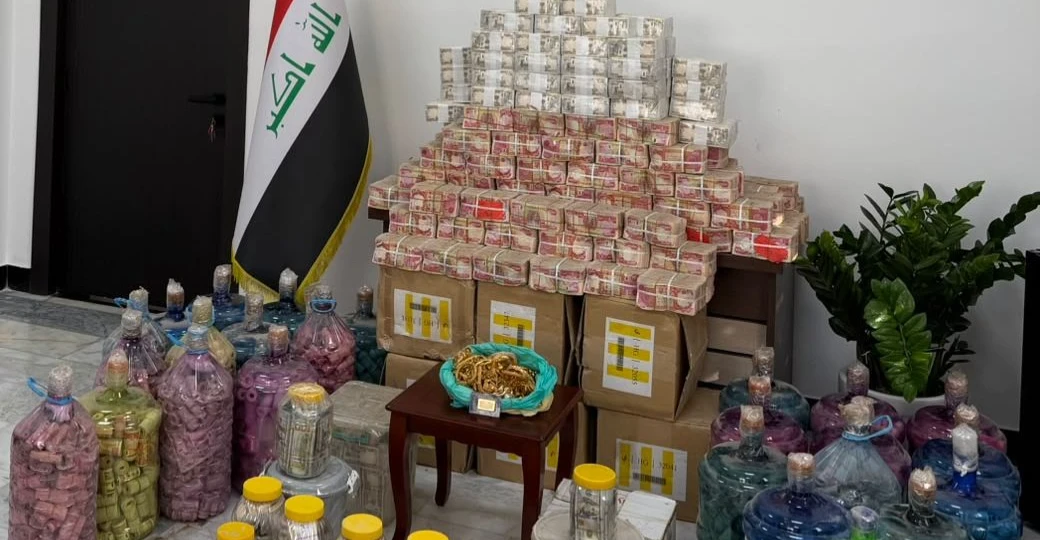
2026-07-18 / 14:06 Shafaq News- Baghdad Iraqis interviewed by Shafaq News said the government's anti-corruption campaign, known as the Dawn Crackdown (Sawlat al-Fajr), will be judged by whether prosecutions reach senior political figures rather than by the number of detentions announced.
Security forces detained at least 47 suspects in the first 24 hours after the operation began on June 28, according to government figures, a total that informed sources within the Federal Commission of Integrity, Iraq's principal anti-corruption body, later put at 67.
No updated official total has been released since.
Read more: Iraq detains top officials in anti-corruption sweep: What we know so far
Support for the arrests is broad among those interviewed, but conditional. Ammar Al-Sayyid, 38, from Baghdad, said Iraqis back both the government and the judiciary in pursuing corrupt officials, and that the campaign will hold credibility “only if the law applies equally to individuals, political parties, and influential figures.”
That condition, equal application, recurred across the interviews. Ismail Mohammed, 25, from Basra, said public opinion will shift only if investigations “extend beyond lower-ranking suspects to influential political figures,” a threshold he said the campaign has not yet crossed.
Read more: Iraq's Dawn Crackdown by numbers: 67 arrests explained
Nazhir Mohammed, 56, from Dhi Qar, who also supports the publication of corruption cases, said reporting should follow cases past the initial detention to court rulings and recovered funds. “Without that, foreign audiences may come to associate Iraq more with corruption than with the effort to confront it.”
Iraq ranked 136th out of 182 countries in the 2025 Corruption Perceptions Index published by Transparency International. UNDP Resident Representative for Iraq Titon Mitra placed losses from corruption and financial mismanagement between $150 billion and $450 billion in assets, or almost 20 percent of Iraq’s public.
Read more: Can Iraq recover billions in stolen assets abroad?
https://shafaq.com/en/society/Iraqis-doubt-anti-corruption-campaign-will-reach-senior-officials
North Oil Company Says Kirkuk Pipeline Ready For Pumping
2026-07-18 16:40 Shafaq News- Kirkuk Iraq's state-run North Oil Company has completed the technical and engineering work needed to begin receiving and pumping crude in Kirkuk through the strategic pipeline running to the Turkish port of Ceyhan, the company said on Saturday.
The first step is filling the 40-inch line to carry crude to the IT1A pumping station, after which oil will be pumped through the 46-inch line for a full-load trial run conducted with the relevant authorities.
IT1A is ready to receive and pump between 300,000 and 350,000 barrels per day, according to the company, as part of preparations to resume exports through the northern system.
What The Route Would Change
The northern outlet matters because Iraq currently depends almost entirely on its southern ports for crude exports, according to Ali Khalil, an oil and energy specialist who spoke to Shafaq News. Restarting shipments through Ceyhan would give the country a second strategic export route, add flexibility, cut transport costs and improve the economics of the northern fields, he said.
North Oil Company produces around 325,000 barrels per day from fields in Kirkuk province and adjacent areas. Most of that volume currently goes to domestic refineries and to supplying other oil installations, which Khalil said makes reopening the northern export outlet necessary to absorb any future rise in output.
“The announced capacity of IT1A, at 300,000 to 350,000 barrels per day, roughly matches the company's present production, meaning the line could carry most of the crude from Kirkuk's fields once fully in service.”
Khalil explained that a successful full-load trial would clear the way for export volumes to be raised gradually, and development projects run by the Oil Ministry and the company, alongside new investment plans in the Kirkuk fields, “could push production above current levels, which in turn would require export infrastructure capable of handling the increase.”
https://www.shafaq.com/en/Economy/North-Oil-Company-says-Kirkuk-pipeline-ready-for-pumping