
Thank you to all the subscribers to our Early Access program…we thank you for your continued support.
We are excited to offer this new service to keep you informed and up-to-date on the latest Dinar and currency news.
Reset Intelligence: However Long the Night.
Emailed to Recaps~ Thank you David
Reset Intelligence: However Long the Night.
By Reset Intelligence | @EXIT_FIAT
The US Senate said No to the CLARITY Act, and inside the same day the SEC chair confirmed the rules get written anyway.
And in Berlin, Iraq's prime minister signed 14,000 megawatts of new power with Siemens Energy, then told his country: however long the night, it births a sun.
Emailed to Recaps~ Thank you David
Reset Intelligence: However Long the Night.
By Reset Intelligence | @EXIT_FIAT
The US Senate said No to the CLARITY Act, and inside the same day the SEC chair confirmed the rules get written anyway.
And in Berlin, Iraq's prime minister signed 14,000 megawatts of new power with Siemens Energy, then told his country: however long the night, it births a sun.
A No that changed nothing
The cloture vote fell short of the 60 it needed and the market sold the obituary. Then the response told the real story. SEC Chair Atkins already had it on the record that the commission will write crypto market rules with or without the statute. Ripple's Garlinghouse mourned the vote and pivoted to the SEC and CFTC rulemaking path in the same thread. Nobody who built the system showed a trace of panic.
The week on one page
Berlin delivers - al-Zaidi and Chancellor Merz oversee the Siemens Energy signing, 14,000 MW of local-fuel generation aimed at the 20 million cubic meters of Iranian gas propping up Iraq's grid daily
The tour's ledger - Rothschild and Co on the credit rating, TotalEnergies at $16 billion, Macron's office talking contracts, all in one week
Two straits mined - Hormuz by Iran, Bab al-Mandab reportedly by the Houthis. Iraq's answer, same day: crude to Europe through Syria and Turkey
The Gulf opens its books - Bessent says the states Iran bombed are opening Iranian funds to scrutiny, secondary sanctions armed on Iranian-oil buyers
September 30 - the militias put their refusal in print with 14 days on the clock
The street - $100 near 157,000 dinars in Baghdad against a 132,000 official ceiling, with the CBI squeezing the gap and saying nothing at a flat 5.25 percent
The Fed - decides US rates today at 2 PM Eastern, close to a coin flip
That is the short version, the moves anyone can see. What they add up to, why the failures keep bouncing off this operation, and what the bank in Baghdad's silence means is in the full daily briefing.
The oldest question in this story was always whether anyone powerful enough wanted it finished. This week the powerful showed their contingency plans.
Read the daily Iraqi dinar briefing free for 5 days - full analysis, every claim sourced.
Want it straight from the horse's mouth? The CBI Rate Alert pings you the moment the Central Bank of Iraq moves the official rate. The number itself, not a rumour about it. It comes with our free resource library and the daily breakdown of what is actually moving in Iraq.
Got a dinar question? Ask the Iraqi dinar research assistant anything Reset Intelligence has published. It answers in seconds and will conduct deep research to find you the answer.
Common questions, answered straight: When will the Iraqi dinar revalue? and Is the Iraqi dinar revaluation real?
The design behind all of it is mapped in Head of the Snake, and the free guides live in the Iraqi dinar resource library.
Follow the daily intel free: Telegram · Facebook · Spotify · Odysee
Coffee with MarkZ joined by Zester 09/16/2026
Coffee with MarkZ joined by Zester 09/16/2026
MarkZ Disclaimer: Please consider everything on this call as my opinion. Be sure to consult a professional for any financial decisions
MZ: Crazy slow news day so far, factions, international deals, and global bankers. Zester has an update on the Clarity Act.
THE CONTENT IN THIS PODCAST IS FOR GENERAL & EDUCATIONAL PURPOSES ONLY&NOT INTENDED TO PROVIDE ANY PROFESSIONAL, FINANCIAL OR LEGAL ADVICE. PLEASE CONSIDER EVERYTHING DISCUSSED IN MARKZ’S OPINION ONLY
Coffee with MarkZ joined by Zester 09/16/2026
MarkZ Disclaimer: Please consider everything on this call as my opinion. Be sure to consult a professional for any financial decisions
MZ: Crazy slow news day so far, factions, international deals, and global bankers. Zester has an update on the Clarity Act.
THE CONTENT IN THIS PODCAST IS FOR GENERAL & EDUCATIONAL PURPOSES ONLY&NOT INTENDED TO PROVIDE ANY PROFESSIONAL, FINANCIAL OR LEGAL ADVICE. PLEASE CONSIDER EVERYTHING DISCUSSED IN MARKZ’S OPINION ONLY
https://rumble.com/user/theoriginalmarkz
Kick: https://kick.com/theoriginalmarkz
Markz's linktree https://linktr.ee/theMarkZshow
FOLLOW MARKZ : TWITTER . https://twitter.com/originalmarkz?s=21. TRUTH SOCIAL . https://truthsocial.com/@theoriginalm...
Mod: MarkZ "Back To Basics" Pre-Recorded Call" for Newbies 10-19-2022 ) https://www.youtube.com/watch?v=37oILmAlptM
MARKZ DAILY LINKS: https://theoriginalmarkz.com/home/
THANK YOU FOR JOINING. HAVE A BLESSED DAY. SEE YOU IN THE MORNING FOR COFFEE @ 10:00 AM EST ~ UNLESS BREAKING NEWS HAPPENS! FOR UPDATES ON MARK’S PODCAST GO TO: https://t.me/+b3hYhYlhKM1hYzcx
News, Rumors and Opinions Wednesday 9-16-2026
GP Q: Why the Clarity Act Matters to Currency Holders
9-16-2026
CLARITY ACT — WHY IT MATTERS TO CURRENCY HOLDERS
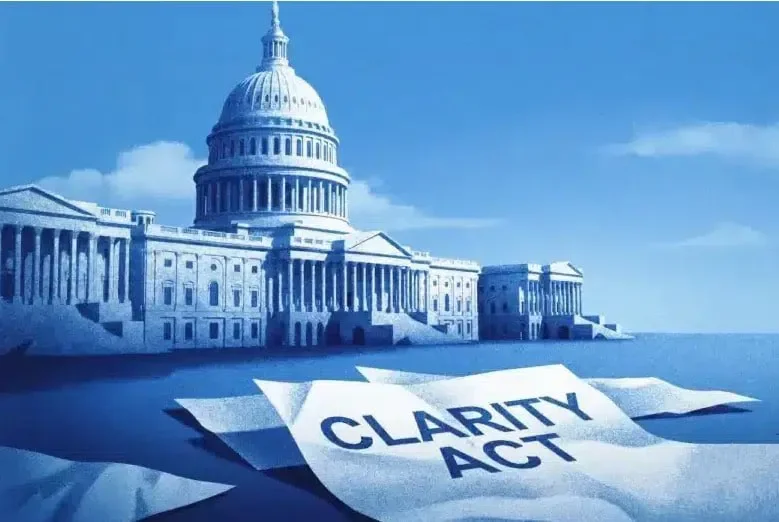
The Senate did fail to advance the CLARITY Act today. The cloture vote was a procedural step requiring 60 votes; it was not a final vote declaring the bill d**d forever.
WHAT WE KNOW: The bill concerns regulation of digital assets, including SEC/CFTC jurisdiction.
GP Q: Why the Clarity Act Matters to Currency Holders
9-16-2026
CLARITY ACT — WHY IT MATTERS TO CURRENCY HOLDERS
The Senate did fail to advance the CLARITY Act today. The cloture vote was a procedural step requiring 60 votes; it was not a final vote declaring the bill d**d forever.
WHAT WE KNOW: The bill concerns regulation of digital assets, including SEC/CFTC jurisdiction.
WHY CURRENCY HOLDERS MAY CARE: It could eventually affect how digital assets, tokenized money and financial platforms operate alongside the traditional financial system.
NOT PROVEN: This vote does not establish an RV, GCR, QFS, or new value for IQD/VND/ZIM.
Proof:
U.S. Senate floor information
https://periodicalpress.senate.gov/page/3/?utm_source=chatgpt.com
Reuters report
https://reuters.com/legal/government/us-senate-vote-advancing-landmark-crypto-bill-2026-09-15/?utm_source=chatgpt.com
Source(s):
• https://x.com/argosaki/status/2099993563920777288
https://dinarchronicles.com/2026/09/15/gp-q-why-the-clarity-act-matters-to-currency-holders/
************
Courtesy of Dinar Guru: https://www.dinarguru.com/
Jeff Article quote: "The draft budget law for 2027 to the House of Representatives on October 15th." The correct currency value must exist in place before the budget can be sent to parliament for approval. That is an absolute requirement. The correct currency value has to exist prior before this law can be approved.
Frank26 The Rothschilds are literally the foundation of currency on this planet Earth. The Rothschilds are the backbone of the financial structure...The Rothschilds have the United States of America by their testicles and they're not letting go. It's called interest. The interest we pay to them every day is astronomical...They certainly don't need money because they are money...The Rothschilds are now interested in Iraq...Iraq is about to become a currency financial hub...part of their banking system...The United States of America is in debt to us [Rothschilds] until the end of time. That's what we want to do with Iraq as well...
Mnt Goat Article: "AN ECONOMIST PREDICTS THE RETURN OF THE 50 AND 100 DINAR DENOMINATIONS WITH THE CURRENCY CHANGE" Yes, the CBI can issue these two notes without any parliament approval, at any time...This is a VERY GOOD sign to us. It shows this removing of the zeros is going to come very soon. I do know that the 50 notes were once in circulation but the 100 note is a new. Getting back the 50 notes are also a very good sign.
*************
Insiders Buying Gold - Public is Next | Andy Schectman
Liberty and Finance: 9-16-2026
Andy Schectman warns that tightening global oil supplies could trigger another wave of inflation just as central banks face limited room to respond.
He argues that rising Treasury yields, declining confidence in U.S. debt and increasing gold purchases reflect a broader trend toward what he calls “detreasurization.”
Schectman also explains how BRICS nations are building alternative payment infrastructure designed to reduce reliance on Western financial rails without necessarily creating a common currency.
The conversation breaks down the trade-offs between physical precious metals, private vault storage, precious-metals IRAs, tokenized gold and ETFs, with Schectman emphasizing ownership, auditing, and the ability to take possession.
He also discusses the growing adoption of tokenized metals and state-level efforts to facilitate gold and silver transactions as the global monetary system continues to evolve.
INTERVIEW TIMELINE: 0:00 Intro 2:30 Asset price distortion 11:00 BRICS meeting 17:20 Gold storage 30:00 Constitutional money
Seeds of Wisdom RV and Economics Updates Wednesday Morning 9-16-26
Good Morning Dinar Recaps,
FED RATE DECISION: FIRST HIKE SINCE 2023 COULD RESET THE OUTLOOK FOR INFLATION, DEBT AND THE DOLLAR
The Federal Reserve is expected to raise interest rates for the first time since 2023 as persistent inflation, oil prices above $100 and elevated Treasury yields create a new challenge for U.S. monetary policy, government debt and the dollar.
Good Morning Dinar Recaps,
FED RATE DECISION: FIRST HIKE SINCE 2023 COULD RESET THE OUTLOOK FOR INFLATION, DEBT AND THE DOLLAR
The Federal Reserve is expected to raise interest rates for the first time since 2023 as persistent inflation, oil prices above $100 and elevated Treasury yields create a new challenge for U.S. monetary policy, government debt and the dollar.
OVERVIEW
Markets are heavily expecting a quarter-point Federal Reserve rate increase today, which would lift the federal funds target range to approximately 3.75%–4.00% and mark the first Fed increase since July 2023.
The bigger story may be what comes next. Investors are closely watching Fed Chair Kevin Warsh's comments and the central bank's projections for clues about whether additional rate increases could follow as inflation remains elevated and energy prices continue to create pressure.
The decision reaches far beyond the Federal Reserve. Higher U.S. rates can influence Treasury yields, government borrowing costs, the dollar, international capital flows and currencies around the world.
KEY DEVELOPMENTS
1. The Fed Faces Its First Rate Hike Since 2023
The Federal Reserve's September meeting reaches its decision point today with financial markets expecting a 0.25 percentage-point increase.
If delivered, it would be the first U.S. rate hike since July 2023.
That would represent an important change in the monetary-policy environment after a period in which markets had been focused primarily on potential rate cuts.
The expected move would place the federal funds target range at approximately 3.75%–4.00%.
But the rate decision itself may not be the most important information coming from Washington.
Investors will be watching closely for indications of whether the Fed believes additional increases could be necessary.
2. Inflation Is Complicating the Fed's Decision
The Federal Reserve is confronting renewed inflation pressure at the same time that energy markets remain unsettled.
Oil prices have remained above $100 per barrel as disruptions in the Middle East continue to affect energy supplies and transportation.
Higher energy costs can move through the economy by increasing transportation, manufacturing and other operating costs.
That creates a difficult policy environment.
The Fed can raise interest rates to restrain demand, but higher interest rates cannot directly restore disrupted oil supplies.
The central bank therefore faces the challenge of determining whether the current inflation pressure is temporary or could become more persistent.
3. Treasury Yields Are Already Near a Critical Level
The Fed's decision comes after the U.S. 10-year Treasury yield moved above 5%, its highest level since 2007.
The rise in Treasury yields reflects a combination of inflation concerns, expectations for tighter monetary policy and worries about government borrowing and fiscal pressures.
Higher Treasury yields matter because they influence borrowing costs throughout the financial system.
Mortgage rates, corporate borrowing, consumer credit and government financing can all be affected.
This means the Fed's decision could have consequences far beyond the overnight interest rate it directly controls.
4. The Dollar Is Being Pulled by Interest-Rate Expectations
The dollar has strengthened alongside higher Treasury yields and expectations for tighter U.S. monetary policy.
Higher U.S. interest rates can make dollar-denominated assets more attractive to international investors seeking higher returns.
However, currency markets are influenced by many factors, including the interest-rate policies of other central banks, economic growth, energy prices and international capital flows.
The dollar's reaction to today's decision will therefore depend not only on whether the Fed raises rates, but also on how strongly the central bank signals that additional tightening may be necessary.
5. Government Debt Faces a Higher-Cost Environment
Higher interest rates and Treasury yields have direct implications for government finances.
When existing debt matures, governments must refinance it.
If refinancing takes place at higher interest rates, the cost of servicing that debt can increase over time.
For the United States, this creates an important connection between monetary policy and the federal government's fiscal position.
The potential chain becomes:
Higher Rates → Higher Treasury Yields → Higher Refinancing Costs → Greater Debt-Service Pressure
That is one reason today's Fed decision matters to the broader financial system.
WHY IT MATTERS
Today's expected rate increase is important because it comes at a time when several financial pressures are converging.
Oil prices remain elevated.
Inflation remains a concern.
Treasury yields are near multi-year highs.
Government debt remains substantial.
And central banks around the world are responding to different combinations of inflation, energy costs and economic pressures.
The Fed's challenge is therefore not simply deciding where to place one interest rate.
It is managing monetary policy while energy prices, inflation expectations, bond markets and government debt are all interacting at the same time.
WHY IT MATTERS TO FOREIGN CURRENCY HOLDERS
Readers hold foreign currency with the hopes that it will increase in value when the Global Reset occurs.
Today's Fed decision matters because U.S. interest rates influence international capital flows, currency values, bond markets and the relative attractiveness of dollar-denominated assets.
A higher U.S. rate can support demand for the dollar, while putting pressure on currencies whose countries have lower interest rates or significant dollar-denominated obligations.
But a Fed rate increase does not guarantee a currency revaluation or establish a date for a Global Reset.
The important development is the changing relationship among interest rates, debt, inflation and currencies.
Hope is understandable. Evidence is essential.
IMPLICATIONS FOR THE GLOBAL RESET
Pillar 1 — Monetary Policy
The expected Fed rate increase demonstrates how quickly an energy and inflation shock can influence central-bank policy.
If inflation remains elevated, the Fed may have less room to reduce rates.
That could keep borrowing costs higher for households, businesses and governments.
The direction of monetary policy will therefore remain an important signal for global financial markets.
Pillar 2 — Debt and Bond Markets
The relationship between interest rates and government debt becomes increasingly important when Treasury yields remain elevated.
Higher yields increase the cost of new borrowing and eventually affect the cost of refinancing existing obligations.
If this environment persists, debt-service costs could become a larger consideration for governments around the world.
The bond market is therefore a key area to watch as monetary policy changes.
Pillar 3 — Currencies and Global Capital
Interest-rate differences between countries can influence where investors place capital.
A shift toward higher U.S. rates can alter the relative attractiveness of dollar assets and affect currencies around the world.
At the same time, countries facing high energy-import costs or significant external debt can experience additional pressure when the dollar strengthens.
This creates another connection between U.S. monetary policy and the broader international financial system.
RUMOR SAFETY REMINDER
A Federal Reserve rate hike is NOT an announcement of a Global Reset or currency revaluation.
The expected increase reflects monetary-policy concerns involving inflation, economic conditions and financial stability.
It does not establish a timetable for any future monetary reset.
Likewise, higher interest rates do not automatically mean financial-system collapse.
Watch the data. Watch the debt. Watch the markets. Don't follow the hype.
THE BOTTOM LINE
The Federal Reserve's expected first rate increase since 2023 comes at a particularly important moment for global finance.
Oil remains elevated, Treasury yields are near 5%, inflation pressures remain significant and governments are managing large debt burdens.
The immediate question is whether the Fed raises rates today.
The larger question is whether today's decision marks the beginning of a longer period of tighter monetary policy—and how that could reshape the relationship between inflation, debt, bonds and currencies.
Seeds of Wisdom Team
Newshounds News™ Exclusive
SOURCES
~~~~~~~~~~
🌱 A Message to Our Currency Holders🌱
If you’ve been holding foreign currency for many years, you were not foolish.
You were not wrong to believe the global financial system would change.
What failed was not your patience — it was the information you were given.
For years, dates, rumors, and personalities replaced facts, structure, and proof. “This week” predictions created cycles of hope and disappointment that were never based on how currencies actually change.
That is not your failure.
Our mission here is different: • No dates • No rates • No hype • No gurus
Instead, we focus on:
• Verifiable developments • Institutional evidence
• Global financial structure • Where countries actually sit in the process
Currency value changes only come after sovereignty, trade, banking, settlement systems, and fiscal coordination are in place. History and institutions confirm this sequence.
You will see silence. You will see denials. That is not delay — that is discipline.
Protect your identity. Organize your documents. Verify everything.
Never hand your discernment to anyone who cannot show proof.
You deserve truth — not timelines.
Seeds of Wisdom Team
Newshounds News
~~~~~~~~~~
Seeds of Wisdom Team RV Currency Facts Youtube and Rumble
Newshound's News Telegram Room Link
RV Facts with Proof Links Link
RV Updates Proof links - Facts Link
Start Here room with Most Asked Questions Link
Follow the Gold/Silver Rate COMEX
Follow Fast Facts
Seeds of Wisdom Team™ Website
Thank you Dinar Recaps
Iraq Economic News and Points To Ponder Wednesday Morning 9-16-26
ADNOC Snaps Up Discounted Iraqi Crude
2026-09-15 16:31 Shafaq News- Baghdad Abu Dhabi National Oil Company (ADNOC) has bought millions of barrels of discounted Iraqi crude, becoming the largest lifter of Iraqi oil in August and September as Baghdad sought to restore exports disrupted by the Iran war, Reuters reported on Tuesday, citing three sources familiar with the matter.
ADNOC Snaps Up Discounted Iraqi Crude
2026-09-15 16:31 Shafaq News- Baghdad Abu Dhabi National Oil Company (ADNOC) has bought millions of barrels of discounted Iraqi crude, becoming the largest lifter of Iraqi oil in August and September as Baghdad sought to restore exports disrupted by the Iran war, Reuters reported on Tuesday, citing three sources familiar with the matter.
Two Iraqi energy sources said the UAE state oil company, through its trading arm, emerged as Iraq’s biggest crude buyer during the two months, helping support exports that had fallen sharply during the earlier stages of the conflict.
One Iraqi source said ADNOC agreed to buy 32 million barrels of Iraqi crude for August at discounts ranging from $24.90 to $27 per barrel.
For September, the company agreed to purchase another 40 million barrels, including 10 million barrels at an $18-per-barrel discount and 30 million at a $25 discount, the source said.
A second Iraqi source said the State Oil Marketing Organization (SOMO) had allocated 32 million barrels to ADNOC for August, but the company ultimately lifted about 20 million because of export constraints and Basra Oil Company’s inability to provide sufficient crude.
ADNOC has lifted about 14 million barrels of Iraqi crude so far in September, according to the source.
A third source told Reuters that ADNOC had also bought about 20 million barrels from SOMO through tenders for September-October lifting at discounts of between $25 and $27 per barrel.
Other companies have also bought discounted Iraqi crude. Reuters said SOMO’s August-loading offers attracted PetroChina, Zhenhua Oil, TotalEnergies, Vitol, Trafigura, Mercuria and Cathay Petroleum.
Iran last month allowed several tankers carrying Iraqi oil to transit the Strait of Hormuz after repeated requests from Baghdad through several channels, according to Iran’s state news agency IRNA.
Iraq’s exports had fallen sharply during the early months of the war, partly because of its location at the northern end of the Gulf and its lack of a substantial state-controlled tanker fleet.
Kpler data cited by Reuters showed Iraq exporting about two million barrels per day this month, down from 2.354 million bpd in August but above 1.374 million bpd in July.
UAE crude exports, meanwhile, rose to 3.236 million bpd this month from 2.886 million bpd in August and 2.871 million bpd in July.
https://www.shafaq.com/en/Economy/ADNOC-snaps-up-discounted-Iraqi-crude
Iraq, Siemens Energy Sign Phase IV Power Framework
2026-09-15 15:44 Shafaq News- Berlin Iraq and Siemens Energy signed a fourth-phase power cooperation framework in Berlin on Tuesday covering new generation and transmission projects, maintenance, financing and workforce training.
Prime Minister Ali Al-Zaidi and German Chancellor Friedrich Merz oversaw the signing of the “Energy Cooperation Principles in Iraq – Phase IV” between Iraq’s Electricity Ministry and Siemens Energy AG.
Electricity Minister Ali Saadi Wahib signed the framework, which provides for new power-generation projects, including combined-cycle and thermal plants designed to use fuels available in Iraq.
The plan also calls for selecting project sites that can make use of existing infrastructure, transmission networks and fuel pipelines.
In the transmission sector, the framework includes new substations across Iraq, upgrades to existing facilities, measures to ease bottlenecks in the national grid and improvements aimed at speeding the response to emergency outages.
It also provides for continued maintenance contracts at operating power plants to improve efficiency and available generation capacity, while the two sides will examine project-financing mechanisms and expand training programs for Electricity Ministry personnel.
******
Iraqi Prime Minister Media Office
Key Points from Prime Minister Ali Faleh Al-Zaidi’s Remarks During the Joint Press Conference with the German Chancellor in Berlin
Relations between Iraq and Germany are strong and founded on mutual respect. We affirm that action is the language of the future.
Germany is a trusted and reliable partner, and we seek to build stronger economic bridges between our two countries.
Iraq possesses abundant resources and a strong workforce, while we need technology, expertise, and equipment that we will purchase from Germany.
The partnership between Iraq and Germany will be reciprocal and mutually beneficial, rather than one-sided.
We will export crude oil to Europe through Syria and Türkiye. We seek to diversify our export routes and will not remain dependent on a single corridor.
We share with Germany the goal of defusing the crisis between Iran and the United States.
The crisis has affected Iraq and the world due to the disruption of oil exports, which has negatively impacted global markets.
We discussed strengthening political engagement with Germany to help address regional issues and challenges.
Iraq remains committed to a moderate and balanced policy and distances itself from aggressive policies.
The issue of foreign prisoners affiliated with the terrorist organization ISIS falls under the jurisdiction of the judiciary, over which the government has no authority.
The Kurdistan Region of Iraq is an integral part of the Iraqi state.
Iraq’s security forces, across all branches, are capable of safeguarding the country’s security. We have discussed this matter with the Presidents of the United States and France and the Chancellor of Germany.
Arms will remain under state authority, and decisions of war and peace are the exclusive prerogative of the state.
We call on the countries that supported us during the war against ISIS to strengthen their economic partnerships with Iraq and contribute to the country’s development and reconstruction.
•••••
Media Office of the Prime MinisterSeptember 15, 2026
https://www.facebook.com/IraqiPMO.Eng/posts/1076222038637444?ref=embed_post
The agreement was signed during Al-Zaidi’s official visit to Berlin, where he held talks with Merz on economic cooperation and regional developments.
Speaking at a joint news conference with the German chancellor, Al-Zaidi described Germany as a reliable partner and said Iraq wanted a reciprocal economic relationship built around Iraqi resources and labor and German technology, expertise and equipment. “Iraq has many resources and a large workforce, and we need technology, expertise and equipment that we will purchase from Germany,” he said.
Al-Zaidi also said Iraq plans to diversify its crude-export routes, including by sending oil to Europe through Syria and Turkiye.
The prime minister said Baghdad and Berlin shared an interest in de-escalating tensions between Iran and the United States, arguing that disruption to oil exports had affected Iraq and global markets.
He said the two governments also discussed closer political coordination on regional issues, adding that Iraq remained committed to a balanced foreign policy and avoiding confrontational approaches.
On foreign detainees accused of ISIS membership, Al-Zaidi said their cases fell under judicial authority and were not subject to government intervention. He urged countries that supported Iraq during the war against ISIS to expand economic partnerships and contribute to reconstruction.
Al-Zaidi also said Iraqi security forces were “capable of protecting the country” and reiterated that weapons must remain under state control. “Decisions on war and peace belong exclusively to the state,” he said, adding that the Kurdistan Region is “an integral part of Iraq.”
Earlier on Tuesday, Al-Zaidi met German President Frank-Walter Steinmeier for talks on bilateral relations, expanding economic cooperation and increasing the participation of German companies in Iraqi development projects.
Al-Zaidi arrived in Berlin after concluding an official visit to France, where he met President Emmanuel Macron and oversaw the signing of six memoranda, declarations of intent and cooperation instruments covering defense, artificial intelligence, youth, research and innovation, development, energy and civil aviation.
Read more: Al-Zaidi’s Europe tour targets post-Coalition partnerships
https://www.shafaq.com/en/Economy/Iraq-Siemens-Energy-sign-Phase-IV-power-framework
Wed. Iraq News Posted by Tishwash at TNT 9-16-2026
TNT:
Tishwash: Al-Zaidi concludes his European tour, returning to Baghdad
Prime Minister Ali Faleh al-Zaidi concluded his official visit to the German capital, Berlin, on Tuesday, returning to Baghdad.
The Prime Minister’s Media Office stated in a statement that “Prime Minister Ali Faleh al-Zaidi concluded his official visit to the German capital, Berlin, and is returning to Baghdad.”
TNT:
Tishwash: Al-Zaidi concludes his European tour, returning to Baghdad
Prime Minister Ali Faleh al-Zaidi concluded his official visit to the German capital, Berlin, on Tuesday, returning to Baghdad.
The Prime Minister’s Media Office stated in a statement that “Prime Minister Ali Faleh al-Zaidi concluded his official visit to the German capital, Berlin, and is returning to Baghdad.”
Prime Minister Ali Faleh al-Zaidi began his European tour on Sunday, September 13, 2026, with an official visit to the French capital, Paris, at the invitation of French President Emmanuel Macron, before heading on Tuesday, September 15, to the German capital, Berlin, to complete his tour.
The visit to Paris included a meeting between Al-Zaidi and the French President, as well as the signing of six memoranda of understanding and declarations of intent covering the fields of defense, artificial intelligence, energy, gas, youth opportunities, research and innovation, and civil aviation.
During his visit to Germany, Al-Zaidi will focus on strengthening Iraqi-German relations and expanding economic and investment partnerships before concluding his European tour and returning to Baghdad. link
*************
Tishwash: Al-Zaydi: Iraq today is shaping the features of a new economy and a promising economic identity
Prime Minister Ali Faleh al-Zaidi affirmed that "Iraq is currently shaping a new economy and a promising economic identity, and it needs productive partnerships to support its development path."
During his participation in the German-Iraqi Business Dialogue Forum held in Berlin, under the theme "Economic Bridges for a Shared Future," al-Zaidi stated, "There are many commonalities that unite Iraq and Germany, an important industrial country with which the government looks forward to cooperating in various fields and sectors." He pointed out that Iraq is currently shaping a new economy and a promising economic identity, and it needs productive partnerships to support its development path.
According to a statement from his media office, the Prime Minister reviewed the investment map in Iraq, including the energy sector, oil and petrochemical industries, phosphates, clean energy, pharmaceutical industries, and support for the government's automation programs. He also presented the government's comprehensive plans, which are based on implementing a set of financial, tax, and banking reforms aimed at strengthening the investment environment and supporting economic growth.
He called on German companies to invest in Iraq, emphasizing the readiness to provide the necessary investment environment and remove any obstacles that might hinder their operations.
He explained that the investment law includes extensive facilities and guarantees, pointing to Iraq's political and economic stability and its democratic system that supports the work of institutions. link
**************
Tishwash: Washington brandishes the "dollar card"... a warning to Baghdad: disarm the factions or financial shipments will be halted
Informed government officials revealed to Kurdistan 24 today (Tuesday, September 15) that Washington has informed the Iraqi government of its intention to "stop dollar shipments" to Iraq if the factions do not adhere to the disarmament deadline.
The network, as reported by Baghdad Today, said that two Iraqi officials, who declined to reveal their identities, stated that Washington had informed Baghdad that it would "stop the monthly dollar shipments to Iraq if the factions do not comply with the disarmament deadline set for the 30th of this month."
She continued, "Officials confirmed that the first warning was delivered to al-Zaidi during his visit to Washington, where the US administration confirmed to him that failure to contain the threat of armed factions to US interests and the interests of countries in the region would have dire consequences for relations between the two countries, including Iraq's access to dollar liquidity."
It is noted that one of the sources confirmed to the network that Washington “had previously demonstrated its ability to influence and exert significant pressure on the Iraqi economy when it delayed dollar shipments to Iraq earlier,” as he described it link
************
Tishwash: As the last US troops pack up in Iraq, militias signal their weapons will stay
BAGHDAD (AP) — Two deadlines are looming for Iraq at the end of the month: the end of a decades-long U.S. military presence and the disarmament of non-state armed groups.
Two deadlines are looming for Iraq at the end of the month: the end of a decades-long U.S. military presence and the disarmament of non-state armed groups.
The U.S. withdrawal is underway, and officials say the hundreds of troops remaining in northern Iraq will be out by the Sept. 30 deadline.
The Iraqi government has linked the U.S. withdrawal to an ultimatum for militias to lay down their weapons. But most have indicated they have no plans to do so.
That leaves major questions about what the day after will look like in Iraq.
Iranian-backed Iraqi militias have struck U.S.-linked targets both inside and outside of Iraq since the U.S. and Israel attacked Iran on Feb. 28. They also have coordinated with Yemen’s Houthi rebels to attack Saudi Arabia.
With the war between the U.S. and Iran raging, Tehran is unlikely to give up the leverage it has in neighboring Iraq. U.S. officials are concerned about the militias' ability to continue carrying out attacks — but not enough to delay their withdrawal.
The end of the US mission
U.S. troops invaded Iraq in 2003 to topple Saddam Hussein. They departed in 2011, but three years later, Iraqi authorities invited a smaller U.S.-led mission to fight the Islamic State group, which had rampaged across Iraq, seizing large swaths of territory.
With the extremist group now reduced to scattered sleeper cells — a result of the intervention of Iran-backed militias as well as the U.S.-led coalition -- Washington and Baghdad agreed in 2024 to wind the mission down.
U.S. troops pulled out of bases in most areas of Iraq last year but maintained a presence in the semiautonomous northern Kurdish region. Bases there have regularly come under attack since the U.S. and Israel launched their war against Iran.
A U.S. military official said the withdrawal would be completed by Sept. 30, and the hundreds of troops still present in northern Iraq would mostly be redeployed to Jordan and other countries in the region. Military equipment, including air defense systems, will also be removed. He spoke on condition of anonymity because he was not authorized to comment publicly.
A “normal bilateral security cooperation” agreement could then be negotiated with the central government in Baghdad, he said, but it remains unclear what form that would take.
The official said that the counterterrorism base in Irbil had lost its importance for U.S. troops with the Islamic State threat receding.
During the war with Iran, northern Iraq for the most part did not serve as an “offensive platform,” but U.S. forces there were frequently targeted by Iran and Iran-backed Iraqi militias, so pulling troops out “will reduce our risk,” he said.
But the U.S. military remains concerned about the ability of the Iraqi militias to launch attacks on targets elsewhere in the region, including in Saudi Arabia, Jordan and Israel, and about the presence of Houthi rebel forces in Iraq, he said.
In the past, the U.S. has sometimes struck militia sites in Iraq in retaliation for attacks. Washington has slapped sanctions on some of the groups and could impose more.
Militias take a hard line on disarmament
Iraqi government officials have waffled over whether Sept. 30 is a hard deadline for disarmament of militias or merely the starting point for negotiations.
“There will be no disarming of any groups by the 30th of September,” said Iraqi analyst Sajad Jiyad, speaking at a panel convened by the Atlantic Center think tank last week. “I think that’s probably clear to anybody who watches Iraqi politics.”
While a handful of less-influential militias have agreed to turn over their weapons, the most powerful groups — and closest to Iran — Kataib Hezbollah, Harakat al-Nujaba and Kataib Sayyid al-Shuhada have rejected the prospect or set conditions for disarming that they know the government is unlikely to meet in the near future.
Those include bringing the Kurdish peshmerga security forces in northern Iraq under control of the central government’s military and expelling Iranian Kurdish dissident groups and the Kurdistan Workers’ Party, or PKK, that have bases in the region.
“After establishing these parameters, discussions will focus on regulating weapons, not surrendering them,” an official with one of the Iran-backed Iraqi militias said. “There is absolutely no decision among the factions to surrender weapons, and we have not surrendered any weapons.”
A government official said the government’s strategy currently focuses on bringing armed factions under the control of the Iraqi military. Already many of the militias are part of the Popular Mobilization Forces, a coalition of armed groups that is officially part of the Iraqi armed forces, although the individual militias often act on their own.
The official said the government wants the armed factions to hand over “dynamic weapons” including missiles and long-range aircraft, to the central leadership of the PMF and for the individual factions to be dissolved and placed under the command of the PMF and the Iraqi army.
The officials spoke on condition of anonymity because they were not authorized to speak publicly.
Iraqi government spokesperson Sabah al-Numan said last week that “discussions and dialogues are ongoing, and the file will be resolved after the withdrawal of the international coalition forces."
Kurds are anxious about the day after Sept. 30
While the withdrawal of U.S. troops removes one target from the Kurdish region, it may not halt the attacks.
Mohammed A. Salih, a non-resident senior fellow at the U.S.-based Foreign Policy Research Institute, and an expert on Kurdish and Iraqi affairs, noted that Iran and affiliated groups “have targeted other locations in the Kurdistan region that have not been related to the U.S. troops’ presence.”
Those include the bases of exiled Iranian Kurdish dissident groups, energy facilities, and even the office of the Kurdish region’s Prime Minister Masrour Barzani.
“The withdrawal will expose the Kurdistan region even further and make it an even easier target,” Salih said.
Regional government officials declined to comment, but Barzani has publicly expressed anxiety that the removal of U.S. air defenses would leave the area more vulnerable.
Numan said last week that the Iraqi government was close to procuring new air defense systems from South Korea, Turkey and the U.S.
He told The Associated Press that the new systems “will be deployed according to carefully devised military plans to ensure the complete protection of Iraqi airspace, including the Kurdistan region.” link
FRANK26…9-15-26….ANOTHER ECONOMIST (parts 1 and 2)
KTFA
Tuesday Night video
FRANK26…9-15-26….ANOTHER ECONOMIST
This video is in Frank’s and his team’s opinion only
Frank’s team is Walkingstick, Eddie and Omar in Iraq and guests
Playback Number: 605-313-5163 PIN: 156996#
KTFA
Tuesday Night video
FRANK26…9-15-26….ANOTHER ECONOMIST
This video is in Frank’s and his team’s opinion only
Frank’s team is Walkingstick, Eddie and Omar in Iraq and guests
Playback Number: 605-313-5163 PIN: 156996#
What Frank’s suit color’s mean…. FRANKS SUIT COLORS FOR CC'S..... WHITE = NEW INFO…. SILVER = INTEL FROZEN…. RED= HIGH ALERT… PURPLE=GUEST WITH US…. BLUE = AIR FORCE…. BLACK = GROUND/FF’S…. GREEN= MR OR FAB 4 ... GOLD = CHANGE… ORANGE=IMPLEMENTATION
FRANK26…9-15-26….ANOTHER ECONOMIST PART 2
The Seven Deadly Sins Of Personal Finance
The Seven Deadly Sins Of Personal Finance
By J.D. Roth —03 June 2019
I've been reading and writing about personal finance for more than thirteen years. In that time, I've consumed a lot of books about money. Lately, I've found that it's fun to revisit old favorites.
Recently, for instance, I've been re-reading Brett Wilder's The Quiet Millionaire [my review]. It's different than most personal finance books. It's targeted at those who are farther along their financial journeys rather than at those just starting out. Still, there are bits and pieces in The Quiet Millionaire that are applicable to everyone.
The Seven Deadly Sins Of Personal Finance
By J.D. Roth —03 June 2019
I've been reading and writing about personal finance for more than thirteen years. In that time, I've consumed a lot of books about money. Lately, I've found that it's fun to revisit old favorites.
Recently, for instance, I've been re-reading Brett Wilder's The Quiet Millionaire [my review]. It's different than most personal finance books. It's targeted at those who are farther along their financial journeys rather than at those just starting out. Still, there are bits and pieces in The Quiet Millionaire that are applicable to everyone.
Ten years ago, I wrote that I particularly like Wilder's list of the seven enemies to financial success (which is my phrase, not his). I still like them. He writes:
If you want to become and stay the quiet millionaire, you must plan and manage your financial way of life…You must be proactive in order to obtain the financial life you want. By doing this, you will overcome the seven major obstacles to financial success.
Wilder is saying that we know there are certain common barriers to wealth. These obstacles arise for everyone. Because of this, it's possible to plan in advance to cope with them. First, however, we have to be able to name these enemies so that we can prepare the proper weapons to fight them.
The Seven Enemies of Financial Success
According to Wilder, the seven enemies of financial success are:
Lack of discipline. Without discipline, it's difficult to build wealth. In fact, it's impossible to get rich — slowly or otherwise — if you spend more than you earn. The math just doesn't work. Wilder also warns against compulsive spending, and he urges readers to track where their money is going.
Materialism. Stuff will not enrich your life. It's so very easy to find yourself “keeping up with the Joneses”, succumbing to lifestyle inflation. But materialism breeds discontent. Instead, Wilder says, focus on intellectual and spiritual pursuits to obtain fulfillment.’
Debt. Not all debt is bad, of course. A reasonable mortgage on a sensible home is fine. But consumer debt — or a bad mortgage on a big house — is an enemy to financial success. In fact, bad debt may be the biggest enemy to financial success.
Taxes. It's our responsibility to pay the taxes we owe, but we're under no obligation to pay more than that. “It is not unpatriotic to reduce paying your taxes,” Wilder writes. We should instead actively work to keep our tax burden as low as possible.
Inflation. Inflation is wealth's silent enemy. It will not destroy you all at once. But it's always there, nibbling at the corners of your life, consuming a little cash every year. It's impossible to keep inflation completely at bay, but you can learn to mitigate its effects.
Investment mistakes. Poorly structured investment portfolios can be a killer. This enemy is fought through education, through an understanding of diversification and asset allocation, by taking the emotion out of investing.
Emergencies. The final enemy to financial success is the unexpected: unemployment, death, illness, and legal complications. Without a plan for emergencies, you leave yourself at the mercy of the fickle fates. Carry adequate insurance and maintain an emergency fund!
I've fought all of these enemies at one time or another. I still fight some from time to time. I feel like I have a good handle on investment mistakes and saving for emergencies, but my tax bill this year was onerous due to my own poor planning. And, of course, I've always struggled with discipline.
The Seven Deadly Sins and the Last Four Things
The Seven Deadly Sins (and the Last Four Things) by Hieronymus Bosch
The Seven Deadly Sins of Personal Finance
Wilder's seven enemies to financial success always reminds me of Catholicism's traditional list of seven deadly sins. This catalog of transgressions has a long, complicated (and intersting) history. Today, the seven deadly sins are considered to be:
Vanity (or Pride). An inflated belief in your own abilities.
Envy. The desire to have what others have.
Gluttony. Consuming more than you need, especially with regards to food and drink.
Lust. A passion or longing for bodily pleasure.
Wrath (or Anger). The tendency toward indignation and the desire for vengeance. Hatred toward others.
Greed. The desire for material wealth or gain.
Sloth. The avoidance of work. Laziness. A failure to act or make use of your talents.
What would happen if we combined Wilder's idea — seven enemies to financial success — with this list of seven deadly sins? If we were to make a list of seven deadly financial sins, what would those be? Off the top of my head, these seem like good candidates:
Sloth. The avoidance of work. Laziness. A failure to act or make use of your talents. Procrastination. Expecting others to solve your problems.
Envy. The desire to have what others have. Comparing yourself to others. Keeping up with the Joneses.
Gluttony. Consuming more than you need. Succumbing to lifestyle inflation, the endless desire to have more. Never being satisfied with what you already have. The inability to defer gratification. Impatience.
Aimlessness. A failure to plan for the future. A lack of purpose or direction. Failing to track your progress is also a form of aimlessness.
Improvidence. A lack of prudence or care in managing your resources. Spending mindlessly. Wasting what you already have. Not taking care of your possessions. Replacing the things you own before they need to be replaced.
Myopia. Making decisions without considering greater implications. Focusing on small, easy steps that make no real difference (clipping coupons, maybe) while ignoring the big things that destroy your financial future (paying too much for housing, for instance).
Ignorance. A lack of financial education. Putting blind faith in outside advisors — or the news. Failing to do your own research.
Although this list is spontaneous, I like it. These really do feel like seven barriers that prevent people from succeeding with money. But I'm sure it's possible to come up with other (possibly more grievous) sins.
What do you think? If you were to list the seven deadly sins of personal finance, what would you include? And why?
https://www.getrichslowly.org/
Iraq Economic News and Points To Ponder Tuesday Evening 9-15-26
Oil Rises On Saudi Supply Disruption Concerns
2026-09-15 01:32 Shafaq News Oil prices rose on Tuesday as concerns over supply disruptions persisted after attacks on Saudi Arabian energy infrastructure left the kingdom's East-West pipeline offline and cast doubt on efforts to ease shipping risks in the Gulf.
Oil Rises On Saudi Supply Disruption Concerns
2026-09-15 01:32 Shafaq News Oil prices rose on Tuesday as concerns over supply disruptions persisted after attacks on Saudi Arabian energy infrastructure left the kingdom's East-West pipeline offline and cast doubt on efforts to ease shipping risks in the Gulf.
Brent crude futures rose $1.37, or 1.3%, to $107.05 a barrel at 0406 GMT, while U.S. West Texas Intermediate futures were up $1.53, or 1.51%, at $102.92 a barrel. Both benchmarks rose more than 1% in the previous session.
Iran-backed Houthi forces in Yemen launched fresh attacks on Saudi Arabia on Monday, while Gulf Arab states postponed planned discussions with Iran, fuelling concerns that the Middle East conflict could widen and disrupt global oil supplies.
The Houthis carried out a missile and drone attack on the Khamis Mushait military airbase in southern Saudi Arabia, hitting aircraft hangars, radar systems, runways and ammunition depots in retaliation for Saudi strikes in Yemen.
This followed attacks on Friday on Saudi Arabia, which Riyadh blamed on Iranian-backed fighters in Iraq, that disrupted the country's East-West pipeline, which allows oil exports to bypass the blockaded Strait of Hormuz.
"Oil traders are treating every fresh attack or infrastructure hit as incremental supply risk, while staying highly sensitive to any sign that the East-West pipeline or Hormuz flows could normalise," said Tim Waterer, chief market analyst at KCM Trade.
Commodity vessel traffic through the Strait of Hormuz dropped to fewer than 10 transits a day over the weekend, from a 10-day average of 14, raising concerns over a route that typically carried about one-fifth of global oil supplies before the U.S.-Israeli war on Iran began on February 28.
Saudi Arabia could begin to exhaust oil available for export within days unless it restores operations on the East-West pipeline, potentially removing as much as 4% of global oil supply from the market, according to Saudi buyers and traders.
The world's biggest exporter has used the pipeline to reroute around 4 million barrels per day — around 4% of global supply — to the port of Yanbu on the Red Sea.
"Plenty of uncertainty remains over the extent of damage and the duration of the outage for the East-West pipeline in Saudi Arabia. Prices are likely to remain well supported until we get clarity," ING analysts said in a note.
Separately, President Volodymyr Zelenskiy said on Monday that Kyiv was ready to support a U.S. proposal for a Russia-Ukraine ceasefire on energy sites only if Washington could ensure Moscow was genuinely ready to end its war on Ukraine. (REUTERS)
https://www.shafaq.com/en/Economy/Oil-rises-on-Saudi-supply-disruption-concerns
Basrah Crudes Slip Despite Benchmark Gains
2026-09-15 02:31 Shafaq News- Basrah Iraq’s Basrah crude declined more than 0.5% on Tuesday, amid gains in benchmark crude futures.
Basrah Heavy crude fell by 53 cents, or 0.55%, to $95.58 per barrel, while Basrah Medium crude slipped by 53 cents, or 0.53%, to settle at $98.88 per barrel.
Brent crude futures rose by $1.37, or 1.3%, to $107.05 per barrel, while US West Texas Intermediate futures gained $1.53, or 1.51%, to $102.92 per barrel
https://www.shafaq.com/en/Economy/Basrah-crudes-slip-despite-benchmark-gains
Gold Holds Steady Ahead Of Fed Decision
2026-09-15 03:15 Shafaq News Gold held steady on Tuesday after touching a more than one-month low in the previous session, as investors geared up for the U.S. Federal Reserve's policy decision for clues on the future path of monetary policy.
Spot gold was little changed at $4,302.13 per ounce, as of 0510 GMT, after hitting its lowest point since August 7 on Monday.
U.S. gold futures were down 0.2% at $4,341.70.
The U.S. central bank will announce its policy decision at 1800 GMT on Wednesday following the end of a two-day meeting. Financial markets are betting heavily that Fed policymakers will lift their benchmark rate a quarter of a percentage point to a 3.75%-4.00% range.
"How Fed Chair Kevin Warsh frames that hike will matter more than the hike itself for gold... If he casts it as the start of a meeting-by-meeting tightening cycle, that would be a hit to gold and to risk assets overall," IG market analyst Tony Sycamore said.
"If instead he signals a preference for a more measured pace, that would prove somewhat supportive for risk sentiment and for gold."
Though seen as a hedge against inflation and geopolitical risks, gold often loses appeal when rates increase as they raise the opportunity cost of holding non-yielding bullion.
Data on Friday showed U.S. consumer prices accelerated in August, while a key measure of underlying inflation posted its largest increase in four months.
On the geopolitical front, Yemen's Iran-aligned Houthis launched a fresh wave of attacks on Saudi Arabia and were digging into positions on the western coast of Yemen along the Red Sea. Oil prices rose on concerns over supply disruptions.
Meanwhile, U.S. 10-year Treasury yields hit 5% on Monday for the first time since October 2023. The milestone is a threshold that analysts say could ripple through the U.S. economy and threaten the bull market in stocks by denting the relative appeal of U.S. equities.
Spot silver steadied at $63.25, platinum gained 0.7% at $1,770.81 and palladium fell 0.4% to $1,288.25. (REUTERS)
https://www.shafaq.com/en/Economy/Gold-holds-steady-ahead-of-Fed-decision
French Exports To Iraq Hit $184M In H1 2026
2026-09-15 Shafaq News- Baghdad/ Paris French exports to Iraq reached about $184 million in the first half of 2026, data from the International Trade Centre (ITC) showed on Tuesday.
Pharmaceutical and medical products led French exports to Iraq during the six-month period at $27.3 million, followed by cereal-, flour-, starch- and milk-based food preparations at about $22 million. Cosmetics and skincare products totaled $10.4 million.
Electrical control and distribution equipment accounted for about $14.2 million, while perfumes and aromatic mixtures reached $6.8 million. Spirits and other alcoholic beverages totaled $5.6 million, and milk and cream $5.1 million.
Other exports included medical imaging and related equipment worth about $3.6 million, tractors at $3.3 million, and gas, liquid and electricity meters at $2.2 million.
France also exported electric batteries, cheese, yogurt, smartphones and other products to Iraq.
Exports totaled $78 million in the first quarter before rising to $106 million in the second, an increase of $28 million, or about 35.9%.
https://www.shafaq.com/en/Economy/French-exports-to-Iraq-hit-184M-in-H1-2026
Amman Industrial Exports To Iraq Reach $1B
2026-09-15 11:19 Shafaq News- Amman Exports from the Amman Chamber of Industry to Iraq rose 26.2% in the first eight months of 2026 to about 769 million Jordanian dinars (≈ $1B), up from 609 million dinars (≈ $858.9M) during the same period last year.
Data from the chamber showed that Iraq ranked as the second-largest export market during the same period, behind India at 779 million dinars (≈ $1B). The United States ranked third with 625 million dinars (≈ $881.5M), followed by Saudi Arabia with 577 million dinars (≈ $813.8M).
Overall exports reached 5.263 billion dinars (about $7.42B) in the first eight months of this year, compared with 4.822 billion dinars (about $6.8B) during the same period in 2025, an increase of 9.2%.
https://www.shafaq.com/en/Economy/Amman-industrial-exports-to-Iraq-reach-1B
This Week Could Be HUGE For Dinar & Crypto
This Week Could Be HUGE For Dinar & Crypto
The Dinar Den: 9-14-2026
We are currently witnessing an extraordinary alignment of economic milestones, particularly within a pivotal forty-eight-hour window.
This crucial period brings together the upcoming vote on the Clarity Act in the United States Senate, the drafting of Iraq’s 2027 federal budget, and the Federal Reserve’s highly anticipated decisions regarding interest rates.
This Week Could Be HUGE For Dinar & Crypto
The Dinar Den: 9-14-2026
We are currently witnessing an extraordinary alignment of economic milestones, particularly within a pivotal forty-eight-hour window.
This crucial period brings together the upcoming vote on the Clarity Act in the United States Senate, the drafting of Iraq’s 2027 federal budget, and the Federal Reserve’s highly anticipated decisions regarding interest rates.
These events are not happening in isolation; rather, they represent a convergence of domestic policy, international legislative updates, and global monetary strategy that could collectively influence the future value and utility of the dinar.
A primary pillar of this potential transformation is Iraq’s aggressive push to modernize its entire financial infrastructure. To establish a credible, world-class currency, the Iraqi government is overhaulling its banking system, implementing robust electronic payment systems, and strictly enforcing international Anti-Money Laundering compliance standards.
Additionally, the ongoing development of a digital dinar showcases Iraq’s ambition to align with modern financial technologies. While these structural reforms do not provide an absolute guarantee of currency appreciation, they build the essential foundation required for any sovereign currency to achieve global trust and stability.
The legislative environment in the United States is also playing an unexpected role in this broader financial narrative, highlighted by the discussions surrounding the Clarity Act.
This legislation aims to establish transparent regulatory guidelines for the digital asset economy within the United States, fostering a more secure environment for institutional participation.
Although the Clarity Act was not specifically drafted to address the Iraqi dinar, the creation of a standardized digital asset framework could eventually intersect with Iraq’s own digital currency initiatives. This alignment suggests the beginning of a highly integrated global financial ecosystem where traditional currencies and digital assets share unified regulatory pathways.
To understand the internal mechanics of Iraq’s economy, Stephen highlights key insights from David of Reset Intelligence, who deeply analyzes the country’s unique fiscal challenges. Iraq currently navigates heavy budgetary demands, fluctuating foreign exchange reserves, and a persistent premium on the parallel currency market.
However, strategic international partnerships, such as recent major contracts signed with global energy giants like Chevron, signal strong international confidence in Iraq’s resource wealth. Furthermore, the transition of the Iraqi federal budget toward a results-based, transparent allocation system indicates a serious commitment to domestic financial reform and national sovereignty.
Ultimately, history shows that significant currency adjustments require a comprehensive alignment of fiscal policies, updated banking regulations, and advanced digital infrastructure. The ongoing updates in Iraq, combined with major geopolitical shifts like the planned transition of the United States military presence in the region, suggest that the country is actively preparing for its next economic chapter.
While predicting a precise timeline for currency adjustments remains impossible, the alignment of these global factors offers a compelling case for optimism and study.
More Iraq News Posted by Tishwash at TNT 9-15-2026
TNT:
Tishwash: Al-Zaidi's consultation with the head of Rothschild Bank on expanding Iraq's cooperation with international financial institutions
The Iraqi Prime Minister and the head of the Rothschild Bank met in Paris and discussed ways to expand Iraq's cooperation with international and global banks and financial institutions.
Iraqi Prime Minister Ali Falih al-Zaidi met and held talks with Edouard de Rothschild, chairman of the Rothschild Bank, at his residence in Paris, the capital of France, on Monday.
TNT:
Tishwash: Al-Zaidi's consultation with the head of Rothschild Bank on expanding Iraq's cooperation with international financial institutions
The Iraqi Prime Minister and the head of the Rothschild Bank met in Paris and discussed ways to expand Iraq's cooperation with international and global banks and financial institutions.
Iraqi Prime Minister Ali Falih al-Zaidi met and held talks with Edouard de Rothschild, chairman of the Rothschild Bank, at his residence in Paris, the capital of France, on Monday.
According to a statement from the Iraqi Prime Minister's Office, during the meeting, the two sides discussed ways to expand Iraq's cooperation with international and global banks and financial institutions, the Iraqi government's measures to develop and strengthen the banking sector, improve Iraq's credit rating, and the government's goals for creating a strong and diversified economy.
Edouard de Rothschild emphasized the importance of investment opportunities available in Iraq and the areas through which international financial institutions can contribute to Iraq's development programs. link
************
Tishwash: An economist explains the extent to which cash liquidity can be withdrawn from citizens.
Economic expert Dr. Safwan Qusay explained the possibility of withdrawing the cash liquidity held by citizens and transitioning entirely to electronic systems.
Qusay told Al-Maalouma, "Some studies indicate that Iraq has the capacity to fund credit cards, with the aim of withdrawing the estimated 70 trillion dinars held by Iraqis, so that banks can access it to finance public expenditures."
He added, "By selling real estate shares or shares in companies with suitable returns through the Iraq Stock Exchange, banks can withdraw this liquidity through such projects."
He pointed out that "there is a need to incentivize Iraqis to buy bonds and shares through the returns and interest generated by the nature of the project being sold. This is one solution for withdrawing cash liquidity, which can be implemented in the coming period." link
************
Tishwash: From Paris, Iraq requests Interpol's support to pursue corrupt officials and recover stolen funds.
On Monday, the head of the Integrity Commission, Mohammed Ali Al-Lami, called on Interpol to strengthen international cooperation and coordination in pursuing those wanted and accused in corruption cases, and to expedite the procedures for tracking them and exchanging relevant information.
This came, according to a statement issued by the commission and received by Shafaq News Agency, during Al-Lami’s meeting with the president of the International Criminal Police Organization (Interpol), Lucas Philippe, on the sidelines of his participation in the government delegation visiting the French capital, Paris.
Al-Lami stressed that “the transnational nature of corruption crimes, and the associated smuggling of funds and movement of wanted persons between countries, makes international cooperation a fundamental pillar in the system of combating it, stressing the need to prevent perpetrators of these crimes from exploiting borders or differences between systems and legislations to escape legal prosecution and benefit from the proceeds of their crimes.”
He pointed out that “the escalation of anti-corruption campaigns in Iraq, and the tightening of prosecution, investigation and inquiry procedures, has prompted some of those involved to try to leave the country and take refuge outside its borders, which requires a rapid international response and effective coordination with Interpol and counterpart agencies to track down the wanted individuals, determine their whereabouts and take the necessary legal measures against them.”
The head of the commission explained that “some wanted individuals resort to various means and methods to obstruct the procedures for pursuing them, including taking refuge in foreign nationalities, or exploiting the differences between legal systems, as well as attempting to politicize criminal cases related to corruption,” stressing the importance of “exchanging information, evidence, and documents that contribute to clarifying the criminal nature of these cases and enhancing the chances of enforcing legal procedures regarding them.”
Al-Lami called for strengthening Interpol’s support for Iraq’s efforts in combating corruption, pursuing wanted individuals, and recovering the proceeds of their crimes, stressing that “confronting transnational corruption requires an effective international partnership that prevents providing any safe haven for corrupt individuals and reinforces the principle that fleeing the country does not mean escaping justice.”
The statement noted that the discussions touched on mechanisms to expedite the pursuit and tracking of those wanted in corruption cases, and to facilitate the exchange of information about them, as well as activating points of direct contact and coordination between the two sides, in order to shorten procedures and enhance the speed of response to requests related to international prosecution.
He explained that the two sides discussed enhancing cooperation in the field of building the capacities of Iraqi personnel concerned with pursuing wanted persons and recovering funds, through specialized training programs, exchanging experiences and expertise, and benefiting from the capabilities and mechanisms provided by the international organization in the field of police cooperation and information exchange.
He pointed out that the meeting emphasized the importance of continuing coordination, developing communication channels, and exchanging information and experiences between the two sides, in order to raise the level of response in the files of those wanted in corruption cases, and to contribute to supporting Iraq’s efforts to pursue them and recover the funds and assets obtained from their crimes.
It is noted that Iraqi Prime Minister Ali Faleh al-Zaidi arrived earlier on Sunday evening in the French capital, Paris, on an official visit accompanied by a high-level government delegation, according to his media office. link
************
Tishwash: The Central Bank of Iraq is taking steps to reduce the dollar gap; A unified exchange rate for currency exchange offices is approaching 1320.
Informed sources revealed to the Independent Press Agency new moves within the Central Bank of Iraq aimed at reducing the large gap between the official exchange rate of the dollar and the prices circulating in the local market, through a package of measures being worked on to regulate the sale of foreign currency and tighten control over exchange companies, in conjunction with the continued rise of the dollar in Baghdad and other governorates.
The sources said the anticipated measures focus on reorganizing the mechanism for the dollar's access to the market and meeting the actual and legitimate demand for foreign currency, thereby reducing the dependence of traders and citizens on the informal market and limiting speculation that has pushed the exchange rate away from the levels set by the central bank.
According to information obtained by the Independent Press Agency, one of the options being considered in the coming period is setting a more disciplined and unified price for selling dollars through exchange companies and authorized outlets, so that the prices are much closer to the official price, instead of the wide gap currently recorded between the dollar available through official channels and its price in the market.
The sources indicated that the move, according to the available information, is not related to changing the official price of the dinar, but rather to trying to bring the price at which the dollar reaches the end beneficiary closer to the approved official levels, foremost among them the level of 1320 dinars per dollar, through procedures related to distribution, control, pricing and the mechanism of the work of exchange companies.
This information comes at a time when the Central Bank officially confirms that there is no intention to change the official exchange rate, as it was categorically denied on June 17, 2026, the news that spoke of amending the price of the dinar, warning against circulating documents or information not issued by it.
The official pricing system announced by the Central Bank in February 2023 is based on a rate of 1,300 dinars for purchasing dollars from the Ministry of Finance, 1,310 dinars for selling dollars to banks, and 1,320 dinars as the maximum selling price from banks and non-bank financial institutions to the end user. Official bank data also shows the rate remaining at 1,310 dinars per dollar.
Tightening restrictions on exchange companies
Sources from “Independent Press” confirm that the current phase is already witnessing increased oversight of exchange companies, and that this trend is likely to expand in the coming days, especially with regard to the sources of buying and selling dollars, the approved prices, the movement of funds, and compliance with the Central Bank’s regulations.
These moves are consistent with measures taken by the bank during the past months to strengthen oversight of the money exchange sector. In June 2026, the bank asked A and B category money exchange companies and brokerage firms to provide it with data relating to bank accounts for regulatory and supervisory purposes. It also continued during 2026 to withdraw licenses from violating companies and tighten compliance requirements.
Last April, the Central Bank confirmed its ability to meet all requests from banks and exchange companies for dollars allocated to travelers, pilgrims, and foreign transfers, indicating that a key part of its strategy is based on increasing access to dollars through official channels instead of allowing demand to flow to the informal market.
25,000 dinars gap for every 100 dollars
The anticipated moves are gaining even greater importance as the large gap between the official price and the local market continues.
The selling price of the dollar in Baghdad exchange shops on Monday, September 14, 2026, was recorded at about 157,000 dinars per 100 dollars, while the buying price was about 156,000 dinars, while the Al-Kifah and Al-Harithiya exchanges recorded about 156,500 dinars per 100 dollars.
Assuming a rate of 1320 dinars per dollar for the end beneficiary through official channels, the value of 100 dollars is approximately 132,000 dinars, which means there is a gap of approximately 25,000 dinars per 100 dollars compared to the selling price traded in some exchange shops in Baghdad.
According to sources, this gap is what the central bank seeks to gradually reduce, not by changing the official price, but by expanding official channels and facilitating the fulfillment of the real demand for dollars, while increasing oversight of entities that buy currency at the official price and then these prices are not actually reflected in the end beneficiary.
The Central Bank had previously paved the way for this path.
The anticipated move brings back to the forefront a previous position of the Central Bank, in which it stressed that the dollar circulating in Iraq comes mainly from the Central Bank through banks, exchange companies and brokerage, and that dealing at prices far from the set price is related to speculation more than it is a normal independent exchange market.
The bank also confirmed on June 22, 2026, the continuation of its reform program to maintain monetary and financial stability, stressing its continued commitment to meeting legitimate demand for dollars and taking the necessary policies to maintain exchange rate stability and the integrity of financial channels.
According to sources from the Independent Press Agency, the coming days will be important regarding the dollar issue, and may witness the implementation of additional measures at the level of exchange companies and pricing and distribution mechanisms, in an attempt to create a more disciplined price in the market and reduce the space in which speculation moves.
The sources confirmed that the ultimate goal of the proposed measures is to bring the dollar available to citizens and merchants through legal channels closer to the official rate, and to increase the ability of official channels to meet demand, which, if the measures are implemented efficiently and the required quantities are provided, may lead to increased pressure on the informal market and push exchange rates to gradually decline.
However, the sources stressed that the success of these measures will remain linked to the central bank's ability to ensure that the dollar reaches the rightful beneficiary at the set price, and to prevent its resale outside official channels, in addition to securing the needs of trade and foreign transfers on a regular basis.
Thus, the Iraqi exchange market enters a new phase of anticipation, amid a still significant gap between the official and parallel market rates. All eyes are on the Central Bank to see what measures it may announce in the coming days, and to what extent they can bring the dollar back to levels closer to the official rate. link
Iraq Economic News and Points To Ponder Tuesday Afternoon 9-15-26
"The Baghdad Dinar Is Disappearing... Close The Borders!" The Final Solution Is To Abolish Iraq's Paper Currency!
2026-09-15 | Baghdad - Perhaps no country in the world has abolished paper currency, but amidst the anxiety surrounding discussions in the local market and among banks—both those sanctioned and those not—within an economy mired in a ceaseless war, an Iraqi expert and academic believes that the chaos plaguing the financial market necessitates the "complete abolition of paper currency" and its conversion into a bank card for every citizen.
"The Baghdad Dinar Is Disappearing... Close The Borders!" The Final Solution Is To Abolish Iraq's Paper Currency!
2026-09-15 | Baghdad - Perhaps no country in the world has abolished paper currency, but amidst the anxiety surrounding discussions in the local market and among banks—both those sanctioned and those not—within an economy mired in a ceaseless war, an Iraqi expert and academic believes that the chaos plaguing the financial market necessitates the "complete abolition of paper currency" and its conversion into a bank card for every citizen.
This is preferable to other proposals for addressing the escalating liquidity crisis. "Neither removing zeros nor replacing denominations with larger ones (such as a 100,000 dinar note) will work," he argues. He suggests that abolishing paper currency would bring all "buried, stolen, and smuggled funds back" in a documented and verifiable manner.
However, this expert also calls for a measure to be implemented: "closing the borders" so that Baghdad can effectively nullify the value of "stolen, buried, and smuggled dinars" within the country or in neighboring states like Turkey and Iran.
He does not, however, specify a timeframe for closing the borders! While this proposal appears desperate, it reflects the intensity of the debate among Iraqi financial experts regarding how to address the "disappearance of the dinar and liquidity" from the market and the resulting scarcity that hinders salary payments and stifles daily economic activity.
According to expert Safwan Qusay, in a conversation with journalist Mona Sami, which was followed by 964 Network .
Economic expert Safwan Qusay stated, “Our problem is that the Central Bank issued currency worth 106 trillion dinars, 40 trillion of which are within the banking system, while more than 60 trillion dinars remain in the form of cash in the pockets of Iraqis.
This amount does not enter the banking system, so we need to call these funds to find out where they are. Here, opinions vary.”
Some advocate removing zeros as long as a new currency is to be printed.
Some argue that there is no need to remove zeros and print more currency, but rather to move towards using only electronic payment cards. They suggest giving Iraqis a grace period, say until the end of the year, during which they would deposit all their savings into the card.
This would lead to a halt in cash purchases, causing paper currency to lose its legitimacy. People would then be forced to deposit cash into the card, which would have a special code that, if entered into the banks, would be monitored. Any money that is missing would be discarded.
He added: “This should include each category separately; all categories should not be included at once. Such a measure requires closing the borders, because there is a portion of the dinar that some suspect is outside Iraqi borders, since the Iranian currency has been subjected to many shocks, so it is not unlikely that they have saved Iraqi money.
The same applies to the Turks. Therefore, the process begins with closing the borders, recovering the money, and then injecting it back into circulation in a legitimate way through the electronic card. At that point, the legitimacy of money not belonging to the government, especially buried money, will be lost, and this measure will restore the prestige of the Iraqi dinar.”
Editor's PicksSmuggling Iraqi dollarsFourth Gulf War
Political Forces Continue Consultations, And The Prime Minister Intends To Finalize The Cabinet This Month
Baghdad - One News - 9/15/2026 A source within the coordination framework revealed the reasons for postponing the meeting of the framework's leaders, which was scheduled to be held yesterday, attributing this to Prime Minister Ali al-Zidi's trip to France and Germany, and the continued disagreements regarding the resolution of the vacant ministries.
The source said that the political forces have not yet reached a final agreement on the vacant ministries, which prompted the leaders to agree to postpone the meeting until after the Prime Minister returns from his European tour and reviews the results of the visit.
He added that the forces of the framework will continue during the postponement period the contacts and consultations among themselves with the aim of reaching solutions regarding the file of the remaining ministries.
He pointed out that Al-Zidi informed the political leaders before his departure to France and Germany of the need to resolve the issue of the government cabinet during this month, and to end the controversy and expedite the completion of the formation of the government.
"Grow Our Way Out of Debt” Is Code for Inflation
"Grow Our Way Out of Debt” Is Code for Inflation
Notes From the Field By James Hickman (Simon Black / Sovereign Man) September 14, 2026
Last week, Treasury Secretary Scott Bessent sat down for a fireside chat at Southern Methodist University in Dallas and told the room what the plan is for the national debt.
"We don't have a revenue problem," he said. "We have a spending problem." Contain the spending, add 3% growth, and America can "grow our way out of this."
"Grow Our Way Out of Debt” Is Code for Inflation
Notes From the Field By James Hickman (Simon Black / Sovereign Man) September 14, 2026
Last week, Treasury Secretary Scott Bessent sat down for a fireside chat at Southern Methodist University in Dallas and told the room what the plan is for the national debt.
"We don't have a revenue problem," he said. "We have a spending problem." Contain the spending, add 3% growth, and America can "grow our way out of this."
That’s a nice idea... and, it’s possible. The key part there is the spending freeze: arrest the growth in federal spending, and the deficit will eventually melt away.
The problem, of course, is that Congress won't even cut obvious fraud. So I don’t think taxpayers should hold their breath for sudden fiscal responsibility.
The growth side of his approach is feasible. But what does "grow our way out" of the debt actually mean?
The national debt is now a little over $40 trillion. Meanwhile the entire US economy— everything produced by every business and every worker in the country over a full year— is about $32.5 trillion.
This means the debt is 123% of GDP, i.e. the all-important debt-to-GDP ratio is 123%.
That ratio is the key indicator that bond investors watch. And it's the number Secretary Bessent is talking about when he says the US can grow its way out of debt.
The whole point is to bring that percentage down, from 123% today to something more like 80% or 90%.
Notice what he did NOT say. He didn't say the debt would shrink. He didn't say the deficit would go away. Growing your way out means the debt keeps getting bigger… it just grows at a slower pace, while the economy grows at a much more rapid pace.
Specifically, the US national debt has been growing at an average 6.7% per year over the past few years... which means ‘growing our way out’ will require the US economy to expand by at LEAST 7% per year, just to make a dent in the debt-to-GDP ratio.
Now go back to Bessent's number: he’s talking about 3% growth.
And when he says 3%, he means real growth, i.e. the economy producing 3% more goods and services than it did the year before. That means more cars, more houses, more software, more oil… more actual stuff.
But we just established that the economy will require 7% growth in order to fix the debt challenge.
So where, exactly, is the other 4% supposed to come from?
It comes from inflation. In short the economy produces 3% more stuff, but the stuff costs 4% more. In total that gets you to more or less 7% GDP growth, while the debt increases by 6.7%.
And with that, you have a tiny improvement to America’s dismal debt-to-GDP ratio.
This is already the path that they’re on; in the last year, America’s total (i.e. nominal) GDP growth was 6.5%. Of that, only 2% was real growth, i.e. the production of more goods and services.
The rest, about 4.5%, was from rising prices.
So "growing our way out" is really just a polite way of saying inflation. And the government is effectively telegraphing a 4% inflation target. As it happens, that's about where inflation already is right now.
In other words, the plan is to make everything else more expensive faster than the debt grows, and to call that a fix.
Four percent a year doesn't sound like much. But it compounds, and at that rate a dollar loses about a third of its purchasing power in ten years.
The solution is to own the stuff they can't conjure out of thin air.
A government can print money by the trillion, but it can't print an ounce of gold or a barrel of oil, or anything else that’s real or critical to the economy.
That's why real assets tend to hold their value when the currency is losing value... and why the businesses that produce those assets— gold miners, energy companies, copper producers, chip makers, etc.— often do spectacularly well.
To your freedom, James Hickman Co-Founder, Schiff Sovereign LLC
P.S. Real assets are the whole premise of Schiff Sovereign's investment research newsletter, Strategic Assets: profitable, well-run companies that produce the things a government can't print, researched while they're still cheap.
We locked in gains of more than 10x on a small silver producer we featured last year, and a gold producer has gone up 5x yet still trades cheaper against its earnings than the day we wrote it up. Two oil tanker owners we covered when nobody wanted them are up more than 150% and 110%.