
Thank you to all the subscribers to our Early Access program…we thank you for your continued support.
We are excited to offer this new service to keep you informed and up-to-date on the latest Dinar and currency news.
FRANK26…2-22-26….2 FOR 1
KTFA
Sunday Night Video
FRANK26…2-22-26….2 FOR 1
This video is in Frank’s and his team’s opinion only
Frank’s team is Walkingstick, Eddie and Omar in Iraq and guests
Playback Number: 605-313-5163 PIN: 156996#
KTFA
Sunday Night Video
FRANK26…2-22-26….2 FOR 1
This video is in Frank’s and his team’s opinion only
Frank’s team is Walkingstick, Eddie and Omar in Iraq and guests
Playback Number: 605-313-5163 PIN: 156996#
When Gold does this, Empires Fall
When Gold does this, Empires Fall
Heresy Financial: 2-21-2026
The price of gold has been on a spectacular rise over the last two years, more than doubling in value. This surge is not just a simple fluctuation in the precious metals market; it is a signal of deeper economic and geopolitical shifts that are underway.
Historically, sharp increases in gold prices have often been a harbinger of significant economic changes, sometimes even preceding the decline of empires.
The current trend is no exception, driven as it is by monetary instability and inflation.
When Gold does this, Empires Fall
Heresy Financial: 2-21-2026
The price of gold has been on a spectacular rise over the last two years, more than doubling in value. This surge is not just a simple fluctuation in the precious metals market; it is a signal of deeper economic and geopolitical shifts that are underway.
Historically, sharp increases in gold prices have often been a harbinger of significant economic changes, sometimes even preceding the decline of empires.
The current trend is no exception, driven as it is by monetary instability and inflation.
One of the most telling indicators of the changing financial landscape is the behavior of central banks, which have emerged as major buyers of gold.
In a striking shift, central banks now hold more gold in their reserves than the US treasuries.
This move reflects a growing loss of confidence in fiat currencies, particularly the US dollar, as governments around the world grapple with mounting debt and unfunded liabilities.
The historical parallels are telling. The hyperinflation experienced in the Weimar Republic and the debasement of Roman coinage are stark reminders of what happens when governments resort to inflating their currencies to cover unsustainable spending.
The United States today faces a similar predicament, with a national debt that has exceeded $38 trillion and projected deficits and liabilities that make the prospect of balanced budgets politically impossible.
In the face of such unsustainable fiscal trajectories, inflation—or debt monetization—appears to be the government’s primary tool to manage this crisis.
The heavy investment by central banks in gold is a clear signal that they anticipate these inflationary pressures escalating. It suggests that the era of cheap money and low inflation, which characterized much of the past few decades, is coming to an end.
Moreover, upcoming regulatory changes are poised to further fuel inflation and asset price increases. The likely deregulation of bank leverage ratios may enable banks to indirectly engage in quantitative easing by purchasing large amounts of US treasuries.
This move would effectively increase the money supply, driving up prices across various asset classes.
For investors, the rise in gold prices is not just a warning signal; it is also an early indicator of a broader commodities super cycle. This trend suggests significant opportunities in the materials, energy, and base metals markets. As the global economy navigates the challenges of sustained inflation and economic shifts, investors who are prepared to adapt to these changes stand to benefit.
To help investors navigate this evolving commodities landscape without taking on excessive risk, experts are sharing their insights and strategies. An upcoming free event promises to provide valuable guidance on how to capitalize on the opportunities presented by the current economic trends.
In conclusion, the rise in gold prices is more than just a market phenomenon; it is a guidepost for investors to prepare for the economic shifts that lie ahead.
As the world grapples with the challenges of inflation, unsustainable debt, and the potential for significant regulatory changes, understanding the implications of these trends will be crucial for making informed investment decisions.
For those looking to gain a deeper understanding of these issues and to learn strategies for navigating the changing economic landscape, watching the full video from Heresy Financial could provide further insights and information.
As we move into a period of potentially significant economic change, staying informed and being prepared will be key to successfully navigating the challenges and opportunities that lie ahead.
The Confidence Crash That Could Trigger Hyperinflation
The Confidence Crash That Could Trigger Hyperinflation
Lynette Zang: 2-22-2026
Trust in government just hit 17% — and that’s a serious warning sign. Fiat currency depends on confidence. If that confidence breaks, inflation can spiral FAST.
In this video, Lynette breaks down the data and examines the global decline in democracy, rising protests, collapsing trust levels, and what it means for your money.
The Confidence Crash That Could Trigger Hyperinflation
Lynette Zang: 2-22-2026
Trust in government just hit 17% — and that’s a serious warning sign. Fiat currency depends on confidence. If that confidence breaks, inflation can spiral FAST.
In this video, Lynette breaks down the data and examines the global decline in democracy, rising protests, collapsing trust levels, and what it means for your money.
Chapters:
00:00 The Locked Library – Freedom Behind Glass
01:11 Democracy Weakening Worldwide
01:52 Press, Speech & Judicial Decline
03:38 Elections Without Representation
05:00 94 Countries in Democratic Decline
06:16 Confidence Collapse & Hyperinflation Warning
06:48 Trust in Government at 17% – “Game Over” Risk
08:57 Global Protests Exploding
10:29 The 3% Solution – Shift to Sound Money
11:33 The $5 Million Gold Card
12:39 Black Swan Event Ahead?
13:37 Become Your Own Central Banker
Seeds of Wisdom RV and Economics Updates Sunday Afternoon 2-22-26
Good Afternoon Dinar Recaps,
Crypto Clarity Act Advances as Ripple and XRP Positioned for Banking Integration
Regulatory clarity could unlock full-scale digital payment infrastructure and accelerate financial system transformation
Good Afternoon Dinar Recaps,
Crypto Clarity Act Advances as Ripple and XRP Positioned for Banking Integration
Regulatory clarity could unlock full-scale digital payment infrastructure and accelerate financial system transformation
Overview
The Digital Asset Market Clarity Act continues advancing through U.S. legislative channels.
Major banks have pushed back against crypto provisions, particularly around stablecoin yields.
Blockchain-based infrastructure — including Ripple’s network — is already operational globally.
Regulatory clarity could enable licensed digital asset firms to compete directly with legacy banks.
A growing policy shift in Washington may signal a structural turning point for global finance. The Digital Asset Market Clarity Act — aimed at defining regulatory oversight for digital assets — is moving forward, and industry participants argue that formal clarity could accelerate blockchain integration into the core financial system.
While debate continues, one reality is clear: digital payment infrastructure already exists. What remains in motion is how quickly regulation will allow it to scale.
Key Developments
1. The Clarity Act Gains Momentum
U.S. lawmakers are working to finalize legislation that would clearly define regulatory authority between agencies overseeing digital assets. The proposed framework aims to reduce uncertainty for blockchain firms, exchanges, and payment platforms.
Industry groups have stated that defined rules would allow companies to expand confidently — offering new services and integrating more directly into mainstream finance.
2. Banks Push Back on Stablecoin Yields
According to recent reporting, traditional banking institutions have voiced concern over allowing crypto platforms to offer yield-bearing stablecoins. Banks argue such products could pull deposits away from their core funding base.
This debate highlights a broader structural tension: legacy institutions built on deposit-and-lend models versus digital networks capable of instant settlement without traditional banking hours.
3. Ripple’s Infrastructure Already Operational
Ripple Labs operates a global payment network connecting financial institutions across multiple jurisdictions. Its system is designed for real-time settlement and cross-border liquidity management.
If regulatory clarity expands operational permissions — including potential licensing frameworks — Ripple could operate not just as a technology provider but as a fully integrated financial entity within the regulated banking system.
4. XRP as a Bridge Settlement Asset
XRP functions as a bridge asset within Ripple’s payment ecosystem, facilitating fast cross-border transactions between different fiat currencies.
The underlying technology is not new. What is changing is the regulatory environment that could allow it to operate at full institutional scale.
Why It Matters
For decades, capital moved through traditional banking channels limited by geographic borders and operational hours. Blockchain systems now allow value to move instantly, continuously, and globally.
If regulatory clarity reduces compliance uncertainty, digital asset platforms could compete directly with legacy financial infrastructure — accelerating settlement speeds, lowering costs, and reshaping liquidity flows.
This represents more than crypto adoption. It signals potential modernization of core financial plumbing.
Why It Matters to Foreign Currency Holders
Foreign currency holders monitoring global reset dynamics should note:
Faster cross-border settlement reduces reliance on correspondent banking networks.
Digital liquidity systems may alter reserve currency flows.
Regulatory clarity in the U.S. could strengthen dollar-linked digital assets globally.
If digital dollar infrastructure scales efficiently, it could reinforce U.S. monetary influence — even as BRICS nations pursue alternative settlement systems.
Implications for the Global Reset
Pillar 1: Infrastructure Before Policy Headlines
Digital payment rails are already built. Regulation determines activation speed.Pillar 2: Capital Follows Efficiency
Historically, capital migrates toward systems that settle faster and cost less.
This is unlikely to unfold through a single announcement. Instead, integration, licensing, and institutional positioning may gradually align — accelerating once regulatory clarity is finalized.
The shift may appear incremental at first. But when infrastructure, regulation, and capital converge, expansion can scale rapidly without rebuilding the system from scratch.
When Regulation Activates Infrastructure, Finance Accelerates.
Seeds of Wisdom Team
Newshounds News™ Exclusive
Sources
Reuters — “US lawmakers advance digital asset market structure bill amid banking pushback”
CoinDesk — “Banking Groups Urge Caution on Stablecoin Yield Provisions in Clarity Act Talks”
~~~~~~~~~~
Japan’s Takaichi Signals Fiscal Pivot to Reignite Growth
Tokyo shifts from austerity toward strategic investment, testing market confidence amid record debt levels
Japan’s Prime Minister Sanae Takaichi has pledged to move away from what she described as “excessive fiscal austerity”, outlining a more proactive government spending strategy designed to revive economic growth while maintaining fiscal discipline.
Speaking before parliament, Takaichi emphasized long-term investment, structural reform, and multi-year budgeting as central pillars of her administration’s economic reset. The announcement comes at a sensitive moment for global markets already monitoring Japan’s elevated public debt and bond volatility.
Overview
Japan plans to shift toward pro-growth fiscal expansion.
Priority sectors include AI, semiconductors, and shipbuilding.
A temporary food consumption tax suspension is under consideration.
Markets remain cautious due to Japan’s high debt-to-GDP ratio.
Japan remains the world’s fourth-largest economy, but decades of low growth, demographic pressure, and deflationary cycles have weighed on expansion. Takaichi’s approach represents a strategic pivot aimed at reversing that trajectory.
Key Developments
1. Pivot to Pro-Growth Fiscal Policy
Prime Minister Sanae Takaichi reaffirmed her commitment to what she calls “responsible, proactive fiscal policy.” The government plans to deploy targeted public investment to stimulate private-sector expansion, particularly in high-productivity industries. Priority sectors include:
Additionally, the administration is proposing a two-year suspension of the consumption tax on food to ease household cost pressures and stimulate domestic demand. The underlying thesis is clear: Japan’s growth problem stems from underinvestment, not overspending.
2. Multi-Year Budget Reform Framework
A structural shift in fiscal architecture accompanies the spending plan. Japan traditionally operates on single-year budgets, but Takaichi proposes introducing multi-year investment frameworks to improve continuity and long-term planning.
The new structure would separate:
Artificial intelligence infrastructure
Advanced semiconductor manufacturing
Strategic industrial capacity such as shipbuilding
This reform aims to provide predictability for capital-intensive projects and reduce policy disruption from annual political cycles. If implemented, it could mark one of the most significant fiscal governance reforms in decades.
3. Fiscal Safeguards to Address Market Concerns
Japan maintains the highest public debt burden among advanced economies, and earlier signals of fiscal expansion contributed to bond market pressure and yen weakness.
To reassure investors, Takaichi outlined fiscal guardrails, including:
Ensuring debt growth does not exceed GDP growth
Offsetting new spending through subsidy reductions
Introducing measurable fiscal performance indicators
Gradually lowering the debt-to-GDP ratio
The administration is attempting a delicate balance between growth activism and market credibility, recognizing that fiscal expansion without discipline could destabilize bond markets and currency confidence.
Why It Matters
Japan is attempting a controlled fiscal expansion at a time when many advanced economies are tightening. If successful, the policy could re-anchor growth and productivity in Asia’s largest developed economy.
If mismanaged, it risks destabilizing bond markets and reigniting currency volatility.
Japan’s fiscal shift signals that growth — not austerity — may define the next global policy cycle.
Why It Matters to Foreign Currency Holders
Japan’s move could influence:
Yen stability and capital flows
Asian supply-chain investment dynamics
Global bond market risk pricing
A credible pro-growth model could strengthen the yen long-term. Conversely, debt fears could pressure currency markets and alter global reserve allocations.
When major economies recalibrate fiscal doctrine, global liquidity patterns adjust.
Implications for the Global Reset
Pillar 1: Strategic Industrial Investment
Major economies are increasingly prioritizing domestic industrial capacity — particularly in semiconductors and AI — signaling a broader shift toward economic sovereignty.Pillar 2: Debt Sustainability vs. Growth Activism
Japan’s approach tests whether high-debt economies can expand strategically without triggering market instability.
The broader global reset narrative increasingly centers on this balance: Can sovereign debt-heavy nations engineer productivity-driven growth without financial disruption?
Japan may now serve as a live case study.
Multi-Year Budget Reform Signals Structural Economic Reset
Seeds of Wisdom Team
Newshounds News™ Exclusive
Sources
Reuters — “Japan PM Takaichi vows proactive fiscal policy while safeguarding market confidence”
Modern Diplomacy — “Japan’s Takaichi Pledges Spending Shift to Revive Growth”
~~~~~~~~~~
Seeds of Wisdom Team RV Currency Facts Youtube and Rumble
Newshound's News Telegram Room Link
RV Facts with Proof Links Link
RV Updates Proof links - Facts Link
Follow the Gold/Silver Rate COMEX
Follow Fast Facts
Seeds of Wisdom Team™ Website
Thank you Dinar Recaps
Iraq Economic News and Points To Ponder Sunday Afternoon 2-22-26
Al-Maliki Pledges Global Partnerships Under Iraqi Sovereignty
2026-02-22 / 10:15 Shafaq News- Baghdad State of Law Coalition leader Nouri Al-Maliki affirmed on Sunday Iraq’s openness to solid international partnerships with the United States and Europe, noting that “Baghdad’s hand is extended” for regional and global cooperation.
Al-Maliki Pledges Global Partnerships Under Iraqi Sovereignty
2026-02-22 / 10:15 Shafaq News- Baghdad State of Law Coalition leader Nouri Al-Maliki affirmed on Sunday Iraq’s openness to solid international partnerships with the United States and Europe, noting that “Baghdad’s hand is extended” for regional and global cooperation.
In a post on X, Al-Maliki framed this stance as a national duty, stressing the importance of strengthening Iraq’s political process and investing in the country’s infrastructure, education, energy, and public services. He also insisted that Iraq’s identity is “purely Iraqi,” noting that decisions are made in the best interest of its people.
X Nouri Al-Maliki @nourialmalikiiq
Our national responsibility towards our people and our homeland #Iraq compels us to strive and dedicate our expertise to correcting and strengthening the course of the political process.
We believe in a democratic, civil Iraq that is open to solid international partnerships such as the United States and Europe, where economic relations with them will bring about a revolution in expanding and deepening infrastructure, education, service development, and energy.
We affirm that our identity is purely Iraqi, based on the will of our Iraqi people, and that our decision stems first and foremost from the interest of our people.
And our hand is extended for regional and international cooperation and integration for the benefit of the peoples of the countries of the region and the world.
The remarks come amid a split within the Shiite Coordination Framework (CF), Iraq’s largest parliamentary bloc, over whether Al-Maliki should remain its candidate for the country’s next premier.
Earlier today, several sources informed Shafaq News that Al-Maliki insisted any decision to withdraw his nomination for prime minister must be made by a majority vote within the CF, framing voluntary withdrawal as “yielding to US pressure.” According to the sources, some figures within the CF are using intermediaries to encourage a withdrawal without public attribution, while others are mobilizing support to secure enough backing for a majority vote at a meeting expected within hours, ahead of a US-linked deadline. Nouri Al-Maliki’s new doctrine for power: Pragmatism over defiance?
The United States has openly opposed Al-Maliki’s potential return to office. A US State Department spokesperson indicated to Shafaq News that President Donald Trump’s position remains unchanged, cautioning that selecting Al-Maliki would prompt Washington to reassess its relationship with Iraq. The spokesperson cited concerns about the influence of Iran-backed armed factions in Iraqi politics and the need to strengthen economic partnerships aligned with US objectives.
Al-Maliki, who led the government for eight years between 2006 and 2014, has reaffirmed his commitment to his candidacy, noting that any reversal must come through a formal decision by the CF.
Read more: Nouri Al-Maliki’s return rekindles Iraq’s divisions as Iran and the US pull apart
https://www.shafaq.com/en/Iraq/Al-Maliki-pledges-global-partnerships-under-Iraqi-sovereignty
SLC, PUK Review Iraq Government Formation Amid Presidential Deadlock
2026-02-22 Shafaq News- Baghdad State of Law Coalition (SLC) leader Nouri Al-Maliki and Patriotic Union of Kurdistan (PUK) President Bafel Talabani discussed on Sunday Iraq’s political impasse and efforts to form a new government.
A statement from Al-Maliki’s office indicated that discussions addressed recent political and security developments and the need for coordination among key forces to preserve stability and reinforce state institutions. Both sides stressed resolving the presidency within constitutional mechanisms and affirmed that the premiership should go to the nominee of the Shiite Coordination Framework (CF), the largest bloc in parliament.
deSpsotorn6l28u23c36ffc61c320f7th10fht0g10uf35a94fc14gc5967a ·
The head of the State of Law Coalition, Mr. Nouri Al-Malki, receives the head of the Kurdistan National Party
The head of the State of Law Coalition, Mr. Nouri Al-Malki, was received at his office today, the head of the National Kurdistan Union Party, Mr. Pavel Talibani, and his accompanying delegation.
During the meeting, a research was conducted on the developments of the political and security situations in the country, and emphasized the importance of promoting cooperation and coordination among national forces in order to consolidate stability and support the path of the state and its constitutional institutions.
The two sides addressed the constitutional merit file, where it was emphasized the necessity of adherence to it and respecting the legal frameworks in deciding the presidential candidate and commitment to the assignment of the Atar candidate for the presidency of ministers, thereby strengthening the principle of national partnership and maintaining the democratic path.
The parties also stressed the importance of continuing constructive dialogue between different political forces, working with the spirit of national responsibility to overcome existing challenges, and achieving the aspirations of the Iraqi people in security, stability and development. The media office of Mr. Nouri Alalki 22 / February / 2026
Under Iraq’s power-sharing arrangement, the presidency is allocated to a Kurd, the premiership to a Shiite, and the speakership to a Sunni Arab. Attempts to elect a president have repeatedly failed due to divisions between the two main Kurdish parties, the Kurdistan Democratic Party (KDP) and the PUK, preventing quorum.
Read more: Iraq slips into constitutional vacuum as presidential deadlock drags on
Parliament Speaker Haibet Al-Halbousi has requested a Federal Supreme Court interpretation of Article 72 (Second/B), which sets a 30-day deadline from parliament’s first session to elect a president. The deadline expired on January 28, and although sessions continue, a vote has not been scheduled due to low attendance.
A two-thirds quorum is required to elect a president, who then tasks the largest bloc with forming a cabinet. The CF remains split over Al-Maliki’s candidacy, with the head of the Al-Hikma Movement, Ammar Al-Hakim, and Asaib Ahl Al-Haq leader Qais Al-Khazali expressing reservations. International reactions, including warnings from the United States over the potential implications of his selection, have also raised concerns among some Sunni factions.
Read more: Iraq’s next Prime Minister held hostage by US-Iran standoff
https://www.shafaq.com/en/Iraq/SLC-PUK-review-Iraq-government-formation-amid-presidential-deadlock
Iraqi Capital Stands As Second-Most Populous Arab City
2026-02-22 Shafaq News- Baghdad Baghdad ranked as the second-largest Arab city by population in 2026, with over 8 million residents, according to new estimates released by World Population Review.
The report places the Iraqi capital’s population at 8,370,410, reflecting an increase of 229,290 people over the past year —an annual growth rate of 2.82%. By comparison, Baghdad had 579,167 residents in 1950.
Cairo topped the list with 23.5 million residents, while Riyadh ranked third with 8.0 million. Khartoum and Alexandria recorded 6.9 million and 5.9 million, respectively, followed by Jeddah with 5.1 million and Casablanca with 4.0 million. Sanaa was listed with 3.6 million residents, Kuwait City with 3.4 million, and Dubai rounded out the top ten with 3.1 million.
Read more: Census shock: Can Iraq’s system absorb its population explosion?
https://www.shafaq.com/en/society/Iraqi-capital-stands-as-second-most-populous-Arab-city
EIA: Iraq’s Oil Exports To US Rank Third Over Week
2026-02-22 Shafaq News- Baghdad/ Washington Iraq’s crude oil exports to the United States rose to 371,000 barrels per day (bpd) last week, ranking third among the largest suppliers, US Energy Information Administration (EIA) data showed on Sunday.
According to the data, Iraqi shipments were up 122,000 bpd from 249,000 bpd a week earlier.
Total US crude imports from ten major suppliers increased to 6.0 million bpd, up 122,000 bpd from 5.878 million bpd the previous week. Canada remained the top supplier at 3.877 million bpd, followed by Saudi Arabia with 707,000 bpd, Iraq with 371,000 bpd, Mexico with 325,000 bpd, and Colombia with 221,000 bpd.
Additional imports came from Brazil at 208,000 bpd, Libya at 191,000 bpd, Ecuador at 50,000 bpd, Venezuela at 49,000 bpd, and Nigeria at 1,000 bpd. https://www.shafaq.com/en/Economy/EIA-Iraq-s-oil-exports-to-US-rank-third-over-week
Global Monetary Reset: Gold - The New Standard
Global Monetary Reset: Gold - The New Standard
VRIC Media:
The global monetary system is not collapsing overnight. But it is being renegotiated in real time.
Central banks are buying gold at record levels. Parallel payment systems are expanding outside of SWIFT. Gold has overtaken the euro in central bank reserve rankings. And yet — the U.S. dollar remains dominant in global liquidity.
So what is actually happening?
Global Monetary Reset: Gold - The New Standard
VRIC Media:
The global monetary system is not collapsing overnight. But it is being renegotiated in real time.
Central banks are buying gold at record levels. Parallel payment systems are expanding outside of SWIFT. Gold has overtaken the euro in central bank reserve rankings. And yet — the U.S. dollar remains dominant in global liquidity.
So what is actually happening?
Recorded live at VRIC 2026, Andy Schectman, Brent Johnson, Dr. Nomi Prins, Mark Moss, and Taylor Kenney debate whether we are witnessing a true global monetary reset — or a structural repositioning within a still-dollar-centric system.
This conversation goes beyond headlines and into mechanics:
• Why gold at $5,000 can coexist with a strong dollar
• The difference between reserve currency and reserve asset status
• China’s CIPS system, BRICS payment rails, and the Hong Kong gold window
• Why gold demand is being driven more by foreigners than U.S. investors
• The BIS reclassifying gold as a Tier 1 asset — and why that matters
• Whether stablecoins could actually re-dollarize the world
• Why fiat rejection is broader than just “anti-dollar” sentiment • What a fragmented, two-bloc monetary world might look like
• Why this transition — if it accelerates — will be chaotic for everyone
One side argues gold is becoming the neutral settlement anchor of a new system.
Another argues the dollar may remain dominant in liquidity — even if gold rises multiples higher. Both may be right.
This isn’t about a dramatic overnight collapse. It’s about a structural repositioning of reserves, payment rails, and trust.
If central banks are diversifying… If parallel systems are scaling… If gold is rising while the dollar holds firm… Then the real question is not “Is the dollar finished?” It’s “What does the next system actually look like?”
Chapters:
00:22 – Central Banks Buying Gold: What Does It Signal for the Dollar?
03:27 – “Structural Change”: Is This a Once-in-a-Lifetime Reset?
04:12 – CIPS, BRICS & Gold Settlement Outside SWIFT
07:03 – Re-Anchoring the System: Gold, Reserves & Credibility
09:17 – Chaos Ahead? Stablecoins & Re-Dollarization Debate
12:29 – Gold at $5,000 While the Dollar Stays Strong
15:08 – Bitcoin vs Gold: The Neutral Settlement Argument
17:02 – COMEX Deliveries, Silver & Strategic Stockpiles
22:39 – What Should Investors Actually Do?
29:22 – A Fragmented World & the End of the Rules-Based Order
“Tidbits From TNT” Sunday 2-22-2026
TNT:
Tishwash: Cooperation conditions and potential sanctions: Baghdad returns to Washington's priorities
The United States has strongly entered the political crisis in Iraq, after explicitly linking the future of bilateral cooperation to the arms issue and the formation of the next government, in a move that indicates Washington's shift to a position of direct influence in shaping the power equation, according to the "Eram News " website.
The website stated in a report seen by Al-Sa’a Network, quoting its sources, that “what is happening in Iraq cannot be described as passing pressure or a traditional diplomatic stance, but rather it is part of an American decision to rearrange the political landscape after years of managing the crisis remotely .”
TNT:
Tishwash: Cooperation conditions and potential sanctions: Baghdad returns to Washington's priorities
The United States has strongly entered the political crisis in Iraq, after explicitly linking the future of bilateral cooperation to the arms issue and the formation of the next government, in a move that indicates Washington's shift to a position of direct influence in shaping the power equation, according to the "Eram News " website.
The website stated in a report seen by Al-Sa’a Network, quoting its sources, that “what is happening in Iraq cannot be described as passing pressure or a traditional diplomatic stance, but rather it is part of an American decision to rearrange the political landscape after years of managing the crisis remotely .”
He added that "the United States, which established the political system after 2003 and sponsored its basic paths, sees today that the equation of internal balance has been disrupted in favor of a specific regional influence, so it is trying to reset the rules of the game, whether through financial tools or by linking the form of the next government to determinants related to sovereignty and weapons ."
He pointed out that "the Iraqi file has returned to the White House's priorities in light of regional tensions, US-Iranian negotiations, and the fear that Iraq will become a complete base for one axis, which Washington does not consider a strategically acceptable option ."
The report indicated that "the renewed American interest in Iraq is inseparable from a broader equation related to managing Iranian influence in the region, but Washington realizes that any direct confrontational approach could threaten internal stability ."
He pointed out that "the US administration is trying to achieve a delicate balance; it is not seeking to ignite the situation in Iraq, but it wants a government capable of controlling weapons outside the framework of the state and reducing the influence of factions on sovereign decision-making, because the continuation of this reality weakens the strategic partnership and complicates the energy, investment and security files ."
He explained that "the pressure will not be military, but will take the form of political messages and perhaps financial measures or specific sanctions, while keeping the door open for understanding with any government that provides practical assurances regarding the restriction of weapons and regulating the relationship with Iran ."
Despite the clear American influence in shaping the equations of governance in Iraq during the past years, the last few months have witnessed a broader and more diverse involvement, not limited to the issue of weapons or the formation of the government, but extending to sensitive economic and financial files, including mechanisms for dollar transfers, regulating the banking sector, and controlling the movement of funds related to foreign trade link
************
Tishwash: Among them is "withdrawing his candidacy"... The options for the coordination framework regarding Maliki have been revealed
Informed sources confirmed on Saturday that the forces of the Coordination Framework are planning to hold an expanded meeting to end the political deadlock by deciding on Nouri al-Maliki’s nomination for the premiership, either by keeping him or replacing him.
Sources told Shafaq News Agency that "the coordination framework, which brings together the Shiite political forces, is moving towards holding a meeting to end the political deadlock and agree on a unified position regarding the prime minister candidate."
He adds that "the current approach is to choose a figure who suits the circumstances surrounding the country and the economic and security challenges, provided that a date is set for the parliament session to elect the president of the republic, who in turn will task the framework candidate with forming the government."
He pointed out that "the meeting will address the issue of the continued nomination of the head of the State of Law Coalition, Nouri al-Maliki, or his personal withdrawal, or the framework will decide to officially withdraw his nomination and look for an alternative."
The “coordination framework,” which includes ruling Shiite political forces in Iraq, is witnessing a division over the nomination of Maliki for the next government, amid American warnings of the repercussions of his selection, which prompted forces within the coalition to try to persuade him to withdraw in order to preserve the unity of the framework.
In contrast, Maliki has declared on more than one occasion his adherence to his candidacy and believes that withdrawing from it should be done by an official decision from the framework.
The escalating American pressure on Iraq comes as a translation of President Donald Trump’s explicit threats, which included criticism of the previous course taken by Maliki when he assumed the premiership for 8 years.
On January 24, 2026, the Coordination Framework announced the nomination of Nouri al-Maliki, head of the State of Law Coalition, for the position of Prime Minister, with a majority vote from its constituent groups. link
************
Tishwash: Why is Iraq betting on US Treasury bonds despite the erosion of global confidence?
$40.8 billion at the heart of the storm
At a time when global markets are witnessing escalating debate about the future of US Treasury bonds and the dollar's role in the international financial system, Baghdad increased its holdings of these bonds to approximately $40.8 billion by the end of December 2025, an increase of $1.1 billion in a single month, representing a growth rate of 74% compared to January of the same year.
According to data from the US Treasury Department, "Iraq's holdings of US Treasury bonds for December 2025 increased by $1.1 billion, reaching $40.8 billion, up from $39.7 billion in the preceding month." The data also showed that these holdings increased by 74% compared to January 2025, when they stood at $23.4 billion.
Treasury bonds: Between historical confidence and modern turmoil
For decades, US Treasury bonds have been considered the cornerstone of the global financial system, the safe haven for investors in times of crisis, the gold standard for sovereign debt, and the foundation of the global capital market – a status rooted in the Bretton Woods Agreement of 1944.
However, the period between 2024 and 2025 witnessed a decline in unconditional confidence in this financial instrument, with yields on 10-year US Treasury bonds rising to more than 5.2%, their highest levels since 2007, amid an annual budget deficit exceeding $1.8 trillion, debt service costs exceeding $514 billion annually, along with growing US political division and a decline in some investors' confidence in the long-term ability to manage the debt.
In this context, Mazhar Muhammad Salih, the Prime Minister's Advisor for Economic and Financial Affairs, stated that "Iraq's foreign exchange reserves portfolio, denominated in US dollars and other foreign currencies, constitutes a specialized national sovereign wealth fund directly linked to monetary policy objectives aimed at maintaining the stability of the monetary system and preserving the external value of the Iraqi dinar, particularly exchange rate stability."
Speaking to Al-Mada, Salih explained that "Iraq's increased holdings of US Treasury bonds are structurally linked to its location within the 'dollar zone,' given that the primary source of foreign currency is oil revenues (petrodollars). Therefore, allocating a portion of the dollar reserves to US sovereign debt instruments is a natural practice consistent with international reserve management principles."
He explained that “diversifying the dollar portfolio through investment in US Treasury bonds represents a low-risk option, given their high liquidity, high sovereign credit rating, and the strength of the US economy.” He pointed out that “Iraq’s direct and indirect ties to global financial markets, particularly the US market, make this investment part of a strategy for managing reserves efficiently and safely.”
He added that public data indicates that “approximately 30% of US Treasury bonds traded in the markets are owned by foreign entities, compared to about 70% owned by institutions and investors within the United States, such as the Federal Reserve, pension funds, banks, and domestic investors.”
According to data from the US Treasury Department as of the end of 2025, the largest holders of US Treasury bonds are Japan with approximately $1.2 trillion, followed by the United Kingdom with approximately $888.5 billion, then the People's Republic of China with approximately $682.6 billion, and Luxembourg with approximately $423 billion, in addition to other countries.
Saleh emphasized that "investing Iraq's official reserves in US Treasury bonds falls under the prudent management of sovereign dollar wealth and is part of a stable and balanced foreign monetary policy whose primary goal is to enhance confidence in the national economy and protect the country's financial stability."
For his part, economist Haider al-Kafishi believes that "investing approximately $30 billion in US Treasury bonds is a safe option with financial benefits, but it could expose the country to political pressure."
Al-Kafishi told Al-Mada that “Iraq is resorting to this type of investment due to the high level of spending on reconstruction, as well as its efforts to diversify its foreign reserves and avoid potential political and social upheavals.” He explained that “Iraq has divided its investments between long-term investments, estimated at around $28 billion, and short-term investments, amounting to $12 billion.”
He pointed out that “short-term investments contribute to generating financial returns and supporting the stability of the dinar's exchange rate, in addition to the ease of converting them into cash when needed.”
He noted that “there are paradoxes in investing in US Treasury bonds for a country like Iraq, especially since their interest rates are subject to the policies of the US Federal Reserve, which may affect returns and cast a shadow on investors.”
He indicated that “Iraq may be exposed to political pressure as a result of this type of investment,” pointing out that “the sum of $40 or $41 billion, despite its importance, is not considered large compared to the size of the US economy, at a time when the government is striving to attract foreign investors to invest within the country.”
He concluded by saying that “there are investment opportunities within Iraq that can generate higher financial returns than those offered by US Treasury bonds, which are considered low-yielding compared to some local sectors.”
The 2024-2025 crisis reveals deeper shifts in the structure of the global financial system, where US Treasury bonds are no longer immune to geopolitical and financial fluctuations. With some major central banks moving to reduce their holdings, a serious debate has emerged about the future of the dollar as the dominant reserve currency.
Nevertheless, from a monetary policy perspective, Iraqi investment in US bonds remains part of a defensive strategy aimed at protecting reserves and ensuring exchange rate stability, rather than a pursuit of high returns. link
************
Mot: . Actual Classified Ads You Won’t Believe Were Real:
Actual Classified Ads You Won’t Believe Were Real:
FREE YORKSHIRE TERRIER
8 years old. Hateful little gremlin. Bites everything in sight!
FREE PUPPIES
Half Cocker Spaniel, half sneaky neighbor’s dog. (DNA test not included.)
FREE PUPPIES
Mom’s a registered German Shepherd.
Dad? A mystery superhero dog — last seen leaping tall fences in a single bound.
COWS & CALVES — NEVER BRED
Also featuring: One exceptionally friendly, openly gay bull.
JOINING A NUDIST COLONY!
Must sell washer and dryer. £100, or best offer. Clothes no longer needed!
WEDDING DRESS FOR SALE
Worn once, by mistake.
Call Stephanie for the full tragic love story.
FOR SALE: Encyclopaedia Britannica — 45 Volumes
Excellent condition. £200 or best offer.
No longer needed — got married. My wife knows everything.
Inside NESARA & GESARA – The Roadmap to the Future | Insiders Club
Inside NESARA & GESARA – The Roadmap to the Future | Insiders Club
Charlie Ward: 2-21-2026
Wikipedia • The National Economic Security and Recovery Act is a set of proposed economic reforms for the United States suggested by private citizen Harvey Francis Barnard during the 1990s.
https://en.wikipedia.org/wiki/NESARA
Special Guest Dylan Monroe
Inside NESARA & GESARA – The Roadmap to the Future | Insiders Club
Charlie Ward: 2-21-2026
Wikipedia • The National Economic Security and Recovery Act is a set of proposed economic reforms for the United States suggested by private citizen Harvey Francis Barnard during the 1990s.
https://en.wikipedia.org/wiki/NESARA
Special Guest Dylan Monroe
Seeds of Wisdom RV and Economics Updates Sunday Morning 2-22-26
Good Morning Dinar Recaps,
U.S. Escalates Global Tariffs After Supreme Court Setback — A Shock to the Global Reset
Trade policy throws a curveball into the international economic order as new tariffs spread uncertainty
Good Morning Dinar Recaps,
U.S. Escalates Global Tariffs After Supreme Court Setback — A Shock to the Global Reset
Trade policy throws a curveball into the international economic order as new tariffs spread uncertainty
Overview
The U.S. Supreme Court struck down key elements of President Trump’s sweeping tariff regime, creating immediate global market reactions and legal disruption.
In response, Trump announced and signed a new 10% global tariff on imports from all countries, using alternative trade law authority.
Stocks jumped in global markets as investors digested the ruling and policy pivot.
The unexpected policy shifts threaten to reshape trade relationships, reserve positioning, and currency dynamics — all critical to the unfolding Global Financial Reset narrative.
Key Developments
1. Supreme Court Ruling Overturns Major Tariffs
The U.S. Supreme Court ruled that President Trump overstepped his authority by using emergency economic powers to impose broad tariffs on trading partners. The decision limits executive power and reasserts that Congress must explicitly authorize tariff imposition under the Constitution.
2. Trump Retaliates With Temporary 10% Tariff
Rather than retreating, Trump quickly pivoted by imposing a 10% global tariff under Section 122 of the Trade Act of 1974. This alternative legal route allows temporary tariffs for up to 150 days without congressional approval, injecting new trade friction into global markets.
3. Market Reaction Reflects Policy Shock
Global stock markets, including major U.S. and European indices, rallied in the immediate aftermath of the Supreme Court ruling as investors perceived reduced risk of prolonged tariff escalation. The dollar weakened slightly, while Treasury yields rose modestly.
4. Ongoing Uncertainty and Legal Complexity
Although the global tariff is now in place, the long-term legal and political framework remains unsettled. Businesses, trading partners, and legal experts await clarity on refunds for invalidated tariffs and on how the new measures will intersect with existing duties under other statutes.
Why It Matters
Unilateral tariff shocks disrupt global trade architecture and introduce structural uncertainties that ripple through supply chains, capital flows, and reserve strategies. When the world’s largest economy flexes trade policy in unpredictable ways, it increases fragmentation risk — a key variable in how the Global Financial Reset unfolds.
Fiscal unilateralism now shapes currency expectations and system stability.
Protectionism at scale accelerates financial realignments — structural shifts follow policy shocks.
Why It Matters to Foreign Currency Holders
For foreign currency holders focused on the Global Reset:
Trade disruptions tend to strengthen safe-haven currencies and promote reserve diversification away from assets tied to unstable trade regimes.
Elevated tariff risk feeds into inflation expectations, central bank policy responses, and potential capital reallocations.
Persistently unpredictable U.S. trade policy may accelerate movements toward multipolar reserve assets, including the euro, yuan, and gold — as investors reassess long-term currency risk.
Geopolitics now plays out as monetary pressure.
When trade barriers rise, currency realignment accelerates underneath.
Implications for the Global Reset
Pillar 1: Trade Fragmentation Accelerates Monetary Diversification
Fragmented trade policies can push nations to reduce systemic reliance on the dollar, creating space for alternative reserve arrangements and payment systems.Pillar 2: Risk Appetite and Capital Allocation Shift
Tariff shock waves drive portfolio rebalancing toward assets and currencies perceived as less vulnerable to unilateral policy swings, potentially reshaping reserve compositions.
The shock to open markets may well fuel the next chapter of global currency evolution.
This is not just trade policy — it’s global finance recalibrating under stress.
Seeds of Wisdom Team
Newshounds News™ Exclusive
Sources
~~~~~~~~~~
BRICS Pulls Silver Out of COMEX, JP Morgan Left Scrambling
Physical silver drain intensifies as East-West price gap widens and delivery pressure builds
Overview
Massive silver withdrawals are straining COMEX registered inventories.
A sustained East-West price spread is pulling metal toward Shanghai markets.
Institutional players — including JPMorgan Chase — are increasing physical positioning.
Analysts project dramatically higher silver prices through 2026 amid supply stress.
The global silver market is showing signs of structural fracture as BRICS-linked demand accelerates physical withdrawals from Western exchanges. With registered inventories tightening and futures exposure far exceeding deliverable supply, market participants are watching closely for signs of repricing pressure that could ripple through global commodities and currency markets.
Key Developments
1. COMEX Inventory Drawdowns Intensify
During the first week of January 2026, COMEX warehouses reportedly saw a 33.45-million-ounce withdrawal — roughly 26% of registered inventory in a single week. Meanwhile, the March 2026 futures contract carries more than four times the registered silver available for delivery, amplifying stress on paper-to-physical ratios.
Analysts warn that if even a modest percentage of contract holders stand for delivery, registered inventories could tighten dramatically.
2. Shanghai Premium Signals East-West Dislocation
The price of silver in Shanghai has maintained a sustained premium — reportedly between $5 and $10 per ounce — over Western benchmarks. This persistent spread incentivizes physical metal movement eastward, particularly toward BRICS-aligned markets where industrial and investment demand remains firm.
The premium structure reflects stronger physical demand relative to futures-driven price discovery in Western exchanges.
3. JPMorgan’s Strategic Positioning
Activity from JPMorgan Chase has drawn attention as delivery posture and vault movements suggest strategic accumulation. Market observers note that major institutions appear to be increasing exposure to physical silver amid widening arbitrage opportunities.
Such positioning signals anticipation of a possible repricing event if paper markets lose control over supply dynamics.
4. 2026 Silver Price Forecasts Turn Aggressive
Some projections now place average silver prices near $81 per ounce in 2026 — more than double 2025 averages. Whether those forecasts materialize depends largely on delivery behavior, sustained BRICS demand, and the durability of the COMEX pricing structure under stress.
Why It Matters
Silver sits at the crossroads of industrial demand, monetary hedging, and geopolitical reserve diversification. When physical inventories tighten while futures leverage expands, the risk of price dislocation increases.
The widening East-West price gap suggests that price discovery may be shifting away from traditional Western exchanges — a subtle but powerful signal in the broader Global Financial Reset narrative.
Silver’s Eastward Shift Signals a Commodity Power Pivot.
Why It Matters to Foreign Currency Holders
For foreign currency holders watching the Global Reset landscape:
Accelerated physical accumulation supports the case for commodity-backed asset strategies.
Precious metals repricing can pressure fiat currencies tied to leveraged paper markets.
BRICS-aligned demand strengthens the argument for multipolar reserve diversification.
If silver undergoes a structural repricing, it could influence not only commodity markets but also currency confidence frameworks — particularly in economies heavily dependent on derivatives-based price discovery systems.
When Physical Demand Drains Paper Markets, Repricing Follows.
Implications for the Global Reset
Pillar 1: Physical Assets Gain Strategic Importance
A sustained drain from COMEX would reinforce the importance of tangible asset backing in a fragmented global monetary system.Pillar 2: Price Discovery Shifts Eastward
If Shanghai and BRICS-linked exchanges increasingly influence pricing, Western financial dominance in metals markets could gradually weaken.
The silver market may be offering an early signal of how financial power transitions unfold — quietly at first, then suddenly.
Seeds of Wisdom Team
Newshounds News™ Exclusive
Sources
Watcher.Guru — “BRICS Pulls Silver Out of COMEX, JP Morgan Left Scrambling”
Reuters — “Precious metals outlook: supply pressures and China demand reshape silver market”
~~~~~~~~~~
🌱 A Message to Our Currency Holders🌱
If you’ve been holding foreign currency for many years, you were not foolish.
You were not wrong to believe the global financial system would change.
What failed was not your patience — it was the information you were given.
For years, dates, rumors, and personalities replaced facts, structure, and proof. “This week” predictions created cycles of hope and disappointment that were never based on how currencies actually change.
That is not your failure.
Our mission here is different: • No dates • No rates • No hype • No gurus
Instead, we focus on:
• Verifiable developments • Institutional evidence
• Global financial structure • Where countries actually sit in the process
Currency value changes only come after sovereignty, trade, banking, settlement systems, and fiscal coordination are in place. History and institutions confirm this sequence.
You will see silence. You will see denials. That is not delay — that is discipline.
Protect your identity. Organize your documents. Verify everything.
Never hand your discernment to anyone who cannot show proof.
You deserve truth — not timelines.
Seeds of Wisdom Team
Newshounds News
~~~~~~~~~~
Seeds of Wisdom Team RV Currency Facts Youtube and Rumble
Newshound's News Telegram Room Link
RV Facts with Proof Links Link
RV Updates Proof links - Facts Link
Follow the Gold/Silver Rate COMEX
Follow Fast Facts
Seeds of Wisdom Team™ Website
Thank you Dinar Recaps
Iraq Economic News and Points To Ponder Sunday Morning 2-22-26
State And Security Employees' Salaries For February Have Been Disbursed
Money and Business Economy News – Baghdad The Iraqi Ministry of Finance announced on Sunday the release of funds for the salaries of state employees and members of the security forces for the month of February, confirming that it has begun sending the financial allocations to the relevant authorities in preparation for their distribution through approved banks.
The ministry stated in a statement received by "Al-Eqtisad News" that the disbursement procedures came after the completion of the administrative and technical requirements, to ensure the smooth transfer of salaries to the accounts of employees in various governorates.
State And Security Employees' Salaries For February Have Been Disbursed
Money and Business Economy News – Baghdad The Iraqi Ministry of Finance announced on Sunday the release of funds for the salaries of state employees and members of the security forces for the month of February, confirming that it has begun sending the financial allocations to the relevant authorities in preparation for their distribution through approved banks.
The ministry stated in a statement received by "Al-Eqtisad News" that the disbursement procedures came after the completion of the administrative and technical requirements, to ensure the smooth transfer of salaries to the accounts of employees in various governorates.
She added that departments and institutions are expected to begin disbursing salaries gradually over the next few hours, according to the mechanisms of each banking entity. https://economy-news.net/content.php?id=65941
Environment: Iraq Is Internationally Committed To Removing Landmines By The End Of 2028
Money and Business Economy News – Baghdad The Ministry of Environment confirmed on Sunday that Iraq is internationally committed to removing mines and war remnants by the end of 2028, while noting the need to pay attention to the mines issue.
The ministry's administrative undersecretary, Iktifa al-Hasnawi, said that "Iraq is internationally committed to declaring the country free of mines and war remnants by the end of 2028," noting that "this commitment faces challenges in the absence of financial allocations."
She pointed out that "the issue of mines and war remnants depends mainly on national efforts and some investment projects that are coordinated with authorized companies."
Al-Hasnawi explained that "the United States has stopped its international support for the mine removal program," stressing the need for "the next government to give special and real attention to the mine issue through financial allocations and logistical support for the national effort, as well as the governors' interest in supporting and clearing their governorates." https://economy-news.net/content.php?id=65946
Indonesian President After Canceling Trump's Tariffs: We Are Ready To Face All Eventualities
Money and Business Economy News - Follow-up Indonesian President Prabowo Subianto said on Saturday that the government is prepared for all eventualities after the U.S. Supreme Court rejected President Donald Trump's global tariffs.
Prabowo led a government delegation to Washington last week to attend the inaugural meeting of Trump’s Peace Council and to hold a bilateral meeting with the US president to sign a trade agreement that would reduce tariffs on Indonesian exports from 32% to 19%.
"We are prepared for all eventualities," Prabowo told reporters in a video statement. "We respect the internal politics of the United States, and we will monitor developments."
On the other hand, Indonesia’s chief negotiator on US tariffs, Airlangga Hartarto, said the government has asked the United States to maintain previously agreed tariff exemptions for a number of Indonesian exports, such as palm oil, coffee and cocoa.
Airlangga added that the trade agreement signed on Friday between Indonesia and the United States remains in effect despite the latest developments, saying that there is different treatment for countries that have signed a trade agreement with Washington. https://economy-news.net/content.php?id=65932
Japan Hosts The First Meeting Of Trump's National Energy Dominance Council
Money and Business Economy News - Follow-up The U.S. Embassy in Tokyo announced Sunday that President Donald Trump’s “National Energy Dominance Council” will hold its first Indo-Pacific Energy Security Ministerial and Trade Forum with Japan in Tokyo on March 14 and 15.
The statement added that Interior Secretary Doug Burgon, Energy Secretary Chris Wright and Environmental Protection Agency Administrator Lee Zeldin will travel to Tokyo next month to meet with nearly 12 countries from the Indo-Pacific region for talks on energy security.
Burgom serves as the council's president, while Wright serves as vice president, according to Reuters.
The statement added that government leaders from several countries in the Indo-Pacific region and executives from sectors including energy, infrastructure, industry and finance will attend the forum.
Japanese Prime Minister Sanae Takaichi told Trump in October that it would be difficult to ban imports of Russian liquefied natural gas. https://economy-news.net/content.php?id=65930
The Central Bank Of Iraq Clarifies The Mechanisms For Dealing With The Dollar In All Its Issuances.
Banks Economy News – Baghdad The Central Bank of Iraq, in a directive to licensed banks and non-bank financial institutions, stressed the importance of reducing discrimination in the exchange rate of the US dollar between old and new issues, stressing the need for all banks and financial institutions to adhere to the instructions for trading and exchanging banknotes, in accordance with the approved standards for foreign banknotes, especially the US dollar, in order to ensure the safety of monetary transactions and market stability.
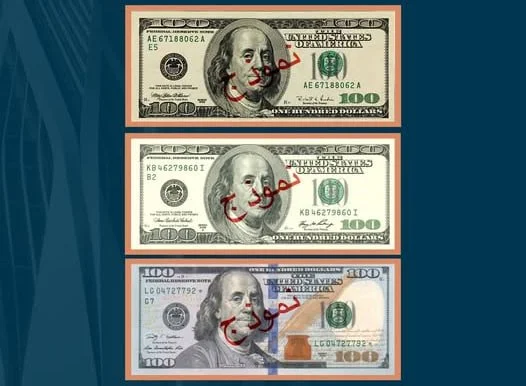
The Central Bank clarified that the laws, instructions and regulations in force do not adopt any discrimination between the different editions of the US dollar currency, noting that the bank continues to receive these issues and deal with them through all authorized banks, provided that they are within the internationally and locally approved standards and regulations.
This clarification comes within the framework of the Central Bank of Iraq’s commitment to enhancing transparency and discipline in the banking sector, protecting customers, and supporting monetary and financial stability in Iraq. https://economy-news.net/content.php?id=65731
Supreme Court Ruling On Trump's Fees Ignites Legal Battle To Recover $170 Billion
Money and Business Economy News - Follow-up Thousands of companies are preparing to launch what could become a protracted legal battle to recover up to $170 billion in tariffs they have already paid to the U.S. government, after the Supreme Court struck down a key trade policy tool of President Donald Trump, Bloomberg reported.
The Supreme Court did not address the issue of recovering the funds when it ruled on Friday that Trump did not have the legal authority to impose those tariffs under an emergency law.
"They take months to write their opinion, and they don't even discuss this point," Trump said during a press conference following the ruling, adding, "We will finish this in the courts within the next five years."
Following the Supreme Court's decision, the US president announced the immediate imposition of new global tariffs of 10%, based on a different legal provision. However, this will not stop the flood of lawsuits that companies intend to file in an effort to recover the tariffs they have paid.
Global Repercussions And Legal Preparations
The loss to the US administration is expected to reverberate across the global economy, as the size and scope of any potential recovery would be unprecedented, according to Bloomberg.
A wide range of companies, large and small, public and private, have spent the past months preparing to improve their legal positions to recover the fees they paid, should the court overturn Trump's actions.
Among the companies being asked to reimburse are retailers such as Costco, major industrial companies such as the American aluminum producer Alcoa, along with well-known brands and hundreds of small businesses. Most of these companies are based in the United States, but they also include local branches of foreign companies.
The White House announced on Saturday that the administration of US President Donald Trump will end some customs measures, following the Supreme Court's decision to overturn the tariffs.
Among the key questions left unanswered for U.S. importers by the Supreme Court ruling are the opportunities and mechanisms for recovering funds collected by the government during the past year under the International Emergency Economic Powers Act, the law that formed the core of the case.
The vote against the Trump administration's decisions was 6-3, with Justice Brett Kavanaugh dissenting, stating, "The Court today says nothing about whether, and if so, how, the government should return the billions of dollars it collected from importers." He added, "But that process is likely to be messy, as was acknowledged during oral arguments last November."
$170 billion
U.S. Customs and Border Protection has so far collected an estimated $170 billion in tariffs imposed by Trump based on the International Emergency Economic Powers Act, the law that has been the subject of legal dispute, Bloomberg noted.
The court ruled that the use of the International Emergency Economic Powers Act to impose customs duties was not legal, but the judges did not address the issue of importers' right to a refund, leaving these matters to the lower court to decide.
The case is scheduled to return to the U.S. Court of International Trade for a new round of legal wrangling.
While the judges were considering the case, more than 1,500 companies filed their own claims before the Commercial Court, with the aim of securing a place in the queue of those claiming a refund of fees.
In recent months, the U.S. Commercial Court has been pressing the Justice Department for at least a preliminary indication of how it will handle the issue of restitution if the administration loses to the Supreme Court.
US President Donald Trump is set to impose additional global tariffs of 10% within the next three days.
Retail and clothing companies were the most concerned, as the tariffs added significant costs for companies that import goods from Asian countries such as China and Vietnam.
The ruling comes amid a wave of earnings announcements from retailers, including Home Depot, which is scheduled to announce its results next Tuesday.
Although most companies report results for financial periods that ended before the decision was issued, Neil Saunders, managing director at data analytics firm GlobalData, said the move could affect earnings and future guidance.
He added: "If companies have already factored in very high costs for fees, there may be room for additional gains."
For his part, Zach Stambour, principal analyst at market research firm eMarketer, wrote: "While the decision provides some near-term relief, it does not dispel the broader uncertainty surrounding trade policy that retailers and brands are facing."
He added: "We expect the ruling to create a moderate boost to retail sales starting this year, but this effect will gradually fade by 2028."
In written memoranda, government lawyers said the administration would not contest the court's authority to issue orders to recalculate duties, but left open the possibility of seeking to restrict the scope of importers eligible for refunds.
The U.S. Court of International Trade has experience in managing mass refunds. In 1998, after the Supreme Court overturned the port maintenance levy imposed on exporters, the court established a mechanism for receiving claims.
According to court records and reports from that period, the battle at the time involved approximately 4,000 cases and nearly $750 million in taxes paid.
However, the scope of the disputed tariffs imposed by Trump is much larger, as the US government informed the trade court that by the end of 2025, more than 300,000 importers had paid those tariffs.
Legal Dispute Over The Form Of Restitution
Ted Murphy, a partner at Sidley Austin, said the ruling means for importers "there is a possibility of a refund," adding that the form and duration of the refund process "are a big issue."
For his part, Daniel Mack, a partner at the international law firm Brian Cave Leighton Paysner, considered the issue of recovery to be "solvable," explaining that the Commercial Court could consolidate all individual claims into a single case.
The National Retail Federation called for a simplified refund mechanism, with David French, the federation's executive vice president of government relations, saying in a statement: "We urge the lower court to ensure a smooth process for returning duties to American importers," adding that easing the burden of duties would provide an economic boost that would allow companies to invest in their operations and other areas.
The emergency law of 1977 makes no mention of customs duties and has never been used to impose them. However, businesses remain subject to other customs procedures.
According to Treasury Secretary Scott Bessent, the U.S. Treasury Department, which has about $774 billion in cash, has enough liquidity to reimburse the revenues from the duties imposed under the International Emergency Economic Powers Act, if ordered to do so, but the process could take weeks or months, and could extend for more than a year.
US President Donald Trump said on Friday he intends to use new trade powers in response to the Supreme Court ruling that overturned the sweeping tariffs.
Bisent also pointed out that refunds could turn into an "institutional waste" for companies that passed the burden of the fees on to consumers, asking: "Costco, which is suing the U.S. government, will it refund its customers?"
Michael Feder, chairman and co-founder of Lalo, a baby products company, told Bloomberg that his company will take all necessary steps to recover more than $2 million in fees it paid under the latest Supreme Court orders.
He added: "We don't expect refunds to be issued overnight even if our files are complete, but we want to be at the front of the line."
He noted that the company worked with its suppliers to reduce costs, and passed on only a "limited amount" of the fee burden to customers, and has not yet decided how to proceed if those funds are recovered, saying: "We'll cross that bridge when we get there."
Disparities Between Sectors And Companies
Bloomberg believes that some industries are likely to receive a larger share of the fees collected under the International Emergency Economic Powers Act up to December 14.
According to an analysis by Bloomberg Economics, the textiles, toys, food and beverage sectors top the list of industries that import finished goods, including wholesalers, retailers and manufacturers with factories outside the United States. Companies that import tariff-subject components to manufacture goods within the country are led by the machinery, electronics and automotive sectors.
Nicole Gorton-Karatelli and Chris Kennedy of Bloomberg Economics said the construction sector, from its purchases of electrical equipment and appliances that may be installed in new buildings, also appears to be particularly vulnerable.
They added that "the size of the company will play a role in determining the value of potential refunds, as any refunded amounts will go to the registered importer who actually paid the duties, meaning that large companies that import themselves will be more likely to receive a refund directly compared to small companies that buy from wholesale importers."
Joe Feldman, an analyst at Tielsey Advisory Group, said the ruling raises more questions than it provides definitive answers for the retail sector.
Congress was divided after the Supreme Court's ruling to overturn Trump's tariffs, with some Republicans and Democrats offering a cautious welcome, while Republican leaders sought an alternative course of action.
He explained that companies' attempts to recover the money they paid will take time, and that commodity prices often do not decrease after they rise, with the exception of basic commodities such as milk and eggs.
Although some operators may benefit from improved profit margins in the near term, they are unlikely to get a sudden cash flow or radically change their pricing structure.
Meanwhile, customs brokers and lawyers warned companies that the US administration might place obstacles in the way of obtaining refunds, such as requiring companies to prove that they did not pass the cost on to consumers, or to provide detailed documentation for each shipment.
Currently, importers are required to at least organize their records in anticipation of refund claims being paid, even if the mechanism for this is not yet clear.
U.S. Customs and Border Protection recently announced that, effective February 6, the Treasury Department will no longer issue the agency's refunds via paper checks, but will instead switch to electronic payments.
FRANK26…2-21-26….BANK STORIES
KTFA
Saturday Night Videos
FRANK26…2-21-26….BANK STORIES
This video is in Frank’s and his team’s opinion only
Frank’s team is Walkingstick, Eddie and Omar in Iraq and guests
Playback Number: 605-313-5163 PIN: 156996#
KTFA
Saturday Night Videos
FRANK26…2-21-26….BANK STORIES
This video is in Frank’s and his team’s opinion only
Frank’s team is Walkingstick, Eddie and Omar in Iraq and guests
Playback Number: 605-313-5163 PIN: 156996#
FRANK26…2-21-26…. THE GATEKEEPERS
KTFA
Saturday Night Video
FRANK26…2-21-26…. THE GATEKEEPERS
This video is in Frank’s and his team’s opinion only
Frank’s team is Walkingstick, Eddie and Omar in Iraq and guests
Playback Number: 605-313-5163 PIN: 156996#
KTFA
Saturday Night Video
FRANK26…2-21-26…. THE GATEKEEPERS
This video is in Frank’s and his team’s opinion only
Frank’s team is Walkingstick, Eddie and Omar in Iraq and guests
Playback Number: 605-313-5163 PIN: 156996#
Jon Dowling: Weekly RV Updates for February 20, 2026
Jon Dowling: Weekly RV Updates for February 20, 2026
2-20-2026
In the latest Weekly RV Report dated February 20th, 2026, Jon Dowling delivers a comprehensive analysis of the unfolding geopolitical, economic, and financial events that are poised to reshape the global landscape.
As Dowling navigates through the complex web of current developments, it becomes evident that the world is on the cusp of significant changes that will impact various aspects of the financial and economic order.
The report kicks off by highlighting a critical deadline set by the White House for March 1st to resolve disputes surrounding stablecoin regulation, particularly the Clarity Act.
Dowling interprets this deadline not as a rigid timeline but as a strategic maneuver indicating a planned move towards broader financial and monetary reform.
This development underscores the evolving landscape of cryptocurrency regulations and their potential impact on the global financial system.
The report sheds light on the escalating conflict involving Iran, Iraq, and their neighbors, with the U.S. forming strategic military alliances with countries like Jordan and Egypt.
Dowling connects these geopolitical tensions with significant financial maneuvers, including the freezing of remittances in Iraq and substantial currency interventions. These actions suggest an impending squeeze on liquidity and capital flows in the Middle East, potentially triggering a ripple effect across global financial markets.
Domestically, the U.S. Supreme Court’s rejection of President Trump’s tariffs is identified as a pivotal moment. However, according to Dowling, Trump has alternative plans, potentially leveraging Article 232 of the Federal Reserve Act or exploring currency resets.
Such moves could unleash trillions of dollars in global currency movements, significantly impacting currencies such as the Iraqi dinar and the Vietnamese dong.
This development is corroborated by billionaire investments in foreign currencies, hinting at a larger, orchestrated financial reset.
A noteworthy development highlighted in the report is Poland’s gold reserves surpassing those of the European Central Bank. This move is seen as a potential weakening of private Western central banking systems and an acceleration towards a return to the gold standard.
The advocacy for monetary accountability by Treasury Secretary nominee Judy Shelton further supports this shift. The implications of such a move could be profound, impacting the global monetary system and the value of commodities like gold and silver.
Dowling’s analysis also focuses on commodities, with silver and gold described as poised for breakout movements.
Despite market uncertainties, these precious metals continue to maintain their value and gain traction. The slight rise in crude oil prices, attributed to ongoing tensions in the Middle East affecting global oil supply, further underscores the interconnectedness of geopolitical events and commodity prices.
As the global financial landscape continues to evolve, Jon Dowling’s Weekly RV Report paints a picture of imminent and profound changes. From cryptocurrency regulations and foreign currency realignments to commodity price shifts and potential crashes in stock and real estate markets, the stage is set for a significant transformation.
Viewers and investors alike are urged to remain vigilant and informed as these developments unfold, with Dowling promising timely updates on any new breaking news over the weekend.