
Thank you to all the subscribers to our Early Access program…we thank you for your continued support.
We are excited to offer this new service to keep you informed and up-to-date on the latest Dinar and currency news.
FRANK26,,.,,8-1-25…..ALOHA THREE ZERO NOTES
KTFA
Friday Night Video
FRANK26,,.,,8-1-25…..ALOHA THREE ZERO NOTES
This video is in Frank’s and his team’s opinion only
Frank’s team is Walkingstick, Eddie in Iraq and guests
Playback Number: 605-313-5163 PIN: 156996#
KTFA
Friday Night Video
FRANK26,,.,,8-1-25…..ALOHA THREE ZERO NOTES
This video is in Frank’s and his team’s opinion only
Frank’s team is Walkingstick, Eddie in Iraq and guests
Playback Number: 605-313-5163 PIN: 156996#
De-Dollarization is Real, Brazil Just Proved it
De-Dollarization is Real, Brazil Just Proved it
Lena Petrova: 8-1-2025
Recent tensions between the United States and Brazil, marked by U.S. tariffs on Brazilian imports and visa bans on Brazilian judges, are not merely trade disputes. They are symptomatic of a deeper struggle over global financial dominance, at the heart of which lies Brazil’s innovative digital payment system, Pix.
This conflict underscores a significant geopolitical and economic shift centered around the long-standing reign of the U.S. dollar.
De-Dollarization is Real, Brazil Just Proved it
Lena Petrova: 8-1-2025
Recent tensions between the United States and Brazil, marked by U.S. tariffs on Brazilian imports and visa bans on Brazilian judges, are not merely trade disputes. They are symptomatic of a deeper struggle over global financial dominance, at the heart of which lies Brazil’s innovative digital payment system, Pix.
This conflict underscores a significant geopolitical and economic shift centered around the long-standing reign of the U.S. dollar.
Launched in 2020, Pix has rapidly transformed Brazil’s financial landscape. This government-run digital payment system offers a fast, free, and accessible platform that has reached over 76% of the population.
It has revolutionized how millions of Brazilians, particularly those previously excluded from formal banking, participate in the digital economy. Crucially, Pix bypasses the U.S. dollar as a settlement currency, allowing transactions to occur without relying on traditional U.S. financial infrastructure.
This innovation aligns perfectly with Brazilian President Lula da Silva’s broader vision of reducing dependence on the U.S. dollar, a trend reflecting the global shift towards currency multipolarity. This growing movement challenges the longstanding dominance of the dollar in global trade and finance.
Washington, however, views the ascent of Pix, and similar initiatives like BRICS Pay, as a direct threat to American economic leverage. Concerned about the implications for U.S. financial giants like Visa and Mastercard, the U.S. has responded with trade investigations and policy measures, including the imposition of tariffs and visa bans.
Yet, these retaliatory measures risk unintended consequences. By attempting to protect the status quo, the U.S. may inadvertently push Brazil and other emerging economies closer to alternative financial networks, bypassing U.S.-controlled systems like the SWIFT messaging network.
Pix’s success isn’t solely about challenging the dollar; it’s a testament to how local currency systems can drive financial inclusion and economic growth.
Rather than simply being an “anti-dollar” or “anti-American” tool, it serves as a powerful engine for domestic development.
The U.S. dollar’s long-standing dominance, built on global consent and trust, is now being questioned as countries like China, India, Russia, and Brazil actively develop new mechanisms for cross-border transactions independent of the dollar.
While a complete dethroning of the dollar will undoubtedly take time due to existing economic ties, the trend toward financial diversification is undeniable. Innovations like Pix are significant contributors to this erosion of U.S. financial hegemony, and ironically, U.S. policy responses could accelerate this very shift rather than prevent it.
The ongoing conflict surrounding Brazil’s Pix system is more than a bilateral dispute; it’s a microcosm of a larger battle over the future of global finance and geopolitical power.
It underscores how digital payment innovations in emerging economies can have profound implications beyond their borders, challenging established norms and redefining economic sovereignty in an increasingly multipolar world.
The U.S. pursuit of preserving dollar hegemony, though understandable, might ultimately serve to hasten the very transition towards a more diversified and distributed global financial system.
Fiat Currency Corrupts Society
Fiat Currency Corrupts Society
Liberty and Finance: 7-31-2025
We often discuss the economic implications of fiat currency – inflation, debt, and market fluctuations. But what if its impact runs far deeper, eroding the very fabric of society’s moral foundation?
This is the provocative argument put forth by financial analyst David Morgan in a recent discussion with Liberty and Finance. Morgan contends that the insidious nature of manipulated money extends beyond the balance sheet, subtly corrupting our collective values and diverting us from true purpose.
Fiat Currency Corrupts Society
Liberty and Finance: 7-31-2025
We often discuss the economic implications of fiat currency – inflation, debt, and market fluctuations. But what if its impact runs far deeper, eroding the very fabric of society’s moral foundation?
This is the provocative argument put forth by financial analyst David Morgan in a recent discussion with Liberty and Finance. Morgan contends that the insidious nature of manipulated money extends beyond the balance sheet, subtly corrupting our collective values and diverting us from true purpose.
Morgan’s central thesis is chillingly simple: when individuals and societies place their faith in a currency that can be arbitrarily created and devalued, rather than in enduring principles or a higher power, a profound moral distortion takes hold.
This misplaced trust in manipulated money, he argues, overshadows our understanding of value itself. Integrity, honesty, and genuine achievement are gradually overshadowed by a pursuit of superficial gain facilitated by an ever-expanding money supply.
The consequence, according to Morgan, is a society increasingly driven by consumerism and deceit.
Fiat currency, untethered from tangible assets or intrinsic worth, fosters an illusion of prosperity that encourages insatiable consumption.
This insatiable desire, in turn, can breed dishonesty, as the pursuit of more becomes paramount, often at the expense of ethical conduct.
Trust, the bedrock of any healthy society, is replaced by a system based on control and an increasingly pervasive illusion of wealth. Authenticity gives way to a culture where appearances and perceived affluence dictate status.
As society collectively accepts this “false money as truth,” Morgan warns, broader distortions inevitably emerge. These aren’t merely economic in scope; they permeate spiritual, cultural, and political landscapes.
The spiritual void created by a focus on material accumulation can lead to a loss of meaning and purpose. Culturally, a short-term, instant-gratification mindset replaces long-term planning and intergenerational responsibility. Economically, the cycle of boom and bust becomes more pronounced, enriching a few while destabilizing the many.
David Morgan’s message is not merely a critique; it’s a poignant call to action. He advocates for a fundamental shift back to the principles of sound money – currency rooted in real value and not subject to political manipulation.
More importantly, he urges a return to inner values – principles of integrity, truth, and genuine worth that transcend mere financial metrics. Only by reclaiming these foundational elements, Morgan asserts, can society truly reclaim genuine freedom, purpose, and a robust moral compass.
His insights serve as a potent reminder that the health of our financial system is inextricably linked to the health of our collective soul.
For a deeper dive into these profound assertions and to fully grasp the nuances of David Morgan’s argument, viewers are encouraged to watch the full video from Liberty and Finance.
Seeds of Wisdom RV and Economic Updates Friday Evening 8-1-25
US SEC Rolls Out ‘Project Crypto’ to Rewrite Rules for Digital Assets
In a landmark shift for U.S. financial regulation, Securities and Exchange Commission Chair Paul Atkins has launched “Project Crypto,” a forward-looking initiative designed to overhaul how digital assets are governed in America. The project follows major policy recommendations released in a recent White House report on digital finance.
Atkins said the initiative aims to modernize the SEC for 21st-century capital markets, streamline regulation for crypto innovators, and ensure the U.S. maintains global leadership in digital finance.
A Response to the White House’s Digital Finance Blueprint
US SEC Rolls Out ‘Project Crypto’ to Rewrite Rules for Digital Assets
In a landmark shift for U.S. financial regulation, Securities and Exchange Commission Chair Paul Atkins has launched “Project Crypto,” a forward-looking initiative designed to overhaul how digital assets are governed in America. The project follows major policy recommendations released in a recent White House report on digital finance.
Atkins said the initiative aims to modernize the SEC for 21st-century capital markets, streamline regulation for crypto innovators, and ensure the U.S. maintains global leadership in digital finance.
A Response to the White House’s Digital Finance Blueprint
The new initiative was formed directly in response to the Biden-era President’s Working Group report, titled “Strengthening American Leadership in Digital Financial Technology.” The report urged federal agencies to build a coherent market structure for digital assets while eliminating fragmented oversight.
Under Project Crypto, Atkins proposed:
Unified licensing rules to allow brokerages to offer multiple digital instruments under a single registration;
Regulatory grace periods for early-stage crypto startups, including ICOs and decentralized software projects, to encourage innovation without immediate legal exposure;
Legal protections for self-custody, ensuring individuals and institutions retain the right to manage digital assets without custodial intermediaries;
A clear separation between commodities and securities, aligning crypto assets more accurately with the CFTC and SEC’s respective mandates.
“Many of the Commission’s legacy rules and regulations do not make sense in the twenty-first century — let alone for on-chain markets,” Atkins wrote. “The Commission must revamp its rulebook so that regulatory moats do not hinder progress and competition.”
A Regulatory Reset: Ending ‘Enforcement-First’ Tactics
Atkins’ leadership marks a dramatic reversal of the SEC’s prior posture, which was widely criticized for regulating crypto by enforcement rather than by policy. Since his appointment, the agency has:
Ended regulation-by-enforcement as a default approach to the crypto sector;
Approved multiple crypto exchange-traded funds (ETFs);
Clarified staking income guidance, affirming that rewards earned from proof-of-stake validation do not constitute securities transactions;
Authorized in-kind redemptions for crypto ETFs, a key functionality for institutional investors managing large-scale inflows and outflows.
These reforms reflect a deeper institutional commitment to integrating crypto into the mainstream financial system, rather than pushing it to the regulatory margins.
Joint Oversight with CFTC and a Focus on Stablecoins
In line with the White House report’s recommendations, joint jurisdiction between the SEC and the Commodity Futures Trading Commission (CFTC) will now define federal oversight of the crypto sector:
The CFTC will assume primary responsibility over spot crypto markets, affirming its role as the chief regulator for crypto commodities like Bitcoin.
The SEC will focus on security tokens, tokenized investment contracts, and digital asset platforms that function more like exchanges or broker-dealers.
The report also laid out a framework for stablecoin policy, interagency coordination, and banking integration — areas that will be built out as Project Crypto progresses.
The Path Ahead: Toward American Crypto Leadership
Project Crypto signals more than regulatory reform — it marks a strategic repositioning of the United States in the global digital economy. By creating legal clarity and reducing uncertainty, the initiative is designed to attract builders, protect consumers, and ensure that digital asset innovation remains anchored on American soil.
“Outfitting the SEC for internet capital markets and onchain finance is no longer optional — it’s essential for economic competitiveness,” Atkins said.
As Washington realigns its crypto policies, Project Crypto could become a cornerstone in defining the next era of financial innovation — one that balances open markets, strong protections, and global leadership.
@ Newshounds News™
Source: Cointelegraph
~~~~~~~~~
Senator Lummis Proposes Law Requiring Fannie and Freddie to Count Crypto in Mortgage Risk Evaluations
In a significant step toward integrating digital assets into U.S. housing finance, Senator Cynthia Lummis (R‑Wyo.) has introduced the 21st Century Mortgage Act, which would compel Fannie Mae and Freddie Mac to consider cryptocurrency holdings when evaluating risk in single-family mortgage applications.
The legislation follows recent action by the Federal Housing Finance Agency (FHFA), whose director Bill Pulte ordered that crypto reserves be counted as eligible assets in underwriting models. The new measure would formalize and expand that shift, positioning the U.S. mortgage industry to better reflect a digital-first financial reality.
From Cold Storage to Homeownership: A Modernization of Risk Assessment
Under current practices, government-sponsored enterprises (GSEs) like Fannie and Freddie typically assess loan risk based on traditional assets such as cash, retirement accounts, and securities. Cryptocurrency, despite being a growing source of wealth—especially among younger Americans—has largely been excluded due to volatility concerns and regulatory ambiguity.
The 21st Century Mortgage Act changes that by:
Mandating recognition of digital assets recorded on cryptographically secure ledgers;
Barring lenders from requiring borrowers to liquidate crypto holdings into fiat currency simply to qualify for consideration in mortgage risk evaluations;
Aligning GSE underwriting with financial realities in which digital savings play an increasingly central role.
Senator Lummis emphasized that this measure is a response to declining homeownership rates among younger Americans and the widespread adoption of crypto.
“Rather than punishing innovation, government agencies must evolve to meet the needs of a modern, forward‑thinking generation,” Lummis stated.
Backed by FHFA Policy and Market Momentum
The legislation would codify a recent directive by FHFA Director Bill Pulte, who in June instructed Fannie Mae and Freddie Mac to:
Treat cryptocurrency reserves as eligible assets in risk assessments for single-family loans;
Develop processes to recognize those balances without requiring conversion into U.S. dollars;
Review how broader digital asset holdings—especially Bitcoin—can be safely integrated into mortgage underwriting models.
This marks a break from legacy practices, where underwriters excluded crypto entirely, citing market unpredictability and lack of clear guidance.
Pulte’s move signals a regulatory rethinking of digital asset legitimacy, especially as the FHFA—tasked with overseeing Fannie, Freddie, and the Federal Home Loan Banks—seeks to modernize the housing finance ecosystem.
Policy Clarity Without Crypto Mortgages (Yet)
It’s important to note: the bill does not permit mortgage repayments in cryptocurrency. Instead, it allows verified crypto holdings to be counted in:
Asset verification, used to determine borrower capacity;
Risk modeling, used by GSEs to assess portfolio strength and loan eligibility.
By expanding the asset base eligible for consideration, the law aims to give crypto-native borrowers access to the same mortgage pathways as traditional savers.
A Generational Shift in Homeownership Strategy
Data from the U.S. Census Bureau shows homeownership rates for Americans under 35 at just 36.6%, even as 21% of U.S. adults report holding crypto—with two-thirds under age 45. These figures highlight a generational mismatch between how financial stability is measured and how wealth is now built.
The bill also arrives as part of a broader shift in regulatory tone under the current administration, which has begun addressing crypto policy more comprehensively—particularly in areas of banking, taxation, stablecoins, and capital markets.
Bridging Digital Assets and Traditional Finance
Senator Lummis, a long-time crypto policy advocate, is leveraging bipartisan concern over declining homeownership and outdated underwriting models to push for practical integration of digital finance into federal housing policy.
If passed, the 21st Century Mortgage Act could become a template for future crypto-inclusive reforms, enabling financial institutions to recognize digital savings without compromising risk standards or requiring unnecessary fiat conversions.
As Lummis frames it: modernization isn’t about abandoning oversight — it’s about updating the rules to reflect financial reality.
@ Newshounds News™
Source: CryptoSlate
~~~~~~~~~
Coinbase Launches XRP Perpetual Futures to Expand Institutional Access
Coinbase is set to launch XRP U.S. Perpetual-Style Nano Futures on August 18, marking a significant expansion in its derivatives lineup and providing institutional investors with a capital-efficient, margin-enabled vehicle to gain exposure to one of crypto’s most liquid assets.
Announced via Coinbase Institutional on July 29, this new offering represents a regulated and long-duration alternative to traditional spot trading, enhancing access to XRP through Coinbase Derivatives LLC, a CFTC-registered designated contract market.
XRP Futures Designed for Institutional Utility and Spot-Price Alignment
The nano XRP perpetual-style contract—listed under the symbol XPP—is structured to mirror the XRP spot price through a dynamic funding rate mechanism, which credits or debits open positions based on market movements.
Each contract will represent 500 XRP, offering a 5-year, cash-settled duration, rebalancing weekly via clearing adjustments. Trading will occur from Friday evening through the following Friday afternoon, with a short weekly pause, and contracts will auto-roll through December 2030.
“The Coinbase Derivatives, LLC nano XRP Perp Style Futures Contract is a 5-year cash-settled futures contract that tracks closely to spot price by using a funding rate to debit/credit open positions via a clearing cash adjustment,” the company’s product documentation explains.
This format enables institutions to hedge XRP exposure, speculate on future price trends, or leverage margin trading strategies, all within a regulated U.S. derivatives framework.
Building on a Regulated Futures Framework
Coinbase’s August launch builds on groundwork laid earlier this year:
In April 2025, Coinbase filed with the Commodity Futures Trading Commission (CFTC) to self-certify XRP futures.
That same month, the exchange launched two monthly XRP futures products: a nano contract (500 XRP) and a larger XRL contract (10,000 XRP)—both cash-settled and monthly expiring.
The upcoming perpetual-style XRP futures mark a clear evolution from those products by eliminating expiration and extending visibility for long-term strategies.
This move aligns with Coinbase’s broader initiative to reshape U.S. market access for digital assets through regulated derivatives offerings that mirror traditional financial instruments but leverage the liquidity and innovation of crypto markets.
Why It Matters: Institutional Crypto Derivatives Come of Age
As the digital asset sector matures, demand is increasing for compliant, capital-efficient tools that offer reliable price tracking, risk management, and regulatory clarity. Coinbase’s latest XRP futures offering addresses this need, particularly at a time when:
Institutional participation in crypto is rising;
CFTC-registered exchanges are gaining favor over offshore alternatives;
And digital asset derivatives are becoming central to portfolio construction and hedging strategies.
This development further legitimizes XRP as a viable component of institutional portfolios, especially in light of growing clarity around its legal and regulatory standing in the U.S.
Outlook: Coinbase Pushes for Derivatives Dominance
With Coinbase Derivatives LLC at the helm and XRP nano perpetuals leading the charge, the exchange is cementing itself as a frontrunner in regulated crypto futures, aiming to provide U.S. investors with alternatives that are:
Lower in capital requirements than full spot holdings;
More flexible in exposure timeframes;
And compliant with evolving CFTC oversight.
This launch not only expands investor access to XRP but also signals Coinbase’s broader intent to bridge the gap between traditional finance and digital assets—one futures contract at a time.
@ Newshounds News™
Source: Bitcoin.com
~~~~~~~~~
Visa Expands Stablecoin Settlement Platform With PYUSD, USDG, EURC and Adds Stellar, Avalanche Support
Visa has announced the addition of three new stablecoins and two additional blockchains to its digital asset settlement platform, further reinforcing its commitment to a multi-chain, multi-currency future in global payments.
The move is part of a strategic collaboration with Paxos, the blockchain infrastructure provider behind PayPal’s digital asset products, and comes amid growing institutional demand for regulated stablecoins following the recent passage of the GENIUS Act in the United States.
Visa Adds PYUSD, USDG, and EURC to Stablecoin Settlement Suite
The newly supported stablecoins include:
PayPal USD (PYUSD) – a U.S. dollar-backed stablecoin issued by Paxos.
Global USD (USDG) – another USD-backed token structured for institutional settlement.
EURC – a euro-backed stablecoin issued by Circle.
These stablecoins join USDC, which Visa first integrated in 2021. With the latest additions, Visa now supports four fiat-backed stablecoins and allows settlement across 25+ fiat currencies, enabling partners to conduct multi-currency settlements with greater capital efficiency.
Stellar and Avalanche Join Ethereum and Solana on Visa’s Blockchain Roster
In addition to expanding its stablecoin lineup, Visa has also extended blockchain compatibility to include:
Stellar (XLM)
Avalanche (AVAX)
These new networks join Ethereum and Solana, which were previously integrated into Visa’s pilot and settlement infrastructure. This multi-chain expansion is part of Visa’s effort to build a scalable, flexible architecture for programmable money.
“When stablecoins are scalable, interoperable, and trusted, they can fundamentally transform how money moves globally,” said Rubail Birwadker, Visa’s Global Head of Growth Products and Partnerships.
Visa’s updated platform positions it as a neutral settlement layer for Web3 applications and enterprise payment solutions alike, offering compatibility across token types and blockchain ecosystems.
GENIUS Act Fuels Stablecoin Momentum Across Finance Sector
Visa’s latest move follows a surge of interest in stablecoins across the financial sector, spurred by the GENIUS Act, now U.S. law, which formally regulates fiat-backed digital currencies under federal banking oversight.
Since the law’s passage:
Citibank, Bank of America, and other major institutions have signaled plans to issue or custody stablecoins.
Global transaction volumes involving stablecoins have continued to rise.
Analysts project the stablecoin market will expand from $275 billion to $2 trillion by 2030.
Visa’s stablecoin expansion comes at a pivotal moment for the industry, as tokenized money begins to intersect with traditional finance on a global scale.
Strategic Positioning for the Future of Money
Visa’s continued investment in blockchain infrastructure and regulated stablecoins reflects a deliberate effort to future-proof its payment network, offering partners a toolkit that spans currencies, jurisdictions, and blockchain rails.
With support for:
4 stablecoins (USDC, PYUSD, USDG, EURC)
4 blockchains (Ethereum, Solana, Stellar, Avalanche)
…Visa is poised to serve as a critical bridge between the traditional financial system and the decentralized internet of value.
@ Newshounds News™
Source: TheCryptoBasic
~~~~~~~~~
Seeds of Wisdom Team RV Currency Facts Youtube and Rumble
Newshound's News Telegram Room Link
Follow the Roadmap
Follow the Timeline
Seeds of Wisdom Team™ Website
Thank you Dinar Recaps
7 Valuable Lessons About Saving Money
7 Valuable Lessons About Saving Money
Sean Bryant GOBankingRates
Growing up with frugal parents, I was often the kid who was teased for having secondhand clothes, not going on vacations, and bringing generic-branded food to school. However, now that I am an adult, I am very thankful for the valuable lessons my parents taught me about saving.
It has shaped my views on money, spending, saving and finances in general. While many of my friends have struggled with debt or excessive consumerism, I have never had to face these issues.
Within this article, I’ll go through some of the valuable life lessons my frugal parents taught me about money.
7 Valuable Lessons About Saving Money
Sean Bryant GOBankingRates
Growing up with frugal parents, I was often the kid who was teased for having secondhand clothes, not going on vacations, and bringing generic-branded food to school. However, now that I am an adult, I am very thankful for the valuable lessons my parents taught me about saving.
It has shaped my views on money, spending, saving and finances in general. While many of my friends have struggled with debt or excessive consumerism, I have never had to face these issues.
Within this article, I’ll go through some of the valuable life lessons my frugal parents taught me about money.
Distinguishing Needs From Wants
Growing up with frugal parents taught me the valuable skill of distinguishing between my needs and wants. While my friends were often caught up in the latest trends and fads, my parents refused to buy every item I asked for. Instead, they emphasized the importance of prioritizing needs, like a new winter coat, over wants, like the newest toy.
This is something that I have carried through to my adulthood. Now, I try to focus on essential expenses and cut back on frivolous spending. This has helped me make informed financial decisions and avoid unnecessary debt.
How To Budget
I also learned how to budget and the importance of budgeting. I observed my parents tracking what they spent and saved as a child. They were careful not to spend more than they could afford.
If they had a goal, they saved towards it. This early exposure to budgeting taught me how to set my own clear financial goals and how to allocate resources according to those goals.
“Children in frugal households witness budgeting as a regular activity,” said Jake Claver, CEO of Syndicately. “This exposure naturally ingratiates the concept of budgeting in their daily lives.
It becomes less of a chore and more of an integral part of their financial routine. By learning to allocate resources and plan expenses from a young age, children are better equipped to manage their finances effectively as adults.”
Delayed Gratification
Delayed gratification is a lesson I was more reluctant to learn as a child but one I am now thankful for as an adult. When there was something that I wanted to buy, my parents encouraged me to wait and to think about the purchase and what it would mean in terms of longevity, monetary value, and the value I placed on the item. They then encouraged me to save my money and if I still wanted to purchase the item later, I could.
TO READ MORE: https://finance.yahoo.com/news/grew-frugal-parents-7-valuable-000019101.html
Seeds of Wisdom RV and Economic Updates Friday Afternoon 8-1-25
Good Afternoon Dinar Recaps,
India Lets 30 Countries Trade With Rupee in New BRICS Strategy
As tensions escalate between Washington and the BRICS alliance, India has taken a bold step to internationalize the rupee, allowing nearly 30 countries to settle cross-border transactions directly in its national currency. The move comes just as U.S. President Donald Trump imposed steep 25% tariffs on Indian goods, citing what he described as anti-American activities, including New Delhi’s ongoing energy and defense partnerships with Russia.
The development represents a clear advance in the BRICS bloc’s de-dollarization strategy, with India now positioning the rupee as an alternative settlement currency for international trade — a direct challenge to U.S. dollar dominance.
Good Afternoon Dinar Recaps,
India Lets 30 Countries Trade With Rupee in New BRICS Strategy
As tensions escalate between Washington and the BRICS alliance, India has taken a bold step to internationalize the rupee, allowing nearly 30 countries to settle cross-border transactions directly in its national currency. The move comes just as U.S. President Donald Trump imposed steep 25% tariffs on Indian goods, citing what he described as anti-American activities, including New Delhi’s ongoing energy and defense partnerships with Russia.
The development represents a clear advance in the BRICS bloc’s de-dollarization strategy, with India now positioning the rupee as an alternative settlement currency for international trade — a direct challenge to U.S. dollar dominance.
Rupee Push Gains Momentum Through Vostro Accounts
At the heart of India’s effort is the use of Vostro bank accounts, a mechanism enabling foreign countries to settle transactions with India in rupees rather than relying on the U.S. dollar or other reserve currencies. These accounts are maintained by Indian banks on behalf of overseas banks, allowing direct rupee remittances without conversion losses.
The Reserve Bank of India (RBI) recently removed caps on investments made via these accounts, signaling a major policy shift toward facilitating rupee-based trade.
So far, 22 of the 30 countries have already executed trades using the rupee, including both BRICS members and key economic partners:
BRICS/Partners: Russia, Belarus, Malaysia, Uganda
Others: Bangladesh, Botswana, Fiji, Germany, Guyana, Israel, Kazakhstan, Kenya, Maldives, Mauritius, Myanmar, New Zealand, Oman, Seychelles, Singapore, Sri Lanka, Tanzania, United Kingdom
Trump Responds with Tariffs and Penalties
While India moves ahead with its rupee trade initiative, President Trump has responded forcefully. In addition to the 25% tariffs on Indian imports, the U.S. has penalized India for purchasing Russian crude oil and military hardware, defying American sanctions on Moscow.
Trump’s latest actions are part of a broader strategy to confront BRICS countries that seek to undermine the dollar’s global role. India’s growing rupee diplomacy is being interpreted in Washington as a key piece of this puzzle.
Trump, in his public remarks, has warned that nations benefiting from U.S. trade ties must not simultaneously support alternative financial systems that weaken American influence. His administration appears to view India’s Vostro-driven settlement system as a strategic provocation.
India Advances, BRICS Realigns
India’s rupee trade policy is not just about currency—it is a geopolitical signal of intent. By reducing reliance on the dollar for trade settlements, New Delhi is asserting economic sovereignty, while also reinforcing BRICS goals of multipolar finance and reduced Western dependency.
According to sources familiar with the RBI’s strategy, the goal is long-term: to position the rupee as a viable medium of exchange within Asia, Africa, and the broader Global South.
In this new financial architecture, BRICS-aligned economies are working together to design non-dollar payment rails, and India is becoming a central player in that effort.
Outlook: Rupee Trade Meets Washington Resistance
While India’s Vostro framework is gaining traction globally, its future viability will depend on how the U.S. reacts in the coming months. The Trump administration’s tariffs are just one layer of pressure. Additional sanctions or financial restrictions on countries using rupee settlements could emerge, potentially complicating India's push.
Still, India’s currency diplomacy signals a deeper BRICS realignment, one where national currencies replace dollar hegemony — at least in targeted sectors of bilateral trade. What comes next may reshape global commerce and force emerging economies to choose between U.S. alignment or BRICS autonomy.
@ Newshounds News™
Source: Watcher.Guru
~~~~~~~~~
Seeds of Wisdom Team RV Currency Facts Youtube and Rumble
Newshound's News Telegram Room Link
Follow the Roadmap
Follow the Timeline
Seeds of Wisdom Team™ Website
Thank you Dinar Recaps
“Tidbits From TNT” Friday 8-1-2025
TNT:
Tishwash: The dinar rises and trade falls... a monetary paradox that confuses markets and curbs consumption.
Amid an atmosphere of cautious anxiety, Iraqi markets are gripped by a deep recession, with economic indicators intersecting with political variables, creating a stagnation-ridden business environment characterized by stagnation and low expectations. The sharp decline in purchasing power, the chronic volatility of the dinar's exchange rate against the dollar, and the government's shrinking spending are all symptoms of a complex problem that extends beyond the market to touch upon the very structure of Iraq's rentier economy.
TNT:
Tishwash: The dinar rises and trade falls... a monetary paradox that confuses markets and curbs consumption.
Amid an atmosphere of cautious anxiety, Iraqi markets are gripped by a deep recession, with economic indicators intersecting with political variables, creating a stagnation-ridden business environment characterized by stagnation and low expectations. The sharp decline in purchasing power, the chronic volatility of the dinar's exchange rate against the dollar, and the government's shrinking spending are all symptoms of a complex problem that extends beyond the market to touch upon the very structure of Iraq's rentier economy.
The manifestations of this stagnation are manifested in a state of "passive waiting" prevalent among consumers and traders. Despite its relative recovery, the dollar has become a source of suspicion rather than a catalyst for activity. The more the price declines, the more markets freeze, and citizens withdraw from the trading scene in hopes of further declines. This turns purchasing into a financial bet. An Iraqi economist summed it up by saying, "Demand in Iraq no longer follows need, but rather monetary sentiment."
The statements of Rashid Al-Saadi, a representative of the Baghdad Chamber of Commerce, are an indication of the growing entanglement between economics and politics. He clearly pointed to the impact of the Central Bank's decisions, the budget delays, and the reduced reliance on the parallel market. These observations reinforce the conviction that the issue goes beyond market fluctuations to the declining effectiveness of fiscal and monetary policy tools, given the absence of a proactive state role that can absorb shocks.
The repercussions extend to a darker landscape as experts speak of business losses, a shrinking real estate market, a decline in investment, and a weakening confidence in the effectiveness of monetary policy. These indicators reveal a flaw in the Iraqi economy's equation, which is based on government spending that is only achieved through the approval of a budget, oil revenues that are slowly translated into projects, and a legislative structure that hinders market flexibility rather than protecting it.
It appears that the state, as the economic center of gravity, has become a bystander or a deferent, which has pushed the market toward a horizontal recession across various sectors, from real estate to automobiles, from tourism to trade, without the decline in inflation having any significant revival effect.
In contrast to this bleak landscape, some sectors, such as agriculture, the food industry, and e-commerce, appear less affected. However, they remain exceptions that do not alter the nature of the dilemma. The problem is structural, requiring urgent monetary and legislative reforms to restore investor confidence, curb market volatility, and recalibrate the relationship between the state and the private sector, moving away from improvisation and persecution rather than partnership. link
************
Tishwash: Oil is not another reason delaying the submission of budget tables to Parliament, and a warning against entering 2026 without them.
Economic expert Safwan Qusay revealed non-oil reasons behind the delay in submitting the budget schedules to parliament, warning of the repercussions of entering 2026 without actual approval, which could disrupt public spending and impact economic stability.
Qusay told Al Furat News: "The delay in sending it is not only related to fluctuating oil prices, but also to a government attempt to audit the numbers of employees, retirees, and those covered by welfare and the ration card, which may reveal exaggerations and inaccurate funding in some items over the past years."
He added, "Financial and economic stability requires sustaining spending rates at levels similar to those recorded in the 2024 budget, which amounted to approximately 360 trillion dinars," noting that "a decline in public spending could lead to an economic contraction, particularly in items related to new projects and job opportunities."
Qusay explained that "the government continues to spend on salaries, pensions, welfare, and the food basket, as these are governed by laws. However, investment agreements and development projects require financial schedules to ensure sustainable funding and reduce unemployment rates."
He pointed out that "budget tables represent an important reference for the private sector, which relies on them to plan imports and investments," noting that "the absence of these tables will lead to economic confusion, requiring urgent intervention from Parliament to avoid entering the next year without a legal basis for spending."
In a related context, Qusay noted that "oil prices during the first half of 2025 reached approximately $70 per barrel," stressing that "the future outlook for the markets indicates the possibility of prices rising due to increased demand from China and the United States and improved understandings between the European Union and the United States, which could push the price to $73."
Regarding production policy, the expert concluded by saying, "The Ministry of Oil is determined to increase production capacity to nearly 6.5 million barrels per day over the coming years, while Iraq's OPEC quota is gradually increasing by 50,000 barrels per month in preparation for returning to the production capacity approved in November 2023." link
************
Tishwash: Industry: The first locally manufactured portable thermal imaging system has been completed and security authorities have been notified.
The Ministry of Industry announced on Friday the completion of the first locally manufactured portable thermal imaging camera system, while noting that it had approached security and military agencies to discuss the use of this national system.
Ministry spokeswoman Duha al-Jubouri said in a press statement that "the ministry has completed the first portable thermal camera system, manufactured locally at the Al-Kindi factory affiliated with the General Company for Communications and Capacity in Nineveh Governorate.
" She added that "the new system is used for field surveillance and covers an area of up to 360 degrees, with a range of 6 to 30 kilometers, depending on the required specifications. It operates on solar energy and batteries to provide the necessary energy for long periods."
She confirmed that "the ministry has approached security and military agencies, such as the Ministries of Defense and Interior, to benefit from this national system," noting that "it will work to develop it later." link
************
Mot: Don't Knows bout U!! -- But When the RV Happens - I'm Gunna

Mot: .... I’ve never slipped on sunshine, just sayin’

Coffee with MarkZ, joined by MM and Crew. 08/01/2025
Coffee with MarkZ, joined by MM and Crew. 08/01/2025
Some highlights by PDK-Not verbatim
MarkZ Disclaimer: Please consider everything on this call as my opinion. People who take notes do not catch everything and its best to watch the video so that you get everything in context. Be sure to consult a professional for any financial decisions
Member: Good Bye July- Welcome to August .
Member: Happy Friday Everyone!! Let's hope we have Great news today.
Coffee with MarkZ, joined by MM and Crew. 08/01/2025
Some highlights by PDK-Not verbatim
MarkZ Disclaimer: Please consider everything on this call as my opinion. People who take notes do not catch everything and its best to watch the video so that you get everything in context. Be sure to consult a professional for any financial decisions
Member: Good Bye July- Welcome to August .
Member: Happy Friday Everyone!! Let's hope we have Great news today.
Member: Rumor is- something is supposed to happen today?????
Member: Guess we wait and see what the tariffs starting today does to the economy……
MilitiaMan joins the stream early today. Please listen to replay for his information and opinions
MZ: No new bond or group news since last night. And in Iraq -Fridays are holy days….so not much news there today.
MZ: My redemption/wealth management contacts were told they are not working this weekend. Could they be called in? Absolutely.
Member: Thanks Mark and MilitiaMan……hope we all have a very good weekend!
THE CONTENT IN THIS PODCAST IS FOR GENERAL & EDUCATIONAL PURPOSES ONLY&NOT INTENDED TO PROVIDE ANY PROFESSIONAL, FINANCIAL OR LEGAL ADVICE. PLEASE CONSIDER EVERYTHING DISCUSSED IN MARKZ’S OPINION ONLY
FOLLOW MARKZ : TWITTER . https://twitter.com/originalmarkz?s=21. TRUTH SOCIAL . https://truthsocial.com/@theoriginalm...
Mod: MarkZ "Back To Basics" Pre-Recorded Call" for Newbies 10-19-2022 ) https://www.youtube.com/watch?v=37oILmAlptM
MARKZ DAILY LINKS: https://theoriginalmarkz.com/home/
Note from PDK: Please listen to the replay for all the details and entire stream….I do not transcribe political opinions, medical opinions or many guests on this stream……just RV/currency related topics.
ZESTER'S LINK TREE: https://linktr.ee/CrazyCryptonaut
THANKS FOR JOINING. HAVE A BLESSED DAY! SEE YOU ALL TUESDAY THROUGH THURSDAY EVENINGS FOR NEWS @ 7:00 PM EST ~ UNLESS BREAKING NEWS HAPPENS! FROM NOW ON NO MORE NIGHTLY PODCASTS ON MONDAYS AND FRIDAYS
News, Rumors and Opinions Friday 8-1-2025
Note: All intel should be considered as "Rumors" until we receive official announcements ...and “Rates and Dates” could change anytime until we get to the banks/redemption centers.
RV Excerpts from the Restored Republic via a GCR: Update as of Fri. 1 August 2025
Compiled Fri. 1August 2025 12:01 am EST by Judy Byington
Possible Timing of Global Currency Reset:
Thurs. 31 July 2025: Iraqi citizens were told that their new rate will go live Thursday morning 31 July 2025.
Note: All intel should be considered as "Rumors" until we receive official announcements ...and “Rates and Dates” could change anytime until we get to the banks/redemption centers.
RV Excerpts from the Restored Republic via a GCR: Update as of Fri. 1 August 2025
Compiled Fri. 1August 2025 12:01 am EST by Judy Byington
Possible Timing of Global Currency Reset:
Thurs. 31 July 2025: Iraqi citizens were told that their new rate will go live Thursday morning 31 July 2025.
Thurs. 31 July 2025 : Forex rules make it so that even though the new foreign currency rates may be posted, they are (allagedly) not available to the front end of the Forex and public until Fri. afternoon 1 Aug. at 2 pm EDT. Banker is being advised that email announcements and 800 numbers would begin on Fri. 1 Aug. and first day for scheduling appointments is Mon. 4 August.
Thurs. 31 July 2025 Wolverine: Hi my dear friends. Everything is looking good for the 1st of August. Everything is ready to go and all contracts have been signed. All we can do is pray and that there are no more delays. All I can tell you that we are in the verge of welcoming a new world where we can all live in peace and harmony and be able to help our fellow man.
Thurs. 31 July 2025 Adam Stephens, A2Z Dreams Contributor: “The tariffs go into full effect at 12 midnight EST. 9pm PST. I’m watching very closely over the next couple hours. A lot of events are in play. Over the past couple of weeks, container ships carrying goods from Vietnam have been unable to offload containers because they have been awaiting the new tariffs and also(allegedly) the new currency of Vietnam. This afternoon, the Long Beach and Los Angeles Ship Pilots and Tug Boats were given orders to bring those ships at anchor into the docks. The Longshoremen were also authorized for overtime. Reno and west coast banks are closed. I’m watching for Forex to come to life at anytime. Timing is always the factor. Today I went to my local Chase where I opened my family trust account. I asked the teller some pointed questions and she confirmed that on her screen she saw the Dinar, Dong, Rupiah and VES was also there. They all had a DNB as they were in what she called it… “a internal change” as the teller said.”
Thurs. 31 July 2025 Jennifer Fallaws We did have an earthquake before Wednesday. Rates did show up on the bank screens on Wednesday. AA Gabriel today: They are watching the rates change. Rates must be within an agreed upon range to post to public screens. If they are in range, they will post the rate changes today 7/31/25 at 3 pm eastern/ noon my time/ 10pm Iraq time. If not they will try, at that time, every day until it does. It has started.
Thurs. 31 July 2025 Wolverine: “Hi guys. I received news from a member from Colombia saying that the Bank of Colombia was about to embark her house and she was under a lot of stress and could not get any help anywhere. Today she received a letter from the bank telling how much she owes them. The amount is $0.00000000. The debt has been canceled . She is very emotional right now and thanks God that she is able to keep her house. Looks like things are happening guys. God bless.” …Wolverine
On Fri. 1 Aug. President Trump: “You’re gonna get a lot of payments. You’re gonna be very happy. If you’re a citizen of this country, you’re gonna be getting a lot of money in August.” NESARA/GESARA rollout. The Fri. 1 Aug. deadline is the Aug. 1 deadline – it stands strong, and will not be extended. A big day for America! …Donald J. Trump @theRealDonaldTrump https://x.com/majeed66224499/status/1950524454582599938?t=4oBCykFj0doBdViWbII3eA&s=09
Bruce: Your R&R will (allegedly) be in your QFS Account when you open it up at your redemption. DOGE payments are (allegedly) still coming out on the Fri., Sat, Sun, 1, 2, 3 of August. Social Security increases will(allegedly) come in the month of August. Most all exchanges will be(allegedly) done by the middle of Aug. By Mon. 4 August the public may be notified on how to get their QFS Account.
Mon. 4 Aug. 2025 Wolverine: Tier4b Redemption(allegedly) starts. New rates could show up on the Forex.
Fri. 15 Aug. 2025 Wolverine: Deadline for GCR to (allegedly) go public and have new rates listed on the Forex.
Fri. 15 Aug. 2025: Deadline for new rates to (allegedly) be on Forex.
~~~~~~~~~~~~~~
Thurs. 31 July 2025 Mr. Pool (MrPool_QQ) posted at 5:21 PM: https://t.co/osW5yrH4yF https://x.com/MrPool_QQ/status/1951030592373739696?t=x0_K53vyTolD_bk2M4nqPA&s=03
The first shockwave just hit. The system(allegedly) can’t absorb it. FED servers are dark. QFS 100% synced. Asset migration is complete. Gold now backs every credit.
The US Treasury Staff has(allegedly) been locked out: https://x.com/looP_rM_3117211/status/1950973884154499453?t=NKDccOOqe0VcYtxdIaot6A&s=03
Dow (allegedly) frozen at 11,111.
The reset is (allegedly) LIVE. You won’t hear this on the news.
During a two trillion $ clearance Fedwire Error Code 33 was hit and funds were(allegedly) redirected away from the New York Fed to Quantum holding.
Read full post here: https://dinarchronicles.com/2025/08/01/restored-republic-via-a-gcr-update-as-of-august-1-2025/
************
Courtesy of Dinar Guru: https://www.dinarguru.com/
Walkingstick [Iraqi banking friend Aki update] WALKINGSTICK: Question: "Why the delay? Why in the world has it taken so long this year?" AKI: Many of the politics in our country. You can also say it's part of our economic issues but those can be resolved with the new exchange rate. It's mainly the political side because our Prime Minister want it to be kept silent. He says he wants to keep the exchange rate secret because he's trying to keep it away from parliament.
Frank26 Question: "The rate exposed after lockout, will that be just for Iraqi citizens on Forex?" No, the whole world will see it instantly. The moment the CBI releases it, everybody will.
Mnt Goat Article: "PARLIAMENTARY FINANCE: NO INTENTION TO SEND BUDGET TABLES, SPENDING PROCEEDS ACCORDING TO THE 1/12 MECHANISM" Iraq is NEVER going to publish the budget schedules under Article 12 of budget for 2025. This is NOT something we all should be expecting and looking for to gauge RV timing ...The new RV rate is NOT IN THE BUDGET – THEY ARE NOT HOLDING UP SHOWING THE ARTICLE 12 SCHEDULES BECAUSE OF AN RV...
************
Trump and Powell’s Quiet Gold Problem (They Won’t Admit This)
GoldCore TV: 8-1-2025
The Fed held rates steady. Gold slipped. The headlines were predictable. But what if the real story isn’t what gold does when interest rates move but why those decisions keep happening at all?
In this episode, Jan Skoyles discusses the deeper problem neither #JeromePowell nor #DonaldTrump will admit: gold exposes the fragility of our fiat monetary system.
As central banks intervene and political pressure mounts, #gold remains the only asset that doesn’t rely on credibility, committees or control.
In this video, you’ll learn: Why rate hikes create short-term volatility but don’t alter gold’s structural value.
How geopolitical tensions, fiscal dysfunction, and central bank dissent are boosting demand for physical bullion.
Why Trump’s public confrontation with Powell and ongoing threats of dismissal spotlight the fragility of fiat independence.
What the $36 trillion debt burden means for monetary policy and gold’s role as a sovereign hedge.
Why gold offers stability and autonomy in a system increasingly reliant on intervention.
If you value protection over speculation and want a fresher framework for thinking about gold this episode is for you.
Seeds of Wisdom RV and Economic Updates Friday Morning 8-1-25
Good morning Dinar Recaps,
‘Crypto, Welcome Home’: White House Report Signals Major Shift in U.S. Policy Toward Digital Assets
Industry leaders praise Trump administration’s pro-crypto stance and SEC’s move to rethink token classification.
In a landmark move that could reshape the future of digital asset policy in the United States, the White House on Wednesday released a 168-page report outlining a comprehensive regulatory framework for crypto. The report includes key proposals covering banking access, stablecoins, taxation, illicit finance, and a federal crypto stockpile.
Good morning Dinar Recaps,
‘Crypto, Welcome Home’: White House Report Signals Major Shift in U.S. Policy Toward Digital Assets
Industry leaders praise Trump administration’s pro-crypto stance and SEC’s move to rethink token classification.
In a landmark move that could reshape the future of digital asset policy in the United States, the White House on Wednesday released a 168-page report outlining a comprehensive regulatory framework for crypto. The report includes key proposals covering banking access, stablecoins, taxation, illicit finance, and a federal crypto stockpile.
Treasury Secretary Scott Bessent, in prepared remarks, took direct aim at the previous administration, calling the Biden-era approach to crypto “hostile.” In a striking departure from past rhetoric, Bessent posted on social media:
“Crypto, welcome home.”
He elaborated in his speech:
“So start your companies here. Launch your protocols here. And hire your workers here. You’ll be glad you did.”
Industry Praises New White House Approach
The report’s release was met with strong approval from across the digital asset sector. Advocates hailed the move as a long-overdue acknowledgment of crypto’s economic potential.
“We commend this Administration, the Presidential Working Group, and all the agencies involved for producing a comprehensive, forward-looking report,” said Ji Hun Kim, CEO of the Crypto Council for Innovation. “It reflects a serious commitment of U.S. leadership in the digital asset space and the continued adoption of blockchain technology.”
Several leaders highlighted how this report builds on previous congressional efforts—especially the passage of the GENIUS Act, which federally regulates stablecoins and laid groundwork for broader crypto market structure legislation.
“This moment is a reminder that groundbreaking legislation like GENIUS becomes law because of advocates who demand progress,” said Mason Lynaugh, community director at Stand With Crypto. “Now, not only do we have a voice in the national conversation, but we also have momentum on our side. Let’s keep going.”
U.S. Signaling Global Crypto Leadership
Roshan Robert, CEO of OKX US, framed the report as a pivot toward practical adoption:
“From Ethereum-based treasuries to compliant stablecoins and regulated exchanges, Washington is signaling a shift toward real-world utility over ideology.”
Robert added that the United States is finally “stepping up to lead” in the digital asset space—a sentiment echoed by others who see the report as a potential turning point.
SEC to Lead Secondary Market Regulation
The report also clarifies the roles of various agencies, naming the Securities and Exchange Commission (SEC) as the “primary federal regulator of secondary digital asset markets.” On Thursday, SEC Chair Paul Atkins acted on the recommendations by launching a new agency initiative called “Project Crypto.”
Atkins said that Commissioner Hester Peirce and her task force will begin developing proposals in line with the White House’s framework. He also committed agency staff to draft new rules around crypto distributions, custody, and trading, subject to public comment.
“The biggest headline is that most tokens are not considered securities,” said Nic Puckrin, founder of Coin Bureau. “That’s a huge shift from the SEC’s previous stance.”
Regulatory Philosophy: Support Innovation, Protect Rights
Atkins emphasized a regulatory posture that distinguishes between centralized schemes and onchain software systems, including DeFi protocols. He pledged that developers and users will not be burdened by "duplicative or unnecessary regulation."
“At DeFi Education Fund, we sincerely appreciate his acknowledgment of the American right to self-custody,” said Amanda Tuminelli, the group’s executive director. “He understands that regulating DeFi requires a nuanced approach—and that’s exactly what we need.”
A New Chapter in U.S. Crypto Policy?
This week’s announcements from both the White House and the SEC appear to mark the beginning of a major realignment in U.S. crypto regulation. Once viewed primarily through the lens of enforcement and national security, digital assets are now being positioned as strategic infrastructure—with the government encouraging builders to innovate on American soil.
While the details of future rulemaking remain to be seen, the tone has unmistakably shifted. In the words of the Treasury Secretary, crypto is finally being invited home.
@ Newshounds News™
Source: The Block
~~~~~~~~~
Powell Blames Trump: Interest Rates Frozen by His Tariff Policy
Federal Reserve Chairman Jerome Powell made headlines this week by placing responsibility for stalled rate cuts squarely on the shoulders of President Donald Trump, whose tariff policies are injecting instability into the global economy. While markets were bracing for a policy pivot in 2025, Powell made clear that any such move remains on hold — not due to inflation, but due to Trump’s economic tactics.
“I think that’s true,” Powell stated bluntly when asked whether interest rates would already be lower without Trump’s recent trade measures.
That single sentence landed like a thunderclap across Wall Street. The implication: Trump’s aggressive tariff strategy is forcing the Fed into a holding pattern. In the Fed Chair’s words and tone, a deeper confrontation is brewing — not just between economics and politics, but between institutional independence and presidential volatility.
Trump’s Tariff Gambit Blocks Fed Action
Powell’s remarks confirm what investors have suspected: the Fed is delaying rate cuts due to the uncertainty created by the White House. While inflation has eased and the broader economy shows signs of fatigue, the central bank refuses to budge, citing Trump’s aggressive trade posture with key global partners.
“They’ve made abrupt decisions,” Powell alluded, adding that these create “a climate of instability.”
The renewed economic nationalism — dubbed by some as the Return of Trumpian Tariffism — carries high costs. From Beijing to Brussels, retaliatory whispers are already echoing across trade ministries, and central banks globally are watching to see whether the U.S. Fed can maintain autonomy under executive pressure.
Powell vs. Trump: Personal History, Policy Collision
The drama isn’t just institutional — it’s personal. Trump appointed Powell in 2019, but their relationship quickly soured. Trump has since publicly criticized Powell, most recently calling him a “stubborn mule” and “a stupid person.”
Despite the attacks, Powell remains publicly composed. But make no mistake: the Fed Chair is quietly reasserting his role as guardian of monetary stability, refusing to be rushed into rate cuts that could unleash unintended consequences in a politically charged environment.
Crypto in the Crossfire: Bitcoin and Stablecoins React
The standoff has spilled into the digital asset space. Bitcoin fell 1.3% on Tuesday, as Powell’s comments — and Trump’s unpredictability — weighed on market sentiment.
“As long as rates remain high, liquidity becomes scarcer, and cryptocurrencies suffer,” analysts warn.
In a telling shift, Powell also acknowledged that the Fed is supporting stablecoin legislation, suggesting that while it holds the line on rates, it is not opposed to financial innovation. He noted a “significant change in tone” on Wall Street toward crypto, indicating the sector’s growing legitimacy in monetary policy discussions.
Balancing Act: The Fed’s Independence Under Fire
Trump’s tariff policies aren’t just economic tools — they’re electoral levers. His administration is using trade threats to rally domestic support, even at the cost of global stability. The Fed, in contrast, is forced into cautious restraint, maintaining high rates not because it wants to, but because it must wait for clarity.
“This isn’t just about rates,” one economist noted. “It’s about whether U.S. institutions can withstand politicization during an election year.”
As Powell plays for time and Trump reshapes trade policy with a campaign lens, the fate of interest rates — and by extension, the economy and digital asset markets — remains tethered to political turbulence.
Outlook: One Name, One Variable
Whether in bond markets or Bitcoin forums, one name dominates every discussion: Trump. His influence on trade, rates, and digital asset regulation has become the single most important variable in economic forecasting.
“For Trump, Bitcoin doesn’t compete with the dollar — it becomes a safety valve,” one strategist observed.
This is no longer a theoretical debate. It is a live test of how America’s monetary framework navigates the crosswinds of politics, innovation, and global realignment. The coming months will decide whether the Fed can hold its ground — or whether the Trump doctrine forces a structural shift in U.S. monetary independence.
@ Newshounds News™
Source: Cointribune
~~~~~~~~~
Seeds of Wisdom Team RV Currency Facts Youtube and Rumble
Newshound's News Telegram Room Link
Follow the Roadmap
Follow the Timeline
Seeds of Wisdom Team™ Website
Thank you Dinar Recaps
We Talked To One Of America’s Most Experienced Trade Negotiators
We Talked To One Of America’s Most Experienced Trade Negotiators
Notes From the Field By James Hickman (Simon Black) July 31, 2025
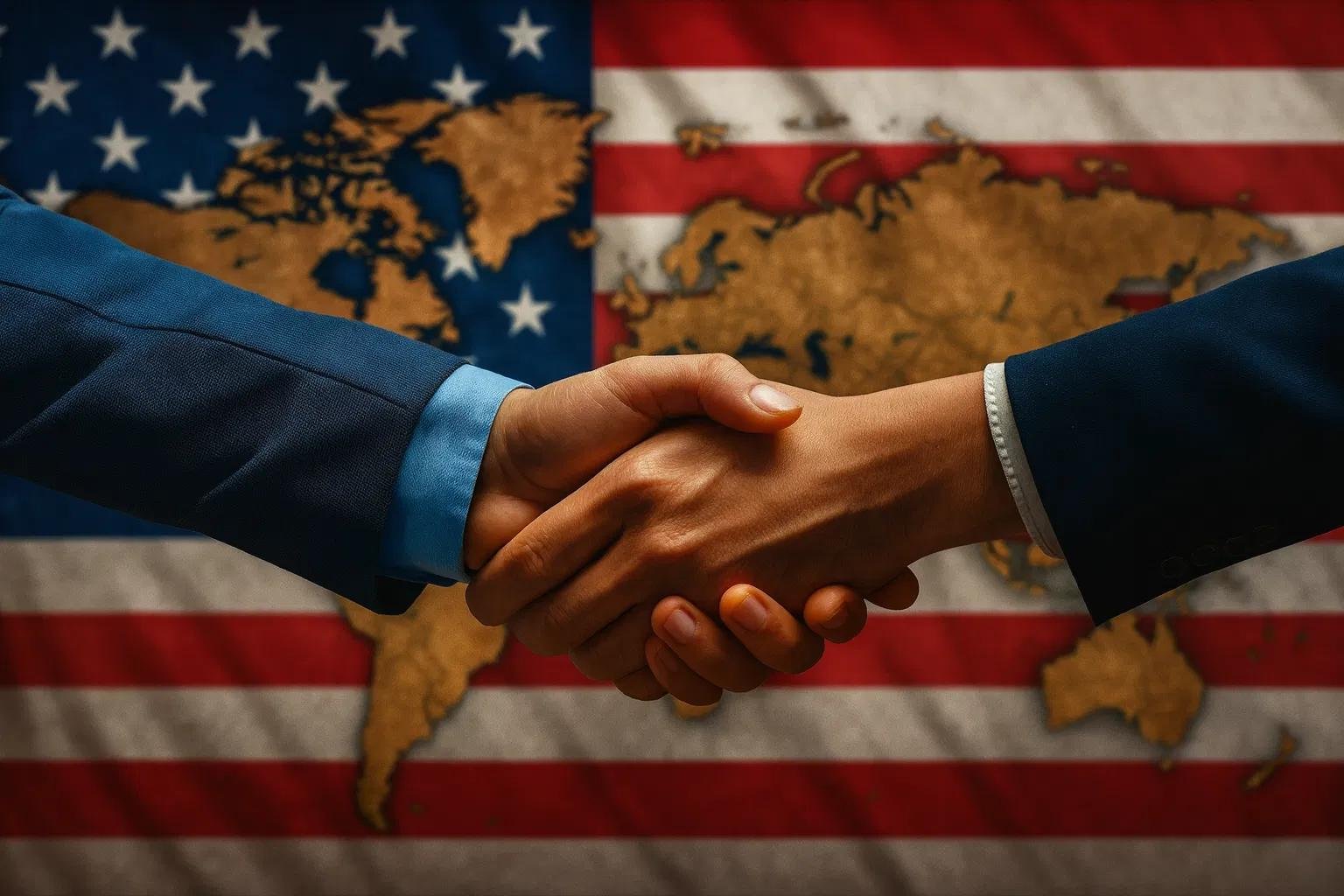
It wouldn’t be an overstatement to say that global trade is one of the most important issues happening in the world right now.
On April 2nd—so-called “Liberation Day”—the President upended decades of established business and trade practices that virtually every major government and corporation on the planet has relied on. All of those rules, good and bad, were thrown out the window. Overnight. And that makes this new tariff regime one of the largest worldwide disruptions to business (alongside the pandemic) since World War II.
We Talked To One Of America’s Most Experienced Trade Negotiators
Notes From the Field By James Hickman (Simon Black) July 31, 2025
It wouldn’t be an overstatement to say that global trade is one of the most important issues happening in the world right now.
On April 2nd—so-called “Liberation Day”—the President upended decades of established business and trade practices that virtually every major government and corporation on the planet has relied on. All of those rules, good and bad, were thrown out the window. Overnight. And that makes this new tariff regime one of the largest worldwide disruptions to business (alongside the pandemic) since World War II.
I’ve been wanting to learn more about this from someone who really knows what they’re talking about... someone who has real experience with international trade deals and knows the system inside out.
So last week, during a live call with our Total Access members, I interviewed one of America’s most senior and successful trade negotiators. And I learned more in that hour-long conversation about global trade than I have in decades of my own international business experience.
First things first, her experience is pretty unparalleled.
She started her career at the Office of the US Trade Representative (USTRO) during the administration of George H W Bush in the early 1990s, and throughout her career she had spent years sitting across the table from Chinese, Korean, Russian counterparts, trying to hammer out government trade deals that would be good for America.
I’ll be blunt— I came into the conversation with a really negative assumption that any career bureaucrat would be ideologically toxic. I thought that the people negotiating these deals would constantly be injecting their personal politics and fantasies... or that they wouldn’t be competent enough to make good deals for the country.
I was flat out wrong. There wasn’t even a hint of ideology. And by the end of the call I couldn’t tell who she voted for, or whether she leaned left or right. Nor did I care.
Instead, I actually felt grateful that the United States has had someone as sharp as she representing the country’s interests at the negotiating table. For her, trade deals are all business, and she’s damn good at it.
She never once implied that President Trump is wrong or naïve. But she also didn’t express unbridled enthusiasm for the administration’s vision of these trade deals either.
Instead, with a mix of extreme insight and dry humor, she gave us an incredible perspective on how the trade system actually works—and what we can expect in the coming months and years.
For example, I asked her point-blank: Is the US even in a position to demand major trade concessions?
Her answer surprised me: absolutely yes.
She explained that even though China’s consumer market is growing—and even though the Chinese government has been preparing for this moment since Trump’s first term—China is still nowhere near as valuable an import market as the US. Not even close.
Nearly every country on the planet is desperate to export its goods to the United States. And because of that, she said, Trump has tremendous bargaining power.
I even asked her about Trump’s tendency for hyperbole; he tells stories about world leaders calling him and “begging” him to drop tariffs. I always roll my eyes at such stories because they don’t sound remotely plausible.
But, again, she corrected me and said these stories are most likely true... simply because the US is in such a strong negotiating position. And there are a number of countries whose leaders would literally beg the President to drop tariffs... because steep US tariffs would send their economies off a cliff, and their politicians out of power.
Again, she’s not a rabid MAGA fanatic. She’s a seasoned, career trade negotiator who’s seen this process from every side over multiple US Presidents.
We also talked about the mechanics of how trade deals are negotiated, and the blatant mistakes that some countries (including Mexico, recently) make. She also explained how unrealistic it is to expect dozens of them to be signed in such a short timeframe.
Ordinarily, she told us, a single trade deal can take years to fully negotiate and finalize all the details. And the details can go on for hundreds of pages.
Now they want dozens of deals in a matter of weeks; these aren’t really “trade agreements”, she said, more like frameworks. In business terms, it’s like a term sheet or letter of intent.
The problem with these frameworks is that they are only a few pages and very light on details, therefore they will almost certainly leave massive gaps—ripe for abuse, noncompliance, and future disputes.
And based on that, it’s not clear whether there will be any long-term benefit from Liberation Day. There might be, but it’s not a sure thing at all.
She also confirmed what we’ve long suspected—China is better positioned to wait this out than the United States.
China has reduced reliance on US exports and doesn’t face political pressure from voters or donors. If both China and the US are damaged, she said, America is more likely to blink first.
She ended with a warning: don’t expect any clarity tomorrow (August 1, i.e. the supposed deadline for the trade deals).
Again, there might be a handful of trade ‘frameworks’, but these are just outlines. The real negotiations haven’t even started. Disputes are inevitable. Tariffs will keep switching on and off. And she expects this chaotic trade environment to last another few years.
Just a quick note that we’ll be opening enrollment to Total Access soon—our most valuable and highest tier membership at Schiff Sovereign. We bend over backwards for our members— including setting up regular, members-only calls like the one I just wrote about with a career trade negotiator— to provide the ultimate insider access and front row seat to the world’s most important trends.
We further provide our members with private investment research and Plan B internationalization strategies (like the best and fastest ways to obtain a second passport).
Members also receive complimentary access to ALL premium content that we provide at Schiff Sovereign.
But the best thing about Total Access is building real relationships—because in today’s world, that’s what actually matters. The most valuable currency you can have isn’t dollars or gold, it’s a trusted network of like-minded people who see the world clearly and act decisively.
Our members come from all walks of life—investors, entrepreneurs, doctors, engineers, even the occasional celebrity—but they share common values. They understand that the world is changing fast. That inflation is real. That governments are out of control. And that having a Plan B is essential.
That’s why we host private dinners, organize boots-on-the-ground trips, and bring members together in extraordinary places.
Sometimes that looks like the recent trip to Turkey, where members explored opportunities in the country’s citizenship by investment program. Other times it looks more like the luxury super-yacht cruise that just concluded along the coast of Croatia.
We also host conference-style events in promising locations like El Salvador, with really interesting speakers, such as the former President of Mexico who joined our event in Mexico City.
Total Access is also how our members were able to participate in private investment opportunities like Grok, a robotics venture, and an exclusive citizenship deal directly from a European head of state.
Yes, we go to interesting places. Yes, we produce world-class research. But the real value is in the people you meet and the relationships you build.
To your freedom, James Hickman Co-Founder, Schiff Sovereign LLC
MilitiaMan and Crew: Iraq Dinar News- The Future of Iraq's Economy
MilitiaMan and Crew: Iraq Dinar News- The Future of Iraq's Economy
7-31-2025
The Crew: Samson, PompeyPeter, Petra, Daytrader, Sunkissed, GIGI and Militia Man
Welcome back to our channel!
In today's video, we dive deep into the evolving landscape of Iraq's economy, exploring key developments that are set to shape the nation’s financial future.
MilitiaMan and Crew: Iraq Dinar News- The Future of Iraq's Economy
7-31-2025
The Crew: Samson, PompeyPeter, Petra, Daytrader, Sunkissed, GIGI and Militia Man
Welcome back to our channel!
In today's video, we dive deep into the evolving landscape of Iraq's economy, exploring key developments that are set to shape the nation’s financial future.
What We Cover:
Iraqi Dinar Insights: Understand the current status of the Iraqi dinar, its significance in the regional economy, and the strategies being implemented to stabilize and strengthen its value.
Strategic Transportation Projects (TIR): Discover the ambitious transportation initiatives aimed at enhancing connectivity and boosting trade throughout Iraq and beyond.
Parliament's Support for Kurdistan: Gain insights into the recent parliamentary decisions welcoming Kurdistan's oil exports through SOMO (State Oil Marketing Organization), and what this means for Iraq's overall oil strategy.
Dollar Sales and Currency Control: Learn how Iraq is managing foreign currency through official platforms, including efforts to control currency prices amidst economic fluctuations. All that and corruption will wain.
Water as a Trading Card: Explore the innovative concept of utilizing water as a strategic asset in trade negotiations and economic planning. Bargaining card in Turkey's hand. They owe big money!
Increased Oil Production Plans: Find out how Iraq and OPEC+ intends to ramp up oil production capacity and the implications this has for local, regional and global oil markets.
FRANK26….7-31-25….ALOHA…..4TH
KTFA
Thursday Night Video
FRANK26….7-31-25….ALOHA…..4TH
This video is in Frank’s and his team’s opinion only
Frank’s team is Walkingstick, Eddie in Iraq and guests
Playback Number: 605-313-5163 PIN: 156996#
KTFA
Thursday Night Video
FRANK26….7-31-25….ALOHA…..4TH
This video is in Frank’s and his team’s opinion only
Frank’s team is Walkingstick, Eddie in Iraq and guests
Playback Number: 605-313-5163 PIN: 156996#