
Thank you to all the subscribers to our Early Access program…we thank you for your continued support.
We are excited to offer this new service to keep you informed and up-to-date on the latest Dinar and currency news.
The Missing Part RE: Iran— No Rational Discussion About Costs
The Missing Part RE: Iran— No Rational Discussion About Costs
Notes From the Field By James Hickman (Simon Black) June 23, 2025
If the Land of the Free wasn’t already divided heavily along ideological lines, it is even more so after the US military bombings in Iran over the weekend. Even on the political right, which would ordinarily be unified over a US military engagement, there seem to be two distinct camps.
On the one hand, there are those who hold the view that America doesn’t need more foreign entanglements.
The Missing Part RE: Iran— No Rational Discussion About Costs
Notes From the Field By James Hickman (Simon Black) June 23, 2025
If the Land of the Free wasn’t already divided heavily along ideological lines, it is even more so after the US military bombings in Iran over the weekend. Even on the political right, which would ordinarily be unified over a US military engagement, there seem to be two distinct camps.
On the one hand, there are those who hold the view that America doesn’t need more foreign entanglements.

Tucker Carlson summed up this side when he told Ted Cruz in a fiery interview that "we should be very careful about entering into more foreign wars that don’t help us when our country is dying."
On the other side are those who who see a clear and obvious benefit in preventing one of America’s harshest adversaries from obtaining nuclear weapons.
Personally I believe both sides are partially right.
I believe it’s self-evident that the Iranian government despises the United States and the West; and they have a history of direct action against Americans, and/or funding terrorist groups who cut off US citizens’ heads on YouTube.
And I can easily understand why the President of the United States wants to ensure these people cannot manufacture nuclear weapons.
I also imagine most of the world agrees with him. Publicly they may disagree and put out strongly worded statements of condemnation.
But think about it— Russia has a long history of conflict against its Muslim minority. China has literally imprisoned its Muslim minority. Do either of these countries honestly want Iran— an aggressive Islamic dictatorship that supports radical Muslim terrorist organizations— to have a nuclear weapon?
It wouldn’t take a whole lot for Iran to arm one of those terror groups with a nuke and take out half of Beijing or Moscow in an act of vengeance.
At the same time, I know from first hand experience during my time in the military that another absurdly expensive foreign entanglement is just a terrible idea. The occupation of Iraq and Afghanistan nearly bankrupted America.
What I feel is distinctly lacking from the conversation, however, is rational discussion over costs and benefits.
I would love to see leaders articulate national priorities where they assess the benefits. Then determine how much they’re willing to invest to yield those benefits. And then actually allocate responsibly for the costs in their budget.
This just almost never happens.
My analysis, with a lot of help from Grok, is that a conservative projection of munitions costs, aircraft fuel costs, naval deployment, and even US assistance for Israeli air defense, comes to around $1 billion.
And that would leave a bit of extra money on the table for follow-up and contingency operations.
Is $1 billion a reasonable cost to ensure Iran doesn’t gain nuclear capabilities?
I think so—simply because the cost of Iran obtaining nukes and potentially blowing up a major American city could easily run into the trillions. So neutralizing a multi-trillion dollar threat for $1 billion feels like a good deal.
But I’m not sure that’s the way they’re approaching it.
For example, I noticed during the President’s remarks on Saturday night that he was flanked by Vice President J.D. Vance, Secretary of State Marco Rubio, and Secretary of Defense Pete Hegseth.
The Treasury Secretary was notably absent. And for a government that should be taking deficits seriously, there needs to be a discussion about the costs its willing to bear, and—more importantly—how are they going to pay for it?
Was Treasury even consulted? Did someone ask, “How are we going to pay for this?” to which Treasury (or DOGE) might respond, “Oh, easy, we’ll cut $1 billion from X, Y, and Z idiotic programs that clearly provide less benefit to America than taking out Iranian nukes.”
I’m not adamantly opposed or in favor of either scenario. I just want my government to do good deals. I want them to rationally address costs and benefits, risks and rewards, and then make an informed decision that balances national priorities.
America should be able to walk and chew gum, to take out a credible nuclear threat AND be able to cut the deficit (and slash regulations).
It’s incredible to me how much ink has been spilled, how much Internet bandwidth has been wasted, on America’s outrage of the week— the latest being “No Kings Day” just nine days ago.
We’ve been subjected to Leftist idiots who glue themselves to the pavement in the name of climate change. Endless debates about who gets to use which bathroom. And ongoing Gaza protests by people who don’t even know which river or which sea they’re chanting about.
We’ve had outrage over the Supreme Court’s ruling on Roe v. Wade (after which abortions in the US actually increased!). Outrage over kneeling at NFL games. Outrage over ‘threats to democracy’. And now there will be outrage over the President’s use of the War Powers Act.
Sure, some of those issues are important.
But what’s REALLY important for every single person living in America, plus billions of people around the world who depend on the US dollar in some capacity, is a looming US fiscal crisis.
Endless irresponsible spending has grown the debt to over $36 trillion, with interest payments already topping $1.1 trillion per year— higher than the defense budget.
The Federal Reserve has lost its ability to control interest rates, and it’s becoming more expensive for the government to finance the debt.
Last week we explained how this all comes to a head within eight years once Social Security runs out of money in 2033.
By then, the US government could likely be spending 40% of all tax revenue just to pay interest on the debt. And at the exact same time, tens of millions of Americans will see their retirement benefits immediately and permanently cut by nearly 25% due to Social Security’s insolvency.
The government’s only ‘solution’ will be for the Federal Reserve to step in and ‘print’ trillions of dollars to bail out the Treasury Department (and Social Security), resulting in pretty catastrophic inflation.
And yet there is zero-outrage.
No one is in the streets engaged in “mostly peaceful protests” over the deficit, or demanding sound currency or financial responsibility from the government.
In fact, it’s the opposite. People are actually outraged that Elon Musk tried to cut the deficit by rooting out fraud, waste, and abuse... so outraged, in fact, that they started blowing up Tesla dealerships. How dare he try to cut the deficit!
A rational, cost/benefit analysis is absent at every level of decision making in the US.
And if that doesn’t change, there is no reason to believe the US can solve its many long-term problems. Where’s the outrage in our professionally-outraged society?
To your freedom, James Hickman Co-Founder, Schiff Sovereign LLC
The US Likely Has 8 Years—At Most—Before Crisis
The US Likely Has 8 Years—At Most—Before Crisis
Notes From the Field By James Hickman (Simon Black) June 19, 2025
Yesterday afternoon the US government published its annual report stating plainly that America has eight years left before a major financial crisis.
This is not hyperbole. This is not conjecture. This is not some wild conspiracy theory.
In fact, eight years until a crisis is probably the BEST CASE SCENARIO unless Congress takes serious action soon.
The US Likely Has 8 Years—At Most—Before Crisis
Notes From the Field By James Hickman (Simon Black) June 19, 2025
Yesterday afternoon the US government published its annual report stating plainly that America has eight years left before a major financial crisis.
This is not hyperbole. This is not conjecture. This is not some wild conspiracy theory.
In fact, eight years until a crisis is probably the BEST CASE SCENARIO unless Congress takes serious action soon.
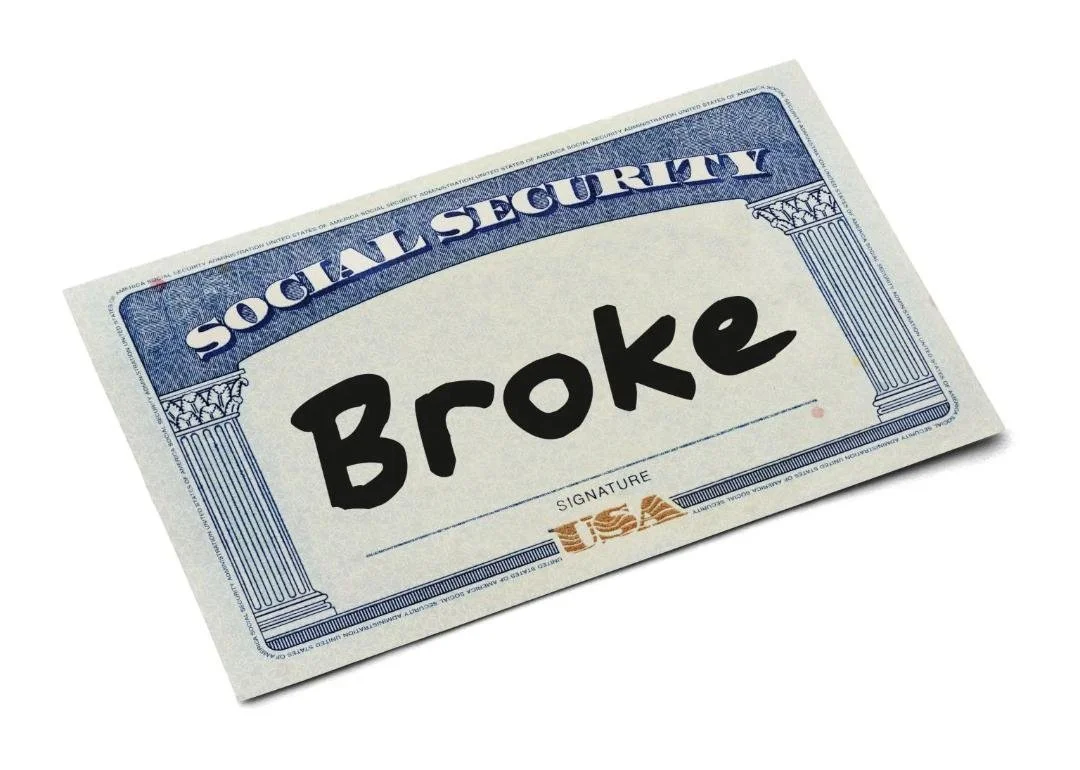
That’s because the most critical trust fund in the Social Security system (called OAS, or “Old Age Survivors) will be fully depleted.
That’s precisely what it says in the 2025 Annual Report of the Board of Trustees of Social Security, signed by the US Secretary of Treasury just yesterday.
And once that OAS Trust Fund runs out of money, the report states that Social Security benefits will be immediately and permanently cut by at least 23%. And then the benefit cuts will likely become worse over time.
This will constitute a broken promise to 70+ million Americans who spent decades paying into a system that was supposed to be solvent by the time they retire.
Now, Social Security’s biggest trust fund running out of money in 2033 would be problematic enough.
But on top of that— by 2033, the total US national debt will be $52 TRILLION according to Congressional Budget Office (CBO) estimates. And the CBO notoriously underestimates deficits... so in all likelihood the national debt will be event greater.
$52 trillion is so large that the government could easily be spending 40% of all tax revenue just to pay interest on the national debt.
Think about that. Not on defense. Not on infrastructure. Not even on the bloated entitlement programs Washington refuses to reform. Just interest.
These two things together— a massive annual interest bill combined with Social Security’s insolvency— will likely combine to a gargantuan fiscal crisis in the US. It’s eight years away.
Amazingly, politicians are not concerned. There is very little will to cut federal spending, or make necessary reforms that would allow Social Security to continue operating.
Foreign governments and central banks, on the other hand, clearly understand this problem.
They see how difficult it will be for the US to pay its debts in the not-so-distant future. And that’s why so many foreign institutions are dumping their US dollars and US government bonds.
In other words, foreigners are losing confidence in the US government, so they’re cashing out.
One of the biggest beneficiaries of this trend has been gold; we’ve been talking about this for a couple of years— as foreign governments and central banks dump their US dollars, they have been buying up record amounts of gold bullion.
This isn’t some ideological crusade—it’s a rational move for foreign governments and central banks; gold is liquid, fungible (i.e. standardized), globally recognized, and the market can absorb massive capital flows— hundreds of billions of dollars or more.
This is how they diversify to protect themselves from what will likely happen down the road in the US. You can do the same.
We have pointed out many times, however, that foreign governments and central banks buy gold. They do not buy gold companies.
This key difference has created a major disconnect between the price of gold (which is near a record high) and the valuations of gold companies (many of which are laughably cheap).
We have been writing about this trend for nearly two years, during which time the portfolio of gold companies (and other real asset businesses) has performed exceptionally well.
In our 4th Pillar investment research service, we pinpointed companies with world-class assets, great management, strong balance sheets, and dirt-cheap valuations. Then we shared them with subscribers.
The results speak for themselves:
One of our top picks is up 153% in just three months.
Another surged 146% over the past eleven months.
Two more have gained 133% and 51% respectively in just a few months.
Most other companies have delivered steady gains of “only” 27–34%.
For the sake of transparency we’ve had precisely ONE precious metals related company go the other way—it’s down 27%. But the fundamentals are solid, and with key catalysts on the horizon, we see it as even more undervalued now.
And in our most recent issue, we spotlighted a profitable gold company trading for less than the cash on its balance sheet.
Talk about limited downside—you could buy the whole company, get all your money back in cash, and still own a cash-flowing gold business for free.
We are exceptionally proud of this research and the returns that we deliver to our subscribers.
To your freedom, James Hickman Co-Founder, Schiff Sovereign LLC
$1.2 Trillion Later, and Air Traffic Control is Still Using Floppy Disks
$1.2 Trillion Later, and Air Traffic Control is Still Using Floppy Disks
Notes From the Field By James Hickman (Simon Black) June 18, 2025
In 1988, a Professor of Anthropology at the University of New Mexico named Joseph Tainter published a book called The Collapse of Complex Societies.
Now, “collapse” is a strong word that conjures images of apocalyptic scenarios... Mad Max or Hunger Games drama. But that’s not what Tainter intended.
He uses the term ‘collapse’ in its academic, anthropological meaning, i.e. a breakdown of strength and order in society. In fact Tainter’s entire career has been devoted to investigating how large, sophisticated civilizations throughout history ultimately “collapsed”.
$1.2 Trillion Later, and Air Traffic Control is Still Using Floppy Disks
Notes From the Field By James Hickman (Simon Black) June 18, 2025
In 1988, a Professor of Anthropology at the University of New Mexico named Joseph Tainter published a book called The Collapse of Complex Societies.
Now, “collapse” is a strong word that conjures images of apocalyptic scenarios... Mad Max or Hunger Games drama. But that’s not what Tainter intended.
He uses the term ‘collapse’ in its academic, anthropological meaning, i.e. a breakdown of strength and order in society. In fact Tainter’s entire career has been devoted to investigating how large, sophisticated civilizations throughout history ultimately “collapsed”.
I first read Tainter’s book more than 15 years ago. And, even though it is a work of anthropology, it is, in my opinion, one of the best books on economic history ever produced.
From the Roman Empire to the Mayan people, Tainter explores how civilizations are born, grow, peak, and decay... and how, more often than not, the decay phase is a direct result of failed government or leadership.
In the early phases of their life cycles when a society is beginning its rise, there aren’t yet enough resources for governments to squander... therefore leaders tend to make very smart, shrewd decisions.
Easy example: the US government purchased over 2 million square kilometers from Napoleon in the year 1803 at a total cost of roughly $15 million. Using gold as a proxy for inflation, that works out to be $2.6 billion in today’s money.
Talk about a bargain. Just the 5 biggest cities which exist today because of that land purchase— Minneapolis, Denver, St. Louis, Kansas City, Oklahoma City— contributed more than $1 trillion in economic activity to the US economy last year, i.e. roughly $170 billion in federal tax revenue.
That’s a hell of a return.
Another example: back in the 1950s, when America had just become the world’s dominant superpower, the Eisenhower administration built the federal highway system that cost about $250 billion in today’s money.
That $250 billion infrastructure investment easily repaid itself many times over in terms of tax revenue and economic growth, let alone quality of life improvements for Americans.
Yet, as Tainter argues, when a society peaks, it begins to lose its ability to make sensible, long-term decisions or to solve complex problems. They set bad priorities, they make bad investments... and they often fail to tackle problems at all.
In contrast to the original $250 billion highway project in the 1950s, the US government allocated $1.2 trillion in 2021 to invest in infrastructure. And how did that work out?
Well, we know former Transportation Secretary Pete Buttigieg spent $7.5 billion of this money to build just seven electric vehicle chargers.
And precisely $0 of that money was used to upgrade America’s air traffic control systems, which have been under intense scrutiny lately for being outdated, overwhelmed, and insufficient.
Talk about something that puts Americans’ lives at risk.
You might be interested to know that these air traffic control systems— which are responsible for making sure that airplanes flying at 500 miles per hour don’t collide with one another— are still relying on floppy disks.
If you’re under the age of 30, you probably don’t even know what a floppy disk is. If you’re under the age of 40, you probably have never seen one.
Floppy disks were removable storage technology that were prevalent in home computers in the 1980s... sort of like a USB memory stick, only MUCH slower and with a fraction of the storage capacity.
A typical 3.5” floppy disk could only hold 1.44 megabytes of data, i.e. not even enough to store even a single photo from your mobile phone’s camera.
Yet this is the technology that America’s air traffic controllers still have to use... because the Transportation Department thought it was a better idea to spend billions of dollars on a handful of electric vehicle charging stations.
The new Transportation Secretary, Sean Duffy, recently called for replacing floppy disks, Windows 95, and paper flight strips; he says this is “the most important infrastructure project we’ve had in this country for decades.”
Somehow, no one thought to use some of the $1.2 trillion authorized in 2021 on the most important infrastructure project in decades.
To be fair, Duffy’s predecessor Pete Buttigieg had other priorities— like ensuring “racial equity” in highway construction and forcing vehicle manufacturers to use female crash test dummies.
But even without all the woke distractions, Secretary Duffy expects the transition to take four years and cost tens of billions of dollars. And many believe this estimate is wildly optimistic...
This is what government problem-solving looks like in the United States in 2025: as Tainter argued in his book, it is an obvious inability to solve problems.
Let’s be intellectually honest and acknowledge the many advantages that the US still has. The private sector is one of the most productive, diversified, and technologically advanced in the world.
The US is also rich in vital resources, from fresh water and farmland to energy and essential minerals.
And, as the world found out over the past several days, US military capabilities and weapons systems are still tip-top. I explained this in yesterday’s podcast about why World War III is less likely because of the Israel/Iran conflict.
But none of those advantages will matter if the US government fails to solve obvious problems.
If they can’t even manage to upgrade the air traffic control system from floppy disks, how can we expect them to save Social Security or cut the deficit?
To your freedom, James Hickman Co-Founder, Schiff Sovereign LLC
Some Clear Thinking On Why World War III Is NOT Happening Anytime Soon
Some Clear Thinking On Why World War III Is NOT Happening Anytime Soon [Podcast]
Notes From the Field By James Hickman (Simon Black) June 17, 2025
Today’s topic is so far-reaching, deep, and important that we had to dedicate an entire podcast episode to it. Frankly, it is one of the most interesting we have ever done. With so much conflict in the world—and the potential for even more escalation, particularly in the Middle East—we have heard a lot of worry, concern, and even hyperbole in the media about “World War III.”
I actually have the opposite view: that after the recent strikes and counter-strikes between Israel and Iran, I wholeheartedly believe that World War III is far less likely than it was even just a couple of months ago.
Some Clear Thinking On Why World War III Is NOT Happening Anytime Soon [Podcast]
Notes From the Field By James Hickman (Simon Black) June 17, 2025
Today’s topic is so far-reaching, deep, and important that we had to dedicate an entire podcast episode to it. Frankly, it is one of the most interesting we have ever done. With so much conflict in the world—and the potential for even more escalation, particularly in the Middle East—we have heard a lot of worry, concern, and even hyperbole in the media about “World War III.”
I actually have the opposite view: that after the recent strikes and counter-strikes between Israel and Iran, I wholeheartedly believe that World War III is far less likely than it was even just a couple of months ago.
Read that again: in the wake of growing conflict in the Middle East, and even with the potential for US involvement, World War III is less likely.
In today’s podcast, I put on my old hat as an Army intelligence officer and discuss the Iranian order of battle, their weapons and defense systems, much of which, frankly, is derived from Chinese military technology.
Over the past several days, that Iranian-based Chinese military tech was obliterated—completely overwhelmed by Israel’s precision strikes.
And where did Israel get its technology from? Some of it is homegrown, of course, but the majority comes from the United States.
So the way I look at this Israel-Iran conflict is almost like a live-fire exercise or war game that models what a real conflict between the United States and China might look like.
And based on the results, it is not looking good for China—or Russia, for that matter.
It leads me to the conclusion that no adversary nation wants to risk an armed conflict with the United States right now, lest they too get obliterated by America’s F-35s.
Towards the end, we talk about whether or not the United States should be involved. I do not have the definitive answer. But I walk through the rational framework that I hope America’s leaders are using to make that kind of decision.
There is not enough reason and rational decision-making in Washington these days. Too many politicians make knee-jerk, emotional reactions for the benefit of Twitter likes, rather than conducting a clear cost-benefit analysis.
There is so much more we unpack in this episode—it is definitely worth a listen, and we hope you tune in to join us.
Once again, you can listen in to the podcast here.
For the audio-only version, check out our online post here.
Finally, you can find the podcast transcript for your convenience, here.
To your freedom, James Hickman Co-Founder, Schiff Sovereign LLC
What “Liberation Day” Could Have Been
What “Liberation Day” Could Have Been
Notes From the Field By James Hickman (Simon Black) June 10, 2025
On July 9, 1807, after Napoleon’s crushing victory over an entire coalition of European nations, the King of Prussia was forced to sign the Treaty of Tilsit, formally putting an end to the conflict.
The peace treaty was devastating for the Prussians; they were forced to pay heavy tribute and war reparations to France, limit the size of the Prussian army, and hand over roughly 50% of their territory to Napoleon.
What “Liberation Day” Could Have Been
Notes From the Field By James Hickman (Simon Black) June 10, 2025
On July 9, 1807, after Napoleon’s crushing victory over an entire coalition of European nations, the King of Prussia was forced to sign the Treaty of Tilsit, formally putting an end to the conflict.
The peace treaty was devastating for the Prussians; they were forced to pay heavy tribute and war reparations to France, limit the size of the Prussian army, and hand over roughly 50% of their territory to Napoleon.
Just imagine what it must have been like to be living in Westphalia at the time (one of the regions that was ceded to Napoleon). One day you’re Prussian territory. The next day you’re French (and later an independent kingdom).
Everything changed. And that included the legal system.
Before Napoleon arrived, that area (especially Westphalia, part of modern-day Germany) was part of the decaying Holy Roman Empire, and its legal landscape was a tangled knot of conflicting systems.
There was feudal law, where obligations to lords governed land and labor.
There was Roman civil law, which had been in place since the 15th century, though inconsistently applied.
Ecclesiastical courts handled everything from marriage disputes to moral offenses.
Customary law varied by village and town, with local statutes often passed down orally or compiled in obscure legal codices.
Add to that guild regulations, imperial edicts, and the whims of local princes and bishops, and you had a legal system that was both impossible to navigate, and ripe for abuse.
This was all wiped away.
When Prussia handed over the territory of Westphalia, Napoleon immediately imposed the Napoleonic Code as the law of the land.
The Napoleonic Code, originally drafted in 1804, was radical for its clarity and uniformity. It abolished feudal privileges, standardized property rights, and enshrined the idea of equality before the law.
No more special courts for nobles or clergy. No more confusing tangle of contradictory rules. The code was divided into clear sections—persons, property, acquisition of property, and civil procedure—and it applied to everyone.
For the first time, a Jewish merchant in Kassel and a Lutheran farmer from Göttingen were subject to the same laws, interpreted by the same courts. That was unthinkable under the old regime.
The US is in desperate need of a similar Westphalian reset. The Law of the Land in the United States of America these days is an endless collection of conflicting and often obsolete federal, state, and local laws combined with countless court rulings and precedents, plus enough rules and regulations to fill a football stadium.
Plus the code of regulations grows by around 80,000 pages each year, so the monster only becomes larger.
It shouldn’t take being conquered or vanquished by war to have your legal code pruned of dead limbs.
In fact I heard a very smart guy on a podcast some years ago talking about how every law in the US should have a sunset clause so that it’s automatically abolished in, say, 5-10 years.
Bad laws will expire without any further action from Congress. Necessary ones will be updated and refreshed.
That “very smart guy” happened to be Elon Musk. And I imagine that was exactly the type of reform he had in mind when he bank-rolled Donald Trump’s presidential campaign... and it’s exactly what “Liberation Day” should have been.
Not across the board tariffs on staunch allies. Not bazillion-gajillion percent tariffs on China.
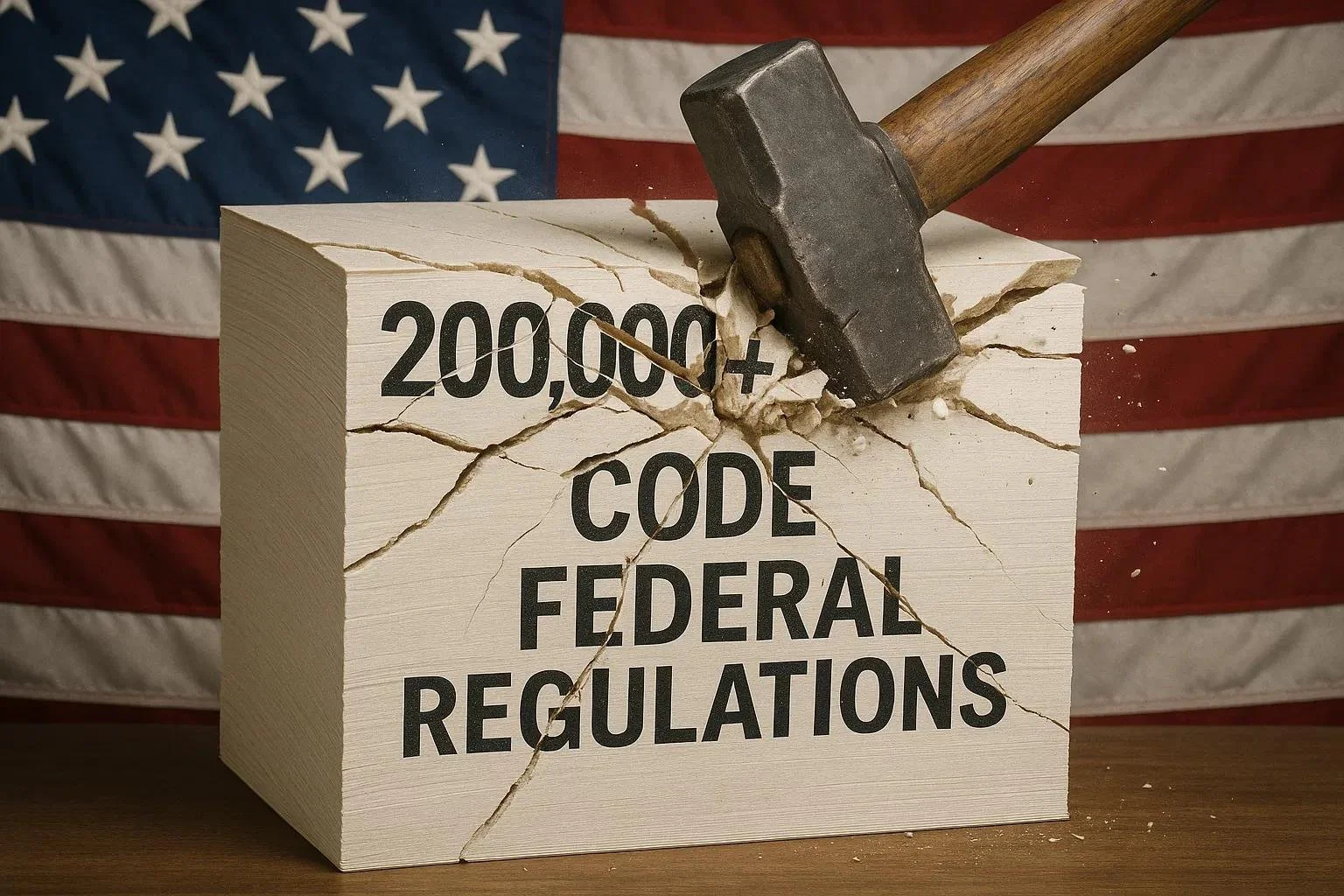
They should have liberated Americans from the 200,000+ page Code of Federal Regulations... many of which serve no purpose other than to frustrate commerce and productivity.
Bizarrely, for politicians who claim to care about “small business” and “the working class”, most of these rules hit small businesses and workers the hardest because they don’t have the resources (unlike big companies) to navigate Byzantine regulatory codes.
They’ve made it extremely difficult (to downright impossible, depending on the industry) to start a productive business. Good luck starting a restaurant in the state of California. Or a copper mine in the state of Arizona (where one unlucky business has been in permitting for 20+ years!)
The government doesn’t need to centrally plan anything; they just need to get rid of regulatory obstacles which make it more difficult for Americans to be more productive. And this is essential to saving the country from its $2 trillion annual deficits, and $36 trillion national debt.
You don’t need a PhD in economics to understand this problem; quite simply, the US economy needs to grow faster than the debt. That isn’t happening right now.
These days, the debt is growing by more than 5.5% annually, far outpacing economic growth. So saving the country’s finances mean that GDP needs to grow by at least 5.5%, and ideally much more.
And while that sounds like an unrealistic goal, it’s totally achievable; with all the talent and investment capital in the US, along with AI, robotic automation, and nuclear power on the horizon, the US should be able to grow at 7%+ per year.
That could have happened if Liberation Day had actually liberated Americans from job-killing laws and productivity-constraining regulations.
I have said many times in the past that America’s problems are still technically fixable, but that the narrow window of opportunity is rapidly closing.
It’s beyond frustrating to see these problems continue to grow worse. And it’s becoming harder every day to imagine a scenario where we don’t end up with a currency crisis or major inflation down the road.
I still hold out hope that sanity prevails... that, even if at the last minute, the US government summons the courage and clarity to do the right thing for America once and for all, and avoid the worst outcome.
I hope.
But as we used to say in the military, hope is not a course of action. And that’s why it makes so much sense to have a Plan B.
To your freedom, James Hickman Co-Founder, Schiff Sovereign LLC
153% Gain in Three Months
153% Gain in Three Months
Notes From the Field By James Hickman (Simon Black) June 11, 2025
We’ve been extremely consistent—practically shouting from the rooftops over the last year—that there was an absolutely outrageous investment trend that was going to make people who were paying attention a lot of money… and it wasn’t going to last.
What we’ve been saying over and over is that gold’s bull run was just beginning. At $2,000, we said it wasn’t the end. At $3,000, we said it wasn’t the end… But the bizarre anomaly was that while gold was heading to all-time highs, gold stocks were still remarkably cheap.
153% Gain in Three Months
Notes From the Field By James Hickman (Simon Black) June 11, 2025
We’ve been extremely consistent—practically shouting from the rooftops over the last year—that there was an absolutely outrageous investment trend that was going to make people who were paying attention a lot of money… and it wasn’t going to last.
What we’ve been saying over and over is that gold’s bull run was just beginning. At $2,000, we said it wasn’t the end. At $3,000, we said it wasn’t the end… But the bizarre anomaly was that while gold was heading to all-time highs, gold stocks were still remarkably cheap.

And we explained the reason why—gold was hitting all-time highs because central banks were losing confidence in the US dollar and trading for the only truly universal asset in the world: gold.
But central banks were buying gold bars, not gold stocks—so while gold hit all-time highs, gold stocks barely budged.
It was a similar phenomenon with other real assets as well, including silver and platinum.
And in our 4th Pillar investment research service, we identified some of the most ridiculously undervalued companies and presented our research to subscribers.
It didn’t take very long—one of our most undervalued precious metals stocks is up 153% in three months.
Our other best performing precious metals picks of the year have gained:
146% in the last eleven months
133% in the last two months
51% in the last three months
Another five stocks we researched are up between 27-34%.
For the sake of transparency, one is actually down 27%.
And frankly, we don’t think it’s because it’s a bad company.
We think the company’s fundamentals and management are quite sound, so we believe it’s even more undervalued now. And with specific catalysts on its horizon, it’s a great opportunity to pick it up.
But in general, is it too late to find the deals?
Opportunities are definitely thinning, but there are still some out there.
To give you an example, in our most recent 4th Pillar report we sent out last week, we identified a profitable gold business trading for less than cash.
Talk about limited downside— you could literally buy the entire company, repay yourself with its cash, and have the operating business for FREE.
That’s the type of investment opportunities we find.
And just like the companies we identified recently which surged 150%, this one also has a number of catalysts on the horizon which could quickly re-rate the stock much higher.
Those catalysts are in addition to the simple fact that investors are finally catching on, and realizing how much value there is to be had in companies related to mining precious metals.
They’re looking. But we got there first.
We’ve been practically pounding the table on this for over a year.
We said these companies were cheap, we said they were going to skyrocket in value—and that’s exactly what’s happened.
This trend is not over. But it’s definitely something you want to be paying attention to.
I can’t stress this enough, these are the types of companies you want to own in this economic environment.
And we’re very proud of the work we have done to find these opportunities.
To your freedom, James Hickman Co-Founder, Schiff Sovereign LLC
They’ll Ignore It Until It’s a Crisis [Podcast]
They’ll Ignore It Until It’s a Crisis [Podcast]
Notes From the Field By James Hickman (Simon Black) June 5, 2025
Think for a moment about how many times something has been whipped up into a national issue by either the big legacy media or prominent politicians.
The public has been subjected to what they call “a national conversation” about everything from transgender bathrooms to Confederate monuments to abortion rights to climate change.
They’ll Ignore It Until It’s a Crisis [Podcast]
Notes From the Field By James Hickman (Simon Black) June 5, 2025
Think for a moment about how many times something has been whipped up into a national issue by either the big legacy media or prominent politicians.
The public has been subjected to what they call “a national conversation” about everything from transgender bathrooms to Confederate monuments to abortion rights to climate change.
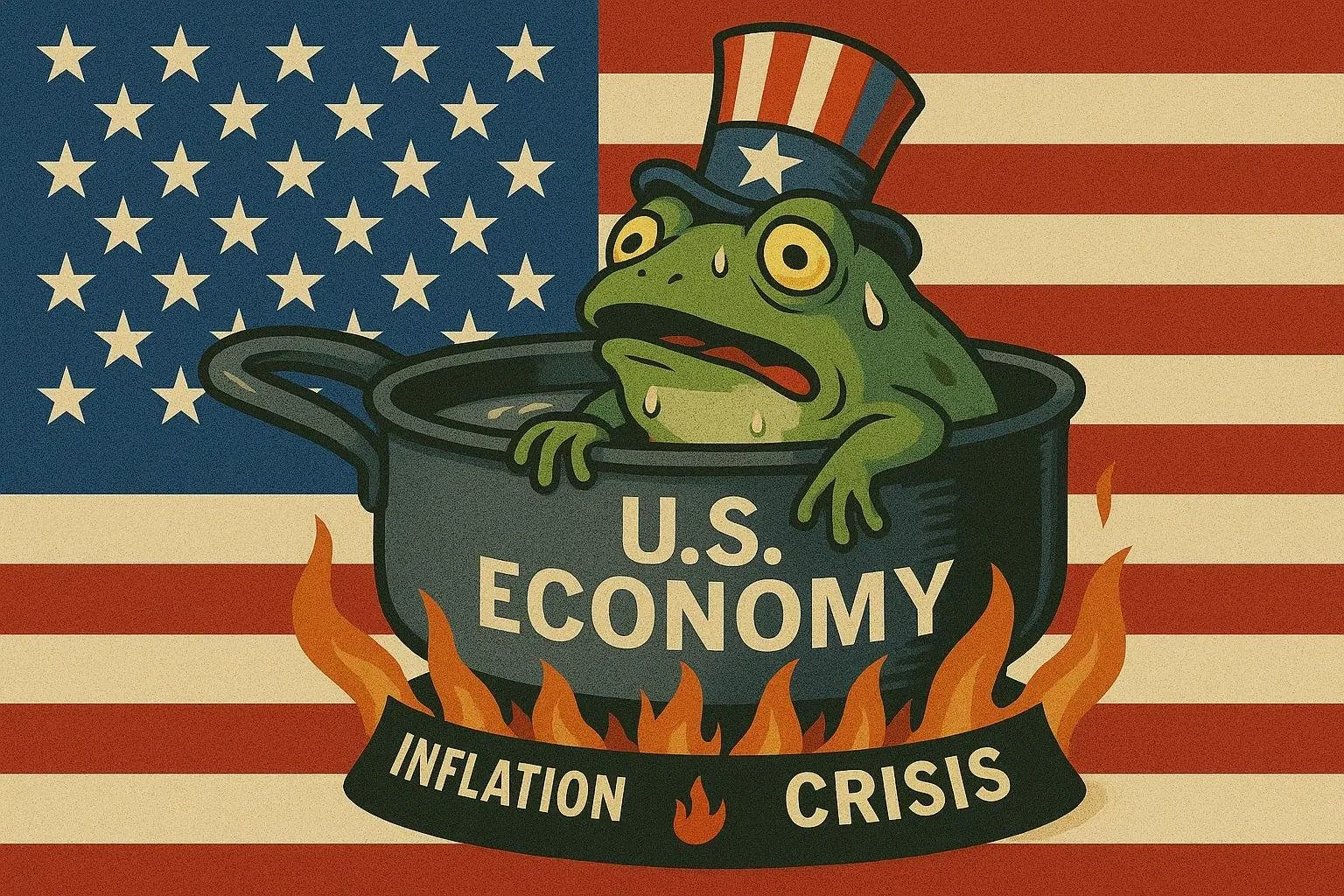
Many of these issues only affect a few people. Sometimes more. But not once have these same media or political personalities elevated the ONE issue that could deeply and adversely impact hundreds of millions of people over the next few years.
I’m talking about the US national debt... and its runaway trajectory that could easily become a major financial crisis in a few years.
The impact crater for a US debt crisis is gargantuan. 350 million people in the US would have their lives turned upside down. Dozens of countries who rely on the US financial system would suffer tremendous pain. Billions of people would be affected.
Yet there’s hardly a word about it. Far more ink has been spilled debating who should use which bathroom. It’s crazy when you think about it.
Many of those same people who should be elevating this issue are now complaining that Elon Musk did a “complete 180” because he thinks the $2 trillion projected deficit from the new tax/spending bill is an “abomination”.
I don’t see how this is a 180. Before, during, and after the election, Elon has been laser-focused on personally trying to fix America’s biggest threat: the ticking debt time bomb.
His message hasn’t changed. And the guy sacrificed plenty of time, money, and reputation to personally try and stop the catastrophe that will come if these deficits aren’t dealt with.
At least a few other prominent voices are finally echoing Elon’s warning—like Jamie Dimon, CEO of the world’s biggest bank.
That’s progress. Because the legacy media sure as hell won’t start this conversation on its own.
And that’s exactly why it’s hard to imagine we’ll hit the critical mass of voters needed to force politicians to do the right thing and tackle the deficits.
That’s what we dig into in today’s episode.
We break down how even supposedly serious financial media—like the Wall Street Journal—refuses to report on just how dire this situation really is.
One recent piece from the Journal even mocked people for buying gold to protect themselves from the obvious outcome of inflation. This is utterly hilarious, of course, given that gold has been one of the world’s best performing asset classes for this entire CENTURY.
But, hey, to the Journal, I guess we’re all just a bunch of idiots.
Today’s podcast also covers:
How everyone loves spending cuts... until you threaten their sacred cow (like taxpayer-funded Sesame Street)
What runaway interest costs mean for your future—and to the future of the US dollar
Why politicians won’t act until there’s a full-blown crisis—and what that will probably look like
That the debt problem is “solvable”—and why JP Morgan Chase CEO Jamie Dimon agrees with the solution we’ve been saying all along
Why slashing regulations needs to be part of that solution
Why strategic assets like gold, silver, uranium, and platinum are now more important than ever.
(For the audio-only version, check out our online post here.)
CLICK HERE to listen to our latest podcast.
To your freedom, James Hickman Co-Founder, Schiff Sovereign LLC
This Is A $118 Billion “Strategy” For Insanity
This Is A $118 Billion “Strategy” For Insanity
Notes From the Field By James Hickman (Simon Black) June 3, 2025
Last week when I wrote about America’s new stablecoin legislation (bizarrely called the “GENIUS Act”), a number of readers wrote in asking me to clarify a comment that I made about the Bitcoin company ‘Strategy’, i.e. formerly MicroStrategy. I explained in the article that I am pro-crypto and have been since the early 2010s; for me it’s about freedom.
Many banks have proven time and time again that they simply cannot and should not be trusted with their customers’ money.
This Is A $118 Billion “Strategy” For Insanity
Notes From the Field By James Hickman (Simon Black) June 3, 2025
Last week when I wrote about America’s new stablecoin legislation (bizarrely called the “GENIUS Act”), a number of readers wrote in asking me to clarify a comment that I made about the Bitcoin company ‘Strategy’, i.e. formerly MicroStrategy. I explained in the article that I am pro-crypto and have been since the early 2010s; for me it’s about freedom.
Many banks have proven time and time again that they simply cannot and should not be trusted with their customers’ money.
Wells Fargo is the poster child for blatant theft and deceit. And Bank of America is currently the prime example of recklessly irresponsible decision-making; that institution has managed to rack up more than $100 BILLION of unrealized losses from bad investments they made with YOUR money.
Crypto eliminates all of this. You can store your savings (whether as a risk asset like Bitcoin, or via US dollar stablecoins) and transact without having to deal with a bank. And this is a massive benefit.
Then there’s Strategy-- the company formerly known as MicroStrategy. By its own description, Strategy is “Bitcoin Treasury company”, which is to say that their primary business is to own Bitcoin.
And they own lots of Bitcoin-- 580,955 to be exact, worth $61.5 billion at the current price. Yet Strategy’s enterprise value is $118+ billion, or nearly TWICE the value of its Bitcoin. And this is one of the strangest things I’ve ever seen in financial markets.
Yes, technically, Strategy also has a software business, because they barely mention it.
Just have a look at Strategy’s own Q1 update-- a NINETY-TWO-page presentation that had precisely ONE slide (#26) devoted to its software business. Literally one slide. And there wasn’t even much detail-- the slide was entitled “Software Highlights” and only showed top-level revenue.
In other words, the company’s own presentation spends about 1% of its time talking about the software business without bothering to mention whether or it it’s even profitable.
(It’s not profitable; if you read the footnotes and financial addenda, you’ll see that Strategy’s “cloud-based, AI-powered” software loses LOTS of money…)
The other 99% of the presentation talks about Bitcoin. So, Strategy makes no bones about it-- they are a Bitcoin company. Full stop.
And if they’re not talking about Bitcoin, they’re talking about how much money they’re going to raise, to buy more Bitcoin.
Strategy’s current plan calls for a whopping $42 billion in new capital-- a number they seem to have landed on not through hardcore financial analysis, but as a joke related to Hitchhiker’s Guide to the Galaxy in which ‘42’ is the answer to the ultimate question of life.
Half of this $42 billion will be raised by indebting the company more, and the other half by diluting existing shareholders.
*************************************
Management’s ultimate goal is to increase the average number of ‘Bitcoin per share’ that the company holds. That’s not unreasonable. But for this to happen, there are a number of things that have to go right-- from cybersecurity to crypto markets-- nearly all of which are beyond their control.
They don’t seem to have given these risks much thought. They assume, for example, that the Bitcoin price will appreciate by 30% per year.
And there are a number of very attractive charts, several of which demonstrate how high Strategy’s stock price will go in various scenarios. They show graphs with lines that start from the bottom left and soar to the top right, and there seems to be no credible way in which investors could lose money.
Then they polish it all off with made-up metrics like “Bitcoin Yield”, “Bitcoin Multiple”, “BTC $ Income”, and my personal favorite, “Bitcoin Torque”.
Strategy ends up disclosing six full pages of definitions just to explain what the hell they mean with these new terms.
For example, they humbly admit that “BTC $ Income is not equivalent to ‘income’ in the traditional financial context.” In other words, it’s not income. But they’re calling it income anyway.
Honestly it reminds me of Adam Neumann making up his own financial metrics when he infamously published WeWork’s “Community Adjusted Earnings” several years ago.
Strategy concludes its Q1 update by asking shareholders to spread the word and “educate their peers” about Bitcoin and MicroStrategy securities, i.e. help us keep this bubble going by finding more people to overpay for our assets.
And that’s exactly what it is; again, based on its stock price, Strategy is worth $118+ billion. Yet its BTC holding are worth $61.5 billion. So, anyone who buys Strategy stock solely for the Bitcoin exposure is overpaying by 2x.
Buying Strategy stock is the equivalent of paying $210,000 for Bitcoin today. And if you are willing to pay $210,000 for Bitcoin today, please contact me right away and I will gladly sell you some of mine.
Strategy doesn’t hide from this insanity. In fact, they’re leaning into it. They even track this on their website under the metric “mNAV”, i.e. the multiple by which investors overpay for the company’s Bitcoin.
Their presentation actually tries to rationalize this phenomenon; they claim the 2x mNAV is justified because of their stock’s volatility (which attracts traders) or that their “brand recognition and scale drive superior investor interest.”
Some of their financial models even assume that this mNAV will INCREASE to 3x!
Maybe so. But the bottom line is that there’s most likely a lot more upside to own Bitcoin directly. And the hard truth is that if you can’t figure out how to own Bitcoin directly, you probably shouldn’t bother buying Bitcoin to begin with… let alone paying twice the price for it.
To your freedom, James Hickman Co-Founder, Schiff Sovereign LLC
Bizarrely, The “GENIUS Act” Might Actually Be Pretty Genius…
Bizarrely, The “GENIUS Act” Might Actually Be Pretty Genius…
Notes From the Field By James Hickman (Simon Black) May 30, 2025
Peter Schiff isn’t just my partner at Schiff Sovereign-- we’ve been close friends for many years. And we generally see eye-to-eye on most things going on in the world.
But one area where we disagree is crypto. Not to put words in his mouth, but Peter is pretty vocal in his criticism of Bitcoin; he says it’s “useless” and a “total scam” and predicts it will go to zero.
Bizarrely, The “GENIUS Act” Might Actually Be Pretty Genius…
Notes From the Field By James Hickman (Simon Black) May 30, 2025
Peter Schiff isn’t just my partner at Schiff Sovereign-- we’ve been close friends for many years. And we generally see eye-to-eye on most things going on in the world.
But one area where we disagree is crypto. Not to put words in his mouth, but Peter is pretty vocal in his criticism of Bitcoin; he says it’s “useless” and a “total scam” and predicts it will go to zero.
I disagree. There are a number of important use cases for crypto-- whether as a speculative asset for capital gain, a store of value, a digital currency for online transactions, a private means to hold wealth, a way to disconnect from the banking system, etc.
This isn’t a “scam”. Rather, it’s useful, functional technology… which is why I recommended it to my audience as far back as March 2013.
Obviously crypto has deep flaws and areas to improve. And just like in any frontier boom, plenty of thieves and lunatics have emerged. But to judge crypto based on the misdeeds of Sam Bankman-Fried is like condemning the stock market because of Bernie Madoff.
All that said, there are still plenty of things that I’m skeptical about.
For example, I think there’s a bizarre disconnect between Bitcoin’s market cap and its actual value; I recognize that Bitcoin is the original cryptocurrency, and there’s some ‘brand value’ associated with that.
But as the oldest cryptocurrency, it’s also the most technologically obsolete… therefore it should not be the most valuable; no other sector places the highest value on the most obsolete technology. Only crypto. And that’s a bit odd.
There are plenty of other oddities; for example, it’s strange that the company Strategy (formerly Microstrategy) has an enterprise value of $112 billion, even though its only asset is $61 billion worth of Bitcoin.
In other words, the company is worth nearly twice as much as the Bitcoin that it owns; this is bizarre and doesn’t make any sense.
I’m also extremely skeptical of the US government’s involvement in crypto; the pre-election promises of starting a Sovereign Wealth Fund to own Bitcoin struck me as completely ludicrous.
I mean… think about it: one of the things that would drive up the price of Bitcoin is excessive government spending. So rather than cut spending, the government wants to own an asset that will benefit from their own financial irresponsibility. It’s back asswards in my humble opinion.
Naturally I was also skeptical when I heard about the GENIUS Act (Senate bill 394) to regulate crypto.
Then I read the legislation. And I concluded that the GENIUS Act might actually be pretty genius.
GENIUS stands for “Guiding and Establishing National Innovation for US Stablecoins”. Something tells me ChatGPT came up with that.
And the basic idea is for state and federal regulators to authorize “Permitted Stablecoin Issuers” who could… well, do just that-- issue stablecoins.
States can issue their own licenses and permits to stablecoin businesses. But once a particular coin passes a $10 billion market cap, it must be regulated by the Feds.
Here’s the smart part: in the definition of stablecoins, they include anything that owns short-term Treasury bills. So, through this legislation, they are creating an entirely new class of investors who would purchase US government debt.
This is pretty important, because the Treasury Department is in sore need of new lenders.
Foreign investors are fleeing the Treasury market; after decades of being considered the world’s “risk-free asset”, foreign governments and central banks are aggressively reducing their dollar holdings.
This is THE primary reason why the gold price has come so high: foreign governments and central banks have been cashing in their Treasury bonds, then trading that US dollar cash for gold.
Given that the “One, Big, Beautiful Bill” calls for another $2 trillion deficit this fiscal year, Treasury is going to need all the lenders it can get.
Remember that stablecoins (especially under this legislation) are basically just money market funds in disguise; they pool capital and buy government bonds.
So, this GENIUS Act is essentially a way of tapping crypto wealth and diverting that capital into Treasury securities.
It’s a clever idea. But frankly it would be a lot better if the government simply cut spending rather than come up with innovative ways to finance the deficit.
To your freedom, James Hickman Co-Founder, Schiff Sovereign LLC
Jamie Dimon Warns About America’s Coming Debt Crisis
Jamie Dimon Warns About America’s Coming Debt Crisis
Notes From the Field By James Hickman (Simon Black) June 2, 2025
Jamie Dimon is one of America’s most prominent and successful CEOs; he built JP Morgan Chase into a $4 trillion juggernaut, so it’s fair to say that he understands global finance in a way that most people-- and most politicians-- do not.
On Friday, Dimon sat down for a 30+ minute live interview at the Reagan National Economic Forum-- named after the 40th President who constantly preached cost-cuts and responsible spending.
Jamie Dimon Warns About America’s Coming Debt Crisis
Notes From the Field By James Hickman (Simon Black) June 2, 2025
Jamie Dimon is one of America’s most prominent and successful CEOs; he built JP Morgan Chase into a $4 trillion juggernaut, so it’s fair to say that he understands global finance in a way that most people-- and most politicians-- do not.
On Friday, Dimon sat down for a 30+ minute live interview at the Reagan National Economic Forum-- named after the 40th President who constantly preached cost-cuts and responsible spending.
Dimon opened his remarks talking about Reagan, who sounded the alarm about the national debt back in the early 1980s when America’s debt to GDP ratio was just 35%. Today it’s 122%. And with each passing year the number becomes even worse.
Dimon warned the audience that “tectonic plates are shifting,” referring to America’s status as the dominant superpower in the world-- which is rapidly slipping.
“The amount of mismanagement is extraordinary,” he said. America has added $10 trillion to the national debt in just five years… and for what benefit? Is the country $10 trillion better off? Did any of that $10 trillion improve the lives of anyone who isn’t in Washington DC?
But all of that debt is quickly reaching a point where it will become nearly impossible to service. Just covering the interest payments on the national debt now costs taxpayers more than $1 trillion per year. And if the current trend on rates and deficit spending hold, it will reach $2 trillion per year by 2028.
(He joked that the government spending is worse than the proverbial “drunken sailor,” because at least a drunken sailor spends his own money.)
As a result of this insane level of debt and spending, Dimon warned, “you are going to see a crack in the bond market. It’s going to happen.”
What he means is that US government bonds have long been considered the global “risk-free” asset… and whenever the Treasury Department would sell more bonds, investors would dutifully buy as much debt as the government was selling.
But that’s no longer the case. “Bond vigilantes are back”, Dimon agreed, and investors are now shunning US government securities.
This is going to cause a major problem for the United States; running such huge deficits year after year means the Treasury Department NEEDS lenders, it NEEDS investors to buy US government bonds.
If investors pull back, the natural consequence will be MUCH higher Treasury yields and interest rates, resulting in a full-blown fiscal crisis in the United States… including major inflation.
“The future- what I see-- is inflationary,” Dimon predicted. “I don’t know if the crisis will be in six months or six years, [but] I’m hoping that we change. . . the trajectory of the debt” before that crisis occurs.
It was a pretty blunt warning to a room full of policymakers-- which included several officials from the Federal Reserve and the Trump administration.
Dimon is absolutely right, of course. Peter and I have been talking about this same debt crisis for years, and it’s only become worse.
For someone of Dimon’s gravitas to sound the alarm bells is a big deal-- and he echos Warren Buffett’s most recent annual letter which similarly admonishes the federal government to get its fiscal act together.
Sadly, it doesn’t appear that the government is listening.
On Sunday, Treasury Secretary Scott Bessent dismissed Dimon’s warnings and claimed, rather bizarrely, that “the deficit this year is going to be lower than the deficit last year, and in two years it will be lower again.”
That statement is just patently false.
In Fiscal Year 2024, the $1.8 trillion deficit constituted 6.4% of GDP. This year’s deficit hit $1.3 trillion just in the first SIX MONTHS! Let’s be kind and assume that the annual deficit this year will be ‘only’ $2.0 trillion, or 6.6% of GDP -- that would amount to a higher deficit on both a nominal and relative basis.
Plus, the “One Big Beautiful Bill” will add quite a bit more to the deficit. Don’t get me wrong-- tax cuts are great. But spending cuts are even more critical right now… and this bill is extremely deficient in that department.
Senator Rand Paul confirmed this later and said (of Bessent’s comments), “the math doesn’t really add up” and that the administration’s current spending plan is to have a total deficit of “five trillion over [the next] two years”.
Any way you slice it; the deficit is increasing… not decreasing.
Elon Musk lamented this as well, saying that he was “disappointed” by how the spending/tax bill increases the deficit.
There do seem to be a handful of Senators willing to take a stand and demand bigger spending cuts. We’ll see how that pans out. But it’s clear that the majority of politicians don’t have a care in the world about the deficit.
They almost have a sense of entitlement in assuming that investors from around the world will continue buying US government bonds no matter how precarious America’s fiscal situation becomes.
Jamie Dimon closed his remarks talking companies in the private sector who had a similar sense of entitlement-- Kmart, Sears, Blackberry, Nokia, etc. all had tremendous “arrogance, greed, complacency, bureaucracy.”
They all assumed their greatness and success would last forever. But that’s a horrible assumption. Greatness and success have to be earned every day, year after year.
The US government has been doing the opposite for far too long; rather than earning success and greatness, they find unique ways to cripple themselves and make things worse.
Dimon rightfully pointed out that the ship can still be turned around. And it can. But it certainly makes sense to have a Plan B in case they don’t. These risks are very real, and it’s sensible to take them seriously.
To your freedom, James Hickman Co-Founder, Schiff Sovereign LLC
This Will Either Make You Hopeful… Or Extremely Irritated
This Will Either Make You Hopeful… Or Extremely Irritated
Notes From the Field By James Hickman (Simon Black) May 29, 2025
Germany’s “Iron Chancellor” Otto von Bismark didn’t pass the world’s first modern Social Security system out of the kindness of his heart.
The year was 1889, and Bismark was fighting hard against the rising tide of socialism; the second volume of Karl Marx’s Das Kapital had been published just a few years earlier in 1885, prompting growing calls for strikes, protests, and wealth redistribution.
For Bismark, his social security program was intended to appease socialists while preserving the conservative political order that he had spent decades building. And on May 24, 1889, his new “Old Age and Disability Insurance Law” was passed by the Reichstag and signed by Kaiser Wilhelm II.
This Will Either Make You Hopeful… Or Extremely Irritated
Notes From the Field By James Hickman (Simon Black) May 29, 2025
Germany’s “Iron Chancellor” Otto von Bismark didn’t pass the world’s first modern Social Security system out of the kindness of his heart.
The year was 1889, and Bismark was fighting hard against the rising tide of socialism; the second volume of Karl Marx’s Das Kapital had been published just a few years earlier in 1885, prompting growing calls for strikes, protests, and wealth redistribution.
For Bismark, his social security program was intended to appease socialists while preserving the conservative political order that he had spent decades building. And on May 24, 1889, his new “Old Age and Disability Insurance Law” was passed by the Reichstag and signed by Kaiser Wilhelm II.
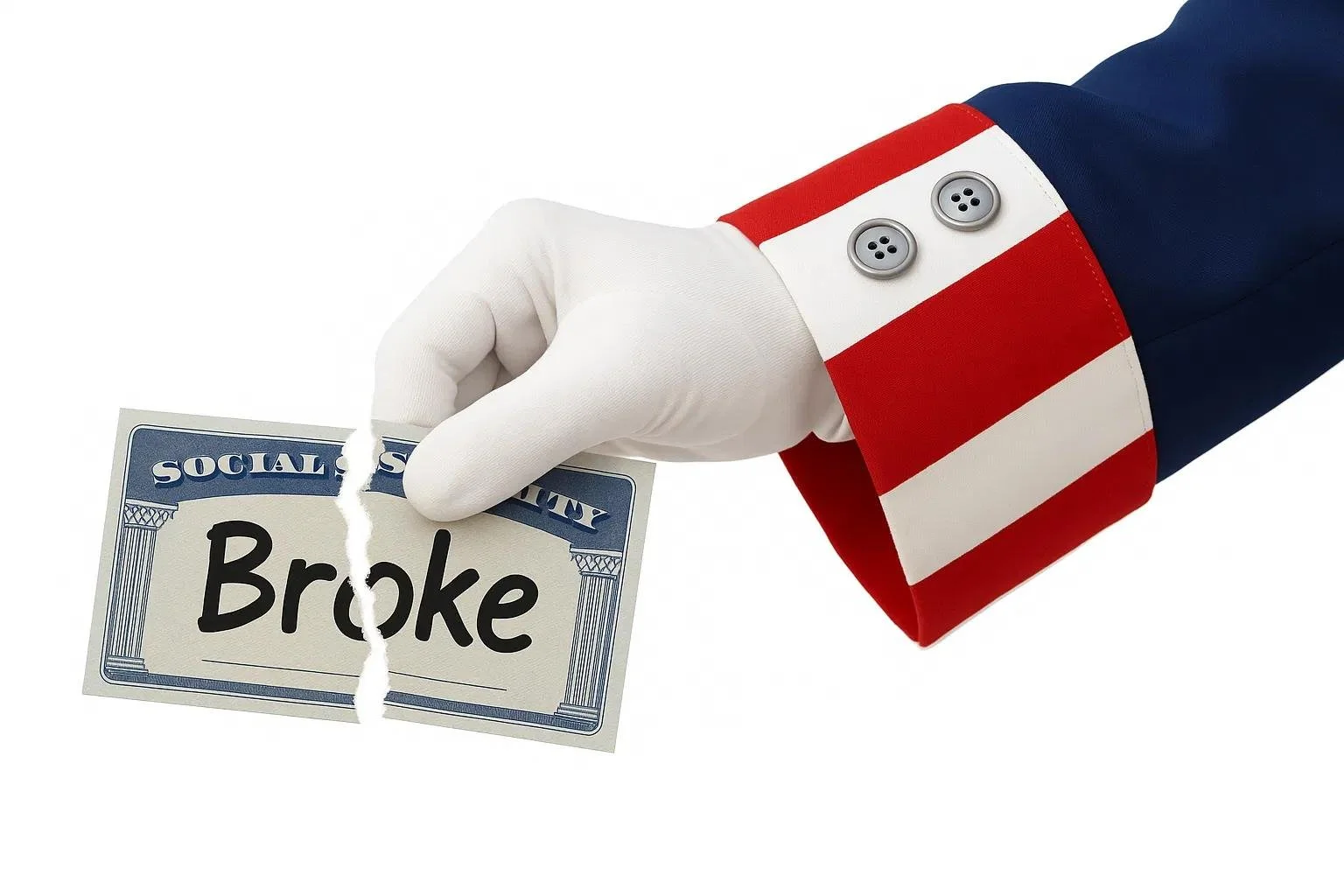
Workers under Bismark’s program became eligible for benefits at age 70, and its costs were paid equally by employees, businesses, and the state.
It also had its intended effect: support for Germany’s unified socialist party fell dramatically after the law was passed, and it became the leading blueprint for similar programs around the world.
Franklin Roosevelt pushed for a Social Security program in the United States for similar reasons; socialist movements were growing quickly in America, especially under the economic devastation of the Great Depression.
Politicians like Louisiana Senator Huey Long were calling for full-blown wealth redistribution, promising every family a $5,000 estate (large sum in the 1930s) and guaranteed income.
Then there was Francis Townsend in California, who proposed a national sales tax to provide a $200 monthly pension to every American over the age of 60-- with the requirement that the money had to be spent within 30 days to stimulate the economy.
These ideas spread like wildfire, and soon there was major support in Congress for some sort of national pension.
Roosevelt modeled his program on Otto von Bismark’s-- but lowered the age of eligibility to 65 instead of 70.
The first financial analysis of Social Security came in 1941, when the Board of Trustees published a report stating that the program would remain solvent and well-funded indefinitely, i.e. pretty much forever.
At the time, there was far more tax revenue being paid into Social Security than there were benefit payments being paid from the system. So Social Security essentially ran a massive surplus each year… and the accumulated surplus was invested in a giant trust fund.
But eventually cracks started to form.
In 1983, the Social Security trustees issued a more sanguine assessment; this time they claimed that the program would still remain solvent for their 75-year horizon (i.e. through 2057), but that costs of paying benefits to Social Security recipients would exceed tax revenue by 2018… at which point they would have to start drawing down the trust fund.
Pfff. It was 1983. No one in Washington cared about what might or might not happen 35 years later. So, barring cosmetic adjustments, politicians ignored the problem.
The Trustees sounded the alarm bells again in the 1990s when they projected that Social Security’s trust funds would run out of money by the year 2042. And, as time has continued to pass, that projected depletion date has become closer and closer.
Starting in the 2010s, Social Security projected that its trust funds would be fully depleted by 2035-- roughly 20-25 years into the future.
And according to their latest assessment, the projected depletion date is now 2033. That’s just eight years away.
So, what does this actually mean?
Well, Social Security is already running an annual deficit, i.e. the program pays out MORE in monthly benefits than it collects in tax revenue. So, each year they have to dip into the trust fund to make ends meet.
But in eight years, the trust fund balance will be zero… so they won’t have any savings to offset Social Security’s annual deficit anymore. And that annual Social Security deficit is projected to be more than $500 billion by 2033.
There will essentially be two options at that point; either
(1) the federal government will pick up the tab, essentially adding $500 billion per year to the US budget deficit; or
(2) Social Security beneficiaries will have to take an immediate cut to their benefits. The initial cut would be around 20-25% and become worse over time.
Option 2 is unthinkable given the political consequences. But option 1 would only lead to more economic problems… and a lot of inflation. The US government needs to be reducing its budget deficit, not expanding it.
The good news is that there are ways to fix Social Security; the program itself has recommended plenty of solutions.
For example, given that life expectancy at age 65 is now so much longer than it was in 1935, one recommendation is to gradually phase-in a higher retirement age to 69.
Simultaneously, a small payroll tax increase of 1%, combined with increasing the maximum taxable salary, would render the program solvent for at least 75 more years.
And these just scratch the surface-- there are plenty of other options.
The bad news is that the longer Congress waits, the more painful the solutions will become. If they wait until 2030 to pass any reform, there will have to be much more severe tax hikes and much more abrupt changes to the retirement age.
So, dealing with the problem now will make life less difficult in eight years’ time.
Unfortunately, few are willing to do anything about it.
On rare occasions some politician proposes necessary reforms. In fact, the last one came last week from Rep. Gwen Moore of Wisconsin, who introduced the Social Security Enhancement and Protection Act.
But these bills never go anywhere and ‘die in committee’.
Bottom line, the problem is 100% fixable-- just like the rest of America’s economic challenges. The national debt is fixable. Fraud, waste, and abuse is fixable. Inflation is fixable. Everything is fixable.
There just doesn’t seem to be the will to do what is necessary… so these problems will continue to fester until they become a crisis.
To your freedom, James Hickman Co-Founder, Schiff Sovereign LLC
Five Years Later, “Mostly Peaceful” Is Back
Five Years Later, “Mostly Peaceful” Is Back
Notes From The Field By James Hickman (Simon Black) May 27, 2025
On August 24 in the year 410 AD, a large army of Visigoths entered the city of Rome and rampaged through the streets for three full days.
They ransacked public buildings. They destroyed monuments. They looted wealthy homes. And they stole just about anything and everything that wasn’t nailed down. Only some churches were spared, given that their king was a Christian.
Five Years Later, “Mostly Peaceful” Is Back
Notes From The Field By James Hickman (Simon Black) May 27, 2025
On August 24 in the year 410 AD, a large army of Visigoths entered the city of Rome and rampaged through the streets for three full days.
They ransacked public buildings. They destroyed monuments. They looted wealthy homes. And they stole just about anything and everything that wasn’t nailed down. Only some churches were spared, given that their king was a Christian.
The Visigoths even desecrated Roman shrines-- like the tomb of Augustus, where they dumped the former emperor’s ashes (which had been preserved for centuries).
News spread like a shockwave throughout the Mediterranean.
Within a few days, refugees and eyewitnesses had already brought the news across the imperial road network to Milan in the north and Ravenna in the east. Within a week, ships bearing the news arrived at major cities in North Africa like Carthage and Alexandria.
The famed theologian Saint Augustine was in modern day Algeria and received the news in early September. His contemporary Saint Jerome was all the way in Bethlehem, more than 1,500 miles from Rome, when he heard the news shortly after.
No one had any illusions about the state of the western Roman Empire at that point; it was so weak and feeble that Rome wasn’t even the capital city anymore; it had been moved to Ravenna nearly a decade prior.
But the city was still a legendary and powerful symbol of the Empire’s former strength. So news of it being sacked and pillaged traveled very quickly and was met with sadness and disbelief. People were stunned.
The sack of Rome was the ancient equivalent of the 9/11 attacks in 2001… one of those events that goes on to shape culture and history; where everyone knew that life would never be quite the same again; and where people ‘remember where they were’ when they heard the news.
My dad used to talk about the JFK assassination that way. I personally remember 9/11 like it was yesterday. Many of us probably have a similarly emblazoned memory about Covid, i.e. the day we knew something really bad was about to happen.
Then there was the death of George Floyd-- also in 2020, exactly five years ago this past Saturday.
That infamous video came out of a man suffocating to death while multiple police officers looked on and did nothing. And it too became one of those history-defining, culture-shifting, seismic events.
Some of that change was positive and necessary, and helped to propel civilization forward.
Other change was completely ludicrous, including the media coverage.
The legacy media was already on thin ice at that point for their heavily tainted and histrionic COVID fear porn.
You probably remember how CNN and MSNBC used to have the real time body counts of how many people were supposedly dying of Covid; only later did we find out how inflated those numbers really were.
They preached constantly about how everyone must stay at home, wear masks, social distance, etc. And then the George Floyd protests started. Thousands of people were out in the streets packed together like sardines. No social distancing. No staying at home.
After months of being told we had to ‘shelter in place’, suddenly the media decided it was OK to be out in public… but only if you were protesting in the name of George Floyd.
It was as if everything they had been saying over and over again for the past few months was just thrown out the window and replaced with a new social justice theme. And, just like their coverage of Covid, the facts didn’t matter.
The public demonstrations quickly turned violent. Looters rampaged through the streets and plundered stores, stealing big-screen televisions and video game consoles-- all in the name of Social Justice, of course.
And then the media tried to tell us that the protests were “mostly peaceful”. In other words, don’t trust your lying eyes. We’ll tell you what to believe.
That was probably the moment they lost any shred of their remaining credibility and viewers recognized them for the deceitful propaganda machine that they are.
Naturally, they never learned. And the propaganda didn’t stop. They later used this same approach to insist that Joe Biden was healthy, mentally vibrant, and vigorous. And they’re doing the same thing now with respect to attacks on white farmers in South Africa.
Donald Trump met with South Africa’s President (Cyril Ramaphosa) at the White House last week, and the media is in agony over the fact that Trump brought up the killings and said a “genocide” was taking place.
The media is now whining that Trump’s claims are false and part of a far-right conspiracy theory.
Reuters went out of its way to fact check the President, reporting that the total number of white farmers murdered in South Africa amounts to just 1,363… which is too small a number to be considered genocide or ethnic cleansing.
Wow. Hard to argue with that logic. Only 1,363 “mostly peaceful” murders.
Bear in mind that South Africa only has 32,000 commercial farmers. Even if we assume 100% of them are white, this would mean that 1 out of every 23 white farmers has been murdered. Not exactly great odds.
Reuters also, bizarrely, disputes President Trump’s claim that white farmers are having their land expropriated by the South African government.
Instead, Reuters states that white farmers have been “encouraged” to “sell their land willingly”.
Unfortunately, says Reuters, “that hasn’t worked”, so President Ramaphosa “signed a law in January allowing the state to expropriate land.”
So, just to be clear, Donald Trump said that white farmers in South Africa are having their farms expropriated. Reuters complains that this isn’t true. Yet three paragraphs later they said that Ramaphosa signed a law to expropriate land from white farmers.
This is championship level Orwellian doublespeak. You couldn’t make it up if you tried.
To your freedom, James Hickman Co-Founder, Schiff Sovereign LLC
Investors Have Finally Had Enough With $2+ Trillion Deficits
Investors Have Finally Had Enough With $2+ Trillion Deficits
Notes From the Field By James Hickman (Simon Black) May 22, 2025
Well, that was fast.
It only took five days after Moody’s downgrade of the US government’s sovereign credit rating for investors to throw a fit. The result was yesterday’s meltdown trifecta in which ALL three major markets-- US stocks, US bonds, and the US dollar-- lost significant value. I wrote about this extensively last month because we saw the same phenomenon after the “Liberation Day” announcement.
Typically, if there’s bad news in a major developed country, investors will simply shift their money into a different asset class within that same country.
Investors Have Finally Had Enough With $2+ Trillion Deficits
Notes From the Field By James Hickman (Simon Black) May 22, 2025
Well, that was fast.
It only took five days after Moody’s downgrade of the US government’s sovereign credit rating for investors to throw a fit. The result was yesterday’s meltdown trifecta in which ALL three major markets-- US stocks, US bonds, and the US dollar-- lost significant value. I wrote about this extensively last month because we saw the same phenomenon after the “Liberation Day” announcement.
Typically, if there’s bad news in a major developed country, investors will simply shift their money into a different asset class within that same country.

For example, if investors in the US suddenly become concerned that a recession is on the horizon, they’ll pull their money out of the stock market… and then invest that capital into the bond market.
The money remains in the US; it simply moves into a new asset class. So, as a result, stocks decline in value, but bonds increase in value.
But what we saw last month after Liberation Day… and then AGAIN yesterday, is stocks AND bonds both declining simultaneously.
(Remember that bond prices move inversely to yields; so, when bond prices fall, as they did yesterday, it really means that bond yields, i.e. interest rates, are moving higher. More on this below.)
Plus, on top of the stock and bond market routs, the US dollar also took a big hit.
As I explained last month after Liberation Day, this can only mean ONE thing: investors aren’t shifting their money from one US asset class to another. They’re moving their money OUT of the US and into foreign assets.
This is a clear sign that at least some investors are losing confidence in the United States.
And who could blame them? Congress is fiddling while the budget burns. The “One Big Beautiful” tax bill will result in yet another $2 trillion budget deficit.
Trust me, I love tax cuts. Tax cuts are great for the economy. But you can’t just cut taxes without massive spending cuts.
Well, this legislation doesn’t cut spending. In fact, they INCREASED spending… meaning that America’s $36+ trillion debt problem is only going to become worse.
Investors aren’t terribly impressed with that outcome… because they’re the ones who will be asked to finance all that debt and buy trillions of dollars’ worth of US government bonds.
Proof of investors’ dissatisfaction came yesterday when the Treasury Department auctioned off roughly $16 billion worth of 20-year bonds.
This is how the government typically sells its bonds-- through an auction process in which various banks and funds place bids. And ordinarily no one ever pays attention to Treasury auctions; they’re about as exciting as airline safety briefings.
But yesterday was different. Investors put their collective foot down and essentially refused to buy the government’s bonds unless the yield increased dramatically.
In the end, the 20-year yield hit 5.125%… which is almost the highest level it’s been since 2007.
The auction became a major signal that investors are very concerned about the US government’s horrific finances. Sure, they’ll still buy bonds. But they will demand much higher interest rates… which is debilitating for the US government.
Remember, the government already spends more money paying interest on the national debt than they do on the US military. And total interest payments this year are expected to reach about $1.2 trillion-- more than 20 cents of every tax dollar collected.
Social Security, Medicare, and other mandatory entitlement programs will consume the other 80% of tax revenue… meaning that EVERY discretionary spending program, from the Defense Department to Homeland Security to Border Security, will have to be financed with more debt… at a HIGHER interest rate.
Higher interest rates cause the government’s annual interest bill to be even higher, meaning that the problem will eventually spiral out of control.
Folks, I’m not being pessimistic. It’s just basic arithmetic: there are very few good outcomes when your interest bill and mandatory entitlement spending grow faster than tax revenue.
Lower interest rates would be helpful. And that’s one of the reasons why the White House has been so vocal in demanding the Fed “lower” interest rates.
Problem is-- the Fed doesn’t really have the power to cut rates anymore.
In the past, all the Fed Chairman had to do to cut rates was utter a few words; the bond market would click its heels, salute, and dutifully comply. Rates would fall just based on a speech.
That doesn’t happen anymore. If you recall when the Fed supposedly cut rates last year, bond yields actually increased. Essentially, investors are no longer paying attention to the Fed. They don’t care.
The market is now in control of bond yields… NOT the Fed. And certainly not the White House or Treasury Department. And the market does not like what it sees:
- $36 trillion national debt
- $2 trillion annual deficits
- $1.2 trillion annual interest bill
- Congress doing nothing about any of it
Bottom line, investors are fleeing-- and not just the bond market. Given the drop in the US dollar yesterday (alongside stocks and bonds), it’s clear that many investors are fleeing the United States entirely and moving their capital elsewhere.
Gold will be a major beneficiary of this trend (along with well-managed gold businesses) simply because foreign governments and central banks need a reliable, liquid asset with minimal counterparty risk to park all the capital they withdraw from the United States.
Gold is one of the few assets that meets these qualifications. And, while nothing goes up or down in an uninterrupted straight line, we continue to believe that there is tremendous upside left in gold… along with silver, platinum, and several other real assets.
Ultimately, though, this is bad news for the US. No one in government seems to want to fix its terminal spending/deficit problem.
And given what happened yesterday, it’s obvious that the market is no longer willing to ignore it.
To your freedom, James Hickman Co-Founder, Schiff Sovereign LLC
TO READ MORE: