
Thank you to all the subscribers to our Early Access program…we thank you for your continued support.
We are excited to offer this new service to keep you informed and up-to-date on the latest Dinar and currency news.
“Tidbits From TNT” Thursday 2-26-2026
TNT:
Tishwash: Cash hoarded in home safes and lost trust in bank vaults
At the heart of the banking confidence crisis that is hindering the spread of electronic payments in Iraq, the majority of economic transactions are still conducted in cash, while savings remain completely outside the formal banking system.
However, the average Iraqi citizen manages his daily life entirely by relying on paper money, as he withdraws his salaries in cash, pays for his purchases in cash, and keeps his savings at home away from banks.
Meanwhile, electronic payment cards have become a routine part of daily life in neighboring countries, revealing that Iraq is about twenty years behind in adopting the simplest modern financing tools.
TNT:
Tishwash: Cash hoarded in home safes and lost trust in bank vaults
At the heart of the banking confidence crisis that is hindering the spread of electronic payments in Iraq, the majority of economic transactions are still conducted in cash, while savings remain completely outside the formal banking system.
However, the average Iraqi citizen manages his daily life entirely by relying on paper money, as he withdraws his salaries in cash, pays for his purchases in cash, and keeps his savings at home away from banks.
Meanwhile, electronic payment cards have become a routine part of daily life in neighboring countries, revealing that Iraq is about twenty years behind in adopting the simplest modern financing tools.
This delay reflects “weak confidence in banks,” as observers describe it, since the huge amount of cash is hoarded inside homes and exceeds 90 trillion dinars, or about 90 percent of the total cash in circulation, according to the latest data from the Central Bank.
In addition, statistics indicate that less than 20 percent of the population has bank accounts, compared to more than 50 percent in Saudi Arabia and the UAE, where digital payments have been commonplace for years.
A Baghdad resident said via Facebook, “I prefer to keep my money at home for fear of any potential banking crisis, as past experiences do not encourage trust.”
A local economic activist stated, “The sector needs radical reforms to build trust, especially with the push to end cash payments in government institutions by July 2026.”
A banking source noted that “electronic transactions grew by 17.7 percent in the first quarter of 2025, but reliance on cash still prevails despite the launch of platforms such as ePassole in the Kurdistan Region.”
Despite these government efforts, the biggest challenge remains convincing citizens of the security of the digital system amid fears of losing or freezing deposits. link
************
Tishwash: Al-Sudani Coalition signals constitutional action over Iraq’s presidency stalemate
Press release from the Reconstruction and Development Parliamentary Bloc
posted on facebook
Iraq’s Reconstruction and Development (Al-Ima’ar wal Tanmiya) Coalition, the largest electoral bloc in parliament, on Thursday warned of potential constitutional action over the delayed election of the country’s president, describing the impasse as a “clear violation” of constitutional deadlines.
In a statement, the bloc, led by caretaker Prime Minister Mohammed Shia al-Sudani, explained that parliament has yet to elect a head of state despite the passage of almost two months since lawmakers chose the speaker and his two deputies.
The coalition urged the Presidency of the Council of Representatives to hold a dedicated session next week to elect a president, calling on parliament to assume its “national responsibility” and end what it characterized as institutional paralysis. It also called on Kurdish political forces to agree on a single nominee ahead of the session, enabling lawmakers to proceed with the remaining constitutional steps —most notably the formation of “a fully empowered government” in line with the election results.
The continued operation of a government with limited powers, it cautioned, is causing “direct harm” to citizens and state institutions, adding that it would resort to “all available constitutional means and procedures” if the stalemate persists.
Under Iraq’s post-2003 power-sharing arrangement, the presidency is traditionally held by a Kurd, the prime ministership by a Shiite Muslim, and the speakership by a Sunni Arab. The constitution requires parliament to elect a president within 30 days of its first session —a deadline that expired on January 28.
Previous attempts to elect a president have failed due to disagreements between the Kurdistan Democratic Party (KDP) and the Patriotic Union of Kurdistan (PUK), the two main Kurdish parties, which have not agreed on a joint candidate, repeatedly preventing the quorum required for a vote.
text: Arabic and international...
All news (Press Release)
Nearly two months have passed since the election of the Speaker of Parliament and his two deputies. Given the continued delay in electing a President of the Republic, which constitutes a clear violation of the constitutional timelines stipulated in the Iraqi Constitution, we in the Reconstruction and Development Bloc affirm the following:
We call upon the Speaker of Parliament to expedite the convening of a session dedicated to electing the President of the Republic within the coming week. This is necessary to end the current situation of exceeding constitutional deadlines and obstructing the resolution of fundamental entitlements. We urge the Speaker to fulfill its national responsibility by ending this paralysis, which has negatively impacted the performance of state institutions.
We also call upon our brothers in the Kurdish political forces to finalize their candidate for the presidency before the session convenes. This will allow us to move forward with fulfilling the remaining constitutional requirements, foremost among them the formation of a fully empowered government, in accordance with the election results, capable of providing services to citizens, protecting the country's interests, and consolidating political and institutional stability.
The continued existence of a government with limited powers constitutes a direct harm to our people and to the work of the state and its institutions. If this obstruction continues, the Reconstruction and Development Bloc will resort to using all available constitutional means and procedures to ensure the end of the stalemate and to maintain the correct constitutional path.
************
Tishwash: US sanctions threaten an "oil blockade," and the Iraqi central bank may find itself in a "predicament" - Urgent
After the language of escalation and American threats, sanctions began to loom on the horizon, and Iraq may find itself facing an "oil embargo," and the Iraqi Central Bank may be in a "predicament" if Washington implements sanctions against Baghdad.
Sanctions on the financial and oil sectors
Political analyst Wael Munther confirmed in his interview with "Baghdad Today" that "the issue of sanctions that the United States of America may impose on Iraq, whether in the oil or financial sector, is based on legal frameworks and approved contexts that authorize it to prevent dealing with institutions, individuals, or even countries in the financial and economic aspects."
Munther explains that “Washington has the ability to impose sanctions that are not limited to the entities directly involved, but extend to include companies or institutions that deal with them, which means including any party that cooperates with those entities within the circle of financial targeting.”
"The oil embargo" and the search for alternatives
The political analyst points out that “the threat of imposing such sanctions will negatively affect the economic situation in Iraq, especially with regard to the mechanism for exporting oil, as Iraq may find itself in a situation similar to an oil embargo, as a result of the reluctance of international companies that are accustomed to buying Iraqi oil to complete their deals, for fear of being exposed to financial sanctions from the American side, which will push them to look for alternatives in other markets.”
Regarding the sanctions on the Central Bank of Iraq, Munther explained that “any potential sanctions that may affect the Central Bank will directly impact its foreign relations, as international banks and financial institutions will avoid dealing with it, fearing exposure to American punitive measures, which in turn will affect the movement of financial transfers and the country’s foreign trade.”
Baghdad's calculations will change 180 degrees if former Prime Minister Nouri al-Maliki returns to the premiership, after the US President explicitly threatened Iraq that "if al-Maliki, known for his leanings towards Tehran, enters the government through the front door, American protection will be withdrawn immediately."
Trump, known for his sharp words, used three explicit threats in his tweet, expressing his opposition to Maliki's election: "No more aid to Iraq if he wins, no chance for Baghdad to succeed, and the country could sink into chaos and poverty."
This threat should not be read in isolation, but rather within a much broader economic context where the United States already has cards to play on any government in Baghdad that is not to Trump’s liking, and oil, which finances about 90% of the state’s revenues, is at the heart of this equation. link
************
Mot: Unpacking

Seeds of Wisdom RV and Economics Updates Thursday Morning 2-26-26
Good Morning Dinar Recaps,
Rare Earth Shock: U.S. Aerospace and Chipmakers Face Strategic Supply Squeeze
Yttrium and scandium shortages expose critical mineral vulnerabilities ahead of high-stakes U.S.–China talks
Good Morning Dinar Recaps,
Rare Earth Shock: U.S. Aerospace and Chipmakers Face Strategic Supply Squeeze
Yttrium and scandium shortages expose critical mineral vulnerabilities ahead of high-stakes U.S.–China talks
Overview
A worsening shortage of critical rare earth elements is tightening pressure on U.S. aerospace and semiconductor manufacturers — even after a temporary easing in trade tensions between the United States and China.
The bottleneck centers on yttrium and scandium, two niche but indispensable materials heavily dominated by China. As President Donald Trump prepares for a high-level summit with Xi Jinping, rare earth access is emerging as a strategic bargaining chip in broader geopolitical negotiations.
Though small in trade volume, these minerals are foundational to jet engines, aerospace alloys, 5G chips, and advanced manufacturing.
The message is clear: supply chain fragility is now a national security issue.
Key Developments
1. Yttrium: Aerospace Production at Risk
Yttrium is essential for high-temperature ceramic coatings that prevent jet engines and turbines from melting under extreme heat.
Without these coatings:
Engines cannot safely operate.
Aircraft production timelines face disruption.
Defense manufacturing becomes vulnerable.
Since export controls tightened:
Yttrium prices have surged roughly 60%.
Current prices are reportedly nearly 70 times higher than a year ago.
North American coating manufacturers have paused production.
Suppliers are rationing material and prioritizing major aerospace clients.
Planemakers like Boeing and Airbus are already operating under delivery pressure. A sustained disruption could ripple through global aviation supply chains.
Strategic Impact:
Even small mineral disruptions can threaten multi-billion-dollar aerospace output.
2. Scandium: Semiconductor and 5G Vulnerabilities
Scandium production globally amounts to only a few dozen tons per year — yet it is vital for:
High-performance aluminum alloys
Fuel cells
5G chip manufacturing
Major U.S. semiconductor producers rely on scandium-containing components in nearly every 5G smartphone and base station.
However:
U.S. domestic production is currently nonexistent.
Export licensing delays from China have slowed shipments.
Stockpiles may last months — not years.
Chinese authorities now require detailed end-user declarations for export licenses — a move some U.S. officials believe directly targets the semiconductor sector.
Strategic Impact:
Control over scandium effectively gives Beijing leverage over next-generation telecommunications infrastructure.
3. Export Controls as Strategic Leverage
Although China resumed some rare earth exports after earlier restrictions, shipments of yttrium and scandium to the U.S. remain sharply reduced.
This selective easing underscores a broader pattern:
China’s dominance in niche minerals provides disproportionate geopolitical influence.
Rare earths are no longer just trade commodities — they are tools of statecraft.
The issue is expected to surface prominently during upcoming U.S.–China discussions in Beijing.
Why It Matters
This episode reveals three structural realities:
Supply chain concentration equals strategic vulnerability.
Rare earth dominance offers leverage without full embargoes.
Licensing delays alone can generate economic anxiety and price spikes.
Even without a complete export ban, uncertainty creates:
Price volatility
Production rationing
Strategic recalibration by manufacturers
Supply Chains Under Siege as Resource Power Shifts
Why It Matters to Foreign Currency Holders
For those watching global financial realignment:
Critical mineral control increasingly influences currency power dynamics.
Trade leverage affects capital flows and supply chain geography.
Industrial security now intersects with monetary stability.
Nations that control resources gain negotiating strength in trade and financial frameworks.
Implications for the Global Reset
Pillar 1: Resource Nationalism Accelerates
Rare earth dependency reinforces a shift toward friend-shoring and regional supply chains.
Pillar 2: Strategic Commodities Redefine Economic Power
Control over niche materials like yttrium and scandium carries leverage beyond traditional oil dominance.
The rare earth squeeze is a reminder:
Industrial sovereignty is becoming as important as monetary sovereignty.
Conclusion
The current shortages demonstrate how even limited export controls can ripple through critical industries. Yttrium and scandium represent tiny fractions of global trade — yet their absence can halt production lines central to aerospace and semiconductor dominance.
As Trump and Xi prepare for talks, rare earth access may shape the tone — and outcome — of broader economic negotiations.
Whether this moment produces supply relief or deeper strategic competition will influence the next chapter of U.S.–China relations.
Seeds of Wisdom Team
Newshounds News™ Exclusive
Sources
Modern Diplomacy — “Rare Earth Squeeze Deepens for U.S. Aerospace and Chipmakers”
Reuters — “China Rare Earth Export Controls and U.S. Industry Impact”
~~~~~~~~~~
🌱 A Message to Our Currency Holders🌱
If you’ve been holding foreign currency for many years, you were not foolish.
You were not wrong to believe the global financial system would change.
What failed was not your patience — it was the information you were given.
For years, dates, rumors, and personalities replaced facts, structure, and proof. “This week” predictions created cycles of hope and disappointment that were never based on how currencies actually change.
That is not your failure.
Our mission here is different: • No dates • No rates • No hype • No gurus
Instead, we focus on:
• Verifiable developments • Institutional evidence
• Global financial structure • Where countries actually sit in the process
Currency value changes only come after sovereignty, trade, banking, settlement systems, and fiscal coordination are in place. History and institutions confirm this sequence.
You will see silence. You will see denials. That is not delay — that is discipline.
Protect your identity. Organize your documents. Verify everything.
Never hand your discernment to anyone who cannot show proof.
You deserve truth — not timelines.
Seeds of Wisdom Team
Newshounds News
~~~~~~~~~~
Seeds of Wisdom Team RV Currency Facts Youtube and Rumble
Newshound's News Telegram Room Link
RV Facts with Proof Links Link
RV Updates Proof links - Facts Link
Follow the Gold/Silver Rate COMEX
Follow Fast Facts
Seeds of Wisdom Team™ Website
Thank you Dinar Recaps
Iraq Economic News and Points To Ponder Thursday Morning 2-26-26
The International Monetary Fund Approves The Disbursement Of $2.3 Billion To An Arab Country.
Money and Business Economy News — Follow-up The International Monetary Fund has approved the fifth and sixth reviews of Egypt’s Extended Fund Facility arrangement and the first review of its Resilience and Strength Program, making available $2.3 billion in financing, according to a statement issued by the Fund.
The International Monetary Fund Approves The Disbursement Of $2.3 Billion To An Arab Country.
Money and Business Economy News — Follow-up The International Monetary Fund has approved the fifth and sixth reviews of Egypt’s Extended Fund Facility arrangement and the first review of its Resilience and Strength Program, making available $2.3 billion in financing, according to a statement issued by the Fund.
The IMF also approved a two-month extension of the Extended Fund Facility program, to end in December 2026, after it was originally scheduled to last 46 months starting in December 2022.
The IMF said in the statement that the macroeconomic situation in Egypt has improved under continued efforts to achieve stability; tight monetary and fiscal policies, along with a flexible exchange rate, have contributed to restoring macroeconomic stability, reducing inflation rates, and strengthening the external position.
He noted that, in contrast, progress in implementing deeper structural reforms has been uneven, and accelerating the pace of implementation – particularly reducing the state’s economic footprint and leveling the playing field – remains crucial to ensuring sustainable and inclusive private sector-led growth.
The Fund reviewed the most prominent indicators of economic improvement, most notably the rise in economic growth to 4.4% in the last fiscal year, and the decline in inflation to 11.9% in January, supported by monetary and fiscal tightening policies.
Current Account Deficit Narrowing
He noted that the current account deficit had narrowed to 4.2% of GDP, driven by strong remittances from workers abroad and tourism revenues.
He added that market confidence in the Egyptian economy has improved significantly, as evidenced by the country's ability to issue debt instruments in global markets, along with increased foreign direct investment flows and short-term capital inflows.
The statement noted that the flexibility of the exchange rate led to an increase in total international reserves from $54.9 billion in December 2024 to about $59.2 billion by the end of December 2025.
Implementing two key reform measures
He said that financial performance had improved, supported by higher tax revenues, despite a decline in public investments.
He added that the initial surplus was less than the target set in the program, due to the failure to achieve the planned exit returns.
He noted that the implementation of resilience reforms is progressing at a good pace, and that the authorities have implemented two key reform measures, including the publication of a timetable for implementing renewable energy targets, and the issuance of a directive obliging banks to monitor and disclose their exposure to climate change risks.
https://economy-news.net/content.php?id=66097
Slight Increase In Exchange Rates In Iraqi Markets
Money and Business Economy News – Baghdad The exchange rate of the US dollar witnessed a slight increase in the markets of the capital, Baghdad, on Thursday morning.
The exchange rate of the dollar in the Al-Kifah and Al-Harithiya stock exchanges in Baghdad was recorded at 153,800 Iraqi dinars for every 100 dollars, compared to 153,750 dinars yesterday.
In currency exchange shops in Baghdad's local markets, the selling price stabilized at 154,250 dinars per 100 dollars, while the buying price reached 153,250 dinars. https://economy-news.net/content.php?id=66104
Iraq was the second largest destination for Jordanian exports during January.
Money and Business Economy News – Baghdad The Amman Chamber of Commerce revealed on Thursday that Iraq ranked second among destinations for Jordanian exports during the month of January.
The Chamber stated in a report that the value of Oman's trade exports during January amounted to 155 million dinars, compared to 116 million dinars during the same period last year, an increase of 32.2%.
She indicated that Iraq came in second place as the largest importer of Jordanian goods in terms of the value of certificates of origin, amounting to 47 million dinars, with 206 certificates, while Switzerland came in first with about 52 million dinars and 8 certificates.
Next came Saudi Arabia with 8 million dinars, with 223 certificates, followed by Syria with 7 million dinars with 600 certificates, and Egypt with 6 million dinars with 55 certificates. This group of countries is among the top five in terms of value.
The Chamber added that Jordanian exports were diverse according to the type of goods, as foreign products not manufactured in Jordan constituted the largest part with a value of about 60 million dinars, while the value of Jordanian industrial products amounted to about 17 million dinars, and products of Arab origin amounted to 12 million dinars, agricultural products to 10 million dinars, and the remainder went to other products.
A certificate of origin is a fundamental document in international trade, as it proves that the goods produced or manufactured in a particular shipment were produced in a particular country, and is used to determine the customs definition and verify the origin of the goods. The Jordanian dinar is worth 70 dinars to 100 dollars. https://economy-news.net/content.php?id=66108
PM Stresses The Importance Of Achieving The Highest Levels Of Coordination And Intelligence Sharing
INA–Baghdad The Prime Minister's Media Office stated in a press release received by the Iraqi News Agency (INA) that "Prime Minister and Commander-in-Chief of the Armed Forces, Mohammed Shia al-Sudani, chaired a meeting of the National Intelligence Council today."
"The meeting addressed the security situation across the country, reviewed the performance of security and intelligence agencies and their duties in various sectors, and discussed efforts to confront current challenges in light of regional developments, with the aim of strengthening the country's security and stability," according to the statement.
The Commander-in-Chief stressed the importance of optimal operational coordination among the various branches of the security forces.
Al-Sudani emphasized the necessity of achieving the highest levels of coordination and intelligence cooperation and working to provide all the requirements for the success of the security plans prepared in this context
Iraq Economic News and Points To Ponder Late Wednesday Evening 2-25-26
The Iraqi Trade Bank Responds To Al-Karbouli Regarding "Transfer Exceptions".
Banks The Trade Bank of Iraq (TBI) affirmed on Wednesday its full commitment to the directives of the Central Bank of Iraq and regulatory authorities, clarifying that all international transfers executed through the Central Bank of Iraq's platform are subject to proper notification and approval.
The Iraqi Trade Bank Responds To Al-Karbouli Regarding "Transfer Exceptions".
Banks The Trade Bank of Iraq (TBI) affirmed on Wednesday its full commitment to the directives of the Central Bank of Iraq and regulatory authorities, clarifying that all international transfers executed through the Central Bank of Iraq's platform are subject to proper notification and approval.
In a statement, the bank said, "With reference to the remarks made by MP Mohammed Al-Karbouli during his appearance on a television program regarding a problem with transfers and his claim of granting exceptions, we would like to clarify that all international transfers executed through the Central Bank of Iraq's platform are subject to proper notification and approval and are carried out in accordance with applicable regulations and instructions.
The Central Bank and relevant regulatory authorities are provided with the relevant documentation after execution." The statement added, "No transfer can be executed without being submitted to an external auditing firm to conduct due diligence and obtain the necessary approvals, in accordance with established procedures. There are no exceptions or exceptions outside the legal framework." The bank further stated,
"The issue raised regarding invoices and their reuse is subject to the nature of the contract between the customer and the supplier and is within the framework of applicable regulations and instructions. It does not constitute a violation as long as it is carried out according to established procedures."
The bank asserted that "the information presented during the program is not based on accurate facts, and such information negatively impacts the bank's reputation and the trust of its clients both domestically and internationally."
It further explained, "The MP should have addressed the bank officially in writing or visited it to inquire and ascertain the facts, rather than disseminating this information through television. This is the proper procedure for regulatory bodies. Therefore, the bank reserves the right to take the necessary legal measures to protect its reputation and standing, and to ensure transparency for the public."
The bank, according to the statement, affirmed its "full commitment to the directives of the Central Bank of Iraq and regulatory authorities, and its dedication to operating with the highest levels of professionalism and transparency in service of the national economy." https://economy-news.net/content.php?id=66072
Al-Rasheed Bank Announces An Increase In The Deposit Limit For The "Nakheel" Card To 25 Million Dinars.
banks Economy News – Baghdad Al-Rasheed Bank announced on Wednesday an increase in the deposit limit for its Nakheel card to 25 million Iraqi dinars.
In a statement received by Al-Eqtisad News, the bank said, "The bank has decided to increase the deposit limit for the Nakheel card to 25 million Iraqi dinars in a move aimed at expanding banking services offered to cardholders and enhancing the flexibility of financial transactions."
The bank explained that "this decision comes as part of its plan to develop electronic banking products and facilitate deposit, withdrawal, and transfer operations in line with the requirements of customers benefiting from the card's services."
The bank emphasized that "this increase will allow Nakheel cardholders to manage their funds with a higher limit, which will contribute to supporting daily financial activities and simplifying banking procedures." https://economy-news.net/content.php?id=66067
Gold Prices Flat In Baghdad, Tick Up In Erbil
2026-02-25 Shafaq News- Baghdad/ Erbil On Wednesday, gold prices stabilized near 1.12 million IQD per mithqal in Baghdad, while Erbil markets edged higher, with 21-carat gold rising by about 12,000 IQD per mithqal, according to a survey by Shafaq News Agency.
Gold prices on Baghdad's Al-Nahr Street recorded a selling price of 1.120 million IQD per mithqal (equivalent to five grams) for 21-carat gold, including Gulf, Turkish, and European varieties, with a buying price of 1.116 million IQD, unchanged from Tuesday.
The selling price for 21-carat Iraqi gold stood at 1.090 million IQD, while the buying price reached 1.086 million IQD.
In jewelry stores, the selling price per mithqal of 21-carat Gulf gold ranged between 1.120 million and 1.130 million IQD, while Iraqi gold sold for between 1.090 million and 1.100 million IQD.
In Erbil, 22-carat gold was sold at 1.190 million IQD per mithqal, 21-carat gold at 1.137 million IQD, and 18-carat gold at 975,000 IQD. https://www.shafaq.com/en/Economy/Gold-prices-flat-in-Baghdad-tick-up-in-Erbil
USD/IQD Exchange Rates Climb In Baghdad And Erbil
2026-02-25 Shafaq News- Baghdad/ Erbil The US dollar opened Wednesday’s trading higher in Iraq, hovering around 154,000 dinars per 100 dollars.
According to a Shafaq News market survey, the dollar traded in Baghdad's Al-Kifah and Al-Harithiya exchanges at 153,750 dinars per 100 dollars, up from the previous session’s 153,300 dinars.
In the Iraqi capital, exchange shops sold the dollar at 154,250 dinars and bought it at 153,250 dinars, while in Erbil, selling prices stood at 153,500 dinars and buying prices at 153,450 dinars.
https://www.shafaq.com/en/Economy/USD-IQD-exchange-rates-climb-in-Baghdad-and-Erbil-6-9
Dollar Steadies In Baghdad, Slips In Erbil
2026-02-25 Shafaq News- Baghdad/ Erbil The US dollar closed Wednesday’s trading flat in Baghdad, hovering near 154,000 dinars per 100 dollars, while edging lower by about 150 dinars in Erbil.
According to a Shafaq News market survey, the dollar traded in Baghdad's Al-Kifah and Al-Harithiya exchanges at 153,750 dinars per 100 dollars, unchanged from the morning session.
In the Iraqi capital, exchange shops sold the dollar at 154,250 dinars and bought it at 153,250 dinars, while in Erbil, selling prices stood at 153,300 dinars and buying prices at 153,200 dinars.
https://www.shafaq.com/en/Economy/Dollar-steadies-in-Baghdad-slips-in-Erbil
Iraq’s Basrah Crude Slips More Than 1% Despite Global Gains
2026-02-25 Shafaq News- Baghdad Iraq’s Basrah Heavy crude fell to $67.35 per barrel on Wednesday, down 79 cents, or 1.16%, in the latest trading session.
Basrah Medium declined to $69.60 per barrel, also losing 79 cents, marking a 1.12% decrease.
Brent crude traded at $71.26 per barrel, while US West Texas Intermediate stood at $66.02, as markets monitored US–Iran talks and rising tensions that could affect global oil supplies.
Iraq, OPEC’s second-largest oil producer, exports roughly 70% of its crude to Asia, 20% to Europe, and 10% to the United States.
Oil Prices Near Seven-Month Highs On US-Iran Tensions
2026-02-25 Shafaq News Oil prices were hovering near seven-month highs on Wednesday as the threat of military conflict between the US and Iran that could disrupt supply continued to worry investors as talks between the parties are set for Thursday.
Brent futures were up 43 cents, or 0.6%, at $71.20 per barrel at 0400 GMT. WTI futures rose 38 cents, or 0.6%, to $66.01.
Brent prices reached their highest since July 31 on Friday, while WTI hit its highest since August 4 on Monday, and both contracts have held near there as the US has positioned military forces in the Middle East to compel Iran to negotiate an end to its nuclear and ballistic missile program.
An extended conflict could disrupt supplies from Iran, the third-biggest crude producer in the Organization of the Petroleum Exporting Countries, and other countries in the key Middle East producing region.
"This uncertainty means the market will continue to price in a large risk premium and remain sensitive to any fresh developments," ING commodities strategists said on Wednesday.
US envoys Steve Witkoff and Jared Kushner are slated to meet with an Iranian delegation for a third round of talks on Thursday in Geneva.
Iran's Foreign Minister Abbas Araqchisaidon Tuesday that a deal with the US was "within reach, but only if diplomacy is given priority".
"(US) President (Donald) Trump has warned that without a deal, there will be 'very bad consequences'. Whether (Iran's) concessions will meet the US's 'zero enrichment' red line remains to be seen," Tony Sycamore, IG market analyst, said in a note.
Amid the heightened tensions, Iran and China haveacceleratedtalks to purchase Chinese anti‑ship cruise missiles, according to Reuters sources, which could target the US naval forces that have assembled near the Iranian coast.
Anti‑ship cruise missiles would enhance Iran's strike capabilities and threaten the US naval forces, according to experts.
Trump will deliver the traditional State of the Union address to Congress on Tuesday evening. Two White House officials, speaking on condition of anonymity, said Trump will discuss his plans for Iran but did not offer details.
While geopolitical tensions have supported prices, the market is also contending with concerns of large inventory gains as global supply is exceeding demand.
According to market sources, the American Petroleum Institute late on Tuesday reported a massive increase in US oil stockpiles of 11.43 million barrels in the week ended February 20.
However, gasoline and distillate inventories fell, the sources said, citing the API data.
Official US oil inventory reports from the Energy Information Administration are due later on Wednesday.
(Reuters) https://www.shafaq.com/en/Economy/Oil-prices-near-seven-month-highs-on-US-Iran-tensions
Seeds of Wisdom RV and Economics Updates Wednesday Afternoon 2-25-26
Good Afternoon Dinar Recaps,
Tariffs Instead of Income Tax? Trump Floats Radical Revenue Shift in SOTU
Proposal signals potential restructuring of U.S. taxation, trade policy, and global capital flows
Good Afternoon Dinar Recaps,
Tariffs Instead of Income Tax? Trump Floats Radical Revenue Shift in SOTU
Proposal signals potential restructuring of U.S. taxation, trade policy, and global capital flows
Overview
During his State of the Union address, President Donald Trump stated that tariffs could eventually replace the federal income tax.
The remark immediately ignited debate across economic, political, and financial circles. While presented as a populist fiscal shift, the implications extend far beyond campaign rhetoric.
Replacing income tax with tariffs would fundamentally restructure how the United States funds its government — shifting the burden from domestic wage earners to imported goods and foreign producers.
This is not a minor policy tweak. It is a potential redefinition of America’s revenue model.
Key Developments
1. Tariffs as Primary Revenue Engine
Trump suggested that revenue collected from import duties could substitute for federal income taxes.
Strategic Implication:
The U.S. federal government collected over $2 trillion annually from individual income taxes in recent years. Tariffs historically generate only a fraction of that amount. To replace income tax entirely would require dramatically higher tariff rates or broad-based import levies.
Such a move would transform trade policy into fiscal policy.
2. Return to Pre-1913 Revenue Model
Before the ratification of the Sixteenth Amendment to the United States Constitution, the federal government relied heavily on tariffs and excise taxes.
Strategic Implication:
Reversing over a century of tax structure would require constitutional, legislative, and economic recalibration. It would also mark a symbolic shift toward economic nationalism reminiscent of late 19th-century trade frameworks.
The question becomes whether modern global supply chains can withstand a 19th-century revenue strategy.
3. Trade Policy Becomes Domestic Tax Policy
If tariffs replace income tax:
Imported goods become more expensive.
Domestic manufacturing gains protective advantage.
Consumers effectively pay tax through higher prices.
Trade partners likely retaliate.
Strategic Implication:
This reframes taxation as an externalized cost — shifting fiscal extraction from paychecks to consumption patterns.
However, the globalized nature of supply chains means cost increases would ripple through virtually every sector.
4. Global Market Reaction and Legal Hurdles
Implementing such a shift would require congressional approval and potentially new trade authority legislation. It would also invite World Trade Organization disputes and retaliatory tariffs from major trading partners.
Strategic Implication:
If enacted, the move could accelerate:
De-dollarization conversations
Bilateral trade blocs
Strategic “friendshoring”
Fragmentation of global trade norms
In essence, fiscal restructuring could catalyze geopolitical restructuring.
Why It Matters
This proposal intersects three high-stakes arenas:
Domestic Tax Policy
International Trade Architecture
Global Reserve Currency Stability
Income tax provides predictable revenue. Tariffs fluctuate with trade volume and economic cycles. Shifting to tariff dependency introduces volatility into federal budgeting.
Markets would need to reprice risk across equities, bonds, and commodities.
Why It Matters to Foreign Currency Holders
From a global reset perspective, several implications emerge:
Dollar Demand Dynamics: Tariffs can strengthen short-term dollar demand but weaken long-term trade relationships.
Inflationary Pressure: Higher import costs feed domestic inflation, impacting monetary policy.
Trade Bloc Acceleration: Countries may deepen regional trade arrangements to bypass U.S. tariff exposure.
If the United States reorients toward tariff-driven funding, global settlement patterns could shift accordingly.
Implications for the Global Reset
Pillar 1: Sovereign Revenue Sovereignty
Governments may reconsider domestic taxation models amid rising debt burdens.
Pillar 2: Trade as Strategic Weapon
Tariffs would no longer be negotiation tools — they would become structural fiscal instruments.
The deeper theme: economic policy is merging with geopolitical strategy.
Replacing income tax with tariffs would represent one of the most significant fiscal transformations in modern U.S. history.
Whether rhetorical or actionable, the statement signals a willingness to challenge entrenched economic frameworks.
This is not just campaign messaging — it is a signal flare in the broader debate over sovereignty, trade, and the architecture of global finance.
Seeds of Wisdom Team
Newshounds News™ Exclusive
Sources
Reuters — “Trump Proposes Expanding Tariffs in State of the Union Address”
U.S. Constitution Center — “The Sixteenth Amendment and the Federal Income Tax”
~~~~~~~~~~
BRICS at a Crossroads: What If Russia Returns to the U.S. Dollar?
Would Moscow’s pivot reshape the de-dollarization movement — or merely slow it down?
Overview
For years, the BRICS bloc has promoted local currency trade to reduce reliance on the U.S. dollar. After sweeping Western sanctions in 2022, Russia became one of the most aggressive advocates of de-dollarization.
Now, reports suggest Moscow may seek renewed access to the U.S. dollar system through a potential trade deal requiring approval from Donald Trump.
If true, the move would represent a strategic U-turn — and could significantly reshape the trajectory of BRICS’ monetary ambitions.
Key Developments
1. Russia’s De-Dollarization Drive Post-2022
After sanctions cut Russian banks from Western financial channels, Moscow accelerated trade settlement in:
Rubles
Yuan
Rupees
Dirhams
Reports indicate nearly 90% of trade with China and India shifted to local currencies.
Strategic Implication:
Russia’s push appeared ideological — but it may have been primarily sanctions-driven pragmatism. If dollar access returns, motivation for aggressive de-dollarization may weaken.
2. Potential U.S. Dollar Re-Entry
If Russia regains broader access to dollar settlement:
Cross-border energy sales could return to dollar pricing.
Russian banks could re-engage global clearing systems.
Pressure on alternative payment systems could ease.
Strategic Implication:
A Russian pivot back to the dollar would slow BRICS’ collective momentum toward alternative financial architecture.
It would not necessarily end de-dollarization — but it would blunt its urgency.
3. BRICS Is Bigger Than Russia
Even if Moscow recalibrates, other BRICS members maintain independent agendas:
China continues internationalizing the yuan for trade settlement.
India promotes rupee trade via special Vostro accounts.
Brazil and South Africa pursue diversified trade partnerships aligned with national interests.
Strategic Implication:
The de-dollarization effort would likely shift from coordinated acceleration to fragmented progression.
China, in particular, has long-term structural goals that extend beyond Russia’s immediate needs.
4. Narrative Shift: Ideology vs. Necessity
If Russia returns to dollar usage, it reinforces a powerful conclusion:
De-dollarization may have been less about dismantling dollar dominance — and more about surviving sanctions.
Strategic Implication:
Global markets could interpret the move as evidence that dollar liquidity remains indispensable during geopolitical stress.
That perception alone strengthens the greenback’s reserve status.
Why It Matters
This potential shift tests whether BRICS de-dollarization is:
A permanent structural realignment
orA tactical response to Western sanctions
If Russia re-enters the dollar system, it signals that financial access outweighs monetary sovereignty when economic pressure mounts.
Markets would likely interpret the move as:
Short-term bullish for the dollar
Moderately bearish for alternative settlement systems
A pause — not a reversal — of multipolar currency ambitions
Why It Matters to Foreign Currency Holders
For those watching global monetary restructuring:
A slowdown in de-dollarization may extend the dollar’s dominance cycle.
Yuan internationalization continues regardless.
Fragmentation of payment systems remains a long-term theme.
The global reset narrative does not disappear — it simply evolves at a slower pace.
Momentum shifts, but structural pressures persist.
Implications for the Global Reset
Pillar 1: Dollar Resilience Under Pressure
Even after sanctions and political weaponization, the dollar remains the system most nations ultimately seek access to.
Pillar 2: Multipolar Finance — Delayed, Not Denied
BRICS ambitions may slow, but structural drivers (debt burdens, sanctions risk, trade fragmentation) remain intact.
If Russia pivots back to the dollar, it reveals a key truth:
Access to liquidity still trumps ideology.
Conclusion
A Russian return to dollar settlement would not dismantle BRICS — but it would reshape expectations.
The alliance’s de-dollarization agenda would likely continue at a reduced pace, increasingly driven by China’s long-term strategy rather than Russia’s immediate necessity.
The bigger question becomes:
Is de-dollarization a revolution — or simply leverage in negotiation?
Seeds of Wisdom Team
Newshounds News™ Exclusive
Sources
Watcher Guru — “What Happens to BRICS If Russia Returns to the US Dollar?”
Reuters — “Russia Expands Local Currency Trade Amid Sanctions Pressure”
~~~~~~~~~~
Seeds of Wisdom Team RV Currency Facts Youtube and Rumble
Newshound's News Telegram Room Link
RV Facts with Proof Links Link
RV Updates Proof links - Facts Link
Follow the Gold/Silver Rate COMEX
Follow Fast Facts
Seeds of Wisdom Team™ Website
Thank you Dinar Recaps
Iraq Economic News and Points To Ponder Wednesday Evening 2-25-26
An Economist Says Reforming Private Banks Is Key To Stabilizing The Dollar And Boosting Confidence In The Financial Market.
Baghdad Today – Baghdad Economic expert Ahmed Abdel Rabbo confirmed on Wednesday (February 25, 2026) that the Central Bank of Iraq has taken a series of measures during the past period aimed at controlling the exchange market and enhancing financial stability, in light of the monetary challenges that Iraq has recently witnessed.
An Economist Says Reforming Private Banks Is Key To Stabilizing The Dollar And Boosting Confidence In The Financial Market.
Baghdad Today – Baghdad Economic expert Ahmed Abdel Rabbo confirmed on Wednesday (February 25, 2026) that the Central Bank of Iraq has taken a series of measures during the past period aimed at controlling the exchange market and enhancing financial stability, in light of the monetary challenges that Iraq has recently witnessed.
Abd Rabbo explained in an interview with “Baghdad Today” that the current stage requires speeding up the completion of the private banks reform project, as it is the cornerstone for achieving permanent stability in the dollar exchange rate within the local market, noting that the continued existence of some banks under sanctions contributes to creating bottlenecks in the supply of foreign currency and negatively affects the level of confidence in the banking sector.
Supporting Restructuring
He added that it is necessary to intensify efforts to support the work of Oliver Wyman, which is concerned with the restructuring of banks, in order to complete the banking compliance requirements within clear and announced timetables, which will contribute to removing a number of banks from the circle of restrictions and returning them to normal activity in accordance with transparent standards and strict supervision.
Reducing The Gap Between The Two Prices
Abdel Rabbo pointed out that achieving tangible progress in this direction will not only reduce the gap between the official and parallel dollar exchange rates, but will also send a genuine message of reassurance to the markets that the path of financial reforms is proceeding steadily, and that monetary stability is no longer a temporary measure, but a long-term strategic option to enhance confidence in the Iraqi financial market.
Over the past two years, Iraq has witnessed fluctuations in the dollar exchange rate as a result of tightening foreign transfer procedures and international compliance requirements, which prompted the Central Bank of Iraq to adopt stricter regulatory and supervisory mechanisms to control the currency sale window and enhance transparency.
Some private banks were also subjected to restrictive measures and sanctions, which affected the supply of foreign currency in the local market and widened the gap between the official and parallel exchange rates.
In this context, the restructuring of the banking sector has emerged as one of the most important paths of financial reform to ensure sustainable monetary stability and enhance confidence in the banking system. https://baghdadtoday.news/293908-.html
Al-Mada Newspaper: An Anticipated Shift Within The Coordination Framework May Remove Maliki And Enhance Sudani's Chances Of Securing A Second Term.
Baghdad – One News Al-Mada newspaper reported that political data indicates the possibility of a shift within the forces of the Coordination Framework that may lead to the removal of the leader of the State of Law Coalition, Nouri al-Maliki, from the race for the premiership, with the current Prime Minister, Mohammed Shia al-Sudani, having increased chances of assuming the position again.
The newspaper explained that the tour of Tom Barrack, the envoy of US President Donald Trump, in Baghdad was interpreted by political circles as an American green light to grant Al-Sudani a second term, in light of Washington’s search for a partner capable of maintaining stability and preventing escalation.
She added that the Sudanese is seen by some circles as a suitable guarantee for Washington to curb the movement of the factions, especially in the event that the United States carries out a new military strike against Tehran, which gives him an advantage in international calculations. https://1news-iq.net/جريدة-المدى-تحوّل-مرتقب-داخل-الإطار-ال/
Iraq Exports 107M+ Oil Barrels In January
2026-02-25 Shafaq News- Baghdad Iraq exported more than 107,616,220 barrels of crude oil in January, generating $6,485,294,000 billion in revenue, according to data released on Wednesday by the State Organization for Marketing of Oil (SOMO).
Crude shipments from fields in central and southern Iraq accounted for 101,160,349 barrels, while exports from the Kurdistan Region via Turkiye’s Ceyhan port totaled 6,445 barrels. No crude was exported to Jordan or from the Qayyarah field during the month. https://www.shafaq.com/en/Economy/Iraq-exports-107M-oil-barrels-in-January
Dollar Steadies In Baghdad, Slips In Erbil On Closure
2026-02-25 Shafaq News- Baghdad/ Erbil The US dollar closed Wednesday’s trading flat in Baghdad, hovering near 154,000 dinars per 100 dollars, while edging lower by about 150 dinars in Erbil.
According to a Shafaq News market survey, the dollar traded in Baghdad's Al-Kifah and Al-Harithiya exchanges at 153,750 dinars per 100 dollars, unchanged from the morning session.
In Baghdad, exchange shops sold the dollar at 154,250 dinars and bought it at 153,250 dinars, while in Erbil, selling prices stood at 153,300 dinars and buying prices at 153,200 dinars. https://www.shafaq.com/en/Economy/Dollar-steadies-in-Baghdad-slips-in-Erbil
Iraqi Resistance Coordination blasts “US interference” in Iraqi affairs
2026-02-25 Shafaq News- Baghdad The Iraqi Resistance Coordination Committee on Wednesday condemned what it described as US interference in Iraq’s political affairs, accusing Washington of “determining which political figures are allowed to assume government positions and which are excluded.”
In a statement, the committee, an umbrella group that includes armed factions allied with Iran, said relations between Iraq and the United States are not based on equality between sovereign states. It added that “the occupation continues to violate Iraqi airspace, whether through drones or warplanes,” calling this a serious security threat that undermines the country’s stability and territorial integrity and constitutes “a blatant violation of sovereignty and national dignity.”
The group also accused the United States of failing to fulfill its commitments. “We have not seen any real steps to implement the remainder of the agreement concluded with the Iraqi government, which stipulates the withdrawal of all foreign forces from Iraqi territory and airspace.”
It warned that what it called continued evasion and delay “leaves us with no choice but to assume our legal and moral responsibilities in taking positions befitting the dignity of our people and their legitimate right to end the occupation, if US forces insist on maintaining their presence and imposing their will on the country.”
A senior White House official reiterated the US administration’s opposition to the nomination of Nouri Al-Maliki for the post of prime minister, according to remarks reported on Wednesday by Asharq Al-Awsat newspaper. The official was quoted as saying that “a government controlled by Iran cannot put Iraq’s interests first, keep Iraq out of regional conflicts, or strengthen a mutually beneficial partnership between the United States and Iraq.”
Speaking to Shafaq News, a senior source within Iraq’s Coordination Framework (CF) said the US extended a deadline for the CF until February 27 to withdraw Al-Maliki’s nomination. He noted that the deadline was discussed during a meeting held on Monday, where Al-Maliki made clear he would not step aside, adding that any reversal would have to come from the bloc that nominated him. https://www.shafaq.com/en/Iraq/Iraqi-Resistance-Coordination-blasts-US-interference-in-Iraqi-affairs
Trump's Pressure Goes Public... Maliki's Fate To Be Decided Friday Night
2026-02-24 Shafaq News – Baghdad On Tuesday, an official source within the Coordination Framework revealed details of the meeting of the Coordination Framework leaders, which was held last night at the home of the head of the Supreme Islamic Council, Humam Hamoudi, explaining that it witnessed the absence of both the leader of the Wisdom Movement, Ammar al-Hakim, and the Secretary-General of Asaib Ahl al-Haq, Qais al-Khazali.
The source told Shafaq News Agency that "the framework obtained a new extension of the American deadline for withdrawing al-Maliki's nomination, and the deadline will end next Friday. This was discussed during the meeting, and al-Maliki informed them that he does not intend to withdraw his nomination at all. He told them that the two-thirds who nominated al-Maliki should withdraw his nomination, and he does not object to that. This is the closest thing to the scene in the next few days."
He added that "the Sunni objection is no longer just from Halbousi, but there is now a Sunni political consensus from all blocs, parties and frameworks. This was officially communicated and discussed during a meeting last night."
According to the responsible source within the coordination framework, before Friday, that is, before the end of the new and final American deadline, there will be an important and decisive meeting of the coordination framework.
The source concluded by noting that the US Special Envoy to Iraq and Syria, Tom Barrack, clearly conveyed during his meetings in both Baghdad and Erbil the firm and clear US position of rejecting al-Maliki’s nomination for Prime Minister, and outlined what decisions Washington could make if the framework insisted on proceeding with al-Maliki’s nomination.
The issue of deciding on the presidency and the Iranian-American escalation topped the agenda of the coordination framework talks on Monday evening, where the need to finalize the formation of the new government was emphasized, without mentioning the candidate for its leadership, the leader of the State of Law Coalition, Nouri al-Maliki.
https://www.shafaq.com/ar/سیاسة/ضغوط-ترمب-تنتقل-للعلن-مصير-المالكي-يحسم-ليلة-الجمعة
“Tidbits From TNT” Wednesday 2-25-2026
TNT:
Tishwash: International development is moving towards three investment categories in Iraq.
The International Development Bank announced the launch of three new financial and investment products targeting investors, entrepreneurs, startups, and small and medium enterprises, in a move that the bank says aims to enhance liquidity, stimulate economic growth, and empower the private sector through flexible solutions with competitive returns.
The bank stated that the new products came in response to the market's need for more flexible financing tools that help with expansion and support financial stability within a safe banking environment.
TNT:
Tishwash: International development is moving towards three investment categories in Iraq.
The International Development Bank announced the launch of three new financial and investment products targeting investors, entrepreneurs, startups, and small and medium enterprises, in a move that the bank says aims to enhance liquidity, stimulate economic growth, and empower the private sector through flexible solutions with competitive returns.
The bank stated that the new products came in response to the market's need for more flexible financing tools that help with expansion and support financial stability within a safe banking environment.
The bank stated in a press release that the three products include a profit account, which offers customers a 6.5% profit rate paid upfront, providing immediate liquidity for reinvestment or managing financial obligations from day one; project finance loans with a reduced interest rate of 3.5% to support business growth and accelerate expansion, enabling startups and SMEs to enhance productivity and create jobs; and an investment deposit account with annual returns of up to 10% distributed monthly, providing investors with a regular income, as confirmed by the bank.
In a move that it said comes within its social responsibility and in consideration of the humanitarian dimension, the International Development Bank announced the postponement of all installments due during the month of Ramadan for government sector employees, with the aim of easing their financial burdens and enabling them to meet their needs. link
************
Tishwash: Sudani sponsors the signing ceremony of two preliminary agreements between Iraqi oil companies and US-based Chevron.
Iraqi Prime Minister Mohammed Shia al-Sudani oversaw the signing ceremony of two preliminary agreements between Iraqi oil companies and the American company Chevron on Monday (February 23, 2026).
The Prime Minister's Media Office stated in a statement received by "Baghdad Today" that "the first agreement was concluded between the Basra Oil Company and the American company Chevron to transfer the management of the West Qurna/2 field, while the second agreement relates to the Dhi Qar and North Oil Companies to develop the Nasiriyah field and the four exploration blocks in Dhi Qar Governorate, in addition to developing the Balad field in Salah al-Din Governorate, with the amendment of the previous agreement to add the Nasiriyah field to it.
The signing ceremony was attended by the US Special Envoy to Iraq, Tom Barrack, and the US Chargé d'Affaires, Joshua Harris."
During the ceremony, the Prime Minister stressed "the importance of these agreements in promoting reforms in the oil sector, and their positive impact on the economic and living standards in the governorates of Dhi Qar and Salah al-Din."
It is worth noting that Basra Oil Company and Lukoil had previously signed a settlement agreement, under which the contract was temporarily transferred to Basra Oil Company and all financial dues between the two parties were settled, with the settlement to become effective after the Cabinet approved it.
The statement indicated that "a framework agreement was signed between Basra Oil Company, Lukoil and Chevron, allowing for the temporary transfer of the contract to Basra Oil Company, which will later transfer it to Chevron after completing negotiations on the terms of the new contract. The agreement guarantees exclusive negotiation for one year for Chevron according to the standards agreed upon by the parties." link
************
Tishwash: A new round of negotiations to join the World Trade Organization
Iraq is continuing its technical and legislative preparations to complete its accession process to the World Trade Organization, a move reflecting its efforts to strengthen its integration into the global economy and create a more stable and attractive investment environment. The Ministry of Trade confirmed that work is progressing rapidly to update the technical files related to goods.
In addition to reviewing the memorandum on the foreign trade system, in line with the new decisions relating to customs tariffs, as part of preparations for the fourth round of negotiations with the member states of the organization.
The spokesperson for the Ministry of Trade, Mohammed Hannoun, explained to Al-Sabah that the technical teams are continuing to complete the updating of the required data and information, in preparation for resuming negotiations on the goods and services files, which are among the basic pillars in the accession process.
He noted that the timeframe for Iraq's full membership in the organization remains contingent on progress in completing these negotiations, as well as the stability of the domestic economic situation. He expressed hope that Iraq's acceptance as a member would be announced in 2028-2029, provided the procedures proceed as planned.
Addressing the reasons for the delays in the accession process over the past years, Hanoun explained that one of the most significant factors was the failure to enact several important economic laws during the previous parliamentary session, most notably the draft Intellectual Property Law, which is considered essential for fulfilling Iraq's obligations to member states.
This law is viewed as part of a package of legislation necessary to guarantee the protection of commercial and industrial rights and to align the domestic legal environment with international trade rules.
According to experts, Iraq faces a number of objective challenges that require careful consideration before fulfilling the membership requirements. Foremost among these challenges is the continued heavy reliance on the oil sector as the primary source of revenue, given the weak diversification of the national economy's productive base. There is also a pressing need to modernize the legislative framework in the areas of trade, investment, and government subsidies, in order to align with the organization's rules and minimize any potential conflicts with its commitments.
Among the key areas of focus are the harmonization of customs and trade policies, enhancing transparency in administrative procedures, simplifying import controls, and developing the institutional and technical capacities of the entities responsible for managing the accession process and implementing international obligations. These steps are essential to ensure an orderly transition to a more open and competitive trade environment, without causing sudden shocks to the domestic market.
In the same context, the Administrative Undersecretary of the Ministry of Agriculture, Dr. Mahdi Suhr al-Jubouri, affirmed that Iraq has reached an advanced stage of negotiations, particularly regarding aligning agricultural policies with international standards. In a statement to Al-Sabah newspaper, he explained that the Ministry is working to adapt to the requirements of the Agreement on Sanitary and Phytosanitary Measures (SPS) of the World Trade Organization, which allows countries to take measures to protect human, animal, and plant health, while adhering to international standards issued by recognized institutions such as the International Plant Protection Convention and the World Health Organization.
Al-Jubouri explained that the legal framework governing the agricultural sector includes legislation that complies with international standards, such as the Animal Health Law No. (32) of 2013 and the Agricultural Quarantine Law No. (76) of 2012. These laws regulate pest and disease prevention measures, import controls, oversight of health certificates, and the application of agricultural quarantine rules at border crossings. He noted that these laws form an important foundation for enhancing confidence in Iraqi agricultural products in foreign markets.
In contrast, Al-Jubouri warned that the anticipated trade liberalization upon joining the WTO would lead to increased competition in the Iraqi market due to the gradual reduction of customs barriers, posing challenges for local producers, particularly in the agricultural sector. He emphasized the need for targeted and regulated agricultural support within clear legal frameworks to contribute to increased production efficiency, improved quality, and enhanced competitiveness.
Economic experts believe that completing the accession process represents a strategic step to enhance Iraq’s position in the international trading system, provided that this is accompanied by genuine structural reforms that contribute to diversifying the economy, improving the business environment, and developing the legislative and institutional infrastructure. link
************
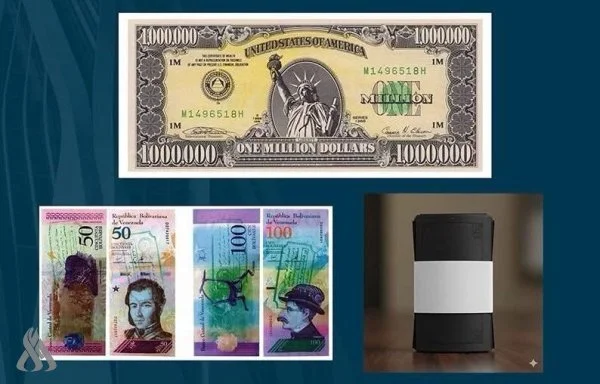
Tishwash: The Central Bank warns against scams and fraud perpetrated using various banknotes.
The Central Bank warned on Monday of scams and fraud perpetrated using various banknotes.
The Central Bank’s media office stated in a statement received by the Iraqi News Agency (INA) that “a number of fraud and deception operations have been detected, perpetrated by unscrupulous individuals against citizens for the purpose of financial gain,” calling for “the need to take precautions and be wary of falling victim to these operations.”
He added that "the most prominent of these operations that are practiced inside Iraq are divided into several methods, including: selling a (1,000,000) million dollar note as a banknote, when in fact it is a commemorative note that is not in circulation, and that the highest denomination is (100) US dollars, with the promotion of black papers cut to the same dimensions as the dollar note as real (100) dollar notes, but they are coated with a black substance, claiming that after removing the black substance they will return to circulation, and there is absolutely no truth to that."
He explained that “among the operations carried out inside Iraq is also the promotion of banknotes withdrawn from circulation from several countries that have no monetary value and are exchanged for Iraqi currency in high amounts, using different methods, pretexts and claims to sell them to victims of fraud, as well as banknotes of dollars and dinars that are copied or printed bearing the word model or invalid or void, used as children’s toys and bearing the features of the banknote and promoted as real banknotes.”
The Central Bank confirmed, according to the statement, that "the relevant authorities have been notified in order to prevent its printing or importation from outside Iraq link
Mot: In Case Ur Wondering!!?? - It’s one of those weeks

Seeds of Wisdom RV and Economics Updates Wednesday Morning 2-25-26
Good Morning Dinar Recaps,
EU–China Trade Talks Intensify in Beijing
Currency pressure, industrial overcapacity, and strategic rivalry redefine Europe–China economic relations
Good Morning Dinar Recaps,
EU–China Trade Talks Intensify in Beijing
Currency pressure, industrial overcapacity, and strategic rivalry redefine Europe–China economic relations
Overview
German Chancellor Friedrich Merz met with Xi Jinping in Beijing in a high-stakes effort to reset strained trade ties between Europe and China.
At the center of discussions were three core friction points:
Currency valuation pressures
Industrial subsidies and state-backed overcapacity
Market access and technology competition
The talks signal a pivotal recalibration in EU trade strategy toward China, especially in advanced manufacturing, green tech, and semiconductor-linked supply chains.
Key Developments
1. Currency Friction Intensifies
Merz urged Beijing to allow greater appreciation of the yuan, arguing that currency management distorts competitiveness and widens Europe’s trade imbalance. A stronger yuan would theoretically narrow export advantages in sectors where European manufacturers face heavy price pressure.
2. Industrial Overcapacity Under Scrutiny
European officials raised concerns over Chinese industrial overproduction, particularly in electric vehicles, solar panels, batteries, and steel. The EU argues that state-backed subsidies allow excess goods to flood European markets at artificially low prices — fueling protectionist sentiment across member states.
3. Strategic Technology Sensitivities
The discussions also reflected heightened EU caution in advanced manufacturing and tech sectors, including semiconductors, AI-linked components, and clean energy systems. Europe seeks both cooperation and protection — balancing economic engagement with industrial sovereignty.
4. Protectionist Winds Rising in Europe
Domestic political pressures within the EU are mounting. Farmers, industrial unions, and automotive manufacturers increasingly demand safeguards against low-cost imports, pushing Brussels toward a more assertive trade posture.
Why It Matters
This meeting underscores a structural shift in global trade dynamics.
Europe is no longer operating solely within a liberal trade framework — it is recalibrating toward strategic economic defense. The EU is signaling that market access will increasingly depend on:
Reciprocity
Transparency in subsidies
Currency alignment
Industrial fairness
The era of unchallenged export dominance is being politically contested. This could reshape:
Global manufacturing flows
EV and clean-tech supply chains
Currency stability debates
WTO enforcement mechanisms
This is not just currency debate — it is monetary leverage in motion.
Why It Matters to Foreign Currency Holders
Currency valuation is no longer a background issue — it is a geopolitical instrument.
If the EU presses harder on yuan appreciation:
The U.S. dollar’s relative strength dynamics may shift
The euro’s competitiveness posture may change
Capital flows into European manufacturing sectors could accelerate
BRICS currency cooperation discussions may intensify
Persistent disputes over industrial dumping and currency valuation often lead to:
Tariffs
Trade barriers
Fragmented payment systems
Diversification away from dollar-centered settlement
Foreign currency holders should watch for:
Yuan volatility
Euro trade rebalancing
Escalation into formal EU trade defense actions
Broader global trade bloc fragmentation
This is not just trade tension — it is economic architecture under renegotiation.
This is not merely a bilateral meeting — it is a strategic inflection point in global economic power distribution.
Implications for the Global Reset
Pillar 1: Currency Realignment Pressure
If Europe forces currency concessions, it challenges export-led models that rely on undervaluation — shifting monetary leverage.Pillar 2: Industrial Sovereignty Over Free Trade
The EU’s pivot reflects a broader movement toward strategic autonomy in critical sectors, signaling a retreat from pure globalization.
This is not merely about tariffs — it is about who controls manufacturing capacity, capital flows, and technological dominance in the next economic cycle.
Conclusion
The Merz–Xi meeting reflects a deeper transformation in global economic architecture.
Europe is balancing between engagement and protection. China is defending its export model. Both are navigating a world of supply chain fragmentation and geopolitical risk premiums.
Trade diplomacy is no longer transactional — it is structural.
Seeds of Wisdom Team
Newshounds News™ Exclusive
Sources
Reuters — “German Chancellor Merz Meets Xi in Beijing to Reset Trade Ties”
Financial Times — “EU Pushes China on Currency, Subsidies and Industrial Overcapacity”
~~~~~~~~~~
Madagascar Signals BRICS Pivot as Russia Rebuilds African Footprint
Island nation accelerates Moscow ties in energy, military, and media as BRICS expansion reshapes Africa’s geopolitical alignment
Overview
Madagascar’s foreign policy recalibration is no longer symbolic — it is operational. Interim President Michael Randrianirina traveled to Moscow, met with Vladimir Putin, and signaled that alignment with BRICS is becoming a strategic objective rather than diplomatic rhetoric.
The revival of the Madagascar–Russia partnership, dormant since the Soviet era, now anchors Antananarivo’s international positioning. Energy, military modernization, humanitarian coordination, and media cooperation are all being placed under a broader Russia–Africa cooperation framework.
This is not just diplomacy — it is realignment.
Key Developments
1. Energy & Industrial Investment: Gazprom and Rosatom in Focus
President Randrianirina openly invited Russian state-linked energy giants Gazprom and Rosatom to explore joint projects.
Strategic Implication:
Madagascar is positioning energy partnerships as the backbone of its BRICS engagement. Access to Russian capital, technology, and infrastructure expertise could accelerate industrial capacity — but it also deepens Moscow’s leverage in the region.
Energy cooperation is often the first step in long-term strategic integration.
2. Military Modernization Rooted in Soviet Legacy
Randrianirina emphasized that the Malagasy armed forces have historically relied on Russian equipment and now seek modernization through renewed defense cooperation.
Strategic Implication:
Military continuity creates institutional familiarity and dependency. Reviving defense ties cements Moscow’s influence in Madagascar’s security architecture — reinforcing Russia’s broader Africa defense diplomacy model.
Across Africa, security partnerships frequently precede economic alignment.
3. Humanitarian Diplomacy: Cyclone Aid as Strategic Soft Power
Following severe cyclones, Russia delivered humanitarian support, including an Mi-8 helicopter and logistical equipment.
Strategic Implication:
Humanitarian aid functions as strategic soft power. Tangible assistance reinforces diplomatic goodwill and accelerates political alignment. Aid deliveries create visible proof of partnership — strengthening Moscow’s credibility as an alternative to Western-led frameworks.
4. Media Access and Information Realignment
Randrianirina extended an invitation to Russian state media outlet RT to operate in Madagascar, framing it as a commitment to media diversity.
Strategic Implication:
Information access shapes geopolitical narrative. Opening media space to Russian platforms signals alignment not only in economics and defense — but also in information architecture.
Narrative influence is a core component of modern geopolitical power.
Why It Matters
BRICS expansion in Africa is accelerating. Madagascar’s pivot adds to a growing pattern of African governments reassessing legacy Western relationships in favor of diversified global partnerships.
Key themes emerging:
Energy security over traditional aid frameworks
Military modernization through non-Western suppliers
Bilateral cooperation bypassing multilateral gatekeepers
Soft power through infrastructure and humanitarian support
Madagascar is not acting in isolation — it is participating in a broader continental recalibration.
Why It Matters to Foreign Currency Holders
From a global reset lens, Madagascar’s alignment highlights three structural shifts:
Multipolar Financing Networks – BRICS-linked investment channels reduce dependence on Western-dominated financial institutions.
Commodity & Resource Strategy – African nations with strategic minerals gain leverage in global supply chains.
Sanctions-Resilient Trade Corridors – Bilateral energy and defense agreements create alternative settlement pathways outside traditional systems.
As BRICS influence expands in Africa, the architecture of global capital flows becomes more fragmented — and more competitive.
Multipolar Power Expands — Island Nations Join the Shift
Implications for the Global Reset
Pillar 1: Economic Diversification Outside Western Frameworks
Energy, military, and industrial deals increasingly bypass traditional Bretton Woods institutions.
Pillar 2: Strategic Sovereignty Through Alignment Choices
Countries are redefining sovereignty as the ability to choose between blocs rather than remain dependent on one.
Madagascar’s pivot reinforces a broader truth: geopolitical alignment is now an economic strategy.
This is not merely diplomatic repositioning — it is structural realignment in motion.
Seeds of Wisdom Team
Newshounds News™ Exclusive
Sources
Watcher Guru — “Madagascar Signals BRICS Alignment in Strategic Russia Shift”
Modern Diplomacy — “Russia-Africa Cooperation and the Expanding BRICS Footprint”
~~~~~~~~~~
🌱 A Message to Our Currency Holders🌱
If you’ve been holding foreign currency for many years, you were not foolish.
You were not wrong to believe the global financial system would change.
What failed was not your patience — it was the information you were given.
For years, dates, rumors, and personalities replaced facts, structure, and proof. “This week” predictions created cycles of hope and disappointment that were never based on how currencies actually change.
That is not your failure.
Our mission here is different: • No dates • No rates • No hype • No gurus
Instead, we focus on:
• Verifiable developments • Institutional evidence
• Global financial structure • Where countries actually sit in the process
Currency value changes only come after sovereignty, trade, banking, settlement systems, and fiscal coordination are in place. History and institutions confirm this sequence.
You will see silence. You will see denials. That is not delay — that is discipline.
Protect your identity. Organize your documents. Verify everything.
Never hand your discernment to anyone who cannot show proof.
You deserve truth — not timelines.
Seeds of Wisdom Team
Newshounds News
~~~~~~~~~~
Seeds of Wisdom Team RV Currency Facts Youtube and Rumble
Newshound's News Telegram Room Link
RV Facts with Proof Links Link
RV Updates Proof links - Facts Link
Follow the Gold/Silver Rate COMEX
Follow Fast Facts
Seeds of Wisdom Team™ Website
Thank you Dinar Recaps
The Decline Of The Dollar: Gold Is ‘Becoming The Reserve Asset
One Of Wall Street’s Most Feared Hedge Fund Managers On The Decline Of The Dollar: Gold Is ‘Becoming The Reserve Asset’
Jake Angelo Fortune Updated Thu, February 12, 2026
Gold blasted past $5,300 per ounce last month as President Donald Trump’s hawkish foreign policy and tariff threats sent investors to safer assets. At the same time, U.S. deficit spending swelled to what the Congressional Budget Office called an unsustainable $1.9 trillion, a scenario that’s chipping away at the dollar’s standing as the world’s leading reserve currency.
The confluence of these factors has some investors predicting the fall of Treasury securities as the only true global reserve. Greenlight Capital founder David Einhorn made that apparent in a recent conversation with CNBC. The investing legend forecasts a monumental shift in global reserve assets, predicting that central banks will swap dollars for the yellow metal.
One Of Wall Street’s Most Feared Hedge Fund Managers On The Decline Of The Dollar: Gold Is ‘Becoming The Reserve Asset’
Jake Angelo Fortune Updated Thu, February 12, 2026
Gold blasted past $5,300 per ounce last month as President Donald Trump’s hawkish foreign policy and tariff threats sent investors to safer assets. At the same time, U.S. deficit spending swelled to what the Congressional Budget Office called an unsustainable $1.9 trillion, a scenario that’s chipping away at the dollar’s standing as the world’s leading reserve currency.
The confluence of these factors has some investors predicting the fall of Treasury securities as the only true global reserve. Greenlight Capital founder David Einhorn made that apparent in a recent conversation with CNBC. The investing legend forecasts a monumental shift in global reserve assets, predicting that central banks will swap dollars for the yellow metal.
“The central banks around the world are buying gold,” Einhorn said. “Whereas a few years ago, it was mostly Treasuries.” He added that it is “becoming the reserve asset” because U.S. trade policy “is very unstable, and it’s causing other countries to say, ‘We want to settle our trade in something other than U.S. dollars.’”
To be sure, the dollar still dominates as the reserve currency of choice. While in the first half of last year, central banks dumped over $48 billion in Treasuries, in July 2025, the dollar still composed roughly a 58% share of all foreign exchange reserves, according to the International Monetary Fund. And gold purchases by central banks actually fell in 2025 from a high between 2022 and 2024, according to data from the World Gold Council.
Also, Einhorn has long predicted the price of gold will rise out of fears around U.S. monetary policy and fiscal policy. In an interview with CNBC last year, the hedge fund manager argued: “Gold is not about inflation. Gold is about the confidence in the fiscal policy and the monetary policy.” While the investor isn’t quite advocating for a return to the gold standard, he is a strong proponent of holding the metal as a hedge against U.S. fiscal and monetary mismanagement.
On Wednesday, Einhorn added that U.S. trade policy is sending jitters across global markets, fueling the “sell America” trend and sending central banks to safer assets like gold. While gold prices have eased since their peak last month, the currency’s value remains high, at around $5,100 per ounce as of Thursday morning.
The Einhorn effect
Einhorn has made a name for himself spotting financial red flags. The hedge fund manager rose to investing prominence in 2002 after taking a short position on Allied Capital, a midcap financial company. After giving a speech about his stance at the Sohn Investment Conference, the company’s stock went down 20% as Einhorn accused the company of defrauding the Small Business Administration.
Einhorn followed a similar playbook in 2007 after shorting Lehman Brothers, sharing his thesis about the financial institution’s overexposure to subprime-mortgage-backed securities at the Value Investing Congress. His prescient callouts of major firms via thoroughly researched presentations—and the resulting stock tumbles they initiate—has popularized the phrase “the Einhorn effect,” used to highlight the hedge fund manager’s striking influence on investor decisions. (This is not to be confused with the “Einhorn revolving shotgun” from the Call of Duty video game.)
Deficit fears fuel a bet on gold
Just as his early short calls exposed cracks in major financial institutions, the investor now sees structural vulnerabilities in government fiscal and monetary policies. Einhorn Wednesday highlighted his philosophy on gold, saying: “Our thesis on gold over the longer term has been that our fiscal policy and our monetary policies don’t make any sense.” At current spending rates, the U.S. deficit-to-GDP ratio is expected to reach 6.7% by 2036, per the CBO. However, Einhorn also noted other major developed currencies maintain high deficit-to-GDP ratios, explaining why gold, as opposed to a foreign currency, could become the preferred global reserve.
To Continue and Read More: https://www.yahoo.com/finance/news/one-wall-street-most-feared-192611075.html
MilitiaMan and Crew: IQD News Update-CBI-Focus Reform-Proven Model-Exchange-Rate
MilitiaMan and Crew: QD News Update-CBI-Focus Reform-Proven Model-Exchange-Rate
2-24-2026
The Crew: Samson, PompeyPeter, Petra, Daytrader, Sunkissed, GIGI and Militia Man
Follow MM on X == https://x.com/Slashn
Be sure to listen to full video for all the news……..
MilitiaMan and Crew: IQD News Update-CBI-Focus Reform-Proven Model-Exchange-Rate
2-24-2026
The Crew: Samson, PompeyPeter, Petra, Daytrader, Sunkissed, GIGI and Militia Man
Follow MM on X == https://x.com/Slashn
Be sure to listen to full video for all the news……..
Seeds of Wisdom RV and Economics Updates Tuesday Evening 2-24-26
Good Evening Dinar Recaps,
Geopolitics Overtakes Economics: The New Rules of Global Finance
From Tariffs to Central Banks, Power Now Trumps Policy Models
Good Evening Dinar Recaps,
Geopolitics Overtakes Economics: The New Rules of Global Finance
From Tariffs to Central Banks, Power Now Trumps Policy Models
Overview
This week’s financial landscape reveals a decisive shift: economic frameworks are being subordinated to geopolitical strategy.
From U.S. tariff maneuvers to Japan’s currency tolerance and Israel’s rate decisions, policymakers are increasingly prioritizing security threats, trade leverage, and strategic positioning over traditional economic indicators.
According to reporting compiled by Reuters, governments and central banks are recalibrating decisions around power, deterrence, and alliance management, not inflation models or textbook trade theory.
The pattern is clear: Money is now an instrument of statecraft.
Key Developments
1. Tariffs Reframed as Crisis Management
U.S. President Donald Trump replaced struck-down IEEPA tariffs with new 15% duties under Section 122, citing a balance-of-payments crisis tied to a $1.2 trillion trade deficit.
Former IMF official Gita Gopinath rejected the claim, noting the U.S. retains stable borrowing costs and market access — key indicators that no classical balance-of-payments crisis exists.
Strategic Impact:
Legal statutes are being repurposed to sustain tariff regimes. When one authority fails, another is invoked. Trade law is becoming flexible terrain in geopolitical contests.
2. Japan’s Yen Weakness Signals Strategic Tolerance
The yen weakened to around 155 per dollar, even amid speculation of intervention. Tokyo appears more willing to tolerate depreciation, balancing export competitiveness with fiscal flexibility.
Meanwhile, Japan is seeking assurances that new tariffs won’t “stack” on top of previous trade agreements tied to $550 billion in pledged U.S.-bound investment.
Strategic Impact:
Japan’s caution reflects a shift from economic optimization to risk containment diplomacy. Stability with Washington outweighs currency orthodoxy.
3. Israel Holds Rates Despite Easing Inflation
The Bank of Israel kept interest rates at 4%, even as inflation eased to 1.8%, within its 1–3% target range.
The reason: rising geopolitical uncertainty tied to Iran tensions.
Strategic Impact:
Monetary policy is no longer purely data-driven. Security risk is overriding inflation metrics, signaling a structural shift in central banking priorities.
4. Saudi Arabia’s Fiscal Expansion Accelerates
Saudi Arabia’s Q4 deficit widened to $25.28 billion, with full-year deficits exceeding revised projections as Vision 2030 projects accelerate.
Debt climbed sharply to 1.52 trillion riyals, reflecting expansionary policy despite moderate oil revenue growth.
Strategic Impact:
Mega-project diversification requires sustained borrowing. The fiscal gamble hinges on rapid non-oil growth before debt servicing pressures intensify.
5. Strategic Mineral Alliances Bypass Traditional Trade
Brazil and South Korea elevated ties into a strategic partnership targeting:
Critical minerals
AI development
Green industries
Renewed trade negotiations
As global tariff uncertainty grows, bilateral agreements are replacing multilateral confidence.
Strategic Impact:
Resource diplomacy is fragmenting supply chains into ideological blocs, accelerating “friendshoring” dynamics.
Why It Matters
We are witnessing a systemic pivot:
Trade deficits framed as security threats
Currency weakness tolerated for strategic aims
Central banks prioritizing geopolitics over inflation
Sovereign debt rising to fund diversification races
Bilateral mineral deals replacing multilateral trust
Economic policy is becoming an extension of foreign policy.
This is not just market turbulence — it’s the weaponization of economic policy.
Why It Matters to Foreign Currency Holders
For those watching global financial realignment:
Legal uncertainty increases currency volatility
Security-driven rate policy distorts traditional forecasting models
Supply-chain fragmentation pressures inflation dynamics
Strategic trade blocs alter capital allocation flows
Markets may treat these as temporary disruptions. The evidence suggests structural shifts.
Implications for the Global Reset
Pillar 1: Redefinition of Economic Crisis
Invoking “balance-of-payments crises” in stable economies redefines the legal threshold for protectionism worldwide.
Pillar 2: Central Bank Mandate Evolution
Security risk is increasingly embedded into monetary decision-making frameworks.
Pillar 3: Strategic Fragmentation
Bilateral mineral pacts and tariff stacking fears indicate global trade is reorganizing into aligned blocs.
The rules governing globalization are being rewritten in real time.
This is not just tariff maneuvering — it’s the legal reengineering of trade authority.
Seeds of Wisdom Team View
Three fractures are widening:
Legal fragility of tariff authority
Unsustainable tribute-style trade dynamics
Central banks subordinating economics to geopolitics
Markets remain calm.
Policy foundations are shifting.
When monetary frameworks bend toward security priorities, signaling mechanisms weaken — and volatility follows.
This is not just central bank discretion — it’s geopolitics overriding economic doctrine.
Seeds of Wisdom Team
Newshounds News™ Exclusive
Sources
Modern Diplomacy — "Financial Brief: A Weekly Roundup on the Geopolitics of Money | Feb 24"
Reuters — "Global markets, tariffs and central bank policy updates"
~~~~~~~~~~
Taiwan at a Crossroads: Strategic Ambiguity Under Pressure
Rising PLA Activity and U.S. Arms Support Reshape Deterrence Calculus
Overview
Taiwan is emerging as one of the most volatile flashpoints in global geopolitics. According to recent analysis, the long-standing U.S. doctrine of strategic ambiguity toward Taiwan may require recalibration as military pressure from China intensifies.
Regular air and naval patrols, median line violations, and gray-zone coercion have become routine since 2022. Meanwhile, Washington has approved an $11.1 billion arms package to strengthen Taiwan’s asymmetric defenses.
The question is no longer ambiguity versus clarity — it is how to recalibrate deterrence without triggering escalation.
Key Developments
1. Surge in Chinese Military Pressure
China’s military spending has risen to over $230 billion in 2024, up sharply from 2016 levels.
PLA aircraft incursions into Taiwan’s ADIZ surpassed 1,700 in 2023, reflecting sustained operational pressure.
China’s newest aircraft carrier, Chinese aircraft carrier Fujian, launched in 2022, now operates near the Taiwan Strait, symbolizing expanded maritime reach.
2. Gray-Zone Coercion Becomes Routine
Frequent air and naval patrols and regular median-line crossings aim to:
Drain Taiwan’s defense resources
Normalize military pressure
Avoid triggering direct U.S. intervention
This approach blurs the line between peace and conflict.
3. U.S. Strategic Ambiguity Under Strain
Under the Taiwan Relations Act, the United States supplies defensive weapons but offers no formal security guarantee.
However, in 2025 Washington approved $11.1 billion in advanced weapons, including:
Long-range rocket systems
Missile platforms
Unmanned aerial vehicles
Beijing condemned the move as destabilizing, while Taipei welcomed it as vital for deterrence.
4. Risks of Strategic Clarity
Some analysts argue for explicit defense guarantees. Others warn that formal clarity could:
Trigger pre-emptive action by Beijing
Accelerate regional militarization
Lock Washington into automatic escalation
Why It Matters
Taiwan is not only a security issue — it is a global economic linchpin.
Over 60% of global semiconductor production is based in Taiwan.
More than 90% of advanced sub-7nm chips are manufactured on the island.
A conflict in the Taiwan Strait would disrupt:
Global supply chains
Technology production
Defense systems
Automotive and AI industries
The economic fallout would be immediate and worldwide.
This is not just cross-strait tension — it’s the stability of the global semiconductor backbone.
Why It Matters to Foreign Currency Holders
Geopolitical escalation in the Taiwan Strait could trigger:
Safe-haven currency flows
Volatility in energy and shipping markets
Shockwaves through technology equities
Supply-chain-driven inflation spikes
Capital markets are tightly linked to semiconductor stability — and Taiwan is at the center.
Implications for the Global Reset
Pillar 1: Deterrence Redesign
Traditional ambiguity is eroding under sustained military pressure. A recalibrated approach must balance deterrence with escalation control.
Pillar 2: Supply Chain Sovereignty
The semiconductor concentration in Taiwan underscores the fragility of global manufacturing networks. Nations are accelerating reshoring and diversification strategies.
Taiwan’s status now influences both military doctrine and economic architecture.
Seeds of Wisdom Team View
Strategic ambiguity once preserved peace by fostering uncertainty.
Today, persistent gray-zone operations are testing its limits.
Full strategic clarity risks escalation.
Pure ambiguity risks miscalculation.
The path forward appears to be calibrated ambiguity — political restraint paired with credible deterrent capability.
The stakes extend beyond sovereignty. They encompass:
Global technology supply chains
Military balance in the Indo-Pacific
Financial system stability
This is not just regional rivalry — it’s the fault line between economic interdependence and military confrontation.
Seeds of Wisdom Team
Newshounds News™ Exclusive
Sources
Modern Diplomacy — "Taiwan at a Crossroads: Why Strategic Ambiguity Needs Recalibration"
Reuters — "U.S. approves new arms package for Taiwan amid rising tensions"
~~~~~~~~~~
Seeds of Wisdom Team RV Currency Facts Youtube and Rumble
Newshound's News Telegram Room Link
RV Facts with Proof Links Link
RV Updates Proof links - Facts Link
Follow the Gold/Silver Rate COMEX
Follow Fast Facts
Seeds of Wisdom Team™ Website
Thank you Dinar Recaps
Iraq Economic News and Points To Ponder Tuesday Evening 2-24-26
“Iraq Without The Kurds”: Political And Economic Cost Of Rupture
2026-02-24 Shafaq News - By Ali Hussein Feyli An “Iraq without the Kurds” would not represent merely a geographic or political shift; beyond the deep historical bonds, it would mean the collapse of economic, security, and social ties. The consequences would be swift, comprehensive, and cross-border. It cannot be claimed that the crisis between Baghdad and Erbil is the making of one side alone.
“Iraq Without The Kurds”: Political And Economic Cost Of Rupture
2026-02-24 Shafaq News - By Ali Hussein Feyli An “Iraq without the Kurds” would not represent merely a geographic or political shift; beyond the deep historical bonds, it would mean the collapse of economic, security, and social ties. The consequences would be swift, comprehensive, and cross-border. It cannot be claimed that the crisis between Baghdad and Erbil is the making of one side alone.
Baghdad understands that the Kurdish people’s vision is a blend of national aspirations, legal rights, and identity. Any solution must therefore take these dimensions into account.
Those with a pragmatic outlook, concerned primarily with livelihoods and stability, expect authorities to ease tensions rather than obstruct efforts to resolve long-standing structural crises whose wounds have remained open for years. Otherwise, future generations will inherit it.
The identity- and citizenship-related dimensions of an “Iraq without the Kurds” scenario would either transform social relations or eliminate them altogether. What is being practiced today is a policy of ignoring rights and suspending justice, one that would impose a long-term social and moral cost that cannot be repaired.
The defining question is whether Iraqis seek to revive their shared history in an inclusive manner, or allow moments of political recklessness that cross “sacred lines” to burn away a collective human legacy and the values of citizenship.
At a time when even relations between two neighbors require a long-term strategy, why does no Iraqi minister or official “among those who shape disastrous outcomes” recognize that the current situation poses an imminent threat? This type of conduct and policy is what ultimately determines the future of Iraqis.
The loss of any part of Iraq’s geography would not simply alter borders; its consequences would be accelerating and extremely costly. Rational policymaking in the face of such risks would not spare the Ministry of Finance, the Ministry of Planning, or any related institution from accountability.
To mitigate the damage of a scenario involving the loss of the people and geography of Kurdistan, central decision-making in Baghdad requires a technical, not tactical, approach; financial justice rather than a “ministry of cutting off livelihoods”; and careful planning instead of concealed mismanagement.
Openness free from fanaticism is a necessary prior intention, as the prevailing trajectory in this country is toward deeper polarization, the real danger of rupture, and the expansion of further crises.
Proponents of such ideas futilely promote the notion that “lifting injustice” can be achieved through forced displacement and transferring the inhabitants of one area to another. In reality, reversing this course is what rebuilds trust and creates an inclusive identity among the country’s components. Every step that lacks rationality will carry a long-term cost and generate new crises. A carefully considered political decision can determine the path toward stability or collapse.
Attempting a solution requires alignment in will and public decision-making to prevent the accumulation of factors that fuel political instability, radicalization, rising protests, and further social fragmentation among the country’s components. This process demands legal and political measures, not coercive and arbitrary actions.
https://www.shafaq.com/en/Report/Iraq-without-the-Kurds-Political-and-economic-cost-of-rupture
Iraqi Kurdistan Appoints First Female Chief Of Internal Security Court
2026-02-24 Shafaq News- Erbil The Kurdistan Region Interior Ministry on Tuesday appointed Chra Ahmed Latif as acting head of the Internal Security Forces Court /2, marking the first time a woman has held the senior post, Interior Minister Rebar Ahmed said.
In a statement, Ahmed noted the decision reflects the ministry’s efforts to strengthen women’s leadership and expand women’s roles within security institutions.
Women’s representation in the Region has grown in recent years, with women holding 26.2% of judicial positions and 27.8% of public prosecutor posts, while 147 women have entered parliament under the 30% quota, according to Dindar Zebari, the Kurdish Coordinator for the Office of International Advocacy (OCIA), at the UN’s CEDAW session.
X Rêber Ahmed @RayberAhmed
As part of the Ministry of Interior’s vision to strengthen women’s leadership, I am pleased to announce the appointment of Brigadier Chra Ahmed Latif as Acting Head of the Internal Security Forces Court/2 — the first woman to hold this senior position. Congratulations to her on this well-deserved recognition, and wishing her continued success.
Iraq’s Largest Bloc Claims Geopolitical Foothold In Gulf After UN Maritime Filing
2026-02-24 Shafaq News- Baghdad Lawmakers from caretaker Prime Minister Mohammed Shia al-Sudani’s parliamentary bloc on Tuesday denied that the United Nations has the authority to revoke Iraq’s newly deposited maritime maps, describing the step as a sovereign milestone that makes the country “practically a Gulf state.”
At a press conference in parliament, Bahaa al-Araji, a leader in the Reconstruction and Development bloc (Al-Ima’ar wal Tanmiya) —the largest electoral bloc— said the filing formally clarified Iraq’s maritime boundaries and marked the completion of its sovereign framework at sea.
“With the deposit of these maps, Iraq has secured a geopolitical foothold in the Gulf,” al-Araji said, adding that the move would encourage oil and gas exploration and grant Iraqi fishermen greater freedom to navigate Gulf waters.
The submission to the United Nations includes updated geographic coordinates defining Iraq’s internal waters, territorial sea, contiguous zone, and exclusive economic zone (EEZ), outlining the maritime areas over which Iraq exercises sovereign rights under international law.
MP Alia Nassif, speaking at the same conference, described the deposit as a legal consolidation of Iraq’s maritime rights rather than a routine technical procedure. She noted that no previous Iraqi government —during either the monarchy or the republican era— had formally lodged such maps with the UN.
Nassif acknowledged Kuwait’s right to object but denied that the United Nations can annul the filing. “This deposit is a sovereign right,” she said, arguing that Iraq is now “the master of the situation in drawing the maps” and has “moved from a position of defense to one of ownership,” with the other side required to substantiate its maritime claims.
Iraq, she added, aims to compete with nearby regional ports, including Qatari ports, and maintained that once the Grand al-Faw Port is completed, the country will possess facilities capable of rivaling ports across the region.
Baghdad and Kuwait continue technical and legal discussions to finalize maritime delimitation, particularly in the Khor Abdullah waterway —a narrow but strategically significant channel that has long strained relations between the two neighbors. Iraqi officials indicated that the newly deposited coordinates are expected to serve as a reference point in those talks.
Read more: Khor Abdullah: A waterway entangled in sovereignty disputes and legacy of invasion
The Gulf Cooperation Council (GCC) has called on Iraq to withdraw the maritime coordinates and map lodged with the UN, arguing that the submission includes “claims” affecting Kuwait’s sovereignty over certain maritime areas and water elevations, including Fasht Al-Qaid and Fasht Al-Aij, which Kuwait considers “undisputed territory.”
Iraq Faces New US Deadline To Withdraw Nouri Al-Maliki Nomination
2026-02-24 Shafaq News- Baghdad Iraq’s Shiite Coordination Framework (CF) has until February 27 to withdraw Nouri Al-Maliki’s nomination for prime minister, a senior source within the alliance told Shafaq News on Tuesday.
The deadline was discussed during a meeting held on Monday, where Al-Maliki made clear he would not step aside, adding that any reversal would have to come from the bloc that nominated him.
The Framework, parliament’s ruling bloc, is expected to convene again before Friday, with discussions focused on rallying a majority to revoke his nomination. Still, Reconstruction and Development parliamentary bloc leader Bahaa Al-Araji, speaking to Shafaq News earlier today, stressed that the CF will not change its nominee for prime minister because of “any US decision.”
A US State Department spokesperson previously told our agency that President Donald Trump’s position remains unchanged and that selecting Al-Maliki would prompt Washington to “reassess its relationship with Iraq.” US Special Envoy to Syria Tom Barrack also reiterated during meetings in Baghdad and Erbil that Washington opposes Al-Maliki’s candidacy and outlined potential measures if it proceeds, according to the source.
Read more: Iraq’s next Prime Minister held hostage by US-Iran standoff
https://www.shafaq.com/en/Iraq/Iraq-faces-new-US-deadline-to-withdraw-Nouri-Al-Maliki-nomination
PUK, US Push For Kurdish Unity On Iraq And Kurdistan Governments
2026-02-24 Shafaq News- Erbil The formation of Iraq’s new government topped talks on Tuesday between Patriotic Union of Kurdistan (PUK) leader Bafel Talabani and US Special Envoy for Syria Tom Barrack, according to a statement.
The two sides discussed political developments in Iraq and the wider region, stressing the need to resolve the issues delaying cabinet formation in Iraq. Talabani affirmed that the PUK would continue to play an “important role” in Baghdad to help secure a future that serves all Iraqis.
X Bafel Jalal Talabani @Bafeltalabani
Bafel Jalal Talabani, President of the Patriotic Union of Kurdistan, received @USAMBTurkiye Tom Barrack, the Special Envoy of President Donald Trump for Syrian affairs. In the meeting, Qubad Talabani, Senior PUK leadership member, and @USEmbBaghdad Joshua Harris, U.S. Chargé d’Affaires in Iraq, were also present. The current political situation in Iraq and the wider region was discussed.
The formation of the new Iraqi government was a central topic, and both sides agreed on the need to make progress on the issues preventing the formation of the government in Baghdad. Both sides stressed that Iraq must remain a prosperous, sovereign, and independent country.
President Bafel Jalal Talabani stated that the PUK will continue to play an important role in Baghdad to ensure the future of the country is such that it best serves all the people of Iraq.
They also agreed on the necessity of finalizing the formation of the new Kurdistan Regional Government (KRG) cabinet, highlighting that the current situation requires a unified Kurdish voice in the Kurdistan Region and Iraq.
The meeting also addressed the stalled formation of the Kurdistan Regional Government (KRG) cabinet. Both sides emphasized that current conditions require “a unified Kurdish voice in the Kurdistan Region and Iraq.”
Political tensions between the Kurdistan Democratic Party (KDP) and the PUK, the two main parties in the Kurdistan Region, have paralyzed the Kurdistan Region’s legislature since the October 2024 elections, when the KDP secured 39 of the parliament’s 100 seats, and the PUK won 23. Lawmakers convened briefly on December 3 but failed to elect a speaker or advance cabinet formation, leading to an open-ended suspension.
Read more: Kurdistan Region’s political deadlock: Impact and perils
The rivalry extends to the federal level. In Iraq’s 2025 parliamentary elections, the KDP won 26 seats nationwide, compared with 15 for the PUK. Under Iraq’s post-2003 power-sharing system, the Iraqi presidency is traditionally held by a Kurdish figure —most often from the PUK— while the KDP retains the Kurdistan Region presidency. Disputes over the post have also previously delayed government formation.
Read more: Iraq slips into constitutional vacuum as presidential deadlock drags on
https://www.shafaq.com/en/Kurdistan/PUK-US-push-for-Kurdish-unity-on-Iraq-and-Kurdistan-governments
Seeds of Wisdom RV and Economics Updates Tuesday Afternoon 2-24-26
Good Afternoon Dinar Recaps,
Iran Nears Deal for Chinese Supersonic Anti-Ship Missiles
CM-302 Acquisition Could Reshape Naval Balance in the Gulf
Good Afternoon Dinar Recaps,
Iran Nears Deal for Chinese Supersonic Anti-Ship Missiles
CM-302 Acquisition Could Reshape Naval Balance in the Gulf
Overview
Iran is reportedly close to finalizing a deal with China to purchase CM-302 supersonic anti-ship cruise missiles, according to multiple sources familiar with the negotiations.
The missile system — manufactured by China Aerospace Science and Industry Corporation — can travel approximately 290 kilometers, flying low and fast to evade naval defenses.
The potential acquisition comes as the United States increases its naval presence near Iran, including deployment of the USS Abraham Lincoln and USS Gerald R. Ford.
Key Developments
1. Advanced Anti-Ship Capability
The CM-302 is designed to:
Travel at supersonic speeds
Fly low to avoid radar detection
Strike large naval vessels, including aircraft carriers
If deployed, it would significantly enhance Iran’s maritime strike capacity.
2. Negotiations Gained Momentum After Regional Conflict
Talks, reportedly ongoing for two years, accelerated following a brief June confrontation between Israel and Iran. Senior Iranian officials, including Deputy Defense Minister Massoud Oraei, traveled to China during discussions.
3. Possible Violation of U.N. Arms Restrictions
A finalized deal could contravene the 2006 United Nations arms embargo, reimposed last September. This would mark a major transfer of advanced military technology.
4. Broader Military Cooperation
Iran is also reportedly discussing:
Surface-to-air missile systems
Anti-ballistic defense weapons
Anti-satellite technology
This signals deepening strategic alignment between Beijing and Tehran.
5. U.S. Strategic Response
President Donald Trump has warned of a tough stance if nuclear negotiations falter. Meanwhile, U.S. carrier strike groups have assembled in the region, underscoring heightened military readiness.
*****************
Why It Matters
The CM-302 is not symbolic — it is a carrier-threat weapon system.
Its deployment could:
Complicate U.S. naval operations in the Persian Gulf
Strengthen Iran’s deterrence posture
Shift tactical calculations in regional conflicts
Escalate U.S.–China strategic rivalry
The deal reflects a broader geopolitical contest involving China, Russia, Iran, and the United States.
This is not just regional tension — it’s multipolar rivalry entering maritime trade corridors.
Why It Matters to Foreign Currency Holders
Geopolitical escalations affect financial systems in measurable ways:
Rising Middle East tensions can drive oil price volatility
Defense posturing influences commodity markets
Safe-haven assets (gold, U.S. Treasuries) may see renewed demand
Sanctions risks impact cross-border settlement systems
Energy markets and global shipping lanes remain critical arteries of the world economy.
Implications for the Global Reset
Pillar 1: Military Power and Trade Corridors
Missile capability near key maritime chokepoints raises risk premiums for shipping and energy flows.
Pillar 2: Strategic Bloc Consolidation
Deepening China-Iran defense ties reflect multipolar alignment, complicating U.S. containment strategies.
The transfer of advanced weapons technology signals that geopolitical competition is intensifying across both military and economic fronts.
This is not just a weapons deal — it’s a recalibration of naval deterrence in strategic waters.
Seeds of Wisdom Team View
The potential CM-302 deal represents more than arms procurement — it reflects shifting alliances in a tightening global chessboard.
When naval deployments increase and missile capabilities expand, markets take notice.
Military technology transfers often precede broader shifts in:
Energy pricing
Sanctions frameworks
Capital movement
Currency stability
This is not just military procurement — it’s geopolitical pressure testing the global financial system.
Seeds of Wisdom Team
Newshounds News™ Exclusive
Sources
Modern Diplomacy — "Iran nears deal for Chinese supersonic missiles, posing new threat to U.S. Navy"
Reuters — "Iran close to deal for Chinese anti-ship missiles, sources say"
~~~~~~~~~~
Russia Sells 300,000 Ounces of Gold as Prices Surge
BRICS Gold Strategy Shifts from Accumulation to Strategic Profit-Taking
Overview
A leading BRICS member, Russia, sold 300,000 ounces of gold in January, capitalizing on record-high prices near $5,500 per ounce, according to data from the Central Bank of Russia.
The transaction reportedly generated approximately $1.68 billion, marking Russia’s first gold sale since October. Despite the sale, Russia still holds roughly 74.5 million ounces in reserves.
The move comes amid years of aggressive gold accumulation by BRICS nations following Western sanctions imposed in 2022.
Key Developments
1. $1.68 Billion Strategic Sale
Russia reduced its holdings by 300,000 ounces, taking advantage of gold’s sharp rally. Even after the sale, reserves remain near historic highs.
2. Four-Year Gold Accumulation Trend
Since 2022, BRICS nations — including China, India, Brazil, and South Africa — have expanded gold reserves significantly.
The World Gold Council has reported that BRICS countries have been the largest net buyers of gold for two consecutive years.
3. Gold Up More Than 75% Year-Over-Year
The precious metal’s explosive rally has boosted sovereign portfolios and attracted retail and institutional investors alike.
4. Sanctions and Strategic Reserve Shifts
Gold accumulation accelerated after U.S. sanctions, positioning gold as a sanctions-resistant reserve asset for Russia and others.
5. BRICS Currency Speculation Fades
While speculation circulated about gold backing a new BRICS currency, internal divisions and economic differences have stalled such plans. The bloc remains financially diverse, with differing policy priorities among members.
Why It Matters
This is not simply a gold sale — it’s a liquidity maneuver within a broader reserve strategy.
Russia’s move suggests:
Willingness to monetize high prices
Confidence in maintaining large gold buffers
Tactical reserve management amid geopolitical pressure
Flexibility rather than rigid accumulation
Gold is functioning both as a store of value and a liquid strategic asset.
This is not just profit-taking — it’s reserve strategy in motion.
Why It Matters to Foreign Currency Holders
For those tracking global monetary realignment:
Central bank gold sales at highs signal portfolio optimization
Sustained BRICS buying supports long-term price floors
Reserve diversification reduces reliance on dollar assets
Retail gold demand reflects rising inflation and trade war hedging
Institutional capital has also rotated toward gold amid tariff tensions and geopolitical uncertainty.
Implications for the Global Reset
Pillar 1: Reserve Asset Diversification
Gold continues to serve as a neutral reserve anchor, particularly for nations navigating sanctions and currency risk.
Pillar 2: Strategic Liquidity Management
The ability to sell into strength demonstrates that gold is not merely symbolic — it is deployable capital.
Rather than abandoning accumulation, this sale may represent a measured rebalancing within a long-term diversification plan.
This is not just profit-taking — it’s reserve strategy in motion.
Seeds of Wisdom Team View
The narrative is evolving.
BRICS nations accumulated gold aggressively after 2022. Now, at record highs, we are seeing selective monetization.
This does not signal retreat — it signals strategy.
When sovereign reserves are actively managed rather than passively stored, gold becomes more than a hedge. It becomes a monetary lever.
This is not just commodity trading — it’s the rebalancing of monetary power assets.
Seeds of Wisdom Team
Newshounds News™ Exclusive
Sources
Watcher.Guru — "BRICS Member Dumps 300,000 Ounces of Gold, Makes $1.68 Billion"
World Gold Council — "Central Bank Gold Reserves and Demand Trends"
~~~~~~~~~~
Seeds of Wisdom Team RV Currency Facts Youtube and Rumble
Newshound's News Telegram Room Link
RV Facts with Proof Links Link
RV Updates Proof links - Facts Link
Follow the Gold/Silver Rate COMEX
Follow Fast Facts
Seeds of Wisdom Team™ Website
Thank you Dinar Recaps