
Thank you to all the subscribers to our Early Access program…we thank you for your continued support.
We are excited to offer this new service to keep you informed and up-to-date on the latest Dinar and currency news.
Seeds of Wisdom RV and Economic Updates Thursday Afternoon 7-3-25
Good Morning Dinar Recaps,
India Explains the Main Agenda for BRICS 2025 Summit
India becomes the first BRICS nation to publicly outline the summit's goals—signaling a coordinated push toward a multipolar world order and Global South leadership.
Prime Minister Narendra Modi is on a five-nation diplomatic tour ahead of the 17th BRICS Summit, set to take place in Rio de Janeiro on July 6–7, 2025. His final destination: Brazil, where leaders from the BRICS alliance will gather to discuss a new financial and geopolitical future.
Good Afternoon Dinar Recaps,
India Explains the Main Agenda for BRICS 2025 Summit
India becomes the first BRICS nation to publicly outline the summit's goals—signaling a coordinated push toward a multipolar world order and Global South leadership.
Prime Minister Narendra Modi is on a five-nation diplomatic tour ahead of the 17th BRICS Summit, set to take place in Rio de Janeiro on July 6–7, 2025. His final destination: Brazil, where leaders from the BRICS alliance will gather to discuss a new financial and geopolitical future.
For the first time, one of the founding BRICS nations has offered a public glimpse into the summit’s agenda, revealing a bold push toward a balanced multipolar world order—a system designed to reduce dependence on U.S. and Western financial structures.
“As a founding member, India is committed to BRICS as a vital platform for cooperation among emerging economies. Together, we strive for a more peaceful, equitable, just, democratic, and balanced multipolar world order,” said Modi in an official statement.
BRICS 2025: India’s Roadmap for a New Financial Era
India confirmed that key topics on the summit agenda will include:
Reducing reliance on Western financial systems
Increasing cooperation among developing economies
Establishing a more democratic, accountable world order
Strengthening the voice and financial power of the Global South
The announcement comes at a time when BRICS nations are expanding their roles in global finance, exploring non-dollar trade settlements, and advocating for institutional reform at the IMF, World Bank, and UN.
“The visit will provide an opportunity to strengthen our close partnership with Brazil, and work with my friend, President Luiz Inácio Lula da Silva, on advancing the priorities of the Global South,” Modi added.
A Multipolar Vision Gains Momentum
While India emphasized that BRICS is not inherently anti-U.S., the bloc seeks to build an alternative financial system that amplifies the sovereignty of member states. The alliance has made clear that it views financial diversification and mutual development as the cornerstone of global stability.
India’s rare move to disclose the summit’s main agenda underscores its leadership ambitions within BRICS and reflects the bloc’s growing desire for transparency and direction.
The summit in Rio is expected to draw global attention as BRICS continues to challenge the unipolar dominance of the West with its expanding influence, economic cooperation, and commitment to reshaping global governance.
@ Newshounds News™
Source: Watcher.Guru
~~~~~~~~~
Seeds of Wisdom Team RV Currency Facts Youtube and RumbleNewshound's News Telegram Room Link
Follow the Roadmap
Follow the Timeline
Seeds of Wisdom Team™ Website
Thank you Dinar Recaps
Seeds of Wisdom RV and Economic Updates Thursday Morning 7-3-25
Good Morning Dinar Recaps,
US and EU Talks Signal Acceleration Toward Global Crypto Policy Alignment
BRUSSELS – July 1, 2025 – In a major signal of growing transatlantic alignment, U.S. and European Union financial regulators have intensified coordination on digital asset policies, including stablecoins, crypto oversight, and central bank digital currencies (CBDCs). The announcement follows high-level discussions at the EU-U.S. Joint Financial Regulatory Forum, held June 24–25 in Brussels.
The talks, co-chaired by the U.S. Department of the Treasury and the European Commission, reflect a shared urgency to harmonize crypto regulation across jurisdictions amid the accelerating global adoption of digital finance.
Good Morning Dinar Recaps,
US and EU Talks Signal Acceleration Toward Global Crypto Policy Alignment
BRUSSELS – July 1, 2025 – In a major signal of growing transatlantic alignment, U.S. and European Union financial regulators have intensified coordination on digital asset policies, including stablecoins, crypto oversight, and central bank digital currencies (CBDCs). The announcement follows high-level discussions at the EU-U.S. Joint Financial Regulatory Forum, held June 24–25 in Brussels.
The talks, co-chaired by the U.S. Department of the Treasury and the European Commission, reflect a shared urgency to harmonize crypto regulation across jurisdictions amid the accelerating global adoption of digital finance.
Regulatory Convergence Gains Momentum
The U.S. Treasury noted that the meeting placed digital finance at the forefront, with regulators exchanging updates on key crypto priorities:
The EU shared progress on the rollout of its Markets in Crypto-Assets (MiCA) Regulation.
Updates were provided on the development of the Digital Euro.
The Financial Stability Board’s work on crypto risks and stablecoin oversight was also discussed.
U.S. officials gave an update on SEC enforcement, crypto asset policy, and cybersecurity initiatives.
“Participants continued their exchange of views on digital finance matters,” the Treasury stated, highlighting a shared recognition of the need for coordinated oversight of the crypto sector.
Global Push for Secure Cross-Border Payment Systems
The Forum also emphasized the G20 Roadmap for Enhancing Cross-Border Payments, a key international effort to improve speed, cost, transparency, and accessibility of global financial transfers. EU regulators shared updates on the Digital Operational Resilience Act (DORA), while U.S. officials focused on infrastructure security and digital resilience.
The two sides appear to be converging on a cohesive framework that could guide the future of crypto regulation globally.
Balancing Innovation and Systemic Risk
Despite persistent skepticism over crypto volatility and regulatory loopholes, regulators from both continents acknowledged that greater policy coordination could enhance stability while avoiding regulatory arbitrage. Industry advocates continue to call for clear, interoperable rules that support innovation without undermining financial safeguards.
“This is a defining moment,” said a senior digital finance analyst. “We’re watching the foundations of a global crypto framework being laid brick by brick.”
As regulatory talks between the U.S. and EU deepen, the path toward mainstream crypto integration becomes clearer, signaling a potential standardization of global digital asset rules in the years ahead.
@ Newshounds News™
Source: Bitcoin.com
~~~~~~~~~
Ripple Boosts RLUSD Adoption With Embedded Finance and Payment Features
LONDON – July 2, 2025 – In a bold push to expand the real-world adoption of its enterprise-grade stablecoin, Ripple has partnered with financial infrastructure provider Openpayd to enable embedded finance and seamless fiat-to-stablecoin transactions through a unified global platform.
The move enhances Ripple USD (RLUSD) as a powerful bridge between blockchain-native payments and traditional fiat banking—paving the way for broader enterprise usage in cross-border payments and treasury management.
Ripple and Openpayd Launch Unified Fiat + Stablecoin Solution
Under the new partnership, Openpayd will embed its fiat infrastructure—including multi-currency accounts, virtual IBANs, and real-time payment rails—directly into Ripple Payments, Ripple’s flagship cross-border payment network spanning over 90 payout markets globally.
"Businesses will be able to seamlessly convert between fiat and RLUSD," Openpayd confirmed, "accessing embedded accounts, trading, and payment features through a single API."
One of the most important additions: direct minting and burning capabilities for RLUSD, allowing enterprises to scale their stablecoin use while remaining compliant and efficient.
Stablecoin Liquidity Meets Enterprise Needs
The integration makes it significantly easier for businesses to:
Embed stablecoin functionality within their financial operations
Send and receive EUR and GBP through Ripple’s global payment rails
Streamline access to U.S. dollar liquidity using RLUSD
This builds on RLUSD’s core positioning as a trusted, compliant, USD-pegged stablecoin designed for high-volume enterprise use cases.
Jack McDonald, Ripple’s SVP of Stablecoins, emphasized the importance of cross-network utility:
“The future of global finance depends on seamless interoperability between traditional infrastructure and digital assets.”
Toward Scalable, Real-World Adoption
The collaboration comes at a time of mounting demand for real-time, stable, and globally interoperable financial infrastructure—especially as enterprises seek to modernize their treasury systems and cut the cost and friction of legacy banking networks.
“This is how we accelerate real-world adoption of stablecoins at scale,” said McDonald, highlighting Ripple’s long-term vision for RLUSD.
As Ripple continues to embed digital assets into traditional payment systems, this partnership offers a compelling blueprint for stablecoin-enabled embedded finance across both crypto and fiat worlds.
@ Newshounds News™
Source: Bitcoin.com
~~~~~~~~~
Seeds of Wisdom Team RV Currency Facts Youtube and Rumble
Newshound's News Telegram Room Link
Follow the Roadmap
Follow the Timeline
Seeds of Wisdom Team™ Website
Thank you Dinar Recaps
Seeds of Wisdom RV and Economic Updates Wednesday Afternoon 7-2-25
Good Afternoon Dinar Recaps,
China Increases Quota for Foreign Investments Ahead of BRICS 2025 Summit
BEIJING – July 2025 – In a strategic economic maneuver ahead of the 17th BRICS Summit in Brazil, China has raised its foreign investment quota by $3.1 billion, signaling confidence in its domestic markets and leveraging global economic shifts to strengthen its position within the BRICS alliance.
According to the State Administration of Foreign Exchange (SAFE), the quota for Qualified Domestic Institutional Investors (QDII) has been increased from $167.8 billion to $170.9 billion, effective July 1, 2025. This move comes amid a surge of institutional capital inflows and a significant drop in the U.S. dollar’s strength.
Good Afternoon Dinar Recaps,
China Increases Quota for Foreign Investments Ahead of BRICS 2025 Summit
BEIJING – July 2025 – In a strategic economic maneuver ahead of the 17th BRICS Summit in Brazil, China has raised its foreign investment quota by $3.1 billion, signaling confidence in its domestic markets and leveraging global economic shifts to strengthen its position within the BRICS alliance.
According to the State Administration of Foreign Exchange (SAFE), the quota for Qualified Domestic Institutional Investors (QDII) has been increased from $167.8 billion to $170.9 billion, effective July 1, 2025. This move comes amid a surge of institutional capital inflows and a significant drop in the U.S. dollar’s strength.
USD Weakness Drives Global Capital Toward China
China’s quota expansion is seen as a response to growing foreign interest in Chinese assets, fueled by the U.S. dollar index (DXY) falling to its lowest level in three years. The dollar has depreciated by 10.5% year-to-date, weakening demand for traditional U.S.-based financial instruments like Treasuries and bonds.
“China is capitalizing on a historic drop in the dollar’s dominance by opening the gates to more global capital,” noted a market analyst. “This quota hike sends a signal that Beijing is prepared to lead economically within BRICS.”
Even Chinese retail investors have pivoted away from U.S. stocks in 2025, favoring regional investments instead. Capital inflows from mainland China into the Hong Kong stock exchange have reached $93 billion so far this year.
Hang Seng Index Sees 23% Surge in 2025
China's increased openness to foreign capital is bolstering the Hang Seng Index, which has already jumped 23% year-to-date. Bullish investor sentiment continues to mount, positioning China’s stock market as one of the most attractive destinations for global investors in 2025.
The quota increase is widely seen as a calculated move to secure leverage at the BRICS 2025 Summit, scheduled for July 6–7 in Rio de Janeiro. As the bloc increasingly explores de-dollarization strategies and alternative trade alliances, China’s robust financial posture could prove pivotal in shaping the summit’s economic agenda.
Strategic Timing for Global Economic Influence
By expanding the QDII quota just a week before the BRICS summit, China is strengthening its influence within the alliance and paving the way for new trade deals and partnerships. The move also enhances China’s image as a resilient, investment-friendly economy, especially amid shifting global monetary dynamics.
“China’s calculated adjustment to foreign investment policy could help it emerge as the key economic force within BRICS,” said an international finance observer.
@ Newshounds News™
Source: Watcher Guru
~~~~~~~~~
SEC Approves First Spot ETF with XRP Exposure
WASHINGTON, D.C. – July 2, 2025 – In a landmark regulatory move, the U.S. Securities and Exchange Commission (SEC) has officially approved the first spot Exchange-Traded Fund (ETF) with direct exposure to XRP, the native digital asset of the Ripple network.
This decision marks a historic moment for both XRP and the broader crypto industry, opening the doors for institutional and retail investors to gain regulated exposure to XRP through traditional financial markets.
XRP Enters the ETF Era
The ETF approval is the first of its kind to offer direct access to XRP’s market performance via a spot trading product—rather than futures contracts or synthetic exposure. This regulatory greenlight signals growing confidence among U.S. regulators in digital assets as viable components of diversified investment portfolios.
“This is a pivotal step for the institutional adoption of XRP,” noted a digital asset strategist. “It brings credibility and accessibility to an asset that has long battled regulatory uncertainty.”
Mainstream Finance Embraces XRP
The move follows a wave of crypto-related ETF approvals earlier this year for Bitcoin and Ethereum. However, XRP’s inclusion in this regulatory trend is especially significant, given its history of legal battles with the SEC—a lawsuit that was partially resolved in Ripple’s favor in 2023.
Now, with a spot ETF on the table, XRP is positioned to gain broader exposure among wealth managers, hedge funds, and pension portfolios seeking compliant crypto investments.
The market implications could be substantial, as ETF inflows often act as a tailwind for underlying assets by increasing demand and liquidity.
Momentum Toward Crypto Market Maturity
The XRP ETF approval highlights the SEC’s evolving stance on digital assets, suggesting further regulatory clarity and market maturity are on the horizon. As traditional finance increasingly converges with blockchain-based assets, products like the XRP spot ETF help bridge the gap between legacy finance and Web3 innovation.
“We’re witnessing the normalization of crypto within the financial system,” said a fintech policy analyst. “XRP’s ETF listing is not just a win for Ripple—it’s a milestone for the entire asset class.”
The ETF is expected to begin trading in the coming weeks, with more details forthcoming regarding its issuer, custodial arrangements, and ticker symbol.
@ Newshounds News™
Source: KuCoin News
~~~~~~~~~
Seeds of Wisdom Team RV Currency Facts Youtube and Rumble
Newshound's News Telegram Room Link
Follow the Roadmap
Follow the Timeline
Seeds of Wisdom Team™ Website
Thank you Dinar Recaps
Seeds of Wisdom RV and Economic Updates Wednesday Morning 7-2-25
Good Morning Dinar Recaps,
Ripple and OpenPayd Partner to Deliver Enterprise-Ready Stablecoin and Payment Infrastructure
LONDON, UK – July 2, 2025 – In a landmark move for blockchain and fintech integration, Ripple has announced a strategic partnership with OpenPayd, a leading provider of financial infrastructure. The collaboration aims to deliver compliant, scalable, and efficient payment solutions for enterprise clients, bridging the gap between traditional finance and blockchain.
Good Morning Dinar Recaps,
Ripple and OpenPayd Partner to Deliver Enterprise-Ready Stablecoin and Payment Infrastructure
LONDON, UK – July 2, 2025 – In a landmark move for blockchain and fintech integration, Ripple has announced a strategic partnership with OpenPayd, a leading provider of financial infrastructure. The collaboration aims to deliver compliant, scalable, and efficient payment solutions for enterprise clients, bridging the gap between traditional finance and blockchain.
Unified Payment Rail for Enterprise Clients
Through the agreement, OpenPayd’s global fiat infrastructure — including real-time payment rails, multi-currency accounts, and virtual IBANs — will support Ripple Payments in EUR and GBP. Ripple Payments, the company’s cross-border payments platform, leverages blockchain and digital assets to offer fast, transparent, and reliable international transactions.
“Ripple has long been a pioneer in blockchain-based payments,” said Iana Dimitrova, Chief Executive at OpenPayd.
“By combining Ripple Payments with OpenPayd’s rail-agnostic and interoperable fiat infrastructure, we’re delivering a unified platform that simplifies global money movement and cross-border treasury management.”
Direct Access to RLUSD Stablecoin Infrastructure
The partnership also marks a major leap for stablecoin innovation. OpenPayd will enable direct minting and burning of Ripple USD (RLUSD), Ripple’s enterprise-grade, USD-denominated stablecoin. Businesses will gain seamless access to embedded accounts, payments, trading, and fiat–stablecoin conversion — all via a single API.
“The future of global finance depends on seamless interoperability between traditional infrastructure and digital assets,” said Jack McDonald, SVP of Stablecoins at Ripple.
“Our collaboration with OpenPayd gives enterprises reliable access to RLUSD, combining the stability and compliance they expect with the blockchain connectivity they need.”
Enterprise-Scale Use Cases
This combined infrastructure supports a wide range of enterprise applications, including:
Cross-border payments
Global treasury management
Dollar liquidity access at scale
Stablecoin-powered dollar operations
As demand for real-time, compliant global infrastructure grows, the partnership aims to future-proof enterprise payment strategies.
Ripple’s Global Reach
Ripple Payments now covers 90+ payout markets, representing over 90% of global daily FX volume, with more than $70 billion processed to date. The company’s secure, regulatory-compliant infrastructure positions it as a leader in providing core digital asset services for financial institutions.
@ Newshounds News™
Source: Ripple Press Release
~~~~~~~~~
Big Beautiful Bill Passes Without Crypto Tax Relief – Snorter Bot Emerges as Market Alternative
WASHINGTON, D.C. – July 2025 – In a narrow 51–50 vote, the U.S. Senate has passed the 'One Big Beautiful Act,' a sweeping budget reconciliation bill backed by President Donald Trump. While the legislation delivers major fiscal reforms, it notably excludes crypto tax relief, despite strong lobbying from digital asset advocates.
The bill now returns to the House of Representatives for a second vote before heading to the president’s desk. But for now, crypto tax reform is off the table — a setback for the growing number of Americans using digital currencies in everyday life.
Senate Rejects Key Crypto Tax Amendment
Among the most anticipated proposals was an amendment by Senator Cynthia Lummis, which aimed to exempt crypto transactions under $300 from capital gains tax, capped at $5,000 annually. The amendment received vocal support from Gemini co-founder Tyler Winklevoss and BTC Inc.’s David Bailey, but was ultimately left out of the final package.
“It’s still a major step in the right direction,” said Lummis, calling the broader bill a win for “working families across Wyoming.”
Despite this optimism, the lack of tax clarity leaves many retail investors wary, especially when using crypto for small, everyday purchases. The omission also increases the appeal of decentralized platforms that bypass centralized tax reporting requirements.
Snorter Bot Offers a Workaround: Fast, Low-Fee Solana Trading
In contrast to legislative inaction, innovation in crypto trading is advancing rapidly. A standout example is the upcoming launch of Snorter Bot, a Telegram-based trading tool built on Solana, offering sub-second trade speeds and industry-low fees of just 0.85%.
The bot is designed to help users:
Auto-snipe emerging tokens before they trend
Flag potential scams and honeypots
Execute trades faster than competitors like Maestro, Bonk Bot, and Banana Gun
Snorter Bot’s utility is powered by $SNORT, its native token. Holding $SNORT unlocks:
Reduced trading fees
Premium bot features
Staking rewards up to 236% APY
DAO voting rights for future platform upgrades
With over $1.4 million raised in presale since May 28, 2025, $SNORT is emerging as a powerful alternative for retail traders looking to stay agile amid regulatory limbo.
From Regulation Gridlock to On-Chain Agility
While the Senate’s decision may frustrate crypto enthusiasts, it underscores a growing reality: technology is evolving faster than regulation.
“As policymakers stall, Snorter could soon empower everyday users to make decentralized trades with unbeatable fees and real on-chain utility,” said a representative from the Snorter development team.
The project is also preparing to expand beyond Solana, eyeing major EVM-compatible chains to build a multi-chain, future-ready trading platform.
$SNORT is currently priced at $0.0971, with projections estimating a potential rise to $0.94 post-exchange listing — an 868% upside. However, as always in crypto: Do Your Own Research (DYOR) and never invest more than you’re prepared to lose.
@ Newshounds News™
Source: Bitcoinist
~~~~~~~~~
Seeds of Wisdom Team RV Currency Facts Youtube and Rumble
Newshound's News Telegram Room Link
Follow the Roadmap
Follow the Timeline
Seeds of Wisdom Team™ Website
Thank you Dinar Recaps
Seeds of Wisdom RV and Economic Updates Tuesday Afternoon 7-1-25
Good Afternoon Dinar Recaps,
BRICS To Discuss Rare Earth Supply & Exports at 2025 Summit
The BRICS alliance will place rare earth elements (REEs) front and center at its upcoming 17th summit, scheduled for July 6–7, 2025, in Rio de Janeiro, Brazil. For the first time, the 10-member bloc will be joined by 14 partner countries to engage in a pivotal dialogue on the future of global trade, currency settlements, and strategic resource management.
Good Afternoon Dinar Recaps,
BRICS To Discuss Rare Earth Supply & Exports at 2025 Summit
The BRICS alliance will place rare earth elements (REEs) front and center at its upcoming 17th summit, scheduled for July 6–7, 2025, in Rio de Janeiro, Brazil. For the first time, the 10-member bloc will be joined by 14 partner countries to engage in a pivotal dialogue on the future of global trade, currency settlements, and strategic resource management.
China Controls the Global REE Chain
BRICS member China currently dominates the rare earth sector, controlling:
70% of the global REE supply, and
90% of the world’s refining and processing capacity.
In a bold move this year, China imposed export curbs on rare earth magnets on April 4, 2025, in direct response to U.S. tariffs imposed under President Trump.
The freeze on global supplies has significantly tightened REE markets, sparking growing international demand — and positioning China as the most influential voice heading into the BRICS summit.
Strategic Talks to Rewrite Rare Earth Trade Framework
Brazil’s BRICS Ambassador Kenneth Nobrega confirmed the summit will include REE discussions, led by China. He emphasized:
“You have to be mindful that BRICS countries together contribute a huge chunk to the world’s REEs. This has to be discussed because this is a result of trade tensions not created by BRICS countries.”
While formal negotiations have not yet begun, the talks signal BRICS’ growing strategic influence over critical global supply chains, particularly as the alliance expands its coordination across trade, energy, and currency systems.
U.S. Faces Strategic Setback Amid Trade Wars
With BRICS already controlling 42% of the world’s oil and gas, the bloc’s influence over 70% of rare earth exports underscores a major geopolitical shift. China’s expected leadership at the summit aims to empower member nations to trade REEs without relying on U.S.-centric systems — potentially deepening the global divide over trade norms.
The United States, already impacted by export freezes and retaliatory tariffs, now risks falling behind in the rare earth supply race — a sector crucial for defense, electronics, EVs, and renewable energy.
As tensions rise, the Rio summit could redefine the global power balance over the minerals that power the modern world.
@ Newshounds News™
Source: Watcher.Guru
~~~~~~~~~
Seeds of Wisdom Team RV Currency Facts Youtube and Rumble
Newshound's News Telegram Room Link
Follow the Roadmap
Follow the Timeline
Seeds of Wisdom Team™ Website
Thank you Dinar Recaps
Seeds of Wisdom RV and Economic Updates Tuesday Morning 7-1-25
Good Morning Dinar Recaps,
Texas Declares Gold and Silver Legal Tender Starting 2027
In a bold legislative move, Texas will officially recognize gold and silver as legal tender for day-to-day transactions beginning May 1, 2027, following the signing of House Bill 1056 by Governor Greg Abbott.
Precious Metals Return to the Marketplace
Governor Abbott announced on X (formerly Twitter) that he had signed HB 1056 into law, which amends the Texas Government Code to include gold and silver as recognized legal tender, with their transactional value to be set by the state comptroller at the time of exchange.
Good Morning Dinar Recaps,
Texas Declares Gold and Silver Legal Tender Starting 2027
In a bold legislative move, Texas will officially recognize gold and silver as legal tender for day-to-day transactions beginning May 1, 2027, following the signing of House Bill 1056 by Governor Greg Abbott.
Precious Metals Return to the Marketplace
Governor Abbott announced on X (formerly Twitter) that he had signed HB 1056 into law, which amends the Texas Government Code to include gold and silver as recognized legal tender, with their transactional value to be set by the state comptroller at the time of exchange.
“No state shall make any thing but gold and silver coin a tender in payment of debts.”
— U.S. Constitution, Article I, Section 10, cited by Governor Abbott.
Importantly, the new law does not eliminate or prohibit the use of Federal Reserve notes or U.S. dollars, nor does it require individuals or businesses to accept gold or silver for payments or deposits.
Digital Gold, Bitcoin, and Broader Monetary Shifts
The passage of HB 1056 was part of a larger package of financial reforms in Texas. On the same day, Abbott also signed legislation approving the creation of a strategic Bitcoin (BTC) reserve for the state, further positioning Texas at the forefront of alternative currency policy in the United States.
The move comes as several Republican-led efforts in the state push for monetary diversification, from physical precious metals to digital assets like cryptocurrency and potentially even gold-backed digital currencies.
Public Skepticism and Practical Hurdles Remain
While some Texans support the return of gold and silver to daily commerce, others have expressed concern about the practicality and authenticity of such transactions.
“How is the retailer going to protect themselves and ensure the gold or silver coin is authentic and not counterfeit?” — Reddit user “the_shootist” in response to a similar 2015 proposal
Questions remain around retail compliance, valuation mechanisms, and the logistics of physical asset verification in modern commerce.
Legal and Historical Context
The United States abandoned the gold standard in 1933, when President Franklin D. Roosevelt ordered the return of all privately held gold to the Federal Reserve. Under current constitutional constraints, individual states cannot issue their own currency, but they can recognize precious metals as legal tender—as long as their use remains voluntary.
Texas now joins a growing number of states acknowledging gold and silver in law, though none require businesses to accept them. Some local economies have experimented with “Goldbacks”—privately issued gold-foil notes used in select transactions—though these are not backed by any state or federal entity.
Looking Ahead
While HB 1056 won’t take effect until 2027, it signals a growing push in the U.S. toward currency alternatives, both physical and digital. With Texas now recognizing precious metals as transactional assets and exploring Bitcoin reserves, the state is staking its claim as a leader in monetary innovation.
Whether this movement gains broader traction—or remains symbolic—will depend on implementation, retailer adoption, and the public’s willingness to embrace hard assets in a digital-first world.
@ Newshounds News™
Source: Cointelegraph
~~~~~~~~~
Ripple Launches XRPL EVM Sidechain, Bringing XRP to Ethereum dApps
In a major step toward blockchain interoperability, Ripple’s XRP Ledger (XRPL) has launched its long-anticipated Ethereum Virtual Machine (EVM)-compatible sidechain, enabling XRP to integrate with Ethereum decentralized applications (dApps) and use XRP as gas.
The launch, announced on June 30, was developed in partnership with blockchain infrastructure firm Peersyst, and marks a strategic move to position XRP at the center of Ethereum’s vast and active DeFi ecosystem.
Multichain Interoperability Begins
“With the launch of XRPL EVM, we’re unlocking a new era for XRP — one where it can flow seamlessly across the multichain world. This isn’t the finish line; it’s Day 1 of a much bigger journey toward interoperability, programmability, and utility at scale.”
— Ferran Prat, Peersyst
The new EVM sidechain allows developers to deploy Ethereum-compatible smart contracts while maintaining the performance and efficiency of the XRP Ledger. It brings faster transaction speeds and lower costs compared to Ethereum—benefits that make it especially attractive for high-volume dApps.
Ripple CTO: A Bridge Between Two Ecosystems
Ripple CTO and XRP Ledger co-creator David Schwartz praised the initiative as a bridge between two powerful ecosystems:
“The XRPL EVM Sidechain introduces a flexible environment for developers to deploy EVM-based applications, while maintaining a connection to the XRPL’s efficiency. It extends the capabilities of the ecosystem without changing the fundamentals that make the XRPL reliable.”
With this move, Ripple aims to expand the utility and developer base of the XRP Ledger, tapping into the broader EVM ecosystem, which includes thousands of existing Ethereum dApps and smart contract developers.
Cross-Chain Infrastructure via Axelar
The new sidechain is connected to the main XRP Ledger via the Axelar bridge, a secure interoperability layer designed for enterprise-grade applications. This integration enables seamless cross-chain operations between XRP and Ethereum-compatible networks.
“Crypto is entering an exciting phase as institutions and enterprises are pursuing compelling new use cases. The XRP Ledger EVM Sidechain is positioned to capture this rising demand, and Axelar is the secure, institutional-grade connector that will make it possible.” — Georgios Vlachos, Axelar Foundation
Institutional and Enterprise Use Cases in Focus
The launch of the XRPL EVM Sidechain is part of Ripple’s broader strategy to attract institutional and enterprise clients, many of whom are exploring multichain solutions to optimize speed, cost, and scalability in blockchain infrastructure.
With XRP now integrated into Ethereum’s DeFi landscape, Ripple aims to position itself as a leading player in cross-chain finance, offering tools that combine the reliability of XRPL with the programmability of Ethereum.
@ Newshounds News™
Source: Crypto.news
~~~~~~~~~
Seeds of Wisdom Team RV Currency Facts Youtube and Rumble
Newshound's News Telegram Room Link
Follow the Roadmap
Follow the Timeline
Seeds of Wisdom Team™ Website
Thank you Dinar Recaps
“Zeus” Just Made The Most Predictable Crisis In History Even Worse
“Zeus” Just Made The Most Predictable Crisis In History Even Worse
Notes From the Field By James Hickman (Simon Black) June 30, 2025
It was September 29, 2021— nearly four years ago— that then House Speaker Nancy Pelosi held a press conference about their $3.5 trillion “Build Back Better” spending bonanza.
Despite the outrageously high price tag, Pelosi told reporters at the presser, “the dollar amount [of the Build Back Better bill], as the President said, is zero.”
“Zeus” Just Made The Most Predictable Crisis In History Even Worse
Notes From the Field By James Hickman (Simon Black) June 30, 2025
It was September 29, 2021— nearly four years ago— that then House Speaker Nancy Pelosi held a press conference about their $3.5 trillion “Build Back Better” spending bonanza.
Despite the outrageously high price tag, Pelosi told reporters at the presser, “the dollar amount [of the Build Back Better bill], as the President said, is zero.”
She then made a little circle with her right thumb and index finger to emphasize her point, pivoting to all the cameras from left to right as if to insist that there was no cost to her $3.5 trillion legislation.
Yet despite defying every arithmetical and logical postulate known to man, the Left went on to repeat this idiotic lie.
“My Build Back Better Agenda costs zero dollars,” tweeted Joe Biden. The bill “will cost zero dollars” said Press Secretary (now MSNBC host) Jen Psaki.
Those on the political Right justifiably lost their minds over such intellectual dishonesty. So it’s ironic that they’re now doing the same thing with their own multi-trillion dollar “One Big Beautiful Bill”.
The Congressional Budget Office’s analysis shows that the One Big Beautiful Bill will add $3 trillion to the national debt over the next decade—on top of the other ~ $22 trillion that they already expect to be added to the national debt between now and 2034.
Well, the Senate’s current rules state that any legislation which adds $3 trillion to the national debt must automatically be subject to more onerous voting requirements.
And these stricter voting requirement will make it almost impossible to advance the legislation through the Senate.
As a result, the Right has decided to do what the Left did in 2021—make up a new form of mathematics to pretend that the bill costs nothing.
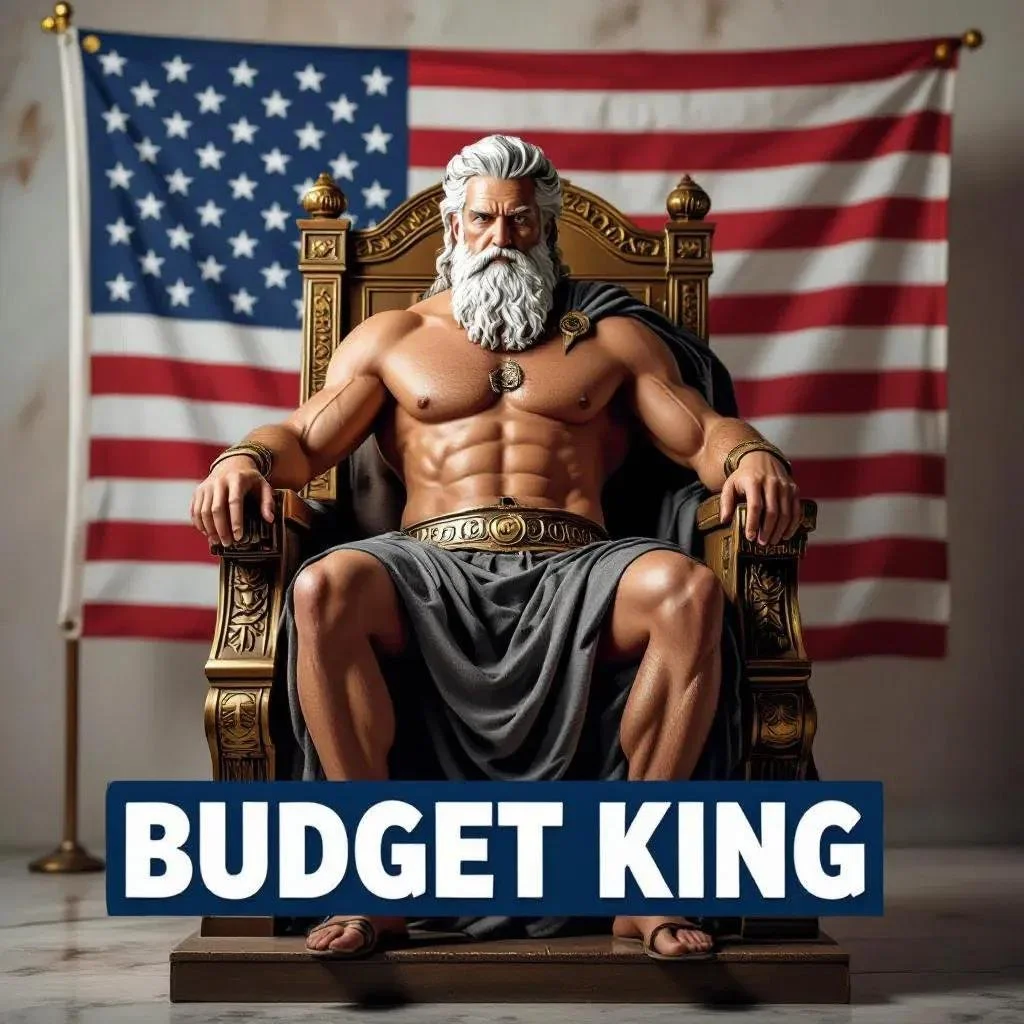
Senate Budget Committee chairman Lindsey Graham is in charge of the faux-math: “I’m the king of the numbers,” he declared to reporters. “I’m Zeus, the budget king.”
Something tells me that ‘Zeus’ won’t be awarded the Fields Medal anytime soon for his mythological mathematics.
Now, don’t get me wrong— I like tax cuts. They’re almost always great for growth, which the US economy desperately needs.
But tax cuts alone don’t get the job done unless there are commensurate spending cuts too. Otherwise the deficits will continue to grow, and America’s fiscal crisis will become ever closer.
We’re written about this a LOT: the United States is headed for a serious crisis— which we project will take place in 2033 at the latest.
Irresponsible, reckless spending is the primary reason why. The US already has a $36 trillion national debt (that is set to explode higher this summer). Even today, the interest bill on the US national debt costs $1+ trillion per year, more than 20% of tax revenue.
By 2033, the government itself projects that the national debt will be at least $55 trillion. At that point, based on their own forecasts, the Treasury Department could spend >40% of tax revenue just to pay interest on the debt.
Oh, and that same year— 2033— Social Security’s biggest trust fund will run out of money, causing an immediate and permanent cut to benefits.
The government will have one way out at that point: pressure the Federal Reserve to expand the monetary base, i.e. to “print” tens of trillions of dollars in order to fund government and prop up Social Security... resulting in a crippling level of inflation.
This is one of the most predictable yet preventable crises in human history. But Congress is not only doing nothing about it, they’re making it worse.
There is another way— one that is conceptually simple.
For starters, Congress could actually do its job and spend responsibly. It’s not like there isn’t a mountain of waste to cut.
They also need to pass much-needed reforms to both Social Security and immigration; the country would be better off if there were an efficient way for smart, talented, law-abiding, hard-working people to become legal residents.
The executive branch, meanwhile, would need to undo mountains of red tape and regulatory sludge that it dumped onto the economy over the past few decades.
I’ve written about this before— “Liberation Day” should have been the day that countless pages of useless, job-killing, productivity-killing regulations were eliminated. This can still happen.
Most importantly, the entire federal government needs to stop its make-believe accounting and show the world (plus American voters) that they are trusted, serious professionals.
It’s bad enough that the US has to sell $2 trillion worth of additional debt each year to fund its annual deficits.
But that’s not even close to the real requirement.
Over the next twelve months, roughly $9 trillion worth of existing US debt securities will mature; this was money that the government borrowed years ago... and will soon come due.
In theory the government has to pay that money back. Naturally they don’t have the funds to do so... so instead they’ll borrow new money to pay back the old loans... essentially refinancing $9 trillion worth of the national debt over the next twelve months.
So realistically they must sell ~$11 trillion in debt over the next twelve months: $9 trillion to refinance existing debt, plus another $2 trillion to cover this year’s budget deficit.
$11 trillion is an enormous amount of money... which means they’ll need every investor possible ready and willing to buy US government bonds.
And that’s a problem. Because right now, foreigners (which own a HUGE chunk of the debt) are aggressively backing away from US government bonds.
That’s a big part of why gold keeps going up—foreign governments and central banks are dumping their US government bonds and buying gold instead.
And who can blame them? It’s hard to take a guy seriously who refers to himself as Zeus and makes up his own arithmetic.
Would you lend money to someone who doesn’t know the difference between ‘free’ and a $2 trillion deficit?
If Washington wants to attract capital and stabilize the economy, they have to start acting like grown-ups. Demonstrate to the world that they can tackle hard problems, cut spending, and govern responsibly.
And right now, they aren’t doing any of that.
To your freedom, James Hickman Co-Founder, Schiff Sovereign LLC
Seeds of Wisdom RV and Economic Updates Monday Afternoon 6-30-25
Good Afternoon Dinar Recaps,
BRICS Aims To Topple US Dollar With a Currency That Doesn’t Exist
While headlines claim that a new BRICS currency is poised to dethrone the U.S. dollar, the reality tells a very different story: the currency doesn’t exist—at least not yet. What is being presented as a revolutionary step in de-dollarization is, for now, a political spectacle without substance.
Good Afternoon Dinar Recaps,
BRICS Aims To Topple US Dollar With a Currency That Doesn’t Exist
While headlines claim that a new BRICS currency is poised to dethrone the U.S. dollar, the reality tells a very different story: the currency doesn’t exist—at least not yet. What is being presented as a revolutionary step in de-dollarization is, for now, a political spectacle without substance.
A Currency Born From Hype—Not Policy
During the 16th BRICS summit in Kazan, Russian President Vladimir Putin unveiled what appeared to be a new BRICS banknote. The dramatic reveal sparked headlines and speculation about a fast-tracked effort to create a common currency for cross-border trade.
However, after inquiries from journalists, officials clarified that the bill was merely a mock-up, a publicity stunt with no real monetary backing. According to sources close to the event, the display was designed to “grab eyeballs,” rather than mark any true policy milestone.
In truth, no such BRICS currency exists—and no concrete development is underway.
India Confirms: Currency Talks Are Still in Infancy
Adding to the confusion, India’s BRICS Sherpa recently admitted that talks on a shared currency are still in “very early stages.” No drafts have been circulated. No frameworks have been agreed upon.
And more importantly, India has already signaled strong opposition to a shared banknote with China. Officials in New Delhi have expressed concerns that such an arrangement would serve Beijing’s interests disproportionately—undermining India’s own monetary autonomy and risking significant economic repercussions.
“India cannot support a currency that helps China undermine the U.S. dollar while harming its own economic base,” analysts noted.
Internal Friction Undermines BRICS Currency Ambition
Despite public declarations of unity, deep cracks within the BRICS bloc threaten the future of any shared currency:
▪️ India opposes China-led monetary dominance.
▪️ No operational design or reserve structure has been proposed.
▪️ National interests remain divided across economies that rely on USD-based trade.
Even if the BRICS currency materializes in the future, internal disunity could doom it from the start. Without alignment from key players like India, any such currency may lack credibility and liquidity in global markets.
Conclusion: BRICS Currency Remains a Phantom
The BRICS alliance may be vocal about challenging the U.S. dollar’s supremacy, but as of now, their most potent weapon—a shared currency—is purely fictional. The Kazan summit offered more theater than substance, and the much-hyped “BRICS banknote” remains a symbolic gesture rather than a real instrument of change.
For now, the BRICS currency is more myth than monetary threat.
@ Newshounds News™
Source: Watcher.Guru
~~~~~~~~~
Seeds of Wisdom Team RV Currency Facts Youtube and Rumble
Newshound's News Telegram Room Link
Follow the Roadmap
Follow the Timeline
Seeds of Wisdom Team™ Website
Thank you Dinar Recaps
The Hidden Financial Reset: How Basel III Quietly Divided the World
The Hidden Financial Reset: How Basel III Quietly Divided the World
Miles Harris: 6-30-2025
It’s not de-dollarization. It’s not collapse. It’s a redesign — a regulatory one — that’s driving a hidden financial reset.
No tanks. No headlines. Just a quiet change in banking rules — and suddenly, the global financial system is reset into two.
Basel III flipped the script. In the West: gold sidelined, debt supercharged.
In the East: a quiet buildup of gold and digital escape hatches. Two systems. One breaking point?
The Hidden Financial Reset: How Basel III Quietly Divided the World
Miles Harris: 6-30-2025
It’s not de-dollarization. It’s not collapse. It’s a redesign — a regulatory one — that’s driving a hidden financial reset.
No tanks. No headlines. Just a quiet change in banking rules — and suddenly, the global financial system is reset into two.
Basel III flipped the script. In the West: gold sidelined, debt supercharged.
In the East: a quiet buildup of gold and digital escape hatches. Two systems. One breaking point?
Since the 2008 financial crisis, banking regulation has gone through a quiet revolution. It didn’t make headlines. It didn’t trigger protests. But it redrew the incentives that shape how central banks and commercial banks manage money — and it did so in a way that now reveals a growing divergence between East and West.
00:00 Intro
01:23 Basel II Vs. Basel III
04:23 The Strategic Impact
04:58 Summary of the Regulatory Shift
06:53 The Bigger Picture
07:53 Summary
Seeds of Wisdom RV and Economic Updates Monday Morning 6-30-25
Good Morning Dinar Recaps,
The End of Bank Branches: How Europe’s Digital Euro and Stablecoins Are Reshaping Finance
The financial world is undergoing a radical digital shift—and physical bank branches are quickly becoming obsolete.
Banking Faces a Digital Reckoning
The slow disappearance of local bank branches across Europe reflects a much deeper transformation. Digitalization, AI, and automation are now reshaping how we work, shop, and save—leaving traditional banking struggling to keep pace.
Good Morning Dinar Recaps,
The End of Bank Branches: How Europe’s Digital Euro and Stablecoins Are Reshaping Finance
The financial world is undergoing a radical digital shift—and physical bank branches are quickly becoming obsolete.
Banking Faces a Digital Reckoning
The slow disappearance of local bank branches across Europe reflects a much deeper transformation. Digitalization, AI, and automation are now reshaping how we work, shop, and save—leaving traditional banking struggling to keep pace.
▪️ In Germany, over 560 branches were closed in 2023 alone, a 2.8% drop.
▪️ This is part of a decades-long contraction: from nearly 60,000 branches in the 1990s to just 18,933 today.
▪️ High rents, shrinking populations, and the dominance of e-commerce have hit brick-and-mortar services hard.
The quiet death of Germany’s bank branches is just one symptom of this evolution—but it's a global story now playing out in real time.
Deutsche Bank: Leading the Downsizing
In March, Deutsche Bank announced a wave of layoffs and branch closures.
“We are witnessing a fundamental transformation in the German banking sector,” said CEO Christian Sewing.
▪️ The bank will cut 2,000 jobs and shutter a “significant number” of branches this year.
▪️ Client consultations are moving to video calls and digital platforms, trading human interaction for efficiency.
This paradigm shift threatens the personal trust built through face-to-face banking—once considered the bedrock of retail finance.
Crushed by Policy, Not Just Progress
Technological change is not the only culprit. The European Central Bank’s (ECB) ultra-loose monetary policy has had devastating effects:
▪️ More than a decade of negative interest rates crushed banks’ ability to earn profit through traditional lending.
▪️ Banks were squeezed by regulatory costs, penalty interest, and flattened yield curves.
▪️ The ECB’s moves helped heavily indebted Eurozone countries like Spain, Italy, and France—but at the expense of private banks and savers.
The branch closures, layoffs, and pivot to digital aren’t just market-driven—they are also policy-driven.
Stablecoins and the Digital Euro: The Final Blow?
The next major disruption comes from stablecoins and the proposed digital euro—two innovations that could sideline banks entirely.
▪️ Stablecoins, pegged to fiat currencies, offer fast, low-cost global payments—no need for banks or wire transfers.
▪️ DeFi (Decentralized Finance) lets users transact via smart contracts, bypassing traditional credit and payment systems.
▪️ As adoption spreads, the need for checking accounts, branches, and bank-issued cards may vanish.
The digital euro, being developed by the ECB, may deliver the final push:
▪️ It’s programmable, blockchain-based, and bypasses commercial banks entirely.
▪️ Retail customers could hold digital euros directly in digital wallets—making bank intermediaries irrelevant.
▪️ Bank branches, long seen as hubs of trust and cash access, could become completely redundant.
A New Financial Era
Europe's digital currency ambitions and the rise of decentralized technologies signal a permanent departure from legacy banking infrastructure. In this new landscape:
Banking becomes faster—but more impersonal.
Traditional financial institutions lose control.
Retail customers migrate to central bank-backed platforms.
The local branch, once a staple of every town square, may soon be no more than a memory.
@ Newshounds News™
Source: ZeroHedge
~~~~~~~~~
US Dollar Faces Historic Stress Test as BIS Issues Dire Warning on Global Fragility
The U.S. dollar, long considered the world’s most reliable safe haven, is facing a historic credibility crisis as global financial trust deteriorates. Amid rising policy turbulence in Washington, the Bank for International Settlements (BIS) has issued a stark warning on the fragility of the global economic order.
BIS: “New Era of Heightened Uncertainty”
At the BIS Annual General Meeting in Basel on June 29, General Manager Agustín Carstens declared that a once-promising recovery is now faltering.
“The global economy has entered a new era of heightened uncertainty,” Carstens warned, noting a reversal from earlier optimism driven by easing inflation and modest growth.
The catalyst: U.S. policy chaos. A sudden pivot toward broad-based tariffs and aggressive fiscal expansion has shocked global markets—undermining confidence and weakening the dollar’s standing.
Dollar Depreciates as Yields Rise—An Alarming Signal
“The US dollar depreciated even as government bond yields rose—an extraordinary, troubling combination,” Carstens stated.
▪️ Typically, rising yields strengthen the dollar.
▪️ This time, however, investors fled the currency, shaken by erratic policy shifts and unpredictable rhetoric from Washington.
▪️ Market volatility soared, and the dollar’s safe-haven image cracked.
Carstens added that discussions about penalizing foreign holders of U.S. securities, challenges to central bank independence, and legal system uncertainty further deepened the crisis.
Structural Risks and Global Fragility
Carstens emphasized that the world’s financial system was already under stress:
Weak productivity growth
Unsustainable fiscal positions
The rise of unregulated non-bank financial institutions (NBFIs)
Now, tariff-driven trade fragmentation is making matters worse, fueling inflation and limiting economic flexibility.
“These measures often fail to achieve intended goals and instead deepen structural challenges,” Carstens warned.
He called for credible reforms aimed at:
▪️ Reducing trade barriers
▪️ Improving regulatory clarity
▪️ Investing in public infrastructure to support sustainable growth
A Call for Financial Reform in the Digital Age
Carstens also turned his focus to emerging technological threats and opportunities:
“Major innovations like the entry of big tech into finance, central bank digital currencies, and artificial intelligence are challenging and reshaping the financial system.”
He warned that unregulated innovation could magnify systemic risk, particularly if NBFIs continue to operate without proper oversight.
To meet this moment, Carstens proposed a new global financial architecture built on:
▪️ Tokenized central bank reserves
▪️ Government bonds integrated into digital ecosystems
▪️ Stronger oversight parity between banks and non-banks
The goal: restore trust, increase transparency, and future-proof global finance.
Conclusion: A Turning Point for the Dollar
As market dynamics shift and investor confidence wanes, the dollar’s status as a global safe haven is being seriously questioned for the first time in decades. The BIS’s warning is clear: without serious reform, the world may be heading into a prolonged era of economic instability and fragmentation.
The dollar isn’t just facing market pressure—it’s confronting a global reckoning of trust.
@ Newshounds News™
Source: Bitcoin.com
~~~~~~~~~
Seeds of Wisdom Team RV Currency Facts Youtube and Rumble
Newshound's News Telegram Room Link
Follow the Roadmap
Follow the Timeline
Seeds of Wisdom Team™ Website
Thank you Dinar Recaps
Seeds of Wisdom RV and Economic Updates Sunday Afternoon 6-29-25
[⚠️ Suspicious Content] Good Afternoon Dinar Recaps,
USA No Longer Default Market: BRICS Attracts Global CapitalBy Watcher Guru | June 2025 Global capital is shifting. The U.S. is losing its traditional grip as the world’s default investment hub, with institutional funds now flowing steadily toward BRICS nations. As the U.S. Dollar Index (DXY) dropped to the 96 range early Thursday, a report from Bank of America revealed that exposure to dollar-based assets is at its lowest level since 2005.
Good Afternoon Dinar Recaps,
USA No Longer Default Market: BRICS Attracts Global Capital
By Watcher Guru | June 2025
Global capital is shifting. The U.S. is losing its traditional grip as the world’s default investment hub, with institutional funds now flowing steadily toward BRICS nations. As the U.S. Dollar Index (DXY) dropped to the 96 range early Thursday, a report from Bank of America revealed that exposure to dollar-based assets is at its lowest level since 2005.
BRICS Rising: Global Investors Shift Capital South
▪️ Countries like China, India, Brazil, and South Africa are now attracting capital once destined for the U.S.
▪️ The U.S. dollar's weakening position is making assets in the global south more appealing, especially in the face of recent Trump-imposed tariffs.
▪️ Investors are eyeing early-stage growth in BRICS nations, seeking better returns than U.S. Treasuries or bonds.
The global investment spotlight has moved to the BRICS bloc, where developing markets are benefiting from macro shifts—especially amid growing skepticism toward U.S. monetary dominance.
USA Still Leads, But BRICS Is Catching Up
▪️ The U.S. remains the strongest financial player, but institutional clients are now diversifying away from dollar dominance.
▪️ In 2025, for the first time in two decades, major global investors “went all-in” on non-U.S. assets.
This trend marks a major inflection point in financial history—particularly as China and India move to internationalize the yuan and rupee, respectively.
China alone has drawn $17 billion in foreign inflows, capitalizing on the dollar’s weakening global influence.
The De-Dollarization Era Has Momentum
The de-dollarization movement continues to accelerate as BRICS expands both its economic influence and financial ecosystems.
▪️ BRICS+ aims to solidify a multipolar financial world, weakening the U.S. dollar’s role as the sole reserve currency.
▪️ Dozens of countries, including allies and neutral states, are now watching BRICS as a credible financial alternative.
Unless addressed, this trend could reshape the world’s financial order over the next two decades, and further dilute U.S. influence in global markets.
“The White House needs to act swiftly to maintain leadership on the global financial curve,” the article concludes.
@ Newshounds News™
Source: Watcher Guru
~~~~~~~~~
Seeds of Wisdom Team RV Currency Facts Youtube and Rumble
Newshound's News Telegram Room Link
Follow the Roadmap
Follow the Timeline
Seeds of Wisdom Team™ Website
Thank you Dinar Recaps
IT IS NOT STOPPING! This Is The Biggest Bullish News I've Heard From The BRICS Ever - Andy Schectman
IT IS NOT STOPPING! This Is The Biggest Bullish News I've Heard From The BRICS Ever - Andy Schectman
HTZ CAP: 6-29-2025
The London Bullion Market Association (LBMA) and WGC had partnered to develop and implement an international system of gold bar integrity (GBI).
The GBI programme aims to put all legitimate gold onto an immutable blockchain-based database where buyers will be able to clearly see that the investment bar, coin, and – when technology allows – jewellery they purchase was resourced responsibly, refined reputably, and only passed through the hands of legitimate actors.
IT IS NOT STOPPING! This Is The Biggest Bullish News I've Heard From The BRICS Ever - Andy Schectman
HTZ CAP: 6-29-2025
The London Bullion Market Association (LBMA) and WGC had partnered to develop and implement an international system of gold bar integrity (GBI).
The GBI programme aims to put all legitimate gold onto an immutable blockchain-based database where buyers will be able to clearly see that the investment bar, coin, and – when technology allows – jewellery they purchase was resourced responsibly, refined reputably, and only passed through the hands of legitimate actors.
Andy Schectman, president of Miles Franklin, remains decidedly bullish on both gold and silver. In recent commentary, he argues that the ongoing accumulation by major players and strong demand for physical metal signal a continued upward trajectory, irrespective of short-term price fluctuations.
Schectman highlights the Ripple effect of developments within the BRICS bloc, especially the launch of new gold settlement platforms via the Shanghai Gold Exchange in Hong Kong and Saudi Arabia—a clear indicator of a global shift toward bullion as a trusted reserve.
Schectman sees the first week of July as a pivotal moment for the future of BRICS: this is when several member nations are expected to reveal concrete plans for gold and silver integration into their financial systems.
Referencing his chart analysis—particularly the recent technical breakout in silver—he suggests that these developments could catalyse a powerful price surge in both metals, reinforcing the shift away from dollar dominance .
In his view, investors should closely monitor early July announcements as they may mark the start of a new phase in the global gold‑silver bull market.
Seeds of Wisdom RV and Economic Updates Sunday Morning 6-29-25
[⚠️ Suspicious Content] Good Morning Dinar Recaps,
Senate Passes Trump’s “Big, Beautiful Bill” With 51–49 Vote By Coinpedia | June 2025
In a dramatic late-night session, the U.S. Senate narrowly approved President Donald Trump’s signature tax and spending legislation—dubbed the “Big, Beautiful Bill”—by a razor-thin 51–49 margin. The bill marks a cornerstone of Trump’s second-term agenda, with sweeping implications for tax policy, defense, energy, healthcare, and even cryptocurrency regulation.
Good Morning Dinar Recaps,
Senate Passes Trump’s “Big, Beautiful Bill” With 51–49 Vote
By Coinpedia | June 2025
In a dramatic late-night session, the U.S. Senate narrowly approved President Donald Trump’s signature tax and spending legislation—dubbed the “Big, Beautiful Bill”—by a razor-thin 51–49 margin. The bill marks a cornerstone of Trump’s second-term agenda, with sweeping implications for tax policy, defense, energy, healthcare, and even cryptocurrency regulation.
Two GOP Senators Break Ranks
The bill passed with only two Republican senators—Thom Tillis and Rand Paul—voting against it, citing concerns over spending levels and government overreach.
Vice President JD Vance was on standby to cast a tie-breaking vote, though his intervention wasn’t needed. The tight margin highlights growing intra-party divides, even as Trump’s influence over the GOP remains strong.
On Truth Social, Trump criticized Senator Tillis and vowed to back a primary challenger in 2026, signaling an ongoing campaign to reshape the Republican Party around his core policy objectives.
What’s in Trump’s “Big, Beautiful Bill”?
The wide-reaching legislation includes several hallmark provisions:
✅ Permanent extension of the 2017 tax cuts
✅ Elimination of taxes on tips and overtime pay
✅ $150 billion in new defense and border security funding
✅ $5 trillion increase to the federal debt ceiling
✅ Cuts to Medicaid and SNAP, with a new $25 billion rural Medicaid fund (2028–2032)
✅ Repeal of green energy tax credits
✅ Phase-out of SALT (State and Local Tax) deductions
✅ Sale of 1.2 million acres of federal land
The mix of tax relief, spending boosts, and entitlement cuts has generated both praise from fiscal conservatives and criticism from progressive lawmakers.
Crypto Regulation Tied to Legislative Package
One of the bill’s more consequential side developments could soon affect U.S. crypto markets.
A proposed merger of the GENIUS Act and the CLARITY Act—two major crypto bills currently in progress—has gained new traction in the House of Representatives. These bills aim to establish a stablecoin framework (GENIUS Act) and market structure clarity for digital assets (CLARITY Act).
“This could be the most important moment for U.S. crypto policy since the SEC’s early actions,” said one policy analyst tracking the legislation.
House leadership is reportedly considering packaging the crypto bills together to ensure passage before the August recess, possibly delivering a major win for President Trump’s pro-crypto agenda.
Looking Ahead
With the Senate now on board, the bill heads to the House of Representatives, where Republicans hold a majority. If passed, it could lead to one of the most significant fiscal overhauls in recent U.S. history—and potentially reshape the global view of America’s crypto leadership.
@ Newshounds News™
Source: Coinpedia
~~~~~~~~~
Ripple Co-Founder Chris Larsen Claims XRP Is a ‘Better Bitcoin’
By Crypto News Flash | June 2025
Ripple’s co-founder Chris Larsen has reignited the long-standing debate in the crypto community by claiming that XRP was designed to outclass Bitcoin in core metrics such as speed, efficiency, and energy usage.
Speaking on the “When Shift Happens” podcast, Larsen praised Bitcoin’s foundational role while insisting that XRP was engineered to be a next-generation improvement over it.
XRP: Built to Surpass Bitcoin
▪️ XRP was developed with the specific intent of improving upon Bitcoin’s transaction speed, cost-effectiveness, and environmental footprint.
▪️ Larsen noted that XRP’s architecture came from a team of “really, really smart people” and was intended to be more efficient without losing the decentralization ethos of blockchain technology.
“We wanted to build a system that addressed Bitcoin’s limitations—faster settlement, lower energy, and long-term scalability,” Larsen explained.
He admitted that XRP still has limitations, but stressed that its core value has remained intact through consistent development and community support.
Criticism of Stellar and Ethereum
Larsen took aim at Stellar Lumens, co-founded by former Ripple executive Jed McCaleb, accusing the project of lacking direction and predictability.
▪️ He referenced McCaleb’s 50% token burn and a history of “constant changes, airdrops, and impulsive pivots” as a red flag for institutional trust.
▪️ “Successful currencies are built on stability, not sudden directional shifts,” Larsen remarked.
On Ethereum, Larsen questioned the long-term dedication of its community, implying it lacks the consistent loyalty seen among XRP and Bitcoin holders.
Will Ripple Go Public? ‘Not Yet,’ Says Larsen
While many in the industry speculate about Ripple's IPO potential, Larsen pushed back on the idea—citing the bureaucratic red tape and short-term market manipulation by misinformed retail sellers.
▪️ Ripple President Monica Long also echoed this sentiment recently, saying the company doesn’t need external capital and is focused on strategic acquisitions instead.
▪️ Ripple’s latest purchase of prime brokerage firm Hidden Road for $1.25 billion further confirms that strategy.
Analysts: XRP Price Could Surge
The comparison between XRP and Bitcoin is being mirrored by top analysts:
Charles Shrem predicts Bitcoin’s dominance is being actively challenged.
Edoardo Farina, founder of Alpha Lions Academy, believes XRP’s growth trajectory is more realistic than Bitcoin’s.
Dustin Layton estimates a 23x return is possible, projecting XRP could hit $52 by year-end.
Zach Rector places a nearer-term target at $15.
“You’d have to be insane to think Bitcoin at $106K is a better investment than XRP,” Farina claimed.
As the SEC case nears closure and Ripple refocuses on global expansion, the firm appears poised to position XRP not only as a better Bitcoin in function—but perhaps soon, in adoption and valuation.
@ Newshounds News™
Source: CryptoNewsFlash
~~~~~~~~~
Seeds of Wisdom Team RV Currency Facts Youtube and Rumble
Newshound's News Telegram Room Link
Follow the Roadmap
Follow the Timeline
Seeds of Wisdom Team™ Website
Thank you Dinar Recaps