Thank you to all the subscribers to our Early Access program…we thank you for your continued support.
We are excited to offer this new service to keep you informed and up-to-date on the latest Dinar and currency news.
Freedom Fighter: Iraq’s New Government Expands International Banking Reforms for the Iraq Dinar
Freedom Fighter: Iraq’s New Government Expands International Banking Reforms for the Iraq Dinar
5-15-2026
BREAKING NEWS: Iraq’s New Government Expands International Banking Reforms for the Iraq Dinar
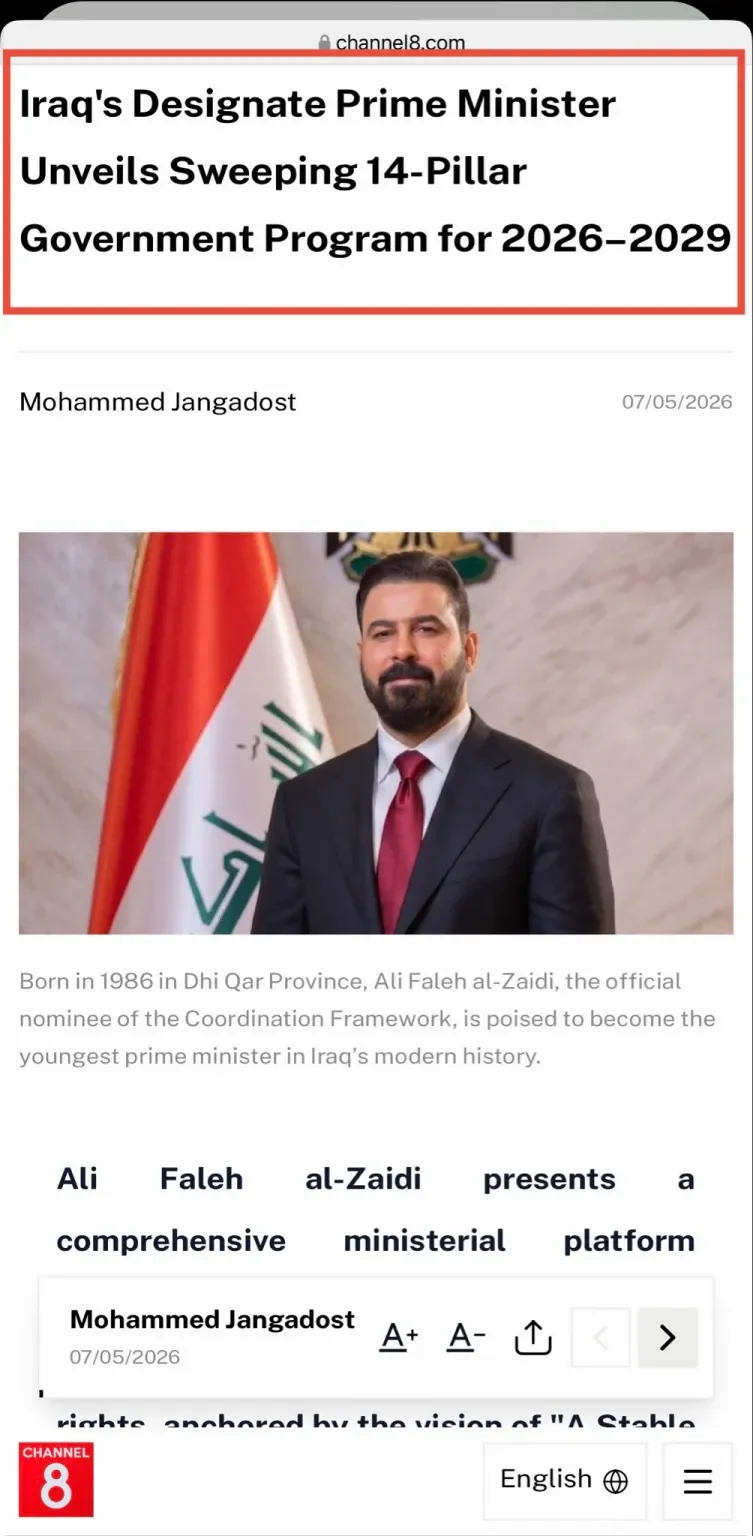
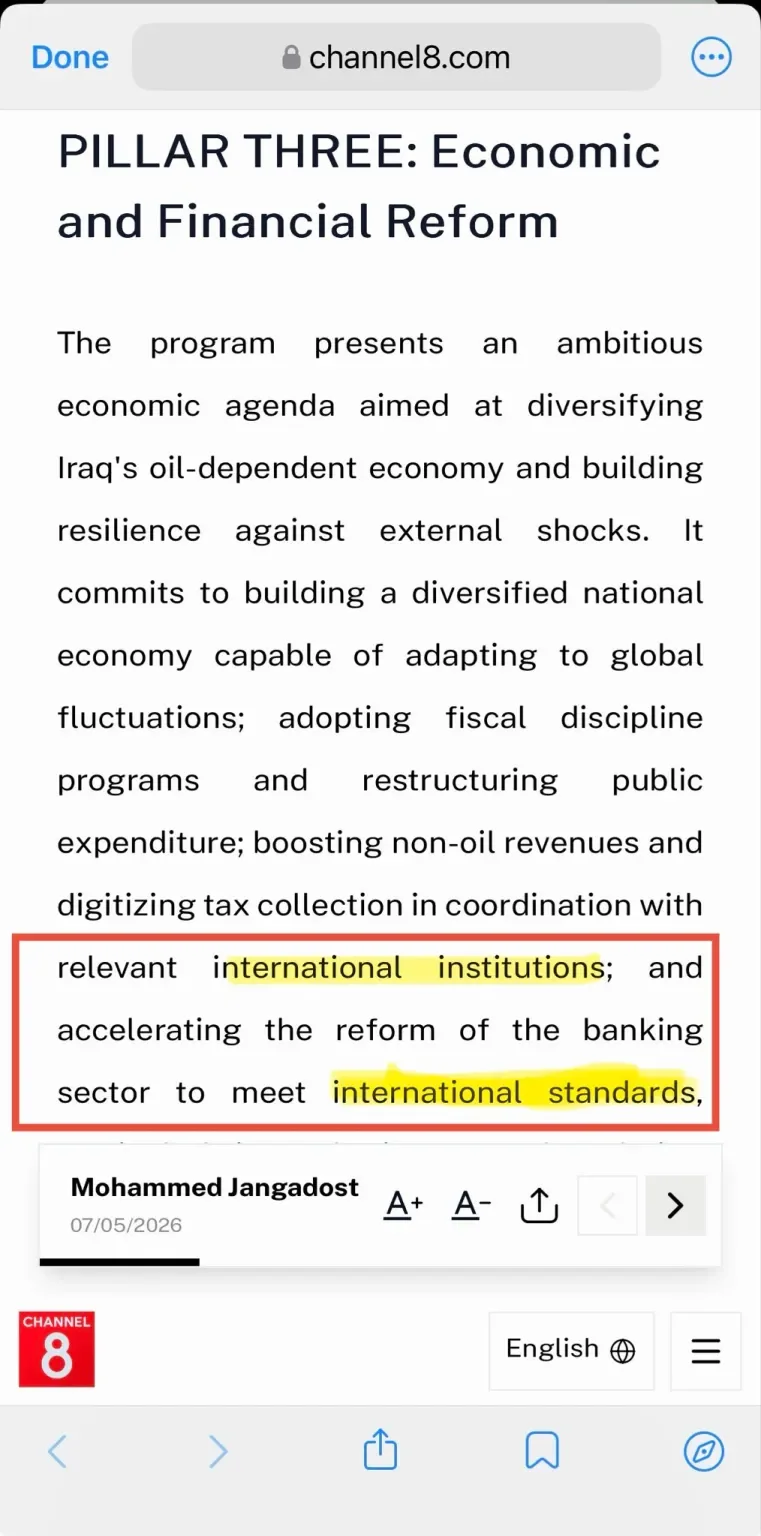
Iraq’s incoming government is openly prioritizing:
• International Banking Standards
• International Institutions
• Economic and financial reform
• Banking sector modernization
Freedom Fighter: Iraq’s New Government Expands International Banking Reforms for the Iraq Dinar
5-15-2026
BREAKING NEWS: Iraq’s New Government Expands International Banking Reforms for the Iraq Dinar
Iraq’s incoming government is openly prioritizing:
• International Banking Standards
• International Institutions
• Economic and financial reform
• Banking sector modernization
• Diversification beyond oil
• Fiscal discipline and digital systems
• Integration of the Iraqi Dinar into international banking reforms
This is no longer just rhetoric.
Iraq is continuing to position its banking sector for deeper integration with the international financial system.
Receipts:
Seven Currencies Cracked this Week, the Operation is Running
Seven Currencies Cracked this Week, the Operation is Running
5-15-2026
By David E. Atterton | Reset Intelligence | @EXIT_FIAT
Seven sovereign currencies cracked against the dollar in the same week. India. Indonesia. Turkey. The Philippines. Thailand. Venezuela. Iran. Not seen in generations.
These are not separate events. They are one operation, well planned, years in the making, being executed in real time.
Seven Currencies Cracked this Week, the Operation is Running
5-15-2026
By David E. Atterton | Reset Intelligence | @EXIT_FIAT
Seven sovereign currencies cracked against the dollar in the same week. India. Indonesia. Turkey. The Philippines. Thailand. Venezuela. Iran. Not seen in generations.
These are not separate events. They are one operation, well planned, years in the making, being executed in real time.
The Convergence This Week
The seven currencies share one common theme. They all import their oil through the same chokepoint Iran has been controlling since the war began, and they all price that oil in dollars they must earn from another source. Hormuz disruption since February has bid that dollar up faster than any of them can produce it. Reserve drawdown is the math.
The Basket That Was Always Going To Move
The currencies the book has named for the reset have been positioning for years for exactly the conditions you are watching land this week.
• Iraq’s dinar sits at 1,310 to the dollar – a rate set by an occupying authority during post-war reconstruction. Iraq holds $16 trillion in proven natural resources against that rate. The cabinet vote this week is the boarding pass dinarland has been waiting for.
• Venezuela’s bolivar is the demonstration. 504 official, 560 black market, down 439 percent year on year. Trump named Caracas as the model on Monday.
• Vietnam’s dong trades at 26,339 to the dollar. The State Bank of Vietnam has been running a digital VND pilot since early 2025 – the settlement layer that has to exist before any rate move can land.
• Indonesia’s rupiah is one of the seven that cracked this week at 17,430 to the dollar, a record low. Jakarta has been quietly accumulating gold for two years. That crash is the squeeze that forces the anchor.
The Part The Headlines Do Not Connect
The United States Treasury still books its 261 million ounces of gold at $42.22 per ounce – the statutory price set in 1973. Market is at $4,678.
A single accounting entry to revalue that holding to market lifts the Treasury balance sheet by over a trillion dollars. Without raising a tax. Without selling an asset. Without issuing a bond.
That entry is the off-ramp from 52 years of petrodollar order that does not require a dollar crisis to execute. The Iran severance, the new Fed chair this morning, the CLARITY markup, and the Iraqi cabinet vote are the political and legal conditions that make that entry possible.
This Was All Planned Decades Ago
Future generations will read this period the way we read Bretton Woods, the way we read 1971.
Stay pegged to a dollar whose underlying is being rewritten in real time, or re-anchor to gold, commodities, and the regulated digital settlement layer about to be signed into US law. Iraq is being held at the boarding gate until Washington gives the signal. Vietnam is two yards away. Indonesia is being forced by its own reserve math. Venezuela is the demonstration. Iran is the country whose revenue was cut to force the choice on everyone else.
The Long-Form Architecture
Reset Intelligence published the source-level documentation of this system in March. Head of the Snake. 1,000+ hours of independent research. DOJ filings, Federal Register executive orders, CBI statements, FinCEN advisories, central bank records. It traces the architecture the Treasury Secretary is now reading from.
25% off all formats with code 25XOFF through Sunday: resetintelligence.com/head-of-the-snake
For readers wanting the conversion-side discipline, The Quiet Conversion guide is free with email signup at resetintelligence.com/resources/
The only question history will ask is who saw it while it was actually happening.
Seeds of Wisdom RV and Economics Updates Friday Afternoon 5-15-26
Good Afternoon Dinar Recaps,
Trump-Xi Summit Fails to Calm Markets: Strategic Rivalry Continues Reshaping Global Financial Order
Chinese markets fall as investors conclude the summit produced stability talks rather than meaningful economic breakthroughs
The latest Trump-Xi summit reinforced a growing reality in global finance: the United States and China are no longer simply economic partners, but strategic competitors managing an increasingly fragile coexistence.
Good Afternoon Dinar Recaps,
Trump-Xi Summit Fails to Calm Markets: Strategic Rivalry Continues Reshaping Global Financial Order
Chinese markets fall as investors conclude the summit produced stability talks rather than meaningful economic breakthroughs
The latest Trump-Xi summit reinforced a growing reality in global finance: the United States and China are no longer simply economic partners, but strategic competitors managing an increasingly fragile coexistence.
OVERVIEW (KEY POINTS)
Global markets reacted cautiously after the highly anticipated summit between President Donald Trump and Chinese President Xi Jinping concluded without major breakthroughs on trade, technology restrictions, or geopolitical disputes.
Chinese equity markets fell sharply as investors reassessed expectations that the meeting might produce a more comprehensive economic reset between the world’s two largest economies.
While both leaders emphasized stability and continued dialogue, the absence of concrete agreements involving tariffs, semiconductor restrictions, rare earth exports, and Taiwan reinforced concerns that structural tensions remain unresolved.
The broader implication is significant for the global financial system. Markets increasingly view U.S.-China relations not as a pathway toward deeper globalization, but as a long-term geopolitical rivalry shaping trade, currencies, technology, and global investment flows.
KEY DEVELOPMENTS
1. Chinese Markets Decline After Summit
Investors reacted negatively to the lack of major agreements.
CSI 300 and Shanghai Composite indexes both fell more than 1%
Traders expected progress on tariffs and technology restrictions
Markets viewed the summit as symbolic rather than transformational
2. Technology Competition Remains Unresolved
Semiconductors and AI continue driving strategic tensions.
No major movement on U.S. export controls involving advanced chips
China remains central to global rare earth supply chains
Competition over artificial intelligence and advanced manufacturing intensified concerns
3. Taiwan Continues to Pressure Relations
Taiwan remained one of the summit’s most sensitive issues.
Xi reportedly warned against actions destabilizing cross-strait relations
Washington continues supporting Taiwan’s defense capabilities
Markets remain concerned over long-term military tensions in Asia
4. Energy and Iran Discussions Reflect Global Instability
The summit also focused on broader geopolitical risks.
Both sides discussed keeping the Strait of Hormuz open to shipping
Middle East tensions continue impacting oil prices and inflation expectations
China and the U.S. remain divided over broader Iran strategy
5. Fragile Stability Replaces Expectations of a Reset
Analysts described the summit as an exercise in managing tensions rather than resolving them.
Investors remain concerned over trade imbalances and sanctions
National security increasingly shaping economic policy decisions
Diplomatic communication improved, but structural rivalry remains intact
WHY IT MATTERS
The market response reflects a major shift in investor thinking about the global economy.
In previous decades, summits between U.S. and Chinese leaders often fueled optimism surrounding globalization and deeper economic integration. Today, markets increasingly expect competition, fragmentation, and strategic decoupling instead.
This matters because the United States and China remain deeply interconnected across trade, finance, technology, energy, and manufacturing. Prolonged instability between them affects nearly every major sector of the global economy.
The summit may have reduced short-term fears of escalation, but investors appear increasingly focused on the larger structural competition now shaping the international financial system.
WHY IT MATTERS TO FOREIGN CURRENCY HOLDERS
Dollar and yuan volatility
Technology restrictions could reshape global capital flows
Commodity and energy markets remain vulnerable to U.S.-China rivalry
Safe-haven assets like gold may continue benefiting from uncertainty
IMPLICATIONS FOR THE GLOBAL RESET
Pillars 1: Financial system transformation
The summit reinforced the growing divide between economic interdependence and geopolitical competition, accelerating the shift toward regionalized trade and investment systems.
Pillar 2: Financial Power Is Becoming Strategic Power
Trade policy, semiconductor access, rare earth supplies, and currency influence are increasingly being used as geopolitical tools rather than purely economic instruments.
CONCLUSION
The Trump-Xi summit succeeded in preserving communication between the world’s two largest powers, but it did little to resolve the deeper structural tensions driving global uncertainty.
Markets were looking for concrete signs of long-term stability. Instead, they received confirmation that strategic rivalry remains the defining feature of U.S.-China relations.
As technology competition, trade disputes, energy security, and geopolitical influence become increasingly intertwined, future market volatility tied to Washington and Beijing is likely to remain persistent.
The global financial reset is no longer being shaped solely by economics — it is being driven by the strategic competition between competing centers of global power.
Seeds of Wisdom Team
Newshounds News™ Exclusive
Sources
Modern Diplomacy — "China Markets Fall After Trump-Xi Summit Delivers Few Concrete Breakthroughs"
Reuters — "Trump and Xi Seek Stability but Key Trade Issues Remain Unresolved"
~~~~~~~~~~
Seeds of Wisdom Team RV Currency Facts Youtube and Rumble
Newshound's News Telegram Room Link
RV Facts with Proof Links Link
RV Updates Proof links - Facts Link
Follow the Gold/Silver Rate COMEX
Follow Fast Facts
Seeds of Wisdom Team™ Website
Thank you Dinar Recaps
Iraq News Posted by Tishwash at TNT 5-15-2026
TNT:
Tishwash: The US envoy congratulated al-Zaidi: Trump is fully prepared to work with you and your government.
US Special Envoy Tom Barrack congratulated Iraqi Prime Minister Ali al-Zaidi on Thursday on his government winning a vote of confidence in parliament. Barrack said in a statement: "We congratulate Iraqi Prime Minister Ali al-Zaidi on receiving the confidence of parliament and the approval of his government by the Council of Representatives."
He added: "We are encouraged by your new leadership and look forward to working with you to develop an ambitious agenda that aligns with our shared interests: building a sovereign, prosperous, and stable Iraq that lives in peace with its neighbors and provides opportunities and growth for all its citizens in a productive partnership with the United States."
TNT:
Tishwash: The US envoy congratulated al-Zaidi: Trump is fully prepared to work with you and your government.
US Special Envoy Tom Barrack congratulated Iraqi Prime Minister Ali al-Zaidi on Thursday on his government winning a vote of confidence in parliament. Barrack said in a statement: "We congratulate Iraqi Prime Minister Ali al-Zaidi on receiving the confidence of parliament and the approval of his government by the Council of Representatives."
He added: "We are encouraged by your new leadership and look forward to working with you to develop an ambitious agenda that aligns with our shared interests: building a sovereign, prosperous, and stable Iraq that lives in peace with its neighbors and provides opportunities and growth for all its citizens in a productive partnership with the United States."
He noted that "President Trump, Secretary Rubio, and the United States are fully prepared to work closely with you and your government to achieve our shared goals of prosperity for the Iraqi people and the defeat of terrorism, which has long been an obstacle to their progress." link
************
Tishwash: Al-Zidi's government wins the confidence of the House of Representatives and takes the constitutional oath
The House of Representatives granted confidence to the government of Prime Minister Ali al-Zidi on Thursday during a voting session attended by 270 members of parliament. The Prime Minister and the ministers who were voted on took the constitutional oath, signaling the official start of the new government's duties.
The House of Representatives voted on 14 out of 23 ministries, namely:
14 ministerial portfolios in Ali al-Zaidi's government have gained the confidence of parliament, with the remaining appointments postponed until after Eid al-Adha.
1- Voting unanimously for Faleh Al-Sari as Minister of Finance.
2- Voting by an absolute majority on Basim Muhammad Khudair as Minister of Oil.
3- Voting by an absolute majority for Mohammed Nouri Ahmed as Minister of Industry.
4- Voting by an absolute majority for Ali Saad Wahib as Minister of Electricity.
5- Voting by an absolute majority for Abdul-Hussein Aziz as Minister of Health.
6- Voting by an absolute majority for Sarwa Abdulwahid as Minister of Environment.
7- Voting by an absolute majority for Abdul Rahim Jassim as Minister of Agriculture.
8- Voting by an absolute majority for Mustafa Nizar Jumaa as Minister of Trade.
9- Voting by an absolute majority for Khalid Shawani as Minister of Justice.
10- Voting by an absolute majority on Abdul Karim Abtan as Minister of Education.
11- Voting by an absolute majority to appoint Wahab Salman Mohammed as Minister of Transport.
12- Voting by an absolute majority for Fuad Hussein as Minister of Foreign Affairs.
13- Voting by an absolute majority for Mustafa Jabbar Sand as Minister of Communications.
14- Voting by an absolute majority for Muthanna Ali Mahdi as Minister of Water Resources.
The remaining portfolios are scheduled to be voted on after the Eid al-Adha holiday, and include the ministries of: Interior, Defense, Labor and Social Affairs, Immigration and Displacement, Reconstruction and Housing, Planning, Culture, Education, Youth and Sports, in addition to the deputy prime ministers. link
************
Tishwash: Al-Zaydi: Economic reform, arms control, and e-governance are our government's top priorities.
Prime Minister Ali Faleh al-Zaidi announced his government's priorities on Thursday, while also calling on diplomatic missions to resume their work in Baghdad. The Prime Minister's Media Office stated in a press release received by Mawazin News that "Ali al-Zaidi reviewed the new government's ministerial program, emphasizing its determination to fulfill the aspirations of the Iraqi people, placing the citizen's interest among its top priorities." According to the statement, al-Zaidi said, "The path to reform begins from within by confronting corruption and administrative inefficiency."
He indicated that he would face the challenges based on his belief in the capabilities and patience of the Iraqi people, transforming crises into opportunities and setbacks into milestones in making a difference to enhance services, build robust institutions, and propel Iraq towards e-governance and e-government. Al-Zaidi outlined his steps in "three tracks: first, economic reform and development through economic diversification, genuine investment, and a sound financial and banking system; second, social development, establishing social justice, caring for the most vulnerable groups, protecting children, and empowering women; and third, reforming the security apparatus by monopolizing weapons in the hands of the state, strengthening the capabilities of the security forces, and consolidating their authority." The citizen's trust in democracy."
He noted that "Iraq, with its deep-rooted civilization, human and cultural diversity, and the supreme religious authority it represents, qualifies us to stand and restore the government's standing." He called on all diplomatic missions to "return to their work in Baghdad," and expressed his gratitude to the government of Mohammed Shia' al-Sudani. link
************
Tishwash: Al-Zurfi and Zebari in Washington... and discussions about Iraq at the Atlantic Council
Photos published on the sidelines of the events documented the presence of the head of the Alternative Alliance, Adnan al-Zurfi, and the former Iraqi Foreign Minister, Hoshyar Zebari, at the Atlantic Council seminar held in the American capital, Washington, whose discussions focused on the Iraqi issue. National Security Advisor Qasim al-Araji is expected to join them, as the Atlantic Council announced his participation in the “Iraq Dialogue 2026”.
Earlier, the Atlantic Council announced a visit to Washington by Iraqi National Security Advisor Qasim al-Araji to participate in a major conference entitled “Iraq Dialogue 2026.” Victoria Taylor, a former State Department official who has been in intensive contact with Baghdad recently, said that this occasion is “direct contact between senior Iraqi officials and policymakers in the United States, at a sensitive moment” in the relationship between Baghdad and the US administration. She also announced that participation in the dialogue is open via a registration link.
Victoria Taylor, who now serves as the director of the Iraq Initiative at the Atlantic Council, explained in a post on the X platform, translated by 964 Network , “We are pleased to welcome Qasim al-Araji, the National Security Advisor of the Republic of Iraq, to the Iraq 2026 Dialogue, which will be held in Washington, D.C.”
She added that “his participation reflects the role the conference plays as a high-level platform for direct communication between senior Iraqi officials and policymakers in the United States, at a sensitive moment in bilateral relations.” link
News, Rumors and Opinions Friday 5-15-2026
Note: All intel should be considered as "Rumors" until we receive official announcements ...and “Rates and Dates” could change anytime until we get to the banks/redemption centers.
Ariel: Currency Revaluation in Full Swing
5-15-2026
We Are In The Green
Iraq Cabinet Approved
Kevin Warsh Confirmed
Note: All intel should be considered as "Rumors" until we receive official announcements ...and “Rates and Dates” could change anytime until we get to the banks/redemption centers.
Ariel: Currency Revaluation in Full Swing
5-15-2026
We Are In The Green
Iraq Cabinet Approved
Kevin Warsh Confirmed
China Trip A Success
The Currency Revaluation Is In Full Swing Folks
Eleanor: JUST IN: The Clarity Act ADVANCES out of the Senate Banking Committee in a 15-9 bipartisan vote, with two Democrats voting in favor:
@SenRubenGallego and @Sen_Alsobrooks
Next stop: the full Senate.
Source(s):
• https://x.com/Prolotario1/status/2054975805227254181
https://dinarchronicles.com/2026/05/15/prolotario-currency-revaluation-in-full-swing/
************
Courtesy of Dinar Guru: https://www.dinarguru.com/
Militia Man Take a picture of all these little articles that come out in the last three days and you put it all together and it's like, whoa! [Iraq] is integrating into the global financial system.
Jeff 100+ trillion dinar physically outside of Iraq...The central bank doesn't give two craps about it pertaining to the rate change...Here's its purpose...Basil III states countries can use foreign currencies to asset back their own country's currency...The United States has half of Iraq's money supply...along with all the dinar that we the people have...Once we go to exchange with our banks, our banks will turn around and give all that dinar back to the US Treasury...The United States is going to use all that physical dinar, the old 3 zero notes, to asset back the United States dollar because it's a Basil III compliance step...All the dinar outside of Iraq will be used for countries to asset back their own country's currency.
Stephen If you hold the Iraqi dinar you are a very small select spirit led group of people...I don't know what's coming...There's a lot of prophecies or a lot of opinions that we're going to enter very hard times in the near future. I don't know if or when that's going to happen but I do believe this [Iraqi dinar RV] is going to create a lot of provision and abundance for a certain amount of people to get prepared...
************
From Recaps Archives:
For Dinar - What you will see on Forex or CBI WHEN IT RVs
$ RATE = What you will see on Forex or CBI
$ .86 = 1.162
$ 1.00 = 1.000
$1.17 = 0.854
$1.86 = 0.537
$2.00 = 0.500
$2.50 = 0.400
$3.00 = 0.333
$3.22 = 0.310
$3.46 = 0.289
$3.50 = 0.285
$3.86 = 0.259
$4.00 = 0.250
$4.10 = 0.243
$4.40 = 0.227
$5.00 = 0.200
$5.25 = 0.190
$5.50 = 0.181
$6.00 = 0.166
$7.00 = 0142
$8.00 = 0.125
$8.25 = .0121
$8.50 = .0117
$9.00 = 0.111
$10.00=0.100
*************
Big Day For Dinar Investors !
Dinar For Dummies: 5-14-2026
Today was a big day for dinar investors. The majority of the Iraqi government was approved and the clarity act is 1 step closer to being finalized.
Seeds of Wisdom RV and Economics Updates Friday Morning 5-15-26
Good Morning Dinar Recaps,
UAE Breaks From OPEC Constraints: Gulf Energy Realignment Reshapes Global Oil Power
Abu Dhabi’s pipeline expansion and production flexibility signal a major shift in energy security, export independence, and global market influence
The UAE’s accelerated push to bypass the Strait of Hormuz reflects a broader transformation in global energy strategy as geopolitical instability forces nations to rethink trade security and production control.
Good Morning Dinar Recaps,
UAE Breaks From OPEC Constraints: Gulf Energy Realignment Reshapes Global Oil Power
Abu Dhabi’s pipeline expansion and production flexibility signal a major shift in energy security, export independence, and global market influence
The UAE’s accelerated push to bypass the Strait of Hormuz reflects a broader transformation in global energy strategy as geopolitical instability forces nations to rethink trade security and production control.
OVERVIEW (KEY POINTS)
The United Arab Emirates is rapidly expanding its oil export infrastructure after formally exiting OPEC, giving the country significantly greater flexibility over production and energy strategy.
The move comes after months of instability surrounding the Strait of Hormuz, where shipping disruptions and regional conflict exposed the vulnerability of Gulf energy exports. The UAE is now accelerating pipeline expansion projects designed to bypass the strait entirely.
At the same time, Abu Dhabi is increasing long-term oil production ambitions, with ADNOC targeting five million barrels per day in capacity ahead of schedule and signaling future expansion toward six million barrels daily.
The broader implication is substantial. The UAE’s shift reflects a growing trend where energy-producing nations prioritize national flexibility, infrastructure resilience, and independent export control over traditional cartel coordination.
KEY DEVELOPMENTS
1. UAE Gains Freedom From OPEC Production Quotas
The UAE’s departure from OPEC removes long-standing production limitations.
Abu Dhabi no longer bound by coordinated output caps
Greater flexibility to respond to global demand and pricing conditions
Saudi-led production management structure faces new pressure
2. Pipeline Expansion Reduces Hormuz Dependence
The UAE is accelerating infrastructure designed to bypass the Strait of Hormuz.
Fujairah export corridor becoming strategically critical
Alternative export routes improve resilience during regional conflict
Energy security increasingly tied to infrastructure independence
3. ADNOC Accelerates Production Growth
The UAE is aggressively expanding oil capacity.
ADNOC targeting 5 million barrels per day ahead of schedule
Officials suggest capacity could eventually rise to 6 million barrels daily
Long-term investment signals confidence in future energy demand
4. Gulf Shipping Risks Continue Rising
Commercial shipping remains vulnerable to geopolitical escalation.
Reports indicate some tankers disabled tracking systems to reduce attack risk
Insurance and transport costs continue climbing across Gulf routes
Global markets remain highly sensitive to Hormuz disruptions
5. Energy Security Becomes National Security
Oil infrastructure is increasingly viewed through a geopolitical lens.
Gulf nations focusing on strategic export independence
Energy corridors becoming central to foreign policy planning
Infrastructure investments reshaping regional power balances
WHY IT MATTERS
The UAE’s strategy reflects a deeper transformation in how nations approach energy security and economic resilience.
For decades, Gulf oil exporters depended heavily on shared regional coordination and open maritime trade routes. The recent conflict demonstrated how quickly those systems can become vulnerable during geopolitical escalation.
By building independent export infrastructure and increasing production flexibility, the UAE is positioning itself as one of the most resilient energy suppliers in the region.
This also has broader consequences for inflation, shipping costs, industrial production, and monetary policy worldwide, since stable Gulf energy flows remain critical to the global economy.
WHY IT MATTERS TO FOREIGN CURRENCY HOLDERS
Oil market volatility could continue impacting currency stability
Energy-exporting nations may strengthen reserve positions
Inflation pressures tied to shipping disruptions may persist
Commodity-linked currencies could gain influence during instability
IMPLICATIONS FOR THE GLOBAL RESET
Pillar 1: Energy Infrastructure Replaces Cartel Dependence
Nations are increasingly prioritizing direct control over export routes and supply chains rather than relying solely on multinational energy coordination systems.
Pillar 2: Strategic Trade Corridors Gain Financial Importance
Control over pipelines, ports, and shipping corridors is becoming central to economic power, reserve stability, and long-term geopolitical leverage.
CONCLUSION
The UAE’s accelerated pipeline expansion marks more than an infrastructure project — it represents a strategic shift in how global energy power is organized.
As geopolitical instability reshapes trade routes and export security, countries are investing heavily in systems designed to preserve economic flexibility during crisis conditions.
The move also reflects the gradual weakening of older energy coordination structures as nations prioritize national resilience over collective production management.
In the emerging global financial order, control over energy routes may become just as important as control over currencies themselves.
Seeds of Wisdom Team
Newshounds News™ Exclusive
Sources
Modern Diplomacy — "UAE Accelerates Oil Pipeline Expansion to Bypass Strait of Hormuz"
Reuters — "UAE Expands Fujairah Oil Infrastructure Amid Gulf Shipping Risks"
🌱 A Message to Our Currency Holders🌱
If you’ve been holding foreign currency for many years, you were not foolish.
You were not wrong to believe the global financial system would change.
What failed was not your patience — it was the information you were given.
For years, dates, rumors, and personalities replaced facts, structure, and proof. “This week” predictions created cycles of hope and disappointment that were never based on how currencies actually change.
That is not your failure.
Our mission here is different: • No dates • No rates • No hype • No gurus
Instead, we focus on:
• Verifiable developments • Institutional evidence
• Global financial structure • Where countries actually sit in the process
Currency value changes only come after sovereignty, trade, banking, settlement systems, and fiscal coordination are in place. History and institutions confirm this sequence.
You will see silence. You will see denials. That is not delay — that is discipline.
Protect your identity. Organize your documents. Verify everything.
Never hand your discernment to anyone who cannot show proof.
You deserve truth — not timelines.
Seeds of Wisdom Team
Newshounds News™
~~~~~~~~~~
Seeds of Wisdom Team RV Currency Facts Youtube and Rumble
Newshound's News Telegram Room Link
RV Facts with Proof Links Link
RV Updates Proof links - Facts Link
Follow the Gold/Silver Rate COMEX
Follow Fast Facts
Seeds of Wisdom Team™ Website
Thank you Dinar Recaps
Iraq Economic News and Points To Ponder Friday Morning 5-15-26
When will dollar shipments arrive in Baghdad? Washington ignores the Central Bank, while al-Zidi prioritizes it.
2026-05-14 964 Network The Asharq Bloomberg website published a report in which a senior Iraqi official, who declined to reveal his identity, stated that addressing the crisis of delayed dollar shipments from the United States to Baghdad, amounting to about $10 billion annually, will be among the priorities of Ali al-Zaidi's government, in order to avoid destabilizing the exchange market in light of the sharp decline in oil exports due to the repercussions of the Iran war.
When will dollar shipments arrive in Baghdad? Washington ignores the Central Bank, while al-Zidi prioritizes it.
2026-05-14 964 Network The Asharq Bloomberg website published a report in which a senior Iraqi official, who declined to reveal his identity, stated that addressing the crisis of delayed dollar shipments from the United States to Baghdad, amounting to about $10 billion annually, will be among the priorities of Ali al-Zaidi's government, in order to avoid destabilizing the exchange market in light of the sharp decline in oil exports due to the repercussions of the Iran war.
He confirmed that the Iraqi authorities are trying to find out the reasons for the delay in the latest shipments, but the Central Bank has not yet received any response from the American side.
Washington denies releasing Iraqi dollars: Shipments suspended until further notice
Earlier, the administration of US President Donald Trump suspended dollar shipments to Iraq and froze funding for security cooperation programs with Baghdad, pressuring it to dismantle Iranian-backed armed factions. The US Treasury Department blocked an air shipment of about $500 million in Iraqi oil revenues held in accounts at the Federal Reserve Bank of New York, according to the Wall Street Journal.
According to banking expert Mustafa Hantoush, speaking to Asharq Bloomberg, Washington is expected to resume sending shipments soon, based on a similar precedent in 2023, at a time when the International Monetary Fund expects the Iraqi economy to shrink by 6.8% this year, with central reserves amounting to $100 billion before the war.
A report by the “Al-Sharq Bloomberg” website, as reviewed by 964 Network :
A senior Iraqi official said that addressing the crisis of delayed dollar shipments from the United States to Baghdad will be a priority for the new government to avoid destabilizing the exchange market, especially after the sharp decline in the country's oil exports due to the repercussions of the Iran war.
Iraq receives a portion of its oil revenues in the form of cash shipments in US dollars, estimated at around $10 billion annually. These funds are distributed in installments arriving via chartered flights at Baghdad Airport, while transfers related to financing foreign trade—which have not been affected by the delays—are managed through official banking channels.
The government official, who spoke to Asharq on condition of anonymity, confirmed that the Iraqi authorities are indeed trying to find out the reasons for the delay in the latest shipments, but the Central Bank has not yet received a response from the American side.
The US State Department confirmed in response to an inquiry from Asharq News' Washington bureau that dollar shipments to Iraq remain "suspended." It referred any further inquiries to the Treasury Department and the Central Bank of Iraq.
The Treasury Department did not respond to Al-Sharq's questions about the crisis, while officials at the Central Bank of Iraq could not be reached for comment.
Reuters reported in late April, citing several sources, that the administration of US President Donald Trump had halted a cash shipment worth about $500 million and suspended part of its security cooperation with Baghdad in an attempt to pressure the Iraqi government to reduce the influence of Iranian-backed armed factions, which have launched several attacks on Gulf states since the start of the conflict at the end of February in support of the regime in Tehran.
The Stability Of The Dinar Is At Stake
Although the value of the shipment represents only a small fraction of the total demand for dollars in the Iraqi market, its delayed arrival and the ongoing crisis could affect the stability of the dinar and widen the gap between the official exchange rate and the parallel market rate, which has only fluctuated within a narrow range since the outbreak of the conflict.
Therefore, the official confirmed that the issue will be a priority for Prime Minister-designate Ali al-Zaidi as soon as he officially assumes office. The Iraqi parliament is scheduled to vote tomorrow, Thursday, on granting confidence to the new government.
Iraq is among the countries most affected by the war in the region. The International Monetary Fund (IMF) projects a 6.8% contraction in its economy this year due to its reliance on oil exports through the Strait of Hormuz, which account for 90% of government revenue. A senior IMF official told Asharq Al-Awsat last month that Baghdad's options for dealing with the crisis until a new government is formed focus on reducing spending and temporarily drawing on the central bank's reserves, which stood at approximately $100 billion before the war.
Trump had invited al-Zaidi during a phone call at the end of last month to visit Washington after the government was formed, and wished him success “in forming a new government free of terrorism that can provide a brighter future for Iraq and the United States.”
The Historical Roots Of The Crisis
Iraqi banking expert Mustafa Hantoush told Asharq that he expects Washington to resume sending dollar shipments soon. He added that the United States had previously suspended these shipments temporarily in 2023 without publicly stating the reasons.
The story of relying on the United States to send dollar shipments to Baghdad dates back to 2003, when then-US President George W. Bush issued an executive order during the American occupation following the overthrow of Saddam Hussein's regime.
This order mandated that all of Iraq's oil revenues be transferred to a special account called the "Development Fund for Iraq," managed through the Federal Reserve Bank of New York, ostensibly to protect the funds from lawsuits and use them for reconstruction. Since then, the executive order has been renewed annually, meaning that US approval is required before any funds can be transferred to Baghdad. https://964media.com/681037/
Trump's Envoy Congratulates Al-Zaidi On Gaining Confidence: We Are Ready To Work With The New Iraqi Government –
5/14/2026 Baghdad – One News US President Donald Trump’s envoy, Tom Barrack, congratulated Iraqi Prime Minister Ali Faleh al-Zaidi on his government winning the confidence of the House of Representatives.
Barak said the United States is optimistic about the new leadership in Iraq and looks forward to cooperating with al-Zaidi's government on an ambitious agenda that aligns with the shared interests of both countries.
He added that Washington supports building a sovereign, prosperous and stable Iraq that lives in peace with its neighbors and provides opportunities and growth for all its citizens, within a mutually beneficial partnership with the United States.
Barak emphasized that President Trump, Secretary of State Marco Rubio, and the United States are prepared to work closely with the new Iraqi government to achieve common goals, foremost among them the prosperity of the Iraqi people and the elimination of terrorism. https://1news-iq.net/مبعوث-ترمب-يهنئ-الزيدي-بنيل-الثقة-مستع/
US Backs Cooperation With Iraq After Al-Zaidi Cabinet Approval
2026-05-14 Shafaq News- Washington/ Baghdad The United States is looking to work with Iraq’s new government on a “bold new agenda” focused on stability, prosperity, and economic cooperation, US envoy Tom Barrack said on Thursday after Parliament approved Prime Minister Ali Al-Zaidi’s cabinet and ministerial program.
Barrack added that US President Donald Trump, Secretary of State Marco Rubio, and the US administration are prepared to work closely with Al-Zaidi and his cabinet, while reaffirming support for counterterrorism efforts.
X Ambassador Tom Barrack @USAMBTurkiye
Congratulations to Iraqi Prime Minister Ali al-Zaidi on securing parliamentary confidence and the approval of his government by the Council of Representatives.
We are encouraged by your fresh leadership and look forward to collaborating on a bold new agenda aligned with our shared interests: building a sovereign, prosperous, stable Iraq, at peace with its neighbors, that delivers opportunity and growth for all its citizens in mutually beneficial partnership with the United States.
President Trump, Secretary Rubio, and the United States stand ready to work closely with you and your government to advance our shared goals of prosperity for the Iraqi people and the elimination of terrorism, which is always an impediment to the people’s progress.
Earlier today, Iraq’s Parliament granted confidence to Al-Zaidi’s cabinet and ministerial program, approving 14 ministers while postponing votes on six portfolios, including higher education and interior, following objections to several nominees.
The remarks came as Washington closely monitors the formation of Iraq’s next government. A US State Department spokesperson told Shafaq News that Washington’s future approach toward the incoming administration would depend on the role of Iran-linked armed factions within state institutions. “The US is looking for action, not words… Iraq has a choice to make.”
“Iran’s terrorist militias must have no role in state institutions,” the spokesperson added, stressing that Iraqi state funds should not support such groups and indicating that Washington would “calibrate” its approach to the new government accordingly.
Read more: Al-Zaidi named prime minister: Easy nomination, harder road ahead
https://www.shafaq.com/en/Iraq/US-backs-cooperation-with-Iraq-after-Al-Zaidi-cabinet-approval
US State Department To Alwan News: Washington Supports The New Iraqi Government And Sees It As An Opportunity For Stability And Reform
latest news Thursday, May 14, 2026 Baghdad – One News The US State Department confirmed in a statement to One News that the United States and the White House support the new Iraqi government that is being formed.
The Foreign Ministry indicated that they see in it an opportunity to enhance stability, reform, and consolidate state institutions, noting that the US President has confirmed this on more than one occasion and official statement.
The Foreign Ministry added that the US administration is still holding fast to its clear and firm position that the participation of armed factions or any entities outside the framework of the state in the next government is a red line that is not open to discussion or compromise.
It indicated that Washington will continue its support for Iraq within the framework of a state of institutions, the rule of law, and the strategic partnership between the two countries. https://1news-iq.net/الخارجية-الأميركية-لوان-نيوز-واشنطن-ت/
Iraq Economic News And Points To Ponder Thursday Evening 5-14-26
Italy’s Eni Raises Iraq Oil And Gas Output In 2025
2026-05-13 Shafaq News- Basra Italian energy company Eni increased its oil and gas production in Iraq during 2025, producing around 11 million barrels of oil liquids and 30 billion cubic feet of natural gas —equivalent to 17 million barrels of oil equivalent— according to the company’s latest annual report.
The figure compares with 15 million barrels of oil equivalent in 2024 and 14 million in 2023.
Italy’s Eni Raises Iraq Oil And Gas Output In 2025
2026-05-13 Shafaq News- Basra Italian energy company Eni increased its oil and gas production in Iraq during 2025, producing around 11 million barrels of oil liquids and 30 billion cubic feet of natural gas —equivalent to 17 million barrels of oil equivalent— according to the company’s latest annual report.
The figure compares with 15 million barrels of oil equivalent in 2024 and 14 million in 2023.
Globally, Eni reported total production of 631 million barrels of oil equivalent in 2025, up from 625 million the previous year and 604 million in 2023, supported by a 7% annual increase in liquid hydrocarbon output.
Eni has operated in Iraq since 2009 and manages the Zubair oil field in Basra under technical service contracts with the Iraqi government. https://www.shafaq.com/en/Economy/Italy-s-Eni-raises-Iraq-oil-and-gas-output-in-2025
Oil Edges Up To ~$106 With Trump-Xi Talks Centering On Iran
2026-05-14 Shafaq News Oil prices rose on Thursday, with markets focusing on the high-stakes meeting between U.S. President Donald Trump and Chinese President Xi Jinping to see if it will yield any positive result on the Iran war, which has significantly disrupted global oil supply.
Aside from trade matters, Trump is expected to encourage China to convince Tehran to make a deal with Washington to end the conflict, but analysts doubt that Xi will be willing to push its long-time strategic partner too hard.
Brent crude futures were up 26 cents, or 0.25%, to $105.89 a barrel by 0250 GMT, while U.S. West Texas Intermediate futures rose 32 cents, or 0.32%, to $101.34.
Both benchmark oil futures contracts fell on Wednesday as investors worried about possible U.S. interest rate hikes as higher fuel prices spur inflationary pressures. Brent crude futures fell more than $2 a barrel, while WTI futures fell more than $1.
Trump received a grand welcomeat Beijing's Great Hall of the People on Thursday ahead of talks with China's Xi Jinping set to cover their fragile trade truce, the Iran war and U.S. arms sales to Taiwan.
"Oil prices are in a wait-and-see mode," said ING analysts in a note on Thursday, adding that the market could be pinning too much hope on the U.S.-China talks yielding some positive results on Iran.
The Strait of Hormuz, a key energy gateway, has been largely shut since the war broke out at the end of February.
While Trump has said hedid not thinkhe would need China's help to end the war, the president is nonetheless expected to ask Xi for assistance in resolving the costly and unpopular conflict.
"Failure to make meaningful progress on reopening the strait could leave the US with few options other than renewed military action," IG analyst Tony Sycamore said in a note.
Iran, meanwhile, appears to have tightened its control over the strait, cuttingdealswith Iraq and Pakistan to ship oil and liquefied natural gas from the region.
A Chinese supertanker carrying two million barrels of Iraqi crude sailed through the Strait of Hormuz on Wednesday after being stranded in the Gulf for more than two months due to the U.S.-Iran war. It was only the third oil tanker to exit the strait since the war began. https://www.shafaq.com/en/Economy/Oil-edges-up-to-106-with-Trump-Xi-talks-centering-on-Iran
Gold Holds Firm As Markets Watch Trump-Xi Summit
2026-05-14 Shafaq News Gold prices were steady on Thursday, as investors focused on talks between U.S. President Donald Trump and Chinese President Xi Jinping, and looked for signs of progress in the Iran war.
Spot gold was steady at $4,689.49 per ounce, as of 0602 GMT. U.S. gold futures for June delivery fell 0.2% at $4,696.40.
"Gold seems to be consolidating at the moment as everybody is looking at what's going to happen in the high-level talks between the U.S. and China," said GoldSilver Central Managing Director Brian Lan.
"(Gold) is a bit downward-biased and I think that is also a window for investors who are looking to come into the metal," Lan added.
Trump heads into a series of meetings with Xi in Beijing, aiming to secure economic wins, maintain a fragile trade truce and navigate thorny issues such as the Middle East conflict.
Trump is expected to seek China's help to resolve the costly and unpopular conflict, which he launched with Israel in late February, but analysts say he is unlikely to get the support he wants.
Data on Wednesday showed that U.S. producer prices posted their biggest increase in four years in April, boosted by soaring costs for goods and services, the latest sign of accelerating inflation.
The U.S. Senate approved Kevin Warsh as chair of the Federal Reserve as the U.S. central bank grapples with intensifying inflation that may make it hard to push through the interest-rate cuts that Trump has demanded.
Traders have largely priced out a Fed rate cut this year, with markets now seeing a 28% chance of a hike by December, according to CME Group's FedWatch tool.
While gold is considered a hedge against inflation, higher interest rates tend to weigh on the non-yielding metal.
Meanwhile, gold discounts in India widened to a record of more than $200 an ounce on Wednesday, as a surge in prices after an import duty hike triggered investor selling in an already weak demand environment, bullion dealers told Reuters.
Spot silver fell 0.9% to $87.19 per ounce, platinum fell 0.2% to $2,133.35, and palladium was up 0.1% at $1,501.25.
(Reuters) https://www.shafaq.com/en/Economy/Gold-holds-firm-as-markets-watch-Trump-Xi-summit
Iraq’s Basrah Crude Falls Over 2% Despite Global Gains
2026-05-14 Shafaq News- Basrah Iraq’s Basrah crude fell more than 2% on Thursday, diverging from gains in global oil markets. Basrah Medium crude declined to $107.85 per barrel, down 2.02%, while Basrah Heavy crude fell to $105.75 per barrel, losing 2.06%.
Brent crude futures rose 39 cents, or 0.37%, to $106.02 per barrel, while US West Texas Intermediate gained 51 cents, or 0.50%, to $101.53. OPEC’s basket price also climbed sharply to $115.09 per barrel, up $7.43, or 6.90%.
The gains in global benchmarks came as markets monitored the summit between US President Donald Trump and Chinese President Xi Jinping in Beijing for possible signals on the Iran war and disruptions in the Strait of Hormuz, while Iraqi crude moved against the broader upward trend. https://www.shafaq.com/en/Economy/Iraq-s-Basrah-crude-falls-over-2-despite-global-gains
Dollar Steady In Baghdad, Lower In Erbil
2026-05-14 Shafaq News- Baghdad/ Erbil (Updated at 12:06) The US dollar opened Thursday's trading holding steady in Baghdad while slipping in Erbil, hovering around 154,000 dinars per 100 dollars.
According to Shafaq News market survey, the dollar stabilized in Baghdad's Al-Kifah and Al-Harithiya exchanges at 153,800 dinars per 100 dollars, matching Wednesday's close.
In the Iraqi capital, exchange shops sold the dollar at 154,250 dinars and bought it at 153,250 dinars, while in Erbil, selling prices stood at 153,550 dinars and buying prices at 153,450 dinars.
Speaking to Shafaq News, Jabbar Goran, spokesperson for the currency market in al-Sulaymaniyah, Iraqi Kurdistan, expected the formation of Iraq’s new government to help lower the dollar exchange rate against the dinar in local markets, citing anticipated “US support” that could positively affect the financial market.
Goran predicted the exchange rate could fall below 150,000 dinars per 100 dollars in the coming period if regional conditions stabilize. He added that the gap between the official exchange rate of 132,000 dinars and the market rate should normally remain within 12,000 to 13,000 dinars. https://www.shafaq.com/en/Economy/Dollar-steady-in-Baghdad-lower-in-Erbil
Gold Prices Fall In Baghdad, Rise In Erbil
2026-05-14 Shafaq News- Baghdad/ Erbil On Thursday, gold prices dipped in Baghdad while edging higher in Erbil, hovering around the million-dinar mark, according to a Shafaq News market survey.
Gold prices on Baghdad's Al-Nahr Street recorded a selling price of 1.012 million IQD per mithqal (equivalent to five grams) for 21-carat gold, including Gulf, Turkish, and European varieties, with a buying price of 1.008 million IQD. The same gold had sold for 1.015 million IQD on Wednesday.
The selling price for 21-carat Iraqi gold stood at 982,000 IQD, with a buying price of 978,000 IQD.
In jewelry stores, the selling price per mithqal of 21-carat Gulf gold ranged between 1.015 million and 1.025 million IQD, while Iraqi gold sold for between 985,000 and 995,000 IQD.
In Erbil, prices moved in the opposite direction, with 22-carat gold selling at 1.050 million IQD per mithqal, 21-carat at 1.003 million IQD, and 18-carat at 860,000 IQD. https://www.shafaq.com/en/Economy/Gold-prices-fall-in-Baghdad-rise-in-Erbil-2
Food Prices Continue Climbing In Iraqi Markets
2026-05-14 Shafaq News- Baghdad Agricultural and meat prices rose across Iraq in 2025, with increases recorded in wheat, rice, red meat, dates, and several fruit and vegetable products, Iraq’s Statistics and Geographic Information Systems Authority reported on Thursday.
According to a review by Shafaq News, field crop prices recorded noticeable increases, with wheat rising 4.9% to 510 Iraqi dinars (about $0.33) per kilogram, rice increasing 4.4% to 940 dinars (about $0.61), and barley climbing 3.8% to 436 dinars (about $0.28) per kilogram. Okra prices rose by 3.6%, while tomatoes increased by 1.9%.
In the fruit sector, lemon prices increased by 3% to 3,034 dinars (about $1.97) per kilogram, while pomegranate and peach prices rose by 0.8% and 0.7%, respectively. Prices of other products, including apples and olives, declined. Date prices also increased, with Barhi dates rising 3% to 2,032 dinars (about $1.32) per kilogram and Maktoum dates increasing 3.2% to 1,755 dinars (about $1.14).
Data also revealed that red meat prices continued to climb, with lamb prices rising by 3.2% and beef by 3.1%, while chicken prices fell by 7.2% to 2,900 dinars (about $1.89) per kilogram.
Iraq’s agricultural sector has faced mounting pressure in recent years from inflation, currency fluctuations, rising production costs, and dependence on imports, while farmers have also complained about delayed government payments for strategic crops such as wheat and barley, adding further strain to domestic food production and market stability.
Read more: Iraq's farmers fed the state. Now they're waiting to be paid.
https://www.shafaq.com/en/Economy/Food-prices-continue-climbing-in-Iraqi-markets
Has The Fed Lost Control: Matthew Piepenburg on 5% Yields and the Debt Trap
Has The Fed Lost Control: Matthew Piepenburg on 5% Yields and the Debt Trap
Kitco News: 5-13-2026
Is the latest 3.8% CPI print just another energy-driven inflation scare, or is the $40 trillion U.S. debt trap finally springing?
Matthew Piepenburg, Partner at Von Greyerz, joins Jeremy Szafron, Senior Anchor at Kitco News, to break down the massive disconnect between Main Street reality and Wall Street fantasy.
Has The Fed Lost Control: Matthew Piepenburg on 5% Yields and the Debt Trap
Kitco News: 5-13-2026
Is the latest 3.8% CPI print just another energy-driven inflation scare, or is the $40 trillion U.S. debt trap finally springing?
Matthew Piepenburg, Partner at Von Greyerz, joins Jeremy Szafron, Senior Anchor at Kitco News, to break down the massive disconnect between Main Street reality and Wall Street fantasy.
As 30-year U.S. Treasury yields hover near 5% and real wages fall, Piepenburg explains why the bond market has taken control away from the Federal Reserve. They discuss the immediate spot price disconnect in precious metals, why physical gold is migrating East, and the "invisible tax" of inflation that is actively destroying the middle class.
Finally, Piepenburg reveals the hard math behind a $20,000 gold target—arguing that gold is not in a bubble, but rather paper currency is in a terminal decline. Recorded May 12 2026
CHAPTERS
00:00 Energy Shock Or Debt Trap
02:02 Bond Market Warning Signs
06:06 Ten Year Sets The Rules
09:08 Recession Versus Stagflation
12:08 Cantillon Effect And Inequality
14:57 Hidden QE And Data Games
18:30 End Of Dollar Privilege
22:54 COMEX Delivery Breakdown
26:13 Physical Gold Moves East
30:31 Gold vs Money Supply
34:11 Silver Deficit Debate
37:41 Main Street Inflation Reality
42:27 Fed Driven Markets
49:21 Wealth Preservation Playbook
53:11 How High Can Gold Go?
55:59 Closing Thoughts
Rob Cunningham: President Trump is Changing Money
Rob Cunningham: President Trump is Changing Money
5-14-2026
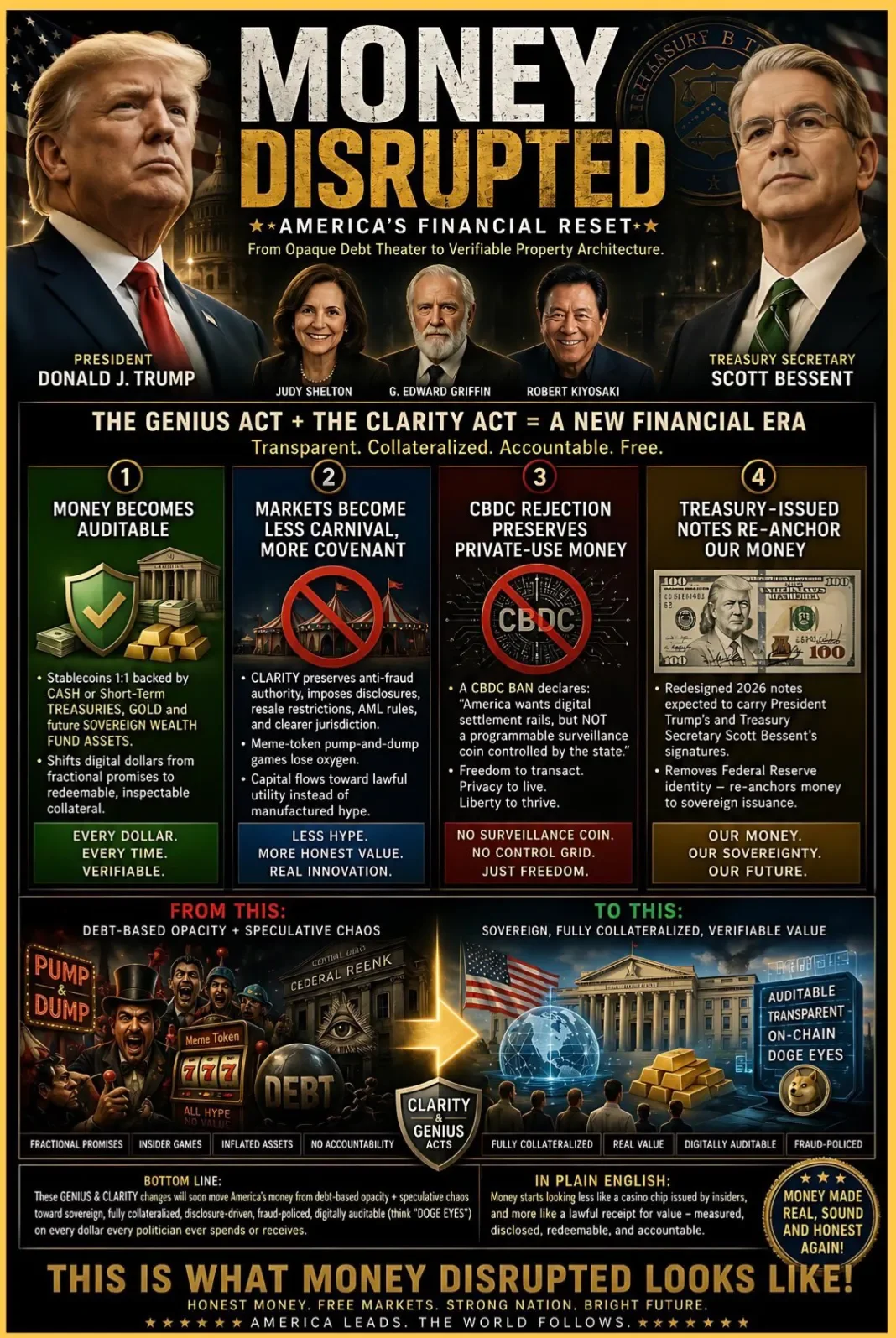
President Trump is changing money from opaque Debt theater to verifiable Property architecture.
Money becomes auditable.
Stablecoins backed 1:1 by cash or short-term Treasuries, along with collateral Gold and new Sovereign Wealth Fund Assets, shifts digital dollars away from fractional reserve debt notes and back into redeemable, inspectable, real collateral.
Rob Cunningham: President Trump is Changing Money
5-14-2026
President Trump is changing money from opaque Debt theater to verifiable Property architecture.
Money becomes auditable.
Stablecoins backed 1:1 by cash or short-term Treasuries, along with collateral Gold and new Sovereign Wealth Fund Assets, shifts digital dollars away from fractional reserve debt notes and back into redeemable, inspectable, real collateral.
Markets become less carnival, more covenant.
CLARITY Act preserves anti-fraud authority, imposes disclosures, resale restrictions, AML rules, and clearer jurisdiction, meme-token pump-and-dump games lose oxygen. Capital flows toward lawful utility instead of manufactured hype.
CBDC rejection preserves private-use money.
A CBDC ban will declare: America wants digital settlement rails, but NOT a programmable surveillance coin controlled directly by the state.
Treasury-issued notes without Federal Reserve identity re-anchors our money to sovereign issuance.
Bottom line:
These GENIUS & CLARITY Act changes will soon move America’s money from debt-based opacity + speculative chaos toward sovereign, fully collateralized, disclosure-driven, fraud-policed, digitally auditable (think “DOGE Eyes”) on single every dollar every politician ever spends or receives in transferable value.
In Plain English:
Money starts looking less like a casino chip issued by insiders, and more like a lawful receipt for value – measured, disclosed, redeemable, and accountable.
MONEY MADE REAL, SOUND AND HONEST AGAIN
is in TRUTH
MONEY DISRUPTED that ENDS THE FED
by @Fruition_Films
Seeds of Wisdom RV and Economics Updates Thursday Afternoon 5-14-26
Good Afternoon Dinar Recaps,
BRICS Tensions and Gold Surge Signal Accelerating Shift in Global Financial Power
Rising geopolitical stress, energy instability, and reserve diversification are increasing pressure on the dollar-centered financial system
Today’s developments surrounding BRICS diplomacy, gold markets, and global energy tensions highlight how rapidly the international financial landscape is evolving toward a more fragmented and multipolar structure.
Good Afternoon Dinar Recaps,
BRICS Tensions and Gold Surge Signal Accelerating Shift in Global Financial Power
Rising geopolitical stress, energy instability, and reserve diversification are increasing pressure on the dollar-centered financial system
Today’s developments surrounding BRICS diplomacy, gold markets, and global energy tensions highlight how rapidly the international financial landscape is evolving toward a more fragmented and multipolar structure.
OVERVIEW (KEY POINTS)
Global financial markets are increasingly reacting to a combination of energy disruption, de-dollarization efforts, and strategic reserve diversification as tensions surrounding Iran, BRICS coordination, and commodity markets intensify.
Today’s BRICS discussions in India come at a particularly sensitive moment. The bloc faces growing internal strain over how to respond to the Iran conflict, energy shortages, and pressure from Western financial systems. At the same time, countries across the Global South continue exploring alternatives to dollar-based trade settlement.
Gold prices remain historically elevated as investors and central banks seek protection from inflation, geopolitical instability, and rising sovereign debt concerns. Central bank demand for gold continues to reflect a broader loss of confidence in relying solely on fiat reserve systems.
The broader implication is that the world economy is slowly transitioning toward a system where multiple financial, trade, and reserve frameworks coexist instead of relying almost entirely on the U.S. dollar structure.
KEY DEVELOPMENTS
1. BRICS Meeting Highlights Growing Internal Financial Realignment
Foreign ministers meeting in India are facing mounting pressure over the Iran conflict and global energy instability.
BRICS nations increasingly divided over diplomatic strategy
Energy shortages and fuel costs impacting member economies
Discussions continue around alternative payment systems and local currency trade
2. Gold Markets Reflect Rising Systemic Anxiety
Gold remains near historic highs despite recent volatility.
Investors continue viewing gold as a hedge against geopolitical and inflation risk
Central banks maintaining aggressive reserve diversification strategies
Elevated oil prices increasing concerns over persistent global inflation
3. Energy Disruptions Continue Reshaping Trade Flows
The Strait of Hormuz remains a major pressure point.
Shipping disruptions continue affecting oil and LNG markets
Countries increasingly exploring regional energy security arrangements
Commodity-linked currencies gaining attention amid market volatility
4. De-Dollarization Momentum Continues Expanding
Alternative settlement systems remain a growing priority.
BRICS nations continue discussing payment systems outside SWIFT
More energy transactions being settled in local currencies and yuan
Countries seeking protection from sanctions exposure and reserve restrictions
5. Commodity Markets Are Influencing Currency Power
Energy and raw materials are increasingly driving global financial influence.
Commodity-exporting nations gaining stronger currency positioning
Oil and gas supply disruptions reshaping foreign exchange markets
Financial power becoming more closely tied to resource security
WHY IT MATTERS
These developments matter because the global financial system depends heavily on stable reserve assets, reliable trade routes, and confidence in monetary institutions.
As geopolitical tensions increasingly affect energy flows and reserve policy, countries are accelerating efforts to reduce vulnerability to external financial pressure.
This transition does not necessarily signal the immediate collapse of the dollar system. However, it does suggest a future where financial influence becomes more decentralized and competitive.
The growing connection between commodities, currency systems, and geopolitical strategy is reshaping how nations manage reserves, trade, and long-term economic security.
WHY IT MATTERS TO FOREIGN CURRENCY HOLDERS
Gold accumulation may continue supporting hard assets over fiat exposure
Commodity-backed economies could gain stronger currency influence
Currency volatility likely to increase during geopolitical disruptions
Countries reducing dollar dependency may continue diversifying reserves
IMPLICATIONS FOR THE GLOBAL RESET
Pillar 1: Multipolar Financial Systems Expand
BRICS nations and emerging economies are increasingly building parallel settlement systems designed to operate independently from traditional Western financial infrastructure.
Pillar 2: Commodities Become Strategic Monetary Assets
Gold, oil, LNG, and critical minerals are becoming central tools of geopolitical and financial leverage as nations reposition for long-term systemic change.
CONCLUSION
The convergence of BRICS diplomacy, gold accumulation, energy disruption, and reserve diversification reflects a deeper transformation taking place beneath the surface of the global economy.
Today’s financial environment is no longer defined solely by monetary policy or interest rates. It is increasingly shaped by strategic competition over energy, commodities, trade corridors, and reserve security.
While the dollar remains dominant, the foundations supporting that dominance are being challenged by structural shifts that continue gaining momentum across the developing world.
The global reset is no longer centered on a single event — it is unfolding through a series of interconnected economic and geopolitical realignments.
Seeds of Wisdom Team
Newshounds News™ Exclusive
SOURCES
~~~~~~~~~~
Seeds of Wisdom Team RV Currency Facts Youtube and Rumble
Newshound's News Telegram Room Link
RV Facts with Proof Links Link
RV Updates Proof links - Facts Link
Follow the Gold/Silver Rate COMEX
Follow Fast Facts
Seeds of Wisdom Team™ Website
Thank you Dinar Recaps
How The World Is Starting To Look Like 1492 All Over Again
How The World Is Starting To Look Like 1492 All Over Again
Notes From the Field By James Hickman (Simon Black / Sovereign Man) May 14, 2026
In the year 1484, a thirty-something year old sailor from Genoa was working in Lisbon when he stumbled upon a bold idea. For the previous decade, he had served as a crewman on several Portuguese commercial expeditions to haul physical resources like gold, ivory, and fish from Asia back to European ports.
These voyages were treacherous; they all crossed into maritime territory controlled by the Venetians, Ottomans, or Egyptian Malmuk. So there was a high likelihood of a vessel being confiscated and its crew being captured or killed.
How The World Is Starting To Look Like 1492 All Over Again
Notes From the Field By James Hickman (Simon Black / Sovereign Man) May 14, 2026
In the year 1484, a thirty-something year old sailor from Genoa was working in Lisbon when he stumbled upon a bold idea. For the previous decade, he had served as a crewman on several Portuguese commercial expeditions to haul physical resources like gold, ivory, and fish from Asia back to European ports.
These voyages were treacherous; they all crossed into maritime territory controlled by the Venetians, Ottomans, or Egyptian Malmuk. So there was a high likelihood of a vessel being confiscated and its crew being captured or killed.
But through his marriage into a Portuguese navigator's family, this sailor had inherited a small library of nautical charts. And he spent years studying them and corresponding with scientists who studied cosmology.
Over time, he became convinced that a small fleet could reach Asia by sailing WEST, not east, and arrive to the spice markets of the Indies without passing through enemy territory.
The sailor’s name was Christopher Columbus. And he took his idea to the King of Portugal, John II.
The King was interested enough to convene a royal panel, but the ‘experts’ decided that Columbus had badly underestimated the size of the Earth and recommended against funding the voyage.
Columbus spent the next several years pitching his idea to anyone who would listen.
He sent his brother to make the case to Henry VII in England. He approached the French court. He crossed the border into Spain, secured an audience with Ferdinand and Isabella at Córdoba, and watched a second royal commission argue for nearly four years... before rejecting him for the same reasons the Portuguese had.
He gave up on Spain and was riding north to try the French court again when a royal courier caught up with him. Ferdinand and Isabella had just taken Granada on January 2, 1492 — a conquest that ended a decade-long war and brought the southern Mediterranean coast and its ports under their control.
With the war finally over and the southern frontier secured, the monarchs had excess cash to fund the next strategic venture.
So in April of that year, at the siege camp of Santa Fe outside Granada, Isabella signed the contract. A few months later, three small ships set sail— with the crew probably all assuming that they would not survive the voyage.
The Spanish crown’s investment paid off... and they spent the next century pulling staggering amounts of silver and gold out of the new continent Columbus had stumbled upon; Spain became the wealthiest power in Europe as a result.
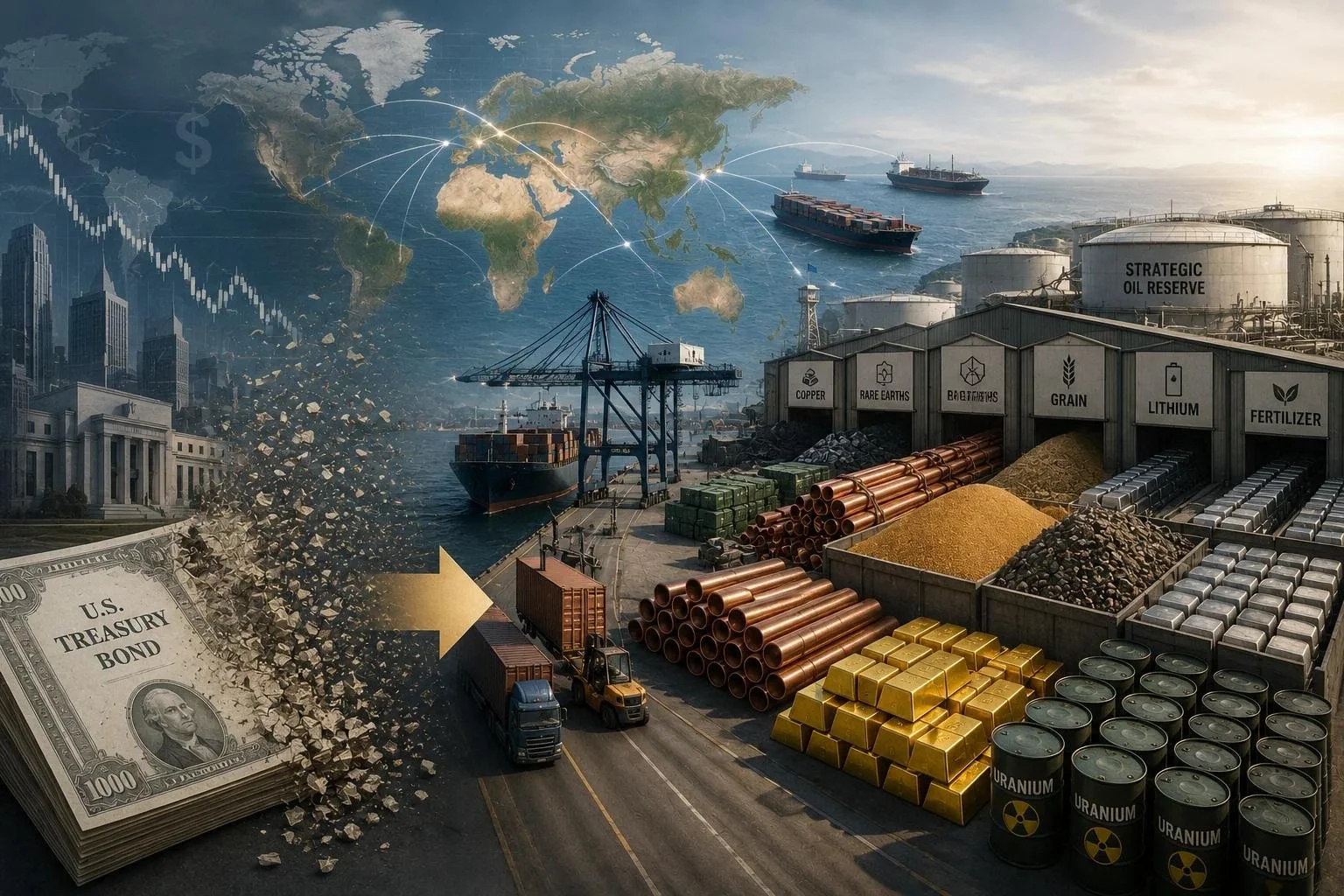
This is how governments used to invest. They were like venture capital funds of their day, financing long-term bets on ports, territory, trade routes, and resources, all in an effort to secure strategic assets that compound over generations.
But for the last eighty years or so, the world has run a different experiment.
After 1945, the United States built a system in which the rest of the world manufactured goods, sold them to American consumers, and recycled their trade surpluses back into US Treasury bonds.
This system worked for decades; in fact the most rational thing a foreign government could do with its national savings was invest in US dollars and US government bonds. Any foreign country with a stockpile of Treasurys was considered stable and creditworthy.
But this system is now cracking. Rapidly.
After the Biden administration froze Russia's dollar reserves in 2022, foreign central banks understood that US government bonds were ‘safe’ only as long as their country stayed on America's good side.
Consequently, most foreign governments have been diversifying out of dollars ever since.
This year's Iran war drove the lesson home: the Strait of Hormuz, the narrow waterway through which roughly a quarter of the world's seaborne oil passes, has been closed since late February.
And every foreign country holding hundreds of billions of US government bonds has been reminded that, no matter how big their Treasury stockpile, they cannot feed their population with it. They cannot fill their people’s gas tanks with it. They cannot power homes with it.
So governments are reconsidering their US dollar positions more than ever.
Just like Ferdinand and Isabella, governments around the world started by acquiring gold; central banks have been buying it at the fastest pace in modern history since 2022.
But gold is only the leading indicator.
The next phase is foreign governments and central banks stockpiling other critical resources and materials— energy, fertilizer, copper, uranium, rare earths, food production, and even fresh water.
These are all strategic assets that no government can conjure out of thin air. And no amount of paper bonds can magically summon.
China has been running this playbook for fifteen years: they’ve purchased farmland in Africa, copper concessions in the Congo, rare-earth processing across central Asia, and the Belt and Road infrastructure that physically connects the resource to the buyer.
A large part of China’s investment capital has come from their steady liquidation of US Treasury holdings.
This is the Columbus-era calculus all over again. Whereas governments around the world used to stockpile US government bonds, they are now stockpiling strategic resources.
One obvious consequence is lower demand for US government bonds— which drives up interest rates, mortgage rates, and more. It probably also leads to a lot more inflation, i.e. the 1970s all over again.
But it also means that these critical resources— and the companies which produce them— should have a very, very bright future as foreign governments throw potentially trillions of dollars at the commodities sector.
This is the primary thesis behind Schiff Sovereign's monthly investment research service, Strategic Assets.
We look for profitable, well-managed real-asset businesses with pristine balance sheets that are trading at a low multiple of free cash flow— with clear catalysts for growth.
And those catalysts include our fragmenting world and the scramble to secure physical, critical assets.
To your freedom,
James Hickman Co-Founder, Schiff Sovereign LLC
What Do Central Banks Know That You Don’t?
What Do Central Banks Know That You Don’t?
GoldSilver: 5-14-2026
Central banks just bought another 244 tons of gold in Q1 2026 — even with gold sitting at all-time highs.
In this video, GoldSilver breaks down the latest World Gold Council data, including who is buying, who is selling, why unreported buying still matters, and what this says about the growing loss of confidence in fiat currencies.
If central banks keep accumulating gold regardless of price, investors should be paying attention.
What Do Central Banks Know That You Don’t?
GoldSilver: 5-14-2026
Central banks just bought another 244 tons of gold in Q1 2026 — even with gold sitting at all-time highs.
In this video, GoldSilver breaks down the latest World Gold Council data, including who is buying, who is selling, why unreported buying still matters, and what this says about the growing loss of confidence in fiat currencies.
If central banks keep accumulating gold regardless of price, investors should be paying attention.
You’ll learn:
What the latest 244-ton Q1 2026 central bank gold buying figure really means
Why net central bank buying remains strong even at record gold prices
Who the biggest buyers and sellers were this quarter
Why central bank demand has been a major tailwind for gold for years
What central bank gold buying signals about faith in fiat currencies
Why bars and coins continue gaining ground as more people move to protect themselves
Central banks are not buying gold for decoration. They are buying it because they see risks building in the financial system — and that has major implications for anyone still holding large amounts of fiat.