
Thank you to all the subscribers to our Early Access program…we thank you for your continued support.
We are excited to offer this new service to keep you informed and up-to-date on the latest Dinar and currency news.
Structural Breakdown of the Currency System
Structural Breakdown of the Currency System
Liberty and Finance: 1-1-2026
The global financial landscape is facing unprecedented challenges, with the US debt crisis taking center stage.
The current debt stands at a staggering $38 trillion, and experts warn that this number is unsustainable.
The abandonment of the gold standard in 1971 has led to persistent currency debasement and a loss of trust in the US dollar as the world’s reserve currency.
Structural Breakdown of the Currency System
Liberty and Finance: 1-1-2026
The global financial landscape is facing unprecedented challenges, with the US debt crisis taking center stage.
The current debt stands at a staggering $38 trillion, and experts warn that this number is unsustainable.
The abandonment of the gold standard in 1971 has led to persistent currency debasement and a loss of trust in the US dollar as the world’s reserve currency.
In this blog post, we’ll explore the implications of this crisis, the growing significance of gold and silver as stores of value, and the potential risks associated with the increasing trend towards cashless digital currencies.
The US debt crisis is a complex issue, and there’s no easy solution in sight.
The loss of confidence in the US dollar is reflected in the diminished demand for US Treasury bonds, forcing the Federal Reserve to intervene through quantitative easing and money printing. This has further weakened the dollar, creating a vicious cycle of debt monetization. As a result, investors are increasingly looking for alternative stores of value, such as gold and silver.
Central banks around the world have been accumulating gold reserves, signaling a shift away from trust in paper currencies.
Gold and silver are not speculative assets, but rather essential, long-term stores of value that protect against inflation and currency debasement. In times of economic uncertainty, precious metals have consistently proven to be a reliable safe haven.
Retail investors would do well to focus on the broader economic context rather than short-term price fluctuations or attempts to time the market.
While some countries are embracing cashless digital currencies, others are pushing back against this trend.
Initiatives in Switzerland and Sweden aim to protect citizens’ rights to use cash, highlighting concerns about privacy, financial control, and vulnerability to cyber disruptions.
The increasing centralization and programmability of money raise red flags about government control and seizure of assets, especially in times of geopolitical or economic crisis.
The bond market is facing a crisis of its own, with declining demand from traditional buyers like China and Japan.
The Fed has become the primary purchaser, creating an unsustainable cycle of debt monetization. Rising yields threaten to increase government interest expenses, potentially destabilizing markets, including stocks and real estate, which are heavily reliant on cheap borrowing.
Artificial support mechanisms, such as stock buybacks and insider trading, have kept markets afloat despite underlying economic weaknesses.
The conversation around the global financial crisis is not just about numbers; it’s also about the erosion of trust in governments and institutions.
Currency manipulation and inflation misreporting have been likened to a form of societal betrayal. Honest leadership and transparency are needed to address these systemic issues, but the political realities suggest that such candor is unlikely.
In conclusion, the global financial landscape is facing significant challenges, and it’s essential to be prepared.
Gold and silver are becoming increasingly important as stores of value, and investors would do well to consider them as part of their wealth protection strategy. It’s also crucial to remain vigilant about the evolving financial landscape and to be aware of the potential risks associated with cashless digital currencies.
By staying informed and taking a long-term view, individuals can protect their wealth and navigate the uncertain economic waters ahead.
Iraq Economic News and Points To Ponder Friday Afternoon 1-2-26
The First American Convoy To Leave Ain Al-Asad Base In Anbar In 2026... Indications Of A Partial Withdrawal
Baratha News Agency1682026-01-01 An informed source revealed on Thursday (January 1, 2026) that the first convoy moved from Ain al-Assad base west of Anbar, in an indication of the beginning of a partial withdrawal of US forces from Iraq.
The source said, “Dozens of large trucks moved this morning from Ain al-Assad base towards the highway, amid tight security measures and escort by more than one Apache helicopter,” noting that “the exact destination of the convoy is unknown, whether it is towards Harir base in Erbil or one of the crossings with Syria towards its bases in Hasakah.”
The First American Convoy To Leave Ain Al-Asad Base In Anbar In 2026... Indications Of A Partial Withdrawal
Baratha News Agency1682026-01-01 An informed source revealed on Thursday (January 1, 2026) that the first convoy moved from Ain al-Assad base west of Anbar, in an indication of the beginning of a partial withdrawal of US forces from Iraq.
The source said, “Dozens of large trucks moved this morning from Ain al-Assad base towards the highway, amid tight security measures and escort by more than one Apache helicopter,” noting that “the exact destination of the convoy is unknown, whether it is towards Harir base in Erbil or one of the crossings with Syria towards its bases in Hasakah.”
The source indicated that "this convoy is the first during 2026, and may constitute a new indication of a partial withdrawal of US forces, which are expected to end their presence at this base in the coming months."
This development comes within the framework of the agreement between Baghdad and Washington to end the mission of the international coalition in Iraq, which was established through the work of the “Higher Military Committee” and the joint statement issued in September 2024, where the two sides agreed to set a timetable for reducing the military presence of the coalition and turning it into a bilateral security partnership, with a gradual reduction of the number of forces and the redeployment of some of them in the Kurdistan Region, and the handover of military sites, including the Ain al-Asad base, to the Iraqi authorities during the years 2025 and 2026. https://burathanews.com/arabic/news/469463
.An Economist Identifies Possible Government Strategies To Reduce Waste And Financial Corruption.
Time: 2025/12/27 21:19:46 Readings: 105 times {Economic: Al-Furat News} Economic expert, Salah Nouri, confirmed that the government has the ability to take a number of practical measures to reduce waste and financial corruption, noting that the success of these steps depends on political will and commitment to actual implementation.
The most concise and informative news can be found on the Al-Furat News Telegram channel. To subscribe, click here.
Nouri told Al-Furat News Agency that: “The Central Bank of Iraq had previously implemented an initiative to support small and medium enterprises by providing funds for lending,” indicating that “the initiative achieved modest success, while the Ministry of Finance is currently unable to support this sector due to the financial difficulties and shortage of cash liquidity it is suffering from.”
Regarding measures to reduce waste and financial corruption, Nouri pointed out that "the most prominent of these is full compliance with the decision of the Supreme Federal Court No. 89/Federal/2019, which canceled Legislative Decision No. 44 of 2008, especially paragraph six related to political quotas in filling special grades from director general and below," stressing that "failure to comply with this decision has contributed to the continuation of administrative failures."
He added that “supporting the Integrity Commission and the Federal Board of Supreme Audit with competent, honest, and politically independent staff is a fundamental step in combating corruption,” noting that “the retirement law that suddenly reduced the legal age has led to the depletion of a large number of advanced and highly competent experts in the two institutions.”
The expert explained that “the Prime Minister’s adoption of periodic evaluations of the performance of central ministries and local governments throughout the year will enable the government to identify shortcomings and obstacles and take the necessary administrative and legal measures to correct implementation paths and improve overall performance.” Raghid LINK
Iraq Ranks High Among The Largest Oil Exporters For 2025
December 31, 2025 Baghdad/Iraq Observer Iraq ranked fourth globally in oil exports for 2025, despite recording a relative decline in exports of about 190,005 barrels per day.
Oil trade in 2025 was affected by geopolitical turmoil and changes in shipping routes for the second year in a row, and traded volumes saw notable changes among major exporters and importers.
The world’s largest oil exporters boosted their shipments to markets as production increased, and this was met with a smaller increase in global imports, amid weak economic activity and slowing demand growth, particularly in Asia and Europe, according to data from the 2025 Annual Harvest File issued by the Washington-based Energy Research Unit.
This, along with Western sanctions on Russian and Iranian oil and changes in shipping routes, led to a rise in floating oil stockpiles, curbing the increase in oil trade in 2025 to approximately 4% (1.8 million barrels per day).
Trade was also affected by geopolitical turmoil throughout the year; from US-China tensions over the Panama Canal, to concerns about the closure of the Strait of Hormuz – through which 21 million barrels of oil pass daily – during the Israel-Iran war, to the continued impact on traffic in the Red Sea, despite a relative improvement over 2024 . LINK
Oil Announces Its Annual Liquefied Gas Production
January 1, 2026 Baghdad/Iraq Observer The Ministry of Oil revealed on Thursday that annual production of liquefied gas in Iraq will reach three million tons during 2025, stressing that this achievement will boost oil revenues, with a plan to expand and develop production to seven million tons.
The Undersecretary of the Ministry for Gas Affairs, Izzat Saber Ismail, said in a press statement seen by the “Iraq Observer” agency that “the current production capacity of liquefied gas has reached three million tons per year of gas” (LPG), noting that “the Basra Gas Company contributes two million tons, about one million of which are allocated for export, while the remaining quantity is directed to cover local consumption.”
He added that “the North and South Gas Companies have a plan aimed at raising total production in Iraq to more than four million tons during the next year.”
He pointed out that “the ministry’s plans include reaching a production capacity of seven million tons, which will enhance Iraq’s position in regional markets and generate additional economic returns for the public treasury.”
https://observeriraq.net/النفط-تعلن-انتاجها-السنوي-من-الغاز-الم/
Al-Lami: Iraq Is Nearing Self-Sufficiency In Gas.
Economy January 1, 11:39 Information/Baghdad... MP Ali Al-Lami confirmed on Thursday that the timeframe for Iraq to reach self-sufficiency in gas has been reduced by 20%, expecting this to be achieved during the first quarter of 2027.
Al-Lami told Al-Maalouma that “the file of achieving self-sufficiency in gas and ending the flaring of associated gas in oil fields has reached advanced stages, with the time period specified for achieving this goal being reduced by up to 20%,” predicting that it will be officially announced in the first quarter of 2027.
He added that “ending the flaring of associated gas has multiple positive dimensions, most notably reducing the negative impacts on the environment and public health, as well as investing large quantities of gas in generating electricity and supporting national industries.”
He pointed out that “the introduction of other projects to develop gas fields will contribute to increasing production capacity nationwide, leading to a reduction in reliance on imports and achieving self-sufficiency in this vital resource.” https://almaalomah.me/news/119662/economy/اللامي:-العراق-يقترب-من-الاكتفاء-الذاتي-من-الغاز
For current and reliable Iraqi news please visit: https://www.bondladyscorner.com
Seeds of Wisdom RV and Economics Updates Friday Afternoon 1-2-26
Good Afternoon Dinar Recaps,
Global Government Debt and Bond Stress Re-Emerge as 2026 Begins
Rising yields expose the limits of fiscal and monetary support
Good Afternoon Dinar Recaps,
Global Government Debt and Bond Stress Re-Emerge as 2026 Begins
Rising yields expose the limits of fiscal and monetary support
Overview
Global sovereign debt levels remain at historic highs, pressuring government finances worldwide
Bond market volatility is resurfacing, particularly in long-dated government debt
Higher-for-longer interest rates are colliding with massive refinancing needs
Central banks are constrained, unable to stabilize bond markets without risking inflation credibility
Bond stress is increasingly viewed as a leading reset trigger
Key Developments
Governments face trillions in debt rollovers over the next two years, raising refinancing risk
Rising yields are increasing debt-service costs, squeezing fiscal budgets
Bond markets are no longer acting as shock absorbers, amplifying volatility instead
Foreign demand for sovereign debt is weakening, especially where fiscal discipline is questioned
Central banks continue balance-sheet reduction, removing a major source of artificial bond demand
Why It Matters
Debt markets form the foundation of the modern financial system. When confidence in sovereign bonds weakens, currencies, equities, credit, and trade financing all reprice.
Unlike banking crises, which can be addressed with liquidity, bond crises are credibility crises. Once investors question a government’s ability to service debt without inflation or monetization, stabilization becomes far more difficult.
Historically, systemic resets follow bond market stress — not equity selloffs.
Why It Matters to Foreign Currency Holders
For foreign currency holders, bond instability creates asymmetric risk:
Debt-heavy currencies weaken first, regardless of reserve status
Rising yields can signal distress rather than strength
Capital flows shift rapidly when fiscal sustainability is questioned
Settlement confidence erodes when monetization becomes the backstop
In reset terms, currency value increasingly reflects debt credibility, not political power.
Implications for the Global Reset
Pillar: Debt Sustainability Defines Monetary Credibility
Currencies fail when debt cannot be credibly serviced.Pillar: Bond Markets Trigger Repricing Cycles
They move slowly — then all at once.
This is not just politics — it’s global finance restructuring before our eyes.
Seeds of Wisdom Team
Newshounds News™ Exclusive
Sources
Reuters – “Why investors will learn to love government bonds again — after volatility”
Bank for International Settlements – Annual Economic Report: Global Debt and Financial Stability
~~~~~~~~~~
Iran Unrest Escalates as Inflation and Currency Collapse Fuel Instability
Domestic pressure collides with external escalation risk
Overview
Nationwide protests have erupted across Iran, driven by soaring inflation and currency collapse
The unrest represents Iran’s most serious internal challenge in three years
Security forces have reportedly used force against demonstrators, resulting in deaths and arrests
U.S. warnings of possible intervention have heightened geopolitical risk
Economic stress and external pressure are converging at a critical moment
Key Developments
Protests began over rising prices and cost-of-living pressures, then spread across multiple cities
The Iranian rial has plunged to historic lows, intensifying public anger and instability
President Masoud Pezeshkian acknowledged government failures, while warning unrest would not be tolerated
U.S. President Donald Trump warned Washington could act if protesters are fired upon, escalating tensions
Iran continues to face sanctions pressure and regional confrontation, limiting policy flexibility
Why It Matters
Iran’s unrest reflects a classic reset pattern: currency failure precedes political instability. Inflation, sanctions, and isolation have eroded purchasing power and public trust, leaving the government with narrowing options.
What makes this episode particularly dangerous is timing. Domestic unrest is unfolding amid heightened regional tension involving the United States and Israel, increasing the risk that internal instability spills outward into broader conflict.
Why It Matters to Foreign Currency Holders
For foreign currency holders, Iran’s situation highlights systemic warning signals:
Currency collapse accelerates social unrest and political fracture
Sanctions magnify FX volatility and settlement risk
Escalation risk drives capital flight and safe-haven demand
Access to global payment systems matters more than reserves
In reset terms, currencies fail first at home — then in global markets.
Implications for the Global Reset
Pillar: Currency Credibility Equals Political Stability
When money fails, legitimacy erodes.Pillar: Sanctions Expose Structural Weaknesses
Isolation accelerates internal fracture points.
This is not just politics — it’s global finance restructuring before our eyes.
Seeds of Wisdom Team
Newshounds News™ Exclusive
Sources
Reuters – “Trump warns Iran as protests rage over inflation and currency collapse”
Financial Times – “Iran unrest tests leadership as economic pressure mounts”
~~~~~~~~~~
Eurozone Expands as Bulgaria Moves Closer to Adoption
Currency bloc growth signals deeper monetary realignment
Overview
Bulgaria has moved closer to joining the euro area, advancing deeper European monetary integration
The expansion comes amid global currency volatility and geopolitical fragmentation
Eurozone growth strengthens bloc cohesion but also raises policy complexity
Monetary alignment increasingly reflects access and stability, not just growth metrics
Currency blocs are becoming more relevant in the reset phase
Key Developments
European institutions approved Bulgaria’s progress toward euro adoption, citing fiscal and inflation benchmarks
The move expands the euro’s geographic and financial footprint
Concerns over disinformation and political influence accompanied the process, underscoring strategic sensitivity
Eurozone policymakers face rising internal divergence, even as membership expands
Bloc expansion reinforces the euro’s role as an alternative settlement anchor
Why It Matters
Eurozone expansion reflects a broader reset trend: currencies are consolidating into trusted networks. As global trade and finance fragment, nations are seeking protection through larger, rules-based monetary blocs.
While expansion strengthens the euro’s reach, it also increases internal complexity. More members mean greater strain on shared fiscal discipline and monetary coordination, especially during periods of stress.
This is less about optimism — and more about positioning for stability in a fractured global system.
Why It Matters to Foreign Currency Holders
For foreign currency holders, eurozone expansion signals:
Bloc-aligned currencies gain settlement credibility
FX stability increasingly depends on network inclusion
Peripheral currencies outside blocs face repricing risk
Monetary policy becomes more political and structural
In reset terms, access to trusted currency systems matters more than independence.
Implications for the Global Reset
Pillar: Currency Blocs Replace Global Uniformity
Monetary order is reorganizing around trusted networks.Pillar: Access Defines Currency Value
Inclusion matters more than scale alone.
This is not just politics — it’s global finance restructuring before our eyes.
Seeds of Wisdom Team
Newshounds News™ Exclusive
Sources
Financial Times – “Bulgaria moves closer to joining the eurozone despite disinformation concerns”
Reuters – “Bulgaria clears hurdles toward euro adoption as bloc expands”
~~~~~~~~~~
BRICS De-Dollarization Agenda for 2026 Enters Implementation Phase
From planning to parallel financial systems
Overview
BRICS has shifted from de-dollarization rhetoric to real-world execution
India’s 2026 BRICS presidency is accelerating alternative financial infrastructure
Payment systems, gold-backed settlement, and CBDC interoperability are now operational
Dollar use in intra-BRICS trade is already sharply reduced
This marks a structural change in global settlement architecture
Key Developments
India formally assumed the BRICS presidency, with the 18th BRICS Summit expected in New Delhi later this year
BRICS Pay is expanding as a decentralized payment network, linking national systems such as CIPS, SPFS, and UPI
Intra-BRICS trade has reduced U.S. dollar usage by roughly two-thirds, according to bloc-linked estimates
CBDC interoperability frameworks are under active development, connecting the digital yuan, ruble, and rupee
The BRICS Unit, a gold-backed settlement instrument, is scheduled for launch in 2026, following a 2025 pilot backed by gold and member currencies
The New Development Bank continues expanding local currency lending, reducing reliance on dollar-based debt
Why It Matters
The BRICS agenda has entered what analysts describe as “De-dollarization 2.0” — not the abandonment of the dollar, but the construction of parallel systems that make the dollar optional.
Rather than challenging the dollar directly, BRICS members are routing around it, building payment rails, settlement units, and financing mechanisms that operate independently of Western-controlled systems.
This is not a sudden break — it is a gradual rebalancing of monetary power.
Why It Matters to Foreign Currency Holders
For foreign currency holders, the implications are clear:
Settlement optionality weakens single-currency dominance
Gold-linked and asset-backed instruments regain relevance
Currencies tied to alternative payment rails gain strategic value
Dollar-based leverage tools lose exclusivity
In reset terms, currency power now flows through infrastructure, not headlines.
Implications for the Global Reset
Pillar: Parallel Financial Systems Are Now Live
De-dollarization is operational, not theoretical.Pillar: Gold Re-enters the Settlement Layer
Asset backing restores trust outside fiat-only systems.
This is not just politics — it’s global finance restructuring before our eyes.
Seeds of Wisdom Team
Newshounds News™ Exclusive
Sources
Watcher.Guru – “BRICS De-Dollarization Agenda for 2026 Advances With Global Launch”
Reuters – “BRICS nations expand local currency trade and payment systems amid sanctions pressure”
~~~~~~~~~~
Seeds of Wisdom Team RV Currency Facts Youtube and Rumble
Newshound's News Telegram Room Link
RV Facts with Proof Links Link
RV Updates Proof links - Facts Link
Follow the Gold/Silver Rate COMEX
Follow Fast Facts
Seeds of Wisdom Team™ Website
Thank you Dinar Recaps
50X Silver Revaluation: They Tried To Smash Silver But Ended Up Buying Physical! Andy Schectman
50X Silver Revaluation: They Tried To Smash Silver But Ended Up Buying Physical! Andy Schectman
Smart Stock Trading and Gold Silver Investing: 1-2-2026
In this interview, Andy Schectman, President of Miles Franklin Precious Metals, delivers a bullish outlook on silver, predicting a massive rally potentially reaching 50X its current value due to an impending revaluation driven by global monetary shifts, de-dollarization, supply shortages, and institutional demand.
He warns that the transition will be turbulent ("buckle up, it's going to be rough"), with economic challenges ahead as the US dollar weakens and fiat systems face stress.
50X Silver Revaluation: They Tried To Smash Silver But Ended Up Buying Physical! Andy Schectman
Smart Stock Trading and Gold Silver Investing: 1-2-2026
In this interview, Andy Schectman, President of Miles Franklin Precious Metals, delivers a bullish outlook on silver, predicting a massive rally potentially reaching 50X its current value due to an impending revaluation driven by global monetary shifts, de-dollarization, supply shortages, and institutional demand.
He warns that the transition will be turbulent ("buckle up, it's going to be rough"), with economic challenges ahead as the US dollar weakens and fiat systems face stress.
Schectman highlights 2026 as a pivotal year where gold and silver could outperform all other assets, but emphasizes that most Americans are unprepared for the coming financial disruptions, including inflation, debt crises, and BRICS-related changes.
Key drivers include physical silver shortages, manipulation suppression ending, central bank accumulation, and silver's dual role as an industrial and monetary metal.
Timestamps:
– The Psychological Thresholds for Silver's Price
– JP Morgan's Historic Flip from Biggest Silver Short to Long
– Physical Silver Removed from COMEX Vaults and Supply Tightening
– Record-Breaking Deliveries of Physical Silver and Gold
– US Banks Exit Silver Shorts; Foreign Banks Remain Exposed
– China's Export Ban and the Geopolitical Race for Silver
– Silver Supply Shortages and Physical Demand
– The Potential 50X Rally in Silver and Revaluation Drivers
– De-Dollarization, BRICS, and Global Monetary Shifts
– US Debt Crisis, Inflation, and Economic Turbulence Ahead ("Buckle Up")
– Manipulation Ending and Institutional/Central Bank Buying
– Silver's Dual Role (Industrial + Monetary) and Shortage Risks
Seeds of Wisdom RV and Economics Updates Friday Morning 1-2-26
Trade Fragmentation: The Downstream Consequence of Systemic Stress
How fractured commerce and payment systems reveal deeper global economic realignments
Overview
Global trade networks are increasingly splitting into regional and strategic blocs as geopolitical tensions, sanctions regimes, and financial fragmentation intensify.
Trade fragmentation is not the initial trigger of systemic crisis — it is a downstream consequence of deeper monetary and financial stress.
As payment system access becomes weaponized and currency volatility rises, nations are realigning trade corridors based on trust, interoperability, and financial access rather than comparative advantage.
Trade Fragmentation: The Downstream Consequence of Systemic Stress
How fractured commerce and payment systems reveal deeper global economic realignments
Overview
Global trade networks are increasingly splitting into regional and strategic blocs as geopolitical tensions, sanctions regimes, and financial fragmentation intensify.
Trade fragmentation is not the initial trigger of systemic crisis — it is a downstream consequence of deeper monetary and financial stress.
As payment system access becomes weaponized and currency volatility rises, nations are realigning trade corridors based on trust, interoperability, and financial access rather than comparative advantage.
Key Developments
Sanctions and counter-sanctions have constrained access to traditional trade settlement systems, prompting several nations to explore alternative payment rails and bilateral settlement arrangements.
Major economies and trading blocs are increasingly negotiating currency swap lines, local currency trade agreements, and digital payment linkages to bypass dominance by any single system.
Supply chains are being reshaped — not just for efficiency, but for redundancy and security, with firms and governments diversifying sourcing to reduce exposure to any one currency or financial network.
Emerging markets with limited access to major payment systems face higher financing costs, greater FX volatility, and reduced foreign demand for sovereign debt — accelerating trade realignment.
Regional trade groupings — both economic and geopolitical — are prioritizing internal trade facilitation over integration with traditional global chains, reflecting trust over optimal economic logic.
Why It Matters
Trade fragmentation is significant because it reveals a shift in the underlying architecture of global commerce. Traditional trade theory assumes frictionless movement of goods and capital underpinned by trusted settlement systems and credible currencies. But as financial stress rises and central banks’ policy space narrows, trade is no longer just about comparative advantage — it’s about access and survivability.
When settlement systems become perceived as weaponizable, and when financing costs vary sharply across currency regimes, countries begin to reroute trade flows based on financial trustworthiness and system access. This isn’t a temporary distortion — it is a structural change in how cross-border commerce operates.
Why It Matters to Foreign Currency Holders
For foreign currency holders, trade fragmentation introduces complex new dynamics:
Settlement Access Becomes a Currency Driver: Access to major payment networks becomes as important as reserve status in determining currency demand.
Regional Bloc Currencies Strengthen Internally: Currencies within tightly integrated trade blocs may gain relative stability even if they lack traditional reserve status.
FX Volatility Increases Along New Trade Routes: As trade flows reroute, demand and liquidity for certain currencies can surge or collapse based on access rather than economic fundamentals.
Hedging Costs and Financial Risk Rise: Fragmented trade pathways elevate hedging costs and complicate risk management for multinational enterprises and investors.
Reserve Strategy Shifts: Portfolio and reserve allocations begin to tilt toward currencies that facilitate diversified trade network access, not just those with high liquidity.
Implications for the Global Reset
Pillar 1 — Fragmentation Reflects Deeper Financial Stress:
Trade fragmentation is not causal — it is a structural signal that financial and monetary stress has exceeded thresholds where traditional settlement systems can function smoothly.
Pillar 2 — Systemic Realignment Around Trust and Access:
New trade corridors, settlement mechanisms, and financial interoperability standards are emerging based on trust networks and risk exposure, not purely import/export balances.
Pillar 3 — Currency Utility Reprices with Trade Role:
As trade networks reorganize, currency utility increasingly depends on system access and settlement integration, altering long-term valuation models.
This is not just politics — it’s global finance restructuring before our eyes.
Seeds of Wisdom Team
Newshounds News™ Exclusive
Sources
Reuters — Global trade fragmentation and output losses warning
Reuters — WTO sees signs of fragmented trade (but no de-globalization)
World Bank — Trade policy and fragmentation visualization tools
World Economic Forum — Mitigating impacts of global financial system fragmentation
~~~~~~~~~~
Maduro Signals Willingness for Talks With U.S., Offers Cooperation on Oil and Drugs
Venezuela shifts tone as sanctions pressure and energy geopolitics converge
Overview
Venezuelan President Nicolás Maduro signaled openness to renewed dialogue with the United States, proposing cooperation on drug trafficking and offering U.S. companies access to Venezuela’s oil sector
The remarks mark a notable shift from months of hostile rhetoric and confrontation
Maduro framed Venezuela as a “brother country” to the U.S., emphasizing willingness to engage President Donald Trump directly
The outreach comes amid heightened U.S. military activity in the Caribbean and ongoing sanctions pressure
Energy access and geopolitical stability are central to the subtext of the overture
Key Developments
Maduro referenced a prior conversation in which Trump addressed him as “Mr. President,” portraying it as recognition of his authority
The interview aired on state television and was staged in militarized areas of Caracas, projecting strength and control
Maduro offered cooperation on drug trafficking and openness to U.S. oil companies, including expanded access to Venezuela’s reserves
U.S. officials have accused Maduro of leading a “narco-state,” a charge Caracas denies
Chevron and other U.S. firms already maintain limited operations under sanctions exemptions
Why It Matters
Maduro’s conciliatory tone reflects mounting economic pressure and a search for legitimacy amid years of sanctions, inflation, and capital flight. For Washington, any engagement carries implications for energy security, regional stability, and sanctions enforcement.
This is not merely diplomatic theater. Energy access, sanctions relief, and political recognition are deeply intertwined, especially as global oil markets remain sensitive to supply disruptions and geopolitical shocks.
Why It Matters to Foreign Currency Holders
For foreign currency holders, Venezuela’s outreach highlights several critical dynamics:
Sanctions relief directly impacts currency stabilization prospects
Energy access influences hard-currency inflows and balance-of-payments pressure
Political recognition can unlock settlement channels and foreign investment
Currencies under sanctions reprice rapidly when access conditions change
In reset terms, currency value increasingly depends on access, legitimacy, and settlement pathways — not just reserves.
Implications for the Global Reset
Pillar: Energy Access Shapes Monetary Breathing Room
Oil revenue remains a decisive lever for sanctioned states.Pillar: Sanctions Are Negotiation Tools, Not Permanent States
Reset dynamics favor conditional reintegration over isolation.
This is not just politics — it’s global finance restructuring before our eyes.
Seeds of Wisdom Team
Newshounds News™ Exclusive
Sources
~~~~~~~~~~
Trump Threatens Action Over Deadly Protests in Iran
Inflation-driven unrest collides with geopolitical escalation risks
Overview
U.S. President Donald Trump warned that Washington could intervene if Iranian security forces fire on protesters
Nationwide protests over soaring inflation and currency collapse have entered their fourth day
Several deaths have been reported, marking Iran’s most serious unrest in three years
Trump’s comments follow recent U.S. and Israeli strikes on Iranian nuclear facilities
The situation raises the risk of escalation between Washington and Tehran
Key Developments
Trump stated the United States was “locked and loaded” in response to reported violence against protesters
Demonstrations erupted across multiple regions, driven by inflation, unemployment, and economic hardship
Iranian officials condemned Trump’s remarks as foreign interference
Security forces reportedly used force against demonstrators, prompting international concern
President Masoud Pezeshkian acknowledged government failures, while warning unrest would not be tolerated
Why It Matters
Iran’s unrest represents a convergence of economic collapse and geopolitical pressure. Inflation above 36%, a rapidly weakening rial, and years of sanctions have eroded public trust. Trump’s warning injects an external escalation risk into what is already a fragile domestic crisis.
This moment is especially volatile because economic legitimacy, internal stability, and external deterrence are all under strain simultaneously. Any miscalculation could rapidly widen the conflict beyond Iran’s borders.
Why It Matters to Foreign Currency Holders
For foreign currency holders, Iran’s situation highlights critical reset dynamics:
Currency collapse accelerates social unrest and political instability
Sanctions and isolation magnify FX volatility and settlement risk
Escalation risk drives capital flight and safe-haven demand
Access to global payment systems matters more than nominal reserves
In reset terms, currency credibility fails first at home — then abroad.
Implications for the Global Reset
Pillar: Currency Failure Precedes Political Instability
Inflation and FX collapse undermine state legitimacy.Pillar: Sanctions Amplify Internal Fracture Points
Prolonged isolation accelerates systemic stress.
This is not just politics — it’s global finance restructuring before our eyes.
Seeds of Wisdom Team
Newshounds News™ Exclusive
Sources
Modern Diplomacy – “Trump Threatens Action Over Deadly Protests in Iran”
Reuters – “Trump warns Iran as protests rage over inflation and currency collapse”
~~~~~~~~~~
Seeds of Wisdom Team RV Currency Facts Youtube and Rumble
Newshound's News Telegram Room Link
RV Facts with Proof Links Link
RV Updates Proof links - Facts Link
Follow the Gold/Silver Rate COMEX
Follow Fast Facts
Seeds of Wisdom Team™ Website
Thank you Dinar Recaps
News, Rumors and Opinions Friday 1-2-2025
KTFA:
Frank26: "TARIFFS WORKING ON GLOBAL CURRENCIES"....F26
Major Currency and Financial Resets That Took Effect on January 1
January 1 is ideal for currency resets because it aligns with the start of the fiscal year, offering clarity, a fresh beginning, and minimal disruption to economic activities.
12/31/2025
January 1 has repeatedly served as a symbolic and practical launch date for some of the world’s most consequential currency reforms, redenominations and financial resets, as governments sought clean accounting transitions, psychological breaks from crisis, and alignment with fiscal calendars.
KTFA:
Frank26: "TARIFFS WORKING ON GLOBAL CURRENCIES"....F26
Major Currency and Financial Resets That Took Effect on January 1
January 1 is ideal for currency resets because it aligns with the start of the fiscal year, offering clarity, a fresh beginning, and minimal disruption to economic activities.
12/31/2025
January 1 has repeatedly served as a symbolic and practical launch date for some of the world’s most consequential currency reforms, redenominations and financial resets, as governments sought clean accounting transitions, psychological breaks from crisis, and alignment with fiscal calendars.
Economists say the date is favored because it coincides with new budgets, accounting years and tax cycles, reducing operational disruption while signaling a “new start” to markets and citizens.
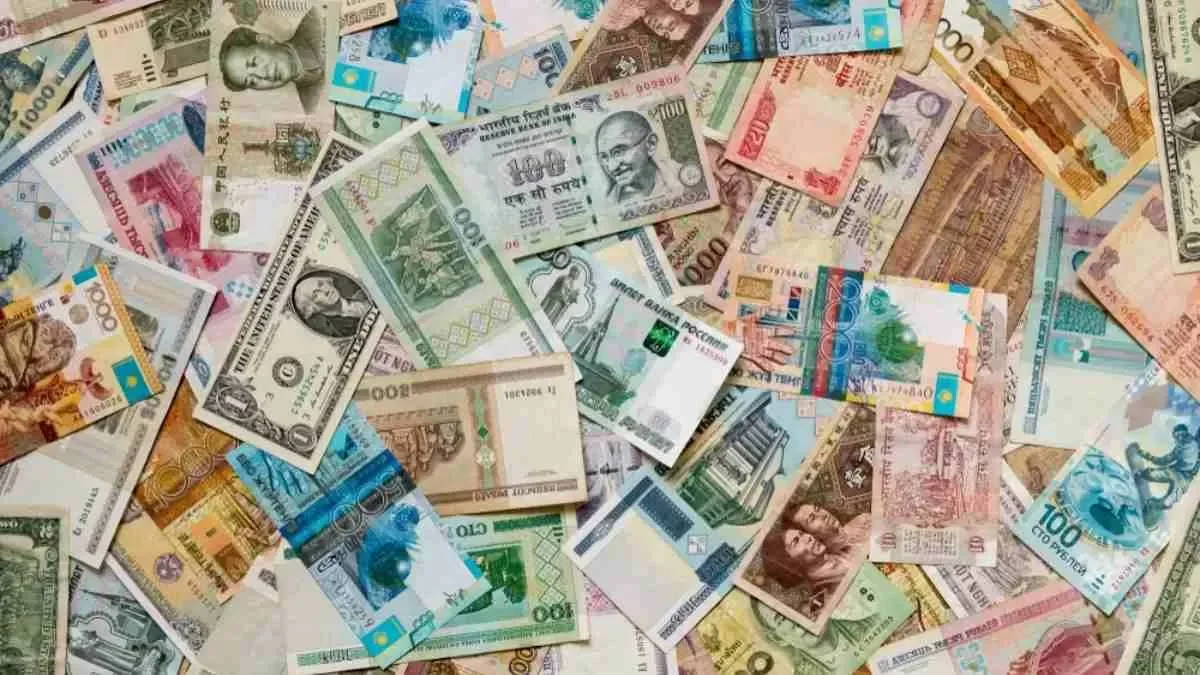
The Euro: Europe’s Historic Monetary Reset (1999–2002)
Jan. 1, 1999: The euro was launched as a virtual currency for accounting and financial markets, replacing national currencies in 11 EU states.
Jan. 1, 2002: Euro banknotes and coins entered circulation, permanently ending the franc, mark, lira and others.
Impact: One of the largest financial resets in history, affecting over 300 million people and reshaping global reserve currency dynamics.
Sources: European Central Bank, Reuters, IMF.
Turkey: Lira Redenomination After Hyperinflation (2005)
Jan. 1, 2005: Turkey removed six zeros from its currency.
1,000,000 old lira = 1 new lira (TRY).
Context: Years of inflation had rendered prices unmanageable. The reset followed IMF-backed reforms and restored confidence.
Sources: Turkish Central Bank, IMF, Reuters.
Russia: Post-Soviet Ruble Reform (1998)
Jan. 1, 1998: Russia cut three zeros from the ruble.
1,000 old rubles = 1 new ruble.
Context: Designed to stabilize the economy after post-Soviet collapse and before the 1998 financial crisis.
Sources: Russian Central Bank, World Bank.
Brazil: Real Plan Consolidation (1994)
Jan. 1, 1994: Brazil introduced the real (BRL), ending decades of hyperinflation.
Replaced multiple failed currencies.
Context: One of the most successful inflation-control programs in emerging markets.
Sources: Banco Central do Brasil, IMF.
Poland: Zloty Redenomination (1995)
Jan. 1, 1995: Poland removed four zeros from the zloty.
10,000 old zloty = 1 new zloty.
Context: Part of post-communist economic transition and EU accession path.
Sources: National Bank of Poland, ECB.
Romania: Leu Redenomination (2005)
Jan. 1, 2005: Romania cut four zeros from the leu.
10,000 old lei = 1 new leu (RON).
Context: Aimed at simplifying transactions ahead of EU membership.
Sources: Romanian Central Bank, Reuters.
Argentina: Peso Convertibility Reset (1992)
Jan. 1, 1992: Argentina introduced a new peso, pegged 1:1 to the U.S. dollar.
10,000 australes = 1 peso.
Context: Temporarily curbed inflation but later collapsed in the 2001 crisis.
Sources: IMF, World Bank.
Zimbabwe: Dollarization Reset (2009)
Jan. 1, 2009: Zimbabwe effectively abandoned its currency, allowing foreign currencies for transactions after hyperinflation.
Context: One of history’s most extreme monetary collapses.
Sources: IMF, Reserve Bank of Zimbabwe.
Why January 1?
Economists identify four key reasons:
Fiscal year alignment
Accounting clarity
Public psychology of renewal
Lower transactional disruption
“Currency resets are as much about confidence as arithmetic,” IMF economists note. “January 1 provides a psychological reset alongside a technical one.”
Current Context
Several countries, including Syria, have chosen January 1 for planned redenominations or currency transitions, continuing a long-standing global pattern of using the date to mark economic turning points. LINK
*************
Courtesy of Dinar Guru: https://www.dinarguru.com/
Frank26 The float like this <snap>. The float and the REER like, boom!
Frank26 Preparation is being made for a new exchange rate. When is it coming? God only knows. But it's in the works because as of today 1310 does not exist anymore. Now, that's what they said to everyone. They have the articles to prove it.
Militia Man Reforms like deleting the 3 zeros simplify transactions preparing for a real effective exchange rate adjustment based on reserves and growth...Growth is part of the non-oil resources...These developments indicate readiness for a managed revaluation of the dinar to reflect fundamentals. That's what a REER is about. It's about fundamentals such as...$16 trillion worth of natural resources, historic low inflation, political soothness, which we've just witnessed [with the election]...
****************
China Has Changed the SILVER Game From Paper to PHYSICAL - 'Watch Shanghai': Francis Hunt
Commodity Culture: 1-1-2026
Francis Hunt thinks there's a fundamental shift underway in the global silver market and the spread in price between West and East is painting a picture of physical metal replacing paper contracts as the strategic value of silver becomes more apparent.
Francis breaks out the charts to dive into Shanghai's impact on the silver market, why he thinks a $1000 price is possible, and why the gold-silver ratio could be headed to single digits ahead.
00:00 Introduction
01:14 Silver's Incredible Run
08:34 Silver Spread in Shanghai
16:32 Geopolitical Outlook for Silver
23:09 Is the Broad Market in a Bubble?
36:27 Preparing For What's to Come
Most Millionaires Don't Consider Themselves Wealthy. So What Does It Really Mean To Be Rich?
Most Millionaires Don't Consider Themselves Wealthy. So What Does It Really Mean To Be Rich?
Ivana Pino Ivana Pino · Senior Writer Updated December 18, 2025 Yahoo Personal Finance
A new Schwab survey finds that only a third of America’s millionaires feel wealthy. By most traditional measures, having a net worth of $1 million should put someone firmly in the “wealthy” category. Yet a growing number of millionaires don’t see it that way. Just one third (36%) of the nation’s wealthiest citizens — those with at least $1 million in investable assets — consider themselves wealthy, according to Northwestern Mutual’s 2025 Planning and Progress study.
Further, nearly half (49%) of American millionaires say their financial planning needs improvement, citing the possibility of outliving their savings, the impact of taxes in retirement, and potential long-term care needs as their top financial concerns.
Most Millionaires Don't Consider Themselves Wealthy. So What Does It Really Mean To Be Rich?
Ivana Pino Ivana Pino · Senior Writer Updated December 18, 2025 Yahoo Personal Finance
A new Schwab survey finds that only a third of America’s millionaires feel wealthy. By most traditional measures, having a net worth of $1 million should put someone firmly in the “wealthy” category. Yet a growing number of millionaires don’t see it that way. Just one third (36%) of the nation’s wealthiest citizens — those with at least $1 million in investable assets — consider themselves wealthy, according to Northwestern Mutual’s 2025 Planning and Progress study.
Further, nearly half (49%) of American millionaires say their financial planning needs improvement, citing the possibility of outliving their savings, the impact of taxes in retirement, and potential long-term care needs as their top financial concerns.
***********************************
This gap may be surprising, but it highlights how rising costs, longer lifespans, and shifting expectations have redefined what it means to feel rich in modern America.
Why $1 million doesn’t feel like a lot of money anymore
One reason most millionaires don’t consider themselves wealthy is because our definition of wealth has changed over time.
“Being a millionaire used to mean you had done really well and ‘made it,’” said Tom Mathews, CFEd, CPA, and author of "How Money Works." “Today, it really just means you’ve crossed an outdated line.”
Mathews explained the problem isn’t necessarily that people have less money today, but rather, they have less certainty and control around their finances. “Things like inflation, rising taxes, market volatility, and the escalating cost of housing, healthcare, and education have changed what financial security feels like,” he said. “A million dollars on paper doesn’t stretch the way it used to, especially when most of that net worth is tied up in illiquid assets like homes, retirement accounts, or businesses.”
There’s also the issue of longevity. With people living longer, a seven-figure portfolio may not seem substantial when it’s expected to fund decades of living expenses and rising medical costs.
In other words, Mathews said, many people might look wealthy on paper, but that doesn’t mean they feel financially secure.
What does it mean to be rich today?
If millionaires don’t necessarily feel wealthy, what does it take to feel rich in today’s economy?
According to Charles Schwab’s 2025 Modern Wealth Survey, Americans need an average net worth of $839,000 to be financially comfortable, and $2.3 million to feel wealthy.
TO READ MORE: https://finance.yahoo.com/personal-finance/banking/article/how-many-millionaires-in-america-205846046.html
Even Millionaires Don't Feel Wealthy These Days
Even Millionaires Don't Feel Wealthy These Days
Daniel de Visé, USA TODAY December 3, 2025
A million dollars is not what it used to be.
Only 36% of American millionaires consider themselves wealthy in 2025, according to new research from Northwestern Mutual. The finding comes from the 2025 Planning & Progress Study, updated in early November. It draws on a Harris Poll survey of 4,626 Americans, including 969 people with household investable assets greater than $1 million.
Even the wealthiest Americans worry about money, the study found. They fret about having enough of it, deciding how to spend it and whether to pass it on to heirs. If $1 million isn’t enough, then how much money does it take to feel wealthy?
Even Millionaires Don't Feel Wealthy These Days
Daniel de Visé, USA TODAY December 3, 2025
A million dollars is not what it used to be.
Only 36% of American millionaires consider themselves wealthy in 2025, according to new research from Northwestern Mutual. The finding comes from the 2025 Planning & Progress Study, updated in early November. It draws on a Harris Poll survey of 4,626 Americans, including 969 people with household investable assets greater than $1 million.
Even the wealthiest Americans worry about money, the study found. They fret about having enough of it, deciding how to spend it and whether to pass it on to heirs. If $1 million isn’t enough, then how much money does it take to feel wealthy?
*******************************************
“There’s no definitive number,” said Mark Mascarenhas, a private wealth adviser with Northwestern Mutual’s Haven Wealth Advisors.
Many millionaires don't consider themselves wealthy
Feeling wealthy has a lot to do with context and perspective, he said.
A million dollars might go a long way in West Virginia or rural Kansas. In New York or Los Angeles, it might not feel like nearly enough.
A millionaire who hangs out with other millionaires is bound to make unflattering comparisons to wealthier friends.
“All of my clients who are millionaires do not consider themselves wealthy, not by a long shot,” Liz Windisch, a certified financial planner in Denver.
“People with that much money inevitably spend time with other people who are millionaires, and who have even more money than they do and – just like the rest of us – compare themselves to others who have more,” she said.
Nearly half of U.S. millionaires say their financial planning “needs improvement,” Northwestern Mutual found. Only 53% said they expect to leave an inheritance or charitable gift.
“It’s not that they don’t want to leave an inheritance. It’s just that they’re worried about funding their own retirement,” Mascarenhas said.
The top retirement concern for millionaires, the study found, is the prospect of outliving their savings.
The Rise Of Everyday Millionaires
The United States is home to nearly 24 million millionaires, the largest number of any nation in U.S. dollar terms, according to the UBS Global Wealth Report.
TO READ MORE: https://finance.yahoo.com/personal-finance/banking/article/what-is-considered-wealthy-175033814.html
“Tidbits From TNT” Friday Morning 1-2-2026
TNT:
Tishwash: Hassan Ali Al-Daghari: Expanding banking services is the focus of the next phase.
Financial expert Hassan Ali Al-Daghari stressed that expanding banking services is an urgent need for the Iraqi economy at the present stage, in light of growing commercial activity and increasing demands of the local market.
Al-Daghari said that Iraqi banks have begun to take clear steps towards developing their financial tools and expanding the scope of their services in line with the ongoing economic transformations.
Al-Daghari explained that expanding modern banking services, such as electronic payment, facilitating account opening procedures, and expanding the branch network, contributes to enhancing citizens' confidence in the banking sector and encourages official transactions instead of relying on cash.
TNT:
Tishwash: Hassan Ali Al-Daghari: Expanding banking services is the focus of the next phase.
Financial expert Hassan Ali Al-Daghari stressed that expanding banking services is an urgent need for the Iraqi economy at the present stage, in light of growing commercial activity and increasing demands of the local market.
Al-Daghari said that Iraqi banks have begun to take clear steps towards developing their financial tools and expanding the scope of their services in line with the ongoing economic transformations.
Al-Daghari explained that expanding modern banking services, such as electronic payment, facilitating account opening procedures, and expanding the branch network, contributes to enhancing citizens' confidence in the banking sector and encourages official transactions instead of relying on cash.
He pointed out that this expansion not only benefits banks, but also supports market activity and provides a better environment for investment. link
************
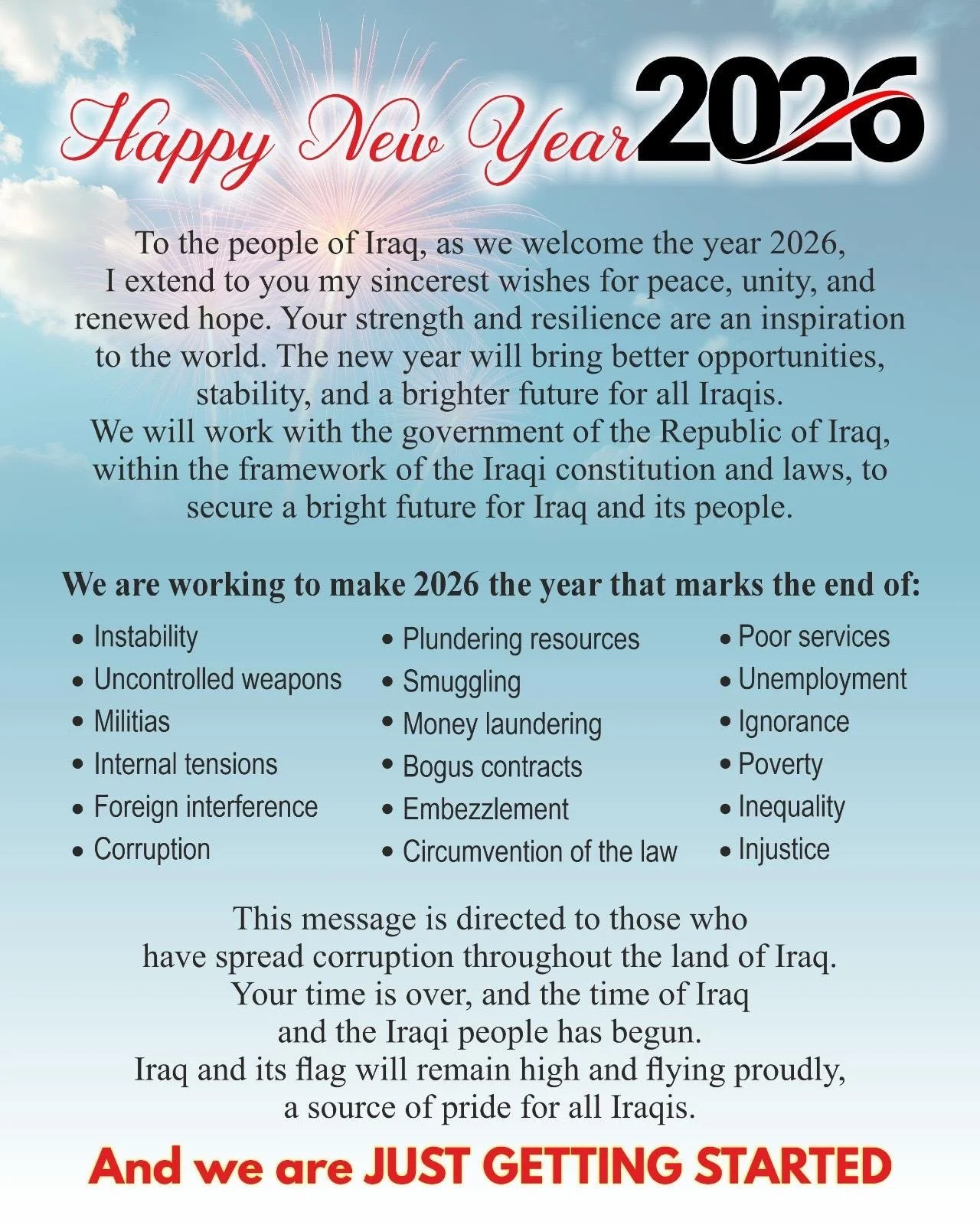
Tishwash: Trump's envoy begins 2026 with a strong message to those who "wrought havoc in Iraq": Your time is up. He outlined a list of 18 objectives.
Mark Savaya, US President Donald Trump’s envoy to Iraq, sent a congratulatory message to the Iraqi people on the occasion of welcoming the year 2026, in which he expressed his wishes for peace, unity and renewed hope.
In his message, which he published in Arabic and English via his account on the X platform, Savaya said: “To the people of Iraq, as we welcome the year 2026, I extend to you my sincerest wishes for peace, unity, and renewed hope. Your strength and resilience are an inspiration to the world,” adding that “the new year will bring better opportunities, stability, and a brighter future for all Iraqis.”
The US envoy affirmed that work will continue with the government of the Republic of Iraq within the framework of the Iraqi constitution and law, in order to secure a bright future for Iraq and its people, expressing his hope that 2026 will be the year of the end of instability, the plundering of the country’s wealth, poor services, uncontrolled weapons, smuggling, unemployment, militias, money laundering, corruption, poverty, foreign interference, and all other manifestations of injustice and circumvention of the law.
He added that this message is directed “to those who have spread corruption in the land of Iraq,” stressing that “your time is over and the time of Iraq and the Iraqis has begun,” and emphasizing that Iraq will remain a flag raised high and a source of pride for all its people.
Savaya concluded his message by saying, “We are still at the beginning link
Tishwash: Sudani congratulates Halbousi and his deputies: Political stability depends on prioritizing Iraq's interests.
Prime Minister Mohammed Shia al-Sudani stressed on Wednesday the need to work towards achieving the country's higher interests.
A statement from his office, received by (Al-Mada), said that “Prime Minister Mohammed Shia Al-Sudani met with the new Speaker of Parliament, Hebat Hamad Al-Halbousi.”
Al-Sudani congratulated Al-Halbousi and his two deputies, Adnan Faihan Al-Dulaimi and Farhad Amin Atroushi, on their election and gaining the confidence of the representatives, praising this step that enhances the political stability of our democratic system.
He also pointed out the need to work towards achieving the country's higher interests.
The Prime Minister stressed "the need to complete the remaining constitutional requirements in order to continue providing public services to citizens in various fields." link
************
Mot: Goal fir da New Year and am working on it Already!!!

Mot: . Winter - in ""2 stages""

Bill Holter: Failure To Deliver for Silver 'Imminent' & Gold Re-Monetization
Bill Holter: Failure To Deliver for Silver 'Imminent' & Gold Re-Monetization
Palisades Gold Radio: 1-1-2026
Stijn Schmitz welcomes Bill Holter to the show. Bill is a Precious Metals Expert and Broker. In this in-depth discussion about the precious metals market, Holter provides a comprehensive overview of the current dynamics driving silver and gold prices, highlighting a significant structural shift in the global metals market.
Holter emphasizes a substantial supply and demand deficit in silver, estimated at 300-400 million ounces, driven by increasing industrial applications such as AI technology and electric vehicle batteries.
Bill Holter: Failure To Deliver for Silver 'Imminent' & Gold Re-Monetization
Palisades Gold Radio: 1-1-2026
Stijn Schmitz welcomes Bill Holter to the show. Bill is a Precious Metals Expert and Broker. In this in-depth discussion about the precious metals market, Holter provides a comprehensive overview of the current dynamics driving silver and gold prices, highlighting a significant structural shift in the global metals market.
Holter emphasizes a substantial supply and demand deficit in silver, estimated at 300-400 million ounces, driven by increasing industrial applications such as AI technology and electric vehicle batteries.
He notes that physical metal exchanges like Shanghai are experiencing significant premiums over paper markets, indicating a fundamental change in metals trading.
This phenomenon, known as backwardation, suggests investors are increasingly prioritizing physical metal ownership over paper contracts.
Bill predicts a potential transformation in global currency systems, suggesting that the US dollar is declining while BRICS nations are developing a potentially gold-backed settlement currency.
Holter believes this shift could dramatically impact global financial markets, with gold and silver emerging as the only truly trustworthy currencies.
Institutional buying is currently driving the precious metals market, with family offices, hedge funds, and even sovereign nations like Russia purchasing significant quantities. Holter sees this as a critical moment for metals, potentially leading to a delivery failure in silver markets that could trigger massive price increases.
For individual investors, Holter recommends starting with silver, particularly "junk silver" coins minted before 1965, which offer the most practical and recognizable form of silver ownership.
He stresses that it's not too late to enter the market, warning that current financial systems are fundamentally unstable and that precious metals represent a critical hedge against potential economic collapse.
Timestamps:
00:00:00 - Introduction
00:01:00 - 2025 Precious Metals Review
00:01:41 - Structural Supply Deficit
00:02:29 - Industrial Demand & Vaults
00:03:21 - Backwardation and Premiums
00:06:04 - Historical Interventions
00:07:17 - Gold vs Silver Differences
00:09:30 - BRICS Remonetization Outlook
00:11:42 - Failure to Deliver Risks
00:13:58 - Institutional Buying Trends
00:14:56 - Retail Flows and Junk Silver
00:20:10 - Silver Going Mainstream
00:21:48 - Investment Advice for Beginners
00:23:17 - Fiat Collapse and Great Taking
00:26:03 - Concluding Thoughts
Silver Is Breaking the System – This Isn’t a Bubble | Vince Lanci
Silver Is Breaking the System – This Isn’t a Bubble | Vince Lanci
Soar financially: 12-31-2025
Silver has gone parabolic, swinging violently as global supply chains fracture.
Vince Lanci explains why this is not a speculative bubble, how China is being cut off from silver supply, why banks are repositioning, and what this means for silver prices over the next few months.
We also discuss the BRICS “Unit,” critical minerals, and the growing divide in global trade.
Silver Is Breaking the System – This Isn’t a Bubble | Vince Lanci
Soar financially: 12-31-2025
Silver has gone parabolic, swinging violently as global supply chains fracture.
Vince Lanci explains why this is not a speculative bubble, how China is being cut off from silver supply, why banks are repositioning, and what this means for silver prices over the next few months.
We also discuss the BRICS “Unit,” critical minerals, and the growing divide in global trade.
Time Stamps (AI Generated)
00:00 Silver Price Goes Parabolic
01:36 Is This a Bubble?
02:28 Physical Demand Takes Over
03:15 China’s Silver Problem
05:29 Geopolitics & Supply Chains
07:25 Is This a Silver Short Squeeze?
10:30 Are Banks Really in Trouble?
13:58 JPMorgan Turns Net Long
16:08 Silver as a Strategic Asset
18:19 Short-Term Silver Outlook
21:23 What Breaks This Standoff?
24:05 The BRICS “Unit” Explained
30:24 Can the Dollar Be Challenged?
32:01 Final Take on Silver & Trade
Seeds of Wisdom RV and Economics Updates Thursday Afternoon 1-1-26
Good Morning Dinar Recaps,
Market Risk Signals Flash Red as 2026 Begins
Peak optimism masks structural fragility across bonds, credit, and valuations
Good Morning Dinar Recaps,
Market Risk Signals Flash Red as 2026 Begins
Peak optimism masks structural fragility across bonds, credit, and valuations
Overview
Global markets enter 2026 with elevated optimism but growing structural risk.
Bond market instability is resurfacing, driven by sticky inflation and fiscal strain.
Equity valuations — especially in AI and tech — are increasingly detached from fundamentals.
Cash levels among investors are historically low, reducing shock absorption.
Risk concentration is rising just as macro uncertainty widens.
Key Developments
Fund managers and strategists warn of multiple converging risks, including bond volatility, credit stress, and valuation excesses.
Government debt issuance remains elevated, placing upward pressure on yields.
Inflation progress has stalled, complicating central-bank rate paths.
Consumer credit stress is rising, particularly in lower-income segments.
Markets remain priced for soft landings, leaving little margin for error.
Geopolitical and trade risks remain underpriced relative to historical cycles.
Why It Matters
Markets are not fragile because prices are falling — they are fragile because confidence is high while buffers are thin.
Periods of peak optimism combined with leverage, low cash, and bond instability historically precede repricing events. When bonds fail to act as stabilizers, risk spills rapidly across equities, currencies, and credit.
This environment does not require a shock — it only requires disappointment.
Why It Matters to Foreign Currency Holders
Bond volatility directly impacts currency stability, especially in debt-heavy nations.
Rising yields weaken fiscal flexibility, pressuring sovereign credibility.
Risk-off events strengthen settlement-safe currencies, while peripheral currencies reprice sharply.
Capital flows become disorderly when confidence shifts quickly.
For currency holders, bond stress is the transmission mechanism — not equities.
Implications for the Global Reset
Pillar: Bonds Are the System’s Load-Bearing Wall
When bonds wobble, everything else follows.
Pillar: Valuation Excess Signals Transition Phases
Overconfidence often marks inflection points.
Pillar: Liquidity Is Being Quietly Withdrawn
Reset dynamics accelerate when buffers vanish.
This is not just politics — it’s global finance restructuring before our eyes.
Seeds of Wisdom Team
Newshounds News™ Exclusive
Sources
Reuters – “Global markets face rising risks in 2026 as bond volatility returns”
Bank for International Settlements – Annual Economic Report: Global Financial Fragility
~~~~~~~~~~
Alternative Payment Rails Advance as Dollar Stress Quietly Builds
Trade settlement diversification accelerates beneath the surface
Overview
Global trade and payment systems are quietly diversifying away from dollar-only settlement.
Alternative rails are expanding, including regional payment systems, bilateral currency arrangements, and asset-backed mechanisms.
This shift is evolutionary, not revolutionary, occurring below headline levels.
Central banks and sovereigns are prioritizing access, redundancy, and resilience over ideology.
The process is gradually reshaping global liquidity flows.
Key Developments
Cross-border payment systems outside traditional Western rails continue to expand, particularly across Asia, the Middle East, and parts of the Global South.
Bilateral trade settlement in local currencies is increasing, reducing FX exposure and sanctions vulnerability.
Gold, commodities, and energy contracts are increasingly referenced as settlement anchors, even when transactions remain fiat-denominated.
Financial hubs outside the U.S. and Europe are strengthening clearing, custody, and settlement infrastructure.
Central banks are prioritizing interoperability, not speed, as they modernize payment frameworks.
Payment redundancy is now treated as a national security issue, not a fintech trend.
Why It Matters
The global reset does not begin with a currency collapse — it begins with optionality.
When nations can trade, settle, and store value outside a single system, leverage shifts. This does not eliminate the dollar’s role, but it ends exclusivity. Over time, liquidity fragments, pricing power diffuses, and financial influence becomes conditional rather than absolute.
This phase is quiet by design. Systems are being built before they are needed.
Why It Matters to Foreign Currency Holders
Settlement access increasingly matters as much as reserve size.
Currencies supported by diversified trade rails retain stability during stress.
Sanctions-exposed or single-rail currencies face amplified repricing risk.
Liquidity can reroute faster than capital, changing FX dynamics without warning.
For currency holders, the key question is no longer what backs the currency —
it is where and how it can settle.
Implications for the Global Reset
Pillar: Access Replaces Dominance
Power flows to those with multiple settlement options.
Pillar: Fragmentation Is Functional, Not Chaotic
Parallel systems reduce shock concentration.
Pillar: Infrastructure Precedes Repricing
The reset happens after the rails are ready.
This is not just politics — it’s global finance restructuring before our eyes.
Seeds of Wisdom Team
Newshounds News™ Exclusive
Sources
~~~~~~~~~~
Global Debt and Bond Market Stress: The True Reset Trigger
Why sovereign debt — not currencies — is the system’s breaking point
Overview
Global debt levels are at historic highs, spanning sovereign, corporate, and household balance sheets.
Bond markets are showing renewed stress, with volatility returning to long-dated government debt.
Higher-for-longer interest rates are colliding with record refinancing needs.
Central banks are constrained, unable to fully rescue markets without reigniting inflation.
Bond instability represents the most credible trigger for systemic repricing.
Key Developments
Governments face massive rollover risk, with trillions in debt maturing over the next two years.
Rising yields are increasing debt-service costs, squeezing fiscal space.
Bond markets are no longer acting as shock absorbers, amplifying volatility instead.
Foreign demand for sovereign debt is weakening, particularly where fiscal discipline is questioned.
Central banks are reducing balance sheets, removing a major source of artificial demand.
Credit rating agencies have issued warnings over debt sustainability trajectories.
Why It Matters
Debt is the foundation of the modern financial system — and bonds are its plumbing.
When confidence in sovereign debt weakens, everything reprices: currencies, equities, credit, and real assets. Unlike banking crises, which can be contained with liquidity, debt crises are credibility crises. They cannot be solved quickly without consequences.
This is why systemic resets historically follow bond market stress, not stock market crashes.
Why It Matters to Foreign Currency Holders
For currency holders, debt stress creates asymmetric risk:
Debt-heavy currencies weaken first, regardless of reserve status.
Rising yields can signal strength — or distress, depending on context.
Capital flight accelerates when fiscal paths appear unsustainable.
Settlement confidence erodes when governments rely on monetization.
In reset terms, a currency’s debt backing matters more than its headline strength.
Implications for the Global Reset
Pillar: Debt Sustainability Defines Monetary Credibility
Currencies fail when debt cannot be serviced.
Pillar: Bond Markets Trigger Repricing Cycles
They move slower — then all at once.
Pillar: Central Banks Are No Longer Omnipotent
Inflation has capped their rescue capacity.
This is not just politics — it’s global finance restructuring before our eyes.
Seeds of Wisdom Team
Newshounds News™ Exclusive
Sources
Bank for International Settlements – Annual Economic Report: Global Debt and Financial Stability
Reuters – “Rising debt and bond market volatility test governments in 2026”
~~~~~~~~~~
Central Banks Boxed In: Inflation vs Recession vs Credibility
Monetary authority constraints reveal systemic pressure points ahead of broader resets
Overview
Central banks around the world — including the U.S. Federal Reserve and Bank of Japan — are visibly struggling to balance inflation control, economic growth, and policy credibility. Recent policy debates show heightened internal divisions and persistent inflation above targets, even amid calls for rate cuts and economic stimulus.
This squeeze reflects a broader global trend: slower growth prospects combined with entrenched inflation expectations constrain monetary policy effectiveness and heighten uncertainty.
Key Developments
Fed policy fissures: Minutes from the U.S. Federal Reserve’s latest policy meeting reveal deep disagreements among policymakers on whether to prioritize inflation control or support a weakening labor market. Several officials opposed recent rate cuts, arguing persistent inflation risk undermines policy credibility.
BOJ recalibration: The Bank of Japan’s policy committee debated further rate hikes even after a recent increase — underscoring the challenge of containing inflation that has remained above target despite decades of ultra‑loose policy, highlighting global central banks’ credibility dilemma.
Global economic slowing: Broader economic analysis shows global growth weakening amid supply shocks, geopolitical tensions, and policy uncertainty, making it harder for central banks to steer economies without risking recession or further credibility erosion.
Why It Matters
Central banks sit at the apex of the financial system: they set interest rates, manage liquidity, backstop bond markets, and anchor expectations. In normal times, they can respond to shocks by adjusting policy rates, expanding balance sheets, or guiding expectations — tools that support market confidence and economic stability. But when inflation remains persistent while economic growth falters, policymakers face a stark trade‑off: attempt rate cuts and risk inflation expectations becoming unanchored, or keep policy restrictive and risk recession.
This dynamic boxes in central banks:
Rate cuts become fraught: Cuts risk fueling inflation expectations that are already above target, undermining long‑term credibility.
Credibility at stake: When markets perceive central banks as uncertain or inconsistent, forward guidance loses its power and markets begin to price outcomes based on fiscal math and shock risks rather than policy signals.
Policy signaling fractures: Internal disagreements at major central banks reflect deeper tensions between inflation control and growth support, reducing confidence in monetary authority direction.
This constraint is not merely technical — it signals a shift in how monetary policy interacts with broader economic reality. When central banks can no longer act with clear authority and predictable outcomes, the system loses one of its key stabilizing pillars.
Implications for the Global Reset
Pillar 1 — Monetary Constraint as Systemic Trigger: The inability of central banks to freely use their full set of tools without risking credibility or sparking inflation expectations undermines the traditional crisis‑response framework, forcing economic actors to rely more on fiscal policy, private risk assessments, and structural adjustments.
Pillar 2 — Credibility Erosion Alters Expectations Frameworks: As confidence in central bank commitments weakens — especially around inflation targets and forward guidance — expectations shift, potentially making inflation more backward‑looking and less responsive to policy signaling. This dynamic changes market behavior, investment decisions, and long‑term pricing structures.
This is not just politics — it’s global finance restructuring before our eyes.
Seeds of Wisdom Team
Newshounds News™ Exclusive
Sources
Reuters coverage of U.S. Fed policy divisions and internal debates at the Bank of Japan (Dec 2025).
EY global economic outlook highlighting slowing growth and policy uncertainty.
Federal Reserve credibility dynamics and inflation expectations research.
~~~~~~~~~~
Seeds of Wisdom Team RV Currency Facts Youtube and Rumble
Newshound's News Telegram Room Link
RV Facts with Proof Links Link
RV Updates Proof links - Facts Link
Follow the Gold/Silver Rate COMEX
Follow Fast Facts
Seeds of Wisdom Team™ Website
Thank you Dinar Recaps
News, Rumors and Opinions Thursday 1-1-2026
Note: All intel should be considered as "Rumors" until we receive official announcements ...and “Rates and Dates” could change anytime until we get to the banks/redemption centers.
RV Excerpts from the Restored Republic via a GCR Update as of Wed. 31 Dec. 2025
Compiled Wed. 31 Dec. 2025 12:01 am EST by Judy Byington
Judy Note: The greatest wealth transfer in human history – full activation of the gold/asset-backed Quantum Financial System (QFS) – was (allegedly) set to publicly launch on Thurs. 1 Jan. 2026.
Note: All intel should be considered as "Rumors" until we receive official announcements ...and “Rates and Dates” could change anytime until we get to the banks/redemption centers.
RV Excerpts from the Restored Republic via a GCR Update as of Wed. 31 Dec. 2025
Compiled Wed. 31 Dec. 2025 12:01 am EST by Judy Byington
Judy Note: The greatest wealth transfer in human history – full activation of the gold/asset-backed Quantum Financial System (QFS) – was (allegedly) set to publicly launch on Thurs. 1 Jan. 2026.
In planning for over twenty years, this Global Currency Revaluation from fiat to gold/asset-backed currencies was now (allegedly) irreversible, with over 200 nations fully integrated into the QFS.
Prosperity funds were positioned for release, (allegedly) redirecting trillions from corrupt entities back to The People.
NESARA/GESARA protocols are(allegedly) activating worldwide, bringing universal debt forgiveness that will erase mortgages, credit cards, loans, and unjust taxes imposed by the old cabal system.
Tier 4B notifications and redemption appointments are expected imminently, potentially overnight into Wed. 31 December, allowing humanitarian groups and currency holders to access their blessed funds for projects that uplift communities and heal the planet.
~~~~~~~~~~
WORLDWIDE RESET OF SYSTEMS:
• At 9:00 AM EST on Sun. Dec 28, 2025 the go-code(allegedly) posted to the board.
• At 23:11 Z**u on Mon. Dec 29, 2025 the Quantum Signal(allegedly) fired from the Cheyenne Mountain complex.
• Once the EBS Master Switch is flipped, every TV, radio, and internet channel will consolidate to one secured frequency.
• On Sun. Dec 28, global bank servers entered “Cyber Review.” Within 48 hours they will(allegedly) return online under QFS authority.
~~~~~~~~~~~~~~
World Economic Situation:
Tues. 30 Dec. 2025: TREASURY CONFIRMS MASSIVE TAX REFUNDS COMING IN 2026 …Ezra Cohen on Telegram
The U.S. Treasury has effectively admitted what millions of working Americans have felt for years but were never told out loud: they paid too much. In a rare and revealing statement, Scott Bessent confirmed that the first quarter of 2026 is shaping up to be an unprecedented refund year, driven by years of over-withholding that quietly drained paychecks across the country.
This was not framed as a political speech, but as a technical observation from inside the system. The implication is explosive. Truck drivers, nurses, veterans, small business owners, and salaried workers carried a tax burden heavier than required, while inflation surged and wages lagged. The system benefited from that silence. The people absorbed the cost.
According to Treasury projections, 2026 will combine several forces at once: historically large tax refunds, record tariff revenue approaching two hundred billion dollars, inflation cooling toward the low single digits, and GDP growth accelerating. The groundwork was laid in 2025. The financial release valve opens in 2026. That is not a slogan. That is arithmetic.
Tax withholding has long functioned as a quiet extraction mechanism. Most people never adjusted it, and the system counted on that. Overcollection funded programs, agendas, and spending priorities without transparency or consent. What makes this moment different is not the refunds themselves, but the admission that the overpayment was real and widespread.
When a Treasury Secretary uses the phrase “gigantic refund year,” it signals more than routine reconciliation. Tens of millions of Americans are likely to receive larger-than-expected refunds. The Treasury will feel the cash outflow. And the carefully maintained narrative of fiscal balance will c***k under scrutiny.
This also places 2026 squarely into political territory. Whoever attempts to claim credit, the underlying truth remains unchanged. Working Americans were overtaxed. They were not warned. And now a correction is coming, financial first, political second.
This is not about tax software or paperwork. It is about a system that knew most people would never touch their withholding, quietly benefited from that inertia, and offered no clarity until now. By acknowledging the scale of the refunds ahead, the curtain has been pulled back just enough to expose how long the imbalance lasted.
The message is simple and unavoidable. You paid more than you should have. The system kept it. And in 2026, it will have to give a large part of it back. Hold onto your records. The numbers are finally catching up to the truth.
Read full post here: https://dinarchronicles.com/2025/12/31/restored-republic-via-a-gcr-update-as-of-december-31-2025/
************
Courtesy of Dinar Guru: https://www.dinarguru.com/
Jeff Iraq is extremely close to getting back on the international world stage along with their sovereignty. We are right at the cusp of the rate change...Both the US and UN are exiting Iraq right now, by the end of this year so they will have their full sovereignty. That's critical in this.
Jeff When they remove the zeros from the currency...the two currencies will coexist...at the same dollar value...So a 1,000 dinar note becomes a 1 dinar note. So today whatever a 1,000 dinar note can buy, after a 1 dinar note will buy...Let's say 1 dinar equals $3. The two currencies will coexist for a short period of time...1,000 X $3.00 = $3,000 and 1 dinar will equal $3.00...The two currencies will coexist at the same value. It's that simple.
Frank26 [Iraq boots-on-the-ground report] OMAR: There is chatter that once the 2026 budget is confirmed, they will introduce a new exchange rate for the dinar. The Central Bank of Iraq is in the loop on this. It's all part of their broader economic reform plan to bring more stability to the markets. FRANK: When they open up that budget of '26 it won't be at 1310.
************
CHARLIE WARD DAILY NEWS WITH CHARLIE WARD & DREW DEMI 1ST JANUARY 2026.
1-1-2026