
Thank you to all the subscribers to our Early Access program…we thank you for your continued support.
We are excited to offer this new service to keep you informed and up-to-date on the latest Dinar and currency news.
News, Rumors and Opinions Sunday 11-16-2025
Majeed KSA: ISO 20022 Migration, Key Summary with Dates
11-15-2025
ISO 20022 Migration – Key Summary with Dates
Global Adoption & Milestones
• 70+ countries and most major financial market infrastructures have adopted ISO 20022.
• July 2025: Bank of America successfully implemented Fedwire Funds Service ISO 20022 messages, enabling:
Majeed KSA: ISO 20022 Migration, Key Summary with Dates
11-15-2025
ISO 20022 Migration – Key Summary with Dates
Global Adoption & Milestones
• 70+ countries and most major financial market infrastructures have adopted ISO 20022.
• July 2025: Bank of America successfully implemented Fedwire Funds Service ISO 20022 messages, enabling:
• Common language between USD clearing systems: Fedwire and CHIPS.
• Improved interoperability with ISO-adopted systems like SWIFT and T2 (Euro clearing).
⸻
Key Benefits
1. Uniformity & Efficiency
• Consistent structured formats improve automation and straight-through processing.
• Reduces reliance on multiple proprietary message formats.
2. Richer, Higher-Quality Data
• Ability to send more detailed transaction information.
• Improves reconciliation and reduces payment queries.
• Allows including URLs, emails, and extra data for beneficiaries.
⸻
Roadmap & Important Deadlines
MT → MX (ISO 20022) Transition
• November 22, 2025:
• The coexistence period for MT and MX messages ends for institutions connected to SWIFT FIN.
• Legacy MT messages will no longer be accepted on the SWIFT FIN network after this date.
Increased ISO 20022 Traffic
• From 2025 onward, more financial infrastructures will go live with ISO 20022.
• Clients will see mixed message formats (legacy + ISO) during the transition period.
• Applies across the entire USD high-value payments industry.
Payment Infrastructure News: #ISO20022 migration interconnects the global economy, underlines @BankofAmerica 'Having structured data and streamlined payment systems has become increasingly important as the global economy gets more interconnected.'
ISO 20022 migration interconnects the global economy:
Having structured data and streamlined payment systems has become increasingly important as the global economy gets more interconnected.
ISO 20022 was developed as a payment messaging standard to increase uniformity and connectivity between disparate market infrastructures. It has been widely adopted in 70+ countries so far and by most major financial market infrastructures.
In July 2025, Bank of America successfully implemented Fedwire Funds Service ISO 20022 messages. This milestone for the global payments and USD clearing industry enables all USD clearing financial market infrastructures (FMI), Fedwire Funds Services and the Clearing House Interbank Payments System (CHIPS) to communicate in a common language, improving interoperability with the other financial market infrastructures around the globe that adopted the ISO 20022 format, such as Swift and T2 (Euro clearing).
https://business.bofa.com/en-us/content/iso-20022-migration.html
Source(s): https://x.com/majeed66224499/status/1989651344232153435
https://dinarchronicles.com/2025/11/15/majeed-ksa-iso-20022-migration-key-summary-with-dates/
************
Courtesy of Dinar Guru: https://www.dinarguru.com/
Militia Man Iraq is ready...Facts: $112 billion in reserves which is cash, gold and savings. Digital money system has been tested and working...The budget for 2026 already prepared. We haven't seen '23, '24, '25 budget schedules yet, right? So how do they have '26 prepared? Means they probably have something prepared for the '26 budget and I believe that's going to be a new exchange rate.
Frank26 [Iraq boots-on-the-ground report] FIREFLY: The Central Bank of Iraq has been talking to us every day about the eventuality transition to a basket of currencies to stabilize the dinar, though it's in the planning stages. We don't agree to that because they are talking about it to us right now...The CBI confirmed the idea of removing the three zeros, a redenomination, is something they're still working on. They have got the green light from the US Federal Reserves for dollar supplies which should help keep it stable but they're telling us we're moving to a basket of global currencies. They say this is the next step they are considering down the line...after they got the redenomination. FRANK: These reports are really fantastic...It's what we've dreamed about. Everyday I wake up with a big smile on my face...It's just amazing.
************
$3T PANIC: Fed's SECRET Bank Meeting EXPOSES Imminent Liquidity APOCALYPSE!
Stephen Van Metre: 11-15-2025
The New York Fed called the biggest Wall Street banks in for a secret meeting out of fears of liquidity drying up which would crash stocks and put millions on the unemployment line.
Seeds of Wisdom RV and Economics Updates Sunday Morning 11-16-25
Good Morning Dinar Recaps,
Global Reset Weekly — Key Real Developments (Mid-November 2025)
Monetary realignment deepens as central banks pivot to strategic reserves and de-dollarization.
Overview
Global central banks are continuing to accumulate gold at historically high levels, signaling a structural rebalancing of reserve assets.
The dollar’s grip is loosening, as some investors question its long-term primacy and nations hedge using non-dollar instruments.
These moves reflect an intensifying shift toward a multi-asset, de-dollarized financial architecture — major pillars in the global reset.
Good Morning Dinar Recaps,
Global Reset Weekly — Key Real Developments (Mid-November 2025)
Monetary realignment deepens as central banks pivot to strategic reserves and de-dollarization.
Overview
Global central banks are continuing to accumulate gold at historically high levels, signaling a structural rebalancing of reserve assets.
The dollar’s grip is loosening, as some investors question its long-term primacy and nations hedge using non-dollar instruments.
These moves reflect an intensifying shift toward a multi-asset, de-dollarized financial architecture — major pillars in the global reset.
Key Developments
According to the World Gold Council, central banks have added 634 tons of gold year-to-date (Q3 2025), a volume well above pre-2022 averages.
Emerging market central banks remain among the top buyers: Poland, Kazakhstan, Brazil, and others continue to top the list.
According to Wedbush analysis, gold accumulation is part of a deliberate “structural reserve realignment,” with central banks shifting away from dollar-dominated holdings.
Gold purchases rebounded in August after a brief pause in July — central banks added another 15 tonnes that month, per IMF-based data.
Survey data notably show 95% of central banks expect to increase their gold reserves in the next 12 months — underlining the long-term nature of this trend.
Simultaneously, the U.S. dollar has weakened: The DXY (dollar index) dropped to a three-year low, fueling debate over de-dollarization.
Why It Matters
These developments are not just incremental: they reflect a tactical breakout from the dollar-centric system. By aggressively accumulating gold, central banks are building a real-asset foundation for future financial resilience. This shift could undermine long-standing reserve paradigms and reshape global power in markets and trade.
Implications for the Global Reset
Pillar 1 — Reserve Asset Transformation
Gold’s resurgence suggests that central banks are protecting against dollar risk while building stores of value that can weather macro shocks.
Pillar 2 — De-Dollarization & Currency Realignment
A weakening dollar coupled with strategic reserve diversification points to a gradual erosion of dollar dominance — and the rise of alternative monetary frameworks.
Pillar 3 — Strategic Stability Through Real Assets
Gold is not just a store of value — its accumulation signals a strategic buffer for nations seeking independence from traditional financial pressures.
This is not just politics — it’s global finance restructuring before our eyes.
Seeds of Wisdom Team
Newshounds News™ Exclusive
Sources
• World Gold Council – “Central Bank Demand Remains Healthy Despite Moderation”
• Wedbush – “Central banks pivot to precious metals, gold accumulation surges”
• FX Leaders – “Gold: Central Banks Resume Buying Spree in August”
• The Guardian – “Global central banks intensify gold stockpiling”
• Investopedia – “The U.S. Dollar Hit a 3-Year Low, But Is the World Really ‘De-Dollarizing’?”
~~~~~~~~~~
Sovereign Gold Buying Signals the End of the Old Market Order
Central banks reshape the foundation of global markets as demand for real assets accelerates.
Overview
Gold is entering a structural bull phase driven by central bank accumulation, not retail speculation.
A three-year low in the U.S. dollar index is accelerating demand for non-dollar hedging assets.
These shifts indicate a long-term market rebalancing aligned with global reserve realignment.
Key Developments
Central banks purchased 634 tons of gold year-to-date, according to the World Gold Council — one of the highest volumes ever recorded.
Gold demand rebounded in August as banks added another 15 tons, reversing the July slowdown.
Analysts at Wedbush identify this trend as part of a “structural reserve realignment,” moving global liquidity out of dollar-dominated instruments.
The U.S. dollar index hit a three-year low, amplifying gold’s attractiveness for sovereign diversification.
Survey data show 95% of central banks plan to increase gold reserves in the coming year — strengthening long-term bullish positioning.
Why It Matters
Markets are signaling a fundamental shift away from a dollar-centric reserve system. Gold is reclaiming its historic role as a stabilizing anchor, reducing exposure to fiscal volatility, currency wars, and debt-driven uncertainty.
Implications for the Global Reset
Pillar 1 — Real-Asset Reserve Anchors
Gold accumulation strengthens national resilience and reduces vulnerability to dollar liquidity cycles.
Pillar 2 — Market Repricing Through De-Dollarization
A weakening dollar paired with gold accumulation suggests a long-term repricing of global markets.
This is not just politics — it’s global finance restructuring before our eyes.
Seeds of Wisdom Team
Newshounds News™ Exclusive
Sources
• World Gold Council – “Central Bank Gold Demand Trends”
• FX Leaders – “Central Banks Resume Buying Spree in August”
• Investopedia – “Dollar Hits 3-Year Low — De-Dollarization Trends Explained”
• Wedbush Market Minute – “Central Banks Pivot to Precious Metals”
~~~~~~~~~~
Seeds of Wisdom Team RV Currency Facts Youtube and Rumble
Newshound's News Telegram Room Link
RV Facts with Proof Links Link
RV Updates Proof links - Facts Link
Follow the Gold/Silver Rate COMEX
Follow Fast Facts
Seeds of Wisdom Team™ Website
Thank you Dinar Recaps
Iraq Economic News and Points To Ponder Sunday Morning 11-16-25
Self-Sufficiency Is The Foundation Of Development.
Economic 16/11/2025 Yasser Al-Mutawalli
Self-sufficiency is a major and broad concept in the lexicon of economic theories of all kinds, whether
totalitarian,
capitalist or mixed,
because it is the basis of
development and its
sustainability.
Self-Sufficiency Is The Foundation Of Development.
Economic 16/11/2025 Yasser Al-Mutawalli
Self-sufficiency is a major and broad concept in the lexicon of economic theories of all kinds, whether
totalitarian,
capitalist or mixed,
because it is the basis of
development and its
sustainability.
Our country’s declaration of achieving self-sufficiency in
gasoline,
kerosene, and
gas oil is an important and significant achievement in
embodying the concept of self-sufficiency, and as a
fundamental basis for driving development elements,
given the importance of this declaration in the economic feasibility of managing one of the main economic management facilities,
as the great efforts in this field resulted in the government’s decision to stop importing petroleum products after achieving self-sufficiency in
gasoline,
gas oil (kerosene), and
kerosene.
However, there will still be a need for a reasonable review in determining the efficiency of oil refineries, with the importance of providing strategic stores and reserves of energy products to avoid problems of holidays and block the way for sometimes fabricated product crises, as well as imposing strict control over the quality of the product.
Overall, this great achievement is an indicator of the optimal investment in energy resources and their preservation from waste.
This achievement deserves praise and pride for the numerous gains it will bring in terms of savings in hard currency, as well as diversifying sources of income.
It was surprising that the oil-rich country had been importing its oil derivatives for energy since 2003, for two decades.
We have been and still are pointing out in most of our articles the importance of investing our resources
through the establishment and expansion of giant refinery projects, and finally the
new projects have been put into operation with efficient production capacity and very good quality.
Perhaps the most prominent benefit that emerges from this achievement is that
what has been achieved is beyond imagination, as
we have reduced the process of
exporting quantities of oil at low prices and
then importing its derivatives at high prices.
If we add the government support for the derivatives that were being wasted,
then you can imagine the size of the differences achieved by this accomplishment,
which will contribute to strengthening the resilience of our national economy.
This achievement comes on the eve of the end of 2025, and
we had indicated that the most prominent achievement during this year was the Iraq Vision (2025-2050).
Today, this achievement, which I mean self-sufficiency in oil products,
comes to crown the most prominent achievement as one of the most important foundations of economic construction to implement our country’s vision on the
path of sustainable development and to guarantee its future.
We believe that this great achievement is so important that
it should not go by without focusing on its great significance,
especially by the economic media, making it
a slogan and
a source of pride in our national product.
Congratulations to our Iraq and our people on this initial step and a
successful start to
progress and
economic prosperity.
https://alsabaah.iq/123564-.html
For current and reliable Iraqi news please visit: https://www.bondladyscorner.com
Return to Reality as Commodities and Real Assets Boom
Return to Reality as Commodities and Real Assets Boom
WTFinance: 11-15-2025
The current market feels dizzying. Are we riding a revolutionary AI wave to perpetual new highs, or are we standing on ground prepared by historical patterns of asset bubbles and inflation?
To help navigate this critical juncture, the WTFinance podcast recently welcomed back Wasif Latif, President and CIO of Sarmaya Partners. With 25 years of experience managing global multi-asset portfolios, Latif offered a compelling argument:
Return to Reality as Commodities and Real Assets Boom
WTFinance: 11-15-2025
The current market feels dizzying. Are we riding a revolutionary AI wave to perpetual new highs, or are we standing on ground prepared by historical patterns of asset bubbles and inflation?
To help navigate this critical juncture, the WTFinance podcast recently welcomed back Wasif Latif, President and CIO of Sarmaya Partners. With 25 years of experience managing global multi-asset portfolios, Latif offered a compelling argument:
The market is currently undergoing a profound secular shift, and while the spotlight shines brightly on high-flying technology, true investment opportunity lies in tangible assets—commodities, energy, and precious metals.
Here is a breakdown of Latif’s insights into the present economic landscape, historical parallels, and the necessary portfolio adjustments for the coming decade.
Latif cautions investors against being mesmerized solely by the tech narrative. While technology innovation is real, the valuations often detach from reality when structural macroeconomic pressures are ignored.
In this environment of persistent inflation and rising interest rates, the traditional model of high-growth, cash-burning technology companies becomes inherently vulnerable. When capital is expensive, the companies that own inflation-protected assets thrive.
If the secular trend is shifting away from tech dominance, where should investors look? Latif points unequivocally toward assets that benefit from inflation and supply constraints.
This imbalance—persistent demand colliding with constrained supply—suggests that energy prices are structurally elevated, making commodity-oriented equities and energy producers prime beneficiaries.
Perhaps the most potent signal of a shift in global risk perception is the behavior of central banks. Latif highlights the ongoing, strategic accumulation of gold by central banks worldwide.
This institutional demand creates a strong, sustained floor for precious metal prices, making gold an essential component of a globally diversified portfolio navigating geopolitical uncertainty.
Latif’s overarching advice is simple yet profound: History provides the roadmap. Investors must look beyond the immediate headlines and understand that cycles turn. The dominance of U.S. growth stocks that defined the last decade is now giving way to a new cycle favoring tangible assets.
He warns against assuming that today’s tech boom will sustain itself indefinitely, especially when fundamental indicators point to structural inflation and strategic shifts toward commodity ownership.
A prudent portfolio strategy today requires aligning with this secular trend—meaning a thoughtful reallocation toward energy, raw materials, industrial commodities, and precious metals.
This summary captures only a fraction of the deep historical and market insights offered by Wasif Latif.
To understand the full details of this monumental market shift and gain critical perspective on navigating the current economic cycle, be sure to watch the full video interview from WTFinance.
Jon Dowling: Weekly RV Updates for November 14th, 2025
Jon Dowling: Weekly RV Updates for November 14th, 2025
11-14-2025
The latest weekly revaluation (RV) report from Jon Dowling, dated November 14th, 2025, dropped an extraordinary level of detail, painting a picture of accelerating shifts across global finance and specialized geopolitical hotspots.
This episode didn’t just speculate; it delivered crucial confirmations and stark warnings about the turbulent months ahead.
Jon Dowling: Weekly RV Updates for November 14th, 2025
11-14-2025
The latest weekly revaluation (RV) report from Jon Dowling, dated November 14th, 2025, dropped an extraordinary level of detail, painting a picture of accelerating shifts across global finance and specialized geopolitical hotspots.
This episode didn’t just speculate; it delivered crucial confirmations and stark warnings about the turbulent months ahead.
From the establishment of an “Iraq First” agenda to confirmed training on the new Quantum Financial System (QFS) overseas, here are the critical takeaways for anyone tracking the impending global financial reset.
The geopolitical stability of Iraq remains the cornerstone of the revaluation narrative. The report highlighted the major victory secured by Prime Minister Mohammed Shia’ al-Sudani’s coalition in the recent parliamentary elections. This victory firmly entrenches an “Iraq first” nationalist agenda, prioritizing internal reconstruction and the full restoration of economic sovereignty.
This focus is essential. The host emphasized that U.S. support for Iraq’s domestic process remains strong, countering ongoing efforts by external influences (specifically Iranian) to derail progress.
The success of Sudani’s government in prioritizing stability is understood to be the final lock needed before Iraq can fully restore its currency value and reintegrate into the global financial system on its own terms.
Perhaps the most significant confirmation shared in the report came via a subscriber testimony from Vietnam.
This testimony confirmed that local Vietnamese bankers are actively undergoing training on the new Quantum Financial System (QFS). This is not just theoretical awareness; it is active preparation for the incoming structure that will underpin the global currency reset.
The fact that localized training on the QFS and upcoming currency revaluations is being conducted on the ground confirms that the global shift is no longer a distant possibility but an imminent reality. This provides tangible evidence that the infrastructure for the universal financial transition is rapidly falling into place.
The Dowling report delivered sharp warnings regarding the current state of U.S. financial markets, suggesting a rapid unwind is on the horizon.
The Market Strategy Warning: The discussion included an urgent rallying cry from financial strategist John Nego, who called on President Trump to temporarily pause short selling and naked short selling activities.
The argument centers on the need to protect American wealth from corrupt brokers allegedly linked to the Chinese Communist Party (CCP), who utilize these tactics to suppress market value.
Quantitative Easing (QE) and the Crash Prediction: The host explained Quantitative Easing as a temporary mechanism designed solely to prop up the economy just long enough to manage a controlled—or semi-controlled—implosion. This unsustainable activity has inflated a massive “bubble” that is predicted to reach its breaking point by January. Investors are strongly advised to prepare for significant market volatility and a sharp downturn.
The convergence of new financial technology (crypto) and traditional assets (commodities) featured heavily, revealing a mixed outlook.
While the global reset narrative is bullish for digital assets, the host warned that internal manipulation, primarily carried out by AI bots on major exchanges, has suppressed portfolio growth. This ongoing suppression is deliberately driving down prices.
However, a massive bullish cycle is predicted soon, driven by the implementation of new international financial regulations (specifically ISO 20022). Once these digital assets become fully compliant with the new global standard, a window for significant profit-taking is expected to open swiftly.
The report also touched upon a fascinating scientific development out of China: researchers successfully developed a material that mimics the properties of gold, crafted from copper. While this advance could theoretically complicate the gold market, the host underscored silver’s unique position. Silver’s value is protected by its irreplaceable isotopes, making it fundamentally essential for critical industrial and technological applications—a feature that cannot be replicated by copper mimicry.
Jon Dowling’s November 14th report emphasizes a world on the cusp of dramatic, permanent change. From the political foundation being laid in Iraq to the confirmed operational rollout of the QFS in Asia, the signals point toward an imminent transition.
While the warnings about financial market collapse are serious, the introduction of new financial standards (QFS, ISO 20022) suggests that while the old system is slated for demise, the regulatory and technological framework for the new era is already being finalized.
Watch the full video from Jon Dowling for further insights and detailed information as we navigate this critical period.
https://dinarchronicles.com/2025/11/14/jon-dowling-weekly-rv-updates-for-november-14th-2025/
Seeds of Wisdom RV and Economics Updates Saturday Afternoon 11-15-25
Good Afternoon Dinar Recaps,
The New Payment Order: Nations Build Rails Beyond the U.S. Dollar
The world is separating from single-currency dependence — fast.
Overview
New digital settlement rails and bilateral trade channels are increasing worldwide.
Local-currency trade agreements now dominate Asia, Africa, and the Middle East.
Tokenized assets and cross-border digital ID systems accelerate settlement efficiency.
Good Afternoon Dinar Recaps,
The New Payment Order: Nations Build Rails Beyond the U.S. Dollar
The world is separating from single-currency dependence — fast.
Overview
New digital settlement rails and bilateral trade channels are increasing worldwide.
Local-currency trade agreements now dominate Asia, Africa, and the Middle East.
Tokenized assets and cross-border digital ID systems accelerate settlement efficiency.
Key Developments
BRICS “Unit of Account” draft finalized, focusing on settlement baskets rather than a circulating currency.
ASEAN and Gulf states expand local-currency energy trade, reducing USD exposure.
SWIFT upgrades cross-border CBDC interoperability, ensuring Western financial institutions remain competitive.
Why It Matters
The world is building parallel payment rails that reduce dependency on one reserve currency — a defining hallmark of systemic transition.
Implications for the Global Reset
Pillar 1 — Multi-Currency Settlement Systems Go Mainstream
Trade is shifting to local currencies, digital tokens, and commodity-linked contracts.
Pillar 2 — Infrastructure Becomes the New Reserve Asset
Countries storing value in ports, pipelines, grids, and digital networks are replacing the old model of storing value in paper debt.
This is not just politics — it’s global finance restructuring before our eyes.
Seeds of Wisdom Team
Newshounds News™ Exclusive
Sources
• Reuters – “BRICS advances shared payments framework to reduce dollar reliance”
• Nikkei Asia – “ASEAN expands local-currency settlement networks”
• CNBC – “SWIFT tests CBDC interoperability to maintain global relevance”
~~~~~~~~~
Ethiopia’s BRICS Entry Rewires Africa–MENA Diplomacy
Addis Ababa emerges as a geopolitical bridge as BRICS reshapes regional influence.
Overview
Ethiopia’s admission into BRICS has transformed its diplomatic reach, opening channels long inaccessible through traditional MENA institutions.
The 2023 Johannesburg Summit brought Ethiopia in alongside major Middle Eastern economies, elevating Africa–MENA integration to levels not previously possible.
BRICS now acts as a new platform for cross-regional cooperation, softening historical exclusions that once limited Ethiopia’s diplomatic influence.
Key Developments
Ethiopia joined BRICS as one of only six nations selected from more than 40 applicants, gaining a seat beside newly admitted MENA oil-producing states.
Prime Minister Abiy Ahmed framed the moment as a turning point, stating Ethiopia is ready to cooperate toward an “inclusive and prosperous world order.”
Scholars note Ethiopia’s geography gives BRICS a direct gateway into Africa and the Middle East, amplifying the bloc’s strategic reach.
Historically, Ethiopia lacked access to MENA institutions, complicating critical disputes such as the GERD negotiations; BRICS now provides an equal platform beside Egypt and Gulf states.
Analysts say the expanded BRICS membership forces new political cooperation mechanisms, reshaping the balance between Africa and MENA actors.
Why It Matters
Ethiopia’s BRICS status is more than symbolic — it repositions Africa within Middle Eastern diplomacy, creating new channels for political coordination and economic strategy at a moment when global blocs are redefining their spheres.
Implications for the Global Reset
Pillar 1 — New Pathways for Regional Cooperation
BRICS offers Ethiopia diplomatic leverage previously blocked by MENA institutions, creating direct channels for African-Middle Eastern alignment.
Pillar 2 — BRICS Becomes a Cross-Regional Power Hub
The bloc’s expansion into both Africa and the Middle East increases its influence over energy, infrastructure, and political negotiation frameworks.
This is not just politics — it’s global finance restructuring before our eyes.
Seeds of Wisdom Team
Newshounds News™ Exclusive
Sources
• Watcher.Guru – “Ethiopia: BRICS Member Shift Could Rewire Ties With MENA”
• Al Jazeera – “Arab League urges UN action on Ethiopia’s dam dispute”
• Eurasia Group Commentary – “MENA political cooperation shifts under BRICS expansion”
~~~~~~~~~
Seeds of Wisdom Team RV Currency Facts Youtube and Rumble
Newshound's News Telegram Room Link
RV Facts with Proof Links Link
RV Updates Proof links - Facts Link
Follow the Gold/Silver Rate COMEX
Follow Fast Facts
Seeds of Wisdom Team™ Website
Thank you Dinar Recaps
News, Rumors and Opinions Saturday 11-15-2025
Ariel : Did they Fail the Basel III Stress Test?
11-14-2025
Gold & Silver
Blockchain
ISO-20022
Comex 589
SOFR
Cryptocurrency
Ariel : Did they Fail the Basel III Stress Test?
11-14-2025
Gold & Silver
Blockchain
ISO-20022
Comex 589
SOFR
Cryptocurrency
These will be the tools that will shape the new financial future. If any banks are not employing these technologies they will basically collapse and shutdown. Not to mention the online banking platform is another reason. Elon Musk is already gearing up to employ X-Money into the platform.
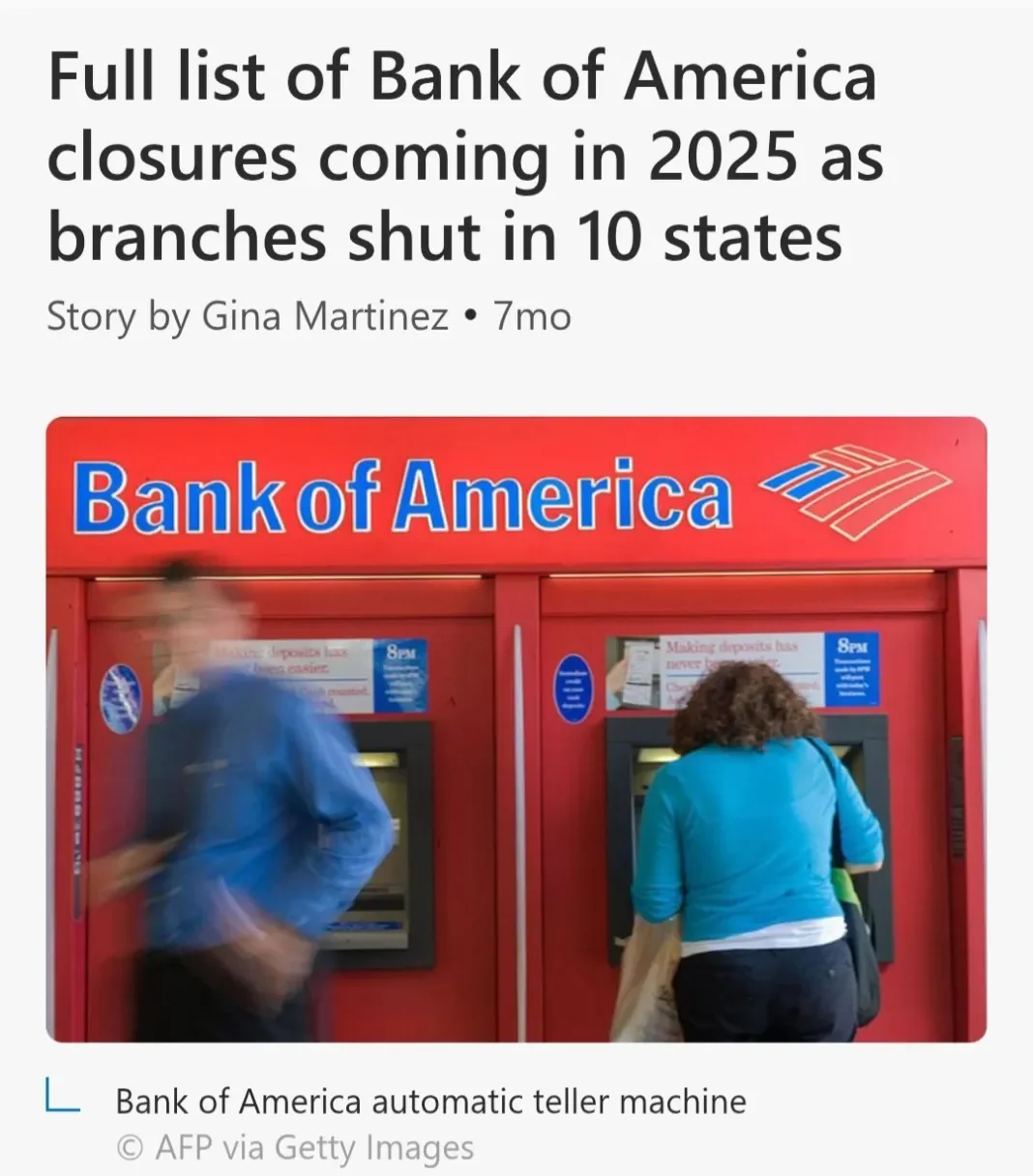
Chase & Wells Fargo are also closing locations in many areas. This will continue for the foreseeable future.
Source(s): https://x.com/Prolotario1/status/1989416814762147911
https://dinarchronicles.com/2025/11/14/ariel-prolotario1-did-they-fail-the-basel-iii-stress-test/
*************
Courtesy of Dinar Guru: https://www.dinarguru.com/
Militia Man For Iraq to go international they're going to have to have a real effective exchange rate (REER) and that's going to entail digital technology, blockchain for instance.
Mnt Goat Article: “THE IRAQI DINAR WITHOUT ZEROS: THE CENTRAL BANK OF IRAQ LAUNCHES A HISTORIC REFORM.” The author is Dr. Subhi Jabara...He is a famous economist...My CBI contact told me it is an integral part of the educational process leading up to the FOREX reinstatement... the article...tell(s) us there is more to the removing the zeros than just removing the zeros...it is going to lead global trading of the dinar as the IQD once again. [Post 1 of 2....stay tuned]
Mnt Goat ...in the article, Jabara even uses the term “nominal rate” as in going back to a nominal rate reflecting the true value of the Iraqi dinar...nominal rate is a real IMF term used to describe a currency when it is fairly revalued according to the economy and assets of a country. Quotes: “The real shift occurs in the subsequent adjustment of the exchange rate. The Central Bank has developed several scenarios, with internal studies predicting that the floating dinar could stabilize automatically at a value in the distant future between 3.22 and 4.25 dinars to the dollar.” [Post 2 of 2]
***************
"This Will Be The Best Run Of Your Life": Frank Giustra on Gold’s Final, Explosive Phase
Daniela Cambone: 11-14-2025
"All you folks that want $5,000 gold and $10,000 gold — be careful what you wish for. That’s not the kind of world you want to live in." —
Frank Giustra In today’s interview with Daniela Cambone at the Precious Metals Summit in Zurich, Giustra delivers a masterclass on the seismic shifts reshaping global finance, the explosive run in gold, and the looming battle for monetary supremacy.
He argues that the weaponization of the U.S. dollar has fueled an unstoppable de-dollarization trend, paving the way for a China-led “digital superhighway” that could challenge the dollar’s global standing.
Giustra breaks down why efforts to “dollarize” other economies are a non-starter — and why the real threat to U.S. dominance may be the gold-backed system already taking shape across the Global South.
Chapters:
00:00 — How the U.S. can stop de-dollarization
05:50 — The mBridge project and the TINA argument
10:25 — Stablecoins and the GENUIS Act
12:00 — Can gold go much higher?
16:37 — Who’s behind the reset?
18:43 — Why Bitcoin is not digital gold
29:07 — Tether joins the gold rush
31:43 — America’s debt problem
37:00 — The future of Canada
37:56 — Frank’s big gold bet
“Tidbits From TNT” Saturday 11-15-2025
TNT:
Tishwash: An economist says non-oil revenues face major challenges, and there are three sources of funding for the budget.
Economic expert Salah Nouri identified the sources of revenue in the general budget, pointing out that non-oil revenues face major challenges that prevent them from achieving their available potential.
Nouri told Al-Furat News Agency, "The sources of revenue in the general budget consist of: first, oil export revenues; second, taxes; third, customs duties; fourth, the treasury's share of profits from public companies; fifth, donations and subsidies; and sixth, the sale and lease of state assets."
TNT:
Tishwash: An economist says non-oil revenues face major challenges, and there are three sources of funding for the budget.
Economic expert Salah Nouri identified the sources of revenue in the general budget, pointing out that non-oil revenues face major challenges that prevent them from achieving their available potential.
Nouri told Al-Furat News Agency, "The sources of revenue in the general budget consist of: first, oil export revenues; second, taxes; third, customs duties; fourth, the treasury's share of profits from public companies; fifth, donations and subsidies; and sixth, the sale and lease of state assets."
He added that the available sources facing challenges include
1- Customs duties: Iraq imports everything, but the Ministry of Finance faces significant challenges related to smuggling, the entry of goods and merchandise without customs duties, price manipulation, and the proliferation of unofficial and controlled border crossings.
2- Taxes: The Ministry of Finance faces significant challenges from tax evasion and manipulation of tax calculations, as evidenced by what happened in the "Theft of the Century" case
3- Sale and lease of state assets: There are significant challenges in the revenue from property rentals, as thousands of properties are occupied without rent being paid, or at a rate lower than what is stipulated by the law governing the sale and lease of state assets. link
************
Tishwash: Sudani welcomes his winning candidates: The results reflect the Iraqis' faith in our project
The head of the Reconstruction and Development Coalition, Mohammed Shia al-Sudani, received a number of the coalition's winning candidates in the recent parliamentary elections, in the presence of former Prime Minister Iyad Allawi, Minister of Labor Ahmed al-Asadi, and several other prominent figures. During the meeting, al-Sudani emphasized that the election results reflect a return of public confidence in the political process.
He noted that the voter turnout, which exceeded 56%, is an indicator of the strength of the popular will and citizens' support for the reconstruction and development project, which aims to promote development and reform across various sectors in the coming years.
He received a number of winning candidates from within the coalition during the recent parliamentary elections, in the presence of the former Prime Minister, Mr. Iyad Allawi, the Minister of Labor, Ahmed Al-Asadi, and a number of dignitaries and figures from the coalition’s supporters.
We expressed our thanks and appreciation to all the leaders and electoral pillars of the Reconstruction and Development Coalition for their efforts that contributed to achieving great results during the legislative elections.
We noted that the recent legislative elections witnessed a return of confidence between the people and the political process through the broad participation that was unprecedented in years, and that the participation rate in the elections, which exceeded 56%, was not expected, and that international and regional institutions look at the standard of the percentage of citizens’ participation in the elections, which represents popular confidence in the existing political process.
We explained that the Reconstruction and Development Project is continuing its reform approach, working to correct the paths and meet the aspirations of the Iraqis, stressing that the government and the Reconstruction and Development Coalition Project were subjected to a campaign of misinformation and falsification before the elections, suggesting that doubts will continue to be cast on the list’s victory and the nearly 1.4 million votes it achieved, which no political entity has reached in all the elections.
We affirmed that the coalition leaders will engage in a negotiation process to reach a parliamentary-governmental project capable of meeting the aspirations of citizens and confronting current challenges.
Here are the main points we discussed during the meeting:
🔹The loss of public confidence in elections represented the biggest loss to the political process, so it was necessary to restore this confidence.
🔹The world is now aware that our people have made their choices, and that the voter turnout has increased.
🔹The Reconstruction and Development Coalition is a national project that includes political and national figures who believe in the reconstruction and development project, and the votes we received in various governorates reflect people’s confidence in our project.
🔹Obtaining this number of votes presents a challenge for us to provide services at a level befitting the aspirations of the citizens who participated in the elections and granted us this trust.
🔹Government performance was a major reason for the return of public confidence in the political process.
🔹We will double our efforts, and we will achieve much of what we started in the previous period. Reconstruction in Iraq will continue for more than twenty years, and we will work to promote development in various files and sectors. link
************
Tishwash: Shaza Hotels signs four new projects in Saudi Arabia
Shaza also announced a pipeline of $950mln worth projects across the globe in key destinations like Maldives, Turkey, Kuwait, Indonesia, Iraq, USA, Kenya and Libya
Shaza Hotels has signed Memoranda of Understanding (MoUs) for four new projects – Shaza Riyadh Stables Resort, Mysk Residences in Riyadh and Mysk Al Haramain Hotels - 3 & 4 in Makkah – during the inaugural TOURISE 2025 summit, held from November 11 to 13, 2025 in Riyadh.
Shaza also announced a pipeline of $950 million worth projects across the globe in key destinations like Maldives, Turkey, Kuwait, Indonesia, Iraq, USA, Kenya and Libya at TOURISE 2025.
Shaza partners with region’s reputed investment houses like Al Rajhi Investments Saudi Arabia, Adante Realty Oman and FSM Hospitality Company Saudi Arabia in bringing these projects live and functional.
Simon Coombs, President and CEO of Shaza Hotels, said: “We are pleased to be part of TOURISE 2025 under the patronage of the Ministry of Tourism for the signing of four new MoUs that reflect the strength and diversity of Saudi Arabia’s hospitality landscape.
Each project – Mysk Residences Riyadh, Shaza Riyadh Stables Resort, and Mysk Al Haramain Hotels - 3 & 4 in Makkah – has been conceived to address distinct guest segments, from business and leisure travellers to long-stay residents and pilgrims. These partnerships underline Shaza Hotels’ expanding presence in the Kingdom and our commitment to working with visionary owners to deliver authentic experiences and world-class hospitality.”
“Each of these four developments has been strategically conceived to harness key growth corridors and destination opportunities shaping the Kingdom’s hospitality landscape. Collectively, these projects reinforce Shaza Hotels’ diversified portfolio strategy – seamlessly bridging business, leisure, long-stay, and spiritual travel segments – while deepening the brand’s long-term presence and investment in Saudi Arabia’s dynamic tourism ecosystem.”, added Shaji Abu Salih, Vice President of Business Development & Growth, Shaza Hotels and Mysk by Shaza, said, at Tourise 2025.
The MoU for Mysk Residences Riyadh was signed between Coombs and Dr Adil Alexander, CEO, Adante RealtyOman.
Mysk Residences Riyadh is a boutique aparthotel of 58 keys, located on King Salman Road in Riyadh. Strategically situated just 10 minutes from Riyadh International Airport and 15 minutes from the vibrant Qiddiya and Murabba developments, Mysk Residences Riyadh will offer one-, two-, three-bedroom apartments and penthouses for both leisure and business travellers, whether for short or extended stays. Facilities include a gym, swimming pool, 24-hour café and in-room dining.
The MoU for Shaza Riyadh Stables Resort was signed between Coombs and Prince Fahad bin Saud Al Saud, Chairman, FSM Hospitality Company and Her Highness Princess Fahdah bent Saud Al Saud, Managing Director, FSM Hospitality Company.
Riyadh Stables Resort is a premium leisure and lifestyle destination located in Al Jubailah, Riyadh, spread across 63,500 square meters. Designed around the theme of equestrian living, the resort combines sport, wellness, and recreation in a natural setting. It will feature a full-fledged Equestrian Club with 100 horse boxes and three professional arenas, alongside three scenic tracks for walking, cycling, and horse riding.
Complementing these are (31) bungalow units, a signature spa, dedicated male and female gyms, paddle courts, soccer fields, and a vibrant water park. The resort’s hospitality offerings include indoor and outdoor restaurants and coffee lounges, creating an ideal retreat for families, wellness seekers, and sport enthusiasts seeking an authentic equestrian-inspired experience in Riyadh.
The MoU for two Mysk Al Haramain Hotels - 3 & 4 in Makkah was signed between Coombs and Fuad Al Rashed, CEO of Al Rajhi Investments.
Mysk Al Haramain Hotels - 3 & 4 in Makkah are 264 & 182 keys upscale hotels respectively, situated just 10 minutes from the Holy Masjid al‑Haram, designed to serve pilgrims seeking a tranquil and high-quality environment during Umrah. Both the hotels will feature a café, all-day dining restaurant, dedicated prayer rooms and shuttle services to the Holy Mosque. link
************
Mot: Have Ya Noticed --As YOu Season!!!!

Mot: . Like the RV -- LOL !!!!

Seeds of Wisdom RV and Economics Updates Saturday Morning 11-15-25
Good Morning Dinar Recaps,
Oracle’s $38 Billion Debt Expansion Signals Mounting Corporate Leverage Risk
A major U.S. tech giant leans heavily on borrowing as global financing conditions tighten.
Overview
Oracle announced plans to take on roughly $38 billion in new debt, intensifying concerns about corporate leverage.
Bond markets reacted immediately, with yields rising and investor sentiment weakening across the tech-credit sector.
The expansion is tied to accelerated AI and cloud-infrastructure spending, now outpacing the company’s earnings strength.
Good Morning Dinar Recaps,
Oracle’s $38 Billion Debt Expansion Signals Mounting Corporate Leverage Risk
A major U.S. tech giant leans heavily on borrowing as global financing conditions tighten.
Overview
Oracle announced plans to take on roughly $38 billion in new debt, intensifying concerns about corporate leverage.
Bond markets reacted immediately, with yields rising and investor sentiment weakening across the tech-credit sector.
The expansion is tied to accelerated AI and cloud-infrastructure spending, now outpacing the company’s earnings strength.
Key Developments
Massive Leverage Increase: Oracle’s new debt push places the company among the most heavily leveraged firms in the U.S. tech sector.
Market Repricing: Investors demanded higher yields, signaling fear that rising debt levels may strain credit quality.
AI Infrastructure Race: Oracle’s decision reflects a broader pattern — tech giants borrowing aggressively to keep up with AI-driven infrastructure competition.
Weak Earnings Context: Recent earnings reports have not supported a debt surge of this magnitude, heightening risk.
Broader System Signal: Elevated corporate borrowing during tightening financial conditions mirrors global debt-stress dynamics.
Why It Matters
Oracle’s move highlights a worldwide trend: major institutions are leveraging heavily to stay competitive while the financial system simultaneously tightens. This tension between innovation and debt fragility is a visible marker of the global restructuring now underway.
Implications for the Global Reset
Pillar 1 – Debt Realignment: Rising corporate debt loads indicate pressure on traditional financing structures, accelerating the shift toward alternative funding and sovereign-level restructuring.
Pillar 2 – Institutional Stress Signals: Tech and infrastructure giants are becoming bellwethers — their borrowing patterns reveal where systemic vulnerabilities are forming.
This is not just politics — it’s global finance restructuring before our eyes.
Seeds of Wisdom Team
Newshounds News™ Exclusive
Sources
• Reuters – “Oracle bonds sell off as AI investment fuels investor concerns”
• Bloomberg – “Record $38 Billion Debt Sale Nears for Oracle-Tied Data Centers”
• Data Center Dynamics – “Oracle set to receive $38bn debt package for data center projects – report”
~~~~~~~~~
Economic Diplomacy Takes Center Stage: Nations Shift from Weapons to Wallets
Strategic alignments accelerate as economic leverage replaces military pressure.
Overview
Global power centers are shifting toward negotiation-driven leverage, with economic cooperation replacing hard-power confrontation.
U.S.–China backchannel talks, renewed Middle East stabilization efforts, and regional trade blocs expanding diplomatic coordination all point to a more integrated geopolitical landscape.
Governments are adopting “peace through economic interdependence” strategies that mirror the larger global restructuring underway.
Key Developments
U.S.–China diplomatic tracks reopened, focusing on trade, supply chains, and military-to-military communication after months of tension.
BRICS and ASEAN states coordinated security-economic pacts, emphasizing infrastructure financing and currency-settlement stability.
Regional ceasefire frameworks in Africa and the Middle East advanced with multilateral support, reducing risks to energy routes and trade corridors.
Why It Matters
Diplomacy today is being weaponized economically, not militarily — a defining indicator of the transition toward a multipolar, financially integrated world.
Implications for the Global Reset
Pillar 1 — Economic Diplomacy Becomes the New Security Tool
Nations increasingly use financing, trade access, and investment guarantees as leverage to maintain regional stability.
Pillar 2 — Alliances Shift Toward Shared Infrastructure
Partnerships now form around energy grids, digital IDs, payment systems, and logistics corridors — not ideology.
This is not just politics — it’s global finance restructuring before our eyes.
Seeds of Wisdom Team
Newshounds News™ Exclusive
Sources
• Reuters – “U.S., China Restart High-Level Dialogue to Stabilize Relations”
• Al Jazeera – “ASEAN pushes new security-economic framework amid global shifts”
• AP News – “New ceasefire proposals gain traction across regional conflicts”
~~~~~~~~~
Markets Signal a Global Repricing: Capital Is Choosing Sides
Markets react to structural shifts, not cycles — signaling a controlled transition.
Overview
Bond markets are repricing risk globally, with widening spreads tied to government debt loads and corporate refinancing pressure.
Equity markets remain volatile, driven by high capital expenditures in AI, energy transition, and digital infrastructure.
Commodities show supply-driven price support, particularly in oil, copper, and gold.
Key Developments
Corporate bond markets face a major rollover wave in 2026–2028, pushing yields higher as firms compete for capital.
Tech and infrastructure spending spikes are reshaping capital flows toward long-term hardware and grid expansion.
Asian markets outperform as investment relocates toward manufacturing hubs outside the traditional G7 system.
Why It Matters
Market volatility today is structural — reflecting a shift to asset-backed value, production-based economies, and multipolar capital flows.
Implications for the Global Reset
Pillar 1 — Debt Repricing Is Forcing Transparency
Governments and corporations must now show real income and real collateral.
Pillar 2 — Capital Migration Toward the East
Investment follows production — and the production base has shifted away from the West.
This is not just politics — it’s global finance restructuring before our eyes.
Seeds of Wisdom Team
Newshounds News™ Exclusive
Sources
• Bloomberg – “Corporate Debt Maturity Wall Signals Market Repricing Ahead”
• Reuters – “Asian Markets Extend Gains as Global Manufacturing Shifts”
• Financial Times – “Tech Capex Surge Reshapes Investor Allocations”
~~~~~~~~~
Seeds of Wisdom Team RV Currency Facts Youtube and Rumble
Newshound's News Telegram Room Link
RV Facts with Proof Links Link
RV Updates Proof links - Facts Link
Follow the Gold/Silver Rate COMEX
Follow Fast Facts
Seeds of Wisdom Team™ Website
Thank you Dinar Recaps
Jon Dowling: There is an RV Process Going on, NESARA-GESARA Intel, November 2025
Jon Dowling: There is an RV Process Going on, NESARA-GESARA Intel, November 2025
Have you ever felt that the world is on the cusp of a monumental shift?
That beneath the surface of daily headlines, something profound is stirring in the realms of global finance, geopolitics, and even human consciousness?
A recent, fascinating fireside chat on the Jon Dowling podcast, featuring the insightful analyst known as SG ANON, ventured far beyond the typical news cycle to map out this very transition.
Jon Dowling: There is an RV Process Going on, NESARA-GESARA Intel, November 2025
Have you ever felt that the world is on the cusp of a monumental shift?
That beneath the surface of daily headlines, something profound is stirring in the realms of global finance, geopolitics, and even human consciousness?
A recent, fascinating fireside chat on the Jon Dowling podcast, featuring the insightful analyst known as SG ANON, ventured far beyond the typical news cycle to map out this very transition.
The conversation wove together threads of economics, national security, and spiritual awakening into a compelling tapestry of what may lie ahead.
For those seeking to understand the potential timelines and underlying mechanisms of this global transformation, the discussion was nothing short of revelatory. Let’s break down the key themes.
A central topic was the long-anticipated revaluation of the Iraqi dinar. SG ANON contextualizes this not as an isolated event, but as a key component of a broader global economic reset. The timeline? He points strategically to the 2025 holiday season, extending into early 2026.
This period is expected to coincide with the full integration of new, robust financial standards like ISO 20022—a global standard for payment messaging that increases transparency—and Basel III regulations, which strengthen bank capital requirements.
The implementation of Project Aurora was also highlighted as a critical system designed to root out illicit financing, effectively creating a cleaner, more accountable global financial network.
In this new environment, SG ANON anticipates a significant rise in the value of gold and silver. This isn’t presented as mere speculation, but as a logical outcome of shifting government fiscal policies, the end of wasteful spending, and a move towards asset-backed currency value.
The conversation also addressed the elephant in the room: significant market corrections. SG ANON predicts looming downturns in the stock market, cryptocurrency, and real estate sectors.
However, he frames this not as a doomsday scenario, but as a necessary and controlled demolition of unstable systems. This “reset” would be followed by aggressive stabilization efforts, potentially led by a reinvigorated Trump Administration.
Perhaps most intriguing were the hints at direct economic relief for citizens. The discussion touched on potential “dividend checks” or a similar mechanism as part of a broader strategy to redistribute economic value back to the American people, framed as a gradual and sustainable process rather than a one-time stimulus.
The podcast didn’t shy away from hard geopolitics. Border security was emphasized as a paramount national and financial priority, with ongoing efforts to secure borders and repatriate individuals as part of a larger global realignment.
Beyond finance and politics, SG ANON ventured into the profound impact on human well-being. He identified the current era as one of intense psychological warfare and recommended a return to nature and spirituality as the ultimate antidote to societal trauma.
On the frontier of health, he shed light on emerging technologies like MedBeds. These devices, allegedly leveraging advanced frequency and waveform physics, represent a revolutionary leap in healthcare—a field of suppressed technology now purportedly emerging into public view.
The conversation concluded on a note of powerful optimism.
SG ANON reflected on symbolic dates—like January 1st and April 1st—as potential markers for financial milestones and a global economic rebirth.
His core message was one of hope: we are living through a transformational period aimed at reclaiming sovereignty—over our finances, our nations, and our personal health.
This period of “Great Unraveling,” as chaotic as it may seem, is ultimately presented as the necessary precursor to a more prosperous, transparent, and spiritually aligned future.
This blog post is a summary and analysis based on the Jon Dowling podcast episode. For the full, unfiltered depth of this fascinating discussion, we highly recommend watching the full video for yourself.
Gold Set to Skyrocket as China Challenges Dollar Order
Gold Set to Skyrocket as China Challenges Dollar Order
Taylor Kenny: 11-14-2025
Something monumental is happening in the global financial landscape, and if you’re not paying attention, you could be caught unprepared.
The U.S. dollar’s long-standing position as the world’s reserve currency is facing its most formidable challenge yet, as a strategic pivot towards physical gold signals a potential seismic shift in global monetary power.
Gold Set to Skyrocket as China Challenges Dollar Order
Taylor Kenny: 11-14-2025
Something monumental is happening in the global financial landscape, and if you’re not paying attention, you could be caught unprepared.
The U.S. dollar’s long-standing position as the world’s reserve currency is facing its most formidable challenge yet, as a strategic pivot towards physical gold signals a potential seismic shift in global monetary power.
A seemingly minor decision by a small nation like Cambodia – to store its national gold reserves in China rather than traditional Western strongholds like New York or London – is actually a potent symbol of a much larger, calculated move.
China is aggressively positioning itself as the epicenter of a new global gold-based monetary system.
This isn’t just about accumulating wealth; it’s a strategic play to reduce the world’s dependence on the U.S. dollar.
For decades, much of global gold trading has been dominated by Western institutions like COMEX and LBMA, where paper contracts for gold vastly outnumber actual physical deliveries. This system has long been criticized for enabling price suppression and manipulation, keeping gold’s true value artificially low.
Enter China’s Shanghai Gold Exchange (SGE). In stark contrast, the SGE emphasizes physical gold trading, demanding delivery upon transaction.
By promoting this model and building a vast network of global gold vaults, China is challenging Western control and offering an alternative – one where instant settlement in physical gold bypasses the dollar altogether.
This move fundamentally undermines the dollar’s hegemony, which currently props up America’s massive national debt through its coveted reserve currency status.
The implications are far-reaching: a transition like this signals a potential surge in gold prices and a corresponding decline in the dollar’s purchasing power.
This domestic instability puts the Federal Reserve in an unenviable position. Tasked with its dual mandate to curb inflation and maintain full employment, the Fed faces an impossible balancing act.
With inflation stubbornly high and the labor market showing signs of wear, the most likely path forward for the Fed is to cease quantitative tightening and potentially resume interest rate cuts. While this might temporarily prop up some sectors, it would inevitably lead to further devaluation of the dollar, eroding purchasing power for all.
These two powerful currents – a global shift towards physical gold as a primary reserve asset and a weakening domestic U.S. economy – are converging.
The “Great Gold Reset” isn’t just a theory; it’s a dynamic unfolding before our eyes, threatening the established financial order and the purchasing power of the dollar.
Given these developments, the prudent course of action is clear: acquire physical gold and silver. These precious metals have historically served as reliable insurance policies against economic instability and currency depreciation.
They are tangible assets, free from counterparty risk, and hold inherent value independent of any government or financial institution.
To truly understand these intricate dynamics and prepare effectively for what’s coming, we strongly recommend attending a free live webinar titled “The Great Gold Reset.” This webinar promises to provide deeper insights into these monumental global monetary changes and offer actionable strategies for safeguarding your financial future.
Don’t just watch from the sidelines as the world’s financial system undergoes its most profound transformation in decades. Equip yourself with knowledge and take proactive steps.
Seeds of Wisdom RV and Economics Updates Friday Afternoon 11-14-25
Good Afternoon Dinar Recaps,
Global Metals Markets Reflect Shift Toward Asset-Backed Financial Systems
Gold and strategic metals are becoming central to monetary policy and sovereign strategy.
Overview
Central banks continue record gold accumulation, signaling waning trust in debt-based reserves.
Strategic metals (lithium, copper, nickel) are now treated as geopolitical assets, not simple commodities.
Physical markets are diverging from paper markets, suggesting supply stress and asset realignment.
Good Afternoon Dinar Recaps,
Global Metals Markets Reflect Shift Toward Asset-Backed Financial Systems
Gold and strategic metals are becoming central to monetary policy and sovereign strategy.
Overview
Central banks continue record gold accumulation, signaling waning trust in debt-based reserves.
Strategic metals (lithium, copper, nickel) are now treated as geopolitical assets, not simple commodities.
Physical markets are diverging from paper markets, suggesting supply stress and asset realignment.
Key Developments
Gold demand from monetary authorities reaches multi-decade highs, reshaping reserve strategies.
Nations secure long-term supply contracts for essential metals, linking resource access to financial positioning.
Industrial metals show increased volatility, driven by energy policy and infrastructure shifts.
New digital gold and tokenized metal products emerge, offering programmable settlement backed by physical reserves.
Why It Matters
A move to asset-backed financial architecture increases the importance of real-world materials. Metals markets are becoming a proxy for global trust and monetary security.
Implications for the Global Reset
Pillar 1: Gold as a Stability Anchor
Gold accumulation reflects preparation for currency realignment and debt repricing.
Pillar 2: Strategic Metals as Financial Leverage
Critical minerals are now core components of national and financial resilience.
This is not just politics — it’s global finance restructuring before our eyes.
Seeds of Wisdom Team
Newshounds News™ Exclusive
Sources
~~~~~~~~~
World Currencies Enter Transition Phase as Multi-System Architecture Emerges
Digital platforms, alternative settlement corridors, and de-dollarisation reshape global currency power.
Overview
The U.S. dollar remains dominant but shows early signs of diversification pressure.
Cross-border digital currency pilots are maturing, creating new paths for settlement.
Countries are forming bilateral trade corridors that bypass legacy FX systems.
Key Developments
Tokenized central bank money is being tested for cross-border settlement, reducing intermediaries.
Bilateral and regional payment blocs expand, using local currencies for trade finance.
Reserve diversification accelerates, with several nations increasing gold and reducing dollar exposure.
Sovereign digital currencies (CBDCs) gain operational readiness, preparing for commercial integration.
Why It Matters
Currency power determines geopolitical leverage. These developments suggest a shift from a single-dominant reserve system to a multi-asset, multi-rail global currency framework.
Implications for the Global Reset
Pillar 1: Multi-Currency Settlement Systems
Nations are building financial sovereignty through alternative rails and local-currency trade.
Pillar 2: Digital Reserve Transformation
Tokenized reserves will change how value is stored, transferred, and measured.
This is not just politics — it’s global finance restructuring before our eyes.
Seeds of Wisdom Team
Newshounds News™ Exclusive
Sources
~~~~~~~~~
BRICS Gold Strategy 2025–2030: Reserve Expansion Signals Long-Term Financial Shift
Gold accumulation and de-dollarization efforts point to a coordinated monetary realignment.
Overview
BRICS nations are actively expanding gold reserves, signaling a structural shift away from dollar-dominant reserves.
Long-term plans for 2025–2030 include increased gold and silver purchases, alongside new autonomous financial tools.
Analysts view this as groundwork for a future BRICS gold-linked currency and a broader multipolar financial architecture.
Key Developments
Brazil added 16 tonnes of gold in September 2025, its first major purchase since 2021, raising reserves from 129.7 to 145.1 tonnes.
Russia (2,336 tonnes), China (2,298 tonnes), and India (880 tonnes) continue high-volume holdings and steady accumulation.
Global central banks bought more than 1,000 tonnes annually from 2022–2024 — the longest modern streak on record.
WGC surveys show overwhelming consensus (95%) that central bank gold reserves will increase over the next 12 months.
BRICS financial coordination includes de-dollarization, BRICS Pay, and exploration of a gold-anchored currency, forming alternative settlement channels.
Why It Matters
BRICS gold policies reflect a coordinated strategy to rebalance reserve composition, reduce reliance on the U.S. dollar, and build credibility for future currency frameworks. These moves represent a deliberate step toward a multipolar financial order.
Implications for the Global Reset
Pillar 1: Reserve Asset Recomposition
Growing gold reserves strengthen monetary independence and create foundations for alternative financial rails.
Pillar 2: Currency and Payment System Innovation
Development of BRICS Pay and discussions of a gold-linked instrument show preparation for a parallel settlement system.
This is not just politics — it’s global finance restructuring before our eyes.
Seeds of Wisdom Team
Newshounds News™ Exclusive
Sources
~~~~~~~~~
Seeds of Wisdom Team RV Currency Facts Youtube and Rumble
Newshound's News Telegram Room Link
RV Facts with Proof Links Link
RV Updates Proof links - Facts Link
Follow the Gold/Silver Rate COMEX
Follow Fast Facts
Seeds of Wisdom Team™ Website
Thank you Dinar Recaps
4 Things You Don’t Know About Your Money
I’m a Financial Expert: 4 Things You Don’t Know About Your Money
Laura Beck Fri, August 16, 2024 GOBankingRates
You might think you’ve got a handle on your finances, but there’s probably a thing or two you don’t understand.
GOBankingRates spoke with financial experts to uncover some surprising truths about money that many people overlook. Carlos Rodriguez, director of financial planning at Edelman Financial Engines, pointed to EFE’s 2023 Everyday Wealth in America report, which indicated that 46% of Americans cite personal finances as their top source of stress. That emphasizes the importance of effective financial management for overall well-being.
From investment strategies to the power of small savings, these insights could change the way you think about your hard-earned cash.
Here are four things you (probably) don’t know about your money.
I’m a Financial Expert: 4 Things You Don’t Know About Your Money
Laura Beck Fri, August 16, 2024 GOBankingRates
You might think you’ve got a handle on your finances, but there’s probably a thing or two you don’t understand.
GOBankingRates spoke with financial experts to uncover some surprising truths about money that many people overlook. Carlos Rodriguez, director of financial planning at Edelman Financial Engines, pointed to EFE’s 2023 Everyday Wealth in America report, which indicated that 46% of Americans cite personal finances as their top source of stress. That emphasizes the importance of effective financial management for overall well-being.
From investment strategies to the power of small savings, these insights could change the way you think about your hard-earned cash.
Here are four things you (probably) don’t know about your money.
Earning passive income doesn't need to be difficult. You can start this week.
Being Too Conservative Can Cost You Big Time
If you’re the type to keep your money tucked safely away in a savings account, you might want to reconsider.
Robert R. Johnson, Ph.D., CFA, professor of finance at Creighton University’s Heider College of Business, has some eye-opening data to share.
“Being conservative with investments over time is extremely costly,” he said. “From 1926 through 2023, government bonds earned an average return of 5.1%. One dollar invested in government bonds at the beginning of 1926 would have grown to $133 by the end of 2023.”
Sounds pretty good, right? Well, hold onto your hats. Johnson continued, “Over that same time period, large stocks (think S&P 500) earned 10.1% compounded annually. That same dollar invested in an index of large cap stocks would have grown to $14,568 by the end of 2023.”
That’s not a typo, folks. We’re talking about a difference of over $14,000 from a single dollar. As Johnson put it, “A 5% annual difference in returns results in an astronomical difference in terminal wealth.”
You Can’t Save Your Way to Wealth – You Need To Invest
If you think squirreling away money in a savings account is your ticket to wealth, think again. Johnson busts this common myth wide open.
“One of the biggest money myths is that you can save your way to wealth,” he said. “The wealthy save and invest. The middle class, too often, simply save. Unfortunately, it isn’t enough that people simply save. That is a necessary condition for building wealth, but not a sufficient condition for wealth accumulation.”
Instead, it’s all about investing. “Individuals need to be taught to invest for retirement and not to save for retirement,” Johnson said. “The surest way to build true long-term wealth and higher net worth is to invest in the stock market.”
Of course, as with all wealth building, the earlier the better. Why? Well, the glory of compound interest — which is interest calculated on both the initial principal and all of the earlier accumulated interest.
Small, Consistent Investments Can Add Up to Big Money
Think you need a fortune to start investing? Grace Moser, owner of the women’s lifestyle blog Chasing Foxes, disagrees.
“The thing I wish people knew about their money is if you set it and forget it, it will grow,” she said. “I think people believe that they need to have a huge amount of money to start investing, but it’s just not true.”
To Read More: https://www.yahoo.com/finance/news/m-financial-expert-4-things-170009313.html