
Thank you to all the subscribers to our Early Access program…we thank you for your continued support.
We are excited to offer this new service to keep you informed and up-to-date on the latest Dinar and currency news.
China Just Triggered a Debt Trap the Fed Can’t Escape
China Just Triggered a Debt Trap the Fed Can’t Escape
TFTC:
The U.S. economic landscape is a complex tapestry, woven from threads of policy decisions, international relations, and the ever-present specter of inflation.
In a recent insightful discussion, Gary Broad offered a critical perspective on this intricate dance, highlighting how U.S. economic policies, particularly tariffs and monetary strategies, are navigating a world increasingly reconfiguring itself around the dollar.
China Just Triggered a Debt Trap the Fed Can’t Escape
TFTC:
The U.S. economic landscape is a complex tapestry, woven from threads of policy decisions, international relations, and the ever-present specter of inflation.
In a recent insightful discussion, Gary Broad offered a critical perspective on this intricate dance, highlighting how U.S. economic policies, particularly tariffs and monetary strategies, are navigating a world increasingly reconfiguring itself around the dollar.
Broad points out that U.S. tariffs, aimed at recalibrating trade relationships, have indeed spurred a resurgence in domestic manufacturing. This re-industrialization, a positive development, is further fueled by a growing awareness of the strategic importance of critical industries and resources, such as rare earth metals – an area where China currently holds significant leverage.
However, this focus on domestic production is occurring against a backdrop of a shifting global economic order. China and the burgeoning BRICS coalition are actively seeking alternatives to the dollar’s dominance, a trend that could have profound implications for U.S. economic influence.
A central theme of Broad’s analysis is the Federal Reserve’s role in managing inflation. He argues that the Fed’s long-standing inflation target has effectively, if implicitly, shifted upwards to around 5-6%. This higher inflation environment, he contends, is actively eroding the purchasing power of the dollar.
Furthermore, Broad suggests that the Fed’s monetary policy, including recent rate cuts and the cessation of quantitative tightening, signals a tacit acceptance of this higher inflationary trajectory. While some may view this as a pragmatic adjustment, Broad asserts it disproportionately benefits those who hold assets – inflating bubbles that enrich the few at the expense of the many, thereby exacerbating wealth inequality.
The notion of the Federal Reserve’s independence is also called into question. Broad posits that political pressures have always influenced the Fed’s decisions, suggesting a correlation between policy choices and the prevailing political climate. The current economic climate, marked by persistent inflation in essentials like housing and groceries, underscores this concern for everyday Americans.
The conversation also touched upon the broader impact of government social programs, such as SNAP benefits. Broad expresses concern that their expansion, coupled with evolving immigration dynamics, can create dependency and distort labor markets, potentially hindering economic self-sufficiency and impacting overall economic productivity.
Looking ahead, the demand for energy is poised to skyrocket, driven by the burgeoning needs of new technologies like artificial intelligence and the energy-intensive world of Bitcoin mining. Broad highlights the urgent need for expanded energy capacity to meet these future demands. In this regard, nuclear power, particularly the development of Small Modular Reactors (SMRs), is presented as a crucial component of the U.S.’s energy solution, with ongoing regulatory reforms aimed at accelerating their deployment.
Despite the economic headwinds and political gridlock, Broad expresses a notable optimism regarding the ongoing industrial revival and re-industrialization efforts. He sees a driving force in younger generations eager to contribute to this shift, a stark contrast to what he describes as political dysfunction in Washington. While criticizing both major parties for their fiscal irresponsibility, the recent government shutdown is viewed by some as a potential catalyst for re-evaluating and potentially reducing government overreach.
In this environment of dollar debasement and persistent inflation, the conversation naturally turned to Bitcoin. Broad expresses strong conviction in Bitcoin’s long-term value as a hedge against these very economic forces.
He anticipates that continued government overspending and currency devaluation will only strengthen Bitcoin’s appeal as a store of value.
This nuanced discussion offers a compelling look at the interconnected forces shaping the U.S. economy. For a deeper dive into these critical issues and further insights, be sure to watch the full video from TFTC.
https://dinarchronicles.com/2025/11/04/tftc-china-just-triggered-a-debt-trap-the-fed-cant-escape/
Seeds of Wisdom RV and Economics Updates Monday Evening 11-3-25
Good Evening Dinar Recaps,
Institutional Reform and the Financial Architecture: How the IMF, World Bank and New Blocs Are Reordering
The old institutional architecture of global finance is under revision. Who votes, who issues, who regulates—these questions are being renegotiated.
Financial institutions established after WWII are facing internal and external pressure for reform.
Analyses show that new blocs (BRICS, regional development banks) are proposing alternative governance models and demand more influence in global financial institutions.
Good Evening Dinar Recaps,
Institutional Reform and the Financial Architecture: How the IMF, World Bank and New Blocs Are Reordering
The old institutional architecture of global finance is under revision. Who votes, who issues, who regulates—these questions are being renegotiated.
Financial institutions established after WWII are facing internal and external pressure for reform.
Analyses show that new blocs (BRICS, regional development banks) are proposing alternative governance models and demand more influence in global financial institutions.
Key Drivers
Quota reform & voice: Emerging states demand greater voice in the IMF, World Bank and other multilateral frameworks.
Alternative institutions: New development banks, regional credit facilities and resource-financed vehicles are emerging as competitors or complements to old institutions.
Governance revision: Digital currencies, programmable money, stablecoins, resource-backed finance—all these disrupt institutional models built around fiat and sovereign states.
Rule-making shift: If new blocs lead digital-asset regulation, settlement systems and trade-finance standards, the old institutions risk being sidelined.
Why It Matters
Institutions set the rules. Changing institutions means changing the rules of finance. That shapes who controls capital, what currency is safe, what settlement mechanisms matter.
For alliances and finance: countries aligning with emerging system rules gain strategic advantage; others risk being relegated.
The global reset: A full financial reset would require not only new rails and money but also new governing frameworks—making institutional reform a central piece of the puzzle.
This is not just politics — it’s global finance restructuring before our eyes.
Seeds of Wisdom Team
Newshounds News™ Exclusive
Source:
Reuters – “BRICS finance ministers make unified proposal for IMF reforms.”
~~~~~~~~~
U.S. Weaponizes Oil Politics to Fracture the BRICS Energy Axis
Washington’s sanctions against Russia’s oil giants are testing the cohesion of BRICS—and revealing how energy is now the frontline of financial realignment.
The Strategy: Sanctions as Financial Weapons
The U.S. Treasury’s October 22, 2025 sanctions on Russia’s two largest oil exporters—Rosneft and Lukoil—represent more than just geopolitical punishment.
They are an effort to weaponize oil trade as a form of financial control, targeting 3.1 million barrels per day—roughly 70 percent of Russia’s overseas crude sales.
India faces 50% tariffs on its U.S. exports; China faces 30% levies.
Washington’s November 21 deadline for winding down Russian oil trade introduces the threat of secondary sanctions on banks processing payments.
Treasury Secretary Scott Bessent described the sanctions as measures to “cut Moscow’s profits” while forcing Russia to sell crude at heavy discounts.
The underlying goal: create a fracture point in the Russia-China-India oil alliance at the heart of BRICS cooperation.
By manipulating trade dependencies, Washington pressures both Beijing and New Delhi to choose between discounted energy and access to Western markets.
Market Reality: Strategic Calculus in Delhi and Beijing
Both India and China conduct far greater overall trade with the U.S. than with Russia.
Yet energy remains a national-security imperative—and both governments are weighing the costs carefully.
China’s state oil firms (PetroChina, Sinopec, CNOOC, Zhenhua Oil) have temporarily paused seaborne Russian crude purchases.
India’s foreign ministry reaffirmed its energy independence, stating:
“Securing the energy needs of our people is an overriding priority... We caution against double standards.”
Beijing’s foreign ministry reiterated opposition to unilateral sanctions, signaling alignment with Moscow’s stance on sovereignty.
This dynamic creates what analysts call a “prisoner’s dilemma” inside BRICS:
each nation wants access to U.S. markets but fears losing strategic ground to the other if it concedes first.
BRICS Responds: Unity Through Energy Cooperation
Despite Washington’s efforts, BRICS members signed an Energy Cooperation Agreement in Moscow on October 28, 2025.
The accord was hailed by Tehran City Council Chairman Mehdi Chamran as a measure to “counter the unilateralism of the U.S. and the West.”
Key takeaways:
BRICS energy ministers are moving toward resource-based cooperation frameworks resistant to external sanctions.
The bloc’s shared objective: energy settlement mechanisms and financial rails that cannot be frozen or influenced by the dollar system.
This includes discussions around commodity-backed clearing systems and expanded use of local currencies in trade.
Analysis: Energy Sanctions as Catalyst for Financial Realignment
This event illustrates the intersection of energy, finance, and diplomacy—a defining feature of the coming global reset.
1. Financial Power Shift
Sanctions demonstrate that energy and finance are inseparable; controlling the payment rails of energy trade is a mechanism of geopolitical dominance.
The BRICS response—building independent settlement systems—is a direct counter to that model.
2. Alliance Restructuring
Rather than splitting BRICS, sanctions are reinforcing its internal cooperation.
Energy independence becomes a shared survival strategy, linking BRICS members through necessity rather than ideology.
3. Emergent Systemic Architecture
The move toward resource-backed trade and settlement could evolve into new financial instruments—commodity-linked currencies or digital settlement units.
BRICS nations’ drive to decouple from the dollar accelerates a broader realignment in global finance.
In this sense, the U.S. sanctions policy is both defensive and catalytic—defending the existing dollar-centric order but accelerating the development of its replacement.
Why It Matters
Energy = leverage. Oil and gas trade underpin global liquidity, reserve flows, and monetary influence.
Financial architecture follows resources. As BRICS nations build parallel energy-settlement systems, they also create parallel financial infrastructure.
The Global Reset unfolds through resource diplomacy, not just currency policy.
The contest over oil, trade, and finance now defines the emerging multipolar order.
As sanctions proliferate and alliances harden, the world edges closer to a new global financial system—one anchored less by fiat consensus and more by resource-backed, regionally-aligned settlement systems.
This is not just politics — it’s global finance restructuring before our eyes.
Seeds of Wisdom Team
Newshounds News™ Exclusive
Sources:
Watcher Guru – “US Weaponizes Oil Politics to Break BRICS’ Russia-China-India Axis”
Rapidan Energy Group – “Russia Oil Sanctions and the Market Effects”
Reuters – “U.S. Tightens Energy Sanctions on Russia’s Rosneft, Lukoil”
Bloomberg – “India, China Weigh Next Steps After U.S. Sanctions Target Russia Oil Trade”
~~~~~~~~~
Seeds of Wisdom Team RV Currency Facts Youtube and Rumble
Newshound's News Telegram Room Link
Follow the Gold/Silver Rate COMEX
Follow Fast Facts
Seeds of Wisdom Team™ Website
Thank you Dinar Recaps
Why the 2008 Solution Created the 2026 Crisis (And More)
Why the 2008 Solution Created the 2026 Crisis
Finance Historian: 11-3-2025
In 2008, governments and central banks promised that the rescue plan would save the global economy forever. But the truth is — it only delayed the collapse.
In 2026, the same tools — money printing, bailouts, and artificial rates — are finally reaching their breaking point.
This time, there’s no room left to hide.
Why the 2008 Solution Created the 2026 Crisis
Finance Historian: 11-3-2025
In 2008, governments and central banks promised that the rescue plan would save the global economy forever. But the truth is — it only delayed the collapse.
In 2026, the same tools — money printing, bailouts, and artificial rates — are finally reaching their breaking point.
This time, there’s no room left to hide.
In this video, you’ll discover:
• How the 2008 bailout planted the seeds of the next crisis
• Why QE and zero interest rates distorted the global economy
• How government debt has reached the point of no return
• Why central banks can’t repeat the same rescue again
• What the 2026 collapse could look like — and how to prepare
This isn’t a new crisis — it’s the final chapter of the old one.
The Final Hours Before the 1929 Crash — Pure Madness on Wall Street
Finance Historian: 11-3-2025
On October 24th, 1929, the world’s greatest financial machine began to unravel. Phones rang off the hook. Fortunes vanished in minutes. And yet — most investors didn’t even know the collapse had already started.
This is the untold story of the final hours before the Great Crash, when greed turned to panic and the foundations of modern finance cracked forever.
In this video, you’ll learn:
• What traders were doing minutes before the crash
• How bankers secretly tried to save the market
• Why the signs were ignored by economists
• How the collapse changed Wall Street forever
• The lessons that still apply to today’s markets Because every boom ends the same way — with madness.
The Dollar Reset Has Begun: U.S. Is Quietly Engineering Its Own Devaluation
The Dollar Reset Has Begun: U.S. Is Quietly Engineering Its Own Devaluation | Hibbard & Schectman
11-2-2025
Andy Schectman, Founder & CEO of Miles Franklin Precious Metals, speaks with Alan Hibbard, Alternative Money Specialist at GoldSilver.com, about the dollar’s next chapter – a deliberate U.S. devaluation to reshore manufacturing and reset the global monetary order.
Hibbard explains why Washington needs a weaker dollar, how gold is quietly being re-monetized, and why central banks are front-running the shift to a new, gold-backed system.
The Dollar Reset Has Begun: U.S. Is Quietly Engineering Its Own Devaluation | Hibbard & Schectman
11-2-2025
Andy Schectman, Founder & CEO of Miles Franklin Precious Metals, speaks with Alan Hibbard, Alternative Money Specialist at GoldSilver.com, about the dollar’s next chapter – a deliberate U.S. devaluation to reshore manufacturing and reset the global monetary order.
Hibbard explains why Washington needs a weaker dollar, how gold is quietly being re-monetized, and why central banks are front-running the shift to a new, gold-backed system.
They also explore the potential unification of gold and Bitcoin communities, the Genius Act’s stablecoin strategy, and the physics of money itself.
In this episode of Little by Little:
Why the U.S. may be engineering a weaker dollar to reshore manufacturing
How central banks and BRICS nations are accumulating gold for a new monetary system
The possibility of Trump’s gold-backed Treasuries and a new Bretton Woods
The Genius Act and synthetic demand for U.S. debt through stablecoins
Gold vs. Bitcoin: why both may be key to ending the fiat era
Alan’s new series, “Hidden Secrets of Value”, revealing the energy physics behind sound money
00:00 Coming Up
01:42 A Story About Mike Maloney
04:27 Discussion on U.S. Dollar & Manufacturing
07:36 Private Players & Tether's Role
11:26 Gold's Role in the New Monetary System
15:03 Bitcoin vs Gold: Bridging the Communities
18:33 Recapitalizing Balance Sheets with Gold & Bitcoin
27:50 Alan Hibbard's Six-Part Series: Hidden Secrets of Value
Seeds of Wisdom RV and Economics Updates Monday Afternoon 11-3-25
Good Afternoon Dinar Recaps,
Stablecoins & Rails: Banking 2.0 and the Tokenised Money System
When money itself becomes programmable, the financial infrastructure gets rewritten — and with it, monetary architecture and settlement power.
Stablecoins are no longer fringe—they’re foundational.
Good Afternoon Dinar Recaps,
Stablecoins & Rails: Banking 2.0 and the Tokenised Money System
When money itself becomes programmable, the financial infrastructure gets rewritten — and with it, monetary architecture and settlement power.
Stablecoins are no longer fringe—they’re foundational.
The Fireblocks “State of Stablecoins 2025” report highlights that among payment and banking institutions:
90% say they are using or planning to use stablecoins.
Infrastructure readiness (wallets, APIs, compliance tools) is high (86%) and deemed mission-critical.
Key Components of the Shift
Tokenised money: Traditional currency plus fiat-backed digital tokens become the new rails for real-time settlement, programmable contracts and cross-border liquidity flows.
Institutional integration: Banks are no longer observers—they are entering stable-asset rails and integrating them into treasury, payments and settlement functions.
Fragmentation risk & redesign: Because stablecoins can work across chains and domains, they introduce new choice—and thus new structural pathways for financial flows.
Why This Matters for the System Reset
Money architecture changes → settlement speed, control, transparency all shift.
If stable-asset rails proliferate globally, dominance of older currency-settlement systems weakens.
Tokenised money rails allow for new models: resource-backed tokens, cross-border programmable payments, open rails—not limited by traditional banking correspondents.
For global alliances: those who adopt tokenised money rails early gain settlement advantage and influence; this becomes part of the economic realignment.
This is not just politics — it’s global finance restructuring before our eyes.
Seeds of Wisdom Team
Newshounds News™ Exclusive
Sources:
Fireblocks – “State of Stablecoins 2025: The Payments Infrastructure Reset.”
Cointelegraph – “90% of institutions ‘taking action’ on stablecoins: Fireblocks survey.”
Fireblocks – “Stablecoins 101: A Payments Professional's Guide to Fiat-Backed Stablecoins.”
~~~~~~~~~
Resource Diplomacy, Metal Finance & Settlement Leverage
Rare earths, critical minerals and metals aren’t just industrial inputs anymore — they’re becoming the collateral and leverage of a new financial regime.
Resource-rich states are increasingly transforming their physical assets into financial leverage.
While I don’t have a specific article URL for this exact theme in today’s data set, the trend is widely documented: critical minerals and metals are underpinning new trade-finance architectures and settlement models.
What’s Happening
States with mineral control are negotiating trade, finance and investment deals that tie access to minerals with settlement terms, currency issues, financing.
Metals and rare earths are being embedded into resource-backed financing schemes, linking physical inputs to digital finance rails.
In trade-diplomacy deals, assurances of supply of strategic minerals now accompany financing packages and settlement guarantees (especially in areas like EVs, semiconductors, green infrastructure).
Why It Matters for the Reset
Financial architecture anchored in resources means value flows shift toward those controlling critical inputs—making them central nodes of the new system.
Settlement models may evolve: commodity-backed tokens or contracts, digital access to resources, new reserve assets beyond traditional currencies.
Alliances will form around resource-finance power rather than purely currency or military power—so trade and alliance maps are redrawn.
For the U.S. and its partners: ensuring resource access becomes not only industrial strategy but financial strategy. The link between resources and finance becomes direct.
This is not just politics — it’s global finance restructuring before our eyes.
Seeds of Wisdom Team
Newshounds News™ Exclusive
Sources:
Watcher Guru – “BRICS Hold 76 Million Metric Tons of Rare Earth Minerals…”
TASS – “BRICS accounts for 72% of global rare-earth metals reserves.”
Reuters – “US-Australia critical minerals deal underscores gap with China.”
~~~~~~~~~
Emerging Markets’ Settlement Systems: Regional Blocs Building Dollar Alternatives
As the U.S. dollar system comes under pressure, emerging markets are engineering their own settlement rails — and that means a re-engineering of global finance.
Regional payment systems are no longer experiments—they’re becoming strategic alternatives.
For example, the Common Market for Eastern and Southern Africa (COMESA) bloc is launching digital payment platforms to settle trade in local currencies and bypass traditional dollars.
Key Features
Local currency settlement: Trade being settled in regional currencies rather than dollars to reduce FX risk and U.S. dominance.
Alternative rails: Systems built for intra-regional flows, cutting out traditional correspondent banking which is tied to U.S./Western systems.
Block-level cooperation: Emerging reports show joint platforms, regional digital currencies and settlement alliances forming beyond the major Western powers.
Why It Matters
Financial architecture becomes multi-pole: one dollar rail, many regional rails.
Decision-making power shifts: countries choosing their settlement networks gain autonomy and influence in trade-finance systems.
The “reset” isn’t just about replacing the dollar—it’s about building parallel systems and giving countries a choice of rail.
Trade, currency and finance become tightly interlinked: alliances shift, finance flows shift, and therefore global power dynamics shift.
This is not just politics — it’s global finance restructuring before our eyes.
Seeds of Wisdom Team
Newshounds News™ Exclusive
Sources:
Reuters – “G20’s cross-border payments push set to miss 2027 target.”
Reuters – “India pushes to ease international payments through homegrown network to rival Visa, Mastercard.”
~~~~~~~~~
Seeds of Wisdom Team RV Currency Facts Youtube and Rumble
Newshound's News Telegram Room Link
Follow the Gold/Silver Rate COMEX
Follow Fast Facts
Seeds of Wisdom Team™ Website
Thank you Dinar Recaps
News, Rumors and Opinions Monday 11-3-2025
Note: All intel should be considered as "Rumors" until we receive official announcements ...and “Rates and Dates” could change anytime until we get to the banks/redemption centers.
Restored Republic via a GCR: Update as of Mon. 3 Nov. 2025
Compiled Mon. 3 Nov. 2025 12:01 am EST by Judy Byington
Sun. 2 Nov. 2025 DECLASSIFIED INTEL: OPERATION SILENT RESET …Charlie Ward and Friends on Telegram
On Sun. 26 Oct. 2025 Tier-1 patriots intercepted the blueprint. $500 TRILLION in suppressed wealth began activating.
Note: All intel should be considered as "Rumors" until we receive official announcements ...and “Rates and Dates” could change anytime until we get to the banks/redemption centers.
Restored Republic via a GCR: Update as of Mon. 3 Nov. 2025
Compiled Mon. 3 Nov. 2025 12:01 am EST by Judy Byington
Sun. 2 Nov. 2025 DECLASSIFIED INTEL: OPERATION SILENT RESET …Charlie Ward and Friends on Telegram
On Sun. 26 Oct. 2025 Tier-1 patriots intercepted the blueprint. $500 TRILLION in suppressed wealth began activating.
This is the RED PILL that ends the Deepstate Cartel’s final coup to dismantle the dollar and seize global power. NO HEADLINES. NO WARNINGS. They buried it alive.
Behind tariff smoke screens, the silent initiation begins. Not chaos—PRECISION. Quarantined assets, stolen for decades, flood back into the system. Engineered cover: “trade wins.” Real mission: TOTAL FINANCIAL REALIGNMENT.
This isn’t war with guns. It’s WEALTH WARFARE. Surgical. Silent. Lethal.
CORE DROP: $500T+ mobilized. Not by Fed puppets or globalist banks. Held by DECENTRALIZED CUSTODIANS—insulated from corruption, locked from theft. Built to crush the cabal’s grip.
ALLOCATION LOCKED IN: 80% – Humanitarian restoration. Rebuild what they destroyed. 1% – Logistics. Keeps it black-ops quiet. 19% – U.S. Treasury bonds. Anchors the dollar, prevents collapse—while flipping power back to sovereign America.
Tariffs? CAMOUFLAGE. Governments brag “victory” as trillions slide through hidden pipelines. No panic. No crash. Just the quiet EXECUTION of their reset—without ever saying the word.
They’ll call it “liquidity boost.” “Stabilization.” LIES. This is the GREAT RECOVERY. Reversing centuries of plunder. Seizing back what the cartel hid.
~~~~~~~~~~~~~~~
Sun. 2 Nov. 2025 Why the Global Currency Reset? …Michael Louis
Mounting Debt: Global debt has surpassed $315 trillion in 2024, an all-time high. Governments are borrowing at unprecedented levels to fund wars, welfare, and stimulus packages.
Inflation and Currency Weakness: From the U.S. dollar’s inflationary pressures to collapsing economies like Venezuela and Argentina, many fear fiat currencies are losing credibility.
The Rise of BRICS: Countries like China, Russia, India, Brazil, and South Africa are exploring alternatives to the dollar-dominated system. In 2008, BRICS nations announced plans to strengthen trade using local currencies, and discussions about a gold-backed digital currency have gained momentum.
~~~~~~~~~~
Mon. 27 Oct. 2025 Ginger: “There will be no NDA required for the RV (allegedly) . I repeat — this was decided just last week as a brand-new development. The reasoning is that, because this is such a large and global event, enforcing an NDA and monitoring compliance would be unrealistic. The scale and manpower required to manage potential restrictions or punitive measures simply make it impractical. In short, the RV event is too massive to warrant a punitive NDA.” This represents a major shift from previous expectations and signals continued momentum toward global roll out and transparency.
Read full post here: https://dinarchronicles.com/2025/11/03/restored-republic-via-a-gcr-update-as-of-november-3-2025/
************
Courtesy of Dinar Guru: https://www.dinarguru.com/
Frank26 [Iraq boots-on-the-ground report] FIREFLY:
Sammy and Omar banking friends saying...the IOS 301 certificate the CBI received today really means a lot...This is monster size. It basically is showing the CBI is crisis proof and can handle any situation. That's like a final key of confidence. FRANK: This was a very big event. It showed the international world there are no sanctions, no restrictions, no delays in what is about to happen with the monetary reform of the currency of Iraq.
Militia Man Article quote: "Alaq indicated in his speech that within 5 years or sooner we will witness a different banking sector in Iraq." Why in the world would he say 5 years or sooner? He leaves it open... anytime now he can do that. Alaq is stating we're doing this...no hype, no fanfare...Five years or sooner is leaving the door open for immediate action that can come at any time now...To me that wording is just a deflection at it's finest. That kind of language is to be expected. He's the central bank governor. He cannot come out and tell you when he's going to do something. It doesn't work that way...They can't front-run and wouldn't have a job if they did.
Mnt Goat ...we know from past articles taken from information in Al-Alaq’s investment seminars, going back years ago, that he constantly boast about this same era as the ‘golden age’ for Iraq...Al-Alaq is now in partners with Al-Sudani bringing back this same era of greatness to Iraq. Both have talked openly about the dinar being greater than the dollar soon...could this be about the rate they are striving for $4.86?. But they will need to makes changes to Iraq so the rate can be supported and not only supported when it comes out, but sustained in the long term...so for the past three (3) years have we not witnessed all these changes? Is this why we have been waiting so long for the RV?
************
CHARLIE WARD DAILY NEWS; MONDAY 3RD NOVEMBER 2025 - CHARLIE WARD IS BACK!
11-3-2025
Join Charlie on his Insiders Club every Wednesday & Saturday
Find Charlies videos here: www.charlieward.com
rumble.com/user/charlieshow2020
“Tidbits From TNT” Monday 11-3-2025
TNT:
Tishwash: The Iraqi Development Fund signs 5 memoranda of understanding with foreign countries
The Iraqi Development Fund announced the signing of memoranda of understanding with five foreign countries, while indicating that there is an effort to establish an Iraqi-American investment fund.
The director of the Iraq Development Fund, Mohammed Al-Najjar, said that the fund had signed several memoranda of understanding with a number of countries, including Japan, Germany, France, Britain and America.
TNT:
Tishwash: The Iraqi Development Fund signs 5 memoranda of understanding with foreign countries
The Iraqi Development Fund announced the signing of memoranda of understanding with five foreign countries, while indicating that there is an effort to establish an Iraqi-American investment fund.
The director of the Iraq Development Fund, Mohammed Al-Najjar, said that the fund had signed several memoranda of understanding with a number of countries, including Japan, Germany, France, Britain and America.
He noted that the memoranda of understanding with Britain were signed to provide continued support to the fund, which helped in rewriting many of the documents that make the fund globally accessible and able to be dealt with internationally.
He added that “there are great prospects in the memoranda of understanding with the United States of America, and we are seeking to establish an Iraqi-American investment fund, explaining that there will be a trip to America soon to turn the project into reality.” link
************
Tishwash: 3 key tasks on the agenda of Trump's envoy to Iraq
Press reports revealed on Monday three main tasks on the agenda of Trump’s envoy to Iraq, Mark Savva: reducing the presence of Chinese companies in Iraq, influencing the shape of the next Iraqi government away from Iranian influence, and finding a specific formula for the Popular Mobilization Forces.
Reports followed by Al-Mirbad, quoting American diplomatic sources, stated that “the new American envoy to Iraq, Mark Savaya, carries an agenda with which he will begin his work in Baghdad, based on 3 axes, the foremost of which is not renewing the work contracts of Chinese oil companies in the Iraqi oil fields, and that American companies will replace them.”
The sources explained that “the other tasks assigned to Savaya by Trump, to work on supporting the formation of a government in Iraq following the parliamentary elections scheduled for 11/11, are not subject to any pressure from Iran and are not controlled by the influential factions and currents loyal to Tehran.”
The sources confirmed that "the third axis that Savaya is tasked with working on and arranging upon assuming his position in Baghdad is to prepare a plan that Washington can act upon to find a real solution to the Popular Mobilization Forces issue." link
************
Tishwash: Trump's envoy to Iraq begins his work by replacing military bases with investments.
On the day that Mark Savaya, President Donald Trump's envoy to Iraq, officially began his duties in Baghdad, the investment climate was already primed for the new American role.
The massive contracts signed by the Iraqi government in recent months in the energy, airport, and financial reform sectors appeared to be a practical prelude to Washington's return to Iraq, but this time through investment rather than military bases.
What has changed?
In recent weeks, major US deals in energy, airports, and financial reform have been announced, ranging from binding contracts to memoranda of understanding paving the way for future financing.
The most prominent include:
– Baghdad International Airport: A consortium led by Corporacion America Airports (CAAP) won a contract to develop and operate the airport with an investment of approximately $764 million, without government spending during the concession period.
– Liquefied Natural Gas (LNG): An agreement with Excelerate Energy to build the first floating LNG platform in Khor Al-Zubair, Basra, at a cost of approximately $450 million and with a processing capacity of up to 500 million cubic feet per day.
– Akkas Gas Field (Anbar): A contract with SLB to increase production to 100 million cubic feet per day after the cancellation of a previous contract.
– Electricity: A memorandum of understanding with GE Vernova to add approximately 24,000 megawatts of generating capacity, pending the completion of financing and implementation arrangements.
– Financial and banking reform: Advanced cooperation with Oliver Wyman on the Central Bank's program to restructure the banking sector and enhance compliance following US restrictions on dollar transactions, in addition to its advisory role in financing the Development Road project.
– Exxon Mobil's return: Baghdad and Exxon are on the verge of an agreement to develop the Majnoon oil field and cooperate on storage and export facilities, marking a return after its withdrawal from West Qurna-1 in 2023–2024.
Politics in the service of the economy:
Savaya's announcement today (November 2, 2025) of its commencement of operations in Baghdad is a political translation of an existing economic trajectory.
Fox News confirmed that Savaya was tasked with "expanding economic relations with the Iraqi government and creating a more transparent business environment for American companies."
Observers believe that Washington has chosen the economy as a new gateway to influence after years of military and political decline, while Baghdad is trying to capitalize on this return to stimulate the economy and alleviate financial pressures.
But...
– Have these investments ended the stagnation of the past decade?
– Partially, yes, if their conditions are met.
According to an analysis published by Gasworld, the Excelerate Energy agreement represents “the beginning of restoring mutual trust” between Baghdad and Washington, and is an indication of the United States’ seriousness in returning to direct investment after a decade of stagnation.
However, this path faces three key obstacles:
1. The dollar issue and compliance: Continued US Treasury restrictions on Iraqi banks make financial stability a prerequisite for any investment expansion.
2. Security stability: Savaya's statements link economic partnership to the state's monopoly on the use of force, meaning that the security environment remains a crucial factor.
3. The legal framework: The success of energy projects hinges on stable contracts and financing, which has previously been hampered by the withdrawal of major companies like Shell and Exxon.
In short!
The arrival of Trump's special envoy in Baghdad and the influx of American companies represent a dual attempt to rebuild trust and build soft economic influence in Iraq.
If Baghdad succeeds in stabilizing its security, financial, and legal environment, this could mark the beginning of a new chapter in the US-Iraqi partnership after a decade of stagnation.
However, if bureaucracy and security obstacles persist, these contracts will remain missed opportunities… or as Trump put it: “Iraq has a lot of oil, but they don’t know what to do with it.” link
*************
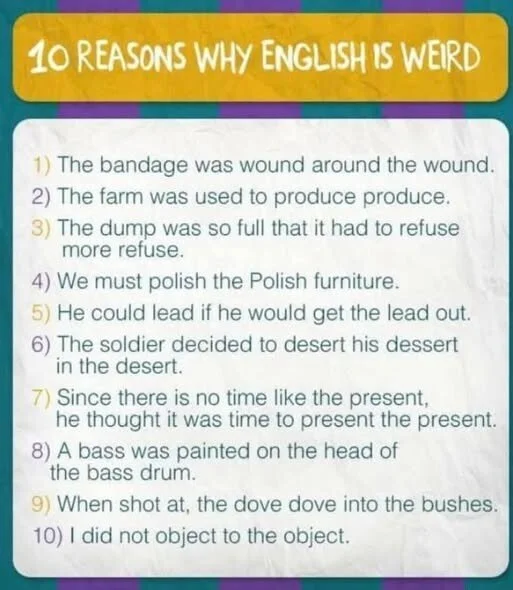
Mot: Sooo Fun Learning - English Again!!!!
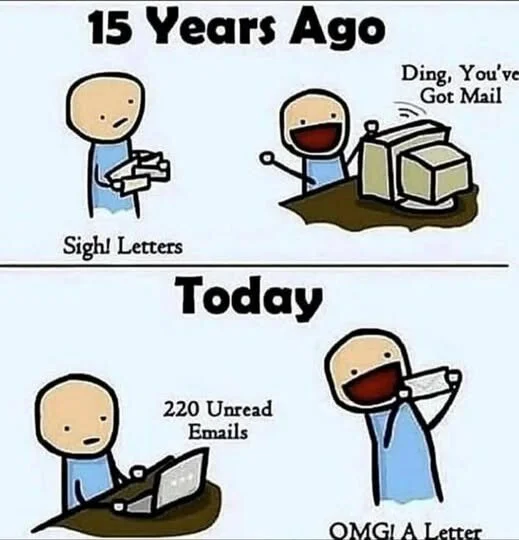
Mot: and Soooooo - TODAY!!!!
Seeds of Wisdom RV and Economics Updates Monday Morning 11-3-25
Good Morning Dinar Recaps,
Rails Rewritten: How Cross-Border Payments Are Forming a Parallel Financial Network
Payment rails, stablecoins and real-time flows aren’t just fintech trends — they form the infrastructure of the next global financial architecture.
Legacy cross-border payments are showing their age.
According to Global Finance Magazine, breakthroughs in cross-border connectivity are underway, but industry fragmentation remains a major challenge.
Good Morning Dinar Recaps,
Rails Rewritten: How Cross-Border Payments Are Forming a Parallel Financial Network
Payment rails, stablecoins and real-time flows aren’t just fintech trends — they form the infrastructure of the next global financial architecture.
Legacy cross-border payments are showing their age.
According to Global Finance Magazine, breakthroughs in cross-border connectivity are underway, but industry fragmentation remains a major challenge.
The Status Quo
Traditional correspondent banking networks are slow, opaque and costly.
Regulatory differences across jurisdictions slow settlement and increase FX costs.
Corporates and fintechs increasingly demand 24/7 real-time payment experiences.
The Emerging Architecture
Real-time rails: Efforts to deliver always-on global payments; 24/7 settlement becomes base expectation.
Stablecoins & tokenisation: Payment flows are migrating onto rail systems built for digital assets. See the Fireblocks report which shows 86% of firms say they have infrastructure ready for stablecoin flows.
Interoperability & standardisation: The G20’s roadmap for enhancing cross-border payments is catalysing efforts to harmonise infrastructure.
💡 Why It Matters for the Global Reset
Payment rails are the plumbing of finance. Whoever controls or influences rails controls movement of value.
The shift toward digital rails and tokenised settlement erodes the dominance of old bank-centric models and opens space for regional or alternative networks.
For alliances and diplomacy: Payment systems are now a strategic front. Countries aligning their payment infrastructure together are deepening economic alliances beyond trade.
As we move to a world where resources, trade blocs and currencies are shifting, payment rails become the glue that holds new systems together.
This is not just politics — it’s global finance restructuring before our eyes.
Seeds of Wisdom Team
Newshounds News™ Exclusive
Sources:
Global Finance Magazine – “Promoting Cross-Border Connectivity in an Era of Payments Fragmentation.”
Fireblocks – “State of Stablecoins 2025: The Payments Infrastructure Reset.”
G20/FSB – “G20 Roadmap for Enhancing Cross-Border Payments.”
~~~~~~~~~
Trade-Bloc Rise & Fragmentation: A New Era of Alliances in Global Commerce
Trade alliances are reshaping. In a world of diverging poles, who trades with whom becomes as important as what is traded.
The global economic map is changing.
An article from Modern Diplomacy outlines how multiple bilateral and regional trade deals are proliferating as countries hedge away from singular trade blocs.
Key Trends
Several major states are signing multiple bilateral/trilateral deals in quick succession (e.g., the UAE’s deals with Malaysia, Kenya and New Zealand).
Trade blocs are fragmenting: New deals bypass large multilateral frameworks and focus on flexible, pragmatic partnerships.
These trade deals often come with linked clauses on finance, currency and settlement arrangements — not just tariffs or goods.
How This Restructures Finance & Alliances
Trade deals become financial architecture — they include settlement systems, local-currency clauses and shared infrastructure.
New alliances mean new financial and currency linkages: if many countries trade and settle outside the U.S.-led systems, it weakens the old axis of financial influence.
Diplomatic realignment follows trade alignment. As trade networks rewrite, so do alliance networks — shifting economic power centers.
Why It Matters
For investors and policymakers: New trade alliances rewrite who chooses the rules, who earns trade surplus, who becomes creditor or debtor.
For currency and payment infrastructure: If trade and settlement shift regionally, currency dominance and settlement dominance shift too.
For global finance reset: The fragmentation of trade blocs pushes toward multiple financial networks rather than one global monolith.
This is not just politics — it’s global finance restructuring before our eyes.
Seeds of Wisdom Team
Newshounds News™ Exclusive
Sources:
Modern Diplomacy – “A New Era of Trade Alliances: How and Why the Global Economic Map is Changing.”
Centre for European Reform – “A New Era of Trade Alliances”
~~~~~~~~~
Seeds of Wisdom Team RV Currency Facts Youtube and Rumble
Newshound's News Telegram Room Link
Follow the Gold/Silver Rate COMEX
Follow Fast Facts
Seeds of Wisdom Team™ Website
Thank you Dinar Recaps
Keeping Too Much Cash In Your Bank Account Could Be A Costly Mistake
Keeping Too Much Cash In Your Bank Account Could Be A Costly Mistake
Vishesh Raisinghani Sun, November 2, 2025 Moneywise
Keeping too much cash in your bank account could be a costly mistake — here’s how to know if you’ve got too much
Cash is king, right?
Well, not always. Sometimes you can have so much cash sitting around in your bank account that it turns into a wealth-devouring demon. On average, American families had about $62,410 in their checking accounts, according to the Federal Reserve’s 2022 Survey of Consumer Finances. For most people, that balance is simply higher than it should be.
Keeping Too Much Cash In Your Bank Account Could Be A Costly Mistake
Vishesh Raisinghani Sun, November 2, 2025 Moneywise
Keeping too much cash in your bank account could be a costly mistake — here’s how to know if you’ve got too much
Cash is king, right?
Well, not always. Sometimes you can have so much cash sitting around in your bank account that it turns into a wealth-devouring demon. On average, American families had about $62,410 in their checking accounts, according to the Federal Reserve’s 2022 Survey of Consumer Finances. For most people, that balance is simply higher than it should be.
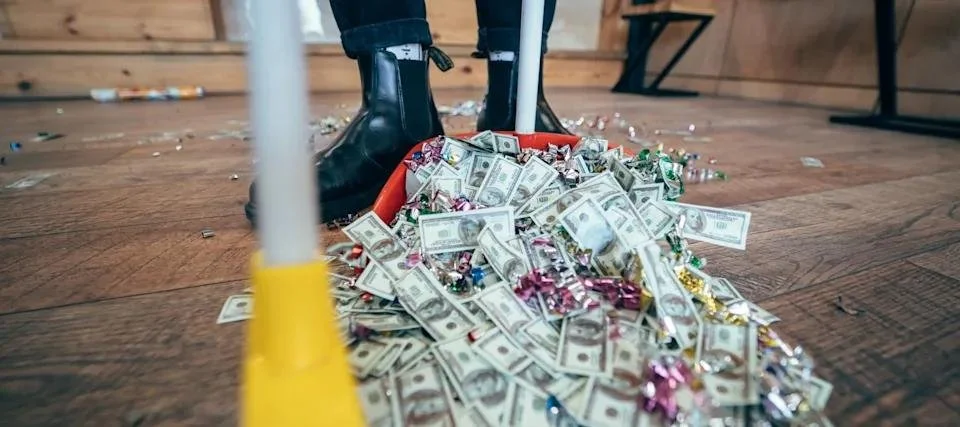
Here’s why keeping too much cash on hand could be a serious mistake and a significant drag on your financial health.
The inflation tax
As of October 2025, the average national deposit rate on a checking account is just 0.07%, according to the Federal Deposit Insurance Corporation (1). That’s nowhere near enough interest to offset the rising cost of living.
In September, annual inflation was 3.0%, according to the Bureau of Labor Statistics (2). That means the average checking account is earning approximately 43x less than the rate of inflation.
But inflation isn’t the only problem. Idle cash also carries opportunity cost: that's the money you leave on the table when you don’t invest in assets that can generate income or growth.
What to do with cash instead
To fight inflation, consider moving some of your money into short- or medium-term securities with higher yields.
For example, Vanguard’s Federal Money Market Fund (VMFXX) offered a 4.08% yield as of September 26 (3). That’s higher than the current inflation rate, which can make it a better option than a checking account to preserve your purchasing power.
If you’re more concerned about opportunity cost, you might look into a low-cost index fund with higher risk – but also, the potential for higher return. Vanguard’s S&P 500 ETF (VOO) has delivered a compounded annual growth rate of 14.7% since its 2010 debut (4). And although past performance does not guarantee future returns, the point stands: keeping cash idle means missing out on growth potential.
You can easily invest in assets like VOO when you use platforms such as Acorns. When you make a purchase on your credit or debit card, Acorns automatically rounds up the price to the nearest dollar and places the excess — the coins that would wind up in your pocket if you were paying cash — into a smart investment portfolio.
Their smart portfolios give you exposure to assets such as VOO, while ensuring you’re diversified across a number of different investments.
TO READ MORE: https://finance.yahoo.com/news/keeping-too-much-cash-bank-125500572.html
Jon Dowling: Weekly RV Updates for October 31st, 2025
Jon Dowling: Weekly RV Updates for October 31st, 2025
10-31-2025
As we stand at the precipice of November 2025, the global stage is buzzing with unprecedented shifts.
A recent comprehensive financial report, dated October 31, 2025, offers a compelling overview of these evolving dynamics, from geopolitical realignments to a seismic overhaul of our financial infrastructure. For investors, policymakers, and global citizens alike, understanding these interconnected developments is paramount.
Jon Dowling: Weekly RV Updates for October 31st, 2025
10-31-2025
As we stand at the precipice of November 2025, the global stage is buzzing with unprecedented shifts.
A recent comprehensive financial report, dated October 31, 2025, offers a compelling overview of these evolving dynamics, from geopolitical realignments to a seismic overhaul of our financial infrastructure. For investors, policymakers, and global citizens alike, understanding these interconnected developments is paramount.
First, let’s turn our gaze to Iraq, a nation often associated with past turbulence, now poised for a remarkable resurgence.
The report highlights Iraq’s significant strides towards sovereignty, economic reform, and political stability. Crucially, this progress is attributed to a successful reduction of Iranian proxy influence and the implementation of key energy sector laws that promise to unlock its vast potential.
This newfound stability in a strategically vital region could have far-reaching positive implications for global energy markets and regional security.
Meanwhile, across the Atlantic, the United States is orchestrating its own profound shifts under President Trump’s leadership.
The report details his active role in reshaping international trade agreements, with a particular focus on dynamic economies in Southeast Asia. More significantly, it underscores President Trump’s imminent plans to replace Federal Reserve Chair Jerome Powell, signaling a broader intent to overhaul the nation’s financial system. This move is presented as a cornerstone of the coming global financial transformation.
At the heart of this global transformation lies the impending launch of a new digital asset-backed global financial system. Set to go live in late November 2025, this revolutionary system will operate under the ISO 20022 standard.
The promise? To curtail traditional banking abuses, foster greater transparency, and introduce a new era of financial integrity.
Perhaps most notably, cryptocurrencies like XRP are earmarked to become pivotal tools in national debt management and an overarching economic reset.
This integration of digital assets into sovereign financial strategies marks a historical turning point, potentially reshaping how nations manage their economies and interact on the global stage.
The report doesn’t shy away from challenging predictions, forecasting a potential market crash in early 2026. However, this is tempered by optimistic outlooks for a swift, crypto-driven recovery and a pathway to government debt payoff.
This suggests that while traditional markets may face headwinds, the emerging digital economy is expected to provide resilience and new avenues for growth.
Precious metals and commodities markets, after recent fluctuations, are also expected to see rebounds, indicating a broader systemic rebalancing.
The overall tone, while acknowledging anticipated volatility, remains cautiously optimistic, encouraging prudent investment strategies amidst these profound systemic transitions.
The insights gleaned from this report paint a vivid picture of a world on the cusp of a redefinition. From Iraq’s journey to sovereignty to the US’s financial overhaul and the imminent launch of a digital asset-backed global system, the coming months promise to be nothing short of transformative. This is not merely a forecast of change but an urgent call for awareness and strategic positioning.
For a deeper dive into these critical insights and to fully grasp the implications of these global shifts, we encourage you to watch the full video from Jon Dowling. The future of finance and geopolitics is unfolding before our eyes – understanding it is the first step towards navigating it successfully.
Seeds of Wisdom RV and Economics Updates Sunday Afternoon 11-2-25
Good Afternoon Dinar Recaps,
Diplomacy, Currency & Metals: The Quiet Shifts Redrawing Global Finance
How gold, the yuan, and resource diplomacy are shaping a post-dollar order
Overview
Recent developments across diplomacy, metals, and currency markets show a quiet but accelerating restructuring of global finance. What once appeared as isolated moves — trade deals, currency discussions, and commodity market swings — now converge into a larger framework of strategic financial realignment.
Good Afternoon Dinar Recaps,
Diplomacy, Currency & Metals: The Quiet Shifts Redrawing Global Finance
How gold, the yuan, and resource diplomacy are shaping a post-dollar order
Overview
Recent developments across diplomacy, metals, and currency markets show a quiet but accelerating restructuring of global finance. What once appeared as isolated moves — trade deals, currency discussions, and commodity market swings — now converge into a larger framework of strategic financial realignment.
Gold and the Federal Reserve’s Signal
Gold prices slipped about 0.4% after the U.S. Federal Reserve adopted a cautious tone on rate cuts, which strengthened the dollar.
Despite the short-term pullback, central banks remain net buyers of gold, underscoring its role as a hedge against monetary instability.
Gold’s behavior continues to act as a barometer of structural transition — signaling investor hedging ahead of potential monetary resets rather than mere cyclical policy shifts.
BRICS Currency and the Rise of a Multipolar Payment System
The BRICS bloc is intensifying discussions on creating a joint payment and settlement system to reduce reliance on the U.S. dollar.
This effort complements the broader “de-dollarization” trend observed across Asia, Africa, and Latin America.
Analysts suggest such a system could eventually function as a parallel settlement layer backed by commodities or digital assets — a key stepping stone toward a new reserve architecture.
China’s Yuan-Based Diplomacy
Russian businessman Oleg Deripaska emphasized that China’s vision for a multipolar world order depends on establishing a yuan-based settlement framework.
This positions the yuan not just as a national currency, but as the anchor of a regional financial system aligned with trade corridors like the Belt and Road Initiative (BRI).
The yuan’s role in energy, commodities, and strategic infrastructure reflects Beijing’s push to pair diplomacy with monetary design — a direct counterpart to the dollar’s post-World War II system.
Resource Diplomacy: The Metals Dimension
The U.S.–Australia Critical Minerals Agreement illustrates how diplomatic ties are now inseparable from resource and monetary strategy.
Securing rare earths and battery metals forms part of the West’s response to Chinese resource dominance — effectively a financial defense mechanism.
By controlling upstream materials, nations also control currency stability, trade leverage, and supply-chain financing — extending diplomacy into financial architecture.
Why It Matters
Metals are now monetary assets again. Gold, rare earths, and critical minerals underpin not just trade but sovereign financial independence.
Currency and diplomacy are merging. The yuan’s expansion, BRICS discussions, and Western resource alliances show finance being rebuilt around political blocs.
A dual financial architecture is emerging. One dollar-centric; the other regionalized and resource-backed — together forming the next phase of Bretton Woods 2.0.
These trends are not isolated policy events but coordinated responses to the same structural force: the global realignment of trade, energy, and settlement systems.
Outlook
Watch for:
Formal announcements on the BRICS payment platform or gold/yuan linkages.
Central bank gold reserves — if accumulation accelerates, it signals growing confidence in a non-dollar system.
Strategic mineral treaties — each deal effectively extends a new financial frontier beyond the traditional banking network.
Yuan and commodity settlement volumes — the metric that may define who controls the “liquidity language” of the next decade.
This is not just politics — it’s global finance restructuring before our eyes.
Seeds of Wisdom Team
Newshounds News™ Exclusive
Sources:
Discovery Alert – “Federal Reserve Rate Cuts and Gold Prices: 2025 Market Analysis”
Reuters – “US-Australia critical minerals deal underscores gap to China”
White House – “United States-Australia Framework For Securing of Supply in the Mining and Processing of Critical Minerals and Rare Earths”
~~~~~~~~~
“BRICS Unbroken: Why Allegations of a Split Miss the Point of the Global Finance Shift”
The allegations of member-exit are a distraction — the real story is a deeper financial and geopolitical re-structuring underway.
The claim — that one or more members of BRICS are leaving the bloc — is unfounded. What’s occurring instead is the reinforcement of collective financial and trade mechanisms that challenge Western-centric systems.
🔹 What the Source Says
Maria Zakharova, spokesperson for Russia’s foreign ministry, stated that no BRICS member has formally notified the bloc of any intention to leave, despite U.S. tariff pressure.
Rather than splitting, the bloc is reportedly being pushed closer together by external pressure: “tariffs … are pushing the BRICS countries not to leave the association, but […] to expand trade, economic, and financial cooperation and develop mechanisms for practical cooperation that are resistant to external risks.”
BRICS continues its enlargement and institutionalisation: the group has expanded membership, created partner-country status, and developed financial institutions.
🔹 How This Fits with the Global Financial & Alliance Restructuring
Alliance architecture rewriting: This isn’t a story of collapse but of transformation. Without public exits, the BRICS model transitions like this: moving from loose cooperation toward coordinated financial and trade infrastructure (e.g., alternative settlements, multi-currency arrangements).
Financial system reset in motion: The strength of the alliance under pressure signals that new financial networks (clearing, settlement, trade-financing) are being constructed specifically to withstand Western-led tariffs and sanctions. That means the architecture of global finance is being layered, not just modified.
U.S. strategic dimension: As you track from your lens, these developments underscore why U.S. trade deals, diplomacy and regulatory influence matter so much — the alternative networks being built by BRICS and its partners could bypass much of the U.S.-dominated system.
Narrative & perception: The sceptical narrative of “members leaving” is itself significant: it shows how much the U.S. (and Western media) treat BRICS as a threat. BRICS’s ability to deflect the narrative and show cohesion strengthens its position in the global reset.
🔹 Why It Matters
For global investors & policymakers: If BRICS holds together while developing independent finance/trade rails, capital flows, asset-allocation decisions and currency exposure must evolve accordingly.
For the U.S.: This is not just competition in trade — this is competition over financial infrastructure: who owns the rails, who sets the rules, who controls settlement and value movements. Every trade deal, tariff threat or regulatory policy becomes part of that broader architecture.
For system stability: Multi-polar finance means risk is redistributed. The old “West vs the rest” model is morphing into a multi-node network where disruptions in one node (e.g., sanctions, export bans) compel others to pick up slack or build alternatives. Resilience is being baked into the system via redundancy.
For the global reset: When alliances like BRICS show resilience under pressure, it accelerates the move from a unipolar, dollar-centric system toward a multipolar network of trade-finance hubs — which means your tagline holds true: “This is not just politics — it’s global finance restructuring before our eyes.”
Seeds of Wisdom Team
Newshounds News™ Exclusive
Sources
Watcher Guru – “Which Countries Are Leaving the BRICS Alliance?”
Council on Foreign Relations (CFR) – “What is the BRICS Group and Why Is It Expanding?”
Carnegie Endowment – “BRICS Expansion and the Future of World Order.”
~~~~~~~~~
Seeds of Wisdom Team RV Currency Facts Youtube and Rumble
Newshound's News Telegram Room Link
Follow the Gold/Silver Rate COMEX
Follow Fast Facts
Seeds of Wisdom Team™ Website
Thank you Dinar Recaps
Why a Currency Reset is Inevitable: Lynette Zang
Why a Currency Reset is Inevitable: Lynette Zang
VRIC Media: 11-2-2025
In a world increasingly reliant on digital screens and paper promises, the foundational value of physical assets is often overlooked—until the system starts to crack.
In a recent, highly insightful interview on VRIC Media with host Darrell Thomas, financial expert Lynette Zang of Zang Enterprises laid out a powerful case for the imminent transformation—or necessary reset—of the global monetary system.
Why a Currency Reset is Inevitable: Lynette Zang
VRIC Media: 11-2-2025
In a world increasingly reliant on digital screens and paper promises, the foundational value of physical assets is often overlooked—until the system starts to crack.
In a recent, highly insightful interview on VRIC Media with host Darrell Thomas, financial expert Lynette Zang of Zang Enterprises laid out a powerful case for the imminent transformation—or necessary reset—of the global monetary system.
Her focus was sharp: the dramatic and growing divergence between the paper markets and the immutable value of physical gold and silver.
If you are holding paper assets, futures contracts, or simply trusting the current debt-driven system, Zang’s analysis offers a critical wake-up call.
The core of Zang’s argument rests on a phenomenon that signals deep distress in the financial plumbing: the growing separation between the price of paper metals (futures, spot contracts) and the price for actual physical delivery.
Zang highlighted the critical importance of backwardation. This is a rare and jarring market condition where the price for immediate physical delivery exceeds the price of futures contracts.
In simple terms, people are willing to pay more right now for the actual metal than they are willing to pay for a promise of delivery months down the line.
“Backwardation is a clear signal that distrust in the paper system is peaking,” Zang explains. “Paper gold and silver contracts can be manipulated and created in unlimited quantities without corresponding physical backing.
The market is waking up to the reality that these contracts are simply promises, not actual assets.”
The implications are profound. As central banks repatriate their gold reserves and institutional players increasingly demand physical settlement, the illusion of unlimited inventory shatters, favoring those who hold the metal in their hand, not on a screen.
Why is this systemic distrust manifesting now? Zang points directly to the elephant in the room: ballooning global debt.
In a monetary reset scenario—where currencies must be revalued against a stable, foundational asset like gold—the true debt load must be accounted for.
According to Zang’s analysis, when the massive weight of global indebtedness is properly measured against gold’s fundamental value, the asset’s price must adjust dramatically.
Zang estimates that upon a true market reset or revaluation, gold’s necessary fundamental value could reach an astonishing $33,000 to $40,000 per ounce.
This isn’t hyperbole based on market speculation; it is an estimate derived from balancing the current financial liabilities of the world against the only true form of sound money.
While the numbers are staggering, Zang spent significant time focusing not just on the problem, but on practical solutions for individuals navigating this transition. This shift requires more than just financial diversification; it requires holistic preparedness.
The coming transition, Zang argues, will challenge essential services. Her advice extends far beyond the financial portfolio:
“Sound money alone is not enough,” Zang cautioned. “We must build local communities for mutual support around the essentials of life: food, water, shelter, and energy. We need to be prepared with barterable goods and a network of people who can rely on each other.”
Taking control of one’s financial future in a transitioning economy means understanding true asset values, avoiding reliance on manipulated markets, and building a foundation of resilience that extends to your physical community.
Lynette Zang’s insights are a powerful reminder that while central banks and politicians wrestle with debt ceilings and inflation targets, the market—signaled by backwardation and the demand for physical assets—is already choosing sides.
The systemic shift is favoring physical metals over paper promises. If Zang’s estimates even approach reality, the time to secure your position in sound money is now.
*Ready to dive deeper into the mechanics of the monetary system reset?
Watch the full insightful interview from VRIC Media with Darrell Thomas and Lynette Zang for comprehensive analysis and details on how to navigate this crucial transition.
Edu Matrix: Who’s Holding up the IQD RV?
Edu Matrix: Who’s Holding up the IQD RV?
11-2-2025
The revaluation of the Iraqi Dinar (IQD) has been a topic of intense speculation and discussion for years, yet the anticipated change remains elusive. Why?
In a recent insightful video from Edu Matrix, financial expert Sandy Ingram delves deep into the labyrinthine factors impeding the IQD revaluation, identifying five primary entities that collectively contribute to this ongoing delay.
Her analysis urges viewers to consider who truly holds the most sway in this intricate geopolitical and economic landscape.
Edu Matrix: Who’s Holding up the IQD RV?
11-2-2025
The revaluation of the Iraqi Dinar (IQD) has been a topic of intense speculation and discussion for years, yet the anticipated change remains elusive. Why?
In a recent insightful video from Edu Matrix, financial expert Sandy Ingram delves deep into the labyrinthine factors impeding the IQD revaluation, identifying five primary entities that collectively contribute to this ongoing delay.
Her analysis urges viewers to consider who truly holds the most sway in this intricate geopolitical and economic landscape.
First up, the mighty United States. Sandy Ingram points out that the U.S. exerts significant pressure on Iraq, particularly regarding its relationship with neighboring Iran.
Beyond geopolitical maneuvering, the U.S. is deeply concerned about controversial legislation being introduced in Iraq’s parliament. A startling example cited is a proposed bill that would reportedly allow adult men to marry 10-year-old girls. Such legislation raises global human rights alarms and undoubtedly impacts international confidence and potential U.S. support for Iraq’s economic aspirations.
Next, we turn to the International Monetary Fund (IMF). A crucial prerequisite for any currency revaluation is the certification of a nation’s economic stability. While Iraq is rich in oil, the IMF has yet to certify its economic stability beyond this single sector. For a sustainable and credible revaluation, Iraq needs to demonstrate a diversified and robust economy that isn’t solely reliant on fluctuating oil prices. This certification is a non-negotiable step for the global financial community.
The Central Bank of Iraq (CBI) faces its own set of challenges. Sandy Ingram highlights criticism directed at the CBI for failing to adequately align the Iraqi banking system with international standards. In today’s interconnected financial world, such alignment is critical for establishing credibility, fostering trust, and ensuring currency stability. Without a banking infrastructure that meets global benchmarks, the path to a fully revalued and convertible currency remains fraught with obstacles.
The Iraqi government itself isn’t exempt from scrutiny. Sandy Ingram points to poor fiscal management practices, specifically the government’s habit of earning revenue in U.S. dollars but spending in Iraqi dinars. This creates unintended distortions in currency flow, complicating the CBI’s efforts to manage and stabilize the dinar. Effective revaluation requires coherent and disciplined fiscal policies that support, rather than undermine, the national currency.
Finally, a less obvious but significant factor involves the Iraqi people. Sandy Ingram suggests that the reluctance of citizens to deposit their banknotes into formal banking institutions limits the central bank’s ability to effectively control currency circulation. A central bank needs to understand and manage the supply of its currency in the system to undertake an effective revaluation. When a significant portion of cash remains outside the formal banking system, this vital control is hampered.
After laying out these five complex factors, Sandy Ingram emphasizes a critical point: among these five, two actors are significantly more responsible than the others for the current delay. The remaining three issues, while important, are viewed as ongoing efforts or “work in progress.” This distinction is crucial, prompting viewers to ponder which two entities wield the most decisive power in this scenario.
The revaluation of the Iraqi Dinar is clearly not a simple economic adjustment. As Sandy Ingram eloquently articulates, it is a multifaceted issue deeply interwoven with political pressures, economic prerequisites, and social behaviors. Understanding these intricate layers is essential for anyone following the IQD’s journey.
For a deeper dive into these intricate details and to form your own conclusion on who holds the most influence, be sure to watch the full video from Edu Matrix.
https://dinarchronicles.com/2025/11/02/edu-matrix-whos-holding-up-the-iqd-rv/