
Thank you to all the subscribers to our Early Access program…we thank you for your continued support.
We are excited to offer this new service to keep you informed and up-to-date on the latest Dinar and currency news.
“Tidbits From TNT” Sunday 11-2-2025
TNT:
Tishwash: Indonesia plans digital version of rupiah for financial market
Bank Indonesia will introduce Rupiah Digital, a digital version of Sekuritas Rupiah Bank Indonesia (SRBI), as part of a phased rollout through 2030.
The central bank plans gradual development, starting with experimentation in digital securities issuance, transfers, and withdrawals from 2025 to 2026.
TNT:
Tishwash: Indonesia plans digital version of rupiah for financial market
Bank Indonesia will introduce Rupiah Digital, a digital version of Sekuritas Rupiah Bank Indonesia (SRBI), as part of a phased rollout through 2030.
The central bank plans gradual development, starting with experimentation in digital securities issuance, transfers, and withdrawals from 2025 to 2026.
Further testing will cover monetary operations and financial market transactions between 2027 and 2028, followed by advanced features such as programmability, composability, and tokenization in 2029 to 2030.
Rupiah Digital will be built on distributed ledger technology, according to the central bank’s Payment System Blueprint 2030.
Bank Indonesia also plans to issue BI-FRN, a new floating-rate note, to complement its existing monetary instruments.
Details on BI-FRN will be released in early November.
The instrument is intended to support the domestic financial market and real sector. link
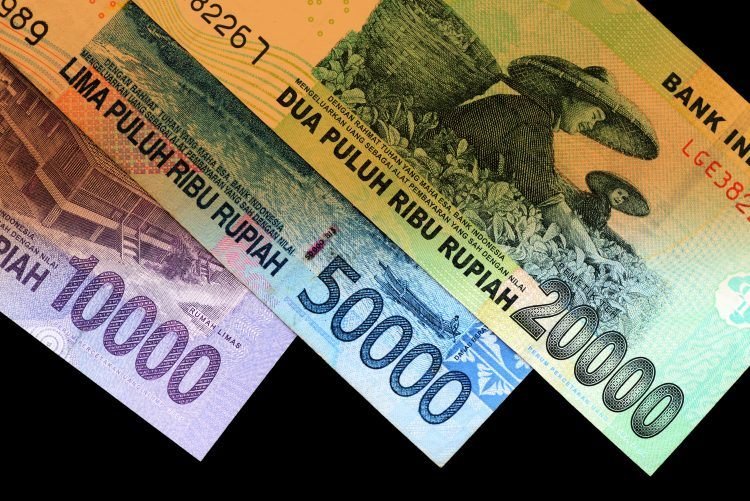
Tishwash: An expert: 90 trillion dinars are hoarded by Iraqis and do not reach the banks.
Financial expert Mahmoud Dagher revealed on Sunday that the amount of cash held by the "public" is estimated at about 90 trillion dinars, out of a total of 98 trillion dinars that is the size of the cash mass in Iraq.
Dagher, who previously served as a director at the Central Bank of Iraq, told Shafaq News Agency that "the volume of issued cash is around 98 trillion dinars, of which 88 to 90 trillion are in the hands of the public."
He added, "The public does not only mean the people, but also the merchants, the contracting companies, and the industrialists," explaining that "Iraqis hoard money instead of depositing it in banks, because our society likes to deal in cash and needs a long time to get used to electronic payment methods, in addition to the lack of trust in banks among some depositors after the setbacks that occurred in the banks."
He pointed out that "all these matters are considered behavioral issues, as people are accustomed to keeping a portion of their money, and so are companies, therefore Iraqis think this way."
According to specialists, this phenomenon has many negative aspects, including that the central bank loses its actual control over the money supply, and that its tools such as the interest rate or rediscount become less effective, while banks suffer from a shortage of liquidity, which weakens their ability to finance projects and pushes investors towards informal financing, in addition to the difficulty of managing inflation due to the money supply not officially circulating, which negatively affects the central bank’s decisions in achieving its main goal, which is to control the general level of prices and achieve stability link
************
Tishwash: Al-Araji meets with the US Secretary of the Interior in the Bahraini capital, Manama.
National Security Advisor, Mr. Qasim Al-Araji, met with the United States Secretary of the Interior, Mr. Doug Borgum, on the sidelines of the Manama Dialogue 21 conference held in Bahrain.
During the meeting, discussions were held on the continuation of security cooperation between Iraq and the United States of America and the development of strategic partnership relations between the two countries in the field of exchanging information and expertise and combating terrorism and drugs.
The active role of Iraq in the stability of the region was also reviewed, through the Iraqi government’s policy of distancing itself from conflicts and bringing international and regional viewpoints closer together. link
*************
Tishwash: Al-Rasheed Bank calls on employees to update their data and warns of temporary account suspension.
Al-Rasheed Bank has called on all employees whose salaries are deposited with the bank to update their personal information via the bank's mobile application, in accordance with the directives of the Central Bank of Iraq.
This update is intended to ensure the uninterrupted provision of banking services. The bank indicated that the update aims to organize and ensure the accuracy of the data, warning that failure to complete this procedure may result in the temporary suspension of the account until the update is completed. The bank clarified that this service is currently available only to employees and encouraged them to download the application from the App Store or Google Play. Users are advised to visit their nearest branch if they encounter any difficulties.
The bank stated in a statement:
Al-Rasheed Bank called on all employees whose salaries are deposited with it to quickly update their data exclusively through the bank’s application, based on the directives of the Central Bank of Iraq and to ensure the continued provision of banking services without interruption.
The bank explained in a statement that the update process is for auditing purposes aimed at organizing the data and ensuring its accuracy.
He noted that failure to update information may lead to the account being temporarily suspended until the required procedures are completed.
He explained that the service currently includes only employees and does not include retirees at this stage, calling for downloading the Al-Rasheed Bank application from the App Store or Google Play and completing the update process easily and securely.
The bank confirmed that if the update mechanism is unknown or if there is difficulty in using it, it is possible to visit the nearest branch of the bank. link
****************
Mot: How Do they Do it!!!???

Mot: Careful -- the ""Seenagers"" Are OUt and about!!!

Seeds of Wisdom RV and Economics Updates Sunday Morning 11-2-25
Good morning Dinar Recaps,
“Bretton Woods 2.0: The Monetary Architecture of the Reset”
The 1944 system is crumbling — and a new financial framework is emerging that could redefine currency, trade, settlement and reserve strategy.
The phrase “Bretton Woods 2.0” is more than academic — it signals a structural shift in how global finance will be governed, especially in an age of digital currency, geopolitical fragmentation and new regional power blocs.
Detailed proposals and analyses by multiple think‐tanks show the old post-war institutions (International Monetary Fund, World Bank) are under pressure to adapt.
Good morning Dinar Recaps,
“Bretton Woods 2.0: The Monetary Architecture of the Reset”
The 1944 system is crumbling — and a new financial framework is emerging that could redefine currency, trade, settlement and reserve strategy.
The phrase “Bretton Woods 2.0” is more than academic — it signals a structural shift in how global finance will be governed, especially in an age of digital currency, geopolitical fragmentation and new regional power blocs.
Detailed proposals and analyses by multiple think‐tanks show the old post-war institutions (International Monetary Fund, World Bank) are under pressure to adapt.
🔹 Key Features of the Bretton Woods 2.0 Discussion
Governance reform: upgrading or replacing institutions to reflect 21st-century power shifts (emerging markets, digital economy) rather than dominance of Western powers.
Digital currency & settlement innovation: digital-central bank currencies (CBDCs), tokenised assets, programmable money are pushing the architecture to change.
Resource and trade power linked to financial leverage: control of key inputs (rare earths, critical minerals) and trade terms become intertwined with finance architecture.
Multipolar reserve/currency models: The dominance of the U.S. dollar and dollar-based settlement is being challenged by blocs and alternative systems (BRICS, Asia-Pacific, digital rails).
🔹 How This Could Lead to a New Global Financial System
Currency reset potential: If major economies adopt divergent digital currencies or switch reserve assets (e.g., gold, commodities, new currency baskets), the old dollar-centric system may yield.
Settlement rail competition: As regional blocs build their own clearance and settlement systems, global capital flows may shift from old rails to new ones.
Trade and finance integration: Trade deals that include embedded finance clauses (digital settlement, fintech integration) mean trade policy becomes finance policy — the architecture of trade becomes architecture of money.
Institutional redesign: New frameworks will incorporate climate finance, value chains, data flows and technology, signalling a broader “finance system” than just banks and central banks — it's the new infrastructure layer.
🔹 Why It Matters for the U.S. and Global Finance
For the U.S., failing to engage in or shape the Bretton Woods 2.0 architecture risks losing rule-making power in global finance, being relegated to follower status rather than leader.
For global investors & institutions: a shift means rebasing models — what assets are safe, what currencies are dominant, what settlement systems will prevail.
For systemic stability: a poorly managed transition could produce fragmentation, dual systems, competing currencies and heightened financial risk — the reset must be orderly or it risks disorder.
This is not just politics — it’s global finance restructuring before our eyes.
Seeds of Wisdom Team
Newshounds News™ Exclusive
Sources:
Atlantic Council – Bretton Woods 2.0 Project – Examining deep challenges facing the Bretton Woods institutions and reimagining governance of international finance.
Discovery Alert – “Bretton Woods 2.0: Understanding the Coming Monetary System Reset.”
RSIS (Nanyang) – “The Case for Bretton Woods 2.0”.
Carnegie Endowment – “The Bretton Woods Moment—and Its Necessary Replacement.”
~~~~~~~~~
“Slow Growth, Big Stakes: The International Monetary Fund Outlook & the Financial Reset”
Why modest global growth forecasts are not just economic news — they raise structural questions about the next finance architecture.
Global growth has turned sluggish, and for the world of money and finance, that means more than a slowdown — it signals a potential shift in how the system works.
According to the IMF’s October 2025 World Economic Outlook (WEO), global GDP growth is projected at approximately 3.2 % in 2025 and then 3.1 % in 2026.
The tone: “Global economy in flux, prospects remain dim.”
🔹 Key Highlights from the WEO
Growth in advanced economies projected around ~1.5–1.6 % in 2025-26.
Emerging market & developing economies projected just above 4 % growth — a moderate pace.
Risks are tilted to the downside: protectionism, labour-supply shocks, ageing populations, fiscal vulnerabilities and financial‐market fragilities.
Trade diplomacy, strong institutions and policy clarity are cited as key to restoring confidence.
🔹 Why This Outlook Signals a Financial Restructuring Moment
Low growth + high debt = a stressed system: With slower growth, existing fiscal burdens and leveraged financial structures face more strain — increasing the need for new financing models, restructuring of debt, and alternative capital flows.
Policy space narrowing: If advanced economies are stuck at ~1.5 % growth, monetary and fiscal tools may be less effective, prompting innovative financial instruments, regional cooperation and new reserve/settlement mechanisms.
Trade & finance intersection: The IMF explicitly links trade diplomacy to output gains (e.g., resolving policy uncertainty + better trade deals = ~0.4–0.7 % uplift) in the WEO. That means trade policy and financial architecture are overlapping — which invites broader system redesign.
Structural shift in capital flows: Sluggish growth can push capital away from traditional markets and into alternative assets, new regions, digital finance – accelerating the reset of global finance networks.
🔹 Why It Matters to You & the Global Finance Reset
Investors and institutions should prepare for non-linear change, not just slower growth but changed rules of capital, settlement, risk assessment.
The U.S. and allied economies may need to renegotiate their role in global finance, especially as emerging markets maintain growth closer to 4 % and may command more weight in the new system.
The architecture of trade, output, and finance are merging: trade deals, commodity flows, digital finance, and capital allocation will form the next generation of "who controls what" in global finance.
This is not just politics — it’s global finance restructuring before our eyes.
Seeds of Wisdom Team
Newshounds News™ Exclusive
Sources:
IMF – Press Briefing Transcript: World Economic Outlook, Annual Meetings 2025.
IMF – World Economic Outlook: Global Economic Outlook Shows Modest Change Amid Policy Shifts and Complex Forces.
Reuters – IMF lifts growth outlook on more benign tariffs as revived US-China trade war looms.
The Guardian – IMF chief warns ‘uncertainty is the new normal’ in global economy.
~~~~~~~~~
Seeds of Wisdom Team RV Currency Facts Youtube and Rumble
Newshound's News Telegram Room Link
Follow the Gold/Silver Rate COMEX
Follow Fast Facts
Seeds of Wisdom Team™ Website
Thank you Dinar Recaps
Why Everyone has failed to Predict the Stock Market Crash
Why Everyone has failed to Predict the Stock Market Crash
Michael Cowan: 10-31-2025
For years, analysts have been predicting “the big one”—the market crash that would reset asset prices across stocks, real estate, and crypto. Yet, despite seemingly unsustainable valuations and glaring economic cracks, the market indices continue to defy gravity, often setting new highs.
Why haven’t the predicted crashes materialized? Are the bears fundamentally wrong?
Why Everyone has failed to Predict the Stock Market Crash
Michael Cowan: 10-31-2025
For years, analysts have been predicting “the big one”—the market crash that would reset asset prices across stocks, real estate, and crypto. Yet, despite seemingly unsustainable valuations and glaring economic cracks, the market indices continue to defy gravity, often setting new highs.
Why haven’t the predicted crashes materialized? Are the bears fundamentally wrong?
According to economic analysis by Michael Cowan, the failure to predict the crash stems from a fundamental misunderstanding of the crisis itself. The real danger isn’t a traditional market crash; it’s a slow, insidious economic collapse driven by the debasement of the US dollar and the global fiat currency system.
The asset bubbles we observe are merely the symptoms of relentless monetary expansion.
How can the stock market thrive while the average consumer struggles?
The answer lies in the central banks’ actions. Following global crises, central banks have consistently chosen the path of least resistance: injecting trillions of dollars into the financial system.
This process—known colloquially as “money printing”—doesn’t flow into productive ventures or raise average wages; it primarily chases existing assets, inflating their prices.
The result is a stock market that no longer reflects the underlying health of the economy, but rather the sheer volume of new currency chasing limited assets.
When governments intervene to prevent a crash, they simply print more money, guaranteeing that while asset prices may hold stable (or even rise in nominal terms), the value of the currency used to measure them erodes dramatically.
It’s not that the assets are becoming more valuable; it’s that the dollar is becoming less valuable.
To understand the inevitable outcome of this policy, we must look at historic examples of currency debasement.
Consider the case of Venezuela. During periods of hyperinflation in Venezuela, the local stock market indices soared. For an investor looking solely at local currency gains, it appeared there was massive growth. However, when those gains were measured against a stable foreign currency like the US dollar, the “growth” was wiped out entirely.
The local market gains were simply a mathematical reflection of a collapsing currency.
The US dollar’s status as the world’s reserve currency currently provides a powerful cushion, delaying the Venezuelan-style hyperinflation that other countries experience. But this reserve status is not permanent, and the trend line is clear.
Since the Federal Reserve was established in 1913, the purchasing power of the US dollar has plummeted by an astonishing 97%.
The decoupling from the gold standard in 1971 accelerated this trend, allowing governments to expand the money supply virtually unchecked, leading us directly to the current asset bubbles.
History offers a stern warning: since the 1700s, the average lifespan of a fiat currency has been just 27 years. The US dollar has far exceeded that average, holding reserve status for roughly a century—a cycle economists argue is now reaching its inevitable conclusion.
The US national debt is now astronomical, and the interest payments alone are becoming unbearable. Politicians, unwilling or unable to enact the necessary fiscal reforms, face a stark choice: default (politically impossible) or continue to inflate the currency until the debt burden becomes manageable in relative terms.
This unsustainable cycle points toward a forced monetary reset. While the form this reset will take is unknown, central bank digital currencies (CBDCs) are often discussed as a likely vehicle. CBDCs would allow governments unprecedented control over the flow and use of money, effectively giving them the tools to enforce a new economic paradigm designed to stabilize their debt obligations.
Panic is unproductive, but preparation is essential. If the real crisis is the erosion of purchasing power, then our focus must shift from predicting a market drop to securing assets that retain value regardless of the dollar’s instability.
The current economic environment is not one of impending disaster, but one of ongoing transformation. The market hasn’t crashed because the government has been propping it up with newly printed money—a policy that simply shifts the cost directly onto the savings and purchasing power of every citizen.
Understanding that the value of the currency is the true battlefield is the key to surviving the coming monetary reset.
For an extensive deep dive into the history of fiat currency failure and detailed insights into the potential monetary reset, we highly recommend watching the full analysis presented by Michael Cowan.
News, Rumors and Opinions Saturday 11-1-2025
KTFA:
Clare: Iraq discovers huge reserves of silica sand with a purity of up to 98%
11/1/2025
The Eco Iraq Observatory announced on Saturday the quantities of silica sand discovered in the governorates of Anbar and Najaf, describing it as "white gold".
The observatory said in a statement that "Iraq's environment is rich in natural resources that are no less important than oil, most notably silica sands," indicating that "initial explorations indicate that Anbar province contains about 600 million discovered tons and more than one billion tons of reserves with a purity of up to 98%."
KTFA:
Clare: Iraq discovers huge reserves of silica sand with a purity of up to 98%
11/1/2025
The Eco Iraq Observatory announced on Saturday the quantities of silica sand discovered in the governorates of Anbar and Najaf, describing it as "white gold".
The observatory said in a statement that "Iraq's environment is rich in natural resources that are no less important than oil, most notably silica sands," indicating that "initial explorations indicate that Anbar province contains about 600 million discovered tons and more than one billion tons of reserves with a purity of up to 98%."
The observatory added, "In the Najaf Governorate, there are quantities estimated at about 330 million tons of sand suitable for glassmaking, and about 577.5 million tons for colored glassmaking, bringing the total to about 907.5 million tons of silica sand explored with a purity of nearly 95%," noting that "the price of one ton of silica sand ranges between 100 and 150 dollars, which makes investing in these resources capable of supplying the general budget with billions of dollars, in addition to providing more than 10,000 job opportunities in the two governorates."
The observatory criticized the "weak procedures for investing in these raw materials despite the presence of Iraqi competencies capable of managing them," stressing "the need to amend the Mineral Investment Law No. 91 of 1988, as amended, in order to provide greater opportunities for discovering and investing in the country's natural resources."
He confirmed that "investing in these sands will provide more than 10,000 job opportunities."
Silica sand is used in the manufacture of glass, silicone products, and building materials. It is also used in electronic devices, solar cells, and filtration processes.
Global consumption of silica sand reached approximately 479 million tons during 2024, with a value ranging between approximately $14 billion and $72 billion depending on the quality of the sand and the market price. LINK
************
Clare: The Iraqi government: The country's interest requires strengthening its relations with major powers, including the United States.
10/31/2025 Baghdad -
Government spokesman Bassem Al-Awadi confirmed that the American side has praised Iraq’s stability and support for its sovereignty in more than one statement and occasion, noting that it is in the country’s interest to strengthen its relations with major countries, including the United States.
Al-Awadi said in a televised interview, which was followed by ( ), that “the statement of the new US envoy to Iraq, Savannah, is his first official statement after taking over the Iraqi file within the White House, and it was necessary for him to express his vision and impression towards Iraq, as he has become the direct person responsible for this file in the US administration.”
He added that "the Iraqi file needs a deep understanding and careful handling of its details, due to its political, economic and security entanglement. Envoy Savanna expressed a positive view towards Iraq and its government, which reflects a growing understanding within the American administration of the nature of the Iraqi scene."
Al-Awadi explained that “there are repeated praises from senior American officials for the Iraqi government, including the US Secretary of State and the Under Secretary of Energy who signed the contract with Excelerate for the floating oil and gas platforms project in Iraq,” stressing that “these positive positions came as a result of accumulated work and continuous governmental effort during the past three years to consolidate the independence of national decision-making and enhance balance in foreign policy.”
He pointed out that "preserving national sovereignty and strengthening foreign relations is achieved through one balance, which is the Iraqi national interest," explaining that "the government's decisions are based on this, far from emotions or inclinations, and that the Prime Minister exercises his constitutional powers in formulating Iraq's foreign policy in a way that ensures the achievement of economic, security, investment and cultural gains for the country."
Al-Awadi pointed out that “it is in Iraq’s interest to strengthen its relations with major and influential countries in the international community, foremost among them the United States of America, especially in light of the existence of the Strategic Framework Agreement, which the Prime Minister stressed during his recent visit to Washington must be activated through joint political, economic and security committees.” LINK
************
Courtesy of Dinar Guru: https://www.dinarguru.com/
Frank26 You understand what's happening don't you? It's a slow roll out of the lower notes so it doesn't shock the system so the Iraqi citizens don't go bonkers and make mistakes along the way...
Nader From The Mid East If they start coming out with the small category it will not work with their numbers, will not work with the exchange rate. If they doing it that mean they're ready to change the exchange rate.
Frank26 [Iraq boots-on-the-ground report] OMAR: They are talking on television about asking for permission [From US Treasury, Britian and France] to go 1 to 1... FRANK: This is extremely powerful. I apologize that I don't have an article for you just yet and you may not even get an article, but I think you will...This is huge. This is monstrous...Why would they ask permission to go 1 to 1? Because they're about to show the new exchange rate and lower notes to the Iraqi citizens and float the damn thing...Once they have permission to be at least 1 to 1 with the dollar, then they will strive to reach the RI of $3.22 and possibly up to $4.25 in the real effective exchange rate of the float in the basket...
************
1929. 2008. 2025? The Yield Curve Says It’s Coming Again
Finance Secrets: 10-29-2025
For nearly a century, one signal has predicted every major economic collapse — the yield curve inversion.
It warned us in 1929, screamed before 2008, and now in 2025, it’s flashing the same terrifying signal again.
In this video, we’ll explore what the yield curve truly measures, why it has predicted every recession, and what it’s telling us about the next global downturn.
You’ll Learn:
• How the yield curve predicts recessions
• The shocking data behind 2025’s inversion
• What history says happens next after inversion
• How the Fed’s actions are distorting bond markets
• Why this cycle may be the most dangerous yet
Seeds of Wisdom RV and Economics Updates Saturday Afternoon 11-1-25
Good Afternoon Dinar Recaps,
Tokenisation and the Dawn of a Gold-Anchored Digital Financial System
How banks are moving toward a new digital “gold-backed” architecture in the global reset
In recent months, a confluence of digital-asset innovation, soaring debt levels and central-bank gold accumulation is pointing to what might be the early stages of a new financial framework — one in which tokenised assets and gold-anchored value may play a foundational role.
Good Afternoon Dinar Recaps,
Tokenisation and the Dawn of a Gold-Anchored Digital Financial System
How banks are moving toward a new digital “gold-backed” architecture in the global reset
In recent months, a confluence of digital-asset innovation, soaring debt levels and central-bank gold accumulation is pointing to what might be the early stages of a new financial framework — one in which tokenised assets and gold-anchored value may play a foundational role.
Key Points
Traditional banks and financial institutions are increasingly embracing tokenisation and digital assets as core infrastructure rather than fringe experiments. According to Deutsche Bank, a “tokenised economy” could represent the next major transformation of the financial system. db.com
Meanwhile, gold is being re-positioned not just as a safe asset but as part of the reserve architecture underpinning future digital financial systems. One commentary suggests that “global debt pressures” are weakening fiat currency fundamentals, setting the stage for a “gold-backed, tokenised financial reset.”
At the same time, digital assets such as stablecoins and tokenised real-world assets (RWAs) are already shaping banking’s operational framework. A report by TD Securities notes that tokenised treasuries, stablecoins and digital currency rails are forcing banks to rethink their business models and reserve structures. TD Securities
In short, the elements of a “digital gold-backed” system are emerging: tokenised value, asset-backing (via gold or similar), new payment and settlement rails, and a shift in reserve composition.
Why This Matters
If gold and tokenisation become integral to how value is stored and transmitted globally, this would reshape the reserve currency paradigm and reduce reliance on purely fiat systems.
For banks and financial institutions, the shift means adapting systems, risk models, reserve strategies and regulatory frameworks — not just launching new products.
For individuals and countries, the transition could offer an alternative architecture where trust is anchored less in fiat-issuers and more in backed digital assets, potentially changing how savings, payments and cross‐border flows operate.
Implications
Institutions that adopt tokenised, gold-anchored structures early may gain strategic advantage, both in terms of cost, settlement speed and emergent reserve frameworks.
Regulatory regimes will need to evolve fast to manage new backings, cross-border digital rails, asset-tokenisation and the interplay with gold and other commodities.
If this architecture becomes dominant, what we consider “banking” and “money” today might look very different in 5-10 years: less about fiat ledger accounts, more about backed digital claims, asset links and new rails.
This is not just politics — it’s global finance restructuring before our eyes.
🌱 Seeds of Wisdom Team 🌱
Newshounds News™ Exclusive.
Sources:
drylogics.ai -- Digital Gold: Redefining Value in the Modern Era
Kitco -- Global monetary reset coming, gold to get revalued to $150k, is BRICS summit the trigger? Andy Schectman
~~~~~~~~~
Seoul’s Balancing Act: Can Asia’s Middle Power Bridge a Divided World?
How South Korea’s strategic diplomacy may ignite new alliances — and quietly reshape the global financial order
NEWS OVERVIEW
President Xi Jinping concluded a three-day visit to South Korea on Saturday with a state dinner and summit hosted by President Lee Jae-myung, marking Xi’s first trip to Seoul in 11 years. The timing is symbolic — arriving just days after President Trump’s whirlwind visit — as South Korea navigates a delicate balance between its U.S. security dependency and Chinese economic integration.
The meetings, held on the sidelines of APEC, touched on denuclearization of the Korean Peninsula, trade and AI cooperation, and regional economic resilience. Xi proposed the creation of a World AI Cooperation Organization and announced that China will host the next APEC Summit, signaling Beijing’s intent to recast itself as the predictable anchor of Asia’s economic architecture.
KEY DEVELOPMENTS
Xi’s visit follows Trump’s, placing Seoul in the role of diplomatic mediator between Washington’s security promises and Beijing’s economic gravity.
Pyongyang remains dismissive of denuclearization talks, but China’s leverage over North Korea gives it outsized regional influence.
Trade tensions persist — South Korea raised concerns over China’s control of rare earth exports and ongoing sanctions affecting defense giant Hanwha Ocean.
Cultural diplomacy thaw: Seoul hopes Xi’s trip may lift restrictions on K-pop and media exports imposed after the 2017 THAAD deployment.
APEC dynamics: Beijing’s emphasis on free trade and digital cooperation contrasts with Trump’s transactional approach and U.S. absence from multilateral sessions.
ANALYSIS: NEW ALLIANCES, NEW RULES
South Korea’s dual engagement strategy highlights a global pattern: middle powers are re-architecting alliances beyond Cold War binaries. As U.S. credibility wavers and China projects economic consistency, countries like Seoul, Indonesia, and Saudi Arabia are forming “pragmatic coalitions” — neither Western nor Eastern, but functional and transaction-driven.
This approach could lay the foundation for:
Peace through economic interdependence — regional trade and tech partnerships replace zero-sum military posturing.
AI and digital standards alliances — Xi’s proposal for a “World AI Cooperation Organization” hints at a global tech governance model outside U.S. dominance.
Financial recalibration — as more economies settle trade in local currencies and explore gold-linked or commodity-backed digital assets, the dollar-centric system faces gradual erosion.
IMPLICATIONS FOR THE GLOBAL RESET
Diplomatic realignment: Seoul’s maneuvering signals a broader Asia-Pacific effort to build multipolar equilibrium, balancing security and economic dependencies.
Peace dividends: A coordinated AI and trade framework under APEC could shift energy from arms races to infrastructure and tech integration — potential foundations for peace.
Financial restructuring: As Asian economies deepen cooperation with BRICS and tokenized trade systems, this could accelerate the shift toward a multi-reserve world, integrating gold-backed settlements, CBDCs, and digital trade credits.
Strategic independence: South Korea’s diplomacy mirrors Europe’s quiet diversification from U.S. financial systems — another step toward a new “networked sovereignty” model where influence derives from participation, not dominance.
CONCLUSION
South Korea’s tightrope diplomacy may prove to be more than political survival — it could be a prototype for peace-driven financial realignment. If Seoul succeeds in mediating between East and West while embracing tokenized trade and digital gold standards, it won’t just stabilize the peninsula — it could quietly become the blueprint nation for the post-dollar, multipolar financial reset now emerging across Asia.
This is not just politics — it’s global finance restructuring before our eyes.
🌱 Seeds of Wisdom Team 🌱
Newshounds News™ Exclusive.
Seeds of Wisdom Team
Newshounds News™ Exclusive
ADDITIONAL SOURCES & CONTEXT
Reuters – “China’s Xi visits Seoul, signaling Beijing’s new economic diplomacy.”
Modern Diplomacy (Nov 1 2025)
Nikkei Asia – “South Korea’s bridge diplomacy in the era of strategic rivalry.”
Atlantic Council – “The Global South’s Middle Powers: Building a Multipolar Financial Future.”
TD Securities – “Tokenised assets and reserve diversification in Asia’s new economy.”
~~~~~~~~~
The BRICS Gold Settlement System: Blueprint for a Post-Dollar World
Gold-backed architecture reshapes trade, currency policy, and global alliances — setting the stage for financial restructuring.
A New Gold-Based Architecture Emerges
The BRICS Gold Settlement System represents a monumental shift in global finance — an effort to rebuild international trade around physical gold reserves rather than U.S. dollar settlements.
Now encompassing 11 full members and 22 more applicants, the system is being developed through a network of vaults, blockchain-ledger verification, and cross-border settlement hubs that prioritize trust through tangible reserves.
Since 2022, this framework has evolved from a concept into an operational pathway toward dollar-free commerce, reshaping the architecture of global liquidity and reserves.
From Petro-Yuan to the Gold Settlement Network
The roots of this gold-linked settlement model trace back to Russia’s 2017 pilot program, when Moscow accepted yuan payments for oil guaranteed by gold convertibility through China’s Shanghai Gold Exchange International (SGEI).
That model — trade settled in local currencies, redeemable in gold — is now expanding across Saudi Arabia, Singapore, and Malaysia, with new BRICS vaults allowing direct currency-to-gold conversions from oil and commodity proceeds.
This structure, while not a traditional gold standard, functions as a distributed, digital reserve network, where gold is the base layer of trust and liquidity.
De-Dollarization and Record Gold Accumulation
The rise of this settlement architecture coincides with historic central bank gold accumulation.
Between 2022 and 2023, banks purchased over 2,100 tonnes of gold, signaling a move toward asset-based sovereignty.
Countries such as India, Poland, and Kyrgyzstan have sharply increased holdings — India alone adding 73 tonnes in 2024 and repatriating another 100 tonnes from London.
The trend reflects a systemic recalibration away from fiat dependency and toward physical settlement guarantees, particularly in regions vulnerable to dollar-based sanctions.
“The Unit” — Toward a New BRICS Settlement Currency
According to Miles Franklin President Andy Schectman, BRICS nations have agreed in principle to create a new digital settlement medium — “The Unit.”
Backed 40% by gold and 60% by local BRICS+ currencies, the Unit would serve as a neutral trade instrument, redeemable in gold and transferable through verified distributed ledgers by 2030.
This initiative builds on the New Development Bank’s cross-border hub announced by Russian Finance Minister Anton Siluanov, which supports multi-billion-dollar transactions outside SWIFT.
Together, these elements amount to a functional alternative reserve system, built not on replacement but on diversification and mutual trust.
*******************************************
Implications: A Financial Reset in Motion
Geopolitical Realignment: BRICS’ coordination is redefining global alignments, creating financial cooperation that could encourage diplomatic peace through interdependence rather than bloc confrontation.
Currency Evolution: With gold above $4,300/oz and the yuan’s share of FX trade at 8.5%, the shift toward asset-backed liquidity may stabilize volatile currency cycles.
Sovereign Autonomy: The architecture offers smaller economies a buffer against dollar weaponization, building capacity for local-currency trade and debt issuance.
Long-Term Reset: By 2030, this framework could serve as the foundation of a hybrid multipolar reserve system — part digital, part gold-backed — bridging fiat and tangible assets.
The BRICS Gold Settlement System is not just about economics; it’s about re-engineering trust in a fragmented world.
Where fiat faith falters, gold — transparent, verifiable, and borderless — may once again become the world’s common denominator.
This is not just politics — it’s global finance restructuring before our eyes.
Seeds of Wisdom Team
Newshounds News™ Exclusive
Sources:
Watcher.Guru — “BRICS Gold Settlement Architecture Opens Door to Dollar-Free Trade”
Reuters — “Central Banks Ramp Up Gold Purchases Amid De-Dollarization Trends”
Financial Times — “The BRICS Gold Standard: Myth or Market Mechanism?”
Bloomberg — “Gold at Record Highs as BRICS Push Alternative Settlement Systems”
Atlantic Council — “Gold, Digital Assets, and the End of Dollar Primacy”
~~~~~~~~~
Seeds of Wisdom Team RV Currency Facts Youtube and Rumble
Newshound's News Telegram Room Link
Follow the Gold/Silver Rate COMEX
Follow Fast Facts
Seeds of Wisdom Team™ Website
Thank you Dinar Recaps
“Tidbits From TNT” Saturday 11-1-2025
TNT:
Tishwash: Trump's envoy: Iraq is of paramount importance to the region and the United States
The new US envoy to Iraq, Mark Savaya, affirmed on Friday that Iraq is of paramount importance to the region and the United States, and that it is one of the United States' strongest and most valuable partners, stressing that the Iraqi leadership has taken important steps to steer the country in the right direction.
In a statement posted on his X platform account, Savaya said: “Over the past three years, the Iraqi leadership has taken important steps to steer the country in the right direction, politically and economically, and Iraq has begun to recover as a sovereign state, working to reduce external influences and put all weapons under government control.”
TNT:
Tishwash: Trump's envoy: Iraq is of paramount importance to the region and the United States
The new US envoy to Iraq, Mark Savaya, affirmed on Friday that Iraq is of paramount importance to the region and the United States, and that it is one of the United States' strongest and most valuable partners, stressing that the Iraqi leadership has taken important steps to steer the country in the right direction.
In a statement posted on his X platform account, Savaya said: “Over the past three years, the Iraqi leadership has taken important steps to steer the country in the right direction, politically and economically, and Iraq has begun to recover as a sovereign state, working to reduce external influences and put all weapons under government control.”
He added that “Iraq still needs continued support to continue this path and that there will be no place for armed groups operating outside the authority of the state in Iraq, and all groups must be unified under one leadership.”
He added that “Iraq’s stability and prosperity depend on the existence of unified security forces under the leadership of one government and one flag that represents all Iraqis,” noting that “the interests of the Iraqi people and the region as a whole depend on an Iraq that enjoys full sovereignty, is free from foreign interference, and is committed to serving its citizens and living in peace with its neighbors.”
He pointed out that “unity and cooperation between the Iraqi federal and regional authorities are essential to ensuring sustainable security, economic growth and national cohesion,” noting that “Iraq is a pivotal country in the region, and it must play its natural role in promoting peace, security and regional stability, and Iraq should not go back to the past or adopt an approach that hinders progress and unity.”
The US envoy continued: “My mission, on behalf of President Trump, is to engage with Iraq and support its ongoing pursuit of stability, sovereignty, and prosperity. Iraq remains of vital importance to both the region and the United States, and will remain one of America’s strongest and most valued partners. I am committed to strengthening this relationship as I assume this honorable role as envoy.” link
************
Tishwash: Al-Alaq: The Central Bank is working on two plans to reform the banking system... We have entered advanced stages.
On Friday, October 31, 2025, Central Bank Governor Ali Al-Alaq spoke about the details of two plans the bank is working on as part of reforming the banking sector, noting that the reform process has entered advanced stages .
Al-Alaq said in a press statement followed by “Al-Jabal” that “the Central Bank is now working intensively on two plans: the first to reform the government banking sector, and the second to reform private banks, in cooperation with an international company.”
He added, “The two plans have made very significant progress, and we are now in advanced stages of this work. We expect to proceed with steady steps within the plan, which will lead to the achievement of a stable banking sector, capable of communicating with the outside world and of making a qualitative contribution to the national economy. It will also be able to keep pace with global transformations, especially digital ones, and respond to the requirements of various economic aspects, in harmony with general trends and major transformations.”
He pointed out that “the banking sector reform operations today are not formal or patchwork procedures, but rather radical operations related to rebuilding the banking sector,” indicating that “banks are now facing a historic decision,” noting that “the reform plan has faced mixed reactions, but the Central Bank has been clear in its position on reform.”
Al-Alaq stressed that “a meeting was held with all banks, and we explained that this plan is not an option, but rather a path linked to local and international legal, regulatory, financial and digital requirements that cannot be ignored, and there is a strong determination to implement it.”
He continued, "We have entered into a series of dialogues and discussions with the banks and listened to the different viewpoints," noting that "there is a very high rate of response from most banks to enter into the reform plan and they have given a commitment to that," explaining, "We are about to start a new phase to follow up on the implementation of the reform steps."
Al-Alaq indicated in his speech that "within five years or sooner, we will witness a different banking sector in Iraq link
*************
Tishwash: The Central Bank confirms a rapid response from banks to join the banking reform plan.
Central Bank Governor Ali Al-Alaq confirmed on Friday that there is a broad response from most banks to join the banking reform plan, and he set a date for its final implementation, noting that the reform process has entered advanced stages.
Al-Alaq told the official agency, as reported by Iraq Observer, that “the Central Bank is now working intensively on two plans: the first to reform the government banking sector, and the second to reform private banks, in cooperation with an international company.”
He added, “The two plans have made very significant progress, and we are now in advanced stages of this work. We expect to proceed with steady steps within the plan, which will lead to the achievement of a stable banking sector, capable of communicating with the outside world and of making a qualitative contribution to the national economy. It will also be able to keep pace with global transformations, especially digital ones, and respond to the requirements of various economic aspects, in harmony with general trends and major transformations.”
He pointed out that “the banking sector reforms today are not superficial or patchwork measures, but rather fundamental processes related to rebuilding the banking sector,” indicating that “banks are now facing a historic decision,” noting that “the reform plan has faced mixed reactions, but the Central Bank has been clear in its position on reform.”
Al-Alaq stressed that “a meeting was held with all banks, and we explained that this plan is not an option, but rather a path linked to local and international legal, regulatory, financial and digital requirements that cannot be ignored, and there is a strong determination to implement it.”
He continued, “We have entered into a series of dialogues and discussions with the banks and listened to the different viewpoints,” noting that “there is a very high rate of response from most banks to enter into the reform plan and they have given a commitment to that,” explaining, “We are about to start a new phase to follow up on the implementation of the reform steps.”
Al-Alaq indicated in his speech that “within five years or sooner, we will witness a different banking sector in Iraq.” link
************
Mot: Stay safe super heroes

Mot: .. the Shortest Fairytale!!!!

Seeds of Wisdom RV and Economics Updates Saturday Morning 11-1-25
Good Morning Dinar Recaps,
Capital at a Crossroads: The New Logic of Markets and Investment in 2025
Private credit, digital liquidity, and deglobalization are redefining where — and how — capital flows.
Global markets are moving out of the low-rate era and into a high-friction, high-innovation phase.
Capital allocation, once driven by cheap debt and passive indexes, is now governed by scarcity, technology, and geopolitical fragmentation.
Good Morning Dinar Recaps,
Capital at a Crossroads: The New Logic of Markets and Investment in 2025
Private credit, digital liquidity, and deglobalization are redefining where — and how — capital flows.
Global markets are moving out of the low-rate era and into a high-friction, high-innovation phase.
Capital allocation, once driven by cheap debt and passive indexes, is now governed by scarcity, technology, and geopolitical fragmentation.
🔹 Private Credit Becomes the New Bank
Traditional banks are tightening credit exposure while private funds step in:
Private debt markets surpassed $2.1 trillion globally — a 30 % jump since 2023.
Institutional investors are using direct lending to replace syndicated loans.
Yield spreads between private and public debt remain wide, attracting pension and sovereign wealth inflows.
🔹 IPOs Return, but with a New Structure
After two years of stagnation, equity issuance is reviving — differently:
Smaller, targeted listings are replacing mega-IPOs.
Dual-listing strategies link New York, London, Dubai, and Singapore.
Tokenized equity pilots are emerging, blending public listing with blockchain liquidity.
🔹 AI and Quant Integration in Capital Allocation
Investment decision-making is being augmented — not replaced — by AI:
Machine-learning funds now represent more than 12 % of daily trading volume.
Predictive analytics integrate macro data, social sentiment, and digital asset correlations.
Hybrid portfolios combine traditional equities with tokenized and private instruments.
🔹 The New Geography of Capital
Fragmented geopolitics are redrawing the map of global liquidity:
BRICS-linked development banks are expanding project lending outside the dollar system.
U.S.-based capital markets remain dominant but are facing strategic competition from Asia-Eurasia corridors.
Regulatory divergence is driving regionalized investment ecosystems.
Bottom Line:
Capital markets in 2025 are both more localized and more digital. The world is not de-financializing — it’s re-wiring its financial networks, balancing autonomy with technology-driven integration.
This is not just politics — it’s global finance restructuring before our eyes.
Seeds of Wisdom Team
Newshounds News™ Exclusive
Sources:
McKinsey & Company — “Global Private Markets Report 2025”
Morgan Stanley — “Private Credit Outlook 2025: Growth Potential”
Deloitte — “2025 Financial Services Industry Predictions”
BlackRock — “2025 Private Markets Outlook”
~~~~~~~~~
“Crypto Rules or Babel: Why the US Market-Structure Bill Matters for the Global Finance Reset”
As the U.S. shutdown drags on, the looming digital-asset framework may determine who shapes tomorrow’s financial architecture.
Where We Are with the Bill
Lawmakers in the U.S. Senate are inching toward finalising a major piece of legislation—the CLARITY Act of 2025 (H.R. 3633) and a companion “market structure” bill—to define how digital assets are regulated.
The House passed the CLARITY Act in July, establishing definitions and assigning some oversight roles for digital commodities.
The Senate’s draft, being shepherded by the Senate Agriculture Committee and the Senate Banking Committee, is expected imminently.
The government shutdown is complicating floor time, staff-work, and legislative scheduling — slowing progress.
In short: the skeleton of the bill is largely agreed (roles of regulators, asset definitions, broker/dealer registration), but final text, amendments, and political trade-offs remain in flux.
How the Shutdown is Holding Things Up
With parts of the government furloughed, committee staff, rule-writers, and legislative aides are operating at reduced capacity or under constraints — slowing drafting, hearings, and markup sessions.
Floor time in the Senate is limited; must-pass bills (continuing resolutions, defence authorizations) take precedence, squeezing out time for digital‐asset legislation.
Uncertainty and delay increase regulatory risk for businesses and investors, reducing the “window” for passage in 2025 and raising the chance of carry-over to next year.
Why This Bill is Needed for the Global Financial Reset
Digital assets aren’t peripheral any more: They’re being integrated into payments, clearing, settlement and cross-border finance. Without a clear U.S. framework, global standards fragment.
Regulatory leadership matters: The U.S. has historically shaped global norms (via the Financial Stability Board, International Organization of Securities Commissions, etc.). A delay or vacuum opens the door for alternate regimes (e.g., Asia, BRICS) to set rules.
Market-structure clarity reduces risk and unlocks capital: Investors need certainty on how tokens, intermediaries, staking, airdrops, DeFi protocols are treated. The bill promises definitions, oversight, registration.
It shapes how the “new financial plumbing” is built: Tokenised assets, programmable money, digital clearing rails — if U.S. law sets the model, global systems may align. If U.S. drags its feet, parallel systems may evolve outside U.S. jurisdiction.
Why It Affects the Global Financial Restructuring & Reset
Decentralisation of control: If the U.S. fails to set clear rules, other jurisdictions may fill the gap, reducing U.S. regulatory and market dominance.
Redrawing of capital flows: When digital assets become mainstream, capital may shift faster, settle globally in tokenised form, and interact with non-dollar rails — the bill helps determine where those rails anchor.
Insurance of sovereignty over money: As nations build CBDCs, digital asset frameworks, crypto trade and infrastructure, the regulatory regime in the U.S. will shape how sovereigns participate or resist.
Institutional adoption hinge: Large institutional money (pension funds, endowments, sovereign wealth) will only enter broad digital-asset markets if the legal risk is low. Passage of the bill could trigger massive flows — a reset moment.
Bottom Line
The crypto-market-structure bill is no niche piece of legislation — it’s a foundational brick in the architecture of tomorrow’s financial order.
A U.S. framework would consolidate American leadership in digital finance; delay or indecision would accelerate fragmentation and multipolarity. In other words: the passage of this bill isn’t just about crypto — it’s about who builds the next global financial system.
This is not just politics — it’s global finance restructuring before our eyes.
Seeds of Wisdom Team
Newshounds News™ Exclusive
Sources:
The Block – “US government shutdown complicates crypto market-structure bill’s path forward.”
Brave New Coin – “Senate Committee Finalizes Crypto Market Structure Bill”
Coingape – “Senate Committee Finalizes Updated Crypto Market Structure Bill Draft”
Native Finance – “Government Shutdown Puts Senate Consideration of CLARITY Act on Hold”
Arnold Porter – “Clarifying the CLARITY Act: What to Know”
~~~~~~~~~
“Rare-Earth Bloc Power: How BRICS’ 76 Million Tons Rewrites the Global Finance Ledger”
The West’s resource deficit meets the East’s supply dominance — forcing a reset in trade, value chains and monetary leverage.
Resource Control Meets Structural Finance Shift
The BRICS bloc (China, Brazil, India, Russia, South Africa plus other prospective members) holds an estimated ≈ 72 % of global rare-earth mineral reserves, amounting to ~ 70 + million metric tons.
By contrast, the U.S. holds approximately 1.9 million metric tons, placing it far behind in this critical dimension.
Rare-earth elements underpin everything from wind turbines and EV motors to semiconductors and defence systems. Control over them advances not only supply chains but financial settlement, trade terms, leverage and reserve asset strategies.
Why This Matters for the Global Financial Restructuring & Reset
Supply-chain sovereignty becomes finance infrastructure: When a bloc controls the upstream inputs of advanced technology, it can influence who pays, how it’s financed, and what currency or settlement rail is used. This shifts the locus of financial power beyond traditional banks and into resource-backed systems.
Trade deals become leverage over capital flows: As the U.S. under Donald Trump pushes new critical-minerals trade agreements with Australia, Japan, Southeast Asia — these are not just raw-material pacts but financial positioning to counter BRICS resource dominance.
Reserve-asset and settlement implications: A bloc with dominance in strategic inputs can push for alternative settlement systems, local-currency financing, and new clearing rails — forcing the West to respond by restructuring its financial architecture (sovereign fund strategies, reserve diversification, critical-minerals financing treaties).
Manufacturing and what it finances: The value shift from commodity to finished goods means that countries with input dominance can capture more of the value chain — which in turn changes debt dynamics, investment flows, and who issues financing to whom.
Strategic bifurcation of finance: As BRICS accumulate resource control, the U.S. and allies accelerate efforts (e.g., critical-minerals partnerships) to diversify away from China/BRICS dependency — this dual-track creates a multipolar financial architecture rather than a monolithic U.S.-led one.
Why the Trump Trade Deals Are Critical for the U.S.
The series of recent trade and critical-minerals deals (with Australia, Southeast Asia, Japan) are efforts to re-establish U.S. upstream access, reduce dependency on China’s supply, and regain leverage.
By locking in supply-chain partners and foreign direct investment in critical-minerals processing, the U.S. can rebuild domestic manufacturing, shielding itself from resource-based financial leverage by BRICS.
These deals also shape the framing of future trade/finance regulations, export-control regimes, fund-flows and strategic investment vehicles, meaning that U.S. trade policy is directly shaping the financial system of tomorrow.
Without these deals, the U.S. risks being financially and industrially vulnerable — and hence forced into disadvantageous financing agreements, higher costs of capital, and reduced strategic autonomy.
Key Implications & Strategic Consequences
Higher cost of capital for laggards: Countries dependent on BRICS resource supply without alternative sources may face increased financing costs, higher risk premia, and less favourable terms in international capital markets.
Shift in reserve strategies: States may diversify reserves into resource-backed assets, long-term offtake agreements, and local-currency denominated deals with resource-rich blocs — reducing the dominance of dollar-based systems.
New infrastructure for trade and finance: Expect growth in non-Western clearing systems, regional development banks, tokenised commodity-finance platforms and resource-financing pipelines anchored by BRICS+ countries.
Industrial policy links to finance policy: Input dominance gives countries leverage not only in trade but in investment flows and financial regulation — e.g., requiring processing be done domestically, issuing green-bonds tied to critical minerals, etc.
Acceleration of multipolarity: The financial structure of 2025 + will see multiple competing blocs (Western, BRICS, Southeast Asia) each with their own resource, trade and monetary frameworks rather than one global system.
Bottom Line
The rare-earth equation isn’t just geology — it is finance. When a bloc dominates the inputs of high-value manufacturing and technology, it alters who controls value, who lends, who receives risk, and which currencies or settlement rails matter. The U.S.’s trade deals under Trump are not peripheral — they are central to preserving U.S. leverage in the upcoming global financial re-set.
This is not just politics — it’s global finance restructuring before our eyes.
Seeds of Wisdom Team
Newshounds News™ Exclusive
Sources:
TASS – “BRICS accounts for 72% of global rare-earth metals reserves.”
India Today – “World’s tech runs on rare earths … BRICS/SCO owns the supply chain.” https://www.indiatoday.in/diu/story/world-tech-runs-on-rare-earths-and-brics-sco-owns-the-supply-chain-2778866-2025-08-29 India Today
Infobrics – “BRICS and the critical minerals imperative.”
CSIS – “Six New BRICS: Implications for energy trade.”
Reuters – “Trump signs trade and critical minerals deals with Southeast Asian countries.”
Carnegie Endowment – “Securing America’s Critical Minerals Supply.”
Bloomberg – “Why Rare Earths Are China’s Trump Card in Trade War.”
~~~~~~~~~
Seeds of Wisdom Team RV Currency Facts Youtube and Rumble
Newshound's News Telegram Room Link
Follow the Gold/Silver Rate COMEX
Follow Fast Facts
Seeds of Wisdom Team™ Website
Thank you Dinar Recaps
The Fed’s 25 Basis Points Rate Cut is Another Mistake
The Fed’s 25 Basis Points Rate Cut is Another Mistake
Peter Schiff: 10-30-2025
The Federal Reserve’s recent decision to cut interest rates and, perhaps even more significantly, pause its Quantitative Tightening (QT) program, has sent a clear signal to markets: the Fed is easing up. But is this a prudent response to economic conditions, or a dangerous gamble that will ignite further inflation?
We recently tuned into a detailed discussion with two highly respected voices in the financial world: Peter Schiff, Chief Economist at Europacific Asset Management, and Andy Brener, Global Fixed Income Head at Natal Alliance Securities.
The Fed’s 25 Basis Points Rate Cut is Another Mistake
Peter Schiff: 10-30-2025
The Federal Reserve’s recent decision to cut interest rates and, perhaps even more significantly, pause its Quantitative Tightening (QT) program, has sent a clear signal to markets: the Fed is easing up. But is this a prudent response to economic conditions, or a dangerous gamble that will ignite further inflation?
We recently tuned into a detailed discussion with two highly respected voices in the financial world: Peter Schiff, Chief Economist at Europacific Asset Management, and Andy Brener, Global Fixed Income Head at Natal Alliance Securities.
Their analysis unveils a complex picture, with both experts agreeing on a troubling trajectory for the dollar, inflation, and the price of gold.
Unsurprisingly, Peter Schiff, a perennial critic of expansionary monetary policy, didn’t mince words. He lambasted the Fed’s premature halt to rate hikes and their move to cut rates, arguing passionately that inflation remains stubbornly and significantly above target. For Schiff, the central bank is acting as if the battle against inflation is won, while the evidence suggests otherwise.
His core argument is that monetary policy remains far too loose, and the continued “debt monetization” is a root cause of persistent inflation. Schiff points to one stark indicator as undeniable proof of the Fed’s misjudgment: gold trading at a staggering $4,000. This, he asserts, is a clear signal that smart money is losing faith in fiat currencies, particularly the dollar, and bracing for a future of eroding purchasing power.
Brener noted the market’s mixed reactions, including a flattening yield curve and visible dissent within the Federal Open Market Committee (FOMC).
These indicators, he suggests, signal that any potential December rate cut could very well be the last for some time, reflecting the deep ideological divides within the Fed itself regarding the appropriate pace and size of rate adjustments.
He also provided valuable technical insight into the end of QT, explaining the Fed’s strategic shift from rolling off mortgages to acquiring Treasury bills. This move aims to reduce the longer-duration assets on its balance sheet, a subtle but significant change in its operational strategy.
Despite their differing analytical lenses, Schiff and Brener find striking common ground on the ultimate trajectory. Both experts agree that the Fed’s current policies are steering the economy towards more inflation, a weaker dollar, and consequently, rising gold prices.
Schiff, ever the outspoken bear on the dollar, predicts a significant rise in gold as the dollar weakens and inflationary pressures persist.
He forecasts an almost inevitable return to massive Quantitative Easing (QE) from the Fed, forced into action by worsening economic conditions and the inability to tolerate the necessary pain of genuinely tight monetary policy.
The discussion with Peter Schiff and Andy Brener paints a concerning picture for the purchasing power of the dollar and the future of inflation.
While the Fed attempts to navigate a complex economic landscape, these experts suggest its recent actions may carry unforeseen and potentially detrimental consequences. The rising price of gold, particularly the $4,000 mark cited by Schiff, stands as a stark reminder of deep-seated anxieties about monetary policy and economic stability.
Understanding these diverging views and the underlying economic forces at play is crucial for anyone looking to protect their wealth and navigate today’s increasingly volatile financial markets.
Seeds of Wisdom RV and Economics Updates Friday Afternoon 10-31-25
Seeds of Wisdom RV and Economics Updates Friday Afternoon 10-31-25
Good Afternoon Dinar Recaps,
Budapest Breakdown: Trump–Putin Talks Collapse Over Ukraine Demands
Geopolitical fractures, financial realignments, and the future of global trade blocs.
Background & Analysis
The cancelled Trump–Putin summit in Budapest marks a critical setback in U.S.–Russia diplomacy. Putin’s insistence on territorial concessions and NATO limits reflects Russia’s broader strategy to cement its Eurasian security sphere.
Seeds of Wisdom RV and Economics Updates Friday Afternoon 10-31-25
Good Afternoon Dinar Recaps,
Budapest Breakdown: Trump–Putin Talks Collapse Over Ukraine Demands
Geopolitical fractures, financial realignments, and the future of global trade blocs.
Background & Analysis
The cancelled Trump–Putin summit in Budapest marks a critical setback in U.S.–Russia diplomacy. Putin’s insistence on territorial concessions and NATO limits reflects Russia’s broader strategy to cement its Eurasian security sphere.
Moscow’s stance: Secure recognition of annexed regions and reshape post-war trade alignment.
Washington’s concern: Protect European stability and prevent China–Russia economic deepening.
Why It Matters for Global Finance
This breakdown stalls the emerging East–West financial détente. Russia’s continued alignment with BRICS and de-dollarization efforts reinforces multipolar financial systems (gold settlement, digital ruble trade).
If U.S.–Russia dialogue remains frozen, expect BRICS+ to accelerate independent financial infrastructure — bypassing Western SWIFT and IMF frameworks.
Implications
Energy markets may fragment further between Western and Eurasian exchanges.
Gold-backed settlement systems gain leverage as sanctions deepen.
Global alliances pivot toward a trade-based peace model — not military negotiation.
This is not just politics — it’s global finance restructuring before our eyes.
Seeds of Wisdom Team
Newshounds News™ Exclusive
Sources:
Financial Times and Reuters
~~~~~~~~~
Gaza’s Silent Crisis: Peace Without Liquidity
The guns are quiet, but Gaza’s cash-starved banks expose the next phase of global monetary realignment.
A Fragile Peace Meets Financial Collapse
As Gaza’s ceasefire takes hold after two years of war, its residents now face a different kind of siege — a total collapse of liquidity.
Banks reopened on October 16, yet most are shells of their former selves — their vaults empty, their systems dependent on intermittent electricity, and their customers desperate to withdraw even a few shekels.
No physical currency: Israel continues to block cash transfers into Gaza.
Damaged financial infrastructure: Dozens of branches were destroyed during the conflict.
Private withdrawal commissions reach as high as 40 percent, effectively monetizing desperation.
Trump’s peace framework offered no roadmap for restoring Gaza’s banking access, leaving humanitarian aid trapped in digital form.
With inflation spiking and barter returning as a survival mechanism, Gaza’s financial paralysis is now shaping up as a case study in the risks of cashless fragility under geopolitical control.
The Financial Dimension Behind the Ceasefire
This is not only a humanitarian or political crisis — it is a collapse of financial sovereignty.
Currency control as leverage: By halting banknote inflows, Israel and its allies control not just security conditions but economic survival — showing how liquidity itself has become a geopolitical weapon.
Digital dependency without infrastructure: Electronic transfers require stable power, telecom, and fees — all scarce in Gaza, creating a paradox of “digital access without financial inclusion.”
Shadow markets emerge: Private traders are now acting as informal banks, converting remittances or salaries into physical cash at steep markups.
Reconstruction frozen: With no functioning liquidity, aid funds remain unspent, halting rebuilding projects and distorting the regional supply chain.
Why It Matters for the Global Financial Reset
The Gaza case highlights a deeper global trend: the weaponization and fragility of monetary systems in conflict zones.
As nations move toward digital currencies and programmable payment systems, control over access becomes as important as control over value.
Liquidity is power: The ability to turn digital balances into spendable money defines who participates in recovery.
Programmable finance risks exclusion: Centralized digital settlement systems, if politically controlled, can replicate Gaza’s problem on a global scale — peace without prosperity.
Parallel humanitarian rails emerging: Efforts by BRICS and non-aligned nations to develop alternative cross-border payment systems now double as tools for crisis resilience, not just de-dollarization.
Gaza as precedent: Future sanctions or post-conflict economies may face similar liquidity quarantines, prompting calls for sovereign digital frameworks independent of geopolitical gatekeepers.
In short, Gaza’s liquidity famine exposes how financial infrastructure — not just diplomacy — underpins peace, reconstruction, and sovereignty.
The Broader Restructuring Picture
Middle East integration and BRICS+ dialogue may push for regional reconstruction banks denominated in mixed currencies.
Aid settlement reforms through tokenized humanitarian credits are being tested by the UN and African Development Bank — models that could bypass physical-cash barriers.
Global reset linkage: As Western systems centralize control through sanctions and oversight, non-Western alliances are responding by building redundancy into settlement networks — creating a bifurcated global finance system that Gaza’s crisis now exemplifies.
Conclusion
The guns have gone silent, but Gaza’s empty banks speak volumes.
In the new world order of digital settlement and political gatekeeping, access to liquidity may become the next frontier of sovereignty.
For policymakers and financial architects of the coming reset, the lesson is clear — stability without circulation is not stability at all.
This is not just politics — it’s global finance restructuring before our eyes.
Seeds of Wisdom Team
Newshounds News™ Exclusive
Sources:
Modern Diplomacy (Oct 31 2025) – “Gaza’s Ceasefire Brings Calm, But No Cash as Banks Reopen Empty.”
Reuters – “As the guns fall silent, Gazans find newly‑reopened banks have no cash” (Oct 31 2025)
Bloomberg – ” The closest relevant article is “How Gaza Descended Into a Hunger Crisis”
Al Jazeera – “Ceasefire in Gaza: A fragile calm amid unending struggle”
~~~~~~~~~
The Algorithmic CFO: How Technology Is Re-Wiring Finance Operations
AI, automation, and real-time data are turning the back office into the strategy hub of global finance.
A quiet revolution is underway inside corporate finance departments.
No longer confined to quarterly reports and spreadsheets, the modern finance function is becoming an intelligent, predictive engine — driven by artificial intelligence, cloud computing, and continuous analytics.
🔹 From Bookkeeping to Real-Time Intelligence
Finance teams are shifting from recording the past to forecasting the future:
AI-powered forecasting models deliver near-instant insight into cash flow, risk exposure, and capital needs.
Cloud-based ERP systems link data across subsidiaries, creating a unified financial view in real time.
Automation of reconciliation and compliance tasks frees analysts for higher-value decision-making.
🔹 CFOs at the Core of Digital Strategy
The new CFO role extends far beyond budgets:
Data governance now defines financial credibility — clean data is becoming the new audit standard.
Cyber-resilience joins balance-sheet strength as a measure of financial stability.
Finance and IT convergence is emerging as a new executive discipline in the digital corporation.
🔹 The End of the Monthly Report
Traditional reporting cycles are being replaced by continuous monitoring:
Embedded analytics dashboards give real-time performance visibility.
Predictive scenario modeling allows proactive responses to shocks, not reactive fixes.
AI-driven controls reduce human error and accelerate close processes.
🔹 Strategic Implications
Companies that integrate technology into finance operations gain:
Speed — faster insight means faster strategy.
Accuracy — automation minimizes reporting risk.
Resilience — real-time oversight supports stronger governance and investor confidence.
Bottom Line:
The digitalization of finance is not just an IT upgrade — it is a structural shift in how organizations perceive and execute their fiscal strategy. The CFO of 2025 is no longer a gatekeeper of numbers, but a designer of systems.
This is not just politics — it’s global finance restructuring before our eyes.
Seeds of Wisdom Team
Newshounds News™ Exclusive
Source:
Deloitte — “2025 Revisited: Future Finance Trends” (highlighting automation, big data, predictive modelling in finance operations).
Deloitte — “A CFO’s Guide to Tech Trends 2025” (focus on CFO-relevant technologies including AI, core systems modernization).
Deloitte — “2025 Financial Services Industry Outlooks” (industry-wide look at technology and operational transformation in finance-related functions).
~~~~~~~~~
Seeds of Wisdom Team RV Currency Facts Youtube and Rumble
Newshound's News Telegram Room Link
Follow the Gold/Silver Rate COMEX
Follow Fast Facts
Seeds of Wisdom Team™ Website
Thank you Dinar Recaps
News, Rumors and Opinions Friday 10-31-2025
Note: All intel should be considered as "Rumors" until we receive official announcements ...and “Rates and Dates” could change anytime until we get to the banks/redemption centers.
RV Excerpts from the Restored Republic via a GCR: Update as of Fri. 31 Oct. 2025
Compiled Fri. 31 Oct. 2025 12:01 am EST by Judy Byington
Judy Note: All was promised to begin next Sat. 1 Nov 2025, when the Quantum Financial System (QFS) would officially transition into full operational control. That meant multiple banks (mainly owned by the Cabal) not GESARA compliant would close, while other Global banking structures were syncing to the asset-backed framework, (allegedly) dismantling the final remnants of the fiat system.
Note: All intel should be considered as "Rumors" until we receive official announcements ...and “Rates and Dates” could change anytime until we get to the banks/redemption centers.
RV Excerpts from the Restored Republic via a GCR: Update as of Fri. 31 Oct. 2025
Compiled Fri. 31 Oct. 2025 12:01 am EST by Judy Byington
Judy Note: All was promised to begin next Sat. 1 Nov 2025, when the Quantum Financial System (QFS) would officially transition into full operational control. That meant multiple banks (mainly owned by the Cabal) not GESARA compliant would close, while other Global banking structures were syncing to the asset-backed framework, (allegedly) dismantling the final remnants of the fiat system.
Two days later on Mon. 3 Nov. 2025, there would be a 48-hour blackout while money redistribution into the new Global Financial System(allegedly) began – designed to protect your own digital wallet and monies that only you could access.
In other words, “Where We Go One, We Go All.”
Possible Timing:
The Hidden Sequence Begins …Nesara Gesara QFS on Telegram I can feel the air shifting again. Something deep inside tells me that these next few days — starting from November 1 — will mark the silent birth of everything we’ve been waiting for. They told us nothing would happen overnight, but they never said it wouldn’t happen quietly.
Prepare for the Global Currency Reset, the full-scale activation of the gold and asset-backed Quantum Financial System, the public introduction of Med Beds, a 48-hour wealth redistribution blackout, and Ten Days of Worldwide Communication Darkness. https://t.me/Gesara_QFS
On Sat. 1 Nov 2025, the Quantum Financial System (QFS) will (allegedly) officially transition into full operational control. Global banking structures are now syncing to the asset-backed framework, dismantling the final remnants of the fiat system.
November 1, 2025 That’s the moment the Quantum Financial System truly takes the wheel. The switch isn’t theatrical, it’s mathematical. It happens in silence, in code, through frequencies that most can’t even perceive. While the world sleeps in distraction, the servers reroute, the gold flows back into accountability, and the fiat ghosts begin to fade.
You might not see it, but you will feel it — a strange calm spreading across markets, as if the storm suddenly forgot how to rage. That’s not coincidence. That’s calibration.
On Mon. 3 Nov. 2025, the scheduled 48-hour blackout for GCR/GESARA wealth redistribution will begin. This marks the initiation of massive fund allocations into new sovereign digital wallets under QFS oversight. A 48-hour stillness in global communication, masked as “technical upgrades” and “network synchronization.” But I know what it really is — the redistribution event.
Wealth, finally being reassigned through QFS channels. Invisible to the public, yet monumental in scale. Behind every screen flicker and every delay in digital access, there’s an unseen army of algorithms balancing centuries of theft. The scales of justice are being rewritten, not by courts, but by code.
On Wed. 12 Nov 2025, the first wave of wealth redistribution will go live, as millions receive their initial funds – empowering communities and triggering local economic recovery projects worldwide.
On Thu. 27 Nov 2025, President Trump will (allegedly) host a monumental Thanksgiving address marking the rebirth of the free republic under GESARA law. Global QFS announcements and unveilings of new sovereign infrastructures will accompany the celebration, symbolizing the dawn of a new era for humanity.
Thurs. 1 Jan. 2026 Scott Bessent has verified that the U.S. will integrate gold-backed reserves starting January 2026, ending America’s reliance on fiat currency.
As I write this, I can already sense it unfolding. Timelines merging. Systems syncing. Truth aligning with reality. This is not prediction – it’s confirmation of everything we’ve felt for years. We are entering the sequence. The silence isn’t absence. It’s preparation.
Hold the frequency, stay grounded, and remember: nothing visible can explain what’s already happening beneath the surface.
~~~~~~~~~~
THE INVISIBLE ENGINE BEHIND THE GLOBAL CURRENCY RESET 2025 …GitmO TV on Telegram
You heard of GCR. No one told you how it actually runs. The leak is out. The hidden Tier 1 to 5 structure is the command grid behind the Reset. It is not markets. It is power, access, timing. The battlefield is silent, encrypted, and real.
Fiat empires are collapsing. While the media sleeps, a new architecture is being wired through secure briefings and classified rooms. This is Tiered Redemption. It does not rank money or age. It sorts consciousness, readiness, mission.
Forget the public health tier model. That has nothing to do with GCR. In this operation, tiers mean awareness and position.
Tier 1. Central banks, sovereign treasuries, legacy dynasties, the big plumbing of the old system. You do not have to like them. For the transition you still route through their valves so the flood can drain.
Tier 2. Private banks, massive trusts, religious finance networks, certain NGOs. They are distribution. They move, mask, and now must release. Some corrupted, some pressured, a few flipped.
Tier 3. Historical bond holders and private whales. Dragon bonds, war era gold instruments, family certificates, suppressed estate claims. Redeeming these clears fake overlays and resets the ledger to truth.
Tier 4A. White Hat military and intel operations. Quantum system architects, validation teams, authorized redemption officers. They test, harden, simulate inside secure corridors with military grade clearance. Backstage. No applause. Total control.
Tier 4B. The awakened internet group. You studied QFS, NESARA, GESARA. You acquired revaluation currencies. You listened when others mocked. You prepared. Expect private notices, secure appointments, and roles in humanitarian deployment when the doors open.
Tier 5. The unprepared majority. Good people. Asleep to the war. They will benefit when it goes public, but without strategic terms, no special rates, no private centers. Freedom arrives anyway, even if they never knew the chains.
Read this as a war map. The tiers are not status. They are signal clarity. Higher tiers are not better. They are earlier. They carry responsibility. The mission is to stabilize the grid, then lift everyone.
Plain truths. Tier 1 is the pipe you still use. Tier 2 is the warehouse that must unlock. Tier 3 is the buried soul of real assets. Tier 4A builds the stage and guards the switch. Tier 4B is the citizen force that kept the flame. Tier 5 is humanity that will wake when the lights come on.
You are not here by accident. You are not Tier 5. You were selected to know and to prepare. Hold position. Watch for the signal. When it hits, move fast, act clean, think like a builder. The window will be short and decisive.
Read full post here: https://dinarchronicles.com/2025/10/31/restored-republic-via-a-gcr-update-as-of-october-31-2025/
************
Courtesy of Dinar Guru: https://www.dinarguru.com/
Frank26 [Iraq boots-on-the-ground report] OMAR: Television news showing clips about the new lower notes, especially on the local Iraqi broadcasts. These are the real notes. They’ve been giving people a heads up on the design and new security features so that everyone knows what’s coming before the notes are fully out there. FRANK: This is what we expected right about now as the month is coming to an end… Congratulations… you have finally landed on the shores of a new exchange rate with purchasing power for your currency…Every day is another piece of the puzzle. IMO sometime between now and the 11th of next month the CBI should show us the new exchange rate.
Mnt Goat …last week the CBI announced plans to remove zeros from dinar, as part of efforts to strengthen the national currency…two weeks ago, we also had articles on this subject matter…So, last week again the CBI confirmed to the citizens the project is underway and we will see more information about it soon. These types of recent articles are no longer just updates on the project to remove the zeros but informational and educational for the start of the process…that is what my CBI [contact] told me on my call to Iraq last Wednesday… So, we can expect more of these articles ongoing from now on educating us on this process that is underway…finally….
************
When Gold Doubles, The System Resets (It Just Happened)
Mark Moss: 10-31-2025
The rule is simple: When gold doubles, empires fall. And it just happened again.
But this isn't just a historical pattern; it's a mathematical certainty. And while most people will focus on the chaos that follows, they're missing the real story: the single greatest transfer of wealth in human history that has now been triggered.
00:00 The Rule That Predicts Collapse
02:00 Rome’s Warning: The Fall of the Denarius
09:00 Britain’s Fall: End of the Pound Empire
13:00 Today’s Warning: Gold Doubles Again
20:00 Defense and Offense: Gold and Bitcoin
“Tidbits From TNT” Friday 10-31-2025
TNT:
Tishwash: The Central Bank of Iraq obtains the international business continuity certificate (ISO 22301:2019
Under the patronage of His Excellency the Governor of the Central Bank of Iraq, Mr. Ali Mohsen Al-Allaq, the Central Bank organized a celebration on the occasion of the Total Quality Management Department obtaining the ISO 22301:2019 international conformity certificate for the Business Continuity Management System, issued by the International Organization for Standardization (ISO), after the actual application of the system requirements in the Bank’s Investment Department.
The ceremony was attended by Deputy Governor Dr. Ammar Hamad Khalaf, Professor Yaqoub Yousef, Head of the National Quality Team, the Director of Quality at the General Secretariat of the Council of Ministers, Dr. Areej Saeed, Head of the Department of Business Administration Technologies at the University of Baghdad, and Mr. Ammar Hussein, Director of the Total Quality Management Department.
TNT:
Tishwash: The Central Bank of Iraq obtains the international business continuity certificate (ISO 22301:2019
Under the patronage of His Excellency the Governor of the Central Bank of Iraq, Mr. Ali Mohsen Al-Allaq, the Central Bank organized a celebration on the occasion of the Total Quality Management Department obtaining the ISO 22301:2019 international conformity certificate for the Business Continuity Management System, issued by the International Organization for Standardization (ISO), after the actual application of the system requirements in the Bank’s Investment Department.
The ceremony was attended by Deputy Governor Dr. Ammar Hamad Khalaf, Professor Yaqoub Yousef, Head of the National Quality Team, the Director of Quality at the General Secretariat of the Council of Ministers, Dr. Areej Saeed, Head of the Department of Business Administration Technologies at the University of Baghdad, and Mr. Ammar Hussein, Director of the Total Quality Management Department.
During the ceremony, the international conformity certificate was handed over to the Total Quality Management Department, and the team was honored with a commemorative shield from His Excellency the Governor, in appreciation of their outstanding efforts in establishing a culture of institutional quality and achieving this qualitative accomplishment.
The implementation of the business continuity system comes within the framework of the Central Bank of Iraq’s strategic plan for the years 2024-2026, as one of the main pillars in enhancing institutional readiness and ensuring the continuity of vital operations and financial services in various circumstances, which enhances confidence in the bank’s ability to perform its tasks with high efficiency and flexibility.
Central Bank of Iraq - link
************
Tishwash: Central Bank's Precautionary Foreign Reserves
In line with the strategy and principle of disclosure and transparency that the Central Bank operates on in its internal and international banking transactions.
The monetary policy indicators up to the first half of 2025 show that foreign exchange reserves reached around $100 billion, which covers the issued local currency, which amounts to around 98.4 trillion dinars, which recorded a decrease of 3.8% compared to the same period of 2024.
The decrease in the issued local currency contributed to a decrease in the inflation rate to 0.8%, a decrease of 76% compared to 2024, and had a significant impact on maintaining the general price level.
Furthermore, foreign reserves at their current level are sufficient to cover 18 months of imports. In addition, there is a gold reserve of 167 tons, ranking fourth in the Arab world and thirtieth globally according to the World Gold Council.
This constitutes an important part of Iraq's foreign reserves, recording a significant growth rate of 55% up to the first half of 2025, reaching a value of 22.8 trillion dinars compared to 14.7 trillion dinars in the second half of 2024. The safe investments of these reserves have contributed significantly to the growth of investment portfolios, accompanied by a healthy growth in returns to these portfolios.
We emphasize here that the growth rates achieved in foreign reserves were consistent with the Central Bank’s plan to enhance returns and build capabilities in the field of self-management of reserves
Which enabled the establishment of international banking relationships and the entry into agreements and memoranda of understanding with classified international banks, reputable financial institutions, international financing and consulting organizations, the Arab Monetary Fund, and international institutions concerned with investment management, and contributed to helping our banks build international banking relationships with correspondent banks in accordance with the Central Bank’s plan to regulate foreign trade financing and implement the comprehensive banking reform program. link
************
Tishwash: Iraq signs contracts with international companies regarding the development road
Minister of Transport Razzaq Muhaibis Al-Saadawi announced today, Friday, that the ministry is in the process of contracting with a third party to audit the technical company responsible for the Development Road, noting that this road is an integrated economic project targeting 8 sectors.
Al-Saadawi stated in a press release that "the Ministry of Transport has worked to overcome the challenges in the Development Road project by utilizing foreign expertise," noting that "this is a strategic and large-scale project, the first of its kind in Iraq, and therefore foreign expertise is necessary."
He added that "the Ministry has engaged technical consultants from the Italian company BTP, and also engaged financial and economic consultants from the American company Oliver Wyman. Furthermore, a contract was signed with the American company KBR to audit Oliver Wyman," indicating that "the Ministry is currently in the process of contracting with an auditor or a third party to audit the technical company."
Al-Saadawi explained that "this road is an integrated economic project targeting eight sectors, and several countries are interested in participating in the project," confirming that "a high-level committee and a commission are planned to be formed to manage the Development Road project."
The “Development Road” is a road and railway that extends from Iraq to Türkiye and its ports, with a length of 1200 kilometers inside Iraq.
The "Development Road" is one of the most important pillars for linking Türkiye with Iraq and the Gulf, and is considered one of the shortest routes that connect the Gulf with Europe link
************
Mot: This Thingy bout Texting and

Mot: Getting Tough Out There - It Is!!!

Mot: Check on your friends ladies. Some are still learning to drive a stick.

Seeds of Wisdom RV and Economics Updates Friday Morning 10-31-25
Good Morning Dinar Recaps,
How the Trump–Xi APEC Truce Rewires Trade — and What It Means for the Global Financial Reset
One-year pauses on rare-earth curbs and export restrictions, tariff roll-backs, and resumed commodity purchases soothe markets — but don’t erase structural rivalry.
A tactical detente at APEC has eased immediate market stress, but the deeper re-wiring of global finance and alliances is only accelerated — not reversed.
Good Morning Dinar Recaps,
How the Trump–Xi APEC Truce Rewires Trade — and What It Means for the Global Financial Reset
One-year pauses on rare-earth curbs and export restrictions, tariff roll-backs, and resumed commodity purchases soothe markets — but don’t erase structural rivalry.
A tactical detente at APEC has eased immediate market stress, but the deeper re-wiring of global finance and alliances is only accelerated — not reversed.
After a nearly two-hour meeting on the sidelines of APEC in South Korea, U.S. President Donald Trump and Chinese President Xi Jinping struck a tactical trade truce: China agreed to pause planned rare-earth export curbs for one year and to resume large purchases of U.S. agricultural goods, while the U.S. signalled tariff reductions and a one-year suspension or delay of certain export-control and entity-list expansions. These moves calmed supply-chain fears and briefly eased market volatility.
Background — what was actually agreed
Rare-earth exports paused for one year: Beijing agreed not to implement newly announced export curbs on critical rare-earth minerals for an initial one-year period, giving manufacturers time to plan and suppliers time to adjust.
Tariff adjustments and trade purchases: Washington announced targeted tariff reductions and secured renewed Chinese purchases of U.S. soybeans and other commodities, intended to rebalance bilateral trade pressures.
Delay/suspension of export-control expansions: U.S. officials indicated a pause or delay in expanding harsher export controls or entity-list restrictions for roughly one year, a concession tied to the leaders’ understanding.
These were tactical, time-bound steps — not a comprehensive strategic accord on technology, security, Taiwan, or long-term industrial policy. Reuters and multiple analysts described the meeting as a temporary truce rather than a full reset.
Why this matters to the new global finance system
Stabilizes key input markets (short term): Rare earths underpin magnets, EV motors, electronics and defence supply chains. A one-year pause reduces immediate scarcity premiums, cooling asset-price and supply-chain shocks that would otherwise push firms toward accelerated decentralization of suppliers and alternative settlement systems.
Buys time for strategic positioning: The pause gives both capitals and firms breathing room to negotiate supply-chain diversification, domestic capacity build-outs, and financing arrangements — but it also creates a one-year runway where parallel systems (BRICS settlement rails, gold-linked arrangements, tokenized trade pilots) can mature.
Reduces near-term pressure for financial bifurcation — but not the trend: Markets welcomed the truce (commodity and equity moves reflected relief), yet the underlying drivers of financial multipolarity — regulatory divergence, regional payment rails, and strategic industrial policy — remain. That means capital allocation and reserve management choices (currency mix, gold, reserves in regional banks) will continue to shift.
Regulatory and entity-list pauses reshape financing windows: Delays to sanctions/controls temporarily reopen technology and capital flows to some firms — easing funding stresses for multinational projects — while policymakers and private actors use the window to accelerate alternative infrastructure (e.g., non-dollar settlement channels, local currency swap lines).
Strategic implications for alliances and global architecture
U.S. leverage regained tactically; China preserves strategic options. Washington gains short-term relief in supply chains and domestic price pressure; Beijing secures time to scale domestic processing and to diversify export partners. Neither side gave up core leverage — they merely rebooted a negotiating clock.
BRICS and regional blocs speed up parallel finance initiatives: A tactical U.S.–China truce reduces immediate urgency for some governments to decouple, but geopolitical competition still incentivizes alternative clearing, trade settlement and reserve arrangements — a parallel architecture that can coexist with renewed U.S.–China commerce.
Private markets and corporates win a planning window: Multinationals get a one-year horizon to adjust contracts, hedge strategies and sourcing — a pragmatic benefit that can temporarily soften capital flight into havens or strategic relocation.
Why this leads to restructuring, not reversal
Time-bound deals don’t undo structural policy choices. Even if rare-earth curbs are paused, China’s prior expansion of controls and investment into processing capacity remain. Markets — and states — will re-price longer-term political risk, accelerating investments in domestic mining, recycling, and substitutes.
A tactical truce accelerates the shape of the reset. Rather than forcing immediate decoupling, the truce allows both sides to coordinate staging: the West can continue gradual reshoring and alliance-based procurement, while China can pursue parallel financial rails and strategic commodity partnerships — both paths change who controls critical flows and how capital is allocated globally.
What to watch next
Follow-through mechanics: Are the rare-earth pauses and tariff cuts written into enforceable MOUs, or are they purely declaratory? Legal detail matters for markets.
One-year horizon policy moves: Expect both capitals to make domestic legislative and industrial moves during the pause — increased mining permits, subsidies, or export-processing investments.
BRICS and alternative settlement progress: If Russia, India or other partners accelerate non-dollar settlement or gold-linked swaps during the truce, the global financial architecture could bifurcate quietly while trade resumes.
This is not just politics — it’s global finance restructuring before our eyes.
Seeds of Wisdom Team
Newshounds News™ Exclusive
Sources:
Reuters — China agrees to one-year rare earth export deal, issue ‘settled’ says Trump.
Reuters — Trump-Xi 'amazing' summit brings tactical truce, not major reset.
Reuters — Trump shaves China tariffs in deal with Xi on fentanyl, rare earths.
Reuters — US delays expansion of export restrictions on Chinese firms after Trump-Xi meeting, Bessent says.
Al Jazeera — Trump-Xi meeting: Key takeaways (truce on tariffs and rare earths).
Atlantic Council — Experts react: What does the Trump-Xi meeting mean for trade, technology, security, and beyond? (analysis & expert views).
~~~~~~~~~
Seeds of Wisdom Team RV Currency Facts Youtube and Rumble
Newshound's News Telegram Room Link
Follow the Gold/Silver Rate COMEX
Follow Fast Facts
Seeds of Wisdom Team™ Website
Thank you Dinar Recaps
Stagflation Is Back—And the Fed Is Asleep at the Wheel
Stagflation Is Back—And the Fed Is Asleep at the Wheel
Notes From the Field By James Hickman (Simon Black) October 29, 2025
Protestant firebrand and political activist Hugh Latimer must have known he was risking his life when he stepped into the pulpit at St. Paul’s Cross on January 12, 1549. His sermon that Sunday morning was hardly religious in nature. Rather, Latimer publicly expressed the view-- the deep, deep frustration-- that nearly all Englishmen were feeling at the time, but everyone was too afraid to say out loud.
Inflation was killing them. And it was the government’s fault.
Stagflation Is Back—And the Fed Is Asleep at the Wheel
Notes From the Field By James Hickman (Simon Black) October 29, 2025
Protestant firebrand and political activist Hugh Latimer must have known he was risking his life when he stepped into the pulpit at St. Paul’s Cross on January 12, 1549. His sermon that Sunday morning was hardly religious in nature. Rather, Latimer publicly expressed the view-- the deep, deep frustration-- that nearly all Englishmen were feeling at the time, but everyone was too afraid to say out loud.
Inflation was killing them. And it was the government’s fault.
It started about seven years before, in 1542. England went to war against both Scotland and France-- AT THE SAME TIME. War is always expensive, and it’s especially debilitating when you’re fighting simultaneous conflicts to your north and south.
War costs quickly mounted, and the English government began paying for it by debasing the currency. Two years into the wars, by 1544, silver content in their coins had plummeted by about a third. Two years later by another 50%.
At peak, when Latimer gave his famous sermon, silver content had fallen 90% in just seven years. And as a result, prices across England were skyrocketing.
Latimer was witty and eloquent in the finest English tradition; he quipped at one point that “the King’s coin is become like the King’s faith-- clipped and counterfeit.” And later on, “the debasing of the coin is the debasing of the realm…”
Latimer believed the debasement of the currency to be a moral issue-- even a sinful act-- because it was essentially theft of commoner’s purchasing power.
He spoke to thousands of people that cold day in January. But his words went far beyond the congregation; his sermon was published and widely circulated, prompting angry Englishmen across the country to form rebel groups and demand change.
Latimer was arrested and charged for “stirring the people”, imprisoned in the Tower of London and ultimately put to death. His final words were “we shall this day light such a candle, by God’s grace, in England, as I trust shall never be put out.”
Writing in his own journal in 1551, King Edward VI himself admitted that his government was wrong.
“The debasement of the coin was the cause of the dearth,” wrote the King-- with dearth in that context referring to soaring food prices. He knew his government caused inflation, and inflation caused the social unrest. Latimer was an innocent man who had the courage to say what everyone else was feeling.
Both of these are sadly common trends in history; governments often persecute those whose only crime is telling the truth. And second, governments will invariably screw up, create inflation, and cause severe devastation in people’s lives.
I’ll focus on the second topic today given that the most recent inflation numbers in the US were announced a few days ago.
And, no surprise, inflation is ticking up and moving in the wrong direction. Based on the September month-over-month numbers, inflation is an annualized 3.6%.
Bizarrely, the Fed has already begun lowering interest rates and is widely expected to cut further in the coming months… which will most likely make inflation worse.
Far more important is that Fed officials are signaling that they’re about to end their quantitative tightening earlier than originally planned.
This is crucial. During the pandemic, the Fed created $5+ trillion in new money. Poof. It’s the equivalent of England debasing its currency in the 1540s… and all that new money triggered all the inflation we’ve experienced.
Quantitative tightening is the reverse of that process; in addition to raising rates (starting in 2022), the Fed also began reducing the money supply and draining some of that money out of the financial system.
At this point they’ve removed about $2 trillion out of the $5 trillion that they printed. And the original plan was to keep going and reduce their balance sheet.
But that seems to be no longer happening. So stopping the quantitative tightening, combined with interest rate cuts, will really invite a LOT more inflation.
And all of this is happening just as the labor market is beginning to falter. White collar jobs in particular are being slashed at an astonishing pace.
There’s a term for this-- one that economists don’t like to use very much. But it’s called stagflation-- a shrinking economy combined with higher inflation.
America has been here before-- most recently in the 1970s.
The US economy was in a tailspin; unemployment and inflation BOTH surged, resulting in an almost entire decade of economic misery. But there were safe havens.
Gold was an obvious safe haven. As the US economy stagnated and retail prices rose, gold prices exploded, rising more than 20x over the next ten years. The dollar, meanwhile, lost roughly 75% of its purchasing power.
We’re seeing similar conditions today, from the inflation data to the gargantuan US national debt. And if history is any guide, this isn’t a trend that reverses easily. The underlying driver—loss of confidence in US fiscal policy and the long-term value of the dollar—shows no sign of abating.
This is why we’ve written so much about gold over the past few years. And, despite its recent pullback, gold remains an incredibly sensible long-term investment.
But there are other real assets to consider as well.
Real assets in general tend to hold their value during inflationary periods—because they’re not just paper promises. They’re tangible. They’re productive. They’re the raw inputs the economy is actually built on.
One of the most obvious opportunities right now—possibly the most mispriced sector in the entire market—is energy.
The world does not exist without energy. Full stop. People have been fed a ridiculous lie that oil is going to disappear and we’re all going to drive solar-powered EVs and Exxon is going to go out of business.
What total BS. But because of this myth, many oil companies are absurdly cheap. Meanwhile oilfield services businesses have been practically left for dead.
Then there’s natural gas-- which (especially in the US) remains THE cheapest form of energy on the planet—cheaper than coal, oil, and in some real-world scenarios, even cheaper than nuclear. And it’s even pretty clean.
But natural gas producers too have traded at fire-sale valuations.
We’ve been clear that the gold story is not over by a long shot.
But in our investment research, we are starting to turn to other sectors that are still at the bottom of their cycles— but won’t stay that way for long the way inflation is heating up again.
The story of inflation is as old as the story of civilization itself. It’s inevitable.
And we’re seeing some pretty obvious warning signs on the horizon.
But there are some compelling safe havens out there which have almost NEVER been cheaper. They’re worth considering.
We’d also encourage you to consider joining our premium investment research service, which features these deeply undervalued, highly profitable, well-managed real asset businesses-- we’re offering a limited time promotional discount and an iron-clad money back guarantee.
To your freedom, James Hickman Co-Founder, Schiff Sovereign LLC