
Thank you to all the subscribers to our Early Access program…we thank you for your continued support.
We are excited to offer this new service to keep you informed and up-to-date on the latest Dinar and currency news.
Monetary Reset’s First Step Less Than 10 Months Away – Next Independence Day Redefines Dollar & Gold
Monetary Reset’s First Step Less Than 10 Months Away – Next Independence Day Redefines Dollar & Gold
Miles Franklin Media: 10-12-2025
Michelle Makori, President & Editor-in-Chief of Miles Franklin Media, speaks with Dr. Judy Shelton, former Federal Reserve nominee and former senior economic advisor to President Donald Trump, about a potential turning point for the U.S. dollar coming July 4, 2026 – the nation’s 250th anniversary.
Dr. Shelton reveals that her idea is gaining traction in Washington – a gold-linked U.S. Treasury bond that could redefine America’s monetary system.
Monetary Reset’s First Step Less Than 10 Months Away – Next Independence Day Redefines Dollar & Gold
Miles Franklin Media: 10-12-2025
Michelle Makori, President & Editor-in-Chief of Miles Franklin Media, speaks with Dr. Judy Shelton, former Federal Reserve nominee and former senior economic advisor to President Donald Trump, about a potential turning point for the U.S. dollar coming July 4, 2026 – the nation’s 250th anniversary.
Dr. Shelton reveals that her idea is gaining traction in Washington – a gold-linked U.S. Treasury bond that could redefine America’s monetary system.
Dr. Shelton, Senior Fellow at the Independent Institute and Author of 'Good as Gold,' discusses how these bonds could restore faith in the U.S. dollar, offset currency debasement fears, and bring the dollar back to a form of sound money.
Could this be America’s Independence Day Reset – a turning point that re-anchors the dollar to gold and restores monetary trust?
Dr. Shelton also tells Makori about a potential Fort Knox gold audit that could be in motion under the Gold Reserve Transparency Act and explores the implications of a gold revaluation, the U.S. strategic position in global finance, and the future of monetary systems anchored to gold. In this interview:
Gold-linked Treasury Trust Bonds
How the Gold Reserve Transparency Act could open Fort Knox for a public audit
The logic behind re-pricing U.S. gold reserves to market value ($42 → $3,900+)
How July 4, 2026 could mark a new monetary era of sound money and discipline
What it means for the U.S. dollar, debt markets, and gold investors
00:00 Coming Up…
01:18 The Debasement Trade Explained
03:10 U.S. Debt & Economic Concerns
07:44 Gold's Role in the Economy
14:27 Treasury Trust Bonds Proposal
26:02 Challenges & Skepticism
50:01 Private Credit & the Fed's Influence
51:53 Gold Revaluation & U.S. Treasury
55:03 International Gold Revaluation Precedents
01:01:55 Impact of Gold-Linked Treasuries on Global Politics
01:19:07 Historical Context of Gold Standards
01:30:30 Bitcoin & Modern Monetary Systems
01:35:10 Conclusion & Final Thoughts
News, Rumors and Opinions Monday 10-13-2025
Note: All intel should be considered as "Rumors" until we receive official announcements ...and “Rates and Dates” could change anytime until we get to the banks/redemption centers.
RV Excerpts from the Restored Republic via a GCR: Update as of Mon. 13 Oct. 2025
Compiled Mon. 13 Oct. 2025 12:01 am EST by Judy Byington
Summary:
For those tracking the monumental shifts in global finance and governance, the wait appears to be over. If the latest intelligence reports hold true, we are not just witnessing a change in the economic structure—we are entering the high-stakes activation phase of the Global Currency Reset (GCR) and the full establishment of the Quantum Financial System (QFS).
Note: All intel should be considered as "Rumors" until we receive official announcements ...and “Rates and Dates” could change anytime until we get to the banks/redemption centers.
RV Excerpts from the Restored Republic via a GCR: Update as of Mon. 13 Oct. 2025
Compiled Mon. 13 Oct. 2025 12:01 am EST by Judy Byington
Summary:
For those tracking the monumental shifts in global finance and governance, the wait appears to be over. If the latest intelligence reports hold true, we are not just witnessing a change in the economic structure—we are entering the high-stakes activation phase of the Global Currency Reset (GCR) and the full establishment of the Quantum Financial System (QFS).
This transition is set to be dramatic, fast, and potentially disruptive, centered on what sources are calling “Quantum Week,” kicking off this Monday, October 13, 2025.
According to sources compiling the latest information—including reports attributed to Judy Byington and various internal QFS channels—the final shift will be triggered by a staged, global event.
The scenario outlined is a planned “Black Swan” event, possibly involving a nuclear war scare or a widespread blackout. This is not meant to be a disaster, but rather the trigger necessary to initiate the Emergency Broadcast System (EBS).
We are told the EBS is far more than a weather alert test. It is a “global override” shutting down communication systems worldwide.
This blackout protocol is the necessary prelude to the activation of the QFS, leveraging Starlink Satellite System and Space X to restore power via Quantum Tesla Free Energy, bypassing the old, contaminated energy grid entirely.
The period starting today, October 13th, has been identified as the crucial window where the old fiat system officially dies and the new gold-asset-backed system takes over.
Today is Columbus Day, a federal banking holiday. Sources suggest this timing is deliberate, anticipating major volatility. The activation of the GCR is expected to begin with a severe financial shock.
Tuesday has been proclaimed “World Quantum Day.” The changes expected on this date are revolutionary.
For years, many have waited for the phase known as Tier 4B—the public exchange of foreign currencies and the beginning of wealth redistribution. According to recent intelligence releases, that phase has officially begun.
Reports from October 11th and before indicate that Tier 4B is now operational. The Iraqi Dinar, Vietnamese Dong, and Zimbabwean currency have entered revaluation protocols, demonstrating the system’s readiness.
This is heralded as the correction of history—restoring economic sovereignty to nations and leveling the scales of injustice that have been manipulated by false valuations for decades.
The central message from those tracking this intelligence is clear: the convergence of political stabilization and infrastructure readiness is complete. Tiers are moving, codes are entered, and the gold-asset-backed system is poised to replace the dying fiat system.
Keep your notifications on. The dramatic events of Quantum Week, beginning today, October 13th, are set to signal the swift and permanent shift into a globally Restored Republic and a new era of financial integrity. The clock is set. Generational change begins now.
Read full post here: https://dinarchronicles.com/2025/10/13/restored-republic-via-a-gcr-update-as-of-october-13-2025/
************
Courtesy of Dinar Guru: https://www.dinarguru.com/
Henig Article: "FTSE Russell upgrades Vietnam to emerging market status, pending interim review" Quote: "Index provider FTSE Russell has upgraded Vietnam to emerging market status...in a long-awaited move that could see foreign investors plough billions of dollars into Southeast Asia's best-performing stock market. FTSE Russell said...Vietnam's upgrade from frontier status would be effective on September 21, 2026 and was subject to an interim review in March 2026 to determine whether enough progress had been made in enabling access to global brokers."
Frank26 I want you to remember that I told you, the moment you see the HCL, you will see the new exchange rate.
Militia Man Reassurances are important because they need the public. They need that emotion to be contained. But they can't leak it out to the point people are going to front run the currency or sell the currency. They can't do that...Pay attention to those reassurances that we're seeing because they're all collective about Iraq integrating into the global financial system. It's clear as a bell. They're openly talking about that.
************
Gold Signals Panic as America’s Debt Spiral Accelerates
Taylor Kenny: 10-12-2025
Over the last two years, gold and silver have doubled in price. That’s not just market noise—it’s the loudest signal yet that the current global monetary system is nearing its breaking point.
A massive wealth transfer is already underway: away from paper assets and into real, tangible money.
CHAPTERS:
00:00 Wake-Up Call: Gold & Silver Are Sounding the Alarm
00:58 The National Debt Lie: What You're Really Owed
04:49 Interest Now Costs More Than War
07:37 Dollar-to-Gold/Silver Ratios Tell the Truth
09:31 Everything Costs More, But You Earn Less
10:24 The $700 Trillion Time Bomb
11:49 Central Banks Know What’s Coming
Seeds of Wisdom RV and Economics Updates Monday Morning 10-13-2025
Good Morning Dinar Recaps,
Phase One Peace: Hostage Release, Summit Diplomacy & a Fragile New Order
The first phase of a U.S.-brokered ceasefire unfolds. Hostages are freed, leaders convene — but the roots of lasting peace remain fragile.
Good Morning Dinar Recaps,
Phase One Peace: Hostage Release, Summit Diplomacy & a Fragile New Order
The first phase of a U.S.-brokered ceasefire unfolds. Hostages are freed, leaders convene — but the roots of lasting peace remain fragile.
All Living Israeli Hostages Freed — Hamas Makes Final Handover
All 20 remaining living Israeli hostages have been released under the ceasefire deal.
Israel committed to releasing over 1,900 Palestinian prisoners in return, part of the phased exchange.
The release was assisted by the Red Cross and coordinated across multiple sites in Gaza.
Meanwhile, Hamas deployed fighters near hospitals during the release — a show of strength even amid truce efforts.
These exchanges are the visible fruit of the deal — gestures meant to build trust and validate negotiation over violence.
Diplomacy Accelerates: Trump, Egypt & Regional Summit
Trump arrived in Israel, addressed the Knesset, and proclaimed “the war is over” in a dramatic speech.
He then traveled onward to Sharm el-Sheikh, Egypt, for the Gaza Peace Summit, co-chaired with President al-Sisi.
Over 20 regional and international leaders are expected to attend, though Netanyahu is not scheduled to go.
Iran has publicly declined to attend the summit, signaling dissent within the regional alignment.
This diplomatic architecture attempts to transition conflict from the battlefield to negotiation tables.
Complexities Beneath the Surface
Gaza’s future governance, disarmament, and security structures remain unresolved — the border lines are drawn, but who governs what is a looming question.
Palestinian Authority leadership appears willing to support the ceasefire architecture, though Israel has resisted giving control to the PA.
The differential participation of states (e.g. Iran skipping the summit) highlights fault lines in how this new order will be built.
Internal dynamics in Gaza — displacement, reconstruction pressure, factionalism — might destabilize post-ceasefire progress.
Even when the guns fall silent, the variables of legitimacy, reconstruction, and security remain in flux.
How This Moves the Global Chessboard
This peace phase is a test case for post-war order-building — who funds reconstruction, who governs Gaza, who enforces peace.
The financial stakes are high: flows of aid, credit, and investment will become instruments of influence in the rebuilt terrain.
Nations backing alternative financial orders (e.g. BRICS, asset-backed systems) may seek entry points in reconstruction and leverage in governance.
If this deal endures, it could shift regional realignment — allowing non-Western powers to argue for a new balance of influence.
Peace isn’t passive — it’s contested territory where money, aid, governance, and narratives compete for legitimacy.
Why This Matters / Key Takeaway
This historic release of hostages and the summit diplomacy are more than symbolic — they mark the opening act of a realignment in the Middle East. As military confrontation recedes, what replaces it will define capital flows, alliances, and sovereignty for decades.
• The fragile peace sets the foundation for a new regional order.
• How reconstruction is led and financed will test whether this is merely a pause or a new chapter.
• The world is watching to see whether negotiation and capital, not force, reshape the region.
This is not just politics — it’s global finance restructuring before our eyes.
@ Newshounds News™ Exclusive
Sources
• The Guardian – Hamas releases 20 remaining hostages The Guardian
• Reuters – Hamas deploys fighters during release Reuters
• Reuters – Hamas freed the last 20 surviving hostages Reuters
• AP News – Living hostages and Palestinian prisoners are released AP News
• Reuters – Trump says war is over, hosts released
~~~~~~~~~
JPMorgan Unveils $1.5 Trillion Investment Plan: The U.S. Financial Powerhouse Re-Arms for the Next Era
The largest American bank is directing massive capital toward defense, energy, and quantum infrastructure — signaling that Wall Street is now aligning directly with U.S. national security goals.
Wall Street Turns Strategic
JPMorgan announced a $1.5 trillion investment initiative aimed at revitalizing key U.S. industries — defense technology, energy transition, AI, and quantum computing.
CEO Jamie Dimon stated the plan will “anchor America’s competitive edge” while preparing for economic and geopolitical volatility through 2035.
The strategy prioritizes sectors viewed as dual-use — where economic output directly reinforces national defense and energy independence.
🌱 This signals that U.S. financial institutions are no longer just profit engines — they’re instruments of strategic statecraft. Wall Street’s capital flows are aligning with Washington’s new industrial policy.
The Economic Engine of Security
Funding will target advanced manufacturing, semiconductors, rare-earth supply chains, and quantum-secure communication networks.
JPMorgan described this as part of a “resilient capital architecture” designed to safeguard supply chains and energy grids.
Dimon emphasized that “America’s future depends on finance that fortifies the real economy, not speculative bubbles.”
🌱 The plan effectively merges monetary and defense policy — planting seeds for a new era where finance becomes an extension of national resilience.
De-Globalization and the Great Re-Anchoring
The initiative comes amid global fragmentation, as BRICS, China, and the Gulf nations push toward multipolar financial ecosystems.
Analysts say the U.S. is re-anchoring domestic industry in anticipation of reduced global capital interdependence.
Dimon’s remarks framed the move as “a generational pivot from financial globalization to financial sovereignty.”
🌱 This reflects the broader transition from global to regional finance — where economic power is rooted in domestic capability rather than outsourced efficiency.
BRICS, De-Dollarization, and Counterbalance
JPMorgan’s strategy coincides with intensifying efforts by BRICS+ nations to reduce dollar exposure and create commodity-backed settlement systems.
By funding U.S. energy and defense sectors, the bank aims to reinforce the dollar’s strategic backing — effectively turning investment capital into geopolitical counterweight.
As Dimon noted, “The U.S. dollar’s strength must come from the strength of what it represents.”
🌱 While BRICS builds alternatives, the U.S. is planting the seeds of its own financial renewal — transforming capital markets into instruments of sovereignty.
Why This Matters
This move isn’t merely about banking — it’s a blueprint for financial resilience in a fractured world. JPMorgan’s $1.5 trillion plan positions U.S. capital as a tool of national strategy, not just market speculation.
If successful, it could redefine how private finance supports state power, setting a precedent for global capital alignment in an era of monetary fragmentation.
This is not just politics — it’s global finance restructuring before our eyes.
@ Newshounds News™ Exclusive
Sources:
• Reuters – JPMorgan unveils $1.5 trillion plan to boost investments in U.S. strategic industries (Oct 13 2025)
• Bloomberg Intelligence
• Financial Times Analysis
~~~~~~~~~
Seeds of Wisdom Team RV Currency Facts Youtube and Rumble
Newshound's News Telegram Room Link
Follow the Gold/Silver Rate COMEX
Follow Fast Facts
Seeds of Wisdom Team™ Website
Thank you Dinar Recaps
“Tidbits From TNT” Monday Morning 10-13-2025
TNT:
Tishwash: Without prior announcement.. Sudanese leaves for Sharm El-Sheikh summit
I declare Media Office To the Prime Minister Muhammad Shiaa Al-Sudani Today, Monday, the latter headed to Egypt to participate in a summit Sharm El Sheikh Which Trump will attend and related to the plan to stop the Gaza war and impose peace.
And he said Media Office Al-Sudani said in a statement received by Al-Sumaria News, "President Cabinet of Ministers Muhammad Shiaa Al-Sudani He heads to the Arab Republic of Egypt to participate in a summit Sharm El Sheikh Regarding Gaza.
This announcement came as a surprise, as no participation had ever been announced or revealed .
TNT:
Tishwash: Without prior announcement.. Sudanese leaves for Sharm El-Sheikh summit
I declare Media Office To the Prime Minister Muhammad Shiaa Al-Sudani Today, Monday, the latter headed to Egypt to participate in a summit Sharm El Sheikh Which Trump will attend and related to the plan to stop the Gaza war and impose peace.
And he said Media Office Al-Sudani said in a statement received by Al-Sumaria News, "President Cabinet of Ministers Muhammad Shiaa Al-Sudani He heads to the Arab Republic of Egypt to participate in a summit Sharm El Sheikh Regarding Gaza.
This announcement came as a surprise, as no participation had ever been announced or revealed .
At the summit or extending an invitation from Egypt or from Iraq to attend the summit, which will be attended by the heads of more than 20 countries, while the summit will be jointly chaired by the President of Egypt Abdel Fattah El-Sisi And the American President Donald Trump.
It is not known whether Sudanese will meet with US President Trump on the sidelines of the summit, with questions continuing about the nature of the relationship between Iraq and America and the reason why Al-Sudani has not visited Washington and met with the US President yet. link
************
Tishwash: Iraq unveils 60 investment opportunities
The General Company for Iraqi Ports announced on Thursday that the consulting company has reached the semi-final stages of developing the economic model for the Development Road project, noting that there are 60 investment opportunities in five sectors within the project.
The company's general manager, Farhan Al-Fartousi, said, "The Iraqi Business Summit "Faw Port: Iraq's Gateway to Investment," which was held two days ago at the Grand Faw Port, came after the General Company for Iraqi Ports had reached advanced stages of completing this major project." He pointed out that "this also coincided with the Ministry of Transport's imminent completion of the final designs for the Development Road project."
He added, "The economic consulting company tasked with developing the project's economic model has reached the semi-final stages," noting that "the Prime Minister has directed us to work as a single economic and technical team, and we have begun the process of promoting the project."
He continued, "The most important outcomes of this economic forum are the move towards investment, moving towards detailing investment opportunities, and engaging in a detailed explanation with companies to determine the rate of return on revenue for these projects." He explained that "Oliver Wyman has presented several investment opportunities, and we have begun analyzing these opportunities to the public to attract other investors."
He stated, "We will continue to hold such economic forums in Baghdad, Basra, and outside Iraq to present this project to the public, as it is not just a road project, but an integrated economic project, as it constitutes an economic belt starting from the port of Faw and extending to the Iraqi-Turkish border."
He explained that "the investment opportunities available for the development road have been identified in eight main sectors, including transportation, energy, oil and gas, minerals, and phosphates," noting that "there are approximately 60 investment opportunities within these sectors, which we will work to present in detail for discussion with investment companies." link
************
Central Bank: Digital financial inclusion and the "1 Trillion" initiative support small businesses
The Central Bank of Iraq confirmed on Sunday that digital financial inclusion supports small and medium-sized enterprises (SMEs), noting that the "One Trillion" initiative provided soft loans for emerging projects.
The bank's director of financial inclusion, Hussein Abdul Amir, said, "This vital sector requires comprehensive enablers based on a set of policies, including financing policies, special empowerment for entrepreneurs, financial infrastructure development, and strategic partnerships." He noted that "all of these factors represent an existing approach for the central bank to enable access to small and medium-sized enterprises," according to the official agency.
He added, "The Central Bank of Iraq is working on its projects currently in the implementation phase to enhance projects' access to the financial sector, strengthen project bank accounts, and enable them to obtain the necessary financing for their operations. We are also seeking to develop the financial sector."
He continued, "Digital financial inclusion is very important for these projects to develop digital applications and e-wallets that provide financial services to various projects, independent of the financial and banking sector. These are aspects supported by the Central Bank." He noted that "financial inclusion also plays a fundamental role in enhancing financial awareness and knowledge among entrepreneurs, in terms of how to access appropriate funding sources and select sources with high objectivity based on their capabilities, whether financial planning or project size."
He stressed that "all these aspects are supported by the Central Bank, in addition to its direct financing initiatives through the One Trillion Initiative launched by the Central Bank, which provided loans to emerging projects and provided financing with low installments and easy repayment periods." link
*************
Tishwash: Al-Sudani reveals: The government has achieved important structural reforms.
Al-Sudani reveals: The government has achieved important structural reforms.
Prime Minister Mohammed Shia al-Sudani revealed that the government has achieved important structural reforms, especially in the economic sector.
Al-Sudani's office said in a statement, "Prime Minister Mohammed Shia al-Sudani received the sheikhs and dignitaries of the Taji tribes north of Baghdad, in the presence of MP Alia Nassif."
According to the statement, Al-Sudani expressed "his appreciation for the role of MP Alia Nassif and her interest and keenness to follow up on the affairs and issues of citizens." He pointed out that Iraqi society, with all its components, is cohesive and unified and has been able to overcome sectarian, ethnic and regional strife thanks to the awareness and wisdom of its components, foremost among them the authentic Arab tribes.
The Prime Minister stressed that "not participating in the elections is a squandering of the citizens' right to choose their representatives. Active participation and the selection of the most qualified are necessary for the process of reconstruction and development to continue." He affirmed that "the needs of citizens have been and continue to be at the forefront of our government's concerns, the formation of which nearly three years ago was an opportunity to restore the relationship between the state and the citizen."
"We worked to provide basic services, the principles of decent living, security and stability. We formed a service and engineering effort team that contributed to reducing costs and accelerating completion in areas that had not seen any service for years," he added. "We completed 511 projects in Baghdad and the governorates during the short period of the government's term, and we were able to address the stalled projects, numbering 2,358 projects across Iraq, worth 131 trillion dinars, including 8 hospitals in Baghdad.
" Al-Sudani continued, "We completed projects to relieve traffic congestion in Baghdad and the governorates. The capital has not seen such projects since the 1980s," adding, "The government has achieved important structural reforms, especially in the economic sector." link
************
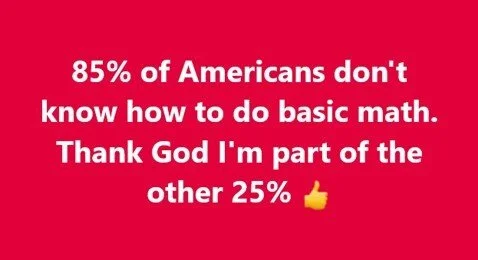
Mot: Soooo Glad I Fingured This Out via da Net - I Is!!
Mot: Happy “Columbus Day” Weekend!
FRANK26….10-12-25……PEACE STARTS THE END
KTFA
Sunday Night Video
FRANK26….10-12-25……PEACE STARTS THE END
This video is in Frank’s and his team’s opinion only
Frank’s team is Walkingstick, Eddie in Iraq and guests
Playback Number: 605-313-5163 PIN: 156996#
KTFA
Sunday Night Video
FRANK26….10-12-25……PEACE STARTS THE END
This video is in Frank’s and his team’s opinion only
Frank’s team is Walkingstick, Eddie in Iraq and guests
Playback Number: 605-313-5163 PIN: 156996#
Federal Reserve is TRAPPED - Political Chaos, Economic CRISIS and Internal Divisions Spell TURMOIL
Federal Reserve is TRAPPED - Political Chaos, Economic CRISIS and Internal Divisions Spell TURMOIL
Lena Petrova: 10-12-2025
The US economy is currently operating in a state of cognitive dissonance. On one hand, the stock market is booming, and GDP growth remains surprisingly resilient. On the other, the foundational rules of economics seem to have broken down, leaving the Federal Reserve trapped in an unprecedented balancing act.
The traditional playbook for central banking is obsolete. We are witnessing a profound decoupling of core economic indicators, presenting the Fed with a new, destabilizing trilemma: controlling inflation, achieving maximum employment, and ensuring financial stability—all at the same time.
Federal Reserve is TRAPPED - Political Chaos, Economic CRISIS and Internal Divisions Spell TURMOIL
Lena Petrova: 10-12-2025
The US economy is currently operating in a state of cognitive dissonance. On one hand, the stock market is booming, and GDP growth remains surprisingly resilient. On the other, the foundational rules of economics seem to have broken down, leaving the Federal Reserve trapped in an unprecedented balancing act.
The traditional playbook for central banking is obsolete. We are witnessing a profound decoupling of core economic indicators, presenting the Fed with a new, destabilizing trilemma: controlling inflation, achieving maximum employment, and ensuring financial stability—all at the same time.
Here is a deep dive into the complex paradox reshaping modern central banking and why the stakes have never been higher.
For decades, the economy generally followed the rules established by the Phillips Curve: when unemployment is low, inflation accelerates (as labor costs rise). When growth slows, unemployment rises, dampening inflation.
This relationship is officially on life support.
Today, while the U.S. labor market is tight, economic growth is no longer reliably creating commensurate job increases. Unemployment remains low but has begun to stagnate. Meanwhile, inflation, though down drastically from its 2022 peak of 9%, remains stubbornly above the Fed’s established 2% target.
What is driving this breakdown? Structural change.
This dynamic means the economy can grow robustly without overheating the labor market, defying the old rules and making it immensely difficult for the Fed to gauge when to step on the brakes (or the gas).
The Federal Reserve is currently facing three conflicting objectives, any move toward one risks undermining the others:
Inflation is sticky. The Fed needs to keep rates restrictive enough to push inflation back down to 2%. But maintaining high rates for too long leads directly to the next problem…
If the Fed is too restrictive, it risks triggering a sharp recession, damaging employment. But the greatest danger lurks in the financial markets. Market participants, buoyed by solid data, are highly optimistic about imminent rate cuts. This optimism is creating its own peril.
Market expectations risk inflating new asset bubbles. If the Fed caves to pressure and cuts rates too soon, it validates the speculative risk-taking currently visible in high asset valuations and leverage. This setup carries worrying echoes of the financial vulnerabilities that preceded the 2008 crisis.
The Fed must manage inflation without crushing the job market or triggering a systemic financial meltdown spurred by excessive speculation.
If the complex economic variables weren’t enough, the Federal Reserve must operate under intense external pressures that severely constrain its policy choices.
The single largest constraint is the sheer scale of the national debt, which now exceeds $37 trillion. Servicing this gargantuan debt load becomes exponentially more expensive when interest rates are high. This creates intense, often unspoken, political pressure on the Fed to lower rates, regardless of inflationary risk.
Furthermore, the environment is rife with political influence. Figures like Donald Trump frequently criticize the Fed, undermining its independence and challenging its decisions. When combined with ongoing fiscal policy instability (such as the impact of evolving tariffs), monetary policy decisions are no longer made in an objective vacuum.
The interaction between fiscal policy, monetary policy, and political noise is creating a chaotic, volatile environment where every carefully calculated move risks being undermined by forces outside the central bank’s control.
Faced with an economic reality that violates its models, the Federal Reserve is debating fundamental changes.
The most profound shift under discussion involves moving away from the rigid, decades-old 2% inflation target toward a more flexible approach. If productivity gains and structural shifts mean the economy can tolerate and perhaps even benefit from slightly higher, stable inflation (say, 2.5% or 3%) without damaging employment, maintaining the hard 2% line becomes unnecessarily punitive.
However, changing this target is a massive undertaking that requires careful communication to maintain public trust and anchor inflationary expectations.
The modern central banker is dealing with unprecedented complexity. The current environment demands not just incremental adjustments to interest rates, but potentially a complete overhaul of the objectives and tools used to manage the modern, structurally altered economy. Any misstep could result in either runaway inflation, a devastating recession, or a repeat of a financial stability crisis.
For an in-depth exploration of these economic dynamics and the Federal Reserve’s complex dilemma, we recommend watching the full analysis video from Lena Petrova.
Seeds of Wisdom RV and Economics Updates Sunday Afternoon 10-12-25
Good Afternoon Dinar Recaps,
Citigroup Warns: BRICS De-Dollarization Threatens the U.S. Dollar’s Global Grip
Citigroup analysts sound the alarm as the BRICS alliance accelerates its de-dollarization campaign — signaling a pivotal shift in global finance.
Good Afternoon Dinar Recaps,
Citigroup Warns: BRICS De-Dollarization Threatens the U.S. Dollar’s Global Grip
Citigroup analysts sound the alarm as the BRICS alliance accelerates its de-dollarization campaign — signaling a pivotal shift in global finance.
A Warning From Wall Street
Citigroup’s latest outlook identifies a growing “systemic threat” to the dollar’s dominance from the coordinated financial strategies of BRICS nations.
Analysts warn that the rapid adoption of non-dollar trade settlements, new payment systems, and cross-border central bank alliances are reshaping global liquidity flows.
The report calls the trend “the most significant structural challenge to the U.S. dollar since the 1970s.”
The BRICS Push: From Talk to Implementation
What began as diplomatic rhetoric is now becoming reality.
● Russia and China are settling energy trades in yuan and rubles.
● India and Brazil are piloting bilateral trade systems using digital currencies and national units of account.
● Saudi Arabia and the UAE, both new BRICS members, are exploring petro-contracts priced in non-dollar terms.These moves erode the U.S. dollar’s historical leverage in energy and commodities — the backbone of global reserve demand.
Citigroup’s Assessment: The New Reserve Math
Citigroup warns that U.S. Treasuries are losing appeal as global reserves diversify into gold, yuan, and commodity-backed assets.
BRICS-led settlement networks, using blockchain-based systems, are enabling trade without SWIFT — bypassing U.S. sanctions and oversight mechanisms.
The bank projects that the dollar’s share of global reserves could fall below 55% by 2030, down from over 70% two decades ago.
Policy Implications and Financial Fallout
Washington faces a delicate balancing act: defending dollar dominance while managing internal inflation and debt pressures.
Analysts note that the Federal Reserve’s high-rate environment, though stabilizing the short term, risks driving more nations toward alternative trade blocs.
“If BRICS achieves critical mass in digital settlements,” one Citigroup strategist warned, “the dollar’s monopoly on global trust could fracture.”
Why This Matters
This is more than a currency competition — it’s a battle for global financial architecture.
The Citigroup report underscores that de-dollarization isn’t theoretical anymore; it’s unfolding through real trade agreements, digital infrastructures, and policy pivots.
The era of a single global reserve anchor is fading, replaced by a multipolar web of asset-backed systems tied to trade and technology.
This is not just politics — it’s global finance restructuring before our eyes.
@ Newshounds News™ Exclusive
Source:
• Watcher Guru – Citigroup US Dollar Outlook Signals Urgent Threat from BRICS Shift
~~~~~~~~~
Seeds of Wisdom Team RV Currency Facts Youtube and Rumble
Newshound's News Telegram Room Link
Follow the Gold/Silver Rate COMEX
Follow Fast Facts
Seeds of Wisdom Team™ Website
Thank you Dinar Recaps
“Tidbits From TNT” Sunday 10-12-2025
TNT:
Tishwash: Only two US bases to stay in Iraq
Two advisory US bases will remain in Iraq, sources said on Saturday, as the withdrawal of American forces continues on schedule under the bilateral security agreement with Washington.
The sources told Shafaq News that the bases will host a limited number of military advisers tasked with training and coordination support "as needed."
Under the plan, all US combat troops will depart by September 2026. Global Coalition personnel — once numbering about 2,000 — will be reduced to fewer than 500, primarily stationed in Erbil, with others redeployed to Kuwait.
TNT:
Tishwash: Only two US bases to stay in Iraq
Two advisory US bases will remain in Iraq, sources said on Saturday, as the withdrawal of American forces continues on schedule under the bilateral security agreement with Washington.
The sources told Shafaq News that the bases will host a limited number of military advisers tasked with training and coordination support "as needed."
Under the plan, all US combat troops will depart by September 2026. Global Coalition personnel — once numbering about 2,000 — will be reduced to fewer than 500, primarily stationed in Erbil, with others redeployed to Kuwait.
Baghdad described the transition as a “restoration of sovereignty” while preserving security and intelligence cooperation with Washington. Iran-aligned factions have hailed it as a “resistance victory,” whereas Kurdish officials backed a limited US presence to help counter ISIS threats in northern Iraq. link
************
Tishwash: Al-Sudani's advisor reveals the date of the withdrawal of the last foreign force from Iraqi territory.
The Iraqi Prime Minister's security advisor, Khaled al-Yaqoubi, revealed the date for the complete withdrawal of foreign forces from Iraq, pointing to a new "security and military" agreement that will strengthen the strategic framework agreement between Baghdad and Washington.
In a televised interview followed by Al-Jabal, Al-Yaqoubi said, "Iraq is transitioning to a new phase with the United States, for the first time since 2014, following the American withdrawal."
He explained that, "For the first time, we have reached an agreement to withdraw combat forces and transition to a joint bilateral relationship."
Al-Yaqoubi confirmed the continuation of negotiations between the two countries, the implementation of the agreement on the timetable for the withdrawal of combat forces of the US-led international coalition from Iraq, and the transition to bilateral relations.
He said, "Negotiations are ongoing between the two delegations, and it is hoped that we will reach an agreement next month." He revealed that "a bilateral Iraqi-US military security agreement will strengthen the strategic framework agreement signed in 2008 between the two countries."
According to Al-Sudani's advisor, the Iraqi government began implementing the withdrawal timetable agreed upon with the United States on September 30 of this year, and "Iraq will be free of any American combat forces or members of the international coalition by September 2026."
Al-Yaqoubi praised the role of the international coalition in supporting Iraq in eliminating ISIS and reclaiming its territory from the group's grip, noting that "after the terrorist groups entered Iraq, an international coalition led by the United States was formed to fight ISIS in Iraq and Syria. The coalition forces arrived under American leadership, and we defeated ISIS, leaving only a few pockets in caves." He emphasized that "Iraq controls the entire territory, militarily."
The advisor noted that "Iraq has gained significant experience in its partnership with the coalition, possessing a vast database of terrorist organizations and knowledge of how these organizations are managed, their financial activities, and the movement of their personnel."
Al-Yaqoubi addressed the Popular Mobilization Forces (PMF) and the future of armed factions in Iraq, in conjunction with new sanctions imposed by Washington. He ruled out any further steps to follow, saying, "I don't think they (the recent sanctions) are a prelude to anything, and this isn't the first time sanctions have been imposed on Iraqi parties."
He added, "The Iraqi state has its own laws and methods for defending its citizens and institutions, and these are unilateral American measures, not international ones. It's true that they will have an impact, but what's important is that even the rationale for the sanctions decisions spoke of Iraq's interest in the strategic partnership, the United States' interest in this partnership, and its interest in adhering to its previous pledges."
Regarding the positioning of the factions, the spokesman revealed that “each one names them in their own way,” explaining that “throughout the conversation with the Americans, we were talking about three points:
1-The ISIS threat, its seriousness, and assessing whether it poses a real threat.
2- Iraqi military capabilities, as neither Iraq nor the Americans want to repeat the 2014 experience when there was a clear gap in the lack of joint cooperation.
3-Taking into account the operational circumstances and complexities in the region, such as the Turkish presence and armed groups in Syria,” and “all of this was within the framework of dialogue and common interest.”
He added, "The fate of the factions depends on the security sector reform process, the enactment of the Popular Mobilization Forces law, and the circumstances facing the region." He explained, "We have a supreme committee tasked with reforming the security sector and addressing all existing shortcomings within the security institutions, and the American side is always providing advice."
In another part of his speech, Al-Yaqoubi discussed the upcoming parliamentary elections in Iraq, describing them as "decisive" and "determining the next twenty years of political life in Iraq." He emphasized that major decisions in the country have been "postponed until the next period." link
************
Tishwash: Government Advisor: The Central Bank is leading 3 projects that will achieve a breakthrough in digital transformation
Iraq moves to the ranks of developed countries
Advisor to the Prime Minister for Banking Affairs, Saleh Mahoud, confirmed today, Saturday, that the Central Bank is working on 3 strategic projects for financial transformation, which are the local electronic card, rapid payment, and the billing system, indicating that the Central Bank has timings to complete these projects and achieve a transition in the level of financial inclusion to greater levels.
Mahoud said in a statement to the official agency that followed him: “The Central Bank is currently working on three very important projects that will move Iraq to important and advanced levels”, noting that “these projects are the local electronic card, the express payment, and the billing system”.
He added that “the Central Bank now has timings to complete these three projects in order to achieve a transition in the level of financial inclusion to greater and more levels”, indicating that “Iraq often benefits from global experiences, especially in the financial field and digital transformations. link
************
Member: Hoping Hoping Hoping!!!!

Mot: . The Really SCAREY Part bout 4 am ish

News, Rumors and Opinions Sunday 10-12-2025
Gold Telegraph: A US Treasury-issued Gold-backed Stablecoin?
10-12-2025
BREAKING NEWS: MAJOR BANKS EXPLORE ISSUING STABLECOIN PEGGED TO G7 CURRENCIES
Very big news.
“Group includes US, UK, Swiss, Japanese, Canadian lenders…”
Gold Telegraph: A US Treasury-issued Gold-backed Stablecoin?
10-12-2025
BREAKING NEWS: MAJOR BANKS EXPLORE ISSUING STABLECOIN PEGGED TO G7 CURRENCIES
Very big news.
“Group includes US, UK, Swiss, Japanese, Canadian lenders…”
Years ago, I said stablecoins would be the real future of finance. Most thought it was absurd, too dull to matter. Now the biggest banks and G7 nations are racing to get involved. The real thing to watch: Stablecoins and gold People are starting to see it slowly. It.
At the start of 2025, Sean Boyd, one of the leaders of Agnico Eagle, told me he believed gold could reach $5,000 an ounce. At the time, few were bold enough to make that call. Today, gold is trading above $4,000, and the world is beginning to see what he saw coming. I am looking forward to having Sean back on the show.
Gold Telegraph: GOLD TELEGRAPH CONVERSATION #6: SEAN BOYD
“We could see gold at $5,000. We could still have uncertainty and disorder, but the world wouldn't be ending.”
Join me for an engaging conversation with the former CEO and current Chair of the Board of Agnico Eagle Mines—the world's third largest gold producer—as he shares his personal journey, insights into the mining industry, and his current outlook for gold.
Sean was recently inducted into the Canadian Mining Hall of Fame, and his exceptional leadership at Agnico Eagle stands as a shining example of extraordinary success in the mining industry. Under Mr. Boyd's leadership, Agnico Eagle (@agnicoeagle) evolved from a single-mine operation into one of Canada’s largest public corporations and among the world's most successful mining companies, boasting a current market capitalization of nearly $50 billion USD.
During our discussion, Sean noted that the West significantly trails China in securing critical metals but that represents the opportunity.
We explored a wide array of topics, including:
• The early days of building Agnico Eagle • Advice for young professionals today
• How he handled critics
• The crucial role of mining in Canada's future
• His perspective on the evolving gold market
• The potential for a monetary reset
• His recommendations for a future Canadian Prime Minister on mining
• The importance of gold exploration
Thank you for joining me Sean. I hope you all enjoy.
https://x.com/i/status/1893444752781001204
People look at gold’s surge and think it came out of nowhere. They shouldn’t. This has been years in the making.
The quiet accumulation by central banks, the steady hand of the East, nations turning from the dollar, the rise of the Shanghai Gold Exchange, and a world drowning in debt. That is just some; the list is much longer. What’s happening now isn’t sudden. It’s the inevitable becoming visible.
There’s a quiet war being fought over the elements that power our world. China just moved another piece on the chess board… limiting rare earth exports.
The age of cheap resources is over.
The age of mineral power has begun.
A U.S. TREASURY-ISSUED GOLD-BACKED STABLECOIN?
Dr. Judy Shelton told me she envisions a “Solidus”.
A modern digital currency partially backed by a gold-convertible Treasury.
A nod to the ancient Roman coin that stood for strength and trust. This idea could fuse blockchain transparency with sound-money integrity.
Imagine a U.S.-issued digital dollar tied to gold not by decree, but by convertibility restoring faith in money while harnessing technology to enable faster, borderless transactions.
It’s a vision where the oldest store of value meets the newest form of exchange.
We discuss gold, the dollar, BRICS, China and the future.
Watch the full conversation, here: https://twitter.com/i/status/1977059111604044227
GOLD TELEGRAPH CONVERSATION #11 JUDY SHELTON
“The message of gold going up is that people are expressing discomfort with the way governments try to manage the economy and manage the world…”
In this episode, Dr. Judy Shelton joins me once again to explain how restoring integrity to money through gold-linked bonds and honest monetary policy could reshape the global financial system and return power to the people.
She also warns that the United States must move before China to lead the next era of monetary reform. I hope you enjoy this discussion, and thank you, @judyshel, for joining me.
https://x.com/i/status/1975628037359325363
The United States bailed out Argentina this week. Most people missed some quiet details: The U.S. Treasury Secretary pointed to Argentina’s wealth in rare earth minerals. The global scramble for critical minerals is accelerating.
The head of the IMF just compared today’s equity valuations to the euphoria of the dot-com bubble 25 years ago. The irony? Those valuations exist because central banks flooded the world with liquidity. You can’t make this stuff up anymore…
Source(s): https://x.com/GoldTelegraph_/status/1976738690052546942
https://dinarchronicles.com/2025/10/11/gold-telegraph-a-us-treasury-issued-gold-backed-stablecoin/
***************
Courtesy of Dinar Guru: https://www.dinarguru.com/
Militia Man I'm getting very excited about what's happening because I think there's so many things out there that are tying this together that we've never seen before. It's a bigger web. It not just about one country...I like what I'm seeing...
Frank26 [Iraq boots-on-the-ground report] FIREFLY: Saleh on TV saying we have achieved unprecedented results in controlling the exchange rate and it is an all-time low inflation. Saleh is really singing like a bird today. FRANK: Can I change the world for you, Firefly? We have achieved the new exchange rate. I mean, come on! LOL. It's comical for me because you want a crystal ball where you can look into it whereas I am in the crystal ball...Saleh, the man is talking like a parrot on steroids and he's singing you the truth.
Bruce [via WiserNow] What about the timing for us to get our notifications? All week I have heard it would be over the weekend, and then...we heard it would be more like anytime from the weekend through Tuesday.
************
Jon Dowling & Tom Lennox Discuss Nesara Gesara & Currency Revaluations Latest Updates
Chris Real World: 10-12-2025
NESARA
Wikipedia • The National Economic Security and Recovery Act is a set of proposed economic reforms for the United States suggested by private citizen Harvey Francis Barnard during the 1990s.
Seeds of Wisdom RV and Economics Updates Sunday Morning 10-12-25
Good Morning Dinar Recaps,
Wall Street’s Power Surge: Deregulation Unlocks $2.6 Trillion in New Lending
Trump’s financial reforms aim to supercharge U.S. lending — but could they also tilt the balance of global banking power?
Good Morning Dinar Recaps,
Wall Street’s Power Surge: Deregulation Unlocks $2.6 Trillion in New Lending
Trump’s financial reforms aim to supercharge U.S. lending — but could they also tilt the balance of global banking power?
A Deregulation Wave — and a Strategic Shift
The Trump administration is preparing a sweeping overhaul of U.S. banking capital rules that could unlock up to $2.6 trillion in new lending capacity for Wall Street’s biggest players.
● Capital relief on the table: Loosening Common Equity Tier 1 (CET1) requirements would allow megabanks — including JPMorgan, Citigroup, and Bank of America — to expand credit lines and balance sheets.
● Policy rationale: Officials argue that freeing this capital will “restore flexibility and competitiveness,” driving U.S. lending into key strategic sectors like energy, defense, and infrastructure.
● Underlying motive: Deregulation doubles as a geopolitical move — unleashing U.S. liquidity in a moment when BRICS nations are building rival financial systems.
This is not just deregulation — it’s financial rearmament.
A Global Banking Arms Race
Across the Atlantic, regulators remain cautious, but Washington is betting on scale over restraint.
● Europe and Asia hold firm: EU and UK regulators are maintaining Basel III-era leverage ratios to protect against systemic shocks.
● The U.S. flips the script: By contrast, American policymakers view excess capital as idle potential — capital that can be weaponized for global influence.
● Strategic timing: As BRICS and Gulf states shift trade away from dollar systems, the U.S. is moving to reassert Wall Street dominance through sheer liquidity force.
This marks the return of the U.S. financial-industrial complex — not through war, but through credit expansion.
Risk and Reward — The Inflation Dilemma
Critics warn the move could reignite the very risks that led to the 2008 financial crisis.
● Systemic risk reintroduced: Reducing buffers during high-rate volatility may heighten exposure to loan defaults and asset devaluation.
● Administration counterpoint: Officials call this “controlled deregulation” — asserting that markets and AI-driven risk models now provide early warning capabilities.
● The strategic tradeoff: America appears willing to tolerate higher short-term risk for longer-term dominance in global credit creation.
In essence: risk is being reframed as leverage.
Financial Policy as Geopolitical Strategy
This isn’t just about banks — it’s about who controls the world’s credit rails.
● Reasserting dollar liquidity: Deregulation allows the U.S. to remain the primary issuer of cross-border liquidity, reinforcing dollar-based settlements even as alternatives rise.
● Parallel to sanctions policy: Washington’s leverage over SWIFT and dollar clearing remains a central geopolitical tool — deregulation strengthens that influence.
● Global context: In an era of financial fragmentation, this policy signals America’s intent to out-expand rather than out-regulate its competitors.
This is the financial counterpart to foreign policy realignment — using liquidity as soft power.
Why This Matters
We are watching a deliberate recalibration of U.S. economic strategy — one designed to secure its leadership in an emerging multi-rail world of finance.
● Deregulation may boost credit and investment, but it also reshapes the global financial hierarchy.
● It demonstrates that monetary power, not military might, is now the decisive weapon in the geopolitical contest.
● As BRICS nations test asset-backed settlements, the U.S. is countering with sheer scale, liquidity, and velocity.
This is not just politics — it’s global finance restructuring before our eyes.
@ Newshounds News™ Exclusive
Sources:
• Financial Times – Bank deregulation set to unlock $2.6tn of Wall Street lending capacity
• Reuters – U.S. financial sector eyes relaxed capital rules amid Trump reforms
• The Guardian – Global regulators warn of financial fragmentation risk
~~~~~~~~~
Qatar’s Air Force Facility in Idaho: A Strategic Alliance Hidden in Plain Sight
The U.S. quietly hosts a foreign air force training base, signaling deeper defense and geopolitical integration between Washington and Doha.
A Facility That Raised Eyebrows
The announcement that Qatar is developing an Air Force training facility at Idaho’s Mountain Home Air Force Base sparked public curiosity — and some confusion.
Initially portrayed as a “Qatari Air Force Facility,” officials have clarified that the site is part of a joint training and operational arrangement, not an independent Qatari base.
The partnership builds on a longstanding defense cooperation agreement between the U.S. and Qatar, with the Gulf nation already operating American aircraft and maintaining close logistics ties.
What’s Really Being Built
U.S. officials describe the project as an expansion of training infrastructure, designed to support joint flight operations, maintenance, and interoperability exercises.
Construction is funded by Qatar, estimated at around $110 million, to accommodate Qatari pilots and personnel training on U.S.-made F-15 fighter jets.
The move underscores Qatar’s deepening reliance on U.S. defense systems, as the country continues to modernize its air fleet through American technology.
Why Idaho — and Why Now
Idaho’s Mountain Home AFB offers vast airspace and existing facilities ideal for high-level flight training — a major reason the U.S. Air Force approved the arrangement.
The project also reflects a strategic pivot toward coalition readiness — ensuring that U.S. partners can operate seamlessly with American forces in future joint missions.
Amid regional tensions in the Middle East, Doha’s investment signals confidence in long-term U.S. security ties, even as Qatar balances relationships with Iran and Turkey.
Geopolitical Undercurrents
Qatar’s funding of infrastructure on U.S. soil blurs the traditional lines of host-nation support, indicating a mutual strategic dependency.
The arrangement could serve as a template for other allied nations seeking deeper military integration with Washington without establishing overt “foreign bases.”
It also highlights America’s growing use of allied partnerships to offset budgetary pressures while maintaining global reach.
Why This Matters
This development isn’t just about air training — it’s about embedding global alliances into U.S. territory, signaling a shift from transactional defense agreements toward interoperable military ecosystems.
Qatar’s foothold in Idaho represents the quiet globalization of U.S. defense infrastructure, blending diplomacy, finance, and strategy under one roof.
This is not just politics — it’s global finance restructuring before our eyes.
@ Newshounds News™ Exclusive
Sources:
• Newsweek – Qatar is Getting an Air Force Facility in Idaho: What to Know
• Newsweek – Qatari Air Force Facility Update: Official Clarifies Status and Plans
~~~~~~~~~
Seeds of Wisdom Team RV Currency Facts Youtube and Rumble
Newshound's News Telegram Room Link
Follow the Gold/Silver Rate COMEX
Follow Fast Facts
Seeds of Wisdom Team™ Website
Thank you Dinar Recaps
4 Ways To Get Rich Without People Noticing
4 Ways To Get Rich Without People Noticing
John Csiszar Sat, October 11, 202 GOBankingRates
There are two kinds of rich people in the world. The “visibly wealthy” actively advertise their wealth, blasting social media with their extravagant lifestyles and owning “show-off” possessions, like luxury sports cars, yachts and jewelry. The other type lives relatively frugally, enjoying the occasional extravagance but generally just keeping to themselves.
4 Ways To Get Rich Without People Noticing
John Csiszar Sat, October 11, 202 GOBankingRates
There are two kinds of rich people in the world. The “visibly wealthy” actively advertise their wealth, blasting social media with their extravagant lifestyles and owning “show-off” possessions, like luxury sports cars, yachts and jewelry. The other type lives relatively frugally, enjoying the occasional extravagance but generally just keeping to themselves.
**********************
In some cases, the latter category may have more wealth than the former, as living in the fast lane is one of the easiest ways to lose wealth. Just ask billionaire Warren Buffett, who still lives in the relatively modest Nebraska house he bought in 1958. Certainly, living a modest lifestyle like Buffett can help you get rich without people noticing, but Buffett also made his billions on the back of a stellar investment career.
Invest Early
If you’re looking to become a millionaire, it might be as easy as starting to invest at an early age. Over a multidecade work career, investments have time to benefit from compounding. After a few decades of investing consistently and reinvesting your gains, you might be surprised to see how much you end up with in your nest egg.
Imagine, for example, that you start investing at age 20, targeting retirement at age 65. Investing even $250 per month and earning a relatively modest 7% annual return will grow your account balance to about $948,000, just shy of $1 million, per the Ramsey Solutions investment calculator. If you put all that money into an S&P 500 index fund and earn 10% per year, which is roughly the index’s long-term average, you’d have over $2.6 million.
Let that sink in a bit. Investing just $250 per month over the long run could potentially get you a multimillion-dollar account value by age 65.
Boost Your Investments Along With Your Income
An even better way to become a millionaire even before retirement is to sock away more money into your retirement accounts as you earn more. Far too many Americans are living paycheck-to-paycheck in part because whenever their income increases, they also start spending more. It’s an understandable phenomenon, as most people feel they deserve to spend and enjoy the money they work so hard for. But in terms of building real, long-term wealth, it’s a mistake.
Imagine instead if when your income rises from $50,000 per year to $70,000 per year that you invest $15,000 of that increase. That still leaves you with $5,000 more per year to spend on yourself, but it also shores up your long-term wealth-building plan.
Investing that $15,000 per year alone — not even counting the monthly contributions you should already be making — would result in an additional $949,000 in your bank account after just 20 years of earning a 10% annual return. Even investing half of that increase — $7,500 every year — and earning a 7% annual return still translates into an additional $325,000 in your pocket after 20 years.
Build Passive Income Streams
Passive income is a revenue stream that isn’t tied to the hours of work you put in. Rental income and investment income are two common examples. While your job requires that you trade hours of your time for your salary, passive income comes in whether you tend to it or not.
TO READ MORE: https://finance.yahoo.com/news/4-ways-rich-without-people-231706812.html
Dr. Scott Young: Will there be a QFS Credit Card?
Dr. Scott Young: Will there be a QFS Credit Card?
10-11-2025
The world of finance is buzzing with talk of the Quantum Financial System (QFS), and for many, it conjures images of radical upheaval.
But what does this seemingly futuristic concept actually mean for your everyday banking and credit? Dr. Scott Young, in his insightful video, cuts through the speculation, offering a clear and reassuring perspective on how the QFS will transform our financial landscape.
Dr. Scott Young: Will there be a QFS Credit Card?
10-11-2025
The world of finance is buzzing with talk of the Quantum Financial System (QFS), and for many, it conjures images of radical upheaval.
But what does this seemingly futuristic concept actually mean for your everyday banking and credit? Dr. Scott Young, in his insightful video, cuts through the speculation, offering a clear and reassuring perspective on how the QFS will transform our financial landscape.
One of the biggest misconceptions surrounding the QFS is that it will necessitate the creation of entirely new bank accounts. Dr. Young clarifies this crucial point: your existing accounts are not going anywhere. Instead, the QFS aims to detach the current banking system’s routing mechanisms, like SWIFT codes, from the Federal Reserve system.
Think of it not as a replacement, but as a fundamental upgrade and a liberation from a centralized control. This process will make your accounts QFS-compliant without altering your current balances or affecting your ability to access your funds.
The implications extend beyond simple checking and savings. Dr. Young highlights that this detachment will also bring a new level of security to our credit cards and credit accounts.
Through the integration of blockchain technology, these accounts will become virtually invisible to external interference, effectively shielding them from the persistent threats of cyberattacks and malicious bots. This enhanced security is a welcome development in our increasingly digital world.
Furthermore, Dr. Young doesn’t shy away from critiquing the current financial system’s flaws, particularly the nature of compounding interest on credit.
He boldly labels it as a form of “financial pillaging” that needs to be addressed. The QFS, through anticipated reforms led by Treasury interventions, appears poised to tackle this issue head-on.
This shift, according to Dr. Young, signals a monumental move away from a debt-driven economy towards one that prioritizes cash spending and genuine financial responsibility. It’s a future where the relentless cycle of debt might finally loosen its grip.
For us, the individuals navigating this evolving financial terrain, Dr. Young stresses the importance of a mindset adjustment.
We need to embrace the principles of living within our means and prepare for a future where credit limits and interest rates are likely to be more regulated and simplified. This proactive approach will be key to adapting and thriving in the new financial era.
Dr. Young’s video serves as a valuable educational resource, demystifying the upcoming changes driven by the QFS. More importantly, it acts as a timely call for financial prudence and a reminder that understanding these shifts is the first step towards navigating them successfully.
For a deeper dive into the intricacies of the Quantum Financial System and its profound impact, be sure to watch the full video from Dr. Scott Young. Understanding these changes is not just about staying informed; it’s about empowering ourselves for a more secure and responsible financial future.
https://dinarchronicles.com/2025/10/11/dr-scott-young-will-there-be-a-qfs-credit-card/
Jon Dowling: Quick RV Updates, Vietnam Currency News for October 10, 2025
Jon Dowling: Quick RV Updates, Vietnam Currency News for October 10, 2025
10-10-2025
The financial landscape is currently defined by drastic crosscurrents: on one hand, high-stakes geopolitical efforts aiming for regional stability; on the other, increasingly urgent warnings from major financial institutions about crippling systemic risk in global markets.
The Weekly RV Report, dated Friday, October 10th, 2025, provided a comprehensive snapshot of this delicate balance, highlighting everything from a potential gold-standard reset to the jaw-dropping surge in silver prices.
Jon Dowling: Quick RV Updates, Vietnam Currency News for October 10, 2025
10-10-2025
The financial landscape is currently defined by drastic crosscurrents: on one hand, high-stakes geopolitical efforts aiming for regional stability; on the other, increasingly urgent warnings from major financial institutions about crippling systemic risk in global markets.
The Weekly RV Report, dated Friday, October 10th, 2025, provided a comprehensive snapshot of this delicate balance, highlighting everything from a potential gold-standard reset to the jaw-dropping surge in silver prices.
For investors navigating this complex environment, the message is clear: caution and strategic positioning are paramount.
This week’s geopolitical activity centered on critical diplomatic movements aimed at diffusing regional conflicts. President Trump’s upcoming visit to the Middle East, specifically Egypt, is viewed as a significant effort to broker peace and bring the protracted Gaza conflict to a close.
Parallel to this, the anticipated release of several long-held U.S. hostages offers a cautious signal of de-escalation in international relations.
While markets crave stability, these high-level negotiations demonstrate the deep interconnectedness between diplomacy and economic confidence.
Beneath the steady façade of recent equity performance, serious warnings are emerging from leading global financial bodies.
The International Monetary Fund (IMF) has raised a red flag regarding severe liquidity risks lurking in the foreign exchange market. The exposure is vast, concerning a staggering $9.6 trillion, underscoring potential systemic vulnerabilities that could amplify market shocks.
Echoing this concern is JP Morgan, which reiterated its severe warning about U.S. equities. According to their analysis, a probable sharp correction is not yet priced into the market, aligning with earlier, more ominous forecasts of a major market downturn predicted for late 2025 or early 2026.
These warnings suggest that while the current bull run may feel resilient, the underlying financial plumbing is stressed, making proactive risk management essential.
Perhaps the most significant development detailed in the report is the structural conversation surrounding the foundational nature of global debt.
The debate centers on the potential issuance of a U.S. gold-backed 50-year Treasury bond. As championed by economist and former Federal Reserve Board nominee Judy Shelton, this radical proposal could fundamentally redefine global monetary systems.
Shelton argues that tying Treasury debt to gold would restore international confidence, promote a level monetary playing field, and align with President Trump’s long-standing stance against currency manipulation.
While still in the conceptual phase, such a move would represent a monumental shift away from the current fiat system, creating a safer, more transparent mechanism for managing global debt and trade. This proposal alone signals the intense pressure policymakers feel to find genuine solutions to ballooning global leverage.
The U.S. Treasury is actively working to stabilize acute liquidity crises in struggling nations.
A notable example is the ongoing $20 billion currency swap agreement with Argentina, providing crucial short-term stability. Efforts to stabilize economies like Zimbabwe and Venezuela suggest a broader, coordinated push toward economic resets in nations burdened by currency crises.
On the investment front, Vietnam has become a major highlight. The country’s stock market received an official upgrade from frontier to emerging market status, positioning it as a prime institutional investment opportunity well ahead of its official inclusion in September 2026.
This move signals confidence in Vietnam’s growth trajectory despite global risks.
While monetary policy debates rage, precious metals are making history.
Silver prices surged dramatically this week, briefly touching levels above $51 an ounce—a height not seen since 1980—before a modest pullback. Gold remains robust, maintaining its strength as the quintessential store of value.
A technical indicator crucial to understanding silver’s rally is backwardation. This condition occurs when the spot price for immediate physical delivery of a commodity is higher than the price of futures contracts for delivery in the future.
In simple terms, backwardation in silver is a potent bullish signal. It indicates immediate and overwhelming demand for physical metal, suggesting that large holders (“whales”) are aggressively positioning themselves.
This market stress often forces “shorts” (those betting on lower prices) to cover their positions quickly, potentially fueling further rapid price increases.
The decline in crude oil prices provided a rare bit of positive news for consumers and global inflation concerns, while the dollar index remained steady but slightly elevated, reflecting the ongoing global flight to dollar safety amidst systemic warnings.
The current financial environment demands a dual strategy: vigilance regarding the immediate threat of market corrections (as warned by JP Morgan) and a forward-looking perspective on potential monetary resets (as proposed by Judy Shelton).
The RV Report concludes with a forceful reminder: precious metals are not merely investments right now—they are essential strategic assets and the historically proven hedge against the financial turbulence and global realignments that appear increasingly likely in the coming quarters.
For a deeper dive into these critical market signals and investment strategies, we strongly encourage you to watch the full video report from Jon Dowling.