
Thank you to all the subscribers to our Early Access program…we thank you for your continued support.
We are excited to offer this new service to keep you informed and up-to-date on the latest Dinar and currency news.
UK’s Bond Collapse Sends a Major Warning to the World, US Treasuries are Next
UK’s Bond Collapse Sends a Major Warning to the World, US Treasuries are Next
Sean Foo: 9-5-2025
Something’s brewing in the heart of the global financial system, and it has economists and investors alike paying close attention.
A recent video from economic analyst Sean Foo shines a harsh spotlight on the unfolding crisis gripping the British bond market – and why it’s far more than just a local problem. He argues it’s a chilling precursor to deeper economic distress on a global scale.
Imagine a government caught in a financial vise. That’s precisely the precarious situation the British government finds itself in.
UK’s Bond Collapse Sends a Major Warning to the World, US Treasuries are Next
Sean Foo: 9-5-2025
Something’s brewing in the heart of the global financial system, and it has economists and investors alike paying close attention.
A recent video from economic analyst Sean Foo shines a harsh spotlight on the unfolding crisis gripping the British bond market – and why it’s far more than just a local problem. He argues it’s a chilling precursor to deeper economic distress on a global scale.
Imagine a government caught in a financial vise. That’s precisely the precarious situation the British government finds itself in.
Despite multiple interest rate cuts from the Bank of England, bond yields are soaring to a staggering 27-year high. This signals a deep lack of confidence from investors in the UK’s ability to manage its burgeoning debt.
The numbers are stark: the UK’s debt-to-GDP ratio stands at a daunting 100%. What makes this particularly alarming for Britain, unlike the United States, is its lack of a global reserve currency.
This crucial difference severely limits its options to navigate this debt crisis without risking the perilous path of hyperinflation.
The government is caught in a classic fiscal bind. Increase taxes significantly without major spending cuts? You risk shrinking the private sector, suffocating economic growth, and ultimately creating a vicious cycle of rising borrowing costs and declining investor confidence. It’s a no-win scenario that demands drastic action.
The crisis isn’t solely internal. External forces are also playing a significant role. The ongoing trade war with the United States, for instance, imposes tariffs that undermine UK exports, further straining public finances already under immense pressure.
Compounding this, the pound sterling has suffered a sharp decline. While a weaker currency can sometimes boost exports, in this scenario, it’s primarily adding inflationary pressures and raising the cost of essential imports and production. Businesses face higher input costs, which inevitably get passed on to consumers already battling a cost-of-living crisis.
Sean Foo meticulously draws unsettling parallels between the UK’s predicament and looming challenges in the US Treasury market.
While the US benefits immensely from the dollar’s global reserve currency status – a significant advantage the UK lacks – it’s not immune to the debt spiral fueled by unprecedented government spending and borrowing. Rising bond yields and massive refinancing needs aren’t unique to London; they represent a significant risk for Washington too.
The video serves as a sobering reminder: without drastic fiscal adjustments, including significant spending cuts, both the UK and US debt markets could face severe crises.
The urgent need for fiscal discipline, cautious monetary policy, and the resolution of trade conflicts are not just buzzwords; they are critical lifelines to prevent a deepening crisis in sovereign debt markets worldwide.
The UK’s bond market isn’t just a local concern; it’s a flashing red light for global debt market instability, particularly highlighting the imminent risks facing the US Treasury market. Understanding these dynamics is crucial for anyone navigating today’s economic landscape.
For a deeper dive into the mechanics of this crisis and its global implications, you absolutely need to watch Sean Foo’s full video. Don’t miss out on these vital insights.
The “Emperor Dollar” has No Clothes
The “Emperor Dollar” has No Clothes
Liberty and Finance: 9-4-2025
The financial world is abuzz, and for good reason. Gold has decisively broken above $3,550 and silver is soaring past $41, signaling a potentially monumental shift in global finance.
Mario Innecco discusses the breakout in gold above $3,550 and silver above $41, explaining that both technical momentum and global fundamentals are driving the moves.
The “Emperor Dollar” has No Clothes
Liberty and Finance: 9-4-2025
The financial world is abuzz, and for good reason. Gold has decisively broken above $3,550 and silver is soaring past $41, signaling a potentially monumental shift in global finance.
Mario Innecco discusses the breakout in gold above $3,550 and silver above $41, explaining that both technical momentum and global fundamentals are driving the moves.
He highlights geopolitical turbulence, mounting Western debt, and stronger BRICS unity as key forces behind the shift away from the dollar and toward gold.
Mario warns that rising sovereign yields worldwide reflect eroding confidence in fiat currencies, with central bank interventions failing to contain the trend.
He connects today’s instability to years of artificially low interest rates, arguing that a painful adjustment toward higher rates and a more frugal economic reality is inevitable.
Looking forward, he sees gold and silver surprising to the upside, a growing risk of dollar devaluation, and the possibility of a future gold revaluation by central banks.
But according to Mario Innecco from Liberty and Finance, whose insights were recently featured on Wealthion, this isn’t merely a technical market fluctuation. Instead, it’s a powerful combination of technical momentum and profound global fundamentals driving precious metals into uncharted territory.
These factors, Innecco argues, are accelerating a pronounced shift away from the U.S. dollar as the world’s reserve currency and a decisive move towards gold as the ultimate store of value.
The implications of these shifts are already manifesting. Innecco highlights the rising sovereign yields worldwide as a critical indicator.
These higher yields reflect a palpable and rapidly eroding confidence in fiat currencies. Despite central banks’ desperate attempts to intervene and contain the trend, the market’s message is clear: the party is over.
He connects today’s instability directly to years of artificially suppressed interest rates, a policy that papered over cracks but ultimately prevented a necessary economic cleansing.
The chickens are coming home to roost, and Innecco unequivocally states that a painful adjustment toward higher rates and a more frugal economic reality is inevitable. There’s no escaping the consequences of decades of easy money.
Innecco’s message is clear: the current rally in gold and silver is not just a passing trend. It’s a reflection of deeper structural changes in the global financial system, signaling a fundamental re-evaluation of how wealth is stored and valued.
INTERVIEW TIMELINE:
0:00 Intro
1:30 Gold & silver surging
4:00 Sovereign debt crisis
6:01 Interest rates
8:37 Risks to 60/40 portfolio
10:45 Dedollarization Gold revaluation
17:54 High interest rates
20:50 Fed independence
22:28 Gold revaluation
25:00 Last thoughts
Seeds of Wisdom RV and Economic Updates Friday Afternoon 9-5-25
Good Afternoon Dinar Recaps,
Currency Selection: JP Morgan Flags BRICS Push, US Dollar Loses Value
Bank warns of accelerating de-dollarization as BRICS strengthens gold-backed frameworks.
JP Morgan’s Warning on the Dollar
JP Morgan’s latest currency analysis has raised fresh concerns about the U.S. dollar’s long-term role as the world’s reserve currency. The bank highlighted that the dollar’s share of global foreign exchange reserves has slipped from 71% in 2000 to 58% today, a decline that has accelerated over the past two decades.
Good Afternoon Dinar Recaps,
Currency Selection: JP Morgan Flags BRICS Push, US Dollar Loses Value
Bank warns of accelerating de-dollarization as BRICS strengthens gold-backed frameworks.
JP Morgan’s Warning on the Dollar
JP Morgan’s latest currency analysis has raised fresh concerns about the U.S. dollar’s long-term role as the world’s reserve currency. The bank highlighted that the dollar’s share of global foreign exchange reserves has slipped from 71% in 2000 to 58% today, a decline that has accelerated over the past two decades.
The research points to three major forces behind the shift:
Commodity trades increasingly priced in non-USD currencies.
New cross-border payment systems bypassing U.S. banks.
Ongoing reductions in central bank dollar reserves.
“In the commodities space, energy transactions are more often being priced in non-USD currencies,” the report stated, underscoring the trend toward de-dollarization.
BRICS Multi-Currency Strategy
Rather than creating a single rival to the dollar, BRICS nations are developing a multi-currency framework backed by gold. Russian Foreign Minister Sergey Lavrov emphasized: “No one in the BRICS community is raising the issue of replacing the dollar. The alternative is to switch to settlements in national currencies.”
This structure allows member nations to peg their currencies to gold reserves while maintaining monetary sovereignty. It is viewed as a more practical model than an immediate single BRICS currency.
China’s Cross-Border Interbank Payment System (CIPS) now links nearly 5,000 banks worldwide and offers settlement times as fast as 7 seconds — a direct challenge to SWIFT’s dominance.
Gold-Backed Developments
Gold plays a central role in BRICS’ evolving monetary system:
BRICS central banks are purchasing directly from domestic miners, bypassing Western supply chains.
The Shanghai Futures Exchange introduced T+0 gold settlement in March 2024, transforming physical gold trading.
World Gold Council data shows 19 of 36 central banks have increased gold purchases through local partnerships.
Analysts now estimate fair value for gold at around $8,000 per ounce, reflecting tightening supply conditions. Short-term lease rates have surged — gold at 9.4% and silver at 6.5% — pointing to demand pressure across global markets.
A Gradual Transition
JP Morgan’s assessment suggests the future is unlikely to bring a single replacement for the dollar. Instead, multiple reserve alternatives may emerge, with BRICS’ gold-backed multi-currency system playing a pivotal role.
While timelines remain fluid, analysts point to 2026 as a possible target for fuller BRICS rollout. This multipolar approach underscores a deeper geopolitical realignment as emerging markets reduce their reliance on U.S. financial infrastructure.
Why This Matters
The dollar remains dominant, but its gradual erosion signals a future where trade and reserves are distributed across a basket of currencies. BRICS’ gold-backed strategy is accelerating this trend, forcing global institutions to rethink assumptions about the dollar’s permanence at the center of global finance.
@ Newshounds News™
Source: Watcher.Guru
~~~~~~~~~
Seeds of Wisdom Team RV Currency Facts Youtube and Rumble
Newshound's News Telegram Room Link
Follow the Roadmap
Follow the Timeline
Seeds of Wisdom Team™ Website
Thank you Dinar Recaps
Seeds of Wisdom RV and Economic Updates Friday Morning 9-5-25
Good Morning Dinar Recaps,
SEC’s Agenda Proposes Crypto Safe Harbors, Broker-Dealer Reforms
Regulatory shift could reduce oversight and give crypto firms room to operate in the U.S.
A Softer SEC Approach
The U.S. Securities and Exchange Commission (SEC) has unveiled a sweeping set of proposed rules that could reshape how digital assets are regulated. SEC Chair Paul Atkins announced roughly 20 rule proposals as part of the agency’s spring 2025 agenda, signaling a departure from the heavy-handed enforcement tactics of recent years.
Good Morning Dinar Recaps,
SEC’s Agenda Proposes Crypto Safe Harbors, Broker-Dealer Reforms
Regulatory shift could reduce oversight and give crypto firms room to operate in the U.S.
A Softer SEC Approach
The U.S. Securities and Exchange Commission (SEC) has unveiled a sweeping set of proposed rules that could reshape how digital assets are regulated. SEC Chair Paul Atkins announced roughly 20 rule proposals as part of the agency’s spring 2025 agenda, signaling a departure from the heavy-handed enforcement tactics of recent years.
“The agenda covers potential rule proposals related to the offer and sale of crypto assets to help clarify the regulatory framework for crypto assets and provide greater certainty to the market,” Atkins said. He added that the new approach would focus on “smart, effective, and appropriately tailored” regulation within statutory limits.
What’s in the SEC’s Agenda
Key items in the proposal include:
Introducing exemptions and safe harbors for the offer and sale of crypto assets.
Amending the Exchange Act to account for trading of digital assets on alternative trading systems (ATS) and national securities exchanges.
Revising broker-dealer financial responsibility rules to lessen reporting and compliance burdens.
“Modernizing” custody requirements under the Investment Advisers Act of 1940 to account for digital assets.
If implemented, these reforms could reduce legal risks for crypto companies, lighten regulatory overhead, and encourage innovation within U.S. markets.
Broker-Dealers in Focus
Broker-dealer rules have long been contentious in the crypto space, particularly requirements around Know Your Customer (KYC) and Anti-Money Laundering (AML). Many decentralized networks struggle to meet these standards due to the absence of centralized data collection. Adjusting these rules could ease operational pressures while maintaining compliance pathways.
From Gensler to Atkins: A Regulatory Reversal
The SEC’s shift comes less than a year after former Chair Gary Gensler’s resignation in January 2025. Under Gensler, the commission pursued aggressive enforcement, filing lawsuits and pushing stricter custody requirements. By contrast, Atkins has overseen the withdrawal of many of those initiatives, dropping investigations and signaling a more collaborative stance toward the industry.
Why This Matters
The SEC’s evolving agenda suggests that U.S. regulators may be moving toward a more balanced framework for digital assets. While proposals still face a lengthy approval process — including public comment and review — the direction under Atkins appears clear: easing barriers for crypto while preserving investor protections.
@ Newshounds News™
Source: Cointelegraph
~~~~~~~~~
Fintech Giant Stripe Rolls Out New Payments-Focused Layer-1 Blockchain for ‘Real-World Financial Services Applications’
Stripe and Paradigm launch Tempo, a blockchain optimized for high-speed stablecoin payments.
Introducing Tempo
Stripe, in collaboration with Paradigm, has unveiled Tempo, a new layer-1 blockchain designed specifically for payments. Announced by Stripe CEO Patrick Collison, Tempo promises to support global financial services with a throughput exceeding 100,000 transactions per second and sub-second finality.
“We think of Tempo as the payments-oriented L1, optimized for high-scale, real-world financial services applications,” Collison said.
Stablecoin Fees and User Experience
Unlike many blockchains that require native tokens for transaction fees, Tempo will allow fees to be paid directly in fiat-pegged stablecoins. This feature is aimed at simplifying user adoption and enhancing the overall financial services experience.
Backed by Major Partners
Tempo is being incubated as an independent company, led by Paradigm co-founder Matt Huang. The initiative has already secured high-profile partners including:
Anthropic
Deutsche Bank
DoorDash
OpenAI
Revolut
Shopify
Standard Chartered
Visa
These firms will contribute to the blockchain’s design and deployment, ensuring it meets the needs of both traditional finance and next-generation digital services.
Technology and Features
Tempo is being built with:
A diverse validator set, with a roadmap toward permissionless validation.
Compatibility with the Ethereum Virtual Machine (EVM).
An automated market maker (AMM) for stablecoins to streamline liquidity.
The blockchain is currently in private testing, focusing on use cases such as cross-border payments, remittances, microtransactions, and AI-driven payments.
Why This Matters
The launch of Tempo marks a major step in the convergence of fintech and blockchain. By targeting payments rather than trading, Stripe and Paradigm are positioning Tempo as a global backbone for financial services — one that could rival both legacy payment networks and existing crypto infrastructure.
@ Newshounds News™
Source: Daily Hodl
~~~~~~~~~
We Are Going to Take XRP to New Heights, Says Flare Founder
Flare CEO Hugo Philion outlines bold plans to unlock billions in XRP liquidity through DeFi.
Taking XRP to New Heights
Flare co-founder and CEO Hugo Philion has doubled down on his mission to expand XRP’s role in decentralized finance. In a Thursday post, Philion said his team is “going to take XRP to new heights,” underscoring Flare’s vision to turn XRP into a yield-bearing asset.
Philion highlighted XRP as the core asset and FLR as the enabling token, positioning Flare as the bridge that connects XRP with DeFi infrastructure.
Building the Framework: From Staking to Firelight
Flare’s plans have gained traction throughout 2025:
March – Philion announced low-risk staking opportunities for XRP holders, offering rewards while minimizing validator risks.
June – The project unveiled Firelight, a liquid staking protocol that lets XRP holders wrap tokens into FXRP and mint stXRP for use in DeFi. Partners included VivoPower, which committed $100 million in XRP, and Uphold, a launch collaborator.
By August, Flare revealed that Firelight could deliver annual yields of 4–7% on XRP, a breakthrough for an asset that traditionally generated no yield.
A Non-Custodial, DeFi-Ready System
Firelight is designed as a decentralized and non-custodial protocol, addressing risks seen with centralized exchanges. With wrapped XRP (FXRP) secured on Flare and represented by stXRP, holders can:
Participate in lending and borrowing.
Mint stablecoins.
Access Ethereum-style DeFi markets thanks to Flare’s EVM compatibility and oracle integrations.
This approach could unlock over $100 billion in previously idle XRP liquidity, giving XRP new utility beyond cross-border payments.
Community and Market Reactions
Legal analyst Bill Morgan has long argued that XRP needs to expand its use cases. “XRP has to work harder to grow its utility beyond payments,” he said earlier this year. Firelight, he noted, may be the path forward.
Market watchers are also speculating on price implications. EasyA co-founder Dom Kwok emphasized that XRP, which once peaked at a $200 billion market cap without DeFi integration, could achieve four-figure valuations if it experiences a true DeFi breakout driven by institutional adoption, ETFs, and stablecoin payments.
Why This Matters
Flare’s innovations could mark the beginning of a new era for XRP. By enabling staking, lending, and stablecoin issuance, Firelight positions XRP as a DeFi-ready asset and challenges perceptions of it as solely a payments token. If institutions continue to adopt, XRP may finally step into the broader world of on-chain finance.
@ Newshounds News™
Source: The Crypto Basic
~~~~~~~~~
Seeds of Wisdom Team RV Currency Facts Youtube and Rumble
Newshound's News Telegram Room Link
Follow the Roadmap
Follow the Timeline
Seeds of Wisdom Team™ Website
Thank you Dinar Recaps
“Tidbits From TNT” Friday Morning 9-5-2025
TNT:
Tishwash: Al-Sudani directs employees of the Ministry of Finance and relevant government banks to work on Fridays and Saturdays.
Prime Minister Mohammed Shia al-Sudani directed Finance Ministry employees on Thursday to report to work on Friday and Saturday to complete the distribution of retirees' salaries.
A government source said, "The Prime Minister has directed employees of the Ministry of Finance and relevant government banks to report to work on Friday and Saturday to complete the distribution of retirees' salaries."
TNT:
Tishwash: Al-Sudani directs employees of the Ministry of Finance and relevant government banks to work on Fridays and Saturdays.
Prime Minister Mohammed Shia al-Sudani directed Finance Ministry employees on Thursday to report to work on Friday and Saturday to complete the distribution of retirees' salaries.
A government source said, "The Prime Minister has directed employees of the Ministry of Finance and relevant government banks to report to work on Friday and Saturday to complete the distribution of retirees' salaries." link
*****************
Tishwash: Coming Soon to Iraq: Launch of the Globally Recognized Electronic Signature to Boost Digital Transformation
Minister of Communications, Hiyam Al-Yasiri, announced today, Thursday, the imminent launch of electronic signatures, while affirming that these signatures are internationally recognized.
Al-Yasiri said in a statement to the official media, followed by (Al-Mada), that "the government has been working very quickly, and digital transformation has been one of its priorities," indicating that "electronic payment is now available everywhere, in addition to the complete localization of salaries and the delivery of a unified card to almost all Iraqis."
She added, "The Ministry of Communications is the unknown soldier of the digital transformation project, as the ministry is the one providing the infrastructure for the unified card. We are the ones providing the infrastructure for the electronic passport, and all institutions working on the electronic transformation originally rely on the infrastructure of the Ministry of Communications. We have made a significant contribution to the digital transformation in Iraq."
She emphasized, "We have strategic plans and major projects that we want to complete in the future. Our ministry is focused on three main success stories, including the national mobile phone license project, the fiber optic cable project, and its widespread deployment. We are continuing with expansion and submarine cable and transit projects." She noted that, "Electronic signatures will soon be launched in Iraq for the first time, and have become globally recognized, representing a fundamental pillar of digital transformation in Iraq link
********************
Tishwash: KRG's 'MyAccount' Digital Salary Project Surpasses 900,000 Registrations
The KRG's "MyAccount" digital salary project has surpassed 900,000 registered employees, a major milestone in its push to modernize banking and enhance transparency. The initiative is a key part of the government's reform agenda, praised for its efficiency and positive impact.
The Kurdistan Regional Government's (KRG) landmark "MyAccount" initiative, a cornerstone of its ambitious public service modernization and financial transparency agenda, has reached a major milestone, with the number of registered government employees and salary recipients now exceeding 900,000.
This significant achievement marks a pivotal moment in the KRG's strategic shift away from a cash-based economy and toward a secure, efficient, and modern digital banking ecosystem for its public sector workforce.
In a release issued on Wednesday, September 3, 2025, the KRG announced that a total of 900,600 government employees have successfully registered for the program. The statement described the project as a "major effort by the Kurdistan Regional Government to digitalize banking services and reduce reliance on cash, moving towards the development of modern public services."
This transition is being meticulously implemented in full coordination with the Central Bank of Iraq and involves a partnership with seven private banks and their extensive branch networks. The ultimate goal of the project is to provide secure digital salary services to more than one million beneficiaries.
The registration data reveals widespread adoption across the Kurdistan Region.
The provincial breakdown shows that Erbil leads with 401,815 registered beneficiaries, followed by Sulaimani with 278,630, and Duhok with 220,155. The tangible impact of this digital transition is already being felt on a massive scale.
This month alone, more than 465,000 beneficiaries received their salaries digitally through a rapidly expanding network of nearly 450 Automated Teller Machines (ATMs) strategically placed across the region. In a further expansion of the program, thousands of pensioners are also currently participating in a pilot phase to begin receiving their pensions through the same digital system.
The "MyAccount" project, officially announced by KRG Prime Minister Masrour Barzani in February 2023, is a central component of the ninth cabinet's comprehensive reform strategy. It is designed not only to modernize banking but also to enhance financial inclusion, increase transparency, and streamline government operations.
The initiative has garnered international praise for its vision and execution. During a meeting in Erbil on August 31, the newly appointed U.S. Consul General, Wendy Green, specifically praised the KRG's reform efforts, highlighting the "MyAccount" digital initiative alongside the "Runaki" 24-hour electricity program as particularly significant achievements.
The project's impact extends far beyond simple administrative efficiency, reaching deep into the fabric of public life and directly enhancing other critical sectors, most notably education.
As previously reported by Kurdistan24, KRG Minister of Education Alan Hama Saeed identified the "MyAccount" initiative as one of three key government projects that are fundamentally revolutionizing the education sector. He described the previous salary distribution system as archaic and fraught with risk, where a school principal and other staff members would have to physically collect large sums of cash from a bank.
"Previously, a school principal and two other people would have to visit the bank and bring the salary money in a sack. If the money was short, it would create problems for them," the minister explained. The "MyAccount" project has eliminated this precarious and inefficient practice, empowering educators with financial autonomy and security. "But now, the teacher has their own account and receives the salary themselves," he noted, framing it as one of the most impactful projects for the dignity and professionalism of the teaching workforce.
The successful implementation of "MyAccount" is a testament to the KRG's strategic planning and its commitment to meeting rigorous international standards.
The project adheres to strict financial regulations, excluding any sanctioned institutions and requiring participating banks to make substantial investments in their retail infrastructure, including the deployment of ATMs and Point of Sale (POS) devices, as well as enhancing customer service to ensure a seamless transition for all beneficiaries.
As the program continues to expand toward its goal of including over one million public sector employees and pensioners, it stands as a clear and powerful example of the KRG's forward-looking governance. By building a modern, transparent, and secure financial infrastructure, the "MyAccount" project is not only improving the daily lives of hundreds of thousands of citizens but is also laying a critical foundation for the Kurdistan Region's long-term economic stability and development.
For further information, citizens are encouraged to visit the official website at this link or contact the dedicated service center at 1991. link
**************
Mot: ... For all you city slickers out there !!!!!

Mot: and the Problem is ?????

Ariel :The Iraqi Dinar and the One Thing that Uproots Plan A and B
Ariel :The Iraqi Dinar and the One Thing that Uproots Plan A and B
9-3-2025
Iraqi Dinar: The Wild Card Scenario (The One Thing (That Uproots Plan A & B)
How is everyone doing tonight? I knew many people would be displeased with what I had to personally say about the Iraqi Dinar and its conveyed timeline.
Ariel :The Iraqi Dinar and the One Thing that Uproots Plan A and B
9-3-2025
Iraqi Dinar: The Wild Card Scenario (The One Thing (That Uproots Plan A & B)
How is everyone doing tonight? I knew many people would be displeased with what I had to personally say about the Iraqi Dinar and its conveyed timeline.
What they fail to realize is that God plays a part in this also. Where it doesn’t matter what you have planned. Fate & Destiny are a match made in heaven. Not on earth. Which means we have no control over what was ordained before we got here.
And you all are missing this one key component to this. Because when you decided to get into this investment. Your interest in it was not on any schedule. Circumstances you were facing in your personal life drove you to give this a chance before that opportunity had a chance to leave you behind.
And for me I will never undermine the time when I came to a decision to embark upon this mission to see this thing through.
You know what else?
Unforeseen forces still have a place in this investment. You all have to understand I never sold you on me being the authority over this process. Some conflate this being that I have a lot of followers. And this is not how things work around here.
I haven’t never misplace God to presume that just because I am informed on the inner workings of things that I have any right to challenge how God sees this and what his objective is which has noted to do with what man wants.
So I will leave you with this tonight and hope you change your tune. Because too many of us have latched on to figures in this movement and forgot who is running the show.
Because I will tell you right now. Iraq is positioning for something that could speed up everything drastically given the below actions that I will try to explain. Which totally goes against everything I have told you since this account opened.
Which will only show you how amazing our creator is. Because he knows men down here have hard hearts and big egos. And they think stalling this will continue indefinitely. Let’s see how they could all be wrong.
Are You Ready To Go Deeper?
Sudden U.S. Debt Default Crisis Triggering Global Currency Reset
Scenario Overview: A sudden U.S. debt default crisis, sparked by Congress failing to raise the $36 trillion debt ceiling by October 2025 amid partisan gridlock, could destabilize the USD’s global dominance, pushing Iraq to revalue the IQD overnight to capitalize on the chaos.
With U.S. Treasury yields spiking (10-year notes hitting 6% from 4.2%), global markets would dump USD assets, slashing the dollar’s value by 20-30% in days.
Iraq, holding $50 billion in USD-denominated reserves, faces a choice: lose trillions in value or revalue the IQD to a gold-backed rate (e.g., 1:1 or 3:1 USD) to preserve wealth and attract FDI.
The CBI, already prepped with XRP-paired systems post-Ripple-SEC resolution (March 2025), could execute this in a weekend, aligning with BRICS nations (China, Russia) pushing a gold-backed currency, as discussed at the July 2025 Kazan summit.
@JoelKatz’s X posts on XRP’s role as a “bridge currency” underscore this: Iraq’s digital infrastructure enables instant Forex integration.
Mechanics and Acceleration:
The CBI would announce an emergency rate shift on a Sunday (e.g., October 12, 2025), updating SWIFT codes and ATMs during a 48-hour bank closure, with capital controls capping withdrawals at $3,000 to curb panic.
Iraq’s 162.7 tons of gold ($17.4 billion, Q2 2025) would back the IQD, leveraging a global gold price surge (potentially $3,000/oz post-USD crash) to justify a 1:1 rate, turning $35 billion in U.S.-held Iraqi reserves into trillions in value.
The U.S. Treasury, desperate to stabilize markets, would greenlight this via backchannel talks (ongoing since April 2025), bypassing HCL delays. @KuwlShow’s X insights on Iraq’s readiness “banks are done, RV imminent” align, as CBI’s $40 billion H1 2025 currency sales show capacity to absorb volatility.
Global investors, fleeing USD, would pour $100 billion into Iraq’s oil and tech sectors, cementing the rate. This wild card, though extreme, is plausible given U.S. debt ceiling talks (last raised January 2025) and could force Iraq’s hand by November.
This scenario accelerates revaluation by exploiting a black-swan event, collapsing USD hegemony and elevating IQD as a safe-haven asset. The Deepstate’s grip tied to petrodollar control would fracture.
“A reset is coming.” Iraq, with WTO files completed and digital payments at 70% adoption, could seize this window, turning IQD holders’ $1,000 into $1 million at 1:1.
The shock factor: a U.S. default, unseen since 1971’s gold standard exit, would rewrite global finance overnight, making Iraq a linchpin.
Allow me to throw in my own scenario that is very out of left field but totally plausible.
This Only Shows How Wild Things Can Get
Wild Card 2: Breakthrough in Suppressed Zero-Point Energy Technology Disclosure
Scenario Overview: A rogue disclosure of zero-point energy (ZPE) technology, leaked by a Space Force whistleblower in September 2025, could reveal operational reactors (per Lockheed Martin’s 2018 at Groom Lake, Nevada, capable of 10 megawatts in a 1-meter cube.
This would crash oil prices to $40/barrel (from $85), as ZPE renders fossil fuels obsolete, forcing Iraq to revalue the IQD immediately to protect its $117 trillion oil-based budget and attract tech-driven FDI.
The CBI, aware of suppressed tech via BRICS intel (Russia’s 1989 Siberian crash tech), would pivot to a dinar backed by gold and future ZPE contracts, announcing a 1:1 rate by October 2025 to preempt economic collapse.
As Space Force’s 2023 UAP hearings teased non-human tech. Iraq’s $500 billion Prosperity Fund, seeded by RV, would fund ZPE infrastructure, positioning it as a global tech hub. Do you see how odd this would be alone?
Read Full Article: https://www.patreon.com/posts/iraqi-dinar-wild-138082652
Another Big Print Is Coming: Inflation to Get Worse, Fed May Not Survive | Larry Lepard
Another Big Print Is Coming: Inflation to Get Worse, Fed May Not Survive | Larry Lepard (Part 1/2)
Miles Franklin Metals: 9-3-2025
Michelle Makori, President & Editor-in-Chief of Miles Franklin Media, interviews Lawrence Lepard, Founder of Equity Management Associates and author of The Big Print: What Happened to America and How Sound Money Will Fix It.
In Part 1 of this interview, Lepard issues a stark warning:
Another massive print is on the horizon – bigger than anything we’ve seen before
Another Big Print Is Coming: Inflation to Get Worse, Fed May Not Survive | Larry Lepard (Part 1/2)
Miles Franklin Metals: 9-3-2025
Michelle Makori, President & Editor-in-Chief of Miles Franklin Media, interviews Lawrence Lepard, Founder of Equity Management Associates and author of The Big Print: What Happened to America and How Sound Money Will Fix It.
In Part 1 of this interview, Lepard issues a stark warning:
Another massive print is on the horizon – bigger than anything we’ve seen before
Inflation isn’t a policy failure, it’s a feature of the system, and it’s about to get much worse
The Federal Reserve’s credibility is collapsing and the U.S. central bank may not survive the next crisis
America’s monetary system is broken by design, driving inequality, asset bubbles, and civil unrest
The next Fourth Turning will center on the battle between sound money and fiat destruction
Lepard breaks down how we got here – from Bretton Woods to Nixon closing the gold window – and why today’s unsound money is not just an economic issue, but a political and moral one. Are we heading toward hyperinflation, collapse, and a full monetary reset?
Can we build a post-Fed financial system based on gold, silver, and Bitcoin? This is the monetary endgame. You need to understand it before it hits.
Stay tuned for Part 2, where we dive deeper into how this Fourth Turning will play out, revaluation scenarios, and what the next monetary system will look like – a gold standard, Bitcoin, or something else?
00:00 Coming Up
01:09 Introduction: Understanding Sound Money
09:48 The Debt Crisis Explained
12:36 The Consequences of Unsound Money
22:26 Yield Curve Control & Sovereign Bonds
23:04 Historical Analogies: Post-WWII Debt & Inflation
24:23 The Inflationary Cycle & Its Implications
26:36 The Unfairness of Inflation
33:20 The Federal Reserve & Its Impact
35:45 Navigating the Transition to Sound Money
38:22 The Fourth Turning & the Future of Money
Gold Just Hit Another All-Time High—What’s Next?
Podcast: Gold Just Hit Another All-Time High—What’s Next?
Notes From the Field By James Hickman (Simon Black) September 3, 2025
You might be surprised to know that the government is facing yet another shutdown at the stroke of midnight on September 30.
A lot of people might be thinking two things: First— “again?” And second— what about the “One Big Beautiful Bill”?
The One Big Beautiful Bill, signed into law on July 4, did not, in fact, contain all the necessary resolutions to fund the government for the next fiscal year (which starts on October 1).
Podcast: Gold Just Hit Another All-Time High—What’s Next?
Notes From the Field By James Hickman (Simon Black) September 3, 2025
You might be surprised to know that the government is facing yet another shutdown at the stroke of midnight on September 30.
A lot of people might be thinking two things: First— “again?” And second— what about the “One Big Beautiful Bill”?
The One Big Beautiful Bill, signed into law on July 4, did not, in fact, contain all the necessary resolutions to fund the government for the next fiscal year (which starts on October 1).
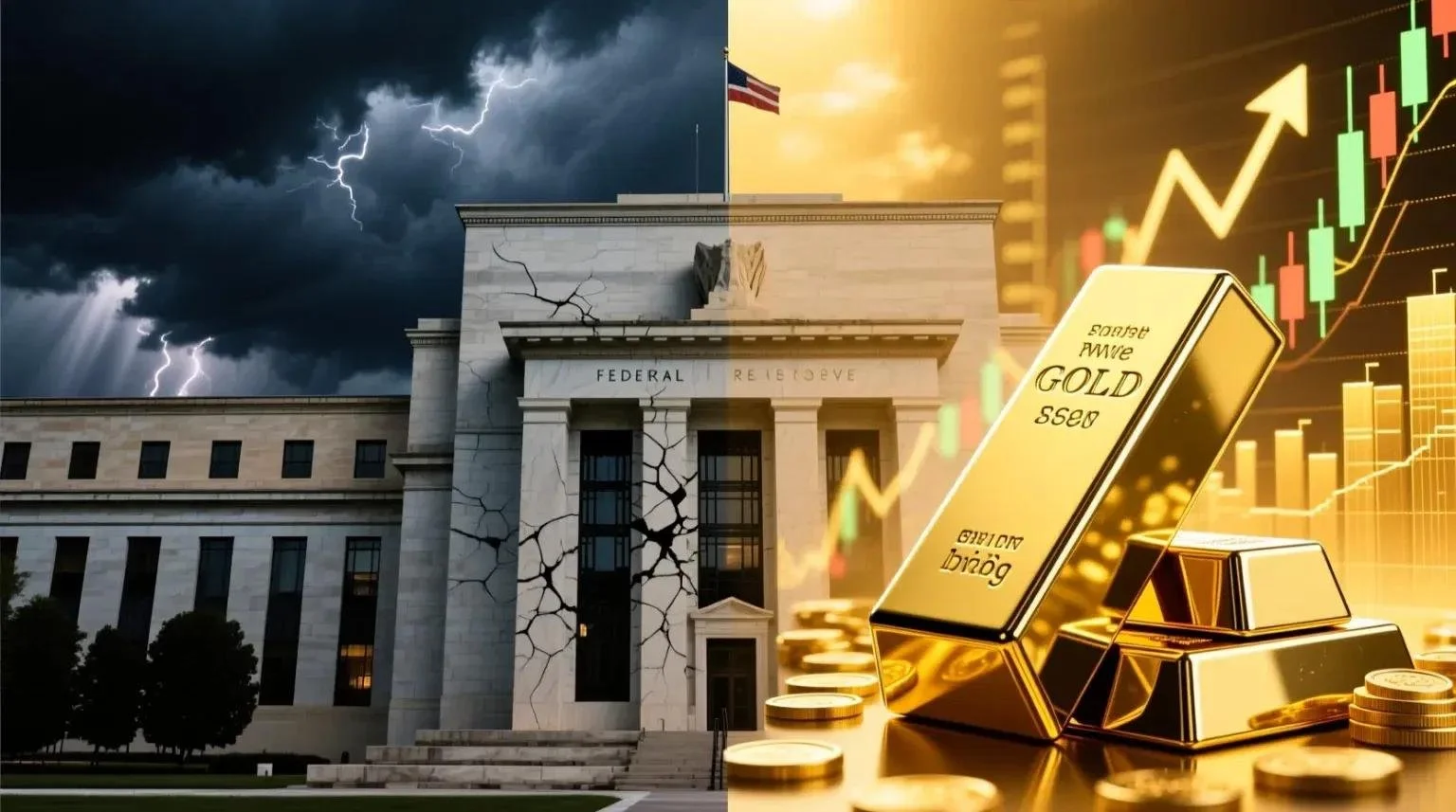
As a result, Congress still needs to pass 12 appropriations bills in order to avoid a shutdown at the stroke of midnight on September 30.
From what we can tell, the Trump administration seems to be pushing for spending cuts this time around, which is great. I sincerely hope they are successful, because the country desperately needs fiscal restraint.
But at this point, it’s up to Congress—and that’s far from a foregone conclusion.
The most likely scenario is they’ll just punt any real decision-making and instead pass a stopgap continuing resolution that will merely add to the deficit.
In short, America will remain on its current trajectory—which the Congressional Budget Office estimates about $25 trillion in additional deficit spending over the next ten years.
This is why so many foreign governments and central banks are aggressively working to establish some kind of alternative to the US dollar as the global reserve currency.
Most likely, they won’t be very successful—simply because nobody trusts the Chinese or the Russians. India has far too many capital controls. So does Brazil.
And as large as these countries may be in combined economic power, they have completely different economic priorities. Plus they don’t even trust one other.
So the prospect of some “BRICS dollar” emerging as a serious competitor to the US dollar’s reserve status is laughable.
But there actually is a serious competitor already—and that’s gold.
The reason why is simple: no single country controls gold. There’s no supranational agency that can regulate the gold price. Gold is a free market, all about supply and demand, and it happens to be an asset nearly every central bank on the planet already owns.
This is the reason why gold has surged to an all-time high—because foreign central banks just keep buying so much of it.
And they’re doing it to reduce their exposure to the US dollar, and to reduce the hold and power the US government has over them.
We think this trend is absolutely going to continue.
And that’s why we’re still in the early days of this gold boom.
In today’s podcast, we discuss all this, as well as:
The global sell-off of US Treasuries and the pivot by foreign central banks toward gold.
Why foreign governments and central banks now own more gold than US Treasuries for the first time in decades.
Historical lessons—from the Byzantine empire to Venetian gold ducats—on what happens when trust in a currency breaks down.
How central banks are also eyeing platinum and strategic assets as alternatives to the dollar.
Why well-managed gold and silver producers could deliver outsized returns compared to the metals themselves.
How owning gold today is a hedge against US fiscal chaos and a way to offset the increased costs of inflation.
Why we’re still in the early innings of a gold bull market, even with prices already at record highs.
You can listen to the full podcast here.
For the audio-only version, check out our online post here.
Finally, you can find the podcast transcript for your convenience, here.
To your freedom, James Hickman Co-Founder, Schiff Sovereign LLC LINK
Seeds of Wisdom RV and Economic Updates Thursday Afternoon 9-4-25
Good Afternoon Dinar Recaps,
BRICS News: Sri Lanka, Kenya, Panama Snub US Dollar, Take BRICS Loan in Yuan
Emerging economies turn to China’s cheaper yuan financing as an alternative to the dollar, raising questions about the future of U.S. currency dominance.Cheaper Loans, Strategic Savings
Developing nations are increasingly looking to Beijing for funding—and specifically in Chinese yuan. Kenya, Panama, and Sri Lanka are the latest to strike loan deals with China, bypassing the U.S. dollar in favor of cheaper financing.
Good Afternoon Dinar Recaps,
BRICS News: Sri Lanka, Kenya, Panama Snub US Dollar, Take BRICS Loan in Yuan
Emerging economies turn to China’s cheaper yuan financing as an alternative to the dollar, raising questions about the future of U.S. currency dominance.Cheaper Loans, Strategic Savings
Developing nations are increasingly looking to Beijing for funding—and specifically in Chinese yuan. Kenya, Panama, and Sri Lanka are the latest to strike loan deals with China, bypassing the U.S. dollar in favor of cheaper financing.
Panama saved over $200 million by switching its loan currency to yuan, citing lower foreign exchange costs.
Kenya secured a $5 billion yuan-denominated loan from China’s Exim Bank for a major railway project.
Sri Lanka has requested yuan financing to revive stalled infrastructure projects, a request Beijing is expected to approve.
For these governments, the decision is not ideological but financial: yuan loans simply cost less.
BRICS Leverages Yuan Appeal
China, a leading member of BRICS, is actively promoting yuan lending as a competitive alternative to dollar debt.
Borrowing costs in U.S. dollars currently range between 4.25%–4.50%.
Loans in yuan are offered at rates near 1.4%, a dramatic difference.
By providing cheaper financing, Beijing not only secures influence in the Global South but also accelerates the yuan’s international use.
Experts note that these arrangements, while pragmatic, fall short of full-scale de-dollarization. For most borrowers, it is about lowering costs rather than permanently shifting away from the dollar.
Dollar Demand at Risk
Still, the optics are significant. Each yuan loan chips away at the dollar’s role in global finance. By positioning the yuan as a low-cost borrowing currency, China offers developing countries a financial lifeline that Washington cannot easily match.
While U.S. officials dismiss these moves as temporary, the trend points toward a slow erosion of dollar demand, particularly in regions where infrastructure and debt relief dominate political priorities.
Global Context: U.S. Debt Meets BRICS Strategy
This comes at a time when U.S. debt exceeds $36 trillion, with interest costs ballooning due to higher rates. The juxtaposition is stark:
Washington is paying more to service its own debt.
Meanwhile, BRICS nations are extending cheap yuan loans abroad, undercutting the dollar’s financing appeal.
This dual dynamic—rising U.S. fiscal strain vs. BRICS yuan lending—amplifies the global conversation on de-dollarization. While not yet a structural shift, these financing decisions strengthen BRICS’ broader campaign to diversify away from dollar dominance in trade, energy, and now sovereign debt.
Why This Matters
Kenya, Sri Lanka, and Panama may see yuan loans as a practical cost-saving measure, but the broader effect is strategic: BRICS is normalizing non-dollar financing. The more countries choose yuan debt, the more the global system adapts to multiple reserve currencies—a development that could accelerate pressure on the U.S. to defend the dollar’s role in world markets.
@ Newshounds News™
Source: Watcher Guru
~~~~~~~~~
Seeds of Wisdom Team RV Currency Facts Youtube and Rumble
Newshound's News Telegram Room Link
Follow the Roadmap
Follow the Timeline
Seeds of Wisdom Team™ Website
Thank you Dinar Recaps
Gold & Silver Update: This Isn’t a Rally—It’s a Currency Reset
Gold & Silver Update: This Isn’t a Rally—It’s a Currency Reset
Mike Maloney: 9-4-2025
Is gold really “going up”—or are currencies falling?
In this Gold & Silver Update, Mike Maloney breaks down why he believes we’re living through a global monetary reset, where structural demand meets tight supply and the paper gold system looks stretched.
Gold & Silver Update: This Isn’t a Rally—It’s a Currency Reset
Mike Maloney: 9-4-2025
Is gold really “going up”—or are currencies falling?
In this Gold & Silver Update, Mike Maloney breaks down why he believes we’re living through a global monetary reset, where structural demand meets tight supply and the paper gold system looks stretched.
In this video:
Gold’s surge explained: currency devaluation vs. asset boom
New demand pipes: China insurers’ physical buying, India pensions eyeing gold access, Indonesia prioritizing domestic reserves
Why retail hasn’t piled in—and why that matters
Paper vs. physical: leasing, rehypothecation, GLD tonnage vs. price, and delivery risk
Silver’s setup vs. its 1980 inflation-adjusted high Long-term log charts: how prior 4× steps point to much higher potential prices
Real-world pricing in grams of gold (Venezuela example)
Mike’s approach: accumulate gold & silver, let the gold–silver ratio guide the mix (not financial advice)
If you care about purchasing power, sovereign demand, and the fault lines between paper and physical markets, watch to the end.
Seeds of Wisdom RV and Economic Updates Thursday Morning 9-4-25
Good Morning Dinar Recaps,
Federal Reserve to Put Stablecoins at Center of October Payments Conference
Fed sets October 21 summit to examine tokenization, AI, and stablecoin business models as Congress advances digital asset regulation.
Fed Puts Stablecoins in the Spotlight
The U.S. Federal Reserve has announced a high-profile conference on October 21 to explore the future of payments innovation, with stablecoins taking center stage.
Good Morning Dinar Recaps,
Federal Reserve to Put Stablecoins at Center of October Payments Conference
Fed sets October 21 summit to examine tokenization, AI, and stablecoin business models as Congress advances digital asset regulation.
Fed Puts Stablecoins in the Spotlight
The U.S. Federal Reserve has announced a high-profile conference on October 21 to explore the future of payments innovation, with stablecoins taking center stage.
The event will bring together regulators, financial institutions, and technology leaders to discuss how tokenization, decentralized finance, and artificial intelligence could reshape the global payments system.
Federal Reserve Governor Christopher J. Waller described the conference as part of the Fed’s commitment to balance innovation with stability:
“Innovation has been a constant in payments to meet the changing needs of consumers and businesses.”
Conference Agenda: Tokenization, AI, and DeFi
The Payments Innovation Conference will feature panels on:
Stablecoin business models and their role in global finance
The convergence of traditional banking and decentralized finance
Tokenization as a tool for transforming asset ownership and transfers
Artificial intelligence in the payments sector
The event will be livestreamed on the Fed’s website, with further details to be released closer to the date.
Stablecoins Gain Ground in Financial Markets
The conference comes amid rapid growth in stablecoins, which now exceed $230 billion in circulation globally. Tokens such as Tether’s USDT and Circle’s USDC have become essential to crypto markets and are increasingly viewed as bridges to traditional finance.
Policymakers are weighing whether stablecoins could improve efficiency in payments—or risk destabilizing banking systems if they begin to replace deposits or disrupt existing financial infrastructure.
Shifting U.S. Regulatory Landscape
The Fed’s move follows Congress’ passage of the first federal stablecoin legislation in July, giving banks clearer rules for issuing dollar-backed tokens. Vice Chair for Supervision Michelle Bowman has urged regulators to take a more hands-on approach, even suggesting that Fed staff hold small amounts of crypto to better understand blockchain technology.
Bowman warned that an “overly cautious mindset” could leave the U.S. banking system less relevant, while tokenization could offer efficiency gains in asset transfers.
Fed Pulls Back Specialized Crypto Oversight
The October conference also comes against the backdrop of the Fed scaling back its oversight of banks’ crypto activities.
In April, the Fed rescinded supervisory letters requiring banks to seek approval before engaging in stablecoin or crypto services.
In August, it ended its Novel Activities Supervision Program, which had closely monitored banks’ digital-asset ventures.
The Fed said the program had achieved its goal of better understanding risks, while critics had called it a barrier to innovation.
Lawmakers like Senator Cynthia Lummis hailed the rollback as a victory over what she and others called “Operation Chokepoint 2.0.” President Donald Trump has also criticized excessive oversight, framing it as part of a “debanking” agenda.
Legislative Push for Clarity
At the same time, lawmakers have advanced several bills during “Crypto Week” in July:
CLARITY Act – Distinguishes securities from commodities.
GENIUS Act – Provides federal oversight for stablecoin issuers.
Anti-CBDC Surveillance State Act – Blocks creation of a U.S. central bank digital currency.
Together, these moves reflect Washington’s pivot toward a more crypto-friendly policy environment.
Why This Matters
The Federal Reserve’s October conference signals a major step in placing stablecoins at the center of U.S. financial policy discussions. With Congress pushing forward legislation and the Fed scaling back restrictive oversight, the stage is set for a recalibration of how digital assets and traditional banking will coexist.
The outcome could shape not only the role of stablecoins but also the future of payments innovation in the U.S. and beyond.
@ Newshounds News™
Source: CryptoNews
~~~~~~~~~
Lagarde Warns EU Stablecoin Rules Could Leave Europe Exposed
ECB chief calls for stronger legislation and global coordination to address liquidity risks in the fast-growing stablecoin market.
ECB Flags Stablecoin Risks
European Central Bank (ECB) President Christine Lagarde has urged lawmakers to accelerate legislative action to address vulnerabilities tied to stablecoins.
Speaking at the European Systemic Risk Board (ESRB) conference on Sept. 3, Lagarde cautioned that while stablecoins represent innovation, they also bring back long-recognized risks in new forms.
“The categories of risk they create are not new. They are risks long familiar to supervisors and regulators,” she said.
Liquidity as the Immediate Concern
Lagarde stressed that liquidity mismatches pose the most pressing threat. Stablecoin issuers often promise instant redemption at par value, even while investing in assets that may not be liquid enough to withstand sudden redemption demands.
Such mismatches can trigger destabilizing runs.
She pointed to the 2007 Northern Rock collapse in the UK as a cautionary tale, where a withdrawal demand of just 5% of assets triggered failure.
By contrast, Tether managed redemptions of nearly 30% of its reserves in 2022 without collapsing, underscoring the varied resilience of issuers.
Weakness in MiCA Framework
Lagarde also flagged gaps in the EU’s Markets in Crypto-Assets (MiCA) regulation.
Under current “multi-issuance schemes,” an EU entity can issue fungible stablecoins jointly with a non-EU partner. However, MiCA requirements do not extend to the non-EU issuer.
This could mean:
EU issuers bear disproportionate redemption pressure.
Reserve adequacy may fall short during stress.
The structure mirrors earlier problems in cross-border banking, where regulators imposed liquidity standards like the net stable funding ratio to prevent mismatches.
Without equivalent safeguards for stablecoins, Europe could become the weak link in global redemption flows.
Call for Stronger Legislation and Global Standards
Lagarde called on lawmakers to close loopholes by tightening rules around cross-border stablecoin schemes.
“We must take concrete steps now. European legislation should ensure that such schemes cannot operate in the EU unless supported by robust equivalence regimes in other jurisdictions and safeguards relating to the transfer of assets between the EU and non-EU entities,” she said.
She also emphasized the need for international coordination, warning that without global standards, risks could migrate to jurisdictions with the weakest protections—undermining European financial safeguards.
Why This Matters
Stablecoins have grown into a $230+ billion market globally, making them a central pillar of the digital asset economy. Lagarde’s remarks highlight Europe’s concern that without stronger protections, the EU could face disproportionate financial risk while becoming a regulatory soft spot in global markets.
@ Newshounds News™
Source: CryptoSlate
~~~~~~~~~
Congress Prepares Market Structure Bill as Stablecoin and Tokenization Debates Intensify
Lawmakers return from recess with crypto regulation high on the agenda, building on the GENIUS and CLARITY Acts while the Fed prepares its October Payments Innovation Conference.
Congress Returns With Heavy Agenda
Crypto may be in its last quiet period before major regulatory activity begins in Washington. According to Ron Hammond, Head of Policy and Advocacy at Wintermute, this week could be the final lull before Congress moves forward with sweeping action on digital assets.
Lawmakers returned from recess in early September facing the threat of a government shutdown. Yet crypto remains near the top of the list. The Senate is preparing its own version of a market structure bill, aiming to define how digital assets are regulated in the U.S.
The House already passed the bipartisan CLARITY Act earlier this year, establishing clearer definitions between securities and commodities. The Senate, however, wants to draft its own approach. A first draft is expected by mid-to-late September, with committee review likely to follow in the fall.
Market Structure Bill: What to Expect
The House has worked on market structure proposals for nearly eight years, but the Senate only began serious hearings this year. Senators want greater ownership of the process, including revisiting definitions of ancillary assets and decentralization tests.
If momentum continues, a Senate vote could happen in late October or November, with the House potentially taking it up before year-end. That timeline means a bill could pass before Christmas—or be pushed into 2026.
TradFi vs. Crypto: The Tokenization Debate
Alongside market structure, tokenization of traditional assets is drawing sharper focus.
Wall Street firms like Citadel have voiced skepticism, citing risks tied to tokenized securities.
Firms such as Galaxy Digital, meanwhile, argue tokenization enhances efficiency and expands investor access.
The SEC is expected to release guidance on tokenized equities, further intensifying the debate in Washington.
Banks Push Back Against Stablecoins
Stablecoins are another flashpoint. The House’s GENIUS Act, passed in July, provided a framework for dollar-backed stablecoin issuance. But banks are lobbying to go further, particularly against interest-bearing stablecoins.
Banks fear these products could drain deposits from the financial system.
Earlier compromises limited stablecoin issuers, but banks now want tighter restrictions extending to affiliates, brokers, and dealers.
The crypto industry counters that stablecoins promote efficiency, transparency, and lower cross-border payment costs.
The Senate’s market structure draft is expected to revisit these issues, potentially expanding or refining GENIUS Act provisions.
Fed’s Role in the Debate
Congress is not acting in isolation. The Federal Reserve has scheduled a Payments Innovation Conference on October 21, where stablecoins will take center stage alongside tokenization and AI in payments.
The timing underscores how legislative and regulatory momentum are converging. As lawmakers debate new rules, the Fed is also exploring the risks and opportunities of stablecoin business models—signaling that digital asset oversight is becoming a coordinated priority across branches of government.
Global Context: Europe’s Stablecoin Alarm
The U.S. debate comes just as Europe raises its own red flags. Earlier this month, ECB President Christine Lagarde warned that gaps in the EU’s MiCA framework could leave Europe vulnerable to destabilizing redemption flows from cross-border stablecoin schemes.
Lagarde urged lawmakers to close loopholes that allow non-EU issuers to sidestep European liquidity standards.
She cautioned that without stronger safeguards, the EU could become the “weak link” in global financial stability.
Her call highlighted the urgent need for international coordination on stablecoin rules.
While the U.S. is moving toward a pro-innovation stance with the GENIUS Act, CLARITY Act, and pending Senate bill, Europe is focused on tightening safeguards to prevent systemic risks. Together, these parallel moves show how both Washington and Brussels are racing to shape the next phase of digital asset regulation—but with sharply different priorities.
Odds of Passage
Prediction markets currently place the odds of a U.S. market structure bill passing this year at around 40%. Hammond, however, believes the chances are stronger, citing bipartisan momentum and the recent passage of both the GENIUS Act and CLARITY Act as proof that crypto legislation is finally gaining traction.
“The right people are talking,” he said, suggesting the Senate and House could align before year-end.
Why This Matters
The next few months could be decisive for U.S. digital asset policy. With the CLARITY Act clarifying asset classifications, the GENIUS Act establishing stablecoin oversight, and the Fed’s October conference spotlighting payments innovation, the stage is set for a comprehensive framework to emerge.
Globally, as Lagarde’s warnings underscore, the U.S. and EU are taking different but complementary paths—America leaning into innovation, Europe focusing on risk prevention. Together, these efforts may determine how stablecoins and tokenized assets reshape the financial system worldwide.
@ Newshounds News™
Source: Coinpedia
~~~~~~~~~
Seeds of Wisdom Team RV Currency Facts Youtube and Rumble
Newshound's News Telegram Room Link
Follow the Roadmap
Follow the Timeline
Seeds of Wisdom Team™ Website
Thank you Dinar Recaps
“Tidbits From TNT” Thursday Morning 9-4-2025
TNT:
Tishwash: Economist: Iraq enjoys financial stability thanks to the Central Bank's reserves.
Economic advisor, Mazhar Mohammed Saleh, confirmed on Wednesday that financial stability in Iraq is solid, and no worrying indicators have yet emerged, despite the external challenges and geopolitical shocks facing the world.
Saleh told Al-Maalouma that "financial concerns are mainly due to the repercussions of external shocks such as trade wars and energy price fluctuations, but Iraq has proven its resilience thanks to the Central Bank's foreign currency reserves."
TNT:
Tishwash: Economist: Iraq enjoys financial stability thanks to the Central Bank's reserves.
Economic advisor, Mazhar Mohammed Saleh, confirmed on Wednesday that financial stability in Iraq is solid, and no worrying indicators have yet emerged, despite the external challenges and geopolitical shocks facing the world.
Saleh told Al-Maalouma that "financial concerns are mainly due to the repercussions of external shocks such as trade wars and energy price fluctuations, but Iraq has proven its resilience thanks to the Central Bank's foreign currency reserves."
He added that "monetary policy plays a pivotal role in stimulating the domestic financing market and supporting public liquidity, ensuring the implementation of government development programs and infrastructure projects, which is directly reflected in stimulating the labor market and enhancing economic activity."
He pointed out that "the strong coordination between fiscal and monetary policies dispels any fears of recession and even enhances the sustainability of economic stability, in light of low inflation and unemployment rates, high growth rates, and the launch of the social market strategy that balances protecting livelihoods and supporting investment and reconstruction." link
***************
Tishwash: Exciting figures: Iraq ranks high globally in its use of cryptocurrencies.
The Global Adoption Index for Cryptocurrencies revealed solutions Iraq It ranks relatively high, as it is among the top third of countries in the world that use cryptocurrencies.
The sixth edition of the Global Cryptocurrency Adoption Index reveals the extent of cryptocurrency adoption at the grassroots level. The index consists of four sub-indices and ranks 151 countries, with a final score ranging from 1 to 0. The closer a country's score is to 1, the higher its cryptocurrency adoption rate.
And he came Iraq It is ranked 44th globally out of 151 countries, which makes it among the top third globally in the use of cryptocurrencies, and achieved points of 0.05, outperforming Saudi Arabia And Oman, Kuwait, the Emirates, Qatar, and Bahrain, but Türkiye Yemen and Jordan outperformed Iraq.
Data indicate that the region Asia and the ocean The guide It was the fastest-growing region for cryptocurrency activity on the supply chain, with value received increasing by 69% year-on-year over the past 12 months, and total cryptocurrency transaction volume in the region rose Asia Pacific From US$1.4 trillion to US$2.36 trillion. link
************
Tishwash: Capital and global confidence: Iraq is on a journey to find global partners to build a diversified economy.
Economic and financial expert Rashid Al-Saadi stressed, on Wednesday (September 3, 2025), the importance of increasing foreign investment in Iraq during the next phase, emphasizing its vital role in promoting sustainable economic growth and diversifying sources of income away from reliance on oil.
Al-Saadi told Baghdad Today, "Attracting foreign capital is a fundamental pillar for revitalizing the productive and service sectors. It enables technology transfer and national capacity building, as well as enhancing the competitiveness of the local market."
He added, "Iraq possesses promising investment potential, including natural resources, a strategic geographic location, and a young workforce. However, improving the business environment, simplifying bureaucratic procedures, and enhancing transparency and the rule of law remain essential to attracting investors and achieving long-term partnerships."
Al-Saadi continued, "Increasing foreign investment is a vital step to support economic stability and create new job opportunities, particularly in the industrial, agricultural, renewable energy, and information technology sectors. This requires formulating incentive policies and flexible legislation that align with international standards and give global companies the confidence to enter the Iraqi market."
In recent years, Iraq has witnessed a growing effort to diversify its sources of income and reduce its dependence on oil, particularly following the economic challenges posed by fluctuating energy prices and the global financial crisis.
Although Iraq possesses strong investment potential, such as abundant natural resources, a strategic geographic location, and a young workforce, challenges related to the business environment, bureaucratic procedures, and lack of transparency remain barriers to foreign capital flows.
Accordingly, economists and experts emphasize the need to adopt stimulating legislative policies and ensure legal stability to encourage international companies to confidently enter the Iraqi market and establish long-term partnerships link
************
Tishwash: Baghdad, Erbil agree on ASYCUDA customs system and unified company ID
The Iraqi federal government and the Kurdistan Regional Government have agreed to implement the ASYCUDA customs system and adopt a unified economic number for companies, aiming to settle years of disputes that have slowed trade and investment.
The Kurdistan Region’s Ministry of Trade and Industry said the meeting brought together directors general of company registration, industrial development, customs, and quality control, along with representatives from the Interior Ministry and Sami al-Sudani, adviser to the federal prime minister.
Officials decided to enforce the 14-digit Unified Economic Number as a prerequisite for using ASYCUDA services. Companies in the Kurdistan Region will no longer need a separate tax ID, and will now be able to conduct import and export activities under the same conditions as firms in central and southern Iraq. link
*************
Mot: Just Saying !!! -- Eat Whatever -- Cause~~~

Mot: Played a New Game Today!! -- Tomorrow As Well!!!

Dollar ALERT: Foreign Central Banks Now Own More Gold Than USD
Dollar ALERT: Foreign Central Banks Now Own More Gold Than USD
Notes From the Field By James Hickman (Simon Black) September 2, 2025
For centuries, the Byzantine Empire’s gold coin, known as the solidus, had been the backbone of global trade in the medieval world; nearly pure gold, the solidus was trusted by merchants from Baghdad to London.
But by the 11th century, multiple emperors had chipped away at its gold content—watering it down to pay for wars, bureaucracy, and the costs of an empire in decline.
Dollar ALERT: Foreign Central Banks Now Own More Gold Than USD
Notes From the Field By James Hickman (Simon Black) September 2, 2025
For centuries, the Byzantine Empire’s gold coin, known as the solidus, had been the backbone of global trade in the medieval world; nearly pure gold, the solidus was trusted by merchants from Baghdad to London.
But by the 11th century, multiple emperors had chipped away at its gold content—watering it down to pay for wars, bureaucracy, and the costs of an empire in decline.

By the time Alexios I took power in 1081, the solidus was barely 40% gold, and merchants never knew which version they were getting or how much real gold it contained.
Alexios tried to restore confidence by minting a new coin in 1092, one he called the hyperpyron—which literally means “super-refined” in Greek.
At 85% purity, it didn’t have the same purity as the old solidus, but the hyperpyron was credible enough to restore trust... for a little while.
But then history repeated itself over the next century; later emperors debased the hyperpyron, just as their predecessors had debased the solidus. And by the late 1200s, there was no more trust in the currency.
When Venice launched the ducat in 1284— at over 99% pure gold— it also came with a pledge that the Venetian government would never debase it.
Combined with Venice’s trade power and rapidly growing wealth, the ducat quickly became the literal gold standard for international trade.
So much, in fact, that by the mid-1300s, the once-mighty Byzantine Empire was pawning its imperial jewels in exchange for Venetian ducats.
(It would be the loose equivalent of the US government selling off national parks in exchange for Swiss francs...)
That was the moment it became obvious to everyone that the Byzantine Empire was no longer the world’s dominant superpower... and that the world’s reserve currency had changed hands.
This pattern repeats itself throughout history. Most reserve currencies have a long, slow decline, as well as clear moments that stand out.
Today, the US government isn’t quite pawning Mount Rushmore for Swiss francs... but we are witnessing a clear moment that demonstrates a loss of confidence in the US dollar:
Foreign governments and central banks now own more gold than they own US Treasury securities.
That means that foreign nations trust in gold more than they trust in the US government.
We’ve been saying this for years: foreign central banks are selling their dollars, and using those dollars to buy gold.
Why? Because the US government’s massive debts make it a less trustworthy lender. While it’s unlikely that the US would outright default, it is very likely that Uncle Sam will eventually turn to the money printer as the “solution” to its debt challenge.
And any foreign central bank which owns a ton of US debt doesn’t want to be paid back with inflated dollars. Better to minimize that exposure now and pare down their dollar holdings.
What do they buy instead? Gold.
Not because central bankers are ‘gold bugs’. But because gold has a 5,000 year history of maintaining value. Because it is dense wealth they can hold physically in their vaults. And because there is a large enough global market to be able to buy or sell metric tons at a time.
This growing gold demand from foreign central banks has been the main driver of gold’s massive bull run— from $1,700 per ounce just three years ago, to over $3,500 per ounce today.
I take no pleasure in pointing this out, but it is becoming clear that foreign governments and central banks simply no longer have the confidence in the US that they once did.
You can see the momentum building; just this week in China, Putin, Xi Jinping, and India’s Modi stood before the world urging trade in national currencies and laying the groundwork for a new financial system designed to chip away at the dollar’s dominance.
And it’s not hard to figure out why.
According to its own projections, the US Treasury will need to sell over $22 trillion in new debt over the next ten years. That’s not a worst-case scenario—that’s the baseline forecast.
Foreign governments and central banks are traditionally one of the largest buyers of US government debt. Yet they’re clearly starting to back away from Treasury bonds... and the US dollar.
This means that the Treasury Department will struggle to find lenders over the next several years... which very likely means relying on the Federal Reserve to ‘print’ the money they need... which of course would be highly inflationary.
This isn’t a doomsday prediction. It’s not a partisan argument. It’s just the reality that America is facing.
Most likely nothing catastrophic will happen tomorrow. Or this month. Or this year. But America is clearly running out of time.
This is not a time for panic; in fact it’s critical to understand that there are rational ways to prepare for the challenges down the road.
We’ve been suggesting gold (and silver) for a number of years, both of which have proven to be excellent shelter.
At $2,000 gold we said this was just the beginning. At $3,000 gold we said that the story was still in its early days. At $3,500 gold, I’m still telling you that this story has much longer to play out.
Nothing goes up or down in a straight line, so there will always be pullbacks and corrections. But the case for gold easily goes to $5,000... and potentially well over $10,000.
That’s not based on any idolatry or fanaticism... but rather a cogent, rational understanding of how global central banking works.
The bottom line is that the world is losing confidence in the US dollar as the global reserve currency. And, right now, there is no alternative. Except for gold. And for that reason central banks (over the long run) will keep stockpiling it... and driving the price higher.
To your freedom, James Hickman Co-Founder, Schiff Sovereign LLC LINK