
Thank you to all the subscribers to our Early Access program…we thank you for your continued support.
We are excited to offer this new service to keep you informed and up-to-date on the latest Dinar and currency news.
FED PLAN LEAKED: Treasury To Revalue Gold To 40,000 To Solve US Debt TSUNAMI!
FED PLAN LEAKED: Treasury To Revalue Gold To 40,000 To Solve US Debt TSUNAMI!
Financial Wisdom: 7-11-2025
0:00 - Introduction: Discussing potential gold revaluation to address U.S. debt
0:33 - Government's ability to monetize gold revealed
1:00 - Exploring the Federal Reserve's recent report and internal operations
1:58 - Federal Reserve's manual and its implications
FED PLAN LEAKED: Treasury To Revalue Gold To 40,000 To Solve US Debt TSUNAMI!
Financial Wisdom: 7-11-2025
0:00 - Introduction: Discussing potential gold revaluation to address U.S. debt
0:33 - Government's ability to monetize gold revealed
1:00 - Exploring the Federal Reserve's recent report and internal operations
1:58 - Federal Reserve's manual and its implications
2:24 - Federal Reserve document on gold certificate accounts
2:54 - Reference to Forbes article discussing gold revaluation
3:41 - The U.S.'s gold reserves and their value
4:05 - Explanation of Treasury’s gold certificates and the Fed’s role
5:37 - Treasury’s authorization to monetize gold
6:11 - How the Treasury and Fed interact through gold certificates
7:00 - Using gold certificates to pay off U.S. debt
7:31 - Potential impact of monetizing gold on Treasury debt
8:17 - Reserve banks and settlement vehicles in the Fed manual
9:03 - Confirming monetizing gold is a feasible strategy
9:43 - Example balance sheet from Federal Reserve
10:07 - The Fed’s balance sheet and monetizing treasuries
10:55 - The importance of gold certificates as an asset
11:33 - Legal feasibility of monetizing gold
12:05 - Impact of gold revaluation on U.S. debt
12:31 - Discussing the debt-to-GDP ratio and its effects
13:25 - Concerns about rising debt and interest payments
13:48 - Proposed solution: Revaluing gold to reduce debt
14:15 - The theory behind debt sustainability at lower ratios
14:59 - The potential consequences of gold revaluation on inflation
16:05 - Impact of $5 trillion in new cash from gold revaluation
17:08 - Inflation and the potential effects on nominal GDP
17:30 - Calculating the gold price needed to reduce U.S. debt
18:20 - How the government could buy gold at $20,000 per ounce
19:03 - Role of the Fed in setting a floor price for gold
20:08 - The Fed’s minimal intervention in buying gold
21:28 - Potential inflation from revaluing gold
22:34 - Main takeaway: Gold monetization is a legal and realistic solution
23:00 - Fact-checking the proposal with Federal Reserve documents
Seeds of Wisdom RV and Economic Updates Friday Afternoon 7-11-25
Good Afternoon Dinar Recaps,
Argentina Reportedly Secures Zero-Tariff Agreement With the US
In a potentially historic trade breakthrough, President Javier Milei of Argentina has reportedly struck a reciprocal zero-tariff agreement with the Trump Administration—one that could reposition Argentina as a key U.S. ally in Latin America.
Good Afternoon Dinar Recaps,
Argentina Reportedly Secures Zero-Tariff Agreement With the US
In a potentially historic trade breakthrough, President Javier Milei of Argentina has reportedly struck a reciprocal zero-tariff agreement with the Trump Administration—one that could reposition Argentina as a key U.S. ally in Latin America.
Argentina and the U.S.: Zero-Tariff Trade Deal in the Works
According to Argentine media reports citing sources inside the Milei administration, both governments have agreed in principle on a trade deal that would eliminate tariffs on up to 80% of Argentina’s exports to the U.S., with the exception of strategic raw materials like steel and aluminum.
The Argentine government has already compiled a list of 100 specific products that will enter the U.S. market duty-free under the agreement.
This deal not only signals stronger bilateral ties but also reflects a broader ideological and policy alignment between Milei and Trump on trade liberalization, deregulation, and market-driven growth.
Why the Announcement Is Delayed
While the agreement is reportedly finalized, its official announcement has been strategically delayed.
Sources say President Trump wants to unveil the Argentina deal after completing his review of tariff adjustments for other nations, expected by August 1st.
The timing is key: Trump reportedly plans to highlight Argentina as a “model partner” in the region—especially in contrast to countries like Brazil, which has aligned itself with anti-dollar BRICS strategies.
A Tale of Two Trade Policies: Argentina vs. Brazil
The Trump administration’s favorable treatment of Argentina starkly contrasts with its recent 50% tariffs imposed on Brazil, citing anti-U.S. rhetoric, censorship policies, and legal actions against ex-President Bolsonaro.
Argentina’s loyalty to the U.S. dollar system and liberalized economy appears to have earned it preferred trade status.
Meanwhile, over 20 countries have already been hit with unilateral U.S. tariffs ranging from 10% to 50%, while key players like the European Union still lack formal agreements to avoid similar penalties.
Strategic Implications for the Region
This Argentina deal—if formally announced—could:
Redefine regional trade alliances
Weaken BRICS influence in Latin America
Incentivize alignment with U.S. financial leadership
Trump’s strategy is clear: reward allies, punish rivals, and showcase trade deals as evidence of American economic dominance in a shifting global landscape.
@ Newshounds News™
Source: Bitcoin.com
~~~~~~~~~
Jonathan Gould Confirmed By Senate As OCC Chief In a ‘Crypto Comeback’
In a landmark development for U.S. banking and digital assets, Jonathan Gould has been officially confirmed by the U.S. Senate as the new Comptroller of the Currency (OCC) in a 50-45 party-line vote, with Republicans in favor and Democrats opposed.
Crypto-Friendly Regulator Returns
Gould’s confirmation is drawing significant attention from both the crypto and traditional banking sectors due to his prior regulatory leadership and forward-thinking views. He previously served at the OCC in 2019, a period marked by new federal guidance enabling crypto-related banking activities.
His return is being hailed as a potential “crypto comeback” inside the U.S. financial system.
Targeting De-Banking and Political Risk Games
During his March 2025 Senate Banking Committee hearing, Gould pledged to confront politically motivated “de-banking” practices.
“Reputation risk is too often used as a political pretext,” Gould argued, advocating instead for objective standards like litigation exposure and AML compliance.
This stance could reshape access to banking for crypto firms, many of which have been marginalized under vague “risk” labels in recent years.
Backing Risk-Taking and Innovation
Gould stressed that banks must be empowered “to engage in prudent risk-taking,” criticizing a post-2008 regulatory culture that treats all risk as unacceptable.
He warned this mentality restricts credit, chokes innovation, and undermines financial system resilience.
This marks a stark contrast to the Biden-era OCC, particularly under Acting Comptroller Michael Hsu, who treated crypto as a potential systemic risk and often cited the 2008 crisis as a cautionary analogy.
A Crypto Veteran at the Helm
Crucially, Jonathan Gould previously served as Chief Operating Officer and Deputy Comptroller under Acting Comptroller Brian Brooks—a known crypto advocate.
It was during this era that the OCC approved key innovations like:
Federally chartered fintech and crypto banks
Crypto custody services
Stablecoin reserve account authorizations
Many of those pivotal regulatory actions bear Gould’s signature, affirming his deep knowledge of the digital asset space and regulatory frameworks that support it.
Outlook: Crypto Re-enters the U.S. Banking Conversation
Gould’s appointment is widely viewed as a green light for greater clarity and openness toward crypto within the federal banking system.
“Many digital asset activities are clearly legally permissible,” Gould affirmed, and signaled support for their “safe and sound” integration.
With the Trump administration, GENIUS Act momentum, and now a crypto-savvy OCC chief, the stage appears set for a resurgence of blockchain innovation inside regulated finance.
@ Newshounds News™
Source: Forbes
~~~~~~~~~
BRICS in 2026: How PM Modi Plans to Redefine the Group’s Global Role
At the 17th BRICS Summit in Rio de Janeiro on July 7, 2025, Indian Prime Minister Narendra Modi unveiled his sweeping vision for the bloc’s future when India assumes the BRICS chair in 2026. Modi’s plan aims to reshape BRICS into a strategic platform for innovation, sustainability, and emerging economies leadership.
Modi’s BRICS Chair Goals: Redefining Global Influence
A New Meaning for BRICS
One of the most headline-grabbing moments at the summit was PM Modi’s unveiling of a redefined acronym for BRICS:
“Under India’s BRICS presidency, we will work to define BRICS in a new form. BRICS will mean Building Resilience and Innovation for Cooperation and Sustainability.”
This new definition reflects India’s intent to recalibrate the bloc toward inclusive innovation, economic cooperation, and sustainable development—an evolution from its original geopolitical posture.
India’s 2026 BRICS chairmanship is already being welcomed by fellow member states, with many praising the emerging economies-first framework Modi continues to champion.
Global South: Still a Top Priority
Modi stressed continuity with India’s 2023 G-20 leadership, where developing nations were placed center stage. He reaffirmed that BRICS 2026 will extend this focus, prioritizing voices from the Global South in global decision-making forums.
“Just as, during our G-20 chairmanship, we gave priority to the issues of the Global South... during our BRICS chairmanship, we will take this forum forward in the spirit of people-centricity and humanity first.”
India is doubling down on its commitment to uplift underrepresented regions, reinforcing its role as a bridge between the Global South and global governance structures.
AI Governance and Technological Diplomacy
Technology—and especially AI—will be a key pillar of India’s BRICS presidency. Modi signaled that India intends to lead AI governance frameworks while fostering responsible innovation.
“We in India believe in AI as a tool to enhance human values and capabilities. Guided by the mantra of ‘AI for All’, India is actively using AI in many sectors.”
India’s focus will be on striking a balance between tech advancement and ethical safeguards, framing BRICS as a venue for responsible digital governance in the emerging global AI economy.
“We believe that AI governance, addressing concerns and encouraging innovation should both receive equal priority.”
Post-Pandemic Solidarity and Health Security
Reflecting on the COVID-19 crisis, Modi highlighted the need for multilateral health cooperation, advocating for joint responses to global crises.
“The COVID pandemic taught us that viruses do not come taking visas, and solutions, too, are not chosen by looking at passports. The solution to common challenges is possible only through joint efforts.”
India’s BRICS leadership will therefore prioritize cross-border health initiatives and crisis coordination to bolster resilience in emerging markets.
Looking Ahead: India’s Vision for BRICS 2026
Modi’s multi-dimensional plan signals a strategic evolution of the BRICS mission:
From political alignment to economic innovation
From passive cooperation to proactive leadership
From slogans to systemic reforms in AI, health, and trade
With India at the helm, BRICS is poised to become a platform of influence for the Global South, tackling the world’s most urgent challenges with unity, innovation, and shared purpose.
@ Newshounds News™
Source: Watcher Guru
~~~~~~~~~
Seeds of Wisdom Team RV Currency Facts Youtube and Rumble
Newshound's News Telegram Room Link
Follow the Roadmap
Follow the Timeline
Seeds of Wisdom Team™ Website
Thank you Dinar Recaps
News, Rumors and Opinions Friday 7-11-2025
Note: All intel should be considered as "Rumors" until we receive official announcements ...and “Rates and Dates” could change anytime until we get to the banks/redemption centers.
RV Excerpts from the Restored Republic via a GCR: Update as of Fri. 11 July 2025
Compiled Fri. 11 July 2025 12:01 am EST by Judy Byington
Possible Timing of the Global Currency Reset and Restored Republic:
Judy Note: From what I can figure out from the below information, the EBS and three day Worldwide Media Blackout begins for those in Asia and Europe on Tues. 15 July to Thurs. 17 July and for those in the Americas on Wed. 16 July to Fri. 18 July. A 10-day total global shutdown follows and completes in America around Sun. 28 July.
Note: All intel should be considered as "Rumors" until we receive official announcements ...and “Rates and Dates” could change anytime until we get to the banks/redemption centers.
RV Excerpts from the Restored Republic via a GCR: Update as of Fri. 11 July 2025
Compiled Fri. 11 July 2025 12:01 am EST by Judy Byington
Possible Timing of the Global Currency Reset and Restored Republic:
Judy Note: From what I can figure out from the below information, the EBS and three day Worldwide Media Blackout begins for those in Asia and Europe on Tues. 15 July to Thurs. 17 July and for those in the Americas on Wed. 16 July to Fri. 18 July. A 10-day total global shutdown follows and completes in America around Sun. 28 July.
Sun. 6 July 2025 Quantum Financial System was set to go live.
Mon. night 7 July 2025 the U.S. Treasury and Department of Defense (DoD) (allegedly) gave final authorization for payments through the Global Currency Reset.
On Friday 11 July 2025, at 7pm ET the current Fedwire® Funds Service FAIM wire format will end. When the Federal Reserve opens Sunday July 13, 2025 at 9pm ET (business date is Mon. 14 July) the new ISO® 20022 format supersedes. Any wires in the FAIM format will be rejected by the Federal Reserve. This implementation will bring changes to current wire terminology, requirements, wire types and fields.
On Mon. 14 July at 8:33 pm EST: (Tues. 15 July 2025 at 03:33 UTC Universal Time which is 8 hours ahead of Eastern Standard Time, or Mon. 14 July 8:33 pm EST), the Bank Currency Reset to gold/asset-backed currencies called Operation Chrysalis, (allegedly) goes live. Treasury nodes will switch from mirrored to primary control, which will make all old banking rails read-only. If a payment processor doesn’t handshake within the first 11 milliseconds, its ledger will be frozen until a manual audit clears it.
Late Mon. 14 July EST Banks worldwide reset value of different nation’s currencies (allegedly) completed.
During the EBS everyone worldwide will be (allegedly) called into Redemption Centers in their area where they will set up their own bank account or Financial Wallet over the StarLink Satellite System.
Friday 18 July 2025 UTC (Mid East and Europe) Around Fri. 18 July (US) the Global Currency Reset new currency values (allegedly) becomes public worldwide. Each country that takes part gets its first draw in twelve-hour chunks. Fiat leaves in the same heartbeat. Don’t wait for the news to confirm it. The change in value shows up first in energy prices, then in food prices, and finally on mainstream tickers. Tier 5 (the general public) will begin the process of gaining access to their Financial Wallets on the Quantum Financial System. GESARA Unleashed: Debt erasure has begun. Mortgages, student loans, credit wiped. QFS absorbs the Fed. Offshore DS trillions repatriated. Patriot-run banking replaces DS finance.
~~~~~~~~~~
Global Currency Reset and Financial Situation:
Thurs. 10 July 2025 Bruce:
Iraq PM Sudani was called by President Trump to announce the new Iraqi Dinar Rate on Sat. 12 July or he would raise tariffs.
Today Thurs. 10 July a Redemption Center leader said that there was no currency rates on the screens.
Notifications could come out Fri. with exchanging starting on Mon.14 July.
When you call in for your appointment they will connect you to a Redemption Center in your Zip Code. You will set your appointment with the person you will be working with. They will give you choice of three times for your appointment.
You will be given a Quantum Card that you use to move funds from your Quantum Account into your bank account.
Increases in SS, R&R payments was still possible during the month of July.
There are over 9,000 Redemption Centers across the US.
Availability of Med Beds will be done pretty quickly after the RV. If you have Zim and a dire need you will be put up front. Each Med Bed center has two Med Beds that you will be put in according to need.
Read full post here: https://dinarchronicles.com/2025/07/11/restored-republic-via-a-gcr-update-as-of-july-11-2025/
************
Courtesy of Dinar Guru: https://www.dinarguru.com/
Frank26 [Iraq boots-on-the-ground report] FIREFLY: Television says Trump is imposing 30% traffics on us here in Iraq. FRANK: All you have to do is just raise the value of your currency you knuckleheads... Did you notice the tariffs he did put on you when he hit everybody else with tariffs was minuscule? But he's sending out a bunch of letters now and you're on that list. Why? Because you haven't raised the value of your currency...As soon as you're ready to come out and float and be part of the international world with some reality...and [Trump] will remove the 30%.
Mnt Goat Any move on the part of the Central Bank of Iraq to restrict the citizens in the use of the dollar and more use of the dinar is yet another move towards monetary sovereignty for Iraq... Now they have ditched the dollar, the parallel market is done and they are going back to sole use of the Iraqi dinar as their main currency within the country. This is exactly how it was before the 2003 invasions and the hyperinflation conversion to the three zero notes and the use of the currency auctions (sole use of the US dollar to pay for imports). Yes, these days are almost over.
***********
FRANK26…7-10-25……ALOHA….MOVE IT
The IQD Currency Boom Key? The IMF Article VIII
Edu Matrix: 7-10-2025
Could Iraq's future wealth hinge on a decision by the International Monetary Fund?
In this video, we break down what IMF Article VIII really means—and why it could be the trigger for unlocking the true value of the Iraqi Dinar (IQD).
Iraq sits on some of the world's largest oil reserves, but its currency remains undervalued—why? We explore the behind-the-scenes of global finance, currency reform, and Iraq's roadmap to economic freedom.
Discover how IMF membership rules might finally allow Iraq to move from restricted exchange practices to open international markets. Could this be the moment investors have been waiting for? Watch to find out.
Key Topics Covered:
What is IMF Article VIII?
Why Iraq hasn't accepted it yet
How the Iraqi Dinar could change after acceptance
Global investor interest in the IQD Potential risks and rewards
Stay informed. Stay ahead. If you're watching the Dinar, you don’t want to miss this!
Seeds of Wisdom RV and Economic Updates Friday Morning 7-11-25
Good Morning Dinar Recaps,
Dollar Supremacy Threatened: The U.S. Bets Big on Stablecoins to Halt Global De-Dollarization
As global confidence in the U.S. dollar continues to erode, the United States is making a bold play: stablecoins. With inflation-ridden emerging markets drifting toward alternative currencies and geopolitical rivals advancing multipolar monetary models, Washington is now pivoting to digital finance as a last line of defense.
Good Morning Dinar Recaps,
Dollar Supremacy Threatened: The U.S. Bets Big on Stablecoins to Halt Global De-Dollarization
As global confidence in the U.S. dollar continues to erode, the United States is making a bold play: stablecoins. With inflation-ridden emerging markets drifting toward alternative currencies and geopolitical rivals advancing multipolar monetary models, Washington is now pivoting to digital finance as a last line of defense.
Dollar Weakens Despite High Rates, Tariffs, and Sanctions
The numbers paint a stark picture. The dollar just marked its worst semester since 1973, with over a 10% drop in value, according to ABC News. Even high Treasury yields are failing to entice investors. A viral post from Global Markets Investor summed up the sentiment:
“The dollar continues to fall despite high yields on Treasury bonds. There may no longer be enough demand for American assets. This calls into question its role as the world reserve currency.”
The dollar's share of global foreign exchange reserves has slipped from 70% in 2000 to just 55% today, according to Sygnum. While Washington responds with tariffs—most recently 50% levies on BRICS and anti-dollar economies—those same moves risk weakening international trust.
Even legendary investors like Warren Buffett have warned of a dollar in decline, with Robert Kiyosaki, Arthur Hayes, and Donald Trump echoing fears of a monetary collapse.
Enter the GENIUS Act: The U.S. Stablecoin Strategy
To counter this erosion, the U.S. is pushing forward a digital policy anchored in blockchain: the GENIUS Act. Backed by Trump, David Sacks, and Scott Bessent, and passed in the Senate, the legislation provides a regulatory framework for dollar-pegged stablecoins.
These digital dollar proxies are rapidly becoming a geopolitical tool. Their strategic appeal? Offering economic stability in inflation-stricken emerging nations, where local currencies are crumbling.
“Global demand for dollar stablecoins is a geopolitical opportunity to maintain US monetary dominance.”
— Sygnum report
Institutions like Fireblocks and Sygnum are already building instant settlement networks with stablecoins. Meanwhile, countries like the UAE are experimenting with dirham-backed stablecoins, highlighting the global momentum.
But not everyone is on board. In April, Italy’s Finance Minister warned that U.S. stablecoin policy may pose greater risks than tariffs—a reflection of growing European unease with Washington's digital power projection.
A Bandage or a Backfire? The Limits of the Stablecoin Gamble
While stablecoins offer short-term utility, they may be masking a deeper systemic decline. The Sygnum report cautions:
“If the decentralized economy expands, dollar dominance can be reinforced by stablecoins. However, their impact will remain limited without massive adoption in Southern countries.”
At its core, the stablecoin strategy doesn’t fix budget deficits, geopolitical mistrust, or U.S. debt dependency. In fact, widespread stablecoin usage could accelerate the visibility of dollar weakness—broadcasting it to a global audience in real time.
Meanwhile, the BRICS Quietly Advance a Multipolar Order
While the U.S. pursues dominance through digital dollars, the BRICS alliance (Brazil, Russia, India, China, South Africa) is quietly developing multi-currency trade systems, with aims to bypass the greenback altogether.
Although the 2025 BRICS summit notably omitted any formal de-dollarization plan, the group continues to explore alternatives to U.S.-led monetary infrastructure—including local currency settlements, sovereign digital currencies, and tokenized trade mechanisms.
Key Facts & Figures
📉 Dollar share of global reserves: down from 70% (2000) to 55% (2025)
🧾 GENIUS Act: passed by Senate, establishes rules for USD-backed stablecoins
🌍 BRICS strategy: focus on regional trade settlement systems, not dollar replacement
⚡ Fireblocks & Sygnum: deploying stablecoin-based instant settlement networks
🚨 Italy warns: stablecoins pose “a greater danger than tariffs”
Final Thought
Stablecoins might extend the life of the dollar, but they cannot rebuild global trust or reform fiscal realities. As even Elon Musk warns of a looming U.S. debt crisis, it's increasingly clear: digital fixes can’t patch structural cracks.
What began as a tool of stabilization could ultimately highlight the monetary fragmentation the U.S. is trying to avoid.
@ Newshounds News™
Source: The Coin Tribune
~~~~~~~~~
Ripple Picks BNY Mellon to Back RLUSD Stablecoin Amid $500M Surge
Ripple has officially partnered with BNY Mellon, the oldest U.S. bank, to custody reserves for its RLUSD stablecoin, marking a major moment for institutional adoption of digital assets. In just seven months, RLUSD has surged past $500 million in market cap, with Ripple rapidly expanding its institutional reach and regulatory alignment.
Wall Street Backs Ripple’s Stablecoin
The partnership between Ripple and BNY Mellon represents a leap forward for RLUSD's credibility and regulatory posture. BNY Mellon will act as the primary custodian of RLUSD’s reserves, which are fully backed 1:1 by U.S. dollars and Treasuries.
“As primary custodian, we are thrilled to support the growth and adoption of RLUSD by facilitating the seamless movement of reserve assets and cash to support conversions.”
— Emily Portney, Global Head of Asset Servicing, BNY Mellon
The move strengthens Ripple’s pitch to regulators and institutional players, sending a strong message: Ripple is playing by the rules—and winning.
RLUSD Rockets to $500M Market Cap
Launched in December 2024, RLUSD has seen explosive growth in a short time, quickly emerging as a key player in the U.S. stablecoin race. It was built for real-world payments and XRP interoperability, and it’s already being used across RippleNet’s enterprise and liquidity solutions.
Ripple’s approach to full collateralization and transparency has positioned RLUSD as a reliable choice amid increasing global scrutiny of stablecoins.
Ripple Applies for U.S. Banking Charter
Ripple isn’t stopping at partnerships. The firm has applied for both a U.S. national banking charter and a Federal Reserve master account—moves that would allow Ripple to:
Hold customer reserves directly with the Fed
Access FedWire and other central bank services
Deepen integration with traditional banking infrastructure
This marks a major institutional play and reflects Ripple’s broader ambition to bridge crypto and traditional finance.
Stablecoin Summer: A U.S. Crypto Renaissance
With Congress advancing the GENIUS Act and Trump’s administration easing restrictions, a U.S.-led crypto resurgence is in full swing. Ripple’s RLUSD is riding this wave, joining the likes of Amazon, Uber, Airbnb, Apple, and Walmart, all reportedly exploring stablecoin integrations.
This “Stablecoin Summer” could reshape the way digital dollars move through the economy.
Swiss Banking Giant AMINA Adds RLUSD Support
Ripple’s global expansion is also accelerating through AMINA Bank, a Swiss institution regulated by FINMA. AMINA is now offering custody and trading services for RLUSD via its secure, bank-grade digital platforms.
This brings RLUSD to Europe’s institutional clients, reinforcing its role as a trusted global digital dollar.
What’s Next?
With the BNY Mellon partnership live, a banking charter pending, and global traction rising, Ripple’s RLUSD may soon cross the $1 billion mark in market cap.
If current momentum holds, Ripple could soon set the standard for regulatory-compliant stablecoins in the U.S. and beyond.
@ Newshounds News™
Source: Coinpedia
~~~~~~~~~
India Distances Itself From BRICS to Secure Trade Deals With the U.S.
In the face of rising geopolitical tensions and newly imposed U.S. tariffs, India is subtly distancing itself from BRICS to preserve its economic relationship with the United States. By reaffirming its commitment to the U.S. dollar, India is making it clear: it has no immediate plans to pursue de-dollarization alongside its BRICS partners.
India Moves to Avoid Trump’s Tariff Threats
With former President Donald Trump back in the spotlight and pushing aggressive tariff policies, India is navigating cautiously. According to Bloomberg, Indian officials are proactively communicating to Washington that they are not undermining the greenback in global trade. This strategy is seen as a bid to remain exempt from Trump’s escalating tariffs.
Trump's approach has already been demonstrated. On Wednesday, he imposed a 50% tariff on Brazilian goods, just two days after the BRICS 2025 summit, where both India and Brazil played key roles.
“Trump is unhappy with some BRICS members (India) who have been talking about an alternate reserve currency,”
— Mohan Kumar, Envoy to the WTO
India has consistently clarified that it supports local currency trade, but does not endorse abandoning the dollar as a reserve currency—drawing a sharp line between trade facilitation and geopolitical challenge.
India Seeks Favor With U.S. to Strengthen Bilateral Ties
Indian trade officials are working hard to finalize favorable trade agreements and avoid falling under Trump’s protectionist radar. The goal: secure economic deals and avoid retaliatory tariffs that could harm its export sectors.
In contrast to Brazil’s vocal opposition, India is positioning itself as a strategic partner to the United States. Trump’s Vice President, J.D. Vance, recently praised India’s economic potential and emphasized the strategic importance of the alliance.
“The fate of the 21st Century is going to be determined by the strength of the United States and India partnership,”
— Vice President J.D. Vance
This public endorsement signals a growing bond between the two countries, even as BRICS faces internal contradictions regarding de-dollarization and alternative reserve systems.
Key Developments
🇮🇳 India reaffirms support for USD in global trade to avoid Trump’s tariff crackdown
🇺🇸 Trump imposes 50% tariffs on Brazil, showing seriousness in punishing anti-dollar policies
🌐 India draws a line between local currency settlements and de-dollarization efforts
💬 VP J.D. Vance calls India a vital U.S. ally for shaping the 21st-century economy
🤝 New Delhi remains active in securing trade deals and maintaining economic stability
Final Thought
India’s strategic pivot shows how even BRICS members are not united on de-dollarization. As Trump’s economic pressure grows, national interests are reshaping alliances. For India, economic pragmatism is winning over ideological alignment—choosing U.S. trade over BRICS confrontation, at least for now.
@ Newshounds News™
Source: Watcher.Guru
~~~~~~~~~
Seeds of Wisdom Team RV Currency Facts Youtube and Rumble
Newshound's News Telegram Room Link
Follow the Roadmap
Follow the Timeline
Seeds of Wisdom Team™ Website
Thank you Dinar Recaps
“Tidbits From TNT” Friday Morning 7-11-2025
TNT:
Tishwash: American magazine: Iraq quietly re-enters international trade
A report by the American economic analysis magazine Procurement Magazine examined the significant economic and geopolitical benefits and returns of the Iraqi Development Road initiative, extending from the Grand Faw Port to the Turkish border.
The report noted that it will be a viable alternative to other trade channels, competing with them in terms of shorter distances and lower costs, transforming the country into a regional logistics hub while creating a multi-source economy beyond oil alone.
TNT:
Tishwash: American magazine: Iraq quietly re-enters international trade
A report by the American economic analysis magazine Procurement Magazine examined the significant economic and geopolitical benefits and returns of the Iraqi Development Road initiative, extending from the Grand Faw Port to the Turkish border.
The report noted that it will be a viable alternative to other trade channels, competing with them in terms of shorter distances and lower costs, transforming the country into a regional logistics hub while creating a multi-source economy beyond oil alone.
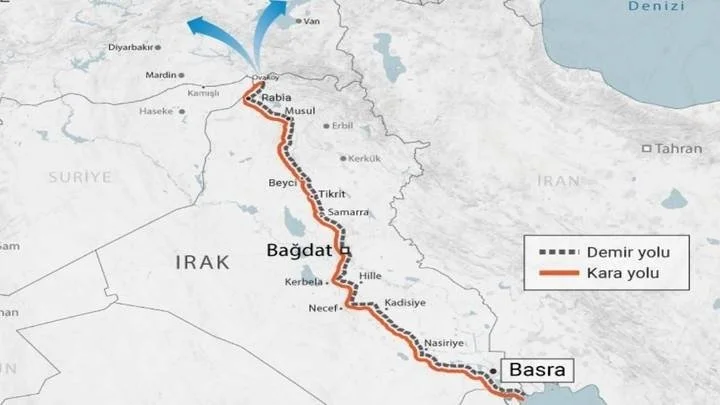
The report notes that Iraq's Development Road project represents a transformative $17 billion infrastructure initiative aimed at connecting the Gulf to Europe. With global shipping facing challenges stemming from regional instability and bottlenecks such as the Suez Canal, Iraq is quietly redefining its role in international trade.
This logistics corridor, stretching from the Grand Faw Port in southern Iraq to the Turkish border, represents a strategic alternative that will reshape supply and transportation chains between Asia and Europe.
This major project has been described as "one of the most important infrastructure projects in Iraq since the 1920s." This faster route delivers direct benefits to procurement by enabling faster supply routes, reducing storage costs, and improving responsiveness to market changes.
The global importance of Iraq's development route has been highlighted amid the ongoing Red Sea crisis, exacerbated by conflicts in the Middle East, where shipping delays have become commonplace. In this context, the Iraqi land corridor offers a practical alternative. In recent weeks, truck drivers from Poland and Germany have completed journeys from Europe to the Gulf via Iraq in just ten days, less than half the time required by sea through the Suez Canal.
The journey from Turkey to Kuwait now takes just seven days, and digital border crossings have reduced waiting times by 92%. The TIR (Terrestrial International Transports International) system, which ensures the safe and efficient movement of goods across borders, is already operational, enhancing the flow of cross-border procurement and supply chains. Hamad Al-Hakim, a transport infrastructure expert at the University of Baghdad, told the Middle East Observer earlier this year:
“The development road is expected to become a vital trade corridor, not only for Iraq but for the entire region. By connecting the Gulf to Europe via Turkey, it will serve as a new Silk Road, revitalizing ancient trade routes and promoting economic integration.” This corridor provides a practical alternative to the Suez Canal, meaning greater route diversification and a reduced risk of disruption, thus ensuring more reliable supply chains.
At the heart of the Iraq Development Road project is the Grand Faw Port, currently under construction in the city of Al-Faw. This deep-water port features the world's longest breakwater, at 14.5 kilometers long, and is expected to handle 7.5 million containers annually, capable of receiving the world's largest container ships. A 1,200-kilometer road and railway extend from the port to Turkey, and the project is expected to be fully operational by 2028. In addition to the transportation infrastructure, the project plans to develop at least ten new cities along the railway route, along with several industrial zones and logistics centers. The development of these areas will provide new opportunities for local supply.
The development road is not just a logistics project; it represents a geopolitical transformation, charting Iraq's transformation from a war-torn country to a pivotal regional link. The project is supported by Turkey, Qatar, and the United Arab Emirates, who recognize its potential to boost regional trade and reduce reliance on vulnerable maritime routes.
Kurdistan Region President Nechirvan Barzani said of the project: "The Development Road Project represents a crucial step towards building a more stable and prosperous Iraq, based on a diversified economy and enhancing regional cooperation with neighboring countries."
Türkiye's participation is pivotal, as it represents the northern endpoint of the corridor, which will connect to Europe via the cities of Mersin and Istanbul.
"The project provides a catalyst for economic prosperity that can benefit the entire region," said Ranj Alaaldin, a fellow at the Middle East Council on International Affairs. As global trade networks seek to bolster their resilience in the face of geopolitical volatility, Iraq is proving to offer not just a backup plan but potentially a major new artery for trade. This project will redraw the region's economic map, transforming Iraq into an alternative trade artery at the heart of Eurasia. This means transforming the country from an importer of opportunities to an exporter of corridors, creating a diversified economy that moves away from its reliance on oil alone. link
************
Tishwash: Next Monday, the Federal Court will consider two lawsuits related to the payment of salaries to Kurdistan Region employees.
The Federal Supreme Court is scheduled to hold its first session next Monday (July 14, 2025) to consider two lawsuits related to the payment of salaries to employees in the Kurdistan Region.
In the first lawsuit, filed against Federal Finance Minister Taif Sami, the plaintiffs demanded “to ensure that the Federal Ministry of Finance continues to pay salaries in the Kurdistan Region on a monthly basis and on the specified dates, without regard to disputes between the federal government and the regional government due to the interpretation of the federal general budget law or any other reasons.”
According to the text of the lawsuit, the request included issuing a judicial order obligating the Federal Ministry of Finance to pay the salaries of employees, retirees, martyrs’ families, and social welfare beneficiaries in the region “immediately,” starting this month and until the resolution of this lawsuit.
In the same context, the court is considering another lawsuit, also without pleading, filed against the Prime Minister and the Federal Minister of Finance, each in his official capacity.
In their statement of claim, the plaintiffs demanded “a ruling to keep the salaries of employees in the Kurdistan Region away from political conflicts and actual agreements.” link
***************
Tishwash: Iraq launches project to issue local electronic payment cards
Iraq has launched a project to issue a local electronic payment card, aiming to enhance financial trust between the public and the government. This is part of Baghdad's efforts to strengthen its digital infrastructure and provide secure and reliable electronic payment solutions that support the national economy.
The Central Bank of Iraq confirmed - in an official letter addressed to all banks and electronic payment companies - that this national system for local electronic payment cards will be implemented gradually, and that the card identifiers (BIN) and application identifiers (AID) will be issued exclusively by the Central Bank.
The cards represent an additional local option for use within Iraq exclusively in Iraqi dinars. The bank emphasized that they do not replace or restrict existing international cards such as Visa Card and MasterCard, but rather complement the financial system and provide a national alternative, according to the bank.
Release date
Government economic advisor Alaa Al-Fahd expects the national electronic payment card to be launched before the end of 2025, as part of the Central Bank of Iraq's efforts to implement comprehensive financial and banking reforms.
Al-Fahd told Al Jazeera Net that this national card will achieve several key objectives, most notably improving the quality of financial services and reducing fees. It will be a purely local card, he emphasized, noting that it will not replace existing international cards, such as Visa and MasterCard, but will work in tandem with them to enhance the options available to citizens. link
************
Mot .. Not Funny – K

Mot: . Grandma Always Said

Inside China & Russia's Basel III Gold Strategy
Inside China & Russia's Basel III Gold Strategy
Miles Harris: 7-10-2025
The global financial crisis of 2008 exposed vulnerabilities in the banking system, leading to the creation of Basel III.
Designed to fortify the global banking system, Basel III aimed to prevent future crises by imposing higher capital and funding costs on assets deemed riskier or less liquid. However, one surprising casualty of this rigorous framework has been the traditional role of gold within commercial banking portfolios.
At its core, Basel III sought to create a more resilient financial landscape. This meant increasing the stability of banks by ensuring they held sufficient capital to absorb potential losses and had adequate liquidity to meet their obligations.
Inside China & Russia's Basel III Gold Strategy
Miles Harris: 7-10-2025
The global financial crisis of 2008 exposed vulnerabilities in the banking system, leading to the creation of Basel III.
Designed to fortify the global banking system, Basel III aimed to prevent future crises by imposing higher capital and funding costs on assets deemed riskier or less liquid. However, one surprising casualty of this rigorous framework has been the traditional role of gold within commercial banking portfolios.
At its core, Basel III sought to create a more resilient financial landscape. This meant increasing the stability of banks by ensuring they held sufficient capital to absorb potential losses and had adequate liquidity to meet their obligations.
This framework imposes heightened capital and funding requirements on assets deemed riskier or less liquid. Curiously, within this rigorous framework, gold found itself categorized as a “less liquid” asset. This classification immediately introduces significant liquidity costs, making it inherently more expensive for banks to hold.
The most impactful change, however, came with the Net Stable Funding Ratio (NSFR). Even when gold was securely allocated and held, Basel III assigned it a substantial 85 percent funding requirement under the NSFR. This marked a dramatic departure from its treatment under previous regulatory frameworks like Basel II, fundamentally altering the economics of holding gold.
For any large commercial bank, maintaining significant gold positions essentially became economically unviable, if not “nearly unworkable,” due to these prohibitive costs and capital charges. The rationale being that even highly liquid assets require stable funding sources.
Yet, as major Western banks find themselves effectively deterred from accumulating substantial gold reserves, a contrasting trend emerges from the East. Gold-producing powerhouses like China and Russia have skillfully navigated these regulatory waters. Leveraging their unique positions as primary producers and perhaps national regulatory flexibilities, these nations have been actively amassing significant gold reserves.
This divergence creates a fascinating geopolitical dynamic, where the West’s financial regulations discourage gold accumulation by its commercial banks, while key players in the East are strategically strengthening their reserves.
The treatment of gold under Basel III presents a paradox: an asset historically viewed as a safe haven and store of value is now burdened with significant costs for banks.
This regulatory shift raises questions about the long-term implications for global financial systems, the role of central banks versus commercial banks in gold holdings, and the evolving power dynamics in the international monetary landscape.
For a deeper dive into these complex financial mechanics and their broader implications, watch the full video from Miles Harris for further insights and information.
00:00 Intro
01:26 Russia & China's Workaround
02:12 Inside China's Gold Accumulation Complex
03:45 Russia's Sanction Strategy
05:28 How their banks are doing what the west's can't
06:53 The Numbers Behind the Strategy
07:43 Basel III: A strategic tool, not a constraint
Crisis 2033 Is Eight Years Away Are You Ready?
Crisis 2033 Is Eight Years Away. Are You Ready?
Notes From the Field By James Hickman (Simon Black) July 8, 2025
US President Dwight D. Eisenhower was absolutely terrified of inflation.
And that’s really saying something for a guy who had commanded Allied forces against the Nazis, faced down the Soviet Union during the Cold War, and overseen the dawn of the Atomic Age.
Sure, those threats might seem more serious than a 5% increase in the price of milk. But Eisenhower felt strongly that inflation was a matter of national security.
Crisis 2033 Is Eight Years Away. Are You Ready?
Notes From the Field By James Hickman (Simon Black) July 8, 2025
US President Dwight D. Eisenhower was absolutely terrified of inflation.
And that’s really saying something for a guy who had commanded Allied forces against the Nazis, faced down the Soviet Union during the Cold War, and overseen the dawn of the Atomic Age.
Sure, those threats might seem more serious than a 5% increase in the price of milk. But Eisenhower felt strongly that inflation was a matter of national security.
In a speech on May 19, 1957, for example, Eisenhower told the American public that inflation “weakens the foundation of our defense. We must maintain a dollar that holds its value, for without it, our ability to sustain our military strength and support our allies would falter.”
And he wasn’t kidding. That same year the US economy fell into recession, and plenty of politicians wanted to stimulate the economy by increasing government spending.
For example, Congress passed two “make work” bills (HR 9302 and HR 7441) designed to support the economy and boost employment.
But Eisenhower was true to his word. He felt that excess government spending and deficits would invite inflation… so he vetoed both bills.
Eisenhower’s resolve turned out to be right; the US economy quickly recovered, and the recession ended in early 1958. The following year, inflation was only 0.7%.
In fact, inflation averaged just 1.4% during his entire Presidency, with strong economic growth and budget surpluses.
Things started to change in the 1960s; John F. Kennedy admitted that he knew very little about economics and even confessed that he didn’t know the difference between fiscal policy (government spending) versus monetary policy (the central bank’s control of the money supply).
Nevertheless, on June 7, 1962, President Kennedy announced his intention to pass a major tax cut.
At the time Kennedy’s proposal was highly controversial. The US economy was in good shape, inflation was low, and unemployment was low. So, the idea of passing a tax cut (which would almost certainly cause a budget deficit) was seen as reckless… even heretical.
Kennedy was assassinated before he was able to win enough votes in Congress. But his successor, Lyndon Johnson, took up the mantle and kept pushing for the tax cut.
He finally succeeded when the Revenue Act was passed in 1964.
The US economy was in great shape that year. Growth was robust, the job market was heating up, and inflation was low. So, the government deliberately running a deficit to stimulate such a strong economy was still considered bizarre and unnecessary. But they plowed ahead anyhow.
At first the US economy became a rocket ship, growing by a whopping 8.5% in 1965. Unemployment fell to just 4%. And inflation sat at just 1.9%. It was a hell of a year.
But the boom very quickly started losing steam. Federal Reserve Chairman William Martin even gave a speech suggesting that the economic boom was unsustainable and might lead to a 1929-style crash.
President Johnson was furious… and even asked his Attorney General if he could fire the Fed Chairman. He couldn’t. So, Johnson instead tried to undermine Martin in every way possible… including pushing him to cut interest rates.
Investors were aghast at the public feud between the President of the United States and the Chairman of the Federal Reserve. But things only got worse.
Johnson began demanding that Congress increase military spending to fund the war in Vietnam. Yet he also wanted more spending for his “Great Society” domestic programs-- welfare, Medicaid, federal housing assistance, etc.
Quite predictably, the US federal deficit ballooned as a result of so much spending. So did the federal bureaucracy, with dozens of new laws, thousands of new regulations, and hundreds of thousands of new federal workers.
Economic growth stalled (with GDP growth eventually falling to 0%). Inflation rose.
And investors-- already uncomfortable given the feud between the White House and the Fed-- became very pessimistic about the inflation and the deficits. So, they started demanding higher rates on US government debt to compensate for the additional risk.
Bond yields on the US government 10-year note, for example, rose from less than 4% when the Kennedy/Johnson tax cut was passed in 1964, to more than 7% at the end of the decade.
More importantly, foreign governments and central banks began losing confidence in America’s finances. The national debt was rising rapidly, and foreigners began selling (redeeming) their US dollars and holding physical gold instead.
If this story sounds familiar, it should… because the circumstances are very similar.
The US government passed its One Big Beautiful Bill on Friday, which is essentially a combination of the Kennedy/Johnson 1964 tax cut combined with Johnson’s enormous spending programs.
Granted the OBBB priorities are totally different-- like cutting Medicaid versus spending more on it. But the end result is a massive deficit spending bonanza that the US simply cannot afford.
It also comes at a time when the US economy is in reasonable shape and in no need of government stimulus. This deficit will likely invite more inflation and higher interest rates, causing an eventual recession.
The White House and the Fed are in the midst of their own public feud-- which has shocked investors.
And foreign governments and central banks have been swapping their US dollars and Treasury holdings for gold at a record pace-- pushing gold to an all-time high.
The government’s pitiful finances in the 1960s resulted in the painful stagflation of the 1970s. Unfortunately, the extreme irresponsibility of the 2020s may result in something much worse.
At least back then, the US government only spent around 10% of tax revenue to pay interest on the national debt.
Today it takes nearly a 25% of revenue. And by 2033, it could easily take 40 to 50% of tax revenue just to cover the interest bill.
2033 is crucial because that’s the year Social Security’s major trust fund will run out of money and require a multi-trillion-dollar bailout. It’s an extremely predictable crisis.
Look I’m all for tax cuts; they’re clearly linked to more robust economic growth… which the country desperately needs right now.
But tax cuts are pointless if they are not accompanied by serious spending cuts and major reform-- like overhauling immigration, fixing Social Security, and slashing federal regulations.
So, if we’re being intellectually honest, it’s important to acknowledge that this OBBB brings the country even closer to Crisis 2033. It’s eight years away, at best. Are you ready?
To your freedom, James Hickman Co-Founder, Schiff Sovereign LLC
Stablecoins are the Bridge to the New Financial System
Stablecoins are the Bridge to the New Financial System
Wealthion: 7-10-2025
In a recent and truly eye-opening discussion on Wealthion, Chris Perkins, Managing Partner and President of CoinFund, joined forces with macro thinker and founder of Visserlabs, Jordi Visser, to dissect the profound and imminent impacts of AI and crypto on the global economy and investment landscape.
Their conversation wasn’t just about market trends; it was a blueprint for a coming financial and societal revolution.
Stablecoins are the Bridge to the New Financial System
Wealthion: 7-10-2025
In a recent and truly eye-opening discussion on Wealthion, Chris Perkins, Managing Partner and President of CoinFund, joined forces with macro thinker and founder of Visserlabs, Jordi Visser, to dissect the profound and imminent impacts of AI and crypto on the global economy and investment landscape.
Their conversation wasn’t just about market trends; it was a blueprint for a coming financial and societal revolution.
Jordi Visser laid out a series of audacious predictions, arguing that we are on the cusp of a significant societal and financial shift. His core contention: traditional business cycles are dead, the Fortune 500 as we know it will cease to exist, and Stablecoins are the indispensable bridge to the future.
Visser paints a vivid picture of a world where economic assumptions are fundamentally challenged.
He posits that the familiar rhythm of business cycles, with their predictable booms and busts, is drawing to an end. This isn’t just another downturn; it’s a structural transformation where new paradigms of value creation and destruction will dictate economic flow.
A provocatively bold statement from Visser is his belief that the Fortune 500 will not exist in the 2030s. This isn’t hyperbole, but a sober assessment of how rapidly AI and other disruptive technologies will erode the competitive advantages of established giants.
AI, he argues, will be a merciless force, destroying large, entrenched businesses that fail to adapt. In this new landscape, Visser even suggested a “new party” forming, citing Elon Musk in a broader context, hinting at a political and financial revolution driven by these technological shifts.
Central to Visser’s vision is the role of Stablecoins. He sees them not merely as a niche crypto asset but as a critical linchpin for the future of global finance.
Thanks to pending legislation like the “Genius Act” and the “Clarity Act,” Visser believes investors and financial institutions will increasingly view Stablecoins as the essential bridge between traditional and digital investing.
Crucially, these acts could solidify the U.S. Dollar’s position as the global reserve currency forever, by extending its reach and functionality through a compliant stablecoin infrastructure. Beyond institutional adoption, Stablecoins offer a vital, accessible money alternative for people in countries plagued by volatile local currencies, providing financial stability and a pathway to the digital economy.
The future, as Visser sees it, is a seamless flow from Stablecoin to DeFi to AI, fundamentally impacting developing nations and global foreign exchange (FX) markets, which he identified as “The Next Big Thing.”
The discussion also highlighted a potentially game-changing innovation: Robinhood’s breakthrough act to take private equity public through tokenization.
This “Robin Hood-like move” could revolutionize access to investment opportunities previously reserved for institutional or accredited investors. By tokenizing private equity, companies could bypass traditional, cumbersome IPO processes, democratizing wealth creation and offering a new liquidity paradigm.
This represents “The Next Investing Revolution,” opening up a vast new frontier for investors.
While AI is predicted to decimate many established businesses, the panelists also discussed the future of other cryptocurrencies. Visser sees a huge upside coming for Ethereum.
This potential boom is linked to the emergence of “treasury companies” and institutional adoption, highlighted by ventures like Tom Lee’s new ETH Treasury Company, Bitmine. As more businesses and financial entities explore the benefits of blockchain technology, Ethereum’s ecosystem is poised for significant growth.
However, in this disruptive landscape, Visser believes Bitcoin will ultimately be the “only game in town” when it comes to a truly decentralized, unassailable store of value, particularly as AI’s destructive power reshapes traditional industries.
The discussion on Wealthion with Chris Perkins and Jordi Visser was more than just a market outlook; it was a profound contemplation of a world being rapidly reshaped by technological forces.
From the demise of traditional business cycles and the Fortune 500 to the rise of stablecoins as a global bridge and the tokenization of private equity, the insights offer a compelling, albeit challenging, vision of the future. Investors, institutions, and individuals alike must now grapple with these seismic shifts to navigate and thrive in the economy of tomorrow.
Seeds of Wisdom RV and Economic Updates Thursday Afternoon 7-10-25k
Good Afternoon Dinar Recaps,
Trump Administration Imposes 50% Tariff on Brazilian Imports
In a dramatic escalation of trade tensions, the Trump administration has announced a sweeping 50% tariff on all Brazilian imports, citing political censorship, judicial overreach, and unfair trade practices as justification. The move, shared via President Trump’s Truth Social account, has been swiftly condemned by Brazilian President Luiz Inácio Lula da Silva, who promised reciprocal action under Brazil’s Economic Reciprocity Law.
Good Afternoon Dinar Recaps,
Trump Administration Imposes 50% Tariff on Brazilian Imports
In a dramatic escalation of trade tensions, the Trump administration has announced a sweeping 50% tariff on all Brazilian imports, citing political censorship, judicial overreach, and unfair trade practices as justification. The move, shared via President Trump’s Truth Social account, has been swiftly condemned by Brazilian President Luiz Inácio Lula da Silva, who promised reciprocal action under Brazil’s Economic Reciprocity Law.
Tariffs Justified by Bolsonaro’s Treatment and Social Media Censorship
President Trump claimed the new tariffs were necessary due to Brazil’s “unjust treatment” of former President Jair Bolsonaro in the courts and the nation’s legal actions against U.S.-based social media platforms.
“The U.S. must move away from a longstanding and very unfair relationship created by Brazil’s tariff policies,”
— President Donald Trump
According to Trump, the trade imbalance and court-ordered censorship in Brazil have become a “major threat” to the U.S. economy and national security. He emphasized that any retaliatory tariffs issued by Brazil would trigger additional levies beyond the initial 50%.
Brazil Responds: “We Will Not Accept Tutelage”
President Lula issued a strong response on X (formerly Twitter), asserting Brazil’s sovereignty and defending its judicial system:
“Any unilateral tariff increases will be addressed in accordance with Brazil’s Economic Reciprocity Law.
Sovereignty, respect, and the unwavering defense of the interests of the Brazilian people are the values that guide our relationship with the world.”
— President Luiz Inácio Lula da Silva
Lula rejected the tariffs outright, asserting that Brazil “will not accept any tutelage” and reaffirmed the legitimacy of Brazil’s legal system in addressing both domestic and international concerns.
Tariffs May Affect 22 Countries — BRICS in the Crosshairs
The 50% import levy is not exclusive to Brazil. Trump reportedly sent similar letters to 22 countries, imposing unilateral tariffs up to 50%, all set to take effect August 1st. Among them, Brazil appears to face some of the steepest penalties.
While Trump also threatened BRICS and allied nations with an additional 10% tariff for promoting what he calls an anti-American agenda, it remains unclear if this will directly affect Brazil, which has advocated for de-dollarization and multipolar trade. Notably, there was no mention of the BRICS penalty in Trump’s letter to Lula.
Geopolitical and Economic Implications
This move signals a return to aggressive tariff diplomacy under Trump’s second-term foreign policy, prioritizing U.S. national interests and economic leverage over multilateral engagement.
If fully implemented, these tariffs could:
Strain U.S.–Brazil relations
Undermine BRICS' push for non-dollar trade settlements
Trigger retaliatory measures that may affect agricultural, industrial, and energy exports
Conclusion: Trade War or Political Posturing?
The Trump administration’s tariff blitz is set to redefine the U.S.–Brazil economic relationship. Whether this leads to a full-scale trade war or forced negotiations will depend on how Brazil and other targeted nations respond in the coming weeks.
With Trump signaling zero tolerance for anti-American narratives, and Brazil doubling down on economic sovereignty, global markets will be watching closely ahead of the August 1st enforcement deadline.
@ Newshounds News™
Source: Bitcoin.com
BRICS Omits De-Dollarization & New Currency at 2025 Summit
Despite growing expectations, BRICS leaders made no mention of de-dollarization or the formation of a new common currency during the 17th annual summit, held in Rio de Janeiro this past Sunday and Monday. The two-day event, which has in the past strongly emphasized building an alternative to U.S. dollar dominance, concluded without major economic policy announcements.
Significantly, Chinese President Xi Jinping and Russian President Vladimir Putin did not attend the summit, with proceedings instead led by India’s Prime Minister Narendra Modi and Brazil’s President Luiz Inácio Lula da Silva.
De-Dollarization and Common Currency Left Off the Agenda
The absence of any discussion on launching a new BRICS currency or reducing dependence on the U.S. dollar marks a sharp departure from the bloc's earlier rhetoric. These topics were central to past summits and widely promoted as pillars of the BRICS agenda aimed at restructuring global financial power.
However, the 2025 summit offered no policy progress or roadmaps for either initiative.
“The development indicates that the bloc is not serious about the issues and is only beating around the bush,”
— Watcher.Guru analysis
Instead of bold declarations, BRICS members limited financial discussions to voluntary bilateral trade using local currencies, a step seen as symbolic rather than systemic.
Discontent with IMF and World Bank Still Front and Center
Although de-dollarization was not formally addressed, the alliance continued to criticize Western-led financial institutions. Leaders expressed frustration with the International Monetary Fund (IMF) and World Bank, accusing both of bias toward the U.S. and other Western powers while neglecting the needs of the Global South.
They argued that the current global financial order remains skewed, offering insufficient access to credit and capital for developing economies—particularly those in Africa, Latin America, and Southeast Asia.
Summit Lacks Momentum Without Russia and China
The absence of key players like Russia and China may have contributed to the lack of strategic direction at the summit. Their presence has historically driven the more ambitious aspects of the BRICS agenda, particularly in currency and trade realignment.
Without them, the summit felt cautious and subdued, leading many to question whether BRICS still holds the resolve to challenge the U.S.-led financial system.
What’s Next for BRICS?
While de-dollarization and the proposed BRICS currency were sidelined at this year’s summit, officials stopped short of abandoning these ambitions entirely. Leaders emphasized that trade in local currencies will remain an option and may become more formalized in the future.
Still, the lack of clarity or commitment suggests that BRICS is struggling to present a unified financial vision amid growing global attention on multipolarity.
Whether this pause is temporary or reflective of deeper divisions within the bloc remains to be seen.
@ Newshounds News™
Source: Watcher.Guru
~~~~~~~~~
Seeds of Wisdom Team RV Currency Facts Youtube and Rumble
Newshound's News Telegram Room Link
Follow the Roadmap
Follow the Timeline
Seeds of Wisdom Team™ Website
Thank you Dinar Recaps
BRICS+ are Big Enough to Dethrone the Dollar
BRICS+ are Big Enough to Dethrone the Dollar
Liberty and Finance: 7-9-2025
Financial expert Andy Schectman delivered a compelling address at the recent 2025 Rural Symposium on Natural Resource Investing, shedding light on major geopolitical and monetary developments centered around the burgeoning BRICS nations.
His presentation painted a picture of a rapidly evolving global financial landscape, one increasingly designed to operate independently of U.S. financial.
Schectman emphasized how strategic moves by key players are coalescing to form an entirely new financial infrastructure.
BRICS+ are Big Enough to Dethrone the Dollar
Liberty and Finance: 7-9-2025
Financial expert Andy Schectman delivered a compelling address at the recent 2025 Rural Symposium on Natural Resource Investing, shedding light on major geopolitical and monetary developments centered around the burgeoning BRICS nations.
His presentation painted a picture of a rapidly evolving global financial landscape, one increasingly designed to operate independently of U.S. financial.
Schectman emphasized how strategic moves by key players are coalescing to form an entirely new financial infrastructure.
He highlighted the significant role of the Shanghai Metals Exchange and the groundbreaking launch of the M-Bridge settlement platform as foundational elements.
According to Schectman, these initiatives are paving the way for a financial system that is not only decentralized and gold-backed but also transparently audited via blockchain technology – a stark departure from the current U.S.-centric model.
The implications, Schectman warned, are profound. These developments, which include the expansion of multi-jurisdictional gold vaults and the accelerating internationalization of the Chinese yuan, pose a direct challenge to the U.S. dollar’s longstanding role.
He cautioned that these initiatives threaten not only the dollar’s preeminent status in global trade settlement but potentially its critical reserve currency status.
Schectman underscored the strategic significance of these BRICS-aligned initiatives, noting their expansion to include an increasing number of non-member nations.
Critically, he pointed out that this emerging financial framework is being built specifically to circumvent transactions settled in the U.S. dollar, Euro, and British Pound. Schectman also took a moment to acknowledge and credit long-time investment strategist Rick Rule for his insightful guidance, suggesting these shifts align with broader, often overlooked, macro trends.
Concluding his address, Schectman issued a strong call to action, urging people to look beyond mainstream narratives regarding global finance.
He advised proactive engagement and informed decision-making, stressing that these monumental developments are progressing at an accelerated pace and will soon become too obvious to ignore for those who choose to remain uninformed.
For a deeper dive into Andy Schectman’s insights and the full context of his presentation, viewers are encouraged to watch the complete video available from Liberty and Finance.
News, Rumors and Opinions Thursday 7-10-2025
Note: All intel should be considered as "Rumors" until we receive official announcements ...and “Rates and Dates” could change anytime until we get to the banks/redemption centers.
RV Excerpts from the Restored Republic via a GCR: Update as of Wed. 9 July 2025
Compiled Wed. 9 July 2025 12:01 am EST by Judy Byington
Possible Timing Global Currency Reset:
Late Mon. 14 July EST Banks worldwide (allegedly) reset value of different nation’s currencies.
Late Thurs. 17 July EST new value of currencies(allegedly) becomes active worldwide. The change in value shows up first in energy prices, then in food prices and finally on mainstream tickers.
Note: All intel should be considered as "Rumors" until we receive official announcements ...and “Rates and Dates” could change anytime until we get to the banks/redemption centers.
RV Excerpts from the Restored Republic via a GCR: Update as of Wed. 9 July 2025
Compiled Wed. 9 July 2025 12:01 am EST by Judy Byington
Possible Timing Global Currency Reset:
Late Mon. 14 July EST Banks worldwide (allegedly) reset value of different nation’s currencies.
Late Thurs. 17 July EST new value of currencies(allegedly) becomes active worldwide. The change in value shows up first in energy prices, then in food prices and finally on mainstream tickers.
As a side note: The Federal Reserve’s implementation date is (allegedly) set for July 14, 2025. This means that on Friday July 11, 2025, at 7pm ET the current Fedwire® Funds Service FAIM wire format will(allegedly) end and when the Federal Reserve opens Sunday July 13, 2025 at 9pm ET (business date is Mon. 14 July ) the new ISO® 20022 format supersedes. Any wires in the FAIM format will be rejected by the Federal Reserve. This implementation will bring changes to current wire terminology, requirements, wire types and fields.
On Mon. 14 July at 8:33 pm EST: (Tues. 15 July 2025 at 03:33 UTC Universal Time which is 8 hours ahead of Eastern Standard Time, or Mon. 14 July 8:33 pm EST), the Bank Currency Reset to gold/asset-backed currencies called Operation Chrysalis, (allegedly) goes live. Treasury nodes will (allegedly) switch from mirrored to primary control, which will make all old banking rails read-only. If a payment processor doesn’t handshake within the first 11 milliseconds, its ledger will be frozen until a manual audit clears it.
On Thurs. 17 July EST (Friday 18 July 2025 UTC) Rainbow currency change of value(allegedly) becomes active. Take note of the liquidity paths that Tier 2 commerce hubs can use. Each country that takes part gets its first draw in twelve-hour chunks. Fiat leaves in the same heartbeat. Don’t wait for the news to confirm it. The change in value shows up first in energy prices, then in food prices, and finally on mainstream tickers.
Tues. 8 July 2025 Wolverine: We are pleased to share a significant development: during a specialized operational conference held last night, it was officially confirmed that both the U.S. Treasury and the Department of Defense (DoD) have (allegedly) given final authorization for the payments. God bless you all. Wolverine
Tues. 8 July 2025 Wolverine: “The leader from the Pentecostal has finally released the funds to her leaders. They will be given the day and the hour when they have to go to the banks to be able to receive the blessing which is spendable money and be able to release those funds to their members. The owner has now (allegedly) finished what she promised she will do after more than 20 years. This is history in the making guys.
~~~~~~~~~~~~
Global Financial Situation:
Tues. 8 July 2025: TRUMP’S $150 TRILLION BOMBSHELL — THE 161-YEAR SECRET THAT WILL CRUSH GLOBALISM AND TRIGGER NESARA/GESARA …Donald J. Trump WH on Telegram
While the world drowns in distractions, President Donald J. Trump just (allegedly) stepped into the most powerful economic position in modern history. Hidden beneath the surface for 161 years lies a $150 trillion resource trust — now (allegedly) legally unlocked. Copper, lithium, uranium, rare earths, oil, gold. Enough to erase national debt, end globalist control, and rebuild sovereignty from the ground up. And now, Trump(allegedly) has full access.
For decades, the Chevron Doctrine acted as the cage. It gave unelected agencies total control over America’s natural wealth, land, and economy. Globalists used it to bury this inheritance while feeding the world illusions through fiat currency, debt, and foreign trade traps. But that’s (allegedly) over. The Supreme Court has overturned the Chevron Doctrine. The legal lock is gone. The vault is open. And Trump(allegedly) has the code.
This isn’t about campaign promises. It’s about economic liberation. With Chevron dead and the trust exposed, Trump is positioned to unleash the most powerful financial reset in human history — not through banks, but through real value. Energy. Infrastructure. Sovereign-backed digital systems. Trump isn’t just returning to the White House. He’s returning as executor of a new operating system. And the elites are terrified.
This aligns with everything NESARA and GESARA stood for. Once mocked, now unstoppable: (allegedly) erasing illegitimate debt, restoring sound money, and ending corporate government slavery. Trump’s moves — energy independence, gold-backed systems, dismantling the Fed, expanding QFS — have all been steps toward this convergence. The $150T trust isn’t just wealth. It’s the fuel for a new civilization.
While the media sells crisis and courtroom drama, elites are shifting quietly: XRP, gold, rare earth ETFs, tokenized energy and land assets. The global monetary game is changing in silence. The public won’t hear about it until it’s too late to catch up. But patriots who understand NESARA know — this is the framework loading behind the curtain.
The wealth is real. The court has ruled. The legal leash is cut. Chevron’s fall means America’s resource cage is broken. Trump holds the ignition key. No more globalist debt systems. No more fabricated scarcity. No more foreign dependence. The trust is real, and it’s being activated. Silently. Strategically. Irrevocably.
This is not politics. This is the fall of fiat, the rise of sovereignty, and the true beginning of GESARA. While others argue over headlines, the system is already being rebuilt — by Trump, by QFS, by the Constitution.
The silence is the signal. The trust is the trigger. And history is about to flip.
Read full post here: https://dinarchronicles.com/2025/07/09/restored-republic-via-a-gcr-update-as-of-july-9-2025/
************
Courtesy of Dinar Guru: https://www.dinarguru.com/
Mnt Goat We can clearly see that Iraq is ready to reinstate their currency and go global with it. It could not be any clearer now. But first there is work to be done with Iran...my CBI contact has been relaying to me from my conference calls to Iraq and she was spot on! She said many times that, right now “it’s all about Iran”.
Frank26 Trump threw a curveball at my teams...We don't believe in a GCR but we do believe that, oh my goodness, something is about to crack with currencies around the world.
Frank26 Article "Prime Minister's Advisor: Iraq is qualified to become a regional financial center with four strategic powers." This is an insult. How dare you tell me Iraq is going to become the financial hub in the Middle East at 1310...Be...wise enough, astute enough...confident enough to know none of this is at 1310...You're smart enough, wise enough, savvy enough, you know what these articles are doing. They're telling you everything (Asraflak) about monetary reform without giving you a new exchange rate because if they give you a new exchange rate then they got to also give you the lower notes. Those 2 are as top secret as you can get.
************
FRANK26…..7-9-25……ALOHA….BANK SHOT
Seeds of Wisdom RV and Economic Updates Thursday Morning 7-10-25
Good Morning Dinar Recaps,
SEC’s Hester Peirce: “Tokenized Securities Are Still Securities”
U.S. Securities and Exchange Commission (SEC) Commissioner Hester Peirce, often referred to as the agency’s “Crypto Mom”, has reaffirmed the regulator’s stance that tokenized versions of traditional securities remain subject to existing securities laws — regardless of the underlying technology.
Good Morning Dinar Recaps,
SEC’s Hester Peirce: “Tokenized Securities Are Still Securities”
U.S. Securities and Exchange Commission (SEC) Commissioner Hester Peirce, often referred to as the agency’s “Crypto Mom”, has reaffirmed the regulator’s stance that tokenized versions of traditional securities remain subject to existing securities laws — regardless of the underlying technology.
SEC Warns Market Participants on Tokenized Offerings
In a statement released Wednesday, Peirce urged companies exploring tokenized financial products to engage directly with the SEC. Her remarks come amid a wave of innovation from both crypto-native firms and traditional financial institutions experimenting with on-chain tokenization.
“As powerful as blockchain technology is, it does not have magical abilities to transform the nature of the underlying asset,”
— Hester Peirce, SEC Commissioner
She warned that firms distributing tokenized stocks, bonds, or other instruments must still comply with the federal securities laws.
Robinhood and the Tokenization Wave
Though Peirce did not name specific companies, her comments closely follow Robinhood’s recent launch of a tokenization-focused Layer-2 blockchain, aimed at offering tokenized U.S. stocks and ETFs to investors in Europe.
Robinhood has also reportedly submitted a proposal to the SEC in May 2025, seeking a regulatory framework for tokenized real-world assets (RWAs). The move suggests a growing recognition among industry players of the legal complexities surrounding tokenized finance.
A Call for Engagement and Flexibility
Peirce emphasized that the Commission is open to innovation — if market participants proactively engage and work within legal boundaries.
“When unique aspects of a technology warrant changes to existing rules or where regulatory requirements are outdated or unnecessary, we stand ready to work with market participants to craft appropriate exemptions and modernize rules,”
— Hester Peirce
Her comments echo those made frequently by former SEC Chair Gary Gensler, who often urged crypto firms to “come in and talk.” But this statement comes at a time when the regulatory climate is beginning to shift under the leadership of new Chair Paul Atkins and the Trump administration’s broader support for digital assets.
Awaiting Clarity from Congress
Peirce’s statement also arrives as Congress prepares to vote on the Digital Asset Market Clarity Act — a long-awaited legislative framework that aims to define regulatory roles for the SEC and the Commodity Futures Trading Commission (CFTC).
If passed, the bill could:
Clarify oversight responsibilities for digital assets
Provide legal certainty for tokenized securities and commodities
Accelerate institutional adoption of real-world asset tokenization
Conclusion: Tech Innovation Still Requires Legal Caution
While blockchain and tokenization are transforming finance, the SEC’s message remains consistent: the medium does not change the law.
Hester Peirce’s latest comments serve as both a warning and an invitation: innovation is welcome, but compliance with securities law is non-negotiable.
@ Newshounds News™
Source: Cointelegraph
~~~~~~~~~
DLT Platform Hedera Joins Project Acacia to Advance Digital Finance in Australia
In a major step toward building Australia’s next-generation financial infrastructure, Hedera has officially joined Project Acacia, a collaborative initiative led by the Reserve Bank of Australia (RBA) and the Digital Finance Cooperative Research Centre (DFCRC). The project is designed to explore digital money, tokenized assets, and real-world financial use cases powered by distributed ledger technology (DLT).
Hedera Brings Hashgraph Efficiency to Australian Digital Finance
On July 10, Hedera was formally included in the Acacia initiative, where it will contribute its Hashgraph-based DLT—known for high-speed, secure, and low-cost transactions—to a suite of pilot programs. These programs aim to test wholesale tokenized assets, improve settlement efficiency, and reduce systemic risks in Australia’s financial sector.
“Project Acacia will allow industries and regulators to work together to reshape the financial services industry while boosting efficiency and fostering economic growth,”
— Reserve Bank of Australia
The project's focus includes evaluating how DLT can enhance transparency and innovation in wholesale banking and cross-border settlement systems, aligning with broader governmental goals for economic modernization.
Multiple Blockchain Platforms Join the Mission
Hedera is not alone in this national initiative. Other prominent DLT platforms selected for Project Acacia include:
Redbelly Network – Focused on compliant tokenization of real-world assets.
R3 Corda – Specializing in asset and currency tokenization across regulated financial markets.
Canvas Connect – A zero-knowledge layer-2 solution prioritizing privacy and financial interoperability.
EVM-compatible networks – Supporting Ethereum-based smart contracts, ideal for programmable finance.
Together, these platforms will test various CBDC scenarios, settlement models, and tokenized asset flows to evaluate their integration with Australia's traditional banking infrastructure.
Australia Positions Itself as a Global DLT Leader
By anchoring Hedera and other advanced blockchain platforms into its national pilot program, Australia is signaling a serious commitment to technological innovation in finance. The effort also aligns with broader global trends toward central bank digital currencies (CBDCs) and the tokenization of real-world assets (RWAs).
The Australian Securities and Investments Commission (ASIC) emphasized the importance of this research in tackling regulatory risks and identifying growth opportunities within the digital asset economy.
Final Thought
As countries around the world race to define their roles in the digital asset revolution, Australia’s Project Acacia—now strengthened by Hedera’s participation—could serve as a model for collaborative innovation between governments, regulators, and the blockchain industry.
If successful, it may mark the beginning of a fully tokenized financial ecosystem, with Australia at the forefront.
@ Newshounds News™
Source: Coinpedia
~~~~~~~~~
Seeds of Wisdom Team RV Currency Facts Youtube and Rumble
Newshound's News Telegram Room Link
Follow the Roadmap
Follow the Timeline
Seeds of Wisdom Team™ Website
Thank you Dinar Recaps
“Tidbits From TNT” Thursday Morning 7-10-2025
TNT:
FROM DEEMONEY ON 7/9/25 WEDNESDAY
PART 1
" My daughter has worked for Wells Fargo for 14 years. She's now in management doing bankwire fraud investigations. She told me a couple of weeks ago that they had mandatory training scheduled for July 14th. Today she's in the office. It's Wells Fargo's largest campus. The call center is there. She just told me that all the big wigs are on campus today and that all of the new changes in Bank wires goes into effect this weekend. I think they are preparing us! We are really nearing the end"
TNT:
FROM DEEMONEY ON 7/9/25 WEDNESDAY
PART 1
" My daughter has worked for Wells Fargo for 14 years. She's now in management doing bankwire fraud investigations. She told me a couple of weeks ago that they had mandatory training scheduled for July 14th. Today she's in the office. It's Wells Fargo's largest campus. The call center is there. She just told me that all the big wigs are on campus today and that all of the new changes in Bank wires goes into effect this weekend. I think they are preparing us! We are really nearing the end"
DEEMONEY'S PART 2
I'm on with my daughter now. It's called fed ISO 20022 and it rolls out July 13th. It was supposed to go at the end of last year but was postponed. Bigwigs are on campus from all over. The Swift system changes at the end of the year exclamation they did a soft launch last year and it didn't work
DEEMONEY'S PART 3
She said it's been scheduled for July to change over since the beginning of the year. I remember we were waiting for fed now last year and from what I'm hearing, I believe it's connected to our release. Have a wonderful day everyone.
DEEMONEY'S PART 4
She told me to pray nothing else changes before Sunday that they are fully prepared for Sunday. There are meetings going on all day in anticipation.
************
Greyeagle1 wrote: Bank Story from a trusted friend: My friend has had a bank account at this bank for over 30 years. Knows everybody by first name. They know her by her first name. She got a notice from the bank that they would be closed from Wednesday at closing on July 9, 2025 until Monday morning July 14, 2025.
She went into the bank today and talked with senior loan manager whom she has known since he started. She asked why closing? Answer changing to new banking system
Q: Are you going to be doing foreign currency exchanges? A: I cant tell you that.
Then she 23nt to the head bank manager whom she has known for 30 years.
Q: Why are you closing? Answer : changing to new banking system.
Q: Is it QFS? A: gave some other name.
Q: are you Basil 3 compliant? A: We will be by Monday.
Q: Are you going to have the new US Dollars? A: They are on their way now.
Q: Are you under an NDA? A: Yes.
************
NellieCat: I have a friend who is a contractor in NYC. For years he was doing bulk apartment renovations and then he started getting jobs to make LED signs for luxury stores. In April 2025 he all of a sudden started getting all these Wells Fargo Bank jobs for LED signs to light up 24 hours in front of their banks! He is a currency holder. I told him to ask a bank manager if he could exchange his dinar there. He did not yet. So today I told him to see if he could exchange his Bolivar which is currently almost $90,000 for a 10 million dollar note. He went to the teller and asked if they exchange Venezuelan Bolivar. The teller said that it was not on their screen so ... no. It has to be on the screen for them to exchange. Then the teller asked, "How much did you have to exchange?" My friend said, "a million bolivar". The teller looked at the screen for a long time and said "wow".... but still said that it wasn't on the screen.
Although the Bolivar is not showing on google's currency converter or yahoo finance or wise's currency converters. It is showing at these sites.
xe.com shows it https://www.xe.com/currencyconverter/convert/?Amount=10000000&From=VES&To=USD
oanda.com shows it too https://www.oanda.com/currency-converter/en/?from=VES&to=USD&amount=10000000
fiscaldata.treasury.gov also shows it (This is an official website of the US government I believe) https://fiscaldata.treasury.gov/currency-exchange-rates-converter/
************
Tishwash: Baghdad and Erbil discuss unifying procedures for the entry of goods and merchandise imported into Iraq.
Baghdad and Erbil discuss unifying procedures for the entry of goods and merchandise imported into Iraq.
The Iraqi Ministry of Planning announced that the Central Organization for Standardization and Quality Control held a meeting with a delegation from the Kurdistan Region to standardize procedures for the entry of goods and commodities imported into Iraq.
The Ministry's media office said in a statement that "the Diwani Order Committee (No. 79 of 2024) discussed mechanisms for implementing the decision of the Ministerial Council for Economy regarding the standardization of procedures for the entry of goods and commodities imported into Iraq, in light of the agreement signed between the federal government and the Kurdistan Regional Government."
It explained that "the meeting was chaired by the head of the Central Organization for Standardization and Quality Control, Fayyad Mohammed Abdul, in the presence of an official delegation from the Kurdistan Regional Government.
The practical steps to implement the provisions of the agreement were discussed, which aims to ensure the smooth flow of trade and simplify procedures at border crossings by standardizing specifications and quality inspections for imported goods." link
****************
Mot: Today!!! -- Lets Go Over Sum ""Lifes Truths""

Mot: All Set fer Da Summer I Is!!!!