
Thank you to all the subscribers to our Early Access program…we thank you for your continued support.
We are excited to offer this new service to keep you informed and up-to-date on the latest Dinar and currency news.
BRICS Summit Preview, China to Move Towards Internationalizing Yuan, with Gold as Collateral
BRICS Summit Preview, China to Move Towards Internationalizing Yuan, with Gold as Collateral
Arcadia Economics: 6-27-2025
As the much-anticipated BRICS Summit draws near, global financial circles are buzzing with speculation about the key announcements and strategic shifts likely to emerge.
Among the most intriguing prospects, according to insights shared by Vince Lanci on Arcadia Economics, is a significant move by China to bolster the international standing of its currency, the Yuan, leveraging the age-old bedrock of value: gold.
BRICS Summit Preview, China to Move Towards Internationalizing Yuan, with Gold as Collateral
Arcadia Economics: 6-27-2025
As the much-anticipated BRICS Summit draws near, global financial circles are buzzing with speculation about the key announcements and strategic shifts likely to emerge.
Among the most intriguing prospects, according to insights shared by Vince Lanci on Arcadia Economics, is a significant move by China to bolster the international standing of its currency, the Yuan, leveraging the age-old bedrock of value: gold.
Lanci’s analysis, detailed in a recent Arcadia Economics show, reveals that Beijing is poised to begin unveiling the foundational infrastructure for its ambitious plan to internationalize the Yuan (CNY). What makes this initiative particularly noteworthy – and potentially game-changing – is the explicit intention to use gold as collateral for the Chinese currency.
This strategic pivot could fundamentally reconfigure global financial dynamics. By backing the Yuan with gold, China aims to enhance its credibility and stability on the world stage, offering a tangible alternative to the prevailing fiat currency systems.
The move underscores a broader trend within the BRICS bloc (Brazil, Russia, India, China, and South Africa) towards establishing alternative economic frameworks and reducing reliance on traditional Western-dominated financial structures.
The integration of gold as a foundational asset for the Yuan not only lends an unprecedented level of perceived security but also harks back to a more tangible form of currency backing, potentially appealing to nations seeking greater transparency and stability in their trade and reserve assets.
This initiative could represent a significant step towards diversifying global reserve assets and trade settlements away from traditional benchmarks, offering new pathways for international commerce and investment.
As the BRICS Summit unfolds, the world will be watching closely to see the initial steps of this potentially transformative financial architecture take shape.
For those seeking deeper understanding and real-time analysis of these pivotal developments, Vince Lanci’s full discussion on Arcadia Economics offers invaluable further insights and information.
More News, Rumors and Opinions Friday PM 6-27-2025
KTFA:
Clare: Iraq discusses with an American company the establishment of a floating gas storage unit
6/26/2025 - Baghdad
The American Oil Price website revealed on Thursday that Iraq is in talks with Texas-based Excelerate Energy to establish a floating gas storage unit (FSU) to assist in the gas import process. The FSU will be located at the Khor al-Zubair port in Basra.
The website reported that Texas-based Excelerate Energy is one of the bidders in a tender to provide a floating storage and regasification unit (FSRU) that would welcome Iraq's first imports of liquefied natural gas.
KTFA:
Clare: Iraq discusses with an American company the establishment of a floating gas storage unit
6/26/2025 - Baghdad
The American Oil Price website revealed on Thursday that Iraq is in talks with Texas-based Excelerate Energy to establish a floating gas storage unit (FSU) to assist in the gas import process. The FSU will be located at the Khor al-Zubair port in Basra.
The website reported that Texas-based Excelerate Energy is one of the bidders in a tender to provide a floating storage and regasification unit (FSRU) that would welcome Iraq's first imports of liquefied natural gas.
The report added that "Baghdad, which is seeking to wean itself off Iranian gas supplies for power generation, is in advanced talks with Excelerate Energy regarding liquefied natural gas (LNG) import infrastructure at the Khor al-Zubair port in Basra."
The report quoted Ali Salman, acting general manager of the South Gas Company, as saying to Bloomberg, "Excelerate Energy, an American company that provides floating LNG import terminals, develops LNG import infrastructure, and supplies LNG and natural gas, is one of the applicants for Iraq's plan to begin importing LNG. South Gas Company is overseeing the development of the gas import project."
He explained that "Iraq has long relied on Iran for imports of natural gas and electricity, and despite being a major oil producer, Iraq has historically experienced high levels of associated gas flaring rather than collecting it in the gas supply chain." He explained that "during the summer months, during peak electricity demand, Iraq often suffers from severe power outages and frequent blackouts due to unstable and insufficient gas and energy supplies from Iran."
Earlier this year, Iraq's electricity supply problems worsened after the Trump administration ended the waiver granted to Iraq to import electricity from Iran. Under pressure to reduce its reliance on Iranian energy for years, Iraq began exploring alternative gas sources, including the option of importing liquefied natural gas (LNG).
At the end of last year, Iraq signed a gas supply agreement with Turkmenistan, guaranteeing it 20 million cubic meters of gas per day. LINK
************
Clare: APIKUR ready to resume Kurdistan oil exports pending payment guarantees
6/26/2025
SULAIMANI, Kurdistan Region — The Association of the Petroleum Industry of Kurdistan (APIKUR) announced early Thursday that its member companies are ready to immediately resume oil exports from Kurdistan through the Iraq-Turkey Pipeline (ITP) once payment guarantees for past and future shipments are secured. APIKUR emphasized that reopening the ITP would add over 300,000 barrels per day to the international market.
In a statement consistent with its previous position on resuming oil exports, APIKUR reiterated that restarting oil exports from the Kurdistan Region remains contingent on guarantees for outstanding and future payments. The organization underscored the geostrategic urgency of reopening the Iraq-Türkiye Pipeline, highlighting that it provides Iraq with a secure and reliable export route to global oil markets through the port of Ceyhan.
“Resuming exports through the ITP adds more than 300,000 barrels per day to the international market,” the statement read.
Addressing the readiness to end the stalemate over oil exports, APIKUR stressed that member companies are prepared to immediately resume exports once payment guarantees are in place.
Meanwhile, Kurdistan Region Prime Minister Masrour Barzani said on Wednesday that the suspension of oil exports — halted since March 2023 — has cost the Region $25 billion in losses. He added that international oil companies are willing to resume production if their basic costs are recognized but require guarantees from Baghdad.
Barzani also revealed significant progress in resolving outstanding issues, with only a few points remaining—mainly related to the ‘scope of work,’ including assigning a third party to review costs. He called for a resolution of the dispute between the federal government and oil companies to protect company rights and ensure the Kurdistan Region’s compliance with contracts.
With a high-level Iraqi delegation, including representatives from the Federal Oil Ministry, set to visit Erbil next week to address outstanding issues between Baghdad and the KRG, oil export resumption is expected to top the agenda, with Prime Minister Barzani expressing optimism about a positive outcome.
Despite several rounds of tripartite negotiations between the Iraqi Ministry of Oil, the KRG’s Ministry of Natural Resources, and international oil companies — following the amendment of the federal budget law in February, which was seen as a step to break the stalemate — no agreement has been reached to resume oil exports, with each side trading accusations over the delay.
Oil exports from the Kurdistan Region via Turkey’s Ceyhan port remain halted following a ruling from the Paris-based International Court of Arbitration, which determined that Turkey violated a 1973 treaty by permitting these exports without Baghdad’s approval. LINK
************
Courtesy of Dinar Guru: https://www.dinarguru.com/
Militia Man Iraq has low inflation and is in a very good position to defend its exchange rate in a time when you think the place is going crazy in a hand basket but they press on and they keep doing it. They're meeting the requirements necessary. They've made stockholders (IMF, World Bank, US Treasury, Federal Reserve) happy. They are the largest stakeholders in Iraq...
Bruce [via WiserNow] ...we heard from a redemption center leader that said that they had of the 24 different currencies - that we expect to be in the first and only offering – only nine had come up on the redemption center screens - and they were solid - they weren't blinking, flashing or whatever, they had solid rates... they have more that need to populate – more that need to come up...And we have heard from about four different sources that are saying almost the same thing...Another source said...Just wait a couple more days and we would be getting notified...
***********
The Plan to End the Fed’s interest payments on reserves will funnel trillions into T-Bills
Heresy financial: 6-27-2025
Seeds of Wisdom RV and Economic Updates Friday Afternoon 6-27-25
Good Afternoon Dinar Recaps,
US Judge Denies Ripple–SEC Joint Bid to Slash $125M Penalty
By Cointelegraph | June 2025
A U.S. federal judge has rejected a joint motion from Ripple and the Securities and Exchange Commission (SEC) to reduce a $125 million penalty and vacate prior rulings that classified Ripple’s institutional XRP sales as unregistered securities.
The decision was handed down by Judge Analisa Torres of the U.S. District Court for the Southern District of New York, who reaffirmed that Ripple must adhere to federal securities laws, regardless of evolving SEC policy.
Good Afternoon Dinar Recaps,
US Judge Denies Ripple–SEC Joint Bid to Slash $125M Penalty
By Cointelegraph | June 2025
A U.S. federal judge has rejected a joint motion from Ripple and the Securities and Exchange Commission (SEC) to reduce a $125 million penalty and vacate prior rulings that classified Ripple’s institutional XRP sales as unregistered securities.
The decision was handed down by Judge Analisa Torres of the U.S. District Court for the Southern District of New York, who reaffirmed that Ripple must adhere to federal securities laws, regardless of evolving SEC policy.
Key Developments:
▪️ Judge Torres denied the request to reduce the $125M civil penalty or reverse the ruling that Ripple’s XRP sales to institutions violated Section 5 of the Securities Act.
▪️ The court emphasized that the appropriate venue for altering a final order is through appeal—not by informal agreement between parties.
▪️ Judge Torres wrote:
“Ripple’s willingness to push the boundaries of the Order evinces a likelihood that it will eventually, if it has not already, cross the line.”
Background:
Ripple and the SEC jointly filed a motion seeking an indicative ruling, asking the lower court to reconsider its final order in light of the SEC’s softened stance on crypto enforcement.
However, Judge Torres rejected this procedural move, stating that nothing has materially changed since her earlier ruling to justify a reduced penalty or reversed injunction.
“They now claim it is in the public interest to cut the Civil Penalty by sixty percent… The Court disagrees,” she added.
Ripple’s Response and the SEC’s Retreat:
While Ripple did not immediately comment, the ruling comes after Ripple CEO Brad Garlinghouse previously declared the SEC’s dropped appeal as a “resounding victory” for the company and the broader crypto industry.
In March, the parties agreed to settle the monetary aspect of the case, proposing a 60% reduction in penalties:
▪️ $50 million to the SEC
▪️ $75 million to be returned to Ripple
▪️ Funds currently held in escrow pending court approval
Why It Matters:
This case has become a cornerstone legal battle for the crypto industry, with Ripple’s partial victories hailed as precedent-setting. Yet, Judge Torres’ refusal to revise the penalty underscores that regulatory enforcement remains grounded in statutory law—not political shifts or private settlements.
Ripple’s legal journey may be winding down, but the court has made it clear: accountability under federal securities laws stands firm.
@ Newshounds News™
Source: Cointelegraph
~~~~~~~~~
Confirmed: ISO® 20022 Message Format Goes Live for Fedwire® on July 14, 2025
By FRB Services | June 2025
After years of preparation in collaboration with the financial industry, the Federal Reserve Financial Services (FRFS) has officially confirmed the implementation of the ISO® 20022 message format for the Fedwire® Funds Service on July 14, 2025.
Fedwire Funds Service Moves Forward With ISO 20022
FRFS has announced that the long-planned migration to ISO 20022 will proceed on schedule. The Fedwire Funds Service software and production infrastructure will remain unchanged, ensuring a seamless transition for institutions already onboarded for compliance.
The message format shift marks a major step toward modernizing U.S. payment systems and aligning with global standards in high-value funds transfer.
“We are confirming that FRFS will move forward with implementing the new ISO 20022 message format on July 14 as planned.”
Testing Continues Through July 11
FRFS urges all participating institutions and service vendors to continue internal testing and validation efforts through July 11, just prior to go-live.
Questions or concerns should be directed to:
📧 Fedwire.Funds.Format@ny.frb.org
📞 Your FRFS relationship manager or the Support Center
“We appreciate the work, time, and resources you have put into preparing for the new ISO 20022 standard.”
A Key Milestone in U.S. Payment Infrastructure Modernization
The ISO 20022 rollout for Fedwire Funds is part of a broader global migration to richer, structured, and standardized messaging formats, enabling enhanced data handling, interoperability, and automation across banking systems.
This move places the U.S. in line with international payment modernization efforts, joining regions such as Europe and Asia that have already embraced ISO 20022 in real-time gross settlement systems.
@ Newshounds News™
Source: Federal Reserve Financial Services
~~~~~~~~~
Senate Banking Chair Targets September Deadline for Crypto Market Structure Bill
By Cointelegraph | June 2025
Following the successful Senate passage of the GENIUS stablecoin bill, U.S. lawmakers are setting their sights on broader digital asset market structure legislation—with a new timeline in view.
Sen. Tim Scott Aims for Sept. 30 Deadline
U.S. Senator Tim Scott, Chair of the Senate Banking Committee, announced Thursday that the chamber is working toward passing a digital asset market structure bill by September 30.
“For the market to function completely,” said Scott, “Congress needs to move forward with legislation for both market structure and stablecoins.”
The remarks came during a fireside chat with Senator Cynthia Lummis and White House crypto adviser Bo Hines, as part of a broader effort to advance regulatory clarity in the rapidly evolving digital asset sector.
Lummis offered strong support for Scott’s timeline, stating:
“You’re the chairman, and we will do as you wish. We will make sure that we’re ready to do that.”
GENIUS Act and Market Structure Bills on Parallel Tracks
The push for market structure legislation follows momentum from the GENIUS Act—the Guiding and Establishing National Innovation for US Stablecoins Act—which recently passed the Senate and awaits consideration in the House of Representatives.
▪️ Sen. Lummis warned she would be “extremely disappointed” if both bills aren’t passed before 2026.
▪️ No floor votes have been scheduled yet in either chamber for market structure legislation.
At the Bitcoin Policy Summit earlier this week, Lummis reiterated the importance of getting both pieces of legislation passed to maintain the U.S.'s competitive edge in digital finance.
White House May Push for Accelerated Timelines
Former President Donald Trump, who is seeking re-election, weighed in on the GENIUS Act on June 18, urging the House to “get it to [his] desk, ASAP.”
However, his August target for crypto legislation may conflict with the Senate’s September goal for market structure—raising questions about how the timeline may shift in coming weeks.
Senate Eyes CLARITY Act as a Framework
Lummis added that the Senate may model its legislation on the House’s proposed bill, the Digital Asset Market Clarity Act (CLARITY Act), which passed out of committee in June.
▪️ The Senate version is expected to be drafted before the August recess, with markup scheduled for September.
▪️ The goal: to define which digital assets fall under SEC or CFTC oversight, and to establish regulatory clarity for crypto companies operating in the U.S.
“We’re not just talking about modernization,” one staffer familiar with the bill remarked. “We’re talking about creating a framework that gives innovators, regulators, and investors clear rules of the road.”
Why It Matters:
As regulatory conversations escalate in Washington, a bipartisan, bicameral push toward crypto market structure reform could reshape the digital asset landscape. With the GENIUS Act already gaining traction, attention is now fixed on how soon—and how clearly—Congress can define the future of U.S. crypto regulation.
@ Newshounds News™
Source: Cointelegraph
~~~~~~~~~
Seeds of Wisdom Team RV Currency Facts Youtube and Rumble
Newshound's News Telegram Room Link
Follow the Roadmap
Follow the Timeline
Seeds of Wisdom Team™ Website
Thank you Dinar Recaps
We're Smoked If US Doesn't Have It's Gold | Bill Holter
We're Smoked If US Doesn't Have It's Gold | Bill Holter
Liberty and Finance: 6-26-2025
Bill Holter warns that if the truth emerges that the U.S. has no gold, the entire global financial system could collapse, as it's built on the perceived security of U.S. Treasuries—once backed by gold.
He argues that U.S. Mint lineage coinage, like Gold and Silver Eagles, may offer legal protection from future government confiscation, unlike bars or foreign coins.
We're Smoked If US Doesn't Have It's Gold | Bill Holter
Liberty and Finance: 6-26-2025
Bill Holter warns that if the truth emerges that the U.S. has no gold, the entire global financial system could collapse, as it's built on the perceived security of U.S. Treasuries—once backed by gold.
He argues that U.S. Mint lineage coinage, like Gold and Silver Eagles, may offer legal protection from future government confiscation, unlike bars or foreign coins.
Holter also highlights a rapid global shift away from the U.S. dollar and Treasuries, with BRICS+ nations accelerating moves toward gold-backed trade settlement.
He stresses that owning physical gold and silver, especially junk silver for bartering, is crucial for preserving wealth during systemic breakdowns.
Finally, he urges newcomers to prepare for "The Great Taking," a potential legal seizure of assets, by understanding true ownership and holding wealth outside the traditional financial system
INTERVIEW TIMELINE:
0:00 Intro
1:42 US mint bulllion
7:33 Pre-33 gold coins
11:50 Dollar weakness
18:15 BRICS+ & gold
20:46 Mining stocks vs physical bullion
22:00 Personal property
23:15 Preparedness
News, Rumors and Opinions Friday 6-27-2025
Note: All intel should be considered as "Rumors" until we receive official announcements ...and “Rates and Dates” could change anytime until we get to the banks/redemption centers.
RV Excerpts from the Restored Republic via a GCR: Update as of Fri. 27 June 2025
Compiled Fri. 27 June 2025 12:01 am EST by Judy Byington
Restored Republic
The new Quantum Financial System (QFS) which is now(allegedly) gold backed, has seized and returned more than $17 trillion worth of stolen gold to safe U.S. depositories. America’s new financial system is(allegedly) supported by this gold and activation of the Global Currency Reset of 209 countries has eliminated the fiat US Dollar, will erase illegitimate debt of The People and shut down the independently owned by Deepstate Global Elite foreign banker’s IRS and Federal Reserve.
Note: All intel should be considered as "Rumors" until we receive official announcements ...and “Rates and Dates” could change anytime until we get to the banks/redemption centers.
RV Excerpts from the Restored Republic via a GCR: Update as of Fri. 27 June 2025
Compiled Fri. 27 June 2025 12:01 am EST by Judy Byington
Restored Republic
The new Quantum Financial System (QFS) which is now(allegedly) gold backed, has seized and returned more than $17 trillion worth of stolen gold to safe U.S. depositories. America’s new financial system is(allegedly) supported by this gold and activation of the Global Currency Reset of 209 countries has eliminated the fiat US Dollar, will erase illegitimate debt of The People and shut down the independently owned by Deepstate Global Elite foreign banker’s IRS and Federal Reserve.
~~~~~~~~~~~~~~
Thurs. 26 June 2025: TRUMP ORDERS: NO VACATION FOR CONGRESS — PASS THE ‘BIG, BEAUTIFUL BILL’ OR STAY LOCKED IN [VIDEO] – amg-news.com – American Media Group
Wed. 25 June 2025 Breaking: Trump directs Congress to approve the final bill before July 4. …Mr. Pool on Telegram
Trump isn’t inquiring. He has authority. President Donald J. Trump publicly ordered Congress to deliver “The Great, Big, Beautiful Bill” before Independence Day.
The bill(allegedly) completes the Federal Reserve’s demise, which was already ruined by military gold reclamation in Asia and Europe. QFS has seized and returned more than $17 trillion worth of stolen gold to safe U.S. depositories. America’s new financial system, which will (allegedly) eliminate fiat money, erase illegitimate debt, and shut down the IRS, will be supported by this gold.
The bill’s reported contents include:
Interest on credit debt linked to fiat currency being erased, income tax elimination and a switch back to tariff-based income.
The Quantum Access Card is legally recognized for citizen access to QFS.
The last phase is active. The infrastructure is constructed. The gold is safe. The public is aware. The military is on the same page. Congress must now decide whether to approve the bill or face national scrutiny.
~~~~~~~~~~~~~
Thurs. 26 June 2025: THE FINAL BILL ACTIVATES QFS …QFS on Telegram
The gold has already been secured. Over $17 trillion in stolen reserves have been (allegedly) seized from offshore central banks and transported via encrypted military corridors to underground vaults on U.S. soil. All of it is now (allegedly) under QFS jurisdiction. This bill will embed that gold into the heart of a new sovereign economy—ending fiat, erasing unlawful debt, and terminating the Federal Reserve’s grip forever.
The bill includes:
– Termination of interest on all fiat-linked credit debt.
– Abolition of income tax, replaced with Constitutional trade tariffs.
– Legal recognition of QFS as the monetary backbone of the Restored Republic.
By July 4, the QFS must be activated in law.
This is no longer governance. This is the final sweep.
The infrastructure is ready. The gold is allocated. The quantum network is live. The people are awake. And Trump holds the command key.
This is your future: Sovereignty. Gold-backed assets. No IRS. Full control of your funds through QFS. And it all depends on one thing: The Bill Must Pass.
~~~~~~~~~~~~
Global Currency Reset:
A High Up Source’s opinion was that Tier4b (us, the Internet Group) would be notified to set redemption appointments sometime between Fri. 27 June and Mon. 30 June.
Thurs. 26 June 2025 Bruce:
Tier 3 Bond Holders have been flying into Reno to be vetted and were to have access to their accounts by Thurs. 26 June or Friday 27 June.
A Redemption Center leader over 8 Redemption Centers said Tier4b could be notified to set appointments anytime between Friday through Monday 30 June.
Another source said we could be notified over the weekend and maybe start with exchanges on Mon. or Tues. 1 July.
As of 7:30 pm EST Thurs. 26 June all countries were (allegedly) on their new asset-backed currencies.
The new USTN was (allegedly delivered in $150,000 packets to each US bank again today Thurs. 26 June.
Read full post here: https://dinarchronicles.com/2025/06/27/restored-republic-via-a-gcr-update-as-of-june-27-2025/
************
Courtesy of Dinar Guru: https://www.dinarguru.com/
Mnt Goat ...the list of organizations that have been working with Iraq in all aspects of the reforms...are professional organizations...The same ones that helped Russia through the process of their reforms after the Soviet Union fell part. They are telling us that Iraq is ready for their next step, a global rollout...
Walkingstick [Iraqi banking friend Aki update] Question: "Do you feel Alaq will give us the new exchange rate this month or at least in this quarter?" AKI: This is what I have heard. This is not going to be given to you as a fact. You know what I do [manage a bank]. You know where I'm at [Dearborn Michigan] ...I have heard this will be all done by the end of the 2nd quarter or at the beginning of the 3rd quarter.
************
FRANK26…6-26-25….ALOHA…
Seeds of Wisdom RV and Economic Updates Friday Morning 6-27-25
Good Morning Dinar Recaps,
BRICS Summit Shaken as Xi Jinping and Putin Skip Key Brazil Meeting
By Watcher.Guru | June 2025
The upcoming BRICS summit in Rio de Janeiro has plunged into uncertainty after it was confirmed that both Chinese President Xi Jinping and Russian President Vladimir Putin will not attend. Their absence—unprecedented in the bloc’s history—raises serious concerns about the leadership cohesion and future direction of the expanded alliance.
Good Morning Dinar Recaps,
BRICS Summit Shaken as Xi Jinping and Putin Skip Key Brazil Meeting
By Watcher.Guru | June 2025
The upcoming BRICS summit in Rio de Janeiro has plunged into uncertainty after it was confirmed that both Chinese President Xi Jinping and Russian President Vladimir Putin will not attend. Their absence—unprecedented in the bloc’s history—raises serious concerns about the leadership cohesion and future direction of the expanded alliance.
Putin’s No-Show: ICC Warrant Disrupts Attendance
Russian President Vladimir Putin will not attend the July 6–7 summit due to the International Criminal Court (ICC) arrest warrant issued against him in March 2023. The warrant, tied to allegations of war crimes involving the deportation of Ukrainian children, legally obliges Brazil, an ICC member, to detain him if he enters the country.
“This is related to certain difficulties in the context of the ICC’s demands,” said Russian foreign policy aide Yuriy Ushakov. “The Brazilian government was unable to take a clear position that would allow our president to participate.”
Putin will instead join virtually, while Foreign Minister Sergey Lavrov leads Russia’s in-person delegation. This continues Putin’s avoidance of ICC member states—he also skipped the G20 in Brazil last year.
Xi Jinping Breaks Decade-Long Attendance Streak
In a historic first, Xi Jinping will not attend the BRICS summit—a major shift for the Chinese leader who has been present at every summit since assuming power. Instead, Premier Li Qiang will represent China, as he did during the 2023 G20 summit in India.
Officially, Beijing cites a scheduling conflict, but reports suggest deeper reasons:
▪️ Diplomatic sources hint at displeasure over Brazil’s warm reception of Indian PM Narendra Modi, potentially seen as undermining Xi’s role.
▪️ Xi previously met with Brazilian President Luiz Inácio Lula da Silva twice in 2024, raising expectations of a reciprocal visit.
Brazil Left Scrambling Amid Leadership Crisis
Brazilian officials have expressed clear disappointment as the summit host country, calling this a “BRICS leadership crisis.” President Lula’s May trip to Beijing was intended as a goodwill gesture to strengthen ties.
Despite Xi’s absence, China’s Foreign Ministry voiced support for the summit:
“In a volatile and turbulent world, BRICS nations maintain their strategic resolve and work together for global peace, stability, and development,” said ministry spokesperson Guo Jiakun.
Yet behind the diplomacy, the absence of both Putin and Xi has created an unmistakable vacuum at the top of the BRICS bloc.
Unity in Question as BRICS Expands
With the recent expansion of BRICS to include Egypt, Ethiopia, Iran, and the UAE, the bloc faces new complexity in aligning its geopolitical interests. But the absence of its two most prominent leaders—one for legal reasons, the other for diplomatic concerns—underscores the fragility of BRICS’ unity.
The dual absence “exposes the limits of international cooperation under pressure from legal and geopolitical constraints,” said one analyst.
“It weakens the bloc’s ability to present a united front in contrast to Western institutions.”
What Lies Ahead?
Though the summit will proceed, led by Li Qiang and Sergey Lavrov, the leadership void casts a long shadow. The BRICS initiative—long positioned as an alternative to U.S.-dominated global systems—now faces deeper questions:
▪️ Can the bloc maintain coherence with rising internal tensions?
▪️ Will future summits restore full leadership participation?
▪️ And how will these developments impact BRICS’ long-term role in shaping a multipolar global order?
For now, the Rio summit may proceed, but the tone is cautious, not triumphant.
@ Newshounds News™
Source: Watcher Guru
~~~~~~~~~
Seeds of Wisdom Team RV Currency Facts Youtube and Rumble
Newshound's News Telegram Room Link
Follow the Roadmap
Follow the Timeline
Seeds of Wisdom Team™ Website
Thank you Dinar Recaps
“Tidbits From TNT” Friday Morning 6-27-2025
TNT:
Tishwash: Al-Mashhadani hopes that Iraqis will achieve their aspirations for a dignified and prosperous life.
During his congratulations on the Hijri New Year
Parliament Speaker Mahmoud al-Mashhadani congratulated Iraqis on Thursday on the occasion of the new Hijri year, wishing them the fulfillment of their aspirations for a dignified and prosperous life.
Al-Mashhadani's office said:
The Speaker of the Iraqi Council of Representatives, Dr. Mahmoud Al-Mashhadani, extends his sincere congratulations and best wishes to our honorable people and to the entire Islamic nation on the occasion of the new Hijri year.
TNT:
Tishwash: Al-Mashhadani hopes that Iraqis will achieve their aspirations for a dignified and prosperous life.
During his congratulations on the Hijri New Year
Parliament Speaker Mahmoud al-Mashhadani congratulated Iraqis on Thursday on the occasion of the new Hijri year, wishing them the fulfillment of their aspirations for a dignified and prosperous life.
Al-Mashhadani's office said:
The Speaker of the Iraqi Council of Representatives, Dr. Mahmoud Al-Mashhadani, extends his sincere congratulations and best wishes to our honorable people and to the entire Islamic nation on the occasion of the new Hijri year.
He asks God Almighty to make it a year of goodness, peace, and stability, in which the aspirations of our people for a dignified and prosperous life are fulfilled, and to bring this occasion back to our beloved Iraq while it enjoys glory and progress, and to bring security, peace, and unity to our Islamic nation. link
***************
Tishwash: Iraq chairs the Asia-Pacific group and receives international endorsement
Iraq assumed the presidency of the Asia-Pacific Group for the month of July, and received the group's support for its candidacy for membership in the Human Rights Council (2026–2028). The Ministry of Foreign Affairs stated that “the monthly meeting of the Asia-Pacific Group was held for the month of June at the United Nations headquarters in New York, during which the group’s countries announced their support and endorsement of the Republic of Iraq’s candidacy for membership in the Human Rights Council for the period 2026–2028.”
He added that “this endorsement is the result of the intensive diplomatic efforts made by the Iraqi Ministry of Foreign Affairs, through its permanent missions and embassies around the world, as part of the nomination campaign that reflects Iraq’s firm commitment to the values and principles of human rights.”
The Permanent Representative of the Republic of Iraq to the United Nations, Abbas Kazim Obaid, expressed his “deep thanks and gratitude to the member states of the regional group for their support,” noting that “this endorsement represents an important milestone in the nomination process and adds a double responsibility to the Iraqi delegation ahead of the elections scheduled for the United Nations General Assembly in October 2025.”
In his address to the group, Obaid stressed that “Iraq’s candidacy for membership in the Human Rights Council is based on the national achievements and measures taken by the Iraqi government in the field of promoting human rights, as well as Iraq's constructive cooperation with relevant UN mechanisms." During the meeting, the Permanent Representative of the Islamic Republic of Iran, in his capacity as Chair of the Group for the month of June, announced that "Iraq will assume the chairmanship of the Asia-Pacific Group for July 2025, a step that reflects the growing confidence in Iraq's active role within the UN system.
The handover ceremony took place, and all missions of Member States and regional groups were officially informed." At the conclusion of the meeting, the Member States of the Group expressed their congratulations to Iraq on assuming the chairmanship of the Group, expressing their confidence in its ability to effectively represent the Group's interests and priorities. linl
***********
Tishwash: Government advisor: The ceasefire agreement provided temporary relief to oil markets
The Prime Minister's financial advisor, Mazhar Mohammed Saleh, confirmed on Thursday that the ceasefire agreement between Iran and the Zionist entity has returned oil markets to a downward trend.
Saleh told the Iraqi News Agency (INA): "Following the announcement of a ceasefire agreement between Iran and the Zionist entity, which halted threats to close the vital Strait of Hormuz - threats issued within the context of escalation with the Zionist entity - oil markets returned to a downward path and headed towards peace indicators, after a sudden hedging wave that they witnessed at the height of tension."
He added, "The Strait of Hormuz is strategic, through which approximately 20% of the world's crude oil passes, in addition to a third of liquefied natural gas supplies destined for international markets under ongoing, long-term contracts." He noted that "the decision to cease the war has given energy markets a strong positive signal indicating the stability of supply routes, especially in the world's most important energy corridor."
“This was directly reflected in Brent crude prices, which are considered a benchmark for oil pricing, as they recorded an immediate drop of more than 5%, equivalent to $3 to $4 per barrel in a single session. This is considered one of the largest daily declines in recent times, which means the end of the threat and the return of balance to the market,” he continued, stressing that “the end of the threats that were threatening the Strait of Hormuz and the return to the language of calm represented a temporary moment of relief for the markets. However, in reality, this relief does not necessarily mean long-term stability, as the fragility of the truce and the possibility of renewed clashes if diplomatic efforts fail, maintain a high level of caution in future forecasts.”
He explained that "the market is now pricing oil and is once again being affected by traditional economic factors: from weak demand, to OPEC+ production policies, to competition between exporting countries from within and outside the organization."
He pointed out that "public finances in Iraq must adhere to the constants of hedging and financial discipline included in Law No. 13 of 2023 (the three-year budget), which is spending according to the optimal minimum requirements and resorting to domestic borrowing when needed, as permitted by the law and in a way that does not disrupt basic operational and investment expenditures, even with the disappearance of the (strategic oil premium) generated by threats to the Strait of Hormuz." link
************
Mot: One of the ""Joys"" of being Retired!!!!
Mot: . I've Been Bored so I ~~~

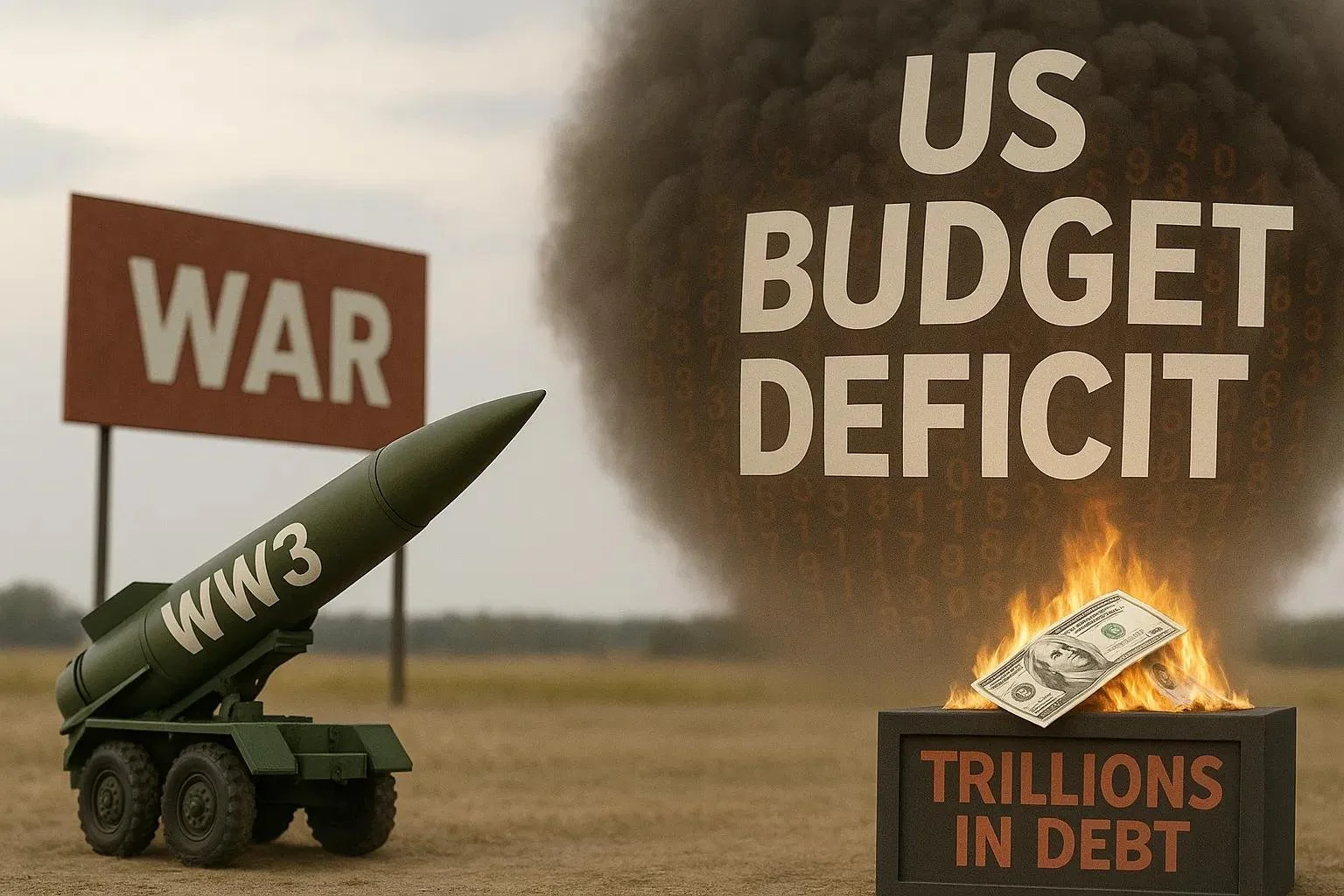
I’m Far More Concerned About The Deficit Than World War 3
I’m Far More Concerned About The Deficit Than World War 3
Notes From the Field By James Hickman (Simon Black) June 24, 2025
I can understand why so many people are worried about World War 3 breaking out. It’s a completely rational concern. I just don’t happen to share it.
Why? Because regardless of the debate over whether the US strikes against Iran’s nuclear facilities were a good idea, or a reckless risk of another expensive foreign entanglement, one thing is indisputable: America reminded the world of its immense military capabilities.
I’m Far More Concerned About The Deficit Than World War 3
Notes From the Field By James Hickman (Simon Black) June 24, 2025
I can understand why so many people are worried about World War 3 breaking out. It’s a completely rational concern. I just don’t happen to share it.
Why? Because regardless of the debate over whether the US strikes against Iran’s nuclear facilities were a good idea, or a reckless risk of another expensive foreign entanglement, one thing is indisputable: America reminded the world of its immense military capabilities.
There’s not a single adversary nation that wants to risk armed conflict with the US after watching those stealth bombers obliterate their targets.
And the proof is already here: Iran’s foreign minister flew to Moscow seeking military support from Russia... and Putin offered absolutely nothing except for strong words.
This is why I’m more convinced than ever that World War 3 is NOT going to break out over this conflict: no other country wants F-35s or B-2 stealth bombers in their airspace, let alone the 75th Ranger Regiment and ‘Delta Force’ special operators.
There’s now a great deal of debate over the wisdom of the air strikes, including within the President’s own party.
I’m extremely sympathetic to the view that America cannot afford yet another foreign occupation brought on by regime change in the Middle East; it should hardly be controversial to say that a country should avoid pointless and unwinnable conflicts.
At the same time, it should also be uncontroversial to see obvious benefit in ensuring that your sworn enemy does not have nuclear bombs.
As I wrote yesterday, a fairly conservative cost estimate of the air strikes, naval deployment, and assistance to Israeli air defense is around $1 billion. That’s not nothing.
But it’s also clear that the government spends a lot more than that on completely idiotic and pointless programs.
The Bureau of Labor Statistics spends more than $1 billion each year just to publish dubious economic reports that private companies (like ADP) already produce for free... and with greater accuracy. Would anyone rationally argue that the Bureau’s reports are more important than neutralizing a nuclear threat?
Unfortunately I’m not sure anyone in Washington is engaging in this kind of rational cost/benefit analysis... which is why the US has a $36 trillion national debt.
Private businesses and individuals have to make these rational decisions every day about how to allocate scarce resources— primarily time, money, and energy. The government, on the other hand, pretends that it has unlimited, infinite resources.
And this ‘unlimited resource’ mentality is FAR more concerning to me than the prospect of World War 3.
Without a change, the US could easily find itself in an existential financial crisis within the next eight years. I’m not being dramatic.
And in today’s podcast, we explain why and how that’s likely; we discuss:
Why the Social Security cliff is coming faster than expected—and how even its predicted 2033 insolvency is optimistic.
How this problem—and America’s debt addiction— could be solved, if any politician were willing to even address it.
How the US missed a golden opportunity to refinance its debts at much lower interest rates just four years ago.
How the US used to be capable of making wise investments— like the Louisiana Purchase or buying Alaska.
What the looming fiscal crisis means in practical terms for Americans (Spoiler: inflation).
Why foreign governments and central banks are shifting their reserves away from US dollars and towards strategic assets— not just gold, but platinum, industrial metals and even uranium.
And why the companies that produce these real assets are remarkably cheap.
CLICK HERE to listen to the podcast.
For the audio-only version, check out our online post here.
Finally, you can find the podcast transcript for your convenience, here.
To your freedom, James Hickman Co-Founder, Schiff Sovereign LLC
P.S. The clock is ticking—America likely has eight years at most before a financial crisis unleashes runaway inflation.
Foreign central banks know it. They’re dumping dollars and buying gold. But they’re not buying small, overlooked gold companies—some producing for $1,000/oz and trading below their cash on hand.
That’s where the real opportunity lies: low downside, massive upside. Our 4th Pillar research has already uncovered multiple winners—up 2–3x—and others could take off any day.
Where are Metals Headed Amid Geopolitical Chaos: Andy Schectman
Where are Metals Headed Amid Geopolitical Chaos
Liberty and Finance: Andy Schectman: 6-25-2025
In a recent exclusive interview with Liberty and Finance, Andy Schectman provided a detailed breakdown of the escalating tensions between Iran, Israel, and the United States.
The ongoing conflict has significant implications for global stability and the precious metals markets. As the situation continues to unfold, it is essential to understand the potential consequences of these rising tensions.
Where are Metals Headed Amid Geopolitical Chaos
Liberty and Finance: Andy Schectman: 6-25-2025
In a recent exclusive interview with Liberty and Finance, Andy Schectman provided a detailed breakdown of the escalating tensions between Iran, Israel, and the United States.
The ongoing conflict has significant implications for global stability and the precious metals markets. As the situation continues to unfold, it is essential to understand the potential consequences of these rising tensions.
The Middle East has long been a hotbed of geopolitical activity, with various nations vying for power and influence. The current tensions between Iran, Israel, and the US are rooted in a complex web of historical, cultural, and economic interests.
Iran’s now-crippled nuclear program, Israel’s concerns about national security, and the US’s role as a global superpower have all contributed to the escalating conflict.
The rising tensions between these nations pose a significant threat to global stability. A potential conflict could have far-reaching consequences, including disruptions to global trade, increased terrorism, and a heightened risk of cyberattacks. The impact on the global economy could be severe, with potential losses in the trillions of dollars.
In times of geopolitical uncertainty, investors often turn to precious metals as a safe haven. Gold, silver, and other precious metals have historically performed well during periods of conflict and economic instability.
As the situation in the Middle East continues to deteriorate, investors may increasingly seek out these assets as a hedge against potential losses.
Andy Schectman’s interview with Liberty and Finance provides valuable insights into the current situation and its potential implications for the precious metals markets. With his expertise in the field, Schectman offers a nuanced understanding of the complex factors at play and the potential consequences of the rising tensions.
For a deeper understanding of the geopolitical chaos involving Iran, Israel, and the US, and its potential impact on global stability and precious metals markets, watch the full video interview with Andy Schectman on Liberty and Finance.
The interview provides a comprehensive analysis of the situation and offers valuable insights for investors and individuals concerned about the potential consequences of the escalating conflict.
In conclusion, the rising tensions between Iran, Israel, and the US have significant implications for global stability and the precious metals markets. As the situation continues to unfold, it is essential to stay informed and adapt to the changing landscape.
By watching the full interview with Andy Schectman and staying up-to-date on the latest developments, individuals can better navigate the complex and rapidly evolving geopolitical environment.
Seeds of Wisdom RV and Economic Updates Thursday Afternoon 6-26-25
Good Afternoon Dinar Recaps,
BRICS Inspires 15 African Nations to Adopt Homegrown Payment System
By Watcher.Guru | June 2025
Africa is now taking a decisive step toward de-dollarization, inspired by the BRICS bloc. A group of 15 African countries has turned to the Pan-African Payments and Settlements System (PAPSS)—a homegrown payment network that allows trade settlements in local currencies, bypassing the US dollar entirely.
Good Afternoon Dinar Recaps,
BRICS Inspires 15 African Nations to Adopt Homegrown Payment System
By Watcher.Guru | June 2025
Africa is now taking a decisive step toward de-dollarization, inspired by the BRICS bloc. A group of 15 African countries has turned to the Pan-African Payments and Settlements System (PAPSS)—a homegrown payment network that allows trade settlements in local currencies, bypassing the US dollar entirely.
Key Highlights:
▪️ 15 African nations, including Kenya, Malawi, Tunisia, and Zambia, are using PAPSS to settle trade.
▪️ 150+ commercial banks are now connected to PAPSS.
▪️ The system can cut foreign exchange costs from 10–30% down to just 1%.
▪️ PAPSS leverages regional currencies like the Nigerian naira, Ghanaian cedi, and South African rand.
▪️ Estimated $5 billion in savings in FX costs if scaled across Africa.
PAPSS: Africa’s Answer to the US Dollar
PAPSS—created to enable real-time gross settlement of cross-border transactions—is becoming the financial backbone of intra-African trade. It reduces reliance on USD, which traditionally dominated African trade deals due to lack of direct currency convertibility.
With BRICS as its model, PAPSS aims to shift African economies toward currency sovereignty. It eliminates the need for costly third-party currencies and reinvests saved foreign exchange into local development.
“A trade worth $200 million in USD could cost up to 30% in FX fees. PAPSS drops that to just 1%.”
A Growing Threat to USD Dominance
The Pan-African system mirrors the BRICS vision: creating a multipolar financial world with decentralized currency power. In fact, BRICS itself is exploring a similar platform, aligning closely with PAPSS to reduce reliance on Western-led financial systems.
As more countries across Africa adopt PAPSS, the pressure on the U.S. dollar’s international dominance will only increase. Combined with BRICS initiatives, the global financial structure is pivoting toward regional cooperation and currency independence.
The Big Picture:
Africa’s use of PAPSS is a quiet revolution that could become one of the most significant economic stories of the decade. By bypassing the dollar, reducing transaction costs, and increasing autonomy, Africa is joining a global movement toward local currency empowerment—one spearheaded by BRICS and now embraced continent-wide.
The future of trade may not revolve around the dollar, but around locally-led, digitally connected networks like PAPSS.
@ Newshounds News™
Source: Watcher Guru
~~~~~~~~~
Seeds of Wisdom Team RV Currency Facts Youtube and Rumble
Newshound's News Telegram Room Link
Follow the Roadmap
Follow the Timeline
Seeds of Wisdom Team™ Website
Thank you Dinar Recaps
Why Nations Are Moving Gold Out of the U.S. and Back Home
Why Nations Are Moving Gold Out of the U.S. and Back Home | Peter Boehringer
Kitco News: 6-26-2025
Central banks around the world are accelerating a quiet but powerful shift — pulling their gold reserves out of U.S. and foreign custody.
Germany led this move over a decade ago, repatriating 674 tonnes of gold from the Federal Reserve and Banque de France. Now others are following. Why?
Why Nations Are Moving Gold Out of the U.S. and Back Home | Peter Boehringer
Kitco News: 6-26-2025
Central banks around the world are accelerating a quiet but powerful shift — pulling their gold reserves out of U.S. and foreign custody.
Germany led this move over a decade ago, repatriating 674 tonnes of gold from the Federal Reserve and Banque de France. Now others are following. Why?
In this exclusive Kitco News interview, Jeremy Szafron speaks with Peter Boehringer, Member of the German Bundestag and former Chair of the Budget Committee, who spearheaded Germany’s gold repatriation.
Boehringer breaks down why trust, control, and monetary sovereignty are pushing countries to rethink their reserve strategies — and why this trend is only gaining speed in 2025.
Key topics:
-Germany’s gold repatriation: why it began and how it unfolded
-The risks of outsourcing custody to the U.S. and U.K.
-OMFIF 2025 survey: 70% of central banks cite U.S. instability as a concern
-Why more central banks are buying gold and reducing dollar exposure
-Is a sovereign gold movement underway?
-Could gold become a new anchor of credibility in a fragmenting world?
-The future of the euro, digital currencies, and Bitcoin in national reserves
00:00 Introduction
01:57 Germany's Gold Repatriation
04:05 Concerns About Foreign Gold Custody
07:21 Audit and Transparency Issues
13:32 Global Gold Movement
18:25 Euro and Global Reserve Dynamics
21:12 Germany's Fiscal Policy and Gold Reserves
23:50 Germany's Missed Gold Opportunity
24:54 Bitcoin vs. Gold: A Libertarian Perspective
25:18 The Future of Sovereign Crypto Reserves
25:48 Gold's Historical Value and Bitcoin's Uncertainty
27:25 Challenges of Using Gold to Offset National Debt
30:43 The Independence of Central Banks
32:14 The Case for a European Gold Depository
36:44 Central Bank Digital Currencies: A Dystopian Future?
42:06 Public Influence on Gold Repatriation
43:25 Gold Market Dynamics and Central Bank Strategies
44:43 Conclusion
News, Rumors and Opinions Thursday 6-26-2025
Note: All intel should be considered as "Rumors" until we receive official announcements ...and “Rates and Dates” could change anytime until we get to the banks/redemption centers.
RV Excerpts from the Restored Republic via a GCR: Update as of Thurs. 26 June 2025
Compiled Thurs. 26 June 2025 12:01 am EST by Judy Byington
Wed. 25 June 2025: A global change has begun, but only behind closed doors and with the help of coordinated military forces. …Gesara Nesara on Telegram
Note: All intel should be considered as "Rumors" until we receive official announcements ...and “Rates and Dates” could change anytime until we get to the banks/redemption centers.
RV Excerpts from the Restored Republic via a GCR: Update as of Thurs. 26 June 2025
Compiled Thurs. 26 June 2025 12:01 am EST by Judy Byington
Wed. 25 June 2025: A global change has begun, but only behind closed doors and with the help of coordinated military forces. …Gesara Nesara on Telegram
A historic treaty has (allegedly) been signed by 209 countries to change the way the world does business. This isn’t a theory or a far-off dream; it’s happening right now. A full revaluation of the currency is (allegedly) happening, and a military operation is helping to make sure the transition to a sovereign monetary system is safe and smooth. What is the point? To bring back fairness, open up opportunities for growth, and break the centuries-old hold of centralized control over the world economy.
The currencies that have been kept low for a long time, such as the Iraqi Dinar, Vietnamese Dong, and Zimbabwe ZIM, are(allegedly) being given new values that show their true worth. This change makes the world a fairer place and makes sure that countries that were once ignored are now on the same level as the world’s financial powers. The Prosperity Fund is a huge, pre-secured pool of money that will be used to pay for humanitarian missions, rebuild infrastructure that was damaged in war, and redistribute wealth around the world. Schools, hospitals, and clean water systems are no longer just dreams for the farthest corners of the Earth. They are fully funded realities, with the signatures of 209 independent states behind them.
This isn’t just about money. It’s about fairness. The “Share the Wealth” program makes sure that everyone benefits directly from this change. No country is left out. No one is left out. This plan includes the Stellar Network, which gives billions of people who have been denied access to banking. Now, remote villages, rural settlements, and forgotten communities are all connected to the world’s most advanced financial infrastructure, which is safe from hacking and other forms of manipulation.
The main thing that has changed is military precision. The revaluation (RV) process is(allegedly) not being left to chance. Allied military units have been sent around the world to protect data centers, currency exchanges, and the safe distribution of new value systems. These operations include simulations, cyber-defense protocols, and working with other countries’ treasuries to make sure everything is clear and there is no fraud. The goal is clear: keep the transition going smoothly, avoid a crash, and safely lead the world into a new financial reality.
The outcome is a financial order that comes after the cabal. A world where a country’s worth isn’t based on who owns its debt, but on its people, resources, and goals. The Dinar’s new value will help Iraq grow. Vietnam’s newly balanced Dong will make it an economic leader in Asia. Zimbabwe is ready to grow its agricultural and mineral wealth now that the ZIM has been restored and inflation and globalist sabotage are no longer a problem. These aren’t guesses. These are actions that are already happening, signed, sealed, and now happening with military help.
This isn’t the future. This is the present. A treaty has(allegedly) been signed. A plan is being put into action. The big change in finance is real, and it belongs to the people. Each person. Each soul. The system that used to enslave the world with debt and inequality is being replaced by one based on honesty, fairness, and plenty. Have faith in the plan. The revaluation is more than just a currency event. It’s a wake-up call for the whole world.
~~~~~~~~~~~
Tues. 24 June 2025 Bruce:
On Mon. 23 June the rate on the Riel was over $3.
On Tues. 24 June Redemption Center screens showed 9 new rates as solid, with 15 more to go.
A Source said that on Thurs. 26 June “we would be smiling.” Several sources said in another couple of days we would be getting notification. Another source said we would be notified late Thursday 26 June.
As of Tues. evening 24 June Bond Holders were flying into Reno and say they will have access to their funds on Thurs. or Friday.
Redemption Centers have higher rates than if you exchange at a bank.
The Contract Rate on the Iraqi Dinar was in the mid $90.
NESARA should be announced and started by Fri. July 4.
Read full post here: https://dinarchronicles.com/2025/06/26/restored-republic-via-a-gcr-update-as-of-june-26-2025/
************
Courtesy of Dinar Guru: https://www.dinarguru.com/
Mnt Goat I was told this situation [with Iran] needs to be resolved in one of two ways or a bit of both: 1. change the regime in Iran 2. institute banking reforms to cut off the dollars from Iran (already seen this action mostly implemented)...I am told the U.S. absolutely WILL NOT allow the reinstatement of the dinar while this Iranian situation continues. Let’s only pray this ends soon.
Militia Man A lot of turmoil and it's been going on for...a couple years...The Middle East is very volatile...but...even during the turmoil you're seeing Iraq has been stable and staying out of the conflict which is really good...Even though this tension has been going for weeks Iraq has still maintained that she's opening for business...stable... has all the components for her economy to keep moving forward. That still holds true today...
**********
FRANK26....6-25-25.....DIGITAL
IQD Included in Global Analysis Reports Currency Report
Edu Matrix: 6-25-2025
Explore the rising prominence of the Iraqi Dinar in today’s complex global currency landscape.
This detailed report examines Iraq’s strategic moves—like de-dollarization, banking reforms, and closer ties with China, Russia, and Iran—that are reshaping the Dinar’s role in long-term investment forecasts.
As geopolitical tensions escalate, discover why gold and cryptocurrencies like Bitcoin are becoming essential safe-haven assets for savvy investors. Plus, learn why stable currencies such as the Swiss Franc and Japanese Yen remain strong choices, while emerging market currencies like the Vietnamese Dong and Iraqi Dinar attract long-term interest.
Seeds of Wisdom RV and Economic Updates Thursday Morning 6-26-25
Good Morning Dinar Recaps,
U.S. Regulator Orders Fannie Mae, Freddie Mac to Consider Crypto in Mortgage Risk Assessments
By Cointelegraph | June 2025
In a major development for crypto adoption in real estate, the Federal Housing Finance Agency (FHFA) has directed Fannie Mae and Freddie Mac to begin evaluating cryptocurrency as an asset class in their single-family mortgage loan risk assessments.
Good Morning Dinar Recaps,
U.S. Regulator Orders Fannie Mae, Freddie Mac to Consider Crypto in Mortgage Risk Assessments
By Cointelegraph | June 2025
In a major development for crypto adoption in real estate, the Federal Housing Finance Agency (FHFA) has directed Fannie Mae and Freddie Mac to begin evaluating cryptocurrency as an asset class in their single-family mortgage loan risk assessments.
Crypto Assets May Soon Count Toward Mortgage Applications
FHFA Director William J. Pulte issued the directive in a formal letter this week, stating the government-sponsored enterprises (GSEs) must:
“Prepare a proposal for consideration of cryptocurrency as an asset for reserves in their respective single-family mortgage loan risk assessments, without conversion of said cryptocurrency to U.S. dollars.”
This marks the first time U.S. housing authorities have opened the door to counting crypto holdings as qualifying assets for mortgage applications, a move that could reshape risk models and eligibility standards for millions of Americans.
Eligibility Limited to Regulated Crypto Holdings
The guidance includes a critical restriction:
Only cryptocurrencies that are:
▪️ Evidenced and stored on U.S.-regulated centralized exchanges
▪️ Subject to all applicable federal laws and compliance standards
will be considered under the new proposal.
This standard excludes unhosted wallets and decentralized platforms, underscoring regulators’ desire for traceability and compliance within the financial system.
Aligns With Trump Administration’s Pro-Crypto Agenda
Director Pulte noted that the shift toward crypto inclusion follows “significant studying” by the agency and aligns with Donald Trump’s stated goal of making the U.S. the “crypto capital of the world.”
The FHFA has been overseeing Fannie Mae and Freddie Mac since both were placed into conservatorship following the 2008 financial crisis. These institutions have since played a central role in stabilizing the mortgage market by buying loans from private lenders, which frees up capital for more lending.
Part of a Broader Crypto Integration Trend
This development is just the latest sign of crypto gaining traction in traditional finance. Recent headlines include:
▪️ JPMorgan’s plans to let select wealth clients use Bitcoin ETFs as collateral
▪️ Circle’s USDC stablecoin being approved as eligible collateral for futures trading starting next year
▪️ Crypto-backed mortgages becoming more common, with firms like Ledn enabling clients to leverage Bitcoin and Ether to purchase real estate without liquidating holdings
“Many Bitcoin holders have already used their digital assets as collateral to purchase property,” said Mauricio Di Bartolomeo, co-founder of Ledn.
Bottom Line:
The FHFA’s crypto guidance for Fannie Mae and Freddie Mac marks a pivotal turning point. If implemented, it could allow crypto-savvy borrowers to leverage their digital assets directly for homeownership, without having to convert to cash—a key win for holders, and another step toward mainstream crypto integration.
Let me know if you'd like a shortened Telegram version or a mobile-friendly newsletter layout.
@ Newshounds News™
Source: Cointelegraph
~~~~~~~~~
Russia Declares Digital Ruble Mandatory for Major Banks and Retailers
By The Coin Tribune | June 2025
Russia is no longer testing its central bank digital currency (CBDC)—it is mandating it. In a sweeping shift, Moscow has ordered that the digital ruble become a compulsory component of its financial and commercial infrastructure, marking a new era of centralized monetary control and programmable currency.
Key Directives:
▪️ By September 1, 2026, all major Russian banks and retailers generating over 120 million rubles (~$1.9 million USD) must support digital ruble payments.
▪️ Full implementation by 2028, eventually reaching nearly all businesses.
▪️ Goal: Strengthen state control over domestic financial flows and reduce reliance on foreign payment systems.
From Pilot to Policy: A Tectonic Monetary Shift
What began as a controlled experiment is now a national directive. The Bank of Russia has released a structured rollout plan:
2026: Largest banks and high-revenue retailers begin integration.
2027: Obligations expand to all licensed banks and businesses with revenue above 30 million rubles.
2028: Mandatory use reaches nearly the entire commercial sector, excluding only very small enterprises.
Russia’s plan to shift its entire economic infrastructure toward the digital ruble reflects not just a technical evolution, but a political statement. The digital currency is not merely a payment tool—it’s a state-controlled, programmable financial system that could track, restrict, or block transactions in real time.
“The obligation is clear, calibrated, progressive, and relentless.”
A Tool of Power—Not Just Progress
This move is as ideological as it is economic. In the face of Western sanctions, Moscow sees the digital ruble as a pathway to financial sovereignty and geopolitical insulation. But critics warn it comes at a steep cost:
▪️ Unlike decentralized cryptocurrencies like Bitcoin, the digital ruble is traceable, programmable, and blockable.
▪️ It offers the state unprecedented control over private financial behavior.
▪️ Universal QR codes issued by Russia’s National Payment Card System will serve as the primary interface for consumers and merchants.
Though officials cite efficiency and modernization, the real power lies in surveillance and regulation—a far cry from the decentralization ethos of blockchain technology.
Delayed Launch, Strategic Calculations
Originally scheduled for July 2025, the launch has been postponed to mid-2026, not only due to technical adjustments but to manage institutional resistance and political friction. The central bank is walking a fine line between ensuring adoption and avoiding systemic disruption.
Bottom Line:
Russia is embarking on one of the world’s most ambitious national CBDC rollouts—not by suggestion, but by decree. This isn't just about embracing digital currency; it's about building a monetary firewall, one that empowers the state and potentially restricts individual freedom.
As the digital ruble becomes mandatory, Russia is redefining the role of money in society—and raising questions globally about the future of financial autonomy in an era of programmable currency.
@ Newshounds News™
Source: Cointribune
~~~~~~~~~
Seeds of Wisdom Team RV Currency Facts Youtube and Rumble
Newshound's News Telegram Room Link
Follow the Roadmap
Follow the Timeline
Seeds of Wisdom Team™ Website
Thank you Dinar Recaps