MilitiaMan & Crew: The Sunday Night Breakdown: Patreon, Discord, and What’s Next
MilitiaMan & Crew: The Sunday Night Breakdown: Patreon, Discord, and What’s Next
9-13-2026
The Crew: Samson, PompeyPeter, Petra, Daytrader, Sunkissed, GIGI and Militia Man
No drama. No intrigue. No songs and dances. Just straight, factual news that I read and interpret to the best of my ability after being an avid Dinar investor and insanely obsessed Dinarian for over 15 years.
Follow MM on X == https://x.com/Slashn
MilitiaMan & Crew: The Sunday Night Breakdown: Patreon, Discord, and What’s Next
9-13-2026
The Crew: Samson, PompeyPeter, Petra, Daytrader, Sunkissed, GIGI and Militia Man
No drama. No intrigue. No songs and dances. Just straight, factual news that I read and interpret to the best of my ability after being an avid Dinar investor and insanely obsessed Dinarian for over 15 years.
Follow MM on X == https://x.com/Slashn
Be sure to listen to full video for all the news……..
Seeds of Wisdom RV and Economics Updates Monday Morning 9-14-26
Good Morning Dinar Recaps,
FED RATE HIKE WARNING: OIL SHOCK AND INFLATION PUSH U.S. MONETARY POLICY INTO A NEW PHASE
With oil prices surging above $108 and inflation remaining stubbornly elevated, expectations for a Federal Reserve rate increase this week are reshaping the outlook for U.S. monetary policy, bond yields, debt costs and the dollar.
Good Morning Dinar Recaps,
FED RATE HIKE WARNING: OIL SHOCK AND INFLATION PUSH U.S. MONETARY POLICY INTO A NEW PHASE
With oil prices surging above $108 and inflation remaining stubbornly elevated, expectations for a Federal Reserve rate increase this week are reshaping the outlook for U.S. monetary policy, bond yields, debt costs and the dollar.
OVERVIEW
Markets and economists are now expecting the Federal Reserve to raise interest rates by 0.25 percentage point this week, which would bring the federal funds target range to 3.75%–4.00% and mark the first Fed rate hike since July 2023. A Reuters poll found that 85% of economists surveyed expect the increase.
The oil shock is making the Fed's inflation problem more difficult. Brent crude has moved above $108 a barrel following continuing disruptions to Middle Eastern energy supplies, including the shutdown of Saudi Arabia's East-West pipeline. Rising energy prices are feeding renewed inflation concerns.
The consequences are spreading into bonds and currencies. U.S. Treasury yields remain near multi-year highs while the dollar has strengthened as investors seek safety and anticipate tighter monetary policy.
KEY DEVELOPMENTS
1. The Fed Is Moving From Rate Cuts Toward Possible Rate Hikes
The Federal Reserve enters its September 15–16 meeting facing a very different environment from the one investors expected earlier this year.
Instead of preparing for additional rate cuts, markets are now pricing in a strong probability of a quarter-point rate increase.
The Reuters economist survey found that 85% of respondents expect the Fed to raise its target range to 3.75%–4.00%. More than half also expect at least one additional increase by March 2027.
That represents a significant change in the monetary-policy outlook.
The Fed's challenge is that inflation remains too high while energy prices are rising sharply.
2. Oil Is Creating a New Inflation Problem
The latest energy shock is making the Fed's job considerably more difficult.
Brent crude has climbed above $108 per barrel, driven by continuing disruption to Middle Eastern oil supplies and uncertainty surrounding major shipping and export routes.
Saudi Arabia's East-West pipeline remains shut following attacks, while uncertainty around the Strait of Hormuz is keeping markets nervous.
The result is a classic monetary-policy dilemma.
Higher oil prices can push inflation higher even though raising interest rates does not directly produce more oil.
The Fed must therefore determine how much of the energy-driven inflation could become persistent inflation throughout the broader economy.
3. Bond Markets Are Already Feeling the Pressure
The implications extend beyond the Federal Reserve itself.
Higher expected interest rates generally increase the cost of borrowing throughout the economy.
At the same time, investors are demanding greater yields on longer-term government debt as inflation expectations rise.
The U.S. 10-year Treasury yield has approached the important 5% level, reflecting concerns about inflation, government borrowing and the future path of monetary policy.
This matters because Treasury yields influence borrowing costs throughout the financial system.
Mortgages, corporate borrowing, government refinancing and other forms of credit can all be affected.
4. The Dollar Is Benefiting From the Shift Toward Higher Rates
The changing interest-rate outlook is also affecting currency markets.
The dollar strengthened on Monday as investors sought the relative safety of U.S. assets while expectations for a Fed rate increase increased.
Higher U.S. interest rates can make dollar-denominated assets more attractive to international investors because they offer higher yields.
But there is another side to the story.
A stronger dollar can place additional pressure on countries that depend heavily on dollar-denominated borrowing or imports.
That means the Fed's decisions can create financial consequences far beyond the United States.
5. The Debt Problem Becomes More Important
Higher interest rates become especially significant when government debt is already elevated.
Every increase in borrowing costs can eventually affect the expense of refinancing maturing debt.
If rates remain higher for longer, governments must devote more resources to servicing their obligations.
That creates a potentially difficult cycle: Higher Oil Prices → Higher Inflation → Higher Interest Rates → Higher Bond Yields → Higher Debt Costs
If that cycle persists, pressure can spread through government finances, corporate borrowing, investment and currency markets.
This is where an energy shock becomes a global financial story.
WHY IT MATTERS
The Fed's potential rate hike is important not simply because of the quarter-point increase itself.
The bigger issue is the changing relationship between energy prices, inflation, interest rates and government debt.
The central bank can influence the cost of money, but it cannot produce additional oil or reopen a damaged pipeline.
That makes today's environment unusually complicated.
The energy shock is forcing monetary policymakers to confront inflation at the same time that governments and markets are already carrying significant debt burdens.
WHY IT MATTERS TO FOREIGN CURRENCY HOLDERS
Readers hold foreign currency with the hopes that it will increase in value when the Global Reset occurs.
Today's developments are important because interest-rate changes can influence currency values, capital flows, trade balances and international investment.
A higher U.S. interest rate can support the dollar by making U.S. assets more attractive, while putting pressure on currencies whose countries have lower interest rates or significant dollar-denominated debt.
However, a Fed rate hike does not guarantee that the dollar will strengthen indefinitely, nor does it establish a date for a Global Reset or currency revaluation.
For foreign currency holders, the important lesson is to watch the underlying financial structure rather than short-term predictions.
Hope is understandable. Evidence is essential.
IMPLICATIONS FOR THE GLOBAL RESET
Pillar 1 — Monetary Policy and Debt
The potential Fed rate hike demonstrates how quickly an energy crisis can move into monetary policy.
If inflation remains elevated, central banks may have less flexibility to lower rates.
That creates a difficult environment for heavily indebted governments because refinancing becomes more expensive.
The relationship between interest rates, government debt and bond markets is therefore becoming increasingly important to watch.
Pillar 2 — Energy and Financial Stability
The current situation also reinforces the growing connection between physical energy supplies and financial markets.
A disruption to oil production or transportation can raise energy prices.
Higher energy prices can increase inflation.
Persistent inflation can influence central-bank policy.
And monetary-policy changes can affect bonds, currencies and global capital flows.
The financial system is therefore increasingly exposed to events occurring far outside traditional banking centers.
Pillar 3 — Currency and Global Capital Flows
As interest-rate expectations change, international investors can move capital toward currencies and markets offering greater returns or perceived safety.
That can create winners and losers among currencies.
Countries with large external debts, significant energy-import bills or weaker currencies can face additional pressure when the dollar strengthens.
This is another reason the Fed's decision matters globally.
THE BOTTOM LINE
The Federal Reserve is approaching its September meeting at a moment when several major financial pressures are converging.
Oil has surged above $108, inflation remains elevated, bond yields are near multi-year highs and economists increasingly expect the Fed to raise rates rather than cut them.
The significance goes beyond one Fed meeting.
The combination of higher energy costs, persistent inflation, rising interest rates and heavy government debt could create a new pressure point for the global financial system—one that reaches from the oil market to bonds, currencies and sovereign debt.
Seeds of Wisdom Team
Newshounds News™ Exclusive
SOURCES
~~~~~~~~~~
🌱 A Message to Our Currency Holders🌱
If you’ve been holding foreign currency for many years, you were not foolish.
You were not wrong to believe the global financial system would change.
What failed was not your patience — it was the information you were given.
For years, dates, rumors, and personalities replaced facts, structure, and proof. “This week” predictions created cycles of hope and disappointment that were never based on how currencies actually change.
That is not your failure.
Our mission here is different: • No dates • No rates • No hype • No gurus
Instead, we focus on:
• Verifiable developments • Institutional evidence
• Global financial structure • Where countries actually sit in the process
Currency value changes only come after sovereignty, trade, banking, settlement systems, and fiscal coordination are in place. History and institutions confirm this sequence.
You will see silence. You will see denials. That is not delay — that is discipline.
Protect your identity. Organize your documents. Verify everything.
Never hand your discernment to anyone who cannot show proof.
You deserve truth — not timelines.
Seeds of Wisdom Team
Newshounds News
~~~~~~~~~~
Seeds of Wisdom Team RV Currency Facts Youtube and Rumble
Newshound's News Telegram Room Link
RV Facts with Proof Links Link
RV Updates Proof links - Facts Link
Start Here room with Most Asked Questions Link
Follow the Gold/Silver Rate COMEX
Follow Fast Facts
Seeds of Wisdom Team™ Website
Thank you Dinar Recaps
Iraq Economic News and Points To Ponder Late Sunday Evening 9-13-26
PM Al-Zaidi Europe Trip Targets Energy, Investment
2026-09-13 / 05:47 Shafaq News- Baghdad Iraqi Prime Minister Ali Al-Zaidi’s European tour is aimed at attracting investment and opening new channels for the country’s economy, Mohammed Al-Baldawi, spokesperson for the Sadiqoon parliamentary bloc, the political wing of Asaib Ahl Al-Haq, told Shafaq News on Sunday.
PM Al-Zaidi Europe Trip Targets Energy, Investment
2026-09-13 / 05:47 Shafaq News- Baghdad Iraqi Prime Minister Ali Al-Zaidi’s European tour is aimed at attracting investment and opening new channels for the country’s economy, Mohammed Al-Baldawi, spokesperson for the Sadiqoon parliamentary bloc, the political wing of Asaib Ahl Al-Haq, told Shafaq News on Sunday.
Al-Baldawi said the visit would focus on agreements and projects involving defense systems, energy, oil, industry, trade, and investment, adding that he expected the tour to be “effective and positive for Iraq.”
Iraq, he said, favors broader international engagement and diversified relations, arguing that the country has an opportunity to strengthen its political, security, and economic standing in the region.
He also linked Iraq’s longer-term economic ambitions to the completion of Al-Faw Grand Port and the Development Road, saying they could strengthen the country’s role as a trade link between East and West.
Earlier today, government spokesperson Haider Al-Aboudi confirmed that Al-Zaidi had left Baghdad for an official visit to France and Germany. The prime minister is beginning the tour in Paris, where he is scheduled to hold talks with French President Emmanuel Macron on bilateral relations and expanded cooperation.
The visit is expected to include the signing of several understandings in investment, energy, industry, trade, technology, education, culture, and infrastructure before Al-Zaidi travels to Berlin.
Read more: A guide to Ali Al-Zaidi's ministerial program
https://www.shafaq.com/en/Iraq/PM-Al-Zaidi-Europe-trip-targets-energy-investment
Iraq Is Redrawing The Regional Transit Map... Ministry Of Transport: Opening 7 New International Routes And Connecting The Gulf With Turkey, Europe, And Central Asia
Baghdad - One News - 9/13/2026 The Ministry of Transport announced on Sunday the opening of seven new international transit routes within eight months, as part of moves aimed at strengthening Iraq’s position on the international trade map and transforming it into a regional hub for transport and logistics linking the Arabian Gulf with Turkey, Europe and Central Asia.
The Director of the Land Transport Management Department at the Ministry, Israa Hanoun, said that the Ministry is working to consolidate Iraq’s position as a hub for transport and transit between the Arabian Gulf, Turkey and Europe, by developing the land and rail transport network and ports and linking them within a multimodal transport system.
Hanoon added that the work includes activating and expanding the international land transport system “TIR”, opening new international routes and simplifying border and customs procedures, in addition to enhancing digital transformation and coordination between concerned parties, which reduces the transit time of trucks and raises Iraq’s competitiveness as a trade corridor.
She explained that the “TIR” system, which came into effect in Iraq on April 1, 2025, contributed to the growth of transit traffic, while 2026 witnessed a clear expansion in international routes, with the opening of seven new routes within eight months, indicating the increasing use of Iraqi territory as a corridor for international transport.
She explained that the goal is not limited to increasing the number of trucks passing through, but to gradually reach a large and sustainable transit movement, in conjunction with raising the efficiency of ports, roads and logistics services, allowing Iraq to attract a larger share of trade between Asia, the Gulf, Turkey and Europe.
She noted that Iraqi transit routes are witnessing increasing traffic to and from Türkiye, the Gulf States, Jordan and Saudi Arabia, in addition to Iraq gradually becoming linked to routes extending towards Central Asian countries and Europe.
She pointed to the operation of new routes towards Saudi Arabia and Turkmenistan, while Türkiye represents a major gateway to European markets, giving Iraq an important position as a link between the Gulf and Turkey, as well as between the countries of the region and Central Asia.
Hanoon stressed that the current infrastructure forms a basis that qualifies Iraq to play a larger regional role, but it still needs further development and expansion to accommodate the expected increase in transit traffic.
She added that the next phase requires the development of inspection and waiting areas, logistics service centers, electronic connectivity, truck scales and rest stations, in addition to improving the efficiency of roads and ports and speeding up customs and border procedures.
The Ministry of Transport confirmed that Iraq has already begun taking steps to transform into a regional trade corridor, through the operation of the international transport system, the expansion of transit routes, and the development of ports and roads.
The next challenge lies in building an integrated logistics system that makes the country a competitive and sustainable option for regional and international trade. https://1news-iq.net/العراق-يعيد-رسم-خريطة-الترانزيت-الإقل/
Australian Exports To Iraq Plunge 97.5% In Q2
2026-09-13 18:38 Shafaq News- Canberra/ Baghdad Australian exports to Iraq fell to about $2.2 million in the second quarter of 2026, down sharply from the previous three months, Australian Bureau of Statistics data showed.
Exports totaled about $88 million in the first quarter before falling by $85.8 million, or 97.5%, in the April-June period.
Cheese and curd topped the exports in the second quarter at about $1 million, followed by pharmaceuticals at around $773,000 and sheep or goat meat at roughly $196,000.
Other exports included spirits, prepared fats and oils, machine parts, liquid pumps, measuring instruments and additive manufacturing machines. https://www.shafaq.com/en/Economy/Australian-exports-to-Iraq-plunge-97-5-in-Q2
FRANK26….9-13-26…..Z &T
KTFA
Sunday Night Video
FRANK26….9-13-26…..Z &T
This video is in Frank’s and his team’s opinion only
Frank’s team is Walkingstick, Eddie and Omar in Iraq and guests
Playback Number: 605-313-5163 PIN: 156996#
KTFA
Sunday Night Video
FRANK26….9-13-26…..Z &T
This video is in Frank’s and his team’s opinion only
Frank’s team is Walkingstick, Eddie and Omar in Iraq and guests
Playback Number: 605-313-5163 PIN: 156996#
Fed Losing Control? Treasury Market Forces Its Hand | Craig Hemke
Fed Losing Control? Treasury Market Forces Its Hand | Craig Hemke
Liberty and Finance: 9-12-2026
Craig Hemke of TF Metals Report warns that the bond market may increasingly be forcing higher interest rates on a U.S. government that cannot afford them.
He argues that Treasury intervention could mark the early stages of yield-curve control, a development he considers extraordinarily bullish for gold and silver.
Fed Losing Control? Treasury Market Forces Its Hand | Craig Hemke
Liberty and Finance: 9-12-2026
Craig Hemke of TF Metals Report warns that the bond market may increasingly be forcing higher interest rates on a U.S. government that cannot afford them.
He argues that Treasury intervention could mark the early stages of yield-curve control, a development he considers extraordinarily bullish for gold and silver.
Hemke also warns that surging diesel and energy costs could keep inflation elevated, making it increasingly difficult for policymakers to suppress long-term rates.
Meanwhile, he highlights China's accelerating gold purchases, which reached 80 metric tons through August compared with 27 tons during all of 2025.
Even if a major liquidity event temporarily drives gold lower, Hemke argues that central-bank demand, negative real rates and currency debasement could ultimately support much higher precious-metals prices.
INTERVIEW TIMELINE:
0:00 Intro
:00 Fed rate hike
3:25 Yield curve control
11:30 Diesel and inflation
16:12 Gold update
Rob Cunningham: Clarity’s Momentum Window
Rob Cunningham: Clarity’s Momentum Window
9-13-2026
CLARITY’S MOMENTUM WINDOW
14 Positives.
BRICS aligning.
Ireland welcoming.
Iraq preparing.
Rob Cunningham: Clarity’s Momentum Window
9-13-2026
CLARITY’S MOMENTUM WINDOW
14 Positives.
BRICS aligning.
Ireland welcoming.
Iraq preparing.
Russia encouraging.
Ukraine softening.
Inflation shrinking.
Bessent warning.
Witt signaling.
GOP advancing.
DTCC looming.
XRP holding.
The SEC affirming.
The Fed aligning.
President Trump leading.
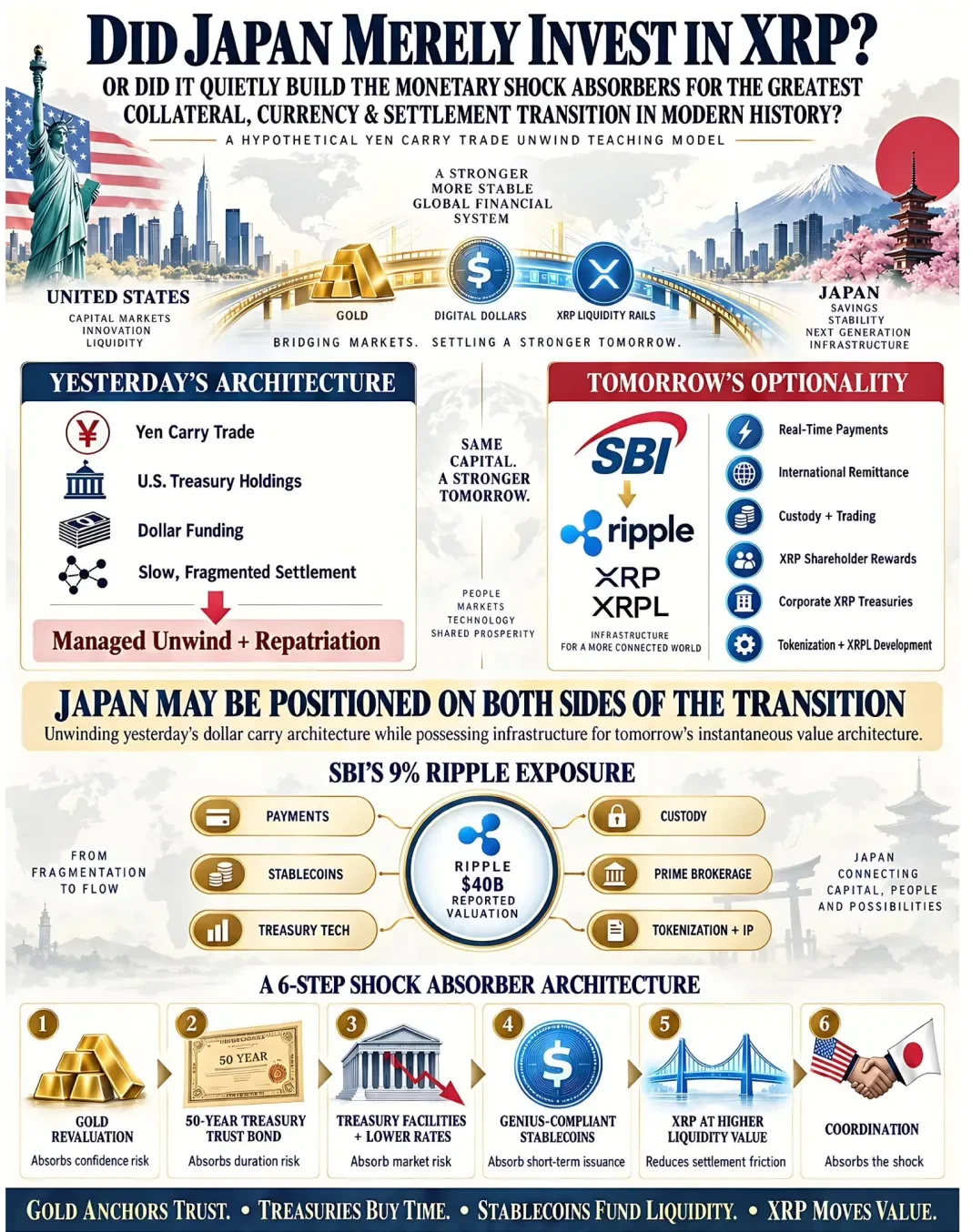
These signals do not stand alone. Together, they reveal global financial, political and technological forces converging within an extraordinarily tight window.
Cloture remains a vote-count question – not an inevitability – but the strategic environment surrounding the CLARITY Act appears increasingly favorable. The cost of legislative paralysis is rising precisely as markets, institutions and nations prepare for regulated digital assets, tokenized value and modern settlement infrastructure.
The world is not waiting for clarity.
It is aligning around the necessity of it.
CLARITY cloture passage no longer looks merely possible. It looks increasingly probable – and potentially inevitable if political momentum becomes legislative resolve.
Source(s):
• https://x.com/KuwlShow/status/2098914001975402757
https://dinarchronicles.com/2026/09/13/rob-cunningham-claritys-momentum-window/
Iraq Economic News and Points To Ponder Sunday Afternoon 9-13-26
Iraq 10th Among US Crude Suppliers
2026-09-13 04:55 Shafaq News- Baghdad/ Washington Iraq ranked 10th among the largest crude oil suppliers to the United States last week, with shipments averaging 46,000 barrels per day (bpd), up from 38,000 bpd the previous week, according to US Energy Information Administration (EIA) data.
Iraq 10th Among US Crude Suppliers
2026-09-13 04:55 Shafaq News- Baghdad/ Washington Iraq ranked 10th among the largest crude oil suppliers to the United States last week, with shipments averaging 46,000 barrels per day (bpd), up from 38,000 bpd the previous week, according to US Energy Information Administration (EIA) data.
Canada remained the largest supplier at 3.926 million bpd, followed by Venezuela at 599,000 bpd, Saudi Arabia at 347,000 bpd, Mexico at 297,000 bpd and Colombia at 239,000 bpd.
Brazil ranked sixth with 235,000 bpd, followed by Nigeria at 232,000 bpd, Argentina at 173,000 bpd and Guyana at 65,000 bpd.
https://www.shafaq.com/en/Economy/Iraq-10th-among-US-crude-suppliers
Gold Prices Stabilize In Baghdad, Rise In Erbil
2026-09-13 05:35 Shafaq News- Baghdad/ Erbil On Sunday, gold prices hovered around 960,000 IQD per mithqal in Baghdad and Erbil markets, according to a Shafaq News market survey.
Gold prices on Baghdad's Al-Nahr Street recorded a selling price of 960,000 IQD per mithqal (equivalent to five grams) for 21-carat gold, including Gulf, Turkish, and European varieties, with a buying price of 956,000 IQD. The same gold had sold for 960,000 IQD on Saturday.
The selling price for 21-carat Iraqi gold stood at 930,000 IQD, with a buying price of 926,000 IQD.
In jewelry stores, the selling price per mithqal of 21-carat Gulf gold ranged between 960,000 and 970,000 IQD, while Iraqi gold sold for between 930,000 and 940,000 IQD.
In Erbil, 22-carat gold was sold at 1,003,000 IQD per mithqal, 21-carat gold at 958,000 IQD, and 18-carat gold at 821,000 IQD.
https://www.shafaq.com/en/Economy/Gold-prices-stabilize-in-Baghdad-rise-in-Erbil-9
Baghdad To Release $382M+ For Farmers
2026-09-13 06:29 Shafaq News- Baghdad Iraq will release 500 billion dinars ($382.2M) in overdue payments to farmers during September, Finance Minister Faleh Al-Sari announced on Sunday, following months of protests over delayed agricultural dues.
Al-Sari said the Finance Ministry would also continue settling farmers’ payments in the coming months until all outstanding dues are cleared.
The minister did not specify which agricultural seasons the payments will cover, how the funds will be distributed among provinces, or when the remaining outstanding dues will be fully paid. According to parliamentary Agriculture and Water Committee member Falih Al-Khazali, farmers who had delivered their crops were owed 1.5 trillion dinars ($1.15B) as of September 7.
Hundreds of farmers from several Iraqi provinces demonstrated outside the Finance Ministry in Baghdad on August 18 over unpaid dues for wheat sold to the state. At least 17 others were injured on May 3 when security forces used water cannons and electric stun devices to disperse farmers from central and southern provinces who marched toward Baghdad’s Green Zone demanding overdue payments and changes to wheat pricing, according to the General Federation of Agricultural Cooperative Associations.
Read more: Iraq’s wheat fields no longer guarantee bread
https://www.shafaq.com/en/Economy/Baghdad-to-release-382M-for-farmers
Dollar Steady In Baghdad, Slips In Erbil
2026-09-13 09:42 Shafaq News- Baghdad/ Erbil The US dollar closed Sunday’s trading mixed in Iraq, hovering around 157,000 dinars per 100 dollars.
According to a Shafaq News market survey, the dollar traded in Baghdad's Al-Kifah and Al-Harithiya exchanges at 156,500 dinars per 100 dollars, unchanged from the morning session.
In the Iraqi capital, exchange shops sold the dollar at 157,000 dinars and bought it at 156,000 dinars, while in Erbil, selling prices stood at 156,250 dinars and buying prices at 156,200 dinars.
https://www.shafaq.com/en/Economy/Dollar-steady-in-Baghdad-slips-in-Erbil
Mosul secures $46M for Iraq’s largest university solar project
2026-09-13 07:27 Shafaq News- Nineveh The University of Mosul is preparing to launch a 30-megawatt solar power project funded by a €40 million ($46.4M) grant from Germany’s KfW Development Bank, University President Wahid Mahmoud Al-Ibrahimi announced on Sunday, with the final contract expected to be signed in November.
Al-Ibrahimi told a press conference that technical and administrative procedures had been completed and field implementation would begin after the contract is signed, describing it as Iraq’s largest university clean-energy project.
The project is designed to cover the electricity needs of the university’s colleges and facilities, with surplus power fed into the national grid to improve electricity supply to hospitals and water stations across Nineveh, and will include a specialized research center to train local personnel in operating and managing the solar facility, with the aim of expanding the model in the future.
University records identify Tetra Tech as the project’s consulting firm and say the project’s initial phases began in 2023, including technical studies, site assessments, and consideration of a possible expansion in generating capacity.
A German delegation began final technical and administrative work at the university on September 6, and five days of talks concluded on September 10 with meeting records signed ahead of formal agreements at the Higher Education Ministry in Baghdad. KfW has previously supported reconstruction at the University of Mosul after the war against ISIS. The German development bank says 27 rehabilitation projects across the campus had been completed by June 2023, including work on the central library, academic facilities, sports infrastructure, and other university buildings.
Read more: Electricity output covers only one-third of Iraq's demand
https://www.shafaq.com/en/society/Mosul-secures-46M-for-Iraq-s-largest-university-solar-project
PM Al-Zaidi Cools Al-Maliki–Al-Khazali Tensions
2026-09-13 13:37 Shafaq News- Baghdad Iraqi Prime Minister Ali Al-Zaidi has succeeded in easing tensions between State of Law Coalition (SLC) head Nouri Al-Maliki and Qais Al-Khazali, leader of the Asaib Ahl Al-Haq, after a dispute over deputy prime minister posts, an informed source told Shafaq News on Sunday.
According to the source, Al-Zaidi “personally intervened” to ease the disagreement and end the public sparring between the two sides, although the deputy PM issue will remain on the agenda of future meetings of the ruling Shiite Coordination Framework (CF).
The dispute erupted during the CF’s September 7 meeting, attended by Al-Zaidi, after Al-Maliki rejected a proposal to create deputy prime ministers. A day later, Al-Zaidi called Al-Maliki to push for de-escalation, completion of the cabinet, and a review of the proposal.
Abdulrahman Al-Jazairi, a senior member of the Al-Qasam Movement affiliated with State of Law, told Shafaq News that there was strong opposition to Asaib Ahl Al-Haq nominee Laith Al-Khazali and that new candidates would need to be considered. Discussions will also cover reducing deputy prime ministers’ salaries while preserving political blocs’ shares of cabinet portfolios according to their parliamentary representation.
Al-Maliki, the source said, had also urged de-escalation and rapprochement at a recent meeting with SLC leaders. On September 11, he publicly called on politicians, media figures, and bloggers to avoid fabricated or manipulated accusations and retaliatory attacks, warning that such exchanges could deepen tensions among political partners.
The former prime minister also instructed State of Law’s Shura Council to review candidates for the vacant ministries allocated to the coalition within 72 hours starting September 12, while taking other political forces’ agreed shares into account. Nine of 23 ministries currently remain without permanent ministers, including Defense, Interior, Planning, and Higher Education.
https://www.shafaq.com/en/Iraq/PM-Al-Zaidi-cools-Al-Maliki-Al-Khazali-tensions
Seeds of Wisdom RV and Economics Updates Sunday Afternoon 9-13-26
Good Afternoon Dinar Recaps,
BRICS FINANCIAL SHIFT: LOCAL CURRENCIES AND CROSS-BORDER PAYMENTS MOVE INTO THE NEXT PHASE
BRICS is moving its financial cooperation from broad discussion toward practical payment and settlement mechanisms, with members promoting local-currency trade and more efficient cross-border payments while stopping short of creating a common BRICS currency.
Good Afternoon Dinar Recaps,
BRICS FINANCIAL SHIFT: LOCAL CURRENCIES AND CROSS-BORDER PAYMENTS MOVE INTO THE NEXT PHASE
BRICS is moving its financial cooperation from broad discussion toward practical payment and settlement mechanisms, with members promoting local-currency trade and more efficient cross-border payments while stopping short of creating a common BRICS currency.
OVERVIEW
India has clarified that BRICS is not creating a common currency. Instead, the group is exploring greater use of its members' national currencies for bilateral and multilateral trade and settlement. Indian officials say local-currency settlement could reduce transaction costs and provide additional options for cross-border payments.
BRICS is pushing for faster, cheaper and more accessible cross-border payments. The New Delhi Declaration encourages the BRICS Payment Task Force to continue developing practical mechanisms and greater interoperability among national payment and messaging systems.
The significance is moving from the idea of a new currency to the infrastructure that moves money. Payment connectivity, local-currency settlement, trade financing and related financial infrastructure could gradually give BRICS members more alternatives within the existing international monetary system.
KEY DEVELOPMENTS
1. BRICS Moves Away From the Common-Currency Narrative
One of the most important clarifications emerging from the BRICS summit is what the group is not doing.
India's Ministry of External Affairs said there is currently no proposal to create a BRICS currency.
Instead, member countries are examining ways to increase the use of their existing national currencies in bilateral and multilateral trade.
That distinction matters.
The idea of a common BRICS currency has generated considerable attention among currency holders and financial commentators. But the latest official clarification points toward a more gradual approach: use the currencies that already exist and improve the systems that allow them to be used across borders.
2. Local-Currency Settlement Becomes the Practical Path
BRICS members are emphasizing local-currency settlement as a practical way to reduce transaction costs.
Instead of automatically converting every international transaction through the U.S. dollar, countries can increasingly explore arrangements that allow trading partners to settle portions of their transactions directly in their national currencies.
This does not mean the dollar disappears.
It means international commerce could gradually become less dependent on a single settlement currency.
India's officials have described local-currency settlement as an additional option for businesses and governments conducting cross-border trade.
3. Cross-Border Payment Infrastructure Is Becoming the Bigger Story
The financial significance of BRICS may ultimately have less to do with creating a new currency and more to do with how money moves between countries.
The New Delhi Declaration encourages the BRICS Payment Task Force to continue work on cross-border payment mechanisms designed to make transactions faster, lower-cost, more accessible, efficient and secure.
The group is also examining greater interoperability between national payment and messaging systems.
This is an important distinction for understanding financial-system change.
A monetary system does not change only because a new currency is created.
It can also change because payment rails, settlement systems, banking connections and financial technology change.
4. The Financial Infrastructure Is Expanding Beyond Payments
The BRICS financial discussions extend beyond simply transferring money.
The New Delhi Declaration also supports work involving investment, trade financing, settlement and depositary infrastructure, insurance and reinsurance capacity, and local-currency financing through the New Development Bank.
These developments are important because they address several layers of international commerce.
A country needs more than a currency to conduct international trade.
It needs payment systems, financing, settlement mechanisms, insurance, banking relationships and investment channels.
Building those layers can make local-currency transactions more practical over time.
5. The Dollar Is Not Being Replaced — But Alternatives Are Expanding
The latest BRICS developments should not be interpreted as an immediate replacement of the U.S. dollar.
India has specifically emphasized that the current approach is about making cross-border payments easier and expanding the use of national currencies.
The objective is therefore better understood as diversification rather than immediate replacement.
If more countries can conduct portions of their trade directly through their own currencies and connected payment systems, the international financial system could gradually become more multipolar.
That would be a structural change rather than a single dramatic monetary event.
WHY IT MATTERS
The most important development may be the shift from talking about a theoretical alternative financial system to working on the infrastructure required to make alternative settlement arrangements practical.
Payment systems determine how money moves.
Settlement systems determine how obligations are completed.
Currency arrangements determine what is used to settle those obligations.
Together, these components form part of the financial infrastructure underlying international trade.
The financial system does not have to be replaced overnight to become more diversified. It can change gradually as new payment and settlement options are built alongside the existing system.
WHY IT MATTERS TO FOREIGN CURRENCY HOLDERS
Readers hold foreign currency with the hopes that it will increase in value when the Global Reset occurs.
Today's BRICS development is relevant because it involves countries and currencies that are participating in the gradual development of a more diversified international financial system.
However, there is no announcement of a BRICS common currency or an automatic revaluation of existing BRICS currencies.
The important development is the infrastructure being discussed and developed around local-currency settlement, cross-border payments and financial connectivity.
For foreign currency holders, that distinction is critical.
The existence of new payment and settlement mechanisms does not guarantee that any particular currency will rise in value.
But it does provide evidence that the architecture supporting international commerce is continuing to evolve.
The foundation matters before the valuation.
IMPLICATIONS FOR THE GLOBAL RESET
Pillar 1 — Payments and Technology
The move toward interoperable payment systems could become one of the most important technological components of a changing financial system.
If national payment networks can eventually communicate more efficiently across borders, international transactions could become faster and less dependent on traditional intermediaries.
The potential change is therefore not simply about digital currencies.
It is about the infrastructure connecting currencies, banks, businesses and countries.
Pillar 2 — Trade and Currency Diversification
Greater use of local currencies could gradually diversify the currencies used in international commerce.
This could be particularly important for countries seeking greater control over their trade settlement and reduced exposure to disruptions in traditional payment channels.
The result would not necessarily be a dollar-free system.
It could instead be a system containing multiple settlement currencies, payment networks and financial centers operating alongside one another.
Pillar 3 — Development Finance
The expansion of local-currency financing through institutions such as the New Development Bank could add another layer to this process.
If infrastructure and development projects can increasingly be financed using local currencies, countries may have more choices beyond borrowing exclusively through traditional international financial channels.
That could gradually strengthen the financial independence of emerging economies.
THE BOTTOM LINE
The latest BRICS development is significant precisely because it is more practical than the headline of a new common currency.
The group is working toward faster cross-border payments, greater use of national currencies and stronger financial connectivity, while India has made clear that a common BRICS currency is not currently on the table.
For the Global Reset, the larger signal is that countries do not necessarily need to create one replacement currency to change the international financial system.
They can begin by changing how currencies are used, how payments move, how trades are settled and how international projects are financed.
The next phase of global financial change may be built not around one new currency, but around a network of currencies and payment systems that gives countries more choices in how they conduct international trade.
Seeds of Wisdom Team
Newshounds News™ Exclusive
SOURCES
~~~~~~~~~~
Seeds of Wisdom Team RV Currency Facts Youtube and Rumble
Newshound's News Telegram Room Link
RV Facts with Proof Links Link
RV Updates Proof links - Facts Link
Start Here room with Most Asked Questions Link
Follow the Gold/Silver Rate COMEX
Follow Fast Facts
Seeds of Wisdom Team™ Website
Thank you Dinar Recaps
Fiat-Backed vs. Asset-Backed Digital Currencies
Fiat-Backed vs. Asset-Backed Digital Currencies
9-12-2026
Fiat- and Commodity-Backed Stablecoins: Asset-Backed Digital Currencies
Explore fiat- and commodity-backed stablecoins like USDC, PAXG, and gold tokens.
Key takeaways
• Stablecoins are used to store value, send remittances, make payments, and enable DeFi access.
Fiat-Backed vs. Asset-Backed Digital Currencies
9-12-2026
Fiat- and Commodity-Backed Stablecoins: Asset-Backed Digital Currencies
Explore fiat- and commodity-backed stablecoins like USDC, PAXG, and gold tokens.
Key takeaways
• Stablecoins are used to store value, send remittances, make payments, and enable DeFi access.
• Fiat-backed stablecoins are backed 1:1 by fiat currencies like the US dollar or euro. Fiat-backed stablecoins dominate in market cap, but commodity stablecoins offer alternative methods of maintaining stable value.
• Commodity-backed stablecoins, or “commodity collateralized stablecoins,” are backed by physical assets like gold, silver, or oil.
• Both fiat-backed and commodity-backed stablecoins are pegged to real-world assets, unlike BTC or ETH, which are unbacked digital assets.
Fiat- and Commodity-Backed Stablecoins: Asset-Backed Digital Currencies
Let’s be honest: navigating the constantly evolving world of digital assets can feel like trying to drink from a firehose that never shuts off. Between Bitcoin, Ethereum, DeFi, NFTs, and memecoins, it’s easy to get overwhelmed. But one category of digital assets is making crypto easier — and, dare we say, more calming. Increasingly, everyday users are turning to the comfort and reliability of stablecoins.
Now, not all stablecoins are created (or designed) the same way. What assets back stablecoins like USDC and PAXG? Two of the most common types of stablecoins are fiat-backed (like USDC, pegged to government-issued currencies) and commodity-backed (like PAXG, tied to physical assets like gold).
Generally speaking, fiat-backed stablecoins are backed by fiat cash and commodity-backed stablecoins are backed by other commodities. In either case, these types of stablecoins are intended to be redeemable 1:1 for the underlying asset they’re backed by (e.g., gold or US dollars). In terms of market cap, USD-pegged stablecoins and gold-backed stablecoins dominate their respective categories.
What’s the difference between the two? Should you use one or the other? Or would it make sense to include both in your onchain portfolio? Let’s break down your choices.
First, what exactly is a stablecoin?
Aptly named, stablecoins are digital currencies that are designed to maintain a stable value. While bitcoin (BTC), ether (ETH), and other cryptocurrencies can swing wildly in price, stablecoins aim to stay pegged to resilient commodities and fiat currencies. They’re the calm friend in your crypto crew (the one who doesn’t panic when markets move).
Digital assets outside of stablecoins are more like your wild crypto friend. They can deliver big wins — and big headaches with prices that fluctuate significantly. These strictly onchain assets (not being tied to any currency or commodity offchain) can serve as a payment method, but they’re also largely used as speculative investments.
These days, many digital asset users prefer stablecoins over volatile digital assets to send remittances, receive a salary, pay for goods and services, and more. Stablecoins can also be used as a digital cash alternative that’s designed to maintain stability relative to the currency that backs it.
How stablecoins can be useful
Imagine you need to send money to a close friend or family member in another country. With traditional methods, hefty fees and long waits can make a simple transfer frustrating. Stablecoins can fix that. With stablecoins, you can transfer funds quickly and at a fraction of the cost, often within minutes or seconds, even across borders.
Stablecoins are a useful way to hold value in between transactions while staying inside the blockchain ecosystem. Let’s say you want to sell some ETH but aren’t ready to cash out into fiat currency like dollars just yet. In this case, you can trade your ETH for a stablecoin like USDC to effectively “cash out” and avoid future price swings in the value of ETH. In this sense, stablecoins can serve as a sort of middle ground between volatile digital assets and fiat currencies.
Stablecoins act as a safe harbor: when crypto markets are swinging wildly, they can give you a calm place to park your assets. You don’t have to worry that your $100 of USDC will suddenly be worth $60 overnight (or, for that matter, $180). USDC is fully backed by highly liquid cash and cash-equivalent assets — so that it’s redeemable 1:1 for USD. Price stability is crucial for financial planning, especially for people using digital assets for salaries, savings, business payments, or essential needs. And that’s exactly what money is supposed to be. It should be stable, liquid, widely accepted, and easily usable. We like to think of USDC as the world’s digital dollar.
Picture buying an upgraded character in the metaverse, buying lunch, or paying for a subscription. You don’t have to worry about your USDC spiking or crashing in value before the transaction completes. Stablecoins are digital dollars that can mitigate uncertainty. This makes UDSC and other stablecoins suitable for everyday purchases.
Fiat-backed stablecoins: A familiar friend
Let’s start with what you already know and trust: money. Fiat-backed stablecoins like USDC are pegged to a government-issued currency. That means for every USDC, there’s $1 (or an equivalent mix of highly liquid cash and cash equivalents) sitting safely in a reserve. To better understand how fiat-backed stablecoins work, let’s take a closer look at how they work in terms of stability, transparency, liquidity, and everyday use.
Stability
Think of USDC as your digital dollar. It moves at the speed of the internet much like other cryptocurrencies, but it’s backed by the same dollars you might have been using your whole life. USDC is designed to be everything a digital dollar should be: stable, transparent, and easy to use.
Fiat-backed stablecoins have become incredibly popular for a variety of good reasons. First and foremost, they offer stability you can count on because they’re pegged to national currencies like the US dollar. You can hold them without worrying about their monetary value fluctuating wildly.
That is not something that you can say for volatile digital assets that can drastically move up or down in value in a week, day, or even hours. When you hold 1 USDC, you can expect that it will be redeemable 1 USDC for 1 USD.
Transparency
Another big reason people trust fiat-backed stablecoins is transparency. USDC, for example, undergoes monthly attestations by a Big Four accounting firm. The attestations provide assurance that the value of USDC reserves are greater than the amount of USDC in circulation. This kind of open transparency can build credibility and helps users feel secure.
Liquidity
There’s also the matter of liquidity. Fiat-backed stablecoins are generally easy to convert in and out of traditional currencies, which makes them super practical when you move between the crypto world and traditional finance (TradFi). Whether you’re cashing out to your bank or swapping into another digital asset, it’s typically a smooth and straightforward process. Stablecoins are also an increasingly popular way to receive your salary, with many companies offering stablecoin payments as an alternative to TradFi bank transfers and remittances.
Everyday use
Finally, fiat-backed stablecoins shine when it comes to everyday usability. You can use stablecoins for many things including simple peer-to-peer (P2P) payments, participating in DeFi platforms, or even just using them as an alternative to regular fiat options like credit cards, payment apps (e.g., Venmo), or physical cash.
Fiat-backed stablecoins bring the convenience of digital assets with the predictability of stable fiat currencies. In short, fiat-backed stablecoins really give you the best of both worlds: the speed and innovation of digital assets, with the familiarity and trustworthiness of the dollar. It’s this combination that makes stablecoins a powerful tool in and outside the blockchain space.
What are commodity-backed stablecoins? Gold, silver, oil, and more
Commodity-backed stablecoins are backed by physical assets like gold, silver, platinum, oil, and other commodities. Stablecoins backed by gold, for example, might represent a specific amount of real gold stored in a vault somewhere. To keep it simple, gold-backed stablecoins are often backed 1:1 by the value of an ounce of gold.
Like regular off-chain commodities, commodity-backed digital assets attract people who believe in the long-term value or price appreciation potential of commodities, especially in times of inflation or financial uncertainty. If you’re the kind of person who likes the idea of “digital gold” like BTC is often described, but also wants an asset that represents actual gold, a gold-backed stablecoin might be of interest to you.
In much the same way that USDC has attestations verifying its reserves, commodity-backed stablecoins can also have transparent reserve practices and conduct third-party audits. When buying a gold-backed stablecoin, for example, it may be important to you that each token is fully backed by the value of an ounce of gold.
Commodity-backed stablecoins come with their own unique appeal. In times of economic instability, many investors turn to precious metals to preserve wealth. A stablecoin backed by gold or another commodity taps into that same sentiment, offering you digital access to a traditional asset.
While there is nothing wrong with a gold ETF or the purchase of physical gold bullion, some who like both digital assets and gold seek out gold-backed tokens. They offer similar characteristics and investment potential.
Another advantage of commodity-backed stablecoins is their tangible backing. Fiat-backed stablecoins depend on trust in regular money. Commodity-backed coins are tied to things like gold or oil. You can’t print gold and oil out of thin air — something that can’t be said for fiat cash.
Stablecoins offer portfolio diversification, allowing you to spread your risk across different asset classes within the blockchain ecosystem. This can be especially appealing to investors looking to balance digital asset exposure with more traditional options. Now, how do gold-backed stablecoins compare to digital dollars? Let’s break that down next.
Fiat-backed stablecoins vs commodity-backed stablecoins: key differences
What’s the difference between fiat-backed and commodity-backed stablecoins? Choosing between fiat- and commodity-backed stablecoins really depends on your personal goals and preferences. Stablecoins are great for sending and receiving payments that are just as stable as the currency they are backed by. While USDC is certainly useful in the United States, it also offers an alternative payment method that is being widely leveraged on a global scale.
For example, stablecoins account for over 50% of retail blockchain payments in Brazil, and over 60% of blockchain payments in Colombia. This is significantly higher than the global average of around 45%. USDC and stablecoin adoption is also notable in Africa, Asia, and a variety of other regions across the world.
Reputable fiat-backed stablecoins like USDC are known for their stability, ease of convertibility, and transparent auditing. They’re great for everyday use, whether that’s payments, participating in DeFi, or sending money across borders.
Commodity-backed stablecoins are tied to physical assets like gold. While they may be commonly seen as a hedge against currency fluctuation and offer tangible backing, they may fluctuate more in value and can be harder to redeem quickly.
Feature
Fiat-backed stablecoins
Commodity-backed stablecoins
Backed by
Fiat (USD, EUR)
Gold, silver, oil
Examples
USDC, USDP, GUSD
PAXG, XAUT, DGX
Stability source
Central banks, fiat reserves
Commodity price markets
Use case examples
Payments, remittances, store of value
Store of value
Volatility
Low
Tied to commodity price fluctuations
Which stablecoin type might you prefer?
If you’re looking for everyday usability, seamless integration into the digital asset economy, and confidence in what’s behind your token, fiat-backed stablecoins like USDC are a solid choice. On the other hand, if you’re more into long-term hedging, value storage, and don’t mind a bit of complexity, commodity-backed options might be worth exploring. Just know they’re a bit less common and more niche.
Trust through transparency
If we had to pick one principle to guide you, it’s trust through transparency. The backing asset for a fiat-backed or commodity-backed stablecoin is important, sure, but what really builds confidence in a stablecoin is transparency, reliability, and ease of access. You want to know that your stablecoins are safe, verifiable, and easily redeemable.
Look for stablecoins that provide clear, transparent, and frequent reserve audits. You also want issuers that prioritize a regulatory-first approach where they operate, or at least widely trusted in the space. Those that follow best practices and operate in good faith are often the most open.
You want a fiat-backed stablecoin that can easily be redeemed for dollars, euros, or the underlying fiat backing it. In keeping with that, you also want a commodity-backed token that can easily be redeemed for gold, silver, or the appropriate commodity.
The USDC stablecoin stands out from the crowd. It’s built on a foundation of trust, transparency, and real-world backing that users can independently verify. USDC is issued by regulated entities1, undergoes independent attestations, and is supported by major fintech platforms and exchanges worldwide. With its track record of reliability, USDC is fully backed and 1:1 redeemable with US dollars, giving you full visibility into what you’re holding.
That kind of trust isn’t just nice to have; it’s essential for your peace of mind. Blockchain and digital assets don’t have to be confusing. When you understand the difference between stablecoin types, you can make more informed choices for your money, your goals, and your future.
Source: USDC
https://dinarchronicles.com/2026/09/12/fiat-backed-vs-asset-backed-digital-currencies/
News, Rumors and Opinions Sunday 9-13-2026
KTFA:
Clare: Al-Zaidi meets with Trump again in New York to discuss the withdrawal of US forces, combating corruption, and the course of the political process.
An informed source revealed on Friday that Prime Minister Ali al-Zubaidi is expected to visit the United States to participate in the work of the United Nations General Assembly in New York, which will include a meeting with US President Donald Trump to discuss issues related to relations between Baghdad and Washington and internal developments in Iraq.
The source said that al-Zaidi will head to the United States after the end of his European tour, which includes France and Germany, indicating that his meeting with Trump will focus on three main issues: the withdrawal of US forces from Iraq within the agreed timeframes, the results of the anti-corruption campaign and the expected steps within it, in addition to the course of the political process in the country.
KTFA:
Clare: Al-Zaidi meets with Trump again in New York to discuss the withdrawal of US forces, combating corruption, and the course of the political process.
An informed source revealed on Friday that Prime Minister Ali al-Zubaidi is expected to visit the United States to participate in the work of the United Nations General Assembly in New York, which will include a meeting with US President Donald Trump to discuss issues related to relations between Baghdad and Washington and internal developments in Iraq.
The source said that al-Zaidi will head to the United States after the end of his European tour, which includes France and Germany, indicating that his meeting with Trump will focus on three main issues: the withdrawal of US forces from Iraq within the agreed timeframes, the results of the anti-corruption campaign and the expected steps within it, in addition to the course of the political process in the country.
He noted that the arrangements for the meeting are being handled by the same political mediator who previously succeeded in arranging Al-Zaidi’s official visit to Washington last July, while efforts continue to finalize the details related to the anticipated meeting in New York.
According to the source, the anti-corruption file may witness, during the next stage, measures targeting well-known figures suspected of involvement in corruption cases, in addition to measures related to a number of Iraqi banks.
He also indicated that the post-withdrawal phase of US forces may witness the entry of investment companies into Iraq to begin implementing projects that were previously agreed upon, within the framework of expanding the path of economic and investment partnership between Baghdad and Washington.
The New York stop comes after a European tour that al-Zaidi will begin next week, which includes France and Germany. He is scheduled to meet with French President Emmanuel Macron in Paris on September 14, before moving on to Germany, as part of a government move to expand Iraq’s economic, political and security partnerships with European countries.
The high-level general debate of the 81st session of the United Nations General Assembly is scheduled to begin in New York on September 22, with the participation of heads of state and government.
Al-Zaidi had visited the United States in mid-July at the head of a high-level delegation that included ministers, government officials, members of parliament, and businessmen, in an official visit that lasted five days and focused on expanding the economic partnership, increasing investment opportunities, revitalizing the labor market, as well as opening new outlets for exporting crude oil and increasing production and refining capacities. LINK
************
Clare: Government advisor: Al-Zaidi's visit to France and Germany carries an investment message to Europe
9/11/2026
Baghdad (INA) - Nassar Al-Hajj
The Prime Minister’s financial advisor, Mazhar Muhammad Salih, confirmed that Prime Minister Ali Falih al-Zaidi’s upcoming visit to France and Germany reflects Iraq’s orientation towards an investment partnership with Europe.
Saleh told the Iraqi News Agency (INA) that “the visit comes at an important economic time, and is in line with the transformations reflected in the G7 summit in Evian, France on June 16, 2026, particularly its orientation towards adopting the principle of long-term investment partnerships, encouraging joint investment, mobilizing private capital, and using guarantees, mixed financing, and risk sharing to finance projects of strategic importance.”
He added that "the visit will carry a clear message that Iraq is not looking for funding as much as it is looking for a real investment partnership with Europe," explaining that "Iraq has natural resources, a geographical location, a market and major projects, while European companies and institutions have capital, technology, experience and the ability to access global markets."
He continued, “What is required is to combine these advantages within joint projects that achieve a return for the investor and added value for the Iraqi economy,” noting that “the priority is to move from memoranda of understanding to feasible projects, by selecting a significant number of strategic projects, identifying investors and partners, the size of financing and guarantees, risk-sharing mechanisms, and setting clear timetables for financial closure and the start of implementation.”
Saleh explained that "at the forefront of these projects is the Development Road project, which is being presented to Europe as an integrated strategic economic corridor, and not just a railway and transportation project, including the Faw port, industrial and logistics zones, energy, communications and services," stressing that "this project will be a model platform for joint Iraqi-European investment."
He pointed out that "the talks are expected to focus on energy, industry, petrochemicals, infrastructure, transportation and communications, with priority given to projects that transfer technology, create jobs and build value chains within Iraq, in accordance with the new principles adopted by the G7 since its conference in 2025, rather than being limited to contracting agreements or exporting raw materials."
He pointed out the importance of "priorities differing between Paris and Berlin, as the focus with France can be on energy, transport, infrastructure, water and technology, and with Germany on industry, energy, railways, equipment, industrial technology, training and knowledge transfer."
He explained that "the most important goal of the visit is to agree on a joint Iraqi-European investment mechanism that brings together Iraqi capital, European and international financial institutions, European companies, and the Iraqi private sector, and uses guarantee and mixed financing tools to reduce risks and attract larger investments."
Saleh stressed that "the success of the visit should not be measured by the number of agreements and memoranda of understanding, but rather by the number of projects that move to the final study, financial closure and then actual implementation."
He pointed out that "Iraq has an opportunity to reformulate its economic relationship with Europe on a new basis, the title of which is: partnership, not aid; investment, not just financing; production, not import; and creating value chains within Iraq, not just investing in its resources."
He noted that "the clearest message conveyed by the visit is that Iraq is not asking Europe to finance its future, but rather inviting it to invest with it in Iraq's future." LINK
Courtesy of Dinar Guru: https://www.dinarguru.com/
Frank26 Nobody's going to come out at 1310 with the lower notes. And if they do, you know damn well what's going to follow right after that. If the HCL comes out at 1310 within nanoseconds later, boom, you're going to see the new exchange rate. Because what good does it do to have the HCL without a proper rate for it? What good does it do to have the lower notes without a rate for it?
Stephen A revaluation of the Iraqi dinar is in the future. How it's going to go down, the rules, the timelines on which we have to exchanges are things that we are purely speculating on. No one knows until it actually comes forth.
Mnt Goat Article Quote: “during its recent meeting with the governor of the Central Bank, the finance committee raised several questions related to removing zeros, printing currency...” So, this confirms to us the Finance Committee and the CBI have met and discussed what is needed to do it. Finally, a confirmation on this meeting, which my CBI contact also just told me had to happen.
**************
Peter Schiff: The Next Collapse Is Starting In The Bond Market
David Lin: 9-12-2026
Peter Schiff discusses bonds, gold, stocks, inflation, and the Fed's next moves.
MilitiaMan & Crew: IQD News Update: What You Need to Know Today
MilitiaMan & Crew: IQD News Update: What You Need to Know Today
9-12-2026
The Crew: Samson, PompeyPeter, Petra, Daytrader, Sunkissed, GIGI and Militia Man
No drama. No intrigue. No songs and dances. Just straight, factual news that I read and interpret to the best of my ability after being an avid Dinar investor and insanely obsessed Dinarian for over 15 years.
Follow MM on X == https://x.com/Slashn
MilitiaMan & Crew: IQD News Update: What You Need to Know Today
9-12-2026
The Crew: Samson, PompeyPeter, Petra, Daytrader, Sunkissed, GIGI and Militia Man
No drama. No intrigue. No songs and dances. Just straight, factual news that I read and interpret to the best of my ability after being an avid Dinar investor and insanely obsessed Dinarian for over 15 years.
Follow MM on X == https://x.com/Slashn
Be sure to listen to full video for all the news……..