
$4,000 Gold: Is It Time To Sell?
$4,000 Gold: Is It Time To Sell?
Notes From the Field By James Hickman (Simon Black) October 7, 2025
You’d think Charles de Gaulle would have been a little bit more grateful to America.
As head of the Free French Forces during World War II, de Gaulle was essentially a leader in exile, and he had to base himself in England for the majority of the war after the Nazis took Paris.
It was only because of the sacrifices made by American troops-- and exceptional generosity from US general Dwight Eisenhower-- that de Gaulle was allowed to enter Paris on August 25, 1944.
$4,000 Gold: Is It Time To Sell?
Notes From the Field By James Hickman (Simon Black) October 7, 2025
You’d think Charles de Gaulle would have been a little bit more grateful to America.
As head of the Free French Forces during World War II, de Gaulle was essentially a leader in exile, and he had to base himself in England for the majority of the war after the Nazis took Paris.
It was only because of the sacrifices made by American troops-- and exceptional generosity from US general Dwight Eisenhower-- that de Gaulle was allowed to enter Paris on August 25, 1944.

America had already done all the fighting. But de Gaulle marched through the streets in triumph as if he had personally won the war.
The US government then went on to cement his power, so de Gaulle became head of France’s post-war provisional government, then later French president. France also received billions in aid from the Marshall Plan, courtesy of US taxpayers.
The guy pretty much owed his entire political career, not to mention the liberation and economic solvency of his country, to the United States.
But de Gaulle’s ego was far greater than his sense of gratitude; in fact in his own memoirs he compared himself to Joanne of Arc. He even whined that he didn’t receive enough US support.
The ultimate disrespect came on February 4, 1965. De Gaulle called a press conference to criticize America’s “exorbitant privilege” in global finance, concluding that the world needed to return to a classical gold standard.
Ever since July of 1944, the world had been on the “Bretton Woods” system. Every currency was pegged to the US dollar, and the US dollar was pegged to gold at a price of $35 per ounce.
Having the global reserve currency meant that America could finance its government deficits by simply printing more money. This is still the case today. De Gaulle was jealous of this benefit, so he tried wrecking the financial system.
In addition to demanding a return to the classical gold standard, de Gaulle also insisted that the US government redeem France’s dollar reserves for gold.
The idea caught on. Governments around the world, along with financial speculators and investors, started paying attention… and many began trading their dollars for gold as well.
This trend picked up steam over the next several years until, finally, in 1971, Richard Nixon shut it down… announcing that the United States would no longer redeem US dollars for gold.
The gold price naturally started to rise. Within a few months, gold was already above $40, up 13.5%. It reached $60 in 1972 (up 42%), nearly $100 in 1973 (up 66%), and $180 in 1974 (up 80%).
It’s not hard to understand why. Inflation was soaring. The world was a geopolitical hot mess. Then there was the Nixon political scandal at home. Uncertainty abounded, and gold was the remedy.
But then something interesting happened: Congress passed a law finally allowing private ownership of gold.
It seems crazy today, but ever since 1933, it had actually been illegal for Americans to own gold. Congress reversed this in 1974.
So just imagine you’re an average American in the 1970s watching gold rise more than 5x, from $35 to $180… but you can’t do anything about it because it’s illegal to buy. Then suddenly the law changes. Almost overnight, US investors started aggressively investing in gold.
Back then, of course, people didn’t have brokerage accounts, let alone access to futures exchanges. And there were no ETFs.
So instead people bought physical gold coins-- Krugerrands, Eagles, etc. And there was booming demand for a while.
But right around this time, large investors, hedge funds, etc. started feeling like gold was overbought… and that the price had risen too far, too fast. So they started selling. In fact many funds were selling as small retail investors were buying.
And as you can imagine, the gold price soon started to fall; in fact the correction lasted roughly 18 months. Gold eventually hit a low of ~$100 in August 1976-- a drop of more than 40% from its record high in 1975.
Yet even though speculators were selling, the fundamentals of gold had not changed.
Specifically, foreign governments and central banks were still seeking to diversify from their US dollar holdings. And more importantly, the US government financial condition was still atrocious.
So after an 18-month hiatus, the gold price started rising again in August 1976… from ~$100 to $800+ in December 1979.
So even though gold had reached a record high in 1974, people who understood the long-term fundamentals, i.e. why the gold price was going higher, saw an additional 4x return. People that were smart enough to buy more when the price fell did even better-- 8x in less than four years.
And people who sold their gold in 1975 missed the rise from $185 to $850.
Gold just hit $4,000 today. It’s up more than 50% in a year, and up 100% in two years. So is it time to sell?
In our view, this is like 1975 again. Gold may be overbought now; after all, nothing is supposed to go up (or down) in a straight line.
We’re also seeing interesting data from ETFs. The “GLD”, for example, the world’s largest gold ETF, is seeing record inflows, including more than $2 billion in a single day last month.
This is a sign that, just like 1975, individual investors are piling in to gold after sitting on the sidelines for the past few years.
Strong, sudden retail demand is often a top signal, at least temporarily. And it’s possible that there could be a short-term correction.
But even if that happens, it doesn’t change the fundamental story of gold. Just like the 1970s, foreign governments and central banks today are aggressively diversifying their US dollar holdings, and gold is the most convenient asset for them to buy.
We don’t believe this has changed at all. Foreign governments and central banks might pull back on their purchases temporarily to see what happens in the market. But long-term they are still strong buyers of gold thanks to the US government’s terrible fiscal trajectory.
And despite any short-term corrections, this is what will ultimately drive gold prices higher over the next several years.
To your freedom, James Hickman Co-Founder, Schiff Sovereign LLC
Shutdown Or Not, Government Dysfunction = Higher Gold Prices
Shutdown Or Not, Government Dysfunction = Higher Gold Prices
Notes From the Field By James Hickman (Simon Black) September 30, 2025
All eyes are on Washington to see if the government shuts down when the clock strikes midnight tonight.
Funny thing is, most people aren’t really going to care—because all of the “essential” services will keep running. (Which makes you wonder: why do non-essential government services exist on the taxpayer’s dime in the first place?)
Shutdown Or Not, Government Dysfunction = Higher Gold Prices
Notes From the Field By James Hickman (Simon Black) September 30, 2025
All eyes are on Washington to see if the government shuts down when the clock strikes midnight tonight.
Funny thing is, most people aren’t really going to care—because all of the “essential” services will keep running. (Which makes you wonder: why do non-essential government services exist on the taxpayer’s dime in the first place?)
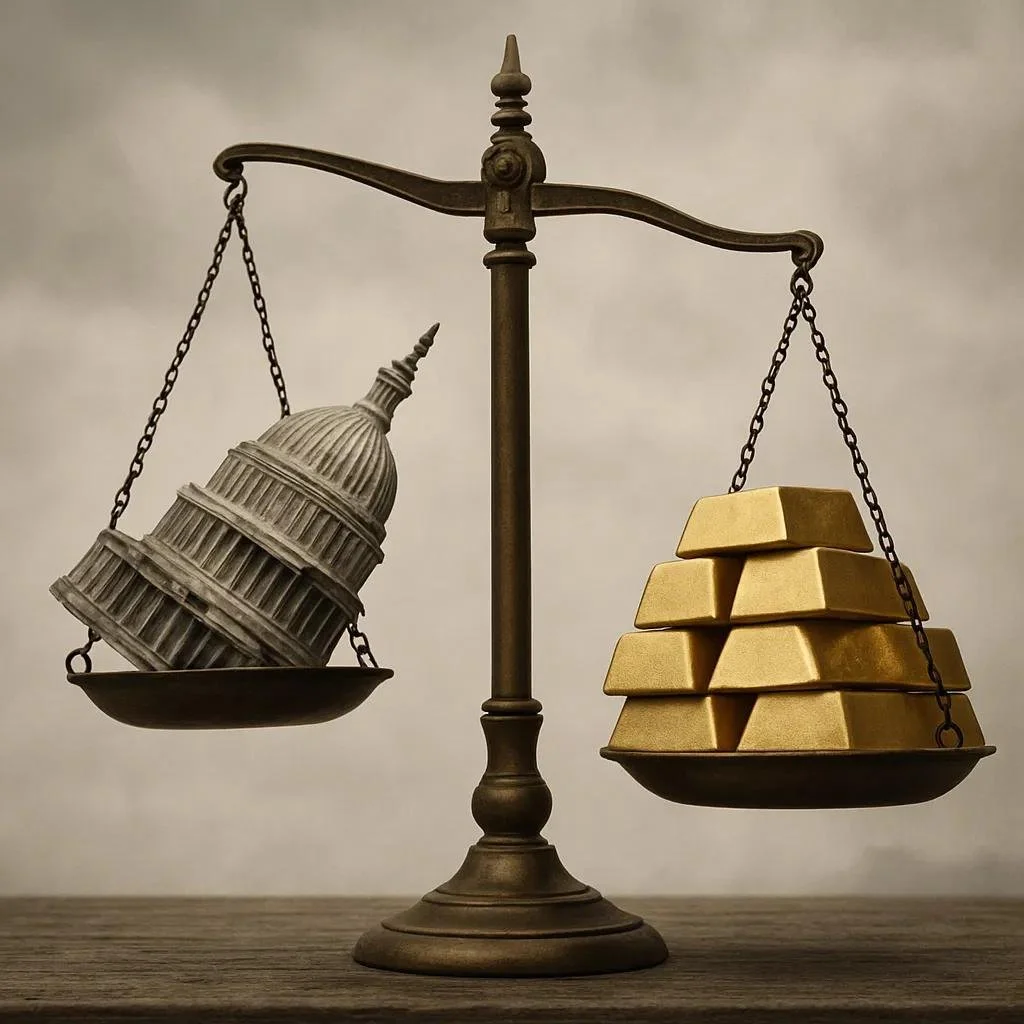
But today is also the end of the fiscal year. And based on the data, we can see that the US will end the fiscal year with around $37.5 trillion in debt. That means, for Fiscal Year 2025, the debt will have increased by another $1.8 trillion.
Taken as a whole, this is an obvious testament to why foreign governments and central banks are rapidly losing confidence in the US government.
It doesn’t even matter whether the government shuts down tonight— it is the fact that it always comes so close. That Congress can’t even manage to pass a basic budget.
And the “solution” on the table is just another short-term patch— a continuing resolution that keeps the government funded for less than two months, until November 21st.
America looks like exactly what it is: a dysfunctional government that can’t even pass a budget.
Frankly, it’s embarrassing.
On top of that, you’ve got this $37.5 trillion debt growing by leaps and bounds—faster than the US economy and faster than tax revenue.
At a certain point, these foreign governments and central banks, who collectively own trillions upon trillions of dollars worth of US government bonds, start wondering: why should I continue to own these securities? Why continue to lend money to the US government?
They can’t even pass a routine budget, let alone the kind of budget that would actually reassure foreign governments and central banks—a truly controversial one that makes deep, necessary cuts to runaway spending.
Then there’s another problem—one that isn’t new. It started under the Bush administration, Obama elevated it, and Biden perfected it: the weaponization of the US dollar, the financial system, and US Treasury bonds.
This gives foreign governments and central banks obvious concern: if they do something the US doesn’t like, they’re going to be frozen out of the dollar system—out of their Treasury holdings, and out of dollar-denominated assets altogether.
And these are all reasons why we believe, over the long run, gold will continue to march higher: central banks will continue to buy gold as an alternative to US dollars.
Why gold?
It’s an independent asset. It’s not controlled by any government. No country is worried that America will freeze its gold holdings. Millions of troy ounces of bars and bullion stored around the world can’t be frozen with the click of a button.
Gold is universally accepted by every other country and central bank. There’s a global market for it. And it’s an asset class large enough to absorb billions of dollars— or even tens, or hundreds of billions—over time.
You can’t say that about most other asset classes.
Gold has already had an astonishing run—especially this year. But we think that, over the long run, as more foreign central banks allocate an increasing percentage of their strategic reserves into gold instead of dollars, that excess demand will continue to push the gold price much higher.
Gold is like anything else—subject to the laws of supply and demand. Demand for physical gold by governments and central banks around the world has been very strong.
And based on the data we’re seeing, that continues to be the case.
The Chinese central bank has bought another 21 tons of gold this year, marking ten consecutive months of purchases.
And it’s not just China. It’s all over the world— Poland, Turkey, Czech Republic, Kazakhstan and many other countries are buying literal tons of gold.
In fact, 95% of central bank reserve managers said they expect global official gold holdings to increase over the next 12 months, according to the 2025 World Gold Council Central Bank Gold Reserves Survey.
There are, however, short-term price risks. For example, the gold price is also impacted by demand for jewelry, as well as industrial use.
Given current record-high prices, jewelry demand is much weaker.
And that can have an adverse impact on gold prices.
Another factor to consider is supply. At a certain point, mining companies are going to take advantage of these high prices and ratchet up production, eventually resulting in oversupply in the market. That, too, could weigh on gold prices.
But we think these are shorter-term factors that don’t change anything about the long-term driver of gold prices—and that is central bank demand.
What we are seeing literally today— government shutdowns and $1.8 trillion deficits—just underscores how widespread that central bank demand is—and why it simply isn’t going away.
To your freedom, James Hickman Co-Founder, Schiff Sovereign LLC
PS: While gold has hit all time highs, the share prices of many top quality gold producers has lagged far behind. That is starting to change, but there is still opportunity before the gap closes.
It’s Like Buying Gold For $1,000 An Ounce
It’s Like Buying Gold For $1,000 An Ounce
Notes From the Field By James Hickman (Simon Black) September 25, 2025
Gold just hit another all-time high this week, briefly touching $3,800 per ounce... which means it has more than doubled in the last two years.
When any asset continues hitting all-time highs, most people who haven’t bought it yet naturally believe that they missed out... or that they should wait for a pullback.
Of course, many people believed that when gold hit $2,400 in spring of 2024... and then $2,800 early this year... and $3,400 in April.
It’s Like Buying Gold For $1,000 An Ounce
Notes From the Field By James Hickman (Simon Black) September 25, 2025
Gold just hit another all-time high this week, briefly touching $3,800 per ounce... which means it has more than doubled in the last two years.
When any asset continues hitting all-time highs, most people who haven’t bought it yet naturally believe that they missed out... or that they should wait for a pullback.
Of course, many people believed that when gold hit $2,400 in spring of 2024... and then $2,800 early this year... and $3,400 in April.
As gold has continued its rise, however, we continued to suggest that this is still early days... and that the gold price could continue to surge much, much higher.
It’s not hard to understand why.
Foreign governments and central banks around the world are rapidly losing confidence in the US government... and by extension, in the US dollar.
The national debt is $37.5 trillion and rising. Deficits total $2 trillion each year, and there seems to be no appetite to cut spending. Worst of all, Congress can’t even manage to pass a budget... risking yet another government shutdown at the end of this month.
If that weren’t bad enough, the US federal government has also gotten in the habit of freezing assets of any foreign country that it doesn’t like.
At the moment, those same foreign governments (and foreign central banks) hold trillions worth of US dollar assets. So naturally any sensible foreign official is thinking about diversifying away from the US, and from the US dollar.
Unfortunately there simply aren’t too many options. No one trusts the Chinese Communist Party, so the yuan is out. Europe is its own economic basket case, so euro-denominated assets and European government bonds are not much better.
Out of the universe of options available, gold is one of the few assets that can solve this problem for foreign governments and central banks.
Gold isn’t controlled by any single government. No one can freeze them out of their gold or confiscate their holdings. Gold will hold its value against inflation. And the gold market is large enough that sovereign nations can purchase hundreds of billions of dollars worth.
This is why gold is at an all-time high: foreign governments and central banks have been buying it by the metric ton. And that extreme gold demand has pushed prices higher and higher.
We have been talking about this for 2+ years, since gold was below $2,000. And throughout gold’s rise, we kept saying that this trend will continue, i.e. foreign governments and central banks will buy more.
We still believe this is true, especially if you have a longer-term view over the next few years.
But we also presented an alternative to gold.
We wrote that the main demand driver for gold was from central banks. But central banks only buy physical gold. They do not buy gold stocks.
And we pointed out that while gold was at all time highs, the share prices of companies producing the gold were ridiculously low.
In January, for example, one gold company we follow was trading at roughly 1x forward earnings.
And we practically screamed from the rooftops that this opportunity would not last— people would realize how undervalued these businesses were, while their revenue was literally denominated in gold at all time high prices.
Well, the gold companies’ earnings reports starting rolling in this year, and the market saw just how much money these companies were making.
Investors finally woke up. And by April, that same gold company had doubled its January share price— but was still only trading at about 2x earnings.
Gold kept ripping higher, and so did this company’s profits— after all, the cost to mine gold didn’t increase, and this company was still pulling it out of the ground for about $1,000 an ounce.
So its profit margin went from $800 per ounce two years ago, to over $2,500 per ounce today.
Production costs have been flat. But their revenue per ounce has soared, up 50% this year alone.
Now, it’s share price has doubled again— 4x higher than in January.
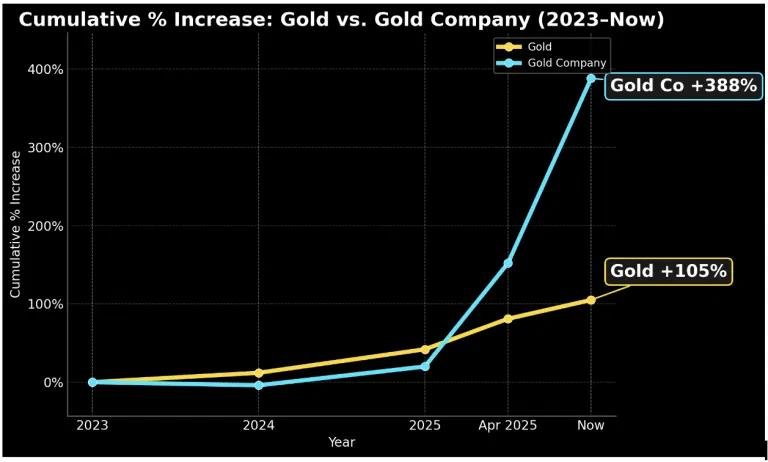
And next month it will release Q3 results, a period it could sell gold as high as $3,700 per ounce. Its profits could be simply ridiculous.
Here’s the crazy part: even though the share price has quadrupled this year, the company is making so much money that it is STILL only trading for 2x earnings.
Which is why we think, despite already multiplying by four this year, the share price is poised for even higher growth once Q3 earnings are released in a few weeks.
In other words, gold companies are STILL cheap compared to gold, and offer leverage beyond physical gold.
If you own shares in a company that can produce gold at $1,000 per ounce, in a way its like buying gold at $1,000 per ounce. And that’s a pretty fantastic deal these days.
Right now it’s still possible to buy into these gold companies at cheap valuations, delivering gains that could far outpace gold.
So we really want to encourage you to check out our premium investment research— it’s called The 4th Pillar, where we feature these undervalued gold companies... along with other real asset businesses ranging from silver to platinum to oil to industrial metals to agriculture.
Many of our picks are up 2-4x just this year alone, and based on our analysis, we think there’s scope for them to go much higher over the next few months based on Q3 earnings (which will be released in a few weeks).
We’re offering a limited time promotional discount to The 4th Pillar, along with our iron-clad money back guarantee. So definitely take a few minutes to learn more about it and consider joining.
To your freedom, James Hickman Co-Founder, Schiff Sovereign LLC
The Fed Just Became the World’s #1 Gold Salesman..
The Fed Just Became the World’s #1 Gold Salesman...
Notes From the Field By James Hickman (Simon Black) September 18, 2025
To the surprise of absolutely no one, the Federal Reserve announced its decision yesterday to cut interest rates… and kept the door open to further rate cuts in the future.
The funny thing is that we’ll never truly know why.
Sure, it’s possible that Fed officials honestly felt that the economy needs lower rates (despite obviously persistent inflation risks).
The Fed Just Became the World’s #1 Gold Salesman...
Notes From the Field By James Hickman (Simon Black) September 18, 2025
To the surprise of absolutely no one, the Federal Reserve announced its decision yesterday to cut interest rates… and kept the door open to further rate cuts in the future.
The funny thing is that we’ll never truly know why.
Sure, it’s possible that Fed officials honestly felt that the economy needs lower rates (despite obviously persistent inflation risks).
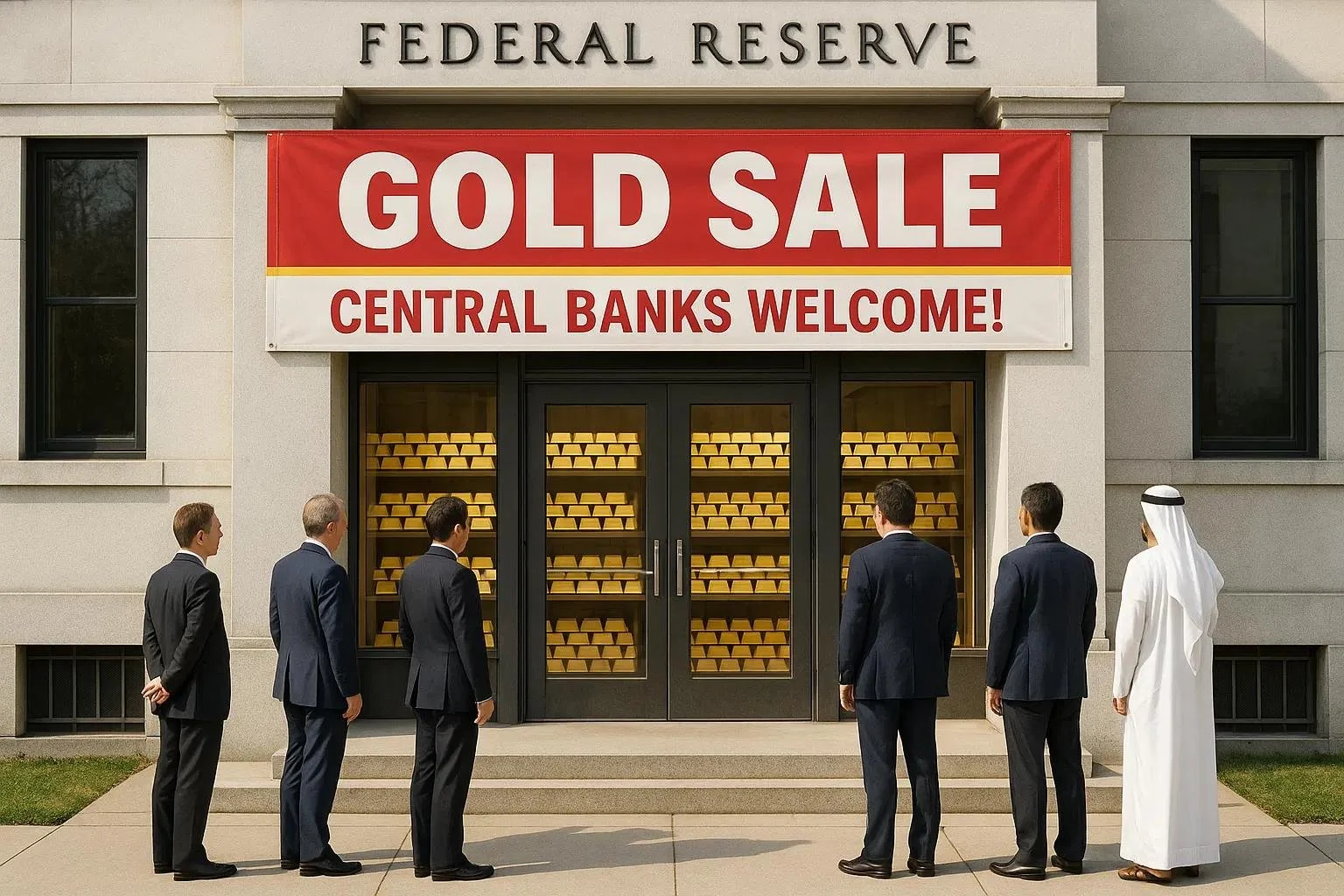
Of course, it’s also possible that Fed Chairman Jerome Powell finally caved to all the insults and pressure from the President.
Or that the rest of the FOMC members looked at what’s happening with Lisa Cook and submitted to inevitability, fearing that they too would be investigated for mortgage fraud (or some other criminal matter) if they didn’t cut rates.
Again, we may never know their real motivations. But it’s clear that the White House has gotten its way.
The President and Treasury Secretary believe that lower rates will stimulate the economy, raise wages, raise asset prices, improve housing affordability, and broadly create conditions for economic prosperity… and they’ve been pushing hard for rate cuts.
Lower rates will also help bail out the US government— whose national debt is so gargantuan that the Treasury is set to spend $1.2 trillion this Fiscal Year (which ends on September 30) just to pay interest.
The Trump administration sees lower rates as the key to slashing that annual interest bill.
Of course, a better solution would be to cut spending, bring the budget closer into balance, and reduce America’s debt-to-GDP ratio.
Putting America’s fiscal house in order would also attract investment in US government bonds the old-fashioned way— by restoring confidence that the US Treasury can pay back its debts through growth, strength, and prestige.
But making such cuts is politically difficult. Even the party that claims to be fiscally conservative isn’t really that interested in meaningful spending cuts.
So, they’re going with Plan B-- push the Fed to lower interest rates.
But as we’ve argued before, they’re setting themselves up for disappointment.
Remember what happened last year— between September and December 2024, the Fed cut rates three times for a total of 1%. Yet over that same period, US government bond yields actually INCREASED by 1%.
This proves that the Fed can’t just snap its fingers and force interest rates lower simply by having a committee meeting.
Interest rates are ultimately determined by supply and demand for money. So if they Fed really wants to see lower rates, they’re going to have to intervene directly in the bond market.
They’ve done this many times before-- this is when the Fed ‘prints’ money, i.e. what they call “quantitative easing”. And the most recent example was during the pandemic when the Fed created about $5 trillion of new money.
They used that money to buy government bonds-- essentially creating artificial demand for Treasurys that pushed yields down to record lows.
And life felt pretty good for a while-- people were able to buy homes and finance mortgages at rates lower than 3%. The government was able to sell 10-year debt for less than 0.5%.
But all those trillions of dollars of new money from the Fed came at a consequence: inflation soared to 9%— the highest in decades.
This is the major tradeoff that the Fed is facing right now: the White House wants lower interest rates. And the Fed seems to be capitulating to the pressure.
But for interest rates to get really low (and remain there), the Fed will almost certainly have to engage in more Quantitative Easing… and that means more inflation.
That alone is going to push a lot more capital into the gold market.
For the past few years, foreign governments and central banks have been selling off their US dollar reserves and funneling that money into gold; this has been the primary reason why gold has soared to all-time highs.
And with the Fed’s capitulation on rates, this trend will continue.
It’s also very likely that pension funds, insurance funds, and other long-term institutional investors will seek refuge in gold as well, driving the price even higher.
To be clear, this isn’t a prediction that gold is going to go up every day, or every month, or even every year.
But if you take a longer-term view—say, 8 to 10 years when the US national debt hits $60 trillion and Social Security runs out of funds— the case for owning gold becomes even more compelling.
I don’t hold this view because I’m a “gold bug”. I’m not fanatical about a hunk of metal. But I do understand these long-term trends, and in my view, we’re still in the early innings.
Another option is to buy gold-related companies, which can offer powerful leverage to the metal itself.
Central banks buy physical gold. They do not buy shares of gold companies. That’s why, even as gold surged, many of the companies we researched traded at dirt-cheap valuations—as low as 2-3x earnings in some cases.
But investors are starting to catch on and pay attention to these deeply undervalued businesses; in fact, we’ve seen several companies in our portfolio gain up to 4x, some even just over the last few months.
Given that Q3 earnings are coming up just around the corner, we believe that some of these gold (and related silver and platinum) companies are about to post record earnings and could see their share prices soar even more.
If you’re interested, we publish all of this investment research, including detailed analysis of deeply undervalued gold companies, in our premium service.
To your freedom, James Hickman Co-Founder, Schiff Sovereign LLC
Is It Time To Ring The Bell On Gold?
Is It Time To Ring The Bell On Gold?
Notes From the Field By James Hickman (Simon Black) September 4, 2025
In our April edition of our premium investment research service, we told subscribers about a highly promising precious metals company— one that we thought was deeply undervalued.
The company had rapidly grown its production nearly 20x in just a few years, not to mention they had also paid off ALL of their debt. Yet they were still trading at just a few times earnings.
Is It Time To Ring The Bell On Gold?
Notes From the Field By James Hickman (Simon Black) September 4, 2025
In our April edition of our premium investment research service, we told subscribers about a highly promising precious metals company— one that we thought was deeply undervalued.
The company had rapidly grown its production nearly 20x in just a few years, not to mention they had also paid off ALL of their debt. Yet they were still trading at just a few times earnings.
With strong cash flow, solid management, and rising gold and silver prices, it was precisely the kind of deep-value setup we look for. This company is now up 5x just since April.
We’ve been very bullish on the precious metals story for the past few years; we have been writing very consistently that gold prices would continue surging higher because central banks around the world are losing confidence in the dollar.
Just this week we told you that foreign governments and central banks now own more gold than they own US government bonds; it’s the clearest sign yet that foreign powers are lining up against the dollar.
Yet while we have been predicting higher gold prices for years, we have been particularly bullish on gold (and other precious metals) companies, i.e. mining, royalty, and service businesses.
And this prediction has also been correct; while precious metals prices are rocketing higher, shares of the companies which produce these metals are performing even better.
Silver, for example, has increased by 33% since April, while one of our silver companies has increased by 400%.
Another silver company we highlighted in March is up 230% in six months.
A gold company we highlighted more than a year ago has increased by 300% in the same time frame that gold has shot up 100%.
We said this would happen. And we said that when investors realized what they were missing, the rise in these companies’ values could happen very quickly. This is precisely what we’re seeing now.
Month after month through our premium investment research service (called the 4th Pillar), we have presented our subscribers with companies that were debt-free, well-managed, extremely profitable... yet trading at laughably cheap valuations.
While the general stock market right now is trading near record-high price/earnings ratios, our featured precious metals companies were trading at multiples as low as TWO.
There’s just one problem: the market is starting to notice. After all, these are all publicly traded companies.
Everyone can see their quarterly financials. Quarter 1 of 2025 was solid. Q2 was exceptional. Q3 earnings are coming out soon, and they will be even better.
What we have been saying for years is no longer a secret. It’s all out in the open now, and investors are piling in to these gold and silver businesses.
The thing is, these companies still look pretty cheap, simply because they are making so much money and their earnings are growing rapidly.
So despite rising by up to 5X, we believe many of these precious metals companies could still double again in value over the next few months as countless investors start piling in.
We want to make sure our readers still have the chance to participate in this rally over the next few months.
So if you haven’t yet invested in this historic boom, we think the next few months are set to be absolutely enormous... and could be the last opportunity to get in during this phase of the cycle.
That’s why we really want to encourage you to join our our premium investment research, the 4th Pillar.
In just this month’s edition— which comes out tomorrow— you’ll read about several undervalued gold and silver companies which our chief analyst believes are still primed for major growth over the next few months.
You’ll also hear about another unique real asset company that has a storied history going back to George Washington in the 1790s.
If you’re interested in joining the 4th Pillar and learning more about our tremendously valuable investment research, please click here for more.
To your freedom, James Hickman Co-Founder, Schiff Sovereign LLC
Foreigners Own Less US Government Debt—Is That a Good Thing? [Podcast]
Foreigners Own Less US Government Debt—Is That a Good Thing? [Podcast]
Notes From the Field By James Hickman (Simon black)
The US owes a LOT less money to China today than it did a few years ago. As recently as three years ago, for example, China held $1.3 trillion worth of US government bonds. Today they’re down to around $750 billion.
In other words, China’s government has decided to cut back on its US dollar Treasury holdings by more than 40% over the past three years.
Foreigners Own Less US Government Debt—Is That a Good Thing? [Podcast]
Notes From the Field By James Hickman (Simon black)
The US owes a LOT less money to China today than it did a few years ago. As recently as three years ago, for example, China held $1.3 trillion worth of US government bonds. Today they’re down to around $750 billion.
In other words, China’s government has decided to cut back on its US dollar Treasury holdings by more than 40% over the past three years.
And at first, that might sound like a good thing— HOORAY! More independence from foreign creditors! America is better off without that Chinese money! Right?
But in reality this is a huge problem. Because it’s not just China.
Going back to the years before Covid, roughly a third of US debt was owned by foreigner governments and foreign central banks.
But then federal debt skyrocketed during the pandemic, and US government credibility plummeted. Even the government’s credit rating has been slashed.
As a result, foreigners across the board began stepping back from Treasury securities.
Today foreign ownership of US debt is less than 25%, and falling. This is a significant drop in just a few years.
Why it matters:
The US Treasury relies heavily on foreign capital to fund the federal government’s gargantuan (~$2 trillion) deficits. So if foreigners’ appetite to buy US government debt is waning— at a time when federal deficits are exploding higher— where will the Treasury Department come up with the money?
There are essentially two answers. Either (1) the Federal Reserve will “print” the money, or (2) domestic investors within the US economy will buy government bonds and fund the deficit.
But both of those options come at a significant cost.
Consequences of the Fed funding US government deficits:
In order for the Federal Reserve to buy US government bonds (and essentially fund the government’s annual budget deficit), the Fed must first expand the money supply.
We often refer to this as “printing money” even though it all happens electronically. The Fed calls it “quantitative easing”, or QE, but it’s all the same thing.
The consequence of QE is inflation. Serious, serious inflation.
Think about it— during the pandemic, the Fed’s QE created roughly $5 trillion in new money... resulting in 9% inflation.
Creating enough money to fund federal budget deficits over the next decade could result in the Fed having to print $15+ trillion. So most likely that’s going to be a LOT of inflation.
Consequences of the US economy funding government deficits:
American investors, i.e. banks, funds, corporate treasury departments, etc. could also buy more US government bonds in order to offset waning foreign demand.
But this capital comes at a big opportunity cost
Any private capital that goes in to the Treasury market means less money available to buy stocks, fund venture capital, or finance real estate mortgages
The net result is lower stock prices, higher mortgage rates, and slower innovation.
Why China is first to ditch US government bonds:
After sanctions on Russia, which included freezing their Treasury holdings, other countries got spooked — especially China.
China probably fears becoming the next target of US financial weaponization.
This may also be an indication that they will eventually invade Taiwan
So China is hedging: they’re selling their US government bonds and buying literal metric tons of physical gold— driving gold prices to record highs.
The bottom line:
The shrinking foreign appetite for US debt is a glaring red flag. It signals waning confidence in US fiscal credibility and could lead to a capital squeeze at home — or nasty inflation spiral if the Fed fills the gap.
Many Americans might cheer the idea of being less reliant on Chinese or other foreign money. But in reality, foreign investment in government debt is the closest thing to a ‘free lunch’ in economics.
It means that foreigners are financing federal deficits, meaning less inflation at home, and allowing private capital to invest directly in the US economy.
Losing this benefit is a bad thing for America.
You can listen to my full thoughts on the matter in this brief Podcast.
For the audio-only version, check out our online post here.
Finally, you can find the podcast transcript for your convenience, here.
To your freedom, James Hickman Co-Founder, Schiff Sovereign LLC LINK
Gold Just Hit Another All-Time High—What’s Next?
Podcast: Gold Just Hit Another All-Time High—What’s Next?
Notes From the Field By James Hickman (Simon Black) September 3, 2025
You might be surprised to know that the government is facing yet another shutdown at the stroke of midnight on September 30.
A lot of people might be thinking two things: First— “again?” And second— what about the “One Big Beautiful Bill”?
The One Big Beautiful Bill, signed into law on July 4, did not, in fact, contain all the necessary resolutions to fund the government for the next fiscal year (which starts on October 1).
Podcast: Gold Just Hit Another All-Time High—What’s Next?
Notes From the Field By James Hickman (Simon Black) September 3, 2025
You might be surprised to know that the government is facing yet another shutdown at the stroke of midnight on September 30.
A lot of people might be thinking two things: First— “again?” And second— what about the “One Big Beautiful Bill”?
The One Big Beautiful Bill, signed into law on July 4, did not, in fact, contain all the necessary resolutions to fund the government for the next fiscal year (which starts on October 1).
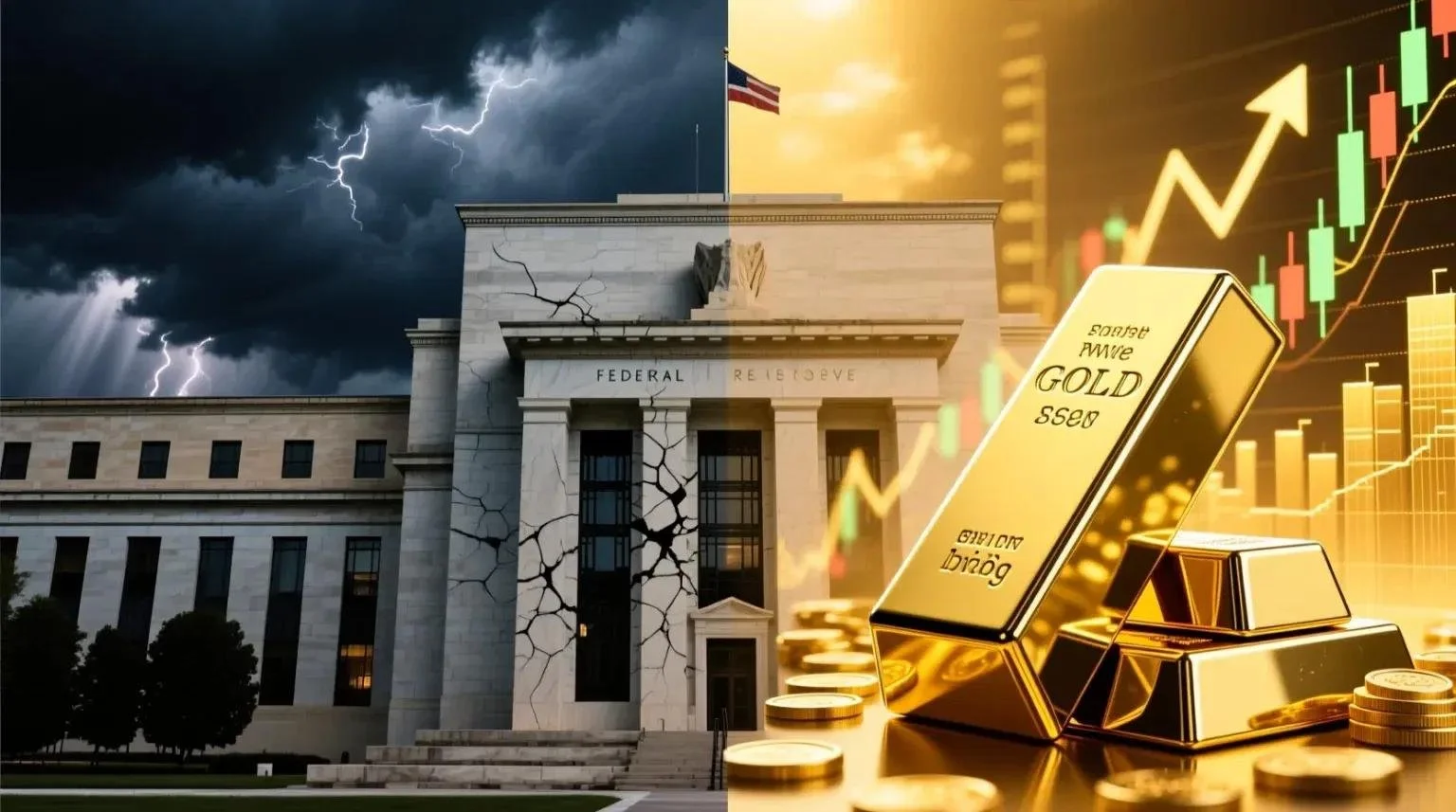
As a result, Congress still needs to pass 12 appropriations bills in order to avoid a shutdown at the stroke of midnight on September 30.
From what we can tell, the Trump administration seems to be pushing for spending cuts this time around, which is great. I sincerely hope they are successful, because the country desperately needs fiscal restraint.
But at this point, it’s up to Congress—and that’s far from a foregone conclusion.
The most likely scenario is they’ll just punt any real decision-making and instead pass a stopgap continuing resolution that will merely add to the deficit.
In short, America will remain on its current trajectory—which the Congressional Budget Office estimates about $25 trillion in additional deficit spending over the next ten years.
This is why so many foreign governments and central banks are aggressively working to establish some kind of alternative to the US dollar as the global reserve currency.
Most likely, they won’t be very successful—simply because nobody trusts the Chinese or the Russians. India has far too many capital controls. So does Brazil.
And as large as these countries may be in combined economic power, they have completely different economic priorities. Plus they don’t even trust one other.
So the prospect of some “BRICS dollar” emerging as a serious competitor to the US dollar’s reserve status is laughable.
But there actually is a serious competitor already—and that’s gold.
The reason why is simple: no single country controls gold. There’s no supranational agency that can regulate the gold price. Gold is a free market, all about supply and demand, and it happens to be an asset nearly every central bank on the planet already owns.
This is the reason why gold has surged to an all-time high—because foreign central banks just keep buying so much of it.
And they’re doing it to reduce their exposure to the US dollar, and to reduce the hold and power the US government has over them.
We think this trend is absolutely going to continue.
And that’s why we’re still in the early days of this gold boom.
In today’s podcast, we discuss all this, as well as:
The global sell-off of US Treasuries and the pivot by foreign central banks toward gold.
Why foreign governments and central banks now own more gold than US Treasuries for the first time in decades.
Historical lessons—from the Byzantine empire to Venetian gold ducats—on what happens when trust in a currency breaks down.
How central banks are also eyeing platinum and strategic assets as alternatives to the dollar.
Why well-managed gold and silver producers could deliver outsized returns compared to the metals themselves.
How owning gold today is a hedge against US fiscal chaos and a way to offset the increased costs of inflation.
Why we’re still in the early innings of a gold bull market, even with prices already at record highs.
You can listen to the full podcast here.
For the audio-only version, check out our online post here.
Finally, you can find the podcast transcript for your convenience, here.
To your freedom, James Hickman Co-Founder, Schiff Sovereign LLC LINK
Dollar ALERT: Foreign Central Banks Now Own More Gold Than USD
Dollar ALERT: Foreign Central Banks Now Own More Gold Than USD
Notes From the Field By James Hickman (Simon Black) September 2, 2025
For centuries, the Byzantine Empire’s gold coin, known as the solidus, had been the backbone of global trade in the medieval world; nearly pure gold, the solidus was trusted by merchants from Baghdad to London.
But by the 11th century, multiple emperors had chipped away at its gold content—watering it down to pay for wars, bureaucracy, and the costs of an empire in decline.
Dollar ALERT: Foreign Central Banks Now Own More Gold Than USD
Notes From the Field By James Hickman (Simon Black) September 2, 2025
For centuries, the Byzantine Empire’s gold coin, known as the solidus, had been the backbone of global trade in the medieval world; nearly pure gold, the solidus was trusted by merchants from Baghdad to London.
But by the 11th century, multiple emperors had chipped away at its gold content—watering it down to pay for wars, bureaucracy, and the costs of an empire in decline.
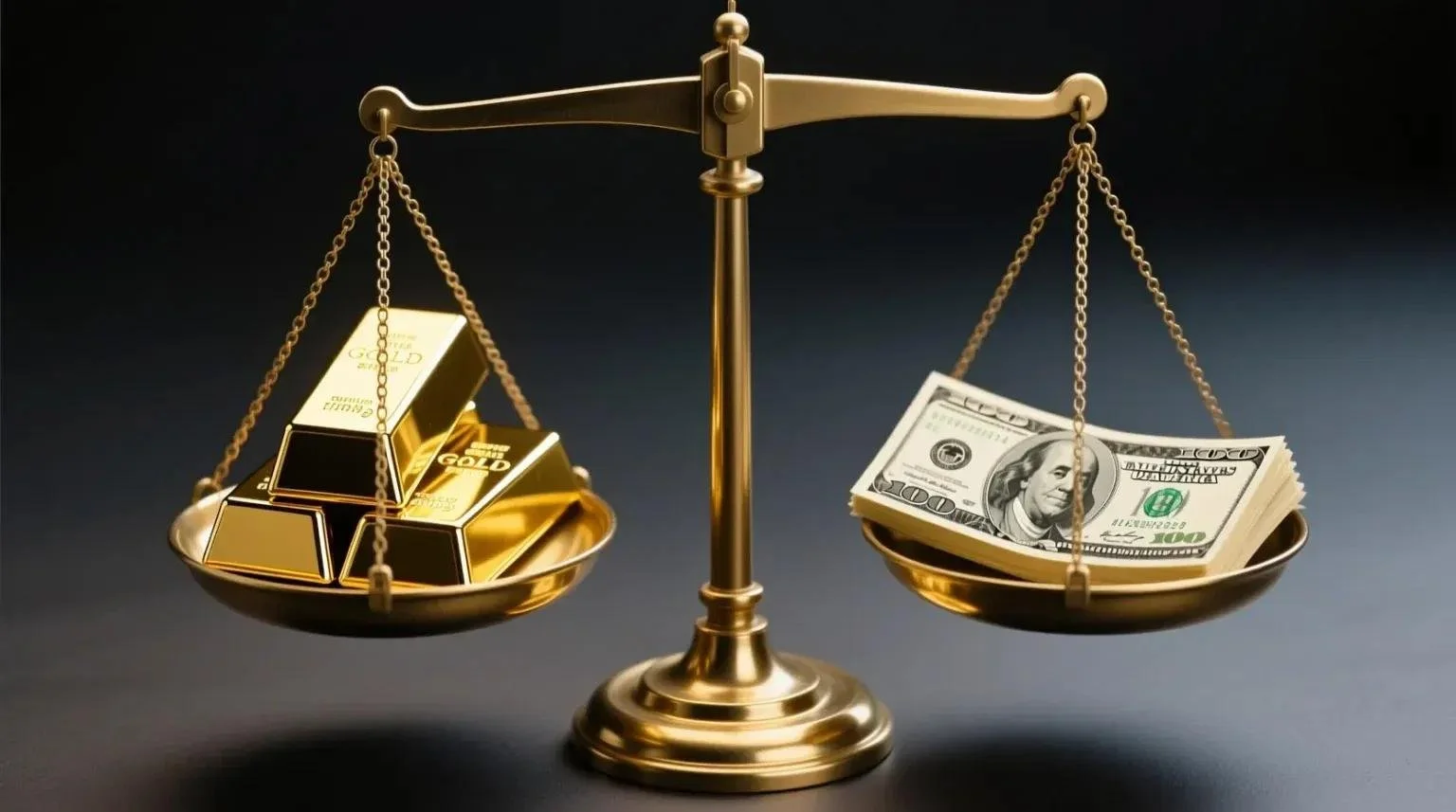
By the time Alexios I took power in 1081, the solidus was barely 40% gold, and merchants never knew which version they were getting or how much real gold it contained.
Alexios tried to restore confidence by minting a new coin in 1092, one he called the hyperpyron—which literally means “super-refined” in Greek.
At 85% purity, it didn’t have the same purity as the old solidus, but the hyperpyron was credible enough to restore trust... for a little while.
But then history repeated itself over the next century; later emperors debased the hyperpyron, just as their predecessors had debased the solidus. And by the late 1200s, there was no more trust in the currency.
When Venice launched the ducat in 1284— at over 99% pure gold— it also came with a pledge that the Venetian government would never debase it.
Combined with Venice’s trade power and rapidly growing wealth, the ducat quickly became the literal gold standard for international trade.
So much, in fact, that by the mid-1300s, the once-mighty Byzantine Empire was pawning its imperial jewels in exchange for Venetian ducats.
(It would be the loose equivalent of the US government selling off national parks in exchange for Swiss francs...)
That was the moment it became obvious to everyone that the Byzantine Empire was no longer the world’s dominant superpower... and that the world’s reserve currency had changed hands.
This pattern repeats itself throughout history. Most reserve currencies have a long, slow decline, as well as clear moments that stand out.
Today, the US government isn’t quite pawning Mount Rushmore for Swiss francs... but we are witnessing a clear moment that demonstrates a loss of confidence in the US dollar:
Foreign governments and central banks now own more gold than they own US Treasury securities.
That means that foreign nations trust in gold more than they trust in the US government.
We’ve been saying this for years: foreign central banks are selling their dollars, and using those dollars to buy gold.
Why? Because the US government’s massive debts make it a less trustworthy lender. While it’s unlikely that the US would outright default, it is very likely that Uncle Sam will eventually turn to the money printer as the “solution” to its debt challenge.
And any foreign central bank which owns a ton of US debt doesn’t want to be paid back with inflated dollars. Better to minimize that exposure now and pare down their dollar holdings.
What do they buy instead? Gold.
Not because central bankers are ‘gold bugs’. But because gold has a 5,000 year history of maintaining value. Because it is dense wealth they can hold physically in their vaults. And because there is a large enough global market to be able to buy or sell metric tons at a time.
This growing gold demand from foreign central banks has been the main driver of gold’s massive bull run— from $1,700 per ounce just three years ago, to over $3,500 per ounce today.
I take no pleasure in pointing this out, but it is becoming clear that foreign governments and central banks simply no longer have the confidence in the US that they once did.
You can see the momentum building; just this week in China, Putin, Xi Jinping, and India’s Modi stood before the world urging trade in national currencies and laying the groundwork for a new financial system designed to chip away at the dollar’s dominance.
And it’s not hard to figure out why.
According to its own projections, the US Treasury will need to sell over $22 trillion in new debt over the next ten years. That’s not a worst-case scenario—that’s the baseline forecast.
Foreign governments and central banks are traditionally one of the largest buyers of US government debt. Yet they’re clearly starting to back away from Treasury bonds... and the US dollar.
This means that the Treasury Department will struggle to find lenders over the next several years... which very likely means relying on the Federal Reserve to ‘print’ the money they need... which of course would be highly inflationary.
This isn’t a doomsday prediction. It’s not a partisan argument. It’s just the reality that America is facing.
Most likely nothing catastrophic will happen tomorrow. Or this month. Or this year. But America is clearly running out of time.
This is not a time for panic; in fact it’s critical to understand that there are rational ways to prepare for the challenges down the road.
We’ve been suggesting gold (and silver) for a number of years, both of which have proven to be excellent shelter.
At $2,000 gold we said this was just the beginning. At $3,000 gold we said that the story was still in its early days. At $3,500 gold, I’m still telling you that this story has much longer to play out.
Nothing goes up or down in a straight line, so there will always be pullbacks and corrections. But the case for gold easily goes to $5,000... and potentially well over $10,000.
That’s not based on any idolatry or fanaticism... but rather a cogent, rational understanding of how global central banking works.
The bottom line is that the world is losing confidence in the US dollar as the global reserve currency. And, right now, there is no alternative. Except for gold. And for that reason central banks (over the long run) will keep stockpiling it... and driving the price higher.
To your freedom, James Hickman Co-Founder, Schiff Sovereign LLC LINK
Podcast: The Rise of National Capitalism
Podcast: The Rise of National Capitalism
Notes From the Field By James Hickman (Simon Black) August 19, 2025
Few people understand how the Federal Reserve actually works— and frankly, I’m not sure the President or Treasury Secretary are among them.
That’s not an insult, just based on what they say. Let me explain.
Podcast: The Rise of National Capitalism
Notes From the Field By James Hickman (Simon Black) August 19, 2025
Few people understand how the Federal Reserve actually works— and frankly, I’m not sure the President or Treasury Secretary are among them.
That’s not an insult, just based on what they say. Let me explain.
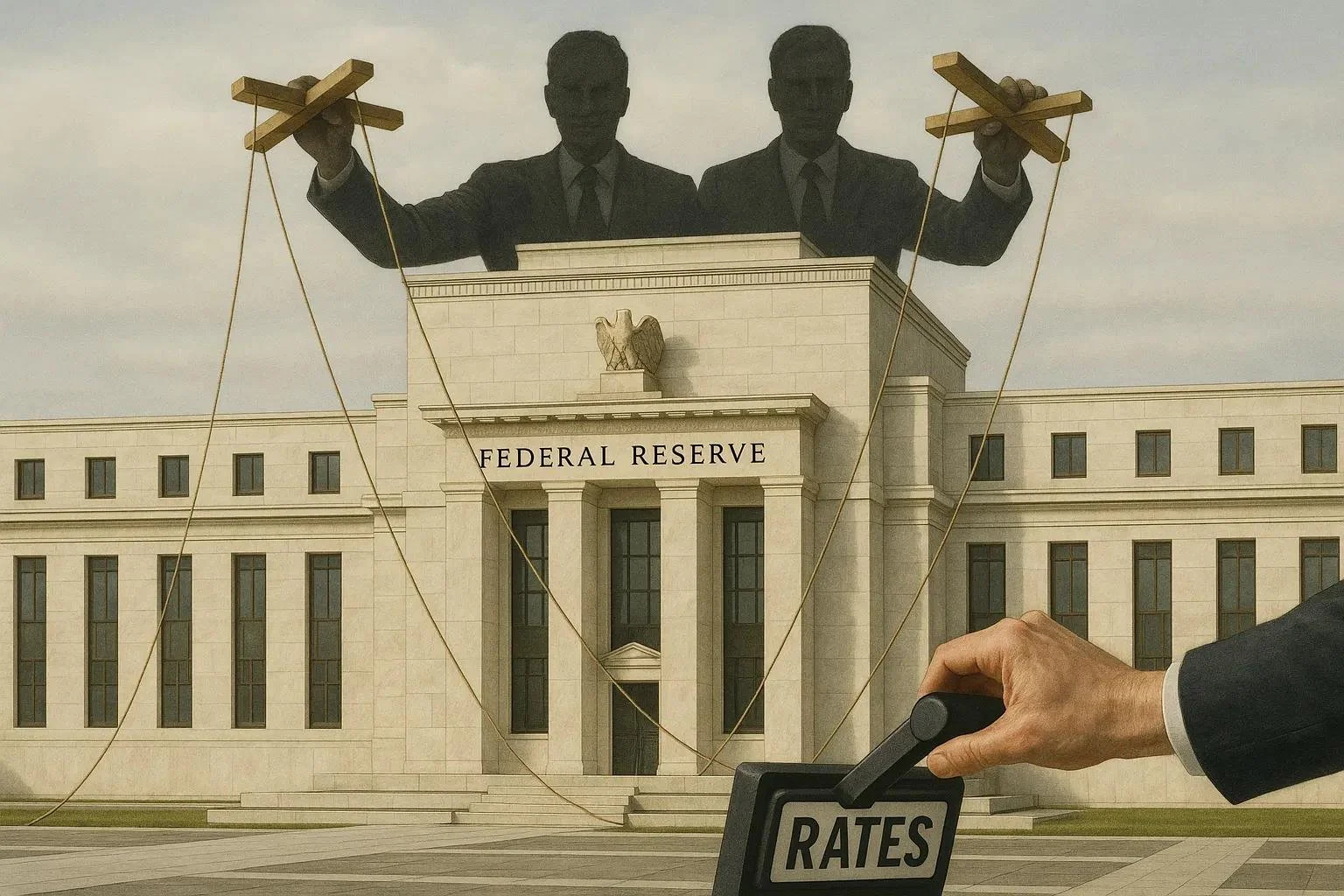
Most people think the Fed sets “the interest rate” for everything—mortgages, car loans, 10-year yields. But that’s not how it works. The Fed only sets a very narrow rate—the overnight lending rate between banks.
Everything else, from your mortgage to the government’s long-term borrowing costs, is determined by the bond market. And as America’s debt spirals past $37 trillion, the bond market—not the Fed—is in control.
This misunderstanding matters. Because when Treasury Secretary Bessent says he’s going to “get rates down,” what he really means is printing money.
That’s the only lever left: the Federal Reserve creates money electronically and uses it to buy government bonds.
The consequence of that is inflation: more money in the system means higher prices. Sometimes it shows up in financial assets—stocks, bonds, real estate—can also surge to record highs as a result of inflation. Other times inflation hits the grocery store, your utility bill, or your insurance premiums.
Lately, it’s been both. Inflation is everywhere.
But this administration is also openly floating the idea of a sovereign wealth fund—borrowing billions (or trillions) and putting that money directly into the stock market. Intel. Nvidia. Strategic stakes in American companies.
It’s not socialism, and it’s not free markets. It’s something in between: a blending of state and corporate power. Call it National Capitalism.
If that sounds far-fetched, remember—they’re already talking about taking a stake in Intel. Why would they stop there?
This administration is full of people whose entire background is borrowing massive sums of money at low interest, pouring it into enormous projects, and pocketing the spread.
There’s nothing wrong with that. That’s what they know. That’s what they do. Trump is a very successful real estate developer who has personally borrowed billions of dollars throughout his career.
So of course when they look at the economy, their instinct is to repeat the same playbook on a national scale—borrow cheap, buy big, and hope the gap between cost and return pays for everything.
But when the government itself becomes one of the biggest stock buyers, what happens to markets? They explode higher.
And you’re going to want to own assets when that happens.
This is the subject of today’s podcast.
We dive into:
Why the Fed’s “rate cuts” don’t control the 10-year or 30-year Treasury yields—and why the bond market is now in charge.
How the U.S. is spending $1.2 trillion a year just on interest payments, and why refinancing old debt at today’s higher rates keeps driving costs up.
The Fed’s true method of lowering rates: creating new money, buying bonds, and fueling asset bubbles—at the cost of more inflation.
The absurdity of how the US banking system works.
How every time the Fed “prints money” to bail out a crisis—9/11, 2008, the pandemic—it ends up inflating specific bubbles: housing, stocks, crypto, collectibles, and now consumer prices across the board.
And we wrap up with a quick look at Total Access—our highest level membership built around forging lasting relationships with other members in extraordinary settings. It combines world-class networking and internationalization strategies with unforgettable, once-in-a-lifetime travel experiences.
Right now, Total Access membership is open for a limited time. You can learn more here.
And you can listen to the full podcast here.
For the audio-only version, check out our online post here.
Finally, you can find the podcast transcript for your convenience, here.
To your freedom, James Hickman Co-Founder, Schiff Sovereign LLC
At Least Social Security Will Go Bankrupt With Good Customer Service
At Least Social Security Will Go Bankrupt With Good Customer Service
Notes From the Field By James Hickman (Simon Black) August 18, 2025
I know it’s cliche, but one of the happiest days of my life was a bit more than four years ago when my daughter was born in Cancún, Mexico. My wife and I chose Mexico deliberately— given all the COVID craziness that was going on (especially in the US), we wanted to be in a place where the pandemic wasn’t going to factor into our lives at all. And Cancun was perfect.
Add in world-class healthcare at affordable prices, and it was an easy call. Plus babies born in Mexico automatically become citizens, and both parents and grandparents receive permanent residency.
At Least Social Security Will Go Bankrupt With Good Customer Service
Notes From the Field By James Hickman (Simon Black) August 18, 2025
I know it’s cliche, but one of the happiest days of my life was a bit more than four years ago when my daughter was born in Cancún, Mexico. My wife and I chose Mexico deliberately— given all the COVID craziness that was going on (especially in the US), we wanted to be in a place where the pandemic wasn’t going to factor into our lives at all. And Cancun was perfect.
Add in world-class healthcare at affordable prices, and it was an easy call. Plus babies born in Mexico automatically become citizens, and both parents and grandparents receive permanent residency.
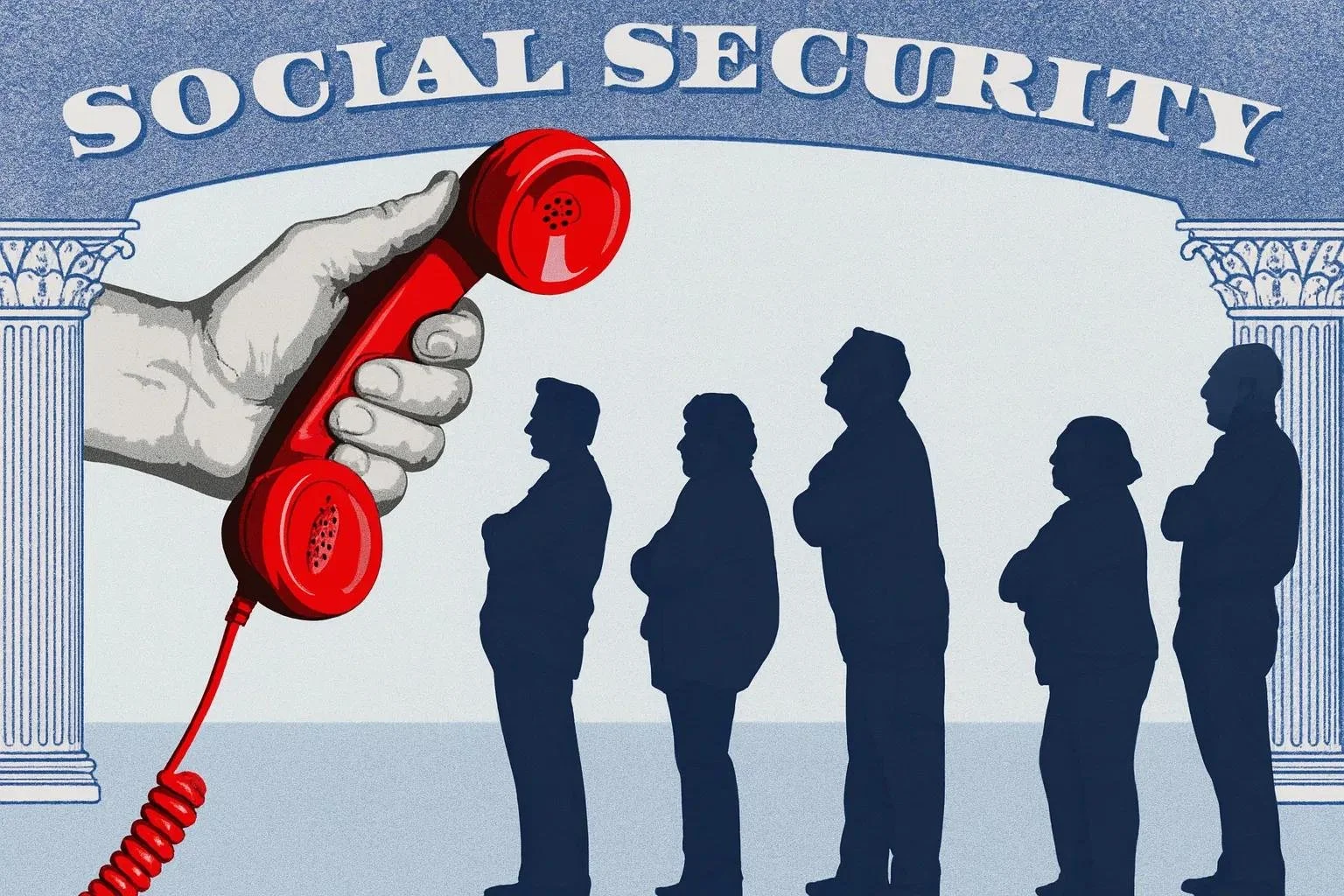
Pretty much everything about her birth went really smoothly. The Mexican paperwork was shockingly easy, and we were able to get her passport and our residency cards very quickly.
The most difficult part by far was the US side.
We couldn’t fly back to Puerto Rico until she had a US passport. But thanks to the State Department’s broken online system (which crashes constantly and conjures bizarre errors) we were scrambling for a slot.
(It’s also bizarre that, despite millions of Americans traveling to Cancun each year, the US government put its consulate 4 1/2 hours away in Merida... not exactly convenient.)
Once there, storm-trooper style security treated a newborn’s bottled milk as a threat, and then we sat for more than an hour while bureaucrats invented reasons to say “no” to her passport application.
In the end, we finally got what we needed—but the whole process revealed the deeper truth: in the US, government offices act as if citizens work for them. They’ve forgotten their purpose is to serve, and citizens are left with inefficient, indifferent, even borderline inhumane experiences.
Some other countries take a different approach; they treat citizens like valued customers, and bureaucrats are measured on the efficiency and quality of their service.
When the US first launched the Department of Government Efficiency—DOGE—I thought this should be a critical piece of the reform.
Yes, of course, slash fraud, waste, and abuse. But even more urgently, reset the entire culture of how the US government does business with its citizens.
I recently found a glimmer of hope that this may be happening.
Late last week, Social Security marked its 90th birthday since being signed it into law in 1935 at the height of the Great Depression.
Ever since, generations of Americans have accumulated stories of painfully navigating this massive institution— too often about waiting rooms, endless forms, and mind-numbing incompetence.
But something unusual has happened in the last few months. Frank Bisignano, the new commissioner, took over. He comes from a CEO position in the private sector, and seems to be running Social Security like a business.
He’s pushed a digital-first strategy, incorporated AI tools, and focused on simple things that most people in the private sector would take for granted.
Processing backlogs are coming down. Efficiency is up.
Barely a year ago, you had to spend nearly 30 minutes on hold when you called Social Security. Today, the agency says the wait is under five minutes—while serving nearly twice as many people.
You can also now schedule appointments before going into an office— imagine that. And the average wait time at a Social Security office has also been slashed down to just six minutes.
The Social Security website has been overhauled as well, so taxpayers are able to obtain much more information and handle their service needs online. Crazy that it took until 2025 to make this happen.
Oh, and it turns out that the Social Security website— until very recently— used to be offline nearly 30 hours per WEEK for scheduled downtime. They’ve now eliminated this and MySocialSecurity is now available 24/7.
Frankly, the bar for government performance is so low that saying “the website now works” is heralded as a massive breakthrough.
But still, it’s encouraging to see what’s possible when someone with a private-sector mindset actually tries to fix things. In just a few months, one of the worst bureaucracies in Washington has shown major improvement.
Unfortunately, there’s one thing the Commissioner can’t control: Social Security’s looming insolvency.
Social Security’s finances are up to Congress, and that picture is bleak.
Social Security is almost out of money. Everyone in Washington knows it. At best, there’s less than eight years until Social Security’s major trust fund runs out of money. And it will probably take place sooner than that.
Just like fixing bad government service, fixing Social Security’s solvency is not complicated. At this point there are only a few levers to pull: either raise taxes, or roll back retirement age.
The trustees and Social Security’s own actuaries have spelled out these solutions for years, practically begging Congress to act.
They’ve also been clear— the sooner that Congress works to solve the problem, the less painful the solution will be.
If they raise payroll taxes now, the tax hike will be minor. If they wait until 2032, the increase will be brutal.
Similarly, if they pass a law today to phase in an increase to the retirement age, the change will be minor. If they wait a decade, the increase will be much more dramatic.
Yet Congress is—predictably—the least capable group on the planet when it comes to handling obvious problems.
Sure, most likely they won’t let Social Security fail. But the longer they wait, the more likely the eventual fix will simply be a multi-trillion-dollar bailout funded by “printing” money.
The national debt will continue its upward surge, taxpayers will fork over more money, and inflation will quicken.
Bisignano, Social Security’s new “CEO” commissioner, shows what is possible when government changes its posture.
Instead of the usual “F-you, take a number” attitude, Bisignano’s team worked to serve people more efficiently and respectfully. That massive cultural shift moved the needle almost instantly—wait times fell, backlogs shrank, and an agency long known for dysfunction suddenly became usable.
It shouldn’t stop there. The same mindset could be applied to bigger problems—Social Security’s solvency, immigration, debt. None of these are mysteries. The solutions already exist. It’s not rocket science. What’s required is competence and a willingness to act early, before the problems metastasize.
But that’s the catch. The most incompetent body of all—Congress—is the one charged with making those decisions.
And until voters stop sending the same clowns back to Washington, nothing changes.
These are people who can’t balance a budget, can’t read a balance sheet, and can barely string together a coherent thought—yet they’re entrusted with fixing the nation’s most critical programs.
It’s no wonder every solution comes too late, costs too much, and creates another crisis in the process.
To your freedom, James Hickman Co-Founder, Schiff Sovereign LLC
The Debt Problem Was Actually Scarier In The 90’s Here’s How They Solved It Podcast
The Debt Problem Was Actually Scarier In The 90s. Here’s How They Solved It. Podcast
Notes From the Field By James Hickman (Simon Black ) August 12, 2025
I was still just a kid as the US headed into the 1992 US Presidential election, but I remember the excitement around my home town as Ross Perot entered the race as an independent candidate.
Perot was from Dallas, where I grew up. And he was one of the first tech billionaires, long before the dot-com boom. Like Elon today, Perot knew that America was heading down a dangerous fiscal path. At the time, the US government was spending about 28% of its annual tax revenue just to pay interest on the national debt.
The Debt Problem Was Actually Scarier In The 90s. Here’s How They Solved It. Podcast
Notes From the Field By James Hickman (Simon Black ) August 12, 2025
I was still just a kid as the US headed into the 1992 US Presidential election, but I remember the excitement around my home town as Ross Perot entered the race as an independent candidate.
Perot was from Dallas, where I grew up. And he was one of the first tech billionaires, long before the dot-com boom. Like Elon today, Perot knew that America was heading down a dangerous fiscal path. At the time, the US government was spending about 28% of its annual tax revenue just to pay interest on the national debt.

It wasn't because the debt was so vast. Actually back then it was just a fraction of today's debt.
The real problem was that sky-high interest rates from the 1980s (15%+) had pushed the government's borrowing costs and annual interest bill to the moon.
So Ross Perot decided to run for President under a promise to fix the deficit.
Few people understood anything about the deficit back then. So Perot used his vast fortune to buy TV time where he would explain the problem in hour-long presentations. I remember learning things from him that I'd never even heard about before-- Treasury markets, bond yields, government accounting, mandatory spending, and more.
Perot single-handedly dragged America's deficit issue to the front page and started a national conversation; so even though Bill Clinton ultimately won the election, Perot succeeded in making deficit reduction a top priority.
It was interesting times politically. Clinton was rocked by scandals, impeached, and deeply hated by the other party... quite similar to the situation today. They didn't have social media back then, but 'talk radio' pundits raged 24/7 with the same ferocity of today's Twitter mob.
Yet even with such conflict and division, Congress and the White House managed to work it out. And over the next decade, interest costs fell from 28% of tax revenue down to 18%. And by the end of the 1990s the government was posting strong budget surpluses.
How did they do it? It wasn't rocket science or black magic. They simply took a common sense approach to spending-- they held spending increases to minimal levels, all while tax revenue soared thanks to a tech-fueled economic bonanza.
Over the ten-year period between 1991 and 2000, government expenditures only rose by 35%. Adjusted for inflation that's just 5.5% over the entire decade.
Meanwhile tax revenue nearly doubled over the same period. Poof. Problem solved. And America stormed into the 21st century with a record budget surplus, and its interest costs and national debt under control.
Could this happen today? Maybe. There are a lot of similarities. The US government currently pays roughly 22% of tax revenue just to cover the annual interest bill on the national debt, and this amount is growing rapidly. Not to mention, interest costs plus mandatory entitlements (like Social Security and Medicare) already consume 100% of tax revenue.
If they don't solve this problem, America is going to be looking at a major fiscal crisis in the coming years.
Unfortunately few people in power seem to be taking this seriously. The White House is far more focused on tariffs and trade rather than the obvious problem-- excessive spending. And when it comes to deficit reduction, their approach is to seize control of the Fed to push through interest rate cuts.
Congress, meanwhile, seems completely oblivious to the problem.
One of my major concerns is that American voters tend to oscillate from one side to another. So if the guys in power now don't solve this problem now, voters could swing hard to the Left in 2028, quite possibly to a card-carrying socialist.
There are certainly a lot of socialists emerging in American politics. And they all see deficits as a "revenue problem" and believe that higher taxes will fix every challenge.
Well, we did the math in today's podcast: "taxing the rich" won't make a dent in the deficit problem. Neither will wealth taxes, or any of the other idiotic proposals that socialists come up with.
The only way to fix this is to cut spending... and to spend the money much more responsibly.
Fingers crossed that they see the light. And soon. But I wouldn't hold my breath just yet on major fiscal reform... which is why it's so critical to have a Plan B.
Listen in to today's podcast, in which we cover:
The 70% tax rate fantasy – Even taxing every dollar over $10 million at 70% doesn’t cover a single year’s interest on the debt.
Why huge new taxes barely move the needle – A wealth tax might grab $200–250B upfront, then $60–100B/year. Yet the debt is growing by trillions annually.
Behavior matters – People restructure income, delay gains, and move capital. The socialists' 'wealth tax' projections will never match reality.
Their entire philosophy is to treat the private sector like an ATM while refusing to cut a cent of waste.
The problem with the socialists who want to "seize the means of production" is that they've never produced anything!
The spending problem – The top 2% already paid ~$1 trillion in taxes in 2021 (28% effective rate on $3.5T income).
Since July 4th, the US has added nearly $800 billion to the debt— about $500B of it brand-new spending.
The real “third side” of the coin – It’s not just a revenue problem or a spending problem—it’s decades of baked-in waste, fraud, and mismanagement in federal budgets.
Zero-base budgeting: A common-sense approach where agencies start at zero and justify every dollar… something almost no one in Washington is willing to consider.
Bond market reality check – The Fed can nudge short-term rates, but long-term rates are set by the bond market—
This means that political control of the Fed may not deliver the rate cuts they expect.
Socialist footholds in major cities – from NYC to Chicago to Seattle, socialists are winning local races and pushing radical tax-and-spend agendas.
The bottom line:
Confiscating more from the productive economy doesn’t fix the problem; it fuels it. The only real solution starts with cutting waste and ending the government’s addiction to spending.
Until that happens, individuals need their own Plan B—whether it’s hedging against inflation with real assets, diversifying internationally, or building networks with like-minded people who see what’s coming.
That’s exactly why we built our Total Access community. Over the years, it’s become more than just an exclusive group—it’s sparked friendships, partnerships, and a global network of people who are prepared, connected, and two steps ahead. After 15+ years in this business, it’s the thing I’m most proud of.
Listen to the full breakdown here.
For the audio-only version, check out our online post here.
Finally, you can find the podcast transcript for your convenience, here.
To your freedom James Hickman Co-Founder, Schiff Sovereign LLC