
This Will Either Make You Hopeful… Or Extremely Irritated
This Will Either Make You Hopeful… Or Extremely Irritated
Notes From the Field By James Hickman (Simon Black) May 29, 2025
Germany’s “Iron Chancellor” Otto von Bismark didn’t pass the world’s first modern Social Security system out of the kindness of his heart.
The year was 1889, and Bismark was fighting hard against the rising tide of socialism; the second volume of Karl Marx’s Das Kapital had been published just a few years earlier in 1885, prompting growing calls for strikes, protests, and wealth redistribution.
For Bismark, his social security program was intended to appease socialists while preserving the conservative political order that he had spent decades building. And on May 24, 1889, his new “Old Age and Disability Insurance Law” was passed by the Reichstag and signed by Kaiser Wilhelm II.
This Will Either Make You Hopeful… Or Extremely Irritated
Notes From the Field By James Hickman (Simon Black) May 29, 2025
Germany’s “Iron Chancellor” Otto von Bismark didn’t pass the world’s first modern Social Security system out of the kindness of his heart.
The year was 1889, and Bismark was fighting hard against the rising tide of socialism; the second volume of Karl Marx’s Das Kapital had been published just a few years earlier in 1885, prompting growing calls for strikes, protests, and wealth redistribution.
For Bismark, his social security program was intended to appease socialists while preserving the conservative political order that he had spent decades building. And on May 24, 1889, his new “Old Age and Disability Insurance Law” was passed by the Reichstag and signed by Kaiser Wilhelm II.
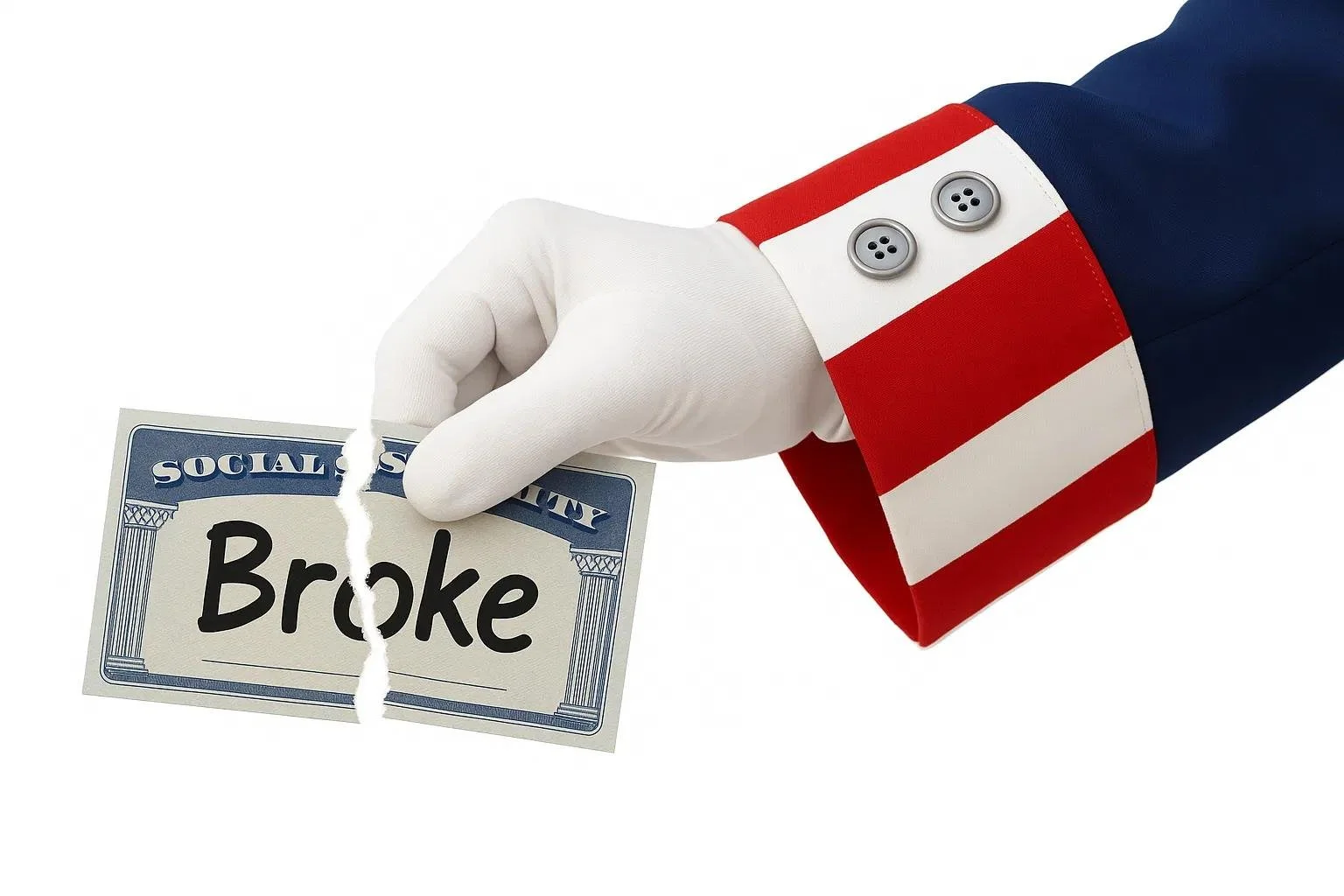
Workers under Bismark’s program became eligible for benefits at age 70, and its costs were paid equally by employees, businesses, and the state.
It also had its intended effect: support for Germany’s unified socialist party fell dramatically after the law was passed, and it became the leading blueprint for similar programs around the world.
Franklin Roosevelt pushed for a Social Security program in the United States for similar reasons; socialist movements were growing quickly in America, especially under the economic devastation of the Great Depression.
Politicians like Louisiana Senator Huey Long were calling for full-blown wealth redistribution, promising every family a $5,000 estate (large sum in the 1930s) and guaranteed income.
Then there was Francis Townsend in California, who proposed a national sales tax to provide a $200 monthly pension to every American over the age of 60-- with the requirement that the money had to be spent within 30 days to stimulate the economy.
These ideas spread like wildfire, and soon there was major support in Congress for some sort of national pension.
Roosevelt modeled his program on Otto von Bismark’s-- but lowered the age of eligibility to 65 instead of 70.
The first financial analysis of Social Security came in 1941, when the Board of Trustees published a report stating that the program would remain solvent and well-funded indefinitely, i.e. pretty much forever.
At the time, there was far more tax revenue being paid into Social Security than there were benefit payments being paid from the system. So Social Security essentially ran a massive surplus each year… and the accumulated surplus was invested in a giant trust fund.
But eventually cracks started to form.
In 1983, the Social Security trustees issued a more sanguine assessment; this time they claimed that the program would still remain solvent for their 75-year horizon (i.e. through 2057), but that costs of paying benefits to Social Security recipients would exceed tax revenue by 2018… at which point they would have to start drawing down the trust fund.
Pfff. It was 1983. No one in Washington cared about what might or might not happen 35 years later. So, barring cosmetic adjustments, politicians ignored the problem.
The Trustees sounded the alarm bells again in the 1990s when they projected that Social Security’s trust funds would run out of money by the year 2042. And, as time has continued to pass, that projected depletion date has become closer and closer.
Starting in the 2010s, Social Security projected that its trust funds would be fully depleted by 2035-- roughly 20-25 years into the future.
And according to their latest assessment, the projected depletion date is now 2033. That’s just eight years away.
So, what does this actually mean?
Well, Social Security is already running an annual deficit, i.e. the program pays out MORE in monthly benefits than it collects in tax revenue. So, each year they have to dip into the trust fund to make ends meet.
But in eight years, the trust fund balance will be zero… so they won’t have any savings to offset Social Security’s annual deficit anymore. And that annual Social Security deficit is projected to be more than $500 billion by 2033.
There will essentially be two options at that point; either
(1) the federal government will pick up the tab, essentially adding $500 billion per year to the US budget deficit; or
(2) Social Security beneficiaries will have to take an immediate cut to their benefits. The initial cut would be around 20-25% and become worse over time.
Option 2 is unthinkable given the political consequences. But option 1 would only lead to more economic problems… and a lot of inflation. The US government needs to be reducing its budget deficit, not expanding it.
The good news is that there are ways to fix Social Security; the program itself has recommended plenty of solutions.
For example, given that life expectancy at age 65 is now so much longer than it was in 1935, one recommendation is to gradually phase-in a higher retirement age to 69.
Simultaneously, a small payroll tax increase of 1%, combined with increasing the maximum taxable salary, would render the program solvent for at least 75 more years.
And these just scratch the surface-- there are plenty of other options.
The bad news is that the longer Congress waits, the more painful the solutions will become. If they wait until 2030 to pass any reform, there will have to be much more severe tax hikes and much more abrupt changes to the retirement age.
So, dealing with the problem now will make life less difficult in eight years’ time.
Unfortunately, few are willing to do anything about it.
On rare occasions some politician proposes necessary reforms. In fact, the last one came last week from Rep. Gwen Moore of Wisconsin, who introduced the Social Security Enhancement and Protection Act.
But these bills never go anywhere and ‘die in committee’.
Bottom line, the problem is 100% fixable-- just like the rest of America’s economic challenges. The national debt is fixable. Fraud, waste, and abuse is fixable. Inflation is fixable. Everything is fixable.
There just doesn’t seem to be the will to do what is necessary… so these problems will continue to fester until they become a crisis.
To your freedom, James Hickman Co-Founder, Schiff Sovereign LLC
Five Years Later, “Mostly Peaceful” Is Back
Five Years Later, “Mostly Peaceful” Is Back
Notes From The Field By James Hickman (Simon Black) May 27, 2025
On August 24 in the year 410 AD, a large army of Visigoths entered the city of Rome and rampaged through the streets for three full days.
They ransacked public buildings. They destroyed monuments. They looted wealthy homes. And they stole just about anything and everything that wasn’t nailed down. Only some churches were spared, given that their king was a Christian.
Five Years Later, “Mostly Peaceful” Is Back
Notes From The Field By James Hickman (Simon Black) May 27, 2025
On August 24 in the year 410 AD, a large army of Visigoths entered the city of Rome and rampaged through the streets for three full days.
They ransacked public buildings. They destroyed monuments. They looted wealthy homes. And they stole just about anything and everything that wasn’t nailed down. Only some churches were spared, given that their king was a Christian.
The Visigoths even desecrated Roman shrines-- like the tomb of Augustus, where they dumped the former emperor’s ashes (which had been preserved for centuries).
News spread like a shockwave throughout the Mediterranean.
Within a few days, refugees and eyewitnesses had already brought the news across the imperial road network to Milan in the north and Ravenna in the east. Within a week, ships bearing the news arrived at major cities in North Africa like Carthage and Alexandria.
The famed theologian Saint Augustine was in modern day Algeria and received the news in early September. His contemporary Saint Jerome was all the way in Bethlehem, more than 1,500 miles from Rome, when he heard the news shortly after.
No one had any illusions about the state of the western Roman Empire at that point; it was so weak and feeble that Rome wasn’t even the capital city anymore; it had been moved to Ravenna nearly a decade prior.
But the city was still a legendary and powerful symbol of the Empire’s former strength. So news of it being sacked and pillaged traveled very quickly and was met with sadness and disbelief. People were stunned.
The sack of Rome was the ancient equivalent of the 9/11 attacks in 2001… one of those events that goes on to shape culture and history; where everyone knew that life would never be quite the same again; and where people ‘remember where they were’ when they heard the news.
My dad used to talk about the JFK assassination that way. I personally remember 9/11 like it was yesterday. Many of us probably have a similarly emblazoned memory about Covid, i.e. the day we knew something really bad was about to happen.
Then there was the death of George Floyd-- also in 2020, exactly five years ago this past Saturday.
That infamous video came out of a man suffocating to death while multiple police officers looked on and did nothing. And it too became one of those history-defining, culture-shifting, seismic events.
Some of that change was positive and necessary, and helped to propel civilization forward.
Other change was completely ludicrous, including the media coverage.
The legacy media was already on thin ice at that point for their heavily tainted and histrionic COVID fear porn.
You probably remember how CNN and MSNBC used to have the real time body counts of how many people were supposedly dying of Covid; only later did we find out how inflated those numbers really were.
They preached constantly about how everyone must stay at home, wear masks, social distance, etc. And then the George Floyd protests started. Thousands of people were out in the streets packed together like sardines. No social distancing. No staying at home.
After months of being told we had to ‘shelter in place’, suddenly the media decided it was OK to be out in public… but only if you were protesting in the name of George Floyd.
It was as if everything they had been saying over and over again for the past few months was just thrown out the window and replaced with a new social justice theme. And, just like their coverage of Covid, the facts didn’t matter.
The public demonstrations quickly turned violent. Looters rampaged through the streets and plundered stores, stealing big-screen televisions and video game consoles-- all in the name of Social Justice, of course.
And then the media tried to tell us that the protests were “mostly peaceful”. In other words, don’t trust your lying eyes. We’ll tell you what to believe.
That was probably the moment they lost any shred of their remaining credibility and viewers recognized them for the deceitful propaganda machine that they are.
Naturally, they never learned. And the propaganda didn’t stop. They later used this same approach to insist that Joe Biden was healthy, mentally vibrant, and vigorous. And they’re doing the same thing now with respect to attacks on white farmers in South Africa.
Donald Trump met with South Africa’s President (Cyril Ramaphosa) at the White House last week, and the media is in agony over the fact that Trump brought up the killings and said a “genocide” was taking place.
The media is now whining that Trump’s claims are false and part of a far-right conspiracy theory.
Reuters went out of its way to fact check the President, reporting that the total number of white farmers murdered in South Africa amounts to just 1,363… which is too small a number to be considered genocide or ethnic cleansing.
Wow. Hard to argue with that logic. Only 1,363 “mostly peaceful” murders.
Bear in mind that South Africa only has 32,000 commercial farmers. Even if we assume 100% of them are white, this would mean that 1 out of every 23 white farmers has been murdered. Not exactly great odds.
Reuters also, bizarrely, disputes President Trump’s claim that white farmers are having their land expropriated by the South African government.
Instead, Reuters states that white farmers have been “encouraged” to “sell their land willingly”.
Unfortunately, says Reuters, “that hasn’t worked”, so President Ramaphosa “signed a law in January allowing the state to expropriate land.”
So, just to be clear, Donald Trump said that white farmers in South Africa are having their farms expropriated. Reuters complains that this isn’t true. Yet three paragraphs later they said that Ramaphosa signed a law to expropriate land from white farmers.
This is championship level Orwellian doublespeak. You couldn’t make it up if you tried.
To your freedom, James Hickman Co-Founder, Schiff Sovereign LLC
Investors Have Finally Had Enough With $2+ Trillion Deficits
Investors Have Finally Had Enough With $2+ Trillion Deficits
Notes From the Field By James Hickman (Simon Black) May 22, 2025
Well, that was fast.
It only took five days after Moody’s downgrade of the US government’s sovereign credit rating for investors to throw a fit. The result was yesterday’s meltdown trifecta in which ALL three major markets-- US stocks, US bonds, and the US dollar-- lost significant value. I wrote about this extensively last month because we saw the same phenomenon after the “Liberation Day” announcement.
Typically, if there’s bad news in a major developed country, investors will simply shift their money into a different asset class within that same country.
Investors Have Finally Had Enough With $2+ Trillion Deficits
Notes From the Field By James Hickman (Simon Black) May 22, 2025
Well, that was fast.
It only took five days after Moody’s downgrade of the US government’s sovereign credit rating for investors to throw a fit. The result was yesterday’s meltdown trifecta in which ALL three major markets-- US stocks, US bonds, and the US dollar-- lost significant value. I wrote about this extensively last month because we saw the same phenomenon after the “Liberation Day” announcement.
Typically, if there’s bad news in a major developed country, investors will simply shift their money into a different asset class within that same country.
For example, if investors in the US suddenly become concerned that a recession is on the horizon, they’ll pull their money out of the stock market… and then invest that capital into the bond market.
The money remains in the US; it simply moves into a new asset class. So, as a result, stocks decline in value, but bonds increase in value.
But what we saw last month after Liberation Day… and then AGAIN yesterday, is stocks AND bonds both declining simultaneously.
(Remember that bond prices move inversely to yields; so, when bond prices fall, as they did yesterday, it really means that bond yields, i.e. interest rates, are moving higher. More on this below.)
Plus, on top of the stock and bond market routs, the US dollar also took a big hit.
As I explained last month after Liberation Day, this can only mean ONE thing: investors aren’t shifting their money from one US asset class to another. They’re moving their money OUT of the US and into foreign assets.
This is a clear sign that at least some investors are losing confidence in the United States.
And who could blame them? Congress is fiddling while the budget burns. The “One Big Beautiful” tax bill will result in yet another $2 trillion budget deficit.
Trust me, I love tax cuts. Tax cuts are great for the economy. But you can’t just cut taxes without massive spending cuts.
Well, this legislation doesn’t cut spending. In fact, they INCREASED spending… meaning that America’s $36+ trillion debt problem is only going to become worse.
Investors aren’t terribly impressed with that outcome… because they’re the ones who will be asked to finance all that debt and buy trillions of dollars’ worth of US government bonds.
Proof of investors’ dissatisfaction came yesterday when the Treasury Department auctioned off roughly $16 billion worth of 20-year bonds.
This is how the government typically sells its bonds-- through an auction process in which various banks and funds place bids. And ordinarily no one ever pays attention to Treasury auctions; they’re about as exciting as airline safety briefings.
But yesterday was different. Investors put their collective foot down and essentially refused to buy the government’s bonds unless the yield increased dramatically.
In the end, the 20-year yield hit 5.125%… which is almost the highest level it’s been since 2007.
The auction became a major signal that investors are very concerned about the US government’s horrific finances. Sure, they’ll still buy bonds. But they will demand much higher interest rates… which is debilitating for the US government.
Remember, the government already spends more money paying interest on the national debt than they do on the US military. And total interest payments this year are expected to reach about $1.2 trillion-- more than 20 cents of every tax dollar collected.
Social Security, Medicare, and other mandatory entitlement programs will consume the other 80% of tax revenue… meaning that EVERY discretionary spending program, from the Defense Department to Homeland Security to Border Security, will have to be financed with more debt… at a HIGHER interest rate.
Higher interest rates cause the government’s annual interest bill to be even higher, meaning that the problem will eventually spiral out of control.
Folks, I’m not being pessimistic. It’s just basic arithmetic: there are very few good outcomes when your interest bill and mandatory entitlement spending grow faster than tax revenue.
Lower interest rates would be helpful. And that’s one of the reasons why the White House has been so vocal in demanding the Fed “lower” interest rates.
Problem is-- the Fed doesn’t really have the power to cut rates anymore.
In the past, all the Fed Chairman had to do to cut rates was utter a few words; the bond market would click its heels, salute, and dutifully comply. Rates would fall just based on a speech.
That doesn’t happen anymore. If you recall when the Fed supposedly cut rates last year, bond yields actually increased. Essentially, investors are no longer paying attention to the Fed. They don’t care.
The market is now in control of bond yields… NOT the Fed. And certainly not the White House or Treasury Department. And the market does not like what it sees:
- $36 trillion national debt
- $2 trillion annual deficits
- $1.2 trillion annual interest bill
- Congress doing nothing about any of it
Bottom line, investors are fleeing-- and not just the bond market. Given the drop in the US dollar yesterday (alongside stocks and bonds), it’s clear that many investors are fleeing the United States entirely and moving their capital elsewhere.
Gold will be a major beneficiary of this trend (along with well-managed gold businesses) simply because foreign governments and central banks need a reliable, liquid asset with minimal counterparty risk to park all the capital they withdraw from the United States.
Gold is one of the few assets that meets these qualifications. And, while nothing goes up or down in an uninterrupted straight line, we continue to believe that there is tremendous upside left in gold… along with silver, platinum, and several other real assets.
Ultimately, though, this is bad news for the US. No one in government seems to want to fix its terminal spending/deficit problem.
And given what happened yesterday, it’s obvious that the market is no longer willing to ignore it.
To your freedom, James Hickman Co-Founder, Schiff Sovereign LLC
TO READ MORE:
So... Now What?
So... Now What?
Notes From the Field By Simon Black (Simon Black) May 13, 2025
One of the most mysterious villains in the history of cinema was the fictitious character ‘Keyser Söze’ from the movie The Usual Suspects.
No spoilers here, but there’s a scene where they describe his rise in the criminal underworld. According to the story, Keyser Söze realized that “to be in power, you didn’t need guns or money or even numbers. You just needed the will to do what the other guy wouldn’t.”
So... Now What?
Notes From the Field By James Hickman (Simon Black) May 13, 2025
One of the most mysterious villains in the history of cinema was the fictitious character ‘Keyser Söze’ from the movie The Usual Suspects.
No spoilers here, but there’s a scene where they describe his rise in the criminal underworld. According to the story, Keyser Söze realized that “to be in power, you didn’t need guns or money or even numbers. You just needed the will to do what the other guy wouldn’t.”
I’ve written before that there may have been some grand strategy behind “Liberation Day”.
Perhaps the past several weeks were part of a deliberate effort by Donald Trump to prove that he has the will to do what nobody else (including China) would do… namely, cause a major worldwide recession that would even hurt his own country.
It’s possible that everything was part of a ‘Keyser Söze’ negotiation tactic-- as the movie goes, “to show those men of will what will really was...” And that maybe, just maybe, this was a masterclass in the Art of the Deal.
It’s also possible that none of those things is true, and instead the President is trying to undo the damage of his Liberation Day ‘unforced error’ before the US economy careens into recession.
Few people really know the truth. But what clearly is true is that there’s a level of economic excitement again that we haven’t seen since late February. The general consensus has flipped, practically overnight, and people once again believe that everything is going to be OK.
Investment banks and their chief economists immediately began boosting their economic growth forecasts and slashing the odds of a recession. The stock market roared with approval.
More importantly, there are serious catalysts on the horizon to potentially boost this momentum and economic optimism.
I’d expect that we’ll soon hear the administration start hyping up its “Big, Beautiful” tax cut legislation, alongside more bonanza infrastructure spending.
There’s also a supersized National Defense bill as a cherry on top.
All of that government money should almost certainly keep up the enthusiasm over the next few months.
Moreover, the President is-- at this very moment-- in the Middle East inking deals with Saudi Arabia, Qatar, and the United Arab Emirates. They’ll tout major investments in the US that are so large as to be unbelievable, like the UAE’s pledge of investing $1.4 trillion.
But it doesn’t matter if the numbers are real. It only matters that there’s enough hype to maintain the economic optimism.
There’s also the very real possibility of peace in Ukraine soon, which would likely create even greater lift for the stock market. Plus, energy markets would stabilize, likely benefiting consumers and helping keep prices down in the short-term.
With key inflation drivers (tariffs and war) out of the way, the Fed would have a pretty clear path to start cutting rates, as just about every major central bank in the world-- Europe, the UK, China, Canada, India, etc.-- has already done.
Frankly, it doesn’t even matter whether or not the Fed cuts rates. It only matters that markets believe the Fed is likely to do so; this perception alone should provide yet another buoyant short-term lift to asset prices.
All of that seems great-- higher asset prices, lower inflation, more trade, more prosperity. In fact, it almost sounds like that ‘New Golden Age’ we were promised in January.
There’s just one problem: spending is still out of control.
Just in the first six months of the fiscal year (which started October 1, 2024), the US budget deficit reached $1.3 trillion. And we can’t just blame Joe Biden; $600 billion of that $1.3 trillion deficit came since January.
In other words, despite all the DOGE efforts, despite all the hard talk on budget cuts and responsible spending, they’re on track to post an astonishing $2.5+ trillion budget deficit for Fiscal Year 2025.
Interest payments on the national debt are also skyrocketing. Last year’s interest bill was $1.15 trillion, and the Treasury Department already anticipates exceeding that amount this fiscal year.
Bottom line, absolutely nothing has changed with respect to budget deficits and irresponsible spending… and it’s important to be intellectually honest about that.
So even if the ‘economic war’ between the US and China is over-- and who knows if that’s really true-- the debt and deficit problem still poses a gargantuan risk to the US economy.
This matters, because reckless US spending was a key driver that pushed so many foreign governments and central banks to start diversifying their US dollar reserves back in 2023.
Sure, there were other factors which also caused a loss of confidence in the US-- including the humiliating withdrawal from Afghanistan, Joe Biden shaking hands with thin air, and 9% inflation.
But it is the US government’s inability to even acknowledge an obvious financial crisis of its own making-- let alone deal with it in a rational and professional manner-- that led foreign governments and central banks to start diversifying away from the US dollar.
Sadly, this trend has not changed.
So, again, perhaps Liberation Day is firmly in the rear-view mirror. Perhaps it was all a masterful ploy to push other countries to capitulate to America’s iron will. Perhaps the US economy may even be better off as a result…
But the real problem that America faces, i.e. overspending, is still a five-alarm fire. Congress and the White House may be ignoring it, but foreign governments and central banks are not.
So, while I expect a short-term pause over the next few months, Project “Find a New Global Reserve Currency” will likely restart in earnest later this year.
To your freedom, James Hickman Co-Founder, Schiff Sovereign LLC
Yikes. The “ONE BIG BEAUTIFUL” Tax Bill Is The Opposite Of What America Needs
Yikes. The “ONE BIG BEAUTIFUL” Tax Bill Is The Opposite Of What America Needs
Notes From the Field By James Hickman (Simon Black) May 14, 2025
In the year 428 BC, ancient Athenians imposed a special tax called the eisphora that targeted local business investments in the city-state.
It was expensive and highly unpopular among investors. And wealthy Athenians simply stopped investing in local businesses to avoid the tax.
Yikes. The “ONE BIG BEAUTIFUL” Tax Bill Is The Opposite Of What America Needs
Notes From the Field By James Hickman (Simon Black) May 14, 2025
In the year 428 BC, ancient Athenians imposed a special tax called the eisphora that targeted local business investments in the city-state.
It was expensive and highly unpopular among investors. And wealthy Athenians simply stopped investing in local businesses to avoid the tax.
This is almost an iron-clad lesson of history: whenever governments tax something, they end up with less of it. And the inverse is also true: whenever governments subsidize or cut taxes on something, they end up with more of it.
In 221 BC, the Qin government of ancient China imposed a tax on salt consumption. So, people consumed less of it… which led to significant health issues given that salt was used to cure meat and prevent bacteria growth.
In 202 AD, Roman Emperor Septimus Severus imposed taxes on olive oil production to help fund welfare for the city’s poor. Farmers cut back on production to avoid the tax, and olive oil supply dropped dramatically.
In the year 1302, the Republic of Florence imposed a steep tax on new businesses and guild membership. Business registrations dropped by 20% over the next decade, and the Florentine economy suffered significantly.
Around the same time, cities in Germany’s Hanseatic League (like Lubeck and Hamburg) offered tax exemptions to businesses and merchants. And as a result, the number of registered businesses (especially in Lubeck) rose by 30%.
And finally, in 17th century Holland, the government offered tax breaks and subsidies to the sugar industry… resulting in, you guessed it, an explosion in per-capita sugar consumption and the invention of sugar-laden desserts.
All of these examples make perfect sense; most of us have first-hand experience in taxes influencing our own consumer, business, and investment choices. And that’s why I’ve long argued that tax policy is a reflection of a nation’s values and priorities.
I bring this up because the House Ways and Means Committee released its 389-page “big, beautiful” tax bill yesterday. It’s literally called “THE ONE, BIG, BEAUTIFUL BILL” in all caps.
I read it last night… and I’m really scratching my head at how this bill reflects America’s current values and priorities.
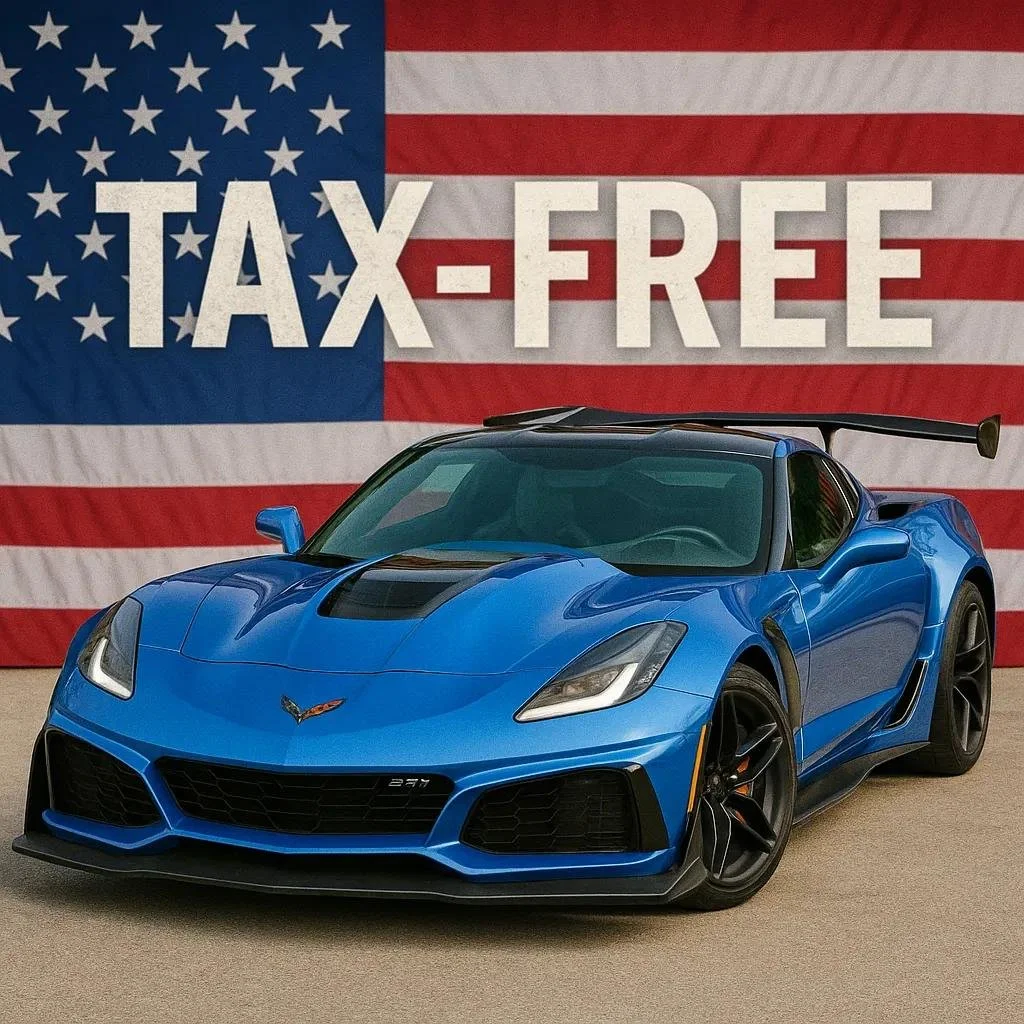
For example, families (with adjusted gross income of $200,000 or less) will be able to deduct up to $10,000 per year in interest on car loans.
Given that the average auto loan rate is 4.77% for borrowers with top credit, this means that a buyer could theoretically purchase a 1,064 horsepower Corvette ZR1 for ~$210,000 with a loan from General Motors and write off all the interest.
Yes, the vehicle must at least be ‘assembled’ in America, so there’s some support to the US auto industry.
But clearly a tax break on auto loan interest will encourage more people to go into debt to buy a rapidly depreciating vehicle. And as much as I love Corvettes, I’m not sure this should be a national priority.
An even bigger provision is the “No Tax On Tips” section.
This was a big campaign promise to win votes from service workers in the swing state of Nevada. But in such a tip-crazy country as the US, where seemingly everyone expects a gratuity these days (including the self-service machines at the airport where no human being is even involved!), it’s a bizarre priority.
Who even understands tipping culture anyhow? A pizza delivery guy almost always receives a tip. But a school bus driver (who must responsibly and safely transport dozens of children) does not.
People will give ten bucks to a valet parking attendant who drives your car 50 feet. Yet, for all the times I ever heard “thank you for your service” when I was in the military, I never once received (nor obviously expected) a gratuity.
Clearly Americans don’t value pizza over the lives of children, nor valet parking over national defense. But somewhere along the way, tipping culture in America got out of control. This legislation will make it worse… because now there will be an even greater expectation for tips.
More importantly, what does this tax provision say about national priorities?
They didn’t pass any tax incentives for careers that can substantially boost US economic growth, like AI developers or nuclear power engineers. Or even critical blue-collar jobs where the country is woefully short-- like truck drivers and oil roughnecks.
Instead, these politicians seemingly got together and said, “We want more blackjack dealers, let’s create tax incentives for that industry.”
This will almost certainly have unintended consequences.
Among them: many of today’s lecherous professions (like online “content creators” and webcam models) technically earn tips. So young people could end up with perverse financial incentives to take their clothes off for a living rather than do something productive.
I’m not sure how this is going to Make America Great Again; frankly the whole “ONE BIG BEAUTIFUL BILL” is rather underwhelming and provides very little incentive for economic growth.
Rather, it prioritizes more debt and more consumption… which is the opposite of what American needs right now.
To your freedom, James Hickman Co-Founder, Schiff Sovereign LLC
Why We Can Forget About “Drill Baby Drill” (Podcast)
Why We Can Forget About “Drill Baby Drill” (Podcast)
Notes From the Field By James Hickman (Simon Black) May 7, 2025
Travis Stice is not one of those rare corporate CEOs who is a household name around the world... like Warren Buffett. But the two share a similar ethos.
Buffett famously quipped, “Be fearful when others are greedy, and greedy when others are fearful,” which was ultimately a nod to the cyclical nature of markets and the economy.
As surely as night follows day, and autumn/winter follow summer, bad times follow good... and then good times follow bad.
Why We Can Forget About “Drill Baby Drill” (Podcast)
Notes From the Field By James Hickman (Simon Black) May 7, 2025
Travis Stice is not one of those rare corporate CEOs who is a household name around the world... like Warren Buffett. But the two share a similar ethos.
Buffett famously quipped, “Be fearful when others are greedy, and greedy when others are fearful,” which was ultimately a nod to the cyclical nature of markets and the economy.
As surely as night follows day, and autumn/winter follow summer, bad times follow good... and then good times follow bad.
Travis Stice understands this cyclicality all too well. As the founder/CEO of a large, pure-play Permian basin shale company (Diamondback Energy), he has seen ridiculously wild swings in the oil market, literally from nearly $150 per barrel all the way down to MINUS $40 per barrel, all within the past 15-20 years.
So his warnings on the oil market are undoubtedly worth hearing.
Stice penned an update to his shareholders earlier this week that bears special attention. And in it, he warned of the following:
Over the past fifteen years, the US energy sector has provided extraordinary benefits to the US economy and American consumers.
Rising oil production— thanks almost exclusively to shale producers— has kept energy prices low, driven job growth and exports, increased GDP, and filled government tax coffers.
In 2024 alone, Texas collected $27 billion in state tax revenue from the oil and gas industry— more than the total tax revenue of more than 34 states.
Yet oil production costs in the US have risen dramatically over the past decade. And tariffs make oil production significantly more expensive.
There are further geological headwinds preventing further expansion; many shale resources are reaching their peak— or are already past their peak production.
As a result of these factors, US oil production is now falling. Key metrics like crew counts and rig counts are down by as much as 20%.
Simultaneously, oil is cheap right now. Adjusted for inflation— and adjusted for the cost of drilling— oil is nearly the cheapest it has been in decades (aside from the pandemic).
With such cheap prices, there will be very little exploration for new oil... which is really bad for US energy independence, and likely means much higher prices in the future.
Stice sums it up by saying, “This will have a meaningful impact on our industry and our country.”
This is the topic of our latest podcast episode— and, candidly, the future of energy is pretty critical to understand. Oil may be cheap now, but this will likely be short-lived, and we could see a major price spike down the road— especially if the US dollar is displaced as the global reserve currency.
We invite you to listen in to today’s podcast here.
(For the audio-only version, check out our online post here.)
To your freedom, James Hickman Co-Founder, Schiff Sovereign LLC
This Trifecta of Market Declines is Rare… And Not Good
This Trifecta of Market Declines is Rare… And Not Good
Notes From the Field By James Hickman (Simon Black) April 30, 2025
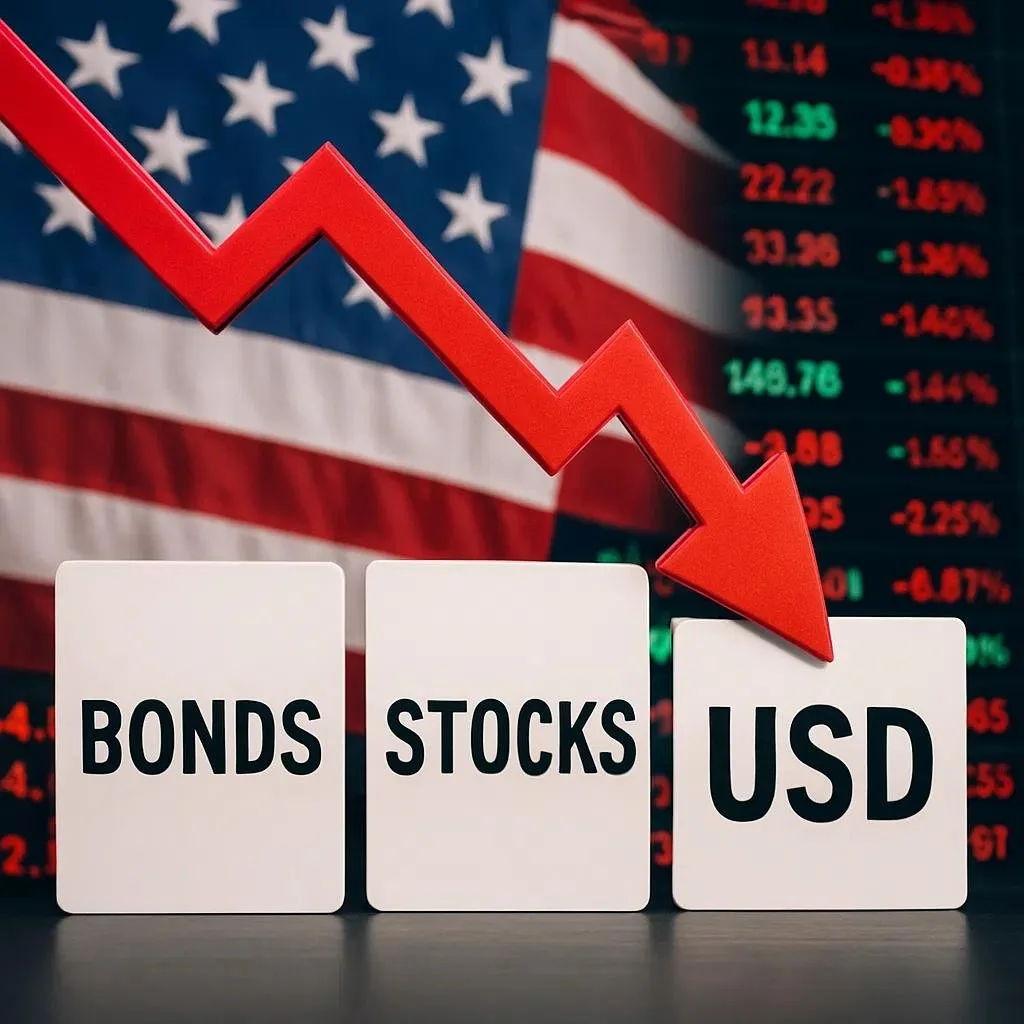
In today’s podcast, we explore the rare phenomenon of simultaneous declines in the stock market, bond market, and currency market—a powerful signal of capital flight out of the US.
We talk about when and where this has happened before, and why the Federal Reserve’s diminishing control over interest rates won’t fix it.
This Trifecta of Market Declines is Rare… And Not Good
Notes From the Field By James Hickman (Simon Black) April 30, 2025
In today’s podcast, we explore the rare phenomenon of simultaneous declines in the stock market, bond market, and currency market—a powerful signal of capital flight out of the US.
We talk about when and where this has happened before, and why the Federal Reserve’s diminishing control over interest rates won’t fix it.
We also discuss what higher rates mean for the commercial real estate market, and how that reverberates through the banking system.
And we answer the question: is gold overbought, and inching towards a correction?
The podcast also covers:
Why gold, not Bitcoin, remains the ultimate safe haven for central banks.
Why the US dollar's dominance is fading—and what comes next.
The case for gold stocks over physical gold in today’s environment.
Give it a listen here.
CLICK HERE to listen to today’s podcast.
(For the audio-only version, check out our online post here.)
To your freedom, James Hickman Co-Founder, Schiff Sovereign LLC
Bizarrely, Gold Is The Opposite Of The Bitcoin Effect Right Now
Bizarrely, Gold Is The Opposite Of The Bitcoin Effect Right Now
Notes From the Field By James Hickman (Simon Black) April 28, 2025
You’ve probably heard the story.
As the legend goes, on a late-summer morning in 1929, Joseph Kennedy — patriarch of the famous Kennedy family — was headed into his office in downtown New York City. As he sat for a quick shoe shine, the young boy buffing his shoes, barely a teenager, eagerly offered him stock tips.
Kennedy listened politely, but inside, he felt a jolt of alarm.
Bizarrely, Gold Is The Opposite Of The Bitcoin Effect Right Now
Notes From the Field By James Hickman (Simon Black) April 28, 2025
You’ve probably heard the story.
As the legend goes, on a late-summer morning in 1929, Joseph Kennedy — patriarch of the famous Kennedy family — was headed into his office in downtown New York City. As he sat for a quick shoe shine, the young boy buffing his shoes, barely a teenager, eagerly offered him stock tips.
Kennedy listened politely, but inside, he felt a jolt of alarm.
Supposedly he rushed to his office, dumped his entire stock portfolio, and moved heavily into cash. And just weeks later the stock market collapsed.
There’s a good chance this story isn’t true; I’ve often heard it told with Sir John Templeton in place of Joe Kennedy... and when urban legends can’t even get their protagonists straight, that’s usually a sign of fiction.
Curiously, however, a similar thing actually happened to me.
It was March 2009— six months after the Global Financial Crisis kicked off that wiped 50% off the S&P 500.
I was living in Punta del Este, Uruguay at the time and was coincidentally getting my shoes shined before heading to the airport for a trip to Asia.
The shoe shiner, an elderly Uruguayan man, asked me what I did for a living. I mentioned something about finance, at which point he cautioned me to avoid the stock market.
At that point the S&P was at its crisis-era low... and would go on to nearly 10x over the next 16 years.
Another story that is true is from August 1979: Businessweek magazine famously declared "The Death of Equities," capturing the widespread view that stocks (which had suffered in the 1970s) would continue to languish.
Yet the stock market was just about to unleash a multi-decade bull run.
In April 2019, the same Businessweek ran a cover asking, "Is Inflation Dead?", again capturing the popular idea that there would never be inflation again. That turned out to be 100% incorrect.
Then there was the famous Bitcoin craze in November 2017: families across America spent their Thanksgiving holidays opening up Coinbase accounts and bidding up the price of Bitcoin to its (then) all-time high. Crypto subsequently entered a multi-year bear market...
Anytime I see popular bandwagons, I become nervous. And I’m starting to see some signs of that with gold.
One glaring signal is that Costco— which sells gold to its customers— sold out its most recent inventory of American Eagle Gold Coins in less than four days. Gold demand is surging among retail investors.
Dealers are reporting crazy volume. The media is talking about gold daily now, whereas in the past they used to go weeks or months without a mention of gold.
The Wall Street Journal even ran an article this past weekend entitled “How to buy gold”.
Big investment bank analysts who, heretofore had ignored gold or been extremely bearish, are suddenly its biggest champions. Even the notorious Goldman Sachs is now projecting nearly $4,000 gold this year.
And only a handful of analysts are bearish.
Look, we’ve been talking about gold for years... and in particular since 2023 when it became obvious that there were long-term catalysts.
It’s pretty easy to understand: central banks around the world are trading in their US dollars for gold, simply because they don’t have confidence that the dollar will last as the global reserve currency.
And central banks don’t have a lot of options; there are only so many non-dollar asset classes that can absorb hundreds of billions of dollars worth of capital flows. Gold is one of the most convenient.
I’ve explained before that, because of these capital flow trends and catalysts, we could easily see $5,000 or even $10,000 gold over the coming years.
But at the same time, the trend line for the gold price has been incredibly steep ever since its low in 2022. And, again, there are now signs that a retail gold mania may be forming.
I’m not saying that gold is too expensive or that it’s time to sell. These short-term market trends are extremely difficult to predict, and I tend to ignore them.
Instead, I focus on the long-term big picture. And that’s a lot easier to see: the US fiscal situation is in major decline. The government is doing very little about it. And the rest of the world is already diversifying away from the dollar.
All of these trends are good for gold.
Who knows what investors will do over the next few months? But over the next five years, you can make a very strong case that central banks will continue to buy gold and send the price higher.
At the same time, I recognize that it’s difficult for some people to buy an asset when it’s at/near its all-time high... especially when it may suffer a short-term correction.
This is why we’ve been writing about an alternative to gold; because, while gold is near its all-time high, many gold companies are still undervalued relative to gold itself.
I’m talking about really solid, profitable gold miners trading at less than TWO times forward earnings. It’s ridiculous.
In a way it’s the opposite of the crypto phenomenon with Microstrategy (MSTR)— the company which primarily owns and holds Bitcoin.
Microstrategy (technically now called “Strategy”) owns 553,555 Bitcoin worth $52 billion. That’s pretty much their biggest (and nearly only) asset.
Yet the MSTR’s market cap is $92 billion.
In other words, the Bitcoin-related company is worth nearly double the amount of Bitcoin it holds. This makes no sense.
With gold, it’s the opposite. Gold is near its all-time highs... but the gold-related companies are cheap and undervalued.
Some investors are starting to notice— for example, multiple precious metals companies we have published in our investment research service have risen by 40-60%.
One has more than doubled in price... yet is still trading at a forward multiple of just 2x.
So, gold is bizarrely the opposite of the Bitcoin effect with Microstrategy: gold is at a record high, but gold companies are cheap. I’ll say it again— this is not going to last.
To your freedom, James Hickman Co-Founder, Schiff Sovereign LLC
America’s “Suez Moment” Has Arrived
America’s “Suez Moment” Has Arrived
Notes From the Field By James Hickman (Simon Black) April 25, 2025
Don Edgar considered himself extremely lucky.
It was early in the morning on November 6, 1956, and the World War II veteran turned journalist for Britain’s Daily Express was one of just two reporters invited to witness Britain’s invasion of Egypt.
Standing on the bridge of a British warship, Edgar wrote that it was “the most impressive military operation the British had put on for many a year, with parachutists, marine commandos, tanks, aircraft, and a naval bombardment.”
America’s “Suez Moment” Has Arrived
Notes From the Field By James Hickman (Simon Black) April 25, 2025
Don Edgar considered himself extremely lucky.
It was early in the morning on November 6, 1956, and the World War II veteran turned journalist for Britain’s Daily Express was one of just two reporters invited to witness Britain’s invasion of Egypt.
Standing on the bridge of a British warship, Edgar wrote that it was “the most impressive military operation the British had put on for many a year, with parachutists, marine commandos, tanks, aircraft, and a naval bombardment.”

Naturally he would say so. Edgar was British.
The rest of the world, however, was not terribly impressed. And the United Nations-- along with the US, Canada, Australia, and more, raced to condemn Great Britain for its aggression.
Britain naturally felt justified. Egypt had recently seized the Suez Canal-- one of the most important waterways in the world linking the Mediterranean and the Red Sea.
For Britain, the Suez Canal was a critical transport route for Saudi oil, not to mention a major asset; the British government had purchased a 44% stake in the canal back in the 1870s for a mere 4 million pounds, and the annual dividend soon exceeded their entire purchase price.
So, when Egyptian President Gamal Nasser nationalized the canal in July 1956, the British weren’t willing to take that lying down. To them it felt like theft.
Prime Minister Anthony Eden called it “piracy”, and he was willing to go to war to take the canal back.
Unfortunately for Eden, he underestimated the Egyptians’ resolve to fight.
Nasser responded by blowing up dozens of transport and cargo ships, effectively clogging up the canal and rendering it useless.
Eden also didn’t count on the immense global backlash… and not just diplomatically.
It was bad enough that pretty much every country on earth, from the United States to the Soviet Union, joined together in denouncing the invasion.
Britain was also severely punished by financial markets. Foreign capital fled the country. The British pound plummeted. Both the stock market and the bond market crashed.
It was absolutely brutal. Britain’s main stock index fell 170 points, roughly 8% in the span of ten days. Bond prices fell by 15% and bond yields surged as a result.
And the British government had to burn through roughly 15% of its total foreign reserves ($279 million at the time) just to keep its economy afloat.
Britain simply didn’t have the economic resources to withstand such intense financial pressure-- much of which was inflicted by the United States. So, the Brits quickly backed down and accepted the ceasefire terms dictated by the UN.
What started as an almost patriotic mission to reclaim British patrimony ended in a humiliating withdrawal-- and one that left no doubt in anyone’s mind that Britain was no longer a major superpower.
Financial markets do crash from time to time, often in reaction to government policy or some exogenous event. But it’s extremely unusual to have the trifecta, i.e. a major decline in the stock, bond, AND currency markets, simultaneously.
For example, if a government announces a major tax increase, then most likely the stock market will suffer a sudden decline. Higher taxes are bad for business, and valuations will take a hit.
But higher taxes would make bonds a more attractive investment (since the additional tax revenue makes the government more creditworthy).
So, stocks would fall, yet bonds would benefit.
As another example, slashing interest rates would typically be perceived as good for business… so stocks would rise. But the reduced rates (which may invite higher inflation) could be perceived as bad for the currency… so the dollar might drop as a result.
There are always trade-offs, and capital tends to move in/out of various asset classes.
But again, it’s extremely unusual for all of these assets to decline, so dramatically, at the same time. And it’s usually a pretty clear sign that capital is fleeing your country, i.e. foreign investors are pulling a lot of money out, quickly.
Usually if this freak occurrence does take place, it happens to some little banana republic. Zimbabwe and Venezuela come to mind.
But for a wealthy, developed country to suffer such financial humiliation is extremely rare… and signals that something has gone terribly wrong.
Again, this happened to Britain during the Suez Crisis. It also happened to Japan after their big crash in the 1980s.
Even the US was humbled in 1971 when the dollar was taken off the gold standard; the Dow Jones Industrial Average fell 7% that August, the bond market fell (i.e. bond yields rose by more than 100 basis points), and the dollar lost 15% against other major currencies.
The US was able to recover back in the 70s, however, because it managed to maintain its position as the global reserve currency-- and even still, it took a decade of stagflation before they managed to right the ship.
This month we witnessed the same pattern. After the Liberation Day nonsense, the US stock, bond, and currency markets all crashed (and gold surged to $3500 as a result). Substantial foreign pressure mounted.
And, at least for the moment, it appears that the US government is capitulating; just like Britain in 1956, the US government lacks the financial sturdiness to withstand the pressure.
Also, just like Britain in 1956, this may be the moment that future historians mark as the end to US global primacy.
It seems naive to think that the rest of the world will simply move on and forget about Liberation Day. Most likely this fiasco will accelerate the US dollar being displaced as the world’s dominant reserve currency.
No one knows yet what that new system will look like. And it’s because of the “I don’t knows” that gold surged to a peak of $3500.
Central banks have been the key driver of that trend, because, while they don’t know what the next reserve currency will be, they do know that they’ll be able to trade for it with gold.
I still believe this long-term trend will hold, i.e. central banks will continue to trade their US dollar reserves for gold.
But at the moment, gold is looking a bit overbought; its surge in price has been nearly a one-way street, and I wouldn’t be surprised if there were a short-term correction.
On that note, it’s very difficult to find anyone today who is bearish on gold… and when everyone has jumped on the same bandwagon, I start getting a bit nervous.
Fortunately, there are still a number of absurdly cheap gold companies, like mining, service, and streaming businesses, that are trading at ridiculously low multiples.
We’ll talk about this more next week.
To your freedom, James Hickman Co-Founder, Schiff Sovereign LLC
So… Is It Over? And The Surprising Player That Is Holding The Cards
So… Is It Over? And The Surprising Player That Is Holding The Cards
Notes From the Field By James Hickman (Simon Black) April 23, 2025
Franklin Roosevelt pressed the red emergency button to stop the elevator on the way down to his private dining room. The King of Saudi Arabia was waiting for him, but the President wanted to smoke a couple of cigarettes first.
It was 11:30 in the morning on Valentine’s Day, 1945. World War II was nearing its end, and Roosevelt had just come from the famous Yalta Conference with Winston Churchill and Joseph Stalin to discuss what post-war Europe would look like.
So… Is It Over? And The Surprising Player That Is Holding The Cards
Notes From the Field By James Hickman (Simon Black) April 23, 2025
Franklin Roosevelt pressed the red emergency button to stop the elevator on the way down to his private dining room. The King of Saudi Arabia was waiting for him, but the President wanted to smoke a couple of cigarettes first.
It was 11:30 in the morning on Valentine’s Day, 1945. World War II was nearing its end, and Roosevelt had just come from the famous Yalta Conference with Winston Churchill and Joseph Stalin to discuss what post-war Europe would look like.
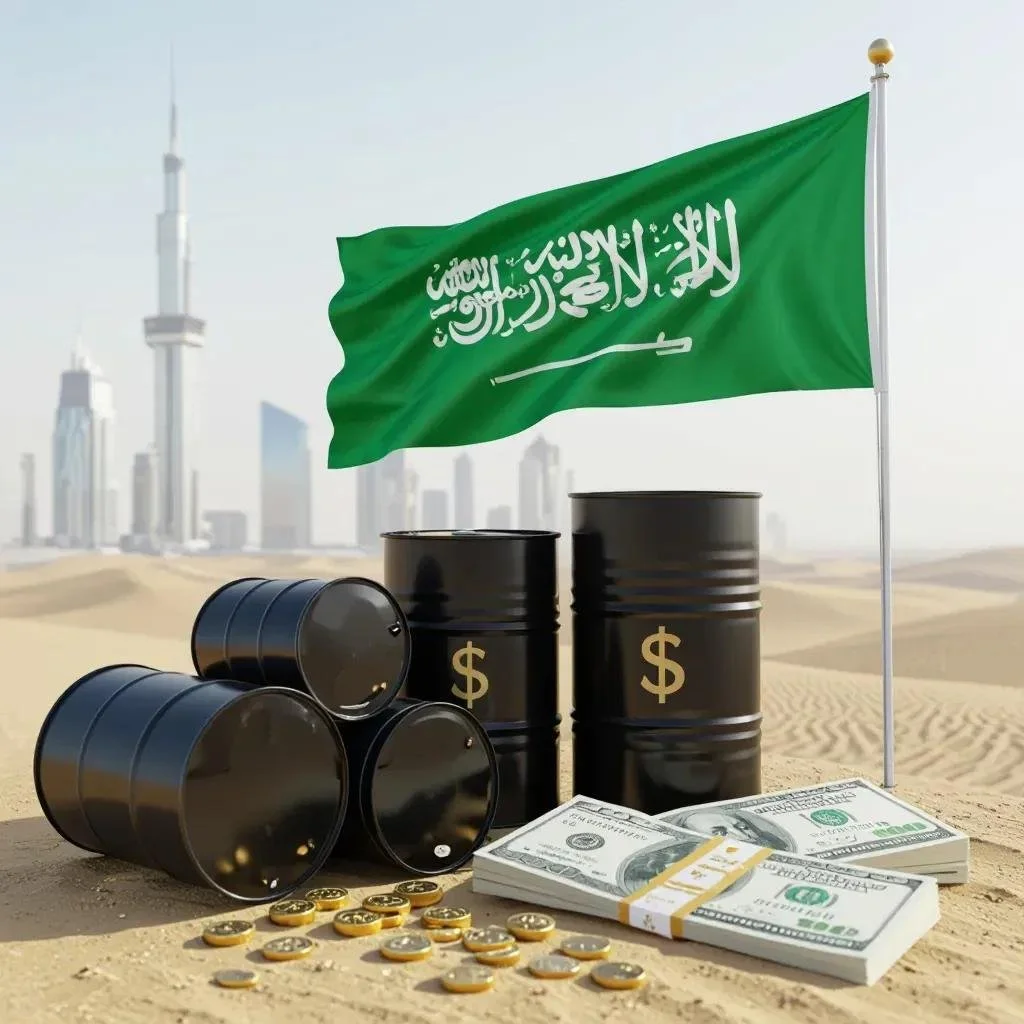
But on the way back home, Roosevelt went out of his way to meet with the Saudis. Legendary amounts of oil had been discovered in the Arabian desert a few years before and knew that such vast energy reserves would be strategically important to the United States after the war.
The problem was that Roosevelt was on death’s door at that point. His doctors had urged him not to go, but the President overruled them, sensing that the trip would solidify American interests.
He was right-- it was a critically important trip. But the doctors were right too-- it was obvious the trip had taken its toll, and a senior aide described FDR as “helpless in fatigue”.
The quick smoke break on his way to the lunch meeting was Roosevelt’s quick moment to relax, gather his wits, and put his game face on before taking on King Abdulaziz.
Apparently, the cigarettes did the trick, because Roosevelt was able to summon enough strength to build great rapport with the King.
As US Marine Colonel William Eddy (who was present at the meeting) later described, “the King and the President got along famously together” and became fast friends.
Roosevelt and Abdulaziz discovered they were the same age, both deeply interested in agriculture, and even shared similar physical handicaps.
In fact, Roosevelt gave one of his own wheelchairs to the King as a goodwill gesture, which Abdulaziz later recalled was “my most precious possession [from] my great and good friend President Roosevelt.”
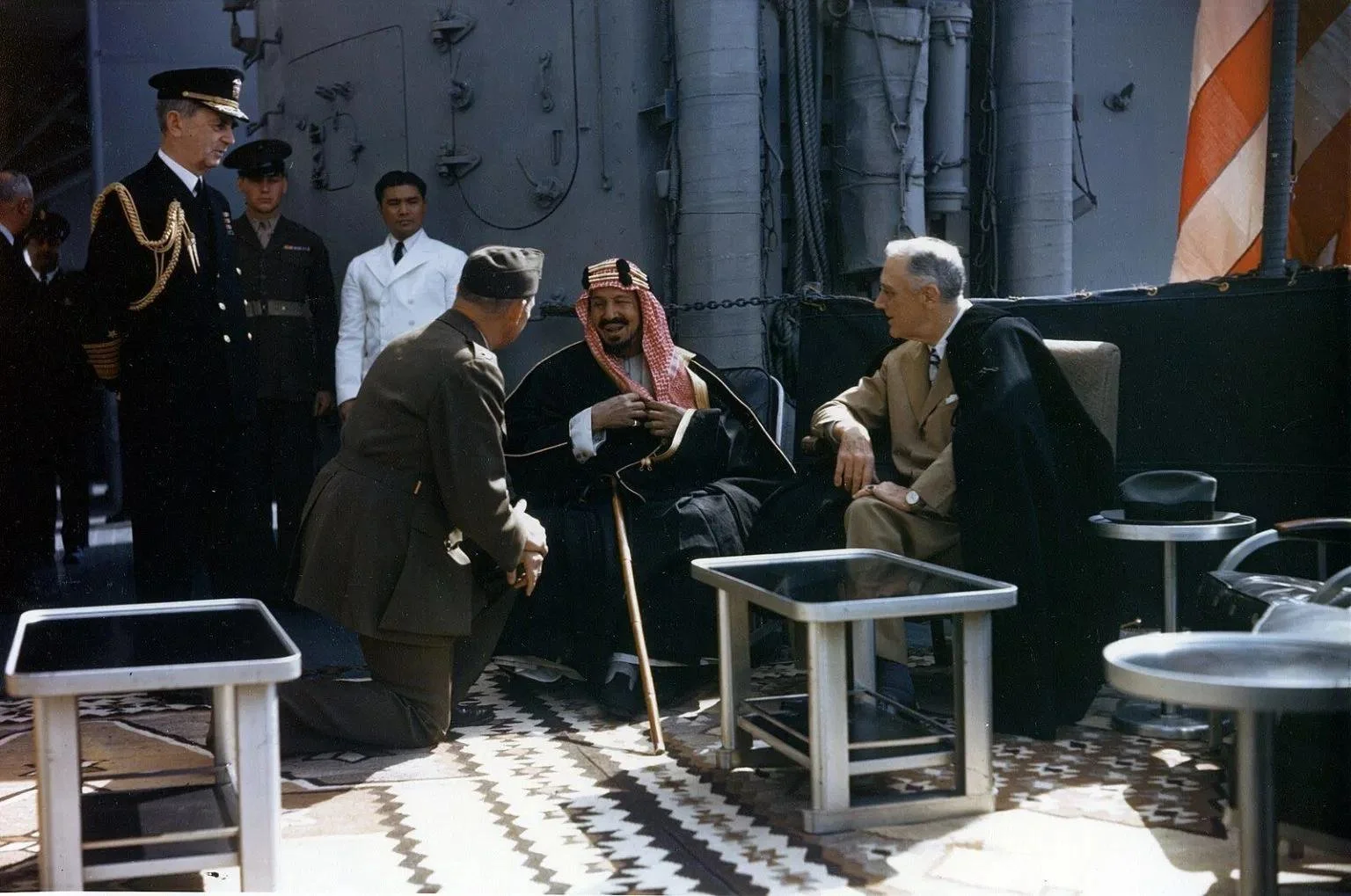
President Roosevelt with King Ibn Saud aboard USS Quincy, 14 February 1945. Naval History & Heritage Command, Public domain, via Wikimedia Commons.
Roosevelt died less than two months later. But he had planted the seeds of a relationship with Saudi Arabia that soon became very important… and eventually critical to the United States.
In the 1940s and 1950s, the US economy grew leaps and bounds and had an insatiable appetite for energy; Saudi oil played a key role in fueling that growth, and both nations prospered from the relationship.
Their amity was put to the test in the 1970s when the US dollar was taken off the gold standard. World leaders revolted, and the dollar’s standing as the global reserve currency could have ended very quickly.
But Saudi Arabia stuck with the dollar. And in 1974, the two countries inked a new economic cooperation deal: the US would provide security and technology, and the Saudis agreed to maintain their currency peg to the dollar… which ultimately meant that oil would still be sold exclusively in US dollars.
If the Saudis had gone the other way and abandoned the dollar, America could have lost its global financial dominance by the end of the 1970s.
Instead, Saudi Arabia’s commitment encouraged (and realistically forced) the rest of the world to continue to hold US dollars, even if just for the sole purpose of buying oil from OPEC.
As a result, the US dollar has remained the global reserve currency through this day-- which is the ONLY reason why America can have a $36+ trillion national debt or run multi-trillion-dollar deficits each year… and yet the world keeps buying US government bonds.
Saudi Arabia could now be poised for another big decision that will have a major impact on America’s future dominance.
But first-- as of today, it appears that the Trump administration may be climbing down from hard-nosed positions they had adopted as recently as Monday.
Suddenly now the President doesn’t want to fire Fed Chairman Jerome Powell. Suddenly the gazillion percent tariffs on China are “too high”. Suddenly Elon thinks that he is spending too much time at DOGE.
Granted, all of this could change by the time I finish writing this article. Such are the times in which we live. However, it seems that the administration is feeling the pressure from the bond market rout, the stock market rout, the currency market rout.
It’s all very Truss-ian, i.e. reminiscent of 2022 when then-British PM Liz Truss had to resign after domestic financial markets crashed and investors vomited all over her economic plan.
Obviously, the guys in the US aren’t going to resign. But it appears that they’re capitulating to investors’ demands: “Go back to the way things were in March… keep hitting the woke universities, keep policing the border, keep doing all the other stuff. Just leave trade alone.”
So, is the economic war already over? Who knows. But even if they really are backing down, it remains to be seen if the rest of the world will simply forget about the past month and move on.
How much trust and confidence will other nations continue to have in the dollar, and in the United States? Already, over the past several years, there has been serious effort from the Usual Suspects (i.e. Russia, China, Iran, etc.) to de-dollarize.
Some of their efforts have been laughable. Others have made great progress.
And Saudi Arabia may once again be the key swing vote.
Saudi’s Crown Prince, Mohammed bin Salman (MBS), knows his kingdom’s oil will eventually run out, and he’s desperately seeking to build a real economy to replace it.
On one hand, Saudi Arabia has a longstanding relationship with the US-- though one that has clearly soured over the years. On the other hand, he has the Chinese offering all sorts of cash and prizes.
China knows that the petrodollar, i.e. selling oil in US dollars, is a key driver for global US dollar demand… which props up the US government and supports America’s gargantuan national debt.
Chipping away at that dollar demand will really hurt the United States. China wants this to happen. And they’ve been pushing Saudi Arabia to start selling oil in Chinese yuan, i.e. petroyuan.
Bottom line, MBS is going to have to make a decision about whether partnership with China or the US is better for his kingdom over the next several decades.
If he sticks with the US and rejects Chinese overtures, it will go a long way in keeping other countries in line, eliminating doubts about America, and maintaining the dollar as the reserve currency-- for now.
On the other hand, if he decides that China is the better option and starts selling oil in yuan, it could be crippling for the US economy.
Foreigners holding trillions of US dollar assets would no longer need to maintain such vast dollar reserves. The dollar would plummet as a result, US government bond yields would skyrocket, and inflation would surge.
Saudi Arabia is holding a lot of cards right now regarding the fate of the dollar… which is a key reason why Donald Trump himself is heading there in a few weeks.
Make no mistake-- this is a monumental story in the making.
To your freedom, James Hickman Co-Founder, Schiff Sovereign LLC
China Has Officially Deployed Its Digital Arsenal
China Has Officially Deployed Its Digital Arsenal
Notes From the Field By James Hickman (Simon Black) April 22, 2025
By 1970, US commanders in Vietnam were optimistic that they had “functionally severed” North Vietnamese forces. The generals were particularly boastful about their taking out the Ho Chi Minh Trail—a sprawling network of roads, footpaths, and tunnels through Laos and Cambodia that let North Vietnamese forces move troops and supplies into South Vietnam, bypassing the fortified border.
After bombing it into oblivion, a senior US Air Force general declared, “Gentlemen, what we have here is the end of North Vietnam as a viable fighting power.”
China Has Officially Deployed Its Digital Arsenal
Notes From the Field By James Hickman (Simon Black) April 22, 2025
By 1970, US commanders in Vietnam were optimistic that they had “functionally severed” North Vietnamese forces. The generals were particularly boastful about their taking out the Ho Chi Minh Trail—a sprawling network of roads, footpaths, and tunnels through Laos and Cambodia that let North Vietnamese forces move troops and supplies into South Vietnam, bypassing the fortified border.
After bombing it into oblivion, a senior US Air Force general declared, “Gentlemen, what we have here is the end of North Vietnam as a viable fighting power.”
Unfortunately, the ‘experts’ were wrong again.
Only weeks after declaring victory, US forces found themselves locked in a brutal and unexpected battle at Fire Support Base Ripcord— a base the US was constructing as a launchpad for future operations.
The North Vietnamese brought in artillery, mortars, rockets, anti-aircraft weapons, and wave after wave of ground troops. All of that firepower, manpower, and ammunition moved hundreds of miles through dense jungle terrain, across borders, and into South Vietnam—right under the nose of US airpower that had supposedly rendered the the Ho Chi Minh Trail defunct.
Their ability to move silently helped the Viet Cong guerrillas wage a shadow war of ambushes, sabotage, and infiltration—blending into the population by day and striking by night.
The Viet Cong’s psychological victories eroded US public support. Morale among American troops declined, and political dissent at home surged.
US troops at Fire Support Base Ripcord held out for nearly a month under constant bombardment and ground assaults. But by late July, with casualties mounting, the last Americans were airlifted out under enemy fire.
It was a scene that foreshadowed what would play out in Saigon just a few years later as the US abandoned the war.
And it was through the use of these guerrilla tactics— Distract. Disrupt. Discourage. Dismay.— that a substantially weaker force was able to defeat a much more powerful army.
China is starting to do the same thing in this economic war with the United States. And they’re targeting America’s youth.
For example, TikTok’s ‘Blackout Challenge’ encourages the app’s young users to asphyxiate themselves until they lose consciousness, which led to the death of a 13-year old California boy in February of this year.
A 15-year old in Oklahoma died from the ‘Benadryl Challenge’. Concussions and other serious injuries have resulted from the ‘Skullbreaker Challenge’ where kids ‘prank’ others by kicking their legs out from under them as they jump.
Curiously, Chinese teens haven’t succumbed to the same contests. Instead, viral math problems challenging users' problem-solving skills regularly trend on Douyin, China’s version of TikTok.
One popular influencer is a 12-year-old girl who has gone viral for teaching college-level math, explaining complex problems in a simplified manner.
Last week, we got another look at how TikTok figures into China’s guerrilla economic warfare arsenal.
Chinese influencers began pointing American consumers toward a new app: DHgate— a Beijing-based e-commerce platform that sells items directly from the Chinese factories which manufacture brand-name goods.
Their pitch: why pay $120 for name-brand yoga pants when the same exact item, just without a brand label, can be yours for $15?
Within days, DHgate exploded in popularity—climbing to the #2 spot on Apple’s App Store in the US, just behind Temu (another Chinese-owned e-commerce app) and ahead of ChatGPT.
Yoga pants, handbags, sunglasses, sneakers, you name it—products stripped of their logos and exposed for what they are: glorified drop-shipped Chinese goods with a 700% markup.
Of course, the sudden surge in popularity wasn’t organic; it was orchestrated.
Chinese influencers produced videos explaining how major Western brands were bilking their consumers and outsourcing production to these very same factories.
TikTok made sure those videos went viral in the US.
Even 145% tariffs would only push the price of $15 yoga pants up to $36.75— still much less expensive than buying from Lululemon.
China’s guerrilla strategy is clear: They want US consumers to question who is the enemy— the ones selling you affordable clothing, or the ones increasing your cost of living?
This drives a wedge between consumers and the US government— why would my government prevent me from buying affordable goods? Tariffs could quickly become as unpopular among Americans as the Vietnam War was in the 1960s.
China is weaponizing TikTok to turn US consumers against the government... and against major US brands.
They pulled back the curtain on how the economy really makes the sausage—exposing that a $2,000 handbag comes from the same factory, made of the same materials, with the same quality stitching as the $40 knockoff. Americans are paying thousands for a label, not for a superior product.
You can bet that all the data that has been gathered from TikTok has been sent back to the mothership to be analyzed and weaponized. China clearly understands how to use that information for marketing and messaging in ways that could give them a huge edge in the escalating economic warfare.
American consumers may quickly feel that China is not the enemy robbing them blind; instead, they may view China as the ones offering a better deal.
The US government, on the other hand, suddenly looks like the bad guy for keeping prices high and products out of reach.
And this is just the beginning.
What happens when a billion-dollar marketing machine—fueled by foreign data, run through a CCP-influenced algorithm, and distributed on the most addictive app in the world—starts targeting not just consumer wallets, but the foundations of America’s consumer-centric economy?
An erosion of trust in American brands. A growing resentment toward US trade policy. A subtle, creeping, deliberate narrative that China gives you value, while your own government gives you inflation.
This is now the guerrilla phase of the economic war.
To your freedom, James Hickman Co-Founder, Schiff Sovereign LLC