
All Signs Point to Reset: How Every Fiat System Ends in Collapse!
All Signs Point to Reset: How Every Fiat System Ends in Collapse!
Lynette Zang: 10-18-2025
Every fiat system ends in collapse, and all signs point to another reset.
Since 1971, when the dollar was cut loose from gold, productivity gains vanished while inflation quietly stole purchasing power.
Now debt is exploding, real estate is distorted, and central banks are hoarding gold behind the scenes.
This isn’t a coincidence—it’s the controlled transition to the next monetary system.
All Signs Point to Reset: How Every Fiat System Ends in Collapse!
Lynette Zang: 10-18-2025
Every fiat system ends in collapse, and all signs point to another reset.
Since 1971, when the dollar was cut loose from gold, productivity gains vanished while inflation quietly stole purchasing power.
Now debt is exploding, real estate is distorted, and central banks are hoarding gold behind the scenes.
This isn’t a coincidence—it’s the controlled transition to the next monetary system.
Lynette exposes the pattern, the players, and how to protect yourself before the reset goes public.
Chapters:
00:00 — Introduction
00:45 — Why gold and silver matter when regulators fail
01:21 — 1971: The moment money changed forever
03:11 — How gold exposes fake paper wealth
04:05 — The economy broke when wages stopped rising
05:15 — Deregulation and the rise of zombie companies
07:22 — The housing trap: priced out and locked in
08:31 — Black Monday and the creation of market control
11:00 — Inflation: the hidden reset of the economy
13:39 — Why central banks are buying gold again
15:29 — How to build a sound money plan
“Tidbits From TNT” Friday 10-17-2025
TNT:
Tishwash: How did a Gulf nation barely bigger than Nagaland build the world’s most powerful currency?
Despite its modest size, Kuwait boasts the world's most valuable currency, the Kuwaiti Dinar (KWD), with an exchange rate of approximately 1 KWD = 3.26 USD.
1. Kuwait: A Tiny Powerhouse
Kuwait, a small nation of approximately 5 million people, occupies just 17,818 square kilometres, slightly larger than India's Nagaland. Despite its modest size, Kuwait boasts the world's most valuable currency, the Kuwaiti Dinar (KWD), with an exchange rate of approximately 1 KWD = 3.26 USD. Its compact geography and strategic Gulf location allow it to efficiently manage infrastructure and economic policies that reinforce its currency strength.
TNT:
Tishwash: How did a Gulf nation barely bigger than Nagaland build the world’s most powerful currency?
Despite its modest size, Kuwait boasts the world's most valuable currency, the Kuwaiti Dinar (KWD), with an exchange rate of approximately 1 KWD = 3.26 USD.
1. Kuwait: A Tiny Powerhouse
Kuwait, a small nation of approximately 5 million people, occupies just 17,818 square kilometres, slightly larger than India's Nagaland. Despite its modest size, Kuwait boasts the world's most valuable currency, the Kuwaiti Dinar (KWD), with an exchange rate of approximately 1 KWD = 3.26 USD. Its compact geography and strategic Gulf location allow it to efficiently manage infrastructure and economic policies that reinforce its currency strength.
The Oil Wealth Advantage
Kuwait's economic strength stems from its vast oil reserves, ranking among the top globally. The country has a crude oil production capacity of 3.2 million barrels per day. Oil exports constitute a significant portion of its GDP, contributing to a nominal GDP of $160 billion. This concentrated resource wealth provides a continuous inflow of foreign currency, supporting both the dinar and government spending.
Strategic Currency Pegging
The Kuwaiti Dinar's high value is maintained through a strategic peg to a basket of international currencies, rather than a single currency like the US Dollar. This approach allows Kuwait to manage its currency's value more effectively, insulating it from fluctuations in any single foreign currency. The peg also provides predictability for trade, investment, and international contracts.
Fiscal Discipline and Sovereign Wealth Fund
Kuwait's government exercises fiscal discipline, with a low unemployment rate and moderate inflation. The country also manages a substantial sovereign wealth fund, the Kuwait Investment Authority, which invests globally, further bolstering its economic stability. These investments act as a buffer against oil market volatility and enhance the long-term strength of the dinar.
Limited Domestic Market
With a population of just over 5 million, Kuwait's domestic market is limited. However, this constraint is offset by its strategic location and strong trade relations, particularly in the oil sector, which drive economic growth and support the high value of its currency. The government also leverages free trade zones and international partnerships to expand its economic reach beyond domestic consumption.
High GDP Per Capita
Kuwait's GDP per capita stands at approximately $32,000 (nominal) and $51,000 (purchasing power parity). These figures place Kuwait among the wealthiest nations globally, reflecting its economic prosperity and the strength of its currency. High per capita income allows for significant domestic savings and investment, which further stabilises the dinar.
Political Stability Amid Challenges
Despite facing political challenges, including parliamentary dissolutions, Kuwait maintains a relatively stable political environment compared to many of its regional counterparts. This stability contributes to investor confidence and supports the strength of the Kuwaiti Dinar. Strong institutions and consistent regulatory frameworks also encourage foreign capital inflows.
Diversification Efforts
Recognising the volatility of oil prices, Kuwait is actively pursuing economic diversification. Investments in sectors such as finance, real estate, and infrastructure aim to reduce dependency on oil revenues and ensure long-term economic stability. These initiatives also create employment opportunities and stimulate private-sector growth.
Kuwait's economic strength and strategic location enhance its influence in the Middle East. It plays a significant role in regional organisations and maintains strong diplomatic relations, further supporting the value of its currency. The country’s reputation for stability makes it a hub for regional banking, finance, and investment.
Comparison with India
In contrast, India's currency, the Indian Rupee (INR), is valued at approximately 1 USD = 87.9 INR in 2025. Factors such as a large population, trade deficits, and inflation contribute to the lower value of the INR compared to the Kuwaiti Dinar. While India’s economy is rapidly growing, structural challenges and fiscal pressures limit the rupee’s global strength. Kuwait's rise to having the world's most powerful currency is a testament to the effective management of its oil wealth, strategic fiscal policies, and efforts towards economic diversification. link
************
Tishwash: Baghdad confirms its commitment to the economic and financial reform program
Prime Minister Saleh Mahoud Salman's advisor confirmed on Friday that the government is continuing to implement comprehensive strategic banking reforms, noting that the government is committed to continuing to implement the economic and financial reform program.
Mahoud said in a speech he delivered during his participation as a government representative in the banking reform conference organized by the Central Bank of Iraq in cooperation with the international consulting firm (Oliver and Ayman) at the Ritz Carlton Hotel in Washington, DC, on the sidelines of the meetings of the International Monetary Fund and the World Bank: "The government is committed to continuing to implement the economic and financial reform program aimed at enhancing the efficiency of the banking system and supporting sustainable development in the country."
He stressed that "the banking sector represents a fundamental pillar in the economic reform process," indicating that "the government is continuing to implement comprehensive strategic banking reforms in cooperation with the Central Bank of Iraq, aimed at raising banking standards and enhancing the competitiveness of the financial system."
He explained that "the government has prepared a three-year general budget for the first time, which allows for long-term financial planning, achieving stability in resource management, and enhancing the confidence of local and international investors."
In the context of diversifying revenues and reducing dependence on oil, he explained that "the government has achieved tangible progress in automating the customs system by implementing the United Nations (ASYCUDA) system, which has led to a clear increase in customs revenues in addition to a significant improvement in tax revenues"
Noting that "the government has implemented a program to restructure government banks (Al-Rafidain, Al-Rasheed, Industrial, and Agricultural) in cooperation with international consulting companies, With the aim of raising its efficiency and enhancing its ability to provide modern financial services.
He pointed out that "the government launched programs to expand the use of electronic payment and partnerships with financial technology companies, which contributed to raising the financial inclusion rate to more than 40% after it was less than 10% two years ago, which was praised by the World Bank and the International Monetary Fund," stressing "the government's support for small and medium enterprises by providing financing and resources to create new job opportunities and stimulate the local economy."
Salman stated that "the banking reforms currently being worked on constitute a turning point in the history of Iraq's economic development, and that the government is determined to support all local and international institutions working to develop the banking sector, as it is a pivotal part of the economic growth and financial stability plan."
He noted that "the government extended its appreciation to the Central Bank, banks, and international and local advisory teams working in this field". link
************
Tishwash: Al-Sudani: We have achieved many accomplishments in less than 3 years and we aspire to more
Prime Minister Mohammed Shia Al-Sudani confirmed today, Wednesday, that his government has achieved many accomplishments in less than 3 years, pointing out that workers in the private sector are included in residential lands, in addition to granting them loans from banks.
The Prime Minister's media office said in a statement, received by Mail, that "Al-Sudani received a number of tribal sheikhs and dignitaries of Al-Mada'in district, southeast of the capital, Baghdad."".
According to the statement, Al-Sudani stressed his "keenness to meet our people from different governorates," noting that "the security and stability that Iraq is going through today has enabled the government to move with its efforts to services, reconstruction, and development, which is a right for Iraq and its people."".
He explained that "the country was exposed to wars and blockades, and suffered from terrorism after 2003, and this directly affected the general situation there," stressing that "Iraq paid a heavy price in order to achieve societal stability, and to support security that was achieved with the keenness of citizens, and the efforts of our security forces that impose their control today over the entire country."".
He added, "The government left a tangible impact on the citizen regarding what it accomplished in reconstruction and development projects throughout the country"".
The Prime Minister stressed: "In less than 3 years, we have achieved many accomplishments, and we aspire to achieve greater accomplishments."".
He added: "There are more than 2,538 projects that have been stalled for years. We have started implementing them and launched new projects in Baghdad and the governorates."".
He added: "We implemented infrastructure projects in the districts of Nahrawan, Al Wahda, Sabaa Al Bor and Abu Ghraib," noting that "the service effort projects provided a quick service and reduced the cost for more than 3 million citizens in various governorates."".
He added: "We have implemented 511 projects within the service effort projects in Baghdad and the governorates, and we are continuing to work to implement service projects."".
Al-Sudani went on to say: "We have full knowledge of the needs of the areas on the outskirts of Baghdad, and work is underway to provide all services, and we have focused on developing and rehabilitating the entrances to the capital, Baghdad," indicating that "the establishment of a 50-bed hospital in Al-Mada'in district will begin soon, in addition to completing Al-Nahrawan Hospital with a capacity of 200 beds."".
He pointed out that "youth constitute (60%) of society, and we were able to provide more than 500,000 jobs in the private sector"".
He stressed that "the worker in the private sector enjoys rights and privileges thanks to the Retirement and Social Security Law", stressing that "workers in the private sector have been included in residential lands, in addition to being granted loans from banks"".
He pointed out that "the government places the interests of Iraq and its people above all considerations, and we acted responsibly to avoid slipping into war, while maintaining our principled position on the Palestinian issue."".
He added: "Elections are everyone's commitment and responsibility, and broad participation in them means shaping the future of the country," adding that "choosing the most suitable and competent means continuing reform and work to achieve more accomplishments."" link
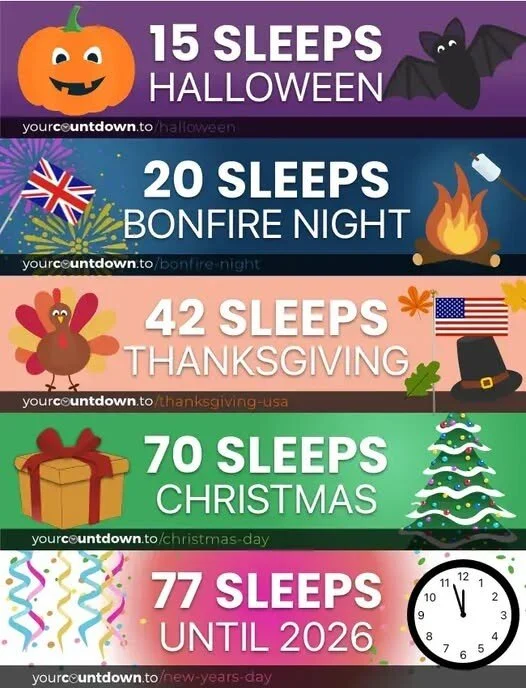
Mot: Yawnnnnnn -- How Many - Sleeps!!!!!
Mot: This will be me if I ever start dating again.

Seeds of Wisdom RV and Economics Updates Thursday Afternoon 10-16-25
Good Afternoon Dinar Recaps,
Tarnished Glory: BRICS and the Waning Aura of the U.S. Dollar
A Challenge to the Dollar’s Dominance
The U.S. dollar’s brand power — long seen as untouchable — is fading as the BRICS alliance reshapes the global financial landscape.
Good Afternoon Dinar Recaps,
Tarnished Glory: BRICS and the Waning Aura of the U.S. Dollar
A Challenge to the Dollar’s Dominance
The U.S. dollar’s brand power — long seen as untouchable — is fading as the BRICS alliance reshapes the global financial landscape.
Currency strategist Marc Chandler acknowledged the shift bluntly:
“I’m not sure the dollar has lost its global standing. To me, the dollar’s brand has been tarnished.”
Developing nations are no longer accepting what they view as forced dependence on the dollar. Instead, they’re designing new systems to conduct trade in local currencies, gold, and regional instruments.
● BRICS members are expanding currency swap agreements to reduce exposure to the greenback.
● China and Russia now settle a growing share of energy trade in yuan and rubles.
● India and Brazil are testing digital settlement networks for regional trade.
● South Africa recently signed a gold-settlement framework with non-BRICS African partners.
Chandler noted that while many nations must still borrow or transact in U.S. dollars, they’re actively diversifying to lower their vulnerability to dollar fluctuations and U.S. sanctions.
From Monopoly to Multipolarity
The cracks in dollar dominance stem from mounting frustration with U.S. monetary power and foreign policy.
● Developing countries see dollar dependence as a tool of control, limiting their fiscal autonomy.
● Washington’s sanctions and interest rate cycles ripple across global markets, often hurting emerging economies first.
● In response, BRICS nations are crafting a parallel framework for trade, credit, and reserves.
This movement is not a sudden rebellion — it’s a methodical transition:
● New trade corridors bypass the SWIFT system through regional clearinghouses.
● Oil and commodities are increasingly priced in non-dollar currencies.
● Central banks are building gold and yuan reserves to anchor local markets.
The combined effect? The dollar is losing its psychological monopoly — not vanishing, but sharing space in a growing multi-currency world.
The Next Financial Epoch
The coming decade may see a fragmented global reserve structure, with multiple power centers instead of one.
● Regional trade blocs could issue digital tokens pegged to commodity baskets.
● AI-driven central banking systems may optimize cross-border settlements in real time.
● Sovereign digital currencies will erode the need for a single intermediary like the dollar.
One economist at the Bank for International Settlements summed up the shift succinctly:
“The dollar isn’t dying — it’s being redefined by a world that refuses to orbit one sun.”
Whether the United States adapts or resists, this restructuring will determine who writes the next chapter of global finance.
The Deeper Current
What’s unfolding isn’t just geopolitics — it’s a quiet rewriting of financial power:
● Nations are reclaiming control of their value systems.
● The architecture of trade, credit, and reserves is being rebuilt from the periphery inward.
● The global south is no longer a passive participant but an active designer of a new monetary order.
This moment marks the intersection of economics and evolution — where digital innovation, commodity security, and political independence converge.
It’s a shift from empire to ecosystem, from dominance to distributed power.
In short: This isn’t politics — it’s global finance restructuring before our eyes.
A quiet revolution declaring, “Out with the old, and in with the new.”
🌱 Seeds of Wisdom Team
Newshounds News™ Exclusive
Sources & Further Reading
Watcher.Guru – “BRICS Has Tarnished the US Dollar’s Brand Value, Admits Strategist”
Reuters – “BRICS Seeks to Reduce Dollar Reliance with Local Currency Trade”
Bloomberg – “Global South Accelerates Move Away from Dollar”
Financial Times – “BRICS Currency Ambitions Challenge US Financial Dominance”
~~~~~~~~~
Seeds of Wisdom Team RV Currency Facts Youtube and Rumble
Newshound's News Telegram Room Link
Follow the Gold/Silver Rate COMEX
Follow Fast Facts
Seeds of Wisdom Team™ Website
Thank you Dinar Recaps
Iraq Economic News and Points To Ponder Wednesday Evening 10-15-25
The Region Transfers 120 Billion Dinars Of Its Non-Oil Revenues To The Federal Government.
Economy | 03:45 - 10/15/2025 Mawazine News – Erbil An informed source in the Kurdistan Regional Government revealed on Wednesday that 120 billion dinars of non-oil revenues have been transferred to the federal government in Baghdad.
The Region Transfers 120 Billion Dinars Of Its Non-Oil Revenues To The Federal Government.
Economy | 03:45 - 10/15/2025 Mawazine News – Erbil An informed source in the Kurdistan Regional Government revealed on Wednesday that 120 billion dinars of non-oil revenues have been transferred to the federal government in Baghdad.
The source said, "The Kurdistan Regional Council of Ministers approved during its last meeting the transfer of 120 billion dinars of non-oil revenues collected during the recent period to the federal Ministry of Finance," indicating that "the step comes within the framework of the ongoing understandings between Erbil and Baghdad regarding the settlement of financial files and the regulation of public revenues."
The source indicated that the decision came after a series of joint meetings between the Ministries of Finance in Baghdad and Erbil over the past months, focusing on the mechanisms for disbursing non-oil revenues and implementing the provisions of the Federal Budget Law for 2025, which stipulates that the region is committed to transferring a specific percentage of its revenues in exchange for securing the salaries of its employees. https://www.mawazin.net/Details.aspx?jimare=268507
Tax Reform Is Yielding Results In Increased Non-Oil Revenues For The State Treasury.
Money and Business Economy News – Baghdad Non-oil tax revenues increased to 3.07 trillion dinars in 2023, 3.87 trillion dinars in 2024, and 1.155 trillion dinars in the first half of 2025, benefiting the state treasury.
These measures included expanding the tax base, introducing new activities under the income tax, adopting modern electronic automation and payment systems, and activating exemptions for productive sectors.
The government adopted an economic approach based on maximizing non-oil resources and strengthening the development economy, emphasizing "the importance of tax as a primary economic resource for the public treasury."
In this context, a broad package of tax reform measures was launched.
This package included Cabinet Resolution No. (24074), which stipulates expanding the tax base, subjecting new activities to income tax, subjecting e-application companies to tax, and introducing a sales system for premium and first-class restaurants and hotels, with the tax amount being collected and the taxpayer being discharged directly.
Key measures and important decisions included establishing tax accounting mechanisms with foreign oil companies, mixed-sector companies, and private universities; submitting a draft new Income Tax Law to replace the amended and effective Law No. 113 of 1982; establishing a tax inquiry platform; and moving toward fully automating the General Tax Authority's work through a comprehensive tax system in cooperation with major e-commerce companies.
Reforms also included adopting a self-assessment and subsequent audit mechanism, launching an electronic payment service at the Authority and its branches, and activating tax exemptions for productive agricultural lands, poultry farms, and hatcheries.
The tax reform also included the Prime Minister's sponsorship of the "Tax Reform Conference," which emphasized studying tax evasion and enhancing a business-friendly tax environment, in addition to tax accounting for extractive companies within licensing rounds.
A wide range of double taxation avoidance agreements was signed with governments of friendly countries.
In the same context, the Prime Minister sponsored the "Tax Conference for Economic Development and Revitalizing the Investment Environment," which concluded with recommendations emphasizing the need not to impose tax increases that would negatively impact the business environment. https://economy-news.net/content.php?id=61176
Trump Sends A Letter To The President Of The Republic
Political | 04:27 - 10/15/2025 Mawazine News - Follow-up US President Donald Trump congratulated Iraq on its National Day on Wednesday, affirming the United States' firm commitment to the strategic partnership with Iraq and joint cooperation.
The Presidency of the Republic stated in a statement received by Mawazine News that "President of the Republic Abdul Latif Jamal Rashid received a congratulatory message from US President Donald Trump on the occasion of the 93rd anniversary of Iraq's National Day."
In his message, President Trump affirmed "the United States' firm commitment to the strategic partnership with Iraq and joint cooperation in all fields in a way that enhances regional stability."
The following is the text of the message:
“Greetings, Your Excellency the President.
We and the people of the United States of America are pleased to extend our sincere congratulations and blessings to you, the government and people, on the occasion of the (93)th Iraqi National Day.
This year has been marked by remarkable achievements that highlight Iraq’s resilience and growing leadership in the region. The successful hosting of the Arab League Summit in Baghdad highlighted Iraq’s ability to enhance dialogue and cooperation among neighboring countries. The visit of the US-Iraq Business Council in April confirmed the strength of our shared economic partnership.
The United States demonstrates its steadfast commitment to the strategic partnership with Iraq. Together, we have worked to promote regional stability, enhance energy security, and maintain pressure to prevent the return of ISIS.
We look forward to continuing our cooperation on shared priorities and building on the momentum of our economic successes. We wish you and all Iraqis a happy holiday and a year filled with peace, progress, and prosperity.
Sincerely , President Donald J. Trump.” https://www.mawazin.net/Details.aspx?jimare=268510
Central Bank: 5 Iraqi Banks Will Leave The Market And Close Their Doors.
Economy | 10/15/2025 Mawazine News - Baghdad - The Central Bank of Iraq revealed on Wednesday that five Iraqi banks are close to exiting the market in the coming period, after failing to comply with the comprehensive review standards imposed by the Central Bank on banks.
Deputy Governor of the Central Bank, Amer Al-Ithawi, said that the restructuring process for private banks in Iraq included three paths: remaining in the market by adhering to the standards, merging, or exiting the market, according to Bloomberg.
He added, "Most private banks in Iraq have adhered to the first and second paths, whether continuing alone while adhering to these standards, or merging with other banks. However, a small number of them have chosen to leave voluntarily, a small minority not exceeding five banks."
He explained that "the standards that banks operating in Iraq must meet are strict and clear, and banks that are unable to comply with them will be ineligible to be included in the Iraqi banking sector." https://www.mawazin.net/Details.aspx?jimare=268491
For current and reliable Iraqi news please visit: https://www.bondladyscorner.com
DRP to Create 16 Million New Jobs in Iraq
DRP to Create 16 Million New Jobs in Iraq
Edu Matrix: 10-10-2025
Iraq stands on the cusp of a monumental transformation. A recent insightful video from Sandy Ingram of Edu Matrix shed light on one of the most ambitious infrastructure initiatives in the country’s recent history: the Development Road Project (DRP).
More than just a transportation route, the DRP is poised to fundamentally reshape Iraq’s economic landscape over the next three decades, promising a future of unprecedented growth and global integration.
This holistic approach underscores the DRP’s ambition: to create not just a path for goods, but a vibrant ecosystem for commerce, innovation, and urban development.
DRP to Create 16 Million New Jobs in Iraq
Edu Matrix: 10-10-2025
Iraq stands on the cusp of a monumental transformation. A recent insightful video from Sandy Ingram of Edu Matrix shed light on one of the most ambitious infrastructure initiatives in the country’s recent history: the Development Road Project (DRP).
More than just a transportation route, the DRP is poised to fundamentally reshape Iraq’s economic landscape over the next three decades, promising a future of unprecedented growth and global integration.
This holistic approach underscores the DRP’s ambition: to create not just a path for goods, but a vibrant ecosystem for commerce, innovation, and urban development.
Crucially, all technical and economic studies for the Development Road Project are now complete, marking a significant transition from planning to the execution phase. The next critical step involves an international ministerial meeting, where Iraq will present its findings and actively seek to attract global partner countries and investment.
Following this formal approval, Iraq plans to launch a worldwide campaign to draw in investors. Interest is already keen, with the European Union and neighboring countries expressing significant enthusiasm for participating in this transformative venture.
The operational launch of the DRP is strategically tied to the completion of the Grand Fault Port, which is set to become a key logistical hub, further enhancing Iraq’s role in regional and international trade.
While official plans regarding adjustments to the Iraqi dinar (IQD) remain speculative, the project’s success is widely anticipated to catalyze significant economic revitalization. The expected reduction in unemployment and robust GDP growth resulting from the DRP’s success strongly suggest that fundamental economic improvements could lead to substantial changes in currency valuation over time.
The Development Road Project is more than just infrastructure; it signifies Iraq’s bold and unequivocal move towards deeper global economic integration and a future defined by long-term prosperity. It’s a testament to the nation’s renewed ambition and its commitment to building a resilient, diversified economy.
For a deeper dive into this transformative initiative and its profound implications, be sure to watch the full video from Edu Matrix. The journey to a new economic era for Iraq has officially begun.
“Tidbits From TNT” Wednesday Morning 10-8-2025
TNT:
Tishwash: World Bank: Iraq’s Economy to Lead Arab Region in 2026 with 6.7% Growth
According to the World Bank, Iraq’s economy is expected to record the highest growth rate among Arab countries in 2026, reaching 6.7 percent.
The World Bank said Tuesday that the strong projection marks a significant improvement compared to June 2025 forecasts. The growth is driven by energy sector recovery, increased oil exports, and government efforts to boost infrastructure investment and diversify revenue sources.
TNT:
Tishwash: World Bank: Iraq’s Economy to Lead Arab Region in 2026 with 6.7% Growth
According to the World Bank, Iraq’s economy is expected to record the highest growth rate among Arab countries in 2026, reaching 6.7 percent.
The World Bank said Tuesday that the strong projection marks a significant improvement compared to June 2025 forecasts. The growth is driven by energy sector recovery, increased oil exports, and government efforts to boost infrastructure investment and diversify revenue sources.
"This forecast is a positive indicator of Iraq’s economic recovery and renewal of activities amid global and regional challenges,” the report stated.
Djibouti ranked second with an expected growth of 6.1 percent, followed by Qatar (5.3%), Palestine (5.1%), and the UAE (5%). Saudi Arabia is projected to grow by 4.3 percent, while Egypt and Morocco each record 4.2 percent. Lebanon, Oman, and Libya range between 3.5 and 3.6 percent.
Algeria, Bahrain, and Kuwait are expected to post growth rates between 2.5 and 3.1 percent, while Jordan and Tunisia remain below 2.7 percent, and Yemen’s growth is projected to stay flat at 2.5 percent. link
Tishwash: Securities announces the acceptance of foreign investors to trade in the Iraqi market
The Securities Commission announced today, Tuesday, the acceptance of foreign investors to trade in the Iraqi market, while indicating that it contributed to providing a grant of four billion dinars to the Iraqi markets.
The Chairman of the Securities Commission, Faisal Lahims, told the Iraqi News Agency (INA): "The Commission has achieved influential accomplishments in the Iraqi economy, including regulating the work of unlicensed brokerage companies in trading in the financial markets outside the Iraqi Financial Authority. We have worked to correct this situation, and now we are in the process of licensing responsible companies by the Commission to undertake this task."
He added, "The Authority has achieved accomplishments in keeping pace with the digital development in trading on the Iraqi Stock Exchange, and participating in an exchange platform with the Abu Dhabi Stock Exchange, which will introduce us to ten new markets, in addition to accepting investors from these markets to trade on the Iraqi Stock Exchange," indicating that "the Authority was able to provide government support to the Iraqi financial markets by overcoming difficulties by developing the trading system and providing them with a grant of four billion Iraqi dinars." link
************
Tishwash: The Iraq Development Fund signs memorandums of understanding with (4) major countries
The Iraq Development Fund announced today, Tuesday, the signing of memorandums of understanding with 4 major countries, indicating that Japan's aid to Iraq amounts to billions due to its importance to it.
The Executive Director of the Iraq Fund for Development, Mohammed Al-Najjar, said in a statement to the Iraqi News Agency (INA): "The Iraq Fund for Development is open to all countries of the world, and we have several memoranda of understanding with a number of countries, including three memoranda of understanding with the French side, two memoranda with Britain, two memoranda with America, in addition to memoranda of understanding with Japan."
He pointed out that "the interest in the memorandum of understanding with Japan is that they show importance in their presence in Iraq because there is billions in aid to Iraq and since the eighties they have supported Iraq and Iraq was the most important country for Japan."
He explained that "the memoranda of understanding with Britain have been signed, and the French memoranda will be signed soon, as the memorandum includes a water project and another project to recycle sewage water and convert it into irrigation water, and this reduces the momentum for Iraq in water scarcity. As for the third memorandum, it came about the use of Shatt al-Arab water cleaning stations, and these are ready projects and will be quickly signed." link
************
Tishwash: Al-Sudani confirms the continuation of financial and banking reform.
As part of its efforts to enhance transparency, consolidate governance, and enhance the credibility of state institutions before the international community, the government, headed by Prime Minister Mohammed Shia al-Sudani, continues to implement comprehensive reforms based on applying best financial and administrative practices, combating corruption, and ensuring compliance with laws and regulations, contributing to building a modern national economy.
In this context, the Prime Minister received a delegation from KPMG, a global auditing and financial consulting firm, yesterday, Tuesday. They reviewed existing cooperation with the Iraqi banking sector, ways to support transparency, and enhance the country's financial reputation internationally.
Al-Sudani emphasized that banking reform has become a model of commitment and trust, praising the pivotal role of financial audit firms in consolidating governance and professionalism. He emphasized the importance of leveraging the company's expertise in restructuring government companies and raising their operational efficiency, managing public debt, and drafting contracts for major strategic projects.
He also affirmed the government's support for the Central Bank and the Trade Bank of Iraq to ensure the rapid completion of audit tasks in accordance with international standards and the timetable for issuing banks' final accounts.
Regarding administrative reform, the Prime Minister chaired the 40th regular session of the Council, during which he discussed the general situation and took the necessary decisions. In light of the unified report on violations of Law No. 28 of 2019 on the Cancellation of Financial Privileges for Officials, Al-Sudani directed all government agencies to comply with the law and return any excess vehicles or protection within seven days, while referring those who refrain from doing so to the Integrity Commission to ensure the protection of public funds and promote a culture of accountability.
The Council also voted to appoint (15) general managers in various government departments, while it decided to dismiss the Director of the Investments and Contracts Department at the Ministry of Electricity and transfer him to a lower level, based on performance evaluation. These decisions reflect the government's keenness to achieve administrative reform, enhance efficiency, and link responsibility to accountability, in line with the comprehensive objectives of the government's program for economic and financial reform. link
Mot: . Working out it is !!!!!

Mot: This Seasoning Thing!!! ---ggeeeshshshshhhhh

What Happens When The Government Shuts Down?
What Happens When The Government Shuts Down?
Raquel Coronell Uribe Tue, September 30, 2025 NBC News
The federal government shut down Wednesday after lawmakers left the Capitol without passing a funding bill. Agencies and departments have issued guidance in recent days on what to expect when the money runs out.
Here’s what will happen during the shutdown.
What Happens When The Government Shuts Down?
Raquel Coronell Uribe Tue, September 30, 2025 NBC News
The federal government shut down Wednesday after lawmakers left the Capitol without passing a funding bill. Agencies and departments have issued guidance in recent days on what to expect when the money runs out.
Here’s what will happen during the shutdown.
How does a shutdown affect the military?
The majority of veteran benefits and military operations will continue to be funded regardless of a shutdown. However, pay for military and civilian workers will be delayed until a funding deal is reached, forcing them to continue their duties without pay.
Military personnel on active duty, including active guard reserves, will continue their duty. However, no new orders may be issued except for extenuating circumstances — such as disaster response or national security. Some National Guard members serving through federal funding could have their orders terminated unless performing an essential duty.
The Department of Veterans Affairs said it expects 97% of its employees to work, though regional offices will be closed. Some death benefits, such as the placement of permanent headstones at VA cemeteries, and ground maintenance, will cease. Also affected will be communication lines, including hotlines, emails, social media and responses to press inquiries.
How is air travel affected?
Air traffic control services will continue, allowing for 13,227 air traffic controllers to work through a shutdown — but without pay until the government is funded again. Other essential activities, such as the certification and oversight of commercial airplanes and engines will continue, as will limited air traffic safety oversight.
However, the Department of Transportation will stop air traffic controller hiring, field training of air traffic controllers, facility security inspections and law enforcement assistance support.
In a letter Monday, a coalition of aviation groups urged Congress to avoid a shutdown, saying funding lapses will hurt the Federal Aviation Administration. The letter cited the furloughing of many FAA employees, and said the ceasing of funding could create backlogs that will create delays in critical FAA services “long after funding resumes.”
“While air traffic controllers, technicians and other excepted aviation safety professionals will continue to work without pay, many of the employees who support them are furloughed, and the programs that the FAA uses to review and address safety events are suspended. To remain the world leader in aviation, we must continue to strive to improve efficiency and further mitigate risk,” the aviation groups wrote.
Will Social Security checks still go out?
Social Security benefits, considered mandatory under law, will continue regardless of a shutdown, so recipients can expect to continue receiving their payments. However, the Social Security Administration could face a furloughed workforce. Fewer workers could mean that processing new Social Security applications could be delayed.
How does the shutdown affect the Department of Health and Human Services?
TO READ MORE: LINK
The Fed’s Rationale for Rate Cuts
The Fed’s Rationale for Rate Cuts
Heresy Financial: 9-29-2025
The Federal Reserve is currently operating under a monetary policy stance widely regarded as restrictive—a necessary measure, according to many, to fully contain inflation. But behind closed doors, a significant debate is brewing, fueled by newly appointed Fed Governor Steven Moran, who is advocating for a dramatic reversal.
Moran argues that the current policy is excessively tight because the neutral interest rate ($r^{*}$)—the theoretical rate that neither stimulates nor restrains the economy—is far lower than current Fed rates.
The Fed’s Rationale for Rate Cuts
Heresy Financial: 9-29-2025
The Federal Reserve is currently operating under a monetary policy stance widely regarded as restrictive—a necessary measure, according to many, to fully contain inflation. But behind closed doors, a significant debate is brewing, fueled by newly appointed Fed Governor Steven Moran, who is advocating for a dramatic reversal.
Moran argues that the current policy is excessively tight because the neutral interest rate ($r^{*}$)—the theoretical rate that neither stimulates nor restrains the economy—is far lower than current Fed rates.
This clash of views isn’t just academic; it reflects deep underlying tensions in the U.S. economy, where fiscal reality is aggressively colliding with monetary theory. We break down the core arguments, as analyzed in a recent video by Heresy Financial.
Governor Moran’s recommendation to lower rates significantly is based on several key factors he believes are fundamentally shifting the economic landscape, specifically targeting inflationary pressures and national savings.
One of Moran’s most compelling (and controversial) arguments centers on rent inflation, a major component of the Consumer Price Index (CPI). He posits that changes in U.S. immigration policy have dramatically reduced population growth fueled by immigration, leading to a corresponding decrease in demand for rental housing.
If this trend continues, Moran predicts a substantial decline in rent inflation, which should naturally pull overall inflation lower. While questioning the consistency of the underlying immigration data, the macroeconomic impact is undeniable: less demand for housing means less pressure on prices, potentially giving the Fed room to ease.
In Moran’s view, these shifts mean the current high rates are unnecessarily stifling economic activity, and the Fed is risking a slowdown by sticking to its restrictive policy.
To understand Moran’s dissent, it is crucial to grasp the concept of the neutral rate. In a sound money economy, interest rates are determined by the natural supply and demand for capital, varying based on borrower risk, loan duration, and market liquidity. The neutral rate ($r^{*}$) is essentially the equilibrium point where the economy hums along without overheating or stalling.
Crucially, the Fed never truly aims to set rates at $r^{*}$.
Instead, the Fed uses monetary policy to deliberately influence the economy. When inflation is high, they set rates above the neutral rate (restrictive policy). When the economy needs a jolt, they set rates below the neutral rate (stimulative policy). Moran’s argument is simply that the Fed’s current “restrictive” setting is far too high because $r^{*}$ itself has fallen.
While Moran’s economic arguments about inflation and supply-side effects are compelling, the video from Heresy Financial emphasizes that the debate over $r^{*}$ pales in comparison to the unavoidable fiscal reality facing the United States.
The U.S. is currently burdened with over $37 trillion in national debt, pushing its debt-to-GDP ratio beyond the levels seen immediately following World War II.
This staggering debt load, financed heavily through short-term Treasury bills (T-bills), creates massive pressure for the Fed to lower interest rates—not for the health of the economy, but to reduce the government’s rapidly soaring borrowing costs.
High interest rates mean the government must pay crushing amounts simply to service its outstanding debt. Lowering rates on T-bills offers a temporary “band-aid,” providing immediate relief to the Treasury’s balance sheet.
The pressure to lower rates is therefore less about hitting the theoretical neutral rate and more about avoiding a fiscal crisis driven by unsustainable borrowing.
Ultimately, manipulating interest rates through Fed policy is only a short-term fix for a monumental structural problem. Whether Steven Moran is correct about the neutral rate being lower is secondary to the fact that the nation’s debt requires aggressive fiscal management.
Sustainable resolution cannot come from monetary easing alone. It requires genuine economic growth and increased production, generating a larger tax base and more taxable wealth to support massive government finances. Until that fiscal commitment is made, arguments over the neutral rate serve mainly as distractions from the looming debt ceiling.
For a deeper dive into the specific quantitative easing mechanisms, the implications of the debt crisis, and Governor Moran’s full analysis, watch the full video from Heresy Financial.
Iraq Economic News and Points To Ponder Thursday Afternoon 9-25-25
Prime Minister's Advisor: Slight Increases In The Exchange Rate And Positive Economic Indicators
Time: 2025/09/25 14:49:08 Read: 480 times {Economic: Al Furat News} The Prime Minister's financial advisor, Mazhar Mohammed Salih, confirmed that the "minor" increases in the exchange rate in the parallel currency market have had no real impact, noting that these increases are "temporary."
Saleh told Al Furat News Agency that the annual inflation rate remains below 3%, which he considered "a remarkable success for economic policy over the past three years."
Prime Minister's Advisor: Slight Increases In The Exchange Rate And Positive Economic Indicators
Time: 2025/09/25 14:49:08 Read: 480 times {Economic: Al Furat News} The Prime Minister's financial advisor, Mazhar Mohammed Salih, confirmed that the "minor" increases in the exchange rate in the parallel currency market have had no real impact, noting that these increases are "temporary."
Saleh told Al Furat News Agency that the annual inflation rate remains below 3%, which he considered "a remarkable success for economic policy over the past three years."
He added that this policy was accompanied by "a decrease in unemployment to approximately 13%," in addition to the launch of "extensive construction projects" that contributed to achieving economic growth consistent with the 2024-2028 National Development Plan, which targets real GDP growth of more than 4%.
He explained that economic policy is proceeding on its three axes (monetary, fiscal, and commercial) to confront any inflationary pressures, stressing that annual inflation rates in Iraq have fluctuated "below 3%" for the third consecutive year, demonstrating the success of economic policy in achieving stability, particularly monetary policy, which considers price stability and maintaining the purchasing power of the dinar as its primary objective. LINK
New Rise In Dollar Prices In Baghdad
Economy | 09/25/2025 Mawazine News – Baghdad The US dollar exchange rate rose on Thursday morning in Baghdad markets and in Erbil, the capital of the Kurdistan Region.
The dollar price rose on the Al-Kifah and Al-Harithiya stock exchanges to 141,950 Iraqi dinars for every $100, while yesterday, Wednesday, the price was recorded at 141,450 Iraqi dinars for every $100.
Selling prices also rose in exchange shops in local markets in Baghdad, where the selling price reached 143,000 Iraqi dinars for every $100, and the buying price reached 141,000 dinars for every $100. https://www.mawazin.net/Details.aspx?jimare=267363
Prime Minister: A Historic Agreement Has Been Reached To Export Oil From The Region's Fields Through The Iraq-Turkey Pipeline
Thursday, September 25, 2025, | Economics Number of readings: 132 Baghdad / NINA / Prime Minister Mohammed Shia al-Sudani announced reaching a historic agreement to export the region's oil fields through the Iraqi-Turkish pipeline.
Al-Sudani said in a post on the X platform: Today we reached a historic agreement under which the Federal Ministry of Oil will receive the crude oil produced from the fields located in the Kurdistan Region and export it through the Iraqi-Turkish pipeline.
He added, "This ensures the equitable distribution of wealth, diversifies export outlets, and encourages investment, and it is an achievement we have waited for 18 years." /End https://ninanews.com/Website/News/Details?Key=1253729
After Rising Levels, Oil Prices Record Weekly Losses.
Economy | 09/25/2025 Mawazine News - Follow-up: Oil prices fell as investors booked profits after hitting a seven-week high in the previous session on a surprise drop in weekly US crude inventories and concerns that Ukrainian attacks on Russian energy infrastructure could disrupt supplies.
Brent crude futures fell 18 cents, or 0.26%, to $69.13 a barrel, while US West Texas Intermediate (WTI) crude futures fell 20 cents, or 0.31%, to $64.79 a barrel. Both contracts rose 2.5% in the previous session.
Prices received support after US crude oil inventories unexpectedly fell by 607,000 barrels in the week ending September 19, the Energy Information Administration announced on Wednesday. https://www.mawazin.net/Details.aspx?jimare=267359
Al-Sudani: The Financial And Economic Achievements And Reforms Achieved Are The Result Of The Distinguished Efforts Of Employees
Thursday, September 25, 2025, | Economics Number of reads: 267 Baghdad / NINA / Prime Minister Mohammed Shia Al-Sudani stressed that the financial and economic achievements and reforms achieved are the result of the distinguished efforts of employees.
The Prime Minister said during his patronage of the National Job Day ceremony, which was adopted by the government at the level of all Iraqi governorates, and witnessed the honoring of distinguished employees with stories of sacrifice, creativity and success.
The Prime Minister said that without the sacrifices of the martyrs, their families and the wounded, we would not have reached this level of security and stability that enabled the state to carry out its duties in the areas of reconstruction, development and service provision. He
pointed out that there are thousands of stories that speak of employees' giving, dedication and service to the homeland.
Al-Sudani stressed the government's keenness to celebrate this day, evaluate and meet the elites whose performance was characterized by giving, diligence, dedication and duty, an approach that has been ongoing for 3 years, explaining that the Iraqi employee is committed to a system of values and ethics, and that without the sacrifices of the martyrs, their families and the wounded, we would not have reached this level of security and stability that enabled the state to carry out its duties in the areas of reconstruction, development and service provision.
Al-Sudani pointed out that there are thousands of stories that speak of employees' giving, dedication, and service to the country, and that these stories must be taught to our children. Today's honoring is a recognition of what they offer and a message that someone is evaluating, monitoring, and diagnosing.
He explained that the presence of a group of distinguished employees with us today does not negate the distinction of others, but rather is a matter of competition to provide the best services and performance, each according to his specialization and duties, in fulfilling his role and duty, which is religious, national, and moral.
He explained that there are those who deliberately raise and generalize negatives in light of the current circumstances, and try to distort the image of the employee by raising a negative phenomenon or implicating a weak-willed person in financial or administrative suspicions, stressing the government's addressing all sources of shortcomings as part of the government's priorities in combating financial and administrative corruption.
He explained that the achievements made throughout Iraq, and the financial, administrative, and economic reforms, are the result of the efforts of employees who represent a pillar in implementing the government program.
He continued that one of the most important basic factors in restoring trust with citizens is the performance of employees.
He pointed out that the citizen is able to assess any defect in job performance and evaluate his position on the elections based on the services provided.
He said: We have achieved a qualitative shift in terms of equality between private sector workers and the government sector to absorb the largest number of graduates to work in the private sector.
He added that economic reform cannot be achieved without financial and banking reform, and Iraq has achieved an important accomplishment that has made it trusted by financial institutions.
He stressed that international banks have taken the initiative to enter the Iraqi banking sector, and we have established relationships with all international financial institutions.
He continued that state institutions and the civil service sector are concerned with the success of the private sector experience, which contributes to creating a new work reality and job opportunities.
He stressed the importance of reform and supporting the private sector as a partner in solving problems in services, housing, agriculture and other fields.
Al-Sudani said that the government has achieved clear performance figures in implementing the priorities of its government program, through the best elite of employees. He explained that the achievements made are much greater than what some are trying to downplay. /End https://ninanews.com/Website/News/Details?key=1253701
For current and reliable Iraqi news please visit: https://www.bondladyscorner.com
“Tidbits From TNT” Thursday 9-18-2025
TNT:
Tishwash: Trade Bank of Iraq launches direct delivery service for electronic cards.
The Trade Bank of Iraq announced today, Thursday, the launch of a direct delivery service for electronic cards.
A statement from the bank, received by Al-Eqtisad News, stated that "to facilitate customers, it has been decided to activate the direct delivery service for electronic cards."
The bank added, "We announce the activation of the electronic card delivery service in Baghdad and all governorates to ensure their safe and timely arrival."
TNT:
Tishwash: Trade Bank of Iraq launches direct delivery service for electronic cards.
The Trade Bank of Iraq announced today, Thursday, the launch of a direct delivery service for electronic cards.
A statement from the bank, received by Al-Eqtisad News, stated that "to facilitate customers, it has been decided to activate the direct delivery service for electronic cards."
The bank added, "We announce the activation of the electronic card delivery service in Baghdad and all governorates to ensure their safe and timely arrival." link
Tishwash: Indonesian Ambassador: Invites Karbala merchants to participate in a trade fair in his country
The Indonesian Ambassador to Iraq, Didik Eko Pujianto, invited merchants from the holy Karbala Governorate to participate in a trade fair to be held in his country next month, stressing his country’s desire to invest in Iraq and Karbala in the fields of medicine, leather industries, electricity, and other projects.
The Indonesian ambassador told Al-Mustaqilla on the sidelines of his visit to the Karbala Chamber of Commerce and his meeting with the chamber’s president, Zaman Sahib Abdul Awad, “We discussed strengthening and deepening bilateral relations between the two countries, opening new horizons for joint cooperation to stimulate trade exchange, and we are working to facilitate procedures for obtaining entry visas.”
For his part, the head of the Karbala Chamber of Commerce said in a statement to Al-Mustaqilla after his meeting with the Indonesian ambassador, “We invited Indonesian traders, companies and businessmen to see and learn about the most important investment opportunities in the province.”
In addition, the Chamber's Vice President, Saeed Shukr, emphasized to the Indonesian Ambassador the importance of reviewing the Iraqi investment law to benefit from it, and to encourage Indonesian companies to establish projects, especially medical projects, to be of a standard befitting the quality of the holy Karbala Governorate, and the necessity of these companies obtaining approvals from the Iraqi Ministry of Health.
Chamber Board Member Mohammed Al-Hussaini concluded by stressing the need for Indonesian companies to visit Karbala Governorate and see for themselves the investment opportunities.
The delegation called for "facilitating the issuance of entry visas to Karbala merchants, as this would have a positive impact on strengthening and deepening economic relations." link
************
Tishwash: Parliament on the brink of closure: MPs' salaries exceed 400 billion dinars
The Council has been inactive for 14 months... and Al-Mashhadani was looking for a "religious fatwa"!
MPs are estimated to have received more than 122 billion dinars in wages, salaries, and services during this current session, "without work" due to the suspension of sessions.
Parliament failed to hold more than 100 sessions during its fifth session, including only 12 sessions during the past 11 months.
Based on this poor performance, it is likely that September will be the last day of the parliament's term, which is supposed to extend its term until early 2026.
Last Tuesday, parliament failed to hold its session for the second time in the same week due to a lack of quorum.
Yasser al-Husseini, an independent MP, told Al-Mada, "Political disagreements over important laws led to the suspension," including a law related to Saudi investments in Iraq.
Al-Husseini asserted that "most MPs are busy preparing for the elections," scheduled for November 11. statement issued after a presidential meeting in parliament last Tuesday described MPs' attendance at sessions as "a national duty that cannot be postponed," following the failure of the last two sessions.
The statement, following a meeting between Parliament Speaker Mahmoud al-Mashhadani and his deputies, Mohsen al-Mandalawi and Shakhwan Abdullah, emphasized "the importance of the presence of parliamentary bloc heads and MPs at the upcoming sessions and their active participation in voting on vital laws."
Parliament published the agenda for the sessions of Monday and Tuesday earlier this week, which included a number of laws described as important.
In a video address, Deputy Speaker Shakhwan Abdullah expressed his regret over the lack of a quorum for the parliamentary session last Tuesday, despite the presence of important laws and legislation on the agenda.
He added that no more than 50 MPs were present, despite the 130 MPs who signed the attendance list. He explained that this was unacceptable, given that many MPs travel from outside Baghdad to attend the sessions.
Full salaries, no cuts!
Last August, Parliament imposed fines on MPs who miss sessions, deducting one million dinars from the salary of each MP absent from a single session. The number of absentees ranged between 100 and 150 MPs per session.
However, it appears that MPs have found a way around this punishment, sitting in the parliament cafeteria without attending sessions, thus avoiding salary cuts.
Mohammed al-Ziyadi, a representative of the Muntasiroun bloc, affiliated with Kata'ib Sayyid al-Shuhada leader Abu Alaa al-Wala'i, told Al-Mada: "We are not school students... MPs can express their opinion by boycotting and not attending sessions, but what matters is that they attend parliament."
In the past, al-Mashhadani, the last parliament speaker, hesitated to cut the salaries of absent MPs, although he said in March 2025 that he was seeking a "fatwa from the Najaf Martyrdom" regarding MPs' attendance at sessions, describing the current session as "the worst."
MPs like Yasser al-Husseini believe that "dismissing the absent MP," rather than simply cutting their salaries, will prevent others from being absent, explaining that "constitutionally, parliament's term is supposed to end on January 8, 2026."
The parliamentary term consists of four legislative years, each of which is divided into two terms, each extending for eight months, with a four-month recess.
This parliament was suspended for three months after the elections, and has two presidents since the removal of former President Mohammed al-Halbousi at the end of 2023.
So far, since its first session on January 9, 2022, the current parliament has only been able to hold 149 sessions out of approximately 265.
This means that parliament has not functioned for 14 months, but during that period, it has received full salaries and expenses amounting to more than "122 billion and 500 million dinars."
According to some reports, each member of parliament receives a monthly salary of 8 million dinars, in addition to 16 million dinars in protection allowances and 3 million dinars in rent allowances for members of parliament not residing in Baghdad, bringing the total monthly salary of each member of parliament to 27 million dinars.
The total annual cost of salaries and allowances for all 329 members of parliament amounts to more than 426 billion dinars.
"Hibernation Time"
Ghaleb Al-Dami, a political affairs researcher, says that "Parliament has now entered the winter hibernation phase.
" Al-Dami added to Al-Mada: "Most of the members of parliament are candidates and are busy campaigning in the governorates," predicting that this September will be "the last day of parliament."
The worst performance of the sessions this term occurred during the tenure of its current speaker, al-Mashhadani, who was only able to hold 12 sessions in 11 months, at a rate of one session per month instead of the usual eight.
For his part, Ziad al-Arar, an academic and researcher, said that "political disagreements between bloc leaders from all parties have brought parliamentary work to a near-standstill."
He added to Al-Mada: "There are clear disagreements between Speaker al-Mashhadani and his deputy, al-Mandalawi, and the Sunni forces, as well as a lack of trust among the leaders of the political scene."
Al-Arar pointed out that, due to these disagreements, the heads of the parliamentary blocs are "upset with each other and are not attending the sessions."
The researcher believes that the origin of the disagreement was on the day al-Mashhadani was elected (late October 2024), due to objections to his assumption of the position.
His election was a "gracious response" to the parliament speaker's previous positions with some political parties. link
Dang!!! -- These Young ""Felines"" are Tough!!!

Mot: . Yes - This actually happened and caused 16 accidents !!!
This actually happened: they dressed up the truck with a guy tied down on the roof, while the driver and passengers wore moose heads.
They drove down Interstate I-35 and caused 16 accidents.
Yes, they went to jail, yes, they were so drunk, and yes, men cannot be left alone.

Seeds of Wisdom RV and Economics Updates Wednesday Afternoon 9-17-25
Good Afternoon Dinar Recaps,
BRICS Members Russia & India Continue Oil Deals Despite Sanctions
Energy trade exposes the limits of U.S. sanctions and highlights the financial restructuring already underway.
BRICS Oil Remains in the Limelight
Russia and India, both BRICS members, are continuing oil deals despite U.S. sanctions and direct pressure from President Trump. According to British analytics firm Vortexa, Russian crude will remain a key part of India’s import basket because it is simply too competitive to ignore.
Good Afternoon Dinar Recaps,
BRICS Members Russia & India Continue Oil Deals Despite Sanctions
Energy trade exposes the limits of U.S. sanctions and highlights the financial restructuring already underway.
BRICS Oil Remains in the Limelight
Russia and India, both BRICS members, are continuing oil deals despite U.S. sanctions and direct pressure from President Trump. According to British analytics firm Vortexa, Russian crude will remain a key part of India’s import basket because it is simply too competitive to ignore.
“Despite tightening fleet dynamics and Western pressure, Russian supply is too significant and competitively priced for India and China,” Vortexa analysts wrote.
This demonstrates a fundamental truth: political sanctions can set the tone, but economics and financial systems determine the outcomes. Energy trade has become one of the clearest arenas where de-dollarization is not just talked about, but actively practiced.
Settlements Outside the Dollar
Russia’s energy sales to India and China are increasingly settled in yuan, rubles, and even rupees — not in U.S. dollars. This bypass of dollar-denominated oil markets is a direct example of global finance restructuring in real time.
China pays in yuan through its expanding trade settlement system.
India experiments with ruble and rupee arrangements to secure supplies.
Russia gains strategic advantage by pricing outside the U.S. financial network.
This is not just politics; it’s a rewiring of how the world pays for energy — the backbone of the global economy.
Western Pressure Meets Economic Reality
The U.S. and its allies argue that buying Russian oil supports the conflict in Ukraine. Sanctions and threats are designed to choke off Russia’s revenues. Yet, as Vortexa notes, India and China cannot afford to cut ties when Russian oil is priced below global market levels.
This clash illustrates the tagline point: the structure of trade and settlement is shifting beneath the surface, weakening the dollar’s central role and empowering alternative systems.
Why This Matters
Energy is the foundation of global finance. If BRICS members normalize oil trade outside the dollar — whether in yuan, rubles, or rupees — it accelerates the broader de-dollarization trend. The White House may try to enforce sanctions, but the balance of power is moving.
This shift in oil trade shows that sanctions are no longer a guarantee of compliance. Instead, they are hastening the diversification of global finance and exposing the limits of U.S. influence.
This is not just politics — it’s global finance restructuring before our eyes.
@ Newshounds News™ Exclusive
Sources: Watcher Guru, Vortexa
~~~~~~~~~
Seeds of Wisdom Team RV Currency Facts Youtube and Rumble
Newshound's News Telegram Room Link
Follow the Gold/Silver Rate COMEX
Follow Fast Facts
Seeds of Wisdom Team™ Website
Thank you Dinar Recaps