
Iraq Economic News and Points To Ponder Monday Morning 8-17-26
Telecom Minister Claims Dinar Redenomination Finalized, Drawing Criticism
Iraq Jawad Al-Samarraie August 16, 2026 Baghdad (IraqiNews.com) — Minister of Communications Mustafa Sanad stated in a televised broadcast that the government decision to redenominate the Iraqi Dinar and delete three zeros from the national currency is officially finalized. Sanad asserted that replacing the current banknotes will force hoarded cash back into formal banking channels while eliminating an estimated 8 trillion IQD ($6.1 billion) in unexchanged currency tied to illicit gains, corruption, and lost funds.
Telecom Minister Claims Dinar Redenomination Finalized, Drawing Criticism
Iraq Jawad Al-Samarraie August 16, 2026 Baghdad (IraqiNews.com) — Minister of Communications Mustafa Sanad stated in a televised broadcast that the government decision to redenominate the Iraqi Dinar and delete three zeros from the national currency is officially finalized. Sanad asserted that replacing the current banknotes will force hoarded cash back into formal banking channels while eliminating an estimated 8 trillion IQD ($6.1 billion) in unexchanged currency tied to illicit gains, corruption, and lost funds.
However, the minister’s pronouncements have triggered backlash from economic monitors over fiscal messaging and central bank authority.
Key Statements & Fiscal Arguments
Finalized Redenomination: Sanad stated the decision to remove zeros and issue a restructured currency is fully resolved.
Tackling Hoarded & Illicit Liquidity: Replacing existing currency will compel citizens to deposit hoarded cash into formal banking institutions, bringing idle liquidity back into the national economic cycle.
Projected 8T IQD Money Supply Contraction: An estimated 8 trillion IQD in physical banknotes may never be submitted for exchange due to illicit origins,criminal gains, or deceased/unclaimed holdings.
State Balance Sheet Relief: Sanad argued that unexchanged legacy banknotes will permanently exit circulation, meaning the state will not be required to issue equivalent replacement notes, reducing the overall money supply.
Sanad’s declarations prompted criticism from economic monitoring group Eco Iraq Observatory, which rebuked cabinet ministers for announcing sensitive monetary policies outside official central banking channels.
The observatory warned that broadcasting national currency reforms through ad-hoc political interviews rather than institutional communiqués undermines market confidence, fuels currency speculation, and signals fragmented inter-agency coordination. Eco Iraq formally urged the Central Bank of Iraq (CBI) and the Ministry of Finance to issue an official clarification detailing the veracity, operational mechanics, and statutory timeline of any currency restructuring plan.
https://www.iraqinews.com/iraq/sanad-dinar-redenomination-delete-zeros-eco-iraq-reaction-2026/
Iraq Has Finalized Its Decision To Redenominate The Iraqi Dinar By Removing Three Zeros From The National Currency.
Iraqi News @IraqiNews_com The move is meant to force hoarded cash back into formal banking channels while eliminating an estimated 8 trillion IQD, about $6.1 billion, in unexchanged currency tied to illicit gains, corruption, and lost funds.
Since old banknotes that are never exchanged will permanently exit circulation, the state won't need to issue equivalent replacement notes, effectively shrinking the overall money supply.
The announcement has drawn criticism from economic monitoring group Eco Iraq Observatory, which warned that announcing sensitive currency reforms through ad hoc interviews rather than official channels risks undermining market confidence and fueling speculation.
The group has called on the Central Bank of Iraq and Ministry of Finance to issue an official clarification on the plan's details and timeline. https://iraqinews.com/iraq/sanad-din
https://x.com/IraqiNews_com/status/2089232903687540927
Economic Observatory: Government Silence Regarding "Currency Change" Is Confusing The Iraqi Dinar Market
2026-08-16 Shafaq News - Baghdad On Sunday, the Economic Observatory of Iraq criticized the confusion in the government’s discourse, which is represented in announcing sensitive economic and monetary decisions, such as changing the currency, through unqualified entities, amid the silence of the Central Bank of Iraq and the Ministry of Finance.
The observatory stated in a statement received by Shafaq News Agency that "managing a file as large as the national currency through scattered statements, instead of clear official conferences and statements issued by the competent monetary and financial authorities, reflects a weakness in government coordination," explaining that "such confusion opens the door to rumors, speculation, market disruption, and harm to citizens and the country."
The observatory warned that "this ambiguity affects the economic security of citizens and may affect their confidence in the national currency and increase the demand for foreign currencies and gold, thus exacerbating the state of anxiety in the market."
Eco Iraq held the Central Bank and the Ministry of Finance "responsible for clarifying the truth about the decision and any confusion in the Iraqi market resulting from their silence," demanding that the competent authorities "issue an official statement explaining the reasons for changing the currency, the implementation mechanisms, the timetable, and guarantees to protect citizens' savings and market stability."
https://www.shafaq.com/ar/اقتصـاد/مرصد-اقتصادي-الصمت-الحكومي-زا-تغيير-العملة-يربك-سوق-الدينار-العراقي
Mustafa Sand Reveals A Government Plan To Remove Zeros And Change The Currency... And 8 Trillion Dinars Is The Value Of The "Missing Figures".
Baghdad - One News Communications Minister Mustafa Sand revealed a government plan to reintroduce the project of removing zeros from the Iraqi dinar and changing the currency, noting that the value of what he described as the “missing figures” amounts to about 8 trillion dinars, in a move that would bring the national currency file back to the forefront of economic discussion after years of raising it and postponing it.
Talk of the project comes amid controversy and questions about its implementation mechanism and its potential repercussions on markets, prices and citizens’ savings, as well as the fate of the large amount of cash circulating outside the banking system.
The idea of removing zeros is based on issuing a new currency and recalculating nominal values after removing three zeros, so that every thousand dinars of the current currency becomes equivalent to one dinar in the new currency, with salaries, prices, savings, debts and contracts being recalculated in the same proportion.
Thus, removing zeros does not in itself mean an increase in the purchasing power of the dinar or an increase in the value of citizens’ savings, but rather represents a renaming and reorganization of monetary values, unless it is accompanied by other changes in monetary policy or the exchange rate.
Changing the currency may give monetary authorities an opportunity to reorganize the money supply and withdraw some of the money circulating outside the banking system, as replacing the old currency with the new one requires introducing large quantities of cash into banks and exchange outlets within a time period determined by the competent authorities.
But the new talk opens the door to questions about the final official position on the project, especially since it comes after a previous government denial, last June, of the existence of an official decision to remove zeros, change the currency, or amend the exchange rate of the dinar.
The government position at the time had confirmed that Iraq was facing a temporary liquidity crisis and not a structural financial crisis, while the Central Bank of Iraq had confirmed in previous statements that there was no intention to change the exchange rate.
Between the new statements and previous positions, the implementation of the project to remove zeros remains contingent on an official announcement clarifying the nature of the decision, its implementation mechanism, and the timetable for currency replacement, as well as how to deal with salaries, savings, contracts, prices, and the cash holdings outside banks.https://1news-iq.net/مصطفى-سند-يكشف-عن-توجه-حكومي-لحذف-الأصف/
106 Trillion Outside Banks... Removing Zeros Unlocks The Vaults Of The Money Supply
Baghdad - Al-Sa'a Network The Iraqi government's move to revisit the project of removing zeros from the dinar has sparked widespread controversy and concern in the markets, amid questions about the implications of the move on the value of the currency, prices and savings, and whether the project will be limited to renaming the currency denominations or will turn into a tool for reorganizing the money supply and withdrawing funds circulating outside the banking system, according to the "Eram News " website.
The website, in a report seen by Al-Sa’a Network, quoted its sources as saying that “removing the zeros could coincide with the return of funds to the banking system, especially since about 106 trillion dinars, representing about 94% of the total money supply of 113 trillion dinars, is circulating outside banks .”
He added that "returning these funds to bank accounts could allow banks to reinvest them in the form of loans with appropriate interest rates, and direct them to the production, industry, agriculture, trade and real estate sectors, thus turning funds outside the banking system into part of the formal economic cycle ."
He noted that "discussions regarding the removal of zeros are still ongoing, and there is a difference of opinion regarding whether to change the currency or just remove the zeros, and therefore the project has not yet reached the stage of a final decision ."
He explained that "the government's approach and the Central Bank's management aim, within the proposed vision, to withdraw about 10 trillion dinars from the money supply, which is equivalent to about 7.6 billion dollars according to a rate of 1310 dinars to the dollar, and return it to the banking cycle, but the process at the same time has costs and needs to study its effects on the market ." https://alssaa.com/post/show/58808-106-تريليونات-خارج-المصارف-حذف-الأصفار-يفتح-خزائن-الكتلة-النقدية
Removing Zeros Will Include Converting Salaries, Prices, Balances, And Financial Obligations
1 News - One News @onenewsiq Translated from Arabic Al-Araby Al-Jadeed newspaper: Removing zeros will include converting salaries, prices, balances, and financial obligations by the same ratio without increasing the citizen's purchasing power. #OneNews
"It Affects Economic Security": Eco Iraq Criticizes The Proposal To Change The Currency Outside Of Official Institutions And Warns Of Increased Demand For The Dollar And Gold.
The Economic Observatory “Eco Iraq” criticized on Sunday what it described as the confusion in the government’s discourse regarding sensitive economic and monetary issues, particularly talk about changing the currency, warning that the absence of official clarifications from the Central Bank of Iraq and the Ministry of Finance may open the door to rumors, speculation and market confusion.
The observatory said in a statement that managing a file as large as the national currency through scattered statements issued by unqualified parties, instead of clear official conferences or statements from the relevant monetary and financial institutions, reflects a weakness in government coordination and increases the ambiguity about the true directions being proposed.
He added that dealing in this way with a file that is directly related to monetary policy and citizens’ savings may lead to the spread of rumors and speculation in the market, and affect citizens’ view of the stability of the national currency.
Eco Iraq warned that continued uncertainty regarding currency change could affect what it described as the “economic security of citizens” and impact confidence in the Iraqi dinar, potentially leading to increased demand for foreign currencies and gold, and hedging against any possible changes.
The observatory noted that any increase in anxiety levels within the market, as a result of the lack of official information, may be reflected in the movement of demand, prices and economic expectations, especially in light of the sensitivity of issues related to the exchange rate and monetary policy.
The observatory held the Central Bank of Iraq and the Ministry of Finance responsible for clarifying the truth about what is being proposed regarding changing the currency, in addition to addressing any confusion that the market may witness as a result of the continued official silence regarding the issue.
“Eco Iraq” called on the relevant authorities to issue an official statement clarifying the true nature of the proposed approach, its reasons, and the mechanisms for its implementation if there is an actual decision, as well as specifying the timetable and guarantees for protecting citizens’ savings and maintaining market stability.
The observatory stressed that clear official communication and coordination among relevant institutions are essential factors in preventing the spread of inaccurate information and curbing speculation, especially when it comes to monetary decisions that can directly affect citizens' confidence in the national currency and the Iraqi market. https://1news-iq.net/يمس-الأمن-الاقتصادي-إيكو-عراق-ينتقد/
Iraq Struggles to Contain Volatile Dinar Currency Disparity
Daban Mohammed
At a Glance
The Iraqi dinar reached its peak value during the 1970s when one dinar was worth four U.S. dollars.
Conflict and economic embargoes during the 1990s caused the currency to crash to 3,000 dinars per dollar.
The Central Bank fixed the official rate at 1,320 IQD, but parallel market rates remain high at 1,530 IQD.
The government has failed to contain the significant price gap between official state channels and open market vendors.
Channel8 has learned that decades of geopolitical conflict, sanctions, and market resistance have left Iraq unable to bridge the gap between its official 1,320 IQD peg and parallel market rates exceeding 1,530 IQD, cementing a historic decline from its four-dollar peak in the 1970s.
Key Statements and Focus Area
On current market disparity: A persistent, wide gap remains between Iraq's official and market exchange rates, with open markets trading at 1,530 IQD despite the Central Bank's 1,320 IQD official peg.
On structural historical declines: This modern monetary disparity mirrors the volatile historical trajectory of the Iraqi dinar, which collapsed from its historic peak of four dollars per dinar to some of its lowest historical levels.
On modern monetary interventions: Although the government devalued the dinar to 1,460 IQD in 2021 due to crashing oil revenues and later revalued it to 1,320 IQD in 2023, the market resisted, with street prices occasionally spiking to 1,700 IQD.
Chronological Eras of the Iraqi Dinar Value
1968–1979 (The Peak): The currency maintained its absolute highest valuation, trading at a stable rate of 1 IQD to $4.00 USD.
1980–1988 (The Iran-Iraq War): Wartime economic strain caused a minor depreciation, adjusting the value to 1 IQD to $3.30 USD.
1991–2003 (The Sanctions Era): Under a crushing economic blockade and excessive domestic printing, the currency collapsed to 3,000 IQD to $1 USD.
2004–2021 (Post-War Stabilization): The introduction of a new currency stabilized the market, keeping exchange rates steady between 1,180 IQD and 1,200 IQD per dollar.
In recent weeks, the Iraqi dinar strengthened against the U.S. dollar, with the exchange rate dropping from a peak of nearly 160,000 IQD to 153,000 IQD per 100 dollars.
This decline was driven by the U.S. government lifting restrictions on several private Iraqi banks and the Central Bank of Iraq addressing rumors of currency devaluation.
Market traders told Channel8 that ongoing government financial stabilization measures, including organized customs duty collections via the ASYCUDA system, helped restore public sector confidence, keeping the dollar from climbing back to its June peaks.
Speaking to Channel8 today, Jabar Goran, spokesperson for the Slemani Currency Exchange Market, highlighted that deleting zeros from the dinar would compel holders of hidden cash reserves to disclose their origins, effectively rendering tens of trillions in illicit funds unusable.
Goran also dismissed rumors of an Iraqi dinar exchange-rate adjustment, stating that a devaluation is unnecessary because rising revenues have offset increased expenditures.
The spokesperson previously predicted that if regional geopolitical tensions ease and vital maritime trade channels like the Strait of Hormuz remain stable, the parallel market exchange rate could significantly strengthen, potentially dropping down to a range between 146,000 and 147,000 IQD per $100 USD.
FYI
The Iraqi dinar was originally introduced into circulation in 1932. Following the regime change in 2003, the Coalition Provisional Authority introduced an entirely overhauled banknote series widely known as the "Bremer Print."
This new issue systematically replaced both the pre-1991 high-quality "Swiss Print" and the poorly printed, easily counterfeited banknotes produced locally during the 1990s sanctions era.
This monetary timeline demonstrates that prolonged foreign wars, domestic mismanagement, and geopolitical shifts remain the primary drivers behind the dynamic instability of the dinar against global currencies.
Seeds of Wisdom RV and Economics Updates Monday Morning 8-17-26
Good Morning Dinar Recaps,
The Bond Market Is Repricing the Global Financial System
August 17, 2026
The most important financial signal may not be coming from a central bank. It may be coming from the bond market. After the U.S. 30-year Treasury auction produced a 5.216% yield, long-term borrowing costs have moved into territory that would have seemed extraordinary during the low-rate era. Now, rising yields are appearing across other major sovereign bond markets as investors reassess inflation, government debt and the future path of interest rates.
Good Morning Dinar Recaps,
The Bond Market Is Repricing the Global Financial System
August 17, 2026
The most important financial signal may not be coming from a central bank. It may be coming from the bond market. After the U.S. 30-year Treasury auction produced a 5.216% yield, long-term borrowing costs have moved into territory that would have seemed extraordinary during the low-rate era. Now, rising yields are appearing across other major sovereign bond markets as investors reassess inflation, government debt and the future path of interest rates.
Overview
The U.S. Treasury's latest 30-year auction produced a 5.216% yield, the highest auction yield since 2001, highlighting the rising cost of long-term government financing.
Japan's 10-year government bond yield has now reached a three-decade high, showing that the pressure on sovereign debt markets extends beyond the United States.
Investors are increasingly confronting a difficult combination of large government debt loads, inflation risk and higher-for-longer borrowing costs, potentially changing how capital is priced across the global economy.
Key Developments
1. The U.S. bond market has crossed an important threshold
The Treasury's August 13 sale of $25 billion in 30-year bonds cleared at 5.216%. That was substantially above the 5.058% yield at the previous comparable auction.
The significance goes beyond the individual auction.
The 30-year Treasury is one of the most important benchmarks for long-term borrowing throughout the U.S. economy. When its yield rises, the effects can spread into mortgages, corporate borrowing, real estate, infrastructure financing and investment valuations.
Federal Reserve data shows the 30-year Treasury market yield was around 5.21% on August 13, confirming that the elevated auction yield was consistent with broader market conditions rather than an isolated auction result.
The cost of financing the world's largest sovereign debt market is being repriced.
2. The pressure is spreading beyond the United States
The development becomes more significant when viewed internationally.
Japan's 10-year government bond yield climbed to approximately 2.93% on August 17, its highest level since 1996 and close to the psychologically important 3% threshold.
Japan is particularly important because its government has operated for decades with exceptionally low interest rates.
A major change in Japanese bond yields therefore has implications beyond Japan. Higher domestic yields can alter where Japanese investors place capital, potentially affecting global bond markets, currencies and international investment flows.
At the same time, euro-zone government bond yields are also near multi-year highs as investors weigh inflation risks associated with the Middle East conflict.
This is beginning to look less like a single-country bond-market problem.
It is becoming a global repricing of sovereign risk and the cost of money.
3. Central banks are losing some control over the long end of the market
This is one of the most important distinctions for understanding what is happening.
Central banks control—or strongly influence—short-term interest rates.
They do not directly control where investors ultimately decide that 10-, 20- or 30-year government debt should trade.
The Federal Reserve could eventually lower its policy rate while long-term Treasury yields remain elevated if investors continue demanding greater compensation for inflation, fiscal risk and the supply of government debt.
That creates a potentially uncomfortable environment for policymakers.
Short-term rates could fall while long-term borrowing costs remain high.
That would make a traditional monetary-policy recovery more difficult.
4. Government debt is becoming increasingly sensitive to interest rates
Higher yields matter because governments must continually refinance existing debt while issuing new debt to finance deficits.
The higher the interest rate, the greater the cost of that refinancing.
This creates a structural feedback loop:
Higher debt → greater issuance → greater supply of bonds → investors demand more yield → higher borrowing costs → larger interest expense → greater fiscal pressure.
This does not mean the United States is approaching a default.
It means interest expense is becoming an increasingly important component of fiscal policy.
And the same basic issue exists in many other highly indebted economies.
5. Japan illustrates how monetary policy, currency markets and bonds are becoming interconnected
Japan provides an especially useful example because its bond-market pressures are occurring alongside significant yen volatility.
The yen has remained under pressure despite recent U.S.-Japan intervention, while investors increasingly expect the Bank of Japan to consider additional rate increases.
That creates a chain reaction:
Yen weakness → higher import costs → inflation pressure → higher Japanese rates → higher JGB yields → changes in global capital flows.
The same basic connections are appearing elsewhere.
Currency markets, central banks and sovereign bond markets can no longer be treated as separate stories.
Why It Matters
For years, investors operated in an environment where extremely low interest rates made borrowing relatively inexpensive and encouraged capital into stocks, real estate and other higher-risk assets.
That environment is changing.
A 5%-plus long-term Treasury yield gives investors an alternative to assets that must depend on future growth or appreciation.
When the risk-free rate rises, the hurdle for virtually every other investment rises with it.
This can affect:
Equities. Future corporate earnings are discounted at higher rates.
Real estate. Higher financing costs can pressure property valuations.
Corporate debt. Companies must pay more to refinance.
Emerging markets. Higher developed-market yields can attract capital away from emerging economies.
Currencies. Interest-rate differences can produce significant capital flows.
The bond market therefore acts as a transmission mechanism for the repricing of the entire financial system.
Why It Matters to Foreign Currency Holders
This development is particularly important for anyone watching foreign currencies.
Currency values are influenced by interest-rate differentials, capital flows, trade balances, inflation and investor confidence.
If U.S. long-term yields remain substantially higher than those available elsewhere, global investors have a strong incentive to consider dollar-denominated assets.
But if rising U.S. debt and higher yields eventually create concerns about fiscal sustainability, the relationship becomes more complicated.
That is why a changing bond market deserves attention alongside currency markets.
The next major currency move could be influenced as much by sovereign debt and capital flows as by traditional foreign-exchange fundamentals.
Implications for the Global Reset
Debt: Higher yields increase the cost of financing and refinancing government debt, making debt sustainability a more important component of global financial policy.
Central Banks: Monetary authorities may discover that cutting short-term rates does not automatically bring long-term borrowing costs down.
Currencies: Capital is increasingly being allocated according to differences in yields, inflation expectations and perceived fiscal strength.
BRICS: Higher borrowing costs and greater sensitivity to the dollar-centered financial system may provide additional incentives for emerging economies to develop local-currency settlement and alternative payment infrastructure.
Global Finance: The financial system may be moving toward an environment in which the price of sovereign debt—not simply central-bank policy—plays a larger role in determining the cost and direction of global capital.
What to Watch
• Whether the U.S. 30-year Treasury yield remains above 5%.
• Whether Japan's 10-year yield approaches or breaks the 3% level.
• Whether European sovereign yields continue rising.
• Whether central banks begin cutting short-term rates while long-term yields remain elevated.
• Whether higher government borrowing costs begin influencing fiscal policy.
• Whether investors increasingly diversify toward gold, commodities and non-dollar assets.
Bottom Line
The Global Financial Reset does not necessarily require a dramatic announcement, a new world currency or the collapse of the existing monetary system.
It can begin with prices.
When investors demand a different return to finance governments for 10, 20 or 30 years, the cost of capital throughout the economy changes.
The recent U.S. 30-year Treasury auction above 5.2%, followed by a three-decade high in Japan's 10-year government bond yield, suggests that this repricing is no longer confined to one market.
The significance is not that a financial reset has already occurred.
The significance is that the assumptions underlying the previous financial era are being challenged by the bond market itself.
Why This Could Be a Global Financial Reset Signal
The post-2008 financial system was built around very low interest rates, abundant liquidity and relatively inexpensive sovereign borrowing.
The emerging environment looks different.
Governments face enormous debt loads.
Inflation remains a risk.
Energy markets remain vulnerable to geopolitical shocks.
Central banks have less room to maneuver.
And investors are demanding more compensation for holding long-term government debt.
At the same time, countries outside the traditional Western financial core are developing local-currency trade, alternative payment systems and new sources of development financing.
That combination is worth watching.
The old system does not have to collapse for the financial architecture to change.
It only has to become progressively more expensive, more diversified and more sensitive to the underlying cost of capital.
Closing Perspective
The next major phase of the global financial reset may not be announced by a central bank—it may be priced into the bond market first, as investors force governments, currencies and policymakers to adjust to a world where the cost of capital is no longer close to zero.
Seeds of Wisdom Team
Newshounds News™ Exclusive
Sources
Council on Foreign Relations — Treasury Auction Yield Hits Highest in 25 Years
Reuters — Global markets and the latest bond, currency and rate developments
~~~~~~~~~~
🌱 A Message to Our Currency Holders🌱
If you’ve been holding foreign currency for many years, you were not foolish.
You were not wrong to believe the global financial system would change.
What failed was not your patience — it was the information you were given.
For years, dates, rumors, and personalities replaced facts, structure, and proof. “This week” predictions created cycles of hope and disappointment that were never based on how currencies actually change.
That is not your failure.
Our mission here is different: • No dates • No rates • No hype • No gurus
Instead, we focus on:
• Verifiable developments • Institutional evidence
• Global financial structure • Where countries actually sit in the process
Currency value changes only come after sovereignty, trade, banking, settlement systems, and fiscal coordination are in place. History and institutions confirm this sequence.
You will see silence. You will see denials. That is not delay — that is discipline.
Protect your identity. Organize your documents. Verify everything.
Never hand your discernment to anyone who cannot show proof.
You deserve truth — not timelines.
Seeds of Wisdom Team
Newshounds News
~~~~~~~~~~
Seeds of Wisdom Team RV Currency Facts Youtube and Rumble
Newshound's News Telegram Room Link
RV Facts with Proof Links Link
RV Updates Proof links - Facts Link
Start Here room with Most Asked Questions Link
Follow the Gold/Silver Rate COMEX
Follow Fast Facts
Seeds of Wisdom Team™Website
Thank you Dinar Recaps
“An Earthquake Is Coming”: The Debt Warning Investors Cannot Ignore | Francis Hunt
“An Earthquake Is Coming”: The Debt Warning Investors Cannot Ignore | Francis Hunt
Miles Franklin Media: 8-15-2026
Andy Schectman, Founder & CEO of Miles Franklin Precious Metals, interviews Francis Hunt, market analyst and Founder of The Market Sniper, to examine growing stress in the U.S. Treasury market and the implications for gold, silver and global wealth preservation.
Hunt argues that the simultaneous decline in Treasury prices and the U.S. dollar represents a significant warning about confidence in the Western debt-based financial system.
“An Earthquake Is Coming”: The Debt Warning Investors Cannot Ignore | Francis Hunt
Miles Franklin Media: 8-15-2026
Andy Schectman, Founder & CEO of Miles Franklin Precious Metals, interviews Francis Hunt, market analyst and Founder of The Market Sniper, to examine growing stress in the U.S. Treasury market and the implications for gold, silver and global wealth preservation.
Hunt argues that the simultaneous decline in Treasury prices and the U.S. dollar represents a significant warning about confidence in the Western debt-based financial system.
He explains why rising yields may reflect a shortage of willing buyers rather than economic strength, how Japan’s need for liquidity could expose vulnerabilities in the Treasury market and why the yen carry trade could affect bonds, technology stocks and other risk assets.
The conversation also explores the shift toward gold-based settlement systems, central-bank gold accumulation and the growing importance of physical precious metals as confidence in sovereign debt weakens.
Hunt discusses gold’s role as enduring money, silver’s supply-demand imbalance and why investors may increasingly prioritize the return of capital over the return on capital. In this episode of Little by Little:
Warning signs in the U.S. Treasury market
Why bonds and the dollar are falling together
Japan, the yen carry trade and global contagion
The liquidity risk facing major Treasury holders
Why the Fed may be trapped
China and emerging gold settlement infrastructure
Gold as money and a wealth-preservation asset
Silver’s supply-demand imbalance and upside potential
Currency debasement, inflation and investor protection
How a debt crisis could spread across Western markets
00:00 Coming Up
02:13 Introduction
03:33 S&P Illusion Two Tier Economy
05:58 Yen Carry and Treasury Stress
09:40 Hotel California Bonds
14:18 Trust Breakdown and Gold Shift
15:42 Global South Parallel Rails
20:13 Gold Infrastructure and Taxes
25:50 Signals to Watch
32:37 Carry Trade Hits Tech
34:23 Lightning Round Takes
37:56 Biggest Investor Mistake
39:46 Where to Follow and Final Advice
41:55 Closing Thanks and Outro
Fifty-Five Years of Fiat Failure: Peter Schiff
Fifty-Five Years of Fiat Failure
Peter Schiff: 8-15-2026
Peter Schiff marks 55 years since Nixon closed the gold window and warns the coming inflation will dwarf the stagflation of the 1970s.
Peter Schiff marks the 55th anniversary of August 15, 1971, the day Nixon closed the gold window and defaulted on the Federal Reserve's promise to redeem dollars in gold.
He explains how deficit spending in the 1960s on the Great Society, Vietnam, and Apollo forced the choice between painful fiscal discipline and default, and how Nixon chose default disguised as reform.
Fifty-Five Years of Fiat Failure
Peter Schiff: 8-15-2026
Peter Schiff marks 55 years since Nixon closed the gold window and warns the coming inflation will dwarf the stagflation of the 1970s.
Peter Schiff marks the 55th anniversary of August 15, 1971, the day Nixon closed the gold window and defaulted on the Federal Reserve's promise to redeem dollars in gold.
He explains how deficit spending in the 1960s on the Great Society, Vietnam, and Apollo forced the choice between painful fiscal discipline and default, and how Nixon chose default disguised as reform.
Schiff traces the fallout: the collapse of the dollar's purchasing power, gold soaring from $35 to $850 by 1980, stagflation that confounded Keynesians, and the erosion of single-income American households.
Freed from gold's discipline, the government ran up massive debts, hollowed out the industrial base, and turned the world's largest creditor into its biggest debtor, with the national debt exploding from under $400 billion to over $28 trillion.
He argues gold is as underpriced today as it was in 1971, that the Fed under Warsh is stoking the very inflation it claims to fight, and that just as the world went off the gold standard, it will soon go off the dollar standard with far more devastating consequences.
His advice: follow Charles de Gaulle's example and exchange fiat money for real money before it's too late.
Chapters: 00:00
Nixon Shuts Gold Window
00:48 How Dollars Became Paper
03:08 1960s Spending Hits Limits
04:35 Nixon Chooses Default
06:51 Stagflation Fallout
09:05 Reserve Currency Abuse
10:23 Debt and Dollar Reckoning
11:12 2026 Inflation Warning
12:09 Protect Yourself With Gold
12:42 Final Call to Action
Iraq Economic News and Points To Ponder Sunday Afternoon 8-16-26
Anti-Graft Raid Nets $6.7M, Gold From Iraqi Electricity Official
2026-08-16 Shafaq News- Baghdad Iraq seized more than $6.7 million in cash, along with gold bars and jewelry, from several homes belonging to Khalid Ghazi Atiyah, deputy minister of Electricity for Transmission and Distribution Affairs, who recently faced allegations of financial and administrative corruption.
Anti-Graft Raid Nets $6.7M, Gold From Iraqi Electricity Official
2026-08-16 Shafaq News- Baghdad Iraq seized more than $6.7 million in cash, along with gold bars and jewelry, from several homes belonging to Khalid Ghazi Atiyah, deputy minister of Electricity for Transmission and Distribution Affairs, who recently faced allegations of financial and administrative corruption.
The Federal Integrity Commission reported on Sunday that its investigators recovered 1.175 billion Iraqi dinars ($895,000) and $5.839 million. They also found seven gold bars and gold jewelry.
A security source told Shafaq News on Friday that Iraqi security forces had detained Atiyah over corruption allegations.
Last month, the Electricity Ministry dismissed the general manager of the Central Electricity Distribution Company, Alaa Samir, and his office director over corruption allegations. Eight department heads were also penalized over accusations of organizing fictitious and forged transactions.
Read more: Corruption arrests in Iraq pass 210 under PM al-Zaidi
https://www.shafaq.com/en/Security/Anti-graft-raid-nets-6-7M-gold-from-Iraqi-electricity-official
Iraq Ranks Fourth Among Turkiye's Foreign Homebuyers
2026-08-16 06:29 Shafaq News- Ankara/ Baghdad Iraqis sharply increased their home purchases in Turkiye in July, buying 144 properties compared with 98 in June and moving up to fourth place among foreign buyers, the Turkish Statistical Institute (TURKSTAT) reported on Sunday.
Iraqi buyers also acquired eight commercial properties in July, twice the four recorded in June.
Russian citizens led foreign home sales in July with 394 properties, followed by Iranians with 189 and Ukrainians with 145. Iraqis placed fourth, just one purchase behind Ukrainian buyers, marking a notable rise from June, when they were in sixth place.
In commercial property sales, Russians also topped the list with 22 purchases, followed by Iranians with 18 and Azerbaijanis with 13.
https://www.shafaq.com/en/Economy/Iraq-ranks-fourth-among-Turkiye-s-foreign-homebuyers
President Barzani Opens Secret US-IRGC Diplomatic Channel
2026-08-Shafaq News- Washington Kurdistan Region President Nechirvan Barzani helped establish a secret channel between the US administration and Iran's Islamic Revolutionary Guard Corps (IRGC), Axios reported on Sunday, as Washington sought to determine whether the powerful military force backed negotiations to end the February 28 war.
The channel emerged in mid-May, when US officials were uncertain whether Iranian Parliament Speaker Mohammad Bagher Ghalibaf and Foreign Minister Abbas Araghchi had the authority to reach a deal with Washington or whether the IRGC could block any agreement.
Citing three sources with direct knowledge of the contacts, Axios disclosed that the White House turned to Barzani because of his longstanding ties with both Washington and Tehran and his contacts with senior Iranian officials.
Around May 10, then-US Director of National Intelligence Tulsi Gabbard contacted Barzani with the approval of US President Donald Trump, asking him to help establish direct contact with IRGC commander General Ahmad Vahidi. On May 14, an Iranian official brought an encrypted phone to Barzani's office in Erbil, enabling the two men to hold a secure call.
During the call, Barzani asked whether the IRGC supported the negotiations. Vahidi responded positively, and the information reached Gabbard, who relayed it to the White House.
Read more: President Barzani's diplomatic odyssey in Tehran
The contacts subsequently expanded into a proposal for a secret meeting between senior US and Iranian officials in Erbil, with Barzani serving as host and intermediary. Iran did not reject the proposal outright but raised security concerns, including fears that Israeli intelligence had an extensive network in the Kurdistan Region and that members of an Iranian delegation could be targeted in Erbil or while traveling to and from Iran. The meeting ultimately did not take place.
Barzani has since offered the White House further assistance in restarting the negotiations, as disputes over the Strait of Hormuz and broader regional security issues continue to hinder implementation of the US-Iran memorandum of understanding (MoU) signed on June 18, Axios reported.
Read more: Iraq stands to gain most from US-Iran deal, analysts warn of fragile foundations
https://www.shafaq.com/en/Kurdistan/President-Barzani-brokered-secret-US-IRGC-diplomatic-channel
Electricity Minister Dismisses Senior Official Over Poor Performance
2026-08-16 Shafaq News- BaghdadIraq's Minister of Electricity, Ali Saadi Wahib, dismissed Nizar Qahtan Hassan as Director General of the ministry's Training and Energy Research Department, citing his failure to perform his official duties.
According to an official document, Hassan was reassigned to a position one grade below the rank he held before becoming director general.
Wahib took office as electricity minister in May 2026 under Prime Minister Ali al-Zaidi's government. Since then, he has dismissed several officials, including the general manager of the Central Electricity Distribution Company, Alaa Samir, and his office director, over corruption allegations.
Read more: Iraqi authorities detain 31 in weekly corruption cases
SCOOP: Iraq In Talks With US-Iran Over Hormuz Oil Shipments
2026-08-16 Shafaq News- Baghdad Iraq is holding direct talks with the United States and Iran to secure uninterrupted passage for tankers carrying Iraqi crude through the Strait of Hormuz, lawmaker Zainab al-Khazraji told Shafaq News on Sunday.
Al-Khazraji, a member of parliament's Oil, Gas, and Natural Resources Committee, said Baghdad was engaging both sides because different shipping routes through the strait “were controlled by US and Iranian forces.”
The talks are aimed at securing permanent, rather than temporary, passage for tankers carrying Iraqi crude and shielding exports from regional security disruptions.
Al-Khazraji noted that Iraq's oil exports have risen by 60% after falling below one million barrels per day at the start of the war. Shipments subsequently recovered to around 1.5 million bpd and have now exceeded two million bpd.
Read more: No exit but Hormuz: Iraq's economic vulnerability exposed
She expected exports to continue recovering toward three million bpd, which would “increase state revenue and help fund public-sector salaries in the coming months.”
Iraq, which derives about 90% of state revenue from oil, produced around four million bpd before the war with Iran began on Feb. 28 and exported an average of 105 million barrels per month, mostly from southern terminals in Basra through the Strait of Hormuz. The waterway previously carried about 20% of global energy supplies.
Read more: Iraq's rentier economy: Risks and reforms
Iran's closure of the strait forced Iraq to halt production at most fields as storage capacity filled, leaving Baghdad reliant on limited alternative export routes, including tanker trucks through Syria and the pipeline through Turkiye to the Mediterranean port of Ceyhan.
The strait briefly reopened after a memorandum of understanding with Washington in June, before Tehran again restricted shipping following the resumption of hostilities in early July.
Iraq exported about 49 million barrels of crude in July, more than 30 million of them through the Strait of Hormuz, according to the Oil Ministry.
Read more: Energy war nears Iraq: Oil infrastructure faces rising threat
https://www.shafaq.com/en/Economy/SCOOP-Iraq-in-talks-with-US-Iran-over-Hormuz-oil-shipments
Fire Destroys 10 Tents At Duhok's Shariya Camp
2026-08-16 Shafaq News- Duhok A fire tore through 10 tents at Shariya displacement camp in Iraqi Kurdistan’s Duhok province on Sunday, causing “extensive” property damage but no injuries, a local official told Shafaq News.
Shivan Issa from the province’s Migration and Displacement Directorate media office told Shafaq News that the civil defense teams extinguished the blaze and prevented it from spreading to neighboring tents. Security authorities opened an investigation into the cause.
Duhok province hosts one of Iraq’s largest displaced populations, with 15 camps sheltering more than 300,000 internally displaced people. Shariya Camp alone houses about 9,350 residents, according to UN data.
In January, another fire at the camp destroyed two tents and left several families without shelter.
https://www.shafaq.com/en/Kurdistan/Fire-destroys-10-tents-at-Duhok-s-Shariya-camp
Seeds of Wisdom RV and Economics Updates Sunday Afternoon 8-16-26
Good Afternoon Dinar Recaps,
Central Banks Face a New Dilemma: Inflation, Oil and Debt Collide
August 16, 2026
The global economy is entering a difficult policy intersection: inflation is proving harder to contain, geopolitical tensions are threatening energy prices, economic growth is slowing, and governments are carrying increasingly expensive debt. For central banks, the traditional choice between fighting inflation and supporting growth is becoming considerably more complicated.
Good Afternoon Dinar Recaps,
Central Banks Face a New Dilemma: Inflation, Oil and Debt Collide
August 16, 2026
The global economy is entering a difficult policy intersection: inflation is proving harder to contain, geopolitical tensions are threatening energy prices, economic growth is slowing, and governments are carrying increasingly expensive debt. For central banks, the traditional choice between fighting inflation and supporting growth is becoming considerably more complicated.
Overview
Oil and geopolitical risk are keeping inflation concerns alive even as economic growth shows signs of weakening.
Central banks face a difficult choice: maintain restrictive rates and risk worsening economic conditions, or ease policy and risk reigniting inflation.
At the same time, rising government borrowing costs are creating a second pressure point, particularly as long-term bond yields remain elevated despite softer recent U.S. inflation data.
Key Developments
1. The inflation fight is colliding with weaker growth
Central banks entered 2026 hoping that inflation would continue moving toward their targets without causing a major economic slowdown.
That assumption is becoming less certain.
Today's analysis points to a growing policy dilemma: economic activity is losing momentum while inflation remains persistent enough to prevent central banks from simply declaring victory. The Federal Reserve, Bank of England and European Central Bank are all confronting different versions of the same problem.
This creates a particularly difficult environment for monetary policy.
If central banks keep rates high for too long, borrowing becomes more expensive and economic growth can weaken further.
If they cut rates too aggressively while inflation remains vulnerable to another shock, they risk allowing price pressures to return.
2. Oil has become the potential trigger for another inflation wave
The ongoing conflict involving Iran and continuing uncertainty around the Strait of Hormuz have added a major variable to the inflation outlook.
Energy prices affect far more than gasoline.
Higher oil costs eventually work their way into transportation, manufacturing, food production, shipping and consumer prices.
That means central banks could face a situation in which inflation rises because of an external energy shock at precisely the moment economic growth is weakening.
The Guardian reports that this possibility is complicating the policy calculations of major central banks, which remain cautious after the inflation surge of 2022.
3. The bond market is sending a different signal from short-term inflation data
This may be the most important financial development.
Recent U.S. inflation data has been softer, reducing expectations for an immediate Federal Reserve rate increase. Yet long-term Treasury yields have remained elevated.
Reuters reported that the U.S. Treasury's recent 30-year bond sale produced its highest yield in 25 years, highlighting concerns about persistent inflation and the enormous amount of government debt that must continue to be financed.
That creates an important distinction:
The Federal Reserve controls short-term policy rates.
The bond market determines the price investors demand for holding long-term government debt.
Those two forces do not always move together.
And that difference matters enormously when governments are running large deficits.
4. Debt is becoming part of the monetary-policy equation
Higher interest rates are not simply a problem for consumers and businesses.
They also increase the government's cost of financing its debt.
When long-term Treasury yields remain above historical norms, the government must refinance maturing debt and finance new borrowing at increasingly expensive rates.
This creates a difficult feedback loop:
Higher inflation risk → higher bond yields → higher government borrowing costs → greater fiscal pressure → greater sensitivity to interest rates.
Central banks therefore have to consider not only inflation and employment, but also the financial stability consequences of keeping rates restrictive while sovereign debt loads continue expanding.
That does not mean central banks will automatically lower rates to make government borrowing cheaper.
It does mean the interaction between monetary policy and fiscal policy is becoming increasingly important.
5. The global bond market is becoming a structural story
The pressure is not limited to the United States.
Today's market analysis points to rising concerns about government bonds internationally as investors reassess the outlook for inflation, interest rates and government borrowing.
This is important because government bonds have traditionally been viewed as the foundation of the global financial system.
When yields rise, the consequences spread across virtually every major asset class.
Higher government yields can make stocks less attractive, increase borrowing costs for corporations and households, pressure real estate valuations and change the attractiveness of emerging-market investments.
The bond market is therefore becoming a transmission mechanism for the broader global financial transition.
Why It Matters
The central-bank dilemma is no longer simply “Will the Fed cut or raise rates?”
The larger question is whether central banks can maintain price stability while governments, consumers and businesses adapt to higher long-term financing costs and a potentially unstable energy environment.
The 2020s have already demonstrated how quickly an external shock can move from energy markets into inflation, interest rates, currencies and financial markets.
The current environment contains many of those same connections.
But there is an important difference this time:
Government debt levels are substantially larger.
That makes the consequences of higher interest rates more significant.
Why It Matters to Foreign Currency Holders
Foreign currencies are affected by this environment through interest-rate differentials, capital flows, trade balances and energy costs.
If the Federal Reserve maintains higher rates while other central banks ease, capital can continue flowing toward dollar-denominated assets.
But if inflation forces multiple central banks to remain restrictive, the result could be a much more complicated global currency environment.
Energy-importing countries may face additional pressure if oil prices rise, while major commodity and energy exporters could benefit from stronger export revenues.
For foreign-currency holders, the key issue is therefore not simply whether the dollar rises or falls.
It is whether the global monetary system is entering a period in which currencies increasingly respond to competing forces of debt, energy, inflation and geopolitical risk.
Implications for the Global Reset
Debt: Rising long-term yields increase the cost of refinancing massive government debt loads and could make fiscal sustainability an increasingly important market issue.
Central Banks: Monetary authorities have less room to pursue a simple growth-versus-inflation strategy when energy prices and sovereign debt are simultaneously creating new risks.
Trade Architecture: Higher energy costs and currency volatility can reshape trade flows, production costs and the competitiveness of different economies.
BRICS: Commodity-producing nations and countries seeking greater monetary diversification could gain additional incentives to strengthen local-currency trade and alternative payment arrangements.
Global Finance: The growing interaction between sovereign debt, central-bank policy, energy markets and currencies is gradually changing how capital is priced throughout the international financial system.
What to Watch
• Oil prices and developments affecting the Strait of Hormuz.
• The Federal Reserve's upcoming policy guidance and September rate expectations.
• Whether long-term Treasury yields remain elevated despite softer inflation data.
• Inflation readings in the United States, United Kingdom, Europe and Japan.
• Whether higher sovereign borrowing costs begin producing broader financial-market stress.
Bottom Line
The global economy is approaching a point where inflation, energy, monetary policy and government debt can no longer be viewed as separate stories.
A renewed oil shock could keep inflation elevated.
Persistent inflation could keep central banks from cutting rates.
Higher rates can increase sovereign borrowing costs.
And rising government debt can place additional pressure on bond markets.
That creates a financial environment very different from the ultra-low-rate era that followed the 2008 financial crisis.
The important question now is not simply when central banks will cut rates.
It is whether the global financial system can absorb higher borrowing costs, elevated debt and renewed energy-driven inflation at the same time.
Closing Perspective
The next major financial shift may not begin with a central-bank announcement—it may emerge from the collision between energy prices, sovereign debt and the bond market, forcing policymakers to reconsider how much monetary flexibility the existing financial system can still support.
Seeds of Wisdom Team
Newshounds News™ Exclusive
Sources
The Guardian — Interest rate dilemma for central banks as inflation rises but growth slows
Reuters — Hot yields, cool prices: global markets and central-bank policy
~~~~~~~~~~
Seeds of Wisdom Team RV Currency Facts Youtube and Rumble
Newshound's News Telegram Room Link
RV Facts with Proof Links Link
RV Updates Proof links - Facts Link
Start Here room with Most Asked Questions Link
Follow the Gold/Silver Rate COMEX
Follow Fast Facts
Seeds of Wisdom Team™Website
Thank you Dinar Recaps
Sunday Iraq News Posted by Tishwash at TNT 8-16-2026
TNT:
Tishwash: Iraq Communication Minsters Mentions Plan To Remove Zeros in an Interview
Don't read anything else into this other than the words there
He was interviewed and mentioned there is a plan to do it
It is not an announcement and no date was given
It is still pretty cool!
TNT:
Tishwash: Iraq Communication Minsters Mentions Plan To Remove Zeros in an Interview
Don't read anything else into this other than the words there
He was interviewed and mentioned there is a plan to do it
It is not an announcement and no date was given
It is still pretty cool!
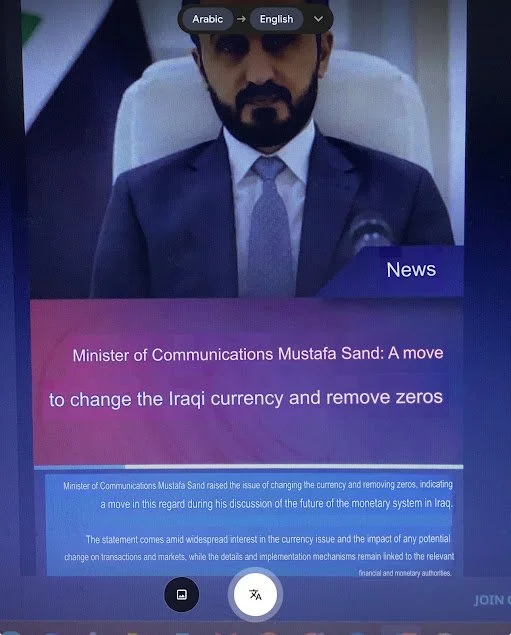
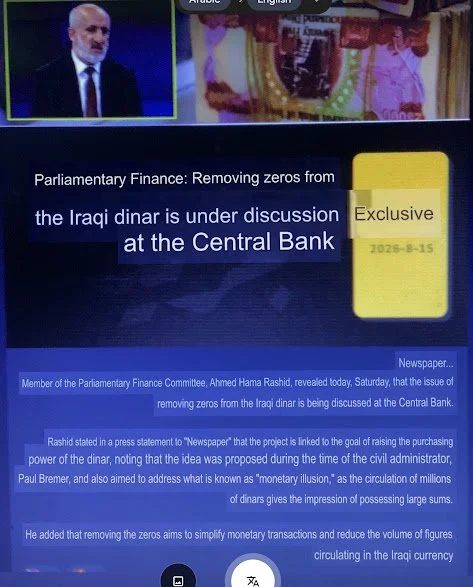
Tishwash: Parliamentary Finance Committee: Removing zeros from the Iraqi dinar is under discussion at the Central Bank.
Member of the Parliamentary Finance Committee, Ahmed Hama Rashid, revealed today, Saturday, that the issue of removing zeros from the Iraqi dinar is being discussed in the corridors of the Central Bank.
Rashid said in a press statement to “Al-Jarida” that the project is linked to the goal of raising the purchasing power of the dinar, noting that the idea was put forward since the time of the civil administrator Paul Bremer, and it also aimed to address what is known as the “monetary illusion,” since the circulation of millions of dinars gives the impression of owning large sums of money.
He added that removing zeros aims to simplify cash transactions and reduce the volume of numbers circulating in Iraqi currency. link
PicTishwash: Oil company signs agreement with Japan's JGC to boost gasoline and liquefied gas production
The Ministry of Oil signed an agreement on Friday with the Japanese company JGC to boost production capacity for gasoline, gas oil, and liquefied petroleum gas (LPG).
In a statement received by Mawazin News, the Ministry of Oil said, "The ministerial negotiating committee, under the supervision and guidance of Oil Minister Basim Mohammed Khudair Al-Abadi, and chaired by the ministry's advisor, Hamid Younis, with the participation of the Director General of the South Refineries Company, Hussam Hussein Wali, reached an agreement with the Japanese company JGC, the operator of the FCC catalytic cracking project, to resume work on the project on August 10, 2026."
The statement added that "the company has begun transferring its personnel to the project site and resuming operational work and the necessary preparations for the units to complete the project and operate it at its design capacity.
The project will contribute an additional 5 million liters per day of gasoline, approximately 7 million liters per day of gas oil, and 400 tons per day of LPG." link
Tishwash: Despite the decline in the central bank's reserves, an economist told Iraq Observer: Al-Zidi is launching financial reforms and attracting investments to boost the Iraqi economy.
Prime Minister Ali Faleh al-Zaidi's recent actions have highlighted significant economic achievements. He announced a program and performance-based budget for the first time, linking government spending to results in a move aimed at improving the efficiency of public finances.
He also launched a series of financial reforms, including austerity measures and salary restructuring, along with initiatives to encourage employees to take extended leave at half pay to ease pressure on the budget.
Economist Idris Ramadan emphasized that Prime Minister al-Zaidi's initiatives to attract global investment and implement financial reforms came despite the decline in the Central Bank's reserves to 102 trillion dinars.
Ramadan told Iraq Observer that “sovereign expenditures, including employee salaries, are increasing year after year, hindering the government’s efforts to achieve monetary stability.”
He added that “the government has initiated reform measures such as granting employees five-year leave at half pay, adopting austerity policies, and opening the door to foreign investment, including American investment, to alleviate pressure on foreign currency reserves.”
He continued, “These steps aim to protect the Central Bank from depletion and ensure the sustainability of reserves, at a time when the Iraqi economy remains hostage to fluctuating oil prices and high government spending.”
Ramadan concluded by saying that “the Prime Minister has focused on attracting global investment, with major companies, including American and European ones, expressing interest in entering the Iraqi market, which enhances opportunities for economic diversification and reducing dependence on oil.
He also emphasized combating corruption and creating a secure investment environment, as all these reforms aim to protect the Central Bank’s foreign currency reserves and ensure financial stability.” link
************
Tishwash: Exclusive: A comprehensive assessment of Iraqi bank management paves the way for anticipated restructuring.
An informed source revealed on Saturday that there is a government trend to conduct a comprehensive evaluation of the performance of the administrations of state-owned banks, while exploring the possibility of making administrative changes in a number of banks, due to their "weak" contribution in supporting the government and citizens under the current financial circumstances.
According to the source who spoke to Shafaq News Agency, government banks are facing criticism regarding their limited role in supporting citizens, particularly in providing loans, advances, and banking services that would alleviate the financial burdens on citizens, in addition to supporting economic activity and introducing technologies and electronic systems into their work.
According to the source, there is a need to comprehensively reassess the performance of the managers of government banks, measure the level of development achieved in their institutions, and assess their ability to improve and expand banking services in line with the needs of citizens and the requirements of the current stage.
According to the source, appropriate administrative measures will be taken against those found to be negligent, especially since some government banks still rely heavily on paper procedures, with limited use of electronic systems, in addition to considering changes in departments that have not been able to make a tangible contribution to the performance of banks or develop their services.
He stressed that the next stage requires more effective banking administrations capable of supporting the national economy and enhancing the role of the banking sector in facing financial challenges, through developing services and expanding the scope of loans and advances provided to citizens.
The source concluded that the reassessment of the performance of government banks comes within the framework of seeking to raise the efficiency of government financial institutions and enhance their ability to provide banking services, loans and advances, in a way that contributes to supporting citizens and driving the economy link
Seeds of Wisdom RV and Economics Updates Sunday Morning 8-16-26
Good Morning Dinar Recaps,
The Yen Is Becoming a Global Financial Policy Lever: Currency, Debt and AI Converge
The U.S.-Japan currency intervention is bigger than a fight over the yen. It highlights how exchange rates, Treasury markets, monetary policy and strategic investment are increasingly becoming interconnected pieces of the global financial system.
Good Morning Dinar Recaps,
The Yen Is Becoming a Global Financial Policy Lever: Currency, Debt and AI Converge
The U.S.-Japan currency intervention is bigger than a fight over the yen. It highlights how exchange rates, Treasury markets, monetary policy and strategic investment are increasingly becoming interconnected pieces of the global financial system.
Overview
The United States and Japan have intervened together to support the yen,marking the first coordinated intervention between the two countries in 15 years.
The yen remains under pressure despite the intervention, demonstrating that currency markets are being driven by much larger differences in interest rates,capital flows and fiscal conditions.
The episode comes as Japan and the United States deepen economic cooperation while competing for strategic advantage in AI, semiconductors, energy and advanced technology.
Key Developments
1. The U.S. has entered the yen equation
The United States traditionally allows foreign-exchange markets to determine currency values except under exceptional circumstances.
That makes the decision to support Japan's currency significant.
Japan's Ministry of Finance intervened to purchase yen, while the U.S. Treasury also supported the move. The intervention temporarily strengthened the currency, but the yen has subsequently weakened again toward the 160-per-dollar area.
That response demonstrates an important limitation: governments can influence currency markets, but they cannot easily override the underlying economic forces driving capital flows.
2. The interest-rate gap remains the central pressure point
The yen's weakness is closely tied to the difference between U.S. and Japanese interest rates.
Higher U.S. yields make dollar-denominated assets more attractive, while relatively lower Japanese rates encourage investors to borrow yen and invest elsewhere.
Reuters reports that former Japanese currency official Mitsuhiro Furusawa believes intervention alone will not be sufficient and that the Bank of Japan may need to move toward a more aggressive rate path.
That puts the BOJ in a difficult position.
Raise rates too quickly and Japan risks damaging domestic economic activity.
Move too slowly and continued yen weakness increases import costs and inflationary pressure.
3. Japan's currency problem is also connected to the U.S. Treasury market
This is where the story becomes more important for global finance.
Japan is one of the world's largest holders of U.S. government debt. When Japanese authorities need dollars to intervene in currency markets, the relationship between yen intervention and Treasury-market liquidity becomes increasingly important.
At the same time, U.S. long-term borrowing costs have been moving higher.
The result is a complicated feedback loop:
Japan needs to stabilize the yen → currency intervention affects dollar flows → dollar liquidity interacts with Treasury holdings → U.S. yields influence Japanese capital flows → those capital flows feed back into the yen.
The currency market therefore cannot be viewed in isolation from the bond market.
4. The AI investment race adds another layer
The timing is also important because the United States and Japan are increasingly treating advanced technology, semiconductor production, energy infrastructure and AI computing capacity as strategic assets.
That means enormous amounts of capital are being directed toward data centers, semiconductor facilities, power generation and the infrastructure required to operate increasingly energy-intensive AI systems.
The financial system ultimately has to fund that investment.
Currency stability therefore matters beyond foreign-exchange traders. It affects the cost of imported technology, energy, capital equipment and investment financing.
This is why the yen story intersects with the broader contest over AI and industrial capacity.
5. The yen intervention illustrates a larger change in central-bank policy
Central banks are no longer operating in a world where monetary policy can be considered completely separate from geopolitics.
Interest rates affect currencies.
Currencies affect trade.
Trade affects industrial policy.
Industrial policy increasingly affects national security.
And national-security priorities increasingly influence where governments direct capital.
The result is an increasingly interconnected financial system in which currency policy itself can become a strategic economic instrument.
Why It Matters
The most important question may not be whether Japan can push the yen from 160 back toward 150.
The larger question is how much intervention governments will use to manage increasingly unstable relationships between currencies, sovereign debt and capital flows.
The U.S.-Japan episode is particularly important because it involves two major economies with enormous financial connections.
Japan must manage the yen without destabilizing its economy.
The United States must finance historically large amounts of federal debt while maintaining attractive Treasury yields.
And both countries are simultaneously trying to finance massive investments in technology, energy and strategic industries.
Those objectives can sometimes reinforce one another—and sometimes collide.
Why It Matters to Foreign Currency Holders
For foreign-currency holders, the yen episode is a reminder that exchange rates are increasingly influenced by policy decisions as well as market fundamentals.
A currency can move sharply when central banks intervene, change interest-rate expectations or alter their reserve-management strategies.
That does not mean governments can permanently dictate currency values.
Japan's experience demonstrates the opposite: intervention can change the direction temporarily, but underlying economic forces eventually reassert themselves.
This is an important distinction when evaluating claims about future currency revaluations.
Implications for the Global Reset
Central Banks: Currency intervention is becoming increasingly intertwined with broader economic and geopolitical policy.
Debt: Rising sovereign borrowing costs make the relationship between foreign investors, currencies and Treasury markets more important.
Trade Architecture: Exchange rates directly affect the competitiveness and cost of international trade, particularly for countries heavily dependent on imported energy and technology.
Technology: AI infrastructure is creating enormous new demands for capital, electricity, semiconductors and data-center capacity.
Global Finance: The boundaries between monetary policy, industrial policy and geopolitical strategy are becoming increasingly blurred.
What to Watch
• Whether the yen approaches 160 per dollar again and triggers additional intervention.
• Whether the Bank of Japan signals a faster pace of rate increases.
• Whether U.S. Treasury yields remain elevated.
• Whether renewed yen intervention affects Japanese holdings of U.S. Treasuries.
• Whether U.S.-Japan cooperation expands from currency stabilization into AI, semiconductor and energy investment.
Bottom Line
The yen intervention should not be viewed simply as Japan trying to rescue a weak currency.
It is a window into a much larger transformation in which currency markets, sovereign debt, central-bank policy and strategic investment are increasingly interconnected.
The U.S. and Japan are attempting to manage the immediate problem of currency instability while simultaneously competing for technological and industrial advantage.
That makes the yen more than a currency story.
It is becoming a piece of the larger global financial architecture.
Closing Perspective
The next major financial shift may not come from a new currency—it may come from the growing intersection of sovereign debt, currency intervention and strategic investment as governments increasingly use monetary policy to protect the economic infrastructure of the future.
Seeds of Wisdom Team
Newshounds News™ Exclusive
Sources
🌱 A Message to Our Currency Holders🌱
If you’ve been holding foreign currency for many years, you were not foolish.
You were not wrong to believe the global financial system would change.
What failed was not your patience — it was the information you were given.
For years, dates, rumors, and personalities replaced facts, structure, and proof. “This week” predictions created cycles of hope and disappointment that were never based on how currencies actually change.
That is not your failure.
Our mission here is different: • No dates • No rates • No hype • No gurus
Instead, we focus on:
• Verifiable developments • Institutional evidence
• Global financial structure • Where countries actually sit in the process
Currency value changes only come after sovereignty, trade, banking, settlement systems, and fiscal coordination are in place. History and institutions confirm this sequence.
You will see silence. You will see denials. That is not delay — that is discipline.
Protect your identity. Organize your documents. Verify everything.
Never hand your discernment to anyone who cannot show proof.
You deserve truth — not timelines.
Seeds of Wisdom Team
Newshounds News
~~~~~~~~~~
Seeds of Wisdom Team RV Currency Facts Youtube and Rumble
Newshound's News Telegram Room Link
RV Facts with Proof Links Link
RV Updates Proof links - Facts Link
Start Here room with Most Asked Questions Link
Follow the Gold/Silver Rate COMEX
Follow Fast Facts
Seeds of Wisdom Team™Website
Thank you Dinar Recaps
Iraq Economic News and Points To Ponder Late Saturday Evening 8-15-26
Iraqi Minister Of Communications, Mustafa Sanad, Confirms The Issuance Of A Decision To Change The Currency And Remove Zeros From It.
Arabic Iraq @AlArabiya_Iraq Translated from Arabic
Iraq's Minister of Communications, Mustafa Sand, confirms the issuance of a decision to change the currency and remove zeros from it.
Iraqi Minister Of Communications, Mustafa Sanad, Confirms The Issuance Of A Decision To Change The Currency And Remove Zeros From It.
Arabic Iraq @AlArabiya_Iraq Translated from Arabic
Iraq's Minister of Communications, Mustafa Sand, confirms the issuance of a decision to change the currency and remove zeros from it.
Translated from Arabic
The decision has been issued.. Minister of Communications Mustafa Sind: The currency will be changed and the zeros removed #نفس_عميق#ليث_الجزائري#اي_نيوز
https://x.com/inewschanneltv/status/2088713883871523181?s=20
Zoom News @zoomnewskrd
Iraq has decided to remove zeros from its currency, Communications Minister Mustafa Sand said in an interview with Iraqi channel iNews, announcing plans to redenominate the dinar amid mounting economic pressures from regional conflicts, oil export disruptions and monetary expansion. https://x.com/zoomnewskrd/status/2088872529368645876
RJG Dinar Vets Member: Transcribed Video Interview:
We are dealing with the issue of removing the zeros today.
Yes, a decision was made.
A decision was made?
A decision was made to remove zeros.
Remove zeros and change the currency.
Change, meaning a new currency?
Even the old currency, whoever sleeps in the hay sleeps in the hay, and whoever sleeps in the oven sleeps in the oven, and whoever sleeps on the floor sleeps on the floor, and in the sewer the sewer.
You go to greet.
Greet.
All of them.
The walls raise them.
This is sleeping in prison and escaping and stuff. He can't anymore. And the dead and his money are sleeping on his heart.
Good.
And the exchange rate.
What is the price of the lost money that he estimates that it is a lost thing? No one is hidden from it, 8 trillion.
8 trillion.
This, if they don't hand it over, 8.
It's like the government is printing a new eight trillion in the new currency and takes it for itself.
##################
RJG Dinar Vets Member: here is a second transcription version of the same interview:
Are they moving ahead with the plan to get rid of the old notes?
They are moving ahead with the plan to void the old banknotes.
Yes, a decision has been made.
A decision has been made?
A decision to void the banknotes.
Voiding the banknotes and changing the currency.
Changing it—meaning a new currency?
Even the old currency—whatever is stashed in the hay stays in the hay; whatever is in the *tannour* oven stays in the *tannour*; whatever is buried in the ground stays in the ground; and whatever is in the sewers stays in the sewers.
You go and hand it over.
Hand it over.
All of it.
You turn the cash in.
What about the guy in prison, or the fugitive, or the deceased person whose money is just sitting there?
Right.
And the exchange rate?
What is the estimated value of the missing funds—the money that is unaccounted for? Eight trillion.
Eight trillion.
That is, if they actually hand over the eight.
It looks like the government might just print another eight trillion in the new currency and keep it for itself.
I see.
##########################
BETTYBOOP Dinar Vets Member: Well, I can't profess to having understood the riddle when translated to English... but if they are making the 3 zero note obsolete is it a neutral event for us? or have I misunderstood the riddle completely?
RJG Dinar Vets Member: I believe they are telling the iraqi people thier currency is changing. The 25,000 note will become 25.00 note, this is true domestically.
They will not immedialty feel the vaule change until they pair internationally, which is a second step they are not talking about. It is actually wisdom to not disucss the second step in a revalue process. Once they pair internationally, we will see the value change.
Then the Iraqi people will start to see the value change when their dinar purchases imports and goods cheaper for them to buy.
The US government holds 35 Trillion dinar, a 'lop' won't pay for the iraqi war, as George W said the war would pay for itself. JMO - RJG
RJG Dinar Vets Member: I feel the timeline is to RV at the latest by the 15th of October when the budget goes to parliament. No one in parliamenmt can keep their mouths shut and the rate would get out. Since we know they are putting the exchange rate in the budget from other articles, then between now and 10/15 is our window to RV.
If they wait until 1/1/27 to change the dinar with the implementation of the new budget, that is currency suicide. I remember from screwball's articles, seems when they transitioned from the Saddam dinars to the new Iraqi dinar, the transition started Sept/Oct into January. I feel the same process will happend again.
Plus, all those embezzlers and thieves who hold dinars with the zeros, will feel compelled to bring them in and exchange them for the non-zero notes. Or they will miss out, like the interview said. This is also a ploy to compel them to bring in the liquidity they so desperatly need into the banking system to make payroll.
Hspotman Dinar Vets Member: Given this timeline, would you surmise that would also be our exchange window?
RJG Dinar Vets Member: THere was an interview I saw between Donald Trump and I want to say Leslie Stall, where he said we held $35 Trillion dinars in the treasurey. When we gave Iraq pallets of billions of dollars in cash, it was a currency swap. We gave billions and we received trillions. Maybe Screwball who holds the history of links for articles and interviews has the interview. I'll see if I saved it and check my history, and then post it here if I find it.
Found it! Chatgpt is amazing! When Donald says we have $35 billion of thier money, that is the US dollar amount value. Oh, and it was Laura Ingrahm, not Leslie Stall.
RJG Dinar Vets Member: On the timeline, I have read they would allow the 25,000 note to run alongside the 25.00 note for 10 years. Not sure if that will be the plan now. For myself, I'm not waiting long to turn my one dinar in, they need help making their payroll, and I want to help them. 🤣 Seriously, once the new international pairing is in place, it won't be going away.
The only thing that could limit our cash-in time line is if the CBI issues an endate for the 3 zero notes collection. This is all my opinion. RJG
RJG Dinar Vets Member: On the interview link, you can FF to the 11:00 minute mark. He discloses we have $35 billion dollars worth of Iraq's money in our accounts in the last few minutes of the interview. I just relistened to it. Exciting times we are in
MilitiaMan & Crew: Urgent Update: What You Need To Know This Week!
MilitiaMan & Crew: Urgent Update: What You Need To Know This Week!
8-15-2026
The Crew: Samson, PompeyPeter, Petra, Daytrader, Sunkissed, GIGI and Militia Man
No drama. No intrigue. No songs and dances. Just straight, factual news that I read and interpret to the best of my ability after being an avid Dinar investor and insanely obsessed Dinarian for over 15 years.
Follow MM on X == https://x.com/Slashn
MilitiaMan & Crew: Urgent Update: What You Need To Know This Week!
8-15-2026
The Crew: Samson, PompeyPeter, Petra, Daytrader, Sunkissed, GIGI and Militia Man
No drama. No intrigue. No songs and dances. Just straight, factual news that I read and interpret to the best of my ability after being an avid Dinar investor and insanely obsessed Dinarian for over 15 years.
Follow MM on X == https://x.com/Slashn
Be sure to listen to full video for all the news……..
Seeds of Wisdom RV and Economics Updates Saturday Afternoon 8-15-26
Good Afternoon Dinar Recaps,
The Financial Architecture Is Splitting in Two: BRICS Builds Payment Links as Russia and China Deepen Local-Currency Trade
August 15, 2026
The global financial system is not being replaced overnight. But beneath the headlines, Russia, China and the broader BRICS group are building the infrastructure that could make a more multipolar financial system possible—while the existing dollar-centered system continues to face rising debt and financing pressures.
Good Afternoon Dinar Recaps,
The Financial Architecture Is Splitting in Two: BRICS Builds Payment Links as Russia and China Deepen Local-Currency Trade
August 15, 2026
The global financial system is not being replaced overnight. But beneath the headlines, Russia, China and the broader BRICS group are building the infrastructure that could make a more multipolar financial system possible—while the existing dollar-centered system continues to face rising debt and financing pressures.
Overview
BRICS is now discussing links between national fast-payment systems and central bank digital currencies (CBDCs) to make cross-border transactions faster and less expensive.
Russia and China have become increasingly important to the local-currency settlement story, with the ruble and yuan playing a much larger role in their bilateral trade.
Iran's planned entry into the BRICS New Development Bank could further connect a heavily sanctioned economy to an alternative source of development financing, although the NDB had not independently confirmed the membership when Reuters reported it.
Key Developments
1. BRICS is moving from talking about de-dollarization toward building payment infrastructure
The most important development may not be the creation of a new BRICS currency.
Instead, BRICS countries are discussing something potentially more practical: connecting the payment systems they already have.
Reserve Bank of India Governor Sanjay Malhotra said BRICS members are discussing the possibility of linking their fast-payment systems and CBDCs to reduce the cost of cross-border transactions. The discussions remain at an early stage, but the fact that central banks are examining interoperability is significant.
This is a fundamentally different approach from announcing a new currency.
A new currency would require enormous political, monetary and economic coordination. Connecting existing currencies and payment systems can be accomplished incrementally.
2. Russia and China are providing the largest bilateral test of local-currency settlement
Russia and China are at the center of this transformation because their enormous trade relationship provides a natural environment for ruble-yuan settlement.
Energy is particularly important. Russia is a major supplier of oil and natural gas to China, while China provides Russia with manufactured goods, technology and other imports.
That creates a large two-way trade relationship in which the two countries have strong incentives to settle transactions directly in their own currencies.
The significance is not that the dollar has disappeared from global trade. It is that another major trade corridor can increasingly function without requiring dollars as the intermediary currency.
3. Iran is seeking a deeper connection to BRICS financial institutions
Iranian Central Bank Governor Abdolnaser Hemmati said Iran is set to join the New Development Bank, the multilateral development institution created by the BRICS countries.
Reuters noted that the NDB had not independently confirmed the membership at the time of reporting.
If completed, the move would nevertheless be significant because Iran is already subject to extensive Western financial restrictions and has been seeking greater use of national currencies and monetary cooperation with BRICS members.
The NDB is not a replacement for the IMF or World Bank, and Iran's potential membership does not create a new global financial system.
But it does demonstrate the emergence of additional channels for development financing outside traditional Western institutions.
4. China and Russia are the strategic center of the emerging alternative architecture
This is where the broader geopolitical story becomes financially important.
China has the world's largest manufacturing base and one of the most important emerging digital-payment ecosystems. Russia is a major energy exporter with extensive experience operating under Western financial sanctions.
Together, they represent an important combination:
China provides manufacturing, technology and capital-market depth.
Russia provides energy and commodities.
BRICS provides a broader political and financial network.
Local currencies provide an alternative settlement mechanism.
That combination does not automatically create a replacement for the dollar.
But it creates something that did not exist at comparable scale decades ago: a growing ability for major economies to conduct portions of their trade, financing and payments without passing through the traditional Western financial system.
5. The real change may be infrastructure—not currency
This distinction is important for anyone following the Global Financial Reset.
There is still no evidence that a single BRICS currency is about to replace the U.S. dollar.
The more measurable development is the construction of multiple pieces of alternative infrastructure:
Local-currency trade
National fast-payment systems
CBDCs
Alternative development financing
Cross-border payment interoperability
Expanded financial cooperation among emerging economies
Individually, none represents a monetary reset.
Together, however, they can gradually change how international money moves.
Why It Matters
For decades, the strength of the dollar-centered financial system has rested on more than the dollar itself.
It rests on the entire ecosystem surrounding it: Treasury markets, correspondent banking, payment networks, trade invoicing, financial institutions and reserve holdings.
That means an alternative system does not have to immediately replace the dollar to change the balance.
It can simply give countries more choices.
The BRICS discussion about linking payment systems is therefore more significant than another political declaration about reducing dollar dependence.
It is an attempt to address the plumbing of international finance.
And financial plumbing can change gradually without producing a single dramatic announcement.
Why It Matters to Foreign Currency Holders
For foreign-currency holders, this is an important distinction.
Currency value and currency utility are not the same thing.
A currency can become more important internationally because it is increasingly used for trade settlement, cross-border payments, reserves or investment, even without becoming the world's dominant reserve currency.
That is why the development of payment infrastructure deserves attention alongside exchange rates.
For holders of currencies from emerging-market economies, the long-term question is whether greater use of those currencies in trade creates deeper liquidity and broader international utility.
That process takes time.
Today's evidence points toward financial diversification, not an immediate currency revaluation.
Implications for the Global Reset
Debt: The existing financial system continues to face enormous sovereign borrowing requirements and higher long-term financing costs.
Central Banks: Central banks are increasingly developing digital payment infrastructure that could eventually make cross-border settlement more efficient.
BRICS: The bloc is moving toward practical financial connectivity rather than relying solely on political declarations.
Trade Architecture: Local-currency settlement can reduce the need for the dollar to serve as an intermediary in some bilateral trade corridors.
Global Finance: The long-term possibility is a more multipolar financial architecture, where the dollar remains extremely important but operates alongside increasingly capable regional and cross-border alternatives.
What to Watch
• Whether BRICS converts the current payment-system discussions into a functioning interoperability framework.
• Whether Russia-China local-currency settlement continues expanding beyond energy and commodities.
• Whether Iran's New Development Bank membership is formally confirmed.
• Whether other BRICS members increase the use of their own currencies for international trade.
• Whether CBDC interoperability becomes a practical cross-border payment mechanism rather than remaining a central-bank experiment.
Bottom Line
The most important financial transformation may not be the arrival of a new global currency.
It may be the gradual creation of multiple ways to conduct international commerce without relying on a single financial network or intermediary currency.
China and Russia are already demonstrating the possibilities of large-scale bilateral local-currency trade. BRICS is now discussing ways to connect payment systems and CBDCs. Iran is seeking deeper access to BRICS financial institutions.
None of these developments independently represents a Global Financial Reset.
But together, they provide measurable evidence that the architecture of global finance is becoming more diversified.
Closing Perspective
The next major shift may not come from a new reserve currency—it may come from the gradual connection of the payment systems, currencies and financial institutions that allow nations to trade beyond a single financial center.
Seeds of Wisdom Team
Newshounds News™ Exclusive
Sources
Reuters — BRICS nations discuss linking payment systems and CBDCs
Reuters — Iran to join BRICS Development Bank soon, central bank governor says
~~~~~~~~~~
Seeds of Wisdom Team RV Currency Facts Youtube and Rumble
Newshound's News Telegram Room Link
RV Facts with Proof Links Link
RV Updates Proof links - Facts Link
Start Here room with Most Asked Questions Link
Follow the Gold/Silver Rate COMEX
Follow Fast Facts
Seeds of Wisdom Team™Website
Thank you Dinar Recaps