
Seeds of Wisdom RV and Economics Updates Tuesday Evening 6-9-26
Good Evening Dinar Recaps,
U.S. Retaliatory Strikes on Iran Raise New Risks for Global Energy and Financial Stability
Escalating military action in the Gulf is renewing concerns over oil markets, trade routes, inflation pressures, and the future direction of the global financial system.
Good Evening Dinar Recaps,
U.S. Retaliatory Strikes on Iran Raise New Risks for Global Energy and Financial Stability
Escalating military action in the Gulf is renewing concerns over oil markets, trade routes, inflation pressures, and the future direction of the global financial system.
Overview
The United States has launched new military strikes against Iran following the downing of a U.S. Army Apache helicopter near the Strait of Hormuz. U.S. Central Command described the operation as a "proportional self-defense response", while Iranian officials warned that additional attacks could trigger further retaliation. The latest escalation comes at a time when fragile diplomatic efforts were attempting to prevent a broader regional conflict.
For global markets, the significance extends beyond the battlefield. The Strait of Hormuz remains one of the world's most important energy chokepoints, handling a substantial share of global oil and liquefied natural gas shipments. Any prolonged disruption has the potential to affect energy prices, inflation, supply chains, and international financial stability.
Key Developments
1. U.S. Launches New Strikes Against Iran
The U.S. military confirmed that strikes began under presidential authorization following the loss of an Apache helicopter. American officials stated the mission targeted Iranian military assets and was intended as a limited response rather than the start of a broader war.
2. Fragile Ceasefire Faces Renewed Pressure
The latest exchange threatens ongoing diplomatic efforts aimed at reducing tensions between Washington and Tehran. While both sides have previously signaled interest in negotiations, recent military actions increase the risk of miscalculation and further escalation.
3. Strait of Hormuz Remains a Critical Concern
The conflict continues to focus global attention on the Strait of Hormuz, a strategic maritime corridor vital to international energy markets. Even limited military incidents in the region can create volatility in oil prices and shipping activity.
4. Energy Markets and Inflation Risks Return to Focus
Although some shipping activity has resumed, analysts continue to warn that sustained instability could disrupt energy flows and place renewed upward pressure on fuel costs worldwide. Rising energy prices often feed directly into inflation, monetary policy decisions, and currency markets.
Why It Matters
The latest U.S.-Iran confrontation highlights how quickly geopolitical events can affect the global economy. Energy markets remain highly sensitive to developments in the Gulf, and any disruption to shipping lanes could influence everything from transportation costs to central bank policy decisions.
For those monitoring a potential Global Financial Reset, the situation underscores several ongoing themes: de-dollarization efforts, energy security, geopolitical realignment, and the growing importance of alternative trade and payment systems. Nations facing geopolitical uncertainty often accelerate efforts to diversify trade partners, reserve assets, and settlement mechanisms.
Why It Matters to Foreign Currency Holders
Foreign currency holders should closely monitor developments in the Middle East because major geopolitical disruptions can accelerate shifts in global trade patterns and reserve currency behavior.
• Increase volatility in foreign exchange markets
• Influence central bank interest-rate decisions
• Accelerate non-dollar trade settlements among some nations
• Affect commodity-backed economies and resource-exporting countries
• Increase pressure on governments to strengthen domestic financial systems
Implications for the Global Reset
Pillar 1: Energy Security Drives Economic Realignment
The Strait of Hormuz remains one of the world's most strategically important trade routes. Continued instability may encourage nations to diversify energy sources, transportation corridors, and international partnerships.
Pillar 2: Geopolitical Risk Accelerates Alternative Systems
Periods of heightened geopolitical uncertainty often strengthen efforts to develop alternative payment networks, regional trade blocs, and financial arrangements designed to reduce dependence on traditional systems.
Pillar 3: Market Volatility Highlights Systemic Vulnerabilities
The reaction of oil, currency, and bond markets demonstrates how interconnected the global economy has become. Events in one region can quickly ripple through financial systems worldwide.
When military conflict threatens the world's energy lifelines, the foundations of global finance are tested as much as the battlefield itself.
Seeds of Wisdom Team
Newshounds News™ Exclusive
Sources
Reuters — "US Military Says It Began Launching Strikes Against Iran"
Reuters — "US Energy Chief Says Oil Exports Through Strait of Hormuz Will Continue to Rise"
~~~~~~~~~~
Seeds of Wisdom Team RV Currency Facts Youtube and Rumble
Newshound's News Telegram Room Link
RV Facts with Proof Links Link
RV Updates Proof links - Facts Link
Follow the Gold/Silver Rate COMEX
Follow Fast Facts
Seeds of Wisdom Team™Website
Thank you Dinar Recaps
Iraq Economic News and Points To Ponder Tuesday Afternoon 6-9-26
A Member Of Parliament Warns Of The "Erosion" Of Iraq's Cash Reserves Due To Operational Expenses.
Time: 2026/06/09 A member of parliament warns of the "erosion" of Iraq's cash reserves due to operational expenses.
{Economic: Al-Furat News} Kurdish MP Jamal Kojar warned on Tuesday of the "erosion" of Iraq's cash reserves due to the country's monthly operating expenses. Kujer told Al-Furat News Agency, “The talk about concerns about the erosion of the cash reserve is due to the existence of facts that confirm the country’s need for at least 8 trillion dinars per month to cover operating expenses.”
A Member Of Parliament Warns Of The "Erosion" Of Iraq's Cash Reserves Due To Operational Expenses.
Time: 2026/06/09 A member of parliament warns of the "erosion" of Iraq's cash reserves due to operational expenses.
{Economic: Al-Furat News} Kurdish MP Jamal Kojar warned on Tuesday of the "erosion" of Iraq's cash reserves due to the country's monthly operating expenses. Kujer told Al-Furat News Agency, “The talk about concerns about the erosion of the cash reserve is due to the existence of facts that confirm the country’s need for at least 8 trillion dinars per month to cover operating expenses.”
He added, "The financial resources are less than this amount, so we will definitely need to borrow, whether internally or externally, and these concerns are realistic under the current circumstances."
The Prime Minister’s financial advisor, Mazhar Muhammad Salih, confirmed in a press statement today that “about 40 million Iraqis depend directly or indirectly on government income,” stressing that any external borrowing should be “smart debt” for productive projects, not for consumption. He added, "Corruption and kickbacks raise the cost of projects in Iraq by up to 45%."
https://alforatnews.iq/news/برلماني-يحذر-من-تآكل-الإحتياطي-النقدي-العراقي-بسبب-النفقات-التشغيلية
Iraq Is Discussing With The World Bank The Provision Of Technical Support For Preparing The Upcoming Budget
Shafaq News – Baghdad Finance Minister Faleh Sari met on Sunday with a World Bank delegation headed by Regional Director Jean-Christophe Carré and the Special Representative of the mission in Iraq, Emmanuel Salinas, to discuss prospects for technical and institutional cooperation and support for the country’s financial and economic reform priorities.
A statement issued by the Iraqi Ministry of Finance indicated that the meeting discussed mechanisms for cooperation with the World Bank in providing technical and advisory support for the preparation of the next general budget, in order to enhance the efficiency of financial planning, take into account spending priorities, and support financial sustainability, in light of current economic changes.
The statement quoted the minister as saying that the Ministry of Finance is proceeding with the implementation of financial reforms based on developing financial management, enhancing non-oil revenues, and modernizing banking, tax and customs systems, in line with the priorities of the government program.
Sari pointed to the importance of benefiting from international expertise and technical support provided by the World Bank, particularly in the areas of institutional capacity building, financial policy development, support for development projects and investment promotion.
For its part, the World Bank delegation renewed its support for the Iraqi government in implementing financial and economic reform programs, and providing the necessary technical advice, in order to contribute to strengthening financial stability and supporting the Sustainable Development Goals.https://www.shafaq.com/ar/اقتصـاد/العراق-يبحث-مع-البنك-الدولي-تقديم-الدعم-الفني-ل-عداد-الموازنة-المقبلة
Saudi Public Investments Are Expected To Reach $910 Billion By 2025.
Money and Business The annual report on Saudi Vision 2030 showed that the assets managed by the Public Investment Fund reached $910 billion by the end of 2025, which is less than the target set at $1.09 trillion.
The report indicated that the Kingdom’s real non-oil GDP reached $892 billion, which is also less than the set target of $904 billion.
He also noted that foreign direct investment reached 2.8% of GDP, compared to the target of 3.4%.
Saudi Arabia, the world’s largest oil exporter, has passed the halfway point in implementing its “Vision 2030” plan, which calls for hundreds of billions of dollars in government investments to reduce the kingdom’s economic dependence on oil and gas revenues by investing in sectors such as tourism. https://www.economy-news.net/content.php?id=70055
British company GSK acquires US-based Novalent for $10.6 billion
Money and Business Economy News - Follow-up British pharmaceutical group GSK announced on Tuesday an agreement to acquire US cancer treatment company Nuvalent for $10.6 billion.
The company said in a statement that the deal includes three lung cancer treatments that are still in the testing phase.
GSK CEO Luke Mills said two treatments "could be among the best in their class and could be launched this year if they receive approval from US regulators."
The British company expects to complete the deal this year, which could allow the drugs "zidesamtinib" and "neladalkib" to be launched on the market before the end of 2026, provided the necessary approvals are obtained.
Novalnet CEO James Porter said, "GSK's strong track record, infrastructure, and expertise will help us successfully commercialize ZedSamtnb and Nella Dalkb, as well as accelerate the development of our broader research pipeline."
The pharmaceutical industry has faced challenges due to threats by US President Donald Trump to target it with tariffs, with the aim of boosting investment within the United States and reducing drug prices.
GSK, along with other major non-U.S. pharmaceutical companies, agreed in December to lower prescription drug prices for U.S. patients in exchange for three years of tariff exemptions.
Mills took over the leadership of GSK in January, succeeding Emma Woolley after nearly nine years in the position, having previously served as the group's commercial director. https://www.economy-news.net/content.php?id=70046
Gold stabilizes in Baghdad, rises in Erbil
2026-06-09 Shafaq News- Baghdad/ Erbil Gold prices held steady Tuesday in Baghdad and rose in Erbil, hovering around 936,000 IQD per mithqal, according to a Shafaq News market survey.
Wholesale prices on Al-Nahr Street in Baghdad recorded a sell price of 936,000 dinars per mithqal for 21-carat Gulf, Turkish, and European gold, with a buy price of 932,000 dinars, unchanged from Monday's session.
Iraqi 21-carat gold sold at 906,000 dinars per mithqal, with a buy price of 902,000 dinars.
At jewelry stores, Gulf 21-carat gold ranged between 940,000 and 950,000 dinars per mithqal, while Iraqi 21-carat gold ranged between 910,000 and 920,000 dinars.
In Erbil, prices edged higher, with 22-carat gold selling at 984,000 dinars per mithqal, 21-carat at 940,000 dinars, and 18-carat at 805,000 dinars. https://www.shafaq.com/en/Economy/Gold-stabilizes-in-Baghdad-rises-in-Erbil-8
London Meetings Advance Iraq Banking Agenda
2026-06-09 Shafaq News- Baghdad A high-level Iraqi banking delegation concluded a two-day trip to London on Tuesday aimed at strengthening economic and financial cooperation between Iraq and the United Kingdom, the head of the Iraqi Private Banks League told Shafaq News.
Wadih Al-Hanthal stated that the delegation comprised representatives from the Iraqi government, the Central Bank of Iraq, and the private banking sector.
The visit was coordinated between the Banks League and the UK Foreign Office and included intensive meetings organized in cooperation with the law firm Hogan Lovells to explore opportunities for financial partnerships and facilitate the integration of Iraqi private banks into the global banking system.
The program included a closed discussion at Chatham House (the Royal Institute of International Affairs), attended by representatives of British and European banks and leading economists. Participants discussed the Iraqi government's role in supporting ongoing banking reforms, plans to modernize the economy, and efforts to create a stable and attractive investment environment.
Read more: Iraqi Banking reform: Between necessary change and crippling conditions
https://www.shafaq.com/en/Economy/London-meetings-advance-Iraq-banking-agenda
The Last Time the S&P Did This, the Market Crashed 20% in a Day
The Last Time the S&P Did This, the Market Crashed 20% in a Day
Taylor Kenny: 6-9-2026
Could the market be repeating one of the most dangerous patterns in modern history? Stocks are soaring on AI optimism while the bond market is flashing a very different message.
Treasury yields are rising, U.S. debt is exploding, consumer savings are falling, and confidence is breaking down. Is this the start of a new bull market—or the setup for a historic crash
The Last Time the S&P Did This, the Market Crashed 20% in a Day
Taylor Kenny: 6-9-2026
Could the market be repeating one of the most dangerous patterns in modern history? Stocks are soaring on AI optimism while the bond market is flashing a very different message.
Treasury yields are rising, U.S. debt is exploding, consumer savings are falling, and confidence is breaking down. Is this the start of a new bull market—or the setup for a historic crash
CHAPTERS:
00:00 - Rare S&P 500 Warning Signal
00:29 - Black Monday 1987 Comparison
00:57 - AI Rally or Market Bubble?
02:23 - Shiller PE Ratio Flashes Red
04:15 - Bond Market Signals Real Risk
05:09 - U.S. Debt and Rising Interest Costs
06:06 - Consumer Savings and Sentiment Collapse
07:30 - Dollar Reset Risk and Gold Protection
Iraq Economic News and Points To Ponder Tuesday Afternoon 6-9-26
Largest Iraqi Fuel Shipment Enters Syria For Global Export
2026-06-08Shafaq News- Baghdad/ Damascus More than 150 Iraqi fuel tankers entered Syria on Monday through the Rabia–Al-Yarubiyah border crossing, carrying fuel oil destined for export to global markets, Shafaq News correspondent said.
Largest Iraqi Fuel Shipment Enters Syria For Global Export
2026-06-08 Shafaq News- Baghdad/ Damascus More than 150 Iraqi fuel tankers entered Syria on Monday through the Rabia–Al-Yarubiyah border crossing, carrying fuel oil destined for export to global markets, Shafaq News correspondent said.
The convoy, the largest of its kind to enter Syrian territory so far, stopped along the M4 international highway after crossing the border and will continue toward the coastal city of Baniyas before the fuel is shipped to international markets.
In May, Iraq launched its first crude oil export operation through the crossing, dispatching an initial convoy of 70 tanker trucks toward regional markets.
The Rabia–Al-Yarubiyah crossing, which links Iraq's Nineveh province with Syria's Hasakah province, reopened to trade and passenger traffic on April 22 after 13 years of closure caused by security challenges during the fight against ISIS, as well as shifting control and coordination issues along the border.
https://www.shafaq.com/en/Economy/Largest-Iraqi-fuel-shipment-enters-Syria-for-global-export
Oil Retreats After Iran-Israel Ceasefire Takes Hold
2026-06-Shafaq News Oil prices fell on Tuesday, erasing most of the previous session's gains, after Iran and Israel said they had halted attacks on each other following an appeal from U.S. President Donald Trump, though both sides warned they could resume hostilities.
Brent crude futures were down 91 cents, or 1%, at $93.34 a barrel at 0400 GMT, while U.S. West Texas Intermediate declined $1.13, or 1.2%, at $90.17 a barrel.
Prices climbed as much as 5% in the previous session after renewed Israeli strikes on Iran and attacks in Lebanon reduced hopes of an imminent end to the wider war, but pared gains after Iran's armed forces announced the end of military operations against Israel.
"While there is some relief from the latest pause in direct strikes, investors are not convinced the truce will hold," said Tim Waterer, chief market analyst at KCM Trade.
Iran and Israel said they had halted attacks on each other after an appeal from President Trump that they immediately "stop 'shooting'", though Tehran said it would resume strikes if Israel continued to hit Hezbollah in Lebanon.
"While this helped stop the situation snowballing, the geopolitical backdrop remains tense, and a lasting peace deal remains elusive," said Tony Sycamore, market analyst at IG.
Israeli Prime Minister Benjamin Netanyahu said in a video statement carried by Israeli television that Israel would respond with force if Iran attacked again.
Trump told Axios in an interview published on Monday that he warned Netanyahu that he might find himself fighting alone if he went back to war with Iran.
"The key question is whether current de-escalation efforts can finally translate into a longer-lasting resolution, or if we're simply in another temporary lull," Waterer said.
One of the key issues Washington is pressing Tehranfor in peace talks is the reopening of the Strait of Hormuz, through which about a fifth of the world's supply of oil passed before the U.S. and Israel launched airstrikes on Iran at the end of February.
On Monday, U.S. forces disabled an unladen oil tanker in the Gulf of Oman after it attempted to sail to an Iranian port in violation of the ongoing blockade against Iran, the U.S. military said.
(Reuters) https://www.shafaq.com/en/Economy/Oil-retreats-after-Iran-Israel-ceasefire-takes-hold
Consumer Prices In Iraq Rise 4.3% Year-On-Year In April
2026-06-Shafaq News- Baghdad Iraq’s Consumer Price Index (CPI) reached 112.5 points in April 2026, rising 1.7% from 110.6 points in March, according to data released on Monday by the Commission of Statistics and GIS.
Compared with April 2025, when the index stood at 107.9 points, consumer prices increased by 4.3% on an annual basis. https://www.shafaq.com/en/Economy/Consumer-prices-in-Iraq-rise-4-3-year-on-year-in-April
Basrah Crude Tracks Global Decline With 7% Drop
2026-06-09 Shafaq News- Basrah Iraq’s Basrah crude fell about 7% on Tuesday, joining a broader downturn across regional and global oil markets.
Basrah Heavy dropped $4.88 to $64.40 per barrel, while Basrah Medium declined by the same amount to $66.50.
Globally, West Texas Intermediate shed $1.13, or 1.2%, to $90.17 per barrel, while Brent crude slipped 91 cents, or 1%, to $93.34.
The Organization of the Petroleum Exporting Countries (OPEC) reference basket eased 0.94% to $100.63 per barrel, while several Middle Eastern benchmarks also recorded losses. Dubai crude fell more than 5% to $90.46 per barrel, Oman crude declined 3.21% to $90.40, Saudi Arabia's Arab Light dropped 4.75% to $100.03, and Kuwait Export crude lost 5.55% to $103.82.
Gold Rises On Israel-Iran Truce Ahead Of US Inflation Data
2026-06-09 Shafaq News Gold prices firmed on Tuesday, supported by softer oil prices following a fragile Israel-Iran truce, while focus was also on inflation and interest rate hike risks.
Spot gold was up 0.4% at $4,345.71 per ounce, as of 0602 GMT. In the previous session, bullion touched its lowest point in more than two months.
U.S. gold futures for August delivery were up 0.2% at $4,370.80.
"The slight easing of tensions between Israel and Iran has tamed oil pricessomewhat and has, by extension, helped gold," said Tim Waterer, chief market analyst at KCM Trade.
Iran and Israel said on Monday they had halted attacks on each other after an appeal from U.S. President Donald Trump, though Tehran warned it would resume hostilities if Israel continued to hit Hezbollah in Lebanon.
Oil prices eased, erasing most of Monday's gains.
Elevated crude oil prices can accelerate inflation, and while gold is seen as a hedge against inflation, higher interest rates tend to weigh on the non-yielding metal.
Goldman Sachs said it expects the U.S. Federal Reserve to keep interest rates unchanged through 2026 and delay rate cuts until 2027, citing stronger economic activity and jobs growth.
Traders are now pricing in a more than 70% chance of a U.S. rate hike by December, according to the CME FedWatch tool. FEDWATCH
Investors are bracing for May's U.S. consumer price index data, due on Wednesday, to gauge the Fed's monetary policy path.
"A return to $5,500 for gold remains viable by year-end driven in part by central bank demand, but it will likely require cooperation from oil prices, bond yields and the dollar, which would all need to take a turn lower,"Waterer said.
Spot silver rose 0.4% to $68.45 per ounce, platinum gained 0.3% to $1,759.74, and palladium rose 1.5% to $1,223.44.
(REUTERS) https://www.shafaq.com/en/Economy/Gold-rises-on-Israel-Iran-truce-ahead-of-US-inflation-data
Dollar Falls In Baghdad And Erbil
2026-06-09 Shafaq News- Baghdad/ Erbil The US dollar opened Tuesday's trading lower in Iraq, hovering around 154,000 dinars per 100 dollars.
According to Shafaq News market survey, the dollar traded in Baghdad's Al-Kifah and Al-Harithiya exchanges at 154,100 dinars per 100 dollars, down from the previous session's 154,750 dinars.
In the Iraqi capital, exchange shops sold the dollar at 154,500 dinars and bought it at 153,500 dinars, while in Erbil, selling prices stood at 154,150 dinars and buying prices at 154,050 dinars.
https://www.shafaq.com/en/Economy/Dollar-falls-in-Baghdad-and-Erbil-4-7
Seeds of Wisdom RV and Economics Updates Tuesday Afternoon 6-9-26
Good Afternoon Dinar Recaps,
Crypto Industry Rallies Behind CLARITY Act as Senate Vote Window Narrows
More than 200 digital asset organizations are urging lawmakers to act quickly on legislation that could define the future of cryptocurrency regulation in the United States.
Good Afternoon Dinar Recaps,
Crypto Industry Rallies Behind CLARITY Act as Senate Vote Window Narrows
More than 200 digital asset organizations are urging lawmakers to act quickly on legislation that could define the future of cryptocurrency regulation in the United States.
Overview
More than 200 cryptocurrency companies and industry organizations have joined forces to push the U.S. Senate to advance the Digital Asset Market CLARITY Act. Industry leaders warn that continued delays could jeopardize one of the most significant crypto regulatory reforms ever considered by Congress.
Supporters argue the legislation would establish clear regulatory guidelines for digital assets, encourage innovation, and strengthen America's position in the rapidly evolving global digital economy.
Key Developments
1. More Than 200 Crypto Organizations Urge Immediate Senate Action
Major industry groups, including Stand With Crypto, The Digital Chamber, the Blockchain Association, and the Crypto Council for Innovation, delivered a joint letter to Senate leadership urging lawmakers to bring the CLARITY Act to the Senate floor without delay.
The coalition argues that regulatory uncertainty continues to drive investment and innovation overseas, creating risks for America's competitiveness in the digital asset sector.
2. CLARITY Act Would Define Regulatory Authority
A central goal of the legislation is to establish clearer oversight responsibilities between the Securities and Exchange Commission (SEC) and the Commodity Futures Trading Commission (CFTC).
Supporters believe regulatory clarity would provide businesses and investors with greater certainty while encouraging responsible growth across the crypto industry.
3. Industry and Banking Groups Continue Negotiations
While momentum exists behind the legislation, several key provisions remain under debate.
Banking organizations have pushed for restrictions on stablecoin yield products, while crypto advocates continue seeking stronger protections for decentralized software developers and blockchain innovators.
4. Time Is Becoming a Major Factor
Analysts increasingly warn that the legislative window may be closing.
Many observers believe the bill must advance before Congress enters its August recess. With midterm elections approaching later this year, lawmakers may have fewer opportunities to move major financial legislation.
5. Passage Odds Have Declined
Market observers have lowered expectations for passage in 2026 despite growing industry support.
Recent estimates from Galaxy Digital reduced the probability of passage this year from 75% to 60%, citing unresolved negotiations and limited legislative time remaining on the Senate calendar.
Why It Matters
The CLARITY Act represents one of the most important efforts to establish a comprehensive regulatory framework for digital assets in the United States.
The outcome could influence where future blockchain innovation occurs, how digital assets are regulated globally, and whether the United States remains a leader in emerging financial technologies.
Why It Matters to Foreign Currency Holders
• Digital assets are increasingly being integrated into traditional financial systems.
• Regulatory clarity could accelerate institutional adoption of blockchain-based financial products.
• The legislation may influence future payment systems, tokenized assets, and cross-border transactions.
• Global financial markets are closely watching how major economies regulate digital assets.
Implications for the Global Reset
Pillar 1: Financial Infrastructure Is Evolving
The push for digital asset legislation reflects a broader transformation occurring within global finance. Governments and institutions are increasingly exploring tokenized assets, blockchain networks, and alternative payment systems.
Pillar 2: Competition for Financial Leadership Intensifies
The United States faces growing competition from nations actively developing crypto frameworks and digital financial infrastructure. Regulatory certainty could become a critical factor in determining where innovation, investment, and financial activity are concentrated.
Closing Insight
The debate surrounding the CLARITY Act extends beyond cryptocurrency. At its core, the legislation addresses how financial innovation will be governed in an increasingly digital world.
As governments, institutions, and investors adapt to emerging technologies, the rules established today may shape the next generation of global financial markets.
The race to define digital finance is no longer about technology alone—it is about who will write the rules for the next financial era.
Seeds of Wisdom Team
Newshounds News™ Exclusive
Sources
~~~~~~~~~~
Seeds of Wisdom Team RV Currency Facts Youtube and Rumble
Newshound's News Telegram Room Link
RV Facts with Proof Links Link
RV Updates Proof links - Facts Link
Follow the Gold/Silver Rate COMEX
Follow Fast Facts
Seeds of Wisdom Team™Website
Thank you Dinar Recaps
Warsh’s Fed is Unlike Anything we’ve Seen
Warsh’s Fed is Unlike Anything we’ve Seen
Heresy Financial: 6-8-2026
The role of the Federal Reserve has undergone a massive transformation over the past two decades. What began as a focused institution has expanded its reach into areas far beyond its original scope, including climate policy and the management of trillions of dollars in mortgage-backed securities and corporate debt.
While the Fed has historically defended this expanded autonomy under the banner of independence, a new approach is on the horizon. Under the leadership of newly appointed Fed Chairman Kevin Warsh, there is a push to recalibrate the institution, steering it back toward the narrow, core mandates originally authorized by Congress.
Warsh’s Fed is Unlike Anything we’ve Seen
Heresy Financial: 6-8-2026
The role of the Federal Reserve has undergone a massive transformation over the past two decades. What began as a focused institution has expanded its reach into areas far beyond its original scope, including climate policy and the management of trillions of dollars in mortgage-backed securities and corporate debt.
While the Fed has historically defended this expanded autonomy under the banner of independence, a new approach is on the horizon. Under the leadership of newly appointed Fed Chairman Kevin Warsh, there is a push to recalibrate the institution, steering it back toward the narrow, core mandates originally authorized by Congress.
At the heart of Warsh’s vision is a return to the foundational principles established by Alexander Hamilton in 1791.
In this model, the central bank functions as a tool to support federal objectives rather than operating as an independent economic policymaker.
Warsh advocates for a modern-day “Treasury-Fed Accord,” echoing the 1951 agreement that sought to draw a clear line between monetary policy and fiscal management.
By subordinating regulatory, fiscal, and international financial functions to Congress and the Treasury, Warsh hopes to restore balance and accountability to the U.S. financial system.
A key component of this strategy involves “balance sheet normalization.” The Fed currently holds a significant volume of mortgage-backed securities and Treasuries—assets accumulated during various market crises.
Warsh’s goal is to reduce this bloated balance sheet during stable economic periods, returning these functions to the private market. To achieve this, he suggests a path of bank deregulation, which would allow the private sector to absorb Treasuries that the Fed unloads. The ultimate goal is to remove the Fed from active market intervention, allowing it to focus exclusively on its primary duties.
This shift suggests that while the Fed will maintain its fiercely protected independence regarding core monetary policy, it may soon take a backseat in other areas.
Matters such as emergency liquidity facilities and international swap lines could see the Fed deferring more frequently to the influence of the Treasury and Congress. This represents a fundamental change in the U.S. central banking philosophy, moving away from the autonomous oversight of the last twenty years and toward a more traditional, subordinate relationship with the government.
As these changes unfold, the long-term impact on financial markets and the broader economy remains a subject of intense debate. This transition is not merely operational; it is a major philosophical pivot that could reshape how the American financial system functions for years to come
TIMECODES
00:00 The Fed Has Expanded Its Power
00:49 Kevin Warsh Wants To Rein In The Fed
01:17 America’s First Central Bank
02:07 Jefferson vs Hamilton’s Central Bank Vision
02:42 How The Federal Reserve Changed Over Time
03:30 The New Treasury Fed Accord
04:05 Who Controls What?
04:26 Draining The Fed Balance Sheet
05:18 Who Buys The Treasuries Next?
05:43 Bank Deregulation As The Fix
06:15 Where Fed Independence Actually Applies
07:09 A More Hamiltonian Federal Reserve
07:29 The Fed Must Stay In Its Lane
07:57 Treasury Influence Over The Fed
08:09 The Swap Line Question
09:25 Fed Independence And International Finance
09:40 The Fed Working With Treasury
09:57 Tighter Fed Treasury Coordination
10:18 What This Means For Markets
10:34 The Money Printer Warning
News, Rumors and Opinions Tuesday 6-9-2026
Majeed KSA: Iraq to Introduce a New Currency
6-9-2026
Iraq’s government and the Central Bank have set mid-2026 (around July 2026) as the target for eliminating cash transactions within government institutions and moving government payments to digital systems.
Government institutions have already adopted electronic payment systems for collections and payments.
The Central Bank is building national payment infrastructure, including instant payments, a national payment switch, and government payment gateways.
Majeed KSA: Iraq to Introduce a New Currency
6-9-2026
Iraq’s government and the Central Bank have set mid-2026 (around July 2026) as the target for eliminating cash transactions within government institutions and moving government payments to digital systems.
Government institutions have already adopted electronic payment systems for collections and payments.
The Central Bank is building national payment infrastructure, including instant payments, a national payment switch, and government payment gateways.
Digital wallets, bank cards, POS terminals, and online government services are expanding rapidly.
That said, a fully digital economy where most citizens, businesses, and government services operate digitally with minimal cash use.
And yeah, don’t worry your cash will be exchangeable with the zero calculated during exchange.
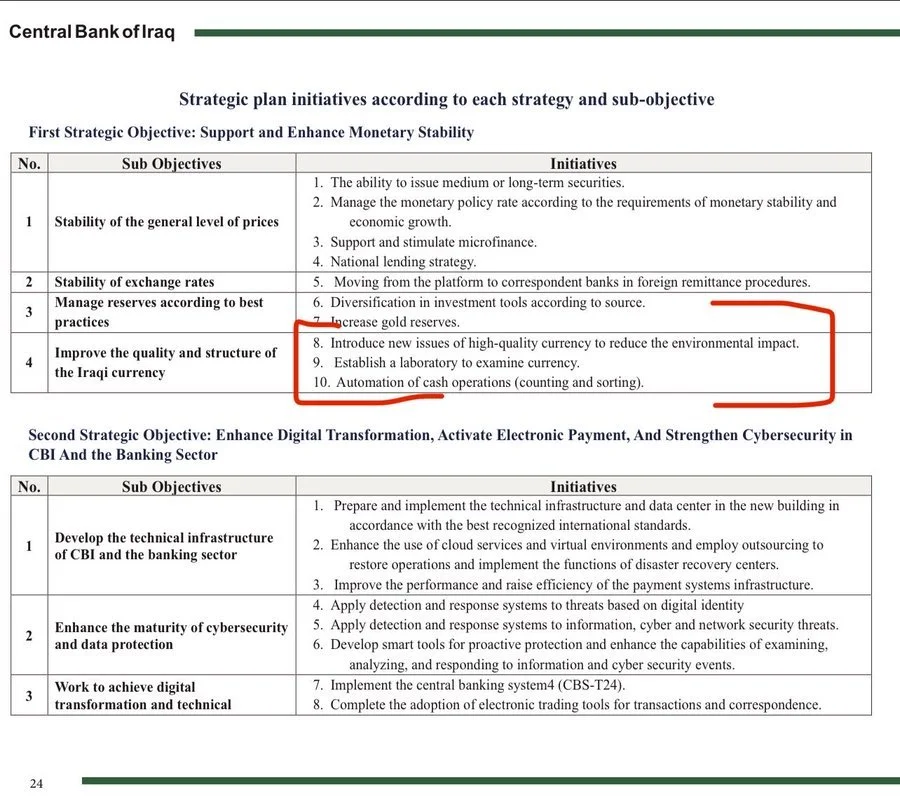
IRAQ Introduce of New Currency •CBI strategic PLAN initiatives 2024-2026: Improve the quality & structure of Iraqi CURRENCY 8. Introduce NEW issues of high quality CURRENCY to reduce impact. 9. Establish a lab to examine currency. 10. Automation of ca$h operations (counting & sorting). CBI news today: •The Central Bank of Iraq, Erbil branch, held a special training program entitled "Developing the skills of counting and sorting employees" for the employees of the issuance and safes department in the branch. https://cbi.iq/news/view/3218
Courtesy of Dinar Guru: https://www.dinarguru.com/
Sandy Ingram The $900 [approved World Bank financing trade routes] enable Iraq to increase its GDP. Current rate doesn't automatically go up just because the GDP goes up, but the currency exchange rate can't go up if the GDP doesn't increase...
Reset Intelligence Look at who just told the world he is getting on a plane. Al-Zaidi, prime minister of a country that cannot make payroll, its oil chocked off, and its central bank printing to cover the gap, has confirmed he will fly to Washington with a delegation behind him. The cover story is investment and reconstruction...A bankrupt oil state does not fly to Washington to talk business it cannot fund...
Ross Iraq is in a transition year due to the Iran War. New leadership. New cabinet. Reforms loading. Liquidity tightened.HCL and diversification from oil just became urgent. CBI isn’t bending. They’re enforcing their mandate and forcing real fiscal discipline. ...After 23 years of waiting, this is the fastest things have moved. IQD RV thesis is stronger than ever before.
*************
Sound Money Hour with Lynette Zang and Daniel Diaz
6-8-2026
Join Lynette Zang, Founder and CEO of Zang International, and Daniel Diaz, Executive Director of Citizens for Sound Money, for Sound Money Hour—a monthly livestream covering the economy, sound money legislation, gold and silver, financial freedom, and the latest developments shaping the monetary system.
Each month, Lynette and Daniel discuss current events, answer audience questions, and share practical ways citizens can get involved in advancing sound money initiatives at the local and state level.
Seeds of Wisdom RV and Economics Updates Tuesday Morning 6-9-26
Good Morning Dinar Recaps,
Dollar Retreats as Geopolitical Fears Ease While Interest Rate Pressures Build
Currency markets are shifting focus from Middle East tensions to inflation, interest rates, and the growing cost of global borrowing.
Good Morning Dinar Recaps,
Dollar Retreats as Geopolitical Fears Ease While Interest Rate Pressures Build
Currency markets are shifting focus from Middle East tensions to inflation, interest rates, and the growing cost of global borrowing.
Overview
The U.S. dollar pulled back from a two-month high after signs of easing tensions between Iran and Israel reduced demand for traditional safe-haven assets. While geopolitical concerns remain unresolved, investors have largely turned their attention back to monetary policy, inflation trends, and the prospect of additional interest rate increases.
The move highlights a growing tug-of-war between geopolitical stability and central bank tightening, both of which continue to influence global capital flows, currency valuations, and financial markets.
Key Developments
1. Dollar Falls as Safe-Haven Demand Weakens
Reports suggesting a pause in direct military exchanges between Iran and Israel helped reduce immediate fears of a broader regional conflict.
As investor anxiety eased, demand for the U.S. dollar as a safe-haven asset declined, causing the dollar index to move lower after reaching its strongest level in nearly two months.
2. Interest Rate Expectations Continue to Support the Dollar
Despite the decline, traders remain focused on the possibility of additional rate hikes by both the Federal Reserve and the European Central Bank.
Persistent inflation concerns and resilient economic data continue to support expectations that borrowing costs may remain elevated longer than previously anticipated.
3. Global Currency Markets React
The euro and British pound posted modest gains against the dollar as investors adjusted positions.
Meanwhile, the Japanese yen remained under pressure near levels that many market participants believe could trigger intervention by Japanese authorities.
Commodity-linked currencies such as the Australian and New Zealand dollars also strengthened as risk sentiment improved.
4. Bond Markets Reinforce Higher-Rate Environment
Rising U.S. Treasury yields continue to provide underlying support for the dollar despite short-term fluctuations.
Investors increasingly view higher interest rates as a structural feature of the global economy rather than a temporary policy response.
5. Financial Markets Await Key Economic Data
Upcoming inflation reports and central bank announcements are expected to play a major role in determining the next direction for currency markets.
Any indication that inflation remains stubbornly high could strengthen expectations for additional tightening measures across major economies.
Why It Matters
Currency markets sit at the center of the global financial system. Movements in the U.S. dollar influence trade flows, commodity prices, international borrowing costs, and capital investment decisions.
As geopolitical concerns temporarily recede, investors are once again focusing on inflation, debt levels, and monetary policy—factors that will shape economic conditions throughout the remainder of 2026.
Why It Matters to Foreign Currency Holders
• Dollar fluctuations directly affect exchange rates and purchasing power.
• Higher interest rates increase borrowing costs globally and influence capital flows.
• Currency volatility often signals broader changes in the international financial system.
• Central bank policies remain a key driver of future currency valuations.
Implications for the Global Reset
Pillar 1: Monetary Policy Remains the Dominant Economic Force
Central banks continue to exert significant influence over global liquidity, investment flows, and economic growth. Expectations surrounding future rate decisions are increasingly shaping market behavior.
Pillar 2: Global Capital Is Repositioning
Investors are adjusting portfolios to account for a prolonged period of higher interest rates, changing trade patterns, and shifting geopolitical risks. These adjustments are gradually reshaping the global financial landscape.
Closing Insight
While geopolitical tensions continue to generate headlines, financial markets are increasingly focused on a more fundamental challenge: the long-term consequences of elevated interest rates and persistent inflation.
The next phase of the global economy may be determined less by military conflicts and more by how governments and central banks manage debt, inflation, and currency stability.
As geopolitical fears fade, the battle for the future of the financial system shifts back to inflation, interest rates, and the value of money itself.
Seeds of Wisdom Team
Newshounds News™ Exclusive
Sources
~~~~~~~~~~
🌱 A Message to Our Currency Holders🌱
If you’ve been holding foreign currency for many years, you were not foolish.
You were not wrong to believe the global financial system would change.
What failed was not your patience — it was the information you were given.
For years, dates, rumors, and personalities replaced facts, structure, and proof. “This week” predictions created cycles of hope and disappointment that were never based on how currencies actually change.
That is not your failure.
Our mission here is different: • No dates • No rates • No hype • No gurus
Instead, we focus on:
• Verifiable developments • Institutional evidence
• Global financial structure • Where countries actually sit in the process
Currency value changes only come after sovereignty, trade, banking, settlement systems, and fiscal coordination are in place. History and institutions confirm this sequence.
You will see silence. You will see denials. That is not delay — that is discipline.
Protect your identity. Organize your documents. Verify everything.
Never hand your discernment to anyone who cannot show proof.
You deserve truth — not timelines.
Seeds of Wisdom Team
Newshounds News
~~~~~~~~~~
Seeds of Wisdom Team RV Currency Facts Youtube and Rumble
Newshound's News Telegram Room Link
RV Facts with Proof Links Link
RV Updates Proof links - Facts Link
Follow the Gold/Silver Rate COMEX
Follow Fast Facts
Seeds of Wisdom Team™Website
Thank you Dinar Recaps
Iraq Economic News and Points To Ponder Tuesday Morning 6-9-26
Britain Is Investing £1.1 Billion To Build A National Artificial Intelligence Empire.
Money and Business Britain has announced a new £1.1 billion plan to boost its domestic artificial intelligence (AI) capabilities, including the construction of a new national supercomputer and funding for chip manufacturers, as part of its efforts to strengthen technological sovereignty and reduce reliance on foreign suppliers.
The plan follows Prime Minister Keir Starmer's announcement during London Technology Week of £400 million earmarked for the purchase of AI-focused chips. The strategy includes the creation of a £750 million national AI supercomputer, slated to be operational by 2030.
Britain Is Investing £1.1 Billion To Build A National Artificial Intelligence Empire.
Money and Business Britain has announced a new £1.1 billion plan to boost its domestic artificial intelligence (AI) capabilities, including the construction of a new national supercomputer and funding for chip manufacturers, as part of its efforts to strengthen technological sovereignty and reduce reliance on foreign suppliers.
The plan follows Prime Minister Keir Starmer's announcement during London Technology Week of £400 million earmarked for the purchase of AI-focused chips. The strategy includes the creation of a £750 million national AI supercomputer, slated to be operational by 2030.
The project will utilize a hybrid chip system combining existing processors with next-generation technologies, aiming to provide advanced computing capabilities to support research and industrial applications. £400 million of the project's budget has also been allocated for investment in next-generation chips, including £150 million for the purchase of inference chips from British companies this summer.
Supporting the local chip industry , the plan includes the creation of an investment fund led by the US-based company Playground Global, with up to £150 million in backing from the British Business Bank, to invest in companies developing artificial intelligence devices and technologies within the UK.
This funding represents the largest single investment made by the British Business Bank in this sector. Playground Global also announced that it will open its first office outside the US in the UK, a move reflecting the growing attractiveness of the British market for advanced technology companies. Funding innovation and skills development:
The government has allocated £120 million to an innovation program aimed at funding British companies working on the design, development, and testing of advanced electronic chips. It has also increased total funding for skills development in the AI devices sector to £80 million, including £45 million to support training and development programs for emerging talent.
https://www.economy-news.net/content.php?id=70014
Bitcoin's $235 Billion Loss In Value Reveals A Major Shift In The Cryptocurrency Market.
Money and Business Economy News - Follow-up The digital currency "Bitcoin" is the best indicator for understanding what is happening in the cryptocurrency market as a whole. When the value of the world's largest digital currency rises, money flows into startups, high-risk capital funds, trading platforms, and thousands of cryptocurrencies. When the value of Bitcoin collapses, companies disappear, funding dries up, and the activity of the cryptocurrency market as a whole slows down.
Bloomberg News reported that Bitcoin is not just the largest digital asset, but the center of gravity of the entire cryptocurrency economy, but some of the world's fastest-growing cryptocurrencies are operating with a different logic than what has prevailed in the past.
Last Friday, Bitcoin's value plummeted to below $60,000 per unit, continuing its decline that has erased about half of its value compared to its all-time high recorded last year.
This heavy selling of Bitcoin was driven by an outflow of funds from exchange-traded funds, a boom in artificial intelligence stocks competing for the attention of individual investors, and growing doubts about the ability of large corporate investors, who helped drive the earlier rise of the popular currency, to continue accumulating.
Bitcoin's price stabilized in trading on Monday at around $64,200 per unit, as Strategy& resumed buying the currency. The largest digital currency lost about $235 billion in market value during the seven days ending June 7, according to data compiled by Bloomberg.
Much of the alternative cryptocurrency market has been experiencing a deeper contraction prior to the recent decline in Bitcoin's value. The market capitalization of alternative currencies, which are digital tokens other than Bitcoin, peaked at $431 billion in November 2021, while its value currently does not exceed $170 billion, according to data from the economic data company TradingView.
Global Payments System
Cryptocurrencies, also known as stablecoins, have become an integral part of the global payments system, with annual transaction volumes reaching approximately $390 billion, according to data from McKinsey & Company and Artemis Analytics.
Wall Street firms are racing to value stocks, bonds, and exchange-traded funds in stablecoins, while banks that once rejected blockchain technology (cryptocurrencies) are now beginning to experiment with it, and payment companies are integrating digital dollars into their payment systems.
Eric Jackson, founder and chief investment officer of EMJ Capital, a technology-focused hedge fund, said: "Bitcoin's price action used to tell the whole story of cryptocurrencies... but that's no longer the case. Price and usage are not, and shouldn't be, the single measure of cryptocurrencies." https://www.economy-news.net/content.php?id=70030
The Ministry Of Transport Announces An Update To The Joint Work Agreement Regarding Air Traffic Management With Türkiye
Money and Business Economy News – Baghdad The Ministry of Transport - General Company for Air Navigation Services announced on Tuesday the updating of the joint work agreement for air traffic management with the Republic of Turkey, as a strategic step, the first of its kind since June 2016.
The company’s assistant general manager, Ahmed Emad Ahmed, said in a statement received by “Al-Eqtisad News” that “this update comes based on the sound directives and continuous support of the Minister of Transport, Wahab Al-Hassani, and in response to the decisions of the esteemed Council of Ministers, which stipulate reducing the distances between aircraft (reducing the longitudinal air separation).”
He added that "the new update included essential provisions aimed at reducing air traffic intervals between the two countries to 15 miles, which increases the capacity of Iraqi airspace and is in line with regional procedures followed within the recovery plan for air navigation at the regional and global levels and the expected flow of aircraft traffic."
He pointed out that "updating this agreement confirms the commitment of Iraqi air navigation to apply the highest international standards and keep pace with the requirements adopted by the International Civil Aviation Organization (ICAO) and the instructions of the Iraqi Civil Aviation Authority in a way that ensures the safety and smooth flow of air traffic in the country."
https://www.economy-news.net/content.php?id=70036
Reports: Global Spending On Nuclear Weapons Reached Approximately $119 Billion By 2025
Money and Business Economy News - Follow-up Nuclear powers increased their spending on their arsenals to a record high of nearly $119 billion last year, a 19% increase, a trend that is expected to continue for decades, according to a report published Tuesday.
A report by the International Campaign to Abolish Nuclear Weapons showed that the nine countries that possess nuclear weapons (the United States, Russia, China, the United Kingdom, France, India, Israel, Pakistan and North Korea) spent about $17 billion more on their arsenals last year than they spent in 2024.
The report warned that, amid escalating geopolitical tensions, a "new nuclear arms race is looming" and is expected to last "for decades."
Suzie Snyder, an official with the organization who helped draft the report, said that increased spending on nuclear arsenals, coupled with concerns that artificial intelligence could increase the risk of nuclear weapons use, is extremely worrying.
"I'm terrified," she told AFP.
The report showed that Washington spent more than all other countries combined, spending $69.2 billion on nuclear weapons in 2025, an increase of $12.4 billion from the previous year.
China followed, spending $13.5 billion last year according to the report, then Britain with $12.6 billion and Russia with $9.5 billion.
The organization, which won the 2017 Nobel Peace Prize, found that the nine countries had spent more than $470 billion on their arsenals over the past five years.
These investments are expected to grow in the future.
By examining long-term spending growth projections, the organization highlighted figures from Britain, France and the United States showing plans to spend billions of dollars developing and maintaining these weapons systems into the next century.
She added that other countries are also introducing new weapons systems with a long service life.
The researchers said the huge sums being spent are shocking, especially at a time when the global humanitarian system is suffering from major funding cuts.
Snyder noted that "what these countries spent in 2025 could have covered 32 years of the UN's operating budget," adding that one day's spending on nuclear weapons last year could have provided food security for more than two million people.
The official continued, "Instead of providing assistance or ensuring basic services such as healthcare for their citizens, nuclear-armed states have been investing in an arsenal that they themselves know they cannot use without committing a war crime."
https://www.economy-news.net/content.php?id=70042
Trade: Launching A System For Selling Construction Materials In Installments To Employees Of Government Departments
Money and Business Economy News – Baghdad The General Company for Trading in Construction Materials, one of the formations of the Ministry of Trade, announced on Tuesday the launch of its new initiative to sell construction materials in an easy installment system to all employees of state departments and institutions.
The company’s general manager, Areej Hussein Al-Jumaili, said that “the company decided to launch its new initiative to sell construction materials in an easy installment system to all employees of state departments and institutions,” explaining that “this initiative comes within the framework of the company’s vision to enable citizens to obtain building supplies of reputable international origins and with direct guidance from the Minister of Trade, Mustafa Nizar Al-Ani.”
She added that "the initiative comes at competitive prices compared to local market prices," noting "an exceptional feature of this initiative, as construction materials will be sold on an installment system at the same cash price without adding any interest or additional amounts to the total value of the materials, as a contribution from the company to support the Iraqi employee and facilitate the construction and renovation process."
She explained that "the administration has put in place a flexible and easy administrative and legal mechanism to complete the installment procedures in a way that ensures the smooth flow of work and speed of completion while fully preserving public funds and guaranteeing the company's rights, which allows employees to benefit from this service without routine complications."
According to the statement, the company called on "all those wishing to benefit from this initiative to visit its branches spread across the governorates or to review the sales departments at the company headquarters to see the available product lists and to learn about the approved controls and mechanisms." https://www.economy-news.net/content.php?id=70044
Tuesday AM Iraq News Posted by Tishwash at TNT 6-9-2026
TNT:
Tishwash: Investing in Iraq: Moves to strengthen partnerships and transform the country into a platform for economic exchange
Three main messages summarized the Iraqi presence at the Geneva Economic Forum: Geography is an asset, crises can be turned into stability, and the private sector needs international protection.
The head of the Federation of Chambers of Commerce, Amer Al-Fahdawi, emphasized to the Swiss and Arab side that Iraq’s current qualifications require an organized international dialogue that paves the way for the flow of capital and the building of smart partnerships that go beyond the traditional frameworks of trade.
TNT:
Tishwash: Investing in Iraq: Moves to strengthen partnerships and transform the country into a platform for economic exchange
Three main messages summarized the Iraqi presence at the Geneva Economic Forum: Geography is an asset, crises can be turned into stability, and the private sector needs international protection.
The head of the Federation of Chambers of Commerce, Amer Al-Fahdawi, emphasized to the Swiss and Arab side that Iraq’s current qualifications require an organized international dialogue that paves the way for the flow of capital and the building of smart partnerships that go beyond the traditional frameworks of trade.
The Federation of Iraqi Chambers of Commerce stated in a statement, which was reviewed by (Shafaqna Iraq), that “within the framework of strengthening international trade relations, the President of the Federation of Iraqi Chambers of Commerce, Amer Al-Fahdawi, participated in the opening of the activities of the Arab-Swiss Business Forum.”
He explained that “this forum is organized by the Arab-Swiss Chamber of Commerce and Industry in cooperation with the Union of Arab Chambers and the League of Arab States Mission in Geneva.”
He added that “the forum’s work focuses on analyzing the impact of geopolitical crises on the business environment and vocational education, as well as exploring the role of the private sector and the creative economy in shaping the jobs of the future in light of the rapid developments in artificial intelligence.”
Iraq's location and resources
Al-Fahdawi stressed, during his participation in the session, according to the statement, that “speaking from an Iraqi perspective has great significance, as Iraq is not an observer of what is happening, but rather is at the heart of geopolitical and economic interactions.”
He explained that “Iraq’s geographical location, its wealth, its Arab depth, and its trade connections with the world make it quickly affected by any disturbances in the region, but at the same time make it capable of being part of the solution and economic stability.”
He pointed out that “the economic reality requires organized work on several fronts, including enhancing the flexibility of the private sector, protecting workers, developing skills, building international partnerships, and working to transform Iraq into a platform for economic communication with the world.”
He pointed out that “the current stage requires a mechanism for dialogue and joint work between Arab and international chambers of commerce to monitor the impact of crises on companies and the labor market, enhance cooperation, and build new economic bridges with international economic institutions in order to strengthen the Iraqi economic situation and increase the flow of investments into the Iraqi market, given the diverse economic assets that Iraq possesses, which require highlighting them through international institutions.” link
************
Tishwash: The head of the Federation of Chambers of Commerce calls for international partnerships to boost investment in Iraq.
The head of the Federation of Iraqi Chambers of Commerce, Amer Al-Fahdawi, called for building international partnerships to boost investment in Iraq.
The Federation stated in a press release that Al-Fahdawi participated in the opening of the Arab-Swiss Business Forum. The statement explained that the forum was organized by the Arab-Swiss Chamber of Commerce and Industry in cooperation with the Union of Arab Chambers and the League of Arab States Mission in Geneva.
It further explained that the forum's activities focused on analyzing the impact of geopolitical crises on the business environment and vocational education, in addition to exploring the role of the private sector and the creative economy in shaping future jobs in light of the rapid developments in artificial intelligence.
According to the statement, Al-Fahdawi emphasized during his participation in the session that speaking from an Iraqi perspective is particularly significant, as Iraq is not merely an observer of events but is at the heart of geopolitical and economic interactions. He pointed out that Iraq's geographical location, its resources, its deep Arab roots, and its trade connections with the world make it highly susceptible to any regional instability, but at the same time enable it to be part of the solution and contribute to economic stability.
He explained, "The economic reality necessitates organized work on several fronts, including strengthening the resilience of the private sector, protecting workers, developing skills, building international partnerships, and working to transform Iraq into a platform for economic engagement with the world."
He pointed out, "The current phase requires a mechanism for dialogue and joint action between Arab and international chambers of commerce to monitor the impact of crises on companies and the labor market, enhance cooperation, and build new economic bridges with international economic institutions. This aims to bolster the Iraqi economy and increase the flow of investments into the Iraqi market, given Iraq's diverse economic potential, which requires highlighting through international institutions." link
Tishwash: Al-Zidi's visit to Washington: A government move towards economic openness
Al-Zaidi's visit to Washington represents an important milestone for testing the government's ability to balance economic issues and political pressures, as it seeks to attract investments and reposition Iraq regionally.
The announcement of the visit came during a meeting between Al-Zaidi and businessmen and representatives of the private sector and local banks, where he confirmed that the delegation would include economic figures with the aim of expanding mutual investment opportunities and economic partnerships between the two countries.
The visit is of particular importance as it is al-Zidi's first to Washington since assuming the premiership, and it comes months after an official invitation extended to him by US President Donald Trump following his appointment to form the government, when he spoke of a "new chapter" in relations between the two countries.
The visit also coincides with a period in which Baghdad is undergoing transformations on both the security and political levels, most notably the project to restrict weapons to the state and restructure armed factions, as well as the repercussions of regional tensions and the recent war between Iran and Israel and the economic and security challenges it has left for Iraq.
Messages that go beyond economics
For his part, Iraqi political affairs expert Majashaa Al-Tamimi said that “Al-Zaidi’s visit to Washington, accompanied by businessmen, has political dimensions that go beyond the direct economic aspect, especially since it comes at a stage that is witnessing the redrawing of many balances within the region.”
Al-Tamimi added that “through this visit, the Iraqi government is trying to present itself as a partner capable of building balanced relations with the United States without engaging in the politics of axes, and it also seeks to show that Iraq is open to investments and international partnerships according to the logic of common interests.”
He explained that “bringing businessmen along gives the visit a practical dimension and sends a message to the inside and outside that the government wants to move from traditional political discourse to focusing on the economy, development and job opportunities,” noting that “the visit also shows Baghdad’s desire to strengthen its regional and international position through stable relations with Washington.”
According to economists, the visit comes at an important time for Iraq, as it coincides with ongoing American pressure regarding the issue of armed factions and Iranian influence, as well as Baghdad’s need for economic and investment support to help it overcome the challenges imposed by the recent regional turmoil.
Partnerships and investments
On the economic side, the government affirms that the next phase will witness the launch of a development fund with substantial capital and participation from the central bank, in addition to plans to finance new productive and industrial projects aimed at diversifying the economy and reducing dependence on oil.
The anticipated visit coincided with one of the most difficult financial crises that Iraq has faced in recent years, following the disruption of oil export routes through the Strait of Hormuz and the accompanying disruption to oil revenues, which represent the backbone of the general budget.
Faced with this reality, Baghdad began searching for new funding sources through the World Bank and international lending institutions, in parallel with efforts to attract American and Western investments, in an attempt to mitigate the effects of the crisis and provide additional sources of support for the Iraqi economy.
Iraq is a promising market in energy, industry, housing, and infrastructure.
In this context, economic researcher Sarmad Al-Shammari said that “the visit represents an important opportunity for Iraq to reintroduce itself to American and international investors as a promising market with great opportunities in the energy, industry, housing and infrastructure sectors.”
He added that “the participation of businessmen in the government delegation gives the visit a clear economic character, because the government seeks to transform political relations with Washington into real investment partnerships that will be reflected in the local economy.”
He explained that “Iraq needs billions of dollars in investments in multiple sectors in the coming years, and it also needs the transfer of technology and administrative and industrial expertise, which makes the United States an important partner at this stage.”
He pointed out that “the success of the visit will be measured by the government’s ability to transform meetings and agreements into actual projects that provide job opportunities, support the private sector, and contribute to diversifying sources of income.”
The recent war has had direct repercussions on the investment environment in Iraq, after several foreign companies left or reduced their field presence, particularly in the oil, energy and services sectors. link
Tishwash: Kujer warns of a financial catastrophe that could hinder salary payments due to dependence on oil.
MP Jamal Kojar warned on Sunday of a potential financial catastrophe facing Iraq due to financial mismanagement and excessive reliance on oil revenues. He explained that recent regional tensions have had significant economic repercussions for the country.
Kojar told the Information Agency, "Iraq is experiencing a severe financial crisis due to poor financial management and the lack of effective economic plans to address the challenges facing the national economy."
He added, "The recent tensions in the region have significantly impacted energy supplies and global markets, which has directly affected countries whose economies depend on oil revenues."
He pointed out that "the near-total dependence on oil has exacerbated the financial crisis in Iraq and made the economy more vulnerable to external fluctuations and crises," warning that "the continuation of this situation could lead the country to a real financial catastrophe that might prevent the government from fulfilling its financial obligations, primarily paying salaries."
He emphasized that "the current economic repercussions are significant and require swift action to reform financial management, diversify national income sources, and reduce dependence on oil as the sole source of revenue." link
************
Tishwash: Rixos Baghdad: A complete lifestyle in one destination
In an era where cities are developing destinations that reflect their economic dynamism and keep pace with modern lifestyles, mixed-use projects are becoming increasingly important as a key feature of contemporary development.
These projects are not simply about bringing together different facilities in one location; rather, they are about developing a daily lifestyle that integrates living, working, leisure, and social interaction into a comprehensive experience, akin to a "city within a city."
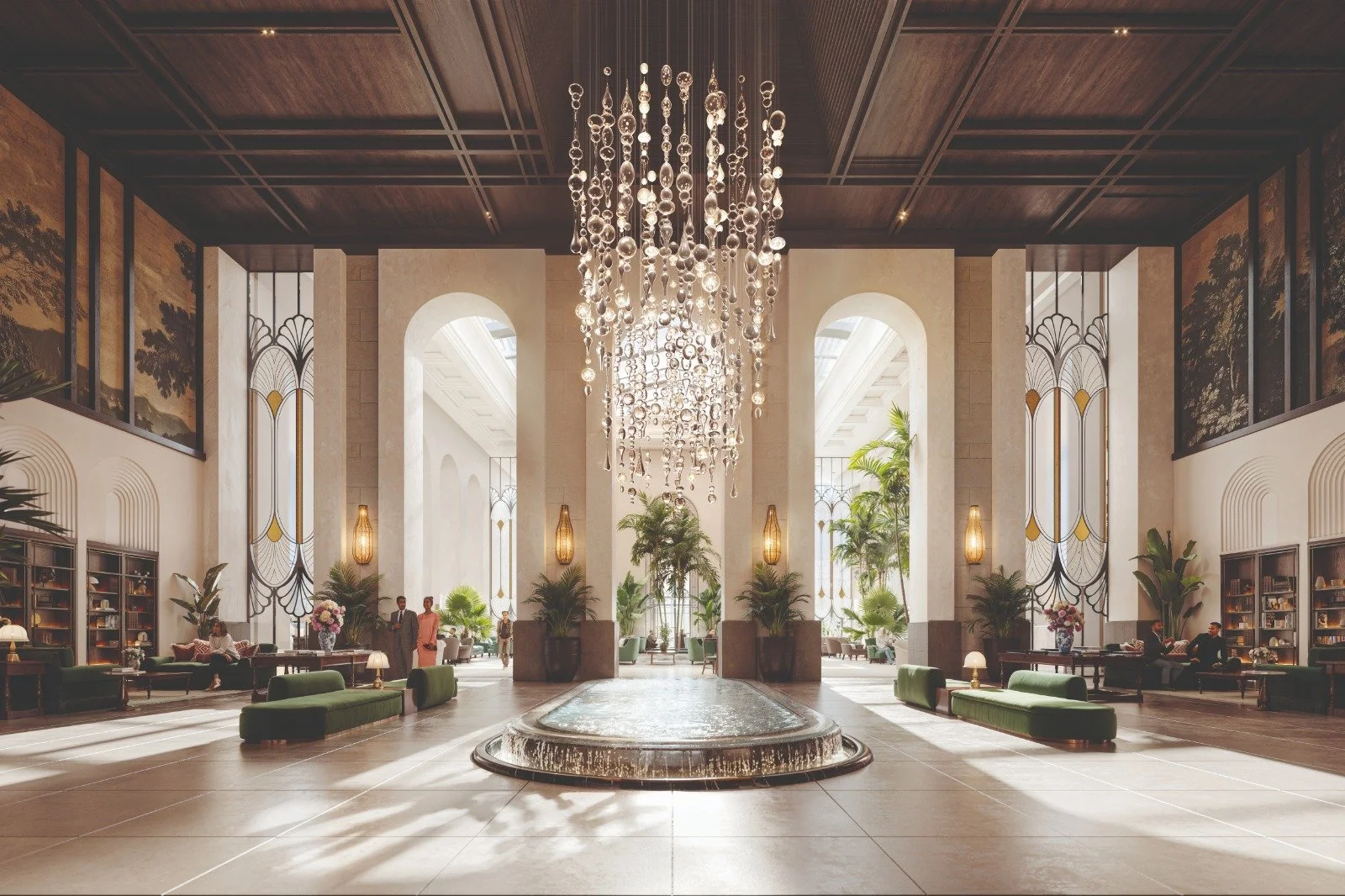
Today, Baghdad is preparing to host one of the most prominent projects that embody this trend, with the Rixos Baghdad Hotel and Apartments, which offers the first experience of internationally branded residences in Iraq, within a project that includes luxury housing, international hospitality, recreational facilities, and daily services, according to the concept of the "Integrated Lifestyle Ecosystem ".
From a traditional hotel to an integrated hotel complex
Rixos Baghdad, with its comprehensive operating model, transcends the traditional hotel concept based on separate facilities performing specific functions, where luxury is linked to opulence and quality of design, as much as it is linked to a lifestyle based to the same degree on comfort, efficiency of the daily experience, and easy access to various services and facilities within one connected destination.
The project was designed to reduce time, effort, and constant commuting by bringing together the various needs of residents and visitors, allowing easy movement between accommodation, work, restaurants, sports and health facilities, shopping, and entertainment, without having to leave, within an escalating global model in which the quality of experience and ease of access to daily needs have become an essential part of the modern concept of well-being.
To achieve this, the project includes luxury apartments, private villas, and hotel rooms, along with five international restaurants and cafes, a health and fitness club, and sports facilities including padel, tennis, and swimming pools, in addition to a shopping mall that serves as a central hub for activity and services within the project. All these facilities and services function as interconnected parts within a single system, where each element complements the others in perfect harmony.
This system reflects Rixos' globally renowned philosophy of offering a luxury resort lifestyle, where hospitality is integrated with everyday experiences, social activities, and facilities designed for interaction and connection within a cohesive environment. This embodies a service culture focused on quality of experience and attention to detail, while also providing a vibrant atmosphere that fosters social interaction and makes the resort a natural part of the daily lives of residents and visitors.
Thus, the experience at Rixos Baghdad is not limited to simply using the facilities and services, but rather constitutes an integrated lifestyle, in which residents and visitors feel that the place has become a natural extension of the details of their daily lives, and part of the social and professional circle within which their relationships and experiences move, thus enhancing their sense of belonging to it; as if it were the city whose pulse they live every day, and the home to which they always return.
Global operation that supports quality and long-term sustainability
In addition, Rixos Baghdad is based on a global operating system led by Accor, one of the world’s largest hospitality groups, which manages more than 5,600 hotels within a portfolio of more than 850,000 rooms and more than 45 international hotel brands.
The presence of this global operator is a pivotal element in managing the daily experience within the project, by standardizing the standards of operation, services and hospitality according to advanced international standards, thus ensuring the continuity of quality and maintaining the level of experience in the long term.
This model also enhances the sustainability of demand and maintains the long-term value of the project, at a time when internationally branded residential units depend primarily on the strength and operational experience of the operator, as these are among the most important factors that give this type of project its appeal and stability.
The Rixos Baghdad Hotel and Apartments project reflects a broader shift in the nature of projects that are shaping modern cities, keeping pace with rapid changes in lifestyle, and contributing to the formation of economic and social centers of attraction that are more in line with the requirements of contemporary life link
**
Triple Failure: Bonds, Real Estate, & Currencies | Rafi Farber
Triple Failure: Bonds, Real Estate, & Currencies | Rafi Farber
Liberty and Finance: 6-8-2026
Interview with Rafi Farber presents a high tension view of a global financial system under multiple pressure points.
He argues paper and physical precious metals may appear aligned today but could rapidly diverge if confidence shifts suddenly rather than gradually.
Oil is framed as a potential trigger, where a sharp spike could force asset sales, accelerate inflation, and expose leverage across credit, housing, and equities.
Triple Failure: Bonds, Real Estate, & Currencies | Rafi Farber
Liberty and Finance: 6-8-2026
Interview with Rafi Farber presents a high tension view of a global financial system under multiple pressure points.
He argues paper and physical precious metals may appear aligned today but could rapidly diverge if confidence shifts suddenly rather than gradually.
Oil is framed as a potential trigger, where a sharp spike could force asset sales, accelerate inflation, and expose leverage across credit, housing, and equities.
The discussion emphasizes that rising global debt and interest rate constraints are not isolated national issues but part of a synchronized global monetary structure.
Overall, the interview portrays a tightly wound system where energy, credit, and precious metals function as interconnected fault lines beneath fragile confidence.
INTERVIEW TIMELINE:
0:00 Intro
1:11 Triple Failure: Bonds, Real Estate, and Currencies
10:45 Strait of Hormuz
21:30 Paper vs. Physical Markets
27:47 Demand for 1000 oz silver bars 29:89 Retail demand
34:00 End Game Investor
36:00 Last thoughts