
Seeds of Wisdom RV and Economics Updates Tuesday Afternoon 4-28-26
Good Afternoon Dinar Recaps
Energy Shock Wave: Surging Oil and Debt Risks Signal Global Financial Strain
Rising energy prices, inflation pressure, and mounting debt concerns are converging into a potential systemic turning point
Good Afternoon Dinar Recaps
Energy Shock Wave: Surging Oil and Debt Risks Signal Global Financial Strain
Rising energy prices, inflation pressure, and mounting debt concerns are converging into a potential systemic turning point
OVERVIEW (KEY POINTS)
Global markets are entering a period of heightened stress as energy prices surge sharply due to ongoing Middle East conflict, triggering ripple effects across inflation, debt markets, and economic growth.
This is happening now because disruptions in key supply routes, particularly the Strait of Hormuz, are constraining global oil flows while geopolitical tensions remain unresolved.
Key players include central banks, major economies, and global financial institutions now facing a difficult environment of rising costs, slowing growth, and elevated debt levels.
The broader implication is clear: multiple systemic pressures are converging at once, increasing the probability of structural financial adjustments.
KEY DEVELOPMENTS
1. Energy Prices Surge on Supply Disruptions
Oil markets are tightening rapidly.
Energy prices projected to rise up to 24% in 2026
Oil trading near $110 per barrel with upside risk
2. Inflation Pressures Reignite Globally
Energy costs are feeding into broader price levels.
Inflation forecasts rising across major economies
Developing nations expected to face 5%+ inflation levels
3. Central Banks Enter Policy Dilemma
Monetary policy is becoming more complex.
Institutions holding rates steady despite rising inflation
Balancing growth slowdown vs. inflation control
4. Debt Risks Escalate Across Markets
Financial system vulnerabilities are increasing.
Warnings of potential global bond market stress
Rising borrowing costs threaten government and corporate balance sheets
5. Corporate and Consumer Strain Expands
Real economy impacts are becoming visible.
Companies facing higher input and logistics costs
Increased risk of price hikes and reduced demand
WHY IT MATTERS
This development highlights a critical convergence: energy shocks, inflation, and debt pressures are reinforcing each other, amplifying systemic risk.
Markets are becoming increasingly sensitive to geopolitical events, with volatility spreading across commodities, bonds, and currencies.
For policymakers, the challenge is acute. Traditional tools are less effective when inflation is driven by supply-side shocks rather than demand.
At the system level, this reflects a transition phase where multiple stress points are testing the resilience of the global financial framework.
WHY IT MATTERS TO FOREIGN CURRENCY HOLDERS
Energy-importing currencies face downward pressure
Purchasing power declines as inflation rises
Safe-haven currencies may strengthen during instability
Exchange rate volatility increases across regions
IMPLICATIONS FOR THE GLOBAL RESET
Pillar 1: Energy-Driven Financial Realignment
Sustained energy shocks are forcing economies to rethink supply chains, pricing, and trade dependencies, reshaping global economic relationships.
Pillar 2: Debt and Liquidity Stress نقطة
Rising debt burdens combined with higher rates increase the likelihood of financial restructuring or market corrections, impacting the broader system.
CONCLUSION
The current environment represents more than isolated disruptions. It is a convergence of energy, inflation, and debt pressures that is testing the global financial system.
As these forces build simultaneously, the margin for policy error narrows, increasing the risk of instability.
This is not just a cyclical challenge—it reflects deeper structural strain.
When energy shocks collide with debt and inflation, the foundation of the global financial system begins to shift.
Seeds of Wisdom Team
Newshounds News™ Exclusive
Sources
Reuters — "World Bank forecasts 24% surge in energy prices due to war"
Reuters — "Global inflation worries rise as energy prices surge"
~~~~~~~~~~
Seeds of Wisdom Team RV Currency Facts Youtube and Rumble
Newshound's News Telegram Room Link
RV Facts with Proof Links Link
RV Updates Proof links - Facts Link
Follow the Gold/Silver Rate COMEX
Follow Fast Facts
Seeds of Wisdom Team™Website
Thank you Dinar Recaps
Iraq Economic News And Points To Ponder Tuesday Evening 4-28-26
Iraq’s CF Grants PM-Designate Full Authority To Form Cabinet
2026-04-28 Shafaq News- Baghdad The Coordination Framework (CF) agreed Tuesday to give Prime Minister-designate Ali al-Zaidi full authority to form his cabinet, following a meeting attended by caretaker Prime Minister Mohammed Shia al-Sudani. According to a statement, participants discussed cabinet formation and mechanisms for resolving political entitlements, emphasizing adherence to constitutional timelines.
Iraq’s CF Grants PM-Designate Full Authority To Form Cabinet
2026-04-28 Shafaq News- Baghdad The Coordination Framework (CF) agreed Tuesday to give Prime Minister-designate Ali al-Zaidi full authority to form his cabinet, following a meeting attended by caretaker Prime Minister Mohammed Shia al-Sudani. According to a statement, participants discussed cabinet formation and mechanisms for resolving political entitlements, emphasizing adherence to constitutional timelines.
Leaders called for appointments based on integrity, competence, and national responsibility, and stressed the need for cohesion within the incoming government. The bloc had nominated al-Zaidi yesterday after al-Sudani and former Prime Minister Nouri al-Maliki withdrew from the race.
Read more: Ali al-Zaidi named Iraq's prime minister: Easy nomination, harder road ahead
https://www.shafaq.com/en/Iraq/Iraq-s-CF-grants-PM-designate-full-authority-to-form-cabinet
The Coordination Framework Is Discussing The Formation Of The Government And Affirms Its Support For The Powers Of The Prime Minister-Designate, Ali Al-Zidi
Baghdad – One News 4/28/2026 The Coordination Framework held a meeting to discuss the formation of the new government, where mechanisms for resolving political entitlements and forming the cabinet were discussed in a way that contributes to building a strong government capable of facing challenges.
The participants stressed the need to grant Prime Minister-designate Ali al-Zidi full authority to choose members of the ministerial team, in order to ensure harmony within the government and enhance its effectiveness in implementing its program.
The coordination framework stressed the importance of adopting standards of integrity, competence and national responsibility in selecting ministers, in addition to prioritizing the public interest and strengthening the principle of political partnership between different forces.
He also pointed out that the harmony of the next government team is a crucial factor in overcoming crises and achieving the aspirations of the Iraqi people at various levels. https://1news-iq.net/الإطار-التنسيقي-يبحث-تشكيل-الحكومة-وي/
Al-Hurra Website Quotes A Leader In The Coordination Committee: The Selection Of Ali Al-Zidi Surprised The Committee's Representatives, And There Is No American Objection To His Appointment
Baghdad – One News 4/28/2026 Al-Hurra website quoted a member of the coordinating framework as saying that the selection of Ali al-Zidi to form the government came as a surprise to most of the coalition’s deputies, as his name had not been clearly put forward during previous meetings.
He pointed out that the messages that reached the leaders of the framework indicate that Washington does not object to assigning al-Zaidi, in an indication of international acceptance of his personality compared to other options.
He added that if he succeeds in forming a government within the constitutional deadline of 30 days, he will become the youngest prime minister in the history of Iraq.https://1news-iq.net/موقع-الحرة-عن-قيادي-بالتنسيقي-اختيار-ع/
Monte Carlo: Ali Al-Zaidi, Tasked With Forming The New Iraqi Government, Received A Green Light From Both Iran And The United States
Baghdad – One News 4/28/2026 Monte Carlo International Radio reported that the announcement by the Coordination Framework nominating Ali al-Zaidi for the presidency of the new Iraqi government came after a series of intensive consultations between prominent leaders within the coalition.
The radio station explained that the head of the Popular Mobilization Forces, Faleh al-Fayyad, held two separate meetings with both the leader of the State of Law Coalition, Nouri al-Maliki, and the outgoing Prime Minister, Mohammed Shia al-Sudani, as part of efforts to resolve the issue of the premiership.
She added that assessments within some parties within the framework indicate that al-Zaydi received a “green light” from both Iran and the United States, which helped facilitate agreement on his nomination after a period of disagreements within the coalition. https://1news-iq.net/مونت-كارلو-المكلف-بتشكيل-الحكومة-العر/
A leader in the Sudanese coalition: Ali al-Zaidi's appointment depends on overcoming the American veto.
2026-04-28 Shafaq News – Baghdad A leader in the “Reconstruction and Development” coalition, headed by outgoing Prime Minister Mohammed Shia al-Sudani, said on Tuesday that assigning Ali al-Zidi to form the new government could represent a “rising political phenomenon” or a “major setback,” considering that the matter depends on his ability to overcome the American “veto” peacefully.
Qusay Mahbouba said in a statement regarding Al-Zidi's assignment to form the new government by the Coordination Framework, "Ali Al-Zidi will either be a bridge for others, or they will become a bridge for him."
He added that al-Zaidi "could be a rising political phenomenon, or he could be a major setback," noting that his success depends on his ability to safely cross the American veto.
He continued: "We don't know the man yet, neither his ideas nor his capabilities nor the features of his political personality," indicating that the question is whether he will be a bridge to a larger project, or will turn everyone into a bridge to his project "if he has a project at all."
Mahbouba considered that the Shiite coordination framework “has exhausted its political and moral presence in the Iraqi arena,” and is no longer able to shape the future of Iraq or monopolize Shiite decision-making, adding that the framework “has practically ended politically and morally.”
He pointed out that this "could be a good thing," because the end of the political monopoly opens the door to the birth of new equations, and perhaps to a different Iraqi opportunity.
The ruling Shiite coalition forces in Iraq announced on Monday evening the nomination of al-Zaidi for the premiership, following the withdrawal of outgoing Prime Minister Mohammed Shia al-Sudani and former Prime Minister Nouri al-Maliki, leader of the State of Law Coalition, from the race for the position.
Iraq’s Dominant Bloc Taps Newcomer Ali Al-Zaidi For Prime Minister After Weeks Of Wrangling
By QASSIM ABDUL-ZAHRA Updated 10:30 PM CEST, April 27, 2026 BAGHDAD (AP) — Iraq’s dominant parliamentary bloc on Monday nominated Ali al-Zaidi, a businessman and political newcomer, to be the country’s prime minister.
The announcement by the Coordination Framework, a coalition of Shiite parties allied with Iran, followed a meeting at the government palace. It came after weeks of internal debate among its member parties aimed at selecting a compromise candidate to lead the next government.
President Nizar Amidi then tasked al-Zaidi with forming a government. Even with the backing of the dominant bloc, the new government is not assured of receiving the required number of votes.
The coalition had previously said it would back former Prime Minister Nouri al-Maliki, who the U.S. administration views as too close to Iran. U.S. President Donald Trump publicly announced his opposition to al-Maliki and threatened to cut off aid to Iraq if he was appointed.
While al-Maliki remained defiant after Trump’s intervention, the bloc decided to shift to a compromise candidate.
In a statement announcing al-Zaidi’s nomination, the Coordination Framework thanked al-Maliki and incumbent Prime Minister Mohammed Shia al-Sudani for their “historic and responsible positions” in withdrawing their candidacies to help overcome the political deadlock. Al-Sudani issued a statement congratulating al-Zaidi.
Al-Zaidi, who is chairman of Al-Janoob Islamic Bank, emerged in the final stages of discussions as one of the leading candidates, bolstered by his economic background and business and investment connections. He has not previously held political office.
Following his nomination, al-Zaidi promised to focus on making Iraq “a balanced country, regionally and internationally.”
“This appointment comes at a sensitive time that requires concerted efforts from all political and social forces,” he said.
Under the constitution, the designated prime minister has 30 days to present a Cabinet lineup to the parliament, which requires 167 votes to secure a vote of confidence.
The next government will have to deal with the political and economic fallout of the U.S.-Israeli war against Iran, which spilled over into Iraq while the closure of the Strait of Hormuz has disrupted the oil exports on which Iraq’s economy depends.
The new government will also face challenges in dealing with the issues of corruption, uncontrolled weapons outside state authority, and the future of the Popular Mobilization Forces, a coalition of Shiite militias that are nominally under the Iraqi military but in practice largely outside of its control.
https://apnews.com/article/iraq-prime-minister-parliament-alzaidi-bb629c0f14c6710cbb66500fe376218e
Iraq Economic News And Points To Ponder Tuesday Afternoon 4-28-26
UAE Withdraws From OPEC And OPEC+, Effective May 1
2026-04-28 Shafaq News- Abu Dhabi The United Arab Emirates announced Tuesday its decision to withdraw from OPEC and the OPEC+ effective May 1, citing the country's evolving energy profile and long-term economic strategy.
According to a statement issued by UAE authorities, the decision follows a comprehensive review of the country's production policy, current output capacity, and projected future capacity.
UAE Withdraws From OPEC And OPEC+, Effective May 1
2026-04-28 Shafaq News- Abu Dhabi The United Arab Emirates announced Tuesday its decision to withdraw from OPEC and the OPEC+ effective May 1, citing the country's evolving energy profile and long-term economic strategy.
According to a statement issued by UAE authorities, the decision follows a comprehensive review of the country's production policy, current output capacity, and projected future capacity.
The UAE said the move is grounded in national interest and in the country's commitment to meeting what it called the market's pressing needs. Under the OPEC+ framework, members have coordinated production cuts since 2016 to stabilize global oil prices, an arrangement the UAE will no longer be bound by as of next week.
The UAE joined OPEC in 1967 through the Emirate of Abu Dhabi —before the federation's formal establishment in 197 — and has since been one of the group's most consequential members, producing approximately 3.2 to 3.5 million barrels of crude oil per day.
The Emirati authorities said the country would continue bringing additional production to market "in a gradual and measured manner," guided by demand and market conditions, and reaffirmed that its exit does not alter its commitment to global market stability. https://www.shafaq.com/en/Economy/UAE-withdraws-from-OPEC-and-OPEC-effective-May-1
Iraq’s January 2026 Revenues Exceed $6.1B
2026-04-27 Shafaq News- Baghdad The Iraqi federal budget revenues for January 2026 exceeded 8 trillion Iraqi dinars (over $6.1 billion), the Ministry of Finance reported on Monday.
According to the official data, total revenues reached 8.537 trillion dinars ($6.5 billion), marking a 6% increase compared to 8.040 trillion dinars ($6.1 billion) recorded in January 2025.
Oil revenues amounted to 7.075 trillion dinars ($5.4 billion), accounting for 83% of total public income, while non-oil revenues totaled 1.462 trillion dinars ($1.1 billion).
The data also indicated that non-oil revenues transferred from the Kurdistan Region to the federal treasury stood at 120 billion dinars ($92 million).
On the expenditure side, total current spending reached 8.345 trillion dinars ($6.4 billion). Public sector salaries accounted for 5.087 trillion dinars ($3.9 billion), while pensions totaled 1.598 trillion dinars ($1.2 billion). Social welfare payments amounted to 458 billion dinars ($350 million). https://www.shafaq.com/en/Economy/Iraq-s-January-2026-revenues-exceed-6-1B
Oil Prices Climb On Continued US-Iran War Deadlock
2026-04-28 Shafaq News Oil prices rose 1% on Tuesday, extending gains from the previous session, as efforts to end the U.S.-Iran war appear stalled, with the crucial Strait of Hormuz waterway still mainly shut, keeping energy supplies from the key Middle East producing region out of the reach of global buyers.
U.S. President Donald Trump is unhappy with the latest Iranian proposal aimed at ending the war, a U.S. official said on Monday. Iranian sources disclosed on Monday that Tehran's proposal avoided addressing its nuclear program until hostilities cease and Gulf shipping disputes are resolved.
Trump's displeasure with the Iranian offer leaves the conflict deadlocked, with Iran shutting shipping flows through the Strait of Hormuz, which typically carries supply equal to about 20% of global oil and gas consumption, and the U.S. keeping in place its blockade of Iranian ports.
Brent crude futures for June climbed $1.41, or 1.3%, to $109.64 a barrel as of 0400 GMT, after gaining 2.8% in the previous session to its highest close since April 7. The contract is up for a seventh day.
U.S. West Texas Intermediate (WTI) crude for June rose $1.27, or 1.3%, to $97.64 a barrel, after gaining 2.1% in the previous session.
An earlier round of negotiations between the U.S. and Iran collapsed last week following failed face-to-face talks.
"Talks around ‘peace’ still look largely superficial and lack concrete evidence of de-escalation. Despite the rhetoric, vessel movement through the Strait of Hormuz remains curtailed, and that prolonged disruption is what's keeping oil risk premiums elevated," said Phillip Nova's senior market analyst Priyanka Sachdeva.
"In the near term, oil markets are less about macro demand and more about diplomatic gridlock. Until diplomacy translates into actual barrel flows, not just statements, oil markets will remain volatile with an upward bias through May," she added.
Ship-tracking data revealed significant disruptions in the region, with six Iranian oil tankers forced to turn back due to the U.S. blockade.
However, a liquefied natural gas tanker managed by the United Arab Emirates' Abu Dhabi National Oil Co did cross the Strait of Hormuz and appears to be near India, ship-tracking data showed on Monday.
Prior to the U.S.-Israeli war on Iran, which began on February 28, between 125 and 140 vessels transited the strait daily.
The market is also looking ahead to private and government U.S. inventory data for later this week.
Analysts polled by Reuters are expecting U.S. crude inventories to have risen by 300,000 barrels in the last week, with official data from the U.S. Energy Information Administration set for release on Wednesday. (Reuters)
https://www.shafaq.com/en/Economy/Oil-prices-climb-on-continued-US-Iran-war-deadlock
Basrah Crudes Lead Regional Oil Benchmarks
2026-04-28 Shafaq News- Basrah Basrah crude prices recorded gains of around 0.59% on Tuesday, while global oil markets held firm.
Basrah Heavy crude rose by 71 cents, to $121.08 per barrel. Basrah Medium crude increased by 71 cents, to settle at $123.18 per barrel.
In contrast, several regional grades declined, with Saudi Light at $119.48 per barrel, Kuwait crude at $107.37, and UAE’s Murban at $103.57.
Globally, Brent crude futures rose $1.41, or 1.3%, to $109.64 a barrel. US West Texas Intermediate (WTI) crude were also up $1.27, or 1.3%, at $97.64.
Iraq prices its crude based on export destinations, with shipments to Asia linked to the Dubai and Oman benchmarks, exports to Europe tied to Brent with premiums or discounts, and cargoes to the United States priced against WTI in line with market conditions. https://www.shafaq.com/en/Economy/Basrah-crudes-lead-regional-oil-benchmarks-2
Gold Prices Drop In Baghdad And Erbil Markets
2026-04-28 Shafaq News- Baghdad/ Erbil On Tuesday, gold prices hovered around 1 million IQD per mithqal in Baghdad and Erbil markets, according to a Shafaq News market survey.
Gold prices on Baghdad's Al-Nahr Street recorded a selling price of 1,005,000 IQD per mithqal (equivalent to five grams) for 21-carat gold, including Gulf, Turkish, and European varieties, with a buying price of 1,001,000 IQD. The same gold had sold for 1,025,000 IQD on Monday.
The selling price for 21-carat Iraqi gold stood at 975,000 IQD, with a buying price of 971,000 IQD.
In jewelry stores, the selling price per mithqal of 21-carat Gulf gold ranged between 1,005,000 and 1,015,000 IQD, while Iraqi gold sold for between 975,000 and 985,000 IQD.
In Erbil, 22-carat gold was sold at 1,050,000 IQD per mithqal, 21-carat gold at 1,002,000 IQD, and 18-carat gold at 859,000 IQD. https://www.shafaq.com/en/Economy/Gold-prices-drop-in-Baghdad-and-Erbil-markets-8
Iraq’s Basra Wheat Intake Set To Exceed 24K Tons
2026-04-28 Shafaq News- Basra Wheat intake in southern Iraq’s Basra province is projected to exceed 24,000 tons this agricultural season, a local official told Shafaq News on Tuesday, with marketing operations now underway.
Receiving centers are fully prepared, offering sufficient silo capacity and a regulated system to manage truck entry and unloading, according to Hadi Hussein, head of the Basra Agriculture Directorate. Peak deliveries, he noted, are anticipated in May and will continue through June, while urging farmers to adhere to schedules to ensure smooth processing.
Harvesting began last week in Basra with average yields of about 750 kg per dunam (0.25 hectares), covering 3,937 dunams under the government plan and 7,500 dunams outside it.
In Kirkuk, production is projected at around 600,000 tons this season, reinforcing its role as a key grain-producing province. Zuhair Ali Hussein, head of the Kirkuk Agriculture Directorate, said average yields are estimated at about 1,250 kilograms per dunam, supported by improved farming methods, technical assistance, and favorable weather. Iraq’s 2026 wheat production is forecast at 5 million tons, down from 6.3 million in 2025, while imports are expected to rise to 2.1 million tons. https://www.shafaq.com/en/Economy/Iraq-s-Basra-wheat-intake-set-to-exceed-24K-tons
The ‘Expert’ Who Said ‘Globalization Would End War’ — 5 Years Before WWI
The ‘Expert’ Who Said ‘Globalization Would End War’ — 5 Years Before WWI
Notes From the Field By James Hickman (Simon Black / Sovereign Man) April 28, 2026
In 1909, a British journalist named Norman Angell published The Great Illusion, claiming that war between major global powers had become obsolete. Nations were too interlinked, he argued. Capital was too entangled. Trade was too valuable. And no nation would put that prosperity at risk. War and conquest were things of the past.
But think about the world back then: Europe was in the middle of la Belle Époque, a stretch of unprecedented peace and prosperity. It had been nearly 40 years since the last major war (Franco-Prussian War) in 1871.
The ‘Expert’ Who Said ‘Globalization Would End War’ — 5 Years Before WWI
Notes From the Field By James Hickman (Simon Black / Sovereign Man) April 28, 2026
In 1909, a British journalist named Norman Angell published The Great Illusion, claiming that war between major global powers had become obsolete. Nations were too interlinked, he argued. Capital was too entangled. Trade was too valuable. And no nation would put that prosperity at risk. War and conquest were things of the past.
But think about the world back then: Europe was in the middle of la Belle Époque, a stretch of unprecedented peace and prosperity. It had been nearly 40 years since the last major war (Franco-Prussian War) in 1871.
Gold-standard money moved across borders without friction. British capital financed German factories, German banks lent to Russian railways. And one of the largest trading relationships in the world was between supposed rivals Britain and Germany.
Mr. Angell's book sold over two million copies; it was translated into 25 languages and became a fixture in educated households. Diplomats quoted it. CEOs planned around it. Angell’s conclusions seemed true, without question.
Then the Great War broke out five years later, and the world’s great powers went on to vaporize 16 million human beings and their collective economies. Global trade did not recover its 1913 level for roughly half a century.
Bizarrely, Angell later won the Nobel Peace Prize "for having exposed by his pen the illusion of war and presented a convincing plea for international cooperation and peace." There would not be a less deserving recipient until Henry Kissinger and Barack Obama.
But this same mistake has been repeated again in our own time.
After the Soviet Union fell and American technology took the world by storm in the 1990s, it seemed that global peace and prosperity would last forever.
Even after 9/11 and the 2008 Global Financial Crisis, the world organized itself around America’s leadership.
The dollar was the world's dominant reserve currency. The World Trade Organization tore down tariffs across the board. NATO and the United States Navy guaranteed no major power would risk war.
America supplied the security, the currency, and the rules; in exchange, the world traded and grew under an American-led system. Goods, capital, and supply chains ignored borders.
And for decades it worked reasonably well. But we’re now witnessing its breakdown in real time.
As I write this letter to you, gas stations in Asia are rationing fuel. Hospitals are running out of medical supplies. Major petrochemical producers in South Korea and Singapore (Yeochun and PCS) have declared force majeure, meaning they cannot fulfill their commitments to customers.
The cause is simple: the Strait of Hormuz has been closed for weeks.
The Middle East ships roughly 25% of the world's polypropylene, 20% of its polyethylene, 25% of its sulphur, and 15% of its fertilizer. When that flow stops, factories stop. And remember that about half of what Americans buy comes from those same Asian factories.
Capital Economics, a global research firm, estimates that it could take three months for the resulting plastic shortages to spread globally, and four months until US automakers face aluminum shortages severe enough to cut production.
S&P Global's April survey of manufacturers worldwide shows supplier delivery times lengthening at the fastest pace since August 2022.
Purchasing activity is near a four-year high as companies scramble to stockpile while they still can. Respondents are using "panic" and "emergency" buying language for the first time since the pandemic supply crunch— when Americans waited months for a new car, lumber prices tripled, and store shelves sat empty.
Yet rather than work together to ease the strain, governments are making it worse. With trust between major powers in collapse, every cross-border deal is now treated as a security threat... so they are blocking deals, capping technology transfer, and walling off entire industries.
China just blocked Meta's $2 billion acquisition of an AI startup called Manus; Beijing argues that Manus was developed by Chinese founders with Chinese capital, and therefore an American giant cannot own it.
The United States has been doing the same thing for years— to its strongest allies, no less.
The Biden administration blocked Japanese company Nippon Steel's $15 billion acquisition of US Steel on "national security" grounds, even though Nippon had offered to invest $2.7 billion of Japanese capital into Pennsylvania steel mills.
(Trump later reversed this, and the deal went through with additional government stipulations.)
That is what de-globalization actually looks like in practice: not one dramatic rupture, but the slow accumulation of friction— a closed strait here, a blocked deal there, escalating tariffs, sanctions, "national security" reviews.
Stack enough of this friction together and the world looks entirely different.
Travel becomes harder and more expensive. Raw materials and finished goods become costlier. Specialization and trade become economic drags rather than efficiencies as nations are forced to make more things at home— including the goods that other countries can already manufacture more efficiently.
This is already happening, and it’s difficult to fix. It’s unlikely that anyone can wave a magic wand and bring back the geopolitical cooperation that fueled the world for decades.
The world is not coming to an end. Far from it. But it is changing rapidly.
Less cooperation, more conflict, and more tension has profound implications for future prosperity.
One of the obvious implications we see is that real assets— energy, food, gold, industrial metals— grow in value during times of conflict and global friction.
Tension and protectionism don't reduce demand for any of them; they just make supply harder to get, so prices rise. When supply chains snap and borders tighten, these are the assets that benefit most.
So if you agree with our thesis, i.e. that the world is heading towards more conflict and less cooperation, real assets (and the companies which produce them) are an excellent hedge to offset that risk with financial gain.
To your freedom, James Hickman Co-Founder, Schiff Sovereign LLC
Seeds of Wisdom RV and Economics Updates Tuesday Morning 4-28-26
Good Morning Dinar Recaps,
Trade Shift Accelerates: Nations Move Away from Dollar as Energy and Currency Pressures Build
Rising geopolitical tension and currency volatility are pushing countries to expand non-dollar trade, signaling deeper structural change
Good Morning Dinar Recaps,
Trade Shift Accelerates: Nations Move Away from Dollar as Energy and Currency Pressures Build
Rising geopolitical tension and currency volatility are pushing countries to expand non-dollar trade, signaling deeper structural change
OVERVIEW (KEY POINTS)
A growing number of countries are increasing the use of non-dollar trade settlements, driven by rising geopolitical tensions, currency volatility, and disruptions in global energy markets.
This is happening now as recent instability in the Middle East and energy supply chains is forcing nations to reduce exposure to dollar-based systems, particularly in cross-border trade and commodity transactions.
Key players include BRICS nations, emerging markets, and global trading partners adapting to a system where local currencies and alternative settlement mechanisms are gaining traction.
The broader implication is clear: the global financial system is gradually shifting toward a more multipolar structure, where reliance on a single dominant currency is being reduced.
KEY DEVELOPMENTS
1. Expansion of Non-Dollar Trade Settlements
Countries are actively reducing reliance on the U.S. dollar.
Increased use of local currencies in bilateral trade agreements
Growth in alternative settlement systems across emerging markets
2. Energy Trade Drives Currency Diversification
Oil and gas transactions are shifting frameworks.
Energy-importing nations exploring non-dollar payment options
Producers open to alternative currencies to secure demand
3. Currency Volatility Pressures Policy Decisions
Exchange rate instability is accelerating change.
Emerging market currencies facing downward pressure
Governments seeking to stabilize trade through diversification
4. Financial Infrastructure Adapts
Systems are evolving to support new trade flows.
Development of cross-border payment platforms outside traditional networks
Increased focus on central bank cooperation
WHY IT MATTERS
This development highlights a gradual but meaningful shift in how global trade is conducted and financed. While the U.S. dollar remains dominant, alternatives are gaining traction under pressure.
Markets are adjusting to a changing environment where currency alignment and geopolitical positioning influence trade decisions more than ever before.
For policymakers, the shift introduces both opportunity and complexity. Diversification reduces dependency but can also increase fragmentation and inefficiency.
At the system level, this reflects a transition toward a multi-currency global framework, reshaping financial relationships.
WHY IT MATTERS TO FOREIGN CURRENCY HOLDERS
Local currencies may gain importance in trade settlements
Dollar dominance may gradually decline over time
Purchasing power may shift depending on currency exposure
Exchange rate volatility increases during transition periods
IMPLICATIONS FOR THE GLOBAL RESET
Pillar 1: Multipolar Currency System Emergence
The rise of non-dollar trade supports a shift toward a distributed global financial structure, reducing reliance on a single reserve currency.
Pillar 2: Trade-Driven Financial Realignment
Changes in how trade is settled are reshaping capital flows, reserve strategies, and economic alliances.
CONCLUSION
The expansion of non-dollar trade reflects a structural evolution rather than a sudden shift. While the dollar remains central, alternatives are steadily gaining ground.
As geopolitical and economic pressures persist, the trend toward diversification is likely to continue, influencing both trade and financial systems.
This moment represents a key stage in a broader transformation.
When trade systems evolve, the financial system that supports them must evolve as well.
Seeds of Wisdom Team
Newshounds News™ Exclusive
Sources
Reuters — "Countries expand non-dollar trade amid geopolitical tensions"
Reuters — "Global currency volatility drives shift in trade settlement systems"
~~~~~~~~~~
A Message to Our Currency Holders
If you’ve been holding foreign currency for many years, you were not foolish.
You were not wrong to believe the global financial system would change.
What failed was not your patience — it was the information you were given.
For years, dates, rumors, and personalities replaced facts, structure, and proof. “This week” predictions created cycles of hope and disappointment that were never based on how currencies actually change.
That is not your failure.
Our mission here is different: • No dates • No rates • No hype • No gurus
Instead, we focus on:
• Verifiable developments • Institutional evidence
• Global financial structure • Where countries actually sit in the process
Currency value changes only come after sovereignty, trade, banking, settlement systems, and fiscal coordination are in place. History and institutions confirm this sequence.
You will see silence. You will see denials. That is not delay — that is discipline.
Protect your identity. Organize your documents. Verify everything.
Never hand your discernment to anyone who cannot show proof.
You deserve truth — not timelines.
Seeds of Wisdom Team
Newshounds News™
~~~~~~~~~~
Seeds of Wisdom Team RV Currency Facts Youtube and Rumble
Newshound's News Telegram Room Link
RV Facts with Proof Links Link
RV Updates Proof links - Facts Link
Follow the Gold/Silver Rate COMEX
Follow Fast Facts
Seeds of Wisdom Team™Website
Thank you Dinar Recaps
Iraq Economic News And Points To Ponder Tuesday Morning 4-28-26
Baghdad And Erbil Discuss Unifying Customs And Generalizing The "ASYCUDA" System
Money and Business Economy News – Baghdad The federal government and the Kurdistan Regional Government discussed on Tuesday the unification of customs procedures and the regulation of the work of border crossings throughout Iraq, during an expanded meeting hosted by the Border Ports Authority in Baghdad.
Baghdad And Erbil Discuss Unifying Customs And Generalizing The "ASYCUDA" System
Money and Business Economy News – Baghdad The federal government and the Kurdistan Regional Government discussed on Tuesday the unification of customs procedures and the regulation of the work of border crossings throughout Iraq, during an expanded meeting hosted by the Border Ports Authority in Baghdad.
The authority said in a statement received by “Al-Eqtisad News” that representatives of specialized bodies from both sides participated in the meeting, and discussed mechanisms for unifying customs tariffs and implementing the electronic “ASYCUDA” system at all border crossings, with the aim of facilitating the movement of goods and unifying administrative procedures.
According to the statement, the meeting also addressed customs exemptions, lists of prohibitions and restrictions, standardization and quality control procedures, radiation testing, compliance with the agricultural calendar, as well as addressing unofficial outlets and unifying tax procedures.
According to the statement, the head of the Border Ports Authority, Omar Adnan Al-Waeli, stressed the importance of discussing the issues raised in a positive spirit, while giving priority to facilitating trade between the region and the governorates and meeting the needs of citizens.
He added that standardizing procedures would reduce the burden on drivers and traders, which would reflect positively on the smooth flow of trade and economic stability.
The statement indicated that the meeting comes as part of a series of meetings aimed at unifying customs policy and enhancing economic coordination between Baghdad and Erbil, in light of efforts to reduce trade complexities and raise the efficiency of border crossing management in the country.
The ASYCUDA system is an electronic platform developed by the United Nations through the United Nations Conference on Trade and Development (UNCTAD) to manage customs operations and automate import, export and transit procedures, thereby speeding up clearance, enhancing transparency and increasing collection efficiency.
In Iraq, the government has adopted in recent years the expansion of the system’s application within border crossings, as part of the process of digitizing customs work and reducing paper transactions, with an official direction to generalize it in all crossings and unify procedures between Baghdad and the Kurdistan Region.
The Prime Minister of the Kurdistan Region, Masrour Barzani, confirmed the region’s approval of the implementation of the ASYCUDA electronic customs system, denying any objection, but he requested a technical grace period (about 9 months) to prepare the infrastructure. https://www.economy-news.net/content.php?id=68441
Discover the features of the e-commerce application and how to register for it.
Money and Business Economy News – Baghdad Minister of Trade Atheer Al-Ghurairi explained on Tuesday the details of the electronic merchant application, noting that the application will prevent fraud against citizens wishing to purchase through social media sites.
Al-Ghurairi said that "the e-merchant application is a service to regulate e-commerce by issuing the merchant license electronically and registering the company electronically."
He added: “How can we monitor individuals and entities working in virtual commerce on the internet through social media sites and selling goods without deceiving citizens?” He asked: “How can we protect the real product and prevent it from being exploited by counterfeiters?”
He stated that "this came through the e-commerce system and the issuance of a license through very simple procedures to regulate work with delivery companies and to regulate work with the Ministry of Communications and the Central Bank, and it is developed according to the needs of the market, the type of trade, and the variables," noting that "e-commerce protects the citizen from counterfeit goods and protects the merchant from counterfeiting his goods by parties that do not produce these goods, while protecting the market and preserving it and subjecting it to regulatory and legal authorities and regulating the electronic market, which is a market that should not be underestimated, and which is expected to develop greatly." https://www.economy-news.net/content.php?id=68437
Iranian Exports To Iraq Via The Mehran Border Crossing Increased By 100% During The Month.
Money and Business Economy News – Baghdad Iranian exports to Iraq via the Mehran International Land Border Crossing recorded remarkable growth during the Iranian month of Farvardin, which extends from March to April 2026, as they increased by 100 percent compared to the same period last year, in an indication of growing trade activity between the two countries.
Sohrab Kamari, the Director General of Customs in Iran’s Ilam Province, said that the volume of exports passing through the Mehran crossing exceeded 246,000 tons of goods, with a value exceeding $60 million in just one month, stressing that the crossing is witnessing active daily shipping traffic of up to about 600 trucks heading towards Iraqi markets.
He added that the Mehran border crossing maintained the smooth flow of trade despite regional challenges, noting that work continued around the clock to ensure that goods did not accumulate and to expedite the arrival of goods to Iraq, given the important economic artery that the crossing represents between the two sides.
The Iranian official noted that Iraqi demand for Iranian goods remains high, particularly for agricultural products, building materials, ceramics, clinker, plastic utensils, live fish, and reinforcing steel, which are among the most prominent goods exported during the aforementioned period.
He explained that this increase reflects the expanding presence of Iranian products within the Iraqi market, based on the diversity of supply and competitive prices, as well as geographical proximity and ease of transport through land ports.
The Mehran border crossing is one of the most important land crossings used in trade between Iran and Iraq, as it connects the Iranian province of Ilam with the central and southern Iraqi provinces, making it a major passage for the daily flow of goods and trucks.https://www.economy-news.net/content.php?id=68434
“New PM and More” Posted by Tishwash at TNT 4-28-2026
TNT:
Tishwash: Maliki and Sudani agree to pass Ali al-Zaidi as a compromise candidate
Political sources revealed on Monday that Nouri al-Maliki, head of the State of Law Coalition, and Prime Minister Mohammed Shia al-Sudani, agreed to nominate Ali al-Zidi as a compromise candidate for the premiership.
The sources said that "Al-Zaydi enjoys extensive relations with all the leaders of the coordination framework, in addition to his relationship with the private office of the leader of the Sadrist movement, Muqtada al-Sadr."
She added that "Al-Zaydi may face difficulties in forming the government and getting it passed in parliament after he is appointed."
TNT:
Tishwash: Maliki and Sudani agree to pass Ali al-Zaidi as a compromise candidate
Political sources revealed on Monday that Nouri al-Maliki, head of the State of Law Coalition, and Prime Minister Mohammed Shia al-Sudani, agreed to nominate Ali al-Zidi as a compromise candidate for the premiership.
The sources said that "Al-Zaydi enjoys extensive relations with all the leaders of the coordination framework, in addition to his relationship with the private office of the leader of the Sadrist movement, Muqtada al-Sadr."
She added that "Al-Zaydi may face difficulties in forming the government and getting it passed in parliament after he is appointed."
She indicated that “Al-Zidi’s nomination came after the head of the Popular Mobilization Forces, Faleh Al-Fayyad, hosted two meetings during the past 24 hours with Prime Minister Mohammed Shia Al-Sudani and the head of the State of Law Coalition, Nouri Al-Maliki, for the purpose of deciding on the position,” explaining that “the first meeting was held yesterday, and the second was held this afternoon, during which a final agreement was reached on naming the candidate for the position of Prime Minister.” link
Tishwash: The coordinating framework officially nominates Ali al-Zaidi for the position of Prime Minister.
The Coordination Framework announced Monday evening its selection of Ali al-Zaidi as the next prime minister.
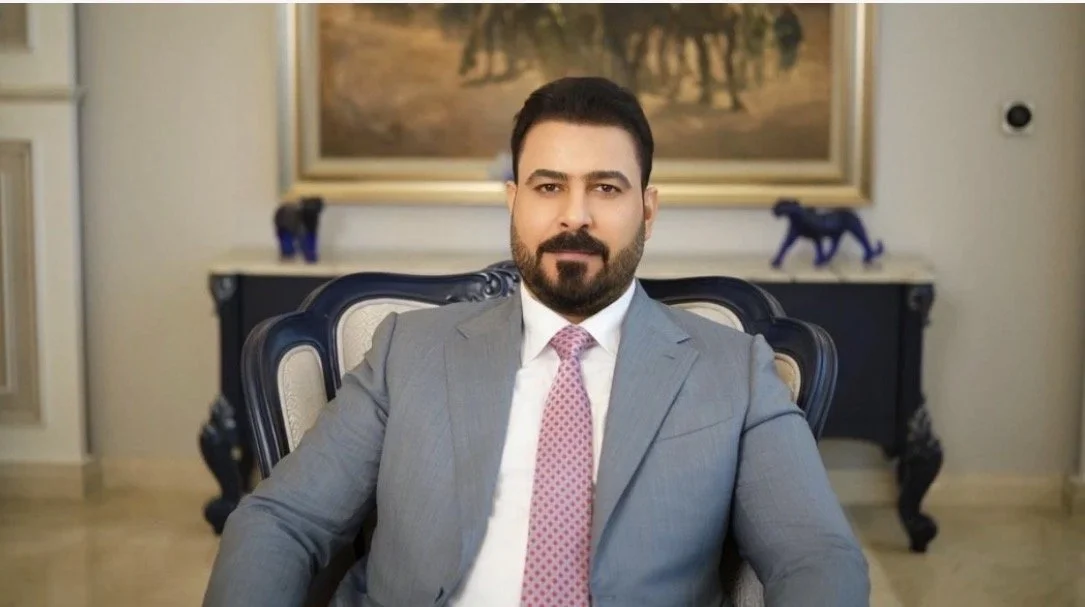
A statement from the Framework read, "The Coordination Framework held its important meeting today, Monday, at the Government Palace in Baghdad, a symbolic representation of the continuity of state institutions and the seat of the executive authority emanating from the will of the Iraqi people."
At the outset of the meeting, the Framework's leaders, according to the statement, commended "the national and responsible performance of the government of Prime Minister Mohammed Shia al-Sudani during its three and a half years in confronting economic, regional, and international challenges, and the achievements of the government program, particularly in the area of development and restoring the Iraqi citizen's confidence in their political and electoral system, which was clearly demonstrated by the broad participation in the recent parliamentary elections."
The Coordination Framework also commended "the responsible and historic stances of Nouri al-Maliki, head of the State of Law Coalition, and Mohammed Shia al-Sudani, head of the Reconstruction and Development Coalition, in withdrawing their candidacies for the premiership and the formation of the next government. This step underscores their commitment to the supreme national interests, facilitates overcoming the political deadlock, and allows the Coordination Framework to select a candidate who meets the required qualifications for the position of Prime Minister and is suited to the demands and challenges of this stage."
The statement continued, "After reviewing the candidates' names, Mr. Ali al-Zidi was chosen as the Coordination Framework's candidate, being the largest bloc in the Council of Representatives, to assume the position of Prime Minister and form the next government." link
************
Tishwash: Al-Zaydi: We will form a government that responds to the citizens' demands for establishing security and stability.
Prime Minister-designate Ali al-Zidi affirmed on Monday (April 27, 2026) his intention to work with all political forces to form a new government that responds to the demands of citizens and contributes to consolidating security and stability and achieving comprehensive development in the country.
Al-Zaydi said in his first statement after being appointed, as reported by Baghdad Today, that “we are determined to work with various political forces to form a government capable of meeting the aspirations of Iraqis,” stressing the importance of national cooperation to overcome current challenges.
Al-Zaydi’s statement comes after he was officially tasked by the President of the Republic with forming the new government, following his nomination by the largest parliamentary bloc within the House of Representatives. link
Rumors are putting pressure on the currency market and disrupting prices.
The exchange rate of the dollar against the Iraqi dinar continues to rise, despite recent developments in the Middle East region. Economic experts attribute this to a set of overlapping internal and external factors, most notably increased demand and speculation in the market, in addition to regional tensions and regulatory measures.
Economic expert Walid Al-Agili said that the rise in the dollar is mainly due to increased demand for it, explaining that “speculation and rumors in the market play a major role in raising the price, as some traders and money changers stockpile dollars with the aim of selling them later at a higher price.”
He added that the spread of unconfirmed news about regional situations, such as talk of continued tensions or the closure of some trade routes, is driving individuals and traders to buy dollars as a hedge, exacerbating pressure on the market. Al-Agili pointed out that restrictions on foreign transfers and tightened financial procedures have also contributed to reducing the official supply of dollars, pushing some of the demand into the parallel market and thus driving up prices.
For his part, Professor of International Economics Nawar Al-Saadi explained that the political fluctuations in Iraq and the region are directly reflected in the exchange market, indicating that “the recent regional tensions have brought back a state of uncertainty to the markets, which has led to an increase in demand for the dollar globally and locally as a safe haven currency.”
He added that the heavy reliance on oil as a primary source of foreign currency makes the Iraqi economy more sensitive to any disruptions or concerns regarding its flows.
In conclusion, experts believe that the continued rise of the dollar is not linked to a single factor, but rather is the result of an interaction between local speculation, increasing demand, regional conditions, in addition to financial policies and regulatory procedures within the country. link
************
Tishwash: Government options to address the 2026 budget delay: borrowing or an emergency law similar to the food security law.
The Parliamentary Finance Committee revealed several options available to the government to address the delay in approving the 2026 budget, primarily resorting to borrowing laws or enacting an emergency law similar to the Food Security Law.
Committee member Jamal Kojar told the official newspaper, “There are several alternatives if the budget is delayed, including resorting to borrowing as happened in 2021, or enacting a law similar to the Food Security Law. However, this depends on the government’s needs and the level of coordination between it and the Parliament.”
He explained that “the current government is operating in a caretaker capacity and does not have the authority to submit major financial bills independently, which necessitates direct coordination with Parliament if borrowing or enacting exceptional laws is required.”
Kojar indicated that “the government can continue spending according to the (1/12) rule of the operational budget, which ensures the continued payment of employee salaries without the need for new legislation, except in some special cases such as including new contracts after 2025.”
He pointed out that “the option of borrowing is also linked to the speed with which the new government is formed. If this matter is resolved within the constitutional timeframe, the House of Representatives should exert pressure on the government to submit the draft budget law as quickly as possible, given its importance in regulating the state’s financial management, including appointments, transfers, and the allocation of spending.”
He emphasized that “the House of Representatives cannot legislate laws of a financial nature without coordination with the government, and the previous food security law was enacted at the request and with the approval of the executive branch.” He noted that “Parliament is capable of supporting the government by passing emergency laws when necessary, whether through a borrowing law or a law similar to the food security law, but there has been no official request in this regard so far.”
Kujer stressed that “there is no intention to adopt a three-year budget again, and the country will return to the usual annual budget system,” affirming that “any future steps will remain contingent on the government’s request and its actual needs.” link
Iraq Economic News And Points To Ponder Monday Evening 4-27-26
The Coordinating Framework Nominates Ali Al-Zidi For The Premiership
latest news Monday, April 27, 2026Baghdad – One News A statement from the Coordination Framework indicated that Ali al-Zidi has been nominated to head the next government, in a move aimed at resolving the executive entitlement during the current political phase.
The framework also praised the work done by the government of Prime Minister Mohammed Shia al-Sudani during the past three and a half years, describing its performance as “patriotic and responsible” in the face of economic, regional and international challenges.
The Coordinating Framework Nominates Ali Al-Zidi For The Premiership
latest news Monday, April 27, 2026 Baghdad – One News A statement from the Coordination Framework indicated that Ali al-Zidi has been nominated to head the next government, in a move aimed at resolving the executive entitlement during the current political phase.
The framework also praised the work done by the government of Prime Minister Mohammed Shia al-Sudani during the past three and a half years, describing its performance as “patriotic and responsible” in the face of economic, regional and international challenges.
In the same context, the Coordination Framework praised what it described as the “historic and responsible” positions of both the head of the State of Law Coalition, Nouri al-Maliki, and the head of the Reconstruction and Development Coalition, Muhammad Shia al-Sudani, through their withdrawal from running for the next government.
https://1news-iq.net/الإطار-التنسيقي-يرشح-علي-الزيدي-لرئاس/
Baghdad – One News 4/27/2026 Sources told Lawan News that the forces of the Coordination Framework will hold a meeting today at the Government Palace with the aim of definitively deciding on the Prime Minister candidate.
According to the sources, a preliminary agreement has been reached to nominate businessman and owner of the South Bank, Ali al-Zaydi, to assume the position of Prime Minister, amid intensive efforts to end the political deadlock in the coming hours.https://1news-iq.net/رجل-الأعمال-علي-الزيدي-مرشح-الإطار-لرئ/
Who Is Ali Al-Zaidi, The Coordination Framework's Candidate For Prime Minister?
latest news Monday, April 27, 2026 Baghdad – One News 4/27/2026 He obtained a Bachelor of Laws, a Bachelor of Finance and Banking, in addition to a Master of Finance and Banking, in an academic path that combines legal knowledge and financial specialization, which qualifies him to deal with governance, legislation, investment, financial management and economic development files in an integrated manner.
He served as Chairman of the Board of Directors of the Bank of the South for several years, during which he gained experience in banking management and financial governance, monitoring credit and investment policies, and risk management, in addition to working to enhance confidence in the banking sector.
He also served as Chairman of the University’s Board of Directors, where he worked to develop higher education and link it to the needs of the labor market, emphasizing the importance of education in building the modern state, preparing young leaders, and supporting the knowledge economy.https://1news-iq.net/من-هو-علي-الزيدي-مرشح-الإطار-التنسيقي-ل/
Sunni Blocs Back Al-Zaidi Nomination For Iraq Premiership
2026-04-27 / 13:54 Shafaq News- Baghdad On Monday, Iraqi Sunni political blocs, within the National Sunni Council, welcomed the nomination of Ali Al-Zaidi as the new prime minister, after the presidency formally tasked him with forming a government.
Al-Azm Alliance, led by Muthanna Al-Samarrai, considered the nomination a step toward completing constitutional requirements, expressing support for moving ahead with forming the new cabinet within constitutional timelines. The alliance also pointed to the “need for continued cooperation among political forces to ensure stability and strengthen state institutions.”
Former Parliament Speaker and leader of the Taqaddum Alliance, Mohammed Al-Halbousi, said that he “fully supports” the nomination, adding that he hopes for the formation of a “strong government capable of addressing challenges, meeting current needs, and strengthening Iraq’s ties with its Arab and Islamic surroundings.”
The Sovereignty Alliance (Al-Siyada), led by Khamis Al-Khanjar, stated that the current phase requires reinforcing genuine national partnership and adhering to political agreements to ensure stability, advance reforms, improve services, address economic challenges, and strengthen the rule of law, including restricting weapons to state control.
Earlier today, the Coordination Framework, the largest bloc with about 162 of parliament’s 329 seats, selected Al-Zaidi after State of Law leader Nouri Al-Maliki and caretaker Prime Minister Mohammed Shia Al-Sudani, who heads the Reconstruction and Development (Al-Ima'ar wal-Tanmiya) Coalition, withdrew from the race.
Read more: Who is Ali al-Zaidi? The businessman tapped for Iraq's premiership
https://shafaq.com/en/Iraq/Sunni-blocs-back-Al-Zaidi-nomination-for-Iraq-premiership
Diplomatic official: Two phases of US sanctions begin with halting dollar transactions and could extend to freezing Iraqi Funds
Baghdad – One News 4/27/2026 A diplomatic official revealed specific details regarding two phases of potential US sanctions on Iraq, within the framework of what is known as the “red alert”.
He explained that the first phase involves completely halting dollar transfers, noting that Iraqi oil revenues have been deposited into an account at the Federal Reserve Bank of New York since 2003. He indicated that these funds had not been sent to Iraq for approximately four months for various reasons, before the White House officially suspended their transfer three weeks ago.
He pointed out that the second phase involves freezing all Iraqi funds, explaining that Iraq has two accounts in the United States, one at the Federal Reserve Bank and the other at JPMorgan Chase, with warnings that Washington may freeze these assets in both banks. https://1news-iq.net/مسؤول-دبلوماسي-مرحلتان-من-العقوبات-ال/
The President Of The Republic Tasks The Framework Candidate, Ali Al-Zidi, With Forming The New Government: This Entitlement Can No Longer Be Delayed
Baghdad – One News 4/27/2026 President Nizar Amidi announced, based on his constitutional responsibilities, the assignment of the candidate of the largest parliamentary bloc, Ali al-Zidi, to form the new government, stressing that this measure represents the completion of the third stage of the constitutional entitlement that can no longer be delayed.
The President expressed his hope that al-Zaydi would be able to form a strong national government that represents all Iraqis and meets their aspirations, calling on all political forces to support him and cooperate with him to expedite the completion of the constitutional and national entitlement in a way that serves the interest of Iraq and its people.
The ceremony was attended by Speaker of Parliament Mohammed al-Halbousi and a number of political leaders and leaders of the coordination framework, where the handover of the letter of appointment took place in an official atmosphere reflecting the completion of the constitutional process for naming the candidate.https://1news-iq.net/رئيس-الجمهورية-يكلف-مرشح-الإطار-علي-ال/
Washington: We Will Confront Iran's Destabilizing Activities In Iraq And Demand That Baghdad Dismantle The Militias
Baghdad – One News 4/27/2026 Fox News quoted a State Department spokesman as saying that the United States would take “all necessary measures” to counter what he called “Iran’s destabilizing activities in Iraq,” stressing that Washington would act to protect its interests from militias he said were “backed by Iran.”
The spokesman added that his country would continue to express clearly its concern about what he considered the Iraqi government's failure to prevent the attacks, noting that the continuation of these attacks negatively impacts relations between Washington and Baghdad.
The US State Department stressed that it expects the Iraqi government to take serious steps to dismantle Iranian-backed militias within the country, considering that the lack of control over these groups represents a direct threat to regional stability and bilateral relations. https://1news-iq.net/واشنطن-سنواجه-أنشطة-إيران-المزعزعة-في/
Qusay Mahbouba: What We Warned About A Year Ago Has Now Happened, And Washington Has Informed The Coordinating Framework That It Is An “Adversary, Not An Ally”
Baghdad – One News 4/27/2026 The head of the Amarji Party in the Reconstruction and Development Coalition, Qusay Mahbouba, confirmed that what he had been warning about for more than a year has come to pass today, noting that the American government has begun to bare its fangs and is directing a clear message to the Shiite coordination framework that does not accept interpretation, the meaning of which is that you are enemies of the United States and are not friends or allies.
Mahbouba added that those with ambiguous and indecisive positions within the Shiite framework, who imagined that the American classification or pressures would not include them, are now facing a completely different reality.
He explained that there is a big difference between sitting at the table and being a meal at it, considering that the Shiite framework has now become a direct target within the American pressure strategy.
https://1news-iq.net/قصي-محبوبة-ما-حذرنا-منه-قبل-عام-وقع-الآ/
Constitutional Timelines… The State's Safety Valve, According To Judge Faiq Zaidan
Baghdad – One News Constitutional timelines represent one of the most important pillars of constitutional protection, serving as the binding framework that regulates the work of the authorities and ensures the stability of the political system, preventing improvisation or the arbitrary transfer of power.
In this context, the emphasis placed by the President of the Supreme Judicial Council, Judge Faiq Zaidan, is significant, as he stressed that respecting these timelines is not merely a formality, but rather the very essence of the constitution's philosophy and the rule of law.
Exceeding constitutional deadlines cannot be viewed as a mere procedural error; rather, it constitutes a direct attack on the foundations of the legal system, opening the door to an imbalance of power and weakening the authority of the constitutional text. The constitution, in its essence, is not simply a document, but a social contract that defines the course of political action and regulates its pace.
Judge Zeidan warns that neglecting these deadlines undermines public trust in institutions and threatens popular acceptance of the entire political system, especially given the challenges facing countries with emerging democracies. Public trust is not built on slogans, but on strict adherence to constitutional principles.
Adherence to the specified deadlines also prevents legal vacuums or power struggles that political solutions may later be unable to contain, making respect for constitutional timelines a preventive tool to protect the state from crises before they occur.
Hence, the need arises to establish a mature political culture that respects constitutional texts and refrains from attempts to circumvent them to achieve narrow gains, as a stable state cannot be built without a political awareness that believes in the sanctity of the constitution.
Judge Zeidan’s warnings stem from the judiciary’s position as the faithful guardian of the constitution, and the entity that stands at an equal distance from all parties, far from political rivalries, which gives these warnings a national and legal dimension of great importance.
In light of the current transformations, protecting constitutional timelines remains the primary guarantee to prevent the state from sliding into chaos or instability, while adherence to the constitution and responding to the warnings of the judiciary represents the only way to build a state of solid institutions based on law, not on temporary agreements.
Seeds of Wisdom RV and Economics Updates Monday Evening 4-27-26
Good Evening Dinar Recaps,
Peace Proposal Emerges: Iran Pushes Deal as Energy Crisis and Regional Tensions Intensify
New Iran-backed proposal to reopen critical oil routes signals potential turning point, even as conflict and internal pressures escalate
Good Evening Dinar Recaps,
Peace Proposal Emerges: Iran Pushes Deal as Energy Crisis and Regional Tensions Intensify
New Iran-backed proposal to reopen critical oil routes signals potential turning point, even as conflict and internal pressures escalate
OVERVIEW (KEY POINTS)
Iran has submitted a new peace proposal to the United States through Pakistani mediation, aiming to reopen the Strait of Hormuz and reduce escalating regional tensions. The proposal focuses on immediate de-escalation while delaying more contentious issues.
This is happening now as the ongoing conflict has severely disrupted global energy flows, pushing oil prices higher and increasing pressure on both regional and global economies.
Key players include Iran, the United States, Pakistan as mediator, and regional powers such as the UAE, all navigating a rapidly evolving geopolitical landscape.
The broader implication is clear: any agreement tied to the Strait of Hormuz directly impacts global financial stability, making this proposal highly relevant to systemic risk and potential financial reset dynamics.
KEY DEVELOPMENTS
1. Iran Proposes Deal to Reopen Strait of Hormuz
A major diplomatic move aimed at stabilizing energy flows.
Proposal delivered via Pakistani intermediaries
Focuses on reopening a route handling ~20% of global oil supply
2. Nuclear Talks Deferred to Advance Negotiations
Iran is shifting strategy to accelerate progress.
Suggests postponing nuclear discussions to later phases
Prioritizes immediate de-escalation and trade flow restoration
3. Energy Markets React to Ongoing Disruption
Global supply concerns remain elevated.
Strait restrictions have already pushed oil prices higher
Shipping and trade flows remain partially constrained
4. Regional Realignment Accelerates
Alliances are shifting under pressure.
Iran strengthening ties with Russia and regional actors
Gulf states reassessing security and economic partnerships
5. Internal Pressure Builds Inside Iran
Domestic conditions add complexity.
Leadership balancing external negotiations and internal stability
Crackdowns and internal control measures signal heightened tension
WHY IT MATTERS
This development highlights how geopolitical negotiations are now directly tied to global financial stability, particularly when energy supply routes are involved.
Markets are highly sensitive to the Strait of Hormuz, meaning any disruption—or reopening—can rapidly influence oil prices, inflation, and global trade flows.
For policymakers, the situation presents a narrow path: securing stability without conceding strategic leverage. Misalignment could prolong volatility.
At the system level, this reinforces a key trend: energy chokepoints are becoming central to financial system stress and transformation.
WHY IT MATTERS TO FOREIGN CURRENCY HOLDERS
Energy price swings impact currency strength globally
Inflation pressures reduce purchasing power
Safe-haven currencies may strengthen during uncertainty
Exchange rate volatility increases with geopolitical risk
IMPLICATIONS FOR THE GLOBAL RESET
Pillar 1: Energy Route Control as Financial Leverage
Control over the Strait of Hormuz underscores how physical trade routes influence global financial systems, reinforcing resource-based power.
Pillar 2: Negotiated Transition vs. Forced Disruption
The proposal reflects a potential shift toward managed de-escalation, but failure could accelerate disorder and systemic stress.
CONCLUSION
Iran’s proposal represents a critical inflection point, where diplomacy and energy security intersect with global financial stability.
While the outcome remains uncertain, the stakes are clear: reopening key trade routes could ease pressure, while continued disruption risks deeper instability.
This is not just a regional issue—it is a global financial trigger point tied directly to energy flow and geopolitical alignment.
When control of energy routes becomes a negotiating tool, the global financial system is directly in play.
Seeds of Wisdom Team
Newshounds News™ Exclusive
Sources
Reuters — "US reviews latest Iranian proposal to end war stalemate"
Associated Press — "Iran offers to reopen Strait of Hormuz if US lifts blockade"
~~~~~~~~~~
Seeds of Wisdom Team RV Currency Facts Youtube and Rumble
Newshound's News Telegram Room Link
RV Facts with Proof Links Link
RV Updates Proof links - Facts Link
Follow the Gold/Silver Rate COMEX
Follow Fast Facts
Seeds of Wisdom Team™Website
Thank you Dinar Recaps
Seeds of Wisdom RV and Economics Updates Monday Afternoon 4-27-26
Good Afternoon Dinar Recaps,
Indonesia Shift: Oil Deal and De-Dollarization Signal BRICS Power Play
Indonesia’s move toward Russian energy and local currency trade is accelerating structural changes in global finance and trade systems
Good Afternoon Dinar Recaps,
Indonesia Shift: Oil Deal and De-Dollarization Signal BRICS Power Play
Indonesia’s move toward Russian energy and local currency trade is accelerating structural changes in global finance and trade systems
OVERVIEW (KEY POINTS)
Indonesia, a newer BRICS member, is making two major moves simultaneously: pursuing Russian oil imports and expanding its de-dollarization framework. Together, these actions reflect a coordinated shift in both energy sourcing and financial systems.
This is happening now because Indonesia faces a widening gap between domestic oil production and rising demand, while also seeking to reduce reliance on the U.S. dollar in trade settlements.
Key players include Indonesia, Russia, and the broader BRICS bloc, all working within a framework that emphasizes resource access and currency independence.
The broader implication is clear: energy trade and currency systems are being restructured in parallel, reinforcing long-term shifts away from traditional Western-dominated frameworks.
KEY DEVELOPMENTS
1. Indonesia Moves to Import Russian Oil
Energy demand is driving new trade alignment.
Domestic production at 600,000 barrels/day vs. 1.6 million consumption
Russia positioned as a key supplier to bridge the gap
2. BRICS Expands Control Over Energy Flows
The bloc’s influence in oil markets continues to grow.
BRICS nations control roughly 45% of global oil supply
Strengthens leverage in global pricing and trade negotiations
3. De-Dollarization Framework Gains Traction
Indonesia is scaling local currency usage.
Local currency transactions surged 163% year-over-year
Reached $8.45 billion in early 2026
4. Businesses Shift Away from the U.S. Dollar
Adoption is expanding beyond policy into practice.
Companies increasingly settling trade in local currencies
Reduces transaction costs and dollar dependency
5. Indonesia Emerges as a BRICS Blueprint
The country is setting a model for others.
Demonstrates how to operationalize de-dollarization at scale
Provides a working example for future BRICS integration
WHY IT MATTERS
This development highlights a dual-track transformation in the global system: energy supply chains and financial infrastructure are evolving together.
Markets are influenced not just by supply and demand, but by how trade is settled and financed. Shifting away from the dollar introduces new dynamics in liquidity and pricing.
For policymakers, this creates both opportunity and risk. Reducing dollar reliance increases autonomy but also introduces volatility and structural challenges.
At the system level, this signals movement toward a more multipolar financial architecture, where trade flows and currency systems are less centralized.
WHY IT MATTERS TO FOREIGN CURRENCY HOLDERS
Local currencies may gain relevance in trade settlements
Dollar dominance may gradually weaken over time
Purchasing power may shift depending on currency exposure
Exchange rate volatility increases during transition periods
IMPLICATIONS FOR THE GLOBAL RESET
Pillar 1: Energy-Backed Trade Realignment
Securing oil through BRICS partnerships strengthens resource-based economic alliances, reducing reliance on traditional supply chains.
Pillar 2: Gradual Currency System Transition
Indonesia’s model shows how de-dollarization can evolve incrementally through real-world adoption, not just policy declarations.
CONCLUSION
Indonesia’s combined strategy ofreshaping energy imports and reducing dollar dependencerepresents a meaningful step in the broader evolution of global systems.
While the U.S. dollar remains dominant for now, these shifts highlight how structural alternatives are being built in parallel, gaining traction over time.
This is not a sudden break from the current system—but a gradual reconfiguration of how trade and finance operate globally.
When energy flows and currency systems shift together, the foundation of global finance begins to change.
Seeds of Wisdom Team
Newshounds News™ Exclusive
Sources
Watcher.Guru — "Indonesia to Start Buying Oil From BRICS Member Russia"
Watcher.Guru — "Indonesia’s De-Dollarization Success: A New Blueprint for BRICS"
~~~~~~~~~~
Seeds of Wisdom Team RV Currency Facts Youtube and Rumble
Newshound's News Telegram Room Link
RV Facts with Proof Links Link
RV Updates Proof links - Facts Link
Follow the Gold/Silver Rate COMEX
Follow Fast Facts
Seeds of Wisdom Team™Website
Thank you Dinar Recaps
Iraq Economic News And Points To Ponder Monday Afternoon 4-27-26
Oil Prices Jump 2% On Stalled Iran-US Negotiations
2026-04-27 Shafaq News Oil prices extended gains on Monday, rising nearly 2% as peace talks between the U.S. and Iran stalled while shipments through the Strait of Hormuz remained limited, keeping global oil supplies tight.
Brent crude futures rose $2.16, or 2.05%, to $107.49 a barrel by 2346 GMT, the highest since April 7, and U.S. West Texas Intermediate was at $96.17 a barrel, up $1.77, or 1.88%.
Oil Prices Jump 2% On Stalled Iran-US Negotiations
2026-04-27 Shafaq News Oil prices extended gains on Monday, rising nearly 2% as peace talks between the U.S. and Iran stalled while shipments through the Strait of Hormuz remained limited, keeping global oil supplies tight.
Brent crude futures rose $2.16, or 2.05%, to $107.49 a barrel by 2346 GMT, the highest since April 7, and U.S. West Texas Intermediate was at $96.17 a barrel, up $1.77, or 1.88%.
Last week, Brent and WTI gained nearly 17% and 13%, respectively, the biggest weekly gains since the start of the war.
Hopes of reviving peace efforts receded during the weekend when U.S. President Donald Trump scrapped a planned trip to Islamabad by his envoys Steve Witkoff and Jared Kushner, even as Iranian Foreign Minister Abbas Araqchi arrived In Pakistan.
"This move puts the ball squarely back in Iran’s court, and the clock is now ticking loudly," IG market analyst Tony Sycamore said in a note, adding that Tehran may be forced to shut production at its aging oil fields when it runs out of storage capacity.
Tehran has largely closed the strait while Washington has imposed a blockade of Iran's ports. Traffic through the Strait of Hormuz remained limited, with just one oil products tanker entering the Gulf on Sunday, shipping data from Kpler showed.
Goldman Sachs raised its oil price forecasts for the fourth quarter to $90 a barrel for Brent crude and $83 for WTI citing reduced output from the Middle East.
"The economic risks are larger than our crude base case alone suggests because of the net upside risks to oil prices, unusually high refined product prices, products shortages risks, and the unprecedented scale of the shock," GS analysts led by Daan Struyven said in an April 26 note. (Reuters)
https://www.shafaq.com/en/Economy/Oil-prices-jump-2-on-stalled-Iran-US-negotiations
Iraq Holds Fifth Spot In 2025 Global Crude Output
2026-04-27 Shafaq News- Washington Iraq ranked fifth among the world’s top oil producers in 2025 with output of 4.39 million barrels per day (bpd), the US Energy Information Administration (EIA) reported on Monday.
Global oil production is highly concentrated, with just five countries accounting for roughly half of total output. The United States remained the world’s largest producer at 13.58 million bpd in 2025, followed by Russia at 9.87 million bpd and Saudi Arabia at about 9.51 million bpd. Together, the three countries accounted for nearly 39% of global crude production.
Canada ranked fourth, while Iraq followed, maintaining its position as one of the key suppliers in the global oil market. China came in sixth place. In total, the top ten oil-producing countries represented more than 72% of global output, while the remainder was distributed across dozens of smaller producers.
Regionally, the Middle East continued to dominate production, contributing around 32% of global output. Five countries from the region —Saudi Arabia, Iraq, Iran, the United Arab Emirates, and Kuwait— featured among the world’s top ten producers.
The data also pointed to growing uncertainty around energy flows in 2026, particularly amid tensions involving the United States and Iran, and the closure of the Strait of Hormuz, a critical passage for global oil shipments.
https://www.shafaq.com/en/Economy/Iraq-holds-fifth-spot-in-2025-global-crude-output
Gold Climbs On Potential US-Iran De-Escalation
2026-04-27 Shafaq News Gold edged higher on Monday, supported by a softer dollar as a report of a new proposal by Iran to end the war with the U.S. raised hopes of a de-escalation in the Middle East conflict.
Spot gold was up 0.4% at $4,726.62 per ounce, as of 0407 GMT. Last week, the metal fell 2.5% to snap a four-week winning streak.
U.S. gold futures for June delivery were steady at $4,742.
Lending support to bullion, the dollar eased after a report said that Iran through Pakistani mediators gave the U.S. a new proposal on reopening the Strait of Hormuz and ending the war.
"We're just sort of watching now whether there's progress in the (U.S.-Iran) talks at all in the coming days and that's going to be the biggest driver for gold," said Kyle Rodda, a senior financial market analyst at Capital.com.
U.S. President Donald Trump said on Sunday that Iran could telephone if it wants to negotiate an end to their two-month war and stressed it can never have a nuclear weapon.
Trump cancelled a trip by two U.S. envoys to Iran war mediator Pakistan on Saturday, dealing a setback to peace prospects.
Oil prices rose as the stalled peace talks prolonged the disruption of Middle East energy exports.
Higher crude oil prices can stoke inflation by raising transportation and production costs, increasing the likelihood of higher interest rates.
While gold is considered an inflation hedge, high interest rates make yield-bearing assets more attractive, weighing on its appeal.
Investors now await the U.S. Federal Reserve's interest rate decision on Wednesday.
"It could either be a support to gold or an increased headwind, depending on if the Fed sort of indicates whether it sees itself potentially keeping policy unchanged for the rest of the year because of the inflationary impacts of the energy crisis," said Rodda.
Spot silver rose 1% to $76.45 per ounce, platinum gained 0.7% to $2,025.20, while palladium was down 0.2% at $1,493.50. (Reuters)https://www.shafaq.com/en/Economy/Gold-climbs-on-potential-US-Iran-de-escalation
US Dollar Drops In Baghdad And Erbil Markets
2026-04-27 Shafaq News- Baghdad/ Erbil The US dollar opened Monday's trading lower in Iraq at around 155,000 dinars per 100 dollars.
According to Shafaq News market survey, the dollar traded in Baghdad's Al-Kifah and Al-Harithiya exchanges at 154,900 dinars per 100 dollars, down from the previous session’s 155,500 dinars.
In the Iraqi capital, exchange shops sold the dollar at 155,500 dinars and bought it at 154,500 dinars, while in Erbil, selling prices stood at 154,650 dinars and buying prices at 154,550 dinars.
https://www.shafaq.com/en/Economy/US-dollar-drops-in-Baghdad-and-Erbil-markets-0
Gold Prices Fall In Baghdad And Erbil
2026-04-27 Shafaq News- Baghdad/ Erbil On Monday, gold prices hovered around 1.025 million IQD per mithqal in Baghdad and Erbil markets, according to a survey by Shafaq News Agency.
Gold prices on Baghdad's Al-Nahr Street recorded a selling price of 1.025 million IQD per mithqal (equivalent to five grams) for 21-carat gold, including Gulf, Turkish, and European varieties, with a buying price of 1.021 million IQD. The same gold had sold for 1.031 million IQD on Sunday.
The selling price for 21-carat Iraqi gold stood at 995,000 IQD, while the buying price reached 991,000 IQD.
In jewelry stores, the selling price per mithqal of 21-carat Gulf gold ranged between 1.025 million and 1.035 million IQD, while Iraqi gold sold for between 995,000 and 1.005 million IQD.
In Erbil, 22-carat gold was sold at 1.060 million IQD per mithqal, 21-carat gold at 1.013 million IQD, and 18-carat gold at 867,000 IQD. https://www.shafaq.com/en/Economy/Gold-prices-fall-in-Baghdad-and-Erbil-2