
Seeds of Wisdom RV and Economics Updates Monday Afternoon 3-30-26
Good Afternoon Dinar Recaps,
Hormuz Shipping Breakthrough: Chinese Vessels Signal Partial Reopening of Critical Trade Corridor
The successful transit of Chinese container ships through the Strait of Hormuz highlights a tentative shift in one of the world’s most vital energy and trade chokepoints.
Good Afternoon Dinar Recaps,
Hormuz Shipping Breakthrough: Chinese Vessels Signal Partial Reopening of Critical Trade Corridor
The successful transit of Chinese container ships through the Strait of Hormuz highlights a tentative shift in one of the world’s most vital energy and trade chokepoints.
OVERVIEW (KEY POINTS)
Two Chinese-owned container ships successfully transited the Strait of Hormuz, marking one of the first successful passages of major container vessels since the conflict severely restricted shipping activity in the region. The ships, operated by China’s state-linked shipping sector, had previously attempted and turned back, underscoring the difficulty of navigating the corridor during heightened tensions.
This development comes amid an ongoing regional conflict that has disrupted one of the most critical global trade routes, particularly for oil and liquefied natural gas flows. The Strait of Hormuz handles a significant portion of global energy shipments, making any disruption a major concern for markets and policymakers.
The successful passage suggests a possible, limited reopening under controlled or selective conditions, particularly for nations viewed as non-hostile in the current geopolitical environment. However, overall shipping activity remains significantly reduced, and risk levels remain elevated.
At the system level, this event signals that global trade flows are beginning to adapt rather than fully normalize, with selective access, rerouting, and geopolitical alignment shaping movement through key corridors.
KEY DEVELOPMENTS
1. Chinese Container Ships Complete Successful Transit
Two vessels linked to China completed passage through the Strait after earlier failed attempts.
Marks one of the first successful container ship transits since restrictions intensified
Demonstrates improved, but still fragile, navigation conditions
2. Previous Attempts Highlight Elevated Risk
The same ships had previously turned back, reflecting ongoing instability.
Shipping companies remain cautious amid security concerns
Risk assessments continue to drive route delays and diversions
3. Strait of Hormuz Remains a Critical Bottleneck
The waterway is central to global energy and trade flows.
Handles a large share of global oil and gas shipments
Disruptions create immediate ripple effects across markets
4. Selective Access Reflects Geopolitical Alignment
Transit appears influenced by political positioning in the conflict.
Certain nations may receive preferential or safer passage conditions
Signals a shift toward fragmented, politically influenced trade routes
WHY IT MATTERS
The partial return of container traffic through the Strait of Hormuz signals a potential easing of one of the most critical supply chain disruptions, but not a full recovery. Markets must now interpret whether this represents a temporary opening or the beginning of sustained normalization.
Energy markets remain highly sensitive to developments in the region, as any disruption or reopening directly impacts global oil pricing, inflation expectations, and supply stability.
From a policy perspective, governments and institutions are being forced to adapt to a more volatile and politically influenced trade environment, where access to key routes cannot be assumed.
WHY IT MATTERS TO FOREIGN CURRENCY HOLDERS
Currency value: Stability in energy flows supports oil-linked and trade-sensitive currencies
Purchasing power: Reduced disruption may ease inflation pressure tied to energy costs
Capital flows: Investors may cautiously return to previously avoided regions or sectors
Exchange rates: Ongoing uncertainty keeps currency volatility elevated
IMPLICATIONS FOR THE GLOBAL RESET
Pillar 1: Strategic Control of Trade Corridors
The Strait of Hormuz situation highlights how geopolitical control over key chokepoints is becoming a defining feature of global finance. Access to trade routes is no longer purely economic—it is increasingly strategic and conditional.
Pillar 2: Fragmentation of Global Trade Systems
Selective transit and rerouting reflect a broader shift toward a fragmented global trade network, where political alignment influences logistics. This represents a systemic departure from open, predictable trade flows toward a more controlled and regionally segmented model.
CONCLUSION
The successful transit of Chinese container ships through the Strait of Hormuz is a notable signal of adaptation within a disrupted global system. While it does not indicate full normalization, it demonstrates that critical trade routes are beginning to function under new constraints.
This moment reflects a broader transformation where global trade is no longer frictionless, but negotiated and conditional, shaped by geopolitical realities rather than purely economic demand.
As markets and policymakers respond, the focus will remain on whether this development represents a turning point or a temporary exception in an increasingly complex global landscape.
Control of trade routes is no longer assumed—it is becoming one of the defining levers of global financial power.
Seeds of Wisdom Team
Newshounds News™ Exclusive
SOURCES
Reuters — "Chinese container ships pass through Strait of Hormuz after failed attempts"
The National News — "COSCO ships reroute from Hormuz despite China exemption"
~~~~~~~~~~
Seeds of Wisdom Team RV Currency Facts Youtube and Rumble
Newshound's News Telegram Room Link
RV Facts with Proof Links Link
RV Updates Proof links - Facts Link
Follow the Gold/Silver Rate COMEX
Follow Fast Facts
Seeds of Wisdom Team™Website
Thank you Dinar Recaps
The Canary In The Coal Mine In The Treasury’s God-Awful Annual Report
The Canary In The Coal Mine In The Treasury’s God-Awful Annual Report
Notes From the Field By James Hickman (Simon Black) March 25, 2026
A few days ago, the United States Treasury Department quietly published the “Financial Report of the United States Government for fiscal year 2025”. No press conference. No prime-time coverage. Just a PDF uploaded to a government website. It is, arguably, the most important financial document published in the country each year— the government's own accounting of what it owns versus what it owes.
The Canary In The Coal Mine In The Treasury’s God-Awful Annual Report
Notes From the Field By James Hickman (Simon Black) March 25, 2026
A few days ago, the United States Treasury Department quietly published the “Financial Report of the United States Government for fiscal year 2025”. No press conference. No prime-time coverage. Just a PDF uploaded to a government website. It is, arguably, the most important financial document published in the country each year— the government's own accounting of what it owns versus what it owes.

And the numbers are devastating.
The bottom line is that the government is reporting assets of $6 trillion, versus liabilities of nearly $48 trillion.
That gives it a “net worth” of NEGATIVE $42 trillion, which is the worst financial position on record.
Now, in fairness— and I've pointed this out before— governmental accounting is not always grounded in the real world.
The report, for example, places no value on the potential trillions (if not tens of trillions) of dollars' worth of natural resources in the ground. And it assigns relatively little value to other hard assets like real estate.
But there's no sugar-coating it. The fiscal situation is absolutely atrocious, and it gets worse every year.
The good news may be that the people in charge at least seem to understand this; Treasury Secretary Bessent acknowledges in his introduction that the situation is bad and that it needs to be improved quickly.
He writes, "Getting our fiscal house in order is not only an economic imperative, it is also essential to preserving the strength and credibility of the United States at home and abroad."
And he discusses how they'd like to do it — through "reining in government spending and growing the economy," through deregulation, as well as "energy abundance."
Hallelujah. That is the exact formula to fix this looming fiscal crisis.
For the Treasury Secretary to even admit this is borderline unprecedented.
I've read through the Treasury Secretary's introduction to these annual financial reports going back a couple of decades.
In 2002, for example, Secretary John Snow (who clearly knows nothing) wrote a very bland intro letter about accounting rules, with no acknowledgment of mounting military spending or the recession.
By 2007, Secretary Hank Paulson was beaming about how great the economy was, with no mention unsustainable discretionary spending— and this was only months before the entire financial system nearly collapsed.
In 2014, Secretary Jack Lew bragged about a slight decline in the budget deficit, even as the national debt was spiraling out of control.
And by 2023, Janet Yellen took a victory lap about how white-hot her economy was, completely ignoring the skyrocketing national debt and inflation fueled by COVID-era deficit spending.
This current report is the first time I've seen a Treasury Secretary seriously acknowledge the problem.
The obvious question then, is, having correctly identified both the problem and the solution, are they actually going to be able to execute?
I certainly hope so. Unfortunately many of the things he mentions, like tax reform, regulatory reform, and spending discipline, fall exclusively under the authority of Congress. And the majority of those 435 people are unserious about spending cuts.
There are a few things that the administration can execute on its own. Energy policy is one of them, and as we've said before, they have done quite a bit to boost nuclear energy.
Obviously a lot is riding on what happens with Iran when it comes to oil. A peace deal could potentially drive more foreign investment into US Treasuries, which would result in lower interest rates and lower inflation— and buy America time to restore its fiscal responsibility.
But it could also go the other way and drastically erode confidence in the United States.
So we're really at a tipping point right now.
If Iran ends poorly, we could likely see foreign countries avoiding US Treasuries— putting more pressure on the Federal Reserve to ‘print’ money to finance the deficit. That would end up generating a lot more inflation.
The bigger problem is that Social Security is set to run out of money in six years. So, if Iran ends poorly and there’s no serious fiscal reform, I think that 6-year window is when the US would see major economic consequences.
One canary in the coal mine is rising interest rates. Right in front of our eyes, the 10-year and 30-year Treasury yields have been rising to near their highest levels in twenty years.
This is the opposite of what's supposed to happen.
In the past, during times of crisis (including war), the world rushed into US Treasury bonds as the “risk free” asset. And yields plummeted due to the surge in demand.
Now it’s the opposite. Since the war began a few weeks ago, the 10-year yield has gone from 3.97% to 4.39%. Yields are up, not down. That’s the opposite of what normally happens in a crisis.
The jury is still out, and I sincerely hope they’re able to conclude a great deal.
But if confidence continues to erode and yields keep rising, the Federal Reserve will be under enormous pressure to step in with a new Quantitative Easing program. In other words, they’ll ‘print’ money to buy US government bonds and finance the deficit.
And as we saw during the pandemic, when the Fed created roughly $5 trillion out of thin air, that led to 9% inflation.
Bottom line, it’s definitely time to be thinking about a Plan B.
To your freedom, James Hickman Co-Founder, Schiff Sovereign LLC
PS- If you have little confidence in the government solving these problems, the sensible response is to prepare.
That means owning real assets whose value doesn't depend on the government's promises.
It means not keeping all of your savings in a single currency, in a single country, under the jurisdiction of a single government.
And it means having a real Plan B — a second residency or citizenship, a foreign bank account, a legal structure that gives you options if things deteriorate faster than expected.
We cover these strategies in depth in our Plan B Confidential research— step-by-step guidance on how to diversify internationally, protect your wealth across borders, and build the kind of optionality that lets you sleep at night regardless of what happens next.
Seeds of Wisdom RV and Economics Updates Monday Morning 3-30-26
Good Morning Dinar Recaps,
GLOBAL POLICY SIGNALS SHIFT: CENTRAL BANKS AND ENERGY MARKETS DRIVE SYSTEM-LEVEL UNCERTAINTY
Fresh economic signals, policy positioning, and energy market movements point to growing pressure within the global financial system.
Good Morning Dinar Recaps,
GLOBAL POLICY SIGNALS SHIFT: CENTRAL BANKS AND ENERGY MARKETS DRIVE SYSTEM-LEVEL UNCERTAINTY
Fresh economic signals, policy positioning, and energy market movements point to growing pressure within the global financial system.
OVERVIEW (KEY POINTS)
Global markets over the past 24 hours have been shaped by renewed central bank signaling, shifting energy dynamics, and uneven economic data, all pointing to a system under increasing strain. Policymakers are navigating a narrow path between controlling inflation and avoiding economic slowdown.
Recent commentary and data releases suggest that interest rate policy may remain tighter for longer, even as growth indicators soften. This creates a policy tension between stability and expansion, especially across major economies.
At the same time, energy markets are reacting to geopolitical and supply concerns, reinforcing volatility in oil pricing and contributing to inflation persistence. This dynamic continues to ripple across currencies, trade balances, and capital flows.
The broader implication is clear: the global financial system is not stabilizing—it is adjusting, with multiple pressure points emerging simultaneously across policy, energy, and growth.
KEY DEVELOPMENTS
1. Central Banks Signal Prolonged Tight Policy
Monetary authorities are reinforcing a “higher for longer” stance, emphasizing the need to contain inflation despite slowing growth.
Rate cuts appear delayed, reducing liquidity expectations
Markets are repricing risk assets and borrowing costs
2. Energy Market Volatility Returns
Oil prices are reacting to supply concerns and geopolitical uncertainty, pushing volatility higher.
Rising energy costs risk feeding back into inflation
Import-dependent economies face renewed pressure on trade balances
3. Mixed Economic Data Signals Fragility
Recent data reflects a split global picture, with some resilience but increasing signs of slowdown.
Manufacturing and consumer indicators show uneven performance
Growth expectations remain uncertain and regionally divergent
4. Currency Markets Adjust to Policy Divergence
Foreign exchange markets are responding to interest rate differentials and capital flow shifts.
Stronger currencies tied to higher-yield environments
Weaker currencies reflect economic softness and policy constraints
WHY IT MATTERS
The convergence of tight monetary policy, volatile energy prices, and uneven growth creates a complex environment for the global economy. Markets must now operate under reduced liquidity and higher borrowing costs, which can dampen investment and expansion.
Policy decisions are becoming more constrained, as central banks attempt to balance inflation control with financial stability. This increases the risk of policy missteps or delayed responses.
At the system level, these developments reinforce a broader shift toward fragmentation and regional divergence, rather than synchronized global growth.
WHY IT MATTERS TO FOREIGN CURRENCY HOLDERS
Currency value: Interest rate differentials are driving currency strength disparities
Purchasing power: Persistent inflation and energy costs erode real value across currencies
Capital flows: Investors are shifting toward higher-yield and safer markets
Exchange rates: Increased volatility creates short-term risk and long-term repositioning
IMPLICATIONS FOR THE GLOBAL RESET
Pillar 1: Monetary Policy Realignment
The persistence of tight monetary conditions signals a structural shift away from easy money policies. This transition is redefining how capital is allocated globally and forcing economies to adapt to higher-cost financial environments.
Pillar 2: Energy and Economic Power Redistribution
Energy volatility and supply dynamics are accelerating a rebalancing of global economic influence. Countries with resource control or diversified supply chains are gaining leverage, while others face increased vulnerability and dependency.
CONCLUSION
The latest developments highlight a system that is not in crisis, but clearly under pressure. Central banks, markets, and governments are all adjusting to a new reality where stability is harder to maintain and growth is less predictable.
What we are witnessing is a gradual but meaningful shift in global financial dynamics, driven by policy constraints, resource competition, and structural imbalances.
This is not a temporary phase—it is part of a broader transformation shaping the future of the global economy.
The system is not breaking—it is recalibrating in real time.
Seeds of Wisdom Team
Newshounds News™ Exclusive
SOURCES
Reuters — "Global markets react to central bank signals and oil volatility"
Bloomberg — "Oil and policy outlook drive global economic uncertainty"
~~~~~~~~~~
🌱A Message to Our Currency Holders🌱
If you’ve been holding foreign currency for many years, you were not foolish.
You were not wrong to believe the global financial system would change.
What failed was not your patience — it was the information you were given.
For years, dates, rumors, and personalities replaced facts, structure, and proof. “This week” predictions created cycles of hope and disappointment that were never based on how currencies actually change.
That is not your failure.
Our mission here is different: • No dates • No rates • No hype • No gurus
Instead, we focus on:
• Verifiable developments • Institutional evidence
• Global financial structure • Where countries actually sit in the process
Currency value changes only come after sovereignty, trade, banking, settlement systems, and fiscal coordination are in place. History and institutions confirm this sequence.
You will see silence. You will see denials. That is not delay — that is discipline.
Protect your identity. Organize your documents. Verify everything.
Never hand your discernment to anyone who cannot show proof.
You deserve truth — not timelines.
Seeds of Wisdom Team
Newshounds News
~~~~~~~~~~
Seeds of Wisdom Team RV Currency Facts Youtube and Rumble
Newshound's News Telegram Room Link
RV Facts with Proof Links Link
RV Updates Proof links - Facts Link
Follow the Gold/Silver Rate COMEX
Follow Fast Facts
Seeds of Wisdom Team™Website
Thank you Dinar Recaps
Iraq Economic News And Points To Ponder Monday Morning 3-30-26
Israel Approves A Record Budget Of Approximately $271 Billion
Money and Business Economy News - Follow-up The Israeli Knesset on Monday approved the largest budget in Israel’s history, worth 850.6 billion shekels (about $271 billion), in a crucial vote that averted early elections that would have been imposed if it had not been approved before the legal deadline.
Israel Approves A Record Budget Of Approximately $271 Billion
Money and Business Economy News - Follow-up The Israeli Knesset on Monday approved the largest budget in Israel’s history, worth 850.6 billion shekels (about $271 billion), in a crucial vote that averted early elections that would have been imposed if it had not been approved before the legal deadline.
The vote passed by a majority of 62 to 55, after a marathon session that lasted more than 13 hours and was repeatedly interrupted by Iranian missile sirens, sometimes forcing MPs to vote from fortified rooms.
The budget saw an unprecedented increase in defense allocations, reaching 143 billion shekels, along with billions allocated to educational institutions as part of the ruling coalition's priorities, including an additional 800 million shekels, according to the Times of Israel.
Meanwhile, Israeli Finance Minister Bezalel Smotrich described the budget as "taking care of everyone and supporting the economy in times of war."
In contrast, opposition leader Yair Lapid attacked the budget, calling it "the biggest theft in the history of the state," amid widespread criticism of the sudden amendments and increased funding for the Haredim despite the controversy over their exemption from military conscription.https://www.economy-news.net/content.php?id=67304
Iraq Is Losing About $11 Million A Month Due To The Suspension Of Air Traffic.
Money and Business Economy News – Baghdad The Echo Iraq Observatory announced on Monday that Iraq is losing about $360,000 a day as a result of the suspension of flights through its airspace, which is equivalent to $10.8 million a month, amid the repercussions of the ongoing war in the region.
The observatory explained that before the outbreak of the war, Iraqi airspace witnessed the passage of about 800 aircraft daily, both local and foreign, which is higher than the previous rates that ranged between 700 and 750 aircraft daily.
He added that the fees for a single aircraft crossing Iraqi airspace amounted to about $450, which provided daily revenues estimated at $360,000.
The observatory noted that the suspension of air traffic came after the Ministry of Transport announced, on February 28, the closure of Iraqi airspace due to security developments in the region.https://www.economy-news.net/content.php?id=67310
Eurozone Bonds Are Nearing Their Worst Monthly Performance In A Decade.
Money and Business Economy News - Follow-up Eurozone government bonds are on track to record one of their worst months in the past decade, driven by inflation fears stemming from rising oil and gas prices due to the war with Iran and the closure of the Strait of Hormuz.
Italy’s 10-year borrowing costs rose to 4.14%, their highest level since mid-2024, while French 10-year bond yields touched 3.9%, the highest since 2009, and Spanish yields rose to 3.7% for the first time since late 2023.
Fund managers believe that rising long-term bond yields are exacerbated by the expected impact on public finances resulting from higher borrowing costs and measures aimed at protecting consumers from rising prices.
Investors are betting that the European Central Bank will raise interest rates three times this year to contain an expected wave of inflation.https://www.economy-news.net/content.php?id=67314
Bloomberg Reveals The Extent Of The Impact Of The Strait Of Hormuz Closure On Oil Flows
Money and Business Bloomberg News reported on Sunday the extent of the impact of the Strait of Hormuz closure on global oil flows. Citing data, Bloomberg stated, "The closure of the Strait of Hormuz has reduced global oil flows by approximately 11 million barrels per day."
It added, "The fuel supply shortage has created a gap of nearly 9 million barrels per day, exceeding the total consumption of several European countries."
Tensions are escalating in the vital Strait of Hormuz, through which about 20% of the world's oil supply passes, amidst the ongoing conflict between Iran and the US-Israeli alliance.
Since February 28, 2016, the United States and Israel have been waging a large-scale military campaign against Iran, resulting in the assassination of Supreme Leader Ayatollah Ali Khamenei and dozens of other commanders. The conflict has been marked by continued exchanges of missile and drone strikes, further escalating tensions in the region.https://www.economy-news.net/content.php?id=67289
Capital Intelligence Awards An Iraqi Bank A Global Rating For Its Ability To Absorb Risks Despite Challenges.
Banks Economy News – Baghdad Capital Intelligence Ratings announced that it has affirmed the National Bank of Iraq’s core financial strength rating at “BB”, along with affirming its long-term and short-term foreign currency ratings at “B”, with a stable outlook.
The bank said in a statement, “These ratings come as part of the periodic annual review conducted by the global rating agency to assess the financial performance of banking institutions. The rating reflects the strength of the National Bank of Iraq’s financial position and growing operational performance, along with its continued commitment to applying the best international banking standards, which enhances the levels of confidence it enjoys among its customers and partners in the market.”
According to the agency's report, the bank has succeeded in developing its balance sheet and capital base to become the largest bank in the Iraqi private sector, driven by a flexible business model and a banking strategy focused on providing banking services to companies and individuals.
Commenting on this achievement, the Managing Director of the National Bank of Iraq, Ayman Abu Dhaim, said, “The confirmation of our credit ratings by a prestigious global agency like Capital Intelligence, with the highest ratings awarded in the Iraqi market, is a testament to the strength of our financial position and the effectiveness of our expansion strategy.
We are committed to continuing to innovate and apply the best international standards to serve our clients and enhance our role as a key partner in supporting the Iraqi economy, especially with our recent investment in the electronic payment sector, which will reshape the digital banking experience in the country.”
Capital Intelligence praised the bank's high operational efficiency, which maintained the best profitability levels among Iraqi banks. It also noted the bank's commitment to the new capital requirements set by the Central Bank of Iraq, which enhances its ability to absorb risks and continue sustainable growth in a challenging operating environment.
The agency also affirmed the bank’s national ratings in Iraq at “iqA” for the long term and “iqA1” for the short term, with a stable outlook for all ratings.
The National Bank of Iraq’s core financial strength rating and national rating are the highest among Iraqi banks covered by Capital Intelligence, reflecting the bank’s robust financial position and asset quality, along with strong liquidity supported by a growing customer deposit base and high profitability levels. https://www.economy-news.net/content.php?id=67313
The Qatar Central Bank Is Taking A Series Of Measures To Protect The Financial System.
Banks Economy News - Follow-up The Qatar Central Bank announced a package of proactive measures to protect the country’s financial system in light of the geopolitical events the country is going through.
In a statement published by the bank, the Central Bank explained that the bank's financial position is in excellent condition, that the liquidity situation in the country is solid, and that capital levels significantly exceed regulatory requirements.
The bank explained that Qatar’s financial system has a strong financial structure that is the result of years of work.
Regarding the new procedures, the bank explained that it will provide unlimited repurchase (repo) facilities in Qatari Riyals, in addition to overnight repurchase facilities, and the bank will launch facilities for term repurchase operations of up to three months.
These measures enable banks to manage their cash flows with a degree of certainty. The bank also added measures to support borrowers.https://www.economy-news.net/content.php?id=67303
The Central Bank Of Kuwait Launches A Stimulus Package For Local Banks.
Banks Economy News - Follow-up The Central Bank of Kuwait has launched a package of stimulus measures for local banks as part of its ongoing monitoring of current geopolitical developments.
The bank said the package included regulatory instructions and macroprudential policy tools with regard to regulatory liquidity requirements and the capital adequacy ratio, ensuring increased flexibility in the local banking sector to support economic activity and the stability of banking operations.
He explained that the measures included reducing the liquidity standards applied to banks, such as the liquidity coverage ratio, the net stable funding ratio, and the regulatory liquidity ratio, in addition to raising the maximum limits for cumulative gaps in the liquidity system and raising the maximum limit available for granting financing. https://www.economy-news.net/content.php?id=67254
MilitiaMan and Crew: IRAQ DINAR UPDATE-Iraq's Reforms-Stability-REER Readiness
MilitiaMan and Crew: IRAQ DINAR UPDATE-Iraq's Reforms-Stability-REER Readiness
3-29-2026
The Crew: Samson, PompeyPeter, Petra, Daytrader, Sunkissed, GIGI and Militia Man
The best and most relevant Iraqi Dinar News updates online. No drama. No intrigue. No songs and dances. Just straight news that Militiaman reads and interprets to the best of his ability after being an avid investor and insanely obsessed Dinarian for over 15 years.
Follow MM on X == https://x.com/Slashn
MilitiaMan and Crew: IRAQ DINAR UPDATE-Iraq's Reforms-Stability-REER Readiness
3-29-2026
The Crew: Samson, PompeyPeter, Petra, Daytrader, Sunkissed, GIGI and Militia Man
The best and most relevant Iraqi Dinar News updates online. No drama. No intrigue. No songs and dances. Just straight news that Militiaman reads and interprets to the best of his ability after being an avid investor and insanely obsessed Dinarian for over 15 years.
Follow MM on X == https://x.com/Slashn
Be sure to listen to full video for all the news……..
Seeds of Wisdom RV and Economics Updates Sunday Afternoon 3-29-26
Good Afternoon Dinar Recaps,
Oil Chokepoint Crisis: Strait of Hormuz Talks Signal Urgent Push to Stabilize Global Energy Flows
Regional powers move quickly to reopen one of the world’s most critical shipping lanes as geopolitical tensions threaten energy markets.
Good Afternoon Dinar Recaps,
Oil Chokepoint Crisis: Strait of Hormuz Talks Signal Urgent Push to Stabilize Global Energy Flows
Regional powers move quickly to reopen one of the world’s most critical shipping lanes as geopolitical tensions threaten energy markets.
Overview
A high-stakes diplomatic push is underway as Pakistan, Turkey, Egypt, and Saudi Arabia coordinate efforts to address disruptions in the Strait of Hormuz, a vital artery for global oil and gas shipments.
With shipping flows partially halted due to ongoing conflict involving Iran, the urgency to restore stability has intensified amid rising oil prices and global supply concerns.
Key Developments
1. Regional Coalition Forms to Address Shipping Crisis
Pakistan hosted emergency talks with Turkey, Egypt, and Saudi Arabia, signaling a coordinated regional response to the escalating situation.
Discussions focused on reopening the Strait of Hormuz and ensuring the safe passage of energy shipments critical to global markets.
2. Strategic Proposals Sent to the United States
Participants developed proposals for the U.S. that include structured maritime transit systems, potentially modeled after Suez Canal-style fee mechanisms.
This reflects a shift toward managed access and shared oversight of critical trade routes.
3. Consortium Model Emerges for Energy Flow Management
Talks included the idea of forming a multi-nation consortium involving Turkey, Egypt, and Saudi Arabia to coordinate and manage oil transportation flows.
Pakistan has been invited to participate, highlighting a move toward regional control of strategic infrastructure.
4. Diplomatic Channels Remain Active Despite Conflict
Pakistan’s leadership has maintained direct communication with U.S. officials, while Turkey continues pushing for a ceasefire framework tied to safe shipping access.
In a positive development, Iran has allowed additional Pakistani-flagged vessels to transit the Strait, suggesting limited cooperation amid tensions.
Why It Matters
The Strait of Hormuz is one of the most critical energy chokepoints in the world, and any disruption has immediate ripple effects across global markets.
Efforts to restore shipping access are not just about logistics—they are about stabilizing energy prices, supply chains, and economic confidence worldwide.
Why It Matters to Foreign Currency Holders
Energy flows directly influence currency strength, inflation, and trade balances.
A prolonged disruption could trigger oil price spikes, impacting major economies and accelerating currency volatility across both developed and emerging markets.
Implications for the Global Reset
Pillar 1 — Control of Strategic Trade Routes
Nations are increasingly seeking regional oversight of critical infrastructure, reducing reliance on external control mechanisms.Pillar 2 — Energy and Currency Interconnection
Oil flow disruptions reinforce the link between energy security and monetary stability, a key factor in global financial restructuring.
This is not just a conflict — it is a test of who controls the arteries of global trade.
Seeds of Wisdom Team View
This situation highlights a deeper trend: geopolitics and global finance are becoming inseparable.
Control over energy routes like the Strait of Hormuz is evolving into a central pillar of economic influence, shaping not only markets but also future financial systems and alliances.
What we are witnessing is not temporary disruption—it is the strategic repositioning of global power through infrastructure and energy control.
Seeds of Wisdom Team
Newshounds News™ Exclusive
Sources
Modern Diplomacy — "Pakistan hosts regional talks on Iran crisis, with focus on Strait of Hormuz"
Reuters — "Oil prices surge as Strait of Hormuz tensions disrupt global shipping"
~~~~~~~~~~
Seeds of Wisdom Team RV Currency Facts Youtube and Rumble
Newshound's News Telegram Room Link
RV Facts with Proof Links Link
RV Updates Proof links - Facts Link
Follow the Gold/Silver Rate COMEX
Follow Fast Facts
Seeds of Wisdom Team™Website
Thank you Dinar Recaps
Iraq Economic News And Points To Ponder Sunday Afternoon 3-29-26
Calls For The Enactment Of The Oil And Gas Law Within A Constitutional Framework
Baghdad: Muhannad Abdul Wahab The passage of the oil and gas law is a pivotal step towards regulating the management of national wealth in Iraq and ensuring a fair distribution of revenues between the federal government and the regions, while preserving the sovereignty of the state and the rights of all Iraqis.
Calls For The Enactment Of The Oil And Gas Law Within A Constitutional Framework
Baghdad: Muhannad Abdul Wahab The passage of the oil and gas law is a pivotal step towards regulating the management of national wealth in Iraq and ensuring a fair distribution of revenues between the federal government and the regions, while preserving the sovereignty of the state and the rights of all Iraqis.
Members of the House of Representatives and legal experts stress the need to establish a robust constitutional framework that ends disputes, enhances transparency, and keeps pace with modern developments in the energy industry, while protecting national resources from waste and mismanagement, thus paving the way for a new phase of wise oil and gas management and promoting national and international investment in this vital sector.
It is worth noting that the House of Representatives, during its session that discussed the repercussions of exporting Iraqi oil, recommended that the next government program should include the enactment of the oil and gas law, and that it should be presented to the House of Representatives in order to begin voting on it.
MP Ahmed Shaheed told Al-Sabah that passing the oil and gas law represents a fundamental step to regulate the management of national wealth between the federal government and the regions, ensuring a fair distribution of revenues and preserving the sovereignty of the state and the rights of all Iraqis.
Shahid called for the swift enactment of the law to provide a fair constitutional framework for Iraqis and to end disputes related to the management of oil wealth, especially between Baghdad and the Kurdistan Region.
He added that "the current stage requires a thorough study of the law's articles and their revision to keep pace with modern changes in the energy industry and global developments in natural resource management, along with a review of oil contracts and agreements to ensure their consistency with the Iraqi constitution and to safeguard national sovereignty over natural resources."
The MP emphasized that "updating the law's provisions must include clear mechanisms for managing oil fields, regulating contracts with international companies, and guaranteeing transparency in revenues, thereby putting an end to the leakage of wealth and the waste of resources, and establishing a new era of sound oil and gas management in Iraq."
For his part, MP Ali Saber told Al-Sabah that “addressing the oil and gas issue in Iraq should not be limited to enacting a law only, but requires an integrated legislative and economic vision that reorganizes the philosophy of managing national wealth in a manner consistent with the constitution and the requirements of modern development.”
He explained that "the current stage calls for a comprehensive review of the legal system regulating the oil sector, through the preparation of specialized parliamentary studies that examine the mechanisms of investment, production and export, in addition to setting clear rules for managing oil revenues in a way that achieves a balance between the federal government and the producing regions and governorates."
Saber pointed out that "updating the legal framework for the oil sector must take into account global shifts in energy markets and adopt the principles of governance and transparency, while developing parliamentary oversight mechanisms to ensure the sound management of natural resources and prevent any waste or misuse of oil wealth."
He added that "developing the oil investment environment is a fundamental factor in strengthening the national economy, as a clear and stable legal framework encourages international companies to expand their investments in oil fields, gas projects, and energy infrastructure. This will positively impact increased production, job creation, and diversification of income sources, thus supporting the long-term stability of the Iraqi economy."
For her part, Dr. Zainab Al-Saadi, a legal expert specializing in constitutional affairs, confirmed in a statement to Al-Sabah that Article 112/First of the Constitution constitutes an explicit legal and constitutional obligation on the federal government, regulating the relationship with the oil-producing regions and governorates.
She explained that "this article gives legal texts binding force to protect the rights of oil-producing entities and ensure a fair distribution of resources, which makes any new agreements unnecessary, whether through temporary budget laws that end with the end of the fiscal year or through political understandings that are not based on a clear constitutional basis."
Al-Saadi added that “adherence to this constitutional framework reinforces the principle of the rule of law and limits any transgressions that may occur as a result of non-binding political understandings or agreements,” stressing that “the constitution has established clear mechanisms to ensure the stability of the relationship between the federal government and the oil-producing regions and governorates, in a way that preserves everyone’s rights and ensures the management of national resources according to sound legal frameworks.”
She noted that "the application of these constitutional provisions represents the cornerstone of any future policies related to oil and resources and prevents legal vacuums or illegal practices that could lead to disputes between the central government and the regions."https://alsabaah.iq/129833-.html
MP: Passing The Oil And Gas Law Will End The Region's "Rebellion" And Guarantee The Rights Of Producing Provinces
Information/Baghdad... Member of Parliament, MP Ahmed Al-Shammari, revealed on Thursday that there is intensive parliamentary activity and a serious parliamentary determination to proceed with approving the oil and gas law that has been stalled for years, indicating that the move comes in conjunction with efforts to form the next government to put a final end to the ongoing oil disputes.
Al-Shammari stated in an interview with Al-Maalouma News Agency that "the oil and gas law has faced deliberate obstruction and numerous obstacles during past parliamentary sessions."
He pointed out that "political forces in the region lacked the genuine desire to enact the law for fear of losing control over the oil sector, which is currently managed outside of central oversight." He emphasized that "the next phase will not allow the continuation of this state of 'oil chaos.'"
He added that "the law will serve as a decisive legal tool to fully control oil revenues and unify their disbursement channels, ensuring transparency and fairness in the distribution of national wealth."
He further explained that "passing the law will directly contribute to ensuring fairness for oil-producing provinces that have long suffered from an imbalance in financial entitlements compared to their production volume."
He clarified that "Parliament is determined to pass the law to assert state authority over sovereign resources," calling on "all political blocs to prioritize the supreme national interest and move away from partisan entrenchments to ensure the law's passage as soon as possible, thus resolving one of the most significant outstanding issues that has resulted in substantial financial losses." The year.https://almaalomah-me.translate.goog/news/127205/economy/نائب-:-اقرار-قانون-النفط-والغاز-سينهي-تمرد-الإقليم-ويضمن-حقو?_x_tr_sl=ar&_x_tr_tl=en&_x_tr_hl=en&_x_tr_pto=sc
US Reconsiders Support For Iraq’s PM Amid Iran War
2026-03-29 / Shafaq News- Washington/ Baghdad The United States is reassessing support for Iraqi Prime Minister Mohammed Shia Al-Sudani as tensions with Iran escalate, casting doubt on his prospects for a second term, the US-based Middle East Forum reported.
According to the outlet, the shift follows Al-Sudani’s alignment with Iran-backed factions. On March 24, he said Iraqi armed groups should respond to attacks on their positions, as groups including Kataib Hezbollah and the Badr Organization targeted US interests.
Iraq’s premiership is decided through negotiations among party leaders, Najaf religious authorities, and external actors, notably Washington and Tehran. However, the current war is shifting that balance, increasing US pressure while reducing Iran’s leverage, as Washington questions Al-Sudani’s reliability and seeks to limit risks to its personnel.
With tensions rising, Iraq faces a leadership test that will shape whether it remains insulated from the conflict or is drawn deeper into it. To continue reading, click here. https://shafaq.com/en/Iraq/US-reconsiders-support-for-Iraq-s-PM-amid-Iran-war
Iraq Affirms At The Arab League: No To Escalation And We Will Not Be An Arena For Regional Conflicts
Baghdad – One News 3/29/2026 Iraqi Foreign Minister Fuad Hussein affirmed his country’s unwavering commitment to the sovereignty of nations and its rejection of escalation, during his chairmanship of the Iraqi delegation at the 165th session of the Council of the League of Arab States.
Hussein stressed that Iraq will not be an arena for settling regional scores, and will not become a party to any conflict, in a position that reflects Baghdad’s desire to distance itself from the escalating tensions in the region.
He also stressed that the Iraqi government will not allow its territory to be used to attack neighboring countries, noting its full commitment to preserving the country’s sovereignty and preventing any actions that would harm the security and stability of the region.
He added that the security of Arab countries is an integral part of Iraqi national security, emphasizing the interconnectedness of Arab security interests and the need to strengthen regional stability through dialogue and avoiding escalation.https://1news-iq.net/العراق-يؤكد-في-الجامعة-العربية-لا-للتص/
Foreign Minister: The War Has Expanded And We Reject The Use Of Our Territory For Attacks
Baghdad – One News 3/29/2026 Iraqi Foreign Minister Fuad Hussein confirmed that the ongoing war is no longer confined, but has expanded to several countries and different arenas, noting that Iraq is being subjected to attacks that affect its sovereignty from external and internal parties.
Hussein stressed that Baghdad is not in favor of war and constantly calls for resolving crises through dialogue and negotiations, while supporting any efforts aimed at calming tensions between the United States and Iran.
He explained that the conflict is no longer just military, but has extended to the economic sphere, warning of its serious repercussions on the global economy, stressing that Iraq condemns any attacks on other countries, as well as any aggression launched from its territory.
He added that Iraq is dealing with the repercussions of the war within its territory, at a time when the entire region has entered an atmosphere of conflict, stressing that the decision of war and peace is solely in the hands of the Iraqi government, as is the decision to defend the country.
He pointed out that Iraq does not consider itself to be at war with the United States and considers it a friendly country. He also described Iran as a neighboring and friendly country, reiterating his rejection of any attacks on the Gulf states.
He explained that there is ongoing communication with the American side to understand the internal Iraqi situation, with outstanding issues that must be resolved, stressing that no armed faction inside Iraq has the right to carry out attacks against any party, and that Baghdad stands against any aggression against any country.
https://1news-iq.net/وزير-الخارجية-الحرب-توسعت-ونرفض-استخد/
US Warning: Threats Of Attacks On Iraqi Universities And Criticism Of Baghdad
Baghdad – One News 3/29/2026 The US State Department warned of possible intentions by Iran and its allied militias to carry out attacks targeting sites inside Iraq, including universities in Baghdad, Sulaymaniyah and Dohuk that are seen as having ties to the United States.
The Foreign Ministry confirmed that these entities had previously targeted Americans and sites linked to Washington in various parts of Iraq, noting that the risk of attacks by missiles, drones and missiles still exists in Iraqi airspace.
Washington criticized the Iraqi government, arguing that it had failed to prevent terrorist attacks launched from Iraqi territory against American and regional targets. (this is the main problem - they did nothing but give lip srvice..!)
“Tidbits From TNT” Sunday 3-29-2026
TNT:
Tishwash: Expert: War exacerbates Iraq's financial crises and threatens salaries and the economy
Economic expert Salah Nouri warned on Saturday that the war waged by the United States and Israel against Iran has clear repercussions on the global economic situation, further complicating the financial situation in Iraq.
Nouri told Al-Furat News Agency that: “Iraq faces major challenges before the outbreak of any war, due to the failure to approve budgets and the financial liquidity crisis, in addition to the size of internal and external debts and the obligations of interest and repayment, in light of the weak possibility of exporting crude oil in accordance with the general budgets.”
TNT:
Tishwash: Expert: War exacerbates Iraq's financial crises and threatens salaries and the economy
Economic expert Salah Nouri warned on Saturday that the war waged by the United States and Israel against Iran has clear repercussions on the global economic situation, further complicating the financial situation in Iraq.
Nouri told Al-Furat News Agency that: “Iraq faces major challenges before the outbreak of any war, due to the failure to approve budgets and the financial liquidity crisis, in addition to the size of internal and external debts and the obligations of interest and repayment, in light of the weak possibility of exporting crude oil in accordance with the general budgets.”
He added, "These external and internal circumstances are exacerbating the financial deficit and directly impacting the payment of salaries to current employees and retirees, as well as pushing the economy toward recession."
Nouri emphasized that "the solutions offered by the executive branch to address these challenges are still unclear." link
Tishwash: Rubio: The military operation in Iran will end in weeks with guaranteed objectives.
US Secretary of State Marco Rubio confirmed on Friday (March 27, 2026) that the US military operation in Iran is proceeding according to plan, indicating that the timing of the end of operations will be within weeks, not months.
Rubio said in a statement that "we had a good meeting with the G7 ministers," stressing that "we have objectives in Iran and we believe we are close to achieving them."
He added that "the operation in Iran will end on schedule within weeks, not months," indicating that "Iran may decide to establish a transit fee collection system in the Strait of Hormuz."
Rubio noted that "the Iranian people deserve much better than a radical regime that has misused the country's wealth," adding that "Russia is not doing anything for Iran that affects how we conduct the military operation."
He continued, "Our goals have been clear from day one in Iran and we are achieving great success so far," noting that "we will achieve all our goals in Iran even without deploying troops on the ground, but President Trump has all the options."
The region is witnessing extreme tension after the United States escalated its operations against Iran, amid international warnings about the impact of any closure of the Strait of Hormuz on the global economy and energy markets, as the strait is one of the most important waterways for transporting oil, and any fees or restrictions by Iran could lead to higher crude prices and destabilize global trade. link
************
Tishwash: The Prime Minister's advisor reveals the government's options for dealing with the exceptional challenges of the 2026 budget.
The Prime Minister's financial advisor, Mazhar Muhammad Saleh, confirmed on Saturday that the 2026 budget is a test of the economy's ability to adapt to external shocks, while pointing out that strengthening non-oil revenues is the key to economic sustainability in Iraq.
Saleh told the Iraqi News Agency (INA): "Fiscal policy undoubtedly faces exceptional challenges in preparing the 2026 federal budget, given the rapid regional developments and the fluctuations in oil exports, the cornerstone of state revenues."
He added: "The heavy reliance on oil revenues reflects the most prominent public finance challenges in the face of price volatility and export levels, which necessitates that financial decision-makers adopt cautious estimates based on realistic and precautionary assumptions to avoid potential shocks."
He indicated that "public finances are expected to adopt a flexible budget capable of adapting to changes by reprioritizing expenditures, focusing on economically viable projects, and controlling unnecessary operational expenses."
He pointed out that "the vital role of enhancing non-oil revenues is highlighted, through improving collection efficiency and expanding the base of non-oil resources, thereby reducing dependence on oil and enhancing financial sustainability in the medium term."
He added that "given the continued uncertainty in the oil markets, the government may have to adopt a phased financial management approach, by postponing some obligations or adopting temporary spending mechanisms, until the situation becomes fully clear."
He explained that “the 2026 budget is not just a financial document, but represents a test of the Iraqi economy’s ability to adapt to external shocks, especially geopolitical tensions on oil export routes in the Gulf, and to gradually move towards a more diversified and stable financial model that is capable of absorbing the effects of the economic geography of the energy belt in the Middle East, until the war ends.” link
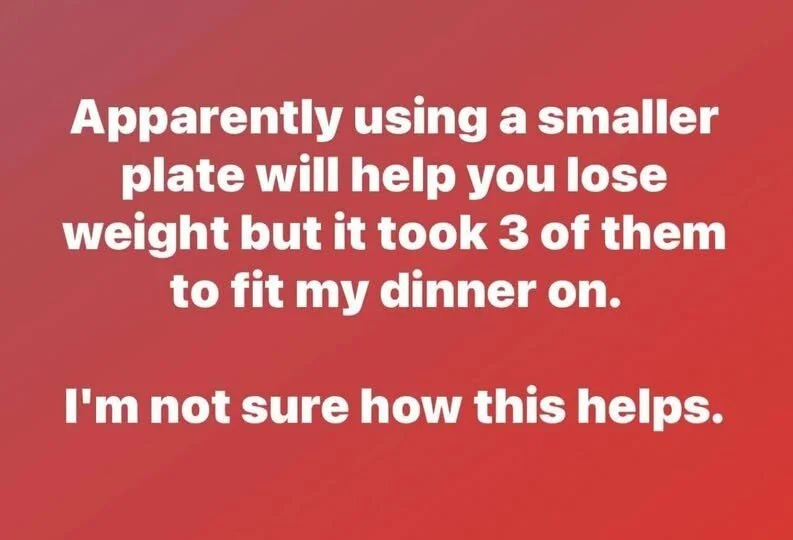
Mot: These Diet People Come Up with the Strangest Ideas - Huh!!!
Seeds of Wisdom RV and Economics Updates Sunday Morning 3-29-26
Good Morning Dinar Recaps
Global Financial Shift Accelerates: Policy, Payments, and Power Realignment in Focus
Fresh developments signal that the evolution toward a new global financial framework is gaining momentum.
Good Morning Dinar Recaps
Global Financial Shift Accelerates: Policy, Payments, and Power Realignment in Focus
Fresh developments signal that the evolution toward a new global financial framework is gaining momentum.
Overview
In the past 24 hours, key signals across policy, payments, and global coordination point to continued acceleration in the transformation of the financial system.
Rather than a sudden reset, these developments reinforce a gradual but deliberate restructuring of how money is managed, moved, and trusted worldwide.
Key Developments
1. Central Banks Signal Continued Tight Control with Strategic Flexibility
Recent commentary and policy signals suggest central banks are maintaining tight monetary conditions while remaining flexible to respond to economic stress.
This balancing act highlights the challenge of controlling inflation while preserving financial stability in a high-debt environment.
2. Cross-Border Payment Modernization Gains Momentum
Global institutions and policymakers continue advancing initiatives to speed up international payments and reduce transaction costs.
Efforts around real-time settlement systems and digital infrastructure are reinforcing the shift toward a more efficient global payment network.
3. Currency and Trade Alignment Continues to Evolve
Emerging markets are expanding efforts to settle trade in local currencies and diversify financial partnerships.
This trend supports the gradual move toward a more multipolar financial system, where reliance on a single currency framework is reduced.
4. Debt Pressures Continue to Shape Policy Decisions
Ongoing concerns around rising sovereign debt levels are influencing fiscal and monetary strategies globally.
Governments are increasingly focused on sustainability, refinancing strategies, and long-term financial resilience.
Why It Matters
These developments show that multiple pillars of the financial system are evolving simultaneously.
Policy decisions, payment infrastructure, and global trade dynamics are becoming more interconnected, accelerating the transition toward a modernized financial framework.
Why It Matters to Foreign Currency Holders
For currency holders, these shifts influence currency strength, stability, and global demand.
Understanding these trends provides insight into how exchange dynamics and monetary policy direction may evolve over time.
Implications for the Global Reset
Pillar 1 — Monetary Policy Transition
Central banks are navigating a new era of balancing inflation control with systemic stability.Pillar 2 — Payment System Transformation
Faster, more efficient payment rails are reshaping how money moves globally.
This is not a disruption — it is a coordinated evolution of financial infrastructure.
Seeds of Wisdom Team View
The past 24 hours reinforce a clear message: the system is not standing still — it is being actively refined and upgraded.
Each adjustment, whether in policy, payments, or trade, represents a building block in the next phase of global finance.
The transformation is steady, strategic, and increasingly interconnected.
Seeds of Wisdom Team
Newshounds News™ Exclusive
Sources
~~~~~~~~~~
🌱A Message to Our Currency Holders🌱
If you’ve been holding foreign currency for many years, you were not foolish.
You were not wrong to believe the global financial system would change.
What failed was not your patience — it was the information you were given.
For years, dates, rumors, and personalities replaced facts, structure, and proof. “This week” predictions created cycles of hope and disappointment that were never based on how currencies actually change.
That is not your failure.
Our mission here is different: • No dates • No rates • No hype • No gurus
Instead, we focus on:
• Verifiable developments • Institutional evidence
• Global financial structure • Where countries actually sit in the process
Currency value changes only come after sovereignty, trade, banking, settlement systems, and fiscal coordination are in place. History and institutions confirm this sequence.
You will see silence. You will see denials. That is not delay — that is discipline.
Protect your identity. Organize your documents. Verify everything.
Never hand your discernment to anyone who cannot show proof.
You deserve truth — not timelines.
Seeds of Wisdom Team
Newshounds News
~~~~~~~~~~
Seeds of Wisdom Team RV Currency Facts Youtube and Rumble
Newshound's News Telegram Room Link
RV Facts with Proof Links Link
RV Updates Proof links - Facts Link
Follow the Gold/Silver Rate COMEX
Follow Fast Facts
Seeds of Wisdom Team™Website
Thank you Dinar Recaps
Iraq Economic News And Points To Ponder Sunday Morning 3-27-26
Iraq Held 5.2% Of Global Oil Output In 2025
2026-03- Shafaq News- Baghdad Iraq ranked second among Arab oil producers in 2025 with a 5.2% share of global output, according to Visual Capitalist.
Saudi Arabia led with 11.26%, followed by the UAE (4.52%), Kuwait (3.05%), and Libya (1.61%). Qatar (1.55%), Algeria (1.35%), and Oman (1.18%) came next, followed by Egypt (0.60%), Bahrain (0.22%), and Syria (0.09%).
Iraq Held 5.2% Of Global Oil Output In 2025
2026-03- Shafaq News- Baghdad Iraq ranked second among Arab oil producers in 2025 with a 5.2% share of global output, according to Visual Capitalist.
Saudi Arabia led with 11.26%, followed by the UAE (4.52%), Kuwait (3.05%), and Libya (1.61%). Qatar (1.55%), Algeria (1.35%), and Oman (1.18%) came next, followed by Egypt (0.60%), Bahrain (0.22%), and Syria (0.09%).
Sudan (0.04%), Tunisia (0.03%), and Yemen (0.02%) recorded the lowest shares, while the United States remained the world’s top producer with 16.08%. https://www.shafaq.com/en/Economy/Iraq-held-5-2-of-global-oil-output-in-2025
Iraq Oil Exports To US Rise To 270,000 Bpd
2026-03-29 Shafaq News- Baghdad Iraq’s oil exports to the United States rose to 270,000 barrels per day last week, according to the US Energy Information Administration (EIA), marking a sharp increase compared to the previous week.
US crude imports from eight major countries averaged 5.889 million barrels per day, down by 502,000 bpd from 6.391 million bpd a week earlier, the data showed.
Iraqi exports to the US increased by 157,000 bpd from 113,000 bpd in the prior week.
Canada remained the top crude supplier to the US at 3.927 million bpd, followed by Saudi Arabia at 605,000 bpd, Venezuela at 549,000 bpd, and Mexico with 227,000 bpd.
Imports from Brazil reached 164,000 bpd, Colombia 88,000 bpd, and Nigeria 59,000 bpd, while no imports were recorded from Ecuador or Libya. https://www.shafaq.com/en/Economy/Iraq-oil-exports-to-US-rise-to-270-000-bpd
Iraq Accelerates Northern Export Pipeline Repairs Amid Hormuz Crisis
2026-03-28 Shafaq News- Saladin Rehabilitation work on the northern export pipeline —part of the Iraq-Turkiye crude oil pipeline connecting Kirkuk to Ceyhan— is advancing around the clock in Saladin province, a senior official at the state-run Oil Projects Company confirmed on Saturday.
Work is ongoing in three daily shifts, 24 hours a day, the official told Shafaq News, with crews conducting hydrostatic testing on the main pipeline and the connected 32-node feeder line. "Completion rates are tracking the defined timetables," the official said, adding that any challenges and obstacles are being addressed immediately to keep work moving.
Hadeer Jaloub, assistant director general of geographic bodies at the company, visited Saladin province to inspect the project's final phases. The head of the Northern Projects Authority and site directors also attended a project management meeting to review progress.
The Iraq-Turkiye Crude Oil Pipeline runs approximately 970 kilometers from the Kirkuk fields in northern Iraq to the Mediterranean port of Ceyhan. The line has been largely idle since 2014 following repeated attacks by armed groups. As of 18 March, Iraq was pumping 250,000 barrels per day through the route after a Baghdad-Erbil agreement unlocked the northern corridor.
The push to complete rehabilitation comes as Iraq's southern export infrastructure has been effectively paralysed due to the ongoing US-Israel-Iran war and the closure of the Strait of Hormuz.
Oil officials said the Production from the country's main southern oilfields has fallen to approximately 800,000 barrels per day, down from 4.3 million barrels per day before the conflict. Storage tanks have reached critical capacity, and southern exports have come to a near-complete halt, with tankers unable to reach Iraq's Gulf terminals.
Oil Minister Hayan Abdul Ghani said on 9 March that the government is "studying several alternatives to ensure continued crude exports through more secure routes," confirming that domestic refineries across the southern, central, and northern regions are operating at full capacity to meet local demand. https://www.shafaq.com/en/Economy/Iraq-accelerates-northern-export-pipeline-repairs-amid-Hormuz-crisis
Dollar rises in Baghdad and Erbil markets
2026-03-29 Shafaq News- Baghdad/ Erbil The US dollar opened Sunday’s trading higher in Iraq, hovering around 154,500 dinars per 100 dollars.
According to a Shafaq News market survey, the dollar traded in Baghdad's Al-Kifah and Al-Harithiya exchanges at 154,500 dinars per 100 dollars, up from the previous session’s 154,450 dinars.
In the Iraqi capital, exchange shops sold the dollar at 155,000 dinars and bought it at 154,000 dinars, while in Erbil, selling prices stood at 154,450 dinars and buying prices at 154,350 dinars https://www.shafaq.com/en/Economy/Dollar-rises-in-Baghdad-and-Erbil-markets-4
Gold prices steady in Baghdad, Erbil
2026-03-29 Shafaq News- Baghdad/ Erbil On Sunday, gold prices held ground in Baghdad and Erbil markets, hovering near 980.000 IQD per mithqal, according to a survey by Shafaq News Agency.
Gold prices on Baghdad's Al-Nahr Street recorded a selling price of 978.000 IQD per mithqal (equivalent to five grams) for 21-carat gold, including Gulf, Turkish, and European varieties, with a buying price of 974.000 IQD, unchanged from Saturday.
The selling price for 21-carat Iraqi gold stood at 948,000 IQD, while the buying price reached 944,000 IQD.
In jewelry stores, the selling price per mithqal of 21-carat Gulf gold ranged between 980,000 and 990,000 IQD, while Iraqi gold sold for between 950,000 and 960,000 IQD.
In Erbil, 22-carat gold was sold at 1,050,000 IQD per mithqal, 21-carat gold at 1,002,000 IQD, and 18-carat gold at 859,000 IQD. https://www.shafaq.com/en/Economy/Gold-prices-steady-in-Baghdad-Erbil-0-9
Expert: War Exacerbates Iraq's Financial Crises And Threatens Salaries And The Economy
{Economy: Al-Furat News} Economic expert Salah Nouri warned on Saturday that the war waged by the United States and Israel against Iran has clear repercussions on the global economic situation, further complicating the financial situation in Iraq.
Nouri told Al-Furat News Agency that: “Iraq faces major challenges before the outbreak of any war, due to the failure to approve budgets and the financial liquidity crisis, in addition to the size of internal and external debts and the obligations of interest and repayment, in light of the weak possibility of exporting crude oil in accordance with the general budgets.”
He added, "These external and internal circumstances are exacerbating the financial deficit and directly impacting the payment of salaries to current employees and retirees, as well as pushing the economy toward recession." Nouri emphasized that "the solutions offered by the executive branch to address these challenges are still unclear." LINK Raghid
‘40-50% Stock Market Crash Coming’: This Is Your Last Exit | Edward Dowd & Michelle Makori
‘40-50% Stock Market Crash Coming’: This Is Your Last Exit | Edward Dowd & Michelle Makori
Miles Franklin Media: 3-27-2026
Markets may be watching the wrong risk. While headlines focus on the Iran war and geopolitics, Edward Dowd warns the real breakdown is already underway beneath the surface of the U.S. economy. From a weakening housing market to a bursting AI bubble and a frozen private credit system,
Dowd argues that the conditions for a major downturn were already in place – before the war even began. He explains why any relief rally driven by geopolitical optimism could be a selling opportunity, why a 40-50% market crash remains on the table, and how structural risks in housing, credit, and global growth are converging.
‘40-50% Stock Market Crash Coming’: This Is Your Last Exit | Edward Dowd & Michelle Makori
Miles Franklin Media: 3-27-2026
Markets may be watching the wrong risk. While headlines focus on the Iran war and geopolitics, Edward Dowd warns the real breakdown is already underway beneath the surface of the U.S. economy. From a weakening housing market to a bursting AI bubble and a frozen private credit system,
Dowd argues that the conditions for a major downturn were already in place – before the war even began. He explains why any relief rally driven by geopolitical optimism could be a selling opportunity, why a 40-50% market crash remains on the table, and how structural risks in housing, credit, and global growth are converging.
Dowd also shares his outlook on China’s slowing economy, the Federal Reserve’s limited options, and why he believes gold remains in a long-term bull market – even after recent volatility
In this episode of The Real Story with Michelle Makori:
Why the real economic breakdown has already started
Housing market weakness and why prices may need to fall
The AI bubble and signs it may already be cracking
Private credit stress and why it’s the “canary in the coal mine”
Why a relief rally could be the last chance to exit
Dowd’s outlook for a 40–50% market correction
China’s economic slowdown and global implications
Gold’s long-term trajectory and why it could reach $10,000
00:00 Coming up
01:25 Introduction
02:55 Core thesis: recession already in motion
04:55 Housing market breakdown begins
10:25 Why prices must fall
14:55 Private credit freeze warning
18:55 Fed trapped by inflation and war
22:25 AI bubble showing cracks
32:55 Recession outlook and deflation risk
37:25 40-50% market crash scenario
41:55 Iran war vs structural risks
45:25 Why relief rallies are selling opportunities
49:25 China’s economic slowdown
55:25 Gold outlook and $10K target 59:25 Positioning