
Iraq Economic News and Points To Ponder Monday Evening 3-16-26
Iraq Excluded From 2026 Index Of Economic Freedom
2026-03-16 Shafaq News- Baghdad Iraq did not appear in the 2026 Index of Economic Freedom due to insufficient reliable economic data and weak transparency standards, the Heritage Foundation said on Monday.
The foundation placed Iraq among unranked countries for the third consecutive year, alongside Afghanistan, Libya, Somalia, Syria, Yemen, Liechtenstein, and Ukraine. The index covers around 176 countries and evaluates economic freedom across four main pillars: rule of law, government size, regulatory efficiency, and open markets. It measures 12 sub-indicators, assigning scores between zero and 100 to determine each country’s level of economic freedom.
Iraq Excluded From 2026 Index Of Economic Freedom
2026-03-16 Shafaq News- Baghdad Iraq did not appear in the 2026 Index of Economic Freedom due to insufficient reliable economic data and weak transparency standards, the Heritage Foundation said on Monday.
The foundation placed Iraq among unranked countries for the third consecutive year, alongside Afghanistan, Libya, Somalia, Syria, Yemen, Liechtenstein, and Ukraine. The index covers around 176 countries and evaluates economic freedom across four main pillars: rule of law, government size, regulatory efficiency, and open markets. It measures 12 sub-indicators, assigning scores between zero and 100 to determine each country’s level of economic freedom.
According to the report, Singapore ranked first globally with 84.4 points, followed by Switzerland with 83.7 and Ireland with 83.3, benefiting from open market environments and strong property rights protections. Lebanon and Iran ranked among the lowest globally, scoring 43.1 and 41.8 points, respectively.
Across the Arab region, the United Arab Emirates topped the ranking with 71.9 points, followed by Qatar with 70.2 and Oman with 68.5.
Economic expert Mohammed Al-Hassani told Shafaq News that Iraq’s absence from the index mainly reflects weak government transparency and the lack of accurate data needed to measure indicators such as investment, trade, and business freedom.
He added that excluding Iraq from the ranking reduces foreign investors’ ability to evaluate the country’s business environment and deprives policymakers of an international benchmark that could guide economic reforms and improve the investment climate. https://www.shafaq.com/en/Economy/Iraq-excluded-from-2026-Index-of-Economic-Freedom
USD/IQD Exchange Rates Fall In Baghdad, Erbil
2026-03-16 Shafaq News- Baghdad/ Erbil The US dollar closed Monday’s trading lower in Iraq, hovering around 154,500 dinars per 100 dollars.
According to a Shafaq News market survey, the dollar traded in Baghdad’s Al-Kifah and Al-Harithiya central exchanges at 154,650 dinars per 100 dollars, down from 155,000 dinars recorded in the morning.
In the Iraqi capital Baghdad, exchange shops sold the dollar at 155,000 dinars per 100 dollars and bought it at 154,000 dinars, while in Erbil, selling prices stood at 154,300 dinars and buying prices at 154,200 dinars.
https://www.shafaq.com/en/Economy/USD-IQD-exchange-rates-fall-in-Baghdad-Erbil
Pavel Talabani: The Regional Government Is A Coalition Government And It Is Not Permissible To Make Decisions That Affect The People's Livelihood Unilaterally.
{Politics: Al-Furat News} The head of the Patriotic Union of Kurdistan Party, Bafel Talabani, confirmed that the Kurdistan Regional Government is a coalition government, stressing the need to avoid making unilateral decisions that affect the livelihood and fate of citizens.
Pavel Talabani said in a press statement: "At this time when our region is facing extreme tension and instability, decisions that affect the fate and lives of our people should not be made unilaterally."
He added that "the Kurdistan Regional Government is a broad-based government, and all parties must act accordingly," noting that "the current time is not a time for tensions, conflicts, or scoring political points."
Pavel Talabani continued, "Our people deserve to enjoy a stable life and to receive their salaries on time, and the current time is a time for unity to confront the great dangers that we may face."
"We support constructive dialogue with our partners in Baghdad and Erbil to protect the stability of the Kurdistan Region and Iraq, and at the same time, we ensure that the well-being of our citizens is never jeopardized," he affirmed. LINK
The Minister Of Oil Announces Iraq's Production Volume According To Its OPEC Quota.
{Economic: Al-Furat News} Oil Minister Hayyan Abdul Ghani confirmed that Iraq's crude oil production is about 4.4 million barrels per day, according to the quota set by OPEC.
Abdul Ghani said in a press statement that "the military operations in the Gulf and the closure of the Strait of Hormuz led to the cessation of Iraqi oil exports days after the outbreak of war in the region."
He explained that current production is between 1.5 and 1.6 million barrels per day to cover the needs of refineries and power plants, noting that oil and gas products currently cover local needs despite the halt in exports and the impact on oil revenues.
The oil minister revealed that there are efforts to start exporting quantities of oil through the Turkish port of Ceyhan, in addition to tenders to export oil through the port of Banias in Syria and the Aqaba pipeline, stressing that the Iraqi-Turkish pipeline to transport Kirkuk oil with a capacity of 200,000 to 250,000 barrels per day is currently undergoing final inspection and qualification. LINK
U.S. Oil Companies Warn Trump Administration Of Worsening Energy Crisis
American oil companies have warned the administration of President Donald Trump that the suspension of supplies through the Strait of Hormuz could exacerbate the energy crisis.
The Wall Street Journal reported that U.S. oil firms cautioned the Trump administration that a halt in supplies via the Strait of Hormuz would worsen the energy situation. It added that the oil sector is warning the administration that the energy crisis is likely to intensify
Iraqi Minister Of Oil: Tenders To Export Oil Via Baniyas, Syria And Aqaba, Jordan Ports
INA – BAGHDAD The Iraqi Oil Minister Hayyan Abdul Ghani announced on Monday the issuance of tenders for oil exports via the Syrian port of Banias and the Jordanian port of Aqaba.
“Exports have stopped, and Iraq relies primarily on revenues from crude oil exports,” Abdul Ghani said in a statement followed by the Iraqi News Agency - INA.
He explained that “the Ministry of Oil is making significant efforts to begin exporting quantities of crude oil through the Ceyhan port.”
“We have issued tenders for crude oil exports through the Banias port in Syria and the Aqaba port in Jordan. Contracts for exporting crude oil through these ports will be awarded within the next two days,” he underscored.
Abdul Ghani confirmed that “tankers will be used to transport the crude oil due to the unavailability of pipelines for the Iraqi-Syrian or Aqaba pipelines.”
Seeds of Wisdom RV and Economics Updates Monday Afternoon 3-16-26
Good Afternoon Dinar Recaps,
Oil Shock and Currency Tensions: Strait of Hormuz Crisis Sends Ripples Through Global Finance
Energy chokepoints and currency experiments collide as the Iran conflict intensifies.
Overview
Escalating tensions around the Strait of Hormuz are sending powerful signals through global financial markets, highlighting how energy supply routes remain one of the most critical pressure points in the international economic system.
Good Afternoon Dinar Recaps,
Oil Shock and Currency Tensions: Strait of Hormuz Crisis Sends Ripples Through Global Finance
Energy chokepoints and currency experiments collide as the Iran conflict intensifies.
Overview
Escalating tensions around the Strait of Hormuz are sending powerful signals through global financial markets, highlighting how energy supply routes remain one of the most critical pressure points in the international economic system.
Oil prices have experienced sharp volatility as traders respond to disruptions and security risks in the Persian Gulf. At the same time, new discussions about alternative currency settlement for oil shipments are emerging — developments that could have long-term implications for the global monetary order.
The Strait of Hormuz handles roughly 20% of the world’s oil supply, meaning any disruption in the corridor can quickly impact energy prices, inflation expectations, and financial stability worldwide.
Key Developments
1. Global Energy Markets Jolt as Hormuz Risks Intensify
Energy markets have become increasingly volatile as military conflict and shipping threats raise concerns about oil flows through the Strait of Hormuz.
The narrow waterway carries about one-fifth of global oil supply, making it one of the most strategically important energy corridors in the world. Even partial disruptions can trigger rapid price swings and supply concerns.
Recent market reactions reflect growing uncertainty about whether shipping traffic can continue safely through the region.
2. Oil Prices Swing as Traders React to Conflict
Oil markets have experienced rapid price movements as investors attempt to gauge the economic impact of the escalating conflict.
Energy prices surged earlier in the crisis as shipping slowed and tanker traffic became uncertain, while more recent trading sessions have shown sharp volatility as governments consider releasing strategic reserves to stabilize supply.
These fluctuations illustrate how geopolitical shocks can immediately ripple through commodity markets and global inflation expectations.
3. Currency Questions Enter the Oil Trade Conversation
One of the most intriguing developments emerging from the conflict is discussion surrounding alternative currencies in oil trade settlement.
Reports suggest Iran has considered allowing oil tankers through the Strait of Hormuz only if transactions are conducted in Chinese yuan, potentially challenging the long-standing practice of dollar-denominated oil trade.
While still speculative and not widely adopted, such proposals highlight growing interest among some countries in experimenting with non-dollar settlement mechanisms for strategic commodities.
4. Global Markets Respond to Energy and Inflation Risks
Financial markets worldwide have reacted to the uncertainty.
Stocks have slipped in several regions while investors move toward traditional safe-haven assets and currencies amid fears that sustained energy disruptions could increase inflation and slow economic growth.
Higher energy costs historically ripple through the global economy, affecting transportation, manufacturing, and consumer prices.
Why It Matters
Energy markets sit at the center of the global economic system.
When a strategic chokepoint like the Strait of Hormuz faces disruption, the consequences extend far beyond regional politics.
Potential effects include:
• Higher global inflation• Volatility in financial markets• Pressure on import-dependent economies• Greater geopolitical competition over energy security
Why It Matters to Foreign Currency Holders
For those monitoring developments related to a potential evolution of the global financial system, the situation highlights several structural realities.
Energy trade remains deeply intertwined with the international monetary system, particularly through the currencies used to settle major commodity transactions.
Events that challenge established payment practices — even indirectly — can gradually encourage experimentation with alternative financial arrangements.
Implications for the Global Financial System
The crisis highlights how three forces often intersect during periods of financial transition:
• Energy supply disruptions• Currency settlement experimentation• Geopolitical realignment
Together, these dynamics can accelerate discussions about payment systems, reserve diversification, and alternative trade settlement mechanisms.
While the current system remains deeply anchored in existing financial infrastructure, episodes like this often catalyze longer-term financial innovation and geopolitical strategy.
Closing Perspective
The Strait of Hormuz crisis underscores a fundamental truth about global finance:
Energy security, geopolitics, and currency systems remain tightly interconnected.
When one pillar becomes unstable, the effects quickly ripple across markets, commodities, and international monetary relations.
In a rapidly evolving global economy, even regional conflicts can become catalysts for broader financial change.
Seeds of Wisdom Team
Newshounds News™ Exclusive
Sources
~~~~~~~~~~
Dubai Markets Slide Into Bear Territory as Middle East Conflict Shakes Investor Confidence
Regional instability and oil-route fears send shockwaves through Gulf financial markets.
Overview
Dubai’s primary stock benchmark has officially entered bear-market territory, highlighting how geopolitical instability can rapidly ripple through global financial markets.
The Dubai Financial Market General Index (DFMGI) has dropped more than 20% from its late-February peak, pushing the market into a technical bear market and erasing tens of billions of dollars in equity value.
Analysts say the selloff reflects growing investor anxiety surrounding the widening conflict involving Iran and disruptions to energy trade routes in the Persian Gulf, particularly around the strategically critical Strait of Hormuz.
The decline illustrates how geopolitical shocks in key energy corridors can quickly impact global financial stability.
Key Developments
1. Dubai’s Main Index Enters Bear Market Territory
Dubai’s benchmark equity index has fallen more than 20% from its February high, the threshold commonly used to define a bear market.
Market losses have erased tens of billions of dollars in value from publicly traded companies, reflecting a sharp shift in investor sentiment.
2. Escalating Regional Conflict Triggers Market Volatility
The selloff has been fueled by rising geopolitical tensions tied to the ongoing conflict involving Iran and regional military activity.
Investors are increasingly concerned about the potential disruption of oil and shipping traffic through the Strait of Hormuz, a narrow maritime chokepoint responsible for roughly one-fifth of global oil flows.
Any prolonged disruption to this route could have major consequences for global energy supply and inflation expectations.
3. Banking, Real Estate, and Tourism Stocks Lead Declines
Some of the hardest-hit sectors in Dubai’s market include:
• Banking and financial services• Real estate developers• Tourism and aviation companies
Large property firms and major lenders have recorded notable losses as investors reassess regional economic growth prospects amid heightened geopolitical risk.
4. Gulf Markets Reflect Broader Regional Risk
Dubai’s downturn is part of a wider regional market reaction.
Several Gulf exchanges—including Qatar, Bahrain, and Kuwait—have also experienced declines as investors respond to uncertainty surrounding energy supplies, security risks, and economic disruptions across the Middle East.
Why It Matters
Dubai has positioned itself as a major global financial hub connecting Europe, Asia, and the Middle East.
Sharp declines in its equity market signal that geopolitical instability can quickly influence international capital flows, investment decisions, and regional economic confidence.
Because Gulf economies are deeply linked to global energy markets and international trade routes, disruptions in the region can create ripple effects across commodities, shipping, and financial markets worldwide.
Why It Matters to Foreign Currency Holders
For those tracking developments related to a potential evolution of the global financial system, events like this highlight several structural realities:
• Energy chokepoints remain critical to global monetary stability
• Regional conflicts can trigger rapid financial volatility
• Financial hubs in strategic trade corridors are highly sensitive to geopolitical risk
These factors reinforce why many countries are simultaneously exploring diversified reserve assets, alternative payment systems, and new financial infrastructure.
Implications for the Global Financial System
This market shock underscores a broader reality emerging across global finance:
• Geopolitical risk increasingly influences financial markets
• Energy supply routes remain a core pillar of global economic stability
• Regional conflicts can trigger immediate global market responses
As the international monetary system evolves toward faster digital payments, diversified reserves, and multipolar financial networks, stability in key economic hubs remains essential.
Closing Perspective
Dubai’s market decline serves as a reminder that financial systems remain deeply interconnected with geopolitical events.
When strategic energy routes and major financial centers are affected by conflict, the ripple effects can spread rapidly across the global economy.
This is not just regional turbulence — it is another illustration of how geopolitics and financial markets increasingly move together in a shifting global economic order.
Seeds of Wisdom Team
Newshounds News™ Exclusive
Sources
Bloomberg — “Dubai Stocks Fall Into Bear Market as Iran War Enters Third Week”
Reuters — Most Gulf equities decline as Iran conflict fuels regional market uncertainty
~~~~~~~~~~
Seeds of Wisdom Team RV Currency Facts Youtube and Rumble
Newshound's News Telegram Room Link
RV Facts with Proof Links Link
RV Updates Proof links - Facts Link
Follow the Gold/Silver Rate COMEX
Follow Fast Facts
Seeds of Wisdom Team™Website
Thank you Dinar Recaps
Iraq Economic News and Points To Ponder Monday Afternoon 3-16-26
State of Law Coalition: Iraq’s Economic Security Above All Considerations
Baghdad – INA The State of Law Coalition affirmed on Monday that Iraq’s economic security must remain above all considerations, stressing that disputes should be addressed through dialogue.
In a statement received by the Iraqi News Agency, the coalition said it had followed with deep concern the statements issued by the Iraqi Ministry of Oil and the Ministry of Natural Resources of the Kurdistan Regional Government, noting the divergence in positions amid the sensitive economic conditions facing the country and the potential repercussions that could directly affect citizens’ livelihoods.
State of Law Coalition: Iraq’s Economic Security Above All Considerations
Baghdad – INA The State of Law Coalition affirmed on Monday that Iraq’s economic security must remain above all considerations, stressing that disputes should be addressed through dialogue.
In a statement received by the Iraqi News Agency, the coalition said it had followed with deep concern the statements issued by the Iraqi Ministry of Oil and the Ministry of Natural Resources of the Kurdistan Regional Government, noting the divergence in positions amid the sensitive economic conditions facing the country and the potential repercussions that could directly affect citizens’ livelihoods.
The statement added that the accumulation of disputes between the federal government and the Kurdistan Regional Government over many years has contributed to complicating the situation at a time when the current circumstances require the highest levels of national responsibility and prioritizing the public interest.
The coalition called on all concerned parties to address the issues at hand with a spirit of national responsibility, avoid escalation or deepening disagreements, and work jointly to overcome the current crisis in a way that preserves economic stability and safeguards citizens’ interests.
It further stressed that the disputed issues between the federal government and the Kurdistan Region should be resolved through a national approach based on dialogue, cooperation, and mutual understanding, in a manner that serves the public interest and strengthens political and economic stability in the country.
The coalition emphasized that Iraq’s economic security and the stability of citizens’ conditions must remain above any other considerations, urging all parties to act wisely and work collectively to navigate this sensitive phase in a way that serves the interests of Iraq and its people.
Iraq's 2025 Budget Deficit Reaches 17 Trillion Dinars: Eco Iraq Observatory
The Eco Iraq observatory announced Iraq's 2025 budget deficit at 17 trillion and 40 billion dinars, driven by oil-dependent revenues and high current expenditures.
2026-03-15 12:45 Iraq's Budget DeficitECO Iraq Observatory ERBIL (Kurdistan24) - The Eco Iraq observatory announced that Iraq's budget deficit for 2025 reached 17 trillion and 40 billion Iraqi dinars, as expenditures exceeded revenues in a fiscal year dominated by current spending and reliance on oil income.
In a press statement, the observatory said that state revenues during 2025 amounted to 124 trillion and 185 billion Iraqi dinars. It explained that oil revenues reached 109 trillion and 207 billion dinars, while non-oil revenues amounted to 14 trillion and 977 billion dinars.
The observatory pointed out that the financial deficit resulted from expenditures exceeding revenues. It clarified that total spending reached 141 trillion and 122 billion dinars, of which 119 trillion and 163 billion dinars were current expenditures, equivalent to 84% of total public spending.
It added that investment expenditures amounted to 22 trillion and 22 billion dinars, representing about 15% of total spending. The observatory stated that the rise in current expenditures against weak investment reflects a defect in the budget structure, with heavy reliance on oil constituting about 88% of revenues, making public finances vulnerable to price fluctuations.
The observatory stressed the necessity of enhancing non-oil revenues and increasing investment spending.
This announcement on the 2025 fiscal outcomes highlights Iraq's ongoing dependence on oil exports, which pass through key regional waterways including the Strait of Hormuz. About 20 million barrels per day of crude and other oil products were transported through the strait in 2025, according to FactCheck.org.
That flow has slowed to a trickle since the U.S.-Israeli conflict with Iran began, per the same report.
The Strait of Hormuz, bordering Iran and Oman, serves as a critical conduit for oil and natural gas from the Persian Gulf to global markets, with roughly 27% of the world's maritime trade in crude oil and petroleum products passing through it, as detailed in a Congressional Research Service report.
Starting on March 4, 2026, Iranian forces declared the strait closed, threatening and carrying out attacks on ships attempting to transit, according to the report.
The conflict, which began with joint U.S. and Israeli military operations against Iran on February 28, 2026, has led to a de facto closure of the strait, disrupting shipments from major producers including Iraq, per the American Action Forum.
Transits through the strait have essentially ground to a halt, with firms adopting a cautious stance amid soaring war-risk premiums, the forum noted.
Iraqi oil production from its main southern oilfields has fallen by 70% to 1.3 million barrels per day, as the country is unable to export via the Strait of Hormuz due to the conflict, three industry sources told Reuters.
Iraq's exports fell to an average of around 800,000 barrels per day, with only two tankers loading because vessels cannot move freely through the strait to southern terminals, according to the sources and a shipping agent.
Storage facilities in the Gulf are rapidly filling, forcing oilfields in Iraq and other countries to cut production, analysts, traders and sources told Al Jazeera.
The conflict has led to the suspension of about a fifth of global crude and natural gas supply, as Iran targets ships in the strait, per the report.
Maritime traffic through the Strait of Hormuz has almost completely stopped since the strikes against Iran, with Iran targeting tankers in the area, according to Bloomberg.
Gulf producers have lowered crude output as storage tanks fill up, the report added.
The conflict disrupted approximately 20% of global oil supplies transiting the Strait of Hormuz, causing Brent Crude oil prices to rise from around $70 to over $110 per barrel within days, per Reuters.
Oil production in Iraq, among other countries, dropped by a reported 6.7 million barrels per day by March 10, 2026, and by at least 10 million barrels per day as of March 12, 2026, according to the entry.
Iran's closure of the strait also disrupted significant liquefied natural gas volumes, the entry noted. A prolonged disruption of Middle East oil trade would create oil market conditions without historical precedent, with oil prices experiencing significant upward pressure, as stated in the Congressional Research Service report.
The international benchmark Brent jumped 8% from $71.32 per barrel on February 27, 2026, to $77.24 per barrel on March 2, 2026, the trading days before and after operations began, per the report. As the conflict continued, prices went higher, at one point breaking the $100 per barrel mark.
In the U.S., President Donald Trump raised the prospect of actions to reestablish free transit of the strait, amid a considerable decrease in shipping traffic, according to the Congressional Research Service.
On March 3, 2026, Trump stated that he had ordered the provision of political risk insurance to all maritime trade and said the U.S. Navy could escort commercial vessels through the strait if necessary.
Iran has the capacity to disrupt shipping via mines, speed boats, submarines, shore-based cruise missiles, aircraft and other systems, the report assessed. Prior to the conflict, analysts held consensus that the U.S. military could counter Iran's forces and restore shipping flow, though such an effort would take days, weeks or months.
The Strait of Hormuz crisis has reshaped global oil markets, with the conflict putting the waterway on a knife's edge and affecting oil prices, jet fuel and liquefied natural gas, per Kpler.
The conflict directly threatens approximately 20% of global oil supply that transits the strait daily, the blog stated.
A closure of the Strait of Hormuz due to the U.S.-Iran war has impacted the oil market, but also sectors reliant on shipping, from metals to agriculture and autos, according to CNBC.
U.S. military actions and insurance backstops may help keep trade flowing, but supply chain experts say it could take weeks for impacts to hit prices across products.
The International Energy Agency took the step of saying it would release 400 million barrels of oil from reserves, per the report. There is no value to Iran in intercepting cargo containers, though non-oil ships may be harassed by Iranian speedboats, the report noted.
Reports of U.S. Navy escorting ships through the strait were incorrect, but the U.S. can put plans in place to stop Iran from seizing ships, with air power and missiles able to destroy Iranian missile batteries, according to CNBC.
Iraq halted crude oil shipments via a key pipeline to a Turkish port as a precautionary measure, as Middle Eastern energy infrastructure is caught in the conflict, per Bloomberg.
The pipeline carries oil from northern fields, but nearly all Iraqi crude exports are shipped via the Strait of Hormuz.
The U.S. and France are considering naval escorts for tankers crossing the strait, though neither plans to start operations immediately, the report added. Prolonged disruption threatens global inflation.
In a February update, the International Energy Agency said that with around 25% of the world's seaborne oil trade transiting the strait and limited bypass options, any disruption would have huge consequences for world oil markets, per FactCheck.org.
A prolonged disruption would lead to oil supply shortages and make price increases inevitable, the agency warned.
Iran blocked the flow of oil and goods through the strait in retaliation for the airstrikes, threatening to shoot or bomb vessels attempting to pass, according to the report. The strait connects the Persian Gulf with the Gulf of Oman and the Arabian Sea.
The conflict could leave consumers and businesses facing weeks or months of higher fuel prices even if it ends quickly, as suppliers grapple with damaged facilities, disrupted logistics and elevated shipping risks, per Al Jazeera.
A nearly complete shutdown means producers like Iraq have suspended shipments of up to 140 million barrels of oil, equal to about 1.4 days of global demand.
Oil and gas prices have surged since the war's start amid the collapse in Hormuz transits, according to Bloomberg.
Daily natural gas prices in Asia and Europe have risen almost 54% and 63%, respectively, over the week before operations began, while U.S. prices increased 7% between February 27 and March 2, 2026, per the Congressional Research Service.
Iran's attempts to disrupt energy commerce carry strategic benefits and risks for Tehran, including direct conflict with the U.S. in past instances, the report noted. War risk insurance has increased significantly since fighting began on February 28, 2026.
The efficacy of emergency response measures could be tested to their limits in a prolonged disruption, with uncertain duration of elevated prices determined by time needed to normalize trade, according to the Congressional Research Service.
Congress holds interest in potential closures of the strait due to impacts on global prices for oil, natural gas and other commodities, the report stated. Oil supply disruptions could affect prices worldwide, including in the U.S
Iraq Economic News and Points To Ponder Monday Morning 3-16-26
Hormuz Blockade Threatens Iraq’s Cash Buffer
2026-03-15 Shafaq News- Baghdad Iraq’s economy is under severe pressure as the closure of the Strait of Hormuz slashes oil exports, threatening the government’s ability to pay salaries, pensions, and cover essential expenses. The disruption follows the war that erupted on February 28, 2026, between the United States and Israel on one side and Iran on the other, cutting Iraqi oil production by two-thirds.
Hormuz Blockade Threatens Iraq’s Cash Buffer
2026-03-15 Shafaq News- Baghdad Iraq’s economy is under severe pressure as the closure of the Strait of Hormuz slashes oil exports, threatening the government’s ability to pay salaries, pensions, and cover essential expenses. The disruption follows the war that erupted on February 28, 2026, between the United States and Israel on one side and Iran on the other, cutting Iraqi oil production by two-thirds.
According to Eco Iraq, oil revenues make up roughly 90-95% of Iraq’s federal budget, leaving the country highly vulnerable to any drop in exports or prices. Production has fallen from 4.3 million barrels per day to 1.3 million, while exports have dropped below 800,000 barrels daily, causing daily losses of $128 million.
Revenue Pressure
Economist Ahmed Abdul Rabih linked delayed salaries directly to Iraq’s reliance on oil income. “Any disruption in oil exports or a decline in prices directly reduces the liquidity available to the government, putting pressure on its ability to cover operational costs, especially with rising public spending and an expanding workforce,” Abdul Rabih conveyed to Shafaq News.
Despite the drop in revenues, Iraq retains over $100 billion in cash reserves at the US Federal Reserve and roughly 170 tons of gold. Central bank economist Safwan Qusay reported that the Strait of Hormuz closure has cut oil income by $200-300 million per day, though reserves remain about 27% above the level needed to support the Iraqi dinar.
“These reserves could allow the Central Bank (CBI) to fund public spending of $20-30 billion over the next six months, giving the government time to manage the crisis,” Qusay added.
Public Confidence
Central bank data show a 10.95% decline in bank deposits in 2025, equal to roughly 12 trillion dinars. Analysts attribute this to public caution amid economic and security uncertainty, with many citizens holding cash outside the banking system.
Rashid al-Saadi, spokesperson for the Baghdad Chamber of Commerce, pointed out Iraq’s structural economic imbalances, including heavy dependence on oil and limited investment in other sectors.
“Current financial reserves may allow the government to cover salaries for six months to a year, according to official estimates, but if the crisis continues, it raises questions about the state’s ability to maintain public spending at the same level,” al-Saadi explained to Shafaq News.
Alternative Exports
With southern ports mostly inactive, the Kirkuk-Ceyhan pipeline in Turkiye has emerged as a key alternative, though its capacity is limited compared with pre-crisis exports exceeding four million barrels per day. Al-Saadi noted that trucking or land-based transport can replace only a small portion of lost shipments.
He also recommended exploring additional regional export routes through ports such as Aqaba or Baniyas, and expanding non-oil revenue to reduce dependence on oil exports.
High Financial Commitments
Iraq requires about 9 trillion dinars ($6.8 billion) each month to cover operational expenses, including salaries, pensions, and social programs. Analysts warn that prolonged export disruptions could force the government to tap foreign reserves, potentially affecting currency stability if the situation persists.
The Ministry of Finance confirmed that salaries for March and April are secured, but ongoing disruptions could make future months more financially sensitive, emphasizing that Iraq’s ability to manage the crisis hinges on the duration of export interruptions and success in finding alternative routes or boosting non-oil income.
https://www.shafaq.com/en/Economy/Hormuz-blockade-threatens-Iraq-s-cash-buffer
Read more: Hormuz lockdown: Iraq’s economic lifeline under threat
Iraq Clinches Decade-Long Lead In Turkish Housing Market
2026-03-16 Shafaq News- Ankara Iraq has emerged as the top foreign buyer of real estate in Turkiye over the past decade, purchasing more than 51,900 homes between 2015 and 2025, the Turkish Statistical Institute (TURKSTAT) reported on Sunday.
According to the data, Iraqis narrowly surpassed Russians, who bought around 50,700 units during the same period. Iran ranked third with nearly 43,600 homes, followed by Ukraine with 38,200. Other leading foreign buyers included Saudi Arabia with 27,300 units, Kuwait with 16,800, and Germany with 15,400.
TURKSTAT also noted that Iraqi purchases started to decline after 2020, affected by economic fluctuations and changes in Turkiye’s property regulations. Despite the slowdown, Iraq maintained a strong presence, ranking second in 2020 behind Iran and third in 2022 after Russia and Iran
https://www.shafaq.com/en/Economy/Iraq-clinches-decade-long-lead-in-Turkish-housing-market
Dollar Rises In Baghdad And Erbil Markets
2026-03-16 Shafaq News- Baghdad/ Erbil The US dollar opened Monday’s trading higher in Iraq, hovering around 155,000 dinars per 100 dollars.
According to a Shafaq News market survey, the dollar traded in Baghdad's Al-Kifah and Al-Harithiya exchanges at 155,000 dinars per 100 dollars, up from the previous session’s 154,050 dinars.
In the Iraqi capital, exchange shops sold the dollar at 155,500 dinars and bought it at 154,500 dinars, while in Erbil, selling prices stood at 154,900 dinars and buying prices at 154,800 dinars.
https://www.shafaq.com/en/Economy/Dollar-rises-in-Baghdad-and-Erbil-markets-3
Gold Prices Fall In Baghdad, Climb In Erbil
2026-03-16 Shafaq News- Baghdad/ Erbil On Monday, gold prices hovered around 1.08 million IQD per mithqal in Baghdad and Erbil markets, according to a survey by Shafaq News Agency.
Gold prices on Baghdad's Al-Nahr Street recorded a selling price of 1,085,000 IQD per mithqal (equivalent to five grams) for 21-carat gold, including Gulf, Turkish, and European varieties, with a buying price of 1,081,000 IQD. The same gold had sold for 1,090,000 IQD on Sunday.
The selling price for 21-carat Iraqi gold stood at 1,055,000 IQD, with a buying price of 1,051,000 IQD.
In jewelry stores, the selling price per mithqal of 21-carat Gulf gold ranged between 1,085,000 and 1,095,000 IQD, while Iraqi gold sold for between 1,055,000 and 1,065,000 IQD.
https://www.shafaq.com/en/Economy/Gold-prices-fall-in-Baghdad-climb-in-Erbil-0
BP Pulls Foreign Staff From Kirkuk Oil Projects Over Security Concerns
2026-03-16 Shafaq News- Kirkuk British energy company BP has withdrawn several foreign employees from oil field development projects in Iraq’s Kirkuk province as a precaution amid rising regional security tensions, sources at the state-run North Oil Company (NOC) revealed on Monday.
The sources told Shafaq News that BP informed Iraq’s Oil Ministry and the NOC of its decision to pull out foreign personnel working within technical and advisory teams supporting the development of Kirkuk’s oil fields —including Kirkuk, Bai Hassan, Jambur, and Khabbaz, some of Iraq’s most significant and oldest producing reservoirs.
BP is cooperating with the North Oil Company on a program aimed at modernizing several oil fields in Kirkuk province, improving infrastructure for production and transport, and increasing output from reservoirs.
According to the sources, NOC currently produces around 325,000 barrels per day from fields under its management in Kirkuk and nearby areas.
Speaking with our agency, oil expert Ali Khalil explained that the withdrawal of foreign staff does not signal a suspension of the project but may slow technical tasks requiring direct supervision from international specialists, particularly advanced geological studies and reservoir development programs.
He added that international companies often adopt precautionary measures during periods of heightened security risk to protect personnel and reduce operational exposure.
The move follows heightened regional tensions after coordinated US and Israeli strikes on sites inside Iran, which prompted Tehran to launch missile and drone attacks on Israel and US military bases in the region, including Iraq, where Iran-aligned armed factions have launched attacks on American forces.
Earlier this month, more than 100 BP employees —out of roughly 650 staff working with the company— departed for Kuwait due to unstable security conditions. Experts from Chinese companies operating in oil fields in Basra province also left the area under similar circumstances.
Read more: Drone incidents reported across 14 Iraqi provinces in latest escalation
ISX Trades $10M+ In Monthly Activity
2026-03-16 Shafaq News- Baghdad The Iraq Stock Exchange (ISX) recorded more than 16.7 billion Iraqi dinars in trading value over the past month —roughly $10.8 million.
According to market data, more than 1.8 billion shares were traded during the month across 20 regular trading sessions.
The ISX60 index closed the month at 952.44 points, marking a 0.26% decline compared with the previous session.
Throughout the month, the exchange executed around 4,124 sale and purchase contracts across listed companies. During the period, 68 companies out of 104 listed firms recorded actual trading activity, while 26 companies saw no buy or sell orders matched, and 10 companies remained suspended for failing to submit the required disclosures.
https://www.shafaq.com/en/Economy/ISX-trades-10M-in-monthly-activity
“Tidbits From TNT” Monday Morning 3-16-2026
TNT:
Tishwash: Parliament intervenes in the crisis between Baghdad and Erbil regarding oil exports via Ceyhan.
The Iraqi Parliament announced on Sunday (March 15, 2026) that it has entered the ongoing crisis between the federal government in Baghdad and the Kurdistan Regional Government regarding oil exports through the Turkish port of Ceyhan.
The media office of the House of Representatives stated in a statement received by "Baghdad Today" that "the House of Representatives decides to host the Deputy Prime Minister and Minister of Oil, the Minister of Natural Resources in the Kurdistan Region, the Undersecretary of the Minister of Oil for Extraction Affairs, the Undersecretary of the Minister of Oil for Distribution Affairs, and the Director General of the Iraqi Oil Marketing Company SOMO."
TNT:
Tishwash: Parliament intervenes in the crisis between Baghdad and Erbil regarding oil exports via Ceyhan.
The Iraqi Parliament announced on Sunday (March 15, 2026) that it has entered the ongoing crisis between the federal government in Baghdad and the Kurdistan Regional Government regarding oil exports through the Turkish port of Ceyhan.
The media office of the House of Representatives stated in a statement received by "Baghdad Today" that "the House of Representatives decides to host the Deputy Prime Minister and Minister of Oil, the Minister of Natural Resources in the Kurdistan Region, the Undersecretary of the Minister of Oil for Extraction Affairs, the Undersecretary of the Minister of Oil for Distribution Affairs, and the Director General of the Iraqi Oil Marketing Company SOMO."
She added that "the hosting will begin on Tuesday at 9 pm," noting that "the session concerns the mechanism for exporting oil via the oil pipeline to the Turkish ports of Ceyhan." link
Tishwash: US oil companies warn Trump administration of worsening energy crisis due to the Strait of Hormuz
US oil companies have warned President Donald Trump's administration that the energy crisis could worsen if supplies through the Strait of Hormuz, one of the world's most important oil chokepoints, are disrupted.
The Wall Street Journal reported that the oil industry indicated that continued supply disruptions could lead to higher oil prices and disruption to global energy markets.
The companies stressed that the crisis could worsen if shipping traffic through the vital strait continues to be disrupted, warning of the impact this could have on local and international oil and fuel supplies. link
**************
Tishwash: Calls to regulate markets and protect citizens' purchasing power
Residents of Ramadi have called for stricter market controls during the final days of Ramadan and the lead-up to Eid al-Fitr, to prevent some merchants from exploiting the situation and raising prices excessively for families.
They emphasized that these price hikes place a heavy burden on families and limit their ability to meet their Eid needs, urging official authorities to regulate the markets and ensure that citizens can purchase their necessities without additional financial strain. link
************
Tishwash: Prime Minister Sudani warns war poses risk of ‘serious consequences’ for Iraq
Iraqi Prime Minister Mohammed Shia al-Sudani warned Saturday that the regional war has expanded and now threatens Iraq’s infrastructure, energy supplies and supply chains, while insisting that decisions on war and peace rest solely with the state.
“The war has expanded and all parties are now facing an imminent danger,” Sudani said during a meeting with Shia and Sunni religious figures, adding that Iraq faces “major challenges” his government is working to address.
“The state, through its institutions, is the authority concerned with the decision of war,” he said. Iran-aligned armed groups, some of which are formally incorporated into Iraq’s security forces, have already entered the conflict, launching drone and rocket attacks on targets across federal Iraq, the Kurdistan Region and elsewhere in the region.
Sudani condemned attacks on diplomatic missions and coalition forces headquarters in Iraq, warning they expose the country to “serious consequences.” The U.S. Embassy compound in Baghdad’s Green Zone was struck early Saturday, with thick smoke seen rising from the compound. The UAE Consulate General in Erbil was hit the same day, the second attack on it in a week, wounding two security guards.
“The state, through its constitutional institutions, will continue pursuing those involved in this condemned and rejected act,” he said.
He also condemned strikes on PMF members within Iraq’s security forces. “We will not accept our service members being exposed to such threats and we will do everything within our power to protect them,” Sudani said — hours after warplanes struck several PMF positions in Tuz Khurmatu district, wounding four fighters, two seriously.
Neither the United States nor Israel has claimed responsibility for strikes on PMF positions in Iraq. The PMF said Thursday that 32 airstrikes have hit its positions across seven governorates since the war began Feb. 28.
Iran-aligned factions under the Islamic Resistance in Iraq umbrella, including Kataib Hezbollah, Asaib Ahl al-Haq, Kataib Imam Ali and Harakat al-Nujaba, have claimed responsibility for numerous drone and rocket attacks on alleged U.S.-linked targets since the war began. link
Mot:**The Butter Battle**
For years, a sweet old French lady ran a small shop in her village. Life was simple and peaceful—until a massive corporate supermarket opened its doors right across the street.
Wasting no time, the supermarket plastered a bold sign outside: **Butter – 10 euros.**
Not one to shy away from competition, the old lady promptly placed her own sign in the shop window: **Butter – 9 euros.**
The supermarket retaliated the next day: **Butter – 8 euros.**
Unfazed, the old lady updated her sign again: **Butter – 7 euros.**
This price war went on for days, each lowering their price further. Eventually, a worried customer stepped into the old lady’s shop and pointed at her sign.
“Madame,” he said, “you can’t keep this up! Those big supermarkets can afford it, but a small shop like yours? You’ll be ruined!”
The old lady leaned in with a sly smile and whispered,
“Monsieur, I don’t even sell butter.”
MilitiaMan and Crew: IQD News Update-Iraq's Quiet Path-Global Financial Integration
MilitiaMan and Crew: IQD News Update-Iraq's Quiet Path-Global Financial Integration
3-15-2026
The Crew: Samson, PompeyPeter, Petra, Daytrader, Sunkissed, GIGI and Militia Man
Follow MM on X == https://x.com/Slashn
Be sure to listen to full video for all the news……..
MilitiaMan and Crew: IQD News Update-Iraq's Quiet Path-Global Financial Integration
3-15-2026
The Crew: Samson, PompeyPeter, Petra, Daytrader, Sunkissed, GIGI and Militia Man
Follow MM on X == https://x.com/Slashn
Be sure to listen to full video for all the news……..
Seeds of Wisdom RV and Economics Updates Sunday Afternoon 3-15-26
Good Afternoon Dinar Recaps,
Global Payment System Reform Accelerates as Regulators Warn of Fragmentation Risks
International financial regulators push for urgent modernization of cross-border payments as digital currencies and alternative systems reshape global finance.
Overview
Global financial regulators are warning that the international payment system — the backbone of global trade and finance — is under growing pressure to modernize.
Good Afternoon Dinar Recaps,
Global Payment System Reform Accelerates as Regulators Warn of Fragmentation Risks
International financial regulators push for urgent modernization of cross-border payments as digital currencies and alternative systems reshape global finance.
Overview
Global financial regulators are warning that the international payment system — the backbone of global trade and finance — is under growing pressure to modernize.
Officials at the Financial Stability Board say cross-border payments remain too slow, too expensive, and too complex, even as global commerce increasingly relies on instant digital transactions.
The issue is now a major priority for the Group of Twenty (G20), which launched a roadmap to overhaul international payments by reducing transaction costs and dramatically speeding up settlement times.
Regulators warn that if these reforms fail to keep pace with technological change, the world could see fragmented payment systems emerge — weakening global financial stability and altering how currencies move across borders.
Key Developments
1. Global Regulators Warn Cross-Border Payments Are Too Slow and Expensive
The chair of the Financial Stability Board, Andrew Bailey, said current payment infrastructure lags behind the speed of modern financial markets and digital commerce.
International transfers often still take multiple days to settle, while fees can exceed 5–7% for some cross-border transactions.
These inefficiencies create friction in global trade and raise costs for businesses, banks, and consumers worldwide.
2. G20 Roadmap Targets Faster and Cheaper Global Payments
The G20 has launched an ambitious reform plan aimed at transforming cross-border payment systems.
Key goals include:
• Reducing global transaction costs to roughly 1%• Allowing most cross-border payments to settle within one hour• Improving transparency and access to international payment networks
The reforms would require major upgrades to banking infrastructure, regulatory coordination, and payment technologies across multiple jurisdictions.
3. Stablecoins and Digital Payments Are Challenging Traditional Systems
The rapid growth of stablecoins and digital payment platforms is forcing regulators to move faster.
These technologies can potentially bypass traditional banking networks, enabling faster settlement outside conventional financial rails.
Regulators fear that without modernization, the current global payment framework could become fragmented into competing systems operated by governments, banks, and technology firms.
4. Financial Stability Concerns Drive Global Coordination
Because payment systems underpin global trade, currency flows, and financial markets, fragmentation could create new systemic risks.
Regulators are therefore pushing for international coordination to maintain a unified payment infrastructure, even as digital currencies and fintech innovations reshape financial markets.
Why It Matters
Cross-border payment systems function as the plumbing of the global financial system.
When payments move slowly or inefficiently, it affects:
• international trade settlement• global capital flows• financial market liquidity
Reforms aimed at modernizing this infrastructure could significantly alter how money moves across the world economy.
Why It Matters to Foreign Currency Holders
Changes to global payment systems can influence currency demand, capital flows, and exchange-rate dynamics.
Faster settlement networks and lower transaction costs could:
• increase cross-border currency competition• expand international trade outside traditional banking channels• shift how reserve currencies are used in global transactions
Implications for the Global Reset
Pillar 1: Modernizing the Infrastructure of Global Finance
• Cross-border payment reform aims to rebuild the core infrastructure supporting global trade and capital flows.
• Faster settlement systems could dramatically change the speed and scale of global financial transactions.
Pillar 2: Preventing Fragmentation of the Global Financial System
• Regulators are attempting to maintain a unified payment framework as digital currencies and alternative systems expand.
• Failure to coordinate reforms could lead to competing financial networks across geopolitical blocs.
Modernizing cross-border payments represents one of the most important structural changes underway in the international financial system today.
Seeds of Wisdom Team
Newshounds News™ Exclusive
Sources
Reuters — Global regulators push reforms to cross-border payment systems
Financial Stability Board — G20 roadmap for cross-border payment improvements
~~~~~~~~~~
BRICS Digital Currency Network Proposal Signals Shift in Global Trade Settlement
Emerging economies explore linking central bank digital currencies to enable direct cross-border payments outside traditional banking systems.
Overview
Emerging economies within the **BRICS alliance are exploring a proposal that could significantly reshape global trade settlement: linking their central bank digital currencies for cross-border payments.
Officials at the Reserve Bank of India have proposed creating a framework allowing digital versions of national currencies issued by central banks to interact on a shared international payment system.
If implemented, the system could enable direct settlement between countries without relying on traditional correspondent banking networks or existing financial messaging infrastructure.
The proposal is expected to be discussed further at an upcoming BRICS summit hosted by India.
Key Developments
1. Proposal Would Link Central Bank Digital Currencies
The plan would allow central bank digital currencies (CBDCs) issued by BRICS countries to operate on a shared payment platform for international transactions.
Examples include:
• China’s Digital Yuan• India’s e‑Rupee
Interoperability between these currencies could enable instant settlement of cross-border payments using digital sovereign currencies.
2. Direct Settlement Could Reduce Reliance on Traditional Banking Rails
Currently, most international payments rely on correspondent banking networks and global financial messaging systems.
A linked CBDC platform could allow countries to settle trade payments directly through central bank systems, reducing the need for intermediaries.
This approach could potentially lower transaction costs and increase payment speed in international trade.
3. Emerging Economies Seek Greater Financial Autonomy
Several BRICS countries have expressed interest in strengthening financial cooperation among emerging markets.
Digital currency interoperability could support:
• regional trade settlement systems• financial connectivity among developing economies• greater resilience in international payments
The initiative reflects a broader effort by emerging economies to diversify the global financial architecture.
4. Implementation Would Require Major Technical and Regulatory Coordination
Despite growing interest, significant challenges remain.
Developing a shared CBDC payment network would require:
• technical interoperability between national systems• international regulatory frameworks• cybersecurity safeguards
These issues mean the proposal is still in the exploratory stage, though discussions among policymakers are accelerating.
Why It Matters
Central bank digital currencies represent one of the most significant innovations in modern monetary systems.
If multiple countries connect their digital currencies through a shared platform, it could fundamentally change how international payments and trade settlements occur.
Why It Matters to Foreign Currency Holders
Digital currency settlement systems could influence how currencies are used in global trade.
Potential effects include:
• faster settlement of cross-border transactions• expanded use of regional currencies in trade• greater diversification in international payment systems
These shifts could gradually reshape currency demand and global capital flows.
Implications for the Global Reset
Pillar 1: Digital Transformation of Sovereign Money
• Central banks worldwide are exploring digital versions of their currencies to modernize monetary systems.
• CBDCs could eventually enable direct international settlement between central banks.
Pillar 2: Emerging Market Influence on Financial Architecture
• Collaborative initiatives among emerging economies may expand alternatives within the global payment ecosystem.
• These developments could lead to a more multipolar financial system.
While still in the proposal stage, a linked BRICS digital currency network highlights how new technologies are reshaping the foundations of international finance.
This is not just a technology story — it is the early framework of how money may move in the next generation of the global financial system.
Seeds of Wisdom Team
Newshounds News™ Exclusive
Sources
Reuters — India proposes linking BRICS digital currencies for cross-border payments
Economic Times — RBI exploring interoperability of digital currencies within BRICS
~~~~~~~~~~
Seeds of Wisdom Team RV Currency Facts Youtube and Rumble
Newshound's News Telegram Room Link
RV Facts with Proof Links Link
RV Updates Proof links - Facts Link
Follow the Gold/Silver Rate COMEX
Follow Fast Facts
Seeds of Wisdom Team™Website
Thank you Dinar Recaps
Iraq Economic News and Points To Ponder Sunday Afternoon 3-15-26
EU Envoys Urge Keeping Iraq Out Of Regional Conflict
2026-03-15 Shafaq News- Baghdad Ambassadors of European Union member states accredited to Iraq on Sunday expressed hope that the country would not be drawn into the escalating regional conflict, amid rising tensions linked to the confrontation between the United States and Israel on one side and Iran on the other.
The diplomats made the remarks during a meeting with Iraq’s National Security Adviser Qasim al-Araji, where they also condemned recent attacks targeting the Kurdistan Region and critical sites across the country.
EU Envoys Urge Keeping Iraq Out Of Regional Conflict
2026-03-15 Shafaq News- Baghdad Ambassadors of European Union member states accredited to Iraq on Sunday expressed hope that the country would not be drawn into the escalating regional conflict, amid rising tensions linked to the confrontation between the United States and Israel on one side and Iran on the other.
The diplomats made the remarks during a meeting with Iraq’s National Security Adviser Qasim al-Araji, where they also condemned recent attacks targeting the Kurdistan Region and critical sites across the country.
According to a statement, the envoys emphasized that the EU is not a party to the ongoing war in the Middle East, while discussing measures taken by the Iraqi government to secure diplomatic missions following recent strikes in Baghdad and Erbil.
The meeting also reviewed steps ordered by caretaker Prime Minister Mohammed Shia al-Sudani to pursue those responsible for attacks on international facilities and ensure legal accountability. (The IRI -> PMF factions)
Participants reaffirmed Iraq’s commitment to maintaining a neutral course focused on stability and development, a strategy Baghdad has pursued in recent years with the support of international partners to safeguard sovereignty and avoid becoming entangled in regional rivalries.
https://www.shafaq.com/en/Iraq/EU-envoys-urge-keeping-Iraq-out-of-regional-conflict
CF Condemns Attacks On PMF Sites, Diplomatic Missions In Iraq
2026-03-15 Shafaq News- Baghdad Iraq’s Coordination Framework (CF), the biggest parliamentary bloc, condemned on Saturday attacks targeting the headquarters of the Popular Mobilization Forces (PMF) [most of which are pro-Iran proxies] and other security forces, describing them as violations of Iraq’s sovereignty and threats to the country’s security and stability.
In a statement, the alliance said the attacks resulted in deaths and injuries among personnel “who were performing their duty within the official military formations tasked with maintaining security and stability.”
The remarks came following an emergency meeting at the Government Palace to discuss recent security developments, hosted by the head of the PMF and the organization’s chief of staff, and attended by Caretaking Prime Minister and Commander-in-Chief of the Armed Forces Mohammed Shia Al-Sudani.
The participants also reiterated their rejection of attacks targeting vital state facilities and diplomatic missions, stressing the importance of maintaining security measures to protect diplomatic missions and their premises, and called for pursuing those responsible for attacks that endanger their security.
The meeting also followed the killing of three PMF members [were they those pro-Iran factions that have been attacking US interests?] in a strike that targeted a headquarters in Baghdad, hours before a rocket attack struck the U.S. Embassy in the capital.
Earlier, American facilities and interests in Baghdad and the Kurdistan Region, including a diplomatic site near Baghdad International Airport and a military base near Erbil International Airport, have been targeted by drone and rocket attacks claimed by Iran-aligned Iraqi armed PMF groups. (IRI)
The escalation comes amid an ongoing confrontation between the United States, Israel, and Iran since February 28, a conflict that has led factions affiliated with the so-called Islamic Resistance in Iraq to intensify their attacks.
https://www.shafaq.com/en/Iraq/CF-condemns-attacks-on-PMF-sites-diplomatic-missions-in-Iraq
Al-Araji: Those Who Disrupted The Economy Are Trading In The Blood Of Iraqis To Target Al-Sudani
latest news Saturday, March 14, 2026 Baghdad – One News 3/14/2026
Bahaa al-Araji, head of the Reconstruction and Development Coalition bloc, said that those who disrupted the “arteries of the economy” and prevented the diversification of oil export routes are now returning to trade in the “blood of Iraqis” to target Prime Minister Mohammed Shia al-Sudani, stressing that it would have been more appropriate to support him instead of criticizing him for their own interests, and calling on the Iraqi people to pay attention to this conspiracy. Sounds like something Maliki would do to discredit Sudani and try to win - have the PMF do his bidding.
Al-Araji added that some politicians are working day and night to obstruct the formation of the government, holding the coordination framework responsible for these delays, noting that Iran formed the government a week after the martyrdom of Supreme Leader Ali Khamenei.
Al-Araji stressed that it is Sudani's responsibility to keep Iraq out of the ongoing war and prevent it from becoming a party to it, emphasizing that the accusations leveled against him regarding the failure to protect Iraqi airspace are inaccurate, especially since this is a technological and missile war whose dimensions Iraq cannot bear.
https://1news-iq.net/الأعرجي-من-عطلوا-الاقتصاد-يتاجرون-بدم/
Political stalemate with no time limit
Sarout: Internal conflicts are freezing the formation of the next government, and no agreement is in sight.
Baghdad Today - Baghdad
: In Baghdad, the city that used to manage its crises on the brink of collapse, the political scene today is back at the same point: an open-ended wait with no time limit, and a postponed government tossed about by disputes before it is even born. Behind closed doors, intermittent negotiations, tense communications, and repeated attempts to restore lost trust between political forces are taking place, while leaks about the names of candidates and possible understandings continue to circulate, only to evaporate with the first new dispute.
While the region is ablaze with cross-border conflicts and escalating regional tensions, the Iraqi scene seems to be moving at a different pace, governed less by the results of the war than by deep internal disputes that extend from the Coordination Framework to the Kurdish forces, hindering the identification of both the Prime Minister and the President of the Republic.
With no real signs of resolution, fears are growing that the political waiting will become a permanent state, making the formation of the next government a task postponed indefinitely.
Abbas Sarout, a former member of the Parliamentary Security and Defense Committee, confirmed today, Friday (March 13, 2026), that there is no specific timeframe for forming the next government, indicating that the disputes between the Coordination Framework and the Kurdish forces remain unresolved. He stressed that the delay in forming the government is related to internal problems and not to the results of the ongoing war in the region.
Sarwat told Baghdad Today that "the formation of the government is suffering from clear complications within the political forces, especially in the file of determining the identity of the candidate for the next prime minister, and these disagreements need a unified position to resolve the controversy, in addition to disagreements within the Kurdish forces regarding the nomination of the consensus candidate for the presidency of the republic."
He explained that “proceeding with the formation of the government is primarily linked to resolving the issue of the presidency, and that linking its formation to the results of the war in the region is mere speculation, while internal disputes between the main forces are the most prominent reason for the delay in the birth of the next government,” stressing that “any talk about the birth of the government after the Eid al-Fitr holiday is mere speculation, and there are no real indications to support that.”
Despite speculation linking the formation of the government to the outcome of the regional conflict, political sources indicate that the dilemma is primarily internal, as the issue of choosing a consensus candidate for the presidency and the prime ministership remains the main obstacle to proceeding with any new political roadmap. This stalemate threatens to prolong the period of vacuum, which may open the door to further complications in the Iraqi scene. https://baghdadtoday.news/295102-.html
Caretaker PM Al-Sudani: War decisions belong to the state
2026-03-14 Shafaq News- Baghdad Iraqi caretaker Prime Minister Mohammed Shia Al-Sudani warned Saturday that war decisions are the sole responsibility of the state, criticizing Israeli Prime Minister Benjamin Netanyahu for pulling the region into a conflict with wide-reaching consequences.
Addressing a group of religious leaders, Al-Sudani pointed to the worsening security situation across the region, stressing that Iraq’s institutions are responsible for protecting the country and its people. He also cautioned that attacks on diplomatic missions and Global Coalition facilities could put Iraq at serious risk, vowing that those involved in such acts would face legal consequences. But he or the government have done nothing to curb the actions of the pro-Iran PMF factions in Iraq - they're endangering Iraq and making war decisions.
“The government is committed to safeguard members of the Popular Mobilization Forces (PMF), and no personnel would be left exposed to threats,” he added, noting that Iraqi security forces have successfully prevented several operations targeting economic sites and diplomatic missions. Iraqi Prime Minister Media Office
tSpeosrodn87u2h8g5hci3860gm4501a2a414a8778634tclcm8h37hm9taa ·
Prime Minister Mohammed S. Al-Sudani Shares Ramadan Iftar Dinner with a Group of Religious Leaders….
Prime Minister Mohammed S. Al-Sudani received today, Saturday, a number of religious leaders and shared with them the Ramadan Iftar dinner joined by Head of the Iraqi Sunni Affairs and the Deputy Head of the Shiite Endowment Diwan.
Prime Minister Al-Sudani commended the principled positions of religious leaders, who play an important role in countering destructive ideas and safeguarding society and the state, as well as in supporting the state and its institutions. He noted that Iraq is currently facing major challenges, which the government is working to overcome in coordination with all concerned parties.
Prime Minister Al-Sudani affirmed that the war has expanded and that all parties are now facing an imminent danger, stressing that it threatens infrastructure projects across the region and risks disrupting energy supplies and supply chains.
The following are the key points from the Prime Minister’s remarks:
The security situation in the region continues to deteriorate due to the ongoing military operations.
The state, through its institutions, is the authority concerned with the decision of war.
The attack on diplomatic missions and coalition headquarters exposes Iraq to serious consequences. The state, through its constitutional institutions, will continue pursuing those involved in this condemned and rejected act.
We renew our condemnation of the targeting of members of our security forces within the Popular Mobilization Forces. We will not accept our service members being exposed to such threats and we will do everything within our power to protect them.
Under the law, it is the duty of the state to monopolize all means of force. Our forces have foiled many operations that sought to target economic sites or diplomatic missions.
Our efforts continue with all regional and international parties to stop this destructive war. We are also communicating with our brothers, particularly as Iraq holds the presidency of the Arab Summit.
The Zionist aggression against Lebanon and the displacement of 900,000 Lebanese have added a further factor of escalation to the region.
We need a discourse that supports societal peace, rejects violence and extremism, and strengthens national unity.
We place our hope in religious scholars to contribute to preventing discord that could have devastating consequences.
The criminal Netanyahu has dragged the region into this war in an unprecedented manner and does not hesitate to use prohibited weapons, shedding the blood of Muslims and innocent people.
We overcame terrorism and threats and moved forward with rebuilding the country. There is nothing impossible on the path of development, and our plans extend even further in the field of reconstruction.
Media Office of the Prime Minister March 14, 2026
Al-Sudani concluded with a warning that the conflict threatens infrastructure, energy supplies, and supply chains, urging religious figures and scholars to help prevent sectarian and social strife that could affect the wider region.
Since the outbreak of the US-Israeli war against Iran on Feb. 28, Iraq and the Kurdistan Region have experienced a series of drone and rocket attacks attributed to Iran-aligned armed factions amid the broader regional escalation.
https://www.shafaq.com/en/Iraq/Caretaker-PM-Al-Sudani-War-decisions-belong-to-the-state
The Iraqi Naval Force Raises Its Readiness To Protect Territorial Waters And Ports
latest news Saturday, March 14, 2026 Basra – One News 3/14/2026 On Saturday, the commander of the Iraqi naval force, Mazen Kabyan, ordered an increase in combat readiness to protect Iraqi territorial waters and oil and commercial ports, days after oil tankers were targeted near the port of Basra in the far south of the country.
This came during an inspection visit conducted by Kbayan that included the Grand Faw Port and the port protection force, to review the readiness of the naval units.
According to a statement from the Iraqi Army Chief of Staff, the commander of the naval force issued directives and recommendations related to raising the level of combat readiness to protect and secure territorial waters and oil and commercial ports, which are the lifeblood of the Iraqi economy.
Kabyan also stressed the importance of attending to the fighters' livelihoods and administrative matters, emphasizing the national mission performed by the naval force in protecting and securing Iraqi territorial waters. https://1news-iq.net/القوة-البحرية-العراقية-ترفع-جاهزيتها/
Islamic Resistance In Iraq: 27 Attacks On US-Linked Bases In 24 Hours
2026-03-14 Shafaq News- Baghdad The Islamic Resistance in Iraq, an umbrella network of Iran-backed Shiite armed factions, carried out 27 attacks on US military facilities in Iraq and across the region over the past 24 hours. Here's the reason Iraq is having the above issues and crises. This is only 1 day.
In a statement on Saturday, the group said the operations involved dozens of drones and missiles targeting what it described as “enemy bases,” without specifying the exact locations or facilities targeted.
Since February 28, when the United States and Israel launched attacks on Iran, factions operating under the Islamic Resistance in Iraq say they have conducted more than 200 attacks on US military facilities across Iraq.
Read more: Drone incidents reported across 14 Iraqi provinces in latest escalation
Drone Strike Halts Operations At Lanaz Refinery
2026-03-14 Shafaq News- Erbil A drone strike forced the shutdown of the Lanaz oil refinery after it caught fire, a security source told Shafaq News on Saturday. Attack by the pro Iran PMF factions.
The attack came hours after the UAE consulate in Erbil, capital of Kurdistan Region was also hit, leaving two guards injured and causing damage to the building. PMF again.
Since the US-Israeli war against Iran began on February 28, Iraq and the Kurdistan Region have seen a series of drone and rocket attacks linked to Iran-aligned armed factions. Earlier today, an attack on the US Embassy in Baghdad damaged a satellite communications system inside the diplomatic compound. No casualties have been reported.
https://www.shafaq.com/en/Kurdistan/Drone-strike-halts-operations-at-Lanaz-refinery
Tehran Denies Involvement In Erbil, Kuwait Strikes
2026-03-14 Shafaq News- Tehran Iran on Saturday rejected any role in recent drone attacks on the Lanaz oil refinery in Erbil and a radar installation in Kuwait, accusing the United States and Israel of carrying out the operations. (LOL - nice try ... it was your PMF proxies)
A military source speaking to Tasnim News Agency described the attacks as a “false flag,” unconnected to Iran or resistance factions, noting that Washington and Tel Aviv target civilian and economic infrastructure that falls outside Iran’s strategic objectives.
Earlier today, a drone strike hit the Lanaz oil refinery, triggering a fire that later forced the facility to shut down.
https://www.shafaq.com/en/Middle-East/Tehran-denies-involvement-in-Erbil-Kuwait-strikes
“Tidbits from TNT” Sunday 3-15-2026
TNT:
Tishwash: Baghdad in talks with Erbil to export oil through its pipelines, says oil minister
Abdul Ghani said Thursday that oil production has diminished from over four million barrels per day to merely 1.4 million because of the war.
ERBIL, Kurdistan Region of Iraq - Baghdad is in talks with Erbil to export some of Kirkuk’s oil through the Kurdistan Region’s pipelines with Turkey, Iraq’s oil minister said Saturday, coming as the Iran war has severely disrupted exports through the Gulf.
Iraqi oil minister Hayyan Abdul Ghani told The New Region that federal government is in talks with the Kurdistan Regional Government (KRG) to transfer oil from the Region’s pipelines to Kirkuk’s Ceyhan pipeline, which flows into Turkey, to resume exports from the key conduit
TNT:
Tishwash: Baghdad in talks with Erbil to export oil through its pipelines, says oil minister
Abdul Ghani said Thursday that oil production has diminished from over four million barrels per day to merely 1.4 million because of the war.
ERBIL, Kurdistan Region of Iraq - Baghdad is in talks with Erbil to export some of Kirkuk’s oil through the Kurdistan Region’s pipelines with Turkey, Iraq’s oil minister said Saturday, coming as the Iran war has severely disrupted exports through the Gulf.
Iraqi oil minister Hayyan Abdul Ghani told The New Region that federal government is in talks with the Kurdistan Regional Government (KRG) to transfer oil from the Region’s pipelines to Kirkuk’s Ceyhan pipeline, which flows into Turkey, to resume exports from the key conduit
Since the US and Israel launched their military campaign against Iran in late February, Tehran in retaliation has targeted neighbouring countries and shut the Strait of Hormuz, a key waterway responsible for one fifth of the world’s oil.
Iraq has been severely affected by the disruption in oil transport through the Gulf.
“We are optimistic about reaching an agreement to transport oil through this method, until the ministry completes the renovation and repair works on the North Oil Company pipeline,” Abdul Ghani added.
US President Donald Trump on Saturday said that “many Countries, especially those who are affected by Iran’s attempted closure of the Hormuz Strait, will be sending War Ships, in conjunction with the United States of America, to keep the Strait open and safe.”
Abdul Ghani said Thursday that oil production has diminished from over four million barrels per day to merely 1.4 million because of the war.
There have also been multiple attacks on tanker ships in the Gulf since the war started, including in Iraqi waters.
In the early hours of Thursday, two Marshall Islands- and Malta-flagged tankers were targeted within Iraqi territorial waters. One crew member was killed, and 38 others were rescued by Iraqi authorities, according to state media.
Baghdad has previously requested to export oil through the Kurdistan Region’s oil pipeline to allow for exports and cash access. However, Iraq’s continued trade embargo on the Kurdistan Region since the start of the year has prevented reaching a deal, according to a senior KRG official.
“Baghdad has enforced a complete trade embargo on the Kurdistan Region since January 1 this year. It has crippled our economy and finances and is existential for the Region,” the official told The New Region.
The official stated that the KRG would welcome Baghdad’s use of the pipeline, “but this embargo must be lifted too, even as temporary relief for the whole country until a long-term deal has been settled. We want to be helpful, especially to our US partners.”
“Iraq faces an unprecedented fiscal and economic crisis. Baghdad should be doing everything in its power to facilitate trade and exports — not stifle them,” they added.
The current disruption may also make it difficult for Iraq to pay civil servant salaries.
Iraq’s monthly oil revenues are deposited into its account at the US Federal Reserve, which are normally transferred back to the country accordingly.
In January and February, none of the revenue came through; a transfer was scheduled for the beginning of March, but after flights were suspended due to the US-Israeli war on Iran, the transfer route was cut off. link
************
Tishwash: Trump Announces Multinational Effort to Open and Secure Hormuz Strait
U.S. President Donald Trump stated that several countries will send warships to the Hormuz Strait to make it “open and safe."
Following military operations involving the United States, Israel, and Iran, now in its third week, the Iranian Revolutionary Guard declared the strait closed earlier this month to most commercial traffic.
The closure of the Strait has triggered a global energy crisis, causing oil prices to surge past $100 per barrel and forcing a 97% drop in regional maritime traffic.
Countries to Join US in Securing Hormuz Strait Despite Iran Threat
“Many countries, especially those who are affected by Iran’s attempted closure of the Hormuz Strait, will be sending warships, in conjunction with the United States of America, to keep the Strait open and safe," Trump wrote on Truth Social on Saturday.
He noted that although Iran’s military capability is fully destroyed, they can still easily send drones, drop mines, or launch missiles along the waterway.
Trump Calls for International Support to Open Strait
“Hopefully China, France, Japan, South Korea, the UK, and others that are affected by this artificial constraint will send ships to the area so that the Hormuz Strait will no longer be a threat by a nation that has been totally decapitated," he added.
Trump said the United States is currently attacking “the hell out of the shoreline and continually shooting Iranian boats and ships out of the water. One way or the other, we will soon get the Hormuz Strait OPEN, SAFE, and FREE!”
Iran Vows to Keep Strait Blocked; U.S. Prepares
In his first public statement since succeeding his father, the new Supreme Leader, Ayatollah Mojtaba Khamenei, announced last week that the "lever of blocking the Strait of Hormuz must continue to be used.”
The Revolutionary Guard also maintained that not "a liter of oil" will pass for the U.S. or its allies, and any vessel linked to them will be considered a "legitimate target."
Earlier, Pentagon chief Pete Hegseth said the Washington is prepared for possible Iranian efforts to block the waterway, working on clear objectives and strategies.
Meanwhile, General Dan Caine called the strait “a tactically complex environment,” emphasizing that military escort operations should align with broader strategic goals before any large-scale action. link
Tishwash: With the disappearance of 10 Iraqi ministers, Baghdad's economy has entered a war and will survive on only one million barrels!
Summary by expert Mahmoud Dagher
Dr. Mahmoud Dagher, an academic and economist who held important positions at the Central Bank, presented a summary of the country's financial situation with the escalation of the Fourth Gulf War. Iraq was the "first country to enter a state of war economy" after the disruption of oil supplies in the Strait of Hormuz and the attack on tankers in Khor Abdullah.
At best, it was no longer possible to export more than one million barrels (out of three and a half million barrels in the usual situation). He also pointed out that the government's situation was a "political vacuum" as 10 of Mohammed al-Sudani's ministers had become members of parliament while their ministries were currently being run by acting ministers, according to his observation during an interview with journalist Hanadi Sinan, which was followed by 964 Network.
Dr. Mahmoud Dagher:
25% of the world's oil comes out of the Strait of Hormuz, so it is impossible to close this strait. This region is a vital artery for the global economy. Under the current circumstances, with the price of a barrel of oil reaching about $100, this poses a problem for the Western consumer in the United States, Canada, and elsewhere. Will Iran be allowed to control this strait? I believe that measures will be taken in the coming period, and it seems that the war will not end quickly.
Iraq is now the only country that will be greatly affected if the war lasts too long, and it is the only country that has entered a “war economy,” and it is necessary to take quick action.
Now we are in dire need of a government that can control the “rhythm,” as the situation is currently very difficult, especially with a government in which 10 ministers have moved to the House of Representatives (their ministries are operating on an acting basis).
Oil exports, at best, can reach one million barrels. It is possible during the next two months to provide salaries through internal borrowing and also to benefit from reserves, but this does not mean that we are in a comfortable economic situation.
We have entered a “war economy” and we need someone to control the mechanisms of the war economy in terms of spending and revenue. link
************
Mot: Questions

*
Seeds of Wisdom RV and Economics Updates Sunday Morning 3-15-26
Good Morning Dinar Recaps,
Energy Shock Forces Global Central Banks to Reassess Policy as Oil Disruptions Ripple Through Markets
Rising geopolitical tensions and energy disruptions are reshaping inflation forecasts, monetary policy expectations, and global financial stability.
Overview
Global financial markets are entering a new phase of uncertainty as energy supply disruptions linked to escalating Middle East tensions ripple through the global economy.
Good Morning Dinar Recaps,
Energy Shock Forces Global Central Banks to Reassess Policy as Oil Disruptions Ripple Through Markets
Rising geopolitical tensions and energy disruptions are reshaping inflation forecasts, monetary policy expectations, and global financial stability.
Overview
Global financial markets are entering a new phase of uncertainty as energy supply disruptions linked to escalating Middle East tensions ripple through the global economy.
A major coordinated release of emergency oil reserves by the International Energy Agency underscores the severity of the situation. The agency authorized the largest emergency release of oil reserves in its history, attempting to stabilize markets after supply disruptions and shipping risks emerged around the Strait of Hormuz, one of the world’s most critical energy chokepoints.
At the same time, economists warn that rising oil prices could push the global economy toward stagflation — a combination of high inflation and slowing growth — forcing central banks to reconsider interest-rate policy worldwide.
These developments could have far-reaching implications for currencies, debt markets, and global monetary stability, all key components of a potential global financial reset.
Key Developments
1. Historic Emergency Oil Release Signals Severe Energy Market Stress
The International Energy Agency announced a coordinated release of approximately 400 million barrels of oil reserves, representing roughly one-third of member countries’ emergency stockpiles.
The decision was taken after disruptions to shipping routes and escalating conflict threatened global crude supply chains.
Despite the intervention, markets remain volatile, with oil prices continuing to climb as traders worry about prolonged disruptions in the Strait of Hormuz, a passage that carries roughly one-fifth of global oil supply.
This type of large-scale emergency release historically occurs only during major global crises or supply shocks.
2. Oil Price Surge Raises Global Inflation Risks
Economists are warning that the current energy shock could trigger a wave of inflation across major economies, particularly if oil prices continue to climb.
Recent market reactions suggest oil could reach levels not seen since the early stages of the Russia-Ukraine conflict, with analysts warning that prices could climb significantly higher if disruptions continue.
Energy price spikes tend to cascade through the global economy, affecting transportation costs, manufacturing, agriculture, and consumer goods.
As a result, inflation pressures could intensify across North America, Europe, and Asia, forcing policymakers to reassess economic forecasts.
3. Central Banks May Delay Rate Cuts or Resume Tightening
Before the latest energy disruptions, many central banks had been preparing to shift toward interest-rate cuts following the post-pandemic inflation cycle.
However, rising oil prices are now forcing policymakers to reconsider that strategy.
Higher energy costs could push inflation higher again, potentially leading central banks to delay planned rate cuts or even consider additional tightening measures if inflation accelerates.
This creates a difficult dilemma for policymakers:
raising rates risks slowing economic growth, while failing to control inflation could destabilize currencies and bond markets.
4. Markets Begin Pricing in a Potential Stagflation Scenario
Investors are increasingly considering the possibility of a stagflationary environment similar to the energy crises of the 1970s.
Such a scenario would combine:
• Rising energy prices• Slowing global economic growth• Persistent inflation pressures
Financial markets have already shown signs of stress, including equity volatility and shifts toward safe-haven assets.
Historically, stagflation periods have triggered major shifts in monetary systems, commodity markets, and global financial structures.
Why It Matters
Energy shocks often act as catalysts for broader financial disruptions.
Because oil plays a central role in global trade, transportation, and industrial production, sustained price increases can destabilize economic growth and monetary policy simultaneously.
Periods of energy-driven inflation have historically coincided with major changes in the global financial system, including shifts in currency regimes and international economic coordination.
Why It Matters to Foreign Currency Holders
Energy shocks can significantly influence currency valuations and international capital flows.
Key effects often include:
• Stronger demand for commodity-linked currencies• Weakening currencies in energy-importing nations• Flight toward safe-haven assets such as gold or reserve currencies
These movements can create rapid shifts in foreign exchange markets, particularly when central banks adjust interest-rate expectations.
Implications for the Global Reset
Pillar 1: Energy Markets Reshaping Global Financial Stability
• Energy disruptions can trigger inflation shocks that reshape monetary policy worldwide.
• Commodity markets increasingly influence currency strength and sovereign debt stability.
Pillar 2: Monetary Policy Facing Structural Limits
• Central banks are navigating a narrow path between controlling inflation and sustaining economic growth.
• Persistent supply shocks could accelerate discussions around alternative financial systems, commodity-backed assets, or new monetary frameworks.
As geopolitical tensions reshape energy markets, the ripple effects through inflation, interest rates, and global trade flows may become one of the defining economic forces shaping the next phase of the international financial system.
This is not just an energy story — it is a monetary one. The global financial system is being stress-tested in real time.
Seeds of Wisdom Team
Newshounds News™ Exclusive
Sources
~~~~~~~~~~
Shipping Insurance Shock in the Strait of Hormuz Sends Warning Signals Through the Global Financial System
Surging war-risk premiums and shipping disruptions in the world’s most critical oil corridor are rapidly impacting global energy markets and trade costs.
Overview
A growing crisis in the Strait of Hormuz — the world’s most important oil shipping corridor — is triggering a surge in maritime insurance costs, freight rates, and global shipping disruptions.
Marine insurers and shipping markets are rapidly repricing risk as tensions escalate in the Gulf region, sending war-risk insurance premiums sharply higher and delaying hundreds of vessels.
Because roughly 20% of the world’s oil supply moves through the Strait of Hormuz, disruptions in the region can quickly cascade through energy markets, inflation expectations, global trade routes, and financial markets.
These developments are increasingly being viewed by economists and market analysts as a potential trigger point for wider financial system stress.
Key Developments
1. War-Risk Insurance Premiums Surge for Ships Entering the Gulf
Marine insurance premiums for vessels traveling through the Strait of Hormuz have risen dramatically as conflict risks increase.
War-risk coverage for ships in the region has jumped from roughly 0.25% of a vessel’s value to as high as 1.5%, significantly increasing the cost of transporting oil and other goods.
For large oil tankers worth tens of millions of dollars, this translates into hundreds of thousands — and sometimes millions — of dollars in additional costs per voyage.
Insurance markets play a critical role in global trade because ships cannot legally or financially operate without coverage.
2. Hundreds of Ships Delayed as Risk Repricing Disrupts Shipping
Heightened security concerns and insurance challenges have left hundreds of vessels delayed or stranded in the Gulf region.
Reports indicate that large numbers of ships are waiting for safe passage or rerouting to avoid the area, creating bottlenecks in global shipping networks.
These delays are beginning to ripple through global supply chains, affecting:
• Oil and liquefied natural gas shipments• Industrial commodities and chemicals• Food and consumer goods transport
Even temporary disruptions at this scale can quickly tighten supply chains and push prices higher worldwide.
3. Strait of Hormuz Remains One of the World’s Most Critical Energy Chokepoints
The Strait of Hormuz is widely considered the single most important maritime chokepoint in the global energy system.
Each day, approximately 20 million barrels of oil pass through the narrow waterway, supplying major economies across Asia, Europe, and beyond.
Because so much global energy trade depends on this route, even small disruptions can trigger major shifts in energy markets.
Historically, tensions in the strait have often produced rapid spikes in oil prices and shipping costs.
4. Governments and Insurers Move to Stabilize Maritime Trade
In response to the growing crisis, governments and financial institutions are exploring ways to stabilize shipping insurance and maintain trade flows.
Efforts include:
• Expanded maritime security patrols• Emergency insurance and reinsurance programs• Coordination with global shipping and insurance markets
These measures aim to prevent a prolonged disruption to energy shipments that could destabilize global markets.
Why It Matters
Shipping insurance may appear technical, but it is one of the most powerful levers in global trade.
When insurers raise premiums or withdraw coverage, shipping costs surge immediately — often before physical supply disruptions occur.
Because energy markets influence nearly every sector of the global economy, disruptions in maritime trade can quickly feed into:
• Inflation pressures• Central bank policy decisions• commodity price volatility
Why It Matters to Foreign Currency Holders
Energy shocks and shipping disruptions often trigger rapid currency market shifts.
Potential effects include:
• Rising oil prices strengthening energy-exporting currencies• Weakening currencies in energy-importing economies• Increased volatility in emerging-market currencies
Currency markets frequently react before broader economic data reflects the underlying shock.
Implications for the Global Reset
Pillar 1: Supply Chain Vulnerabilities Exposing Systemic Risk
• The Strait of Hormuz crisis highlights how critical global trade chokepoints remain vulnerable to geopolitical shocks.
• Supply disruptions can quickly translate into inflation, commodity price spikes, and financial market instability.
Pillar 2: Financial Markets Increasingly Driven by Geopolitical Risk
• Insurance markets, shipping finance, and commodity flows are becoming central drivers of global financial stability.
• Rising geopolitical risk is forcing markets to reprice global trade routes and energy supply chains in real time.
As tensions around the Strait of Hormuz continue to reshape shipping costs and energy markets, the ripple effects through inflation, currencies, and global trade flows could become a major factor shaping the next phase of the international financial system.
This is not just a regional shipping story — it is a structural stress point in the global economic system.
Seeds of Wisdom Team
Newshounds News™ Exclusive
Sources
Reuters / Guardian — Shipping insurance surge and vessel delays in Strait of Hormuz
Reuters reporting on shipping disruptions and global trade impact
~~~~~~~~~~
🌱 A Message to Our Currency Holders🌱
If you’ve been holding foreign currency for many years, you were not foolish.
You were not wrong to believe the global financial system would change.
What failed was not your patience — it was the information you were given.
For years, dates, rumors, and personalities replaced facts, structure, and proof. “This week” predictions created cycles of hope and disappointment that were never based on how currencies actually change.
That is not your failure.
Our mission here is different: • No dates • No rates • No hype • No gurus
Instead, we focus on:
• Verifiable developments • Institutional evidence
• Global financial structure • Where countries actually sit in the process
Currency value changes only come after sovereignty, trade, banking, settlement systems, and fiscal coordination are in place. History and institutions confirm this sequence.
You will see silence. You will see denials. That is not delay — that is discipline.
Protect your identity. Organize your documents. Verify everything.
Never hand your discernment to anyone who cannot show proof.
You deserve truth — not timelines.
Seeds of Wisdom Team
Newshounds News
~~~~~~~~~~
Seeds of Wisdom Team RV Currency Facts Youtube and Rumble
Newshound's News Telegram Room Link
RV Facts with Proof Links Link
RV Updates Proof links - Facts Link
Follow the Gold/Silver Rate COMEX
Follow Fast Facts
Seeds of Wisdom Team™ Website
Thank you Dinar Recaps
Iraq Economic News and Points To Ponder Sunday Morning 3-15-26
Iraq Recovers $379 Million And More Than $2 Billion Held In Lieu Of Funds From Türkiye, Jordan And Syria
Money and Business Economy News – Baghdad The Iraqi Funds Recovery Fund revealed on Sunday the mechanisms for recovering funds smuggled from abroad, while noting the recovery of about $379 million and efforts to conclude international agreements in this regard.
Iraq Recovers $379 Million And More Than $2 Billion Held In Lieu Of Funds From Türkiye, Jordan And Syria
Money and Business Economy News – Baghdad The Iraqi Funds Recovery Fund revealed on Sunday the mechanisms for recovering funds smuggled from abroad, while noting the recovery of about $379 million and efforts to conclude international agreements in this regard.
The Chairman of the Board of Directors of the Fund, Muhammad Ali Al-Lami, said that “the Fund adopts multiple legal and diplomatic mechanisms to cooperate with countries and international organizations with the aim of recovering Iraqi funds smuggled abroad,” explaining that “the Fund adopts two basic methods in the recovery process, the first is direct, and it is done through consultation, contracting or cooperation with international companies specializing in recovering funds and assets, in addition to law firms.”
He added that "the second indirect method is done through communication with international and diplomatic bodies via the Iraqi Ministry of Foreign Affairs and Iraqi embassies and attachés abroad."
He pointed out that “all recovered funds are deposited into the accounts of the Ministry of Finance based on the amended Fund Law No. (9) of 2012, specifically Article (4/Ninth), which stipulates opening one or more closed accounts inside or outside Iraq in the name of the Ministry of Finance to deposit the revenues obtained by the Fund, and then including them in the state’s general budget.”
He added that "the amounts recovered so far amount to approximately (12,170,227) euros, (347,803,899) US dollars, (22,707,875,477) Iraqi dinars, (1,735,064) Japanese yen," noting that "the total amount of recovered funds is equivalent to approximately (379,344,897) US dollars."
Regarding the Fund's future plans, he stated that "the Fund seeks to conclude cooperation agreements with international and local institutions to develop its work, acquire expertise, and enhance efforts to investigate and recover Iraqi funds," indicating that "a number of agreements have recently been signed with local and international entities in this regard."
Regarding the issue of frozen and smuggled funds abroad, he stressed that "it is difficult to accurately determine all the amounts, as some of them are unknown, and some are deposited in personal accounts belonging to the henchmen of the former regime, while another part is known and frozen by local decisions and laws, and there is an effort to verify and recover them in cooperation with the competent authorities and committees."
He pointed out that "among the funds frozen abroad, there are approximately (193,947,000) dollars in Turkey, (700,000,000) dollars in Jordan, and (1,450,000,000) dollars in Syria."
Regarding the number of cases filed by Iraq against entities and individuals involved in stealing and smuggling Iraqi funds, Mohammed noted that “the Fund has been pursuing non-cooperative individuals who may possess Iraqi funds, and approximately (39) requests for judicial assistance have been organized,” noting that “these cases are being considered by a judge assigned to the Fund’s cases, based on Article (12) of the Iraqi Funds Recovery Fund Law No. (9 of 2012) as amended, which stipulates that the Judicial Council assign a first-class judge to consider cases related to the Fund’s tasks.”
He explained that "the follow-up on these cases is done on two fronts: internally through the owners of the Iraqi funds recovery fund and in cooperation with the relevant authorities, and externally through international companies and specialized law firms." https://www.economy-news.net/content.php?id=66774
European Airlines Profit From The Iran War
Money and Business Economy News - Follow-up Since the end of February, the war in Iran has sent shockwaves through the aviation world, with travelers feeling the immediate impact of higher ticket prices, while airlines have had to recalculate their routes to avoid closed airspace, making flights longer and more expensive.
Fuel prices, which account for about a third of the cost of flights, have jumped to record highs, especially in Europe, where prices have doubled in a few days due to the partial closure of the Strait of Hormuz and uncertainty about supplies.
On the other hand, some European and Asian airlines have taken advantage of the crisis to offer direct flights between Europe and Asia, especially for passengers from Switzerland, Italy, Spain, the Netherlands, Germany and France.
Despite prices rising to levels described by passengers as exorbitant, experts insist that it is not exploitation, but a necessity to deal with rising fuel costs and limited supply.
Low-cost carriers such as Ryanair and EasyJet are ramping up flights within Europe to mitigate the impact of the crisis on travelers, while private jets have seen increased demand as a safe option to avoid route changes and airspace closures.
Amid all this, European tourism has begun to be affected, as travelers look for closer alternatives. Hotels in Barcelona, Lisbon, Rome, Paris, Amsterdam and Berlin are experiencing increased demand, and flexibility in planning has become the key to traveling safely.
Do you think airlines are exploiting the crisis or acting out of necessity? And would you pay thousands of euros for a flight now or wait for prices to drop? https://www.economy-news.net/content.php?id=66769
Iraq to boost its imports of Egyptian food products during 2025
Money and Business Economy News – Baghdad Data from the Egyptian Food Export Council on Sunday showed that Iraq's imports of food products rose during 2025 to reach more than $200 million.
According to the data, Iraq was among the largest importers of Egyptian food products last year, recording $236 million compared to about $184 million in 2024, amid increasing demand for Egyptian food products in regional markets.
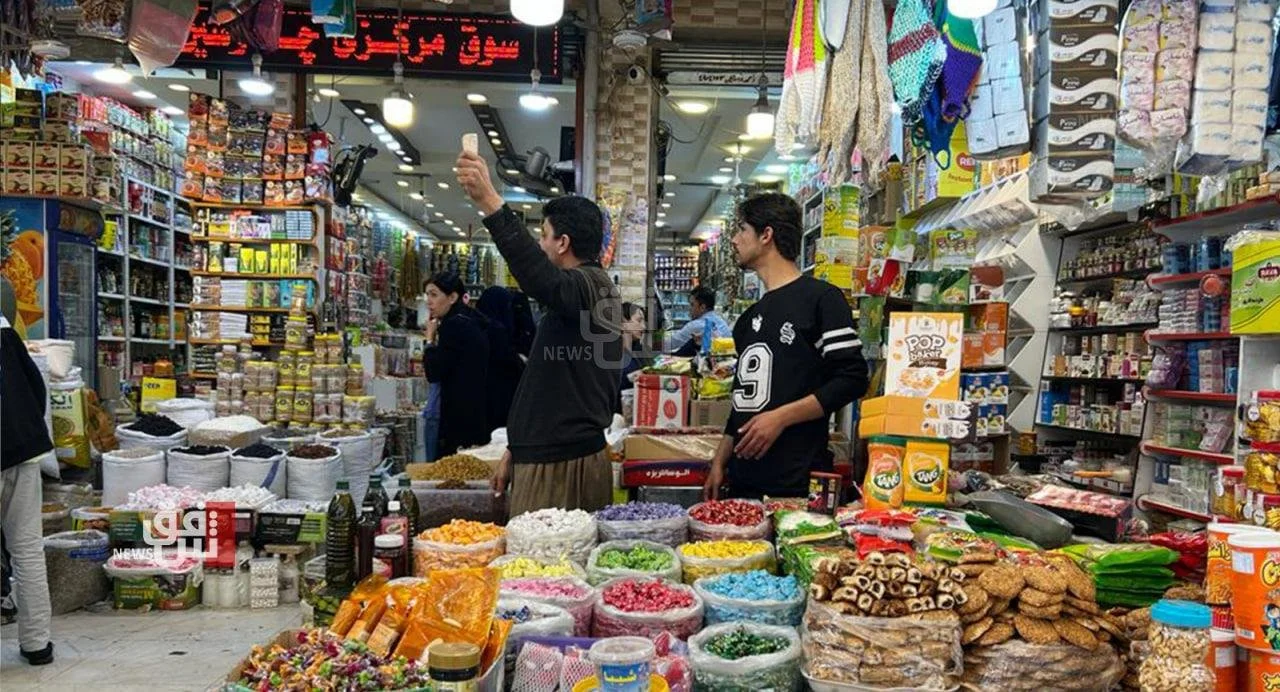
In the same context, Saudi Arabia topped the list of the largest importers with a value of $563 million in 2025, followed by the United States of America with about $438 million.
Egypt’s food exports to Jordan also increased to $287 million, while exports to the United Arab Emirates reached about $237 million during the same year.
Exports to Algeria amounted to approximately $244 million, while Egyptian food industry exports to Lebanon reached approximately $201 million.
In European and Asian markets, Egyptian exports to Germany amounted to about $181 million, to the United Kingdom about $137 million, while to China they reached about $136 million.
The data indicates that the top 10 foreign markets accounted for about 39% of Egypt’s total food industry exports during 2025, with a total value of about $2.66 billion.https://www.economy-news.net/content.php?id=66778
Dollar STEADY IN Baghdad, RISES IN Erbil
2026-03-15 Shafaq News- Baghdad/ Erbil The US dollar opened Sunday’s trading stable in Iraq, hovering around 154,000 dinars per 100 dollars.
According to a Shafaq News market survey, the dollar traded in Baghdad's Al-Kifah and Al-Harithiya exchanges at 154,050 dinars per 100 dollars, the same level recorded on Saturday’s closure.
In the Iraqi capital, exchange shops sold the dollar at 154,500 dinars and bought it at 153,500 dinars, while in Erbil, selling prices stood at 153,950 dinars and buying prices at 153,850 dinars.
https://www.shafaq.com/en/Economy/Dollar-steady-in-Baghdad-rises-in-Erbil
Gold Prices Steady In Baghdad, Erbil
2026-03-15 Shafaq News- Baghdad/ Erbil On Sunday, gold prices held ground in Baghdad and Erbil markets, hovering near 1.085 million IQD per mithqal, according to a survey by Shafaq News Agency.
Gold prices on Baghdad's Al-Nahr Street recorded a selling price of 1.090 million IQD per mithqal (equivalent to five grams) for 21-carat gold, including Gulf, Turkish, and European varieties, with a buying price of 1.086 million IQD, unchanged from Saturday.
The selling price for 21-carat Iraqi gold stood at 1.060 million IQD, while the buying price reached 1.056 million IQD.
In jewelry stores, the selling price per mithqal of 21-carat Gulf gold ranged between 1.090 million and 1.100 million IQD, while Iraqi gold sold for between 1.060 million and 1.070 million IQD.
In Erbil, 22-carat gold was sold at 1.123 million IQD per mithqal, 21-carat gold at 1.072 million IQD, and 18-carat gold at 919,000 IQD. https://www.shafaq.com/en/Economy/Gold-prices-steady-in-Baghdad-Erbil-8
EIA: Iraq’s Oil Exports To US Rank Third Over Week
2026-03-15 Shafaq News- Baghdad/ Washington Iraq’s crude oil exports to the United States rose to 309,000 barrels per day (bpd) last week, ranking third among the largest suppliers, US Energy Information Administration (EIA) data showed on Sunday.
According to the data, Iraqi shipments were up 155,000 bpd from 154,000 bpd a week earlier.
Total US crude imports from nine major suppliers increased to 5.799 million bpd, up 134,000 bpd from 5.655 million bpd the previous week. Canada remained the top supplier at 4.227 million bpd, followed by Saudi Arabia with 607,000 bpd, Iraq with 309,000 bpd, Venezuela with 232,000 bpd, and Nigeria with 156,000 bpd.
Additional imports came from Mexico at 140,000 bpd, Columbia at 76,000 bpd, Brazil at 50,000 bpd, and Libya at 2,000 bpd. https://www.shafaq.com/en/Economy/EIA-Iraq-s-oil-exports-to-US-rank-third-over-week-4