
“Tidbits From TNT” Friday 2-27-2026
TNT:
Tishwash: Egypt's MoneyHash & Iraqi Startup Wayl Partner to Expand E-Payments
The payment orchestration platform is working with Iraqi provider Wayl to help businesses access local payment methods.
MoneyHash, a payment orchestration platform that helps businesses manage and route transactions across multiple payment providers through a single integration, has partnered with Wayl, an Iraq-based payment solutions provider and merchant of record, to support companies expanding into Iraq.
Payment orchestration platforms like MoneyHash sit between merchants and banks, card networks, and digital wallets, enabling businesses to optimise payment flows, reduce failed transactions and manage multiple providers without building separate integrations for each market.
TNT:
Tishwash: Egypt's MoneyHash & Iraqi Startup Wayl Partner to Expand E-Payments
The payment orchestration platform is working with Iraqi provider Wayl to help businesses access local payment methods.
MoneyHash, a payment orchestration platform that helps businesses manage and route transactions across multiple payment providers through a single integration, has partnered with Wayl, an Iraq-based payment solutions provider and merchant of record, to support companies expanding into Iraq.
Payment orchestration platforms like MoneyHash sit between merchants and banks, card networks, and digital wallets, enabling businesses to optimise payment flows, reduce failed transactions and manage multiple providers without building separate integrations for each market.
Wayl operates local payment infrastructure in Iraq, providing access to widely used domestic wallets, bank-based payment options and localised checkout systems. As a merchant of record, Wayl can legally process payments on behalf of foreign businesses, handling regulatory and operational requirements within the country.
The collaboration connects MoneyHash’s orchestration layer with Wayl’s on-the-ground payment rails, allowing merchants to accept international card schemes alongside Iraqi payment methods through a unified system. link
************
Tishwash: The Central Bank of Iraq announces the completion of a pivotal step in reforming the banking sector and expanding foreign transactions.
The Central Bank of Iraq announced on Thursday that it has completed the main step in the comprehensive reform process for commercial and Islamic banks and branches of foreign banks operating in Iraq, after completing the submission of the required documents for review in accordance with the “minimum requirements”.
The bank explained in a statement received by "Al-Eqtisad News" that the minimum requirements included choosing one of the following three paths: continuing in the market as independent banking institutions, merging with other banking institutions, or exiting the market.
The Central Bank of Iraq confirmed that all Iraqi banks submitted the required documents according to the path they chose, which allows the bank to assess the level of compliance of each bank with the minimum requirements.
He explained that the coming months will see the addressing of any gaps or observations identified during the evaluation process, and that banks will work to complete the requirements for full compliance with banking reform standards.
As part of strengthening the role of private banks in supporting the economy, the Central Bank of Iraq announced the launch of a new initiative to expand the banks’ ability to support international trade for their clients. Banks that meet specific criteria, as assessed by the Central Bank, will be allowed to resume cross-border transactions and issue letters of credit in several international currencies, including the euro, the UAE dirham, the Chinese yuan, the Jordanian dinar, and others.
The bank indicated that this step complements the reform path it is leading to enhance confidence in the future of the Iraqi economy, deepen the global integration of the financial sector, and support sustainable economic growth in Iraq link
************
Tishwash: Iraq reopens cross-border trade channel for private lenders
Iraq’s Central Bank (CBI) cleared private banks to resume cross-border transactions and issue letters of credit in multiple foreign currencies, in a move aimed at strengthening trade financing and accelerating banking reform, the CBI said on Thursday.
In a statement, the bank noted it completed “a key phase of a comprehensive reform process covering commercial and Islamic banks and branches of foreign banks.” The step required institutions to submit documentation for review under “minimum requirements,” selecting one of three paths: continuing operations as independent banking institutions, merging with other banks, or exiting the market.
All Iraqi banks have submitted the required documents in line with the path each chose, and they will address any identified gaps in the coming months, the CBI added.
Under the new initiative, private banks that meet specific standards based on the central bank’s assessment will be permitted to resume cross-border transactions and issue letters of credit in several international currencies, including the euro, UAE dirham, Chinese yuan, and Jordanian dinar, among others.
THE CENTRAL BANK .. Banks chose their way in the reform processes and a new initiative to raise their capacity
The Iraqi Central Bank announces the completion of the major step in the process of comprehensive reform of commercial and Islamic banks and foreign banking branches by submitting the required documents for review in accordance with the "minimum requirements" which summarized by choosing one of the three tracks, which is "continuing in the market as independent banking institutions, merging with other banking institutions, or exiting From the market".
The Iraqi Central Bank affirms that all Iraqi banks have submitted the required documents according to the route they had chosen, allowing the central bank to assess its level of acceptance for the minimum requirements. Over the coming months, banks will work to address any loopholes that are identified, and will strive to achieve full compliance with repair standards.
This bank also announces a new initiative to expand the capacity of private banks to support international trade to its customers, where banks that meet certain criteria according to the assessment of the Iraqi Central Bank will be allowed to resume cross-border transactions and issue credentials based on many international currencies, including the euro, the UAE Dirham, the Chinese Yuan, the Jordanian Dinar, among others.
This step is a continuation of the path laid out by the Iraqi Central Bank to strengthen confidence in the future of the Iraqi economy, global cohesion with the financial sector, and to lead the sustainable growth of Iraq. link
************
Mot: Things have names.
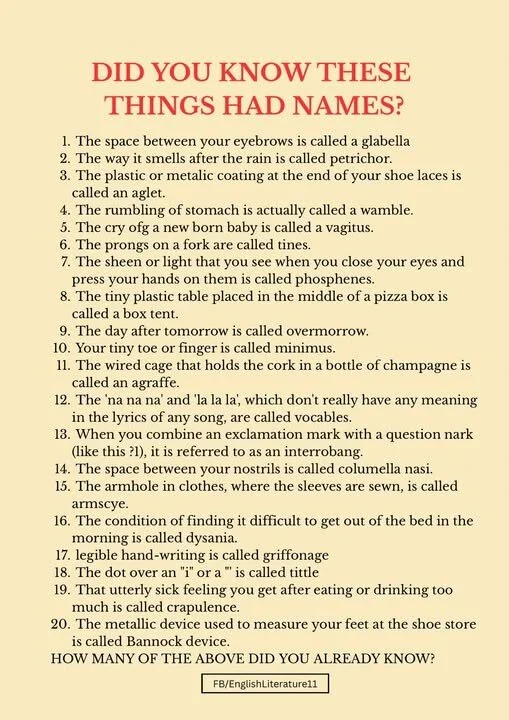
Seeds of Wisdom RV and Economics Updates Friday Morning 2-27-26
Good Morning Dinar Recaps,
MISSILE FLASHPOINT: Iran Capabilities Clash With U.S. Strike Claims
State of the Union Sparks Fresh Global Security & Reset Concerns
Good Morning Dinar Recaps,
MISSILE FLASHPOINT: Iran Capabilities Clash With U.S. Strike Claims
State of the Union Sparks Fresh Global Security & Reset Concerns
Overview (Key Points)
President Donald Trump, in his recent address, warned that Iran is developing missiles capable of threatening Europe and U.S. bases, and potentially the U.S. homeland.
He claimed U.S. airstrikes under “Operation Midnight Hammer” destroyed Iran’s nuclear weapons program, though no public evidence was presented.
The International Atomic Energy Agency (IAEA) signaled that Iran could resume limited uranium enrichment soon.
U.S. intelligence assessments indicate Iran could develop an ICBM by 2035, with concerns over collaboration with North Korea.
The escalation narrative carries major implications for energy markets, currency stability, and the global financial reset trajectory.
Key Developments
1. Missile Capability Claims Escalate Tensions
During his State of the Union speech, Donald Trump labeled Iran the “world’s biggest sponsor of terrorism” and asserted that Tehran is developing missiles capable of threatening Europe and U.S. assets abroad — and potentially the American mainland.
Public assessments from the U.S. Defense Intelligence Agency (DIA) suggest Iran could develop an intercontinental ballistic missile by 2035. Some analysts argue that estimate may be conservative, especially given Iran’s reported cooperation with North Korea on missile technology.
2. Operation Midnight Hammer & Nuclear Facility Debate
Trump referenced U.S. airstrikes in June, dubbed “Operation Midnight Hammer,” claiming they destroyed Iran’s nuclear weapons program.
However, the International Atomic Energy Agency stated that while certain facilities were struck, Iran could resume limited enrichment activities soon. The IAEA confirmed it was unable to inspect the bombed sites but had accessed other facilities not targeted in the strikes.
This gap between political claims and international inspection reports fuels global uncertainty.
3. Nuclear Weapons Timeline Dispute
U.S. and Israeli officials justified action by suggesting Iran was nearing nuclear weapons capability.
Yet both the IAEA and U.S. intelligence have previously indicated that Iran halted its formal nuclear weapons program in 2003. Tehran maintains that its enrichment efforts are for civilian energy purposes, though Western powers question the necessity of enrichment levels that approach weapons-grade thresholds.
The result: strategic ambiguity, which historically drives market volatility.
4. Casualty Figures & Information War
Trump also stated that Iran killed 32,000 protesters during unrest. Independent groups confirmed over 7,000 deaths, with thousands more under review, while Iranian officials reported significantly lower numbers.
The disparity highlights the information warfare dimension of modern geopolitical conflict — a key factor in global risk pricing.
Why It Matters
Energy Markets: Any escalation involving Iran threatens oil supply routes in the Strait of Hormuz.
Defense Spending Surge: NATO and regional allies could increase military budgets, impacting sovereign debt levels.
Safe-Haven Flows: Gold, U.S. Treasuries, and the dollar typically strengthen amid Middle East instability.
Sanctions Risk: Renewed sanctions cycles would intensify de-dollarization efforts among adversarial blocs.
Geopolitical conflict remains one of the strongest catalysts for financial system stress — and reset acceleration.
Why It Matters to Foreign Currency Holders
For currency watchers and global reset observers:
Dollar Strength vs. Dollar Weaponization: Conflict often strengthens the dollar short term, but expanded sanctions can accelerate long-term diversification away from it.
BRICS Bloc Reaction: Nations already pushing local-currency trade may deepen those efforts if U.S.-Iran tensions escalate further.
Commodity Currency Volatility: Oil-linked currencies could experience rapid repricing.
Gold Repricing Potential: Military instability historically fuels precious metals demand — a key pillar in reset discussions.
Geopolitics Is the Spark Behind Monetary Shifts.
Implications for the Global Reset
Pillar 1: Monetary Power & Sanctions Architecture
If tensions intensify, expect expanded sanctions enforcement. The more aggressively sanctions are used, the stronger the incentive becomes for alternative settlement systems outside the dollar framework.
Pillar 2: Energy & Commodity Realignment
Iran sits at the heart of global energy corridors. Any sustained disruption reshapes commodity pricing structures — which directly influences currency pegs, reserve allocations, and trade settlement mechanisms.
This is not just about missiles — it is about who controls the monetary levers during global instability.
Seeds of Wisdom Team View
The most powerful driver of a financial reset is not economics alone — it is geopolitics.
Military escalation narratives create:
Capital flight
Commodity repricing
Debt expansion
Currency realignment
Whether or not Iran’s capabilities match political rhetoric, the perception of threat is enough to move markets and influence strategic alliances.
The reset does not begin with a currency announcement.
It begins with instability that forces structural change.
Seeds of Wisdom Team
Newshounds News™ Exclusive
Sources
Modern Diplomacy — “Beyond the Rhetoric: The State of Iran’s Military Capabilities”
Reuters — “IAEA says Iran could resume limited uranium enrichment soon”
~~~~~~~~~~
POWER SHIFT: BRICS Expansion Forces Global North Recalibration
From Rhetoric to Infrastructure — The Global South’s Strategy Goes Mainstream
Overview (Key Points)
BRICS expansion in 2026 now represents over 35% of global GDP and roughly 45% of the world’s population.
23 nations currently hold active membership applications, signaling sustained momentum.
De-dollarization efforts are moving from political language to operational financial systems.
Western leaders are now echoing strategic principles long championed by the Global South — including multi-alignment and flexible coalitions.
Internal differences within BRICS may actually be its greatest structural strength.
Key Developments
1. Davos Moment Signals Strategic Convergence
When Mark Carney spoke at Davos in early 2026, calling the rules-based liberal international order selectively enforced, he received a standing ovation.
The irony: those critiques have been voiced for decades across the Global South — often dismissed until now.
BRICS expansion is where those long-standing grievances turned into coordinated policy. What was once framed as dissent is now institutional alignment.
2. From Political Bloc to Financial Infrastructure
BRICS is no longer just a geopolitical talking point.
Russia and China now settle approximately 90% of bilateral trade in rubles and yuan.
The New Development Bank has shifted roughly one-third of its loans into local currencies.
The mBridge platform links central banks in China, Hong Kong, UAE, and Thailand — operating outside SWIFT channels entirely.
This is monetary plumbing being built in real time.
3. De-Dollarization — Steady, Not Sudden
Russian President Vladimir Putin clarified the bloc’s posture:
“We are not refusing, not fighting the dollar, but if they don’t let us work with it, what can we do?”
Meanwhile, Donald Trump expressed concern in 2025:
“BRICS was set up to hurt us… to take our dollar off as the standard.”
Yet inside the bloc, there is nuance.
Indian External Affairs Minister S. Jaishankar stated clearly:
“Global economic stability is pegged on the dollar as the reserve currency.”
This divergence reveals a key truth: BRICS does not require ideological uniformity to function.
4. Internal Flexibility Is Structural Power
Unlike the EU model, BRICS has:
No binding governance structure
No centralized enforcement mechanisms
No mandatory policy harmonization
Western analysts once viewed this as weakness.
In reality, it creates resilience against external interference. Members coordinate where beneficial — and opt out where necessary. That flexibility accelerates expansion rather than constrains it.
South African Minister Ronald Lamola emphasized the developmental focus:
“We can only grow and expand as friends when we work together…”
Why It Matters
Global South agency is institutionalized, not rhetorical.
Trade settlement diversification is accelerating, not reversing.
The West is increasingly adopting issue-based coalitions and multi-alignment strategies once pioneered by emerging economies.
BRICS expansion survived repeated forecasts of collapse — and continues to grow.
The narrative is shifting from “Will BRICS survive?” to “How far will BRICS expand?”
Flexibility Is the New Global Power.
Why It Matters to Foreign Currency Holders
For global reset observers and currency holders:
Local currency trade settlement reduces automatic dollar dependency.
Parallel payment systems weaken unilateral sanction leverage.
The New Development Bank’s local-currency lending model reduces exposure to dollar liquidity cycles.
Flexibility within BRICS prevents sudden rupture — instead encouraging gradual realignment.
This is not overnight replacement — It is incremental diversification.
Implications for the Global Reset
Pillar 1: Multipolar Monetary Architecture
BRICS expansion signals movement toward multi-currency settlement systems, where trade can be conducted without default dollar routing.
Even partial diversification alters reserve strategies.
Pillar 2: Structural Adaptation by the West
The Global North is now echoing strategies the Global South formalized decades ago:
Multi-alignment
Flexible partnerships
Issue-based coalitions
The difference?
BRICS built the infrastructure first.
The reset does not require collapse — It requires parallel systems reaching critical mass.
Seeds of Wisdom Team View
The most underestimated force in the global reset is strategic patience.
BRICS expansion did not seek confrontation — it built options.
And options create leverage.
The Global South spent decades refining non-alignment.
Now the Global North is adopting the same language.
Momentum does not require unanimity. It requires direction.
The Global South Built the Blueprint — The North Is Catching Up.
Seeds of Wisdom Team
Newshounds News™ Exclusive
Sources
~~~~~~~~~~
🌱 A Message to Our Currency Holders🌱
If you’ve been holding foreign currency for many years, you were not foolish.
You were not wrong to believe the global financial system would change.
What failed was not your patience — it was the information you were given.
For years, dates, rumors, and personalities replaced facts, structure, and proof. “This week” predictions created cycles of hope and disappointment that were never based on how currencies actually change.
That is not your failure.
Our mission here is different: • No dates • No rates • No hype • No gurus
Instead, we focus on:
• Verifiable developments • Institutional evidence
• Global financial structure • Where countries actually sit in the process
Currency value changes only come after sovereignty, trade, banking, settlement systems, and fiscal coordination are in place. History and institutions confirm this sequence.
You will see silence. You will see denials. That is not delay — that is discipline.
Protect your identity. Organize your documents. Verify everything.
Never hand your discernment to anyone who cannot show proof.
You deserve truth — not timelines.
Seeds of Wisdom Team
Newshounds News
~~~~~~~~~~
Seeds of Wisdom Team RV Currency Facts Youtube and Rumble
Newshound's News Telegram Room Link
RV Facts with Proof Links Link
RV Updates Proof links - Facts Link
Follow the Gold/Silver Rate COMEX
Follow Fast Facts
Seeds of Wisdom Team™ Website
Thank you Dinar Recaps
Iraq Economic News and Points To Ponder Friday Morning 2-27-26
The Central Bank And Banks Have Chosen Their Path In Reform Processes And A New Initiative To Enhance Their Capabilities
The Central Bank of Iraq announces the completion of a key step in the comprehensive reform process for commercial and Islamic banks and branches of foreign banks. This step involved the submission of required documentation for review in accordance with the "minimum requirements," which outlined three paths: "continuing in the market as independent banking institutions, merging with other banking institutions, or exiting the market."
The Central Bank And Banks Have Chosen Their Path In Reform Processes And A New Initiative To Enhance Their Capabilities
The Central Bank of Iraq announces the completion of a key step in the comprehensive reform process for commercial and Islamic banks and branches of foreign banks. This step involved the submission of required documentation for review in accordance with the "minimum requirements," which outlined three paths: "continuing in the market as independent banking institutions, merging with other banking institutions, or exiting the market."
The Central Bank of Iraq confirms that all Iraqi banks submitted the required documentation according to their chosen path, allowing the Central Bank to assess their compliance with the minimum requirements. Over the coming months, the banks will address any identified gaps and strive for full compliance with the reform standards.
The Central Bank also announces a new initiative to expand the capacity of private banks to support international trade for their clients. Banks that meet specific criteria, as assessed by the Central Bank of Iraq, will be permitted to resume cross-border transactions and issue letters of credit in several international currencies, including the Euro, UAE Dirham, Chinese Yuan, Jordanian Dinar, and others.
This step complements the Central Bank of Iraq's strategy to enhance confidence in the future of the Iraqi economy and the global integration of the financial sector, and to drive sustainable growth in Iraq.
https://cbi.iq/news/section/155 - Infographic https://cbi.iq/news/view/3144
An Economist Says Reforming Private Banks Is Key To Stabilizing The Dollar And Boosting Confidence In The Financial Market.
Baghdad Today – Baghdad Economic expert Ahmed Abdel Rabbo confirmed on Wednesday (February 25, 2026) that the Central Bank of Iraq has taken a series of measures during the past period aimed at controlling the exchange market and enhancing financial stability, in light of the monetary challenges that Iraq has recently witnessed.
Abd Rabbo explained in an interview with “Baghdad Today” that the current stage requires speeding up the completion of the private banks reform project, as it is the cornerstone for achieving permanent stability in the dollar exchange rate within the local market, noting that the continued existence of some banks under sanctions contributes to creating bottlenecks in the supply of foreign currency and negatively affects the level of confidence in the banking sector.
Supporting Restructuring
He added that it is necessary to intensify efforts to support the work of Oliver Wyman, which is concerned with the restructuring of banks, in order to complete the banking compliance requirements within clear and announced timetables, which will contribute to removing a number of banks from the circle of restrictions and returning them to normal activity in accordance with transparent standards and strict supervision.
Reducing The Gap Between The Two Prices
Abdel Rabbo pointed out that achieving tangible progress in this direction will not only reduce the gap between the official and parallel dollar exchange rates, but will also send a genuine message of reassurance to the markets that the path of financial reforms is proceeding steadily, and that monetary stability is no longer a temporary measure, but a long-term strategic option to enhance confidence in the Iraqi financial market.
Over the past two years, Iraq has witnessed fluctuations in the dollar exchange rate as a result of tightening foreign transfer procedures and international compliance requirements, which prompted the Central Bank of Iraq to adopt stricter regulatory and supervisory mechanisms to control the currency sale window and enhance transparency.
Some private banks were also subjected to restrictive measures and sanctions, which affected the supply of foreign currency in the local market and widened the gap between the official and parallel exchange rates.
In this context, the restructuring of the banking sector has emerged as one of the most important paths of financial reform to ensure sustainable monetary stability and enhance confidence in the banking system. https://baghdadtoday.news/293908-.html
Iraq Reopens Cross-Border Trade Channel For Private Lenders
Shafaq News- Baghdad Iraq’s Central Bank (CBI) cleared private banks to resume cross-border transactions and issue letters of credit in multiple foreign currencies, in a move aimed at strengthening trade financing and accelerating banking reform, the CBI said on Thursday.
In a statement, the bank noted it completed “a key phase of a comprehensive reform process covering commercial and Islamic banks and branches of foreign banks.” The step required institutions to submit documentation for review under “minimum requirements,” selecting one of three paths: continuing operations as independent banking institutions, merging with other banks, or exiting the market.
All Iraqi banks have submitted the required documents in line with the path each chose, and they will address any identified gaps in the coming months, the CBI added.
Under the new initiative, private banks that meet specific standards based on the central bank’s assessment will be permitted to resume cross-border transactions and issue letters of credit in several international currencies, including the euro, UAE dirham, Chinese yuan, and Jordanian dinar, among others. البنك المركزي العراقي-Central Bank of Iraq
stpeondSro52h60gumgg1lua020383fuaih6mi5i8f4cci1t6u18lm7ma8ut ·
THE CENTRAL BANK .. Banks chose their way in the reform processes and a new initiative to raise their capacity
The Iraqi Central Bank announces the completion of the major step in the process of comprehensive reform of commercial and Islamic banks and foreign banking branches by submitting the required documents for review in accordance with the "minimum requirements" which summarized by choosing one of the three tracks, which is "continuing in the market as independent banking institutions, merging with other banking institutions, or exiting From the market".
The Iraqi Central Bank affirms that all Iraqi banks have submitted the required documents according to the route they had chosen, allowing the central bank to assess its level of acceptance for the minimum requirements.
Over the coming months, banks will work to address any loopholes that are identified, and will strive to achieve full compliance with repair standards.
This bank also announces a new initiative to expand the capacity of private banks to support international trade to its customers, where banks that meet certain criteria according to the assessment of the Iraqi Central Bank will be allowed to resume cross-border transactions and issue credentials based on many international currencies, including the euro, the UAE Dirham, the Chinese Yuan, the Jordanian Dinar, among others, and come This step is a continuation of the path laid out by the Iraqi Central Bank to strengthen confidence in the future of the Iraqi economy, global cohesion with the financial sector, and to lead the sustainable growth of Iraq.
https://www.shafaq.com/en/Economy/Iraq-reopens-cross-border-trade-channel-for-private-lenders
US State Department: Washington's Support Is Linked To The Iraqi Government And Its Program, Not To Individuals
The US State Department explained in statements to “Lwan News” that the formation of the Iraqi government is an internal matter that reflects the constitutional will and the outcomes of the democratic process, stressing that Washington’s support is linked to a government that enjoys national credibility and is committed to reform and the rule of law.
The ministry said that any government that does not meet the requirements of stability and reform will not receive full US support, stressing that its position on the return of Nouri al-Maliki is based on an assessment of the previous phase and its repercussions, and that its support is linked to the government program and its performance, not to the individuals themselves.
The US State Department added that it is following with interest Iraq’s steps regarding the demarcation of maritime borders and the deposit of maps with the United Nations, and encourages Iraq, Kuwait and Saudi Arabia to address differences through technical and legal dialogue, stressing that sovereign issues must be addressed within legal and diplomatic frameworks away from escalation.
She stressed that a stable, prosperous Iraq that is committed to its regional obligations remains an important partner for Washington, and that it will work with any future Iraqi government, provided it adheres to good governance, the constitution, and the promotion of regional security.
https://1news-iq.net/الخارجية-الأمريكية-دعم-واشنطن-مرتبط-ب/
Iraq Protests Arab States’ Support For Kuwait In Maritime Dispute
Shafaq News- Baghdad Iraq’s Foreign Ministry on Thursday reproached Palestine, Jordan, and Egypt over their official positions aligned with Kuwait regarding Baghdad’s deposit of its maritime boundaries map with the United Nations.
The three counties expressed concern over Iraq’s submission to the United Nations, reaffirmed support for Kuwait’s sovereignty, and urged both sides to resolve the maritime dispute through dialogue in line with international law and the 1982 UN Convention on the Law of the Sea.
The ministry said in separate statements, that the remarks came during meetings between Undersecretary for Bilateral Relations Ambassador Mohammed Hussein Bahr Al-Uloom and the ambassadors of Palestine, Jordan, and Egypt. Bahr Al-Uloom presented Baghdad’s position concerning the three counties’ statements, which “overlooked Iraq’s viewpoint and the measures it had taken in full accordance with international law, particularly the 1982 United Nations Convention on the Law of the Sea.”
He described Iraq’s move as a sovereign right, adding that the country acted with full transparency and remains committed to addressing related issues through legal and diplomatic channels in a way that safeguards its sovereignty and national rights. وزارة الخارجية العراقية
doSterposn9i80t4c0h44ah3i86f7c8afgi1m0f81m08h91a64aa13f53cll ·
Foreign Ministry Representative Hosts The Ambassador Of The Arab Republic Of Egypt To Iraq
The Ministry of Foreign Affairs, representing the Ministry of Foreign Relations, Ambassador Mohammed Hussein Bahr Aloum, on Thursday, 26/02/2026, hosted the Ambassador of the Arab Republic of Egypt to the Republic of Iraq, Mr. Ahmed Samir Helmy, on the background of the statement issued by the Egyptian Ministry of Foreign Affairs and Immigration regarding the deposit of the Republic of Iraq the map of maritime areas to the nations المتحدة
The ministry spokesman affirmed clearly and explicitly that Iraq's decision to deposit a map of its maritime areas is indeed a sovereign that cannot be reversed, in accordance with Iraq's position and his observations in accordance with the Egyptian statement, which obliterates Iraq's opinion, position and the actions it has taken in full compliance with the provisions of international law, and especially the United Nations Convention on Law The seafarers of 1982, with full transparency reflects his keenness in addressing all relevant issues through legal and diplomatic frameworks, upholding Iraq's sovereignty and preserving its national rights.
In this context, Iraq expresses its regret for making such a statement, for which it is due to a state of dissatisfaction at the official and popular levels.
The ministry spokesman also stressed the depth and durability of the fraternal and historical relations between the Republic of Iraq and the Arab Republic of Egypt, emphasizing the importance of investigating the highest levels of accuracy and objectivity in official statements and positions, which have a direct impact on the course of the bilateral relations, emphasizing that any statement should include respect for the sovereignty of the two countries on Towards even more. He expressed the appreciation of the Republic of Iraq for the special relations with the Arab Republic of Egypt and its keenness to develop them in various fields.
On his part, the Egyptian ambassador expressed his gratitude for what the ministry spokesman provided with important and comprehensive information on the reality of the situation between the two countries and the level of cooperation and communication on the subject of drawing maritime borders, underlining that the concern expressed by Egypt in its statement stems from its eagerness to support security and stability between the two countries. He also noted that he would ensure that Iraq's message is conveyed to the Egyptian leadership in a clear and detailed manner, reflecting the Iraqi viewpoint and the relevant developments between the two countries.
***************
To read more about the news of the Ministry, you can visit the official pages and accounts of the Iraqi Ministry of Foreign Affairs: Ministry's website: https://mofa.gov.iq
Earlier this month, Baghdad a detailed maritime domain map with the United Nations and prepared to submit a Federal Supreme Court ruling that annulled the demarcation with Kuwait up to marker 162, a step that calls for re-demarcation under international law. Meanwhile, Gulf states, including the GCC, have urged Iraq to withdraw the submission and address the issue through diplomatic channels.
Read more: Khor Abdullah entangled in sovereignty disputes and legacy of invasion
https://www.shafaq.com/en/Iraq/Iraq-protests-Arab-states-support-for-Kuwait-in-maritime-dispute
MilitiaMan and Crew: IQD News Update-Facts-Central Bank Integration-Globally-ER
MilitiaMan and Crew: IQD News Update-Facts-Central Bank Integration-Globally-ER
2-26-2026
The Crew: Samson, PompeyPeter, Petra, Daytrader, Sunkissed, GIGI and Militia Man
Follow MM on X == https://x.com/Slashn
Be sure to listen to full video for all the news……..
MilitiaMan and Crew: IQD News Update-Facts-Central Bank Integration-Globally-ER
2-26-2026
The Crew: Samson, PompeyPeter, Petra, Daytrader, Sunkissed, GIGI and Militia Man
Follow MM on X == https://x.com/Slashn
Be sure to listen to full video for all the news……..
Seeds of Wisdom RV and Economics Updates Thursday Evening 2-26-26
Good Morning Dinar Recaps,
Nuclear Diplomacy in Geneva: Risks and Ripples Across Markets
Critical U.S.–Iran talks test global stability and financial sentiment
Good Morning Dinar Recaps,
Nuclear Diplomacy in Geneva: Risks and Ripples Across Markets
Critical U.S.–Iran talks test global stability and financial sentiment
Overview
Negotiators from the United States and Iran resumed nuclear negotiations in Geneva, marking a pivotal moment in diplomatic efforts to avoid a broader military confrontation. While no binding deal was reached, diplomats reported incremental progress — and markets reacted sharply to the evolving risk calculus.
Key Diplomatic Signals
Negotiations continued amid a massive U.S. military buildup near the region.
Tehran signaled willingness to show “flexibility” but stopped short of solid concessions.
Officials framed today’s session as a last chance to avert conflict that could destabilize the region and markets.
Market and Commodity Reactions
Oil and Energy Prices
Geopolitical risk premiums strengthened as traders balanced rising tensions against a recent surge in U.S. crude inventories — a dynamic keeping oil prices relatively stable but jittery. Brent and WTI oil benchmarks remain anchored by uncertainty.
Strategic Impact:
Energy markets price both supply risk from conflict and demand headwinds from economic slowdowns — a rare dual squeeze that influences inflation and global growth projections.
Stock Index Volatility
U.S. equity averages closed lower as investors reassessed risk, particularly in:
Chipmakers and AI-focused sectors
Global yield-sensitive industries
Heightened caution reflects both geopolitical uncertainty and broader macro concerns.
ESG and Institutional Shifts
Meanwhile, the Government Pension Fund of Norway is deploying Claude AI for ESG investment screening, signaling how risk frameworks are evolving alongside geopolitical stress in capital markets.
Why It Matters
This moment impacts the global reset across multiple domains:
Geopolitical Risk Realignment — Nuclear diplomacy is reshaping risk premia across asset classes.
Energy Security Dynamics — Oil prices are bridging geopolitical tension and inventory-driven pressure.
Market Behavior Under Stress — Safe-haven flows, volatility repricing, and risk-asset retrenchment reflect deep structural uncertainty.
Financial systems are reacting not just to economic data but to the probability of conflict and diplomacy outcomes.
This is not just market volatility — it’s the recalibration of geopolitical risk premia.
Why It Matters to Foreign Currency Holders
From a global macro reset perspective:
Safe-haven currencies (e.g., USD, CHF, JPY) may benefit temporarily amid risk-off moves.
Emerging market currencies could face pressure from widened risk spreads.
Oil-linked FX baskets (e.g., CAD, NOK) may see increased volatility as energy markets oscillate between supply concerns and inventory dynamics.
Yield curves and Treasury flows shift as investors reposition amid geopolitical uncertainty.
Cumulatively, these tendencies signal that currency dynamics are increasingly tied to geopolitical outcomes rather than purely economic fundamentals.
This is not just market volatility — it’s the recalibration of geopolitical risk premia.
Implications for the Global Reset
Pillar 1: Risk-Based Capital Allocation
Financial flows are being rerouted toward perceived stability as conflict risk shapes sentiment more than traditional macro indicators.
Pillar 2: Commodity-Finance Interdependence
Energy prices and inventories have never been more tightly coupled with diplomatic risk — oil market psychology now moves in lockstep with nuclear negotiations.
Pillar 3: Political Certainty Over Economic Certainty
Markets react more to conflict probability than inflation data — a structural shift that reinforces geopolitical drivers in global finance.
Today’s diplomatic developments are more than another flashpoint — they are a force multiplier shaping how capital markets, energy systems, and currency regimes interact.
This is not just energy pricing — it’s geopolitics fused with financial flows.
Seeds of Wisdom Team
Newshounds News™ Exclusive
Sources
~~~~~~~~~~
Brazil Draws the Line: No BRICS Currency at 2026 Summit
Lula clarifies de-dollarization debate ahead of India-hosted gathering
Overview
In a significant recalibration of expectations, Luiz Inácio Lula da Silva made it clear that a BRICS currency is not on the table for 2026.
Speaking ahead of the 18th BRICS Summit, scheduled to be hosted in India, Lula stated:
“There is no proposal to create the BRICS currency. There is no debate within BRICS about whether to create a new currency.”
The announcement directly addresses years of speculation that the bloc was preparing to launch a gold-backed or trade-backed alternative to the U.S. dollar.
Instead, Brazil is drawing a sharp distinction between:
Creating a new currency
Expanding trade in local currencies
That distinction matters.
Key Developments
1. BRICS Currency: Officially Off the 2026 Agenda
Despite persistent market chatter, Lula confirmed:
No formal proposal exists
No internal debate is underway
No summit agenda includes currency formation
This signals a cooling of expectations surrounding a unified BRICS monetary instrument.
Strategic Impact:
The bloc is not ready for a shared reserve asset or supranational unit — institutional alignment remains insufficient.
2. Local Currency Trade Still Supported
While rejecting a new BRICS currency, Lula did endorse bilateral trade in national currencies.
He emphasized that trade between Brazil and India does not require U.S. dollar settlement.
“It is not necessary that a trade agreement between India and Brazil has to be done with US dollars. We can use our own currencies.”
However, he acknowledged:
It is difficult
It requires coordination
It is gradual
This reflects a pragmatic approach rather than ideological de-dollarization.
3. Not Anti-Dollar — But Pro-Options
Lula stressed that local currency trade is not anti-American or anti-dollar.
He openly acknowledged:
The U.S. dollar remains the strongest global currency
The United States will resist alternative currency influence
BRICS must consider geopolitical realities
This marks a shift from aggressive de-dollarization rhetoric toward a more cautious tone.
Why It Matters
For years, markets speculated that BRICS was on the verge of launching:
A shared currency
A gold-backed trade unit
A dollar alternative reserve asset
Brazil’s clarification introduces reality over rhetoric.
The bloc remains focused on:
Trade flexibility
Payment diversification
Bilateral arrangements
But not a monetary revolution — at least not yet.
This is not a monetary revolution — it’s a recalibration of expectations.
Why It Matters to Foreign Currency Holders
For currency watchers and global reset observers:
No immediate BRICS currency launch
No 2026 monetary reset event
Gradual diversification remains the path
However:
China and India still pursue:
Yuan internationalization
Rupee cross-border expansion
The broader trend of multipolar payment systems continues — just without a unified BRICS coin.
De-dollarization talk cools, but diversification continues quietly.
Implications for the Global Reset
Pillar 1: De-Dollarization Is Incremental, Not Explosive
The process is evolving through bilateral trade arrangements — not through a dramatic currency replacement event.
Pillar 2: BRICS Remains Economically Diverse
Internal financial differences make a shared currency structurally difficult.
Brazil’s message suggests:
Monetary sovereignty remains national
Coordination is selective
Integration is cautious
The Bigger Picture
Lula also highlighted the demographic power of the bloc:
India and China together represent nearly half of humanity
BRICS collectively accounts for a substantial portion of global population and economic output
Yet demographic weight alone does not equal monetary unity.
Institutional integration takes time — and consensus.
For now, BRICS is choosing flexibility over transformation.
This is not just currency commentary — it’s a strategic signal about how fast global monetary realignment can truly move.
Seeds of Wisdom Team
Newshounds News™ Exclusive
Sources
Watcher Guru — “Brazil Makes Major Declaration on BRICS Currency & De-Dollarization”
Reuters — “Brazil’s Lula Clarifies BRICS Currency Debate Ahead of Summit”
~~~~~~~~~~
Seeds of Wisdom Team RV Currency Facts Youtube and Rumble
Newshound's News Telegram Room Link
RV Facts with Proof Links Link
RV Updates Proof links - Facts Link
Follow the Gold/Silver Rate COMEX
Follow Fast Facts
Seeds of Wisdom Team™ Website
Thank you Dinar Recaps
Iraq Economic News and Points To Ponder Thursday Evening 2-26-26
Central Bank Advances Iraqi Banking Reform, Eases Foreign Transactions
26th February 2026 in Iraq Banking & Finance News, Iraq Industry & Trade News
By John Lee. The Central Bank of Iraq (CBI) has announced completion of the principal phase of its comprehensive reform programme for commercial, Islamic and foreign bank branches operating in Iraq.
Central Bank Advances Iraqi Banking Reform, Eases Foreign Transactions
26th February 2026 in Iraq Banking & Finance News, Iraq Industry & Trade News
By John Lee. The Central Bank of Iraq (CBI) has announced completion of the principal phase of its comprehensive reform programme for commercial, Islamic and foreign bank branches operating in Iraq.
According to the Bank, all Iraqi banks have submitted the required documentation under the "minimum requirements" framework, selecting one of three pathways:
Continuing in the market as independent banking institutions;
Merging with other banking institutions;
Exiting the market.
The submissions enable the Central Bank to assess each institution's compliance with minimum reform standards. Over the coming months, banks are expected to address any identified gaps and work towards full compliance.
The Central Bank also announced a new initiative aimed at expanding the capacity of private banks to support international trade. Banks meeting specified criteria under Central Bank evaluation will be permitted to resume cross-border transactions and issue letters of credit in multiple international currencies, including:
Euro;
UAE dirham;
Chinese yuan;
Jordanian dinar.
The Bank said the move forms part of its broader strategy to strengthen confidence in Iraq's financial sector, enhance global integration, and support sustainable economic growth.
Iraq’s CF Weighs Al-Maliki Nomination Under US Pressure
2026-02-26 Shafaq News- Baghdad Leaders of Iraq’s Shiite Coordination Framework (CF) held internal meetings Thursday to align positions ahead of a broader session next week, as divisions persist over nominating former prime minister Nouri Al-Maliki amid mounting US pressure.
Sources within the alliance told Shafaq News that three key issues will dominate the upcoming meeting, including urging parliament to set a date to elect a president. Kurdish parties are not expected to formally reveal their candidate until the voting session.
Under the proposed sequence, the Framework would present its nominee for prime minister one week after the president is elected, followed by a parliamentary session to announce the designation and begin government formation.
Another source said the bloc could still opt for an alternative candidate from the list under consideration, depending on political calculations and regional dynamics.
Earlier this week, a senior Framework official told Shafaq News the alliance had secured an extension to a US deadline related to withdrawing Al-Maliki’s nomination, adding that Al-Maliki has refused to step aside voluntarily, arguing that only the two-thirds majority that nominated him can rescind the decision.
The Framework, which groups Iraq’s main ruling Shiite factions, is split over Al-Maliki’s candidacy. Washington has strongly opposed to his return, with US envoy Tom Barrack conveying the American position during a recent visit to Baghdad.
President Donald Trump has also publicly criticized Al-Maliki’s previous tenure as prime minister from 2006 to 2014, and US pressure has intensified in recent weeks. CF formally nominated Al-Maliki on January 24, 2026, with majority backing from its components.
Read more: Nouri Al-Maliki’s new doctrine for power: Pragmatism over defiance?
https://www.shafaq.com/en/Iraq/Iraq-s-CF-weighs-Al-Maliki-nomination-under-US-pressure
Iraq Protests Arab States’ Support For Kuwait In Maritime Dispute
2026-02-26 Shafaq News- Baghdad Iraq’s Foreign Ministry on Thursday reproached Palestine, Jordan, and Egypt over their official positions aligned with Kuwait regarding Baghdad’s deposit of its maritime boundaries map with the United Nations.
The three counties expressed concern over Iraq’s submission to the United Nations, reaffirmed support for Kuwait’s sovereignty, and urged both sides to resolve the maritime dispute through dialogue in line with international law and the 1982 UN Convention on the Law of the Sea.
The ministry said in separate statements, that the remarks came during meetings between Undersecretary for Bilateral Relations Ambassador Mohammed Hussein Bahr Al-Uloom and the ambassadors of Palestine, Jordan, and Egypt. Bahr Al-Uloom presented Baghdad’s position concerning the three counties’ statements, which “overlooked Iraq’s viewpoint and the measures it had taken in full accordance with international law, particularly the 1982 United Nations Convention on the Law of the Sea.”
He described Iraq’s move as a sovereign right, adding that the country acted with full transparency and remains committed to addressing related issues through legal and diplomatic channels in a way that safeguards its sovereignty and national rights.
doSterposn9i80t4c0h44ah3i86f7c8afgi1m0f81m08h91a64aa13f53cll ·
Foreign Ministry representative hosts the Ambassador of the Arab Republic of Egypt to Iraq
The Ministry of Foreign Affairs, representing the Ministry of Foreign Relations, Ambassador Mohammed Hussein Bahr Aloum, on Thursday, 26/02/2026, hosted the Ambassador of the Arab Republic of Egypt to the Republic of Iraq, Mr. Ahmed Samir Helmy, on the background of the statement issued by the Egyptian Ministry of Foreign Affairs and Immigration regarding the deposit of the Republic of Iraq the map of maritime areas to the nations المتحدة
The ministry spokesman affirmed clearly and explicitly that Iraq's decision to deposit a map of its maritime areas is indeed a sovereign that cannot be reversed, in accordance with Iraq's position and his observations in accordance with the Egyptian statement, which obliterates Iraq's opinion, position and the actions it has taken in full compliance with the provisions of international law, and especially the United Nations Convention on Law The seafarers of 1982, with full transparency reflects his keenness in addressing all relevant issues through legal and diplomatic frameworks, upholding Iraq's sovereignty and preserving its national rights.
In this context, Iraq expresses its regret for making such a statement, for which it is due to a state of dissatisfaction at the official and popular levels.
The ministry spokesman also stressed the depth and durability of the fraternal and historical relations between the Republic of Iraq and the Arab Republic of Egypt, emphasizing the importance of investigating the highest levels of accuracy and objectivity in official statements and positions, which have a direct impact on the course of the bilateral relations, emphasizing that any statement should include respect for the sovereignty of the two countries on Towards even more.
He expressed the appreciation of the Republic of Iraq for the special relations with the Arab Republic of Egypt and its keenness to develop them in various fields.
On his part, the Egyptian ambassador expressed his gratitude for what the ministry spokesman provided with important and comprehensive information on the reality of the situation between the two countries and the level of cooperation and communication on the subject of drawing maritime borders, underlining that the concern expressed by Egypt in its statement stems from its eagerness to support security and stability between the two countries.
He also noted that he would ensure that Iraq's message is conveyed to the Egyptian leadership in a clear and detailed manner, reflecting the Iraqi viewpoint and the relevant developments between the two countries.
***************
To read more about the news of the Ministry, you can visit the official pages and accounts of the Iraqi Ministry of Foreign Affairs: Ministry's website:https://mofa.gov.iq
Earlier this month, Baghdad a detailed maritime domain map with the United Nations and prepared to submit a Federal Supreme Court ruling that annulled the demarcation with Kuwait up to marker 162, a step that calls for re-demarcation under international law. Meanwhile, Gulf states, including the GCC, have urged Iraq to withdraw the submission and address the issue through diplomatic channels.
Read more: Khor Abdullah entangled in sovereignty disputes and legacy of invasion
https://www.shafaq.com/en/Iraq/Iraq-protests-Arab-states-support-for-Kuwait-in-maritime-dispute
German Report: Dispute Over Khor Abdullah Area Affects The Development Road Project And The Grand Faw Port –
Khor Abdullah – One News 2/26/2026 A report published by the German website DW stated that the dispute over the Khor Abdullah area is affecting regional development projects, especially the Grand Faw Port and the development road project in Iraq.
The report added that Iraqis see the Kuwaiti Mubarak Al-Kabeer port, which is part of Kuwait's 2035 vision and China's Belt and Road Initiative, as restricting maritime access and threatening the viability of their projects.
It also stated that if the Iraqi parliament refuses to ratify the agreement, a permanent and implementable solution must be found. The report added that this solution should be based on re-engagement between the two parties, grounded in justice, shared economic interests, and respect for international law and the constitution.
The report concludes that the Khor Abdullah dispute transcends being a technical disagreement over maritime borders, as Iraq and Kuwait can transform this thorny dispute into a model for regional diplomacy and respect for the international legal order, while demonstrating a clear commitment to international law and judicial bodies.
https://1news-iq.net/تقرير-الماني-الخلاف-بشأن-منطقة-خور-عبد/
Dollar’s Global Dominance Finally Cracking?
Dollar’s Global Dominance Finally Cracking?
WTFinance: 2-26-2026
The global monetary system is at a crossroads, influenced by geopolitical tensions, technological innovation, and shifting economic landscapes.
In a recent episode of the WTFinance Podcast, host Anthony Fatseas sat down with Barry Eichengreen, a distinguished economist and professor at the University of California, Berkeley, to dissect the current state and future trajectory of global finance.
Dollar’s Global Dominance Finally Cracking?
WTFinance: 2-26-2026
The global monetary system is at a crossroads, influenced by geopolitical tensions, technological innovation, and shifting economic landscapes.
In a recent episode of the WTFinance Podcast, host Anthony Fatseas sat down with Barry Eichengreen, a distinguished economist and professor at the University of California, Berkeley, to dissect the current state and future trajectory of global finance.
Their discussion shed light on the dominance of the US dollar, the rise of alternative currencies, and the challenges posed by a rapidly changing world.
Eichengreen highlighted the pressing issue of a K-shaped economy, where technological advancements, particularly AI, and post-pandemic trends have exacerbated economic inequality.
The K-shaped recovery, where certain sectors and populations rebound quickly while others lag, poses significant political challenges. Addressing these disparities requires nuanced policy-making, but Eichengreen emphasized the difficulty in implementing effective measures due to political gridlock and competing interests.
The conversation also touched on the geopolitical implications of US policies under Trump and Putin, which have prompted Europe and other regions to diversify their economic and strategic dependencies away from the US.
While this transition is slow and complex, it signifies a shift in the global economic landscape.
Eichengreen noted that Europe’s pursuit of greater unity is hindered by internal divisions and competition, whereas China’s efforts to internationalize its currency are stalled due to governance and trust issues.
Despite these developments, Eichengreen stressed that the US dollar remains the global reserve currency, and its position is not immediately threatened.
Although there is a gradual erosion of its share, mainly in favor of smaller, well-managed currencies leveraging digital technology, a sudden flight from the dollar would trigger a severe global liquidity crisis, jeopardizing 21st-century globalization.
The discussion also explored the growing role of digital currencies, stablecoins, and central bank digital currencies (CBDCs).
Eichengreen provided a historical perspective on global currency cycles, from ancient times to the present, underscoring the significance of geopolitical, financial, and economic factors in shaping currency dominance.
His forthcoming book, “Money Beyond Borders: Global Currencies from Crisis to Crypto,” delves into these themes, offering an in-depth analysis of the interplay between geopolitics, financial innovation, and economic power.
The episode concluded with a cautionary note on the need to carefully manage the privileges and responsibilities associated with issuing the world’s primary international currency.
Eichengreen emphasized that the US must be mindful of its role in maintaining global financial stability and the implications of its monetary policies on the global economy.
In conclusion, the WTFinance Podcast episode with Barry Eichengreen offers valuable insights into the complex and evolving global monetary system.
As the world navigates the challenges of technological disruption, geopolitical tensions, and economic inequality, understanding the dynamics of currency dominance and the rise of digital currencies is crucial. For those interested in delving deeper into these topics, watching the full video from WTFinance is a must.
Seeds of Wisdom RV and Economics Updates Thursday Afternoon 2-26-26
Good Morning Dinar Recaps,
BRICS Warships in Formation: Economic Bloc Steps Into Global Security Arena
“Will for Peace 2026” signals a strategic shift from finance to force projection
Good Morning Dinar Recaps,
BRICS Warships in Formation: Economic Bloc Steps Into Global Security Arena
“Will for Peace 2026” signals a strategic shift from finance to force projection
Overview
In January 2026, the BRICS bloc — Brazil, Russia, India, China, and South Africa — crossed a symbolic threshold.
Warships from China, Russia, Iran, and the United Arab Emirates gathered off South Africa’s Western Cape for the “Will for Peace 2026” naval drills — described as the first operational military event conducted under a BRICS security framework.
What began as an economic reform coalition is now signaling a willingness to evolve into something more strategic.
The question is no longer whether BRICS has security ambitions — it’s whether it can function as a unified security actor.
Key Developments
1. A Military Exercise With Strategic Messaging
The naval drills took place near Simon’s Town and ran for eight days.
South Africa framed the exercise as maritime cooperation focused on:
Anti-piracy operations
Shipping lane protection
Maritime security coordination
However, analysts note this event represents something deeper:
BRICS is testing its identity beyond economics.
This marks a departure from the bloc’s traditional focus on:
Development banking
Trade reform
Currency diversification
Multipolar financial systems
Now, hard power projection is entering the equation.
2. China Assumes Command Leadership
For the first time within a BRICS security context, China assumed centralized coordination — overseeing:
Strategic planning
Tactical execution
Command-and-control architecture
This leadership role signals Beijing’s intent to institutionalize a BRICS global security framework from within.
China’s military footprint in Africa has expanded rapidly:
At least 15 PLA Navy port calls across Africa between 2024–2025
Expanded military education commitments under FOCAC (2024–2027)
Training programs for 6,500 African military and police personnel
The exercise reflects China’s broader strategy of integrating security relationships alongside economic ties.
Strategic Impact:
Beijing is shaping BRICS security architecture in ways that align with its global ambitions.
3. Internal Fractures Exposed
Despite the optics, unity was far from complete.
Notably absent:
India
Brazil
India’s absence was widely interpreted as balancing its ties with the United States.
Brazil also avoided participation, signaling that not all founding members are ready to militarize BRICS cooperation.
Further tensions emerged inside South Africa itself.
President Cyril Ramaphosa reportedly ordered that Iranian naval vessels not participate — yet Iranian warships docked and joined drills led by China’s 48th Naval Task Force.
A Board of Enquiry followed.
This episode exposed:
Civil-military coordination gaps
Political divisions
Questions about sovereignty and command authority
Strategic Impact:
BRICS unity on paper does not automatically translate into operational cohesion.
Why It Matters
This development signals three major shifts:
BRICS is no longer purely economic.
China is increasingly shaping the bloc’s strategic direction.
Internal divisions could limit BRICS’ ability to function as a cohesive security alliance.
The comparison some analysts draw is provocative:
BRICS was designed as an economic counterweight to Western institutions — not a military counterpart to NATO.
Yet exercises like “Will for Peace 2026” blur that boundary.
From trade bloc to naval bloc — BRICS is recalibrating global power signals.
Why It Matters to Foreign Currency Holders
For those watching global financial realignment:
Security blocs influence trade corridors and maritime stability.
Naval coordination impacts energy routes and shipping insurance costs.
Geopolitical alignments affect capital flows and reserve currency positioning.
If BRICS evolves into a security actor, it reshapes how:
Trade is protected
Resources are transported
Strategic partnerships are structured
Security architecture and monetary architecture often move together.
When warships gather, economic alliances reveal strategic ambition.
Implications for the Global Reset
Pillar 1: Multipolarity Expands Beyond Finance
BRICS’ evolution suggests multipolarity is expanding from economic forums into military signaling.
Pillar 2: China’s Strategic Institutionalization
By leading operational planning, China positions itself as the bloc’s de facto strategic architect.
However:
Without India and Brazil’s participation, BRICS security cohesion remains incomplete.
This tension will determine whether BRICS becomes:
A coordinated security coalition
orA symbolic platform with limited operational unity
This is not just economic reform — it’s the testing of a multipolar security axis
Conclusion
“Will for Peace 2026” represents a pivotal moment.
BRICS is experimenting with security integration, but internal fractures are visible. The bloc’s future role in global security will depend on:
Whether founding members align on military objectives
Whether sovereignty concerns are resolved internally
Whether China’s leadership role is accepted or resisted
The economic alliance has tested the waters of security cooperation.
Whether this marks the birth of a lasting military dimension — or a one-off symbolic exercise — remains to be seen.
This is not just geopolitics — it’s the visible reshaping of global power architecture.
Seeds of Wisdom Team
Newshounds News™ Exclusive
Sources
~~~~~~~~~~
Seeds of Wisdom Team RV Currency Facts Youtube and Rumble
Newshound's News Telegram Room Link
RV Facts with Proof Links Link
RV Updates Proof links - Facts Link
Follow the Gold/Silver Rate COMEX
Follow Fast Facts
Seeds of Wisdom Team™ Website
Thank you Dinar Recaps
“Tidbits From TNT” Thursday 2-26-2026
TNT:
Tishwash: Cash hoarded in home safes and lost trust in bank vaults
At the heart of the banking confidence crisis that is hindering the spread of electronic payments in Iraq, the majority of economic transactions are still conducted in cash, while savings remain completely outside the formal banking system.
However, the average Iraqi citizen manages his daily life entirely by relying on paper money, as he withdraws his salaries in cash, pays for his purchases in cash, and keeps his savings at home away from banks.
Meanwhile, electronic payment cards have become a routine part of daily life in neighboring countries, revealing that Iraq is about twenty years behind in adopting the simplest modern financing tools.
TNT:
Tishwash: Cash hoarded in home safes and lost trust in bank vaults
At the heart of the banking confidence crisis that is hindering the spread of electronic payments in Iraq, the majority of economic transactions are still conducted in cash, while savings remain completely outside the formal banking system.
However, the average Iraqi citizen manages his daily life entirely by relying on paper money, as he withdraws his salaries in cash, pays for his purchases in cash, and keeps his savings at home away from banks.
Meanwhile, electronic payment cards have become a routine part of daily life in neighboring countries, revealing that Iraq is about twenty years behind in adopting the simplest modern financing tools.
This delay reflects “weak confidence in banks,” as observers describe it, since the huge amount of cash is hoarded inside homes and exceeds 90 trillion dinars, or about 90 percent of the total cash in circulation, according to the latest data from the Central Bank.
In addition, statistics indicate that less than 20 percent of the population has bank accounts, compared to more than 50 percent in Saudi Arabia and the UAE, where digital payments have been commonplace for years.
A Baghdad resident said via Facebook, “I prefer to keep my money at home for fear of any potential banking crisis, as past experiences do not encourage trust.”
A local economic activist stated, “The sector needs radical reforms to build trust, especially with the push to end cash payments in government institutions by July 2026.”
A banking source noted that “electronic transactions grew by 17.7 percent in the first quarter of 2025, but reliance on cash still prevails despite the launch of platforms such as ePassole in the Kurdistan Region.”
Despite these government efforts, the biggest challenge remains convincing citizens of the security of the digital system amid fears of losing or freezing deposits. link
************
Tishwash: Al-Sudani Coalition signals constitutional action over Iraq’s presidency stalemate
Press release from the Reconstruction and Development Parliamentary Bloc
posted on facebook
Iraq’s Reconstruction and Development (Al-Ima’ar wal Tanmiya) Coalition, the largest electoral bloc in parliament, on Thursday warned of potential constitutional action over the delayed election of the country’s president, describing the impasse as a “clear violation” of constitutional deadlines.
In a statement, the bloc, led by caretaker Prime Minister Mohammed Shia al-Sudani, explained that parliament has yet to elect a head of state despite the passage of almost two months since lawmakers chose the speaker and his two deputies.
The coalition urged the Presidency of the Council of Representatives to hold a dedicated session next week to elect a president, calling on parliament to assume its “national responsibility” and end what it characterized as institutional paralysis. It also called on Kurdish political forces to agree on a single nominee ahead of the session, enabling lawmakers to proceed with the remaining constitutional steps —most notably the formation of “a fully empowered government” in line with the election results.
The continued operation of a government with limited powers, it cautioned, is causing “direct harm” to citizens and state institutions, adding that it would resort to “all available constitutional means and procedures” if the stalemate persists.
Under Iraq’s post-2003 power-sharing arrangement, the presidency is traditionally held by a Kurd, the prime ministership by a Shiite Muslim, and the speakership by a Sunni Arab. The constitution requires parliament to elect a president within 30 days of its first session —a deadline that expired on January 28.
Previous attempts to elect a president have failed due to disagreements between the Kurdistan Democratic Party (KDP) and the Patriotic Union of Kurdistan (PUK), the two main Kurdish parties, which have not agreed on a joint candidate, repeatedly preventing the quorum required for a vote.
text: Arabic and international...
All news (Press Release)
Nearly two months have passed since the election of the Speaker of Parliament and his two deputies. Given the continued delay in electing a President of the Republic, which constitutes a clear violation of the constitutional timelines stipulated in the Iraqi Constitution, we in the Reconstruction and Development Bloc affirm the following:
We call upon the Speaker of Parliament to expedite the convening of a session dedicated to electing the President of the Republic within the coming week. This is necessary to end the current situation of exceeding constitutional deadlines and obstructing the resolution of fundamental entitlements. We urge the Speaker to fulfill its national responsibility by ending this paralysis, which has negatively impacted the performance of state institutions.
We also call upon our brothers in the Kurdish political forces to finalize their candidate for the presidency before the session convenes. This will allow us to move forward with fulfilling the remaining constitutional requirements, foremost among them the formation of a fully empowered government, in accordance with the election results, capable of providing services to citizens, protecting the country's interests, and consolidating political and institutional stability.
The continued existence of a government with limited powers constitutes a direct harm to our people and to the work of the state and its institutions. If this obstruction continues, the Reconstruction and Development Bloc will resort to using all available constitutional means and procedures to ensure the end of the stalemate and to maintain the correct constitutional path.
Tishwash: US sanctions threaten an "oil blockade," and the Iraqi central bank may find itself in a "predicament" - Urgent
After the language of escalation and American threats, sanctions began to loom on the horizon, and Iraq may find itself facing an "oil embargo," and the Iraqi Central Bank may be in a "predicament" if Washington implements sanctions against Baghdad.
Sanctions on the financial and oil sectors
Political analyst Wael Munther confirmed in his interview with "Baghdad Today" that "the issue of sanctions that the United States of America may impose on Iraq, whether in the oil or financial sector, is based on legal frameworks and approved contexts that authorize it to prevent dealing with institutions, individuals, or even countries in the financial and economic aspects."
Munther explains that “Washington has the ability to impose sanctions that are not limited to the entities directly involved, but extend to include companies or institutions that deal with them, which means including any party that cooperates with those entities within the circle of financial targeting.”
"The oil embargo" and the search for alternatives
The political analyst points out that “the threat of imposing such sanctions will negatively affect the economic situation in Iraq, especially with regard to the mechanism for exporting oil, as Iraq may find itself in a situation similar to an oil embargo, as a result of the reluctance of international companies that are accustomed to buying Iraqi oil to complete their deals, for fear of being exposed to financial sanctions from the American side, which will push them to look for alternatives in other markets.”
Regarding the sanctions on the Central Bank of Iraq, Munther explained that “any potential sanctions that may affect the Central Bank will directly impact its foreign relations, as international banks and financial institutions will avoid dealing with it, fearing exposure to American punitive measures, which in turn will affect the movement of financial transfers and the country’s foreign trade.”
Baghdad's calculations will change 180 degrees if former Prime Minister Nouri al-Maliki returns to the premiership, after the US President explicitly threatened Iraq that "if al-Maliki, known for his leanings towards Tehran, enters the government through the front door, American protection will be withdrawn immediately."
Trump, known for his sharp words, used three explicit threats in his tweet, expressing his opposition to Maliki's election: "No more aid to Iraq if he wins, no chance for Baghdad to succeed, and the country could sink into chaos and poverty."
This threat should not be read in isolation, but rather within a much broader economic context where the United States already has cards to play on any government in Baghdad that is not to Trump’s liking, and oil, which finances about 90% of the state’s revenues, is at the heart of this equation. link
************
Mot: Unpacking

Seeds of Wisdom RV and Economics Updates Thursday Morning 2-26-26
Good Morning Dinar Recaps,
Rare Earth Shock: U.S. Aerospace and Chipmakers Face Strategic Supply Squeeze
Yttrium and scandium shortages expose critical mineral vulnerabilities ahead of high-stakes U.S.–China talks
Good Morning Dinar Recaps,
Rare Earth Shock: U.S. Aerospace and Chipmakers Face Strategic Supply Squeeze
Yttrium and scandium shortages expose critical mineral vulnerabilities ahead of high-stakes U.S.–China talks
Overview
A worsening shortage of critical rare earth elements is tightening pressure on U.S. aerospace and semiconductor manufacturers — even after a temporary easing in trade tensions between the United States and China.
The bottleneck centers on yttrium and scandium, two niche but indispensable materials heavily dominated by China. As President Donald Trump prepares for a high-level summit with Xi Jinping, rare earth access is emerging as a strategic bargaining chip in broader geopolitical negotiations.
Though small in trade volume, these minerals are foundational to jet engines, aerospace alloys, 5G chips, and advanced manufacturing.
The message is clear: supply chain fragility is now a national security issue.
Key Developments
1. Yttrium: Aerospace Production at Risk
Yttrium is essential for high-temperature ceramic coatings that prevent jet engines and turbines from melting under extreme heat.
Without these coatings:
Engines cannot safely operate.
Aircraft production timelines face disruption.
Defense manufacturing becomes vulnerable.
Since export controls tightened:
Yttrium prices have surged roughly 60%.
Current prices are reportedly nearly 70 times higher than a year ago.
North American coating manufacturers have paused production.
Suppliers are rationing material and prioritizing major aerospace clients.
Planemakers like Boeing and Airbus are already operating under delivery pressure. A sustained disruption could ripple through global aviation supply chains.
Strategic Impact:
Even small mineral disruptions can threaten multi-billion-dollar aerospace output.
2. Scandium: Semiconductor and 5G Vulnerabilities
Scandium production globally amounts to only a few dozen tons per year — yet it is vital for:
High-performance aluminum alloys
Fuel cells
5G chip manufacturing
Major U.S. semiconductor producers rely on scandium-containing components in nearly every 5G smartphone and base station.
However:
U.S. domestic production is currently nonexistent.
Export licensing delays from China have slowed shipments.
Stockpiles may last months — not years.
Chinese authorities now require detailed end-user declarations for export licenses — a move some U.S. officials believe directly targets the semiconductor sector.
Strategic Impact:
Control over scandium effectively gives Beijing leverage over next-generation telecommunications infrastructure.
3. Export Controls as Strategic Leverage
Although China resumed some rare earth exports after earlier restrictions, shipments of yttrium and scandium to the U.S. remain sharply reduced.
This selective easing underscores a broader pattern:
China’s dominance in niche minerals provides disproportionate geopolitical influence.
Rare earths are no longer just trade commodities — they are tools of statecraft.
The issue is expected to surface prominently during upcoming U.S.–China discussions in Beijing.
Why It Matters
This episode reveals three structural realities:
Supply chain concentration equals strategic vulnerability.
Rare earth dominance offers leverage without full embargoes.
Licensing delays alone can generate economic anxiety and price spikes.
Even without a complete export ban, uncertainty creates:
Price volatility
Production rationing
Strategic recalibration by manufacturers
Supply Chains Under Siege as Resource Power Shifts
Why It Matters to Foreign Currency Holders
For those watching global financial realignment:
Critical mineral control increasingly influences currency power dynamics.
Trade leverage affects capital flows and supply chain geography.
Industrial security now intersects with monetary stability.
Nations that control resources gain negotiating strength in trade and financial frameworks.
Implications for the Global Reset
Pillar 1: Resource Nationalism Accelerates
Rare earth dependency reinforces a shift toward friend-shoring and regional supply chains.
Pillar 2: Strategic Commodities Redefine Economic Power
Control over niche materials like yttrium and scandium carries leverage beyond traditional oil dominance.
The rare earth squeeze is a reminder:
Industrial sovereignty is becoming as important as monetary sovereignty.
Conclusion
The current shortages demonstrate how even limited export controls can ripple through critical industries. Yttrium and scandium represent tiny fractions of global trade — yet their absence can halt production lines central to aerospace and semiconductor dominance.
As Trump and Xi prepare for talks, rare earth access may shape the tone — and outcome — of broader economic negotiations.
Whether this moment produces supply relief or deeper strategic competition will influence the next chapter of U.S.–China relations.
Seeds of Wisdom Team
Newshounds News™ Exclusive
Sources
Modern Diplomacy — “Rare Earth Squeeze Deepens for U.S. Aerospace and Chipmakers”
Reuters — “China Rare Earth Export Controls and U.S. Industry Impact”
~~~~~~~~~~
🌱 A Message to Our Currency Holders🌱
If you’ve been holding foreign currency for many years, you were not foolish.
You were not wrong to believe the global financial system would change.
What failed was not your patience — it was the information you were given.
For years, dates, rumors, and personalities replaced facts, structure, and proof. “This week” predictions created cycles of hope and disappointment that were never based on how currencies actually change.
That is not your failure.
Our mission here is different: • No dates • No rates • No hype • No gurus
Instead, we focus on:
• Verifiable developments • Institutional evidence
• Global financial structure • Where countries actually sit in the process
Currency value changes only come after sovereignty, trade, banking, settlement systems, and fiscal coordination are in place. History and institutions confirm this sequence.
You will see silence. You will see denials. That is not delay — that is discipline.
Protect your identity. Organize your documents. Verify everything.
Never hand your discernment to anyone who cannot show proof.
You deserve truth — not timelines.
Seeds of Wisdom Team
Newshounds News
~~~~~~~~~~
Seeds of Wisdom Team RV Currency Facts Youtube and Rumble
Newshound's News Telegram Room Link
RV Facts with Proof Links Link
RV Updates Proof links - Facts Link
Follow the Gold/Silver Rate COMEX
Follow Fast Facts
Seeds of Wisdom Team™ Website
Thank you Dinar Recaps
Iraq Economic News and Points To Ponder Thursday Morning 2-26-26
The International Monetary Fund Approves The Disbursement Of $2.3 Billion To An Arab Country.
Money and Business Economy News — Follow-up The International Monetary Fund has approved the fifth and sixth reviews of Egypt’s Extended Fund Facility arrangement and the first review of its Resilience and Strength Program, making available $2.3 billion in financing, according to a statement issued by the Fund.
The International Monetary Fund Approves The Disbursement Of $2.3 Billion To An Arab Country.
Money and Business Economy News — Follow-up The International Monetary Fund has approved the fifth and sixth reviews of Egypt’s Extended Fund Facility arrangement and the first review of its Resilience and Strength Program, making available $2.3 billion in financing, according to a statement issued by the Fund.
The IMF also approved a two-month extension of the Extended Fund Facility program, to end in December 2026, after it was originally scheduled to last 46 months starting in December 2022.
The IMF said in the statement that the macroeconomic situation in Egypt has improved under continued efforts to achieve stability; tight monetary and fiscal policies, along with a flexible exchange rate, have contributed to restoring macroeconomic stability, reducing inflation rates, and strengthening the external position.
He noted that, in contrast, progress in implementing deeper structural reforms has been uneven, and accelerating the pace of implementation – particularly reducing the state’s economic footprint and leveling the playing field – remains crucial to ensuring sustainable and inclusive private sector-led growth.
The Fund reviewed the most prominent indicators of economic improvement, most notably the rise in economic growth to 4.4% in the last fiscal year, and the decline in inflation to 11.9% in January, supported by monetary and fiscal tightening policies.
Current Account Deficit Narrowing
He noted that the current account deficit had narrowed to 4.2% of GDP, driven by strong remittances from workers abroad and tourism revenues.
He added that market confidence in the Egyptian economy has improved significantly, as evidenced by the country's ability to issue debt instruments in global markets, along with increased foreign direct investment flows and short-term capital inflows.
The statement noted that the flexibility of the exchange rate led to an increase in total international reserves from $54.9 billion in December 2024 to about $59.2 billion by the end of December 2025.
Implementing two key reform measures
He said that financial performance had improved, supported by higher tax revenues, despite a decline in public investments.
He added that the initial surplus was less than the target set in the program, due to the failure to achieve the planned exit returns.
He noted that the implementation of resilience reforms is progressing at a good pace, and that the authorities have implemented two key reform measures, including the publication of a timetable for implementing renewable energy targets, and the issuance of a directive obliging banks to monitor and disclose their exposure to climate change risks.
Slight Increase In Exchange Rates In Iraqi Markets
Money and Business Economy News – Baghdad The exchange rate of the US dollar witnessed a slight increase in the markets of the capital, Baghdad, on Thursday morning.
The exchange rate of the dollar in the Al-Kifah and Al-Harithiya stock exchanges in Baghdad was recorded at 153,800 Iraqi dinars for every 100 dollars, compared to 153,750 dinars yesterday.
In currency exchange shops in Baghdad's local markets, the selling price stabilized at 154,250 dinars per 100 dollars, while the buying price reached 153,250 dinars. https://economy-news.net/content.php?id=66104
Iraq was the second largest destination for Jordanian exports during January.
Money and Business Economy News – Baghdad The Amman Chamber of Commerce revealed on Thursday that Iraq ranked second among destinations for Jordanian exports during the month of January.
The Chamber stated in a report that the value of Oman's trade exports during January amounted to 155 million dinars, compared to 116 million dinars during the same period last year, an increase of 32.2%.
She indicated that Iraq came in second place as the largest importer of Jordanian goods in terms of the value of certificates of origin, amounting to 47 million dinars, with 206 certificates, while Switzerland came in first with about 52 million dinars and 8 certificates.
Next came Saudi Arabia with 8 million dinars, with 223 certificates, followed by Syria with 7 million dinars with 600 certificates, and Egypt with 6 million dinars with 55 certificates. This group of countries is among the top five in terms of value.
The Chamber added that Jordanian exports were diverse according to the type of goods, as foreign products not manufactured in Jordan constituted the largest part with a value of about 60 million dinars, while the value of Jordanian industrial products amounted to about 17 million dinars, and products of Arab origin amounted to 12 million dinars, agricultural products to 10 million dinars, and the remainder went to other products.
A certificate of origin is a fundamental document in international trade, as it proves that the goods produced or manufactured in a particular shipment were produced in a particular country, and is used to determine the customs definition and verify the origin of the goods. The Jordanian dinar is worth 70 dinars to 100 dollars. https://economy-news.net/content.php?id=66108
PM Stresses The Importance Of Achieving The Highest Levels Of Coordination And Intelligence Sharing
INA–Baghdad The Prime Minister's Media Office stated in a press release received by the Iraqi News Agency (INA) that "Prime Minister and Commander-in-Chief of the Armed Forces, Mohammed Shia al-Sudani, chaired a meeting of the National Intelligence Council today."
"The meeting addressed the security situation across the country, reviewed the performance of security and intelligence agencies and their duties in various sectors, and discussed efforts to confront current challenges in light of regional developments, with the aim of strengthening the country's security and stability," according to the statement.
The Commander-in-Chief stressed the importance of optimal operational coordination among the various branches of the security forces.
Al-Sudani emphasized the necessity of achieving the highest levels of coordination and intelligence cooperation and working to provide all the requirements for the success of the security plans prepared in this context