
Seeds of Wisdom RV and Economics Updates Thursday Evening 2-12-26
Good Evening Dinar Recaps,
Crypto Charter Showdown: Banks Urge OCC to Hit Pause on Digital Trust Approvals
Traditional banks push regulators to slow digital asset approvals until stablecoin rules are finalized
Good Evening Dinar Recaps,
Crypto Charter Showdown: Banks Urge OCC to Hit Pause on Digital Trust Approvals
Traditional banks push regulators to slow digital asset approvals until stablecoin rules are finalized
Overview
The American Bankers Association (ABA) is urging the Office of the Comptroller of the Currency (OCC) to delay approval of new national trust bank charters for crypto and stablecoin firms until regulatory clarity emerges under the Guiding and Establishing National Innovation for US Stablecoins (GENIUS) Act.
In a formal comment letter responding to the OCC’s proposed national bank chartering framework, the ABA warned that institutions engaging in stablecoin and digital asset activity face an unsettled regulatory landscape spanning multiple federal and state authorities.
The central message: regulators should not advance approvals until full supervisory obligations under pending GENIUS Act rulemaking are clearly defined.
Key Developments
1. Regulatory Uncertainty Under GENIUS Act
The ABA argued that crypto-focused national trust banks could be approved before key oversight standards are finalized, creating supervisory blind spots. The association urged the OCC to be “patient” and ensure each applicant’s full regulatory responsibilities are clearly established.
The GENIUS Act is expected to define guardrails for stablecoin issuance, reserves, compliance, and oversight coordination.
2. Safety and Soundness Concerns
The trade group highlighted unresolved issues tied to uninsured digital-asset trust banks, including:
Customer asset segregation
Cybersecurity risks
Conflicts of interest
Operational resilience
Orderly resolution frameworks
The ABA warned that premature approvals could introduce systemic vulnerabilities.
3. Regulatory Arbitrage Risk
The letter also cautioned that national trust charters could potentially be used to avoid SEC or CFTC scrutiny in cases where crypto firms engage in activities resembling securities or derivatives markets.
4. Recent Conditional Approvals Raise Stakes
The ABA’s intervention follows the OCC’s conditional approvals granted in December 2025 to five crypto firms: BitGo Bank & Trust, Fidelity Digital Assets, Ripple National Trust Bank, First National Digital Currency Bank, and Paxos Trust Company.
These entities were authorized to hold and manage digital assets under federal charters while remaining outside traditional deposit-taking and lending activities.
Why It Matters
This development highlights growing tension between:
Traditional banking institutions
Crypto-native financial firms
Federal banking regulators
Emerging stablecoin legislation
The outcome will influence whether crypto institutions gain broader access to federal charters — a step that would significantly legitimize digital asset operations within the regulated U.S. banking framework.
Delays could slow institutional crypto expansion. Acceleration could reshape competitive dynamics in financial services.
Why It Matters to Foreign Currency Holders
Stablecoin regulation affects:
Dollar-based digital settlement infrastructure
Cross-border transaction efficiency
Digital reserve asset credibility
Institutional confidence in U.S.-regulated crypto products
If the U.S. formalizes clear stablecoin standards, it could strengthen the dollar’s role in digital finance. Regulatory fragmentation, however, may slow adoption and push innovation offshore.
Implications for the Global Reset
Pillar 1: Digital Dollar Infrastructure Development
Stablecoin clarity under the GENIUS Act could position the U.S. as a leader in regulated digital settlement rails — reinforcing dollar dominance in tokenized finance.
Pillar 2: Regulatory Balance Between Innovation and Stability
How the OCC navigates charter approvals will signal whether U.S. policy prioritizes rapid innovation or systemic caution.
This is not just a crypto debate — it is about who controls the next generation of financial infrastructure.
Seeds of Wisdom Team
Newshounds News™ Exclusive
Sources
• Cointelegraph – Bankers Push OCC to Slow Crypto Trust Bank Charters
• American Bankers Association – Comment Letter on OCC National Bank Chartering Proposal
~~~~~~~~~~
ECB Freezes at 2%: Longest Rate Pause Since Negative Era Signals Strategic Hold
Eurozone inflation cools as policymakers choose stability over stimulus
Overview
The European Central Bank (ECB) is expected to hold its deposit rate at 2.00% through at least the end of 2026, marking the longest uninterrupted rate pause since the era of negative interest rates.
According to a Reuters poll of economists, policymakers are signaling confidence in the current policy stance as inflation falls toward target and growth stabilizes. January inflation dropped to 1.7%, the lowest level in 16 months, raising mild concerns that price pressures could cool too quickly — but not enough to justify immediate rate adjustments.
The ECB appears committed to preserving stability while monitoring geopolitical and monetary policy uncertainties.
Key Developments
1. Deposit Rate to Remain at 2.00%
Economists widely expect no changes to the ECB’s benchmark deposit rate this year, extending the current pause into what would be the longest stretch without movement since the pandemic period.
The steady stance reflects confidence that inflation is trending toward the ECB’s 2% target without requiring further tightening.
2. Inflation Moderating but Stable
Inflation is forecast to average:
1.7% this quarter
1.9% next quarter
Approximately 1.9% through 2026
This suggests price growth is stabilizing slightly below the official 2% target, reinforcing the ECB’s wait-and-see approach.
3. Modest but Resilient Growth
The eurozone economy expanded 0.3% in Q4 2025 and is projected to grow:
1.2% in 2026
1.4% in 2027
Domestic demand is expected to offset external pressures, including geopolitical risks and global trade uncertainty.
4. Euro Recovery Expected
Currency analysts project the euro to gradually recover recent losses over the coming year, supported by stable rates and contained inflation.
Why It Matters
The ECB’s extended pause signals:
Confidence in inflation control
Avoidance of premature rate cuts
Stability in European sovereign debt markets
Predictability for global investors
A steady ECB contrasts with more volatile monetary cycles elsewhere and reinforces Europe’s preference for gradualism over rapid policy shifts.
Why It Matters to Foreign Currency Holders
For currency holders and global investors:
A stable euro supports cross-border trade predictability.
Lower inflation preserves purchasing power within the eurozone.
Rate stability limits sharp currency volatility.
Europe’s steady stance contrasts with more aggressive tightening or easing cycles in other regions.
In a restructuring global monetary environment, predictability itself becomes a strategic asset.
Implications for the Global Reset
Pillar 1: Monetary Stability in a Fragmenting World
As geopolitical tensions reshape trade and capital flows, Europe’s decision to maintain steady rates reinforces its role as a stabilizing financial anchor.
Pillar 2: Inflation Target Discipline
Holding near 2% without aggressive cuts demonstrates commitment to central bank credibility — a key component in any evolving global monetary framework.
While other regions experiment with rapid policy pivots, the ECB is signaling that long-term credibility outweighs short-term stimulus.
This is not merely a rate pause — it is a message of controlled transition in a shifting global monetary order.
Seeds of Wisdom Team
Newshounds News™ Exclusive
Sources
• Modern Diplomacy – ECB Extends Longest Rate Pause Since Negative Rate Era
• Reuters – ECB Expected to Hold Rates at 2% Through Year-End, Poll Shows
~~~~~~~~~~
NATO 3.0? US Pushes Europe to Lead as Alliance Faces Strategic Reset
Pentagon signals “partnerships not dependencies” in major defense shift
Overview
The United States is urging Europe to assume primary responsibility for its own conventional defense, marking a significant recalibration within NATO.
Speaking in Brussels, Pentagon policy chief Elbridge Colby said the alliance’s current structure is “no longer fit for purpose” and called for a transition toward what he described as “NATO 3.0.” His remarks emphasize a strategic rebalancing of burdens while maintaining the U.S. nuclear umbrella.
The message: Europe must step up militarily as Washington reprioritizes global commitments.
Key Developments
1. Call for “Partnerships, Not Dependencies”
Colby stressed that NATO must evolve beyond reliance on U.S. conventional forces. While the U.S. will continue to provide extended nuclear deterrence and limited conventional support, Europe is expected to assume primary responsibility for defending the continent.
He framed the shift not as withdrawal, but as “strategic pragmatism.”
2. U.S. Nuclear Umbrella Remains
NATO Secretary-General Mark Rutte reaffirmed that America’s nuclear deterrent remains the “ultimate guarantor” of European security. However, conventional force posture and funding are expected to increasingly shift toward European members.
3. Ukraine Support Expands Through PURL
NATO members pledged hundreds of millions of dollars to Ukraine via the Prioritised Ukraine Requirements List (PURL) — a mechanism supplying U.S.-made defense equipment and munitions.
Countries including the United Kingdom, Norway, Sweden, Lithuania, and Iceland have committed new funds, with additional pledges anticipated.
4. Pressure from Ongoing Conflict
Ukrainian President Volodymyr Zelenskyy called for accelerated air defense support, particularly Patriot missile systems to counter Russian ballistic strikes.
The urgency of battlefield needs underscores the broader NATO debate over burden-sharing.
Why It Matters
This represents a structural evolution within NATO:
The U.S. is redefining its conventional military footprint in Europe.
European nations may face sustained increases in defense spending.
Strategic autonomy discussions inside the EU are gaining urgency.
Long-term alliance cohesion depends on successful burden redistribution.
“NATO 3.0” signals a modernization phase rather than dissolution — but one that redistributes responsibility.
Why It Matters to Foreign Currency Holders
Defense restructuring has direct financial implications:
Increased European defense budgets impact sovereign debt issuance.
Defense manufacturing expansion influences industrial output and capital flows.
Shifting U.S. strategic focus affects global reserve currency dynamics.
Geopolitical stability remains a core driver of currency confidence.
Defense alignment and fiscal commitments are inseparable from monetary stability in a multipolar world.
Implications for the Global Reset
Pillar 1: Burden Redistribution in the Western Alliance
The rebalancing of NATO responsibilities reflects a broader shift toward regional self-reliance in security and economic policy.
Pillar 2: Fiscal Realignment and Defense Spending Expansion
Higher European military expenditures could reshape budget priorities, debt markets, and industrial strategy across the eurozone.
This is not simply a NATO meeting — it is a signal that the post-Cold War security architecture is being recalibrated for a new era of strategic competition.
Seeds of Wisdom Team
Newshounds News™ Exclusive
Sources
• Al Jazeera – US Urges Europe to Take the Lead on Defence in NATO
• Reuters – U.S. Pushes NATO Allies to Assume Greater Defense Burden
~~~~~~~~~~
Seeds of Wisdom Team RV Currency Facts Youtube and Rumble
Newshound's News Telegram Room Link
RV Facts with Proof Links Link
RV Updates Proof links - Facts Link
Follow the Gold/Silver Rate COMEX
Follow Fast Facts
Seeds of Wisdom Team™ Website
Thank you Dinar Recaps
It’s Crazy That India is More Fiscally Responsible Than America
It’s Crazy That India is More Fiscally Responsible Than America
Notes From the Field By James Hickman (Simon Black) February 12, 2026
Remember when Pete Buttigieg, as Secretary of Transportation, was handed over a TRILLION dollars by Congress to spend improving America’s infrastructure?
“The main thing I’m thinking about,” he said, “is how do we make sure we take all this money— you know it’s $1.2 trillion— and actually deliver $1.2 trillion dollars worth of value. . .”
Ah yes, the classic investment strategy— shoot for a 0% return on investment.
It’s Crazy That India is More Fiscally Responsible Than America
Notes From the Field By James Hickman (Simon Black) February 12, 2026
Remember when Pete Buttigieg, as Secretary of Transportation, was handed over a TRILLION dollars by Congress to spend improving America’s infrastructure?
“The main thing I’m thinking about,” he said, “is how do we make sure we take all this money— you know it’s $1.2 trillion— and actually deliver $1.2 trillion dollars worth of value. . .”
Ah yes, the classic investment strategy— shoot for a 0% return on investment.
But Pete proceeded to fail at even that— for example, the $7.5 billion electric vehicle charging program, which promised 500,000 stations by 2030, has built fewer than 100 after nearly four years.
What makes this worse is that obviously American didn’t have an extra $1.2 trillion lying around. It borrowed the money, adding even more to the debt.
Debt alone isn’t a bad thing if it used to fund investments that create more value than they consume— generate a positive return on investment (via GDP growth) that exceeds the cost of capital.
Yet governments routinely fail to do this. That’s why their debt-to-GDP ratios (easily the MOST important metric of responsible spending) are getting WORSE each year.
Japan's debt-to-GDP ratio exceeds 260%. Greece, even after years of bailouts and austerity, is still at 150%. Italy sits around 140%.
The United States has crossed 120% and keeps climbing.
And no one seems to care. Congress is completely ignoring the national debt’s ticking time bomb... Instead, America should be leading the way— providing an example to the rest of the world what fiscal restraint and responsible governance looks like.
That’s why it’s so pathetic to see other countries get this right. And the latest example comes from India.
At 56%, India’s debt-to-GDP (the size of its national debt relative to the size of its economy) is less than HALF of the US level.
Yet India’s government is serious about bringing it down.
Finance Minister Nirmala Sitharaman presented their newest budget last week, with the specific goal to bring India’s debt-to-GDP down to 50% over the next five years.
And in order to do that, they’re investing in various sectors where they feel they can generate a strong, positive return— boosting both economic growth and tax revenue.
This includes spending on roads, ports, railways, and other “hard” infrastructure.
By comparison, “infrastructure” in the Biden-era bill was defined as anything which pushed their woke, green dream, from anti-racism to wasteful subsidies.
India is also trying to make smart investments in higher tech infrastructure.
Semiconductors and rare earth minerals are two sectors currently dominated by China— and critical to everything from smartphones to military equipment. So India is proposing to build domestic capacity in both, to ensure they're not dependent on a geopolitical rival for essential resources.
Their data center play is even more targeted; India is offering tax holidays through 2047 for foreign cloud companies that build facilities there.
Google alone has already committed $15 billion for a data center in southern India.
Compare this to how America spends its borrowed money.
$200 million for "gender equity programs" in Pakistan. $100 billion on Leftist legal graft in California alone—$25 billion on homeless programs without reducing the number of homeless, $33 billion on DEI initiatives and green subsidies. $40 million to help queer and transgender people stop smoking.
And this isn’t even part of the 10% of the federal budget— roughly $600 billion per year— Treasury Secretary Scott Bessent estimated is lost to outright fraud.
But the worst part is the trajectory.
India's debt-to-GDP is projected to drop significantly over the next several years— mostly due to spending restraint and their investments in growth.
The US, by comparison, can’t seem to stop spending money. Congress keeps spending more, refuses to rein in obvious fraud, and fails to eliminate pointless regulations.
India is also being prudent about uncertainty; they don’t know what the tariff situation is going to look like later this year or next year. So they rationally acknowledged the uncertainty... and refrained from making additional tax cuts.
There are two ways to bring down a debt-to-GDP ratio. You can slash spending. Or you can hold spending steady and focus on growth.
India chose the second path. One can argue whether that's optimal. But at least they sat down, examined their situation, set a goal, and mapped out what they believe is the best path to get there.
To be clear, India still has plenty of challenges. Their economy is projected to slow as tariffs take effect. They need more private investment. Poverty remains widespread.
And, let’s not be naive: political corruption and graft exist everywhere, including and especially in India.
But they're at least approaching their fiscal situation rationally. They've identified strategic sectors and created incentives so that the private sector can flourish. They've prioritized infrastructure that compounds growth. They've set measurable targets and are making progress toward them.
This is not radical. It should be the bare minimum for any government to simply put their country on a responsible long term trajectory.
Yet in the United States, with all its advantages—reserve currency status, abundant natural resources, the most innovative companies on Earth—the government can't manage the basics.
The national debt stands at $38.6 trillion and climbs by roughly $2 trillion every year. Interest payments alone now exceed military spending. Tax revenue covers mandatory entitlements—Social Security, Medicare—plus interest on the debt. That's it.
Everything else, from the military to national parks, runs on borrowed money.
This is obviously unsustainable.
But it’s not cause for panic. It's arithmetic.
When debt-to-GDP ratios climb past the point of no return, the playbook is predictable because it's happened over and over again throughout history. Governments inflate their way out. The currency loses purchasing power.
And real assets— precious metals, energy, agriculture, industrial metals— hold value regardless of what politicians do to the dollar.
Companies that produce these real assets are primed to do extremely well.
For example, as gold doubled and silver quadrupled, we saw some of the mining companies we research for subscribers increase by 6-11x.
To your freedom, James Hickman Co-Founder, Schiff Sovereign LLC
Seeds of Wisdom RV and Economics Updates Thursday Afternoon 2-12-26
Good Afternoon Dinar Recaps,
$108 Oil Shock: Middle East Tensions Reprice Global Energy Risk
Rising geopolitical friction drives crude toward triple digits, reviving inflation and reset concerns
Good Afternoon Dinar Recaps,
$108 Oil Shock: Middle East Tensions Reprice Global Energy Risk
Rising geopolitical friction drives crude toward triple digits, reviving inflation and reset concerns
Overview
Oil markets are flashing warning signals as escalating geopolitical friction in the Middle East pushes crude prices toward the $108 per barrel level. According to Bloomberg analysis, the surge reflects rising risk premiums embedded in global energy markets rather than immediate physical supply disruption.
While analysts are not yet forecasting a full-scale 1970s-style oil crisis, sustained elevated prices could significantly impact global inflation trajectories, central bank decision-making, sovereign debt sustainability, and currency stability.
Energy remains the backbone of global economic architecture — and when oil reprices sharply, financial systems adjust.
Key Developments
Geopolitical Risk Premium Expands
Traders are increasingly factoring in instability across key Middle East supply corridors. Even without confirmed supply cuts, the market is pricing the probability of disruption — lifting crude toward $108 per barrel.
Inflation Pressures Reignite
Higher oil prices directly impact transportation, manufacturing, and food production costs. This dynamic could slow disinflation trends in major economies and complicate interest rate strategies for central banks already navigating fragile growth.
Central Banks Face Policy Tension
If oil-driven inflation persists, policymakers may be forced to delay rate cuts or consider renewed tightening. That increases sovereign borrowing costs and strains debt-heavy economies.
Emerging Markets Under Strain
Developing nations that rely heavily on energy imports face currency pressure, trade imbalances, and fiscal stress when oil spikes. This often accelerates diversification efforts away from dollar-based settlement systems.
Why It Matters
Energy price shocks ripple through:
Global trade flows
Inflation expectations
Bond yields
Currency stability
Reserve allocation decisions
A sustained move toward or above $100 oil increases systemic stress in leveraged economies while boosting revenues for energy exporters — reshaping global capital flows.
Oil is not just a commodity — it is a monetary transmission mechanism.
Why It Matters to Foreign Currency Holders
Elevated oil prices influence:
U.S. dollar demand in global energy settlement
Petro-currency performance (CAD, NOK, RUB, Gulf currencies)
Gold and hard asset allocation
Emerging market currency volatility
If oil inflation pressures persist, safe-haven flows into gold and alternative reserves could intensify — particularly if central banks face limited policy flexibility.
Energy volatility also strengthens arguments among BRICS-aligned nations for diversified trade settlement systems.
Implications for the Global Reset
Pillar 1: Energy as a Strategic Lever
Control over supply and settlement channels becomes increasingly critical when prices spike. Energy-exporting blocs gain leverage while import-dependent economies reassess reserve strategies.
Pillar 2: Monetary Policy Constraint Cycle
Persistent oil-driven inflation reduces central bank maneuverability, increasing the probability of structural financial adjustments.
This is not just an oil rally — it is a stress test for the current global monetary framework.
Seeds of Wisdom Team
Newshounds News™ Exclusive
Sources
• Bloomberg – The $108 Oil War: Can the Middle East Crash the World Economy?
• Reuters – Oil Prices Rise on Middle East Tensions and Supply Concerns
~~~~~~~~~~
UK Goes Onchain: Government Taps HSBC for Tokenized Gilt Pilot
Digital bond experiment signals sovereign debt modernization and blockchain integration push
Overview
The United Kingdom has appointed HSBC’s Orion tokenization platform to power a pilot issuance of digital government bonds — known as Digital Gilt Instruments (DIGIT) — marking a significant step toward integrating blockchain technology into sovereign debt markets.
HM Treasury confirmed that HSBC Orion will facilitate the DIGIT pilot under the UK’s Digital Securities Sandbox (DSS) framework. The initiative is designed to explore distributed ledger technology (DLT) applications in sovereign bond issuance, with the goal of improving efficiency, lowering costs, and strengthening settlement security.
The move positions the UK among a growing group of advanced economies experimenting with tokenized government debt infrastructure.
Key Developments
DIGIT Pilot Structure
The DIGIT program will issue digitally native, short-dated gilts operating within the Digital Securities Sandbox. These instruments will function independently of the UK’s primary debt management program, serving as a testbed for blockchain-enabled issuance and settlement.
Onchain settlement is expected to enhance transparency, reduce operational friction, and support secondary market development.
HSBC Orion’s Global Track Record
Since launching in 2023, HSBC Orion has facilitated at least $3.5 billion in digital bond issuances globally, including the European Investment Bank’s first digital sterling bond and a $1.3 billion-equivalent multi-currency digital bond from the Hong Kong government.
The UK government’s selection of HSBC reflects confidence in the platform’s scalability and compliance capabilities.
Legal & Regulatory Coordination
Global law firm Ashurst has been appointed to provide legal services for the pilot. The program aligns with broader UK ambitions to develop domestic tokenization infrastructure and strengthen its competitiveness in global capital markets.
UK Economic Secretary Lucy Rigby stated the initiative aims to attract investment and ensure Britain remains a leading destination for financial innovation.
Why It Matters
Sovereign debt markets are foundational to global finance. Tokenizing government bonds introduces:
Faster settlement cycles
Reduced intermediary costs
Enhanced transparency and auditability
Potential programmability of fixed-income instruments
If successful, DIGIT could lay groundwork for broader digitization of sovereign debt issuance globally.
Blockchain integration into government bond markets also signals growing institutional acceptance of DLT beyond private-sector experimentation.
Why It Matters to Foreign Currency Holders
Tokenized gilts could influence:
Settlement efficiency in cross-border bond transactions
Institutional demand for UK sovereign debt
Capital flow dynamics into blockchain-enabled financial systems
Reserve asset diversification frameworks
As major economies experiment with digital bonds, global investors may increasingly evaluate sovereign issuers based on technological infrastructure as well as fiscal strength.
Implications for the Global Reset
Pillar 1: Financial Infrastructure Modernization
Tokenized sovereign bonds represent structural reform in how debt is issued, traded, and settled. This reduces reliance on legacy clearing systems and could reshape global capital market plumbing.
Pillar 2: Digital Asset Institutionalization
Government-backed digital securities legitimize blockchain frameworks within regulated markets, accelerating convergence between traditional finance and distributed ledger ecosystems.
This is not simply fintech innovation — it is sovereign-level financial architecture evolution.
Seeds of Wisdom Team
Newshounds News™ Exclusive
Sources
• Cointelegraph – UK Government Appoints HSBC for Tokenized Bond Pilot
• HM Treasury – Digital Gilt Instrument (DIGIT) Pilot Update
• Reuters – UK Advances Digital Securities Sandbox and Blockchain Bond Plans
~~~~~~~~~~
BRICS Reality Check: Russia Says No Common Currency on 2026 Agenda
Bloc shifts focus to local currency settlements instead of launching a dollar rival
Overview
Russia has clarified that the creation of a common BRICS currency will not be on the agenda at the 2026 BRICS summit in New Delhi. Deputy Foreign Minister Sergei Ryabkov stated unequivocally that the bloc is not prepared to establish a single shared currency and that such an initiative is not under practical consideration.
Instead, BRICS nations are concentrating on expanding the use of national currencies in trade settlements, clearing systems, reissuance, and investment flows.
The statement directly counters ongoing speculation that BRICS is preparing to unveil a new currency designed to rival the U.S. dollar.
Key Developments
No Common BRICS Currency Planned
Ryabkov emphasized that forming a unified BRICS currency is not realistic at this stage and is not being pursued as a policy objective. The 2026 summit agenda will not include discussions on launching a single monetary unit.
This marks one of the clearest official statements distancing the bloc from immediate currency union ambitions.
Local Currency Expansion Is the Priority
The strategic focus remains on increasing trade settlement in national currencies. According to Ryabkov, expanding local currency usage is viewed as a practical mechanism to reduce vulnerability to sanctions and external financial pressure.
This includes settlements, clearing arrangements, reinvestment structures, and financial cooperation among member states.
Not an Attack on the U.S. Dollar
Russian officials reiterated that BRICS efforts are not intended to undermine the dollar. President Vladimir Putin has consistently framed the initiative as defensive rather than confrontational — aimed at strengthening financial sovereignty rather than replacing the global reserve system outright.
Cohesion in a Fragmenting System
Ryabkov stated that BRICS is not an anti-Western alliance but argued that increased cohesion becomes necessary when multilateral systems weaken. The emphasis appears to be on institutional strengthening rather than currency confrontation.
Why It Matters
While headlines often focus on a hypothetical BRICS currency, the more immediate structural shift is:
Gradual growth in non-dollar trade settlement
Reduced exposure to Western financial sanctions
Parallel financial plumbing development
Incremental diversification of global reserves
The absence of a common currency does not signal retreat — it signals a phased strategy.
Local currency trade mechanisms can meaningfully reduce dollar dependence without requiring a politically complex monetary union.
Why It Matters to Foreign Currency Holders
For global currency watchers:
De-dollarization may continue gradually through bilateral trade agreements
Emerging market currencies may gain incremental regional importance
Reserve diversification strategies may accelerate in subtle, structural ways
The dollar remains dominant, but settlement patterns are evolving
This is not a sudden reset — it is incremental monetary realignment.
Implications for the Global Reset
Pillar 1: Settlement Diversification Over Currency Replacement
Rather than launching a rival reserve currency, BRICS appears focused on strengthening local currency ecosystems. This reduces systemic risk exposure without destabilizing global markets abruptly.
Pillar 2: Financial Sovereignty & Sanctions Resistance
Expanding national currency usage enhances resilience against sanctions pressure and reduces reliance on Western clearing systems.
The strategy reflects evolution, not revolution — reshaping trade flows quietly instead of challenging the dollar head-on.
Less about replacing the dollar — more about reducing reliance on it.
Seeds of Wisdom Team
Newshounds News™ Exclusive
Sources
• Watcher Guru – Russia Clarifies BRICS Currency Not on Agenda
• The Economic Times – Interview with Russia’s Deputy Foreign Minister Sergei Ryabkov
• Reuters – BRICS Expands Local Currency Trade Discussions
~~~~~~~~~~
Seeds of Wisdom Team RV Currency Facts Youtube and Rumble
Newshound's News Telegram Room Link
RV Facts with Proof Links Link
RV Updates Proof links - Facts Link
Follow the Gold/Silver Rate COMEX
Follow Fast Facts
Seeds of Wisdom Team™ Website
Thank you Dinar Recaps
Dollars are Debt
Dollars are Debt
Heresy Financial:2-12-2026
The concept of money has evolved significantly over time, from being a physical commodity to a complex system based on debt and credit.
A recent video from Heresy Financial sheds light on the fundamental nature of money as debt and explains why inflation is not only a persistent feature of modern economies but is also poised to intensify in the near future.
In this blog post, we will delve into the key takeaways from the video and explore the implications for individuals, businesses, and the broader economy.
The video begins by highlighting that money, regardless of its form, is essentially a debt instrument or an IOU.
Dollars are Debt
Heresy Financial:2-12-2026
The concept of money has evolved significantly over time, from being a physical commodity to a complex system based on debt and credit.
A recent video from Heresy Financial sheds light on the fundamental nature of money as debt and explains why inflation is not only a persistent feature of modern economies but is also poised to intensify in the near future.
In this blog post, we will delve into the key takeaways from the video and explore the implications for individuals, businesses, and the broader economy.
The video begins by highlighting that money, regardless of its form, is essentially a debt instrument or an IOU.
Historically, money evolved from tally sticks representing credit to physical commodities like gold, which were ideal for storing value and facilitating exchange.
Today, our monetary system is based on debt created through bank lending and government borrowing. When you deposit money in a bank, you are effectively lending it to the bank, which then lends it out multiple times through a process called rehypothecation.
This chain of lending inflates the money supply, but it does not represent actual physical cash available in all accounts simultaneously, explaining phenomena like bank runs.
The crux of the issue lies in the fact that all debt carries an interest obligation, meaning more money must be repaid than was initially created. If the money supply were to remain static, the repayment of debts with interest would cause the total money supply to contract, triggering deflation.
Policymakers actively intervene to prevent deflation because it causes economic hardship by making debts harder to repay in real terms and lowers asset prices. Instead, they continually print or create more money, increasing inflation and keeping the debt cycle alive.
The current scale of U.S. government debt is alarming, exceeding 123% of GDP, a level only previously seen after World War II. Given the size of this debt relative to the economy, the government cannot simply tax or borrow its way out of the problem.
Instead, it must rely on inflation to effectively reduce the real value of its debt over time through financial tools like quantitative easing and yield curve control.
This approach benefits the government but imposes higher inflation and interest rates on the broader economy, limiting borrowing capacity for individuals and businesses.
The video advises viewers to prepare for a long-term environment of higher inflation and interest rates by managing debt prudently, investing in assets that perform well during inflationary periods, and rejecting assumptions based on the previous decades of declining borrowing costs.
The new economic phase demands strategic adjustments to protect wealth and financial stability.
In conclusion, the video from Heresy Financial provides a thought-provoking analysis of the true nature of money and the coming inflation surge.
As policymakers continue to navigate the complex web of debt and credit, it is essential for individuals and businesses to be aware of the implications and take proactive steps to protect their financial well-being. By understanding the debt trap and its consequences, we can better prepare for the challenges ahead and make informed decisions to secure our financial future.
TIMECODES
0:00 All Money Is Debt
0:38 Desert Island Scenario Why Coconuts Would Be Money
1:22 Why Economies Settled on Gold as Money
2:13 Money Operates Like an IOU to Society
3:32 Tally Sticks Were Used to Record and Trade Debt
3:56 The Dollar Is Real Debt You Lend to the Bank
5:26 Money Gets Created When Debt Gets Created
6:26 Fractional Reserve Banking Multiplies the Money Supply
6:46 When Debt Gets Paid Off Money Ceases to Exist
7:25 Electronic Dollars Represent Future Demand for More Dollars
8:06 Without Intervention We Would Have Deflation Like Great Depression
9:20 Federal Reserve Creates More Money When Government Needs It
9:29 US Government Debt Is 123% of Total GDP
9:55 Government Will Inflate the Debt Away Over 40 Years
10:29 Government Borrows Low You and I Borrow High
11:09 We're in a New Phase of the Long Term Debt Cycle
Iraq Economic News and Points To Ponder Thursday Afternoon 2-11-26
Gold Prices Rise In Baghdad, Decline In Erbil
2026-02-12 Shafaq News- Baghdad/ Erbil Gold prices increased in Baghdad on Thursday while declining in Erbil, according to a survey by Shafaq News Agency.
In Baghdad’s wholesale markets on Al-Nahr Street, the selling price of one mithqal (approximately five grams) of 21-carat Gulf, Turkish, and European gold reached 1,072,000 IQD, with a buying price of 1,068,000 IQD, up from 1,066,000 IQD recorded on Wednesday.
Gold Prices Rise In Baghdad, Decline In Erbil
2026-02-12 Shafaq News- Baghdad/ Erbil Gold prices increased in Baghdad on Thursday while declining in Erbil, according to a survey by Shafaq News Agency.
In Baghdad’s wholesale markets on Al-Nahr Street, the selling price of one mithqal (approximately five grams) of 21-carat Gulf, Turkish, and European gold reached 1,072,000 IQD, with a buying price of 1,068,000 IQD, up from 1,066,000 IQD recorded on Wednesday.
The selling price of 21-carat Iraqi gold stood at 1,042,000 IQD, while the buying price reached 1,038,000 IQD.
At retail jewelry shops, 21-carat Gulf gold was offered between 1,075,000 and 1,085,000 IQD per mithqal, whereas Iraqi gold ranged between 1,045,000 and 1,055,000 IQD.
In Erbil, gold prices declined, with 22-carat gold priced at 1,154,000 IQD per mithqal, 21-carat at 1,102,000 IQD, and 18-carat at 945,000 IQD. https://www.shafaq.com/en/Economy/Gold-prices-rise-in-Baghdad-decline-in-Erbil
Two Wells Return To Service At Ain Zalah Field In Iraq’s Nineveh
2026-02-12 Shafaq News- Nineveh Iraq’s North Oil Company has restored production from two wells at the Ain Zalah oil field in Nineveh province, a senior official told Shafaq News.
Iyad Khalaf, deputy head of the Nineveh Oil Authority, said on Wednesday that the work forms part of a broader plan to reactivate idle or underperforming wells and increase output. National engineering teams, he clarified, used coiled tubing and nitrogen injection to remove blockages and improve flow, cutting repair time and costs while delivering measurable gains. “Similar operations are planned for additional wells under the approved program.”
The authority is coordinating with company management to secure the technical and logistical support required to sustain operations while maintaining strict safety and environmental standards, Khalaf added, noting that the upgrades are expected to stabilize production across Nineveh’s fields and reinforce their contribution to the national economy.
According to the North Oil Company, the first phase focused on well AZ-12, where internal deposits had restricted output, while the second phase targeted well AZ-20, where teams cleaned and stimulated the production line leading to the Ain Zalah gas separation station, enabling the well to resume output and increasing overall production. Both operations concluded without technical or operational issues.
Speaking to Shafaq News, oil analyst Ali Khalil described the approach as “important,” pointing out that optimizing existing capacity can raise recovery rates and reduce operating costs more efficiently than relying solely on new drilling.
The Ain Zalah field was discovered in 1952, west of Mosul Dam in northern Iraq. It extends about 17 kilometers in length and three kilometers in width and contains 29 wells.
Crude Prices Move Up As Investors Monitor US-Iran Negotiations
2026-02-12 Shafaq News Oil prices edged up on Thursday morning as investors worried about escalating tensions between the U.S. and Iran, on fears that any attacks on Tehran or shipping could lead to supply disruptions.
Brent crude oil futures were up 27 cents, or 0.39%, at $69.67 a barrel at 0350 GMT. U.S. West Texas Intermediate crude rose 29 cents, or 0.45%, to $64.92.
Both benchmarks settled higher on Wednesday. Brent futures gained 0.87% and WTI gained more than 1.05%, as investor worries about U.S.-Iran tensions overshadowed a build in U.S. crude stocks.
U.S. President Donald Trump said after talks with Israeli Prime Minister Benjamin Netanyahu on Wednesday that they reached no "definitive" agreement on how to move forward with Iran, but he insisted negotiations with Tehran would continue.
On Tuesday, Trump said he was considering sending a second aircraft carrier to the Middle East if a deal is not reached with Iran, even as Washington and Tehran prepared to resume talks.
U.S. and Iranian diplomats held indirect talks last week in Oman. The date and venue of the next round of U.S.-Iran talks have yet to be announced.
A sustained break above a $65–$66 level would require further escalation in the Middle East, while any de-escalation could quickly trigger profit-taking back toward $60-$61 in WTI, IG analyst Tony Sycamore said.
U.S. job growth unexpectedly accelerated in January and the unemployment rate fell to 4.3%, the Labor Department said, signalling health in the economy.
"The resilient U.S. economy is also supporting oil demand expectations," said Mingyu Gao, chief researcher for energy and chemicals at China Futures.
A hefty build in U.S. crude inventories capped price gains. U.S. crude inventories rose by 8.5 million barrels to 428.8 million barrels last week, the Energy Information Administration said, far exceeding analysts' expectations in a Reuters poll for a 793,000-barrel rise.
However, since the start of the year, global oil inventory builds have generally come in below expectations and net long positions in overseas crude oil futures and options have not yet reached overweight levels, said Gao.
Oil prices are therefore likely to remain biased to the upside, supported by the U.S.-Iran situation, tighter sanctions on Russian oil and expectations of reduced exports, Gao added.
(Reuters) https://www.shafaq.com/en/Economy/Crude-prices-move-up-as-investors-monitor-US-Iran-negotiations
Iranian Rial Gains Against Foreign Currencies
2026-02-11 Shafaq News- Tehran Foreign currencies weakened against the Iranian rial on Wednesday, with the US dollar falling by about 10,000 rials in Tehran’s open market, according to data from exchange shops.
The dollar traded at 1,627,000 rials, down 0.61% from 1,637,000 rials a day earlier. The euro declined to 1,931,000 rials, losing 15,000 rials, or 0.77%, while the British pound dropped to 2,216,000 rials, a decrease of 15,000 rials, or 0.67%.
Data released by the Statistical Center of Iran showed annual inflation reaching 60% in January 2026, up 7.4 percentage points from the previous month. Food and beverage inflation rose to 89.9%, partly linked to the removal of the preferential exchange rate for essential imports, while monthly inflation stood at 7.9%, with prices in the food, beverages, and tobacco category increasing by 13.7%, compared with a 4.4% rise in non-food goods and services.
https://www.shafaq.com/en/Economy/Iranian-rial-gains-against-foreign-currencies
UN: Digital Transformation In Iraq Reduces Corruption Risks And Strengthens Institutional Confidence
INA–Baghdad The United Nations Development Programme’s (UNDP) project to strengthen arbitration and combat corruption in Iraq confirmed on Tuesday that Iraq’s score of 28 out of 100 on the 2025 Corruption Perceptions Index reflects ongoing reform efforts.
While noting that the National Anti-Corruption Strategy has enhanced institutional coordination, the project emphasized that Iraq’s expansion in digital public services has contributed to reducing opportunities for corruption.
Project Manager Yama Torabi told the Iraqi News Agency (INA) that Iraq’s score “was not surprising to many Iraqis, given the accumulated effects of corruption on citizens, particularly in obtaining licenses and approvals, accessing public services, and building trust in institutions.” He added that “the fundamental question is not whether corruption exists, but what this result reveals about Iraq’s current position and its potential for future development.”
Torabi explained that the Corruption Perceptions Index is often misunderstood as a simple numerical ranking, whereas it is, in fact, a confidence indicator reflecting the views of citizens, the business community, investors, and international partners regarding the reliability of state institutions, the consistency of rule enforcement, the reality of accountability, and the sustainability of reforms.
He stressed the importance of the index for Iraq, noting that its direct impact influences the decisions of investors, lenders, and development partners, who rely on it to assess risks and determine the nature of economic engagement—whether short-term or long-term, speculative or productive, and limited or broad-based.
Torabi noted that Iraq has taken clear steps in recent years to strengthen its anti-corruption framework, including the National Anti-Corruption Strategy (2021–2025), which helped align institutions around shared priorities. He also pointed to the preparation of a follow-up strategy for 2025–2030, reflecting the intention to sustain reform efforts.
He observed that perception indicators, including the Corruption Perceptions Index, tend to improve very slowly, particularly at the stage where plans and announcements must be translated into consistent institutional practices.
In this context, he emphasized that institutions such as the Federal Integrity Commission and its counterpart in the Kurdistan Region are expected to go beyond case investigations and contribute to building a comprehensive integrity system encompassing prevention, oversight, coordination, and inter-agency cooperation.
Torabi explained that this shift reflects a broader understanding of corruption as not merely a legal issue but a governance challenge that arises when power remains unchecked, rules are unclear, and enforcement is uneven. He noted that international experiences show many countries stumble after adopting strategies, before institutions are able to demonstrate equal application of rules across sectors and political phases.
He described Iraq as being in a similarly challenging consolidation phase, highlighting digital transformation as one of the most prominent examples. He stressed that Iraq’s expansion in digital public services—such as passport issuance, national ID cards, and the government portal—has reduced direct interaction, thereby limiting opportunities for corruption, enhancing transparency through standardized procedures, and increasing traceability. He added that these measures have been met with tangible public approval.
Torabi pointed out that international experience confirms digital transformation alone does not enhance credibility unless it is embedded within broader governance reforms. He cited Georgia and Estonia as examples where digitalization was accompanied by administrative and institutional reforms that strengthened discipline and accountability, making technology an essential tool for enforcing institutional rules.
He emphasized that digital transformation is fundamentally a governance choice, explaining that technology can build trust and limit discretionary power when rules are clear and oversight is effective. Conversely, digital systems may replicate existing power imbalances if these conditions are absent.
Torabi underscored the importance of digital public infrastructure that shifts the focus from individual services to integrated foundational systems through which institutional credibility is built on a wider scale. He noted that the Corruption Perceptions Index also reflects the daily concerns of Iraqis regarding equal rule enforcement, the independence of oversight bodies, and the consistency of accountability mechanisms.
He added that these challenges intersect with environmental and climate-related pressures, such as water scarcity, land degradation, and climate investment requirements, which further heighten the need for integrity and transparency in governance. He stressed that Iraq’s low score in the 2025 index highlights a gap between reform intentions and citizens’ lived experience.
Torabi concluded by emphasizing that UNDP’s engagement in Iraq—including its project to strengthen arbitration and combat corruption for environmental justice—focuses on institutionalizing reform, enhancing coordination, and consolidating digital transformation grounded in governance principles.
He noted that while perception indicators respond slowly, their improvement signals real and sustainable reforms, and that the core challenge remains transforming reform momentum into institutional trust and, ultimately, long-term prosperity.
The Financial Reset Everyone’s Missing
The Financial Reset Everyone’s Missing
Miles Harris: 2-12-2026
The recent price movements in gold, silver, and broader asset markets have sparked a flurry of discussions around inflation, currency debasement, and other conventional narratives.
However, a deeper analysis reveals that these factors may not be the primary drivers of the current market dynamics. A recent video presentation by Miles Harris sheds light on the underlying structural shifts that are reshaping the financial landscape, and the insights are both fascinating and enlightening.
The Financial Reset Everyone’s Missing
Miles Harris: 2-12-2026
The recent price movements in gold, silver, and broader asset markets have sparked a flurry of discussions around inflation, currency debasement, and other conventional narratives.
However, a deeper analysis reveals that these factors may not be the primary drivers of the current market dynamics. A recent video presentation by Miles Harris sheds light on the underlying structural shifts that are reshaping the financial landscape, and the insights are both fascinating and enlightening.
Harris argues that the real driver behind the recent price movements is not inflation or currency debasement, but a fundamental settlement and collateral problem in Western financial markets.
The settlement issue refers to the system’s inability to repay debts when due, while the collateral scarcity stems from the exhaustion of traditional collateral sources like sovereign debt and housing, which are already highly leveraged or “weaponized.”
To maintain the stability of the financial system, institutions are employing various strategies to postpone settlement, including low interest rates, inflationary financial repression, and stablecoins.
Simultaneously, they are searching for new, “clean” sources of collateral to enable further borrowing.
The chosen solution is a tokenized financial reset—a balance sheet restructuring that enhances and expands collateral by creating tokenized assets tied one-to-one with physical assets, particularly gold.
Gold is central to this reset due to its scarcity as unencumbered collateral and its treatment as tier one collateral under bank regulations. As a neutral balance sheet stabilizer with no counterparty risk, gold is viewed as a premium asset.
The tokenization of gold reduces artificial derivative claims on precious metals, resulting in a repricing of these assets as “clean” collateral.
Silver’s situation is more complex due to its industrial use and derivative market distortions. However, it benefits from demand in Eastern markets, creating an east-west arbitrage dynamic.
This dichotomy highlights the nuances of the current market dynamics and the need for a deeper understanding of the underlying forces at play.
This structural reset extends beyond precious metals, impacting stock markets, housing, bonds, currencies, and corporate financing.
Financialized Western economies rely on persistent capital inflows to offset trade deficits caused by deindustrialization and offshoring, necessitating continuous asset price inflation supported by existing leverage.
Harris emphasizes that these market moves are not signs of collapse or panic but rather an orderly, quiet repricing driven by collateral scarcity and trust recalibration.
The modern financial system is increasingly collateral-driven, with conventional collateral deteriorating as it is mostly someone else’s liability.
Assets free from such claims occupy a privileged position, creating a selective repricing of trust and collateral quality. This pervasive but subtle reset supports large stocks, prime real estate, and sovereign debt while rural and less collateralized sectors suffer.
Understanding this ongoing, structural collateral-driven reset is key to navigating current and future market dynamics. As the financial landscape continues to evolve, it is essential to look beyond the conventional narratives and focus on the underlying structural shifts driving the markets.
As the financial system continues to undergo this structural reset, staying informed and adapting to the changing landscape will be crucial for investors and market participants.
By understanding the underlying drivers of the current market dynamics, you can make more informed decisions and navigate the complexities of the modern financial system.
Seeds of Wisdom RV and Economics Updates Thursday Morning 2-12-26
Good Morning Dinar Recaps,
Energy Chessboard: U.S. Moves to Revive Venezuela Oil While Countering China
Washington signals energy dominance strategy as sanctions flexibility meets geopolitical competition
Good Morning Dinar Recaps,
Energy Chessboard: U.S. Moves to Revive Venezuela Oil While Countering China
Washington signals energy dominance strategy as sanctions flexibility meets geopolitical competition
Overview
U.S. Secretary of Energy Chris Wright traveled to Venezuela in the highest-level U.S. energy-focused visit to Caracas in nearly 30 years, signaling a strategic push to revive Venezuelan oil production while challenging China’s role in the OPEC nation.
Meeting with interim President and Oil Minister Delcy Rodriguez, Wright emphasized that the United States is prepared to help expand Venezuela’s oil, natural gas, and electricity production. Venezuela currently produces approximately 1 million barrels of crude per day, a fraction of its historical output.
The visit reflects a broader U.S. strategy: reshape Western Hemisphere energy flows, counter Chinese and Russian influence, and reassert American leadership in global oil markets.
Key Developments
U.S. Push for Energy Expansion
Wright stated that Venezuela could significantly increase oil and gas production this year with proper investment and reforms. He framed the initiative as mutually beneficial — boosting Venezuelan employment and wages while strengthening energy supply security across the Western Hemisphere.
The U.S. recently issued a new general license to facilitate oil and gas exploration and production in Venezuela, expanding prior authorizations tied to exports and fuel imports.
China’s Role Under Scrutiny
While Wright acknowledged that legitimate Chinese investments are acceptable, he warned against what he described as “damaging” deal structures seen in other regions. Sanctions relief explicitly excludes companies and individuals from China, Iran, and Russia — a move Moscow criticized as discriminatory.
China has already purchased Venezuelan crude in recent months, illustrating the complex overlap of global energy interests inside Venezuela’s market.
Sanctions & Debt Restructuring Challenges
Wright clarified there is no fixed timeline for lifting all sanctions. Venezuela owes billions to foreign firms following past nationalizations, meaning debt restructuring will be essential before full capital flows resume.
Recent oil sector reforms were described as a positive step, but analysts caution they may not immediately unlock large-scale investment.
Energy Infrastructure Rebuild
The Trump administration has promoted a $100 billion reconstruction vision for Venezuela’s energy infrastructure, alongside a $2 billion oil supply agreement. Wright is also meeting with Chevron, Repsol, and visiting Petropiar in the Orinoco Belt — Venezuela’s primary oil-producing region.
Reviving production after decades of underinvestment and sanctions remains a massive operational and political challenge.
Why It Matters
This initiative intersects three major themes:
Western Hemisphere energy security
Strategic competition with China and Russia
Sanctions recalibration tied to geopolitical objectives
If successful, Venezuela could re-emerge as a meaningful supplier in global crude markets, potentially easing supply pressures and reshaping OPEC dynamics.
However, political instability, infrastructure decay, and lingering sanctions complexity pose substantial risks.
Why It Matters to Foreign Currency Holders
Energy flows directly influence:
Oil pricing and petro-currency strength
U.S. dollar demand in global commodity settlement
Latin American currency stability
OPEC production balance
An increase in Venezuelan output could soften oil prices, affecting energy-linked currencies while strengthening U.S. influence in Western Hemisphere trade settlement.
Conversely, instability or breakdown in reforms could tighten supply expectations and elevate volatility.
Implications for the Global Reset
Pillar 1: Energy Dominance & Supply Chain Reconfiguration
Reintegrating Venezuela into U.S.-aligned energy networks would reduce reliance on adversarial suppliers and strengthen dollar-based commodity flows.
Pillar 2: Geopolitical Currency Competition
Limiting Chinese and Russian participation in Venezuela’s energy sector signals broader strategic positioning in the battle for influence over commodity-backed economies.
Energy remains one of the primary levers in global financial restructuring.
This is not just about oil production — it is about who controls supply, settlement channels, and regional influence.
All information compiled from publicly available diplomatic, energy, and financial reporting.
Seeds of Wisdom Team
Newshounds News™ Exclusive
Sources
• Modern Diplomacy – US Pushes Venezuela Oil Revival as It Challenges China’s Role
• Reuters – U.S. Energy Secretary Visits Venezuela to Boost Oil Ties
• U.S. Department of Energy – Official Statements and Press Releases
~~~~~~~~~~
🌱 A Message to Our Currency Holders🌱
If you’ve been holding foreign currency for many years, you were not foolish.
You were not wrong to believe the global financial system would change.
What failed was not your patience — it was the information you were given.
For years, dates, rumors, and personalities replaced facts, structure, and proof. “This week” predictions created cycles of hope and disappointment that were never based on how currencies actually change.
That is not your failure.
Our mission here is different: • No dates • No rates • No hype • No gurus
Instead, we focus on:
• Verifiable developments • Institutional evidence
• Global financial structure • Where countries actually sit in the process
Currency value changes only come after sovereignty, trade, banking, settlement systems, and fiscal coordination are in place. History and institutions confirm this sequence.
You will see silence. You will see denials. That is not delay — that is discipline.
Protect your identity. Organize your documents. Verify everything.
Never hand your discernment to anyone who cannot show proof.
You deserve truth — not timelines.
Seeds of Wisdom Team
Newshounds News
~~~~~~~~~~
Seeds of Wisdom Team RV Currency Facts Youtube and Rumble
Newshound's News Telegram Room Link
RV Facts with Proof Links Link
RV Updates Proof links - Facts Link
Follow the Gold/Silver Rate COMEX
Follow Fast Facts
Seeds of Wisdom Team™ Website
Thank you Dinar Recaps
Iraq Economic News and Points To Ponder Thursday Morning 2-11-26
Iraq ranks second top importer of Jordanian goods in January
2026-02-12 Shafaq News- Baghdad/ Amman Iraq ranked second among the top importers of goods certified by the Amman Chamber of Commerce in January, with imports valued at 47 million Jordanian dinars (around $33 million), according to data released on Thursday.
The chamber said it issued 2,279 certificates of origin during the first month of the year, up 2.7% from 2,219 certificates in January last year. The total value of certificates of origin rose 32.2% to approximately 155 million dinars, compared with 116 million dinars in the same period a year earlier.
Iraq ranks second top importer of Jordanian goods in January
2026-02-12 Shafaq News- Baghdad/ Amman Iraq ranked second among the top importers of goods certified by the Amman Chamber of Commerce in January, with imports valued at 47 million Jordanian dinars (around $33 million), according to data released on Thursday.
The chamber said it issued 2,279 certificates of origin during the first month of the year, up 2.7% from 2,219 certificates in January last year. The total value of certificates of origin rose 32.2% to approximately 155 million dinars, compared with 116 million dinars in the same period a year earlier.
Switzerland topped the list of countries by value of certificates issued, with 52 million dinars through eight certificates. Iraq ranked second, followed by Saudi Arabia, Syria, and Egypt.
Separate data from the chamber showed that Jordan’s exports to Iraq rose 4.5% in 2025 to 1.016 billion dinars ($1.43 billion), compared with 972 million dinars ($1.37 billion) the previous year.
https://www.shafaq.com/en/Economy/Iraq-ranks-second-top-importer-of-Jordanian-goods-in-January
Global oil demand to rise 850 kb/d in 2026
2026-02-12 Shafaq News- London Global oil demand is forecast to grow by 850,000 barrels per day (kb/d) in 2026, up from 770 kb/d last year, with non-OECD economies accounting for the entire increase, the International Energy Agency (IEA) said in a new report.
According to IEA data, world oil supply fell sharply by 1.2 million barrels per day (mb/d) in January to 106.6 mb/d, as severe winter weather disrupted operations in North America, while outages and export constraints reduced flows from Kazakhstan, Russia, and Venezuela. After expanding by nearly 3.1 mb/d in 2025, global oil output is projected to rise by 2.4 mb/d in 2026 to reach 108.6 mb/d, with growth expected to be evenly split between OPEC+ producers and non-OPEC+ countries.
Global refinery crude throughputs declined from a record 86.3 mb/d in December to 85.7 mb/d in January, reflecting seasonal maintenance and weaker refining margins. For 2026, crude runs are forecast to increase by an average of 790 kb/d to 84.6 mb/d, led by non-OECD regions, compared with a rise of nearly 1 mb/d in 2025. Refining margins fell further in January as stronger December runs eased tightness in product markets.
Earlier today, oil prices edged higher, with Brent crude rising 27 cents to $69.67 a barrel and US West Texas Intermediate gaining 29 cents to $64.92, as escalating US-Iran tensions fueled concerns that potential attacks on Tehran or regional shipping routes could disrupt supply. https://www.shafaq.com/en/Economy/Global-oil-demand-to-rise-850-kb-d-in-2026
Iraq’s Imports From Brazil Exceed $1.4B In 2025
2026-02-12 Shafaq News- Baghdad Iraq’s imports from Brazil reached $1.49 billion in 2025, marking a 21.3% decline compared with 2024, according to data from the United Nations International Trade Statistics Database (COMTRADE).
The figures place Iraq as Brazil’s third-largest Arab trading partner during the year, after the United Arab Emirates and Saudi Arabia.
According to COMTRADE, sugar and related products ranked as the largest imported category at $374 million, followed by meat at $324 million. Oil seeds, vegetable oils, and related products totaled $263 million, while live animal imports reached $171 million. Grain imports amounted to $167 million, in addition to iron products, metal goods, and other commodities.
Data from Brazil’s Ministry of Development, Industry, Trade, and Services, compiled by the Market Intelligence department of the Arab-Brazilian Chamber of Commerce (ABCC), also showed that Iraqi imports from Brazil stood at $1.490 billion in 2025, down from $1.900 billion in 2024, but higher than the $1.300 billion recorded in 2023.
https://www.shafaq.com/en/Economy/Iraq-s-Imports-from-Brazil-exceed-1-4B-in-2025
Iraq Leads Importers Of Iranian Agricultural And Food Products
2026-02-12 Shafaq News- Baghdad/ Tehran Iraq ranked as the largest importer of Iranian agricultural and food products during the first nine months of the current Iranian year, which ends in March 2026, according to Iran’s National Center for Strategic Studies of Agriculture and Water, affiliated with the Iran Chamber of Commerce.
The report showed that Iraq accounted for 39% of Iran’s total agricultural commodity exports during the period, while its share of Iranian food industry exports reached 50%.
Key exports to Iraq included dairy products, vegetables such as tomatoes and cucumbers, fruits including apples and watermelons, as well as dates.
Most agricultural shipments to Iraq originated from Iran’s western and southwestern provinces, particularly Khuzestan, Kermanshah, and Ilam, which border Iraq and serve as key trade corridors.
After Iraq, the United Arab Emirates ranked second, accounting for 21% of Iran’s agricultural exports. Russia followed with 10%, Pakistan with 5%, and Afghanistan with 4%. Other destinations included Oman, Turkiye, Turkmenistan, India, and Qatar, each holding shares ranging between 2% and 3%.
Data from the Islamic Republic of Iran Customs Administration (IRICA) showed that Iraq also remained the top destination for Iranian agricultural and food exports in 2024, purchasing between $1.4 billion and $1.7 billion worth of goods during the first nine to eleven months of the year. The figure represented nearly one-third of Iran’s total exports in this category. https://www.shafaq.com/en/Economy/Iraq-leads-importers-of-Iranian-agricultural-and-food-products
Dollar Rise In Iraq's Baghdad And Erbil Markets
2026-02-12 Shafaq News- Baghdad/ Erbil The US dollar opened Thursday’s trading higher in Iraq, gaining 500 dinars in Baghdad compared with Wednesday’s rates.
According to a Shafaq News market survey, the dollar traded in Baghdad’s Al-Kifah and Al-Harithiya exchanges at 150,600 dinars per 100 dollars, up from 150,100 dinars.
In the Iraqi capital, exchange shops sold the dollar at 151,000 dinars and bought it at 150,000 dinars.
In Erbil, selling prices stood at 150,250 dinars per 100 dollars and buying prices at 150,150 dinars.
https://www.shafaq.com/en/Economy/Dollar-rise-in-Iraq-s-Baghdad-and-Erbil-markets
Precious Metals Retreat As Dollar Firms And Yields Reprice
2026-02-12 Shafaq News Gold prices dipped on Thursday as the U.S. dollar firmed after stronger-than-expected January jobs data dented expectation for near-term interest rate cuts, while investors awaited inflation data due on Friday for more monetary policy cues.
Spot gold edged 0.3% lower to $5,063.11 per ounce by 0453 GMT. It closed Wednesday with a more than 1% gain.
U.S. gold futures for April delivery lost 0.3% to $5,083.90 per ounce.
"The stronger jobs report leading to a slight pare back in Fed rate-cut expectations may have played a role in gold's lacklustre move," said Christopher Wong, a strategist at OCBC.
The U.S. dollar index (.DXY) rose following the surprisingly strong employment report that suggested underlying U.S. economic health. A stronger dollar makes greenback-priced metals more expensive for other currency holders.
"Sensitivity to the dollar, yield repricing, and uncertainty around Fed policy should continue to pose two-way risks for gold in the interim," Wong said.
U.S. job growth unexpectedly accelerated in January and the unemployment rate fell to 4.3%, though the largest increase in payrolls in 13 months likely exaggerates the labour market's health, as revisions showed the economy added only 181,000 jobs in 2025 instead of the previously estimated 584,000.
The U.S. budget deficit will grow slightly in fiscal 2026 to $1.853 trillion, the Congressional Budget Office forecast on Wednesday, showing that on balance, President Donald Trump's economic policies are worsening the country's fiscal picture amid low economic growth.
The Federal Reserve will keep rates unchanged through Chair Jerome Powell's term ending in May but cut immediately afterward in June, a Reuters poll showed, with economists warning that policy under his likely successor, Kevin Warsh, could become too loose.
Investors now await the weekly jobless claims report on Thursday and inflation data on Friday for more cues on the Fed's monetary policy path.
Spot silver fell 0.8% to $83.32 per ounce, after a 4% climb on Wednesday.
Spot platinum shed 0.8% to $2,113.79 per ounce, while palladium rose 0.9% to $1,715.30.
(Reuters) https://www.shafaq.com/en/Economy/Precious-metals-retreat-as-dollar-firms-and-yields-reprice
“Tidbits From TNT” Thursday Morning 2-12-2026
TNT:
Tishwash: The Cabinet directs the reduction of official working hours during Ramadan.
The General Secretariat of the Council of Ministers issued a directive today, Thursday, to reduce official working hours during the holy month of Ramadan .
The General Secretariat stated in a statement received by Al-Sa’a Network that “it has been decided to reduce official working hours by one hour in ministries and entities not affiliated with a ministry, and all governorates during the holy month of Ramadan .”
She explained that "the directive included authorizing the concerned authorities to determine this at the beginning or end of official working hours ."
TNT:
Tishwash: The Cabinet directs the reduction of official working hours during Ramadan.
The General Secretariat of the Council of Ministers issued a directive today, Thursday, to reduce official working hours during the holy month of Ramadan .
The General Secretariat stated in a statement received by Al-Sa’a Network that “it has been decided to reduce official working hours by one hour in ministries and entities not affiliated with a ministry, and all governorates during the holy month of Ramadan .”
She explained that "the directive included authorizing the concerned authorities to determine this at the beginning or end of official working hours ."
The statement continued, “The directive is based on paragraph four of Cabinet Resolution No. 128 of 2025, which includes the recommendations of the committee concerned with providing the appropriate legal recommendation regarding the adoption of the timings for the start and end of official working hours in government institutions link
Tishwash: Details of the meeting between Maliki and Sudani
Prime Minister Mohammed Shia al-Sudani met on Wednesday (February 11, 2026) with Nouri Kamel al-Maliki, head of the State of Law Coalition, to discuss the overall general situation and the course of dialogues between political forces regarding the upcoming constitutional entitlements.
The Prime Minister's Media Office said in a statement received by "Baghdad Today" that "the meeting witnessed a review of the understandings and dialogues between the national forces, and the efforts made to reach a political agreement that completes the selection of the President of the Republic in the House of Representatives, and proceeds with the rest of the constitutional entitlements."
The statement added that “Al-Sudani and Al-Maliki discussed the positions of the political blocs on the current course, in addition to emphasizing the government’s continued work to meet the requirements of services and development, and to strengthen the national economy in light of the current political circumstances.” link
*****************
Tishwash: Iraq has ‘huge plan’ to transform banking sector, says CBI governor
Ali al-Alaq told The New Region that citizens must not "rush to the market" amid a rise in unofficial dollar prices, insisting that the Central Bank is maintaining foreign reserves "at a very good level."
ERBIL, Kurdistan Region of Iraq – Central Bank of Iraq (CBI) Governor Ali al-Alaq told The New Region on Wednesday that Baghdad has a "huge plan" to change the banking sector in the next few years, reassuring the Iraqi population that the value of the Iraqi dinar compared to the US dollar is under control.
Alaq urged the Iraqi people to "calm down" and not to "rush to the market," amid a recent soaring rise in unofficial dollar prices, going from around 1,420 dinars per $1 in the black market to 1,570, before settling around 1,500. In comparison, the CBI has set the value at 1,300 dinars per $1.
The fluctuations have created uncertainty and unrest in the Iraqi market, with several videos circulating on social media showing people rushing to currency exchange centers across the country. In response to a question by The New Region regarding a potential problem with the Iraqi dinar's value, Alaq asserted, "not at all."
"We have foreign reserves at a very good level," Alaq said, reassuring that "we are not in a position that we cannot respond to these demands on the American dollars" as Baghdad has purchased large quantities of gold.
The interview came during the launch event of the Kurdistan Regional Government's (KRG) e-Psule initiative, a platform that will allow users to pay their utility bills electronically through several wallets and banks that have participated in the program.
Alaq praised the KRG's initiative, saying, "It won't change everything, but it will change something for sure."
"Especially, like, when you offer new tools for people, new technology, easy to use and you will save money, you will save time, ... I think you will attract more and more people," the CBI governor said, lauding Kurdistan Region Prime Minister Masrour Barzani's "vision" and "will" toward a cashless economy for the Region.
Speaking to Iraq's broader strides toward a better banking sector, Alaq said that Baghdad and Erbil are in "close coordination," adding that "the plan we have, really, it's a huge plan. It will change the whole sector."
"We expect that in two or three years we will see a totally different sector," he stressed. "I think one of the biggest plans within the country in general. So, we are very optimistic about the plan."
In late September, CBI announced a plan to end cash payments in government institutions by July 2026, as part of a nationwide shift to electronic payments.
“Iraq will completely eliminate cash transactions in state institutions and other facilities by July of next year,” Dhurgham Musa, director of supervision over non-banking financial institutions at CBI, told the state newspaper in September.
The plan is being carried out under the direct supervision of Prime Minister Mohammed Shia’ al-Sudani and other government ministries, according to Musa, adding that trillions of dinars have already been paid electronically and the interior ministry has completely halted the use of cash. ink
Mot: . Who Makes the bestest Valentines????

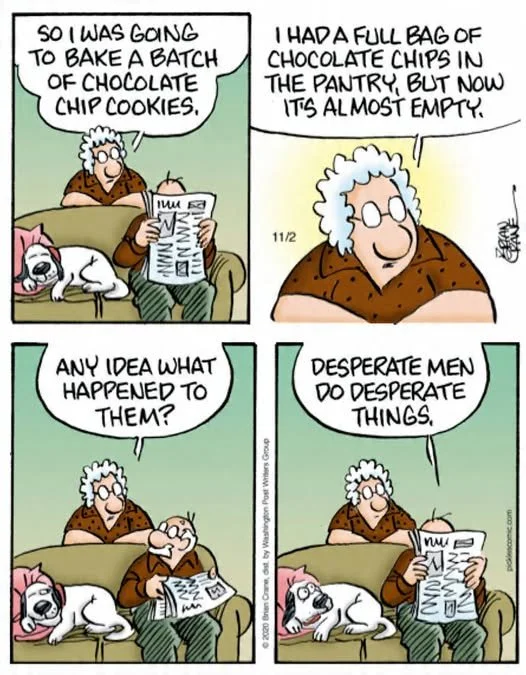
Mot: Desperate Men
MilitiaMan and Crew: IQD News Update-Iraq-Exchange Rate-Digital Dinar not Denied
MilitiaMan and Crew: IQD News Update-Iraq-Exchange Rate-Digital Dinar not Denied
2-11-2026
The Crew: Samson, PompeyPeter, Petra, Daytrader, Sunkissed, GIGI and Militia Man
Follow MM on X == https://x.com/Slashn
Be sure to listen to full video for all the news……..
MilitiaMan and Crew: IQD News Update-Iraq-Exchange Rate-Digital Dinar not Denied
2-11-2026
The Crew: Samson, PompeyPeter, Petra, Daytrader, Sunkissed, GIGI and Militia Man
Follow MM on X == https://x.com/Slashn
Be sure to listen to full video for all the news……..
Seeds of Wisdom RV and Economics Updates Wednesday Evening 2-11-26
Seeds of Wisdom RV and Economics Updates Wednesday Evening 2-11-26
Good Evening Dinar Recaps,
High-Stakes Summit: Netanyahu Pushes Trump to Broaden Iran Deal
White House talks could reshape nuclear diplomacy and Middle East security dynamics
Seeds of Wisdom RV and Economics Updates Wednesday Evening 2-11-26
Good Evening Dinar Recaps,
High-Stakes Summit: Netanyahu Pushes Trump to Broaden Iran Deal
White House talks could reshape nuclear diplomacy and Middle East security dynamics
Overview
U.S. President Donald Trump will host Israeli Prime Minister Benjamin Netanyahu at the White House on Wednesday, with Iran expected to dominate discussions amid renewed nuclear negotiations and heightened regional tensions.
This marks Netanyahu’s seventh visit with Trump since the president returned to office nearly 13 months ago — underscoring strong coordination, but also revealing potential policy divergences over the scope of U.S.–Iran diplomacy and the future of Gaza.
At the center of the meeting: whether negotiations with Tehran remain limited to nuclear restrictions or expand to address Iran’s missile program and regional proxy network.
Key Developments
Israel Seeks Expanded Negotiation Framework
Netanyahu is expected to press Trump to widen ongoing nuclear discussions to include Iran’s ballistic missile capabilities and its support for groups such as Hamas and Hezbollah. Israeli officials fear a narrow nuclear deal could leave Iran’s broader regional influence intact.
Iran, however, has stated negotiations remain confined to nuclear matters and has ruled out restrictions on its missile program.
Diplomacy Paired With Military Signaling
Trump has reiterated that any agreement must guarantee Iran has “no nuclear weapons,” and has hinted at tougher measures if negotiations fail. Reports indicate the U.S. may deploy a second aircraft carrier strike group to the region, reinforcing deterrence amid ongoing talks.
The United States previously supported Israeli strikes on Iranian nuclear facilities during a 12-day conflict last June, significantly damaging Iran’s air defenses. Israeli officials believe Tehran is now attempting to rebuild key capabilities.
Gaza Ceasefire & Regional Stability
Gaza is also expected to feature prominently in discussions. Trump has advanced a 20-point ceasefire and reconstruction framework aimed at ending the war and stabilizing the enclave. Progress remains stalled over issues such as phased Israeli withdrawal and Hamas disarmament.
Differences may also surface over Palestinian statehood. Trump has signaled openness to a broader peace framework, while Netanyahu maintains long-standing opposition to Palestinian statehood and annexation debates continue to spark international concern.
Strategic Balance in Flux
Iran’s regional influence has been weakened by Israeli military operations and setbacks across Gaza, Lebanon, Yemen, Iraq, and Syria. However, Israeli leadership remains wary of Tehran’s capacity to regroup.
For Washington, the challenge is balancing diplomatic engagement with credible deterrence. For Jerusalem, the objective is ensuring U.S. negotiations address what it views as the full spectrum of Iranian threats.
Why It Matters
This meeting could determine:
Whether U.S.–Iran talks remain nuclear-focused or expand strategically
The degree of U.S.–Israel policy alignment going forward
The trajectory of Middle East stability in 2026
The balance between diplomacy and military deterrence
Markets and global energy stakeholders are closely watching developments, as escalation risks in the region can directly affect oil prices, trade routes, and investor sentiment.
Why It Matters to Foreign Currency Holders
Geopolitical shifts of this scale influence:
Energy market volatility
Safe-haven currency flows (USD, gold)
Defense sector and regional infrastructure investments
Broader risk sentiment across emerging markets
Any escalation or breakdown in negotiations could trigger rapid capital movement into traditional safe assets.
Conversely, a structured agreement could stabilize regional risk premiums and reduce volatility in energy-linked currencies.
Implications for the Global Reset
Pillar 1: Energy & Security Realignment
Middle East stability directly impacts global energy pricing and reserve currency demand. A durable agreement could lower geopolitical premiums embedded in oil markets.
Pillar 2: Strategic Alliance Calibration
The outcome will test whether long-standing U.S.–Israel alignment remains unified amid shifting diplomatic strategies and evolving global power balances.
This is not just diplomacy — it is a recalibration of security architecture in a region central to global finance and energy stability.
All information compiled from publicly available diplomatic and international media reporting.
Seeds of Wisdom Team
Newshounds News™ Exclusive
Sources
~~~~~~~~~~
Ripple Expands UAE Footprint, Linking RLUSD with Dirham Stablecoin AEDZ
Cross-border settlement infrastructure deepens as stablecoins evolve into regulated financial rails
Overview
Ripple has expanded its partnership with UAE-based Zand Bank to strengthen stablecoin infrastructure in the Middle East. The collaboration connects Ripple’s U.S. dollar-pegged stablecoin, RLUSD, with Zand Bank’s dirham-backed stablecoin, AEDZ.
The move advances custody services, cross-border settlement efficiency, liquidity bridges between stablecoins, and potential issuance of AEDZ on the XRP Ledger. This signals a broader transformation: stablecoins are evolving from trading tools into regulated financial infrastructure.
Key Developments
1. RLUSD and AEDZ Liquidity Bridge
Ripple and Zand Bank plan to establish direct liquidity connectivity between RLUSD (USD-pegged) and AEDZ (AED-pegged). This would:
Improve cross-currency settlement efficiency
Reduce reliance on traditional correspondent banking
Enable faster institutional payment flows
Strengthen regional digital asset interoperability
By linking two regulated stablecoins, the partnership builds a programmable FX corridor between the U.S. dollar and UAE dirham.
2. Regulatory-Compliant Custody Integration
Zand Bank will support RLUSD within a compliant digital-asset custody framework. The UAE has positioned itself as a forward-leaning jurisdiction for digital finance, and both Abu Dhabi and Dubai regulators have approved structured usage of RLUSD under licensing guidelines.
This signals increasing regulatory normalization of stablecoins within traditional banking environments.
3. AEDZ Potential Issuance on XRP Ledger
The partnership includes discussions around issuing AEDZ directly on the XRP Ledger. If executed, this would:
Expand the XRP Ledger’s role in sovereign-linked token issuance
Enhance settlement speed and cost efficiency
Create programmable liquidity channels between fiat-backed digital assets
This development further integrates public blockchain rails into regulated banking ecosystems.
4. Stablecoins Expanding Beyond Trading
The collaboration illustrates a structural shift: stablecoins are no longer limited to crypto exchange liquidity. They are becoming tools for:
Corporate treasury management
Cross-border settlement
Tokenized asset infrastructure
Regulated payment corridors
The Middle East is emerging as a testing ground for these integrations.
Why It Matters
The UAE continues positioning itself as a digital finance hub bridging East and West. Ripple’s deeper integration with Zand Bank demonstrates:
Stablecoin infrastructure moving into formal banking channels
Regional currencies gaining programmable settlement capabilities
Increased interoperability between dollar-pegged and local-currency digital assets
This reduces friction in global payments and potentially bypasses legacy systems like SWIFT for certain transaction corridors.
Why It Matters to Foreign Currency Holders
For currency holders observing global monetary restructuring:
Dirham-backed stablecoin infrastructure strengthens regional currency digitization
Direct USD-AED digital bridges could influence settlement patterns
Stablecoin liquidity corridors may alter future reserve usage dynamics
Tokenized finance reduces settlement delays and counterparty exposure
Digital rails are increasingly layered on top of sovereign currencies rather than replacing them.
Implications for the Global Reset
Pillar 1: Digitized Fiat Infrastructure
The partnership reflects a broader shift toward fiat-backed stablecoins operating within regulatory frameworks. Rather than decentralized monetary replacement, the trend is regulated digitization of sovereign currencies.
Pillar 2: Regional Settlement Realignment
By enabling programmable liquidity bridges between USD and AED stablecoins, this move supports a multipolar settlement environment. Financial hubs like the UAE are becoming strategic intermediaries in global payment restructuring.
This is not speculative crypto expansion — it is the institutional wiring of digital currency infrastructure.
This is not just a partnership — it’s the building of programmable currency corridors within the evolving global financial system.
Seeds of Wisdom Team
Newshounds News™ Exclusive
Sources
~~~~~~~~~~
Yuan Breakout: China Curbs U.S. Treasuries as BRICS Currency Hits 2023 High
Beijing’s reserve strategy shift fuels dollar weakness and global diversification momentum
Overview
The Chinese yuan has surged to its strongest level against the U.S. dollar since May 2023, trading around 6.91 per dollar, following reports that Chinese regulators urged domestic banks to curb purchases of U.S. Treasuries.
The move is being interpreted as part of a broader strategic reserve diversification effort—one that is reinforcing BRICS currency positioning while amplifying pressure on the U.S. dollar.
China currently holds $682.6 billion in U.S. government debt (as of November 2025), ranking as the third-largest foreign holder behind Japan and the United Kingdom. However, signals from Beijing suggest a recalibration of exposure to U.S. sovereign debt markets.
The yuan is now on track for its seventh consecutive monthly gain, its longest streak since 2020–2021, and has appreciated roughly 5% since the start of 2025.
Key Developments
Chinese Regulators Signal Treasury Reduction
Bloomberg reported that Chinese officials advised banks to limit additional U.S. Treasury purchases, though the directive does not apply to existing state holdings. Analysts view this as a measured but strategic shift in reserve allocation policy ahead of recent high-level U.S.–China discussions.
Yuan Strength Fuels Broader Dollar Selling
Market strategists say yuan appreciation is contributing to broader U.S. dollar weakness. Chris Weston of Pepperstone noted that the People’s Bank of China (PBOC) appears more tolerant of a stronger yuan, creating tailwinds for pro-cyclical currencies and China-linked markets.
Inflation & Rate Concerns Surface in U.S.
Economist Peter Schiff warned that if China slows Treasury buying, the Federal Reserve may need to absorb more issuance—potentially increasing inflationary pressures. Senator Elizabeth Warren similarly cautioned that reduced foreign demand for Treasuries could translate into higher U.S. borrowing costs for mortgages and auto loans.
Global Reserve Diversification Accelerates
China’s move aligns with a broader pattern. Danish pension fund AkademikerPension reportedly plans to reduce U.S. Treasury exposure due to fiscal sustainability concerns. Meanwhile, foreign ownership of U.S. debt has fallen from nearly 40% in 2010 to roughly 15% today. The Federal Reserve has also reduced its balance sheet by approximately $1.5 trillion since May 2022.
Why It Matters
The yuan’s breakout is not merely a currency fluctuation — it reflects:
Strategic reserve realignment
Growing skepticism about long-term U.S. fiscal sustainability
Increasing global appetite for diversification away from dollar assets
If major holders gradually reduce Treasury exposure while the Fed continues balance sheet contraction, liquidity and yield volatility could intensify.
The shift also reinforces China’s ambition to position the yuan as a stronger player in cross-border trade settlement within the BRICS framework.
Why It Matters to Foreign Currency Holders
For those watching global monetary realignment:
A stronger yuan strengthens the case for multi-polar reserve structures
Reduced Treasury demand pressures U.S. rates higher
Sustained dollar weakness supports commodity-linked and emerging market currencies
BRICS trade settlement diversification gains credibility
This is not sudden de-dollarization — it is strategic, incremental repositioning.
Implications for the Global Reset
Pillar 1: Reserve Diversification Accelerates
Central banks and institutional funds are gradually reassessing sovereign credit exposure. The decline in foreign-held U.S. debt suggests structural—not cyclical—adjustments.
Pillar 2: Currency Power Rebalancing
The yuan’s strength, combined with BRICS payment system development, signals a shift toward a more distributed global currency architecture.
This is not just FX volatility — it is long-term reserve recalibration unfolding in real time.
All information compiled from publicly available financial reporting and institutional data.
Seeds of Wisdom Team
Newshounds News™ Exclusive
Sources
• Watcher Guru – BRICS: Yuan Hits 2023 High vs Dollar After China Limits US Bonds
• Bloomberg – China Urges Banks to Curb Treasury Purchases
• U.S. Treasury TIC Data – Major Foreign Holders of Treasury Securities
~~~~~~~~~~
Seeds of Wisdom Team RV Currency Facts Youtube and Rumble
Newshound's News Telegram Room Link
RV Facts with Proof Links Link
RV Updates Proof links - Facts Link
Follow the Gold/Silver Rate COMEX
Follow Fast Facts
Seeds of Wisdom Team™ Website
Thank you Dinar Recaps