
Seeds of Wisdom RV and Economics Updates Saturday Morning 12-27-25
Good Morning Dinar Recaps,
China Condemns Israel’s Somaliland Recognition as Red Sea Tensions Escalate
Beijing warns of geopolitical and maritime fallout amid displacement concerns
Good Morning Dinar Recaps,
China Condemns Israel’s Somaliland Recognition as Red Sea Tensions Escalate
Beijing warns of geopolitical and maritime fallout amid displacement concerns
Overview
China publicly condemned Israel’s recognition of Somaliland as an independent state
Beijing views the move as a threat to regional stability and maritime security
Concerns center on forced Palestinian displacement and strategic control of Red Sea routes
Egypt aligned with China in supporting Somalia’s territorial integrity
Key Developments
Israel became the first UN member state to recognize Somaliland
Diplomatic relations were established, including plans for ambassador exchanges
Cooperation reportedly includes maritime security, intelligence, and surveillance
Somaliland declared full control of its airspace in late 2025
China and Egypt reaffirmed support for Somalia’s government in Mogadishu
Beijing warned the move could destabilize the Bab el-Mandeb Strait and Gulf of Aden
Why It Matters
This development underscores how diplomacy, security, and trade routes are now inseparable. Control of strategic chokepoints like the Bab el-Mandeb directly impacts global shipping, energy flows, and insurance risk. China’s reaction signals that maritime dominance — not just territory — is becoming a primary front in geopolitical competition, accelerating global fragmentation.
Why It Matters to Foreign Currency Holders
For foreign currency holders, Red Sea instability raises settlement, trade, and valuation risk. Disruptions to shipping lanes directly affect commodity pricing, inflation, and balance-of-payment stability. As geopolitical pressure shifts trade routes and alliances, currencies tied to secure logistics corridors and energy access gain importance, while those exposed to chokepoint risk face repricing.
Implications for the Global Reset
Pillar: Maritime Control Equals Financial Power
Strategic waterways now determine trade reliability, insurance costs, and currency demand.Pillar: Diplomacy Reshaping Trade Corridors
Recognition and alliance decisions increasingly redraw global supply chains and settlement routes.
This is not just politics — it’s global finance restructuring before our eyes.
Seeds of Wisdom Team
Newshounds News™ Exclusive
Sources
Modern Diplomacy — “China Slams Israeli Plan to Recognize Somaliland for Palestinian Relocation”
Al Jazeera — “Why Somaliland’s status matters in Red Sea geopolitics”
~~~~~~~~~~
BRICS 2025: De-Dollarization Advances as Gold Reserves Surge
Expanded bloc accelerates monetary hedging while stopping short of replacing the dollar
Overview
The expanded BRICS bloc now includes Egypt, Ethiopia, Iran, UAE, and Indonesia
Member nations account for nearly half of the world’s population and a significant share of global GDP
De-dollarization efforts focus on local currency trade and alternative payment systems
Gold accumulation by BRICS central banks reached record levels in 2025
Internal divisions limit momentum toward a single BRICS-backed currency
Key Developments
BRICS+ membership expansion reflects a push toward a multipolar financial system
Russia and India publicly reaffirmed they are not seeking to replace the U.S. dollar
BRICS central banks added nearly 800 metric tonnes of gold in 2025
Combined BRICS gold reserves now exceed 6,000 tonnes, representing over 20% of global central bank holdings
Russia and China together hold roughly three-quarters of the bloc’s gold reserves
Gold prices surged to approximately $4,400 per ounce amid sustained central bank buying
BRICS Pay continues development as a blockchain-based payment messaging system
The bloc launched a pilot of the “Unit”, a basket-backed settlement instrument for wholesale trade
A new precious metals exchange was announced to facilitate non-dollar trade in physical metals
Why It Matters
BRICS is not dismantling the dollar system outright — it is building insurance against it. By expanding membership, accumulating gold, and developing parallel settlement mechanisms, the bloc is reducing exposure to sanctions, currency volatility, and Western-controlled financial rails. This layered approach signals a gradual restructuring of global finance rather than a sudden rupture.
Why It Matters to Foreign Currency Holders
For foreign currency holders, BRICS’ strategy reinforces a critical trend: monetary power is shifting toward assets and settlement access, not rhetoric. Gold accumulation and alternative payment infrastructure reduce dependence on reserve currencies while protecting national balance sheets. As reserve diversification accelerates, fiat currencies lacking commodity backing or trade relevance face long-term repricing risk.
Implications for the Global Reset
Pillar: Gold as Strategic Collateral
Central banks are reasserting gold as a neutral reserve asset amid currency weaponization.Pillar: Parallel Payment Architecture
The creation of non-Western settlement systems reduces reliance on dollar-based rails without triggering immediate disruption.
This is not just politics — it’s global finance restructuring before our eyes.
Seeds of Wisdom Team
Newshounds News™ Exclusive
Sources
Watcher.Guru — “BRICS 2025 Summary: De-Dollarization Push and Gold Reserves Surge”
World Gold Council — “Central banks remain net buyers of gold amid reserve diversification”
~~~~~~~~~~
🌱 A Message to Our Currency Holders🌱
If you’ve been holding foreign currency for many years, you were not foolish.
You were not wrong to believe the global financial system would change.
What failed was not your patience — it was the information you were given.
For years, dates, rumors, and personalities replaced facts, structure, and proof. “This week” predictions created cycles of hope and disappointment that were never based on how currencies actually change.
That is not your failure.
Our mission here is different: • No dates • No rates • No hype • No gurus
Instead, we focus on:
• Verifiable developments • Institutional evidence
• Global financial structure • Where countries actually sit in the process
Currency value changes only come after sovereignty, trade, banking, settlement systems, and fiscal coordination are in place. History and institutions confirm this sequence.
You will see silence. You will see denials. That is not delay — that is discipline.
Protect your identity. Organize your documents. Verify everything.
Never hand your discernment to anyone who cannot show proof.
You deserve truth — not timelines.
Seeds of Wisdom Team
Newshounds News
~~~~~~~~~~
Seeds of Wisdom Team RV Currency Facts Youtube and Rumble
Newshound's News Telegram Room Link
RV Facts with Proof Links Link
RV Updates Proof links - Facts Link
Follow the Gold/Silver Rate COMEX
Follow Fast Facts
Seeds of Wisdom Team™ Website
Thank you Dinar Recaps
Iraq Economic News and Points To Ponder Saturday Morning 12-27-25
Government Advisor: Current Revenues Cover Salaries And Basic State Requirements
Friday, December 26, 2025 19:57 | General Number of views: 177 Baghdad / NINA / The Prime Minister's Financial Advisor, Mazhar Muhammad Salih, confirmed on Friday that current public revenues cover the state's basic needs, primarily salaries. He also indicated that the government is moving towards controlling spending and maximizing non-oil revenues to achieve financial sustainability.
Government Advisor: Current Revenues Cover Salaries And Basic State Requirements
Friday, December 26, 2025 19:57 | General Number of views: 177 Baghdad / NINA / The Prime Minister's Financial Advisor, Mazhar Muhammad Salih, confirmed on Friday that current public revenues cover the state's basic needs, primarily salaries. He also indicated that the government is moving towards controlling spending and maximizing non-oil revenues to achieve financial sustainability.
According to the official news agency, Salih stated, "Current public revenues cover the state's basic needs, primarily salaries, pensions, and social welfare expenditures, which total approximately eight trillion dinars monthly."
He explained that "these obligations, despite their importance and being a top priority that must be paid, constitute only a portion of the overall financial burden. Other obligations must be paid, including public debt servicing, outstanding arrears, and expenses for managing vital logistical aspects within the operational budget, in addition to spending on investment projects related to essential services."
He added, "Fiscal sustainability necessitates controlling public spending, reviewing and auditing it according to spending efficiency standards and priorities, while simultaneously maximizing non-oil revenues. This ensures that required expenditures are met in a stable and sustainable manner, independent of the cyclical fluctuations in oil revenues."
He emphasized that "the recent Cabinet decision establishes a new phase in fiscal policy management, known as the concept of fiscal consolidation. This approach aims to gradually reduce the fiscal deficit in the short term and solidify fiscal discipline in the long term, in addition to developing a phased strategy to reduce the public debt balance."
He pointed out that "this path is a fundamental pillar for achieving the constants of fiscal sustainability and strengthening the resilience of public finances, thus ensuring the state's ability to meet its social and economic obligations while maintaining the overall stability of the national economy." https://ninanews.com/Website/News/Details?Key=1268643
Planning: The Quality Control Apparatus Has Become Part Of The Global Control System.
Local | 12:34 - 26/12/2025 Mawazin News – Baghdad The Ministry of Planning confirmed on Friday that the Central Organization for Standardization and Quality
Control (COSQC) has become part of the global regulatory system. COSQC President Fayyad Mohammed stated, "The COSQC does not operate in isolation from the international trade system. Rather, its technical and regulatory functions are based on an integrated system of international agreements and standards, ensuring that Iraqi standards are aligned with global regulations and achieving a balance between consumer protection and facilitating the flow of trade."
He added, "The COSQC's international references include the Agreement on Technical Barriers to Trade (TBT – WTO). The organization plays its role in preparing and implementing Iraqi standards and technical regulations in accordance with the principles of this agreement, which stipulate non-discrimination between domestic and imported goods, reliance on scientific and technical foundations, and avoidance of imposing technical requirements that constitute an unjustified obstacle to trade." He explained that "under these conditions, the organization ensures that Iraqi standards are compatible with international standards and commercially recognized."
He added that "the agency's references also include the World Organisation for Animal Health (OIE) Sanitary and Phytosanitary Measures (SPS), which the agency, in coordination with health and agricultural authorities, relies on to assess the health risks of imported food and agricultural products. It also adopts laboratory tests as the scientific basis for acceptance or rejection decisions and applies the principle of prevention without violating international trade rules."
He pointed out that "the Central Agency relies on the International Organization for Standardization (ISO) standards when preparing or updating Iraqi standards and defining quality and safety requirements for imported goods. It also adopts quality management systems in laboratories and testing bodies, which contributes to raising the level of technical conformity and unifying references."
He explained that "the Codex Alimentarius Commission is the agency's primary reference in the field of inspecting imported foods, determining maximum limits for contaminants and food additives, and adopting laboratory testing and analysis methods, which enhances food safety and protects public health."
Regarding regional and international cooperation, the head of the Central Organization for Standardization and Quality Control affirmed that "the organization coordinates with regional and international organizations such as the Gulf Standardization Organization (GSO) and the United Nations Industrial Development Organization (UNIDO) to harmonize standards, build technical capacities, and facilitate mutual recognition."
He pointed out that "the basic standards adopted by the Central Organization for Standardization and Quality Control in its import operations include a certificate of origin to verify the source of goods and ensure they do not originate from prohibited areas, in addition to a certificate of conformity to prove the product's compliance with Iraqi standards, and a label to ensure clear information for the consumer in Arabic."
He noted that "the technical and procedural controls implemented by the organization include risk management for classifying shipments according to the type of goods and the importer's record, laboratory testing to conduct physical, chemical, and microbiological analyses, and its role in supporting other entities in implementing electronic systems such as the ASYCUDA system."
He explained that "the Central Organization for Standardization and Quality Control represents the fundamental technical pillar in import control, as its role is not limited to inspection alone, but extends to setting standards, harmonizing them internationally, implementing them in the field, and supporting regulatory decisions with scientific evidence."
He added that "Iraqi oversight thus becomes an active part of the global regulatory system, and consumer protection is achieved without harming trade." https://www.mawazin.net/Details.aspx?jimare=272027
Oil: Oil Exports Reached 106.6 Million Barrels In November, With Revenues Exceeding $6.6 Billion.
Economy | 06:12 - 25/12/2025 Mawazin News – Economy The Iraqi Ministry of Oil announced the final statistics for crude oil exports, including condensates, on Thursday, December 25, along with the cash revenues generated for November 2025, according to data from the Iraqi State Oil Marketing Company (SOMO).
Total exports reached 106,593,352 barrels, generating revenues exceeding $6,595,391,000.
The detailed statistics provided further information on production sources and export destinations as follows:
- 98,709,795 barrels from fields in central and southern Iraq.
- 7,583,733 barrels from the Kurdistan Region via the Turkish port of Ceyhan.
- 299,824 barrels to Jordan.
The Ministry affirmed its commitment to publishing these figures monthly, based on its belief in the importance of informing the public about export operations to enhance transparency.
Iraq's average daily oil exports in August reached 3.38 million barrels, according to the Ministry of Oil. The head of Iraq's state oil marketing company SOMO said on Saturday that average oil exports for September are expected to range between 3.4 and 3.45 million barrels per day. OPEC counts oil flows from the Kurdistan Region as part of Iraq's quota.
https://www.mawazin.net/Details.aspx?jimare=272013
Oil Is Heading For Its Biggest Weekly Gain Since October.
Economy | 10:13 - 26/12/2025 Mawazin News – Economy Oil prices are on track for their biggest weekly gain since late October, as traders monitor a partial U.S. blockade of Venezuelan crude shipments and a U.S. military strike against an armed group in Nigeria.
Global benchmark Brent crude traded above $62 a barrel, up more than 3% this week, while West Texas Intermediate (WTI) crude traded below $59.
In Venezuela, a sanctioned tanker being pursued by U.S. forces altered course, moving away from the South American country, as the Trump administration intensified pressure on Caracas.
The White House has ordered military commanders to focus over the next two months on isolating Venezuelan oil, according to a person familiar with the matter. The person, who asked not to be identified, said U.S. forces are focusing almost exclusively on the blockade, rather than military options.
Brent crude is still headed for its biggest annual decline since 2020, having fallen by about 16%. This decline is attributed to expectations of a supply glut, with almost all major crude oil traders anticipating a global oversupply next year after producers within and outside the OPEC+ alliance increased output. However, escalating geopolitical tensions have helped to support prices. https://www.mawazin.net/Details.aspx?jimare=272022
A Historic Surge In Precious Metals To Record Levels
Economy | 12:53 - 26/12/2025 Mawazin News – Economy Gold and silver surged to record highs as political tensions and a weaker dollar extended a historic rally for the precious metals.
Spot gold rose as much as 1.2% to a record high above $4,530 an ounce. Tensions in Venezuela, where the United States tightened its blockade of oil tankers and increased pressure on the government of Nicolás Maduro, boosted the precious metal's safe-haven appeal, according to Bloomberg.
In Africa, the United States launched airstrikes targeting sites in Nigeria, with President Donald Trump stating that the strikes targeted ISIS.
The factors driving the historic rally have propelled gold up by nearly 70% this year and silver by more than 150%, with both metals on track for their best annual performance since 1979.
This sharp rise has been underpinned by increased central bank purchases, inflows into exchange-traded funds (ETFs), and three consecutive interest rate cuts by the US Federal Reserve.
Low borrowing costs are a boon for non-yielding precious metals, as traders bet on further interest rate cuts in 2026.
Heavy buying by ETFs has been a key driver of the recent surge. According to data from the World Gold Council, total holdings in gold-backed funds have increased in every month this year except May, while holdings in State Street Corporation's SPDR Gold Trust, the largest precious metals ETF, have risen by more than a fifth this year.
Silver's rally has been even stronger than gold's, with London vaults seeing significant inflows since the sell-off in October. However, much of the world's available silver remains in New York, as traders await the outcome of a U.S.
Commerce Department investigation into whether imports of critical minerals pose a national security threat. This could lead to tariffs or trade restrictions on the metal.
Gold rose 0.8% to $4,516.70 an ounce at 9:25 a.m. in Singapore. Silver climbed 4.3% to $74.94.
Platinum advanced 4.8%, nearing Wednesday's high of $2,381.53, its highest level since Bloomberg began tracking the metal in 1987. Palladium also rose 4%.
Silver rose in spot trading for immediate delivery for the fifth consecutive session, climbing as much as 4.5% to surpass $75 an ounce for the first time.
The recent gains in the white metal have been bolstered by speculative inflows and ongoing supply disruptions across major trading hubs, following a historic sell-off in October.
The Bloomberg Dollar Index, which measures the strength of the US currency, fell 0.8% over the week, its biggest weekly decline since June. A weaker dollar is generally supportive of gold and silver prices.
https://www.mawazin.net/Details.aspx?jimare=272029
For current and reliable Iraqi news please visit: https://www.bondladyscorner.com
Seeds of Wisdom RV and Economics Updates Friday Afternoon 12-26-25
Good Afternoon Dinar Recaps,
Russia Pulls Back FX Support as Energy Revenues Tighten
Central bank shifts strategy as sanctions, war costs, and reserve pressures mount
Good Afternoon Dinar Recaps,
Russia Pulls Back FX Support as Energy Revenues Tighten
Central bank shifts strategy as sanctions, war costs, and reserve pressures mount
Overview
Russia’s central bank announced a significant reduction in foreign exchange sales beginning in 2026
The move limits direct support for the ruble and signals tighter reserve management
Energy revenues continue to weaken under sanctions and discounted export pricing
The decision reflects longer-term financial strain rather than short-term volatility
Key Developments
The Central Bank of Russia will cut its FX market interventions by roughly 30%
Reduced forex sales mean less artificial support for the ruble
Budget pressures are rising as oil and gas revenues underperform
Domestic financing and internal liquidity controls are replacing external buffers
This aligns with Russia’s broader pivot away from Western financial systems
Why It Matters
Russia’s retreat from active currency defense underscores a deeper shift underway in global finance. As sanctions persist and energy income tightens, Moscow is conserving reserves and accepting currency volatility as a strategic tradeoff. This reinforces global fragmentation, where countries prioritize sovereignty over stability, accelerating the breakdown of a single dominant monetary order.
Why It Matters to Foreign Currency Holders
For foreign currency holders, this development highlights how state-backed currency support is no longer guaranteed. When major economies allow currencies to float under pressure, it exposes the fragility of fiat systems tied to debt, energy revenues, and political risk. It reinforces why diversification, asset-backed value, and reset-linked currencies remain central themes as monetary discipline replaces intervention.
Implications for the Global Reset
Pillar: Currency Realignment
Reduced FX intervention signals acceptance of repricing and volatility as systems transition away from artificial stability.Pillar: Reserve Preservation Over Market Confidence
Nations are choosing internal survival and long-term leverage over defending external perceptions.
This is not just politics — it’s global finance restructuring before our eyes.
Seeds of Wisdom Team
Newshounds News™ Exclusive
Sources
~~~~~~~~~~
EU Extends Russia Sanctions as Peace Talks Stall
Economic pressure remains central to diplomacy and financial realignment
Overview
The European Union formally extended broad economic sanctions on Russia into mid-2026
Measures continue to target energy, banking, technology, and trade
The extension comes despite intermittent diplomatic signals around peace discussions
Sanctions are now entrenched as a long-term policy tool rather than a temporary response
Key Developments
The EU Council approved the sanctions rollover with near-unanimous support
Restrictions on financial institutions and cross-border settlements remain in place
Energy trade limitations continue to distort global supply routes
Technology and dual-use export bans stay intact
Russia and aligned partners accelerate non-Western trade and payment mechanisms
Why It Matters
The continued use of sanctions as a standing economic weapon signals that financial systems are now inseparable from diplomacy. Rather than isolating conflict, sanctions are reshaping global trade corridors, forcing parallel systems to emerge. This entrenched pressure prolongs fragmentation and reinforces the shift toward a multipolar economic order.
Why It Matters to Foreign Currency Holders
For foreign currency holders, prolonged sanctions highlight a critical reality: access, convertibility, and settlement matter as much as face value. Assets tied to sanction-exposed systems can become illiquid overnight. This environment favors currencies and assets aligned with emerging settlement frameworks, commodity backing, and neutral trade corridors as the reset advances.
Implications for the Global Reset
Pillar: Financial Fragmentation
Sanctions accelerate the division between Western-centric and alternative financial systems.Pillar: Payments Over Politics
Control of settlement rails is becoming more powerful than military leverage.
This is not just politics — it’s global finance restructuring before our eyes.
Seeds of Wisdom Team
Newshounds News™ Exclusive
Sources
EU Council press release — EU extends economic sanctions on Russia through July 2026
The Guardian live updates — EU Council extends economic sanctions against Russia
~~~~~~~~~~
Trade Protectionism Rises as Global Growth Fractures
India’s export outlook reveals deeper shifts in trade, debt, and diplomacy
Overview
India’s exports are projected to grow modestly into the next fiscal year
Global demand remains uneven amid rising protectionist policies
Climate-linked trade rules and tariffs are reshaping access to markets
Export performance is increasingly tied to geopolitical alignment
Key Developments
India’s exports are forecast to approach $850 billion despite global headwinds
Trade growth is constrained by tariffs, sanctions spillover, and regulatory barriers
Climate and carbon-based trade rules are becoming de facto economic weapons
Developing nations face tighter access to Western markets
Trade blocs are strengthening internal settlement and bilateral agreements
Why It Matters
Trade is no longer a neutral economic function — it is a strategic instrument. As protectionism replaces globalization, countries are forced to choose partners, payment systems, and standards. This realignment reshapes growth trajectories, debt sustainability, and diplomatic leverage, accelerating the transition away from a single global trade framework.
Why It Matters to Foreign Currency Holders
For foreign currency holders, fragmented trade means unequal currency demand and repricing risk. Currencies tied to shrinking trade corridors weaken, while those embedded in growing regional trade networks gain relevance. This environment favors currencies linked to production, commodities, and settlement access rather than financial reputation alone.
Implications for the Global Reset
Pillar: Trade Corridor Realignment
Global commerce is reorganizing around regional blocs rather than global openness.Pillar: Regulation as Economic Control
Standards, climate rules, and tariffs are replacing tariffs alone as trade barriers.
This is not just politics — it’s global finance restructuring before our eyes.
Seeds of Wisdom Team
Newshounds News™ Exclusive
Sources
The Economic Times -- “Exports likely to grow by 3% to $850 billion this fiscal: GTRI”
Reuters -- “Global trade outlook dims as protectionism and tariffs rise”
~~~~~~~~~~
Markets Surge as Rate Cut Expectations Clash With Global Risk
Asset prices rise even as debt, war, and monetary strain intensify
Overview
Global equity markets pushed to record highs, led by U.S. indices
Investors are pricing in future rate cuts despite persistent inflation pressures
Precious metals strengthened alongside equities, signaling hedging behavior
Markets appear increasingly disconnected from geopolitical and fiscal realities
Key Developments
U.S. stock indices rallied on expectations of looser monetary policy ahead
Central banks face mounting pressure from debt servicing costs
Gold and silver advanced as investors quietly hedge systemic risk
Capital continues flowing into technology and AI-driven sectors
Sovereign debt levels remain historically elevated despite market optimism
Why It Matters
This divergence between market optimism and underlying structural stress reflects a late-stage cycle dynamic. Asset inflation is being driven less by productivity and more by liquidity expectations. As debt loads grow and monetary flexibility narrows, markets are increasingly sensitive to confidence shocks — a key precursor to systemic reset events.
Why It Matters to Foreign Currency Holders
For foreign currency holders, record markets signal valuation risk rather than strength. When equities rise alongside precious metals, it suggests capital is hedging against currency debasement. This reinforces the importance of positioning ahead of currency repricing, especially as central banks prioritize debt sustainability over currency purchasing power.
Implications for the Global Reset
Pillar: Asset Repricing
Markets are inflating ahead of structural realignment, increasing the scale of future adjustments.Pillar: Debt Supremacy Over Currency Stability
Monetary policy is increasingly dictated by debt burdens rather than inflation control.
This is not just politics — it’s global finance restructuring before our eyes.
Seeds of Wisdom Team
Newshounds News™ Exclusive
Sources
The Guardian -- “S&P 500 and Dow hit record highs as Santa rally reaches Wall Street”
Reuters -- “Wall Street climbs as investors bet on future rate cuts”
~~~~~~~~~~
Seeds of Wisdom Team RV Currency Facts Youtube and Rumble
Newshound's News Telegram Room Link
RV Facts with Proof Links Link
RV Updates Proof links - Facts Link
Follow the Gold/Silver Rate COMEX
Follow Fast Facts
Seeds of Wisdom Team™ Website
Thank you Dinar Recaps
Seeds of Wisdom RV and Economics Updates Friday Morning 12-26-25
Good Morning Dinar Recaps,
Ukraine Launches Christmas Storm Shadow Missile Strike on Russia
Energy infrastructure targeted as Kyiv intensifies economic pressure on Moscow
Good Morning Dinar Recaps,
Ukraine Launches Christmas Storm Shadow Missile Strike on Russia
Energy infrastructure targeted as Kyiv intensifies economic pressure on Moscow
Overview
Ukraine confirmed a successful long-range strike on Russia’s Novoshakhtinsk oil refinery using British-supplied Storm Shadow missiles.
The refinery is a key supplier of diesel and jet fuel to Russian military operations.
The strike occurred amid escalating energy-for-energy retaliation between Moscow and Kyiv.
Key Developments
Ukrainian forces reported multiple explosions at the Novoshakhtinsk refinery in Russia’s Rostov region, with damage still being assessed.
Kyiv also struck the Temryuk seaport in Krasnodar, damaging oil storage tanks used to supply Russian military logistics.
Additional attacks were reported against a military airfield in Adygea, where Ukrainian forces confirmed a fire following impact.
Russian officials claimed air defenses intercepted dozens of Ukrainian drones near Volgograd, a region hosting a major Lukoil refinery.
Why It Matters
Ukraine’s sustained targeting of Russian oil and fuel infrastructure directly attacks the financial backbone of Moscow’s war effort. Energy exports remain one of Russia’s primary revenue streams, and repeated disruptions raise costs, complicate logistics, and amplify pressure on global energy markets already strained by geopolitical instability.
Why It Matters to Foreign Currency Holders
Energy disruptions ripple quickly through currency markets, particularly for nations exposed to oil-linked trade balances. Sustained attacks on Russian refining capacity can increase volatility in energy pricing, influence inflation expectations, and accelerate reserve diversification strategies among countries seeking insulation from conflict-driven supply shocks.
Implications for the Global Reset
Pillar: Energy as Financial Leverage — Control and disruption of energy infrastructure continues to shape global power alignment and currency confidence.
Pillar: Militarization of Supply Chains — Strategic assets are increasingly treated as battlefield targets, reinforcing the shift toward resilient, regionalized systems.
This is not just a battlefield escalation — it’s economic warfare reshaping global energy and financial stability.
Seeds of Wisdom Team
Newshounds News™ Exclusive
Sources
Newsweek – “Ukraine Launches Christmas Storm Shadow Missile Strike on Russia”
Reuters – “Ukraine strikes Russian oil infrastructure as energy war escalates”
~~~~~~~~~~
BRICS Use Gold to Challenge Dollar Hegemony
Gold-backed reserves reshape power without firing a shot
Overview:
BRICS nations collectively control nearly half of global gold production, reinforcing monetary independence.
Central banks purchased roughly 800 metric tonnes of gold in 2025, valued near $105 billion.
Gold prices surged above $4,400 per ounce, driven by sovereign accumulation and de-dollarization pressure.
Key Developments:
BRICS gold reserves now exceed 6,000 tonnes, representing roughly 20–21% of global central bank holdings.
Brazil resumed gold purchases in late 2025, adding 16 tonnes after a multi-year pause.
Russia and China now settle roughly 90–95% of bilateral trade in local currencies, bypassing dollar rails.
The BRICS “Unit” prototype launched in late 2025, backed 40% by physical gold and 60% by member currencies, establishing a gold-anchored trade benchmark.
Why It Matters:
Gold is no longer a passive reserve asset — it is re-emerging as an active settlement and trust mechanism. For foreign currency holders, this signals a structural shift away from dollar-centric liquidity toward asset-backed credibility. As more trade moves into gold-supported frameworks, demand for fiat reserves weakens while physical assets gain strategic importance.
Why It Matters to Foreign Currency Holders:
As BRICS nations shift trade and reserves toward gold-backed and local-currency settlement, foreign currency holders face a changing landscape of liquidity, demand, and valuation. Reduced reliance on the U.S. dollar in commodity trade weakens automatic dollar recycling, increasing volatility across foreign exchange markets.
Implications for the Global Reset:
Pillar 1: Monetary Sovereignty — Gold-backed reserves allow nations to conduct trade without exposure to U.S. financial leverage.
Pillar 2: Infrastructure Over Ideology — BRICS is not confronting the dollar directly; it is routing around it with settlement systems anchored in tangible value.
This is not just politics — it’s global finance restructuring before our eyes.
Seeds of Wisdom Team
Newshounds News™ Exclusive
Sources:
~~~~~~~~~~
Seeds of Wisdom Team RV Currency Facts Youtube and Rumble
Newshound's News Telegram Room Link
RV Facts with Proof Links Link
RV Updates Proof links - Facts Link
Follow the Gold/Silver Rate COMEX
Follow Fast Facts
Seeds of Wisdom Team™ Website
Thank you Dinar Recaps
“Tidbits From TNT” Friday Morning 12-26-2025
TNT:
Tishwash: The Iraqi Gazette publishes the presidential decree calling for Parliament to convene on the 29th of this month.
The Ministry of Justice announced on Wednesday the issuance of the new issue of the Iraqi Gazette, which included Republican Decree No. (54) of 2025 regarding the invitation of the elected House of Representatives for the sixth session to convene on Monday, the 29th of this month, under the chairmanship of the oldest member.
The Ministry of Justice announced the issuance of the new issue of the Iraqi Gazette No. (4853), which included the publication of a presidential decree, two resolutions, and a number of instructions.
TNT:
Tishwash: The Iraqi Gazette publishes the presidential decree calling for Parliament to convene on the 29th of this month.
The Ministry of Justice announced on Wednesday the issuance of the new issue of the Iraqi Gazette, which included Republican Decree No. (54) of 2025 regarding the invitation of the elected House of Representatives for the sixth session to convene on Monday, the 29th of this month, under the chairmanship of the oldest member.
The Ministry of Justice announced the issuance of the new issue of the Iraqi Gazette No. (4853), which included the publication of a presidential decree, two resolutions, and a number of instructions.
The Director General of the Iraqi Gazette Department, Ms. Haifa Shukr Mahmoud, said, “The issue included the publication of Republican Decree No. (54) of 2025, which included the invitation of the elected House of Representatives in its sixth session to convene on Monday, December 29, 2025, and the session shall be chaired by the oldest member.”
The Director General added, “The issue also included the publication of a decision issued by the Supreme Federal Court No. (235/Federal/2025) on 14/12/2025, in addition to the instructions for scientific promotions in the Ministry of Higher Education and Scientific Research No. (10) of 2025.”
She explained that “the issue also included the publication of the decision to amend the founding statement of the “Al-Rafidain General Company for Dam Implementation / one of the formations of the Ministry of Water Resources, along with the amended founding statement.” link
Tishwash: Judicial Council: The first session of Parliament must elect the President and his two deputies... and a warning
Zidane's meeting with the oldest speaker of parliament
The President of the Supreme Judicial Council, Dr. Faiq Zaidan, met with the oldest Speaker of Parliament, during which they discussed the constitutional requirements for holding the first session of Parliament, including the necessity of electing the Speaker of Parliament and his two deputies, while emphasizing the need to adhere to the constitutional texts and respect the legal deadlines, and warning against any contrary interpretation that is considered an explicit constitutional violation that may hinder the formation of the legislative and executive authorities.
The President of the Supreme Judicial Council, Judge Dr. Faiq Zaidan, received today, Wednesday, December 24, 2025, Member of Parliament Amer Al-Fayez, who will preside over the session of Parliament on December 29, 2025, as he is the oldest member.
The Speaker of the Council stressed the importance of respecting and applying the constitutional texts as they are stated in the Constitution and not interpreting the texts with baseless interpretations, as Articles (54 and 55) of the Constitution explicitly stipulate the election of the Speaker of the House of Representatives and his two deputies in the first session of the new Council, and any interpretation to the contrary is a clear constitutional violation that opens the door to other violations that hinder the formation of the legislative and executive authorities within the constitutional deadlines. link
************
Tishwash: The Central Bank of Syria sets the beginning of next year as the date for starting the currency exchange.
The Governor of the Central Bank of Syria, Abdul Qader Hasriya, has set the beginning of next year as the date for the start of replacing the old currency with a new one, according to what was published on his official Facebook page on Thursday.
The governor wrote, "January 1, 2026 is the date for the start of the replacement process. The executive regulations will be issued."
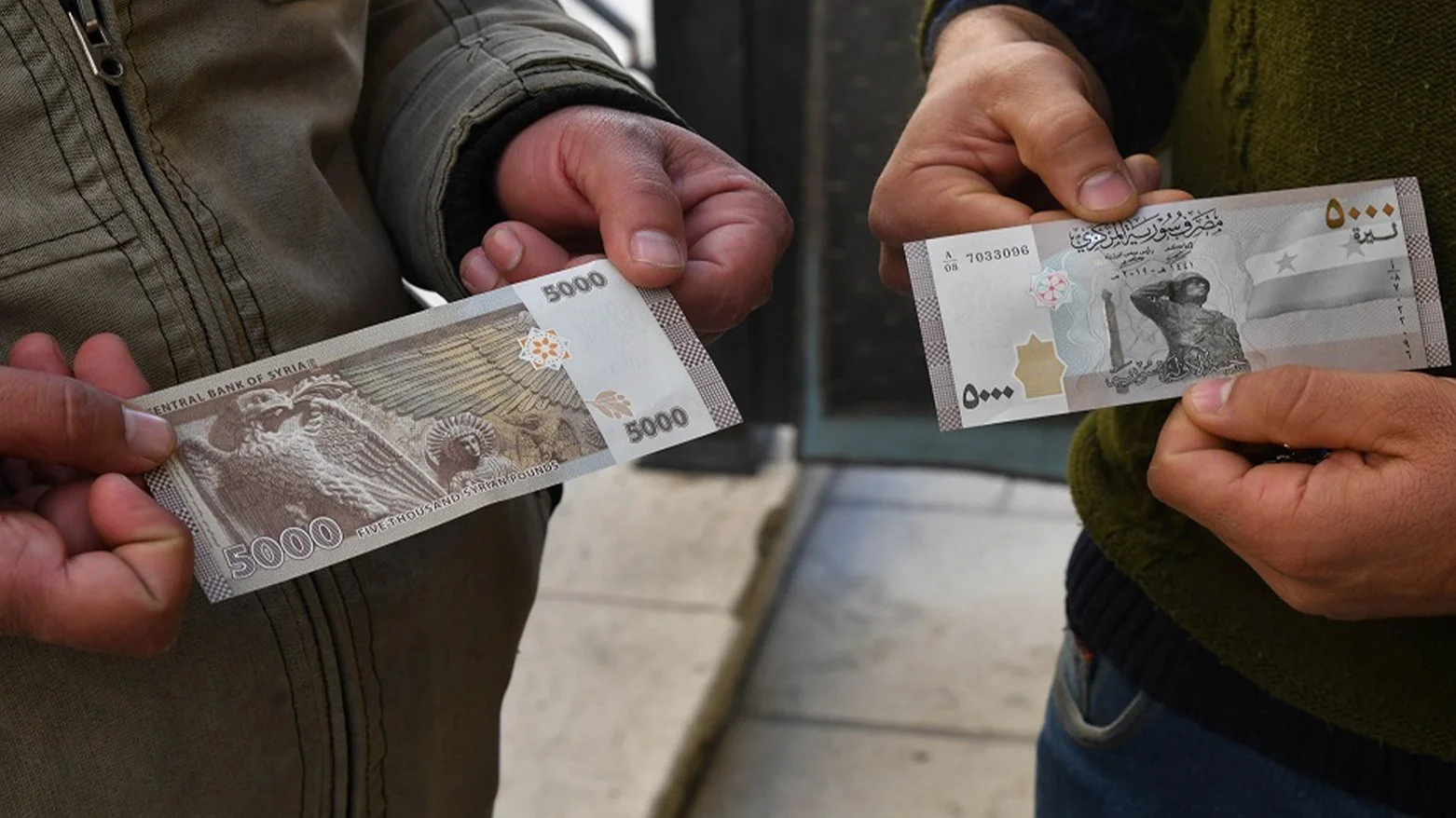
A presidential decree related to the issuance of the new Syrian currency granted the Central Bank powers "to determine the deadlines for exchange and its centers," according to what the governor published, confirming that executive instructions and an explanation of the mechanisms will be issued at a press conference to be held next Sunday.
In August, the governor revealed that his country intends to replace the banknotes in circulation with new ones that remove two zeros from them, explaining that six new denominations will be printed from various sources.
Improving the exchange rate of the Syrian pound is one of the most prominent financial challenges in Syria after the overthrow of ousted President Bashar al-Assad on December 8.
Before the outbreak of the conflict in 2011, the dollar was worth about fifty liras, before the currency gradually collapsed and lost more than ninety percent of its value.
Syrians are forced to carry large amounts of banknotes in their bags or plastic bags to meet their needs. The 5,000 Syrian pound note is currently the highest denomination in circulation.
According to the governor, the central bank intends to print six new denominations, explaining that for logistical reasons and to meet demand, the printing will be done at two or three sources.
Following the outbreak of the conflict and under the economic sanctions imposed on the previous regime, Syrian banknotes were printed exclusively in Russia, which was an ally of Assad and to which he turned as opposition factions advanced on Damascus late last year.
The exchange rate has recently fluctuated between 10,000 and 11,000 against the dollar, whereas it hovered around 15,000 in the months preceding Assad's downfall. link
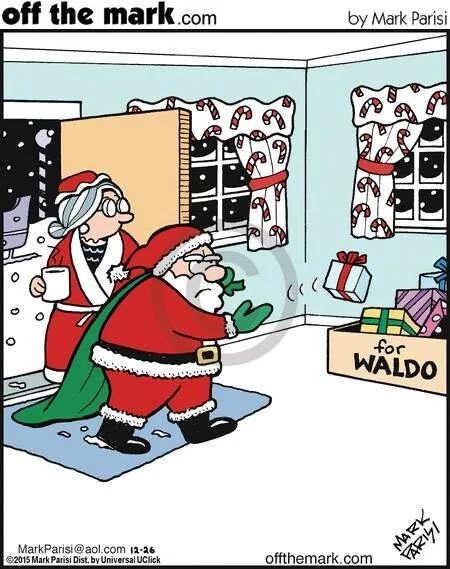
Mot: Poor Santa! LOL
Pickles jingle bell collars

Germany Is Breaking: €1 Trillion in Debt, NO Growth, and an Economic Collapse
Germany Is Breaking: €1 Trillion in Debt, NO Growth, and an Economic Collapse
Lena Petrova: 12-25-2025
Germany was once the undisputed economic engine of Europe — defined by industrial dominance, export power, and ironclad fiscal discipline. That era is over.
In this video, we break down why Germany is still trapped in a multi-year recession, why massive debt spending isn’t delivering growth, and why institutions like the Bundesbank and IMF are warning that the country faces something far more dangerous than a short downturn: long-term stagnation.
Germany Is Breaking: €1 Trillion in Debt, NO Growth, and an Economic Collapse
Lena Petrova: 12-25-2025
Germany was once the undisputed economic engine of Europe — defined by industrial dominance, export power, and ironclad fiscal discipline. That era is over.
In this video, we break down why Germany is still trapped in a multi-year recession, why massive debt spending isn’t delivering growth, and why institutions like the Bundesbank and IMF are warning that the country faces something far more dangerous than a short downturn: long-term stagnation.
This week, the Bundesbank delivered a sobering forecast. Germany is not expected to return to pre-recession GDP levels until late 2026, meaning at least four years of lost economic momentum in Europe’s largest economy — despite nearly €1 trillion in new debt-funded spending focused on infrastructure and defense.
Even worse, growth projections have been slashed, with 2026 growth now estimated at just 0.6%. We explore:
Why Germany’s debt-fueled recovery is failing
How the budget deficit is set to hit levels not seen since reunification
Why rising debt isn’t translating into productivity or competitiveness
The impact of high energy costs, weak industrial demand, and global competition
IMF warnings about demographics, shrinking labor supply, and structural decline
Why militarization and short-term political spending won’t fix Germany’s economy
Germany still has fiscal room — but not unlimited time. Without deep structural reforms, productivity gains, and economic modernization, the country risks a slow, painful decline that will reshape not just Germany, but the entire European economy.
Seeds of Wisdom RV and Economics Updates Thursday Afternoon 12-25-25
Merry Christmas Dinar Recaps,
Kim Jong Un Inspects Submarine Construction, Then Oversees Missile Launch
Pyongyang advances strategic military capabilities amid rising regional tensions
Merry Christmas Dinar Recaps,
Kim Jong Un Inspects Submarine Construction, Then Oversees Missile Launch
Pyongyang advances strategic military capabilities amid rising regional tensions
Overview:
North Korean leader Kim Jong Un personally inspected the construction of an 8,700-ton nuclear-powered submarine and oversaw a missile test on December 24–25, 2025, according to state media and official reports.
The submarine project is part of a broader campaign to modernize the North’s navy, with plans for multiple attack destroyers and strategic submarines.
The missile test, conducted near the East Sea, reportedly saw long-range surface-to-air missiles hit targets approximately 200 kilometers away.
Key Developments:
Kim Jong Un observed construction of a submarine with an 8,700-ton displacement and a likely nuclear reactor, which North Korean media claims is nearing operational status.
The associated missile test was aimed at refining strategic technologies for high-altitude and long-range missile systems.
Pyongyang criticized South Korea’s cooperation with the United States on its own nuclear-powered submarine program, calling it a threat to security.
North Korean state media also condemned the recent docking of a U.S. nuclear submarine in South Korea and accused Japan of pursuing nuclear ambitions, heightening regional rhetoric.
Why It Matters:
North Korea’s dual focus on expanding its naval nuclear infrastructure and testing advanced missile systems represents a significant escalation in the military balance of the Korean Peninsula. These developments signal Pyongyang’s intent to project power beyond its borders and strengthen deterrence against regional adversaries.
Why It Matters to Foreign Currency Holders:
Heightened military activity in Northeast Asia can influence market risk sentiment, currency stability, and capital flows. Investors often reprice assets and shift into traditional safe havens like gold or U.S. Treasury securities during periods of intensified geopolitical risk. Currencies of countries directly exposed to regional tensions — including Japan, South Korea, and emerging Asian economies — may experience volatility, affecting FX holdings and reserve management strategies.
Implications for the Global Reset:
Pillar 1: Strategic Deterrence as Economic Signal — Military advancements reshape risk pricing across global financial markets.
Pillar 2: Regional Power Competition — Concerted defense buildups influence international alliances and capital allocation priorities.
This is not just military posturing — it’s a geopolitical catalyst reshaping financial confidence and strategic investment flows.
Seeds of Wisdom Team
Newshounds News™ Exclusive
Sources:
~~~~~~~~~~
China Accelerates De-Dollarization as BRICS Infrastructure Strategy Deepens
New payment rails and commodity control quietly bypass U.S. financial dominance
Overview:
China is advancing de-dollarization through payment infrastructure, commodity control, and reserve diversification, rather than direct confrontation.
Direct yuan settlement corridors are expanding rapidly across Africa, Asia, and BRICS trade routes.
These developments reduce reliance on the U.S. dollar and circumvent traditional Western financial controls.
Key Developments:
African banks integrated with China’s CIPS payment system now enable direct yuan settlements, cutting transaction times from days to seconds and sharply reducing costs.
China’s Belt and Road investments secured critical mineral supply chains across Africa, linking commodities directly to non-dollar trade settlement.
CIPS processed over 175 trillion yuan in transactions, with participation expanding to more than 120 countries.
China-Russia trade is now settled almost entirely in local currencies, removing dollar exposure from bilateral commerce.
Multiple central banks, including those in Africa and emerging markets, are increasing gold reserves and reducing dollar-denominated assets.
Why It Matters:
The shift marks a structural change in global finance. Instead of challenging the dollar rhetorically, China and its partners are building alternative systems that function more efficiently, allowing trade and settlement to continue outside U.S.-controlled rails such as SWIFT.
Why It Matters to Foreign Currency Holders:
As trade increasingly settles in yuan, local currencies, and gold-linked mechanisms, foreign currency holders face a changing reserve landscape. Reduced dollar demand in trade weakens automatic dollar recycling, increases FX volatility, and encourages diversification into commodities, alternative currencies, and non-Western settlement systems.
Implications for the Global Reset:
Pillar 1: Infrastructure Over Ideology — Control of payment rails and commodities matters more than monetary declarations.
Pillar 2: Multipolar Settlement Systems — Trade no longer requires dollar intermediation, accelerating financial fragmentation.
This is not about destroying the dollar overnight — it’s about routing around it until dominance fades.
Seeds of Wisdom Team
Newshounds News™ Exclusive
Sources:
Watcher.Guru – “China Destroys the Dollar as BRICS Strategy Deepens”
Reuters – “China expands yuan settlement and payment systems to boost global use of its currency”
~~~~~~~~~~
Seeds of Wisdom Team RV Currency Facts Youtube and Rumble
Newshound's News Telegram Room Link
RV Facts with Proof Links Link
RV Updates Proof links - Facts Link
Follow the Gold/Silver Rate COMEX
Follow Fast Facts
Seeds of Wisdom Team™ Website
Thank you Dinar Recaps
Iraq Economic News and Points To Ponder Thursday Afternoon 12-25-25
Iraqi Christians Celebrate Christmas Mass
Time: 2025/12/24 20:23:38 Reading: 15 times {Local: Al-Furat News} Christians throughout Iraq celebrate Christmas and the New Year in a traditional manner that combines religious and social rituals.
The Ain Kawa region in Iraq is considered one of the most prominent centers where Christians celebrate Christmas and the New Year, as the celebrations there are characterized by deep religious rituals and social customs inherited across generations.
Iraqi Christians Celebrate Christmas Mass
Time: 2025/12/24 20:23:38 Reading: 15 times {Local: Al-Furat News} Christians throughout Iraq celebrate Christmas and the New Year in a traditional manner that combines religious and social rituals.
The Ain Kawa region in Iraq is considered one of the most prominent centers where Christians celebrate Christmas and the New Year, as the celebrations there are characterized by deep religious rituals and social customs inherited across generations.
Preparations usually begin weeks before Christmas, with residents decorating churches and homes with lights and colorful decorations, and placing a nativity scene representing the birth of Jesus Christ, to become the focus of attention for children and families.
In churches, services are held that include the recitation of Christmas prayers and hymns reflecting spirituality and pride in Christian identity. Activities are also organized for children, such as short plays depicting the Nativity story.
From a social perspective, visits to relatives and neighbors are an essential part of the celebration, where people exchange greetings and symbolic gifts, and invitations are made to communal feasts that strengthen ties between members of the community.
Traditional foods prepared and served on this occasion vary, most notably grilled meats, pacha, Mosul kibbeh, special Christmas cakes, local sweets such as baklava and various pastries prepared by families. LINK
The President Of The Republic Congratulates Christians In Iraq And The World On The Occasion Of Christmas
Wednesday, December 24, 2025 8:18 PM | Politics Number of views: 41 Baghdad / NINA / President Abdul Latif Jamal Rashid extended his congratulations and best wishes to Christians in Iraq and around the world on the occasion of Christmas, emphasizing his deep appreciation for their integral role in the history and present of our nation. /End https://ninanews.com/Website/News/Details?key=1268356
Oil Minister: Refining Sector Projects Aim To Transform Iraq Into An Exporter Of Petroleum Products.
Energy Economy News – Baghdad Deputy Prime Minister for Energy Affairs and Oil Minister Hayyan Abdul Ghani stated on Wednesday that the ministry aims, through expansion projects in the refining sector, to transform Iraq into an exporter of oil derivatives.
This came during his chairmanship of a meeting to discuss refining capacity projects for Iraqi refineries and expansion plans to increase and sustain production, according to a statement issued by the ministry.
The statement quoted the minister as saying that the ministry had achieved great accomplishments in the liquidation sector, reaching the stage of self-sufficiency, noting that the ministry is working to provide a stockpile for emergency situations.
The meeting was attended by the ministry’s undersecretaries for the extraction, gas, and refining sectors, and the directors general of the relevant departments in the ministry.
Abdul Ghani stressed the need to adopt modern methods and techniques to ensure the continuity of the successes achieved in the field of refining, especially after the completion of the ministry’s projects to improve gasoline in the two projects: Al-Sumoud Refinery in Baiji, and the FCC unit in the South Refineries Company.
Abdul Ghani continued, saying: “Regarding gas oil (kerosene), the ministry has achieved self-sufficiency, and we are in the export phase,” noting the ministry’s efforts to increase revenues for the state treasury.
He explained that the expansion projects in the refining sector are intended to transform Iraq from a consumer and importer of oil derivatives to an exporter of derivatives, as well as to provide job opportunities for Iraqis.
https://economy-news.net/content.php?id=63783
Basra Crude Oil Prices Rise In Wednesday's Trading
Economy | 10:00 - 24/12/2025 Mawazin News – Economy Prices for Basra Heavy and Medium crude oil rose in trading on Wednesday. The prices were as follows:
Basra Heavy crude prices rose by 64 cents, or 1.11%, to reach $58.36.
Basra Medium crude prices rose by 64 cents, or 1.06%, to reach $60.91.
https://www.mawazin.net/Details.aspx?jimare=271947
Gold And Silver Continue To Record High Levels.
Economy | 09:08 - 24/12/2025 Mawazin News – Economy Gold surpassed $4,500 an ounce on Wednesday for the first time ever, driven by increased safe-haven demand and expectations of further US interest rate cuts next year. Silver and platinum also climbed to record highs.
Spot gold rose about 0.4% to $4,503.59 an ounce by 00:00 GMT, after hitting a record high of $4,509.65 earlier. US gold futures for February delivery climbed 0.7% to a record high of $4,540.60 an ounce.
Spot silver gained 0.5% to $71.80 an ounce, having earlier reached an all-time high of $71.85.
The dollar fell to its lowest level in nearly three months on Tuesday against a basket of other major currencies, making dollar-denominated gold more attractive to overseas buyers.
Gold has had a strong year in 2025, rising 72% so far and setting multiple record highs.
It has benefited from several factors this year, including US interest rate cuts, bets on continued monetary easing, international conflicts, strong demand from central banks seeking to diversify their reserves away from the dollar, and increased investment demand in exchange-traded funds (ETFs).
Silver has risen 149% since the beginning of the year, significantly outperforming gold, and has surpassed $70, driven by structural deficits, its inclusion on the US list of critical metals, and strong industrial demand.
On the macroeconomic front, traders still expect two US interest rate cuts next year. As for other precious metals, platinum rose 2.9% in spot trading to $2,342.25 an ounce after hitting an all-time high of $2,347.40, while palladium gained nearly 3% to $1,919.69 an ounce, its highest level in three years. https://www.mawazin.net/Details.aspx?jimare=271943
Dollar Exchange Rate Against The Iraqi Dinar Today
Economy | 10:53 - 24/12/2025 Mawazin News – Baghdad Mawazin News publishes today, Wednesday, the exchange rates of the US dollar against the Iraqi dinar in local markets. The rates are as follows: Selling price: 143,750 Iraqi dinars per 100 US dollars. - The purchase price is 142,750 Iraqi dinars for 100 dollars. https://www.mawazin.net/Details.aspx?jimare=271951
For current and reliable Iraqi news please visit: https://www.bondladyscorner.com
A Global Monetary Reset Is Starting: “Greater Depression” Ahead | Doug Casey
A Global Monetary Reset Is Starting: “Greater Depression” Ahead | Doug Casey
Soar Financially: 12-24-2025
Gold and silver are sending a powerful signal. Doug Casey joins Soar Financially to break down the surge in precious metals, the role of central banks, BRICS de-dollarization, geopolitical instability, and what investors should watch heading into 2026.
Is this a panic move, or the start of a larger monetary reset?
A Global Monetary Reset Is Starting: “Greater Depression” Ahead | Doug Casey
Soar Financially: 12-24-2025
Gold and silver are sending a powerful signal. Doug Casey joins Soar Financially to break down the surge in precious metals, the role of central banks, BRICS de-dollarization, geopolitical instability, and what investors should watch heading into 2026.
Is this a panic move, or the start of a larger monetary reset?
Timestamps (AI-Generated)
00:00 Gold & Silver Breakout
01:19 Why This Rally Matters
02:33 Is Gold Still Undervalued?
04:03 Silver Supply Deficits
05:18 The Coming Monetary Reset
07:26 Is This a Precious Metals Fakeout?
09:29 Central Banks & Dollar Risk
11:23 Political Instability & Markets
12:55 Asia, China & Gold Accumulation
16:18 Should Investors Buy Gold Now?
18:14 Gold to $10K–$15K?
19:02 Bitcoin vs Gold
21:45 Key Themes for 2026
26:22 Black Swan Risks Ahead
31:41 Final Thoughts
Seeds of Wisdom RV and Economics Updates Thursday Morning 12-25-25
Merry Christmas Dinar Recaps,
Stock Markets Rally to Record Highs Amid Holiday Season Optimism
Major indexes hit new peaks, gold and safe assets surge on geopolitical risk
Merry Christmas Dinar Recaps,
Stock Markets Rally to Record Highs Amid Holiday Season Optimism
Major indexes hit new peaks, gold and safe assets surge on geopolitical risk
Overview:
U.S. stock markets reached record highs on Christmas Eve 2025 as major indexes climbed on optimism around potential economic growth and easing interest rate expectations.
The S&P 500, Dow Jones, and Nasdaq all posted gains, fueled by robust AI sector performance and stronger-than-expected economic indicators.
Precious metals such as gold, silver, and platinum hit record prices as investors sought protection amid lingering geopolitical tensions.
The rally unfolded during a typically low-volume holiday period, with markets responding to data showing resilient corporate performance and prospects for looser monetary policy in 2026.
Key Developments:
AI-related technology stocks led gains, reflecting continued investor confidence in long-term growth potential.
Energy and materials sectors saw mixed reactions, with gold and platinum hitting all-time highs in safe-haven flows.
Positive economic data, including declining jobless claims and solid GDP growth, provided broader market support.
Market anticipation of a dovish Federal Reserve in 2026 contributed to asset price increases across equities and commodities.
Why It Matters:
Record market highs alongside soaring precious metal prices signal a complex macro landscape: risk assets are priced for growth, yet safe havens are being bid on uncertainty. This duality reflects a financial system at a crossroads, where traditional indicators of confidence coexist with caution around geopolitical and economic headwinds.
Why It Matters to Foreign Currency Holders:
For holders of foreign currency and global assets, this environment has direct implications for capital allocation, foreign exchange stability, and reserve strategies. Strong equity performance often supports demand for risk-linked currencies, while rising gold prices and safe-haven flows can weaken confidence in fiat money and bolster diversification into alternative stores of value. Exchange rates, cross-border capital flows, and currency hedging costs may shift significantly as investors balance growth expectations with risk protection.
Implications for the Global Reset:
Pillar 1: Asset Repricing & Safe Havens — Equities and precious metals simultaneously reaching new highs point to evolving risk and reserve valuation dynamics.
Pillar 2: Monetary Policy Signals — Anticipated shifts in central bank policy continue to shape cross-border capital flows and currency demand.
This is not just a holiday market anomaly — it’s a signal of how capital and confidence are being recalibrated across the global financial system.
Seeds of Wisdom Team
Newshounds News™ Exclusive
Sources:
The Guardian – “S&P 500 and Dow hit record highs as Santa rally reaches Wall Street”
Reuters – “S&P 500, Dow hit all-time closing highs; gold, silver touch records”
~~~~~~~~~~
Megaprojects Accelerate Worldwide as 2026 Build Cycle Expands
Trillions in infrastructure signal long-term economic and financial realignment
Overview:
Governments across multiple regions are advancing mega-scale infrastructure projects slated for major construction phases through 2026.
Projects span transportation, logistics, industrial hubs, and futuristic cities, reshaping regional economies.
Combined investment runs into the trillions of dollars, reflecting strategic economic planning rather than short-term stimulus.
Key Developments:
Saudi Arabia’s NEOM continues development as a cornerstone of Vision 2030, including The Line, Oxagon port, and coastal economic zones, with projected costs approaching historic levels.
California’s High-Speed Rail project has active construction underway across the Central Valley, supported by long-term state funding commitments despite cost escalations.
King Abdullah Economic City (KAEC) expands industrial, logistics, and special economic zones along the Red Sea, strengthening Saudi Arabia’s trade infrastructure.
The U.K.’s Lower Thames Crossing prepares for construction in 2026, creating the country’s largest road tunnel to ease congestion and enhance freight movement.
These projects emphasize connectivity, industrial capacity, and regional resilience rather than purely residential development.
Why It Matters:
Large-scale infrastructure programs signal confidence in long-term economic growth and reflect strategic positioning in trade, logistics, and industrial competitiveness. Unlike short-term fiscal measures, megaprojects anchor decades of economic activity and reshape global supply chains.
Why It Matters to Foreign Currency Holders:
Megaproject investment influences capital flows, debt issuance, and currency demand. Countries funding large infrastructure builds often attract foreign investment, strengthen trade settlement volumes, and increase demand for local currencies in construction, energy, and materials markets. These dynamics can support currency stability while also increasing sovereign debt exposure tied to long-duration assets.
Implications for the Global Reset:
Pillar 1: Infrastructure-Backed Value Creation — Physical assets increasingly underpin economic credibility and long-term currency strength.
Pillar 2: Trade & Logistics Realignment — Ports, rail, and industrial hubs redefine global trade routes and settlement flows.
This is not just construction — it’s the physical foundation of the next global economic cycle.
Seeds of Wisdom Team
Newshounds News™ Exclusive
Sources:
Newsweek – “Megaprojects Under Construction Around World in 2026”
BBC News – “Lower Thames Crossing: UK’s biggest road tunnel project explained”
~~~~~~~~~~
China Accuses U.S. of Interfering in China–India Relations
Beijing rejects Pentagon claims amid shifting Indo-Pacific alignments
Overview:
China formally accused the United States of misrepresenting its defense policy to interfere in improving relations between China and India.
The response followed a Pentagon report suggesting Beijing may be easing border tensions with India to limit closer U.S.–India ties.
China emphasized that its border issues with India are strictly bilateral and opposed third-party involvement.
Key Developments:
Chinese Foreign Ministry spokesperson Lin Jian stated China views relations with India from a long-term strategic perspective.
Beijing rejected U.S. assessments that it is seeking to exploit reduced Himalayan border tensions for geopolitical leverage.
The Pentagon report reflects growing U.S. concern over China’s expanding influence in South Asia and the Indo-Pacific.
China and India have engaged in diplomatic and military talks aimed at de-escalating years of standoffs along their disputed border.
The U.S. continues to deepen its strategic and defense partnership with India as part of broader Indo-Pacific positioning.
Why It Matters:
The exchange highlights intensifying great-power competition in Asia, where diplomatic narratives increasingly shape security alliances. Any sustained thaw in China-India relations could recalibrate regional power dynamics and influence U.S. strategy across the Indo-Pacific.
Why It Matters to Foreign Currency Holders:
Shifts in China-India-U.S. relations directly affect regional currency stability, trade settlement expectations, and capital flows. Reduced border tensions may support regional trade and currency resilience, while heightened U.S.–China rivalry can drive volatility, safe-haven demand, and diversification away from geopolitically exposed assets.
Implications for the Global Reset:
Pillar 1: Multipolar Diplomacy — Bilateral engagement outside Western mediation signals a move toward regional self-balancing.
Pillar 2: Strategic Realignment — Currency, trade, and investment strategies increasingly reflect geopolitical alliances rather than pure economic fundamentals.
This is not just diplomacy — it’s the geopolitical realignment shaping future trade, currency flows, and global financial architecture.
Seeds of Wisdom Team
Newshounds News™ Exclusive
Sources:
Modern Diplomacy – “China Rebukes U.S. Claim It Seeks to Curb Closer India-Washington Ties”
Reuters – “China says U.S. misrepresents its defence policy to interfere in China-India ties”
~~~~~~~~~~
🌱 A Message to Our Currency Holders🌱
If you’ve been holding foreign currency for many years, you were not foolish.
You were not wrong to believe the global financial system would change.
What failed was not your patience — it was the information you were given.
For years, dates, rumors, and personalities replaced facts, structure, and proof. “This week” predictions created cycles of hope and disappointment that were never based on how currencies actually change.
That is not your failure.
Our mission here is different:
• No dates • No rates • No hype • No gurus
Instead, we focus on:
• Verifiable developments • Institutional evidence
• Global financial structure • Where countries actually sit in the process
Currency value changes only come after sovereignty, trade, banking, settlement systems, and fiscal coordination are in place. History and institutions confirm this sequence.
You will see silence. You will see denials. That is not delay — that is discipline.
Protect your identity. Organize your documents.
Verify everything.
Never hand your discernment to anyone who cannot show proof.
You deserve truth — not timelines.
Seeds of Wisdom Team
Newshounds News
~~~~~~~~~~
Seeds of Wisdom Team RV Currency Facts Youtube and Rumble
Newshound's News Telegram Room Link
RV Facts with Proof Links Link
RV Updates Proof links - Facts Link
Follow the Gold/Silver Rate COMEX
Follow Fast Facts
Seeds of Wisdom Team™ Website
Thank you Dinar Recaps
Seeds of Wisdom RV and Economics Updates Wednesday Morning 12-24-25
Good Morning Dinar Recaps,
US Economy Surges at Fastest Pace in Two Years — Growth Beats Forecasts
Unexpected strength reshapes global economic expectations
Overview:
The U.S. economy grew at an annualized 4.3% rate in the third quarter of 2025, marking the fastest expansion in two years.
Growth was driven by strong consumer spending, robust exports, and increased government investment, exceeding economist forecasts.
Inflation remains slightly above target, complicating central bank policy decisions as labor market momentum weakens.
Good Morning Dinar Recaps,
US Economy Surges at Fastest Pace in Two Years — Growth Beats Forecasts
Unexpected strength reshapes global economic expectations
Overview:
The U.S. economy grew at an annualized 4.3% rate in the third quarter of 2025, marking the fastest expansion in two years.
Growth was driven by strong consumer spending, robust exports, and increased government investment, exceeding economist forecasts.
Inflation remains slightly above target, complicating central bank policy decisions as labor market momentum weakens.
Key Developments:
Consumer expenditure contributed a significant portion of the expansion, signaling enduring domestic demand.
Export growth and government outlays helped offset slower private investment.
Despite rapid GDP growth, consumer confidence hit a multi-year low, highlighting uneven sentiment across economic sectors.
Core inflation pressures persist, influencing expectations around future interest rate moves.
The slowdown in the labor market and government shutdown risks may temper growth in the quarter ahead. The Times
Why It Matters:
Stronger-than-expected U.S. growth influences global capital flows, currency markets, and risk pricing. As the world’s largest economy outperforms forecasts, investors recalibrate portfolios, interest rate expectations shift, and reserve managers reassess holdings tied to dollar-linked assets and global liquidity conditions.
Why It Matters to Foreign Currency Holders:
For foreign currency holders, a resilient U.S. economy can reinforce demand for the dollar, strengthening its role as a reserve and settlement currency relative to others. However, persistent inflation above targets and labor market softness complicate monetary policy projections, potentially driving volatility in FX markets. Strong U.S. output also attracts capital flows, which can tighten external financing conditions for emerging market currencies and reshape reserve diversification strategies.
Implications for the Global Reset:
Pillar 1: Dollar Strength & Reserve Demand — U.S. economic outperformance supports the dollar’s centrality, affecting FX allocation decisions.
Pillar 2: Monetary Policy Divergence — Decisive growth with inflation risks may accelerate divergent policy paths, impacting global borrowing costs and capital flows.
This is not just GDP data — it’s a key input into how currency, capital, and confidence are recalibrated across the global financial system.
Seeds of Wisdom Team
Newshounds News™ Exclusive
Sources:
The Times – “US economy expands at the fastest rate in two years”
The Guardian – “US economic growth surges to fastest rate in two years”
~~~~~~~~~~
Zelensky Signals Major Concession as Ukraine War Talks Advance
Territorial flexibility hints at potential breakthrough after years of stalemate
Overview:
Ukrainian President Volodymyr Zelensky indicated willingness to withdraw troops from parts of eastern Donetsk under proposed peace terms.
Options under discussion include demilitarized zones, potential free economic areas, or a freeze along current territorial lines.
The move marks one of the most significant shifts in Kyiv’s negotiating posture since the war began.
Key Developments:
Zelensky confirmed Ukraine is considering a demilitarized buffer zone monitored by international forces.
A proposal for free economic zones in contested regions aims to break the deadlock over sovereignty disputes.
Kyiv may submit any territorial agreement to a national referendum, underscoring domestic political sensitivity.
Negotiations include unresolved issues such as military size limits and control of the Zaporizhzhia Nuclear Power Plant.
U.S.-backed talks intensified following renewed diplomatic engagement under President Trump’s second term.
Why It Matters:
Territorial disputes have been the primary obstacle preventing a negotiated end to Europe’s largest land war in decades. Zelensky’s willingness to explore compromise suggests momentum toward a ceasefire framework, even as constitutional, security, and sovereignty hurdles remain unresolved.
Why It Matters to Foreign Currency Holders:
Any credible move toward peace reduces regional currency volatility, stabilizes Eastern European financial markets, and lowers geopolitical risk premiums embedded in foreign exchange pricing. A reduction in war-related uncertainty could strengthen regional currencies, impact capital flows, and influence reserve positioning tied to European and dollar-based assets.
Implications for the Global Reset:
Pillar 1: Conflict-to-Capital Transition — De-escalation opens pathways for reconstruction finance, debt restructuring, and renewed trade corridors.
Pillar 2: Geopolitical Risk Repricing — Markets recalibrate currency, bond, and commodity risk once prolonged conflict enters a resolution phase.
This is not just diplomacy — it’s geopolitical risk being repriced across the global financial system.
Seeds of Wisdom Team
Newshounds News™ Exclusive
Sources:
Newsweek – “Zelensky Makes Major Concession to End Ukraine War”
Associated Press – “Zelensky floats demilitarized zones, economic areas in Ukraine peace talks”
~~~~~~~~~~
Pentagon Warns China’s Military Rise Leaves U.S. Homeland Vulnerable
Defense report reframes global security and financial risk calculus
Overview:
The U.S. Defense Department released a new assessment warning that China’s expanding military power increasingly threatens U.S. homeland security.
China has nearly tripled its nuclear arsenal since 2020 and is rapidly modernizing conventional forces.
The Pentagon identifies China as the United States’ primary long-term “pacing challenge.”
Key Developments:
China is leveraging its manufacturing scale to outproduce the U.S. in warships, missiles, and advanced weapons systems.
The report highlights progress toward China’s stated goal of being capable of taking Taiwan by force by 2027.
Cyber risks remain elevated following revelations that state-sponsored Chinese hackers penetrated U.S. critical infrastructure systems, including energy and communications.
Beijing is consolidating military control around the first island chain, strengthening its regional dominance while developing long-range strike capabilities exceeding 2,300 miles.
Despite the warnings, U.S.-China military communications have improved under renewed diplomatic engagement.
Why It Matters:
This assessment underscores a fundamental shift in global power dynamics. China’s accelerating military capabilities elevate geopolitical risk across the Indo-Pacific, forcing the U.S. and its allies to reassess defense posture, alliance structures, and deterrence strategies in an increasingly multipolar world.
Why It Matters to Foreign Currency Holders:
Rising U.S.–China tensions directly influence currency stability, capital flows, and reserve management. Heightened military risk premiums can strengthen safe-haven demand for gold and select currencies while increasing volatility in Asian and emerging-market FX. Any escalation around Taiwan would also disrupt semiconductor supply chains, impacting trade balances and currency valuations worldwide.
Implications for the Global Reset:
Pillar 1: Security-Driven Capital Flows — Military risk increasingly dictates investment allocation, reserve diversification, and asset hedging.
Pillar 2: Multipolar Power Realignment — Strategic competition accelerates fragmentation of financial, technological, and defense systems into competing blocs.
This is not just a defense warning — it’s a recalibration of global risk across finance, currency, and power structures.
Seeds of Wisdom Team
Newshounds News™ Exclusive
Sources:
~~~~~~~~~~
How Much Gold Did BRICS Buy in 2025? Total Reserves Revealed
Record accumulation signals accelerating shift in global reserve strategy
Overview:
BRICS nations purchased approximately 663 metric tonnes of gold in the first nine months of 2025, valued near $91 billion.
Combined BRICS gold reserves now total 6,026 tonnes, reflecting sustained accumulation despite record prices.
The buying surge aligns with de-dollarization efforts and the launch of a gold-linked BRICS settlement unit.
Key Developments:
Central bank gold purchases rose 41% year-over-year in Q2 2025, reaching 166 tonnes in a single quarter.
Russia now holds roughly 2,336 tonnes, China 2,298 tonnes, and India 880 tonnes in official reserves.
Brazil resumed gold purchases for the first time since 2021, lifting reserves from 129.7 to 145.1 tonnes.
BRICS introduced a gold-backed settlement unit in November 2025, pegged partially to gold and partially to member currencies to facilitate cross-border trade.
Why It Matters:
Gold is no longer functioning solely as a passive reserve asset. For BRICS nations, it is becoming an active monetary anchor, reinforcing trade settlement credibility, insulating reserves from sanctions risk, and reducing exposure to dollar-centric financial systems.
Why It Matters to Foreign Currency Holders:
Foreign currency holders should note that sustained BRICS gold accumulation alters global reserve composition and currency demand dynamics. As gold’s share of reserves rises and the dollar’s share declines, currency valuations tied heavily to dollar liquidity may face increased volatility. Gold-anchored settlement mechanisms can also reduce reliance on FX conversions, reshaping demand for reserve currencies over time.
Implications for the Global Reset:
Pillar 1: Reserve Realignment — Central banks are shifting from dollar-heavy reserves toward hard assets to preserve sovereignty and stability.
Pillar 2: Trade Settlement Transformation — Gold-linked instruments signal movement away from fiat-only settlement toward asset-backed frameworks.
This is not just gold accumulation — it’s monetary system restructuring before our eyes.
Seeds of Wisdom Team
Newshounds News™ Exclusive
Sources:
…………………………………………………………………………………………………………………….
About Seeds of Wisdom
A Message to Our Currency Holders
If you’ve been holding foreign currency for many years, you were not foolish.
You were not wrong to believe the global financial system would change.
What failed was not your patience — it was the information you were given.
For years, dates, rumors, and personalities replaced facts, structure, and proof. “This week” predictions created cycles of hope and disappointment that were never based on how currencies actually change.
That is not your failure.
Our mission here is different:
• No dates • No rates • No hype • No gurus
Instead, we focus on:
• Verifiable developments • Institutional evidence
• Global financial structure • Where countries actually sit in the process
Currency value changes only come after sovereignty, trade, banking, settlement systems, and fiscal coordination are in place. History and institutions confirm this sequence.
You will see silence. You will see denials. That is not delay — that is discipline.
Protect your identity. Organize your documents.
Verify everything.
Never hand your discernment to anyone who cannot show proof.
You deserve truth — not timelines.
Seeds of Wisdom Team
Newshounds News
~~~~~~~~~~
Seeds of Wisdom Team RV Currency Facts Youtube and Rumble
Newshound's News Telegram Room Link
RV Facts with Proof Links Link
RV Updates Proof links - Facts Link
Follow the Gold/Silver Rate COMEX
Follow Fast Facts
Seeds of Wisdom Team™ Website
Thank you Dinar Recaps