
“Tidbits From TNT” Sunday 11-16-2025
TNT:
Tishwash: US State Department: Elected Iraqi leaders have the authority to form the next government
The US State Department confirmed on Saturday that the parties and political forces that won the sixth parliamentary elections in Iraq, which were recently held, can proceed with forming the new federal government.
A spokesperson for the US State Department congratulated the Iraqi people on the "peaceful" elections, adding that "their elected leaders now have the sovereign authority to determine the formation of the next Iraqi government."
He affirmed that "we will continue to strengthen US-Iraqi relations based on mutual respect and common interests."
TNT:
Tishwash: US State Department: Elected Iraqi leaders have the authority to form the next government
The US State Department confirmed on Saturday that the parties and political forces that won the sixth parliamentary elections in Iraq, which were recently held, can proceed with forming the new federal government.
A spokesperson for the US State Department congratulated the Iraqi people on the "peaceful" elections, adding that "their elected leaders now have the sovereign authority to determine the formation of the next Iraqi government."
He affirmed that "we will continue to strengthen US-Iraqi relations based on mutual respect and common interests."
Last Thursday, the US President’s Special Envoy to Iraq, Mark Savva, offered his sincere congratulations to the Iraqi people on the successful completion of the recent parliamentary elections, considering it “a fundamental step to strengthen democracy and stability in the country.”
The US envoy affirmed that "the United States remains strongly committed to supporting Iraq's sovereignty, reform efforts, and reducing foreign interference and armed groups," noting that his country "looks forward to working with the Iraqi government to deepen the strategic partnership in the areas of security, energy, and development, and to contribute to building a stable and prosperous future for all Iraqis."
On the ninth and eleventh of November, Iraq held special and general voting in the parliamentary elections for the sixth parliamentary session, as part of a democratic practice in the political process that emerged after 2003 through the overthrow of the former Baath regime by the forces of the United States of America and its allies. link
Tishwash: Government advisor: Amending the Commercial Agency Law supports Iraq's requirements for joining the World Trade Organization
The Prime Minister’s financial advisor, Mazhar Muhammad Salih, confirmed on Sunday that the Cabinet’s approval of the draft law amending the Commercial Agency Regulation Law would support Iraq’s accession to the World Trade Organization and improve market efficiency by reducing prices and raising the quality of goods, as well as supporting investment and integration into the global economy.
Saleh told the Iraqi News Agency (INA): “The first amendment to the existing Commercial Agency Regulation Law represents an important legislative reform that enhances competitiveness, improves the quality of goods and services, and supports investment and integration into the global economy,” noting that “the amendment also contributes to building a more disciplined and equitable market, which will directly impact economic growth and consumer protection in Iraq.”
He added that "this amendment comes to address the gaps that appeared during the application of the law since 2017, whose main goal was and still is to promote and regulate commercial activity and improve the business environment in Iraq."
He explained that “the motives for the amendment are directed towards important axes, including addressing cases of actual monopoly by some commercial agencies in key sectors such as sensitive devices, consumer goods, and others, as well as the need for more precise regulation of the relationship between foreign companies and local agents in accordance with international standards, with the necessity of raising the level of transparency and disclosure in registering agencies and documenting their contracts,”
Noting that “all the contents of the amendment are consistent with the need to protect the consumer from substandard goods and weak after-sales services, as we have explained, which drain the consumer and the national economy.”
He stated that "the amendment comes to support the state's direction towards improving the investment environment and attracting global companies directly to the national market."
He stated that "the most prominent aspects of the amendment are based on opening the field to greater competition between agents and preventing disguised monopolies, tightening registration and auditing procedures for commercial agencies through the Ministry of Commerce
In addition to clearer and stronger regulation of contracts between the local agent and the foreign supplier, which enhances the rights of both parties, and obligating agents to higher standards of quality, warranty and maintenance, as well as strengthening governmental and tax oversight and digitization in agency procedures, and providing an important entry point towards building a competitive and fair market away from the dominance of closed agencies, and supporting the requirements for the country's accession to the World Trade Organization by enhancing transparency and competition."
He added that "amending the law also leads to strengthening national supply chains, encouraging local manufacturing, and establishing a stable and attractive legal environment for foreign direct investment that is consistent with global quality standards in developing the business environment, which is the focus of the World Bank and international trade and economic organizations."
He pointed out that "the implications of amending the existing Commercial Agencies Regulation Law are embodied in providing important economic pathways, foremost among them improving market efficiency by reducing prices and raising the quality of goods as a result of increased competition, in addition to attracting new international companies and brands to the Iraqi market
Reducing the restrictions imposed by monopolies, stimulating local investment in the fields of distribution, logistics and commercial services, in addition to protecting the consumer and providing better products with more committed after-sales services, and increasing state revenues by controlling tax compliance and regulating import operations link
************
Tishwash: Sudani is making a two-day visit to the Kurdistan Region
An informed source reported on Saturday that Federal Prime Minister Mohammed Shia al-Sudani will visit Erbil next Monday.
The source told Shafaq News Agency that Al-Sudani will hold a meeting with Kurdistan Region Prime Minister Masrour Barzani and a number of regional government officials.
The source added that Al-Sudani will head the following day (Tuesday) to the city of Duhok, where he will participate in a special event for the MEPs conference at the American University of Kurdistan in Duhok.
This is the first visit by a senior federal official and the first by a winner in the recent elections to the region.
Preliminary results announced by the Independent High Electoral Commission showed that al-Sudani and nine members of his government won, while four other ministers lost despite receiving thousands of votes.
The Independent High Electoral Commission of Iraq announced on Wednesday evening that the “Reconstruction and Development” alliance, led by Al-Sudani, had made significant progress in the preliminary results, achieving 1,317,346 votes in 12 out of 18 governorates. The Progress Party, headed by former Speaker of Parliament Mohammed Al-Halbousi, came in second, and the State of Law Coalition, led by former Prime Minister Nouri Al-Maliki, came in third.
According to election monitoring organizations, Shiite lists obtained 187 seats out of the total number of seats, including some seats within Sunni lists.
The tables also showed that Sunni lists won 77 seats, while Kurdish lists won 56 seats, and Yazidi candidates won one seat. link
Mot: Just Have FUN!!!!

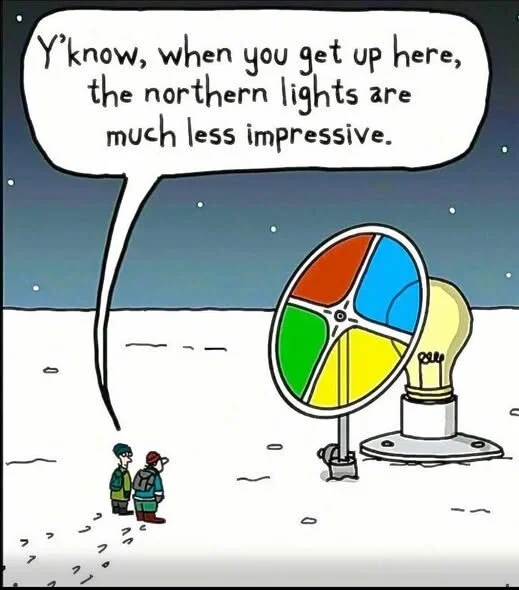
Mot: This Northern Lights Thingy! - Wellllllllll
Seeds of Wisdom RV and Economics Updates Sunday Morning 11-16-25
Good Morning Dinar Recaps,
Global Reset Weekly — Key Real Developments (Mid-November 2025)
Monetary realignment deepens as central banks pivot to strategic reserves and de-dollarization.
Overview
Global central banks are continuing to accumulate gold at historically high levels, signaling a structural rebalancing of reserve assets.
The dollar’s grip is loosening, as some investors question its long-term primacy and nations hedge using non-dollar instruments.
These moves reflect an intensifying shift toward a multi-asset, de-dollarized financial architecture — major pillars in the global reset.
Good Morning Dinar Recaps,
Global Reset Weekly — Key Real Developments (Mid-November 2025)
Monetary realignment deepens as central banks pivot to strategic reserves and de-dollarization.
Overview
Global central banks are continuing to accumulate gold at historically high levels, signaling a structural rebalancing of reserve assets.
The dollar’s grip is loosening, as some investors question its long-term primacy and nations hedge using non-dollar instruments.
These moves reflect an intensifying shift toward a multi-asset, de-dollarized financial architecture — major pillars in the global reset.
Key Developments
According to the World Gold Council, central banks have added 634 tons of gold year-to-date (Q3 2025), a volume well above pre-2022 averages.
Emerging market central banks remain among the top buyers: Poland, Kazakhstan, Brazil, and others continue to top the list.
According to Wedbush analysis, gold accumulation is part of a deliberate “structural reserve realignment,” with central banks shifting away from dollar-dominated holdings.
Gold purchases rebounded in August after a brief pause in July — central banks added another 15 tonnes that month, per IMF-based data.
Survey data notably show 95% of central banks expect to increase their gold reserves in the next 12 months — underlining the long-term nature of this trend.
Simultaneously, the U.S. dollar has weakened: The DXY (dollar index) dropped to a three-year low, fueling debate over de-dollarization.
Why It Matters
These developments are not just incremental: they reflect a tactical breakout from the dollar-centric system. By aggressively accumulating gold, central banks are building a real-asset foundation for future financial resilience. This shift could undermine long-standing reserve paradigms and reshape global power in markets and trade.
Implications for the Global Reset
Pillar 1 — Reserve Asset Transformation
Gold’s resurgence suggests that central banks are protecting against dollar risk while building stores of value that can weather macro shocks.
Pillar 2 — De-Dollarization & Currency Realignment
A weakening dollar coupled with strategic reserve diversification points to a gradual erosion of dollar dominance — and the rise of alternative monetary frameworks.
Pillar 3 — Strategic Stability Through Real Assets
Gold is not just a store of value — its accumulation signals a strategic buffer for nations seeking independence from traditional financial pressures.
This is not just politics — it’s global finance restructuring before our eyes.
Seeds of Wisdom Team
Newshounds News™ Exclusive
Sources
• World Gold Council – “Central Bank Demand Remains Healthy Despite Moderation”
• Wedbush – “Central banks pivot to precious metals, gold accumulation surges”
• FX Leaders – “Gold: Central Banks Resume Buying Spree in August”
• The Guardian – “Global central banks intensify gold stockpiling”
• Investopedia – “The U.S. Dollar Hit a 3-Year Low, But Is the World Really ‘De-Dollarizing’?”
~~~~~~~~~~
Sovereign Gold Buying Signals the End of the Old Market Order
Central banks reshape the foundation of global markets as demand for real assets accelerates.
Overview
Gold is entering a structural bull phase driven by central bank accumulation, not retail speculation.
A three-year low in the U.S. dollar index is accelerating demand for non-dollar hedging assets.
These shifts indicate a long-term market rebalancing aligned with global reserve realignment.
Key Developments
Central banks purchased 634 tons of gold year-to-date, according to the World Gold Council — one of the highest volumes ever recorded.
Gold demand rebounded in August as banks added another 15 tons, reversing the July slowdown.
Analysts at Wedbush identify this trend as part of a “structural reserve realignment,” moving global liquidity out of dollar-dominated instruments.
The U.S. dollar index hit a three-year low, amplifying gold’s attractiveness for sovereign diversification.
Survey data show 95% of central banks plan to increase gold reserves in the coming year — strengthening long-term bullish positioning.
Why It Matters
Markets are signaling a fundamental shift away from a dollar-centric reserve system. Gold is reclaiming its historic role as a stabilizing anchor, reducing exposure to fiscal volatility, currency wars, and debt-driven uncertainty.
Implications for the Global Reset
Pillar 1 — Real-Asset Reserve Anchors
Gold accumulation strengthens national resilience and reduces vulnerability to dollar liquidity cycles.
Pillar 2 — Market Repricing Through De-Dollarization
A weakening dollar paired with gold accumulation suggests a long-term repricing of global markets.
This is not just politics — it’s global finance restructuring before our eyes.
Seeds of Wisdom Team
Newshounds News™ Exclusive
Sources
• World Gold Council – “Central Bank Gold Demand Trends”
• FX Leaders – “Central Banks Resume Buying Spree in August”
• Investopedia – “Dollar Hits 3-Year Low — De-Dollarization Trends Explained”
• Wedbush Market Minute – “Central Banks Pivot to Precious Metals”
~~~~~~~~~~
Seeds of Wisdom Team RV Currency Facts Youtube and Rumble
Newshound's News Telegram Room Link
RV Facts with Proof Links Link
RV Updates Proof links - Facts Link
Follow the Gold/Silver Rate COMEX
Follow Fast Facts
Seeds of Wisdom Team™ Website
Thank you Dinar Recaps
Iraq Economic News and Points To Ponder Sunday Morning 11-16-25
Self-Sufficiency Is The Foundation Of Development.
Economic 16/11/2025 Yasser Al-Mutawalli
Self-sufficiency is a major and broad concept in the lexicon of economic theories of all kinds, whether
totalitarian,
capitalist or mixed,
because it is the basis of
development and its
sustainability.
Self-Sufficiency Is The Foundation Of Development.
Economic 16/11/2025 Yasser Al-Mutawalli
Self-sufficiency is a major and broad concept in the lexicon of economic theories of all kinds, whether
totalitarian,
capitalist or mixed,
because it is the basis of
development and its
sustainability.
Our country’s declaration of achieving self-sufficiency in
gasoline,
kerosene, and
gas oil is an important and significant achievement in
embodying the concept of self-sufficiency, and as a
fundamental basis for driving development elements,
given the importance of this declaration in the economic feasibility of managing one of the main economic management facilities,
as the great efforts in this field resulted in the government’s decision to stop importing petroleum products after achieving self-sufficiency in
gasoline,
gas oil (kerosene), and
kerosene.
However, there will still be a need for a reasonable review in determining the efficiency of oil refineries, with the importance of providing strategic stores and reserves of energy products to avoid problems of holidays and block the way for sometimes fabricated product crises, as well as imposing strict control over the quality of the product.
Overall, this great achievement is an indicator of the optimal investment in energy resources and their preservation from waste.
This achievement deserves praise and pride for the numerous gains it will bring in terms of savings in hard currency, as well as diversifying sources of income.
It was surprising that the oil-rich country had been importing its oil derivatives for energy since 2003, for two decades.
We have been and still are pointing out in most of our articles the importance of investing our resources
through the establishment and expansion of giant refinery projects, and finally the
new projects have been put into operation with efficient production capacity and very good quality.
Perhaps the most prominent benefit that emerges from this achievement is that
what has been achieved is beyond imagination, as
we have reduced the process of
exporting quantities of oil at low prices and
then importing its derivatives at high prices.
If we add the government support for the derivatives that were being wasted,
then you can imagine the size of the differences achieved by this accomplishment,
which will contribute to strengthening the resilience of our national economy.
This achievement comes on the eve of the end of 2025, and
we had indicated that the most prominent achievement during this year was the Iraq Vision (2025-2050).
Today, this achievement, which I mean self-sufficiency in oil products,
comes to crown the most prominent achievement as one of the most important foundations of economic construction to implement our country’s vision on the
path of sustainable development and to guarantee its future.
We believe that this great achievement is so important that
it should not go by without focusing on its great significance,
especially by the economic media, making it
a slogan and
a source of pride in our national product.
Congratulations to our Iraq and our people on this initial step and a
successful start to
progress and
economic prosperity.
https://alsabaah.iq/123564-.html
For current and reliable Iraqi news please visit: https://www.bondladyscorner.com
Return to Reality as Commodities and Real Assets Boom
Return to Reality as Commodities and Real Assets Boom
WTFinance: 11-15-2025
The current market feels dizzying. Are we riding a revolutionary AI wave to perpetual new highs, or are we standing on ground prepared by historical patterns of asset bubbles and inflation?
To help navigate this critical juncture, the WTFinance podcast recently welcomed back Wasif Latif, President and CIO of Sarmaya Partners. With 25 years of experience managing global multi-asset portfolios, Latif offered a compelling argument:
The market is currently undergoing a profound secular shift, and while the spotlight shines brightly on high-flying technology, true investment opportunity lies in tangible assets—commodities, energy, and precious metals.
Return to Reality as Commodities and Real Assets Boom
WTFinance: 11-15-2025
The current market feels dizzying. Are we riding a revolutionary AI wave to perpetual new highs, or are we standing on ground prepared by historical patterns of asset bubbles and inflation?
To help navigate this critical juncture, the WTFinance podcast recently welcomed back Wasif Latif, President and CIO of Sarmaya Partners. With 25 years of experience managing global multi-asset portfolios, Latif offered a compelling argument:
The market is currently undergoing a profound secular shift, and while the spotlight shines brightly on high-flying technology, true investment opportunity lies in tangible assets—commodities, energy, and precious metals.
Here is a breakdown of Latif’s insights into the present economic landscape, historical parallels, and the necessary portfolio adjustments for the coming decade.
Latif cautions investors against being mesmerized solely by the tech narrative. While technology innovation is real, the valuations often detach from reality when structural macroeconomic pressures are ignored.
In this environment of persistent inflation and rising interest rates, the traditional model of high-growth, cash-burning technology companies becomes inherently vulnerable. When capital is expensive, the companies that own inflation-protected assets thrive.
If the secular trend is shifting away from tech dominance, where should investors look? Latif points unequivocally toward assets that benefit from inflation and supply constraints.
This imbalance—persistent demand colliding with constrained supply—suggests that energy prices are structurally elevated, making commodity-oriented equities and energy producers prime beneficiaries.
Perhaps the most potent signal of a shift in global risk perception is the behavior of central banks. Latif highlights the ongoing, strategic accumulation of gold by central banks worldwide.
This institutional demand creates a strong, sustained floor for precious metal prices, making gold an essential component of a globally diversified portfolio navigating geopolitical uncertainty.
Latif’s overarching advice is simple yet profound: History provides the roadmap. Investors must look beyond the immediate headlines and understand that cycles turn. The dominance of U.S. growth stocks that defined the last decade is now giving way to a new cycle favoring tangible assets.
He warns against assuming that today’s tech boom will sustain itself indefinitely, especially when fundamental indicators point to structural inflation and strategic shifts toward commodity ownership.
A prudent portfolio strategy today requires aligning with this secular trend—meaning a thoughtful reallocation toward energy, raw materials, industrial commodities, and precious metals.
This summary captures only a fraction of the deep historical and market insights offered by Wasif Latif.
To understand the full details of this monumental market shift and gain critical perspective on navigating the current economic cycle, be sure to watch the full video interview from WTFinance.
Seeds of Wisdom RV and Economics Updates Saturday Afternoon 11-15-25
Good Afternoon Dinar Recaps,
The New Payment Order: Nations Build Rails Beyond the U.S. Dollar
The world is separating from single-currency dependence — fast.
Overview
New digital settlement rails and bilateral trade channels are increasing worldwide.
Local-currency trade agreements now dominate Asia, Africa, and the Middle East.
Tokenized assets and cross-border digital ID systems accelerate settlement efficiency.
Good Afternoon Dinar Recaps,
The New Payment Order: Nations Build Rails Beyond the U.S. Dollar
The world is separating from single-currency dependence — fast.
Overview
New digital settlement rails and bilateral trade channels are increasing worldwide.
Local-currency trade agreements now dominate Asia, Africa, and the Middle East.
Tokenized assets and cross-border digital ID systems accelerate settlement efficiency.
Key Developments
BRICS “Unit of Account” draft finalized, focusing on settlement baskets rather than a circulating currency.
ASEAN and Gulf states expand local-currency energy trade, reducing USD exposure.
SWIFT upgrades cross-border CBDC interoperability, ensuring Western financial institutions remain competitive.
Why It Matters
The world is building parallel payment rails that reduce dependency on one reserve currency — a defining hallmark of systemic transition.
Implications for the Global Reset
Pillar 1 — Multi-Currency Settlement Systems Go Mainstream
Trade is shifting to local currencies, digital tokens, and commodity-linked contracts.
Pillar 2 — Infrastructure Becomes the New Reserve Asset
Countries storing value in ports, pipelines, grids, and digital networks are replacing the old model of storing value in paper debt.
This is not just politics — it’s global finance restructuring before our eyes.
Seeds of Wisdom Team
Newshounds News™ Exclusive
Sources
• Reuters – “BRICS advances shared payments framework to reduce dollar reliance”
• Nikkei Asia – “ASEAN expands local-currency settlement networks”
• CNBC – “SWIFT tests CBDC interoperability to maintain global relevance”
~~~~~~~~~
Ethiopia’s BRICS Entry Rewires Africa–MENA Diplomacy
Addis Ababa emerges as a geopolitical bridge as BRICS reshapes regional influence.
Overview
Ethiopia’s admission into BRICS has transformed its diplomatic reach, opening channels long inaccessible through traditional MENA institutions.
The 2023 Johannesburg Summit brought Ethiopia in alongside major Middle Eastern economies, elevating Africa–MENA integration to levels not previously possible.
BRICS now acts as a new platform for cross-regional cooperation, softening historical exclusions that once limited Ethiopia’s diplomatic influence.
Key Developments
Ethiopia joined BRICS as one of only six nations selected from more than 40 applicants, gaining a seat beside newly admitted MENA oil-producing states.
Prime Minister Abiy Ahmed framed the moment as a turning point, stating Ethiopia is ready to cooperate toward an “inclusive and prosperous world order.”
Scholars note Ethiopia’s geography gives BRICS a direct gateway into Africa and the Middle East, amplifying the bloc’s strategic reach.
Historically, Ethiopia lacked access to MENA institutions, complicating critical disputes such as the GERD negotiations; BRICS now provides an equal platform beside Egypt and Gulf states.
Analysts say the expanded BRICS membership forces new political cooperation mechanisms, reshaping the balance between Africa and MENA actors.
Why It Matters
Ethiopia’s BRICS status is more than symbolic — it repositions Africa within Middle Eastern diplomacy, creating new channels for political coordination and economic strategy at a moment when global blocs are redefining their spheres.
Implications for the Global Reset
Pillar 1 — New Pathways for Regional Cooperation
BRICS offers Ethiopia diplomatic leverage previously blocked by MENA institutions, creating direct channels for African-Middle Eastern alignment.
Pillar 2 — BRICS Becomes a Cross-Regional Power Hub
The bloc’s expansion into both Africa and the Middle East increases its influence over energy, infrastructure, and political negotiation frameworks.
This is not just politics — it’s global finance restructuring before our eyes.
Seeds of Wisdom Team
Newshounds News™ Exclusive
Sources
• Watcher.Guru – “Ethiopia: BRICS Member Shift Could Rewire Ties With MENA”
• Al Jazeera – “Arab League urges UN action on Ethiopia’s dam dispute”
• Eurasia Group Commentary – “MENA political cooperation shifts under BRICS expansion”
~~~~~~~~~
Seeds of Wisdom Team RV Currency Facts Youtube and Rumble
Newshound's News Telegram Room Link
RV Facts with Proof Links Link
RV Updates Proof links - Facts Link
Follow the Gold/Silver Rate COMEX
Follow Fast Facts
Seeds of Wisdom Team™ Website
Thank you Dinar Recaps
Iraq Economic News and Points To Ponder Saturday Afternoon 11-15-25
Al-Mandalawi And Al-Fayyad Stress The Importance Of Proceeding With The Convening Of The Sixth Parliamentary Session And Forming The New Government
Saturday, November 15, 2025, | Politics Number of views: 117 Baghdad ( NINA ) – First Deputy Speaker of Parliament, Mohsen al-Mandalawi, and the head of the Popular Mobilization Forces, Faleh al-Fayyad, emphasized on Saturday the importance of proceeding with the convening of the sixth parliamentary session and the formation of the new government, which would contribute to launching the next political process.
Al-Mandalawi And Al-Fayyad Stress The Importance Of Proceeding With The Convening Of The Sixth Parliamentary Session And Forming The New Government
Saturday, November 15, 2025, | Politics Number of views: 117 Baghdad ( NINA ) – First Deputy Speaker of Parliament, Mohsen al-Mandalawi, and the head of the Popular Mobilization Forces, Faleh al-Fayyad, emphasized on Saturday the importance of proceeding with the convening of the sixth parliamentary session and the formation of the new government, which would contribute to launching the next political process.
The media office of the First Deputy Speaker of Parliament stated in a press release that al-Mandalawi met with al-Fayyad on Saturday evening as part of a series of political meetings aimed at organizing the post-election phase.
The statement added that the two sides exchanged congratulations on the success of the electoral process, stressing that the current results place a shared responsibility on national forces to move forward with convening the sixth parliamentary session and forming the new government, thus contributing to launching the next political process.
Al-Mandalawi stressed "the importance of establishing an environment of mutual understanding among political forces and adopting responsible dialogue as the basis for addressing challenges and formulating a comprehensive political vision that strengthens internal stability and supports development paths," noting that "expediting the completion of the upcoming constitutional procedures constitutes a crucial step in reassuring the public, protecting stability, and translating the will of the voters." /End https://ninanews.com/Website/News/Details?Key=1262129
An Economic Expert Told NINA: The Suspension Of Lukoil's Operations In Iraq Will Not Affect Its Oil Exports
Saturday, November 15, 2025, | Economy Number of views: 400 Baghdad ( NINA ) – Energy expert Dirgham Muhammad Ali affirmed that the Russian company Lukoil's declaration of force majeure and suspension of its operations in Iraq will not affect Iraqi oil exports.
In a statement to the Iraqi National News Agency ( NINA ), Muhammad Ali said, "National efforts are capable of managing extraction and export operations, in addition to Iraq's export flexibility from remaining fields should field operations cease, which is not currently a likely scenario."
He added, "Several alternatives will be available should Lukoil decide to withdraw from Iraq due to the US sanctions imposed on it, as major companies, including American ones, are ready to purchase Lukoil's share."
He further explained that "Iraq also possesses export flexibility from its oil fields to compensate for any production shortfall in any field due to OPEC+ restrictions that have forced Iraq to reduce its output." US sanctions had targeted the assets of major Russian companies, including Lukoil, which operates in the West Qurna 2 oil field, creating uncertainty about the company's future operations in Iraq. /End https://ninanews.com/Website/News/Details?key=1262082
The Sudanese Ambassador Discusses Strengthening Investment And Energy
Money and Business Economy News – Baghdad Prime Minister Mohammed Shia al-Sudani discussed on Saturday with the British Ambassador to Iraq, Irfan Siddiq, ways to enhance investment and energy.
A statement from the Prime Minister's office, received by "Al-Eqtisad News," stated that "Prime Minister Mohammed Shia Al-Sudani received today the British Ambassador to Iraq, Irfan Siddiq."
During the meeting, the British Ambassador conveyed "the congratulations of the Government of the United Kingdom to Iraq, government and people, on the occasion of the legislative elections that were carried out by the Iraqi government in a manner that was the subject of international praise."
According to the statement, "The meeting discussed bilateral relations and ways to strengthen and develop them in various fields, especially in the investment, energy and industry sectors, in order to contribute to achieving the common interests of the two countries." https://economy-news.net/content.php?id=62304
Basra Crude Closes With Slight Gains For The Week
Energy Economy News - Follow-up Basra Heavy and Basra Medium crude oil closed with slight gains over the week.
Basra Heavy crude oil recorded a rise of $1.06 in its last session on Friday, reaching $62.07, with weekly gains of 34 cents, or 0.55%.
Meanwhile, Basra Medium crude closed higher in its last session, rising $1.06 to reach $63.92, and recorded weekly gains of 34 cents or 0.53%.
Oil prices rose globally, supported by supply concerns following a Ukrainian attack on a Russian oil depot, which is considered one of Russia's most important energy hubs. Brent crude recorded weekly gains of about 1.19%, while US crude achieved weekly gains of about 0.57%. https://economy-news.net/content.php?id=62296
Dollar Prices Fluctuated During The Closing In Iraq
Stock Exchange The dollar's prices fell slightly in Baghdad markets, while they remained stable in Erbil on Saturday, as the stock exchange closed at the start of the week.
Dollar prices stabilized in the Al-Kifah and Al-Harithiya exchanges, recording 141,350 Iraqi dinars per 100 dollars, while this morning it recorded 141,400 dinars per 100 dollars.
As for the selling prices in the local markets of Baghdad, they have stabilized, with the selling price reaching 142,500 Iraqi dinars for 100 dollars, while the buying price reached 140,500 dinars for 100 dollars.
In Erbil, the dollar remained stable, with the selling price at 141,950 dinars per 100 dollars and the buying price at 140,850 dinars per 100 US dollars. https://economy-news.net/content.php?id=62312
Planning for Euphrates News: Creating a giant data platform will guide the development compass in Iraq
Time: 15/11/2025 Reading: 60 times {Local: Al-Furat News} The Ministry of Planning announced today, Saturday, that it is working on launching a huge platform to transform census data into a compass for projects and development..
Planning Ministry spokesman Abdul Zahra Al-Hindawi told Al-Furat News that: “The ministry is working on implementing the Unified Platform for Statistical Data project.”
He explained that "this project and platform will work to provide the large and enormous data provided by the general census of population and housing."
Al-Hindawi added, "This database will also contribute greatly to guiding project paths and will help in identifying development gaps and reading development indicators accurately and explicitly." LINK
For current and reliable Iraqi news please visit: https://www.bondladyscorner.com
“Tidbits From TNT” Saturday 11-15-2025
TNT:
Tishwash: An economist says non-oil revenues face major challenges, and there are three sources of funding for the budget.
Economic expert Salah Nouri identified the sources of revenue in the general budget, pointing out that non-oil revenues face major challenges that prevent them from achieving their available potential.
Nouri told Al-Furat News Agency, "The sources of revenue in the general budget consist of: first, oil export revenues; second, taxes; third, customs duties; fourth, the treasury's share of profits from public companies; fifth, donations and subsidies; and sixth, the sale and lease of state assets."
TNT:
Tishwash: An economist says non-oil revenues face major challenges, and there are three sources of funding for the budget.
Economic expert Salah Nouri identified the sources of revenue in the general budget, pointing out that non-oil revenues face major challenges that prevent them from achieving their available potential.
Nouri told Al-Furat News Agency, "The sources of revenue in the general budget consist of: first, oil export revenues; second, taxes; third, customs duties; fourth, the treasury's share of profits from public companies; fifth, donations and subsidies; and sixth, the sale and lease of state assets."
He added that the available sources facing challenges include
1- Customs duties: Iraq imports everything, but the Ministry of Finance faces significant challenges related to smuggling, the entry of goods and merchandise without customs duties, price manipulation, and the proliferation of unofficial and controlled border crossings.
2- Taxes: The Ministry of Finance faces significant challenges from tax evasion and manipulation of tax calculations, as evidenced by what happened in the "Theft of the Century" case
3- Sale and lease of state assets: There are significant challenges in the revenue from property rentals, as thousands of properties are occupied without rent being paid, or at a rate lower than what is stipulated by the law governing the sale and lease of state assets. link
************
Tishwash: Sudani welcomes his winning candidates: The results reflect the Iraqis' faith in our project
The head of the Reconstruction and Development Coalition, Mohammed Shia al-Sudani, received a number of the coalition's winning candidates in the recent parliamentary elections, in the presence of former Prime Minister Iyad Allawi, Minister of Labor Ahmed al-Asadi, and several other prominent figures. During the meeting, al-Sudani emphasized that the election results reflect a return of public confidence in the political process.
He noted that the voter turnout, which exceeded 56%, is an indicator of the strength of the popular will and citizens' support for the reconstruction and development project, which aims to promote development and reform across various sectors in the coming years.
He received a number of winning candidates from within the coalition during the recent parliamentary elections, in the presence of the former Prime Minister, Mr. Iyad Allawi, the Minister of Labor, Ahmed Al-Asadi, and a number of dignitaries and figures from the coalition’s supporters.
We expressed our thanks and appreciation to all the leaders and electoral pillars of the Reconstruction and Development Coalition for their efforts that contributed to achieving great results during the legislative elections.
We noted that the recent legislative elections witnessed a return of confidence between the people and the political process through the broad participation that was unprecedented in years, and that the participation rate in the elections, which exceeded 56%, was not expected, and that international and regional institutions look at the standard of the percentage of citizens’ participation in the elections, which represents popular confidence in the existing political process.
We explained that the Reconstruction and Development Project is continuing its reform approach, working to correct the paths and meet the aspirations of the Iraqis, stressing that the government and the Reconstruction and Development Coalition Project were subjected to a campaign of misinformation and falsification before the elections, suggesting that doubts will continue to be cast on the list’s victory and the nearly 1.4 million votes it achieved, which no political entity has reached in all the elections.
We affirmed that the coalition leaders will engage in a negotiation process to reach a parliamentary-governmental project capable of meeting the aspirations of citizens and confronting current challenges.
Here are the main points we discussed during the meeting:
🔹The loss of public confidence in elections represented the biggest loss to the political process, so it was necessary to restore this confidence.
🔹The world is now aware that our people have made their choices, and that the voter turnout has increased.
🔹The Reconstruction and Development Coalition is a national project that includes political and national figures who believe in the reconstruction and development project, and the votes we received in various governorates reflect people’s confidence in our project.
🔹Obtaining this number of votes presents a challenge for us to provide services at a level befitting the aspirations of the citizens who participated in the elections and granted us this trust.
🔹Government performance was a major reason for the return of public confidence in the political process.
🔹We will double our efforts, and we will achieve much of what we started in the previous period. Reconstruction in Iraq will continue for more than twenty years, and we will work to promote development in various files and sectors. link
*************
Tishwash: Shaza Hotels signs four new projects in Saudi Arabia
Shaza also announced a pipeline of $950mln worth projects across the globe in key destinations like Maldives, Turkey, Kuwait, Indonesia, Iraq, USA, Kenya and Libya
Shaza Hotels has signed Memoranda of Understanding (MoUs) for four new projects – Shaza Riyadh Stables Resort, Mysk Residences in Riyadh and Mysk Al Haramain Hotels - 3 & 4 in Makkah – during the inaugural TOURISE 2025 summit, held from November 11 to 13, 2025 in Riyadh.
Shaza also announced a pipeline of $950 million worth projects across the globe in key destinations like Maldives, Turkey, Kuwait, Indonesia, Iraq, USA, Kenya and Libya at TOURISE 2025.
Shaza partners with region’s reputed investment houses like Al Rajhi Investments Saudi Arabia, Adante Realty Oman and FSM Hospitality Company Saudi Arabia in bringing these projects live and functional.
Simon Coombs, President and CEO of Shaza Hotels, said: “We are pleased to be part of TOURISE 2025 under the patronage of the Ministry of Tourism for the signing of four new MoUs that reflect the strength and diversity of Saudi Arabia’s hospitality landscape.
Each project – Mysk Residences Riyadh, Shaza Riyadh Stables Resort, and Mysk Al Haramain Hotels - 3 & 4 in Makkah – has been conceived to address distinct guest segments, from business and leisure travellers to long-stay residents and pilgrims. These partnerships underline Shaza Hotels’ expanding presence in the Kingdom and our commitment to working with visionary owners to deliver authentic experiences and world-class hospitality.”
“Each of these four developments has been strategically conceived to harness key growth corridors and destination opportunities shaping the Kingdom’s hospitality landscape. Collectively, these projects reinforce Shaza Hotels’ diversified portfolio strategy – seamlessly bridging business, leisure, long-stay, and spiritual travel segments – while deepening the brand’s long-term presence and investment in Saudi Arabia’s dynamic tourism ecosystem.”, added Shaji Abu Salih, Vice President of Business Development & Growth, Shaza Hotels and Mysk by Shaza, said, at Tourise 2025.
The MoU for Mysk Residences Riyadh was signed between Coombs and Dr Adil Alexander, CEO, Adante RealtyOman.
Mysk Residences Riyadh is a boutique aparthotel of 58 keys, located on King Salman Road in Riyadh. Strategically situated just 10 minutes from Riyadh International Airport and 15 minutes from the vibrant Qiddiya and Murabba developments, Mysk Residences Riyadh will offer one-, two-, three-bedroom apartments and penthouses for both leisure and business travellers, whether for short or extended stays. Facilities include a gym, swimming pool, 24-hour café and in-room dining.
The MoU for Shaza Riyadh Stables Resort was signed between Coombs and Prince Fahad bin Saud Al Saud, Chairman, FSM Hospitality Company and Her Highness Princess Fahdah bent Saud Al Saud, Managing Director, FSM Hospitality Company.
Riyadh Stables Resort is a premium leisure and lifestyle destination located in Al Jubailah, Riyadh, spread across 63,500 square meters. Designed around the theme of equestrian living, the resort combines sport, wellness, and recreation in a natural setting. It will feature a full-fledged Equestrian Club with 100 horse boxes and three professional arenas, alongside three scenic tracks for walking, cycling, and horse riding.
Complementing these are (31) bungalow units, a signature spa, dedicated male and female gyms, paddle courts, soccer fields, and a vibrant water park. The resort’s hospitality offerings include indoor and outdoor restaurants and coffee lounges, creating an ideal retreat for families, wellness seekers, and sport enthusiasts seeking an authentic equestrian-inspired experience in Riyadh.
The MoU for two Mysk Al Haramain Hotels - 3 & 4 in Makkah was signed between Coombs and Fuad Al Rashed, CEO of Al Rajhi Investments.
Mysk Al Haramain Hotels - 3 & 4 in Makkah are 264 & 182 keys upscale hotels respectively, situated just 10 minutes from the Holy Masjid al‑Haram, designed to serve pilgrims seeking a tranquil and high-quality environment during Umrah. Both the hotels will feature a café, all-day dining restaurant, dedicated prayer rooms and shuttle services to the Holy Mosque. link
Mot: Have Ya Noticed --As YOu Season!!!!

Mot: . Like the RV -- LOL !!!!

Iraq Economic News and Points To Ponder Saturday Morning 11-15-25
Newsweek: The Sudanese Man Who Wants To Make Iraq Great Again
In an extensive report published by the American newspaper Newsweek, the spotlight was on Iraqi Prime Minister Mohammed Shia al-Sudani, describing him as “the man who wants to make Iraq great again,” in reference to his ambitious vision to revive Iraq’s historical and cultural role on the international stage.
Newsweek: The Sudanese Man Who Wants To Make Iraq Great Again
In an extensive report published by the American newspaper Newsweek, the spotlight was on Iraqi Prime Minister Mohammed Shia al-Sudani, describing him as “the man who wants to make Iraq great again,” in reference to his ambitious vision to revive Iraq’s historical and cultural role on the international stage.
The newspaper stated that al-Sudani, who assumed the premiership following a political crisis that ousted his predecessor in 2022, has transcended being merely a "temporary solution" to become a pivotal figure leading Iraq through a critical juncture in its history. It added that the upcoming elections, in which more than 7,700 candidates are vying for the position, could determine his political future and his chances of leading the country for a second term.
According to the newspaper, Al-Sudani envisions Iraq as a future global hub for trade, investment, and innovation, basing his vision on its vast natural resources, latent human potential, and rich cultural heritage spanning thousands of years. During his interview with the newspaper at his office in the Presidential Palace in Baghdad's Green Zone, Al-Sudani pointed to the Code of Hammurabi, describing it as "the first law of humanity" and an example of Iraq's contributions to humankind.
Al-Sudani said: “Iraq is a great country, a homeland of civilizations for 7,000 years… This greatness is in the genes of Iraqis, generation after generation, and it is the secret of their resilience in the face of challenges.”
The newspaper concludes its report by noting that the elections will not be just another vote, but a crucial moment that could reshape modern Iraq and give it the opportunity to regain its prestigious position in the world, under the leadership of a man who believes that his country deserves to be great again. https://economy-news.net/content.php?id=62281
The Pentagon Reveals: Advanced Communications System On Its Way To Iraq
Money and Business Economy News — Follow-up The Pentagon announced on Friday that the U.S. State Department has approved a potential sale of an advanced communications repeater system to Iraq, with the aim of strengthening the country's communications infrastructure, at an estimated value of $100 million.
Reuters, as reported by Al-Eqtisad News, stated that "the Pentagon clarified that the deal, if completed, will contribute to raising the efficiency of national communication networks and supporting Iraq's technical capabilities in the field of strategic communications."
She explained that "L3 Harris Corporation will be the main contractor to carry out the sale and provide the required technologies." The deal is part of efforts to strengthen security and technical cooperation between Washington and Baghdad. https://economy-news.net/content.php?id=62273
An Advisor To The Prime Minister Outlines A Roadmap For Economic Diversification In Iraq.
Time: 14/11/2025 Readings: 75 times {Economic: Al-Furat News} The Prime Minister's Advisor for Financial Affairs, Mazhar Muhammad Saleh, said that the Iraqi government assesses its ability to diversify sources of income as a long-term strategic challenge, especially since oil accounts for nearly 90% of public revenues and half of the gross domestic product, and its export revenues represent the country's foreign inflows, stressing that excessive dependence on oil makes the economy fragile in the face of fluctuations in the global energy market.
Saleh added to Al-Furat News Agency that: “Progress in this field still faces structural and institutional obstacles, despite it being one of the basics of implementing the government program that was approved by the House of Representatives in October 2022, as economic diversification in the fields of energy, industry, tourism, digital services and agriculture has taken center stage in the work of the executive authority and the approved draft laws.
He pointed out that the government's strategic framework and political will were formulated through the roadmap launched with the National Development Plan (2024–2028), and in accordance with the data of Iraq Vision 2050, all of which point to strategic objectives for diversifying the economy and building highly cohesive non-oil sectors (agriculture, renewable energy, infrastructure, manufacturing, and the digital economy). He explained that the availability of these plans is important but not sufficient without rigorous, continuous, and sustained implementation that transcends electoral cycles.
He explained that “the goal of the partnership between the state and the private sector has become the first strategic buffer that protects the country from its dependence on a single resource, noting that the diversification policy was launched strongly from the single oil sector itself by manufacturing crude oil and converting it into derivatives and products, towards replacing imports of oil derivatives and being satisfied with the national product after operating giant refineries, and the future direction towards exporting oil products with high added value, which is a first step that will provide between 3% to 5% direct and immediate space in diversifying the gross domestic product in one go, and this path is running in the digital services sector, agriculture, tourism and others in cooperation with the private sector.”
Saleh identified the current path towards containing the financial and real deficit in the macroeconomy, as follows: First: Giving priority to investment in productive infrastructure immediately, especially the electricity generation sector (solar projects and gas investment), making qualitative shifts in water and transportation management, and proceeding with logistics infrastructure projects that link the agricultural and industrial sectors to regional markets, as they generate sustainable employment and reduce the cost of business. Modern solar energy projects represent a practical example of reducing spending and strengthening sustainable economic growth.
He added, "Work is also underway to reform public sector companies and government institutions by increasing efficiency through restructuring energy, ports and railway companies, improving governance mechanisms and involving the efficient and productive private sector in what are called Public-Private Partnerships (PPPs)."
He also stressed the importance of "enhancing non-oil revenues by expanding the fair tax base, adopting a productive tax policy based on improving the collection of taxes and customs duties, coordinating fair tax policies without harming the incentive for investment and production, and improving property and land rules to attract industrial and agricultural investment within the framework of national development plans."
Saleh continued, "Governance and digital investment in successful macro-administration remain important assets in accelerating economic diversification, especially adopting mechanisms for evaluating and holding public projects accountable by adopting what is called the Project Evaluation Portal (CPMS) to evaluate the economic, social and environmental feasibility before the start of funding, and performance indicators linking spending to achieving tangible results within a systematic long-term approach to implementing the principles of program and performance budgets, which should be expanded and adopted gradually in cooperation between planning, financial and oversight bodies to achieve the goals of sustainable development and financial strengthening of the country." LINK
For current and reliable Iraqi news please visit: https://www.bondladyscorner.com
MilitiaMan and Crew: IQD News Update-Global Future-"Hammurabi's Code"-Signals Truth
MilitiaMan and Crew: IQD News Update-Global Future-"Hammurabi's Code"-Signals Truth
11-14-2025
The Crew: Samson, PompeyPeter, Petra, Daytrader, Sunkissed, GIGI and Militia Man
Follow MM on X == https://x.com/Slashn
Be sure to listen to full video for all the news……..
MilitiaMan and Crew: IQD News Update-Global Future-"Hammurabi's Code"-Signals Truth
11-14-2025
The Crew: Samson, PompeyPeter, Petra, Daytrader, Sunkissed, GIGI and Militia Man
Follow MM on X == https://x.com/Slashn
Be sure to listen to full video for all the news……..
Seeds of Wisdom RV and Economics Updates Friday Afternoon 11-14-25
Good Afternoon Dinar Recaps,
Global Metals Markets Reflect Shift Toward Asset-Backed Financial Systems
Gold and strategic metals are becoming central to monetary policy and sovereign strategy.
Overview
Central banks continue record gold accumulation, signaling waning trust in debt-based reserves.
Strategic metals (lithium, copper, nickel) are now treated as geopolitical assets, not simple commodities.
Physical markets are diverging from paper markets, suggesting supply stress and asset realignment.
Good Afternoon Dinar Recaps,
Global Metals Markets Reflect Shift Toward Asset-Backed Financial Systems
Gold and strategic metals are becoming central to monetary policy and sovereign strategy.
Overview
Central banks continue record gold accumulation, signaling waning trust in debt-based reserves.
Strategic metals (lithium, copper, nickel) are now treated as geopolitical assets, not simple commodities.
Physical markets are diverging from paper markets, suggesting supply stress and asset realignment.
Key Developments
Gold demand from monetary authorities reaches multi-decade highs, reshaping reserve strategies.
Nations secure long-term supply contracts for essential metals, linking resource access to financial positioning.
Industrial metals show increased volatility, driven by energy policy and infrastructure shifts.
New digital gold and tokenized metal products emerge, offering programmable settlement backed by physical reserves.
Why It Matters
A move to asset-backed financial architecture increases the importance of real-world materials. Metals markets are becoming a proxy for global trust and monetary security.
Implications for the Global Reset
Pillar 1: Gold as a Stability Anchor
Gold accumulation reflects preparation for currency realignment and debt repricing.
Pillar 2: Strategic Metals as Financial Leverage
Critical minerals are now core components of national and financial resilience.
This is not just politics — it’s global finance restructuring before our eyes.
Seeds of Wisdom Team
Newshounds News™ Exclusive
Sources
~~~~~~~~~
World Currencies Enter Transition Phase as Multi-System Architecture Emerges
Digital platforms, alternative settlement corridors, and de-dollarisation reshape global currency power.
Overview
The U.S. dollar remains dominant but shows early signs of diversification pressure.
Cross-border digital currency pilots are maturing, creating new paths for settlement.
Countries are forming bilateral trade corridors that bypass legacy FX systems.
Key Developments
Tokenized central bank money is being tested for cross-border settlement, reducing intermediaries.
Bilateral and regional payment blocs expand, using local currencies for trade finance.
Reserve diversification accelerates, with several nations increasing gold and reducing dollar exposure.
Sovereign digital currencies (CBDCs) gain operational readiness, preparing for commercial integration.
Why It Matters
Currency power determines geopolitical leverage. These developments suggest a shift from a single-dominant reserve system to a multi-asset, multi-rail global currency framework.
Implications for the Global Reset
Pillar 1: Multi-Currency Settlement Systems
Nations are building financial sovereignty through alternative rails and local-currency trade.
Pillar 2: Digital Reserve Transformation
Tokenized reserves will change how value is stored, transferred, and measured.
This is not just politics — it’s global finance restructuring before our eyes.
Seeds of Wisdom Team
Newshounds News™ Exclusive
Sources
~~~~~~~~~
BRICS Gold Strategy 2025–2030: Reserve Expansion Signals Long-Term Financial Shift
Gold accumulation and de-dollarization efforts point to a coordinated monetary realignment.
Overview
BRICS nations are actively expanding gold reserves, signaling a structural shift away from dollar-dominant reserves.
Long-term plans for 2025–2030 include increased gold and silver purchases, alongside new autonomous financial tools.
Analysts view this as groundwork for a future BRICS gold-linked currency and a broader multipolar financial architecture.
Key Developments
Brazil added 16 tonnes of gold in September 2025, its first major purchase since 2021, raising reserves from 129.7 to 145.1 tonnes.
Russia (2,336 tonnes), China (2,298 tonnes), and India (880 tonnes) continue high-volume holdings and steady accumulation.
Global central banks bought more than 1,000 tonnes annually from 2022–2024 — the longest modern streak on record.
WGC surveys show overwhelming consensus (95%) that central bank gold reserves will increase over the next 12 months.
BRICS financial coordination includes de-dollarization, BRICS Pay, and exploration of a gold-anchored currency, forming alternative settlement channels.
Why It Matters
BRICS gold policies reflect a coordinated strategy to rebalance reserve composition, reduce reliance on the U.S. dollar, and build credibility for future currency frameworks. These moves represent a deliberate step toward a multipolar financial order.
Implications for the Global Reset
Pillar 1: Reserve Asset Recomposition
Growing gold reserves strengthen monetary independence and create foundations for alternative financial rails.
Pillar 2: Currency and Payment System Innovation
Development of BRICS Pay and discussions of a gold-linked instrument show preparation for a parallel settlement system.
This is not just politics — it’s global finance restructuring before our eyes.
Seeds of Wisdom Team
Newshounds News™ Exclusive
Sources
~~~~~~~~~
Seeds of Wisdom Team RV Currency Facts Youtube and Rumble
Newshound's News Telegram Room Link
RV Facts with Proof Links Link
RV Updates Proof links - Facts Link
Follow the Gold/Silver Rate COMEX
Follow Fast Facts
Seeds of Wisdom Team™ Website
Thank you Dinar Recaps