
Seeds of Wisdom RV and Economics Updates Thursday Afternoon 11-13-25
Good Afternoon Dinar Recaps,
Gaza: The Laboratory of Peace Under the Shadow of Power
When “peace” becomes the language of control rather than liberation.
Overview
The U.S. draft resolution for an international stabilization force in Gaza has reignited debate over the meaning of peace in global politics.
The proposal, presented to the UN Security Council, emphasizes stability, reconstruction, and civilian protection—but critics warn it entrenches outside dominance.
Analysts and human rights advocates argue the plan risks replicating earlier international interventions that prioritized control over sovereignty.
Good Afternoon Dinar Recaps,
Gaza: The Laboratory of Peace Under the Shadow of Power
When “peace” becomes the language of control rather than liberation.
Overview
The U.S. draft resolution for an international stabilization force in Gaza has reignited debate over the meaning of peace in global politics.
The proposal, presented to the UN Security Council, emphasizes stability, reconstruction, and civilian protection—but critics warn it entrenches outside dominance.
Analysts and human rights advocates argue the plan risks replicating earlier international interventions that prioritized control over sovereignty.
Key Developments
The two-year “International Stabilization Force” proposed by the U.S. could effectively replace local governance with externally managed authority, echoing post-war frameworks like Kosovo and Bosnia.
The plan grants foreign forces enforcement powers, transforming peacekeeping into direct governance through coercion rather than mediation.
Economic reconstruction funds would be distributed through Western-aligned committees, raising fears of conditional aid and political leverage.
Regional voices, particularly Arab states, have been sidelined, weakening local legitimacy and risking diplomatic backlash across the Middle East.
Humanitarian organizations warn that expanded military mandates without oversight could heighten civilian risk and lead to accountability crises.
Why It Matters
The U.S. draft resolution exposes the widening gap between peace as a principle of justice and peace as a framework of control. When international powers shape the recovery and governance of Gaza without meaningful Palestinian participation, peace becomes an instrument of dominance rather than reconciliation.
Implications for the Global Reset
Pillar 1 – Diplomacy and Peace: The Gaza proposal demonstrates how power blocs use “stabilization” as a mechanism for influence, signaling the decline of authentic multilateralism.
Pillar 4 – Governance and Sovereignty: External peace operations increasingly override local autonomy, reshaping international norms around intervention and statehood.
This is not just politics — it’s global finance restructuring before our eyes.
Seeds of Wisdom Team
Newshounds News™ Exclusive
Sources:
Modern Diplomacy – “Gaza: The Laboratory of Peace Under the Shadow of Power”
Al Jazeera – “Critics Warn U.S. Gaza Proposal Risks Perpetuating Occupation Under New Terms”
Reuters – “U.S. Circulates Draft Resolution on Gaza Stabilization at UN Security Council”
~~~~~~~~~
Putin Ally Issues Nuclear Warning to U.S.: ‘Russia Will Respond’
Escalating nuclear rhetoric underscores fragile global deterrence balance.
Overview
Kremlin spokesperson Dmitry Peskov warned that Russia would respond “in kind” if the United States resumes nuclear weapons testing.
U.S. officials, including Secretary of State Marco Rubio, have discussed potential test resumption amid concerns over China’s expanding arsenal.
The statements follow President Donald Trump’s directive to the Pentagon to restart nuclear testing in Nevada, citing parity with other nations.
Key Developments
Peskov’s remarks mark a potential end to nearly three decades under the Comprehensive Nuclear Test Ban Treaty (1996) framework.
Russia’s ministries were ordered by President Putin on November 5 to assess feasibility of full-scale tests.
Experts warn that renewed testing by any major power could trigger a global chain reaction involving China, North Korea, and others.
Why It Matters
The revival of nuclear testing discussions signals erosion of long-standing arms-control norms. A return to testing by the U.S. or Russia would undermine strategic stability, complicate disarmament efforts, and elevate risks within the broader global security architecture—an outcome directly tied to the geopolitical realignment now shaping global power centers.
Implications for the Global Reset
Pillar 1 – Diplomacy and Peace: The nuclear standoff highlights the collapse of cooperative security frameworks and the re-emergence of power-based diplomacy.
Pillar 2 – Global Security Architecture: Renewed nuclear activity would accelerate fragmentation of post-Cold-War treaties, forcing nations to seek new multilateral or regional defense alignments.
This is not just politics — it’s global finance restructuring before our eyes.
Seeds of Wisdom Team
Newshounds News™ Exclusive
Sources:
Newsweek – “Putin Ally Issues Nuclear Warning to U.S.: ‘Russia Will Respond’”
TASS – “Peskov: Russia Will Respond if U.S. Resumes Nuclear Testing”
Arms Control Association – “Nuclear Test Ban Treaty Under Strain Amid Global Tensions”
~~~~~~~~~
Japan’s Takaichi Declares Strategic Maturity as Tokyo Eyes Greater Autonomy
Japan signals a decisive turn toward independent global leadership.
Overview
Japanese Foreign Minister Sanae Takaichi announced Japan’s readiness to act as a “fully autonomous strategic power,” signaling a pivot away from postwar dependency on the U.S. alliance.
The declaration coincided with the launch of Japan’s new defense-industrial export framework, allowing Tokyo to supply non-lethal systems to strategic partners.
The initiative forms part of Japan’s “Global Security Initiative”, aimed at expanding its regional and global diplomatic footprint.
Key Developments
Takaichi emphasized that Japan will no longer operate as a “junior partner” but as an equal stakeholder in Indo-Pacific security, coordinating directly with India and ASEAN.
The government approved ¥3.2 trillion in defense export incentives, aimed at strengthening domestic manufacturing and innovation.
Analysts view the policy as Tokyo’s assertion of strategic maturity, laying the groundwork for a broader realignment of Asian power dynamics.
Why It Matters
Japan’s shift from a U.S.-centric security posture to a more autonomous role reflects the broader geopolitical reordering underway. As Washington’s influence wanes in Asia, regional players like Japan are positioning themselves for leadership in the evolving multipolar framework.
Implications for the Global Reset
Pillar 1 – Diplomacy and Peace: Japan’s autonomous diplomacy signals diversification of global power centers, diminishing reliance on legacy Western structures.
Pillar 2 – Trade and Industry: The defense export framework strengthens Japan’s domestic economy and underscores a shift toward industrial sovereignty within global supply chains.
This is not just politics — it’s global finance restructuring before our eyes.
Seeds of Wisdom Team
Newshounds News™ Exclusive
Sources:
Nikkei Asia – “Japan’s Takaichi Vows Strategic Autonomy in Global Affairs”
Reuters – “Japan to Boost Defense Exports Under New Strategic Framework”
Japan Times – “Takaichi: Japan Ready to Lead as Independent Power”
~~~~~~~~~
Seeds of Wisdom Team RV Currency Facts Youtube and Rumble
Newshound's News Telegram Room Link
RV Facts with Proof Links Link
RV Updates Proof links - Facts Link
Follow the Gold/Silver Rate COMEX
Follow Fast Facts
Seeds of Wisdom Team™ Website
Thank you Dinar Recaps
“Tidbits From TNT” Thursday 11-13-2025
TNT:
Tishwash: First official statement from Trump's new envoy regarding the Iraqi elections
We are committed to limiting interference and armed groups
Mark Savva, the new US envoy, congratulated the Iraqi people on Thursday on the successful completion of parliamentary elections, affirming that the people had once again demonstrated their commitment to freedom, the rule of law, and building strong institutions.
Savva added that the United Nations remains strongly committed to supporting Iraq's autonomy and reform efforts, and to work to reduce foreign interference and the influence of armed groups.
TNT:
Tishwash: First official statement from Trump's new envoy regarding the Iraqi elections
We are committed to limiting interference and armed groups
Mark Savva, the new US envoy, congratulated the Iraqi people on Thursday on the successful completion of parliamentary elections, affirming that the people had once again demonstrated their commitment to freedom, the rule of law, and building strong institutions.
Savva added that the United Nations remains strongly committed to supporting Iraq's autonomy and reform efforts, and to work to reduce foreign interference and the influence of armed groups. link
Tishwash: After winning the elections, Al-Sudani said: "We will consider the interests of everyone, even those who chose to boycott."
Prime Minister Mohammed Shia al-Sudani affirmed on Wednesday that Iraq belongs to everyone and will remain so, noting that the next phase aims to form a new government capable of representing the programs.
In a speech on the occasion of announcing the preliminary election results, Al-Sudani said, "We thank the High Electoral Commission for its efforts to make the electoral process a success, and we also thank the Supreme Religious Authority for its position and guidance."
He added: "We call on everyone to put the country's interest above all else and to respect the will of the voters," noting that "the next stage aims to form a new government capable of representing the programs."
He pointed out that "Reconstruction and Development is open to all parties without exception."link
************
Tishwash: Legal expert: The new parliament will not convene before January 9th.
Professor of Law and Dean of the College of Law at the University of Babylon, Dr. Miri Kazem, confirmed that the new House of Representatives resulting from the recent elections will not be able to convene before (January 9, 2026), which is the date of the end of the current parliamentary session, even if all legal and constitutional procedures are completed.
Dr. Kadhim explained that the parliamentary elections were organized according to a clear legal mechanism, whereby political parties and candidates have the right to appeal the election results within three days of their announcement by the Board of Commissioners, and the Judicial Electoral Commission adjudicates these appeals within a period not exceeding ten days.
Regarding the constitutional aspect, Kadhim pointed out that Article (54) of the Constitution stipulates that the President of the Republic shall convene the Council within fifteen days of the ratification of the results, with the first session to be chaired by the oldest member. Article (93), however, grants the Federal Supreme Court the authority to ratify the results without specifying a time limit, meaning that the ratification process is not bound by a fixed timeframe. link
*************
Tishwash: Al-Sudani thanks the commission and the religious authority and affirms: Iraq will remain for everyone without exception.
Prime Minister Mohammed Shia al-Sudani affirmed on Wednesday that Iraq belongs to everyone and will remain so, noting that the next phase will witness the formation of a new government capable of representing national programs and fulfilling the aspirations of the people.
In a speech on the occasion of the announcement of the preliminary results of the parliamentary elections, Al-Sudani said, “The government thanks the Independent High Electoral Commission for its outstanding efforts to make the electoral process a success,” while also appreciating “the position of the Supreme Religious Authority and its guidance, which has been and continues to be a factor of support and stability for the democratic path in the country.”
The Prime Minister added: “We call on everyone to put the country’s interest above all other considerations, and to respect the will of the voters as expressed in the ballot boxes,” stressing that “the next stage aims to form a new government capable of representing reform programs and orientations.”
Al-Sudani noted that the “Reconstruction and Development Coalition is open to all parties without exception,” stressing the importance of political cooperation and national partnership in shaping the features of the next phase and building a stable and strong Iraq that serves all its citizens. link
Mot: and To My Children ~~~~

Mot: The Final Steps of ""Raising the Wee Folks"" - ((till they Run out of Money))

Seeds of Wisdom RV and Economics Updates Thursday Morning 11-13-25
Good Morning Dinar Recaps,
Global Diplomacy Recalibrates as G7 Foreign Ministers Convene Amid Rising Trade & Security Tensions
Overview
Top diplomats from the G7 and invited partners met in Canada, aiming to coordinate responses to the Russia‑Ukraine War and the Israel‑Hamas Conflict, while trade friction rises with the US.
Trade and defence dominate the agenda, with host Canada signalling that allied relationships are being tested by evolving priorities and bilateral pressure.
Invited emerging powers attend (Australia, Brazil, India, Saudi Arabia, Mexico, South Korea, South Africa and Ukraine), indicating a broader coalition approach to security‑trade diplomacy beyond the traditional G7 framework.
Good Morning Dinar Recaps,
Global Diplomacy Recalibrates as G7 Foreign Ministers Convene Amid Rising Trade & Security Tensions
Overview
Top diplomats from the G7 and invited partners met in Canada, aiming to coordinate responses to the Russia‑Ukraine War and the Israel‑Hamas Conflict, while trade friction rises with the US.
Trade and defence dominate the agenda, with host Canada signalling that allied relationships are being tested by evolving priorities and bilateral pressure.
Invited emerging powers attend (Australia, Brazil, India, Saudi Arabia, Mexico, South Korea, South Africa and Ukraine), indicating a broader coalition approach to security‑trade diplomacy beyond the traditional G7 framework.
Key Developments
Security first: The Canadian Foreign Minister emphasised “putting the safety and security of Americans first,” signalling a shift toward national‑centric wording even within alliances.
Trade dispute overlay: Amid the discussions on geopolitics, there is underlying tension between the US and its G7 partners over trade and defence spending commitments.
Broader invite list: The presence of non‑G7 nations marks a tactical move toward wider multilateralism and highlights the multipolar nature of today’s diplomacy.
Why It Matters
This meeting signals a reshaping of diplomatic architecture: the traditional G7 bloc is adapting to include emerging powers, aligning trade, security and diplomacy under one umbrella. For the global reset, it marks a step away from Cold‑War style alliances toward flexible coalitions tied to economic and strategic interests.
Implications for the Global Reset
Pillar 1 — Geopolitical Realignment: The inclusion of emerging powers in a G7‑hosted security forum indicates shifting power dynamics and a dilution of Western‑exclusive frameworks.
Pillar 2 — Financial & Trade Integration: The overlap of trade disputes and defence agendas shows that economic policy is now inseparable from strategic alliances, reinforcing the finance‑diplomacy fusion of this reset.
This is not just politics — it’s global finance restructuring before our eyes.
Seeds of Wisdom Team
Newshounds News™ Exclusive
Source
~~~~~~~~~
US Stock Markets Rally as Optimism Grows Over Government Reopening and Fed Outlook
Overview
Major US equity indexes climbed on optimism that the longest federal government shutdown will soon end and provide clarity on economic data and central‑bank policy.
Policy watchers highlight that reopening will restore data flow, which in turn will inform the Federal Reserve’s next moves on interest rates and support measures.
Broader market sentiment improved, with gains in transport and industrial names signalling investor belief in a rebound from the shutdown‑induced drag.
Key Developments
Dow Jones Industrial Average rose about 1.2% as investors anticipated the reopening of the economy and better earnings visibility.
The shutdown’s impact on data release had clouded the Fed’s visibility into the economy; its resolution is seen as removing a key risk factor.
Semiconductor and tech sectors remained volatile, with one major chip‑maker seeing a large stake sold by an investor — a reminder the rally is not without underlying fragility.
Why It Matters
Markets often lead structural shifts, and this rally underscores how political‑economic mechanics (shutdown, policy clarity) intertwine with global finance. The pivot from disruption to normalization in the US has ripple effects on capital flows, risk pricing and global investor behavior.
Implications for the Global Reset
Pillar 3 — Market & Capital Flow Reorientation: A renewed US data regime and clearer Fed guidance will reshape global allocation decisions, reinforcing the reset in how capital flows across borders.
Pillar 4 — Risk Perception & Safe‑Haven Realignment: As US political risk recedes, investor focus may shift back to structural vulnerabilities elsewhere (emerging markets, supply‑chain stress), altering global risk maps.
This is not just politics — it’s global finance restructuring before our eyes.
Seeds of Wisdom Team
Newshounds News™ Exclusive
Sources
~~~~~~~~~
Seeds of Wisdom Team RV Currency Facts Youtube and Rumble
Newshound's News Telegram Room Link
RV Facts with Proof Links Link
RV Updates Proof links - Facts Link
Follow the Gold/Silver Rate COMEX
Follow Fast Facts
Seeds of Wisdom Team™ Website
Thank you Dinar Recaps
Iraq Economic News and Points To Ponder Thursday Morning 11-13-25
Al-Sudani: Reconstruction And Development "First" Because We Believe That "Iraq Comes First".
Wednesday, November 12, 2025 | Politics Number of views: 226 Baghdad/ NINA / Prime Minister and head of the Reconstruction and Development Coalition, Mohammed Shia al-Sudani, affirmed that reconstruction and development came first "because we believe that 'Iraq comes first.'
Al-Sudani: Reconstruction And Development "First" Because We Believe That "Iraq Comes First".
Wednesday, November 12, 2025 | Politics Number of views: 226 Baghdad/ NINA / Prime Minister and head of the Reconstruction and Development Coalition, Mohammed Shia al-Sudani, affirmed that reconstruction and development came first "because we believe that 'Iraq comes first.'
" Al-Sudani stated in a post on the "X" platform: "Our coalition, Reconstruction and Development, comes first, because we believe that 'Iraq comes first,' and it will remain first thanks to the dedication of its loyal sons." He added: "Thank you to the people of Iraq for their support of the work, construction, and achievement process." /End
https://ninanews.com/Website/News/Details?key=1261733
The Growth In The Volume Of Deposits At Banks Operating In Iraq Has Declined.
Banks The Central Bank of Iraq announced on Wednesday that it had recorded a decline in the growth of deposits at banks operating in Iraq for the month of September, while the growth of credit increased.
Official statistics showed that total deposits amounted to 113.928 trillion dinars, registering a decrease of 1.82% compared to August, in which deposits amounted to 115.997 trillion dinars.
Central government deposits amounted to 35.398 trillion dinars, public institutions deposits to 25.531 trillion dinars, while private sector deposits reached 52.999 trillion dinars.
In contrast, credit volume growth increased by 0.57% to reach 73.942 trillion dinars in September, compared to 73.521 trillion dinars in August.
Credit extended to the central government amounted to 26.392 trillion dinars, and to public institutions 2.431 trillion dinars, while credit extended to the private sector reached 45.119 trillion dinars.
These data show that Iraqi banks continue to support credit, despite the decline in the growth of deposits, in light of the current economic conditions. https://economy-news.net/content.php?id=62222
Dollar Prices Stable In Baghdad And Erbil
Economy | 12/11/2025 Mawazin News – Baghdad : The exchange rate of the US dollar remained stable this morning in Baghdad's markets. The dollar held steady at 141,650 Iraqi dinars per 100 US dollars in the Al-Kifah and Al-Harithiya exchanges in Baghdad, the same rate recorded last Monday.
At local currency exchange shops in Baghdad, the selling price remained unchanged at 142,750 Iraqi dinars per 100 US dollars, while the buying price was 140,750 dinars. https://www.mawazin.net/Details.aspx?jimare=270194
Oil Prices Stabilize As Demand Forecasts Improve
Economy | 12/11/2025 Mawazin News - Oil prices stabilized after rising in the previous session, amid expectations that ending the longest government shutdown in US history could boost fuel demand in the world's largest oil consumer.
Brent crude futures fell 8 cents, or 0.12%, to $65.08 a barrel by 01:06 GMT, after rising 1.7% on Tuesday.
US West Texas Intermediate crude also declined 7 cents, or 0.11%, to $60.97 a barrel, after gaining 1.5% in the previous session. https://www.mawazin.net/Details.aspx?jimare=270184
Gold Prices Rise In Local Markets
Economy | 12/11/2025 Mawazin News - Baghdad: Prices of both foreign and Iraqi gold have risen in local markets in the capital, Baghdad. The selling price of one mithqal (approximately 4.5 grams) of 21-karat Iraqi gold reached 785,000 dinars, while the buying price was 780,000 dinars. The selling price of one mithqal in goldsmith shops ranged between 820,000 and 830,000 dinars for Gulf gold. https://www.mawazin.net/Details.aspx?jimare=270200
For current and reliable Iraqi news please visit: https://www.bondladyscorner.com
MilitiaMan and Crew: IQD News Update-Quiet talk-WTO-Purchase Power-Exchange Rate
MilitiaMan and Crew: IQD News Update-Quiet talk-WTO-Purchase Power-Exchange Rate
11-12-2025
The Crew: Samson, PompeyPeter, Petra, Daytrader, Sunkissed, GIGI and Militia Man
Follow MM on X == https://x.com/Slashn
Be sure to listen to full video for all the news……..
MilitiaMan and Crew: IQD News Update-Quiet talk-WTO-Purchase Power-Exchange Rate
11-12-2025
The Crew: Samson, PompeyPeter, Petra, Daytrader, Sunkissed, GIGI and Militia Man
Follow MM on X == https://x.com/Slashn
Be sure to listen to full video for all the news……..
Iraq Economic News and Points To Ponder Wednesday Afternoon 11-12-25
The Central Bank Defends The Dinar Amid Declining Foreign Reserves
November 12, 2025 Baghdad – Nada Shawkat The Central Bank of Iraq affirmed its continued policy of defending the dinar's exchange rate against the dollar. In a statement yesterday, the bank said, "The information circulating on some websites and social media regarding a reduction in the exchange rate to 4,000 dinars is baseless," emphasizing that "current monetary indicators support maintaining the current exchange rate."
The Central Bank Defends The Dinar Amid Declining Foreign Reserves
November 12, 2025 Baghdad – Nada Shawkat The Central Bank of Iraq affirmed its continued policy of defending the dinar's exchange rate against the dollar. In a statement yesterday, the bank said, "The information circulating on some websites and social media regarding a reduction in the exchange rate to 4,000 dinars is baseless," emphasizing that "current monetary indicators support maintaining the current exchange rate."
The statement reiterated the bank's commitment to financial and monetary stability in the country. Meanwhile, economic data revealed a decline in Iraq's foreign reserves for three consecutive years, an indicator that warrants careful consideration.
According to economic reports, (reserves reached $111.7 billion in 2023, then decreased to $100.2 billion in 2024, and continued to decline to reach $98.1 billion by September 2020). The reports added that (Iraq lost more than $13 billion of its reserves in just two years, or about 12 percent of its previous balance).
They pointed out that (this decline, although it appears gradual, carries worrying economic implications, most notably increased pressure on the local currency, as foreign reserves constitute the first line of defense for the dinar's exchange rate).
The reports explained (the erosion of the financial surplus resulting from high oil prices, which suggests excessive government spending or weak revenue management, in addition to the continuation of a rentier economy dependent on oil, where the size of the reserves is directly linked to fluctuations in oil prices and not to non-oil production or exports). They emphasized that (Iraq is consuming more of its savings than it is adding to them, a path that cannot continue without genuine financial reform).
Meanwhile, economist Basim Jamil Antoine believes that approving this year's budget after the elections seems unlikely due to disagreements and violations of the law. In a statement yesterday, Antoine explained that "a budget is a fundamental principle in any country and requires accurate final accounts.
Disagreements have prevented the approval of this year's budget and the preparation of next year's budget." He emphasized that "political conflicts have also affected the process," noting that "the budget is a routine matter that can be completed within a month, but the conflict between the blocs has delayed it."
For his part, economist Salah Nouri pointed out that the Financial Management Law served as a vital safeguard, saving Iraq from a potential financial deficit by regulating mechanisms for dealing with delays or failures in approving the federal budget within the specified deadlines.
Nouri stated yesterday that the Financial Management Law addresses cases related to the approval of the general budget. He pointed out that Article 13 stipulates clear procedures to ensure the continuity of spending, even if the budget is delayed beyond December 31st of the year preceding its preparation.
Nouri explained that the same article authorizes the Minister of Finance to issue official circulars based on specific criteria, allowing for expenditures of one-twelfth of the total actual current expenditures for the previous fiscal year, after excluding non-recurring expenses, to guarantee the uninterrupted payment of employee salaries and the operation of government facilities.
He further explained that the article also permits expenditures from the total annual allocation for ongoing investment projects whose allocations are included in the previous and subsequent fiscal years, according to the actual completion rates or completed stages of preparation, with the aim of preventing the suspension of projects under implementation.
He emphasized that the third paragraph of the article precisely addresses the situation of the budget not being finalized, stipulating that the final financial statements of the previous year be adopted as the basis for the financial statements of the new year, provided that these statements are presented to the Council of Representatives for approval.
This ensures the continuity of the state's financial activity in a legal and organized manner. He added that this article, with its various paragraphs, The three represent a comprehensive solution to the delay or failure to approve the budget by the end of the fiscal year, and thus Iraq avoided falling into financial paralysis, especially after the House of Representatives approved a three-year budget, which contributed to strengthening financial stability and regulating government spending within clear and specific ceilings. LINK
For current and reliable Iraqi news please visit: https://www.bondladyscorner.com
The 12 Properties of Money | Hidden Secrets of Value Ep 3
The 12 Properties of Money | Hidden Secrets of Value Ep 3 | Alan Hibbard
11-11-2025
Welcome to Episode 3!.
Why do gold, silver, and bitcoin endure as stores of value — while currencies, points, and gift cards always fail?
In this episode of Hidden Secrets of Value, Alan Hibbard breaks down the 12 properties that define true money. From portability and durability to divisibility and decentralization, these features explain why some assets preserve wealth across generations while others evaporate into nothing.
The 12 Properties of Money | Hidden Secrets of Value Ep 3 | Alan Hibbard
11-11-2025
Welcome to Episode 3!.
Why do gold, silver, and bitcoin endure as stores of value — while currencies, points, and gift cards always fail?
In this episode of Hidden Secrets of Value, Alan Hibbard breaks down the 12 properties that define true money. From portability and durability to divisibility and decentralization, these features explain why some assets preserve wealth across generations while others evaporate into nothing.
In this video, you’ll learn:
The 12 critical features of money — and why fiat currency falls short.
Why arduousness (energy required to create money) is essential for long-term value.
How personal lessons with gift cards and tokens reveal the traps of treating currencies as savings.
The difference between intrinsic value (gold’s physical properties) and extrinsic value (faith in dollars or bitcoin).
Why gold retains value even if demonetized, while bitcoin’s price could fall to zero without demand.
Questions this episode explores:
What qualities make money honest and enduring?
Why do fiat currencies always lose purchasing power over time?
How do gold, silver, and bitcoin compare when tested against all 12 properties of money?
Can intrinsic value act as a “floor” beneath monetary value?
Alan also previews a deeper dive into the physics of money — how concepts like energy, friction, and entropy reveal a unifying principle behind all 12 properties.
Watch the full series here: https://goldsilver.com/hsov
Seeds of Wisdom RV and Economics Updates Wednesday Afternoon 11-12-25
Good Afternoon Dinar Recaps,
Kyrgyzstan Launches $50 Million Gold-Backed National Stablecoin
USDKG marks Central Asia’s first state-issued digital currency linked to gold reserves.
Overview
Kyrgyzstan has introduced a state-backed digital currency, USDKG, valued at over $50 million and pegged to the U.S. dollar. The stablecoin—backed by gold reserves—marks a major step in Central Asia’s shift toward digital finance and state-issued crypto assets. The launch coincides with the government’s order to shut down all crypto mining operations to mitigate the nation’s worsening electricity shortages.
Good Afternoon Dinar Recaps,
Kyrgyzstan Launches $50 Million Gold-Backed National Stablecoin
USDKG marks Central Asia’s first state-issued digital currency linked to gold reserves.
Overview
Kyrgyzstan has introduced a state-backed digital currency, USDKG, valued at over $50 million and pegged to the U.S. dollar. The stablecoin—backed by gold reserves—marks a major step in Central Asia’s shift toward digital finance and state-issued crypto assets. The launch coincides with the government’s order to shut down all crypto mining operations to mitigate the nation’s worsening electricity shortages.
Key Developments
Gold-Backed Launch: USDKG was issued by a state-owned entity on October 31, with 50,140,738 tokens valued at $1 each.
Strategic Reserve Expansion: The government plans to grow reserves supporting the stablecoin from $500 million to $2 billion, securing monetary stability.
Energy Emergency: Kyrgyz authorities shut down all crypto mining farms amid critically low water levels at the country’s main hydroelectric plant.
Sanctions Context: Western sanctions against Kyrgyz crypto firms linked to Russia add pressure to diversify financial mechanisms.
Economic Sovereignty: President Sadyr Japarov emphasized depoliticizing economic relations and pursuing regional fintech independence.
Why It Matters
Kyrgyzstan’s move highlights the accelerating global race toward sovereign digital currencies—an emerging alternative to dollar-dominated systems. As energy shortages constrain mining, state control over blockchain activity signals a shift toward centralized digital asset issuance as a tool for economic stabilization and monetary autonomy.
Implications for the Global Reset
This initiative belongs to the Digital Assets & Currency Pillar of the global reset. By linking a blockchain-based token to gold, Kyrgyzstan is blending hard-asset credibility with digital innovation—mirroring trends seen in BRICS economies. The move suggests a gradual de-dollarization effort within Central Asia and a step toward integrating digital finance with sovereign reserves.
This is not just politics — it’s global finance restructuring before our eyes.
Seeds of Wisdom Team
Newshounds News™ Exclusive
Sources:
Modern Diplomacy – “Kyrgyzstan Initiates $50 Million National Stablecoin Program”
Reuters – “Kyrgyzstan launches gold-backed stablecoin amid energy crisis”
CoinDesk – “Central Asia’s push for state-issued crypto accelerates”
~~~~~~~~~
Donald Trump Sends Pardon Letter to Israeli President
An unprecedented diplomatic intervention tests the boundary between U.S. influence and Israel’s judicial sovereignty.
Overview
U.S. President Donald Trump formally urged Israeli President Isaac Herzog to pardon Prime Minister Benjamin Netanyahu, echoing a public request made during his Knesset address last month. The letter, widely circulated in Israeli media, reinforces Trump’s alliance with Netanyahu and represents a rare direct U.S. intervention in the legal proceedings of an allied democracy.
Key Developments
Trump’s letter describes Netanyahu’s prosecution as “political” and “unjustified,” calling it lawfare.
Netanyahu faces corruption indictments dating to 2019, though he has not been convicted.
Under Israeli law, a presidential pardon cannot be issued until the judicial process concludes and a formal request is submitted.
The intervention risks politicizing U.S.–Israel ties by blurring the lines between judicial independence and diplomatic influence.
Why It Matters
Trump’s direct appeal demonstrates how personal political alliances can influence diplomacy. It also illustrates how domestic legal battles may spill into international affairs. This action could test Israel’s judicial independence and set a precedent for cross-border influence in allied democracies.
Implications for the Global Reset
Pillar: Diplomacy & Peace — Personal political alliances are now functioning as tools of diplomatic influence.
Pillar: Institutional Power Shift — Challenges the separation between legal institutions and geopolitical loyalties.
This is not just politics — it’s global finance restructuring before our eyes.
Seeds of Wisdom Team
Newshounds News™ Exclusive
Sources
~~~~~~~~~
Russia ‘Ready’ To Help Venezuelan Military
Strategic alliance deepens as Moscow counters U.S. presence in Latin America.
Overview
Russia has declared it is “ready to fully act” under its new strategic partnership with Venezuela, just as the U.S. expands its military presence off the Venezuelan coast. The deal, signed in May, underscores a deepening geopolitical alignment that extends Moscow’s influence into the Western Hemisphere.
Key Developments
Expanded Defense Cooperation: Russia confirmed plans to operationalize its May 2025 defense pact with Caracas, including military-technical collaboration and arms supply.
New Military Infrastructure: A Russian Kalashnikov munitions plant opened in Venezuela this year, signaling long-term defense cooperation.
U.S. Escalation: The USS Gerald R. Ford and three U.S. warships have been deployed near Venezuelan waters under the banner of anti-drug operations.
Regional Repercussions: Colombia and the U.K. have suspended intelligence sharing with Washington over the legality of U.S. strikes.
Potential Arms Transfers: Russian officials hinted at supplying Venezuela with Oreshnik ballistic missiles and Kalibr cruise missiles.
Why It Matters
This partnership places Russia within close proximity to U.S. territory for the first time since the Cold War, expanding Moscow’s leverage in global power negotiations. It also allows Venezuela, long isolated by sanctions, to gain a vital security and economic lifeline—cementing a multipolar realignment in the Americas.
Implications for the Global Reset
This development aligns with the Security & Geopolitical Pillar of the global reset. The expanding Russia-Venezuela axis challenges U.S. regional dominance and reshapes Latin America’s role within the emerging multipolar order.
It underscores a broader trend: nations under Western sanctions are forming alternative networks of defense and trade that bypass dollar-based systems and NATO influence.
This is not just politics — it’s global finance restructuring before our eyes.
Seeds of Wisdom Team
Newshounds News™ Exclusive
Sources:
Reuters – “Russia deepens Latin American defense partnerships”
Politico – “US military presence near Venezuela raises tensions”
South China Morning Post – “Moscow’s strategic reach expands into Latin America”
~~~~~~~~~
France Signs Biggest BRICS Deal With China in Historic Shift
France’s alignment with Beijing marks a defining moment for Europe’s geopolitical and financial identity.
Overview
France’s deepening partnership with China represents one of the most consequential realignments in Europe’s postwar history. The deals signed in October 2025 inject tens of billions of euros into French industries, from energy and aviation to infrastructure, at a time when Paris faces mounting fiscal stress and waning Western support. As traditional alliances weaken, Beijing’s engagement has provided both economic relief and a new diplomatic pathway for France — one that could reshape the balance of influence inside the European Union.
Key Developments
France and China concluded their 27th strategic dialogue with wide-ranging financial cooperation terms.
Chinese investment funds have purchased stakes in major French enterprises, including energy and transport.
Beijing’s offer includes low-interest loans and preferential credits valued at tens of billions of euros.
EU officials warn that France may become a “Trojan horse” for China within the bloc, undermining policy unity.
Why It Matters
This emerging France–China axis signals a deeper transformation in Europe’s financial sovereignty. By turning toward Beijing, Paris gains liquidity but risks dependency — shifting from multilateral norms to bilateral bargaining. This partnership undermines the EU’s collective stance on sanctions, investment screening, and technology security. It also exposes internal fractures in the Western alliance system that the BRICS bloc has strategically leveraged.
Implications for the Global Reset
Pillar: Geopolitical Realignment — A major Western power engaging BRICS frameworks redefines Europe’s internal balance of influence.
Pillar: Finance — Beijing’s financial tools are replacing IMF-style lending with direct, asset-linked investments that realign global capital flows.
This is not just politics — it’s global finance restructuring before our eyes.
Seeds of Wisdom Team
Newshounds News™ Exclusive
Sources
Watcher.Guru — “France Signs Biggest BRICS Deal With China in Historic Shift”
Le Monde — “Paris and Beijing Deepen Economic Ties Amid EU Concerns”
Reuters — “France–China Strategic Dialogue Expands into Energy and Infrastructure”
Politico Europe — “EU Alarmed by France’s Growing Dependence on Chinese Investment”
~~~~~~~~~
Seeds of Wisdom Team RV Currency Facts Youtube and Rumble
Newshound's News Telegram Room Link
RV Facts with Proof Links Link
RV Updates Proof links - Facts Link
Follow the Gold/Silver Rate COMEX
Follow Fast Facts
Seeds of Wisdom Team™ Website
Thank you Dinar Recaps
We Are Writing ‘Bretton Woods 2.0’ & U.S. Will ‘Write Up’ Gold Price to Pay Debt
We Are Writing ‘Bretton Woods 2.0’ & U.S. Will ‘Write Up’ Gold Price to Pay Debt | James Thorne
Kitco News: 11-11-2025
Chief Market Strategist Dr. James Thorne, who forecasts an S&P 8,000 "CapEx Supercycle," warns a "Lost Decade" crash is coming after 2031 and says we are writing "Bretton Woods 2.0" where the U.S. will be forced to "write up" the price of gold to pay its debt.
In this interview, Dr. Thorne, a Ph.D. in economics, tells Kitco News that investors should "ignore the bubble nonsense," as valuations won't matter until the 2030s.
He says the U.S. has "crossed the Rubicon" with its debt and that the Fed will be forced to cut rates below 2.75% because "we can't take high rates."
We Are Writing ‘Bretton Woods 2.0’ & U.S. Will ‘Write Up’ Gold Price to Pay Debt | James Thorne
Kitco News: 11-11-2025
Chief Market Strategist Dr. James Thorne, who forecasts an S&P 8,000 "CapEx Supercycle," warns a "Lost Decade" crash is coming after 2031 and says we are writing "Bretton Woods 2.0" where the U.S. will be forced to "write up" the price of gold to pay its debt.
In this interview, Dr. Thorne, a Ph.D. in economics, tells Kitco News that investors should "ignore the bubble nonsense," as valuations won't matter until the 2030s.
He says the U.S. has "crossed the Rubicon" with its debt and that the Fed will be forced to cut rates below 2.75% because "we can't take high rates."
Thorne gives his specific target of S&P 7,500 by 2026 before the eventual "lost decade" hits.
He also explains why "the big money in gold stocks has been made" and why investors should pivot to physical gold.
He argues that once trust is lost, "gold is the go-to trade," and Bitcoin will be next, calling its coming breakout "gone in a New York minute."
00:00 Intro: Stocks Rally on Hope, Gold Rallies on "Fiscal Anxiety"
01:05 Dr. James Thorne: "We Will Grow Our Way Out" of Debt
03:13 The "Intelligent Supercycle": S&P 7,500 by 2026 Forecast
04:45 Why This Isn't a Bubble; Liquidity & Fed Cuts Below 2.75%
06:40 The "End of the Dollar" Narrative is "Just Wrong"
07:50 Why Central Banks Are Really Buying Gold (The "Why")
09:10 Michael Burry's "Bubble" Call vs. Thorne's Thesis
14:01 China's Deflation & The "Energy Lead"
17:15 "Largest CapEx Supercycle in Modern History"
19:40 Gold Price Forecast: $5,000 to $8,000 by 2030
20:30 Why Gold Will Consolidate at $4,000
21:15 Silver is Now a "Critical Mineral"
25:30 U.S. Gov't May Start "Taking Positions" in Miners
28:04 "Something's Up": We Are Writing "Bretton Woods 2.0"
29:00 Why the U.S. Will "Write Up" the Gold Price to Pay Debt
32:10 "The Rubicon": U.S. Debt Interest Exceeds Military Spend
35:39 The "Lost Decade" Crash is Coming After 2031
38:20 Gold Stocks: Why "The Big Money Has Been Made"
44:10 Bitcoin Breakout Will Be "Gone in a New York Minute"
46:35 "They've Lost Trust": Gold is the "Go-To Trade"
51:00 Final Thoughts
Seeds of Wisdom RV and Economics Updates Wednesday Morning 11-12-25
Good Morning Dinar Recaps,
Finance — IMF Fast-Tracks Sovereign-Debt Reform
Global institutions accelerate restructuring tools as debt stress rises across emerging markets.
Good Morning Dinar Recaps,
Finance — IMF Fast-Tracks Sovereign-Debt Reform
Global institutions accelerate restructuring tools as debt stress rises across emerging markets.
Overview:
The International Monetary Fund (IMF) has accelerated reforms to its sovereign-debt restructuring framework, introducing “expedited coordination tools” that allow new programs to be approved within two to three months once creditors align.
The goal is to shorten resolution times and improve transparency for both private and bilateral creditors. In parallel, the Global Solutions Initiative called for modernization of the Global Financial Safety Net (GFSN), advocating broader use of regional financial arrangements and equitable allocation of Special Drawing Rights (SDRs) to align with climate and development goals.
Think-tanks such as the Friedrich Naumann Foundation warn that debt distress remains high across developing economies, underscoring urgency for systemic reform.
Key Developments:
MF introduces accelerated debt-program approval tools (target timeline: 2–3 months after creditor coordination).
Global Solutions Initiative urges overhaul of the GFSN to include RDAs and climate-linked SDR frameworks.
Friedrich Naumann Foundation highlights that more than 60 countries now face elevated debt-distress or solvency risks.
Consensus emerging that future lending frameworks must embed resilience metrics tied to sustainability and growth outcomes.
Why It Matters:
This reform effort shifts the global financial system from ad-hoc debt bailouts to institutionalized, faster, rules-based mechanisms. Shorter restructuring cycles reduce uncertainty in sovereign bonds, freeing liquidity for productive investment and limiting contagion. A rebalanced safety-net architecture redistributes the cost of stabilization, empowering emerging markets while constraining moral hazard. By linking SDR allocation to climate and development criteria, capital inflows may increasingly hinge on policy alignment, influencing how nations access liquidity and collateralize reform commitments.
Implications for the Global Reset:
Pillar: Finance or Financial Infrastructure — Institutional redesign of debt resolution reshapes global liquidity flows and the rules of sovereign solvency.
Pillar: Global Debt Realignment — Accelerated restructurings mark a systemic shift toward coordinated, conditional relief that re-anchors fiscal sovereignty within a new, rules-based order.
This is not just politics — it’s global finance restructuring before our eyes.
Seeds of Wisdom Team
Newshounds News™ Exclusive
Sources:
~~~~~~~~~
Currency & Trade Integration — The Next Phase of Global Alignment
Emerging blocs accelerate currency interoperability and trade bypass systems.
Overview
A new wave of currency and trade integration is underway as multiple regional alliances push to reduce dependency on the U.S. dollar and Western clearing systems. The Eurasian Economic Union (EAEU) and BRICS+ are finalizing settlement protocols for local currency trade, while ASEAN and the African Continental Free Trade Area (AfCFTA) explore digital cross-border payment platforms to simplify intra-regional transactions.
Key Developments
BRICS Pay & EAEU Ruble-Yuan Clearing: Testing interoperability to settle energy, metals, and grain contracts outside SWIFT.
ASEAN’s Local Currency Settlement (LCS) expansion now includes Japan and South Korea, signaling a bridge between Asian and Western Pacific systems.
Africa’s Pan-African Payment and Settlement System (PAPSS) grows to 50+ banks, linking regional central banks with SDR-indexed digital units.
Latin American Alliance exploring “Sur,” a potential digital common currency for trade within MERCOSUR.
Why This Matters / Key Takeaway
These integrations mark a monetary realignment away from the single-reserve system toward a multipolar trade and payment order. If successful, this could create a network of regional currencies interoperating via digital or commodity-backed frameworks — a foundational step in the global financial reset.
Sources
Eurasian Economic Commission – https://eec.eaeunion.org
ASEAN Secretariat – https://asean.org
Afreximbank PAPSS Portal – https://papss.com
~~~~~~~~~
Seeds of Wisdom Team RV Currency Facts Youtube and Rumble
Newshound's News Telegram Room Link
RV Facts with Proof Links Link
RV Updates Proof links - Facts Link
Follow the Gold/Silver Rate COMEX
Follow Fast Facts
Seeds of Wisdom Team™ Website
Thank you Dinar Recaps
“Tidbits From TNT” Wednesday Morning 11-12-2025
TNT:
Tishwash: AFP: Sudani coalition achieves major victory in Iraqi elections
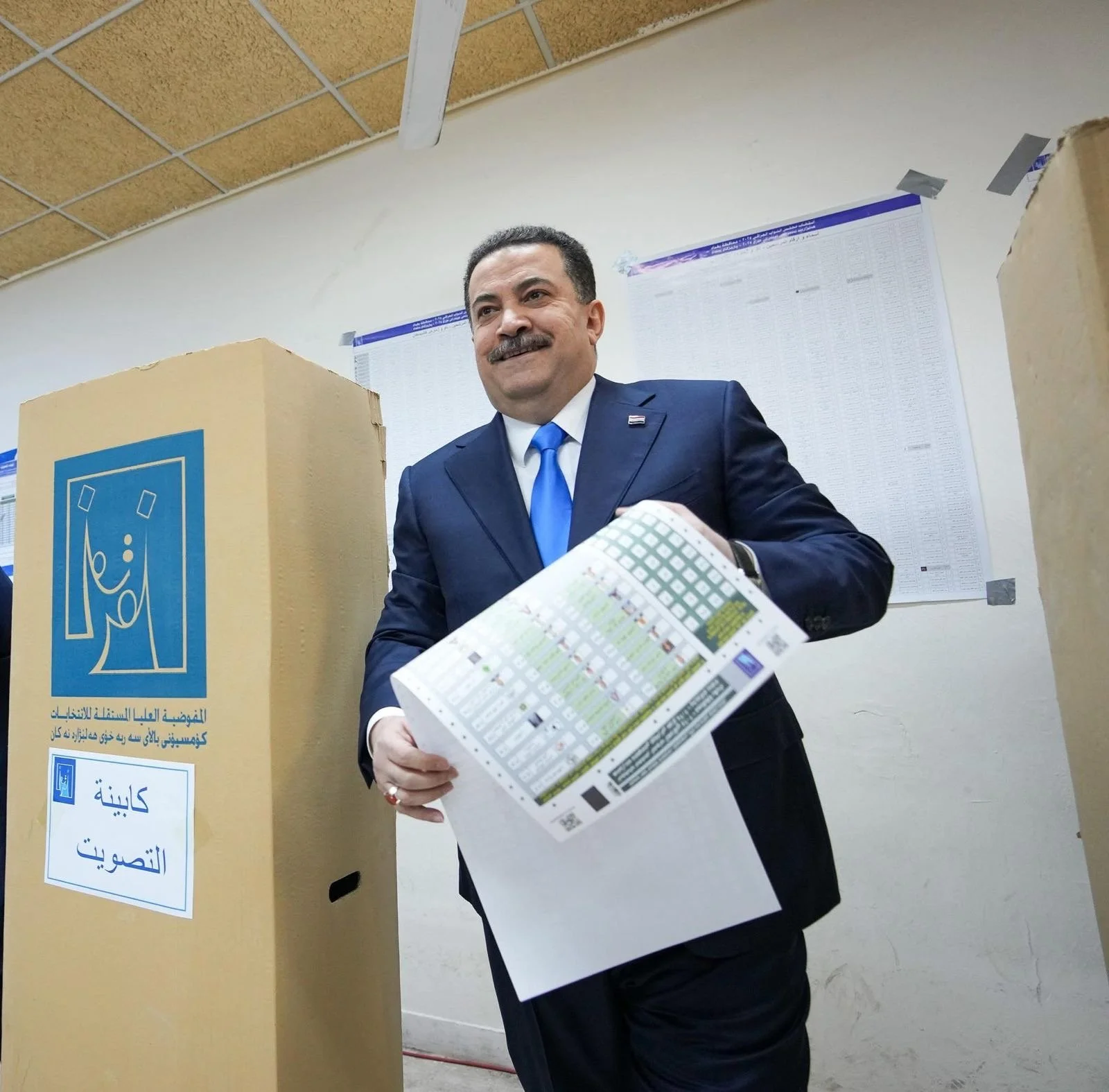
Agence France-Presse reported on Wednesday that the coalition of Iraqi Prime Minister Mohammed Shia al-Sudani achieved a major victory in the parliamentary elections held on Tuesday.
An official close to the Prime Minister told AFP that the Development and Reconstruction bloc had achieved a remarkable success, while two other sources indicated that the list had won the largest parliamentary bloc with nearly 50 seats or more.
TNT:
Tishwash: AFP: Sudani coalition achieves major victory in Iraqi elections
Agence France-Presse reported on Wednesday that the coalition of Iraqi Prime Minister Mohammed Shia al-Sudani achieved a major victory in the parliamentary elections held on Tuesday.
An official close to the Prime Minister told AFP that the Development and Reconstruction bloc had achieved a remarkable success, while two other sources indicated that the list had won the largest parliamentary bloc with nearly 50 seats or more.
Sudani has emerged as a major political force in Iraq since coming to power three years ago, with the support of the Coordination Framework Alliance, which includes Shiite parties and factions close to Iran.
This success comes in the context of a tense political landscape, where different blocs are seeking to form alliances to secure a stable parliamentary majority. link
Tishwash: The International Monetary Fund expects stable and accelerating growth in the Iraqi economy until 2030
The Iraqi economy is poised for a more stable growth trajectory in the coming years, following a slight contraction of 0.2% in 2024, according to data from the International Monetary Fund.
According to the "Al-Sharq" website, the fund predicted that the country's economy would return to growth in 2025 at a rate of 0.5%.
The IMF estimates show a marked acceleration in the pace of growth starting from 2026 to 3.6%, the same rate expected for 2027, before rising to 3.9% in 2028, and then 4.1% for both 2029 and 2030.
The International Monetary Fund predicted last October that Iraq would rank fourth among the largest economies in the Arab world by 2030.
According to the report, Saudi Arabia tops the list as the largest Arab economy with a GDP of $1.6 trillion, followed by the United Arab Emirates in second place with about $764.8 billion, and then Egypt in third place with $589.8 billion.
Iraq comes in fourth place, with an expected GDP of $345.9 billion, continuing its advanced position among Arab economies supported by the energy and oil sector and reconstruction and development projects, ahead of Algeria, which came in fifth with a total of $309 billion, followed by Qatar in sixth place with $296.8 billion, Morocco in seventh place with $241.9 billion, and then Kuwait in eighth place with $190.1 billion.
The last places on the list were occupied by the Sultanate of Oman with a total of $133.3 billion, followed by Jordan in tenth place with $73.6 billion.
The report indicated that Arab economies are experiencing varying paths of growth, driven by economic reforms, expanding investments in renewable energy, tourism, and technology, along with efforts to diversify away from dependence on oil as a primary source of revenue. link
************
Tishwash: Iran is boiling over internally... and workers are in the streets demanding their rights.
More than three thousand contract workers at the South Pars gas complex demonstrated in front of the complex’s central building in Asaluyeh, demanding the implementation of a wage unification plan, a change in the work pattern, and the complete elimination of the role of contracting companies.
A large group of contract workers from the twelve refineries belonging to "South Pars" participated today, Tuesday, November 11, in protests in the streets leading to the central headquarters of the complex in Asaluyeh, to demand their professional and living rights.
These workers, who belong to the categories of workforce, contracting companies, and contractors in the various stages of the South Pars project and the Fajr Jam refinery, raised banners calling for "achieving fair wages" and "abolishing the contractors system."
In a joint statement, the workers demanded a review of the job classification plan with the aim of standardizing the salaries of contract workers with those of official employees.
The demands also included changing the work schedule for administrative staff and support teams to a "two weeks on, two weeks off" system, regulating the status of non-owner rental car drivers, paying air travel allowances for contracted workers, and restoring social services and benefits such as accommodation in residential complexes.
One of the workers participating in the gathering said: "For years, despite repeated promises, the job classification plan in 'South Pars' has not been implemented properly, and there is still a large gap between the wages of contract workers and official employees."
Some workers also saw the complete abolition of the contractor system as the only way to achieve job fairness.
An employee of the twelfth phase of "South Pars" stated that the presence of contractors leads to violations of workers' rights, with insufficient oversight of the wage payment mechanism.
As the Iranian regime continues to fail to meet the demands of various groups, the past few days and weeks have witnessed a series of strikes and protests by workers, employees, and retirees across the country.
On November 2, retirees from the telecommunications sector took to the streets in several cities, and nurses from the University of Medical Sciences in Kermanshah, workers from the "Makian Alvan" slaughterhouse in Rey, and employees of the "Falat Qara" oil company on Lavan Island organized protest rallies against the disregard for their demands.
On October 31, oil sector workers held a demonstration in front of the presidential office in Tehran, renewing their protest against unfulfilled government promises regarding the elimination of contractors and intermediaries.
These workers, who came from the oil-rich provinces to the capital Tehran, confirmed that despite the promises of Masoud Pezeshkian’s government, none of the promises have been fulfilled so far. link
Mot: The House - Remember The House

Mot: Prime I Am!!!!