
Seeds of Wisdom RV and Economics Updates Thursday Evening 10-9-25
Good Evening Dinar Recaps,
BRICS Pushes Eurasian Nations to Curb the U.S. Dollar
At the 2025 SCO Summit, China led a campaign for 10 Eurasian countries to agree on reducing dollar dependence—and forging new financial paths.
Good Evening Dinar Recaps,
BRICS Pushes Eurasian Nations to Curb the U.S. Dollar
At the 2025 SCO Summit, China led a campaign for 10 Eurasian countries to agree on reducing dollar dependence—and forging new financial paths.
What Was Unveiled
● New Development Bank in Local Currencies: During the 2025 SCO (Shanghai Cooperation Organization) Summit, China proposed that Eurasian member countries create a New Development Bank where loans are issued in local currencies instead of the U.S. dollar.
● Alternative Payment System: The summit also agreed on advancing a new cross-border payment network to bypass U.S. dollar-based systems entirely.
● Countries Involved: The SCO and BRICS overlap among these 10 nations — including China, Russia, India, Iran, Kazakhstan, Kyrgyzstan, Pakistan, Tajikistan, Uzbekistan, and Belarus.
Why This Shift Matters
Undermining Dollar Hegemony: By routing lending and payments through local currencies and non-USD rails, BRICS seeks to erode the structural dominance of the U.S. dollar.
Sovereign Leverage: Countries issuing debt or receiving investment in their own currency avoid exchange rate risk, sanctions, and external leverage.
Regional Financial Architecture: A Eurasian bloc using a shared financial infrastructure creates network effects that reduce reliance on Western institutions.
Test Case for Global South: Success in Eurasia could inspire other regions—Africa, Latin America, Southeast Asia—to adopt similar frameworks.
Challenges & Frictions
Divergent Interests: Within SCO, relationships are fraught—India vs. China or India vs. Pakistan tensions may impede unified action.
Economic Disparities: Many participant states lack capital market depth or strong currencies, making local-currency lending risky.
Institutional & Legal Hurdles: Frameworks for cross-border conversion, interoperability, and dispute resolution are complex and not yet in place.
Dollar Inertia: Many contracts, trade deals, and reserves are still denominated in USD—transitioning away is a process, not an instant shift.
How This Fits Into the Bigger Reordering
Building Parallel Rails: This move is consistent with BRICS’ strategy: rather than attacking the dollar directly, build alternatives that gain traction over time.
Decentralizing Reserve Sovereignty: With local currency lending, member states reclaim control over capital flows and credit.
Momentum for De-Dollarization: This is a real operational step beyond rhetoric—moving trade, credit, and payments toward non-USD systems.
Blueprint for Others: If Eurasia succeeds, it becomes the template for financial realignment across other geographies.
Why This Matters / Key Takeaway
China’s leadership in persuading Eurasian states to curb dollar dependence is a bold tactical maneuver in the broader strategic war over currency dominance.
If global capital and credit gradually shift to these new rails, the architecture of international finance will recalibrate from the ground up.
This is not just politics — it’s global finance restructuring before our eyes.
@ Newshounds News™ Exclusive
Source:
• Watcher.Guru – BRICS Makes 10 Eurasian Countries Agree To Curb the US Dollar (watcher.guru)
~~~~~~~~~
Seeds of Wisdom Team RV Currency Facts Youtube and Rumble
Newshound's News Telegram Room Link
Follow the Gold/Silver Rate COMEX
Follow Fast Facts
Seeds of Wisdom Team™ Website
Thank you Dinar Recaps
Seeds of Wisdom RV and Economics Updates Thursday Afternoon 10-9-25
Good Afternoon Dinar Recaps,
IMF Chief Declares “Uncertainty Is the New Normal”
In the face of persistent volatility, global resilience is being tested—and the era of stable certainty may be over.
Good Afternoon Dinar Recaps,
IMF Chief Declares “Uncertainty Is the New Normal”
In the face of persistent volatility, global resilience is being tested—and the era of stable certainty may be over.
Headline Warning
IMF Managing Director Kristalina Georgieva stated at the Milken Institute that “uncertainty is the new normal,” signaling elevated risks across global markets and economies.
Despite ongoing challenges, she noted the global economy has held up “better than feared,” projecting ~3% growth in 2025.
Georgieva warned that current market valuations resemble pre-dotcom bubble levels and cautioned that a sharp correction could expose deeper fragilities.
Underlying Risks Highlighted
Tariff tailwinds & policy spillovers: She warned that trade tensions, especially U.S. tariffs, are yet to fully unfold and could trigger inflation or financial stress.
Gold demand as a signal: Soaring gold prices—already above $4,000/oz—serve as an early warning of investors fleeing safer assets.
Debt overload and tight policy windows: Public debt nearing critical thresholds in many nations means less room to maneuver when shocks hit.
Vulnerability of emerging economies: Smaller states face amplified risk in such environments, as capital flight, FX volatility, and debt stress can cascade quickly.
Connection to Global Financial Restructuring
Normalization of volatility: The IMF’s tone shift legitimizes the idea that structural instability is now baked in, not an aberration.
Reserve & capital rethinking: In conditions of uncertainty, nations will prefer asset-backed, less dollar-centric instruments (i.e. gold, sovereign alternatives).
Blocs & parallel systems gain appeal: Traditional centralized institutions may be bypassed more aggressively in favor of regional or sovereign networks.
Stress test on financial dominance: If confidence in Western institutions falters, the legitimacy of alternative architectures strengthens.
Why This Matters / Key Takeaway
Georgieva’s declaration is more than cautionary — it’s a herald of a new era.
As uncertainty becomes constant, actors—states, funds, and financial institutions—must reposition toward resilience, autonomy, and strategic flexibility.
The global economy is no longer about stability; it’s about managing disruption.
This is not just politics — it’s global finance restructuring before our eyes.
@ Newshounds News™ Exclusive
Sources:
• Reuters – IMF chief says global economy doing ‘better than feared,’ risks remain Reuters
• The Guardian – IMF chief warns ‘uncertainty is the new normal’ The Guardian
• AP News – IMF chief warns of economic uncertainty, offers advice “buckle up” AP News
• Xinhua – IMF warns global economic uncertainty to persist Xinhua News
~~~~~~~~~
Bank of England Warns of Sharp Market Correction Risks
As AI valuations soar and central bank credibility wobbles, the UK warns that markets may be on the brink of a storm.
Core Warning
The Bank of England (BoE) cautions that a “sharp correction” could occur if sentiment sours toward AI valuations or the independence of the U.S. Federal Reserve.
The BoE’s Financial Policy Committee underscored that U.S. equity valuations, especially in AI-focused stocks, mirror levels last seen during the dotcom bubble.
The concentration risk is stark: five firms now account for ~30% of the S&P 500’s value, intensifying vulnerability to shifts in AI optimism.
Because UK and U.S. bond yields are correlated, a weakening U.S. bond market may increase U.K. borrowing costs.
Contributing Tensions
AI bubble risk: The overvaluation in tech — driven by AI hype — raises the possibility of abrupt reversal.
Fed credibility under scrutiny: Any perceived politicization or interference in the U.S. central bank could shake confidence across global markets.
Fragile macro linkages: High debt loads, inflationary pressures, and fragile corporate balance sheets increase systemic sensitivity.
Spillover danger: A crash in U.S. markets reverberates globally; emerging markets will feel amplified impact.
Link to Global Restructuring
Fragile central legitimacy: If central bank independence is questioned, the entire edifice of credibility beneath fiat systems weakens.
AI as a systemic catalyst: Tech bubbles now threaten macro stability — meaning future financial systems must embed circuit breakers and structural dampeners.
Acceleration of alternative rails: When faith in old systems is shaken, capital gravitates toward safe alternatives — gold, decentralized networks, regional systems.
Recalibrated risk patterns: Volatility becomes a core dimension of finance strategy, not an anomaly to be avoided.
Why This Matters / Key Takeaway
The BoE’s warning is a red flag: markets resting on AI-driven narratives may lack real foundations.
As risk mounts, institutions and nations must brace for rupture — not just correction.
The era where momentum alone propels markets is ending; structural resilience and alternative systems become the new edge.
This is not just politics — it’s global finance restructuring before our eyes.
@ Newshounds News™ Exclusive
Sources:
• Reuters – Bank of England warns of ‘sharp correction’ if mood sours on AI or Fed freedom Reuters
• Reuters – BoE’s financial policy committee update warning on market vulnerabilities Reuters
• The Guardian – BoE warns of AI bubble risk The Guardian
• Semafor – BoE warns of potential AI bubble Semafor
Seeds of Wisdom Team RV Currency Facts Youtube and Rumble
Newshound's News Telegram Room Link
Follow the Gold/Silver Rate COMEX
Follow Fast Facts
Seeds of Wisdom Team™ Website
Thank you Dinar Recaps
Iraq Economic News and Points To Ponder Thursday Morning 10-9-25
US Investments In Iraq: The Return Of The "Whales" Through Oil And A "Conditional" Partnership
Economy / Politics / Special Files Yesterday, 7:30 PM | 608 New test Baghdad Today – Baghdad
Since the fall of the former regime in 2003, the United States has been one of the most prominent economic players in Iraq through reconstruction and energy. Over the past two decades, the American presence has alternated between periods of openness and control over key economic levers, and periods of contraction and gradual withdrawal in favor of Asian partners, most notably China.
US Investments In Iraq: The Return Of The "Whales" Through Oil And A "Conditional" Partnership
Economy / Politics / Special Files Yesterday, 7:30 PM | 608 New test Baghdad Today – Baghdad
Since the fall of the former regime in 2003, the United States has been one of the most prominent economic players in Iraq through reconstruction and energy. Over the past two decades, the American presence has alternated between periods of openness and control over key economic levers, and periods of contraction and gradual withdrawal in favor of Asian partners, most notably China.
US investments in Iraq during this period are estimated at tens of billions of dollars, concentrated in the
oil, gas, electricity, finance, and infrastructure sectors.
However, only a third of the announced projects have actually been implemented, according to reports from the World Bank and the US State Department.
The US State Department's 2024 Iraq Investment Climate Report notes that the country "remains a high-risk environment for foreign investment due to bureaucracy, corruption, weak enforcement of commercial laws, and a lack of transparency in public contracts."
Exxon Mobil
ExxonMobil is the most prominent example of the fluctuating relationship between American investors and Iraq.
In 2009, the company entered the market with a major contract to develop the West Qurna 1 field, one of the largest fields in Basra.
However, it later faced a series of disputes with the Ministry of Oil over contract terms and
cost-recovery mechanisms.
After recovering its investments, it officially announced its withdrawal in 2023,
selling its 22.7% stake to the Basra Oil Company for approximately $350 million.
However, the story did not end there.
In October 2025, Bloomberg and Reuters reported that the company had returned to negotiations with the Iraqi government regarding the Majnoon field in Basra, under a more generous agreement of principles that included developing oil export infrastructure and sharing profits from external marketing. In this context,
Prime Minister Mohammed Shia al-Sudani sponsored the signing ceremony of the HOA between the
Ministry of Oil and the American company ExxonMobil, in the presence of the company's Vice President, Peter Larden, and the US Chargé d'Affaires in Baghdad. Al-Sudani affirmed that
the agreement is "an important step for the future of the oil sector in Iraq and the development of economic relations with the United States," emphasizing "the commitment to attracting global investments and modernizing the infrastructure of the oil industry."
Economic expert Nabil Al-Marsoumi noted in his analysis that "ExxonMobil's return after selling its previous stake in West Qurna for $350 million raises questions about the nature of the new contracts and their generosity,"
wondering whether this return "represents a long-term investment opening or merely a temporary deal
that reproduces the previous withdrawal scenario after profits were realized and expenses were recovered."
General Electric
In contrast, General Electric (GE) has maintained a strong field presence in Iraq, implementing project packages
worth more than $1.2 billion between 2020 and 2023, including the supply and maintenance of generating units in Basra, Hillah, and Bazian.
Despite the technical achievement, financing and payment issues delayed some contracts, prompting the company to renegotiate sovereign guarantees with the Iraqi government to secure its dues and continue its operational commitments.
World Bank documents also indicate that international financing institutions have financed electricity projects worth $2.5 billion since 2005 with American companies participating in these projects as part of reconstruction programs and the improvement of transmission and distribution networks.
Financial Sector
Despite repeated talk of US banks' intention to enter the Iraqi market, actual presence has been limited to a handful of representative offices such as Citigroup.
This caution is linked to the US Treasury Department's 2023 actions against Iraqi banks accused of poor financial compliance, making dollar transfers more complex and costly.
In contrast, the International Finance Corporation (IFC), the US-coordinated arm of the World Bank, has continued to provide direct and indirect financing exceeding $2.5 billion to support the Iraqi private sector since 2005, including projects in finance agriculture, and food production.
An Investment-Repellent Environment
Economist Nabil Al-Marsoumi, in his analyses published on his official pages and statements to the media, agrees that the investment environment in Iraq remains repulsive to foreign and local capital, due to the absence of legal and financial guarantees and the overlap of political and economic interests.
Al-Marsoumi stated, "The Iraqi environment is repulsive to investment, whether international or local," explaining that "security conditions, administrative corruption, and the absence of fair competition deter investors from entering into long-term projects."
In another statement, he noted that "foreign investment still faces serious challenges related to lagging infrastructure, complex bureaucratic procedures, and the proliferation of uncontrolled weapons, which makes any investment project vulnerable to political and security fluctuations." In a separate analysis,
Al-Marsoumi noted that major oil contracts are being exploited politically inside and outside Iraq, explaining that
some projects are used as indicators of international influence rather than genuine economic projects. He emphasized that the absence of a unified economic vision has transformed Iraq into a market for political projects rather than a productive environment attractive to capital, calling for radical legislative reform and the unification of administrative authorities between the center and the provinces.
The results of the past two decades show that American investment in Iraq has not disappeared, but has changed in form and content. Whereas it was based on direct control, it now relies on conditional partnerships, selective funding, and partial projects.
In oil, Washington seeks to regain its foothold through the Majnoon field; in electricity, General Electric continues its presence despite obstacles; andin finance, American companies maintain a measured presence subject to strict scrutiny by the Treasury.
The crux of the problem, as Nabil Al-Marsoumi describes it, is that "investment in Iraq is not measured by the size of contracts, but rather by the state's sincerity in protecting public funds and implementing transparency for all."
https://baghdadtoday.news/284812-.html
Economist: Iraq Has The Capacity To Export Petroleum Products By 2026.
October 7, 11:19 AMInformation/Baghdad… Economic expert Ali Al-Furaiji confirmed on Tuesday that
Iraq has the necessary capabilities to export petroleum products, particularly gasoline and kerosene, during the coming year, provided that it achieves self-sufficiency in these products during the current year.
Al-Furaiji told Al-Maalouma News Agency, "Current data indicates that the Basra and Kirkuk projects are entering stable service, which will enable Iraq to achieve self-sufficiency in gasoline in the near future."
He added, "Iraq has been able to achieve self-sufficiency in kerosene and diesel fuel since 2024, with a real possibility of achieving an export surplus in 2026, provided that the new units continue to operate stably, especially the catalytic cracking (FCC) unit, and that the hydrogen and energy supplies needed for the hydrogenation units
are guaranteed."
He pointed out that "achieving this goal requires effective management of distribution and blending operations to ensure that products comply with international specifications, in addition to strengthening financial and pricing governance to prevent a return to unjustified imports," indicating that
"success in the new refining plans requires strict technical and financial management that transforms self-sufficiency into a starting point for an export surplus after 2026." End 25N
https://almaalomah.me/news/112242/economy/اقتصادي:-العراق-يمتلك-القدرة-على-تصدير-المشتقات-النفطية-في-2
For current and reliable Iraqi news please visit: https://www.bondladyscorner.com
Seeds of Wisdom RV and Economics Updates Thursday Morning 10-9-25
Good morning Dinar Recaps,
Israel & Hamas Agree to Ceasefire and Hostage Deal
After years of conflict, a U.S.-brokered first phase of peace raises as many questions as hopes.
Good morning Dinar Recaps,
Israel & Hamas Agree to Ceasefire and Hostage Deal
After years of conflict, a U.S.-brokered first phase of peace raises as many questions as hopes.
The Breakthrough Moment
Israel and Hamas have agreed to the first phase of a ceasefire and hostage exchange under a 20-point peace plan mediated by former President Trump.
The deal includes:
• An immediate halt to hostilities
• Partial Israeli troop withdrawal from Gaza
• Release of hostages held by Hamas, in exchange for Palestinian prisoners held by IsraelReuters reports that Hamas has handed over a list of Israelis and Palestinians as part of the swap deal.
Initial reactions: widespread relief among civilians, cautious optimism from international actors, but unresolved tensions over implementation.
Fragile Peace vs. Structural Fault Lines
Trust & Verification Issues: As with past ceasefires, failure to comply (e.g. disarmament, troop movements) could unravel the agreement.
Governance & Security Vacuum: Who governs Gaza post-withdrawal? How will Hamas be held in check?
Humanitarian Access & Reconstruction: Ceasefire opens an entry point for aid, but rebuilding requires sustained security and capital flows.
Regional Spillover: Neighboring countries (Iran, Lebanon, Egypt) and alliances may recalibrate based on how power balances shift.
How This Connects to Global Restructuring
Strategic Realignment: This deal isn’t just about peace in Gaza — it reorders regional alignments. States will reassess their dependency on the U.S., Israel, or Gulf actors.
Financial & Humanitarian Levers: Post-ceasefire reconstruction will require large-scale financing. Nations pushing de-dollarization or alternative systems will seek influence in that funding.
Narrative of Sovereignty: Governance of Gaza becomes a symbolic battleground over who sets rules — local actors or external powers.
Precedent for Conflict Zones: If peace holds, this becomes a model for resolving deep-seated conflicts through mediated frameworks rather than military dominance.
Why This Matters / Key Takeaway
This ceasefire agreement is more than a pause in fighting. It represents a moment of potential realignment — in power, capital, and legitimacy.
If successfully implemented, it could shift how regional states fund, govern, and align their interests in the Middle East and beyond.
But failure risks reigniting conflict and reinforcing the old order.
This is not just politics — it’s global finance restructuring before our eyes.
@ Newshounds News™ Exclusive
Sources & Further Reading
• Reuters – Israel and Hamas agree to first phase of Trump’s Gaza ceasefire & hostage deal Reuters
• Reuters – Joy in Israel, Gaza after ceasefire announced Reuters
• The Guardian – Israel and Hamas agree to first phase of ceasefire deal The Guardian
• Time – Israel and Hamas have agreed to the ‘first phase’ of Trump’s peace plan TIME
• AP News – Israel and Hamas reach ceasefire agreement AP News
• Al Jazeera – World reacts to Gaza ceasefire deal
~~~~~~~~~
Finance as Battlefield: How War Transformed Global Money
Conflict no longer just forces armies to march — it sends capital, credit, and reserves to the front lines.
The New Frontline: Banking, Sanctions & Reserve Seizures
In 2022, over $300 billion of Russia’s central bank reserves were frozen under Western sanctions — arguably the largest financial seizure in modern history.
That same year, more than 11,000 sanctions measures were imposed globally, weaponizing finance at scale.
Beyond Russia, modern conflicts use SWIFT bans, asset freezes, payment system exclusions, and currency collapses as tools of economic coercion.
What’s Being Financed — and How
Gold & Digital Assets: In conflict zones, gold serves as a “neutral” reserve; crypto-donations to Ukraine exceeded $200 million.
War Finance 2.0: Traditional tools like war bonds and taxes are augmented by sanctions regimes, trade restrictions, and digital flows.
Weaponized Trade & Capital Flows: Sanctions often provoke counter-sanctions, capital flight, and financial fragmentation.
Financing the Conflict Internally: In crises like Sudan, rising gold prices have fueled smuggling and conflict financing to underwrite military operations (recent FT reporting).
Structural Shifts: The Rules of Money Reordered
The dollar’s dominance is under direct assault: its share in global reserves has dropped toward ~60%.
Over 130 countries are exploring or piloting CBDCs, partly as a response to financial weaponization.
Research shows that sanction risk, network effects, and capital flight trigger migration toward alternative payment rails (CIPS, regional systems).
The U.S. has long used chokepoints (SWIFT, dollar clearing, tech embargoes) as a coercive overlay on globalization.
Risks, Inequities & Unintended Blowback
Collateral damage to civilians: Sanctions can destabilize health systems, supply chains, and aid flows.
Liquidity shortages: States under sanction or conflict often struggle to access foreign capital or U.S. dollar funding lines.
Fragmentation over coordination: As each bloc builds its own rails, interoperability and cross-border liquidity become harder.
Trust decay: Confidence in the “universal” rules of finance erodes when capital is weaponized unpredictably.
Why This Matters / Key Takeaway
Finance is no longer passive infrastructure — it is now a strategic theater of war.
Nations are being forced to design economic systems that survive conflict, sanctions, and fragmentation.
The era ahead will reward those who control credit rails, reserve strategy, and payment sovereignty, not just military might.
We stand at the threshold of a new global monetary architecture — built not on fiat dominance but on resilience, assets, and alternative networks.
This is not just politics — it’s global finance restructuring before our eyes.
@ Newshounds News™ Exclusive
Sources & Further Reading
• Finance at War: How Conflict Redefines the Global Economy — Modern Diplomacy Modern Diplomacy
• War Finance in the 21st Century — IGCC blog / Oxford geoeconomics series IGCC
• The Financial March to War — Harold James, Project Syndicate Project Syndicate
• The Weaponized World Economy — Foreign Affairs Foreign Affairs
• Weaponizing Financial & Trade Flows — International Banker International Banker
• Geopolitical Tensions & Financial Networks: Strategic Shifts Toward Alternatives — arXiv arXiv
• Chokepoints: American Power in the Age of Economic Warfare — Edward Fishman (book context) Wikipedia+1
• Record Prices Fuel Conflict Gold Finance — FT report on Sudan Financial Times
Seeds of Wisdom Team RV Currency Facts Youtube and Rumble
Newshound's News Telegram Room Link
Follow the Gold/Silver Rate COMEX
Follow Fast Facts
Seeds of Wisdom Team™ Website
Thank you Dinar Recaps
“Tidbits From TNT” Thursday Morning 10-9-2025
TNT:
Tishwash: The International Development Bank sponsors the Faw Port Summit.
The International Development Bank announced its strategic sponsorship of the Faw Port Summit, stressing that this participation aligns with its vision to support Iraq's efforts to transform into a leading regional logistics and trade hub.
The bank explained in a statement received by the Iraqi News Agency (INA), that "its active presence on the regional and international scene is consolidated by the opening of its branch in the United Arab Emirates, in addition to the Umm Qasr Port branch, as well as its network of branches spread across all Iraqi governorates, which reflects its commitment to providing innovative banking solutions that contribute to enabling investment in strategic infrastructure projects and achieving sustainable economic returns."
TNT:
Tishwash: The International Development Bank sponsors the Faw Port Summit.
The International Development Bank announced its strategic sponsorship of the Faw Port Summit, stressing that this participation aligns with its vision to support Iraq's efforts to transform into a leading regional logistics and trade hub.
The bank explained in a statement received by the Iraqi News Agency (INA), that "its active presence on the regional and international scene is consolidated by the opening of its branch in the United Arab Emirates, in addition to the Umm Qasr Port branch, as well as its network of branches spread across all Iraqi governorates, which reflects its commitment to providing innovative banking solutions that contribute to enabling investment in strategic infrastructure projects and achieving sustainable economic returns."
The bank affirmed that "its sponsorship of this important international event represents a practical step towards consolidating its role as a trusted financial partner, putting its banking expertise at the service of major national projects, most notably the Grand Faw Port Project, which represents a fundamental pillar in the future of the Iraqi economy." link
Tishwash: The Prime Minister chairs a meeting to follow up on mechanisms to support banks in implementing infrastructure and development projects.
Prime Minister Mohammed Shia al-Sudani chaired a meeting on Wednesday to follow up on mechanisms to support banks in implementing infrastructure and development projects.
The Prime Minister's media office said in a statement received by the Iraqi News Agency (INA): "Prime Minister Mohammed Shia al-Sudani chaired a meeting today, Wednesday, dedicated to discussing and following up on mechanisms for investing banking facilities in supporting the completion of infrastructure projects and development projects being implemented throughout Iraq."
He added, "During the meeting, the progress made in reforming the banking system was discussed, making it one of the tools for supporting development and expanding banking activities within the context and controls of globally recognized banking practices."
He added, "The meeting discussed optimal investment of Iraqi assets through banking facilities for strategic investment projects and basic infrastructure projects, particularly those related to energy, such as oil, gas, and electricity projects." link
************
Tishwash: Al-Sudani on the oil agreement with Erbil: An achievement that represents an important milestone for Iraq
Prime Minister Mohammed Shia al-Sudani considered the oil agreement between Baghdad and Erbil on Wednesday an achievement that represents an important milestone for Iraq and all Iraqis.
His office stated in a statement it received:IQ), that "the Sudanese met, today, Wednesday, with representatives of the company HKN American Energy welcomed the investment partnership of the company HKN In Iraq, he considered it a positive indicator that reflects growing confidence in the country's investment environment.
Al-Sudani pointed out that "this step comes as an extension of agreements recently concluded with American companies in various sectors, which contributes to strengthening bilateral economic relations between Iraq and the United States."
He expressed his "appreciation for the role of the company." HKN In completing the recent agreement to export oil from the Kurdistan Region of Iraq, and facilitating the reopening of the Iraq-Turkey pipeline, as an important station in developing the energy sector, enhancing sovereignty and fair management of wealth, ensuring that the Iraqi people benefit from their national resources," stressing that "this achievement represents an important milestone for Iraq and for all Iraqis." link
************
Tishwash: Al-Sudani and Barzani agree on a US-sponsored financial deal. Iraq is losing its wealth to Erbil.
Recent amendments to the Iraqi budget have sparked widespread controversy over the granting of illegitimate financial privileges to the Kurdistan Region, amid accusations by MPs and government opponents of foreign influence over the country's financial policies.
Amid ongoing disputes between the federal government and the Kurdistan Region over the distribution of financial resources, the budget amendment has intensified criticism, with Kurdish officials accused of exploiting public funds for personal political gain.
Political deal or constitutional amendment?
Independent MP Yasser al-Husseini criticized the passage of the budget amendment, describing it as “serving foreign agendas at the expense of national autonomy.” He added that the Kurdistan Democratic Party (KDP) tends to prioritize its partisan and personal interests over the fair distribution of funds among citizens in the region.
Al-Husseini told Al-Maalouma, “Talk about autonomy and adherence to the constitution is unrealistic in light of the weakness of state institutions and the efforts of some parties to please the US at the expense of the interests of the Iraqi people.”
He stressed that "the continuation of these policies confirms that some forces continue to prioritize foreign interests over national autonomy, which requires a firm national stance to preserve Iraq's wealth and prevent its exploitation to serve non-Iraqi agendas."
Financial Flexibility Raises Concerns
In turn, economic researcher Abdul Salam Hassan Hussein pointed out that the budget was designed with great flexibility, allowing the region to dispose of oil revenues without clear restrictions. This opens the way for the funds to be used to pay off debts rather than develop the local economy.
Hussein added to Al-Maalouma, “The constitutional laws are clear, but political pressures allow for circumventing difficult provisions and passing decisions without strict adherence to the constitution.”
Persistence of Old Crises
Observers point out that the financial relationship between Baghdad and Erbil suffers from a lack of oversight and transparency. The region has continued to manage the oil fields and deduct funds for more than two decades without any real change, which increases fears of a recurrence of political deals that ignore the interests of the Iraqi people. link
Mot: Has This Happened to You -- Too!!!
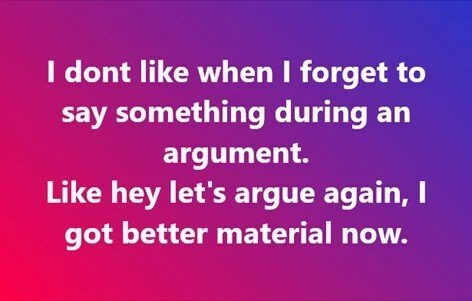
Mot: Funny Tweet about Dads being Dads

Iraq Economic News and Points To Ponder Wednesday Afternoon 10-8-25
Al-Sudani Confirms Significant Progress In Implementing Compliance And Anti-Money Laundering Standards.
Tuesday, October 7, 2025, Economics Number of readings: 327 Baghdad / NINA / Prime Minister Mohammed Shia Al-Sudani confirmed that significant progress has been made in implementing compliance and anti-money laundering standards.
A statement by his media office stated that Al-Sudani received, on Tuesday, a delegation from the international auditing and financial consulting company KPMG, where the progress of the company's cooperation with the Iraqi banking sector was reviewed, as part of the government's efforts to enhance the transparency of this sector's work and sustainably improve Iraq's financial reputation.
Al-Sudani Confirms Significant Progress In Implementing Compliance And Anti-Money Laundering Standards.
Tuesday, October 7, 2025, Economics Number of readings: 327 Baghdad / NINA / Prime Minister Mohammed Shia Al-Sudani confirmed that significant progress has been made in implementing compliance and anti-money laundering standards.
A statement by his media office stated that Al-Sudani received, on Tuesday, a delegation from the international auditing and financial consulting company KPMG, where the progress of the company's cooperation with the Iraqi banking sector was reviewed, as part of the government's efforts to enhance the transparency of this sector's work and sustainably improve Iraq's financial reputation.
Al-Sudani pointed out that the banking reform in Iraq has become a model of commitment and trust, and appreciated the role played by financial auditing companies in consolidating governance and professionalism in this sector, stressing that the government looks forward to a strategic partnership with these companies, on the path to enhancing the credibility of Iraqi state institutions before the international financial and economic community.
The Prime Minister explained, according to the statement, that Iraq is proceeding with implementing the government's financial and banking reform program plans, which has contributed to improving the financial rating, raising the confidence of international partners in Iraqi banks, and achieving significant progress in applying compliance and anti-money laundering standards, and the transition to modern electronic reporting.
Al-Sudani pointed out the importance of benefiting from the company's expertise in structuring government companies and raising their operational efficiency, public debt management issues, and specialized technical and legal consultations in drafting contracts for major strategic projects.
He stressed the government's support for the steps of the Central Bank of Iraq and the Trade Bank of Iraq in continuing technical coordination with KPMG to ensure the rapid completion of audit tasks, adherence to international standards, and the timetable for issuing the final accounts of banks, stressing that the government considers transparency and financial accountability a fundamental pillar in building a modern national economy. /End
https://ninanews.com/Website/News/Details?key=1255737
World Gold: Iraq Has Not Been Updated Since January
Money and Business Economy News – Baghdad The World Gold Council announced on Tuesday that Iraq has not updated its gold reserves data since January 2025.
In its latest statistics for October, reviewed by Al-Eqtisad News, the council stated that "Iraq has not updated its data on its gold reserves and has not announced any purchase or sale since last January, and therefore reserves have remained unchanged." It indicated that it "maintained its 29th place globally out of the 100 countries with the largest reserves of the precious metal."
He added, "Iraq's gold reserves amount to 162.7 tons, equivalent to 17.4% of its other foreign currency reserves, ranking fourth in the Arab world after Saudi Arabia, Lebanon, and Algeria in terms of gold reserves."
The Council noted that "the United States of America tops the list of the world's largest gold holders, with 8,133,000 tons, followed by Germany with 3,350,000 tons, then Italy with 2,451,000 tons, while Trinidad and Tobago and Iceland came in last with two tons each."
The UK-based World Gold Council has extensive experience and in-depth knowledge of the factors influencing the gold market and includes the world's largest and most modern gold mining companies as members.
https://economy-news.net/content.php?id=60892
Gold Exceeds $4,000 For The First Time In Its History
Economy | 08:13 - 08/10/2025 Mawazine News - Follow-up The price of gold surpassed $4,000 an ounce on Wednesday morning for the first time in the precious metal's history, as investors flocked to the safe haven amid concerns over several issues, including the US government shutdown and the political crisis in France.
Gold also received support from investors seeking a safe haven amid rising economic and geopolitical uncertainty, along with expectations of further interest rate cuts by the Federal Reserve.
Spot gold rose 0.3 percent to $3,997.09 per ounce by 0202 GMT, after hitting an all-time high of $4,000.96. US gold futures for December delivery rose 0.4 percent to $4,020 per ounce, according to Reuters data.
Gold is often considered a store of value in times of uncertainty. Spot gold has risen 52% since the beginning of the year, following a 27% rise in 2024.
"There's so much confidence in this trade now that the market will be waiting for the next big number, 5,000, with the Fed likely to continue cutting interest rates," said Tai Wong, an independent metals trader.
"There will be some bumps in the road, such as a permanent truce in the Middle East or Ukraine, but the fundamental drivers of trade – massive and growing debt, reserve diversification, and a weaker dollar – are unlikely to change in the medium term."
A combination of factors, including increased central bank buying, renewed interest in gold-backed exchange-traded funds (ETFs), a weaker dollar, and strong retail demand, have fueled the yellow metal's rally.
The US government shutdown entered its seventh day on Tuesday, delaying the release of key economic indicators, forcing investors to rely on secondary non-government data to predict the timing and extent of interest rate cuts.
https://www.mawazin.net/Details.aspx?jimare=267999
Global Oil Prices Rise After Oversupply Fears Are Alleviated.
Economy | 08/10/2025 Mawazine News - Follow-up Oil prices rose in early trading on Wednesday as markets began to shake off concerns about a supply glut for now after absorbing OPEC+'s decision to modestly increase production in November.
Brent crude futures rose 40 cents, or 0.6%, to $65.85 a barrel by 00:45 GMT. U.S. West Texas Intermediate (WTI) crude futures rose 44 cents, or 0.7%, to $62.17.
Both benchmarks settled largely flat in the previous session as investors assessed signs of a supply glut against lower-than-expected production increases from OPEC+, which includes the Organization of the Petroleum Exporting Countries (OPEC) and its allies. https://www.mawazin.net/Details.aspx?jimare=268001
Again. The Exchange Rate Rose In Baghdad.
Economy | 10:35 - 08/10/2025 Mawazine News - Baghdad - The exchange rate of the US dollar rose against the Iraqi dinar, Wednesday morning, in the markets of the capital, Baghdad.
The dollar price rose slightly in the Al-Kifah and Al-Harithiya stock exchanges in Baghdad, recording 141,600 dinars for every $100, compared to yesterday's prices of 141,550 dinars on Tuesday.
The selling price in exchange shops in the local markets in Baghdad reached 142,500 dinars for every $100, and the purchase price reached 140,500 dinars. https://www.mawazin.net/Details.aspx?jimare=268013
For current and reliable Iraqi news please visit: https://www.bondladyscorner.com
Seeds of Wisdom RV and Economics Updates Wednesday Evening 10-8-25
Good Evening Dinar Recaps,
BRICS Spurs Central Banks’ Record Gold Buying: They Know the Dollar’s Fragile
As central banks amass gold in a global wave, the message is clear: faith in the dollar is waning.
Good Evening Dinar Recaps,
BRICS Spurs Central Banks’ Record Gold Buying: They Know the Dollar’s Fragile
As central banks amass gold in a global wave, the message is clear: faith in the dollar is waning.
Bulk Buying Amid Price Highs
● Central banks across BRICS and beyond added 15 tonnes in August alone, even as gold prices hit record levels.
● Kazakhstan led the charge with 8 tonnes — its sixth consecutive month of accumulation.
● Global purchases wide-spread: from China (10 months straight) to El Salvador’s first ever central bank buy.
● Data shows BRICS nations now control ~20% of global gold reserves, with Russia and China together holding ~74% of that share.
This level of accumulation, even during steep price levels, is no hedging — it's conviction.
Beyond Accumulation: Signalling a Paradigm Shift
Dollar Abandonment in Progress: The push for gold reflects deeper intentions to reduce reliance on the U.S. dollar as a reserve currency.
Asset-Anchored Trust: Gold carries no counterparty risk and can’t be frozen or censored — making it ideal when fiat systems falter.
Inter-Bloc Trade Shift: More BRICS trade is now settled in local currencies or gold-linked mechanisms, bypassing dollar pathways.
New Monetary Architecture: Gold reserves become a foundation for alternative rails, settlement networks, and reserve currencies.
The shift is structural, not cyclical.
Risks & Structural Limits
Rising gold prices may slow excessive buying, tightening margins.
Liquidity constraints, especially for smaller nations, could limit aggressive accumulation.
Trust, transparency, and legal frameworks remain significant hurdles for institutional adoption.
Some reserve managers warn that gold alone cannot replace the functionality and liquidity of the dollar system.
Why This Matters / Key Takeaway
Gold’s rise here isn’t a speculative fad — it’s a strategic reallocation of trust and capital.
If central banks are leaning into gold, they’re preparing for a world where fiat dominance fractures and asset-backed systems gain ground.
This isn’t simply a color change in reserves — it’s a reconfiguration of monetary gravity.
This is not just politics — it’s global finance restructuring before our eyes.
@ Newshounds News™ Exclusive
Sources:
• Watcher.Guru — BRICS Spurs Central Banks Record Gold Buying: They Know Dollar Will Collapse Watcher Guru
• Watcher.Guru — Central Banks Prepare for BRICS Gold Standard Amid Dollar Distrust Watcher Guru
• World Gold Council / IMF public reserve data (as referenced by Watcher.Guru) Watcher Guru
~~~~~~~~~
Seeds of Wisdom Team RV Currency Facts Youtube and Rumble
Newshound's News Telegram Room Link
Follow the Gold/Silver Rate COMEX
Follow Fast Facts
Seeds of Wisdom Team™ Website
Thank you Dinar Recaps
Seeds of Wisdom RV and Economics Updates Wednesday Afternoon 10-8-25
Good Afternoon Dinar Recaps,
Gold Hits Record as Markets Crack Under Political Anxiety
When uncertainty rules, gold often becomes the default barometer of systemic stress.
Good Afternoon Dinar Recaps,
Gold Hits Record as Markets Crack Under Political Anxiety
When uncertainty rules, gold often becomes the default barometer of systemic stress.
What Just Happened
● Gold Surges Past $4,000/oz: Spot gold climbed ~1%, breaking through $4,021.22 per ounce — a year-to-date gain of over 50%.
● Flight to Safety: Central banks’ buying, ETF inflows, and a weak dollar fueled the rally.
● Markets Falter Elsewhere: Asian equities dropped (MSCI Asia ex-Japan down ~0.8%), French stocks and euro weakened due to political disruption.
Drivers Behind the Surge
Political Strain & Fiscal Shock: France’s government collapse, Japan’s political shifts, and extended U.S. shutdown heighten systemic risk.
Fed Rate Cut Expectations: Anticipation of easing from the U.S. Federal Reserve is pushing investors toward non-yielding assets.
Dollar Weakness: As the dollar weakens, gold becomes more attractive in local currencies.
How This Ties Into Global Financial Restructuring
Safe-Haven Demand as a Signal: When capital flees toward gold at record levels, it broadcasts systemic mistrust in conventional financial and monetary structures.
Gold as a Strategic Reserve: Central banks accumulating gold imply a hedging shift against fiat volatility, sovereign debt risk, and potential devaluation.
Uncertainty Zones Become Financial Fronts: Political instability in powerful nations translates to stress in the global financial architecture — pushing investors and states toward alternative systems.
Momentum for De-Dollarization: Weakness in the dollar and surges in gold support narratives that the dollar’s dominance is under structural assault.
Why This Matters / Key Takeaway
Gold isn’t just glitter — it’s a canary in the coal mine for the cracks forming in the global financial order.
When gold breaks records amid political turbulence, the signal is clear: markets are testing the foundations.
This moment isn’t an anomaly — it’s a precursor to major structural shifts in reserve strategy, capital flows, and monetary topology.
This is not just politics — it’s global finance restructuring before our eyes.
@ Newshounds News™ Exclusive
Sources & Further Reading
• Reuters – Stocks drop, gold cracks $4,000 on political anxiety Reuters
• Reuters – Morning Bid: Gold at $4K – Be afraid, be very afraid Reuters
• Guardian – Spot gold rises above $4,000 for first time The Guardian
• Business Insider – Gold breaks record, investors position for volatility markets.businessinsider.com
• Associated Press – Global markets mixed as gold surges AP News
~~~~~~~~~
Nigeria Eyes Debut Global Sukuk Implementation
Abuja turns to Islamic finance to stabilize borrowing costs and diversify funding sources.
Debt Strategy and New Instruments
$500 Million Sovereign Sukuk: Nigeria is preparing its first global sukuk issuance — a Sharia-compliant bond — as part of its FY2025 borrowing plan.
Broader Funding Mix: The government aims to raise up to $2.8 billion through new instruments, including Eurobonds and domestic issues, to fill fiscal gaps and refinance maturing debt.
Why It Matters: Nigeria’s external debt servicing has become one of the fastest-growing budget items, straining reserves and pushing officials to seek non-traditional, interest-free funding streams.
Strategic Positioning in Global Finance
Islamic Finance Hub Vision: Nigeria is positioning itself as West Africa’s first Islamic finance center, appealing to Middle Eastern and Asian investors seeking halal assets.
Diversifying Beyond the Dollar: The sukuk initiative aligns with a wider move among emerging economies — especially within BRICS-aligned and Global South nations — to lessen reliance on dollar-denominated instruments.
Fiscal Reforms Under Pressure: The Buhari and Tinubu administrations have pursued reforms under IMF watch, yet rising inflation (≈28%) and currency depreciation continue to erode fiscal flexibility.
Link to Global Financial Restructuring
Nigeria’s sukuk debut symbolizes a growing trend: monetary and debt diversification as nations hedge against the volatility of traditional Western-led systems.
Emerging economies are turning to gold, digital assets, or Islamic finance to regain sovereignty.
These tools provide insulation from sanctions, interest-rate shocks, and global liquidity crunches.
As Nigeria joins this wave, it signals deeper participation in a multipolar credit system increasingly defined by regional blocs and non-Western capital.
Why This Matters
Nigeria’s entry into global sukuk markets marks more than a borrowing experiment — it’s an alignment with a new architecture of finance grounded in sovereignty and value-based credit systems.
If successful, this could set a precedent for other African economies to follow.
This is not just politics — it’s global finance restructuring before our eyes.
@ Newshounds News™ Exclusive
Sources:
Reuters – Nigeria eyes debut global sukuk, new loans to raise total of $2.8 billion Reuters
TradingView (via Reuters) – Nigeria to tap global debt markets with $500 million sukuk tradingview.com
~~~~~~~~~
Japan Edges Toward Tokenized Finance: Prelude to Token Government Bonds?
While a full tokenized sovereign bond hasn’t launched yet, recent moves in Japan’s digital-asset infrastructure point toward that future.
Tokenization Signals & Infrastructure Moves
• DCJPY Token Launch: Japan Post Bank is developing DCJPY — a tokenized version of the yen — to go live by 2026. This would offer instant settlement for digital securities and transactions.
• Japan–Korea Collaboration on Digital Bonds: The two countries are discussing cooperation to create digital bond frameworks.
• Active Token Use in Real Estate: Japan’s current tokenization is primarily in real estate and smaller issuance types, not yet sovereign debt.
These steps are small but foundational — building the rails before issuing tokenized sovereign bonds.
Challenges & Preconditions
Regulatory Clarity Needed: Legal frameworks around tokenized securities, custody, and compliance must be established.
Liquidity & Market Depth: Tokenized bonds require sufficient demand to keep spreads tight and trading efficient.
Technology & Interoperability: Blockchain networks used must integrate with existing capital markets infrastructure.
Sovereign Backing & Trust: Tokenized bonds must retain the security and guarantees associated with government debt.
How This Ties Into Global Financial Restructuring
Incremental Transition: Japan’s tokenization efforts are signs of gradual adoption of new financial rails, rather than abrupt revolutions.
Diversifying Monetary Tools: Token sovereign bonds would allow programmatic features (payments, interest, conversions) and complement digital currencies like DCJPY.
Reduced Friction in Capital Flows: Tokenization can lower costs, speed up settlement, and reduce reliance on correspondent banking.
Sovereign Innovation: As more nations experiment, the architecture of sovereign credit and bond markets could shift toward programmable and modular formats.
Why This Matters / Key Takeaway
Japan hasn’t yet issued tokenized government bonds — but its recent moves suggest the foundational layers are now being laid.
These developments reflect the larger trend: countries building new financial infrastructures that could one day carry sovereign debt in digital form.
When tokenized sovereign debt becomes viable, it won’t just change issuance — it will recalibrate how capital travels globally and who holds leverage in the system.
This is not just politics — it’s global finance restructuring before our eyes.
@ Newshounds News™ Exclusive
Sources & Further Reading
• Japan Post Bank to launch DCJPY tokenized deposit currency by 2026 Blockhead
• Korea, Japan to collaborate on digital bonds Ledger Insights
~~~~~~~~~
Seeds of Wisdom Team RV Currency Facts Youtube and Rumble
Newshound's News Telegram Room Link
Follow the Gold/Silver Rate COMEX
Follow Fast Facts
Seeds of Wisdom Team™ Website
Thank you Dinar Recaps
US Currency International Reset Explained
US Currency International Reset Explained
Edu Matrix: 10-8-2025
The world’s debt clock is ticking, and the numbers are staggering. As the United States grapples with a national debt closing in on an eye-watering $37 trillion, the financial stability of the global system hangs in the balance.
But what if the solution—or perhaps, the ultimate weapon—to manage this colossal sum wasn’t traditional economics, but a covert maneuver involving the very technology designed to bypass central control: cryptocurrencies and stablecoins?
US Currency International Reset Explained
Edu Matrix: 10-8-2025
The world’s debt clock is ticking, and the numbers are staggering. As the United States grapples with a national debt closing in on an eye-watering $37 trillion, the financial stability of the global system hangs in the balance.
But what if the solution—or perhaps, the ultimate weapon—to manage this colossal sum wasn’t traditional economics, but a covert maneuver involving the very technology designed to bypass central control: cryptocurrencies and stablecoins?
A potentially paradigm-shifting claim, recently voiced by one of Vladamir Putin’s closest economic advisers at the Eastern Economic Forum in Russia, suggests just that.
The adviser’s message was clear and chilling: the United States, facing an unbearable debt load, is allegedly preparing to use digital assets as a clandestine tool for financial systemic reset.
The asserted strategy involves a massive financial engineering feat: shifting the $37 trillion debt into a ‘crypto cloud.’
On the surface, this sounds like a geopolitical conspiracy theory. However, the mechanism outlined is profoundly concerning for anyone holding U.S. dollars or Treasuries internationally.
The claim suggests the U.S. would use stablecoins and other digital assets to profoundly devalue its existing currency obligations, effectively resetting the financial playing field and forcing international debt holders—foreign governments, central banks, and global institutions—to bear the brunt of the fiscal damage.
In essence, it’s a non-military, full-spectrum financial attack disguised as innovation, aimed at wiping the slate clean at the expense of its global creditors.
If this claim were solely coming from a high-ranking Russian official, it might be dismissed as propoganda. But the narrative gains significant, almost terrifying, credibility when viewed through the lens of one of the crypto industry’s most respected and outspoken voices: Michael Saylor.
Michael Saylor, the CEO of MicroStrategy and a maximalist proponent of Bitcoin, has long articulated a vision of impending currency debasement and a necessary financial reset.
While Saylor’s focus is typically on the superior store-of-value proposition offered by Bitcoin, his macro assessment of the global financial system aligns eerily well with the Russian adviser’s claim.
Saylor has repeatedly detailed how institutional maneuvers—including the introduction of digital assets—could lead to a massive devaluation of sovereign debt obligations.
The speaker in the original Edu Matrix analysis highlights Saylor’s perspective as not only comprehensible but highly credible.
Saylor’s understanding of institutional finance, combined with his unparalleled insight into the integration of digital assets, provides a powerful framework for understanding how such a complex and destabilizing maneuver could actually be executed.
It’s the convergence of these two wildly disparate sources—a powerful geopolitical operative and a leading financial technologist—that transforms this concept from a fringe theory into a potential roadmap for global financial upheaval.
The core question isn’t if the financial system is undergoing stress, but how the world’s superpower might choose to navigate its unprecedented debt crisis. The use of cryptocurrencies and stablecoins offers a unique technological path to achieve a reset without firing a conventional s**t.
This concept is complex, involving the intersection of macroeconomics, stablecoin mechanics, and geopolitical strategy. To truly grasp the mechanisms that Saylor has articulated—mechanisms that give substance to the Russian adviser’s claim—further investigation is essential.
Understanding this potential financial maneuver is crucial for anyone with exposure to global markets, fiat currency, or digital assets.
Watch the full video from Edu Matrix to hear the speaker’s detailed breakdown of Michael Saylor’s parallel narrative and gain deeper insights into this potentially transformative financial operation.
Iraq Economic News and Points To Ponder Tuesday Evening 10-7-25
The World Bank Expects Iraq To Lead Arab Countries In Economic Growth By 2026
Political | 07/10/2025 Mawazine News - Baghdad - The World Bank forecast on Tuesday that the Iraqi economy will record the highest growth rate among Arab countries in 2026, reaching 6.7%, ranking first in the Arab world in the list of expected economic performance growth next year.
The World Bank Expects Iraq To Lead Arab Countries In Economic Growth By 2026
Political | 07/10/2025 Mawazine News - Baghdad - The World Bank forecast on Tuesday that the Iraqi economy will record the highest growth rate among Arab countries in 2026, reaching 6.7%, ranking first in the Arab world in the list of expected economic performance growth next year.
This high growth reflects a clear improvement compared to the June 2025 forecast, supported by the recovery of the energy sector and the rise in oil exports, in addition to the government's efforts to enhance investment in infrastructure and diversify sources of income.
This expected performance is a positive indicator of the recovery of the Iraqi economy and the restoration of its activity, in light of global and regional economic challenges.
Djibouti came in second place with an expected growth rate of 6.1%, followed by Qatar at 5.3%, then Palestine at 5.1%, while the UAE recorded growth at 5%.
Saudi Arabia's growth forecast reached 4.3%, followed by Egypt and Morocco with rates close to 4.2%, while growth rates in Lebanon, Oman, and Libya ranged between 3.5% and 3.6%.
Algeria, Bahrain, and Kuwait recorded moderate rates ranging between 2.5 and 3.1%, while Jordan and Tunisia recorded rates below 2.7%, and Yemen remained unchanged at 2.5%. https://www.mawazin.net/Details.aspx?jimare=267977
The Dollar Exchange Rate Stabilizes. The Note Is Worth 142,500 Iraqi Dinars.
Economy | 07/10/2025 Mawazine News - Baghdad - The dollar exchange rate witnessed remarkable stability against the Iraqi dinar in local markets on Tuesday. The prices were as follows:
Selling prices: 142.500 dinars per $100. Buying prices: 140.500 dinars per $100.
https://www.mawazin.net/Details.aspx?jimare=267964
Oil Prices Continue To Rise After OPEC+ Production Increases
Economy | 07/10/2025 Mawazine News - Follow-up: Oil prices rebounded on Tuesday, thanks to a smaller-than-expected increase in OPEC+ production, which helped ease concerns about a supply glut.
Brent crude futures rose 23 cents, or 0.35%, to $65.70 a barrel by 03:56 GMT. U.S. West Texas Intermediate (WTI) crude rose 21 cents, or 0.34%, to $61.90 a barrel.
Both contracts settled more than 1% higher in the previous session after OPEC+, which includes the Organization of the Petroleum Exporting Countries (OPEC), Russia, and some smaller producers, decided to increase its oil production by 137,000 barrels per day starting in November, according to Reuters.
Analysts at ING said the move contradicts market expectations for a stronger return to supply and is a sign that the group remains cautious about increasing its production share in the global oil market amid expectations of a supply surplus in the fourth quarter and next year.
The group raised its oil production target by more than 2.7 million barrels per day this year, equivalent to about 2.5% of global demand.
Geopolitical factors supported prices, as the conflict between Russia and Ukraine impacted energy assets and fueled uncertainty about Russian crude supplies.
Two industry sources said on Monday that Russia's Kirishi oil refinery shut down its most productive distillation unit after a drone attack that caused a fire on October 4, and that repairs were likely to take about a month.
However, analysts said oil prices came under pressure as investors see the potential for a supply surplus amid increased supplies from OPEC+ and non-OPEC producers. Furthermore, any slowdown in demand due to weak economic growth caused by US tariffs is likely to exacerbate the surplus. https://www.mawazin.net/Details.aspx?jimare=267957
Yellow Metal Prices Reach An All-Time High
Economy | 09:09 - 07/10/2025 Mawazine News - Follow-up Gold hit a record high on Tuesday as political tensions between the two chambers of the US Congress that led to a government shutdown continued, while expectations of a near-certain Federal Reserve interest rate cut this month supported prices.
Spot gold was up 0.1% at $3,965.39 per ounce by 03:08 GMT, after hitting an all-time high of $3,977.19 earlier in the session. US gold futures for December delivery also rose 0.3% to $3,988.10.
Markets continue to price in an additional 25 basis point rate cuts in both October and December, with 95% and 83% odds, respectively, according to the CME FedWatch tool.
Gold thrives in a low interest rate environment and during economic uncertainty.
Gold has risen 51% so far this year, driven by strong central bank buying, increased demand for gold-backed exchange-traded funds (ETFs), a weaker dollar, and increased interest from individual investors seeking to hedge amid escalating trade and geopolitical tensions.
Among other precious metals, spot silver fell 0.1% to $48.49 an ounce, platinum fell 0.4% to $1,619.62, and palladium rose 0.1% to $1,325.71. https://www.mawazin.net/Details.aspx?jimare=267955
For current and reliable Iraqi news please visit: https://www.bondladyscorner.com
Seeds of Wisdom RV and Economics Updates Tuesday Afternoon 10-7-25
Good Afternoon Dinar Recaps,
BRICS Unveils Plan to Replace the U.S. Dollar — While India Runs a Bold Gold Auction
Two concurrent moves from the bloc suggest an accelerating shift in monetary architecture and reserve strategy.
Good Afternoon Dinar Recaps,
BRICS Unveils Plan to Replace the U.S. Dollar — While India Runs a Bold Gold Auction
Two concurrent moves from the bloc suggest an accelerating shift in monetary architecture and reserve strategy.
BRICS’ Bold Dollar Challenge
● Precious Metals Exchange Launch: At the 2025 Moscow Financial Forum, BRICS announced plans for a trading platform allowing countries to settle in gold, platinum, diamonds, and rare earths — sidestepping SWIFT and traditional commodity exchanges.
● Resource Leverage: BRICS controls ~72% of rare earth reserves, anchoring their plan not on fiat alone, but on tangible assets.
● Trade Bypass: As of now, ~68% of BRICS trade is alleged to bypass the dollar, and 90% of Russia–China trade occurs in local currencies.
● Not a New Currency (Yet): Rather than founding a fresh fiat, BRICS seems to be constructing alternative rails and asset-backed exchanges to challenge dollar dominance.
The strategy is not about sudden overthrow — it’s about building parallel systems that gradually erode dollar dependence.
India’s Gold Auction: Strategic Signal in Reserve Strategy
● Gold Auction Mechanism: The Central Bank of India holds auctions of pledged gold (from defaulted loans) through online platforms, recovering owed amounts.
● Reserve Accumulation: The RBI added about 72.6 tons of gold in 2024, pushing India’s holdings toward 876 tons.
● Dual Strategy: This auctioning (liquidation) coexists with aggressive accumulation — reflecting a dual posture of discipline and expansion in gold reserves.
● Part of the Bloc Trend: India’s actions mirror a broader acceleration of gold acquisition by central banks within BRICS and beyond.
India’s move is more than internal reserve management — it signals alignment with BRICS’ structural shift in monetary strategy.
How This Fits Into the Global Restructuring
From Fiat to Asset Anchors: The shift from purely fiat systems toward gold- or resource-backed exchanges signals a redefinition of what constitutes money.
Parallel Rails Over Revolution: Rather than overthrowing the dollar outright, BRICS is building alternatives (payment systems, commodity-based settlement, resource exchanges).
Sovereignty Over Dependence: Nations using these new rails gain independence from U.S. sanctions, dollar volatility, and centralized financial control.
Multipolar Monetary Architecture: These initiatives fragment the once-monolithic dollar regime, enabling a world where multiple reserve systems co-exist.
As these systems scale, capital, credit, and trade flows will gravitate toward those offering reliability, autonomy, and immunity from centralized leverage.
Why This Matters / Key Takeaway
BRICS’ unveiling of a precious minerals settlement exchange, paired with India’s assertive gold auction and reserve build, is not mere symbolism — it’s the architecture of a new financial order being erected.
These parallel rails and asset-anchored structures are extracting power from legacy systems and redistributing it across sovereign partners.
This is not just politics — it’s global finance restructuring before our eyes.
@ Newshounds News™ Exclusive
Sources: Watcher Guru, Watcher Guru, Investing News Network (INN), CryptoRank
~~~~~~~~~
Seeds of Wisdom Team RV Currency Facts Youtube and Rumble
Newshound's News Telegram Room Link
Follow the Gold/Silver Rate COMEX
Follow Fast Facts
Seeds of Wisdom Team™ Website
Thank you Dinar Recaps