
Seeds of Wisdom RV and Economics Updates Saturday Morning 9-27-25
Good Morning Dinar Recaps,
Iran’s Nuclear Future: $25B Deal With Russia and Gulf Unity Against Israel
Iran is deepening ties with Russia on nuclear energy while reaffirming its commitment to global treaties — a dual-track strategy reshaping Middle East geopolitics and the financial order.
Good Morning Dinar Recaps,
Iran’s Nuclear Future: $25B Deal With Russia and Gulf Unity Against Israel
Iran is deepening ties with Russia on nuclear energy while reaffirming its commitment to global treaties — a dual-track strategy reshaping Middle East geopolitics and the financial order.
$25 Billion Nuclear Deal With Russia
Iran and Russia have signed a landmark $25 billion agreement to construct four nuclear power plants, according to Iran’s Atomic Energy Organization. The deal, led by Russia’s state nuclear giant Rosatom, is one of Tehran’s largest nuclear projects to date.
The reactors will be Generation III plants in Hormozgan province, expected to deliver 5,000 megawatts of electricity — a fivefold increase from Iran’s current Russian-built Bushehr facility.
Alongside the large-scale plants, Iran also signed a memorandum with Rosatom on small modular reactors (SMRs), aligning with global trends in flexible nuclear technology.
The agreement comes as UN sanctions are set to snap back unless the Security Council delays enforcement, with Russia and China pushing to postpone but facing resistance from Western powers.
Iranian officials frame the deal as both an energy lifeline and a geopolitical statement — deepening defiance of Western sanctions while bolstering cooperation with Moscow.
Iran’s Position on Nuclear Weapons and the NPT
At the United Nations General Assembly, Iranian President Masoud Pezeshkian reaffirmed Tehran’s commitment to the Treaty on the Non-Proliferation of Nuclear Weapons (NPT), rejecting calls from domestic hardliners to exit.
“We are not going to leave the NPT, whether they help us or don’t help us,” Pezeshkian said, signaling that Iran’s nuclear strategy will remain officially peaceful under Supreme Leader Ayatollah Khamenei’s directive.
Still, tensions remain high:
The “12-Day War” in June saw Israel and the U.S. strike Iranian nuclear sites, deepening mistrust.
Iranian lawmakers highlight new military cooperation with Russia, including MiG-29 fighter jets, as a response to Western isolation.
The UN Security Council failed to prevent snapback sanctions, reinforcing Iran’s skepticism toward Western diplomacy.
Regional Realignment: Gulf Unity Against Israel
Perhaps the most striking development is Iran’s growing alignment with Gulf neighbors following recent Israeli attacks. Qatar, Saudi Arabia, and other Gulf states have condemned Israeli operations, with Qatar calling an attempted Hamas assassination “a strike that changed the region forever.”
Pezeshkian emphasized:
New cohesion between Iran and Arab states once skeptical of Tehran.
A shift in perception: “Before a year ago, everyone was under the mistaken assumption that Iran was the cause of chaos. Now Israel has shown its true face.”
Regional defense pacts — including Saudi Arabia’s new agreement with Pakistan — illustrate a reconfigured security architecture.
Why This Matters: Energy, Security, and Finance Are Intertwined
Iran’s nuclear expansion and regional diplomacy show how energy and defense cooperation directly fuel global financial restructuring:
By partnering with Russia on nuclear power, Iran bypasses Western sanctions and ties its grid to alternative supply chains.
Gulf states aligning with Iran against Israel opens pathways to non-dollar trade frameworks within BRICS and beyond.
The broader implication: sanctions, oil, and nuclear technology are no longer just political levers — they are instruments in the redesign of global monetary power.
This is not just politics — it’s global finance restructuring before our eyes.
@ Newshounds News™ Exclusive
Sources: Newsweek, Newsweek
~~~~~~~~~
U.S. Weighs Military Strikes on Venezuela’s Drug Trade — A Flashpoint in Global Power Struggles
Washington considers targeting drug traffickers in Venezuela as tensions rise over security, resources, and shifting geopolitical alignments.
Escalating U.S.–Venezuela Tensions
Reports indicate the U.S. military is developing strike options against drug traffickers and production labs in Venezuela, though President Donald Trump has not yet approved direct action inside Venezuelan territory. According to NBC News, the plans center on drone strikes against cartel leaders and labs, building on recent U.S. naval operations that destroyed suspected drug-smuggling boats near Venezuelan waters.
The Trump administration has framed these actions as a national security response, while critics warn that crossing into Venezuelan territory would mark a dangerous escalation.
Accusations and Counterclaims
The U.S. has accused Venezuelan President Nicolás Maduro of enabling drug networks, designating the Venezuelan-based gang Tren de Aragua a Foreign Terrorist Organization under the Foreign Narcotics Kingpin Act.
Venezuelan officials, however, counter that Washington’s moves represent an “immoral military threat” aimed at controlling the country’s oil and gas wealth. In a United Nations address, Foreign Minister Yván Gil Pinto warned of U.S. regime-change intentions.
Despite heated rhetoric, backchannel talks are reportedly underway in the Middle East, suggesting Washington and Caracas are testing diplomatic channels even as military planning continues.
The Risks of Escalation
Legality in question: U.S. strikes on boats in international waters have already drawn criticism from lawmakers and rights groups, who challenge the use of lethal force without transparent evidence (NPR).
Regional fallout: Direct strikes inside Venezuela would raise tensions across Latin America, potentially driving Maduro closer to Russia, China, and other BRICS-aligned powers.
Limited results: Analysts caution that disrupting drug routes may have only short-term effects, as cocaine flows would simply shift to alternative pathways.
Why This Matters
This dispute is not only about drugs — it is about control of trade flows, resource access, and financial influence in the Western Hemisphere. Venezuela’s oil wealth, its growing ties with Russia and China, and its centrality in Latin American politics make it more than a local issue.
U.S. strikes on Venezuelan soil would signal a new phase in global power competition, where even anti-narcotics operations become entangled with broader struggles over energy markets and currency alignments.
This is not just politics — it’s global finance restructuring before our eyes.
@ Newshounds News™ Exclusive
Source: NBC News, Newsweek, NPR, U.S. Treasury
~~~~~~~~~
SEC and Vaneck Explore Regulated Tokenization — A Roadmap for the Future of Finance
The SEC’s latest discussions signal that crypto tokenization is moving from experimental innovation to regulated market infrastructure.
SEC–Vaneck Meeting Brings Tokenization to the Forefront
The U.S. Securities and Exchange Commission (SEC) revealed details of a Crypto Task Force meeting with Vaneck on September 25, 2025, highlighting growing regulatory focus on tokenized assets.
Vaneck, which oversees $132.9 billion in assets as of June 30, emphasized how tokenized ETFs, liquid staking, and custody rules must evolve to fit within the securities framework.
The meeting agenda underscored several priorities:
Applicability of Generic Listing Standards to staking tokens, ensuring they meet liquidity and risk requirements.
Tokenization of private and registered funds, especially ETFs, with clearer rules for issuers.
Integration of decentralized finance and tokenized securities under securities law.
Custody and safeguarding of digital assets, including new solutions like multi-party computation (MPC) software to protect investors.
Why This Matters for Global Finance
This isn’t just about regulatory housekeeping — it is about redesigning financial plumbing. By working with a major asset manager like Vaneck, the SEC is acknowledging that tokenization is inevitable and must be brought into the regulated system.
For Wall Street, tokenized ETFs and staking protocols could open new liquidity channels and broaden access to alternative assets.
For global markets, this signals that the U.S. is laying legal and structural groundwork to ensure the dollar remains central in a tokenized financial system.
For investors, regulated tokenization could transform how assets are issued, traded, and safeguarded — from real estate and commodities to sovereign bonds and currencies.
Broader Implications
Regulatory clarity in tokenization also represents a strategic move in the currency and trade wars shaping the new financial order. As BRICS nations experiment with de-dollarized settlement systems, Washington is moving quickly to digitize and secure dollar-based markets through tokenization.
This is a defensive as well as offensive strategy — ensuring the U.S. can compete in a world where financial infrastructure itself is being rebuilt.
Why This Matters
The SEC’s engagement with Vaneck shows that crypto regulation is no longer just about containing risk — it is about shaping the next era of financial architecture. By integrating tokenization under U.S. oversight, Washington is pushing to keep the dollar at the center of global finance, even as rivals seek alternatives.
This is not just politics — it’s global finance restructuring before our eyes.
@ Newshounds News™ Exclusive
Source: Bitcoin.com
~~~~~~~~~
Senate Finance Committee Puts Crypto Taxation on the Agenda
Lawmakers are moving to address crypto taxation as part of the broader effort to align U.S. financial infrastructure with digital asset innovation.
Senate Hearing on Digital Asset Taxation
The U.S. Senate Finance Committee is set to hold a hearing next Wednesday to discuss crypto tax policy, marking a key step in addressing one of the most confusing areas of digital asset regulation. The session will be chaired by Senator Mike Crapo and will feature testimony from:
Lawrence Zlatkin, Coinbase Vice President of Tax
Jason Somensatto, Policy Director at Coin Center
Annette Nellen, Chair of the Digital Assets Tax Task Force (AICPA)
Andrea S. Kramer, Founding Member of ASKramer Law
Aligning With the White House’s Digital Asset Report
The hearing reflects recommendations from the White House Digital Asset Working Group’s July report, which called for:
Recognition of crypto as a new asset class, distinct from traditional securities and commodities.
Tailored tax rules for activities like airdrops, staking, and mining.
Guidance on stablecoin transactions, particularly for payment use cases.
Currently, the IRS treats crypto and NFTs as property, meaning every transaction can trigger capital gains taxes — an approach widely seen as outdated in a world where digital payments and tokenized assets are accelerating.
Pushback Against “Double Taxation”
Senator Cynthia Lummis has been vocal about what she calls “unfair tax treatment” of miners and stakers, who are taxed twice:
Once when they receive rewards (income tax).
Again when they later sell those rewards (capital gains).
Lummis argues that this treatment discourages innovation and competitiveness, undermining the U.S. position in crypto leadership. Her attempt to include a fix in Trump’s July budget reconciliation bill failed, but the issue remains front and center.
Why This Matters for Global Finance
This hearing is not just about tax code updates — it is about integrating digital assets into the U.S. financial architecture. By clarifying how stablecoins, staking, and tokenized assets are taxed, Washington is preparing for:
Mainstream use of crypto in payments and investment.
Institutional adoption of tokenized ETFs and funds.
A stronger dollar-backed role in the digital economy, as rivals like BRICS push forward with de-dollarized systems.
In short, the U.S. is trying to modernize its rules to both capture innovation and prevent capital flight to friendlier jurisdictions.
Why This Matters
By bringing tax clarity to crypto, the Senate Finance Committee is addressing a cornerstone issue for mainstream adoption. It shows Washington is not only catching up but actively working to reshape the financial system around tokenization and digital assets.
This is not just politics — it’s global finance restructuring before our eyes.
@ Newshounds News™
Source: Cointelegraph
~~~~~~~~~
Seeds of Wisdom Team RV Currency Facts Youtube and Rumble
Newshound's News Telegram Room Link
Follow the Gold/Silver Rate COMEX
Follow Fast Facts
Seeds of Wisdom Team™ Website
Thank you Dinar Recaps
“Tidbits From TNT” Saturday Morning 9-27-2025
TNT:
Tishwash: Parliamentary Services sets a date for paying contractors' dues.
Member of the Parliamentary Services Committee, Baqir Al Saadi, confirmed that the elections and the change of government will not affect the service projects under construction and those that have not yet been completed.
Al-Saadi told Al-Furat News Agency that "the elections and the change of government will not hinder the issue of contractors' dues," noting that "a budget will be allocated for it in 2026."
He added, "The 2026 budget will be approved by the new House of Representatives, and all contractors' dues will be disbursed."
TNT:
Tishwash: Parliamentary Services sets a date for paying contractors' dues.
Member of the Parliamentary Services Committee, Baqir Al Saadi, confirmed that the elections and the change of government will not affect the service projects under construction and those that have not yet been completed.
Al-Saadi told Al-Furat News Agency that "the elections and the change of government will not hinder the issue of contractors' dues," noting that "a budget will be allocated for it in 2026."
He added, "The 2026 budget will be approved by the new House of Representatives, and all contractors' dues will be disbursed." link
Tishwash: Kurdistan Regional Government (KRG) has resumed crude oil exports
After more than two and a half years of suspension, the export of Kurdistan Regional Government (KRG) crude oil from the Peshawar oil field to the Turkish World Port resumed at 6:50 am today.
After several meetings between the two ministries of natural resources and the Federal Ministry of Oil, a tripartite agreement was finally reached between the two ministries and foreign oil investment companies, to export oil through the Iraqi Oil Marketing Company (SOMO).
Masrour Barzani: Kurdistan Regional Government (KRG) fields have been re-connected to the world oil market
"The agreement between the Kurdistan Region and oil producing companies with the Iraqi Federal Oil Ministry and SOMO has been the result of the hard work and efforts of all teams and delegations. This step has reconnected the Kurdistan Region fields to the world oil market.
Sudani: We have reached a historic agreement
Iraqi Prime Minister Mohammed Shia Sudani said Thursday that the Federal Oil Ministry will receive crude oil produced in the Kurdistan Region and export it through the Iraq-Turkey pipeline.
"Oil exports will ensure a fair distribution of wealth and diversify export sources," Sudani said.
"The agreement will encourage investment," he wrote.
SOMO Director: Europe needs Kurdistan oil to replace Russian oil
Ali Nizar, Director General of SOMO, told a news conference on Friday evening that the negotiations took 30 months to reach an agreement. The Kurdistan Region is currently delivering about 240,000 barrels of oil per day to SOMO, but 50,000 barrels per day It will be reused for the domestic needs of the Kurdistan Region.
"The Kurdistan Regional Government (KRG) oil is exported to the Turkish port on the White Sea, which is the center of the European market, because Europe needs Kurdistan Regional Government (KRG) oil to replace Russian oil," he said.
Under the tripartite agreement, the federal government will compensate the companies, pay $16 per barrel to investment companies and receive their entitlements through the Federal Reserve.
Regarding the agreement to resume oil exports from the Kurdistan Region, Nizar said that this agreement will not be temporary but will be the basis for understanding and a long-term agreement.
Since March 25, 2023, the export of Kurdistan Regional Government (KRG) crude oil through the port of Ceyhan has been suspended due to a complaint filed by Iraq against Turkey. link
************
Tishwash: The Minister of Oil distributes cash gifts to the children of martyrs and wounded in Basra.
Today, Friday (September 26, 2025), Oil Minister Hayan Abdul-Ghani Al-Sawad supervised the distribution of financial gifts to 640 children of martyrs and wounded in Basra, in appreciation of their sacrifices.
According to a statement from his media office, received by Baghdad Today, the minister, during his attendance and sponsorship of the cash gift distribution event, affirmed "the ministry's commitment to continuing to provide support to the families of martyrs, and to the children of martyrs and wounded in Basra Governorate."
He added, "These financial gifts are given to the children of martyrs and wounded Popular Mobilization Forces members, in lieu of stationery and school uniforms," noting that "this event aims to present a small portion of the sacrifices made by the martyrs to protect the people and land of Iraq, and what they offered was great and immense."
It's worth noting that this initiative, launched by the Central Committee for Supporting the Popular Mobilization Forces and Community Initiatives, was coordinated with the Central Support Committee of the Directorate of Martyrs and Sacrifice, affiliated with the Popular Mobilization Forces.
It's worth noting that the Ministry has implemented a large number of humanitarian and community initiatives to support the families of martyrs and wounded, as well as needy families, orphans, and the sick. These initiatives are implemented through the Central Committee for Supporting the Popular Mobilization Forces and community initiatives, funded by donations from oil sector employees. link
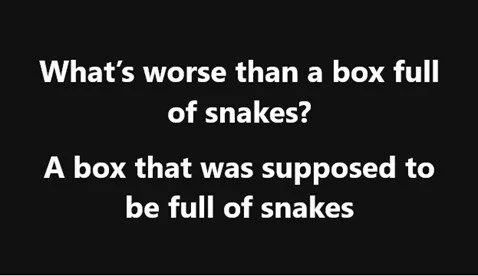
Mot: Its Not even Halloween Yet !!!!

Mot: .. What's Worse ~~~~
The 1866 Banking Collapse Nobody Knows About (But Should) | When "Too Big To Fail" Actually Failed
The 1866 Banking Collapse Nobody Knows About (But Should) | When "Too Big To Fail" Actually Failed
The Timeless Investor: 9-26-2025
The BIGGEST bank in the world collapsed in 12 hours.
Over 200 companies failed. Global markets crashed. Yet almost nobody today has heard of Black Friday 1866 - the banking disaster that created modern finance as we know it.
Overend, Gurney & Company wasn't just big. They were THE lender of last resort before central banks existed.
The 1866 Banking Collapse Nobody Knows About (But Should) | When "Too Big To Fail" Actually Failed
The Timeless Investor: 9-26-2025
The BIGGEST bank in the world collapsed in 12 hours.
Over 200 companies failed. Global markets crashed. Yet almost nobody today has heard of Black Friday 1866 - the banking disaster that created modern finance as we know it.
Overend, Gurney & Company wasn't just big. They were THE lender of last resort before central banks existed.
They were considered safer than the Bank of England itself. They'd been in business for 60 years. They had just IPO'd at 9X oversubscription. Then they collapsed in a single day.
This isn't just history - it's a WARNING. The same pattern that destroyed Overend Gurney is playing out RIGHT NOW in:
Regional banks reaching for yield Private credit funds acting like banks
Short-term debt funding long-term projects
Real estate syndicators promising liquidity on illiquid assets
Learn why Silicon Valley Bank's 12-hour collapse in 2023 was identical to Overend Gurney's fall in 1866 - and what that means for YOUR investments.
KEY TOPICS COVERED:
Shadow banking throughout history
Bank runs in the digital age Leverage + illiquid assets = death
Why boring businesses fail when they try to be exciting
The danger of "reputation lag" IPO red flags throughout history
Central banking evolution Victorian era finance
The birth of limited liability as a weapon
Seeds of Wisdom RV and Economics Updates Friday Afternoon 9-26-25
Good Afternoon Dinar Recaps,
BRICS mBridge Project: What It Is & How It Could Shift Dollar Dominance
Project mBridge signals a quietly growing infrastructure that may undercut the dollar’s power in cross-border finance, shaping the financial realignment now underway.
Good Afternoon Dinar Recaps,
BRICS mBridge Project: What It Is & How It Could Shift Dollar Dominance
Project mBridge signals a quietly growing infrastructure that may undercut the dollar’s power in cross-border finance, shaping the financial realignment now underway.
What Is Project mBridge and Its Progre
Launched in 2021, Project mBridge is a multi-central bank digital currency (CBDC) platform led by the BIS Innovation Hub, China’s Digital Currency Institute, the Central Bank of UAE, Bank of Thailand, and Hong Kong Monetary Authority; Saudi Arabia joined as full participant in June 2024. BIS, CoinDesk
As of mid-2024, the project reached its Minimum Viable Product (MVP) stage. Founding central banks have each deployed validating nodes; commercial banks are processing real-value cross-border transactions. Finance Middle East, BIS, BIS
The system uses its own blockchain (mBridge Ledger), supports wholesale CBDCs for cross-border payments, foreign exchange, and settlement with reduced reliance on intermediaries. BIS, Forbes
Key Technical & Functional Features
Real-value transactions in pilot: In 2022, commercial banks across four jurisdictions (China, Hong Kong, Thailand, UAE) conducted transactions totalling over $22 million in value, over various foreign exchange and payment operations. BIS,BIS
Governance & Legal Framework: A bespoke rulebook and legal structure has been developed to accommodate decentralized node operations, cross-jurisdiction regulation, and compliance norms. BIS
Observation & expansion: Over 30 institutions (central banks, commercial banks) are observers to mBridge. Several have expressed interest in joining or developing use cases. OMFIF, BIS, Central Banking
Risks, Uncertainties & Political Overtone
BIS’s Departure: The BIS announced in late 2024 that it would remove itself from “active participation,” not due to failure, but because it believes partner central banks are ready to carry on independently and the project has matured to that point. Reuters
Geopolitical sensitivity: Observers warn that even though BIS claims project is not designed to sidestep sanctions, its capabilities (bypassing SWIFT, enabling non-dollar settlement) make it of interest to countries seeking alternatives to Western financial hegemony. Finance Magnates, Financial Times, OMFIF
How mBridge Fits into Global Finance Restructuring
Dollar alternatives and de-dollarization: By enabling payments and settlements directly via wholesale CBDCs, mBridge helps reduce dependence on the U.S. dollar and the SWIFT network. This aligns with BRICS and other emerging economies trying to build parallel systems. Financial Times, BIS
Efficiency, cost, inclusion: Existing cross-border systems are slow, expensive, fragmented. mBridge aims to cut costs, speed up settlement, and make payments more accessible especially for countries underserved by correspondent banking. Finance Middle East, PYMNTS.com
Structural leverage: The legal, governance, and infrastructural backbone being built could become standards: which currencies, which nodes, who validates, which rules. Whoever shapes those standards gains leverage in global finance.
Why This Matters
mBridge isn’t just another fintech pilot—it represents a real shift in how cross-border value might move in the coming decade. If fully operational:
Participating countries could settle trade and finance outside of dollar dominance.
Institutions (central and commercial) would gain new infrastructure that bypasses traditional western messaging and clearing networks.
The narrative of alternatives to U.S. monetary leverage becomes more concrete, not theoretical.
This is not just politics — it’s global finance restructuring before our eyes.
@ Newshounds News™ Exclusive
Sources:
BIS: Project mBridge: connecting economies through CBDC (joint report) Bank for International Settlements
Reuters: Saudi Arabia joins BIS‐ and China-led central bank digital currency project Reuters
UAE media: CBUAE launches mBridge MVP platform for early adopters Finance Middle East
OMFIF: Central banks’ role in ring-fencing mBridge OMFIF
~~~~~~~~~
Seeds of Wisdom Team RV Currency Facts Youtube and Rumble
Newshound's News Telegram Room Link
Follow the Gold/Silver Rate COMEX
Follow Fast Facts
Seeds of Wisdom Team™ Website
Thank you Dinar Recaps
“Tidbits From TNT” Friday 9-26-2025
TNT:
Tishwash: Breakthrough Oil Export Deal in Iraqi Kurdistan: A New Dawn for Crude Flow
International oil companies in Iraqi Kurdistan have reached an agreement with Iraqi federal and Kurdish governments to resume oil exports. The framework, once signed, will allow for the export of 230,000 barrels per day through the Iraq-Turkey pipeline, suspended since March 2023. DNO and Genel Energy are yet to sign.
In a significant development, international oil companies operating in Iraqi Kurdistan have reached a preliminary deal with both the Iraqi federal and Kurdish regional governments to restart oil exports. This move comes after extensive negotiations, according to an IOC statement seen by Reuters.
TNT:
Tishwash: Breakthrough Oil Export Deal in Iraqi Kurdistan: A New Dawn for Crude Flow
International oil companies in Iraqi Kurdistan have reached an agreement with Iraqi federal and Kurdish governments to resume oil exports. The framework, once signed, will allow for the export of 230,000 barrels per day through the Iraq-Turkey pipeline, suspended since March 2023. DNO and Genel Energy are yet to sign.
In a significant development, international oil companies operating in Iraqi Kurdistan have reached a preliminary deal with both the Iraqi federal and Kurdish regional governments to restart oil exports. This move comes after extensive negotiations, according to an IOC statement seen by Reuters.
The agreed-upon framework will enable exports to resume "in the coming days" following its official signing and implementation. However, oil companies DNO and its partner Genel Energy have yet to formalize their participation, as reported by a reliable source with direct information on the matter.
The agreement, once fully executed, will facilitate the flow of approximately 230,000 barrels of crude daily through the Iraq-Turkey pipeline, a crucial artery that has been non-operational since March 2023. Efforts to reach DNO and Genel Energy for comments were not immediately successful. link
************
Tishwash: Miles Caggins: The Kurdistan Regional Government will export 230,000 barrels of oil per day.
Miles Caggins, spokesman for the Kurdistan Region's Petroleum Industry Association (APICOR), said on Thursday that today is a very important day. An agreement has been signed to resume oil exports, and the process is scheduled to begin in the next few days.
In an interview with Kurdistan 24, he added that exports are expected to begin within two or three days.
He pointed out that, according to the agreement, the Kurdistan Regional Government will export 230,000 barrels of oil per day through SOMO, while 50,000 to 60,000 barrels will be allocated for domestic consumption.
In the same context, the Kurdistan Region's Oil Industry Association (APICOR) said on Thursday that resuming oil exports from the region will contribute to strengthening global energy markets.
On the occasion of the tripartite agreement to resume exports, the association commended, in a statement, Kurdistan Regional Government Prime Minister Masrour Barzani and Federal Prime Minister Mohammed Shia al-Sudani.
APICORP emphasized that the resumption of Kurdistan Region oil exports will benefit all Iraqis and will play a role in supporting the position of global energy markets. It is expected that exports will begin within the next few days.
The Federal Ministry of Oil announced today, Thursday, an agreement stipulating the commencement of pumping and delivering all crude oil produced from the Kurdistan Region's fields, except for the quantities allocated for domestic consumption, to the State Oil Marketing Organization (SOMO), which will export it via the Iraq-Turkey pipeline via the Turkish port of Ceyhan.
The ministry indicated that the agreement was concluded in accordance with the approved legal procedures, the constitution, the provisions of the Federal General Budget Law, and Federal Court decisions.
The Ministry reiterated its unwavering commitment to managing oil resources in accordance with the principles of national sovereignty and the country's supreme interest, ensuring a fair distribution of wealth among all Iraqis, in accordance with the constitution. link
************
Tishwash: Vietnamese, Iraqi Presidents hail development of bilateral ties
President Cường affirmed that Việt Nam always treasures and wishes to strengthen multifaceted cooperation with Iraq, particularly in the areas of economy, trade, culture, tourism, and people-to-people exchanges.
Vietnamese President Lương Cường and his Iraqi counterpart Abdul Latif Rashid praised the progress of their countries’ long-standing friendship during a meeting in New York on the morning of Wednesday (local time).
The event took place on the sidelines of the High-Level General Debate of the 80th Session of the United Nations General Assembly and bilateral activities in the US.
President Cường affirmed that Việt Nam always treasures and wishes to strengthen multifaceted cooperation with Iraq, particularly in the areas of economy, trade, culture, tourism, and people-to-people exchanges.
He proposed increasing delegation exchanges, especially business missions, to explore cooperation opportunities in potential sectors and boost access to the Halal market.
He also expressed his hope that Iraq will create favourable conditions for Vietnamese enterprises to invest in areas aligned with Iraq’s reconstruction needs.
For his part, the Iraqi leader expressed admiration for Việt Nam’s achievements in national development, stressing that Iraq views Việt Nam as an important partner and wishes to advance cooperation in economy, trade, investment, water management, agriculture, and infrastructure development serving its reconstruction.
Both sides agreed to further improve the effectiveness of existing bilateral cooperation mechanisms, and consider the establishment of new ones and the signing of agreements in potential sectors.
On this occasion, the two leaders also consented to step up cooperation and mutual support at multilateral forums.
President Cường extended an invitation to President Abdul Latif Rashid to visit Việt Nam and attend the signing ceremony of the United Nations Convention against Cybercrime in Hà Nội next month. link
Mot: Now Ya Knows -- WHY!!!! ~~~~

Mot: . Give it a Try!!! -- It Might Work fer YOU Too!!!!

Iraq Economic News and Points To Ponder Friday Morning 9-26-25
Fair Distribution Of Wealth
Politics / Economy / Special Files Today| 274 After Years Of Conflict, Baghdad And Erbil Turn The Page On Oil Disputes With A Comprehensive Agreement. What Next? - Urgent
Baghdad Today – Baghdad After more than 18 years of disputes over the oil file between Baghdad and Erbil, Prime Minister Mohammed Shia al-Sudani and Kurdistan Regional Government (KRG) President Masrour Barzani announced a historic agreement under which the federal Ministry of Oil will hand over full control of the region's exports to the federal Ministry of Oil, which will be exported through the State Oil Marketing Organization (SOMO)
Fair Distribution Of Wealth
Politics / Economy / Special Files Today| 274 After Years Of Conflict, Baghdad And Erbil Turn The Page On Oil Disputes With A Comprehensive Agreement. What Next? - Urgent
Baghdad Today – Baghdad After more than 18 years of disputes over the oil file between Baghdad and Erbil, Prime Minister Mohammed Shia al-Sudani and Kurdistan Regional Government (KRG) President Masrour Barzani announced a historic agreement under which the federal Ministry of Oil will hand over full control of the region's exports to the federal Ministry of Oil, which will be exported through the State Oil Marketing Organization (SOMO).
This announcement, described by al-Sudani as a long-awaited achievement and by Barzani as a historic step that will restore the region to global markets, sparked widespread reactions, with experts viewing it as a fundamental shift in the management of national wealth and a reshaping of the relationship between the central government and the region.
Oil and economic expert Ahmed Askar told Baghdad Today, "The announcement of a historic agreement between the federal government in Baghdad and the Kurdistan Regional Government regarding the transfer of the region's oil exports to the federal Ministry of Oil represents a fundamental shift in the management of national wealth."
According to economic analysis, the agreement goes beyond regulating the export mechanism, but also lays the foundation for a long-term partnership between Baghdad and Erbil based on the constitution and applicable laws.
Prime Minister Mohammed Shia al-Sudani described the agreement in a tweet on Twitter as an achievement Iraq has been waiting for for 18 years, emphasizing that it includes "the fair distribution of wealth, diversification of export outlets, and investment encouragement."
He emphasized that it opens the door to a new phase of unified oil decision-making and increased federal revenues.
For his part, Kurdistan Regional Government Prime Minister Masrour Barzani affirmed that the agreement is a "historic step" that removes one of the most significant obstacles to securing financial dues for the people of Kurdistan. He noted that it restores the region to global markets and emphasizes the need to adhere to constitutional rights.
These statements reflected a rare consensus in rhetoric between Baghdad and Erbil on an issue that has remained a symbol of chronic disagreements for years.
Askar explained that "this agreement opens the door to addressing one of the most complex issues that have remained unresolved for many years between the central government and the region, and establishes a new phase of cooperation based on the constitution and applicable laws, ensuring a fair distribution of revenues and protecting the rights of all Iraqis."
Historically, Kurdish oil has been a source of conflict since 2005, with the region insisting on its right to export independently via Turkey, while Baghdad rejected this route as an encroachment on the central government's authority. The 2023 international arbitration ruling to halt exports via Ankara constituted a major pressure point that prompted the acceleration of negotiations that led to the current agreement.
Askar added, "Unifying oil policy will contribute to strengthening financial and economic stability, increasing Iraq's negotiating power in global markets, and enhancing trust between Baghdad and Erbil, which will positively impact the investment environment and the national economy in general."
Research estimates indicate that the absence of a unified position has cost Iraq significant losses in its negotiating power with international partners, while the current agreement opens the door to an Iraq better able to attract investment and ensure longer-term financial stability.
However, Askar stressed at the same time that "the serious and transparent implementation of this agreement will be the true measure of its success.
This requires strong political will and careful professional oversight to ensure that oil resources are a tool for state-building, not a source of renewed controversy." Comparative experience shows that any oil agreement of this type remains at risk of failure unless it is implemented with high professionalism and protected from political manipulation.
It becomes clear that the recent oil agreement between Baghdad and Erbil is no longer merely a technical settlement, but rather a political and institutional transformation that reorganizes the relationship along constitutional lines and establishes a long-awaited national oil partnership.
Statements by al-Sudani and Barzani confirmed that the political will is present, but the real challenge lies in transparent implementation and ensuring the equitable distribution of wealth. If the experiment succeeds, the agreement could mark the beginning of a new phase of economic and political stability in Iraq.
However, if it falters, the issue will return to the cycle of disputes that have plagued the country since 2005. Source: Baghdad Today + Agencies https://baghdadtoday.news/283931-.html
Al-Sudani's Advisor: Iraq Is Experiencing A Rare "Price Boom" In Its Modern Economic History.
Energy and Business Shafaq News – Baghdad The Prime Minister's financial advisor, Mazhar Mohammed Salih, revealed on Thursday that Iraq is experiencing a rare "price boom" unprecedented in its modern economic history. This boom is driven by low inflation rates, a remarkably stable exchange rate, and improved unemployment rates, all due to effective coordination between monetary, fiscal, and trade policies.
Saleh told Shafaq News Agency, "The inflation rate in Iraq has remained below 3% over the past three years, which is a low rate compared to what the country has experienced previously or what neighboring countries are witnessing."
The government advisor attributed this success to "the cautious monetary policy pursued by the Central Bank of Iraq, in coordination with fiscal and trade policies, which contributed to maintaining the purchasing power of the dinar."
He explained that "unemployment rates fell from 17% to 14% in a relatively short period, supported by economic policies aimed at stimulating the agriculture, investment, and trade sectors, while supporting local production played a direct role in creating new job opportunities."
Regarding the dollar exchange rate, Saleh explained that "the official rate of 1,320 dinars has maintained its stability, which has helped calm markets and limit the role of the parallel market, thereby reducing import costs and limiting price pressures on consumers."
He stressed that "fiscal policy played a pivotal role in controlling prices, with approximately 25% of the general budget (equivalent to 13% of GDP) allocated to support agricultural products, the food and medicine basket, fuel, and electricity, in addition to tax and customs exemptions, which eased the direct burden on citizens."
Within the framework of trade policy, Saleh pointed to the establishment of a network of cooperative-price stores (consumer and construction) that would help break monopolies and provide direct alternatives for goods, as part of what he described as "price defense," an effective tool for regulating markets and preventing unjustified price increases, according to the spokesman.
Despite the positive signs, the financial advisor warned of a potential challenge at this stage: "Commodity leakage across borders, due to price differences between the subsidized Iraqi market and neighboring markets. This requires tightening customs and trade controls without harming legitimate trade."
Saleh concluded that "the current 'price boom' Iraq is witnessing, a rare phenomenon in its modern economic history, must be built upon by rationalizing support and directing it toward productive sectors to achieve sustainable development, rather than relying solely on stability and consumption." LINK
For current and reliable Iraqi news please visit: https://www.bondladyscorner.com
Seeds of Wisdom RV and Economics Updates Friday Morning 9-26-25
Good Morning Dinar Recaps,
Trump Draws Line: No West Bank Annexation for Israel
Trump’s rejection of annexation signals both geopolitical pressure and financial recalibration, tying peace to the foundations of global restructuring.
Trump’s Firm Declaration
U.S. President Donald Trump delivered a clear message on September 25, 2025: he would not permit Israel to annex the West Bank, defying the demands of far-right members of Israeli Prime Minister Benjamin Netanyahu’s coalition.
Good Morning Dinar Recaps,
Trump Draws Line: No West Bank Annexation for Israel
Trump’s rejection of annexation signals both geopolitical pressure and financial recalibration, tying peace to the foundations of global restructuring.
Trump’s Firm Declaration
U.S. President Donald Trump delivered a clear message on September 25, 2025: he would not permit Israel to annex the West Bank, defying the demands of far-right members of Israeli Prime Minister Benjamin Netanyahu’s coalition.
“Not going to happen” — From the Oval Office, Trump stated: “I will not allow Israel to annex the West Bank. Nope, I will not allow it. It’s not going to happen.” [Reuters]
“Time to stop now” — He added: “There’s been enough. It’s time to stop now.”
This puts Trump directly at odds with Netanyahu’s coalition, where annexation has become a rallying cry — especially following recent moves by France and other Western countries to recognize a Palestinian state [NYT].
Context and Regional Pressure
Arab leaders’ influence: Trump’s declaration followed private assurances he made to Arab and Muslim leaders on the sidelines of the United Nations General Assembly. Officials reportedly warned that annexation would jeopardize regional stability and block future integration with Israel [Politico].
International Court of Justice: In July 2024, the ICJ ruled Israeli settlements in the West Bank illegal, increasing global legal and diplomatic pressure on Israel.
U.S. leverage: As Israel’s closest ally, the U.S. remains one of the only nations with real leverage to block annexation. Observers question, however, whether Trump’s stance will remain firm [Al Jazeera].
Strategic Calculations
Netanyahu’s bind: Netanyahu must balance between his far-right coalition partners demanding annexation and the U.S. position that firmly blocks it.
Trump’s peace agenda: This statement aligns with Trump’s push for a 21-point regional peace plan to end the war in Gaza and establish a framework for postwar governance.
Signal to financial reset watchers: Just as Jim Pugh recently noted in reset discussions — peace is the “long pole in the tent” before financial restructuring can move forward — Trump’s rejection of annexation is not just political. It is about creating the geopolitical stability required for economic and monetary realignment.
Why This Matters
Trump’s decision highlights how geopolitics and financial restructuring are inseparably linked:
Peace as a prerequisite: Blocking annexation is part of ensuring the region moves toward peace treaties — which reset analysts say are essential before any global monetary reset can proceed.
Regional integration = trade flows: If Israel can stabilize ties with Arab neighbors, trade, investment, and resource allocation in the Middle East become more predictable — a necessary step for capital flows in a tokenized, asset-backed system.
Dollar leverage at work: The U.S. is using political influence to maintain its strategic foothold in the Middle East, reinforcing the dollar’s role as tokenization and stablecoin regulation advance globally.
“This is not just politics — it’s global finance restructuring before our eyes.”
@ Newshounds News™ Exclusive
Source: Reuters, New York Times, Politico, Al Jazeera
~~~~~~~~~
Trump–Erdogan Talks: Turkey at the Center of Sanctions, Oil, and Global Realignment
The White House meeting underscored how U.S.–Turkey relations intersect energy security, defense sales, and the financial restructuring now reshaping global power.
Sanctions Relief and F-35s Back on the Table
President Donald Trump and Turkish President Recep Tayyip Erdogan met in Washington on September 25, 2025, marking Erdogan’s first White House visit in six years. Trump suggested he may lift U.S. sanctions on Turkey “almost immediately” if Ankara halts Russian oil purchases, paving the way for Turkey’s potential re-entry into the F-35 fighter jet program. Reuters
The move represents a sharp reversal of earlier policy, where Turkey was expelled in 2019 after acquiring Russian S-400 missile systems. Erdogan framed the meeting as “conclusive,” while Trump indicated that Ankara could soon access advanced U.S. defense hardware once again. Politics Today
Russian Oil Purchases at the Core
At the heart of the talks was Turkey’s role as one of the largest buyers of Russian energy. Trump pressed Erdogan to cut these imports, presenting it as a way to undermine Moscow’s war financing while simultaneously strengthening U.S.–Turkey ties.
Although Turkey recently inked a 20-year LNG deal with U.S. supplier Mercuria, it remains heavily reliant on Russian oil and gas. Erdogan’s willingness to diversify reflects the strategic balancing act between East and West. Atlantic Council
Middle East, Syria, and Gaza as Leverage Points
Beyond oil and defense, Trump and Erdogan also discussed conflicts in Syria and Gaza, with Trump signaling that Erdogan could serve as an intermediary in Ukraine peace efforts. Both leaders emphasized their renewed alignment on Syria, reversing tensions from earlier years. Brookings
Why This Matters: Energy and Finance Intertwined
Turkey’s position illustrates how geopolitical bargaining over oil, arms, and sanctions is directly shaping the global financial restructuring. Ankara’s choices ripple through:
Dollar hegemony – Will Turkey pivot toward U.S. LNG and defense deals, reinforcing Washington’s influence?
BRICS alternatives – Or will Turkey hedge by maintaining Russian oil ties, deepening its energy and trade links with Eurasian powers?
This episode highlights the fragility of U.S. dominance and how energy flows, sanctions relief, and military sales are becoming financial levers in the global order.
This is not just politics — it’s global finance restructuring before our eyes.
@ Newshounds News™ Exclusive
Sources: Reuters, Atlantic Council, Brookings, Politics Today, U.S. News
~~~~~~~~~
Trump and Pakistan: A Strategic Reset at the Edge of Energy and Finance
Trump’s outreach to Islamabad signals a deeper recalibration: holding Pakistan in the balance between dollar-based alliances and emerging non-Western financial orders.
Sharif’s White House Visit and U.S.–Pakistan Rapprochement
President Donald Trump hosted Pakistani Prime Minister Shehbaz Sharif at the White House on September 25, 2025, marking a thaw in U.S.–Pakistan relations. The meeting underscored Washington’s renewed interest in Pakistan’s strategic value. AP News, Reuters
Sharif used the visit to pitch American investment in key sectors—energy, agriculture, tech, and mining—inviting U.S. firms to tap Pakistan’s untapped potential. Reuters, The Indian Express
Energy Deals & Export Leverage
A major opportunity lies in energy and resource diplomacy. Islamabad has long relied on oil imports and external financing, making it vulnerable to leverage.
Pakistan struck a landmark trade deal with the U.S. in July 2025 to develop its oil reserves and reduce tariffs, aligning Islamabad more closely with U.S. energy interests. AP News
During his visit, Sharif emphasized both energy and mining as pillars for renewed U.S.-led investment. AP News, Al Jazeera, Indiatimes
Crucially, on September 8, Islamabad signed memoranda of understanding (MoUs) with a U.S.-based firm to develop critical minerals and rare earth elements, framed as strategic assets for both parties. Al Jazeera
These steps suggest Pakistan is repositioning itself from being a resource consumer to a supplier in the U.S.-influenced global resource network—altering the flow of capital, energy, and leverage.
Defense, Security & Regional Mediation
The Trump–Sharif meeting also addressed security cooperation and regional mediation:
They discussed counterterrorism and security alignment, reinforcing Pakistan’s role as a regional partner. AP News
Sharif praised Trump’s mediation during recent India–Pakistan tensions and invited the U.S. to play a bigger diplomatic role in South Asia. AP News, AP News
Importantly, Pakistan may leverage its strategic weight in the Middle East and South Asia, offering Turkey-like potential as a mediator in Gaza, Syria, and the Indo-Pacific.
This engagement signals a shift: diplomatic influence is being balanced with resource and financial alignment, not just military dependence.
Between Dollar and De-Dollarization
Where Pakistan sets itself in this moment may determine its financial trajectory:
If Islamabad doubles down on U.S. energy, defense, and resource deals, it re-enters the dollar-aligned orbit with renewed leverage from Washington.
But the push to develop critical minerals and rare earths hints at an alternate path: integrate into non-dollar, resource-backed networks leveraged by China, Russia, or BRICS actors.
Pakistan’s pivot can influence whether it becomes a node in the new financial infrastructure emerging outside U.S. hegemony.
This choice is not just economic—it is deeply financial.
Why This Matters
The Trump–Pakistan meeting is more than diplomacy. It is a move in an evolving global chessboard where energy, security, and finance intertwine. Islamabad’s alignment might tip the balance between:
Reinforcing U.S.-led global financial structures
Or accelerating a transition toward a multipolar, resource-backed order
This is not just politics — it’s global finance restructuring before our eyes.
@ Newshounds News™ Exclusive
Sources: Reuters, AP News, Al Jazeera, Wikipedia, Indiatimes
~~~~~~~~~
CFTC Moves to Allow Stablecoins as Collateral in U.S. Derivatives Markets
With the CFTC embracing stablecoins and tokenized collateral, U.S. policy is shifting toward integrating crypto into core financial plumbing, reshaping how value is stored, settled, and regulated globally.
The Initiative: What’s Changing
The CFTC has officially launched an initiative to allow tokenized collateral (including stablecoins like USDC and Tether) for derivatives trading. CFTC
Acting Chair Caroline Pham invited public feedback, with comments open until October 20, 2025. CFTC
This builds on prior CFTC efforts—the Crypto CEO Forum, the Global Markets Advisory Committee’s (GMAC) Digital Asset Markets Subcommittee, and the President’s Working Group on Digital Asset Markets recommendations. CFTC, Cointelegraph
Key Elements & Stakeholder Reactions
Under the proposal, stablecoins and tokenized assets could be treated similarly to cash or U.S. Treasuries when used as collateral. Cointelegraph
Industry players — including Circle, Coinbase, Ripple, Crypto.com — praised the move. They argue that stablecoin collateral will lower costs, reduce risk, and unlock liquidity in derivative markets. Cointelegraph
The push complements recently passed legislation (GENIUS Act) which regulates stablecoins and lays groundwork for their broader use in regulated financial systems. Cointelegraph
Implications:How This Fits Into Global Finance Restructuring
Efficiency & Capital Utilization — Allowing stablecoins as collateral means firms and market participants can use digital assets to free up liquidity. This could redefine margin practices, reduce friction, and shift how capital is allocated internationally.
Regulatory Recognition of Crypto’s Role — The CFTC’s move signals that stablecoins are not seen merely as speculative assets but now as infrastructural elements of finance. This adds legitimacy and encourages cross-border usage in trade, clearing, and settlement.
Competition with Alternative Financial Systems — As BRICS and other nations build out non-dollar, commodity-backed, or gold-backed systems, U.S. acceptance of tokenized collateral strengthens the dollar/crypto hybrid model. It’s part of the tug-of-war over who sets standards for global finance.
Risk & Oversight Challenges — With greater integration comes greater risk exposure: valuation, reserve backing, custody, settlement, governance of these stablecoins must be regulated tightly. Otherwise, financial stability could be compromised.
Why This Matters
This initiative by the CFTC isn’t just technical policy—it reflects a turning point. The financial order is evolving: derivatives markets may soon operate on rails that accept digital collateral; stablecoins may serve core functions in financial infrastructure; regulation is catching up to innovation.
This is not just politics — it’s global finance restructuring before our eyes.
@ Newshounds News™ Exclusive
Sources: CFTC, CoinDesk, Cointelegraph, pymnts.com
~~~~~~~~~
Seeds of Wisdom Team RV Currency Facts Youtube and Rumble
Newshound's News Telegram Room Link
Follow the Gold/Silver Rate COMEX
Follow Fast Facts
Seeds of Wisdom Team™ Website
Thank you Dinar Recaps
Iraq Economic News and Points To Ponder Thursday Evening 9-25-25
Inflation Balance
Abdul Zahra Muhammad Al-Hindawi Data released by the Ministry of Planning and the Central Bank of Iraq indicate a decline in inflation rates in Iraq, both monthly and annually. Experts and economic specialists differ on the interpretation of this decline, with some viewing it as a negative indicator and others considering it a positive sign that can be built upon.
Inflation Balance
Abdul Zahra Muhammad Al-Hindawi Data released by the Ministry of Planning and the Central Bank of Iraq indicate a decline in inflation rates in Iraq, both monthly and annually. Experts and economic specialists differ on the interpretation of this decline, with some viewing it as a negative indicator and others considering it a positive sign that can be built upon.
The first group argues that a decline in inflation does not necessarily reflect a real improvement in the economic situation, but rather indicates a state of contraction and stagnation, particularly given the continued weakness of non-oil activities. Accordingly, in their view, this decline is not based on a solid production base, and its results may be limited or temporary.
The second group—and I find myself closer to this view, without claiming to be an expert or specialist—considers that the decline in inflation rates is an encouraging sign, reflecting a number of positive indicators, including the clear improvement in the value of the Iraqi dinar in recent months.
This improvement has contributed to strengthening public confidence in the national currency, reducing the tendency to acquire the dollar or gold as safe havens, and even encouraging what might be called "positive savings."
From a societal perspective, price stability, particularly for basic food commodities, sends a reassuring message to citizens and reduces their consumer concerns. Consumers are no longer forced to hoard food at home, as was the case in previous years, as its availability is now guaranteed, whether through the ration card or through imports directly linked to the official dollar exchange rate through the Central Bank's platform, independent of fluctuations in the parallel exchange rate.
Moreover, this stability in inflation rates carries an important message for investors: Iraq's economic environment is moving toward greater security, which could encourage increased investment and, consequently, stimulate the economic cycle. Conversely, this stability provides fiscal and monetary authorities with greater scope to formulate economic policies that align with development requirements and growth aspirations across various sectors.
Ultimately, Iraq's "inflation balance," despite its varying readings, reflects the fact that the number alone is insufficient to understand the economic landscape. What's more important, however, is the significance and implications it conveys, related to confidence, stability, and growth opportunities.
If these indicators continue, Iraq will have a real opportunity to establish a more balanced economic environment that reassures citizens, entices investors, and supports decision-makers https://alsabaah.iq/121017-.html
An Integrated Digital Economy In Iraq Next Year
Baghdad: Morning The Prime Minister's financial and economic advisor, Mazhar Mohammed Salih, stressed the importance of the Central Bank of Iraq's announcement that cash payments will be phased out in all government institutions and other facilities in July 2026.
The Central Bank made a statement reported by Al-Sabah newspaper the day before yesterday, confirming the farewell to paper transactions in July of next year.
In a press interview, Saleh said that Iraq's farewell to cash payments in 2026 represents a major strategic step toward building an integrated digital economy that reduces corruption, enhances transparency, and encourages financial inclusion.
This shift will not simply represent a change in payment methods, but rather the beginning of a new era of financial modernity in the country.
Saleh believes that, in terms of fiscal policy, this shift will facilitate total government payments, including salaries, pensions, loans, and support, as well as the collection of wages, fees, and government taxes through faster and more accurate digital channels, all of which will enhance the liquidity and governance of the general budget.
Saleh added that this step strengthens the unified treasury account and the cash flow account for public finances, reducing the chances of emergency government borrowing. Regarding monetary policy, it strengthens the close monitoring of capital flows, giving the central bank better tools to control inflation rates and liquidity simultaneously.
The advisor pointed out that this shift will encourage citizens to embrace a culture of electronic payments and encourage unbanked individuals to join the banking system, expanding the financial customer base, expanding the scope of financial inclusion and reducing the cost of cash transactions.
Economist: The Central Bank Of Iraq's Gold Reserves Have Risen To 24 Trillion Dinars.
Wednesday, September 24, 2025 | Economic Number of readings: 371 Baghdad / NINA / Economic expert, Manar Al-Obaidi, announced today, Wednesday, that the gold reserves of the Central Bank of Iraq reached more than 24 trillion dinars,an annual increase of 13.3% andan increase of 135% compared to 2022.
Al-Obaidi said in a statement that the Central Bank's gold reserves amounted to 20% of the Central Bank's total reserves,which amounted to 123 trillion Iraqi dinars.
He explained that this value is considered a record and the first time that Iraq has reached it since the establishment of the Central Bank of Iraq, asgold reserves have not exceeded the 20 trillion dinar barrier throughout the Central Bank of Iraq's operation.
This is the first time that the contribution of gold to reserves has exceeded 20% of total reserves. He stressed that the arrival of gold reserves to this level enhances the strength and value of the Iraqi dinar, especially with the fluctuations occurring in various global currencies, including the dollar.
Therefore, the Central Bank of Iraq sought to increase the percentage of its gold reserves,which is considered a safety factor in light of international financial fluctuations. https://ninanews.com/Website/News/Details?key=1253445
For current and reliable Iraqi news please visit: https://www.bondladyscorner.com
Seeds of Wisdom RV and Economics Updates Thursday Afternoon 9-25-25
Good Afternoon Dinar Recaps,
Pakistan and Vietnam Push Toward Preferential Trade Agreement
Islamabad and Hanoi are strengthening ties with a planned Preferential Trade Agreement (PTA) that could lift bilateral trade from under $1 billion to a $5 billion target.
Deepening Bilateral Relations
Pakistan and Vietnam have shared friendly diplomatic and trade ties since 1972, but relations have accelerated since the 2000s under Pakistan’s Vision East Asia strategy.
Good Afternoon Dinar Recaps,
Pakistan and Vietnam Push Toward Preferential Trade Agreement
Islamabad and Hanoi are strengthening ties with a planned Preferential Trade Agreement (PTA) that could lift bilateral trade from under $1 billion to a $5 billion target.
Deepening Bilateral Relations
Pakistan and Vietnam have shared friendly diplomatic and trade ties since 1972, but relations have accelerated since the 2000s under Pakistan’s Vision East Asia strategy.
Pakistan reopened its embassy in Hanoi in 2000; Vietnam followed with embassies and trade offices in Pakistan by 2005.
Leaders from both nations have exchanged visits, underscoring growing political and economic alignment.
Today, both countries are focused on expanding trade, investment, and security cooperation.
Vietnamese Ambassador Pham Anh Tuan recently emphasized at the Lahore Chamber of Commerce and Industry:
“Vietnam has the strong will to expand bilateral trade and ensure all possible support.”
Trade Potential and Strategic Leverage
Bilateral trade stood at $850 million in 2024 and is expected to cross $1 billion this year. But with the PTA, both sides aim for $5 billion in trade flows — a massive leap.
Pakistan’s exports: textiles, raw cotton, pharmaceuticals, leather, corn, and agricultural goods.
Vietnam’s exports: electronics, man-made filaments, coffee, tea, and spices.
Pakistan’s Special Investment Facilitation Council (SIFC) is pushing to attract foreign investors, while Vietnam is inviting Pakistani capital in manufacturing and technology.
Trump’s tariffs have reshaped global trade, and both Pakistan and Vietnam are leveraging U.S. protectionism to diversify partners and strengthen their resilience.
Mutual Advantages and Shared Growth
The PTA will help both nations address structural economic challenges while building synergies.
Pakistan brings low-cost labor, natural resources, and a growing export base.
Vietnam offers industrial expertise, rapid manufacturing, and global market access.
Cooperation ensures mutual gains while reducing over-reliance on Western markets.
This expansion is framed not as an alliance against others, but as a peaceful strategy to raise living standards, reduce poverty, and stabilize regional economies.
Why This Matters
The Pakistan–Vietnam PTA reflects the larger multipolar trend in global trade, where nations are building parallel economic frameworks outside U.S.-dominated supply chains.
For Pakistan, this is part of its “Vision East Asia” pivot — deepening links with ASEAN economies.
For Vietnam, the PTA represents diversification after U.S. tariffs destabilized export routes.
Together, both countries are embedding themselves into a BRICS–ASEAN economic corridor, connecting South Asia and Southeast Asia in ways that bypass traditional Western-controlled trade hubs.
This is not just politics — it’s global finance restructuring before our eyes.
@ Newshounds News™
Source: Modern Diplomacy
~~~~~~~~~
BRICS Startup Summit Links Russia and China for Global Growth
The Moscow summit from October 1–2 connects BRICS startups with over 600 investors, strengthening cross-border tech and financial networks between Russia and China.
Chinese Market Access for Russian Startups
Russia’s startups are gaining direct entry into China’s vast technology and investment markets, with AI and robotics emerging as key focus areas.
China is offering over $20 billion in subsidies for robotics and AI in 2024.
Russian startups can now tap into these funds and scale across one of the world’s largest consumer markets.
China consistently ranks third globally for venture capital, alongside the U.S. and U.K.
As Sberbank’s Alexander Vedyakhin explained:
“China is undoubtedly a very attractive market for startups, bringing them unique opportunities for scaling and developing tech businesses.”
Venture Capital Recovery Boosts BRICS
The global VC market has stabilized after pandemic shocks, creating a more supportive environment for BRICS startups.
VC funding peaked at $643 billion in 2021, halved in 2023, but recovered to $330 billion in 2024.
Early 2025 showed 25% year-on-year growth, with AI as the dominant investment category.
Nearly one-third of all VC funding in 2024 flowed into AI startups, with sectoral investment up 80%.
This trend reinforces BRICS’ focus on tech multipolarity, where capital flows matter as much as deal volumes.
AI and Innovation Lead the Agenda
The Moscow summit places generative AI at the center, aligning Russian innovation with China’s state-backed industrial strategy.
Over 150 speakers and a dedicated tech exhibition highlight both startup and corporate solutions.
AI-focused startups will receive pilot project proposals and cross-border investment offers.
Sberbank’s Sber500 accelerator program already reflects this pivot: 13% of its startups chose China for overseas expansion.
Vedyakhin summed up the momentum:
“Our agenda includes tangible mechanisms — startups will receive pilot project proposals and investment offers; corporations and investors will connect with promising projects.”
Why This Matters
This summit is about more than startup growth — it is BRICS building an alternative tech-finance axis outside of Western capital markets.
By combining Russia’s innovation base with China’s capital and subsidies, BRICS strengthens its position in both technology and finance.
Venture capital recovery and state-backed AI funding mean BRICS can divert global capital flows into their own innovation ecosystems.
The event highlights the multipolar shift, where startups and financial networks are no longer dependent on Silicon Valley or Western venture firms.
This is not just politics — it’s global finance restructuring before our eyes.
@ Newshounds News™
Source: Watcher.Guru
~~~~~~~~~
Seeds of Wisdom Team RV Currency Facts Youtube and Rumble
Newshound's News Telegram Room Link
Follow the Gold/Silver Rate COMEX
Follow Fast Facts
Seeds of Wisdom Team™ Website
Thank you Dinar Recaps
MilitiaMan and Crew: IQD News Update-Global Investment-A Ground Swell of Capital
MilitiaMan and Crew: IQD News Update-Global Investment-A Ground Swell of Capital
9-25-2025
The Crew: Samson, PompeyPeter, Petra, Daytrader, Sunkissed, GIGI and Militia Man
Follow MM on X == https://x.com/Slashn
Be sure to listen to full video for all the news……..
MilitiaMan and Crew: IQD News Update-Global Investment-A Ground Swell of Capital
9-25-2025
The Crew: Samson, PompeyPeter, Petra, Daytrader, Sunkissed, GIGI and Militia Man
Follow MM on X == https://x.com/Slashn
Be sure to listen to full video for all the news……..
Seeds of Wisdom RV and Economics Updates Thursday Morning 9-25-25
Good Morning Dinar Recaps,
China’s Expanding Global Role: From Gold Custodian to Diplomatic Arbiter
As the West falters, Beijing seizes opportunities across finance, diplomacy, trade, and military presence—recasting the global balance of power.
China and Palestine: A Diplomatic Counterweight
China has seized on growing discontent with Israel’s war on Gaza to amplify its call for a two-state solution. By supporting recognition of Palestinian statehood, Beijing positions itself as a responsible mediator, contrasting itself with Washington’s veto power at the UN.
Good Morning Dinar Recaps,
China’s Expanding Global Role: From Gold Custodian to Diplomatic Arbiter
As the West falters, Beijing seizes opportunities across finance, diplomacy, trade, and military presence—recasting the global balance of power.
China and Palestine: A Diplomatic Counterweight
China has seized on growing discontent with Israel’s war on Gaza to amplify its call for a two-state solution. By supporting recognition of Palestinian statehood, Beijing positions itself as a responsible mediator, contrasting itself with Washington’s veto power at the UN.
This alignment with global frustration over U.S. inaction underscores China’s ability to leverage soft power when Western credibility erodes.
China’s Gold Ambitions: Custodian of Reserves
The People’s Bank of China is moving to store foreign sovereign gold reserves within its borders, a clear attempt to weaken reliance on Western financial centers. With one of the world’s largest stockpiles already, China’s pitch to “friendlier nations” signals both a hedge against the dollar and a way to anchor trust in the yuan. Gold accumulation becomes not just economic policy, but a geopolitical tool.
Naval Diplomacy in the Pacific
Beijing’s hospital ship, Silk Road Ark, has been deployed across the Pacific islands, offering humanitarian aid while also projecting China’s growing military reach. This mirrors U.S. naval missions, turning small Pacific nations into strategic stages for influence. Where Washington emphasizes deterrence, Beijing presents a softer face—but the outcome is the same: embedded presence in contested waters.
Repairing Trade With Canada
Even as Washington pressures allies to maintain a hard line on China, Canada and Beijing are quietly working to resolve tariff disputes. Constructive talks on agriculture, EVs, and steel show how economic pragmatism can override U.S. strategic demands. If Canada restores canola exports and deepens ties, it could embolden other U.S. allies to carve out independent policies with China.
Why This Matters
These stories form a coherent picture: China is not simply reacting to Western power, but actively building an alternative system across multiple domains—financial (gold), diplomatic (Palestine), military (Pacific), and trade (Canada). Each move chips away at U.S. dominance and invites others to hedge against Western control.
This is not just politics — it’s global finance restructuring before our eyes.
@ Newshounds News™ Exclusive
Source: Modern Diplomacy, Daily Hodl, Newsweek, Modern Diplomacy, Reuters
~~~~~~~~~
India Emerges as Crypto Powerhouse: Scale, Security, and the Future of Finance
India dominates global crypto volumes while tightening cybersecurity rules — positioning itself as both a leader in adoption and a standard-setter for digital finance.
India Leads in Crypto Adoption
According to the 2025 Chainalysis Geography of Cryptocurrency Report, India is now the undisputed leader in global crypto adoption. Ranked number one across multiple indices, India has become the top on-chain transaction market in Asia-Pacific — outpacing not just regional neighbors but also North America in several metrics.
Monthly transaction volumes in APAC surged from $81 billion in mid-2022 to over $244 billion by late 2024, with India capturing the lion’s share. Alongside India, Japan’s rapid growth in stablecoins and XRP trading reflects how Asia is reshaping the center of crypto gravity.
India’s crypto ecosystem is no longer just fast-growing — it’s complex, diverse, and central to global flows.
Cybersecurity Crackdown: Building Trust Through Compliance
But India isn’t only scaling volumes. Facing a wave of cyber frauds, New Delhi has mandated that all digital asset exchanges undergo strict cybersecurity audits conducted by government-approved firms.
Without certification, exchanges cannot register with the Financial Intelligence Unit (FIU) — making the audits a prerequisite for legal operation. International players like Coinbase, Binance, and KuCoin have already complied, with some paying hefty fines to remain in the Indian market.
Though compliance costs will rise, the mandate is expected to enhance institutional confidence, protect retail investors, and bring Indian platforms in line with global best practices. The reforms underscore India’s ambition to match its scale in crypto adoption with credibility and resilience.
Global Implications
India’s dual strategy — mass adoption paired with regulatory hardening — shows how emerging economies can leapfrog into leadership positions in digital finance. By combining scale with structure, India is not just participating in crypto’s rise but shaping the standards by which global digital assets will operate.
This positions India as a potential anchor in the post-dollar financial system, aligning with the broader shift where BRICS nations and other emerging markets are rewriting the rules of trade, payments, and currency flows.
Why This Matters
India’s rise demonstrates how financial power is no longer confined to Wall Street or Western banks. From on-chain transaction dominance to mandatory cybersecurity frameworks, India is asserting itself as both a crypto giant and a regulator of consequence.
This is not just politics — it’s global finance restructuring before our eyes.
@ Newshounds News™ Exclusive
Source: Bitcoin.com, Coingeek
~~~~~~~~~
Australia Moves to Rein in Crypto Exchanges with New Licensing Laws
Canberra’s proposed legislation signals a decisive shift in how digital assets will be regulated, bringing crypto under the same framework as traditional financial services.
New Regulatory Framework
Australia has released draft legislation that would require crypto exchanges and custody providers to hold an Australian Financial Services License (AFSL), aligning them with the broader financial services sector.
Two new categories of financial products would be created: Digital Asset Platforms (DAPs) and Tokenized Custody Platforms (TCPs).
These platforms would fall under the Corporations Act 2001, extending the same obligations that already apply to portfolio operators and other intermediaries.
Oversight would shift to the Australian Securities and Investments Commission (ASIC), centralizing authority over licensing and compliance.
Why Now?
Failures of global and domestic crypto platforms have exposed consumers to major losses, particularly where client assets were pooled without adequate safeguards. Assistant Treasurer Daniel Mulino described the draft as “the cornerstone of our digital asset roadmap,” aimed at both legitimizing responsible operators and shutting out bad actors.
Key Features of the Draft Law
Consumer Protection: Standards for custody, settlement, wrapped tokens, staking, and token infrastructure.
Exemptions: “Low-risk” platforms holding less than AU$5,000 (~$3,300) per customer and facilitating under AU$10 million (~$6.6 million) annually will be exempt.
Penalties: Breaches could trigger fines of up to AU$16.5 million ($10.8 million), or 10% of annual turnover.
Stablecoins: In parallel, ASIC announced exemptions for licensed intermediaries distributing stablecoins, avoiding regulatory bottlenecks in this critical area.
Industry Response
Australia’s largest exchanges, including Swyftx, Kraken, OKX, and Crypto.com, broadly welcomed the proposal. Leaders stressed the importance of high standards and regulatory clarity, while warning against a “one-size-fits-all” approach that could disadvantage smaller innovators.
Jason Titman, CEO of Swyftx, said: “I don’t think our industry should be frightened of high standards… this looks like the government is balancing consumer protections and innovation in a sensible way.”
Geopolitical & Financial Implications
Australia’s move places it among jurisdictions — including Japan, the EU, and Brazil — advancing regulated, asset-backed digital finance. This isn’t just domestic reform: it positions Australia within the emerging global reset toward digital and tokenized financial infrastructure.
By binding crypto platforms to the same standards as banks and financial institutions, Australia reinforces the broader trend of transitioning to regulated, asset-backed systems that could form the backbone of a global currency reset.
Why This Matters
Australia’s digital asset law reflects a larger global alignment: nations are steadily integrating crypto into regulated financial systems as part of preparing for a shift toward tokenized, asset-backed currencies.
This is not just politics — it’s global finance restructuring before our eyes.
@ Newshounds News™ Exclusive
Sources: Cointelegraph, The Block
~~~~~~~~~
Seeds of Wisdom Team RV Currency Facts Youtube and Rumble
Newshound's News Telegram Room Link
Follow the Gold/Silver Rate COMEX
Follow Fast Facts
Seeds of Wisdom Team™ Website
Thank you Dinar Recaps