
Seeds of Wisdom RV and Economic Updates Saturday Afternoon 9-13-25
Good Afternoon Dinar Recaps,
China Invests $10B in South Africa, Launching BRICS “Silicon Valley”
Beijing’s investment aims to transform South Africa into a continental hub for technology, trade, and digital growth.
Infrastructure Investment Transforms South Africa
China has committed $10 billion to South Africa’s economy, with a focus on ports, trade, and innovation. The initiative represents one of BRICS’ most ambitious projects to date—building Africa’s largest “Silicon Valley.”
Good Afternoon Dinar Recaps,
China Invests $10B in South Africa, Launching BRICS “Silicon Valley”
Beijing’s investment aims to transform South Africa into a continental hub for technology, trade, and digital growth.
Infrastructure Investment Transforms South Africa
China has committed $10 billion to South Africa’s economy, with a focus on ports, trade, and innovation. The initiative represents one of BRICS’ most ambitious projects to date—building Africa’s largest “Silicon Valley.”
Advanced port facilities and logistics infrastructure will anchor the investment.
Thousands of jobs are expected to be created.
New BRICS trade corridors will be established, linking Africa more closely to global markets.
Chinese state-owned enterprises will lead construction of the port and logistics facilities, positioning South Africa as a future gateway for BRICS trade expansion.
BRICS Silicon Valley Takes Shape
The planned BRICS “Silicon Valley” will serve as Africa’s central technology hub. The project includes research centers, startup incubators, and innovation labs aimed at fostering entrepreneurship and attracting international tech companies.
Chinese firms are preparing to open R&D centers in South Africa, with workforce training and technology transfer programs built into the investment package. The initiative is designed to:
Support young African entrepreneurs.
Provide access to advanced technology.
Connect African startups with international markets.
Regional Trade Integration Accelerates
China’s South Africa investment is part of a broader BRICS trade strategy. Recent projects include:
A $50 billion railway investment in Brazil linking the Pacific and Atlantic.
Infrastructure upgrades to reduce logistics costs across BRICS trade routes.
Sustainability initiatives that cut shipping times and lower emissions.
By enhancing port capacity in South Africa and rail connectivity in Brazil, China is creating integrated trade corridors that reinforce BRICS economic ties. Analysts estimate the South African initiative alone could boost national GDP by 2.3% during implementation.
Local Employment and Community Benefits
China has pledged that 70% of operational jobs in the BRICS Silicon Valley project will go to local hires. The development also includes skills training and workforce development, ensuring that South African communities benefit directly from the influx of capital and technology.
Why This Matters
The $10 billion BRICS Silicon Valley investment reflects a long-term strategic effort by China to expand influence in Africa while deepening economic integration within BRICS. For South Africa, it promises to accelerate digital growth, expand trade opportunities, and cement its role as a gateway for global innovation.
@ Newshounds News™
Source: Watcher Guru
~~~~~~~~~
Seeds of Wisdom Team RV Currency Facts Youtube and Rumble
Newshound's News Telegram Room Link
Follow the Roadmap
Follow the Timeline
Seeds of Wisdom Team™ Website
Thank you Dinar Recaps
Iraq Economic News and Points To Ponder Saturday Morning 9-11-25
An Economic Expert Told NINA: The Deterioration Of The International Security Situation Will Negatively Impact The Global Economy In General And The Iraqi Economy In Particular.
Friday, September 12, 2025 | Economic Number of readings: 419 Baghdad/ NINA / Economic expert Raad Twaij affirmed that the deterioration of the international security situation will negatively impact the global economy and contribute to the militarization of the global economy and a decline in global growth rates, which will impact the Iraqi economy, which relies primarily on global demand for oil and freedom of transportation.
An Economic Expert Told NINA: The Deterioration Of The International Security Situation Will Negatively Impact The Global Economy In General And The Iraqi Economy In Particular.
Friday, September 12, 2025 | Economic Number of readings: 419 Baghdad/ NINA / Economic expert Raad Twaij affirmed that the deterioration of the international security situation will negatively impact the global economy and contribute to the militarization of the global economy and a decline in global growth rates, which will impact the Iraqi economy, which relies primarily on global demand for oil and freedom of transportation.
“The global situation is heading towards polarization, whether as a result of the situation in Europe and the Ukrainian-Russian conflict , reaching the situation in the Middle East and the Arab-Zionist conflict and the brutal attacks of this entity on the region as a whole, in addition to the controversy represented by the imposition of escalating customs tariffs, and its contribution to a new global division between the North and the South, at the top of which is China with the United States of America,”
Tawij said in a statement to the Iraqi National News Agency (NINA). He pointed out that these conditions will contribute to the militarization of the global economy and a decline in global growth rates, which will have an impact on the Iraqi economy, which relies primarily on global demand for oil and freedom of transportation, in addition to allocating a high percentage of resources to defense issues and the militarization of the Iraqi economy.
He continued, "We must accelerate economic development, self-reliance, and reduce economic rentierism and unnecessary imports to reduce the economy's dependence on the global economy." https://ninanews.com/Website/News/Details?key=1251440
The Islamic Banks Association Affirms Its Full Support For The Banking Reform Plan.
Baghdad - INA The Iraqi Association of Islamic Banks affirmed its full support for the banking reform plan on Thursday.
In a statement received by the Iraqi News Agency (INA), the association stated, "The Iraqi Association of Islamic Banks affirms its full support for the comprehensive banking reform plan launched by the government in cooperation with the Central Bank of Iraq.
" It explained, "We firmly believe that this plan represents a pivotal and necessary step to enhance the stability of the banking sector in the country and ensure its sustainable growth, in a way that serves the supreme interests of the national economy."
She added, "This reform initiative aims to enhance transparency, combat financial corruption, and modernize legal and regulatory frameworks to align with global best practices."
She emphasized that "Islamic banks require members of the association to provide a sustainable and ethical financial model," affirming that she is "fully prepared to work alongside the Central Bank of Iraq and relevant authorities to achieve the goals of this reform plan."
The association continued, "We will continue our effective contribution by promoting financial inclusion, supporting economic development, and fully adhering to the instructions and regulations issued by the Central Bank, which will strengthen financial governance and oversight.
We are confident that these joint efforts will pave the way for a prosperous and stable financial future." https://ina.iq/ar/economie/243142-.html
Banking Reform Enters A Decisive Phase: The Central Bank And Banks Are In A Race Against Time - Urgent
Baghdad Today - Baghdad The Iraqi banking sector is going through a critical phase, where economic and financial considerations intersect with the demands of structural reform that have been postponed for years.
After decades of challenges, and amid international and local pressure to improve the efficiency of the financial system, the reform paper launched by the Central Bank in coordination with an international consulting firm emerged as an attempt to rebuild trust and establish more robust rules for banking operations.
The importance of this issue goes beyond the financial dimension; it extends to the broader institutional context related to the state's ability to formulate economic stability tools and meet transparency requirements, which in turn are linked to the confidence ofinvestors and international donors.
In this context, economic expert Ahmed Abdul Rabbo, speaking to Baghdad Today, predicted that "the end of September will be the deadline for private banks to sign the final amendments to the reform paper submitted by the Central Bank of Iraq in coordination with Oliver and Iman."
This timing reflects the Central Bank's awareness of the country's need to end the period of hesitation and embark on a clearly defined reform path.
According to institutional estimates, setting a timetable for signing aims to overcome the procrastination that accompanied the first rounds of dialogue with private banks and transform reform from a theoretical idea into a practical commitment.
Adjustments In Response To Market Pressures
Recent developments indicate that the reform was not imposed unilaterally, but rather came after a series of technical discussions with banks.
Abdul Rabbo explained that "the Central Bank has made extensive amendments to the banking reform paper over the past weeks in response to the comments submitted by the banks, noting that it was keen to open an extensive dialogue with Iraqi banks to clarify the technical aspects of the reform paper."
This clarification reveals a collaborative process that balances reform requirements with market pressures.
According to economic estimates, the central bank's understanding of banks' comments reflects its awareness that implementing strict measures without consensus could hinder the banking system's ability to keep pace with changes.
At the same time, this dialogue seeks to establish the principle of transparency and a commitment to gradualism as a means of ensuring the effectiveness of reform, consistent with similar international experiences in restructuring banking sectors.
Gradual Reform With Privacy In Mind
The discussion is not limited to the form of reform, but also includes its pace. Abdul Rabbo pointed out "the importance of implementing reform mechanisms gradually, taking into account the specificities of Iraq's economic reality."
He emphasized the need to adhere to reform in principle, while formulating standards and procedures in a way that enhances confidence in the banking sector and contributes to its development.
According to economic readings, this position reflects the traditional tension between the imperative of rapid openness to international standards and the demands of a local reality characterized by fragility and instability.
Gradualism, financial experts believe, reduces the shocks to small and medium-sized banks and gives the sector sufficient time to adapt to the new regulatory environment.
This makes reform not only a tool for course correction, but also a means of rebuilding the contract between the state and the private financial sector on more sustainable foundations.
The Essence And Dimensions Of The Amendments
The recent amendments raise fundamental questions about the nature of the role private banks will play. Abd Rabbuh explained that the amendments "include extending the capital requirement for banks, reconsidering the ownership structure, and abolishing the foreign partner requirement, thus providing banks with greater flexibility in implementing reforms and strengthening their role in supporting the national economy."
This change has multiple institutional dimensions.
Extending the capital requirement reduces immediate financial pressure on banks, while reconsidering the ownership structure opens the door to restructuring the relationship between local shareholders and regulatory authorities.
The abolition of the foreign partner requirement reflects a shift toward enhanced independence, but it also raises questions about the ability of local banks to bridge the gap in expertise and technology typically provided by an international partner.
According to economic estimates, these amendments represent an attempt to balance strengthening financial sovereignty with creating practical flexibility.
Timing And Objectives Of Reform
Abdul Rabbuh believes that "banking reform comes at a crucial time, as Iraq seeks to enhance the banking sector's capacity to finance development and investment projects and reduce financial risks by adopting more flexible and transparent standards.
The success of the reform paper represents a fundamental step toward achieving comprehensive financial stability and increasing confidence among local and international investors."
This link between reform and investment reflects that the goal is not limited to improving banking efficiency, but extends to building an environment that is attractive to capital.
According to research estimates, the signals of confidence that banking reform can generate will be crucial in repositioning Iraq on the international financial map.
Internal financial stability is also a prerequisite for confronting the recurring economic crises that the country has experienced over the past two decades.
Reform As A Barrier To Sanctions And Corruption
Banking reformwas not only a domestic choice; it also came in response to external pressures linked to the risks of international sanctions.
The delay in adopting the required standards and the banks' slowness in adhering to regulatory controls opened the door for international oversight bodies to question Iraq's ability to manage its financial sector transparently.
According to financial estimates,this situation increased the likelihood of some banks being placed on watch lists or sanctions, negatively impacting the smooth flow of financial transactions and external transfers.
Economists point out that part of this crisis was linked not only to technical shortcomings, but also to the dominance of influential groups within the banking sector, who took advantage of weak oversight and widespread corruption to obstruct any serious reform attempt.
This dominance eroded international institutions' confidence in Iraq's ability to implement standards,
making any delay in reform a direct threat to its economic interests.
Therefore, the current reform paper should be read not only as a regulatory framework, but also as a fundamental line of defense to avoid potential sanctions and rebuild confidence in a sector that has for years been synonymous with fragility and political tensions.
Upcoming challenges and implementation prospects
Abdul Rabbo concluded by saying,
"The coming weeks will witness ongoing negotiations and coordination between the Central Bank and private banks to ensure all parties agree on implementing reforms smoothly and effectively.
These measures represent an opportunity to restructure the banking sector and strengthen its role in the national economy after years of financial challenges and economic fluctuations."
This statement outlines the next phase,where the debate is no longer about the feasibility of reform,but rather about the mechanisms forimplementation and consensus.
According to institutional estimates, the success of these negotiations will depend on the Central Bank's ability to strike a balance between the requirements of financial discipline and the flexibility demanded by banks.
The gradual conclusion indicates that what has changed is Iraq's entry into a mandatory phase of reform after a long debate. What has not changed is the difficulty of building full consensus in a sector suffering from a long legacy of division and volatility.
The expected impact is a gradual restructuring of the banking system, opening the door to enhanced confidence and stability, provided that pledges are transformed into measurable and enforceable bligations. https://baghdadtoday.news/283024-.html
For current and reliable Iraqi news please visit: https://www.bondladyscorner.com
Seeds of Wisdom RV and Economic Updates Saturday Morning 9-13-25
Good Morning Dinar Recaps,
Judge Stops Trump From Firing Fed Governor Lisa Cook – Here’s Why
A federal court ruling protects Lisa Cook after Trump alleged mortgage fraud tied to her Atlanta property.
Cook Declares Atlanta Property a Vacation Home
The legal clash between President Trump and Federal Reserve Governor Lisa Cook has taken a sharp turn. Trump moved to fire Cook last month, citing evidence presented by the Federal Housing Finance Agency (FHFA) director that alleged mortgage fraud.
Good Morning Dinar Recaps,
Judge Stops Trump From Firing Fed Governor Lisa Cook – Here’s Why
A federal court ruling protects Lisa Cook after Trump alleged mortgage fraud tied to her Atlanta property.
Cook Declares Atlanta Property a Vacation Home
The legal clash between President Trump and Federal Reserve Governor Lisa Cook has taken a sharp turn. Trump moved to fire Cook last month, citing evidence presented by the Federal Housing Finance Agency (FHFA) director that alleged mortgage fraud.
Cook, however, countered with documents showing her Atlanta property was listed as a “vacation home,” not her primary residence. A May 28, 2021, credit union loan application identified two other properties as her main residences, undercutting the fraud allegation.
She also presented a supplemental SF-86 questionnaire, dated December 3, 2021, used for federal background checks. In that filing, Cook listed the Atlanta home as her “second home,” consistent with her earlier disclosure.
Rejecting Pulte’s Allegation
Administration officials led by Bill Pulte accused Cook of falsely claiming both her Michigan and Atlanta properties as primary residences. Trump relied on this claim in his move to fire her “for cause,” a standard usually reserved for misconduct in office.
But a federal judge disagreed. Judge Jia Cobb of the US District Court in Washington, DC, blocked the president’s attempt, ruling that the allegations did not meet the threshold for removal.
Cobb stated, “President Trump has not identified anything related to Cook’s conduct or job performance as a board member that would indicate that she is harming the board or the public interest by executing her duties unfaithfully or ineffectively.”
She added that “‘for cause’ thus does not contemplate removing an individual purely for conduct that occurred before they began in office.”
White House Responds
So far, neither the White House nor the FHFA has offered new evidence to support the allegations. Following the ruling, Trump administration officials said the fight was not over.
In a statement, the White House said, “This ruling will not be the last say on the matter, and the Trump administration will continue to work to restore accountability and confidence in the Fed.”
Why This Matters
The court’s intervention underscores the legal limits of presidential power over Federal Reserve governors. With Cook shielded for now, the ruling sets a precedent that misconduct allegations tied to pre-office activity may not justify removal from one of the most powerful economic posts in government.
@ Newshounds News™
Source: Coinpedia
~~~~~~~~~
Expert Reveals New Launch Date for REX-Osprey XRP ETF
The long-awaited REX-Osprey XRP ETF faces another delay, raising uncertainty for investors.
Launch Pushed Back Again
The launch of the REX-Osprey XRP ETF, originally expected on September 12, has been postponed once more. Bloomberg ETF analyst James Seyffart announced that the rollout will likely take place next week instead.
Seyffart clarified that both the XRP and Dogecoin ETFs from REX Shares and Osprey Funds are still in the pipeline but not yet ready to go live.
His colleague, Eric Balchunas, echoed the update in a post on X, suggesting the DOGE ETF may debut by Thursday, September 18, with the XRP ETF to follow. The back-to-back delays have cast doubt on whether the issuer can stick to its plan of launching the Dogecoin product before the XRP fund.
REX-Osprey ETF Strategy
REX Shares and Osprey Funds are seeking to roll out a suite of crypto ETFs covering Bitcoin, Ethereum, XRP, Dogecoin, and others. To streamline approval, they filed an effective prospectus under the 1940 Investment Act.
Unlike the earlier REX-Osprey SOL + Staking ETF, which was structured as a C-corporation, the new products are organized as Registered Investment Companies (RICs), aligning them with U.S. tax and regulatory requirements.
Is This Really a Spot XRP ETF?
Some XRP supporters have hailed the REX-Osprey fund as the first true spot XRP ETF. But the product’s structure tells a different story.
According to the filing:
At least 80% of assets will be allocated directly to XRP.
Up to 25% can be invested through a Cayman Islands subsidiary.
The balance will be allocated to money market funds, XRP futures and swaps, U.S. Treasuries, and even non-U.S. crypto ETFs.
This design makes it more of a hybrid fund than a pure spot ETF.
SEC’s Larger Decision Looms
The uncertainty around REX-Osprey’s timeline comes as the U.S. SEC reviews multiple true spot XRP ETF proposals. Issuers including Franklin, Canary, and Bitwise are awaiting decisions, with the regulator facing an October deadline.
Why This Matters
For investors, the REX-Osprey XRP ETF is an important step toward mainstream crypto investment products, but it is not yet the “holy grail” spot ETF many are waiting for. Until the SEC rules on formal applications, the question of when — and if — a true spot XRP ETF will trade in U.S. markets remains open.
@ Newshounds News™
Source: The Crypto Basic
~~~~~~~~~
G7 Pressured by Trump to Back Tariffs on Russian Oil Buyers
Washington pushes for tariffs on China and India as part of a broader effort to cut Moscow’s war funding.
Tariffs at the Center of U.S. Push
The U.S. is pressing Group of Seven allies to support tariffs of up to 100% on Chinese and Indian imports, directly targeting their large-scale purchases of Russian crude oil.
Treasury Secretary Scott Bessent told G-7 finance ministers that “words must be matched by economic action,” framing the tariffs as “essential to ending the war.”
Markets reacted quickly to the news: Brent crude rose 0.8% on Friday, while the euro fell to a daily low before recovering.
Trump Turns Up the Pressure
President Donald Trump warned his patience with Vladimir Putin is “running out fast.” He vowed further penalties on banks, energy flows, and trade.
Tariffs on India have already been doubled to 50%.
Trump told European officials the U.S. would match any tariffs they impose on Beijing or New Delhi.
EU unity remains uncertain, with Hungary resisting stronger action.
Frozen Assets and Expanded Sanctions
Washington is also proposing the seizure of Russia’s $300 billion in frozen sovereign assets, most of which are held in Europe. Currently, only the profits from those funds are redirected to Kyiv as loans.
Other sanctions under discussion include:
Targeting Russia’s “shadow fleet” of oil tankers.
Tightening maritime insurance rules.
Expanding penalties to Rosneft PJSC and regional banks.
Blocking AI and fintech services in Russia’s special economic zones.
India and China in Focus
India has become one of Asia’s largest importers of Russian crude since the invasion, while China remains Moscow’s top buyer. Both countries have resisted Western pressure to scale back, sustaining Russia’s revenue stream and undermining sanctions.
Despite the aggressive rhetoric, Trump has so far stopped short of imposing direct sanctions on Russia itself. His deadlines for Putin to enter talks with Ukraine have passed without progress, and the EU is already preparing its 19th sanctions package. Washington’s tariff push could mark a new escalation that risks pulling Asia’s two largest economies into deeper confrontation with the West.
Why This Matters
If G7 allies align with Washington’s tariff proposal, it could dramatically alter global energy markets and test the resilience of India and China’s economic ties with Russia. At stake is not just Moscow’s revenue, but the balance of geopolitical power across Europe and Asia.
@ Newshounds News™
Source: Coindoo
~~~~~~~~~
Seeds of Wisdom Team RV Currency Facts Youtube and Rumble
Newshound's News Telegram Room Link
Follow the Roadmap
Follow the Timeline
Seeds of Wisdom Team™ Website
Thank you Dinar Recaps
MilitiaMan and Crew: IQD News Update-Power Decisions-Prime Minister Successes
MilitiaMan and Crew: IQD News Update-Power Decisions-Prime Minister Successes
9-12-2025
The Crew: Samson, PompeyPeter, Petra, Daytrader, Sunkissed, GIGI and Militia Man
Follow MM on X == https://x.com/Slashn
Be sure to listen to full video for all the news……..
MilitiaMan and Crew: IQD News Update-Power Decisions-Prime Minister Successes
9-12-2025
The Crew: Samson, PompeyPeter, Petra, Daytrader, Sunkissed, GIGI and Militia Man
Follow MM on X == https://x.com/Slashn
Be sure to listen to full video for all the news……..
Supercharged Inflation 2026, Prepare Now
Supercharged Inflation 2026, Prepare Now
Liberty and Finance: 9-11-2025
Ever feel like the economic news is a complex puzzle with pieces that don’t quite fit? You’re not alone.
In a recent, incredibly detailed discussion, Kaiser Johnson of Liberty and Finance hosted the brilliant Alasdair Macleod, a former bank director and head of research, to cut through the noise and offer a stark analysis of our current and near-future economic landscape.
Supercharged Inflation 2026, Prepare Now
Liberty and Finance: 9-11-2025
Ever feel like the economic news is a complex puzzle with pieces that don’t quite fit? You’re not alone.
In a recent, incredibly detailed discussion, Kaiser Johnson of Liberty and Finance hosted the brilliant Alasdair Macleod, a former bank director and head of research, to cut through the noise and offer a stark analysis of our current and near-future economic landscape.
Their insights are not just thought-provoking; they’re a crucial call to awareness.
Macleod, with his deep understanding of financial history and market mechanics, painted a picture of unprecedented challenges, drawing alarming parallels to historic financial crises, especially Germany’s hyperinflation period from 1920 to 1923. It’s a discussion every financially conscious individual needs to hear.
Macleod’s conclusion is sobering: these dynamics are pushing central banks and governments toward desperate measures, primarily the devaluation of currencies.
The US dollar, currently dominant, is expected to face a significant crash as the Federal Reserve and Treasury are forced to become buyers of last resort to prevent an outright economic collapse.
This environment perfectly defines stagflation: rising prices (inflation) coupled with economic stagnation or even contraction. Macleod emphasizes that this isn’t just a theoretical concept, but a real-world phenomenon, reminiscent of the 1970s.
He challenges mainstream economic views, stressing the fundamental link between production and consumption, and the undeniable reality that inflation can, and often does, coincide with economic downturns. This scenario, he asserts, strongly favors assets like gold.
Macleod didn’t stop at diagnosing the problem; he offered a powerful prescription. He stressed the paramount importance of owning real money – primarily gold – as a safeguard against the inevitable collapse of fiat currencies.
He also delivered a sharp critique of the financial industry’s current state, noting the alarmingly rare instance of financial advisors who actively educate their clients about the dangers of credit bubbles and impending currency collapse. Most, he suggests, are either unaware or unwilling to prepare investors for these risks.
These turbulent times demand greater financial literacy and preparedness. Don’t just watch from the sidelines – understand the forces at play and take steps to protect your financial future.
Watch the full video from Liberty and Finance for further insights and information.
Seeds of Wisdom RV and Economic Updates Friday Afternoon 9-12-25
Good Afternoon Dinar Recaps,
BRICS Central Banks Finally Confirm Years of XRP Development
Newly surfaced documents confirm XRPL has been central to BRICS’ long-term de-dollarization strategy.
Evidence of Multi-Year XRP Strategy
BRICS central banks have confirmed years of development using Ripple’s XRP Ledger (XRPL) infrastructure, according to newly released documents shared by Versan Aljarrah of Black Swan Capitalist.
Good Afternoon Dinar Recaps,
BRICS Central Banks Finally Confirm Years of XRP Development
Newly surfaced documents confirm XRPL has been central to BRICS’ long-term de-dollarization strategy.
Evidence of Multi-Year XRP Strategy
BRICS central banks have confirmed years of development using Ripple’s XRP Ledger (XRPL) infrastructure, according to newly released documents shared by Versan Aljarrah of Black Swan Capitalist.
The records show that XRP adoption has quietly driven financial infrastructure projects across the bloc, serving as part of its strategy to challenge the US dollar’s dominance in global trade. Archived materials from BRICS economic forums and the New Development Bank reveal that XRPL escrow and automation features were tested as tools for trade finance and settlement.
These findings underscore that XRP was not an afterthought—it has been central to ongoing research into alternatives for cross-border payments and clearing systems.
Brazil’s Central Bank Confirms XRPL Testing
Among the clearest confirmations comes from Brazil’s central bank, which acknowledged using Ripple’s ledger in distributed ledger research and proof-of-concept trials.
Private-sector initiatives in Brazil are already experimenting with tokenization and agribusiness financing on XRPL. This combination of research, pilot testing, and commercial projects signals a steady progression from theory to practice across BRICS economies.
Strategic Infrastructure for De-Dollarization
The evidence points to a deliberate, multi-year effort. BRICS nations appear to have used XRP-based tools as a testing ground for settlement systems that could bypass dollar-based infrastructure. While full-scale migration of national payment systems has not been confirmed, the consistent pattern of research and pilot deployment suggests systematic preparation.
If expanded, XRPL’s instant settlement features and programmable capabilities could significantly accelerate BRICS’ push for alternative cross-border financial channels.
Why This Matters
The revelations add weight to speculation that BRICS’ de-dollarization campaign is built on years of strategic XRP development. With documents and pilot programs now surfacing, it’s clear that Ripple’s ledger has been deeply woven into the bloc’s vision for a new financial order.
@ Newshounds News™
Source: Watcher Guru
~~~~~~~~~
Seeds of Wisdom Team RV Currency Facts Youtube and Rumble
Newshound's News Telegram Room Link
Follow the Roadmap
Follow the Timeline
Seeds of Wisdom Team™ Website
Thank you Dinar Recaps
Iraq Economic News and Points To Ponder Friday Morning 9-12-25
Iraq Is Considering Contracting With International Companies Specializing In Oil Monitoring And Packaging.
Time: 2025/09/11 10:25:53 Read: 1,095 times {Economic: Al Furat News} Informed sources within the Ministry of Oil said on Thursday that the ministry is studying a plan to enhance the transparency of oil exports from Basra ports, as part of measures aimed at curbing US pressure on the oil sector.
Last Saturday, Prime Minister Mohammed Shia al-Sudani ordered the formation of a high-level investigative committee to investigate suspicions of Iraqi oil smuggling. According to sources,
Iraq Is Considering Contracting With International Companies Specializing In Oil Monitoring And Packaging.
Time: 2025/09/11 10:25:53 Read: 1,095 times {Economic: Al Furat News} Informed sources within the Ministry of Oil said on Thursday that the ministry is studying a plan to enhance the transparency of oil exports from Basra ports, as part of measures aimed at curbing US pressure on the oil sector.
Last Saturday, Prime Minister Mohammed Shia al-Sudani ordered the formation of a high-level investigative committee to investigate suspicions of Iraqi oil smuggling.
According to sources, "The Ministry of Oil is currently considering contracting with well-known international oil companies specializing in oil auditing, monitoring, and packaging.
The sources emphasized that the framework the ministry is considering in this regard is to provide greater transparency in Iraqi oil export operations abroad."
Over the past two years, the Prime Minister has implemented a comprehensive and tangible reform package in the country's energy sector, resulting in significant strides in combating corruption, increasing revenues, expanding oil exploration, and developing gas fields across Iraq. https://alforatnews.iq/news/وزارة-النفط-تدرس-إجراءات-لزيادة-شفافية-صادرات-العراق-النفطية
Experts: Iraq On The Verge Of Self-Sufficiency In Oil Derivatives
Economic 09/11/2025 Morning: Hussein Faleh Over the past two years, Iraq's oil refining sector has witnessed significant transformations as part of a broader government strategy aimed at achieving energy security, reducing reliance on imports, and achieving self-sufficiency in all petroleum products.
Oil refining capacity has risen to 1.3 million barrels, placing the country among the top Arab countries in this field.
Oil expert Nabil Al-Marsoumi explained in an interview with Al-Sabah that “Iraq’s oil refining capacity currently stands at around 1.3 million barrels per day, but the actual production of petroleum derivatives does not exceed 1 million barrels per day.”
He pointed out that “the development achieved in the refining sector came after the operation of the Karbala refinery, the addition of new units in the northern and Al-Sumoud refineries in Salah al-Din, in addition to the development of the Basra refinery, which contributed to increasing the production of gasoline and gas.”
Decrease in gasoline imports
Al-Marsoumi added "Iraq previously imported about 15 million liters of gasoline per day, while imports have now decreased to about 6 million liters."
He explained that "the country achieved self-sufficiency in gas in 2024, but will resume importing in 2025 due to the growing demand for this material for use in electricity generation."
Al-Marsoumi continued, “Iraq may be able to achieve self-sufficiency in gas next year, but it will be difficult to achieve this in gasoline due to the significant increase in consumption rates.”
He pointed out that “the most prominent challenges facing Iraqi refineries are the antiquated nature of their infrastructure, as they still produce about 400,000 to 500,000 barrels per day of fuel oil (black oil), whose value in global markets is lower than the price of crude oil, and its local uses remain limited, causing economic losses.”
Al-Marsoumi stressed "the importance of modernizing Iraqi refineries and establishing modern refineries to produce high-value white derivatives, such as refined gasoline for cars, jet fuel, gas, and oils, which will contribute to maximizing financial returns and providing the national economy with new resources."
Expanding storage capacity
For his part, oil expert Hamza Al-Jawahri proposed, to advance the refining and petrochemical industries, "expanding the storage capacity of petroleum products and separating it organizationally from extractive industries."
Al-Jawahri told Al-Sabah: “Expanding storage capacity is essential, as any failure to sell any product could lead to the refinery shutting down, which poses a major challenge that must be addressed.”
He stressed the “need to separate oil manufacturing operations, whether refining or petrochemical industries, from the extractive industry, and perhaps place them within an independent ministry to ensure their optimal development.”
Al-Jawahiri, who added that “Iraq, as a major global producer of crude oil, cannot remain with the same current organizational structure.
Rather, there must be a ministry specializing in the oil industry that includes the fields of refining and petrochemicals, separate from the Ministry of Oil,” stressed that “the human resources available in Iraq represent an important asset, but they are not being properly invested, despite the state spending large sums of money on them.”
He called for “intensive training of Iraqi personnel in the refineries and petrochemical industries sector, in order to qualify them to contribute to the development of the national industry.”
Investing In Human Energies
Al-Jawahiri stressed that "the issue is not limited to increasing refining capacity alone, but rather ncludes optimal investment in human resources and expanding storage capacities, in addition to establishing a private institution to market petroleum products and petrochemical industries, which will enhance the country's economic capabilities and bring about a major development boom."
Economic And Strategic Advantages
Crisis management expert Ali Jabbar Al-Furaiji told Al-Sabah that “the operation of the Karbala refinery with a capacity of 140,000 barrels per day, and the addition of advanced production units in the Basra and Baiji refineries, have contributed to raising the total refining capacity from approximately 1.1 million barrels per day in 2024 to approximately 1.3 million barrels per day currently, with a plan to reach 1.65 million barrels per day in the near term.” Al-Furaiji explained that “these transformations achieve a number of gains, the most prominent of which are:
1. Reducing imports and saving hard currency:
Iraq was spending approximately $4.5 billion annually on importing gasoline alone. With the move toward local self-sufficiency by 2025, the import bill will decline significantly, saving billions of dollars and easing pressure on foreign reserves.
2. Enhancing energy security: Geographically distributing refining capacity between Karbala, Basra, and Baiji contributes to reducing operational risks and ensuring stable supplies during crises.
3. Maximizing added value by expanding the production of light derivatives and reducing reliance on their imports, which allows resources to be redirected toward infrastructure and services.
4. Attracting investment and transferring technology:
Through new projects, such as the South Basra/Al-Tuba refinery with a capacity of 200,000 barrels per day, which represents an entry point for investment partnerships and the localization of refining technologies.
Modern.
5. Improving the balance of payments: by increasing exports of surplus fuel oil and some derivatives, thus strengthening the trade balance and supporting financial stability.
Existing challenges
Al-Furaiji pointed out that "the gap still exists between the design capacity of refineries and their actual operating rates, due to supply constraints or maintenance bottlenecks," noting "the need to integrate refinery projects with gas collection and electricity processing programs to reduce operating costs and enhance sustainability."
He stressed that “expanding refining capacity is not a temporary boom, but rather a cumulative leap that restructures foreign exchange flows and supports the resilience of the local market,” explaining that
“the direct impact is represented by reducing the import bill by $3-5 billion annually, while
the strategic impact is represented by consolidating the concept of energy self-sufficiency as one of the pillars of sovereignty.” Al-Furaiji concluded his remarks by saying:
"Economic".
“The success of this strategy is measured by three main factors: operational sustainability through regular maintenance and stable supply, quality outputs that meet international specifications, and rapid replacement of imports to ensure the stability of the currency and the economy.”
The kidney.
Earlier, Prime Minister Mohammed Shia Al-Sudani confirmed that Iraq had raised its refining capacity to (1.3) million barrels per day.
The media office said in a statement,
“Within the framework of the government’s approach to strengthening national sovereignty in the energy sectors and providing petroleum derivatives, on the path to consolidating economic stability and confident national development, Iraq has been able to raise its refining capacity to the level of (1.3) million barrels per day, to become among the Arab countries with the highest capabilities in this field,” noting that “with this growth and expansion in capabilities, we are moving towards achieving a refining capacity of (1.65) million barrels per day.” https://alsabaah.iq/120360-.html
For current and reliable Iraqi news please visit: https://www.bondladyscorner.com
Seeds of Wisdom RV and Economic Updates Friday Morning 9-12-25
Good Morning Dinar Recaps,
SEC Chair Paul Atkins: “Crypto’s Time Has Come”
US regulator signals major shift with clearer rules, global cooperation, and support for crypto innovation.
A Break from the Past
For years, the US crypto industry faced what many described as a regulatory witch hunt. Companies struggled with unclear rules, heavy legal costs, and a constant risk of enforcement actions. According to SEC Chair Paul Atkins, this era is finally coming to an end.
Good Morning Dinar Recaps,
SEC Chair Paul Atkins: “Crypto’s Time Has Come”
US regulator signals major shift with clearer rules, global cooperation, and support for crypto innovation.
A Break from the Past
For years, the US crypto industry faced what many described as a regulatory witch hunt. Companies struggled with unclear rules, heavy legal costs, and a constant risk of enforcement actions. According to SEC Chair Paul Atkins, this era is finally coming to an end.
Speaking at the inaugural OECD roundtable on global financial markets in France, Atkins acknowledged that the SEC’s previous approach drove innovation and investment away from the US. Many firms relocated to friendlier jurisdictions, while those that stayed spent millions defending themselves in court.
Quoting Victor Hugo, Atkins said, “An invasion of armies can be resisted, but not an idea whose time has come. And today, crypto’s time has come.”
Clearer Guidelines for Digital Assets
Atkins revealed that the SEC is preparing “clear and predictable” rules for digital asset service providers. He stressed that most cryptocurrencies will not be classified as securities, a move that could remove one of the biggest hurdles facing the industry.
With well-defined rules, startups and investors will be able to raise capital directly on blockchain networks without unnecessary regulatory bottlenecks. This approach, Atkins argued, will unlock growth while protecting market participants.
Building the World’s Crypto Capital
The SEC Chair also outlined a vision for the US to become the global leader in digital assets. However, he emphasized that this ambition will not come at the cost of isolation.
Atkins said the US is ready to collaborate with international regulators, particularly in Europe. He praised the European Union’s Markets in Crypto-Assets (MiCA) framework, describing it as a “comprehensive playbook” for regulating virtual currencies.
Such cooperation, he suggested, will help align global standards while fostering trust among investors.
Backing for Crypto “Super-Apps”
Atkins also announced support for the development of crypto super-apps—platforms that allow users to trade, lend, stake, and store digital assets under a single regulatory license.
According to Atkins, allowing investors and financial advisers to choose among multiple custody solutions will foster healthier competition and improve security. Such flexibility, he said, is essential for a maturing market.
AI and Blockchain: The Next Frontier
Looking to the future, Atkins highlighted the convergence of artificial intelligence (AI) and blockchain technology as a game-changing opportunity.
He argued that combining on-chain capital systems with AI-powered financial tools could accelerate market efficiency, reduce transaction costs, and foster the development of novel financial frameworks. Atkins described this merger as a crucial step in positioning the US at the forefront of global financial innovation.
Why This Matters
The SEC’s policy shift marks a turning point for crypto in the United States. Clearer rules, international collaboration, and support for innovation could transform the US into the global hub for digital assets—bringing crypto from the sidelines into the financial mainstream.
@ Newshounds News™
Source: The Crypto Basic
~~~~~~~~~
Rex-Osprey Launches First Spot XRP ETF in the U.S.
The SEC’s green light allows XRP to join Bitcoin and Ethereum in the regulated ETF market.
Historic Launch for XRP
The Rex-Osprey Spot XRP ETF officially launches today, September 12, becoming the first spot XRP ETF available in the United States. The U.S. Securities and Exchange Commission (SEC) allowed the fund to proceed after completing its 75-day review without objections.
This ETF gives investors direct exposure to XRP tokens through traditional brokerage accounts, simplifying crypto investing for institutions and retail traders alike. By entering the regulated ETF market, XRP now stands alongside Bitcoin and Ethereum in offering mainstream, compliant access to digital assets.
From Delays to Approval
Just two days ago, the SEC extended deadlines for several other pending XRP ETF applications, citing the need for additional review time. That move reflected the agency’s cautious approach in vetting crypto-related investment products.
Yet today’s launch shows the regulator is ready to move forward with at least one XRP fund, signaling that momentum for broader ETF approvals may be building. For issuers awaiting decisions, Rex-Osprey’s success could serve as a precedent-setting case.
Institutional and Retail Boost
The introduction of an XRP ETF is expected to attract both institutional capital and retail participation. ETFs provide a familiar investment vehicle, reducing friction for those hesitant to directly buy and custody crypto assets.
Market analysts suggest that ETF-based exposure could deepen XRP’s liquidity, improve price discovery, and strengthen its role as a bridge asset in digital finance.
Why This Matters
The launch of the Rex-Osprey Spot XRP ETF marks a turning point for the token. After years of legal battles and regulatory uncertainty, XRP is finally gaining parity with Bitcoin and Ethereum in the ETF space. With more issuers waiting in line, today’s approval may signal the beginning of a wider wave of regulated XRP investment products.
@ Newshounds News™
Source: Coinpedia
~~~~~~~~~
Coinbase Seeks Court Action After SEC’s Missing Gensler Texts Come to Light
Discovery of erased records fuels transparency battle between Coinbase and the SEC.
Texts Erased, Transparency Questioned
Coinbase has accused the US SEC of destroying nearly a year of text messages from former Chair Gary Gensler, urging a federal court to impose sanctions on the regulator.
The company says the lost records cut into its ability to scrutinize how the agency shaped its aggressive stance on cryptocurrencies under Gensler. The accusation came through in a Thursday filing in Washington, where Coinbase is backing litigation by History Associates, a research group that sought Gensler’s communications under the Freedom of Information Act.
Device Policy Blamed for Missing Records
An investigation by the SEC’s Office of Inspector General confirmed that Gensler’s messages between Oct. 2022 and Sept. 2023 were erased. The watchdog also found other senior officials may have lost records, raising broader concerns about the agency’s recordkeeping practices.
Lawyers for History Associates argue the SEC failed to hand over relevant records and allowed them to be wiped by a device policy that automatically deleted texts if a phone remained offline for more than 45 days.
For Coinbase, the missing period is critical—it spans Ethereum’s transition to proof of stake, FTX’s collapse, and a wave of enforcement actions against exchanges. Internal texts could reveal how the regulator debated strategies and when it chose to act.
Coinbase Seeks Judicial Action
In the filing, lawyers said the SEC failed to search text messages despite court orders requiring the production of “all documents and communications.” They argued that the omission violated discovery rules and could justify sanctions.
The dispute adds to months of friction between Coinbase and the SEC. The exchange has long accused the regulator of “regulation by enforcement” rather than providing clear guidance. By pressing the court to intervene, Coinbase aims to highlight what it sees as gaps in transparency and due process.
Consequences for Erased Messages
Legal experts note that courts take the destruction of potential evidence seriously, especially when records vanish after formal requests. Judges may impose sanctions ranging from ordering additional searches to limiting the SEC’s legal arguments. However, courts also weigh intent to determine whether the loss was deliberate.
Coinbase insists the regulator should face consequences, arguing that the SEC should not benefit from what it calls an avoidable loss of key communications.
Why This Matters
The missing Gensler texts strike at the heart of accountability for the SEC during one of crypto’s most turbulent years. A court ruling in Coinbase’s favor could force greater transparency from the regulator, while a decision to side with the SEC risks fueling industry skepticism over fairness and due process.
@ Newshounds News™
Source: Crypto News
~~~~~~~~~
Seeds of Wisdom Team RV Currency Facts Youtube and Rumble
Newshound's News Telegram Room Link
Follow the Roadmap
Follow the Timeline
Seeds of Wisdom Team™ Website
Thank you Dinar Recaps
“Tidbits From TNT” Friday Morning 9-12-2025
TNT:
Tishwash: US House of Representatives Ends War Authorizations for Iraq and the Gulf
The US House of Representatives passed the National Defense Authorization Act, which sets military policies and provides funding for the military, after a key amendment repealing the war authorizations for Iraq and the Gulf, in a vote that sparked widespread controversy between Democrats and Republicans.
The vote was 231 to 196, with four Republicans opposed and 17 Democrats joining the Republicans in favor of the legislation. The amendment includes repealing the 2002 Iraq War Authorization and the 1991 Gulf War Authorization, while also including measures that make it more difficult for presidents to circumvent Congress to make military decisions.
TNT:
Tishwash: US House of Representatives Ends War Authorizations for Iraq and the Gulf
The US House of Representatives passed the National Defense Authorization Act, which sets military policies and provides funding for the military, after a key amendment repealing the war authorizations for Iraq and the Gulf, in a vote that sparked widespread controversy between Democrats and Republicans.
The vote was 231 to 196, with four Republicans opposed and 17 Democrats joining the Republicans in favor of the legislation. The amendment includes repealing the 2002 Iraq War Authorization and the 1991 Gulf War Authorization, while also including measures that make it more difficult for presidents to circumvent Congress to make military decisions.
The House of Representatives voted 261-167 to repeal these authorizations, with the support of all Democrats and 49 Republicans, representing about one-fifth of the GOP. The use of these authorizations by US presidents has been criticized in the past, as they grant them the authority to launch military operations without a formal declaration of war.
These authorizations have been used on several occasions, most notably the January 2020 US airstrike that killed Iranian Quds Force commander Qassem Soleimani. Former President Donald Trump relied on the 2002 authorization to justify the operation in Iraq.
Analysts point out that this decision comes after a dispute within the Republican Party, as three members of the Freedom Caucus voted in favor of an amendment introduced by Democratic Representative Jim McGovern to allow it to be brought to a vote, reflecting divisions within the party over issues of military force and presidential powers.
A bill to repeal the 2002 authorization passed the House of Representatives in 2021 and was approved by the Senate in 2023, repealing both the 2002 and 1991 authorizations. This comes as part of the $892.6 billion National Defense Authorization Act, which contains other controversial amendments, including restrictions on the Department of Defense's coverage of gender-affirming health care.
This time, there are broader disagreements over the nature of the amendments included in the legislation, after senior Democrats threatened to oppose the law if Republicans insisted on including controversial amendments, which would have forced the GOP to pass the bill without Democratic support. link
************
Tishwash: Customs: Committees formed to link Kurdistan's ports to the ASYCUDA system. What are the implications of this move?
The General Authority of Customs revealed the formation of joint committees to connect the Kurdistan Region's ports to the ASYCUDA system. An economic expert predicted that the move would contribute to raising annual customs revenues to more than $8 billion.
Director General of the Authority, Thamer Qasim Dawood, stated in the Official Gazette today, Thursday, September 11, 2025, that "joint committees have been formed to connect the region's ports to the ASYCUDA system," adding that "there has been no response yet."
He added, "Customs offices have been opened at the checkpoints of Al-Sadd, Darman, Jemen, and Bawe Mahmoud to inspect goods entering the central and southern governorates, as a temporary solution until the connection with all ports is completed."
For his part, economic expert Dr. Abdul Rahman Al-Mashhadani predicted that "customs revenues will double to $8.5 billion annually after the system is implemented." He noted that "the region's problem lies in its failure to adhere to customs tariffs and its failure to disclose actual revenues, which forces the majority of goods coming from Iran and Turkey to pass through its ports."
He said, "The federal border crossings will adopt alternative points such as Al-Safra if the region continues to refuse, especially given the presence of 22 unofficial crossings controlled by various parties and entities, in addition to the Bashmakh crossing, which is the largest and most important."
In this context, Al-Mashhadani noted that "the inspection points in Kirkuk and Mosul have already begun operating based on ASYCUDA data, with proposals to open secondary and mobile checkpoints to enhance oversight." He emphasized that "implementing the system will more than double revenues compared to the current situation." link
************
Tishwash: American organization: Al-Sudani has an opportunity to reduce Iranian influence and improve relations with Washington
The American organization Defending Democracy announced in a report published today, Thursday (September 11, 2025), that Prime Minister Mohammed Shia al-Sudani has an "opportunity" to reduce Iranian influence in Iraq and restore relations with the United States to normal.
The organization said, according to what was translated by "Baghdad Today," that after Al-Sudani announced the formation of a committee to investigate the smuggling of Iranian oil through mixing it with Iraqi oil, he is now obligated to "investigate in a fair and impartial manner, announce the results, and take urgent measures to prevent smuggling based on them." The organization stressed that "the investigative committees previously formed by the Iraqi government regarding Iranian activities did not announce realistic results," describing those committees as "toothless."
The organization called on the US government to "officially inform al-Sudani" that the established investigative committee represents an "opportunity" to end "Iran's illegal activities in Iraq" and restore relations between the two countries to normal after their recent volatility. The organization emphasized that it is in the United States' interest to end Iran's "sanctions evasion" through Iraq.
The organization noted that "Iran has managed to 'invent' routes to smuggle oil through Iraq using 'Iraqi businesses and companies, Iranian-backed armed militias, and even Iraqi government officials,' generating approximately $3 billion in annual revenues, making the work of the committee formed by al-Sudani 'sensitive.'"
The organization described the current US policy as treating the Iraqi government as "part of the maximum pressure policy on Iran," emphasizing the need for "the Sudanese government to seize this opportunity to reduce Iranian influence and improve its relationship with the United States, and not repeat history by forming investigative committees that fail to reach results or hold officials accountable."
It's worth noting that "the US government announced last March the imposition of sanctions on Iraqi figures accused of working to smuggle Iranian oil using official Iraqi documents, which led to "accusations against Iraqi officials of complicity in issuing these official documents," according to the statement. link
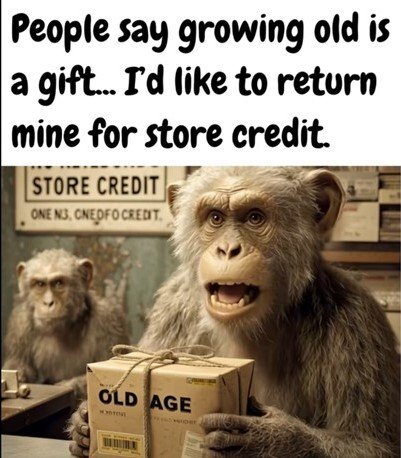
Mot: . Sorry! - I Simply Want to RETURN Mine!!
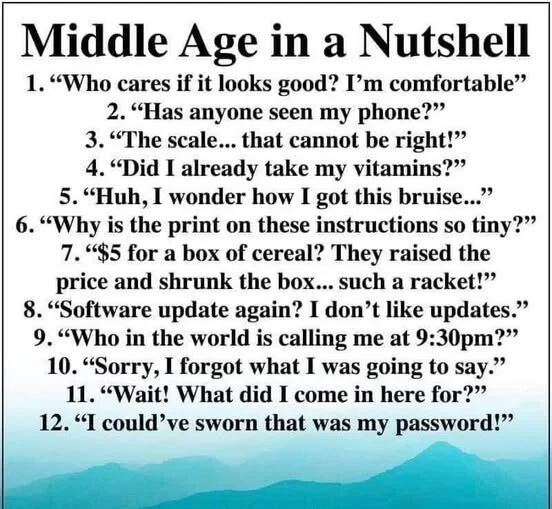
Mot: . Becoming Seasoned in a Nutshell ~~~~
The Dollar Is a Crypto Backed by a Legal Monopoly | Christopher Whalen
The Dollar Is a Crypto Backed by a Legal Monopoly | Christopher Whalen
Miles Franklin Media: 9-11-2025
Andy Schectman, Founder & CEO, Miles Franklin Precious Metals, interviews Christopher Whalen, Chairman of Whalen Global Advisors.
The two sit down for a no-holds-barred takedown of the U.S. banking system, the Fed-Treasury illusion, and why the dollar could be described as nothing more than a crypto backed by a legal monopoly.
In this interview, Whalen draws on decades of experience inside the Fed and on Wall Street to expose the hidden rot beneath the surface of America’s financial system.
The Dollar Is a Crypto Backed by a Legal Monopoly | Christopher Whalen
Miles Franklin Media: 9-11-2025
Andy Schectman, Founder & CEO, Miles Franklin Precious Metals, interviews Christopher Whalen, Chairman of Whalen Global Advisors.
The two sit down for a no-holds-barred takedown of the U.S. banking system, the Fed-Treasury illusion, and why the dollar could be described as nothing more than a crypto backed by a legal monopoly.
In this interview, Whalen draws on decades of experience inside the Fed and on Wall Street to expose the hidden rot beneath the surface of America’s financial system.
In this episode:
The dollar is a crypto backed by a monopoly
Central banks are told to buy gold
Fed & Treasury: two sides of the same coin
Bank consolidation
Why the U.S. consumer is now a “triple-D credit”
What happens when trust in the dollar breaks?
00:00 Coming Up
01:03 Introduction: Christopher Whalen
05:41 Discussion on U.S. Banking Policy
08:40 Technology & Disruption in Banking
21:23 Cryptocurrency & the Dollar
24:27 Historical Context: Gold & Silver
34:43 Future of Banking & Final Thoughts
Iraq Economic News and Points To Ponder Thursday Afternoon 9-11-25
The Association Of Private Banks Reveals The Latest Details Of Banking Reform In Iraq.
Banks Economy News – Baghdad The Iraqi Private Banks Association confirmed on Thursday that banking reform in Iraq encompasses both the public and private sectors, noting that the reform plan has reached its final form and will include all private banks without exception.
Ali Tariq, Executive Director of the Iraqi Private Banks Association, said, "Banking reform in Iraq consists of two parts: the first for government banks and the second for private banks."
The Association Of Private Banks Reveals The Latest Details Of Banking Reform In Iraq.
Banks Economy News – Baghdad The Iraqi Private Banks Association confirmed on Thursday that banking reform in Iraq encompasses both the public and private sectors, noting that the reform plan has reached its final form and will include all private banks without exception.
Ali Tariq, Executive Director of the Iraqi Private Banks Association, said, "Banking reform in Iraq consists of two parts: the first for government banks and the second for private banks."
He explained that "reform for private banks consists of standards divided into four axes: the first is governance, capital, and ownership structure. The second axis is the business plan and the products offered by banks, and how to spread their branches, ATMs, and all financial and banking services."
He added, "The third axis relates to developing procedures, particularly with regard to anti-money laundering, compliance, and risk management. The fourth axis concerns financial statements, which include financial statements and multiple ratios that the bank must adhere to in the future. Therefore, the issue of capital, ownership structure, and governance is part of a broader reform plan."
He explained that "during the previous period, there were serious comments from the banks, which were conveyed to the Central Bank of Iraq, and a dialogue was opened."
He continued, "We are now in the final stage of formulating the plan, which will include all banks, not just those deprived of dollars or specific banks, but all private sector banks." He noted that "this plan is not just to fix a defect, but rather to set standards that the bank must adhere to to ensure it is above the norm and continues to operate normally." https://economy-news.net/content.php?id=59911
The Central Bank's Fruitful Efforts To Achieve The Comprehensive Banking Reform Project.
Samir Al-Nusairi The Central Bank's actions and efforts, in partnership and consultation with private banks, have been fruitful in facilitating the implementation of the objectives, mechanisms, and standards of the comprehensive banking reform project, in cooperation with the government and the global consulting firm Oliver Wyman, and the objectives and initiatives of its third strategy.
Given that economic reform begins with banking reform, the challenges facing the Iraqi economy and the opportunities for reform in the banking and financial sector are highlighted in the government's program, as are the prospects for the Central Bank's future vision for the role of the banking sector in achieving sustainable development and investment.
The efforts currently being made to activate and revolutionize productive economic sectors other than oil to diversify sources of national income, achieve financial sustainability, and accelerate the growth of the national economy are also highlighted, as is the role of the Central Bank in regulating foreign trade financing, completing infrastructure projects to achieve comprehensive digital transformation, and expanding the use of electronic payment tools to achieve financial inclusion.
Opportunities exist to reform and develop the banking sector during 2025-2028 in accordance with the following objectives:
First: Developing the Iraqi banking system and its compliance with international banking and accounting standards.
Second: Building a sound, modern, comprehensive and flexible banking sector.
Third: Enhancing citizens' confidence in the banking sector locally and internationally, and acknowledging its transparency, progress, and strict commitment to international standards, and gaining the trust of reputable correspondent banks to deal with it.
Fourth: Rehabilitating restricted and weak banks to return to activity in the banking market with full internal and external activities.
Fifth: Transforming banks to their primary function, which is financing and bank lending for development, and enhancing financial inclusion and increasing its current rate as planned.
Sixth: Strengthening the procedures and decisions for the transition from a cash economy to a digital economy, withdrawing funds outside the banking cycle, which constitute approximately 80%, and introducing them into the banking system.
Although all the above objectives have a three-year implementation period according to the banking reform project and the Central Bank’s strategy, what was achieved in 2023 and 2024 and up to June 30, 2025 in terms of building foundations, rules and pillars formed a supportive pillar in building the mechanisms and paths of the desired reforms, and they constitute ambitious percentages as announced, which will lead to the evaluation and classification of banks based on their achievement of the planned objectives in the reform project according to the internationally approved standards and criteria. https://economy-news.net/content.php?id=59864
Oil Prices Fall Due To Global Developments
Economy | 08:59 - 11/09/2025 Mawazine News - Follow-up: Oil prices fell slightly on Thursday, with weak demand for crude in the US, along with the prospect of a widespread increase in supplies, despite escalating tensions in the Middle East and the Russian war in Ukraine.
Brent crude futures fell about 0.2% to $67.35 a barrel, while US crude futures fell 0.2% to $63.53 a barrel.
Both benchmark crude contracts rose by more than $1 on Wednesday after the Israeli attack on the political leadership of Hamas in Qatar the day before Tuesday, and as Poland activated its air defenses and NATO air defenses to shoot down suspected Russian drones that had strayed into its airspace during an attack on western Ukraine.
The Energy Information Administration revealed that US crude oil inventories rose by 3.9 million barrels in the week ending September 5, compared to expectations for a draw of 1 million barrels, while gasoline inventories increased by 1.5 million barrels, compared to expectations for a draw of 200,000 barrels, according to Reuters. https://www.mawazin.net/Details.aspx?jimare=266594
For current and reliable Iraqi news please visit: https://www.bondladyscorner.com