
“Tidbits From TNT” Tuesday Morning 9-9-2025
TNT:
Tishwash: Iraqi Oil: Signing Major Investment Contracts and Expanding Gas Investment
The Ministry of Oil confirmed on Monday that major investment contracts had been signed and gas investments had expanded, as Iraq has become an attractive investment environment for the oil industry. It noted significant progress in the extraction, refining, gas, and distribution sectors .
“Iraq has signed major contracts with international companies such as Chevron and BB to develop fields in Nasiriyah and Kirkuk, in addition to the integrated gas development project in the Artawi field, with a value exceeding $10 billion,” said Undersecretary of the Ministry, Bassem Khadir, in a speech during the opening of the third Iraq International Oil and Gas Exhibition, which was followed by the “ Al-Sa’a ” network.
TNT:
Tishwash: Iraqi Oil: Signing Major Investment Contracts and Expanding Gas Investment
The Ministry of Oil confirmed on Monday that major investment contracts had been signed and gas investments had expanded, as Iraq has become an attractive investment environment for the oil industry. It noted significant progress in the extraction, refining, gas, and distribution sectors .
“Iraq has signed major contracts with international companies such as Chevron and BB to develop fields in Nasiriyah and Kirkuk, in addition to the integrated gas development project in the Artawi field, with a value exceeding $10 billion,” said Undersecretary of the Ministry, Bassem Khadir, in a speech during the opening of the third Iraq International Oil and Gas Exhibition, which was followed by the “ Al-Sa’a ” network.
He added, "The ministry has increased its gas investment percentage from 45% to 70%, with an ambitious plan to close the flared gas file by 2028. Work is also underway on renewable energy projects, most notably a 1,000-megawatt solar power plant ."
He pointed out that "the integrated project in Artawi includes four axes: increasing oil production, exploiting gas from five fields, establishing a solar energy project, and using seawater injection to increase pressure in oil fields ."
Khadir emphasized that "Iraq is working to develop the infrastructure and human resources in the oil sector, while supporting national companies and raising their efficiency to match their partnerships with international companies, thus enhancing development in all governorates and creating ample job opportunities link
Tishwash: Al-Sudani: Iraq has overcome all challenges and today represents a fundamental pillar of security and stability in the region.
Prime Minister Mohammed Shia al-Sudani affirmed on Monday that Iraq has overcome all challenges and is today a fundamental pillar of security and stability in the region .
His office stated in a statement received by the Mail that "Al-Sudani met, in the Belgian capital, Brussels, with NATO Secretary General Mark Rutte, during which bilateral relations between Iraq and the NATO mission in Iraq were discussed ."
Al-Sudani expressed his "appreciation for Rutte's invitation to participate in the North Atlantic Council meetings," noting that "Iraq has overcome all challenges and today represents a fundamental pillar of security and stability in the region ."
He stressed that "social cohesion in Iraq is its strength," emphasizing "the need for the international community to play its role in stopping the war in the region and the grave violations being committed in Gaza ."
For his part, Rutte expressed his "appreciation for Iraq's role in stabilizing security in the region," praising the "significant shift in the management of all issues during the current government's tenure ."
He praised the "great support that NATO's mission in Iraq receives link
************
Tishwash: Steve Lutes: US companies are ready to support economic diversification in Kurdistan.
The Vice President of the American Chamber of Commerce, Steve Lutes, confirmed that the Prime Minister of the Kurdistan Region, Masrour Barzani, seeks to diversify the economy in Kurdistan, stressing that American companies are ready to cooperate in this field.
A delegation from the American Chamber of Commerce, comprising more than 30 companies, is currently visiting Erbil to invest in various sectors within the Kurdistan Region.
Steve Lutes told Kurdistan 24 on Sunday that the delegation is not only listening to economic opportunities from officials, but is also seeking to connect with local businesspeople, with the goal of finding new partners and increasing trade and investment activity in the Kurdistan Region.
"Kurdistan Regional Prime Minister Masrour Barzani is focused on diversifying the economy, and we believe American companies will be able to seize these opportunities and contribute to achieving this goal," Lutz added. link
************
Tishwash: Al-Sudani's advisor reveals the extent of the development path's contribution to the Iraqi economy.
Mudhar Mohammed Salih, advisor to the Iraqi Prime Minister, revealed on Monday that the development road project will contribute 20% to diversifying the national economy.
Salih said in a press interview that "the development road project, which connects the port of Faw in southern Iraq to Turkey via a 1,200 km railway and road network, is one of the largest logistics projects in the region, with an estimated cost of $17 billion."
He added that "the project will open the door to diversifying the national economy as the road is connected to free economic zones, industrial cities and advanced logistics services," expecting that "it will contribute approximately 20% to diversifying the national economy in terms of its contribution to the gross domestic product in the long term."
Salih pointed out that "this will be a basis for employing a national workforce of approximately one million workers and activating important joints in the national economy, in addition to advanced land and rail transportation services, in addition to attracting regional and international investments continuously as it connects the Gulf to Europe via Turkey, which are important economic regions globally in terms of relative weight."
The government advisor concluded his remarks by saying, "The project will sustainably strengthen the Iraqi economy and improve the country's resilience to global market fluctuations. If invested efficiently and integrated with plans to boost industry, trade, and services, its impact could undoubtedly be as significant as that of oil in the long term." link
Mot: When - Enough is Enough!!!!
Mot: . Not What She Was Hoping For

Iraq Economic News and Points To Ponder Monday Evening 9-8-25
Experts: Banking Reforms Are Necessary To Enhance Financial Stability.
Economic 09/08/2025 Morning: Hussein Faleh The Iraqi banking sector is undergoing a pivotal phase marked by comprehensive reform and institutional development.
The Central Bank, in collaboration with private banks, the government, and the global consulting firm Oliver Wyman, is implementing a strategic plan aimed at enhancing financial stability, diversifying the economy, and gradually transitioning from a cash to a digital economy.
Experts: Banking Reforms Are Necessary To Enhance Financial Stability.
Economic 09/08/2025 Morning: Hussein Faleh The Iraqi banking sector is undergoing a pivotal phase marked by comprehensive reform and institutional development.
The Central Bank, in collaboration with private banks, the government, and the global consulting firm Oliver Wyman, is implementing a strategic plan aimed at enhancing financial stability, diversifying the economy, and gradually transitioning from a cash to a digital economy.
Experts believe these efforts pave the way for ending restrictions on Iraqi banks' dollar transactions and opening new horizons for the banking sector to achieve sustainable development.
pivotal stage
Economic expert Dr. Mustafa Hantoush explained that"the Central Bank and the banking system are going through a critical phase that could lead to the end of restrictions imposed on Iraqi banks' dollar transactions."
He pointed out that "the Central Bank's decision to extend the deadline for increasing the capital of banks included in the reform to more than two years, instead of the previous deadline of the end of this year, reflects a state of joint cooperation with these banks and supports them in facing challenges." Hantoush told Al-Sabah:
Final Report
“The Central Bank has contracted with Oliver Wyman to conduct a comprehensive study of the banking sector,” noting that “the company completed its study and submitted its initial report three weeks ago, while the final report was issued recently, including a package of mechanisms to address banking challenges and regulate dollar transactions.
” He added that “these mechanisms are currently under discussion between the Central Bank and the consulting firm,” expecting “the dialogue between the two sides to continue to reach compromises, whether by extending the capital increase period to more than three years, or reducing the required amounts in line with the capabilities of Iraqi banks.”
tangible progress
For his part, Economic and Banking Advisor Samir Al-Nusairi stated that "the measures and efforts led by the Central Bank of Iraq,in cooperation and consultation with private banks, have yielded tangible progress in implementing the objectives, mechanisms, and standards of the comprehensive banking reform project.
This progress is being made in partnership with the government and the global consulting firm Oliver Wyman, and within the framework of the Central Bank's third strategy.
productive sectors
" Al-Nusairi explained to Al-Sabah that "the project came in response to current economic challenges and an effort to enhance the banking sector's role in supporting sustainable development by activating non-oil productive sectors, diversifying sources of national income, achieving financial stability and economic growth, regulating foreign trade financing, supporting infrastructure projects for digital transformation, and expanding the use of electronic payment tools to achieve financial inclusion." Al-Nusairi explained that
international recognition
"the reform and development plan for the banking sector for the period 2025-2028 focuses on
developing the banking system and ensuring its compliance with international banking and accounting standards, building a modern, flexible, and inclusive banking sector, enhancing citizens' confidence locally, and obtaining international recognition for its transparency and commitment to standard criteria, ensuring the confidence of global correspondent banks.
It also aims to rehabilitate restricted or weakly active banks to enable them to return to full operations. It also aims to focus the role of banks on financing and development lending, enhancing financial inclusion and increasing its percentage.
It also aims to move from a cash economy to a digital economy by withdrawing funds circulating outside the banking cycle – which constitutes approximately 80 percent – and integrating them into the banking system." Al-Nusairi pointed out that
Evaluation and classification
"what has been achieved during the years 2023, 2024, and until mid-2025 represents 'ambitious' levels in building the foundations upon which the reform project is based, which has enabled the evaluation and classification of banks according to their level of achievement of objectives.
" He noted that "there are banks that have achieved remarkable progress, while others still need additional time, while exceptional efforts are being made by the Central Bank and the administrations of some troubled banks to rehabilitate them."
Central Bank Governor Ali Al-Alaq had previously revealed details of the banking reform plan,
particularly regarding the foreign partner and the plan's objectives, stressing that the foreign partner is not a condition of the reform plan, while indicating that the banking reform is based on international laws and standards.
Reform plan
Al-Alaq said,"The banking reform plan is not a surprise, but rather a well-thought-out plan, and it took more than a year to develop in coordination with banks and international bodies. It was agreed upon the need to review the Iraqi banking sector after years of practical experience.
" He pointed out that, "After numerous problems emerged, all parties agreed to adopt a plan that would place our banks within international standards and practices, and within the framework of the Central Bank Law and the Iraqi Banking Law. Therefore, the standards are not innovative, but rather stem from the Central Bank Law." https://alsabaah.iq/120119-.html
The Central Bank Governor Meets With The United Nations Development Programme Representative.
September 08, 2025 His Excellency the Governor of the Central Bank of Iraq, Mr. Ali Mohsen Al-Alaq, met with the new Resident Representative of the United Nations Development Programme in Iraq (Mr. Titon Mitra) at the Central Bank's headquarters in Baghdad.
The meeting addressed a range of key issues in cooperation between the two parties, focusing on
providing advice on technical aspects and controls related to the regulatory framework for e-commerce, with the goal of working toward consumer protection and enhancing a safe environment for the growth of the digital economy.
During the meeting, His Excellency the Governor reviewed the tangible progress made in the digital transformation of electronic transactions across trade and services, and the reduction of reliance on cash.
He highlighted the importance of cooperation on advisory and technical aspects with various specialized international and regional organizations.
His Excellency also addressed the Central Bank's plan to reform the banking sector, the key stages it is undergoing, and the cooperation with Oliver Wyman.
Mr. Mitra commended the cooperation between the Central Bank of Iraq and the United Nations Development Programme, pointing out the Central Bank's reform plan for the banking sector to consolidate the pillars of this important sector, which influences the stability of economic and commercial activity in Iraq. https://cbi.iq/news/view/2976
For current and reliable Iraqi news please visit: https://www.bondladyscorner.com
Seeds of Wisdom RV and Economic Updates Monday Evening 9-8-25
Good Evening Dinar Recaps,
BRICS Anti-America Strains Rise as JP Morgan Predicts US Dollar Future
Despite de-dollarization campaigns, JPMorgan says the U.S. dollar’s dominance remains entrenched for decades to come.
JPMorgan’s Dollar Dominance Outlook
JPMorgan analysts argue that the U.S. dollar’s global supremacy is not easily displaced. Their research points to deep and liquid capital markets, rule of law, predictable legal systems, and robust USD liquidity as foundations of dollar dominance.
Good Evening Dinar Recaps,
BRICS Anti-America Strains Rise as JP Morgan Predicts US Dollar Future
Despite de-dollarization campaigns, JPMorgan says the U.S. dollar’s dominance remains entrenched for decades to come.
JPMorgan’s Dollar Dominance Outlook
JPMorgan analysts argue that the U.S. dollar’s global supremacy is not easily displaced. Their research points to deep and liquid capital markets, rule of law, predictable legal systems, and robust USD liquidity as foundations of dollar dominance.
While dollar reserves fell from 73% in 2001 to 58.4% in 2023, the share has stabilized since 2021. JPMorgan concludes that fears of a rapid U.S. dollar collapse are overstated, saying erosion of its role would take decades, not years.
Trump’s Escalating Anti-BRICS Stance
President Donald Trump has sharpened rhetoric against BRICS nations, threatening 100% tariffs on countries moving away from the dollar. His approach toward India has been particularly volatile, swinging from labeling it a “dead economy” to reaffirming U.S.-India ties.
These tensions highlight the political flashpoints driving speculation about dollar stability, even as structural realities keep the greenback secure.
BRICS Push for Alternatives
Despite JPMorgan’s confidence, BRICS nations continue to pursue alternatives:
Russia and China are expanding non-dollar payment systems.
India is extending its digital payment network to regional partners.
Still, JPMorgan cautions that fragmentation of international payments is a bigger near-term risk than outright de-dollarization.
Market Reality vs. Political Rhetoric
Financial voices emphasize the gap between BRICS ambitions and global trade realities.
Ted Jenkin, CEO of oXYGen Financial, noted: “With the exception of Europe, the dollar is the most widely used currency by far around the world.”
Even China, while cutting U.S. Treasury holdings, increased purchases of other U.S. securities, signaling continued reliance on dollar assets.
According to the Federal Reserve, 60% of international claims remain dollar-denominated, unchanged since 2000 and far above the euro’s 20%.
Why This Matters
While BRICS nations push for de-dollarization, the U.S. dollar remains the cornerstone of global finance. JPMorgan’s analysis suggests that structural advantages, institutional trust, and widespread usage ensure its dominance will endure well beyond today’s political disputes.
@ Newshounds News™
Source: Watcher Guru
~~~~~~~~~
Seeds of Wisdom Team RV Currency Facts Youtube and Rumble
Newshound's News Telegram Room Link
Follow the Roadmap
Follow the Timeline
Seeds of Wisdom Team™ Website
Thank you Dinar Recaps
The Real Reason The Treasury is Buying Back So Much Debt
The Real Reason The Treasury is Buying Back So Much Deb
Heresy Financial: 9-8-2025
TIMECODES
00:00 Treasury Buybacks Explained
00:28 Fed vs Treasury – Key Differences
01:22 How the Treasury Manages Money
02:20 Treasury Bonds, Notes, and Bills
03:40 America’s Growing Deficit
04:17 How Treasury Auctions Work
05:01 Buying and Selling Treasuries
06:07 Why the Government Is Buying Back Debt
07:06 The Credit Card vs Mortgage Analogy
08:11 Why Short-Term Debt Is Replacing Long-Term Debt
09:50 What’s Really Driving Buybacks
11:00 Why the Numbers Don’t Add Up
11:37 Fed Rate Cuts and Short-Term Debt Strategy
13:43 Liquidity Problems in the Treasury Market
15:31 The Real Reason Behind Treasury Buybacks
16:22 Can This Game Keep Going?
Iraq Economic News and Points To Ponder Monday Afternoon 9-8-25
Iraq Seeks To Increase Its Share Of Global Oil Markets.
Energy Economy News – Baghdad SOMO confirmed that Iraq seeks to increase its production and export share in line with global market needs and balance, as it is the second-largest producer in OPEC.
SOMO General Manager Ali Nizar said, "Iraq possesses exceptional investment opportunities in the oil and gas sector, making it an open market for reputable international companies."
Iraq Seeks To Increase Its Share Of Global Oil Markets.
Energy Economy News – Baghdad SOMO confirmed that Iraq seeks to increase its production and export share in line with global market needs and balance, as it is the second-largest producer in OPEC.
SOMO General Manager Ali Nizar said, "Iraq possesses exceptional investment opportunities in the oil and gas sector, making it an open market for reputable international companies."
He added, "The company's plans focus on strengthening Iraq's position as a pivotal energy hub by diversifying export outlets, entering into partnerships with global refineries, providing strategic storage sites, and expanding the pipeline network." https://economy-news.net/content.php?id=59799
Iraqi Oil Prices Decline On The Global Market.
Economy | 08/09/2025 Mawazine News - Baghdad - Iraqi oil prices declined on Monday, with the opening of daily trading in the global market.
According to data reviewed by Mawazine News, Basra Heavy crude recorded $64.81 per barrel, while the average recorded $68.01 per barrel, with a change of -0.38 for both.
On the other hand, the data showed an increase in global crude prices, as British Brent crude recorded $66.69 per barrel, while US West Texas Intermediate crude recorded $63.00 per barrel, with a change of +1.18 and +1.12, respectively. https://www.mawazin.net/Details.aspx?jimare=266434
The US State Department Expresses Its Dissatisfaction With Baghdad's Policy Toward The Kurdistan Region.
The head of the Kurdistan Regional Government's Office of Foreign Relations, Safeen Dizayee, announced on Monday that the US State Department had informed the Iraqi government of its dissatisfaction with the policy pursued towards the region.
Dizayee explained that this position is due to the ongoing tensions between Baghdad and Erbil on sensitive issues, most notably the sharing of financial revenues, salaries, and disagreements related to oil agreements. These disagreements hinder cooperation and negatively impact political and economic stability in Iraq in general and the region in particular.
Dizayee indicated that Erbil continues its efforts to strengthen its relations with countries with advanced economic and industrial expertise, such as Thailand, to benefit from their experiences in developing economic sectors.
He also noted that the regional capital is currently hosting more than six economic forums and conferences organized by consulates and embassies from European countries and others from the United States, an indication of international confidence in the region as a stable investment destination. https://www.radionawa.com/all-detail.aspx?jimare=42555
For The Fourth Day, The Dollar Exchange Rate Remains Stable In Baghdad.
Economy | 11:41 - 08/09/2025 Mawazine News – Baghdad The exchange rate of the US dollar against the Iraqi dinar witnessed relative stability on stock exchanges, with a relative decline on some exchanges.
On the Baghdad stock exchange, the selling price reached 143,500 dinars per $100, while the buying price reached 142,900 dinars per $100. However, at money exchanges, the selling price reached 144 dinars and the buying price 142 dinars. https://www.mawazin.net/Details.aspx?jimare=266440
Gold Exceeds $3,600 For The First Time In Its History
Stock Exchange
Spot gold hit an all-time high on Monday, reaching $3,600.46 per ounce, the first time in its history, driven by growing expectations of a Federal Reserve interest rate cut this month following unexpectedly weak employment data last week.
Spot gold was trading at $3,586.81 per ounce at 01:21 GMT. The price of gold rose to a record high of $3,599.89 on Friday.
US gold futures for December delivery fell 0.7 percent to $3,626.10.
"The key factor is the US jobs data and expectations of a 50 basis point rate cut in September. It's a slim chance, but it represents a significant shift compared to the situation before the jobs data," said Kael Rodda, an analyst at Capital.com.
He added, "In general, all factors are pushing gold prices higher at the moment, and despite the surprise inflation data this week, we will see a good test of the $3,600 level."
U.S. employment growth weakened sharply in August, and the unemployment rate rose to a nearly four-year high of 4.3 percent, underscoring the weakening strength of the labor market and strengthening the chances of a Federal Reserve interest rate cut next week.
The gold price currently reflects expectations of a 25 basis point cut this month, with an 8 percent probability of a cut as large as 50 basis points, according to the CME Group's FedWatch tool.
Lowering interest rates reduces the opportunity cost of holding gold and weakens the dollar, making gold cheaper for investors holding other currencies.
Focus now turns to Thursday's US inflation report, which may provide further clarity on the size of the Federal Reserve's expected interest rate cut.
Gold prices have risen 37 percent so far this year, following gains of 27 percent in 2024, driven by a weaker dollar, central bank buying, monetary easing, and prevailing geopolitical and economic uncertainty.
The People's Bank of China added gold to its reserves in August, continuing its purchases of the precious metal for the tenth consecutive month.
Meanwhile, gold traders increased their net long positions by 20,740 contracts to 168,862 contracts in the week ending September 2.
As for silver, its spot price fell 0.5 percent to $40.75 per ounce, while platinum rose 0.1 percent to $1,374.35, and palladium remained unchanged at $1,109.71. https://economy-news.net/content.php?id=59806
Political | 08/09/2025 Mawazine News - Baghdad – President Abdul Latif Jamal Rashid discussed, on Monday, with the Chargé d'Affaires of the United States Embassy to Iraq, Joshua Harris, developing joint cooperation and enhancing dialogue in the capital, Baghdad.
The Presidency said in a statement received by Mawazine News, "The meeting discussed bilateral relations between the two countries and encouraging initiatives that serve the interests of the two friendly peoples. His Excellency the President of the Republic affirmed Iraq's keenness to build balanced partnerships based on mutual respect and common interests."
He continued, "Regional and international developments were reviewed, emphasizing the importance of continuing efforts to achieve regional stability and promote constructive dialogue between various parties."
For his part, Mr. Joshua Harris expressed his pride in representing his country in Iraq, stressing his aspiration to work together to consolidate relations and enhance cooperation in various fields, in a way that contributes to supporting security, stability and prosperity in the region." https://www.mawazin.net/Details.aspx?jimare=266450
For current and reliable Iraqi news please visit: https://www.bondladyscorner.com
Seeds of Wisdom RV and Economic Updates Monday Afternoon 9-8-25
Good Afternoon Dinar Recaps,
SEC Launches Cross-Border Pump-and-Dump Prevention Task Force
The new initiative targets market manipulation schemes and signals future reforms for crypto assets.
A New SEC Task Force
The U.S. Securities and Exchange Commission (SEC) has unveiled a new Cross-Border Task Force aimed at protecting American investors from fraud. The initiative will focus on foreign companies that attempt to skirt U.S. oversight through schemes like pump-and-dump operations.
Good Afternoon Dinar Recaps,
SEC Launches Cross-Border Pump-and-Dump Prevention Task Force
The new initiative targets market manipulation schemes and signals future reforms for crypto assets.
A New SEC Task Force
The U.S. Securities and Exchange Commission (SEC) has unveiled a new Cross-Border Task Force aimed at protecting American investors from fraud. The initiative will focus on foreign companies that attempt to skirt U.S. oversight through schemes like pump-and-dump operations.
SEC Chair Paul S. Atkins emphasized: “We welcome companies from around the world seeking access to the U.S. capital markets. But we will not tolerate bad actors… that attempt to use international borders to frustrate and avoid U.S. investor protections.”
The task force will consolidate investigative resources and give the SEC broader reach against transnational fraud.
Crypto Reform on the Horizon
Atkins linked the new initiative to the SEC’s Project Crypto, which supports President Donald Trump’s push to make the U.S. the world’s crypto capital. He signaled that the regulator is preparing to overhaul how digital assets are treated under securities law.
“We will work to bring crypto asset distributions back to America. The days of convoluted offshore corporate structures, decentralization theater, and confusion over security status are over,” Atkins said.
He added that the SEC had previously discouraged crypto-based capital raising, pushing innovation offshore. The new approach seeks to reverse that trend and restore opportunities for investors.
Why This Matters
The SEC’s new task force reflects a broader shift: tighter scrutiny on global market manipulation and a coming reset in crypto regulation. For U.S. investors, the message is clear—Washington intends to both protect markets from foreign fraud and position America as the center of digital asset innovation.
@ Newshounds News™
Source: Daily Hodl
~~~~~~~~~
This Week’s US Economic Calendar: CPI, PPI, and Jobs Data to Watch
Markets brace for key reports that could shape the Fed’s September decision and ripple across stocks, gold, and crypto.
Markets Price in Rate Cut
Traders enter the week with high conviction that the Federal Reserve will cut rates at its September meeting. Futures point to a 96–97% probability, bolstered by weak labor market data showing just 22,000 jobs added in August. Bond yields have slipped, equities are climbing, and gold has reached new highs near $3,588/oz.
Tuesday: Inflation Revision
The week begins with a BLS 12-month inflation data revision. If revisions trend higher, it could pressure the Fed and weigh on Bitcoin and Ethereum. Softer numbers may instead provide relief for risk assets.
Wednesday: Producer Price Index
Midweek brings the Producer Price Index (PPI). Rising wholesale prices would signal sticky inflation, a negative for risk assets. A cooler PPI, however, could give crypto markets room for a rebound.
Thursday: CPI and OPEC in Focus
Thursday is the most critical day, with the Consumer Price Index (CPI) for August released alongside OPEC’s monthly oil report. Rising energy costs could intensify inflation concerns, creating a double catalyst for volatility in equities and digital assets.
Friday: Consumer Sentiment and Inflation Expectations
The week ends with the University of Michigan survey, offering a look at consumer sentiment and inflation expectations. Persistent price concerns could dampen market confidence, while optimism might fuel a late-week rally in crypto.
Why This Matters
With inflation still the Fed’s central concern, this week’s data could set the tone for the final quarter of 2025. Traders are watching bonds, commodities, and crypto closely as the Fed’s next move—and broader risk appetite—comes into focus.
@ Newshounds News™
Source: Coinpedia
~~~~~~~~~
Ripple’s SEC Battle Is Over: Time To Challenge SWIFT?
With legal clarity finally secured, Ripple turns back to its original mission: competing with the world’s dominant payments network.
Ripple Clears Its Legal Hurdle
Ripple has ended its long-running battle with the U.S. Securities and Exchange Commission, bringing long-sought legal clarity to XRP, now trading near $2.93. The settlement removes a major obstacle that has hung over the company since 2020 and allows Ripple to refocus on building its payments network.
How Ripple Compares to SWIFT
The Society for Worldwide Interbank Financial Telecommunication (SWIFT), established in 1973, processes over 53 million messages daily across 220 countries. While SWIFT is deeply entrenched, critics argue its system is outdated:
Transactions often take several days and involve high fees.
One in 10 transactions fails, while one in 20 settles late.
Even with ISO 20022 upgrades by late 2025, many see SWIFT as “legacy tech” reliant on XML.
By contrast, Ripple’s blockchain ledger offers:
Near-instant settlement
Lower costs
Greater transparency and traceability
CEO Brad Garlinghouse has long framed Ripple as a modern alternative to SWIFT, saying as early as 2018 that the company was “taking over SWIFT” by signing banks and remittance firms onto the XRP Ledger.
Why SWIFT Still Holds the Advantage
Despite Ripple’s momentum, the banking sector remains slow to change. Blockchain advocates note that replacing SWIFT’s infrastructure could take 5–7 years and cost hundreds of millions of dollars. Banks continue using SWIFT because it is already universal, trusted, and familiar.
As Ripple’s Cassie Craddock put it, “Scaling to the level of traditional providers requires tackling two key hurdles: usability and regulation.”
The Role of Regulation and Stablecoins
Ripple now benefits from unique legal clarity on XRP, but broader adoption also hinges on regulatory frameworks like the GENIUS Act, which sets rules for stablecoin issuers. Ripple’s own stablecoin, Ripple USD, is being positioned as a bridge between blockchain innovation and traditional finance.
“Stablecoins are simple, pegged to the dollar, and behave like cash,” Craddock noted, adding that this familiarity is key to winning over institutions.
Can Ripple Truly Challenge SWIFT?
SWIFT’s ubiquity is its strongest moat. For Ripple to compete, it must overcome regulatory inconsistencies, risk-averse banks, and skepticism over XRP liquidity. Still, U.S. policymakers are creating space for private digital assets to complement traditional finance — and Ripple is well positioned to benefit.
As Garlinghouse said earlier this year, “The market opportunity is massive in the U.S… there’s an opportunity to modernize the payment systems from SWIFT.”
Why This Matters
Ripple’s victory over the SEC marks a turning point, but SWIFT remains a formidable incumbent. The battle ahead is not legal but structural: convincing banks and regulators that blockchain can deliver efficiency, security, and compliance at global scale.
@ Newshounds News™
Source: Cointelegraph
~~~~~~~~~
Seeds of Wisdom Team RV Currency Facts Youtube and Rumble
Newshound's News Telegram Room Link
Follow the Roadmap
Follow the Timeline
Seeds of Wisdom Team™ Website
Thank you Dinar Recaps
Iraq Economic News and Points To Ponder Late Sunday Evening 9-7-25
Between Revenue Promises And Deficit Realities... What Does Increasing Iraq's Oil Share Mean?
Baghdad Today – Baghdad Iraq's eyes are once again turning to oil markets, where every adjustment to production quotas represents a potential opportunity to alleviate the financial pressures weighing on the budget.
With an annual deficit exceeding tens of trillions of dinars, and a rising wage bill and government subsidies, any increase in oil revenues appears to be a temporary respite that allows Baghdad to cover its urgent obligations.
Between Revenue Promises And Deficit Realities... What Does Increasing Iraq's Oil Share Mean?
Baghdad Today – Baghdad Iraq's eyes are once again turning to oil markets, where every adjustment to production quotas represents a potential opportunity to alleviate the financial pressures weighing on the budget.
With an annual deficit exceeding tens of trillions of dinars, and a rising wage bill and government subsidies, any increase in oil revenues appears to be a temporary respite that allows Baghdad to cover its urgent obligations.
Economist Nabil Al-Marsoumi explained in a Facebook post, followed by Baghdad Today, that
"OPEC Plus will add 137,000 barrels per day to its production starting next October, and that Iraq's share will increase by 17,000 barrels per day, bringing its total production to 4,137,000 barrels per day," indicating limited gains that could help alleviate part of the growing deficit.
The increase indicated by Al-Marsoumi came following a virtual meeting of eight OPEC+ countries, including:
Saudi Arabia,
Russia,
Iraq, the
UAE,
Kuwait,
Kazakhstan,
Algeria, and
Oman.
The joint statement issued by the meeting emphasized "commitment to market stability in light of declining inventories and a stable global economic outlook," and emphasized that the production adjustment of 137,000 barrels per day represents part of a gradual return from previous voluntary cuts that began in 2023.
Analysts believe this move reflects the group's desire to maintain price balance without shocking the market.
But the most important question for Iraq, as experts pose, is:
To what extent will this limited increase in production be reflected in reducing the fiscal deficit?
Experts assert that "increased revenues may give Iraq a little breathing room,"but the reality reveals that any increase remains conditional on stable oil prices on global markets and on Baghdad's ability to manage resources without waste.
Given the country's continued reliance on oil as its primary source of revenue,
the economy remains vulnerable to fluctuations, and
fear persists that any price crisis could turn into a new financial burden.
This logic brings to the forefront criticisms of the nature of Iraq's rentier economy.
Additional revenues, while important, do not necessarily address the deep structure of the economy.
Analysts believe that the near-exclusive reliance on oil revenues makes the country hostage to
OPEC+ decisions and global market prices, leaving economic development dependent on external circumstances rather than domestic production capacity.
The question here is repeated:
Is it enough for Iraq to "breathe a little" whenever its production share increases?
Or does the deeper problem lie in the absence of an economic strategy that addresses the structural deficit, independent of oil revenues?
In addition to these concerns, risks related to international politics are also present.
Iraqi oil-exporting companies, most notably SOMO, may be subject to further pressure after the United States recently imposed sanctions on Iraqi businessmen accused of "mixing and smuggling Iranian oil with Iraqi oil."
Experts warn that any sanctions targeting SOMO could undermine the gains from the anticipated increase in production and put Iraq directly at odds with new complications related to accessing global markets.
Between a slight increase in production, ongoing financial pressures, and growing political risks, the Iraqi landscape remains gripped by a complex paradox: additional revenues capable of temporarily reducing the deficit, a rentier economy that reproduces its crises with every oil cycle, and an international system that closely monitors and clamps down on any loopholes in smuggling and oil mixing. https://baghdadtoday.news/282724-.html
Iraq's Oil Exports To The US Achieve Weekly Gains.
Economy | 07/09/2025 Mawazine News - Follow-up : Iraqi oil exports to the United States increased last week.
The US Energy Information Administration said that "US crude oil imports from nine major countries averaged 5.859 million barrels per day last week, up 169,000 barrels per day from the previous week, which averaged 5.690 million barrels per day."
It added that "Iraq's oil exports to the US averaged 303,000 barrels, up 166,000 barrels per day from the previous week, which averaged 137,000 barrels per day."
It continued, "The largest oil revenues to the US last week came from Canada, at an average of 3.836 million barrels per day, followed by Mexico, at an average of 407,000 barrels per day, Saudi Arabia, at an average of 325,000 barrels, and Colombia, at an average of 321,000 barrels per day." https://www.mawazin.net/Details.aspx?jimare=266362
Ministry Of Planning: The Development Plan Focused On Activating Non-Oil Revenues.
Buratha News Agency144 2025-09-06 The Ministry of Planning confirmed, on Saturday, that the five-year development plan is flexible and responsive to variables, including economic, security and climate crises, and gives priority to service projects, noting that the development plan focused on activating non-oil revenues.
The spokesperson for the Ministry of Planning, Abdul Zahra Al-Hindawi, told the official agency, “Planning takes into account all variables and sets the worst possible scenarios for occurrence, in order to at least reduce their effects and overcome them.
” He explained that “the five-year development plan, which was launched at the end of last year and extends until 2028, took into account global changes, price fluctuations and the state of (uncertainty) resulting from political crises and wars, all of which have their effects on Iraq, given that it is part of the global system that is affected and is affected through imports, exports and oil.”
He added, "The ministry has moved towards activating non-oil activities, such as agriculture, industry, and tourism, in addition to developing the tax system and maximizing revenues from various sources, to reduce the impact of global and even domestic variables.
He emphasized, "The plan was developed to be flexible, applicable, and participatory, and we have identified two main paths in it: innovation in addressing problems, and programming development action, thus achieving a balance between variables and constants."
Al-Hindawi also pointed out that “the Ministry of Planning includes projects within plans, whether regional development plans for governorates or the investment program for ministries and entities not affiliated with a ministry. No project is implemented unless it is included within the plan by the ministry, after preparing a feasibility study.
” He pointed out that “the project that is included and implemented by the relevant entity, the ministry’s task is to follow up on implementation and point out any errors or deviations, and then issue letters and directives to the relevant entities regarding the reasons for the delay.”
He also explained that "some projects are stalled due to problems between the implementing company and the beneficiary, and these are factors the ministry is working to address in coordination with relevant authorities." He emphasized that "the ministry is working in light of the government program and its priorities, as the program has given priority to projects of a service nature, such as sewage, water, and school projects."
Al-Hindawi also stressed that “education comes first, followed by road projects, then industrial and agricultural projects,” explaining that “priorities are also determined based on the development gap between one governorate and another.
If a governorate suffers from a problem with sewage networks, this sector is given priority, while if another governorate suffers from a problem with drinking water, water projects are given priority. All of this is done based on the development and spatial gap in services and projects.” https://burathanews.com/arabic/economic/464719
For current and reliable Iraqi news please visit: https://www.bondladyscorner.com
“Tidbits From TNT” Monday Morning 9-8-2025
TNT:
Tishwash: Al-Sudani heads to Brussels: Is he sending secret political signals to NATO?
Al-Mustaqilla/- Iraqi Prime Minister Mohammed Shia al-Sudani headed to the Belgian capital, Brussels, today, Monday (September 8, 2025), to deliver a speech before the North Atlantic Council (NATO), at the official invitation of NATO Secretary General Mark Rutte.
Strengthening security relations
This visit carries significant political and security implications, coming at a time when Iraq is continuing its efforts to strengthen military cooperation with international coalitions to confront security and terrorist challenges in the region.
TNT:
Tishwash: Al-Sudani heads to Brussels: Is he sending secret political signals to NATO?
Al-Mustaqilla/- Iraqi Prime Minister Mohammed Shia al-Sudani headed to the Belgian capital, Brussels, today, Monday (September 8, 2025), to deliver a speech before the North Atlantic Council (NATO), at the official invitation of NATO Secretary General Mark Rutte.
Strengthening security relations
This visit carries significant political and security implications, coming at a time when Iraq is continuing its efforts to strengthen military cooperation with international coalitions to confront security and terrorist challenges in the region. Al-Sudani is expected to focus on Iraq's role as a strategic partner in promoting regional stability, in addition to discussing NATO's programs to train Iraqi forces and share intelligence information.
Political and regional messages
Al-Sudani's visit sends signals to both Iraq and abroad about the government's openness to international allies and its commitment to playing an active role in regional security issues. It may also aim to allay international concerns about internal alliances and the balance of power among regional powers, especially in light of the tensions surrounding the region.
Regional context
The visit comes at a sensitive time, as Iraq faces political and geopolitical challenges, including continued security threats along its borders and diplomatic issues related to its relations with neighbors and major powers. The Prime Minister's presence before the NATO Council is seen as an opportunity to affirm Iraq's ability to play a pivotal role in regional stability and review national strategies to confront common threats.
Conclusion
Al-Sudani's visit to Brussels is not merely a protocol event. It represents a political and strategic message about Iraq's drive to strengthen its relations with international allies and consolidate its role as a reliable partner in regional and international security. link
************
Tishwash: Parliamentary Finance Committee: Hosting the Ministers of Finance and Planning and the Governor of the Central Bank to ensure the disbursement of retirees' salaries.
The Parliamentary Finance Committee decided to host the Ministers of Planning and Finance, the Governor of the Central Bank, and officials of the relevant departments, in the coming days, to develop the necessary solutions to ensure the regular disbursement of retirees' salaries. link
************
Tishwash: Al-Shabli rules out the approval of the oil and gas law and holds the region responsible for the obstruction.
Member of Parliament Kazim al-Shibli ruled out the possibility of passing the oil and gas law during the current legislative session on Saturday, considering the ongoing disputes between Baghdad and Erbil over the law’s provisions and the mechanism for distributing revenues to be the main reason for the obstruction.
Al-Shabli told Al-Maalouma News Agency that “the oil and gas law is a controversial law subject to political moods, and there are no serious intentions to resolve it within parliament yet,” adding that “the region refuses to give up illegal economic gains and is obstructing the achievement of a consensus formula with the federal government.”
He explained that "the law has been postponed more than once by previous governments, and is not on the House of Representatives' agenda in the near future due to the ongoing political crisis between the central government and the region."
Al-Shabli pointed out that "the federal government needs a fair law that regulates the management and export of oil resources and ensures their equitable distribution to all governorates, without exception or monopolization." link
************
Tishwash: Al-Sudani declares war on oil mafias.. A high-level investigative committee to pursue corruption and stop the economic bleeding.
Prime Minister Mohammed Shia al-Sudani ordered the formation of a high-level investigative committee on Saturday to investigate suspicions of smuggling Iraqi oil.
His office said in a statement received by Al-Mada that "Prime Minister Mohammed Shia al-Sudani has directed the formation of a high-level investigative committee from relevant authorities to investigate information received about suspicions of corruption in the mixing and smuggling of crude oil and petroleum products, whether in Iraqi ports or within territorial waters."
Al-Sudani stressed "the need to avoid complacency in this matter, and that the committee will submit its recommendations, after completing the investigations, to the Council of Ministers to take appropriate measures in accordance with the law, ensuring support for the national economy and the protection of public funds." link
Mot: I hope your day's been just ducky!
Mot: Can't Believe My Luck!!! - oh!!! Dog watcher

Seeds of Wisdom RV and Economic Updates Sunday Afternoon 9-7-25
Good Afternoon Dinar Recaps,
BRICS R5 vs. Unit: The Race Toward a 2026 Currency Launch
Two competing currency concepts highlight the bloc’s ambition to reshape global finance.
R5 Gains Momentum
The R5 proposal draws its name from the five original member currencies — Real, Ruble, Rupee, Renminbi, and Rand. Designed as a basket currency weighted by economic size, China would account for roughly 40% and India about 25%. Analysts see this gradual approach as a realistic entry point, starting as a unit of account before developing into a broader monetary system.
Good Afternoon Dinar Recaps,
BRICS R5 vs. Unit: The Race Toward a 2026 Currency Launch
Two competing currency concepts highlight the bloc’s ambition to reshape global finance.
R5 Gains Momentum
The R5 proposal draws its name from the five original member currencies — Real, Ruble, Rupee, Renminbi, and Rand. Designed as a basket currency weighted by economic size, China would account for roughly 40% and India about 25%. Analysts see this gradual approach as a realistic entry point, starting as a unit of account before developing into a broader monetary system.
Russian Foreign Minister Sergey Lavrov emphasized: “No one in the BRICS community is raising the issue of replacing the dollar.”
Gold-Backed Unit Alternative
The competing “Unit” proposal envisions a hybrid structure: 40% backed by gold, 60% tied to the BRICS currency basket. The concept was showcased with prototype banknotes at the 2024 Kazan summit, signaling serious intent. A gold-backed foundation would provide tangible value, distinguishing the Unit from traditional fiat systems.
Timeline for 2026 Launch
At the 2025 Brazil summit, leaders reported that nearly 90% of intra-BRICS trade was already settled in local currencies. With BRICS Pay expanding and blockchain systems linking central bank digital currencies, officials believe a pilot launch is achievable by 2026. Lavrov confirmed: “The project will be continued by our Brazilian successors and a pilot could appear before the end of 2026.”
Infrastructure and Challenges
BRICS Pay now connects nearly 5,000 financial institutions, providing an alternative to SWIFT and strengthening non-dollar trade. Kremlin aide Yury Ushakov stated: “We believe that creating an independent BRICS payment system is an important goal for the future, which would be based on state-of-the-art tools such as digital technologies and blockchain.”
Still, challenges remain. The bloc’s diverse economies complicate any unified policy. India’s External Affairs Minister S. Jaishankar noted: “I don’t think there’s any policy on our part to replace the dollar. The dollar as the reserve currency is the source of global economic stability.” Meanwhile, Iran and Russia push for a shared currency to reduce the impact of U.S. sanctions.
Why This Matters
The BRICS currency project — whether under the R5 or Unit name — reflects the bloc’s determination to rewire the global monetary system. Even without consensus on a final design, the push toward a 2026 launch highlights a fundamental shift: the rise of non-dollar settlements and new payment systems that could redefine international trade flows.
@ Newshounds News™
Source: Watcher Guru
~~~~~~~~~
Seeds of Wisdom Team RV Currency Facts Youtube and Rumble
Newshound's News Telegram Room Link
Follow the Roadmap
Follow the Timeline
Seeds of Wisdom Team™ Website
Thank you Dinar Recaps
“Tidbits From TNT” Sunday 9-7-2025
TNT:
Tishwash: Singapore is a strategic hub for Iraqi oil. SOMO: External reserves to face crises, and ExxonMobil is a key partner.
Economist Nabil Al-Marsoumi revealed on Saturday the reasons behind Iraq's choice of Singapore as a location for storing Iraqi oil. This comes after the State Oil Marketing Organization (SOMO) announced advanced agreements with ExxonMobil to enhance storage and refining in the Asian market.
In a clarification followed by Basra 365, Al-Marsoumi said, "The anticipated agreement with ExxonMobil aims to provide storage capacity in Singapore, giving Iraqi oil exports greater flexibility to respond to any emergency, whether it be the closure of the Strait of Hormuz or natural or political circumstances that might impede the flow of oil to global markets."
TNT:
Tishwash: Singapore is a strategic hub for Iraqi oil. SOMO: External reserves to face crises, and ExxonMobil is a key partner.
Economist Nabil Al-Marsoumi revealed on Saturday the reasons behind Iraq's choice of Singapore as a location for storing Iraqi oil. This comes after the State Oil Marketing Organization (SOMO) announced advanced agreements with ExxonMobil to enhance storage and refining in the Asian market.
In a clarification followed by Basra 365, Al-Marsoumi said, "The anticipated agreement with ExxonMobil aims to provide storage capacity in Singapore, giving Iraqi oil exports greater flexibility to respond to any emergency, whether it be the closure of the Strait of Hormuz or natural or political circumstances that might impede the flow of oil to global markets."
He added, "Although Singapore is not a major oil producer or importer, it represents a significant international market thanks to its strategic geographic location on shipping lanes between the Mediterranean and Western Europe on the one hand, and the Far East on the other, making it home to the most important commercial ports in Southeast Asia."
Al Marsoumi pointed out that "Singapore's political stability, its open and transparent environment, its advanced judicial and legislative system, and its highly competitive financial and banking system are all factors that have contributed to making it a global hub for oil trading."
He pointed out that "the advanced technological infrastructure, logistical support, and availability of specialized administrative and technical expertise have enabled Singapore to efficiently manage oil storage and trading operations at an international level." link
************
Tishwash: The President of the Republic: It is necessary to establish a sovereign fund from oil and gas revenues, as they belong to current and future generations.
President Abdel Latif Jamal Rashid stressed on Saturday the need to establish a sovereign fund from oil and gas revenues, as they belong to current and future generations.
The Presidency of the Republic said in a statement received by ( IQ ), "President of the Republic Abdul Latif Jamal Rashid received at the Peace Palace in Baghdad a delegation of participants in the Baghdad International Energy Forum, which included the Secretary-General of OPEC, Haitham Faisal Rashid, the Minister of Oil and Gas in the Libyan Government of National Unity, Khalifa Rajab Muhammad Abdul Sadiq, the First Undersecretary of the Ministry of Production - Egyptian Ministry of Petroleum, Ihab Rajai, and the Undersecretary of the Turkish Minister of Energy and Natural Resources, Ahmet Barat Chonkar, in the presence of the Deputy Prime Minister for Energy Affairs and Minister of Oil, Hayan Abdul Ghani ."
He added, "At the beginning of the meeting, the President welcomed the delegation and pointed out Iraq's keenness to advance the national energy sector and its efforts to enhance constructive partnerships with its regional and international surroundings in a way that serves the aspirations of peoples for progress and stability
The President of the Republic explained, according to the statement, that "Iraq, based on its strategic location and diverse wealth, is capable of investing in available natural resources and adopting sustainable solutions, in addition to its role as a pivotal partner in the transition to a green economy and the move towards the use of renewable energy ."
Rashid pointed out that "Iraq is experiencing a state of security and stability after decades of war, terrorism, and the problems the country has been suffering from," emphasizing "the importance of investing in the oil sector, as this phase represents the beginning of real investment, and the necessity of establishing a sovereign fund from oil and gas revenues, as they belong to current and future generations.
He stressed that "holding the forum is a promising step to highlight Iraq's pioneering role in the energy sector," noting that "success in this field will contribute to formulating new visions for energy policies and expand the horizons of cooperation with international companies to invest in the Iraqi market." He wished the Baghdad Forum success, and the participants good luck in reaching decisions that serve the development of the energy sector, achieve national interests, and meet the aspirations of the people .
In turn, the delegation members expressed, according to the statement, "their sincere desire to deepen the positive relationship with Iraq to include all sectors ." link
************
Tishwash: Economist: Storing Iraqi oil in the Sultanate of Oman is a strategic project to expand export outlets.
Economic expert Nabil Al-Marsoumi confirmed that the signing of two memoranda of understanding between Iraq and the Sultanate of Oman to develop a crude oil storage project in the Ras Markaz area of Oman represents an “important strategic step” toward expanding Iraqi oil exports to global markets, particularly in Asia.
Al-Marsoumi explained in a blog post followed by Al-Mada that the project, which begins with an initial capacity of up to 10 million barrels, subject to expansion, provides Iraq with greater flexibility in the face of potential disruptions at Basra ports, whether due to climatic conditions or crises in the Strait of Hormuz. He pointed out that the Sultanate of Oman, in turn, seeks to transform the Duqm area into a regional center for storing and re-exporting oil, with a total capacity that will eventually reach 200 million barrels.
He added that Iraq's plans are not limited to storage in Oman alone, but also include the construction of oil tanks and refineries in Southeast Asia and the Eastern Mediterranean, which would contribute to diversifying export outlets and opening new markets in Africa and Europe, in addition to strengthening its presence in the Asian market.
Al-Marsoumi pointed out that the project has a strategic dimension for Iraq, but it requires a careful study to calculate the investment costs and storage fees in Amman's warehouses, while assessing the possibility of doubling Iraq's storage capacity there, to ensure economic feasibility that matches the geopolitical dimension the project provides. link
Mot: Dang!!! -- if da weekend ~~~~

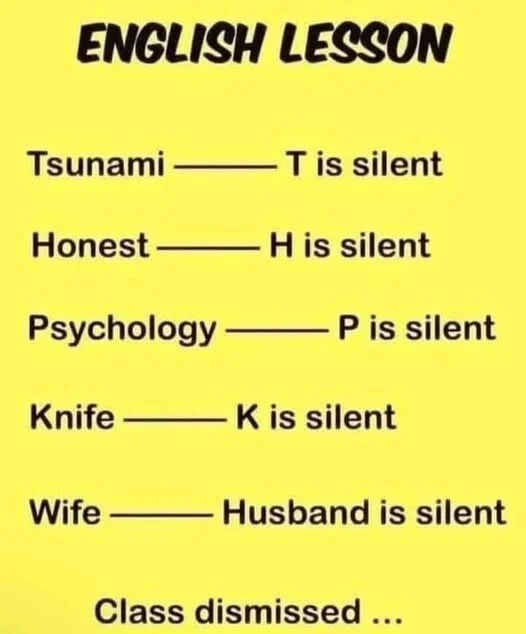
Mot:. What Do You Mean??? -- Learning English is Hard???
Iraq Economic News and Points To Ponder Sunday Morning 9-7-25
Called For Its Automation In Iraq.. Economist: Suspicions Of Gold Imports From The UAE
Baghdad Today – Baghdad Economic expert, Manar Al-Abidi, revealed on Friday (September 5, 2025) suspicions of gold imports from the United Arab Emirates, calling for the complete automation of the gold sector in all its stages.
Al-Obaidi said in a post on his Facebook account, followed by "Baghdad Today," that "official data issued by the UAE Statistics Authority indicates that the volume of UAE exports to Iraq in 2024 amounted to approximately $33 billion, distributed as follows:
Called For Its Automation In Iraq.. Economist: Suspicions Of Gold Imports From The UAE
Baghdad Today – Baghdad Economic expert, Manar Al-Abidi, revealed on Friday (September 5, 2025) suspicions of gold imports from the United Arab Emirates, calling for the complete automation of the gold sector in all its stages.
Al-Obaidi said in a post on his Facebook account, followed by "Baghdad Today," that "official data issued by the UAE Statistics Authority indicates that the volume of UAE exports to Iraq in 2024 amounted to approximately $33 billion, distributed as follows:
$12.8 billion in precious metals, mostly gold, $6.3 billion in electronic devices, the largest portion of which is mobile phones, $5.1 billion in cars, in addition to $2.3 billion in electrical and mechanical devices."
He added, "By comparison, the UAE's exports to Iraq in 2023 did not exceed $23 billion, of which gold accounted for only $3.2 billion.
" He explained that "this significant increase in gold imports in 2024 raises legitimate questions, especially given that one of the main reasons for this is the use of gold as an alternative means of financial settlement in trade with some countries, in addition to its ease of liquidity in markets and its use in various financial transactions."
Al-Obaidi asked, "Where were these massive gold imports financed?
Were they fully covered by transfers from the Central Bank of Iraq?"
He explained, "If so, this is despite the regulatory regime implemented since 2023, which limited the ability of dozens of Iraqi banks to conduct foreign transfers and focused oversight on the remaining banks. Consequently, oversight of trade finance operations should be more stringent."
The economic expert asked, "If the gold purchase was financed outside the Iraqi banking system, what is the source of this money and why was it used to purchase and export the gold to Iraq?"
Al-Obaidi pointed out that "data for the first quarter of 2025 indeed indicates a sharp decline in UAE gold exports to Iraq by 52% compared to the same period the previous year.
However, the reasons for the significant jump in 2024 and subsequent decline in 2025 remain unclear, which calls for a serious pause.
The fact that more than 12% of Iraq's total imports go to cover gold imports requires careful monitoring, starting with identifying the sources of financing for this commodity, moving on to its transport channels and the ports through which it entered the country, and ending with the identity of the importers and the uses of this gold."
The economic expert emphasized the"need for economic policies to move toward fully automating the gold sector in all its layers, and to prohibit transactions except through monitored electronic payment channels, enabling tracking of sales and purchases and identifying the ultimate beneficiary of these large quantities.
The goal is not only to meet Iraq's actual need for gold, but also to prevent its use for purposes that could harm the national economy and undermine confidence in the Iraqi banking system." https://baghdadtoday.news/282542-.html
Bank Deposit Growth And Cash Credit Decline In Iraq
Energy and Business 2025-09-06 Shafaq News - Baghdad The Central Bank of Iraq announced on Saturday that bank deposits in the country grew for June 2025, while credit growth registered a slight decline.
According to bank statistics reviewed by Shafaq News Agency, total deposits at banks operating in Iraq reached 117.439 billion dinars, a 1.7% increase compared to 115.360 billion dinars in May.
The bank indicated that central government deposits amounted to 37.822 billion dinars, public institutions' deposits amounted to 25.460 billion dinars, while private sector deposits amounted to 54.157 billion dinars.
In contrast, credit growth declined slightly by 0.01% in June, reaching 71.431 billion dinars,compared to 71.504 billion dinars in May.
Credit extended to the central government amounted to 24.680 billion dinars, to public institutions 2.454 billion dinars, and to the private sector 44.349 billion dinars. https://shafaq.com/ar/اقتصـاد/نمو-الودا-ع-المصرفية-وانخفاض-الا-تمان-النقدي-في-العراق
Al-Sudani: Iraq's Oil Reserves Amount To 150 Billion Barrels And Will Supply The World For More Than A Century.
Energy and Business breaking 2025-09-06 Shafaq News - Baghdad Prime Minister Mohammed Shia al-Sudani announced on Saturday that Iraq's oil reserves amount to approximately 150 billion barrels, indicating that the country could supply world markets with crude oil for more than a century.
In a speech he delivered at the launch of the Baghdad International Energy Forum, attended by a Shafaq News Agency correspondent, Al-Sudani said that
Iraq has transformed, in just a few years, into an industrial and development field, with a thriving energy sector and an accelerating pace of reconstruction and development. He added that Iraq's oil reserves amount to 150 billion barrels, ranking it among the highest in the world.
Al-Sudani also pointed out that Iraqi oil will continue to supply global markets for at least 120 years, arguing that Iraq's export share is not commensurate with the size of its reserves, production capacity, population size, provision of services, and ageing. He expressed his hope that Iraq's oil share would be reconsidered in line with actual capacity indicators, stressing openness to oil companies interested in investing in oil and gas.
Since the beginning of the government's work, the energy issue, the oil wealth, and the increase in its value were present, and it was necessary to deal with the oil wealth in terms of preparing a real infrastructure for oil production. LINK
Iraq Sets A "Lifespan" For Its Oil: It Will Feed The World Until A Specific Date.
Economy 2025-09-06 | 1,204 views Alsumaria News – Economy identified Prime Minister Mohammed Shia al-Sudani on Saturday the "preferred" companies to operate in Iraq's oil sector, noting that Iraqi oil will supply the world for the next 120 years.
said Al-Sudani in a speech during the launch of the Baghdad International Energy Forum, followed by Sumaria News,
"We have great hopes and expectations for these forums, and in light of Iraq's important relationship with oil producers, we must not forget that Baghdad hosted the founding of OPEC."
Al-Sudani explained that there are "preferential measures for major oil companies in accordance with the country's highest interests," stressing "openness to receiving oil companies wishing to invest in oil and gas."
He pointed out that "since the beginning of our government's work, the energy issue has been present, particularly in the goal of expanding the use of oil wealth and raising the added value of its products, as the world is rapidly shifting towards energy diversity, especially clean energy.
" He emphasized that "we see the gas sector as a strategic economic option that enhances Iraq's energy security and represents an opportunity to build infrastructure supporting the electricity sector."
He pointed to the end of associated gas flaring and the full utilization of 1,300 million standard cubic feet, aswe have exceeded 70% of gas reuse, achieving a complete end to flaring within two years.
He explained that "Iraqi oil will continue to feed global markets for more than 120 years, and we are working to transform Iraqi oil into high-value products."
https://www.alsumaria.tv/news/economy/539770/العراق-يحدد-عمرًا-افتراضيًا-لنفطه-سيغذي-العالم-لتاريخ-محدد
Planning: The Development Plan Focused On Activating Non-Oil Revenues.
Yesterday, 11:36 Baghdad - INA - Mohammed Al-Talibi The Ministry of Planning affirmed on Saturday that the five-year development plan is flexible and responsive to changes, including economic, security, and climate crises, and prioritizes service projects.
The Ministry noted that the development plan focuses on activating non-oil revenues.
“Planning takes into account all variables and sets the worst possible scenarios to at least minimize and overcome their impact,” Abdul Zahra Al-Hindawi, a spokesman for the Ministry of Planning, told the Iraqi News Agency (INA).
He explained that “the five-year development plan launched at the end of last year and extending until 2028, took into account global changes, price fluctuations, and the state of uncertainty resulting from political crises and wars, all of which have an impact on Iraq, as it is part of the global system that is affected and is affected through imports, exports, and oil.”
He added, "The ministry has moved towards activating non-oil activities, such as agriculture, industry, and tourism, in addition to developing the tax system and maximizing revenues from various sources, to reduce the impact of global and even domestic variables."
He emphasized, "The plan was developed to be flexible, applicable, and participatory, and we have identified two main paths in it: innovation in addressing problems, and programming development action, thus achieving a balance between variables and constants."
Al-Hindawi pointed out that “the Ministry of Planning includes projects within plans, whether regional development plans for governorates or the investment program for ministries and entities not affiliated with a ministry.
No project is implemented unless it is included within the plan by the ministry, after preparing a feasibility study.”
He pointed out that “the project that is included and begins to be implemented by the relevant entity,
the ministry’s task is to follow up on implementation and point out any errors or deviations,
and then issue letters and directives to the relevant entities regarding the reasons for the delay.”
He explained that "some projects are stalled due to problems between the implementing company and the beneficiary, and these are factors that the ministry is working to address in coordination with the relevant authorities."
He emphasized that "the ministry is working in light of the government program and its priorities,as the program has given priority to projects of a service nature, such as sewage, water, and school projects."
Al-Hindawi stressed that "education comes first, followed by road projects, then industrial and agricultural projects," explaining that "priorities are also determined based on the development gap between one governorate and another.
If a governorate suffers from a problem with sewage networks, this sector is given priority, while
if another governorate suffers from a problem with drinking water, water projects are given priority.
All of this is done based on the development and spatial gap in services and projects."
https://ina.iq/ar/economie/242688-.html
Al-Khalidi: Reforming The Port System Will Support Iraq's Treasury.
September 5, 19:14 Information/Baghdad Former Parliament Rapporteur Mohammed Othman Al-Khalidi confirmed on Friday that reforming Iraq's port system could contribute approximately 10% of annual revenues to the Iraqi treasury.
Al-Khalidi told Al-Maalouma News Agency: "Iraqi ports constitute strategic economic facilities, especially since they constitute a significant portion of non-oil revenues.
However, there are many question marks regarding the mechanisms of operation and the possibility of exploiting the significant opportunities available."
He added, "Completing the multi-stage reform process of the port system,working to eliminate any suspicions of financial and administrative corruption, and automating exchanges and transactions, could transform port revenues into a significant figure that would support Iraq's treasury by 10% annually, thus reducing pressure on oil sales and the challenges of global price fluctuations."
He pointed out that "Iraq will remain in a difficult economic situation if the path is not corrected and a diversified economy is not created, far from its near-total dependence on oil sales," explaining that
"more than 90% of the treasury's revenues come from oil sales and are used to pay wages,loans,dues to ministries and agencies,and annual salaries." https://almaalomah.me/news/109479/economy/الخالدي:-إصلاح-منظومة-الموانئ-يدعم-خزينه-العراق
For current and reliable Iraqi news please visit: https://www.bondladyscorner.com