
“Tidbits From TNT” Sunday 8-31-2025
TNT:
Tishwash: The digital economy in Iraq: 10 million bank cards and 15 trillion dinars in payments
The Eco Iraq Observatory, which specializes in economic affairs, announced on Saturday that the number of active bank cards in the country has exceeded 10 million, indicating the rapid expansion towards a digital economy.
The observatory quoted the Baghdad Council for Digital Transformation and Electronic Payments, in a statement received by Shafaq News Agency, as saying, "The qualitative transformation in the electronic payment sector is due to the policies of the Central Bank of Iraq and the government's support for this process."
TNT:
Tishwash: The digital economy in Iraq: 10 million bank cards and 15 trillion dinars in payments
The Eco Iraq Observatory, which specializes in economic affairs, announced on Saturday that the number of active bank cards in the country has exceeded 10 million, indicating the rapid expansion towards a digital economy.
The observatory quoted the Baghdad Council for Digital Transformation and Electronic Payments, in a statement received by Shafaq News Agency, as saying, "The qualitative transformation in the electronic payment sector is due to the policies of the Central Bank of Iraq and the government's support for this process."
According to the council, the volume of digital payments exceeded 15 trillion Iraqi dinars, including 1.7 trillion dinars for customs, while the remaining transactions were distributed across various other sectors.
The Council emphasized that "electronic payment companies are non-banking financial institutions whose mission is limited to executing transfers without storing funds or opening accounts," noting that "these companies have directly contributed to building the infrastructure for this transformation."
He pointed out that "the ongoing reforms in the banking system aim to consolidate governance and strengthen the foundations of the country's digital economy." link
**************
Tishwash: Japanese Ambassador: The Memorandum of Understanding with Iraq paves the way for economic integration between the two countries.
Japanese Ambassador to Iraq Akira Endo affirmed on Sunday that the memorandum of understanding with Iraq will contribute to strengthening relations between the private sectors of both countries, Japan and Iraq.
In a speech he delivered following the signing of the Memorandum of Understanding between Iraq and Japan on (developing educational programs and pursuing projects in the fields of technology, engineering, mathematics, and arts), which was attended by the correspondent of the Iraqi News Agency (INA), Ando expressed his "happiness to celebrate this valuable moment in the journey of Japanese-Iraqi friendship and the signing of the Memorandum of Understanding between Gakken Holding Company and the Iraq Development Fund ( IDF )."
He added, "We have noticed an improvement in the political, economic, and security situation, as Iraq enjoys stability under the wise leadership of Prime Minister Mohammed Shia al-Sudani. The Iraqi government is pursuing a balanced diplomacy aimed at building good relations with neighboring and regional countries, and a diplomacy of economic partnerships aimed at strengthening economic relations." He expressed Japan's appreciation for these efforts by the Iraqi government.
He added, "Since 2003, the Japanese government has implemented an aid program with grants worth approximately $2.8 billion to rebuild living infrastructure, such as schools, in addition to $11.5 billion in yen loans to rehabilitate and develop infrastructure, such as electricity, water, sanitation, and oil."
He continued, "Japan has become one of the leading donors of official development assistance to Iraq in recent years," noting that "Japan has consistently provided support to the Iraqi people to help them continue their journey toward a brighter future, by supporting their efforts in nation-building, economic reconstruction, and development alongside the Iraqi people."
The Japanese ambassador stated that the Iraq Development Fund highlighted the areas of education, agriculture, housing, digital transformation, manufacturing, food security, and the environment, noting that the Iraqi government has prioritized these areas under the leadership of the Sudanese Prime Minister.
He explained that " Gakken has been one of the leading Japanese companies since its founding in 1946. Over the course of nearly 80 years, it has contributed to the overall reconstruction of the country by enhancing the academic capabilities and social skills of all Japanese citizens, especially in the field of science." He expressed his hope that " Gakken's expertise in Iraqi educational fields will be employed to enhance the development of human resources that will lead Iraq's future industries, which will contribute to the country's reconstruction and economic development after the war."
He added, "The signing of the Memorandum of Understanding between Gakken and the Iraq Development Fund ( IDF ) is a very important and timely event that will contribute to strengthening relations between the private sectors in Japan and Iraq in terms of information exchange, support, promotion, and coordination of businesses link
************
Tishwash: Al-Sudani: 5G service represents a "qualitative step" to enhance the telecommunications sector in Iraq.
Prime Minister Mohammed Shia Al-Sudani affirmed, today, Sunday (August 31, 2025), that the advanced (5G) service represents a "qualitative step" to enhance the communications sector in Iraq, during his sponsorship of the signing of the founding contract for the National Company for Mobile Communications Services.
The Prime Minister's media office stated in a statement received by Baghdad Today that "Al-Sudani sponsored today, Sunday, the signing of the founding contract for the National Mobile Telecommunications Services Company, as a public joint-stock company, which was previously approved in the government program, with contributions from three entities: the State Employees' Retirement Fund, the Trade Bank of Iraq, and the Al-Salam Public Company affiliated with the Ministry of Communications."
He added that "the Prime Minister appreciated the efforts made by the Ministry of Communications in this regard," noting the need to complete the procedures to provide the service, especially since it will be coupled with the advanced (5G) service, which will be available to all citizens."
Al-Sudani stressed, according to the statement, that "the establishment of the National Company for Telephone and Transmission Services, which was approved in the government program, represents a qualitative step in the field of enhancing telecommunications services, given the significant development they are witnessing, which requires the company to compete with other companies in order to provide the best telecommunications services that now cover all areas of life, especially the economy, education, and the development witnessed by the country."
The Prime Minister explained that "this step represents the first of three government entities to establish a mobile phone company, which will be open to subscription by citizens to contribute to the company's capital. This represents one of the paths adopted by the government to strengthen the non-oil economy." He noted that "the establishment of the company does not mean restricting the private sector, but rather creating an atmosphere of competition with the aim of providing the best services to citizens." link
Mot: Straight from the Mom files.
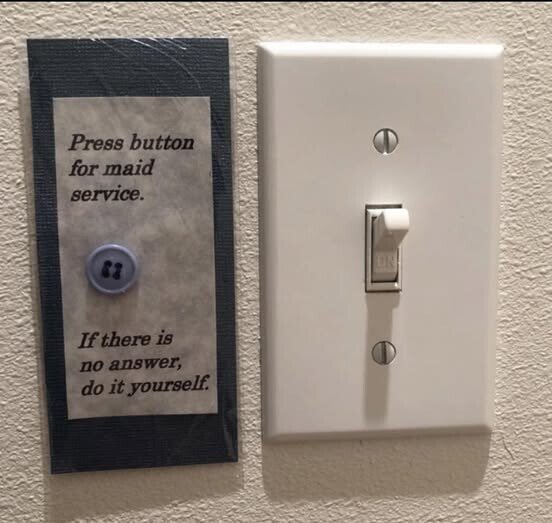
Mot: Hay Guys!! - Careful as YOu Answer the Singles Ads after da ""RV""

Seeds of Wisdom RV and Economic Updates Sunday Morning 8-31-25
Good Morning Dinar Recaps,
Trump’s Central Bank Theatrics Expose the Fed’s Myth of Independence
Trump’s latest clash with the Federal Reserve raises questions about whether the Fed has ever truly been independent.
The Fed’s Walls Were Never Fortified — Only Pretended
The Federal Reserve has been a contentious fixture in U.S. history since its creation in 1913. While often described as “independent,” the Fed was deliberately built with a public-private framework, allowing for both banker control and presidential influence.
Good Morning Dinar Recaps,
Trump’s Central Bank Theatrics Expose the Fed’s Myth of Independence
Trump’s latest clash with the Federal Reserve raises questions about whether the Fed has ever truly been independent.
The Fed’s Walls Were Never Fortified — Only Pretended
The Federal Reserve has been a contentious fixture in U.S. history since its creation in 1913. While often described as “independent,” the Fed was deliberately built with a public-private framework, allowing for both banker control and presidential influence.
From appointments and dismissals to public criticism, U.S. presidents have long wielded pressure on the central bank—shaping monetary policy to fit political needs.
Wilson’s Hand in Creation
President Woodrow Wilson championed the Federal Reserve Act of 1913, signed into law on December 23 of that year. While its stated goal was to curb recurring financial panics, Wilson ensured presidential appointees sat on the Fed board, embedding political influence at its core.
At the same time, powerful banking families tied to earlier crises, including the Panic of 1907, played pivotal roles in shaping the Fed’s design. Wilson’s precedent guaranteed that political and banking interests would remain entangled in Fed operations.
Hoover and the Depression Strain
During the Great Depression, President Herbert Hoover pressured the Fed to cut rates to spur recovery. Instead, the Fed raised them—highlighting tensions between presidential demands and central bank policy.
This early clash exposed the fragility of Fed “independence” when presidents pressed for action during crises.
Peak Power — Roosevelt’s Grip on the Fed
Franklin D. Roosevelt expanded presidential influence dramatically. By suspending the gold standard in 1933 and enacting the Banking Acts of 1933 and 1935, FDR consolidated authority over monetary policy.
Throughout the Depression and World War II, the Fed effectively became an arm of the Treasury, pegging interest rates low to cheaply finance massive deficits. This era marked perhaps the height of presidential control over the Fed.
Truman’s Showdown
President Harry Truman clashed with Fed Chair Thomas McCabe in 1951, demanding low rates to finance the Korean War. His pressure forced McCabe’s resignation.
The Treasury-Fed Accord that followed sought to restore independence, but Truman’s victory showed how presidents could still bend monetary policy to wartime needs.
Kennedy and Johnson’s In-House Influence
John F. Kennedy frequently met with Fed Chair William McChesney Martin to press for pro-growth policies in the early 1960s. Lyndon B. Johnson went further, summoning Martin to his Texas ranch in 1965 and berating him for raising rates during Vietnam War spending.
Recordings reveal how Johnson’s personal intimidation influenced short-term Fed decisions—further blurring independence.
Nixon’s Inflation Legacy
Richard Nixon took Fed influence to another level. In 1970, he appointed Arthur Burns as Fed Chair and pressured him to keep rates low ahead of the 1972 election.
Burns complied, but the political pressure helped unleash the inflationary surge of the 1970s—demonstrating the long-term costs of White House meddling.
Trump’s Theatrics Today
Fast forward to today: President Donald Trump’s public pressure on Fed Chair Jerome Powell and his controversial dismissal of Governor Lisa Cook have once again thrust the Fed into political theater.
Critics argue Trump’s tactics risk undermining Fed credibility abroad. But history shows this is hardly new—rather, it’s a continuation of a century-long pattern where presidents bend or break the Fed’s supposed autonomy.
Why This Matters
The Federal Reserve’s “independence” has always been conditional, more myth than reality. From Wilson to FDR, from Truman to Nixon, and now Trump, presidents have consistently shaped Fed policy through pressure, appointments, and outright confrontation.
Trump’s theatrics may look unprecedented, but in truth, they reaffirm a long-standing reality: the Fed’s autonomy is fragile, performative, and ultimately subordinate to political power.
@ Newshounds News™
Source: Bitcoin.com
~~~~~~~~~
What Makes XRP Different From Every Other Cryptocurrency
XRP stands apart in the crowded crypto market by focusing on real-world payments instead of speculation.
A Market Full of Narratives
The cryptocurrency industry has matured dramatically since Bitcoin’s launch. Thousands of assets now compete for attention, from Ethereum’s smart contract platforms to meme tokens and NFTs.
But XRP carved out a unique identity. Unlike most digital currencies, it was designed with a narrow purpose: to make global payments faster, cheaper, and more efficient.
This focus has given XRP adoption not only among traders but also among banks, remittance firms, and payment providers. While most crypto projects remain speculative, XRP has been tested in real settlement systems worldwide.
Pre-Mined Supply and Predictable Release
XRP’s structure differs from Bitcoin and Ethereum, which release coins through mining. At launch in 2012, 100 billion XRP were created in advance. Ripple Labs placed much of this supply in escrow accounts for gradual release.
Supporters say this makes XRP’s circulation transparent and predictable, while critics warn it concentrates control. Either way, the model offers institutions more familiarity than the uncertainty of mined assets.
Fast and Low-Cost Transactions
Transactions on the XRP Ledger settle in 3–5 seconds, compared with Bitcoin’s 10 minutes or Ethereum’s congested minutes. Fees cost only fractions of a cent.
These advantages have been proven in remittance corridors worldwide. Ripple partnerships in Asia, Europe, and Latin America demonstrate how XRP cuts costs and delays in cross-currency payments—advantages few other blockchains can match.
Energy-Efficient Consensus Model
Unlike proof-of-work blockchains, XRP uses a consensus mechanism that avoids mining altogether. Validators agree on transactions without requiring massive electricity consumption.
According to CME data, an XRP transaction consumes just 0.0079 kWh, compared with Bitcoin’s 707 kWh. As institutions increasingly weigh ESG standards, XRP’s green profile stands out.
Purpose-Built for Payments
Bitcoin is “digital gold.” Ethereum is a decentralized app platform. XRP was purpose-built to bridge fiat currencies.
By serving as a liquidity asset, XRP allows banks to move money globally without pre-funded accounts. This saves institutions time and cost, turning XRP into a payments tool rather than just another speculative asset.
Advanced Features on the XRP Ledger
Beyond payments, the XRP Ledger includes a native decentralized exchange (DEX) and built-in asset tokenization. Developers can launch tokens, swap assets, and build applications directly at the protocol level.
This makes the ledger more versatile for financial applications than most other blockchains, while still keeping its payment-first design.
Proven Reliability and Long Track Record
Since 2012, the XRP Ledger has delivered over a decade of continuous uptime. Few blockchains can claim such consistency across multiple bull and bear cycles.
For enterprises considering blockchain, this reliability adds weight alongside innovation. Developers also benefit from XRPL.org’s tools and documentation.
Market Behavior and Independence
XRP shows weaker correlation with Bitcoin and Ethereum than most top assets. Studies suggest XRP’s moves are tied more to adoption and regulatory milestones than broader speculative cycles.
This relative independence makes it attractive for investors seeking diversification in the digital asset space.
Regulatory Clarity and Ripple’s Influence
Ripple Labs has played a unique role in XRP’s adoption, pushing for global licensing and enterprise partnerships. In the U.S., court rulings in 2023–24 declared XRP itself not a security, giving it rare clarity compared with other crypto assets.
Ripple’s advocacy has added legitimacy, giving XRP both a decentralized ledger and a corporate champion—a combination few projects enjoy.
Why This Matters
XRP is different because it wasn’t built to follow hype cycles. Its pre-mined, escrow-controlled supply, fast settlement, low fees, and energy efficiency give it structural advantages. Its track record, enterprise adoption, and regulatory clarity give it credibility.
In a crowded field of speculative cryptocurrencies, XRP’s clarity of purpose—to move money like information: fast, cheap, and borderless—is what makes it stand apart.
@ Newshounds News™
Source: Coindoo
~~~~~~~~~
Seeds of Wisdom Team RV Currency Facts Youtube and Rumble
Newshound's News Telegram Room Link
Follow the Roadmap
Follow the Timeline
Seeds of Wisdom Team™ Website
Thank you Dinar Recaps
Global Fractures and the BRICS Realignment
Global Fractures and the BRICS Realignment
Gregory Mannarino: 8-30-2025
Forget what you think you know about the future of global power. According to market analyst Gregory Mannarino, the anticipated collapse of the current international order isn’t a future prophecy – it’s actively unfolding right before our eyes.
We’re not waiting for the system to break; we’re living through its profound transformation into something entirely new.
Global Fractures and the BRICS Realignment
Gregory Mannarino: 8-30-2025
Forget what you think you know about the future of global power. According to market analyst Gregory Mannarino, the anticipated collapse of the current international order isn’t a future prophecy – it’s actively unfolding right before our eyes.
We’re not waiting for the system to break; we’re living through its profound transformation into something entirely new.
Mannarino’s insightful analysis paints a picture of a world in dynamic realignment, moving swiftly from a unipolar, dollar-dominated landscape to a fragmented, multipolar reality. Here’s a breakdown of the key elements driving this unprecedented shift:
The most striking observation is the emergence of regional fractures. Countries and alliances are increasingly isolating themselves from traditional structures, forming new blocs – what Mannarino provocatively calls “walls” – that represent the nascent outlines of future empires.
This isn’t just about diplomatic squabbles; it’s about fundamental shifts in strategic alignment and economic self-interest.
Beyond trade and payment systems, another crucial strategy employed by key players involves gold.
Both Russia and China are aggressively accumulating gold reserves, seeing it as a vital backstop for their currencies against the inherent instability of the current fiat money system, particularly the dominant U.S. dollar.
Mannarino even likens this national strategy to individuals acting as their own “central banks,” highlighting the importance of personal financial resilience. In a world of increasing instability, hedging against systemic risks by diversifying assets becomes not just a smart move for nations, but for individuals as well.
What does this all mean for us? We are witnessing a dynamic realignment in global power structures, economic systems, and strategic alliances.
The unipolar world governed by a single dominant force is giving way to a multipolar landscape where new centers of power, new currencies, and new economic strategies are emerging. This isn’t a theoretical concept; it’s a living, breathing reality unfolding daily.
Understanding these shifts isn’t just academic; it has profound implications for global stability, economic security, and international relations. The chessboard is being reset, and the game has already begun.
For a deeper dive into these critical insights and a comprehensive understanding of the forces shaping our world, watch the full video from Gregory Mannarino.
Iraq Economic News and Points To Ponder Saturday Afternoon 8-29-25
Dollar Prices On The Baghdad And Erbil Stock Exchanges At The Close
Stock Exchange The US dollar exchange rate rose against the Iraqi dinar on Saturday evening in Baghdad and Erbil as the stock exchange closed.
Baghdad: Selling price: 143,500 dinars for $100. Buying price: 141,500 dinars for $100.
Erbil: Selling price: 142,200 dinars for $100. Buying price: 142,100 dinars for $100
Dollar Prices On The Baghdad And Erbil Stock Exchanges At The Close
Stock Exchange The US dollar exchange rate rose against the Iraqi dinar on Saturday evening in Baghdad and Erbil as the stock exchange closed.
Baghdad: Selling price: 143,500 dinars for $100. Buying price: 141,500 dinars for $100.
Erbil: Selling price: 142,200 dinars for $100. Buying price: 142,100 dinars for $100.https://economy-news.net/content.php?id=59422
Gold Prices Rise Again In Baghdad
Economy | 08/30/2025 Mawazine News - Baghdad - The prices of foreign and Iraqi gold recorded a significant increase on Saturday in the local markets of the capital, Baghdad.
The selling price of one mithqal of 21-karat Gulf, Turkish and European gold in the wholesale markets on Al-Nahr Street was 700,000 dinars, while the purchase price reached 696,000 dinars. This increase comes compared to last Thursday's prices, when the selling price was 686,000 dinars.
The selling price of one mithqal of 21-karat Iraqi gold reached 670,000 dinars, while the purchase price reached 666,000 dinars. https://www.mawazin.net/Details.aspx?jimare=265953
Iraqi Oil Prices Rise In Global Markets
Economy | 10:55 - 08/30/2025 Mawazine News – Baghdad Iraqi oil prices rose on Saturday during daily trading in the global market.
According to data reviewed by Mawazine News, Basra Medium crude rose to $70.11 per barrel, while Basra Heavy crude reached $66.91 per barrel, with a change rate of +0.94% for both.
Regarding global oil prices, British Brent crude recorded $68.12 per barrel, while US West Texas Intermediate crude recorded $64.01 per barrel, with changes rates of -0.59% and -0.50%, respectively. https://www.mawazin.net/Details.aspx?jimare=265947
The Central Bank Of Iraq Issues Instructions And Regulations To Regulate The Electronic Payment Process In Three Aspects.
Banks Economy News – Baghdad Central Bank Governor Ali Al-Alaq announced on Saturday the issuance of instructions and regulations to regulate electronic payments across three aspects. While revealing a mechanism for developing the electronic payment process, he also affirmed that all state institutions are required to use electronic payments, not cash.
Al-Alaq told the official news agency, as received by Al-Eqtisad News, that "electronic payment is witnessing significant development. It is a gateway to the digital transformation towards a digital economy, a larger issue related to economic structure and global interaction, to achieve greater financial inclusion. All of these aspects have become established and advanced strategies."
He pointed out that "the Central Bank, along with the government, the private sector, electronic payment companies, and technology companies, are all engaged in this massive and ongoing effort. We have regulatory and legislative technical initiatives and directions being worked on in coordination between the Central Bank of Iraq and the Iraqi government."
He added, "There is cooperation and coordination with the government through the decision issued by the Council of Ministers requiring all state institutions to use electronic payments instead of cash.
There is also the localization of salaries, which amounts to millions, in addition to public awareness being conducted through electronic payment companies and civil society organizations. There is growing community awareness."
He explained that "progress in electronic payments requires infrastructure, a legislative framework, and community awareness. These are three aspects that are being worked on diligently.
Much of the infrastructure at the Central Bank level has been completed in an advanced manner, fully in line with international practices and legislative frameworks. We have issued numerous instructions and regulations that regulate the process, but we need more in the third aspect, which is community and cultural awareness." https://economy-news.net/content.php?id=59401
Tax Reform Committee: Recording A 20% Revenue Growth
Local The Supreme Committee for Tax Reform confirmed on Saturday that private sector companies' voluntary disclosure activity increased by more than 40%, while revealing a 20% growth in revenues. It noted that cooperation with international institutions contributed to the implementation of tax reform within several parameters.
Khalid Al Jabri, a member of the Supreme Committee for Tax Reform, said: "The Tax Reform Conference for Economic Development and Investment Stimulation, held last week, reflects a broad package of reform measures implemented over the past months."
He noted that "the conference includes a presentation of digital repercussions, including the growth in tax revenues last year compared to the previous year by more than 20%, with growth this year expected to reach between 30 and 35%."
He added, "These repercussions have contributed to revitalizing the commercial registry, through a number of private sector companies' willingness to voluntarily file a declaration. Activity in this area has increased by more than 40%, indicating the presence of an economic movement that has begun to enhance confidence between the General Tax Authority and taxpayers."
He noted that "this confidence has begun to crystallize through the facilitation of business facilitation procedures, which has led to a gradual growth in economic activity."
Al-Jaberi explained that "there is cooperation with international institutions, such as the Center for Tax and Investment in Washington, which has helped the Higher Committee address many of the constraints facing tax reform, in addition to harmonizing Iraqi standards with international standards, with the aim of strengthening the economic environment in Iraq and attracting foreign companies to invest in the country." https://economy-news.net/content.php?id=59429
For current and reliable Iraqi news please visit: https://www.bondladyscorner.com/
Seeds of Wisdom RV and Economic Updates Saturday Afternoon 8-30-25
Good Afternoon Dinar Recaps,
Trump vs BRICS: The Hidden Role of US Policy in China’s Expansion
Tensions between the Trump administration and the BRICS bloc have been steadily escalating, with Trump threatening tariffs and taking a confrontational stance toward China and its partners. This marks a sharp departure from the previous U.S. approach, and it is reshaping global dynamics as BRICS expands its influence over nearly 40% of global GDP.
Good Afternoon Dinar Recaps,
Trump vs BRICS: The Hidden Role of US Policy in China’s Expansion
Tensions between the Trump administration and the BRICS bloc have been steadily escalating, with Trump threatening tariffs and taking a confrontational stance toward China and its partners. This marks a sharp departure from the previous U.S. approach, and it is reshaping global dynamics as BRICS expands its influence over nearly 40% of global GDP.
Policy Reversal Shows Trump vs BRICS Approach
While the Biden administration largely dismissed BRICS as a non-threatening coalition, Trump has taken a dramatically different line.
National Security Advisor Jake Sullivan previously remarked:
“We are not looking at the BRICS as evolving into some kind of geopolitical rival to the United States or anyone else.”
By contrast, since winning the 2024 election, Trump has repeatedly threatened tariffs against BRICS countries while criticizing the bloc’s initiatives. His sharp rhetoric has drawn attention, although at times his grasp of the group has appeared limited—Trump once incorrectly claimed Spain was a member, and later admitted uncertainty about China’s role in BRICS:
“I don’t even know that they’re a member of BRICS.”
How Tensions Drive BRICS Expansion
Former U.S. Ambassador to China Nicholas Burns revealed at the Aspen Security Forum that Trump’s aggressive approach toward China and U.S. allies inadvertently fueled BRICS growth.
Burns explained:
“I think they were threatened. I felt it in my bones as I talked to them over the last couple of years.”
According to Burns, Beijing responded by working harder to strengthen BRICS alliances:
“What did they try to do? They tried to build the BRICS up.”
He also noted that allies across Europe, NATO, and the Indo-Pacific were aligned in their efforts to counter China, which reinforced Beijing’s determination to deepen ties within BRICS.
Dollar Challenge Gets Serious
Trump has consistently emphasized his determination to protect the U.S. dollar’s dominance:
“The dollar is king. We’re going to keep it that way.”
But BRICS has been actively building alternative financial systems, including:
The New Development Bank
The BRICS PAY system
Regional settlement mechanisms designed to reduce reliance on the U.S. dollar
With new members such as Egypt, Ethiopia, Iran, and the UAE, BRICS now represents a formidable coalition pushing for de-dollarization.
Burns explained that Trump’s tariff threats, combined with the strength of allied coordination, left China feeling cornered:
“The Chinese were threatened by the strength of the allies pushing together against them.”
Future Relations Look Complicated
Economist Richard Wolff offered a stark assessment of what these developments could mean for U.S. influence:
“In a way, the United States peaked, its empire peaked, and it is now being challenged. Pay attention to the BRICS.”
Burns added his own warning about Trump’s approach to U.S. partners:
“You can’t make our allies feel subservient to the United States.”
As BRICS continues to expand—now accounting for roughly 40% of the world’s population and economic output—Trump’s aggressive stance may inadvertently accelerate membership growth and further strengthen the bloc’s challenge to U.S. global leadership.
@ Newshounds News™
Source: Watcher Guru
~~~~~~~~~
Seeds of Wisdom Team RV Currency Facts Youtube and Rumble
Newshound's News Telegram Room Link
Follow the Roadmap
Follow the Timeline
Seeds of Wisdom Team™ Website
Thank you Dinar Recaps
MilitiaMan and Crew: Iraqi Dinar News-An Inevitable Strategic Plan Digital-Finance
MilitiaMan and Crew: Iraqi Dinar News-An Inevitable Strategic Plan Digital-Finance
8-30-2025
The Crew: Samson, PompeyPeter, Petra, Daytrader, Sunkissed, GIGI and Militia Man
Follow MM on X == https://x.com/Slashn
Be sure to listen to full video for all the news……..
MilitiaMan and Crew: Iraqi Dinar News-An Inevitable Strategic Plan Digital-Finance
8-30-2025
The Crew: Samson, PompeyPeter, Petra, Daytrader, Sunkissed, GIGI and Militia Man
Follow MM on X == https://x.com/Slashn
Be sure to listen to full video for all the news……..
Iraq Economic News and Points To Ponder Saturday Morning 8-29-25
The Return Of American Companies To Iraq: Guarantees Of Transparency And Security Balance The Risks Of Corruption And Chinese Influence.
Baghdad Today – Baghdad Economic expert Nabil Al-Marsoumi commented on Friday (August 29, 2025) on the return of giant American companies to work in Iraq after years of withdrawal, considering it a step that indicates an improvement in the investment climate.
Al-Marsoumi said in a post on his Facebook account, followed by Baghdad Today, that the return of the American company "Chevron" from the Nasiriyah field in Dhi Qar Governorate comes after a previous wave of withdrawals by a number of major foreign companies.
The Return Of American Companies To Iraq: Guarantees Of Transparency And Security Balance The Risks Of Corruption And Chinese Influence.
Baghdad Today – Baghdad Economic expert Nabil Al-Marsoumi commented on Friday (August 29, 2025) on the return of giant American companies to work in Iraq after years of withdrawal, considering it a step that indicates an improvement in the investment climate.
Al-Marsoumi said in a post on his Facebook account, followed by Baghdad Today, that the return of the American company "Chevron" from the Nasiriyah field in Dhi Qar Governorate comes after a previous wave of withdrawals by a number of major foreign companies.
These withdrawals were due to the growing risks of corruption, a lack of experience in public administration, a weak ability to absorb the flow of aid funds, in addition to sectarian issues and a lack of political will to combat corruption.
Al-Marsoumi explained that massive embezzlement, fraudulent procurement, money laundering, oil smuggling, and widespread bureaucratic bribery have led to a flight of investment and the country's position at the bottom of international corruption rankings, hindering effective state-building and service delivery.
On the other hand, the return of American companies is linked to several factors, most notably the US desire to counterbalance China's massive influence in the Iraqi oil and gas sector.
The guarantees provided by the Iraqi government regarding transparency, contract stability, and
security also served as an important incentive. According to Al-Marsoumi,
Chevron's return came after Baghdad agreed to three conditions presented by the American companies:
"consistency," which guarantees the completion of the facilities associated with the projects;
"security," which includes employee safety and sound business and legal practices; and
"procedural facilitation," which ensures the deal remains intact regardless of any future government changes.
The new contract stipulates that the company will receive a share of the project's revenues
after production begins, reflecting a new model that Iraq is seeking to adopt to attract major investors. https://baghdadtoday.news/282045-.html
Achieving Self-Sufficiency In Refined Gasoline.. Oil: Opening Of The (FCC) Unit In The Basra Refinery Soon.
Yesterday, 13:44 Baghdad - INA - Hassan Al-Fawaz The Ministry of Oil revealed on Friday the
imminent opening of the FCC unit at the Basra refinery, confirming that Iraq will achieve self-sufficiency in refined gasoline, while hinting at the possibility of reducing petroleum product prices.
The Undersecretary of the Ministry of Oil for Distribution Affairs, Ali Maaraj, told the Iraqi News Agency (INA):
"The oil refineries have currently reached a state of sufficiency in kerosene and gas oil," noting that
"the coming days will witness the opening of the (FCC) unit in the Basra refinery, and Iraq will reach the stage of self-sufficiency in improved gasoline and export of gas oil."
He pointed out that "Iraq currently imports quantities of gasoline, and it is certain that when national refineries achieve self-sufficiency, this will be reflected in the prices of petroleum products and derivatives, especially gasoline sold locally, given that only the operating costs of the refineries are charged. https://ina.iq/ar/economie/242089-fcc.html
A Positive Sign: Iraq Maintains Its B-/B Credit Rating From Standard & Poor's.
Standard & Poor's announced on Tuesday that Iraq has maintained its credit rating at B-/B with a stable outlook. Information/Baghdad.. The agency stated in a report received by Al-Maalouma Agency that "Iraq's rating remained at B-/B with a stable outlook, a positive sign that reflects the strength of the national economy and the continued confidence of international institutions in the financial path and government reforms."
It pointed out that "Iraq's economic stability is supported by an improvement in oil revenues by an annual rate of approximately 1.9% during 2025-2028, with the continuation of government measures to manage public debt and enhance foreign reserves, which contributes to maintaining financial balance and supporting confidence in the national economy."
She noted that "Iraq continues to meet its regular financial commitments, with a relative improvement in deficit indicators, in addition to the stability of the exchange rate and the high levels of reserves at the Central Bank, which enhances the strength of the country's external position."
https://almaalomah.me/news/108547/economy/إشارة-إيجابية-العراق-يحافظ-على-تصنيفه-الائتماني-عند-b-b-من-و
Oil Prices Fall, Heading For Their First Monthly Loss Since April.
economy | 09:07 - 08/29/2025 Mawazine News - Follow-up Oil prices fell, heading towards a monthly loss in August, amid concerns about a global supply glut, along with escalating geopolitical tensions, led by US moves to end the war in Ukraine.
Brent crude for November delivery traded near $68 a barrel, losing about 5% of its value during the month, while West Texas Intermediate crude fell towards $64.
This decline is driven by investor concerns that global supplies will exceed demand levels in the coming quarters, which could lead to a resurgence of oil inventories.https://www.mawazin.net/Details.aspx?jimare=265888
For current and reliable Iraqi news please visit: https://www.bondladyscorner.com/
Seeds of Wisdom RV and Economic Updates Saturday Morning 8-30-25
Good Morning Dinar Recaps,
Congressional Delegation Advances US-Europe Alliance on Crypto, Policy, and Security
On August 29, 2025, U.S. House Committee on Financial Services Chairman French Hill announced that he and Rep. Vicente Gonzalez led a bipartisan delegation to Italy, Switzerland, and Germany from August 20–28.
The mission focused on strengthening U.S.-European ties on financial regulation and security, with lawmakers meeting senior officials from both government and industry to discuss:
Good Morning Dinar Recaps,
Congressional Delegation Advances US-Europe Alliance on Crypto, Policy, and Security
On August 29, 2025, U.S. House Committee on Financial Services Chairman French Hill announced that he and Rep. Vicente Gonzalez led a bipartisan delegation to Italy, Switzerland, and Germany from August 20–28.
The mission focused on strengthening U.S.-European ties on financial regulation and security, with lawmakers meeting senior officials from both government and industry to discuss:
Digital assets
Tokenization
Monetary policy
Transatlantic security cooperation amid Russia’s war in Ukraine
Hill emphasized:
“In each of the three countries, the lawmakers discussed matters related to the expanding market for digital assets, tokenization, conduct of monetary policy, and the transatlantic partnership issues regarding national security.”
Stablecoin Policy, Tokenization, and Next Steps
The delegation also briefed European partners on recent U.S. policy changes, particularly the landmark stablecoin legislation, and exchanged views on monetary policy. Hill stressed that these conversations reinforced the importance of deepening U.S.-Europe cooperation at a moment when financial regulation and security are increasingly interconnected.
He added:
“We briefed our European partners on the digital asset policy landscape following the passage of landmark stablecoin legislation, and we shared views on the conduct of monetary policy and next steps in ensuring transatlantic security.”
Gonzalez Highlights Bipartisan Unity and Personal Engagement
Rep. Gonzalez underscored the bipartisan nature of the trip, thanking European financial leaders for engaging on digital asset regulation and monetary policy.
A personal highlight for Gonzalez was his meeting with Pope Leo XIV, describing it as a deeply meaningful experience. He said the pope’s message of cooperation added a unique moral and human dimension to the delegation’s work.
Gonzalez affirmed his commitment to continue working with Hill and other committee leaders to ensure alignment between U.S. domestic priorities and international partnerships:
“I thank the leadership of Europe’s leading financial institutions for meeting with our bipartisan delegation to discuss key issues on monetary policy and digital assets.”
@ Newshounds News™
Source: Bitcoin.com
~~~~~~~~~
Project ATLAS Unveiled: UAE’s Bold Leap into Decentralized AI and Blockchain
Gewan Holding, part of Abu Dhabi’s NG9 Holding, has partnered with decentralized infrastructure pioneer Iopn to accelerate the development of sovereign AI, blockchain, and digital identity solutions in the United Arab Emirates.
Introducing Project ATLAS
Gewan Holding has entered into a strategic partnership with Iopn, a pioneer in decentralized infrastructure, to launch Project ATLAS—an ambitious initiative aimed at advancing sovereign artificial intelligence (AI), blockchain, and digital identity in the UAE.
At the core of this collaboration is the deployment of a sovereign AI stack powered by Nvidia GPUs and anchored by Iopn’s OPN Chain.
The new infrastructure integrates high-performance AI computing with a sovereign digital identity layer, enabling compliant, scalable operations across governance, finance, healthcare, and real estate. In addition, the OPN Chain supports:
Real-world asset (RWA) tokenization
Biometric authentication
Modern payment systems
These capabilities are designed to unlock liquidity and provide regulated access to global capital markets.
A Strategic Partnership for Sovereignty
Alaa Al Ali, Group CEO of NG9 Holding, highlighted the strategic nature of the initiative:
“Our collaboration with Iopn and the launch of Project ATLAS is not just about building technology—it’s about securing sovereignty and enabling the UAE to shape the digital future.”
Project ATLAS, which stands for Advance Tokenized Liquid-cooled AI Stack, is being developed by Iopn in partnership with Betabytes, an official Nvidia Cloud Partner. It will operate as a sovereign-grade AI data center, forming a key pillar within the broader Iopn ecosystem of digital financial infrastructure, tokenization, and AI-driven innovation.
Amer Al Osh, Chief Development Officer at Gewan Holding, added that the project reinforces digital sovereignty while unlocking new economic opportunities, ensuring that the UAE continues to set global benchmarks in AI and Web3 innovation.
Building a Unified Digital Ecosystem
Mojtaba Asadian, CEO of Iopn, described the OPN Chain as the cornerstone of a unified ecosystem for sovereign identity, financial infrastructure, and AI:
“With NG9 Holding’s support and initiatives like Project ATLAS, we are building sovereign-grade digital infrastructure that empowers nations to harness AI and Web3 on their own terms.”
The announcement also introduced the launch of the Gewan AI Hub, created to accelerate AI adoption across industries. This initiative complements the UAE’s national digital transformation strategy while reinforcing the role of Iopn’s ecosystem.
Looking Ahead
Together, Gewan Holding and Iopn aim to position the UAE as a global gateway for sovereign AI and blockchain solutions. Additional initiatives under Project ATLAS are expected to be revealed in the coming months.
@ Newshounds News™
Source: Bitcoin.com
~~~~~~~~~
US Leadership Pushes Bitcoin Strategy as Debate Over Digital Reserve Currency Intensifies
The United States is deepening its commitment to Bitcoin mining and accumulation, even as critics highlight its inefficiencies compared to ISO20022-compliant digital assets like XRP, XLM, HBAR, and QNT. The move raises questions about whether Bitcoin is being positioned as a reserve asset or a geopolitical hedge against de-dollarization.
Trump Family, Lawmakers Signal Strong Bitcoin Support
Reports confirm that Trump Media & Technology Group purchased $2 billion worth of bitcoin in July, reinforcing speculation that the U.S. government may view the digital asset as part of its broader reserve strategy.
Meanwhile, two of President Trump’s sons launched American Bitcoin Miner in March, an entity 80% owned by Hut 8. The firm is preparing for a September stock market listing and has already acquired 16,299 Antminers S21, with plans to expand to a total computing power of 25 EH/s, placing it among the top four U.S. miners.
Currently, the United States controls about 35% of global hashrate, far ahead of Russia (17%) and China (15%). Supporters argue this establishes U.S. “sovereignty” over Bitcoin’s infrastructure.
At the legislative level, Senator Cynthia Lummis continues to push her proposed “Bitcoin Act”, which envisions selling part of America’s gold reserves to accumulate 1 million bitcoins.
Energy and Infrastructure Debate
Bitcoin mining advocates argue the industry can stabilize energy grids by absorbing surplus electricity and providing real-time load shedding. Texas has already integrated miners into its grid management, allowing operators to cancel new gas plant projects while maintaining resilience.
Supporters in Europe argue nuclear surplus power could be redirected into mining, though critics note that other digital assets with faster settlement speeds and higher utility could deliver greater value without the heavy energy burden.
A Geostrategic Bet — or a Risk?
With U.S. debt exceeding $37 trillion and foreign buyers, including BRICS nations, reducing exposure to the dollar, Washington faces mounting pressure to maintain reserve status for U.S.-backed assets.
Some see Bitcoin as a stateless, uncensorable hedge, while others view it as a stopgap measure compared to utility-driven, ISO20022-compliant assets better suited for cross-border payments, tokenization, and digital infrastructure.
Former White House advisor Bo Hines stated:
“I remain very confident that the American government remains very favorable to the idea of acting quickly to accumulate bitcoins for its strategic reserve.”
Still, skepticism remains. Unlike XRP, HBAR, or QNT—each designed for high-speed, scalable global settlement—Bitcoin remains slow, energy-intensive, and limited in utility beyond being a store of value.
The Bigger Picture
While U.S. policymakers and the Trump circle appear to be betting heavily on Bitcoin, questions linger over whether this strategy truly prepares the nation for the next-generation financial system.
Across the world, BRICS, the UAE, Japan, and South Korea are exploring blockchain strategies centered on tokenization, CBDCs, and interoperable digital infrastructure—areas where Bitcoin plays little role.
For many analysts, the real long-term race may not be about which country can mine the most Bitcoin, but which digital assets will power tokenized finance, real-time payments, and sovereign digital identity frameworks.
Bitcoin vs ISO20022-Compliant Assets
Feature Bitcoin (BTC) ISO20022 Assets (XRP, XLM, HBAR, QNT)
Transaction Speed ~10 minutes per block 2–5 seconds
Energy Use Very high (proof-of-work mining) Minimal (consensus mechanisms)
Utility Store of value only Payments, tokenization, smart contracts, identity
Scalability Limited (~7 transactions/sec) High (thousands per second possible)
Compliance & Integration Not ISO20022-compliant Fully ISO20022-compliant
@ Newshounds News™
Source: CoinTribune
~~~~~~~~~
Seeds of Wisdom Team RV Currency Facts Youtube and Rumble
Newshound's News Telegram Room Link
Follow the Roadmap
Follow the Timeline
Seeds of Wisdom Team™ Website
Thank you Dinar Recaps
Seeds of Wisdom RV and Economic Updates Friday Afternoon 8-29-25
Good Afternoon Dinar Recaps,
50+ Countries Want to Join BRICS: US Global Power Faces Collapse
The defining geopolitical question of 2025 is no longer if but how many nations want to join BRICS. At the time of writing, more than 50 countries have signaled interest, with 23 submitting formal applications and another 28 expressing informal interest. The latest to step forward is Vietnam, underscoring how BRICS expansion has become a global phenomenon reshaping power dynamics.
Good Afternoon Dinar Recaps,
50+ Countries Want to Join BRICS: US Global Power Faces Collapse
The defining geopolitical question of 2025 is no longer if but how many nations want to join BRICS. At the time of writing, more than 50 countries have signaled interest, with 23 submitting formal applications and another 28 expressing informal interest. The latest to step forward is Vietnam, underscoring how BRICS expansion has become a global phenomenon reshaping power dynamics.
🔹 Current BRICS Membership
BRICS has grown from its original five members to 11 full members. The most recent additions include:
Indonesia (January 2025)
Saudi Arabia (July 2025)
Egypt, Ethiopia, Iran, and the UAE (earlier expansions)
With these inclusions, BRICS now represents nearly half the world’s population and over 41% of global GDP. Beyond members, the alliance has also established partnerships with Belarus, Bolivia, Cuba, Kazakhstan, Malaysia, Nigeria, Thailand, Uganda, and Uzbekistan.
This network shows that BRICS is building more than a trade bloc—it is constructing a parallel system of alliances and institutions outside Western dominance.
🔹 Europe’s Bold Moves Toward BRICS
Despite Western pressure, several European nations are eyeing membership:
Belarus – the most vocal candidate, citing sanctions relief.
Serbia – the first European nation to express interest.
Turkey – a NATO member now openly pursuing BRICS ties.
This demonstrates that BRICS is not merely an alliance of the “Global South” but one that is starting to fracture Europe’s unity under Western influence.
🔹 Asia and Africa Lead Expansion
The strongest wave of new interest comes from Asia and Africa, with countries such as:
Azerbaijan, Bahrain, Bangladesh, Burkina Faso, Cambodia, Chad, Colombia, Congo, Equatorial Guinea, Honduras, Laos, Kuwait, Morocco, Myanmar, Nicaragua, Pakistan, Palestine, Senegal, South Sudan, Sri Lanka, Syria, Venezuela, Zimbabwe, and more.
Vietnam’s entry highlights a sovereignty-driven shift, as many nations seek alternatives to dollar-based trade systems.
🔹 The July 2025 Rio Summit
At the Rio Summit, leaders debated the pace of expansion.
China, Russia, and Iran push for rapid enlargement.
Brazil and India prefer a slower, consensus-based approach.
Brazil’s President Lula da Silva captured the moment:
“We are witnessing an unprecedented collapse of multilateralism.”
Meanwhile, U.S. President Donald Trump dismissed the developments, declaring:
“BRICS is dead.”
Yet the facts suggest the opposite: BRICS is growing rapidly.
🔹 Key Takeaway
The BRICS expansion wave signals nothing short of a global realignment of power. With over 50 nations vying for entry, BRICS is becoming the counterweight to U.S. hegemony.
Trump’s tariff threats may slow trade, but they cannot stop the structural transformation already underway. The more countries that join BRICS, the stronger the momentum for de-dollarization and multipolar finance—a fundamental shift the U.S. cannot easily reverse.
@ Newshounds News™
Source: Watcher Guru
~~~~~~~~~
Seeds of Wisdom Team RV Currency Facts Youtube and Rumble
Newshound's News Telegram Room Link
Follow the Roadmap
Follow the Timeline
Seeds of Wisdom Team™ Website
Thank you Dinar Recaps
Iraq Economic News and Points To Ponder Friday Morning 8-29-25
Economic Institution: Central Bank Reforms Boost Investor Confidence and Open the Way to Global Markets
Baghdad – INA Khaled Al-Jaberi, Chairman of the Osool Foundation for Economic and Sustainable Development, affirmed on Tuesday that the reforms led by the Central Bank are fundamental and have contributed to transforming the banking sector from a restricted reality to one open to the world.
He explained that these steps will open up broad horizons for Iraqi banks and positively impact the overall economic and investment activity in the country.
Economic Institution: Central Bank Reforms Boost Investor Confidence and Open the Way to Global Markets
Baghdad – INA Khaled Al-Jaberi, Chairman of the Osool Foundation for Economic and Sustainable Development, affirmed on Tuesday that the reforms led by the Central Bank are fundamental and have contributed to transforming the banking sector from a restricted reality to one open to the world.
He explained that these steps will open up broad horizons for Iraqi banks and positively impact the overall economic and investment activity in the country.
Al-Jaberi told the Iraqi News Agency (INA):
"The current reforms have transformed the banking sector from being restricted and deprived of dealing in dollars to a sector capable of opening correspondent banks and restoring its international relations, which will directly reflect on improving banking services and stimulating economic activity in Iraqi markets."
He added, "Iraqi banks welcomed these reforms because they are an indispensable necessity.
The banking sector is suffering from numerous problems, and a comprehensive reform is needed to ensure the ability to conduct international transactions and ensure the freedom to trade in dollars."
He explained that "the investment environment in Iraq has become attractive thanks to the
security stability, and this has prompted investors to enter the Iraqi market."
He explained that "investors are always looking for two basic answers: the status of the banking sector and the country's tax system. If reassurance is achieved in these two aspects, investments begin to flow."
Al-Jaberi pointed out that "banking reforms will lead to broader relationships with correspondent banks,
putting Iraq on the path to opening up to the global market and
facilitating the transfer of funds in line with international standards."
He continued, "Financial technology and digital transformation are a fundamental pillar of these reforms, as they are not limited to banking policies alone, but rather encompass all aspects of banking operations.
This positively impacts all economic sectors, such as agriculture, industry, and tourism, and contributes to facilitating the movement of funds and trade both domestically and internationally."
Earlier, Central Bank Governor Ali Al-Alaq confirmed that the banking reform plan would boost international confidence and restore relations with correspondent banks. https://ina.iq/ar/economie/241869-.html
For current and reliable Iraqi news please visit: https://www.bondladyscorner.com/
Seeds of Wisdom RV and Economic Updates Friday Morning 8-29-25
Good Morning Dinar Recaps,
US Regulator Opens Pathway for Americans to Trade on Offshore Crypto Exchanges
The Commodity Futures Trading Commission (CFTC) has cleared a new path for U.S. investors to legally access offshore crypto platforms under its Foreign Board of Trade (FBOT) framework.
This marks a significant development in the regulator’s ongoing “crypto sprint” initiative, which was launched to overhaul outdated regulations in response to proposals from the Trump administration.
Good Morning Dinar Recaps,
US Regulator Opens Pathway for Americans to Trade on Offshore Crypto Exchanges
The Commodity Futures Trading Commission (CFTC) has cleared a new path for U.S. investors to legally access offshore crypto platforms under its Foreign Board of Trade (FBOT) framework.
This marks a significant development in the regulator’s ongoing “crypto sprint” initiative, which was launched to overhaul outdated regulations in response to proposals from the Trump administration.
🔹 CFTC’s Announcement
Acting CFTC Director Caroline Pham confirmed that U.S. clients can once again tap into offshore trading opportunities through the long-standing FBOT registry.
“Starting now, the CFTC welcomes back Americans who want to trade efficiently and safely under CFTC regulations, and opens up U.S. markets to the rest of the world. It’s just another example of how the CFTC will continue to deliver wins for President Trump as part of our crypto sprint.” – Caroline Pham
The FBOT framework, in place since the 1990s, allows registered offshore exchanges to provide U.S. access across asset classes, now extended explicitly to crypto.
🔹 Impact on U.S. Crypto Markets
Liquidity Boost: Offshore access is expected to increase market depth and reduce regional silos.
Binance Case Study: The world’s largest exchange, Binance, remains off-limits to most U.S. users except through its limited affiliate, Binance.US. The CFTC’s move could pave the way for broader participation.
Investor Choice: U.S. traders, often restricted to “walled garden” platforms, may soon benefit from a more competitive and global marketplace.
🔹 Trump’s Crypto Sprint in Action
The announcement follows President Trump’s repeated calls to bring crypto companies back to U.S. soil and secure American leadership in digital assets.
Between 2021 and 2024, unclear rules drove many crypto firms offshore, with the majority of trading volume moving outside U.S. borders. The CFTC’s reforms aim to reverse this trend, positioning the U.S. as a friendlier jurisdiction for digital finance.
🔹 Industry Perspective
Edwin Mata, attorney and CEO of tokenization platform Brickken, stressed that ambiguity in past regulations had created unnecessary legal risk for crypto firms:
Clearer rules will lower compliance burdens.
Companies can operate in the U.S. without fear of “regulation by enforcement.”
More projects will stay onshore, fueling U.S. innovation.
🔹 Next Steps
The CFTC is now accepting public feedback on its crypto framework. Its goal:
Protect investors and markets,
Avoid creating barriers that push innovation offshore.
This marks one of the most significant shifts in U.S. crypto oversight since 2021, potentially reshaping where and how Americans trade digital assets.
@ Newshounds News™
Source: Cointelegraph
~~~~~~~~~
Mastercard Launches First Stablecoin Transactions in Africa and the Middle East
The world of crypto payments is steadily moving from experimentation to real-world adoption. This week’s development comes from Mastercard and Circle, who have joined forces to bring stablecoin settlements into mainstream banking flows across Africa, the Middle East, and Eastern Europe.
🔹 A Bold Expansion: USDC & EURC in Banking Flows
Mastercard now enables settlements in USDC and EURC for acquirers in the EEMEA region (Eastern Europe, Middle East, Africa).
Circle has integrated USDC into Finastra’s Global PAYplus platform, opening access to 50 countries and $5 trillion in potential flows.
Early adopters include Arab Financial Services (Bahrain) and Eazy Financial Services (Saudi Arabia).
For Kash Razzaghi, Circle’s Chief Business Officer, the initiative is a turning point:
“Our expanded partnership with Mastercard will enable wider reach, global access, and scaled impact, so that USDC can become as ubiquitous as traditional payments.”
🔹 Mastercard’s Strategy: Bridging Fiat and Blockchain
Mastercard is no longer just a credit card network. The company is actively positioning itself as a global bridge between banks and digital assets, leveraging stablecoins to unify fiat and blockchain systems.
Key initiatives include:
Crypto Credential – identity authentication for blockchain transactions.
Crypto Secure – fraud detection tailored to crypto payments.
MTN integration – enabling multi-asset digital settlements.
Partnerships with Bybit and S1lkPay, offering direct USDC payments via crypto cards.
Dimitrios Dosis, Mastercard’s EEMEA President, emphasized the company’s commitment:
“We know trust is essential to scale, and we are proud to play a leading role by leveraging our decades of experience in security and compliance in the stablecoin universe.”
🔹 The Bigger Picture: Circle’s Global Offensive
Five facts highlighting the scale of Circle & Mastercard’s move:
+90% annual growth of USDC, now at $65.2B market cap.
28% share of the dollar-backed stablecoin market.
Zero fees for USDC/USD conversions on OKX.
50 countries connected through Finastra’s settlement rails.
4 Korean banks in talks with Circle on a potential digital won issuance.
Beyond payments, Circle is aiming higher: the company has filed for a U.S. banking license to transform USDC into a native part of the financial system.
🔹 Why This Matters
This collaboration is more than just a technical integration:
It places stablecoins inside the banking infrastructure, not just at the edges of crypto exchanges.
It strengthens regulatory trust in stablecoins by leveraging Mastercard’s compliance systems.
It signals the beginning of a world where stablecoins like USDC can serve as a monetary backbone for digital economies.
@ Newshounds News™
Source: CoinTribune
~~~~~~~~~
Final List of XRP ETF Awaiting SEC Approval: Dates, Filings, And Deadlines
The SEC’s final decisions on multiple spot XRP ETF proposals are expected between October and December 2025, with analysts predicting approval could unlock billions in inflows — potentially surpassing Bitcoin and Ethereum ETFs in size.
At present, eleven XRP ETF proposals are under review, spanning from major asset managers to crypto-native firms. Bloomberg Intelligence data shows a mix of spot ETFs, futures ETFs, and leveraged products awaiting final SEC rulings.
🔹 ProShares Ultra XRP ETF (Approved & Live)
Filed: January 17, 2025
Approval: July 2025 (NYSE Arca)
Launch: July 18, 2025
Details: First approved XRP ETF, offering 2x leveraged exposure to XRP futures.
🔹 Grayscale XRP ETF
Filed: Sept 5, 2024 (Prospectus), Jan 30, 2025 (Form 19b-1)
Deadlines: April 6, May 21, Aug 19, 2025
Final SEC Decision: October 18, 2025
🔹 Grayscale Avalanche Trust for XRP (Conversion)
Filed: Aug 25, 2025 → ETF conversion bid (Form 19b-1 March 25, 2025)
Deadlines: May 31, July 15, Oct 13, 2025
Final SEC Decision: December 12, 2025
🔹 21Shares XRP ETF
Filed: Nov 1, 2024 (Prospectus), Feb 6, 2025 (Form 19b-4, Cboe BZX Exchange)
Deadlines: April 7, May 22, Aug 20, 2025
Final SEC Decision: October 19, 2025
🔹 Bitwise XRP ETF
Filed: Oct 2, 2024 (Prospectus), Feb 6, 2025 (Form 19b-4, Cboe BZX Exchange)
Deadlines: April 7, May 25, Aug 23, 2025
Final SEC Decision: October 20, 2025
🔹 Canary Capital XRP ETF
Filed: Oct 8, 2024 (Prospectus), Feb 6, 2025 (Form 19b-4, Cboe BZX Exchange)
Deadlines: April 11, May 26, Aug 24, 2025
Final SEC Decision: October 23, 2025
🔹 WisdomTree XRP ETF
Filed: Dec 2, 2024 (Prospectus), Feb 6, 2025 (Form 19b-4, Cboe BZX Exchange)
Deadlines: April 12, May 27, Aug 25, 2025
Final SEC Decision: October 25, 2025
🔹 CoinShares XRP ETF
Filed: Jan 24, 2025 (Prospectus), Feb 10, 2025 (Form 19b-4)
Deadlines: April 11, May 26, Aug 24, 2025
Final SEC Decision: October 23, 2025
🔹 Franklin Templeton XRP ETF
Filed: March 11, 2025 (Prospectus), March 13, 2025 (Form 19b-4, Cboe BZX Exchange)
Deadlines: May 3, June 17, Sept 15, 2025
Final SEC Decision: November 14, 2025
🔹 Rex & Osprey XRP ETF
Filed: Jan 21, 2025 (Prospectus), March 13, 2025 (Form 19b-4)
Status: SEC decision was delayed after July 25, 2025, pending further review.
🔹 Volatility Shares XRP ETFs
Filed: May 21, 2025 (Form N-1A)
Products: 1x XRP Futures ETF, 2x Leveraged XRP ETF, Inverse -1x XRP ETF
Status: Initial decision expected July 2025, but SEC delayed.
🔹 Key Takeaway
The SEC’s final decisions on XRP spot ETFs are clustered around October–December 2025. Approval would open institutional floodgates, possibly positioning XRP as the third-largest ETF market in crypto — or even leapfrogging Bitcoin and Ethereum in adoption.
📌 Note: Cboe BZX Exchange has filed 19b-4 forms on behalf of Bitwise, 21Shares, WisdomTree, Franklin Templeton, and Canary Capital to list XRP spot ETFs.
@ Newshounds News™
Source: Coinpedia
~~~~~~~~~
Seeds of Wisdom Team RV Currency Facts Youtube and Rumble
Newshound's News Telegram Room Link
Follow the Roadmap
Follow the Timeline
Seeds of Wisdom Team™ Website
Thank you Dinar Recaps