
Seeds of Wisdom RV and Economics Updates Sunday Morning 10-4-26
Good Morning Dinar Recaps,
IRAN CURRENCY RESET WATCH: CENTRAL BANK DEPLOYS UP TO $2 BILLION AS RIAL HITS NEW LOW
Iran’s effort to support its rapidly weakening currency highlights the challenges of defending exchange rates when inflation, sanctions and disrupted oil exports put pressure on a nation’s finances.
Good Morning Dinar Recaps,
IRAN CURRENCY RESET WATCH: CENTRAL BANK DEPLOYS UP TO $2 BILLION AS RIAL HITS NEW LOW
Iran’s effort to support its rapidly weakening currency highlights the challenges of defending exchange rates when inflation, sanctions and disrupted oil exports put pressure on a nation’s finances.
OVERVIEW
The rial has reached another record low, with the U.S. dollar trading at approximately 2.688 million rials on October 3 in Iran’s free market.
Iranian state banks have begun selling up to $2 billion in U.S. currency in an effort to support the rial.
Inflation exceeding 70% and pressure on oil exports are worsening economic conditions and encouraging residents to seek protection in foreign currencies and gold.
KEY DEVELOPMENTS
1. Iran Deploys Dollars to Defend the Rial
According to Reuters, Iran’s state television reported on October 3 that state banks had begun selling up to $2 billion in U.S. currency to support the rial.
The intervention comes as the currency continues to weaken. The dollar was trading at approximately 2.688 million rials on Saturday, compared with 2.632 million on Friday, based on free-market tracking data cited by Reuters.
The reported $2 billion represents the announced maximum amount for the intervention, not confirmation that the entire sum has already been spent.
Currency interventions are intended to increase the availability of foreign exchange and help reduce pressure on a domestic currency. Their effectiveness depends on factors including the scale of market demand, the country’s available reserves and confidence in its economic outlook.
2. Inflation and Oil-Export Pressure Deepen the Crisis
Iran’s currency difficulties reflect broader economic pressures. Reuters reported that inflation had exceeded 70%, making essential goods, housing and other living costs increasingly difficult for many households to afford.
The report also described a U.S. naval blockade that is restricting Iran’s oil exports and placing additional pressure on the government’s financial resources.
Oil export earnings are an important source of foreign currency for Iran. When access to those earnings is restricted, the country can face greater difficulty supplying dollars and other foreign currencies to meet domestic demand.
As confidence in the rial weakens, some Iranians have turned to dollars, other foreign currencies and gold to preserve their savings. That behavior can add further demand for alternatives to the local currency.
3. The Rial’s Decline Offers a Lesson in Currency Stability
The Iranian experience illustrates the difference between announcing a currency-support measure and restoring lasting confidence.
Selling dollars may provide temporary relief by increasing foreign-exchange supply. However, sustained stabilization generally depends on broader economic conditions, including inflation, access to foreign currency, fiscal and monetary policy, trade earnings and public confidence.
The Associated Press reported on September 29 that the rial had already fallen beyond 2.5 million per dollar, reflecting the cumulative effects of war, sanctions and economic disruption. The further decline reported by Reuters on October 3 suggests that the pressure continued despite efforts to support the currency.
These developments do not establish what will happen next. They demonstrate why currency stabilization can be difficult when the underlying economic pressures remain unresolved.
WHY IT MATTERS
A currency’s exchange rate affects the cost of imports, purchasing power, business planning and household savings. When a currency loses value rapidly, imported goods can become more expensive, potentially reinforcing inflation and weakening confidence.
For governments, defending a currency can require using scarce foreign-exchange resources at a time when those resources may already be under pressure.
The Iranian case also shows why a large intervention does not automatically guarantee success. Markets ultimately respond to the supply and demand for currency, expectations about future economic conditions and confidence in the policies supporting it.
WHY IT MATTERS TO FOREIGN CURRENCY HOLDERS
For readers following the Global Financial Reset, Iran provides a real-world example of how governments attempt to manage currency instability.
But currency intervention is not the same as currency revaluation. Selling dollars to support a weakening currency is an effort to slow its decline; it is not evidence that a country is preparing to raise its currency’s value or participate in a coordinated global reset.
Foreign currency holders should distinguish between official policy announcements, measurable exchange-rate changes and speculation about future values. Each currency has its own economic conditions, exchange-rate arrangements and policy choices.
IMPLICATIONS FOR THE GLOBAL RESET
Pillar 1: Currencies
Iran’s intervention highlights the importance of foreign-exchange availability and confidence. A government may attempt to support its currency, but a lasting recovery depends on more than the amount of money deployed in the market.
Pillar 2: Assets
The reported shift by some Iranians toward dollars and gold illustrates how households may seek alternative stores of value when confidence in domestic money deteriorates. These choices carry their own risks, including changing prices, exchange restrictions and market volatility.
Pillar 3: Trade and Energy
Restrictions on oil exports can limit a country’s access to foreign currency and complicate its ability to pay for imports. Iran’s experience demonstrates the connection between energy revenue, international trade and currency stability.
Pillar 4: Debt and Financial Stability
Persistent inflation and currency weakness can make financial planning more difficult for households, businesses and governments. When exchange-rate pressure continues, policymakers face harder choices about reserves, spending and economic stabilization.
THE BOTTOM LINE
Iran’s decision to deploy up to $2 billion in currency support is a significant development, but it is not proof that the rial has stabilized. The key indicators to watch are whether the exchange rate stops setting new lows, whether inflation eases, and whether Iran can restore more reliable access to foreign-currency earnings.
For the Global Financial Reset audience, the lesson is straightforward: lasting currency strength depends on economic foundations and public confidence—not simply on the announcement of a large intervention. As nations confront changing trade relationships, financial restrictions and pressure on their currencies, the global financial system continues to evolve through real policy decisions and measurable economic outcomes.
Seeds of Wisdom Team
Newshounds News™ Exclusive
SOURCES
~~~~~~~~~~
🌱 A Message to Our Currency Holders🌱
If you’ve been holding foreign currency for many years, you were not foolish.
You were not wrong to believe the global financial system would change.
What failed was not your patience — it was the information you were given.
For years, dates, rumors, and personalities replaced facts, structure, and proof. “This week” predictions created cycles of hope and disappointment that were never based on how currencies actually change.
That is not your failure.
Our mission here is different: • No dates • No rates • No hype • No gurus
Instead, we focus on:
• Verifiable developments • Institutional evidence
• Global financial structure • Where countries actually sit in the process
Currency value changes only come after sovereignty, trade, banking, settlement systems, and fiscal coordination are in place. History and institutions confirm this sequence.
You will see silence. You will see denials. That is not delay — that is discipline.
Protect your identity. Organize your documents. Verify everything.
Never hand your discernment to anyone who cannot show proof.
You deserve truth — not timelines.
Seeds of Wisdom Team
Newshounds News
~~~~~~~~~~
Seeds of Wisdom Team RV Currency Facts Youtube and Rumble
Newshound's News Telegram Room Link
RV Facts with Proof Links Link
RV Updates Proof links - Facts Link
Start Here room with Most Asked Questions Link
Follow the Gold/Silver Rate COMEX
Follow Fast Facts
Seeds of Wisdom Team™ Website
Thank you Dinar Recaps
The Vigilantes Are Coming For Congress
The Vigilantes Are Coming For Congress
Notes From the Field By James Hickman (Simon Black / Sovereign Man) September 30, 2026
Eight years ago in the summer of 2018, an automated monitoring system at the US government’s Social Security Agency flagged a questionable transaction and immediately forwarded it to a human worker at the agency to investigate.
It took more than a year for a Social Security employee to look into it. And it was painfully obvious— Social Security was paying too much ‘supplemental security income’ to the recipient.
The Vigilantes Are Coming For Congress
Notes From the Field By James Hickman (Simon Black / Sovereign Man) September 30, 2026
Eight years ago in the summer of 2018, an automated monitoring system at the US government’s Social Security Agency flagged a questionable transaction and immediately forwarded it to a human worker at the agency to investigate.
It took more than a year for a Social Security employee to look into it. And it was painfully obvious— Social Security was paying too much ‘supplemental security income’ to the recipient.
In fact, the guy receiving the benefits check every month was legally obligated to report this overpayment... but he did not.
The Social Security employee then contacted the recipient to question him. No response. The employee tried a second time. No response.
Then, in the words of Social Security's inspector general, "the employee took no further action."
The government worker just shrugged and closed the case. There was no attempt to recoup the overpaid money. The recipient continued to be overpaid. No follow-up.
Today, eight years after the waste was discovered, literally nothing has happened to correct the mistake.
And that's just one case.
It comes from a report that the inspector general just released, in which he audited 100 random transactions that had been flagged by the same automated monitoring system.
Every single one of the 100 flagged transactions were all similar instances of waste or outright fraud.
Yet out of the 100 flagged transactions, Social Security employees simply ignored 63 of them. 17 were marked ‘complete’ when they were not complete. Only 20 out of the 100 were actually handled properly.
That means that Social Security failed to fix fraudulent and/or wasteful overpayments 80% of the time.
Bear in mind that, in total, the automated monitoring system has flagged over 400,000 cases of potential waste and fraud. At a similar 80% failure rate, that’s potentially billions of dollars that taxpayers are flushing down the drain.
And that’s only for Supplemental Security Income; it doesn’t count fraud and waste from the actual Social Security retirement checks. Or Medicare. Or Medicaid. Or anything else for that matter.
Everyone knows about the rampant fraud at Minnesota’s infamous ‘Learning Centers’. And fraud like that requires courageous people to put their safety at risk to document the fraud.
In this case, Social Security's own internal system flags nearly EVERY SINGLE CASE of fraud and waste. And yet the agency still did nothing 80% of the time.
So taxpayers are essentially footing the bill TWICE— once for the overpayment, and then more money to pay lazy workers who do nothing about it.
Social Security is hardly alone. Earlier this year, Vice President JD Vance said his anti-fraud task force had found 186,000 dead people collecting food stamps.
In January, the FCC's inspector general found phone companies billing Lifeline, the federal program that pays for low-income phone service, for 94,000 dead customers in California.
And by the government's own accounting, improper payments— money sent to the wrong person, in the wrong amount, or for the wrong reason— come to about $3 trillion since 2003.
None of this is secret. Yet nothing ever changes.
When the inspector general asked why Social Security employees didn't work the alerts, he said the agency bureaucrats “could not provide an explanation."
I'd say the explanation is pretty obvious. They’re either in on it, or they don’t care. Either way it should be grounds for termination.
Unfortunately it’s impossible to fire anyone who works for the federal government.
Remember when the executive branch tried mass layoffs across more than a dozen agencies last year? 20 state attorneys general sued. Judges issued injunctions. And the job cuts were tied up in court for months, with taxpayers footing the legal bills.
A private company full of workers being paid to do nothing would quickly go bankrupt. The federal government just piles on more debt to cover it, and then pretends the exploding debt is consequence-free.
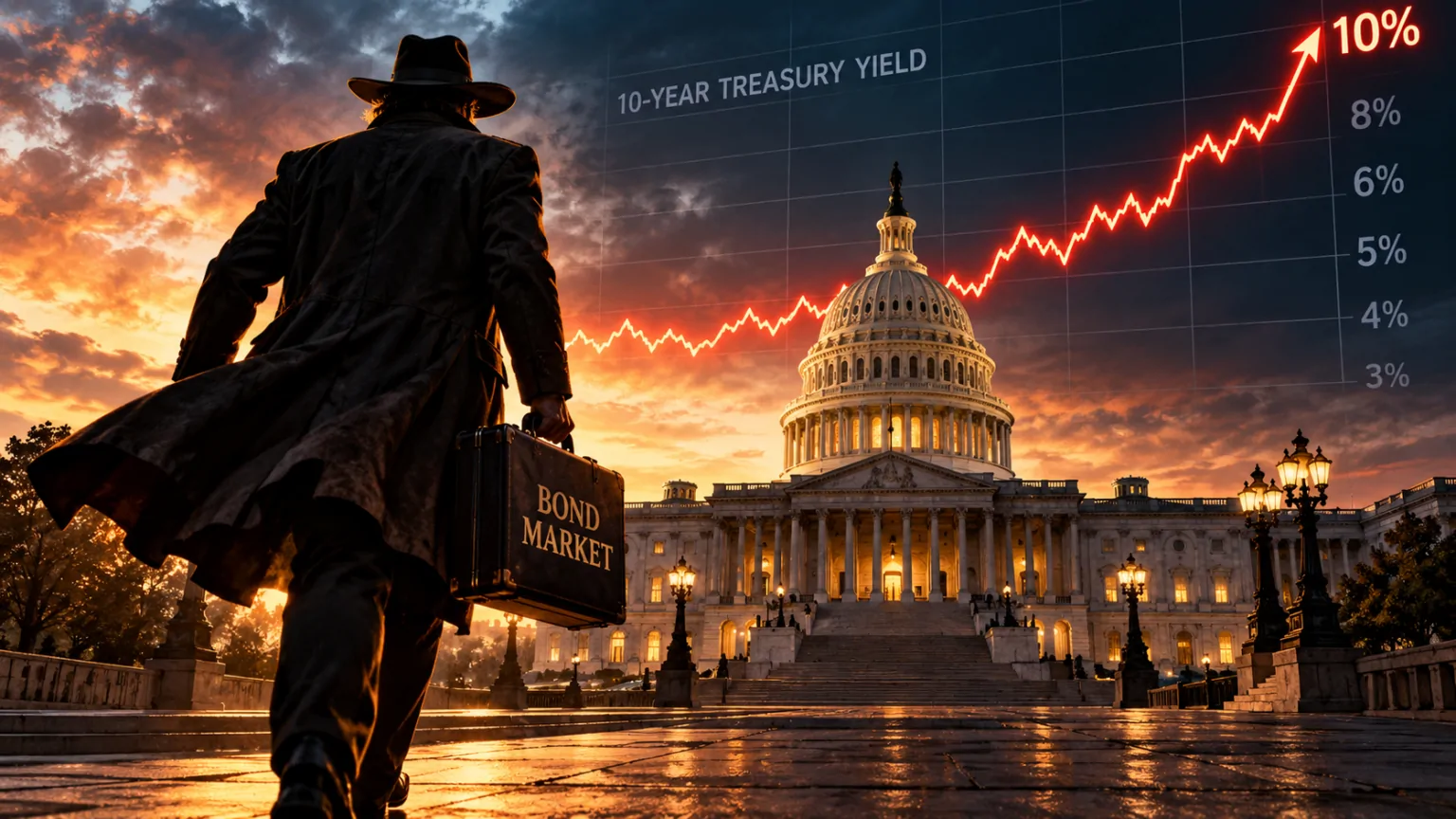
Well, the bond market disagrees.
The 10-year Treasury yield has skyrocketed past 5.25%, its highest level in decades. And one of the reasons is that bond investors are tired of lending to a government that operates like this.
We’re supposed to believe that ‘democracy’ will deliver us from this, that voters will hold politicians accountable and elect a Congress that will cut the deficit. I’m not holding my breath.
Given the astonishing rise in yields, it looks like the bond market is going to hold Congress accountable. As yields continue to rise, borrowing will eventually become so expensive that Congress will be forced to cut spending.
Maybe that happens when government bond yields hit 6%. Maybe 8%. Maybe 10%. Nobody knows for sure. But there is an interest rate that will be so high, Congress will be forced to take action and cut spending.
When those cuts do finally come, they'll be far more painful than what it would take to fix this now.
Seriously, cutting the deficit today should be simple: fire the people who ignore the alerts. Stop the fraud the government already knows about. It should be pretty easy.
But at the moment, no one seems interested in any meaningful cuts... which means the bond market will keep pushing yields up.
In finance, whenever bond investors get tired of loaning money to governments and push yields higher, they’re known as ‘vigilantes’. In this case, vigilante justice for Congress can’t come fast enough.
To your freedom, James Hickman Co-Founder, Schiff Sovereign LLC
P.S. When the bond market finally forces the issue, spending cuts will only be part of the answer.
A government that can't borrow cheaply prints the difference, and that inflation comes straight out of your paycheck and your retirement account.
That's what a Plan B is for. Our flagship service, Plan B Confidential, is built for exactly this.
It covers everything from real assets that hold their value when the dollar doesn't, to foreign residency and second citizenships, offshore banking, and legal ways to cut your tax bill, all backed by boots-on-the-ground research from countries around the world.
Rob Cunningham: Humanity’s Relationship with Money
Rob Cunningham: Humanity’s Relationship with Money
10-3-2026
A Story About Money, Wizards, Bridges & the Curious Human Habit of Worshiping Our Measuring Cups
Starring Judy Garland & Judy Shelton (a 3 part tale worth sharing!)
Dorothy woke up one morning and discovered she had been born inside a castle
Not literally, of course
That would have been easier
Rob Cunningham: Humanity’s Relationship with Money
10-3-2026
A Story About Money, Wizards, Bridges & the Curious Human Habit of Worshiping Our Measuring Cups
Starring Judy Garland & Judy Shelton (a 3 part tale worth sharing!)
Dorothy woke up one morning and discovered she had been born inside a castle
Not literally, of course
That would have been easier
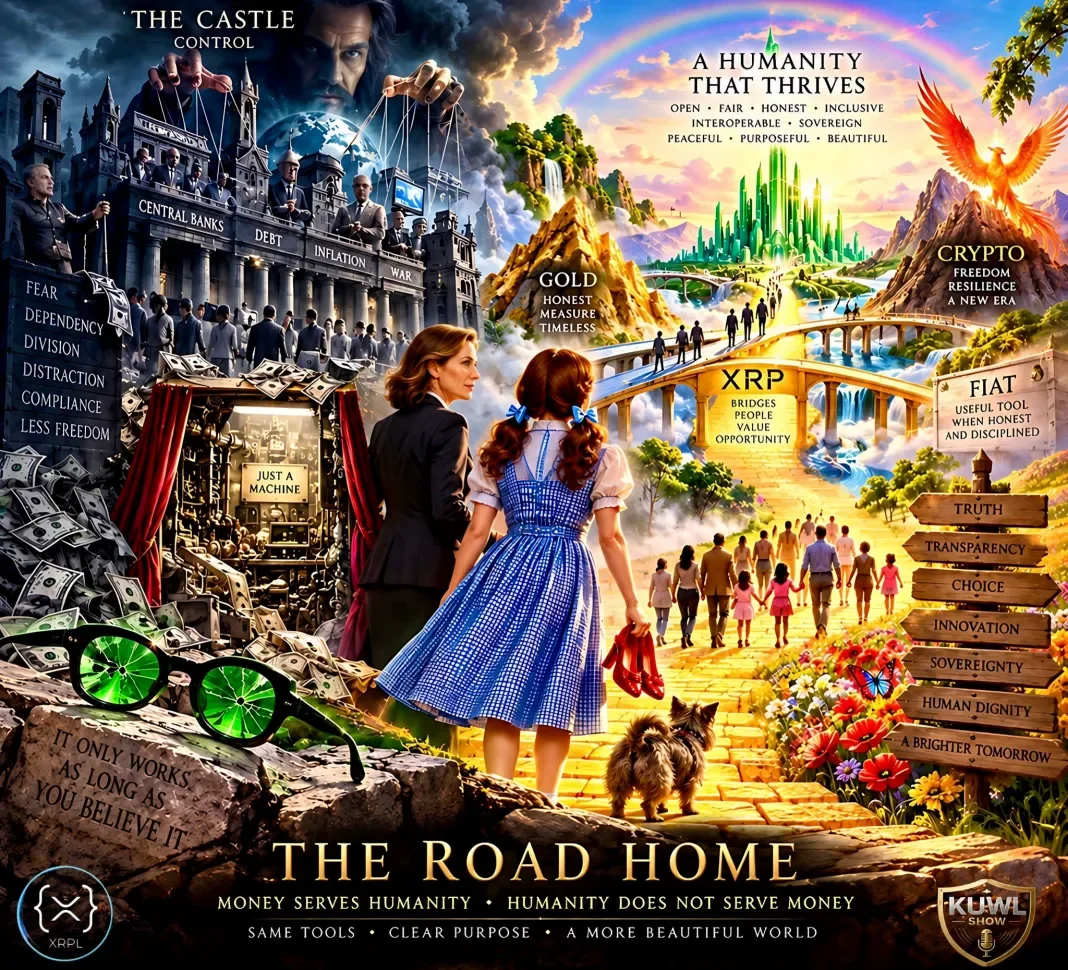
This castle had no moat, drawbridge or dragons
It had banks
It had screens
It had interest rates, credit scores, bond markets, monetary committees, settlement windows and enough financial vocabulary to make perfectly intelligent people conclude that asking simple questions was probably above their pay grade
Everyone in the Kingdom used something called money
Nobody seemed entirely certain what it was
They just knew they needed more of it.
People traded their time for it
Stored their labor in it
Measured their houses with it
Fought over it
Married because of it
Divorced because of it
Went to war over it
Worried about it while awake
Dreamed about it while asleep
And occasionally spent $8 on coffee while complaining about inflation
Dorothy thought this was peculiar
“Is money valuable?” she asked
“Oh yes,” replied the Kingdom
“Why?”
“Because everyone accepts it.”
“Why does everyone accept it?”
“Because it’s valuable.”
Dorothy stared
Toto stared
Toto understood immediately
Dogs have a natural advantage in monetary economics because they are unimpressed by PowerPoint presentations
So Dorothy started walking
She soon found a magnificent Yellow Brick Road
“Gold!” cried the people
Here was something humanity had trusted for thousands of years: scarce, difficult to manufacture and stubbornly resistant to political speeches
Gold did not promise anything
Gold simply sat there being gold
Dorothy respected that
But carrying civilization’s entire payment system around in wheelbarrows seemed inconvenient
So she kept walking
Eventually she reached the Emerald City
It was spectacular
Everything was green
The buildings were green
The money was green
Even everyone’s understanding of value appeared green
There was only one peculiar rule:
You had to wear the glasses
“Why?”
“So everything remains green.”
“What happens if I take them off?”
There was an uncomfortable silence
Somewhere, an economist dropped his monocle
Inside the great palace lived the Wizard
His voice thundered through the chamber
Markets trembled
Interest rates moved
Television commentators began sentences with, “The Wizard signaled today…”
Dorothy listened carefully
Then Toto did what Toto does
He pulled back the curtain
Behind it stood a man operating machinery
No supernatural power
No monetary deity
No omniscience
Just human beings
Making human decisions
With human knowledge
Human incentives
Human limitations
And, occasionally, very impressive curtains
Dorothy smiled
The discovery did not mean institutions were unnecessary
It meant institutions were not gods
Money was not magic
Bankers were not wizards
Markets were not temples
And humans were never created to spend their lives serving their own accounting system
That was when Dorothy finally understood the oldest monetary truth of all:
Money is a measure
A ruler measures inches
A clock measures time
A scale measures weight
Money measures and communicates economic value
Imagine waking tomorrow to discover that twelve inches had become nine because the National Bureau of Rulers needed to stimulate construction
Or that your bathroom scale had decided everyone should weigh 17% less to improve consumer confidence
We would laugh
Yet humanity has repeatedly tolerated monetary measuring sticks whose purchasing power changes over time and then wondered why ordinary people struggle to make long-term economic calculations
An honest civilization requires honest measures
Not because gold is sacred
Not because paper is evil
Not because blockchain is magical …
… Because measurement itself must be trustworthy
Then Dorothy noticed something sparkling on her feet
Her red slippers
[ FYI: In Baum’s original “Oz” story they were silver. Hollywood made them ruby red. ]
Either way, everyone had spent the entire adventure directing Dorothy toward powerful authorities while the means of getting home had been with her all along
That gave Dorothy another idea
Perhaps the next monetary revolution would not merely be about discovering a better thing called money
Perhaps it would also be about building better rails for moving value
Gold could remain gold
Dollars could remain dollars
Nations could remain sovereign
People could remain free to choose what they valued
But underneath them could exist neutral technologies allowing value to move quickly across borders, currencies and networks
Crypto arrived like a Phoenix with an outrageous announcement:
Value can exist digitally without requiring a central issuer
The old castle laughed
Then Crypto refused to die
Blockchain followed with another uncomfortable question:
What if strangers could agree upon a ledger without appointing one supreme bookkeeper?
Then came networks, protocols and bridge assets – including XRPL, ILP and XRP – exploring another possibility:
What if different forms of value could communicate and settle across different systems without requiring every participant to use the same money?
Dorothy’s eyes widened.
“Wait.”
“Yes?” asked Toto
“What if the future isn’t about finding another Wizard?”
Toto wagged his tail
“What if it’s about making Wizards unnecessary for transactions that don’t require them?”
Toto wagged harder
He was having an excellent day
Then another Judy appeared on the road
Judy Shelton
Not Dorothy. Not Garland. An economist entering a long-running argument about monetary rules, central banking, gold, currency stability and how much discretion monetary authorities should possess
Dorothy handed her the green glasses
Shelton examined them
“Interesting.”
“You have to wear them inside the Emerald City.”
“Why?”
“Exactly.”
And there it was
The forbidden monetary question
Not:
Which ruler should control money?
But:
What rules should govern the ruler?
Not:
Which institution should humanity trust absolutely?
But:
How do we construct systems that do not require absolute trust?
Not:
What should everyone be forced to use?
But:
How can billions of sovereign people voluntarily exchange value honestly?
Suddenly the Castle looked different
The King looked different
The Yellow Brick Road looked different
Gold looked different
Crypto looked different
XRP looked different
Even the U.S. Dollar looked different
They were no longer competing religions
They were just tools
And tools are judged by whether they serve their users
A hammer that demands worship is a terrible hammer
A ruler that changes its inches is a terrible ruler
A bridge that decides who deserves to cross is no longer merely a bridge
And money that gradually transforms humanity into servants of money has reversed the natural order
People create value
Money records it
People expend time
Money stores claims upon the fruits of time
People trade
Money facilitates exchange
People create civilizations
Money serves civilization
Never the reverse
Dorothy looked back toward Emerald City
Nobody needed to burn it down
Nobody needed another throne
Nobody needed to replace one Wizard with a more fashionable Wizard wearing blockchain robes and laser eyes
Humanity simply needed to remember what the castle had caused it to forget:
The throne was never the source of human value
We were
The farmer growing food
The mother raising children …
The engineer building bridges
The mechanic repairing engines
The artist creating beauty
The entrepreneur risking everything on an idea
The worker trading irreplaceable hours of life for compensation
Money did not create any of them
They created the value money attempts to measure
And therefore an honest monetary system should perform one remarkably humble job:
Tell the truth about value, preserve that truth as faithfully as possible, and allow human beings to exchange it freely.
No magic required
No compulsory green glasses
No monetary priesthood
No Phoenix deserves worship either
Not gold
Not Bitcoin
Not XRP
Not dollars
Not algorithms
Not central banks
Not decentralized networks
The moment humanity worships the tool, we begin constructing another castle
The purpose is something larger
A world where human beings can create, exchange, save, build, give, risk, fail, recover and prosper without confusing their bank balance with their human worth
Where money becomes quieter because life becomes louder
Where technology reduces friction instead of manufacturing dependency
Where prosperity expands human possibility rather than purchasing human obedience
Where honest weights and measures permit strangers to cooperate peacefully across oceans, languages, cultures and borders
Dorothy finally understood what “home” meant
Home wasn’t Kansas
Not entirely
Home was the place where a sovereign human being could stand upright and say:
My life is not money
My worth is not money
My purpose is not money
Money is a tool through which human beings measure and exchange portions of the value they create
And therefore –
money serves humanity
Humanity does not serve money
Dorothy clicked her heels.
Nothing happened
She tried again
Still nothing
Toto looked embarrassed
Then Dorothy laughed
Of course
There was never going to be a magical shortcut
There was only a road
No simple highway
A road between ignorance and understanding, dependence and responsibility, illusion and truth
And nobody – not a banker, politician, billionaire, technologist, Wizard or storyteller – could walk another person’s portion of it for them
The path belonged to each traveler
Dorothy reached down and removed the green glasses
The Emerald City did not disappear
Something far more important happened
She could finally see it with clarity
Then she reached out her hand
Not to command anyone to follow
Not to demand belief
Not to crown another King
Simply to invite whoever was curious enough to walk beside her
Toto headed down the road first
Naturally
He had already learned the central lesson eighty years earlier:
Whenever somebody claims the machine is magic, check behind the curtain
And whenever someone claims humanity exists to serve the machine –
dig deeper.
Enter curious
Question everything
Test every measure
Worship no tool
Serve one another
Leave sovereign
Because perhaps the greatest monetary breakthrough humanity will ever make isn’t discovering “perfect money”
It is remembering what money was supposed to be for, right?
Impossible to serve two masters – or so its’ been said
– the end –
Grateful to @MCSolarWind for your “Judy + Judy” post that “triggered” my inspiration for this thread! And to @GLigh7 as well!
MC Solar Wind: Judy Garland didn’t just play Dorothy — she embodied the everyperson. Innocent, sincere, unarmed except for moral clarity. In L. Frank Baum’s classic story (and even more so in the 1939 film), Dorothy is the citizen navigating a system she didn’t design, ruled by forces she doesn’t understand, told that answers exist somewhere “over the rainbow.”
She’s not powerful. She’s truthful. The long-standing interpretation (taught in econ and history circles, even if quietly) is that The Wizard of Oz is a parable about money (perhaps hidden in plain sight): - Yellow Brick Road → gold standard - Emerald City → fiat illusion (green glasses = forced perception) - The Wizard → centralized authority projecting power - Toto pulling the curtain → transparency collapses the myth - Ruby slippers (silver shoes in the book) → real monetary power already possessed by the people
But the system only works as long as people believe in it. Sound familiar? Now enter Judy Shelton (@judyshel) → the modern Dorothy, walking into the Emerald City. Shelton has been a vocal critic of the modern Federal Reserve system, especially discretionary monetary policy, perpetual debasement, and the priesthood-like opacity of central banking. Her openness to rules-based money, commodity backing, or at least discipline in issuance puts her immediately at odds with the “Wizard class.”
If she becomes Fed Chair, symbolically it would be akin to Dorothy being invited into the Emerald City boardroom. Not necessarily to destroy it but to ask the forbidden question: “Why does this work the way it does?” Could XRP represent the Ruby Slippers? In this framing: - Gold = the old anchor (heavy, physical, sovereign) - Fiat = the illusion (green, flexible, belief-based) - XRP = the mechanism (neutral, fast, bridge-based, not issued by a state) The ruby slippers weren’t about gold or emeralds, they were about movement. Settlement. The ability to go home without asking permission from the Wizard.
If Shelton represents a return to monetary truth-telling, then XRP (or rails like it) represent post-Wizard plumbing: a system where value moves because it can, not because a man behind a curtain says so.
Two Judys, separated by more than eighty years. One carried the story so people could feel the illusion. The other challenges it so people might finally understand it. If the lesson of The Wizard of Oz was never about going back to gold, but about recognizing how easily authority is mistaken for magic, then the real question isn’t whether the curtain can be pulled back — it already has been.
The question is what kind of monetary future we build once we accept that stability doesn’t require spectacle, that value doesn’t need a Wizard, and that the tools for movement and settlement may matter more than the myths that once justified control.

Markets Haven't Crashed Yet, and Here's Why, Gerald Celente Says
Markets Haven't Crashed Yet, and Here's Why, Gerald Celente Says
Kitco News: 10-3-2026
Gerald Celente says Wall Street and Main Street have split apart, and a crash is on the near horizon. Celente, founder of the Trends Research Institute and publisher of the Trends Journal, has spent 46 years forecasting trends.
He joins Jeremy Szafron on the stock market, gold, silver, inflation, the jobs report, the Iran war, Gen Z and what he says is coming for your money. Celente says stocks are rallying while Main Street struggles.
Markets Haven't Crashed Yet, and Here's Why, Gerald Celente Says
Kitco News: 10-3-2026
Gerald Celente says Wall Street and Main Street have split apart, and a crash is on the near horizon. Celente, founder of the Trends Research Institute and publisher of the Trends Journal, has spent 46 years forecasting trends.
He joins Jeremy Szafron on the stock market, gold, silver, inflation, the jobs report, the Iran war, Gen Z and what he says is coming for your money. Celente says stocks are rallying while Main Street struggles.
In New York's Hudson Valley, he says, "the streets are dead," and the restaurant owners he talks to report business down more than 30% on average. He believes the coming crash will mirror 1929, warns of a dot-com bust in AI stocks and argues China will lead the world in artificial intelligence.
He also explains why the markets haven't crashed yet: he didn't expect interest rates to go to zero and trillions of dollars in cheap money to flood the system.
With September's jobs report showing just 29,000 new jobs, and July and August revised down by a combined 60,000, Celente explains what he calls dragflation, prices going up while the economy goes down, and why he believes higher inflation means higher gold prices.
He started buying gold at about $170 an ounce in 1978, bought again near $5,300 and says he would buy now, not sell. He is bullish on silver too, saying there are no silver stockpiles.
Celente lays out his getaway plan: "get to the country, because the cities are gonna go down bad." He explains why Gen Z is turning on the system from India to Nepal, why he is holding his 2027 trends until after the Nov. 3 midterms and why he believes a renaissance could still turn things around.
00:00 Why Celente Says These Are the Worst Times He's Seen
01:46 Wall Street vs. Main Street
03:58 Fuel Prices, Rising Yields and Crash Risk
05:31 Jobs Revisions: What Should You Believe?
09:25 AI Bubble, China and a New Dot-Com Bust
13:20 A 1929-Style Crash and the Three G's
18:45 Gold Selloff, Silver and What Celente Is Buying
23:30 Celente's Getaway Plan: Get to the Country
28:56 Celente Fears the Iran War Will Escalate
33:04 Fuel Shortages, Oil Prices and Main Street
37:52 Gen Z Revolt, Monopolies and the Cost of Living
44:04 Celente's Advice to Young Adults and a New Renaissance
49:17 Why Celente Says Change Starts at Home
52:26 Why the Crash Hasn't Come Yet
54:16 Why He's Holding His 2027 Call
55:16 Where Celente Finds Hope for the Future
59:07 War, Washington and the Military-Industrial Complex
Iraq Economic News and Points To Ponder Saturday Afternoon 10-3-26
Basrah Crude Loses Over 7% On Week
2026-10-03 Shafaq News- Basra Iraq’s Basrah Heavy and Basrah Medium crude grades ended the week down more than 7%, despite both rising $4.94 per barrel in the final trading session.
Basrah Heavy gained 7.08% in the latest session to $74.75 per barrel, ending the week down $6.32, or 7.80%, from $81.07 at the start of the week.
Basrah Crude Loses Over 7% On Week
2026-10-03 Shafaq News- Basra Iraq’s Basrah Heavy and Basrah Medium crude grades ended the week down more than 7%, despite both rising $4.94 per barrel in the final trading session.
Basrah Heavy gained 7.08% in the latest session to $74.75 per barrel, ending the week down $6.32, or 7.80%, from $81.07 at the start of the week.
Basrah Medium also rose $4.94, or 6.76%, to $78.05 per barrel, posting a weekly loss of $6.32, or 7.49%, from $84.37.
In global markets, US West Texas Intermediate fell $2.81, or 3.03%, to $90.06 per barrel, while Brent crude declined $1.76, or 1.72%, to $100.55. https://shafaq.com/en/Economy/Basrah-crude-loses-over-7-on-week
Dollar Rises In Baghdad, Erbil
2026-10-03 Shafaq News- Baghdad/ Erbil The US dollar opened Saturday’s trading higher in Iraq, hovering around 157,000 dinars per 100 dollars.
According to a Shafaq News market survey, the dollar traded in Baghdad’s Al-Kifah and Al-Harithiya exchanges at 157,250 dinars per 100 dollars, up from the previous session’s 156,850 dinars on Thursday.
In the Iraqi capital, exchange shops sold the dollar at 157,750 dinars and bought it at 156,750 dinars, while in Erbil, selling prices stood at 157,250 dinars and buying prices at 157,200 dinars.
https://shafaq.com/en/Economy/Dollar-rises-in-Baghdad-Erbil
Gold Prices Decline In Baghdad, Climb In Erbil
2026-10-03 Shafaq News- Baghdad/ Erbil On Saturday, gold prices hovered around 920,000 IQD per mithqal in Baghdad and Erbil markets, falling in Baghdad but rising in Erbil, according to a Shafaq News market survey.
Gold prices on Baghdad's Al-Nahr Street recorded a selling price of 917,000 IQD per mithqal (equivalent to five grams) for 21-carat gold, including Gulf, Turkish, and European varieties, with a buying price of 913,000 IQD. The same gold had sold for 920,000 IQD on Thursday.
The selling price for 21-carat Iraqi gold stood at 887,000 IQD, with a buying price of 883,000 IQD.
In jewelry stores, the selling price per mithqal of 21-carat Gulf gold ranged between 920,000 and 930,000 IQD, while Iraqi gold sold for between 890,000 and 900,000 IQD.
In Erbil, 22-carat gold was sold at 973,000 IQD per mithqal, 21-carat gold at 930,000 IQD, and 18-carat gold at 797,000 IQD.
https://shafaq.com/en/Economy/Gold-prices-decline-in-Baghdad-climb-in-Erbil
Iranian Toman Hits New Low Against US Dollar
2026-10-03 Shafaq News- Tehran Iran's currency weakened further against the US dollar on Saturday, hitting a new low on Tehran's open market, according to Bonbast, which tracks Iran's free-market exchange rates.
By midday, the dollar sold for 267,100 tomans and was bought at 265,519, up 2.06% from the day's opening rate, Bonbast data showed. It traded between 261,500 and 267,100 tomans during the session. One toman equals 10 rials
https://shafaq.com/en/Economy/Iranian-toman-hits-new-low-against-US-dollar
Jordan’s Exports To Iraq Rise 20%+
2026-10-03 Shafaq News- Amman/ Baghdad Jordan’s exports to Iraq rose 20.4% in the first seven months of 2026, while imports from Iraq fell 56.6%, Jordan’s Department of Statistics said on Saturday.
According to the data, Jordanian exports to Iraq reached 632 million Jordanian dinars (about $891.4M) during the period, up from 525 million dinars (about $740.4M) in the same period of 2025.
Jordan’s imports from Iraq fell to 43 million dinars (around $60.6M) in the first seven months of 2026, compared with 99 million dinars (around $139.6M) during the same period last year.
Jordan’s trade surplus with Iraq increased to about 589 million dinars (about $830.7M) from roughly 426 million dinars (about $600.8M) in the first seven months of 2025. https://shafaq.com/en/Economy/Jordan-s-exports-to-Iraq-rise-20
USD/IQD Exchange Rates Surge In Bagdad, Erbil
2026-10-03 Shafaq News- Baghdad/ Erbil The US dollar edged higher against the Iraqi dinar in Baghdad and Erbil on Saturday, hovering around 157,000 dinars per $100 as evening trading closed.
According to a Shafaq News market survey, in Baghdad, the Al-Kifah and Al-Harithiya central exchanges closed at 157,300 dinars per $100, up slightly from 157,250 dinars in the morning.
Exchange shops in Baghdad kept their retail rates unchanged, selling $100 for 157,750 dinars and buying it for 156,750 dinars.
In Erbil, the dollar also rose, with exchange shops selling $100 for 157,550 dinars and buying it for 157,500 dinars.
https://shafaq.com/en/Economy/USD-IQD-exchange-rates-surge-in-Bagdad-Erbil
Iraq, Turkiye Advance Draft Ceyhan Oil Export Deal
2026-10-03 Shafaq News- Baghdad/ Ankara Iraq and Turkiye advanced work on a draft agreement governing Iraqi oil exports through the Turkish port of Ceyhan, Oil Minister Bassem Al-Abadi said on Saturday.
Al-Abadi said talks with the Turkish energy minister focused on increasing export capacity through Ceyhan and expanding Turkish companies’ participation in Iraqi oil and gas projects, describing the meeting as “very productive.”
He said the cooperation could help attract qualified international companies to develop and invest in Iraq’s oil and gas sector.
Read more: Iraq–Turkiye pipeline restart reshapes energy balance
The two sides also formed two joint technical committees, one focused on oilfield investment and the other on developing and building oil infrastructure. They also discussed partnerships between Iraqi and Turkish companies.
“We hope this proceeds smoothly to achieve the desired objectives, in line with the government’s vision and strategy and the ministry’s plans,” Al-Abadi said.
On Aug. 1, Iraq and Turkiye signed a one-year agreement to transport at least 750,000 barrels of Iraqi crude per day through the Iraq-Turkiye pipeline to Ceyhan while negotiations continue on a broader framework agreement.
Prime Minister Ali Al-Zaidi said at the time that Iraqi and Turkish companies would begin implementing the arrangement, while Baghdad and Ankara worked toward a broader agreement covering oil, electricity and water resources.
Al-Abadi arrived in Ankara on Friday for talks on cooperation in oil, gas and energy.
https://shafaq.com/en/Economy/Iraq-Turkiye-advance-draft-Ceyhan-oil-export-deal
Seeds of Wisdom RV and Economics Updates Saturday Afternoon 10-3-26
Good Afternoon Dinar Recaps,
GLOBAL DEBT RESET WATCH: BOND YIELDS HIT MULTI-DECADE HIGHS AS BORROWING COSTS RISE WORLDWIDE
Rising government bond yields across major economies are increasing the cost of financing public debt, mortgages and business investment while testing the resilience of financial markets.
Good Afternoon Dinar Recaps,
GLOBAL DEBT RESET WATCH: BOND YIELDS HIT MULTI-DECADE HIGHS AS BORROWING COSTS RISE WORLDWIDE
Rising government bond yields across major economies are increasing the cost of financing public debt, mortgages and business investment while testing the resilience of financial markets.
OVERVIEW
U.S. Treasury yields remain elevated: The 10-year yield reached 5.28% on Friday, October 2, a level not seen since 2002, according to MarketWatch.
The pressure is global: Government bond yields have also reached multi-decade highs in parts of Europe and Japan, with inflation concerns and government borrowing needs contributing to the sell-off.
Financial stability is in focus: Higher yields can increase debt-servicing costs for governments, businesses and households, although the rise in yields does not by itself mean a financial crisis is underway.
KEY DEVELOPMENTS
1. U.S. Treasury Yields Reach a Significant Milestone
On October 2, the U.S. 10-year Treasury yield stood at approximately 5.28%, after rising substantially over recent weeks. MarketWatch reported that the yield had increased about 55 basis points over five weeks.
Treasury yields are closely watched because they influence borrowing costs across the economy. When investors demand higher returns to lend money to the U.S. government, interest rates on some mortgages, corporate borrowing and other financial products can also face upward pressure.
The move is especially important because Treasury securities play a central role in global financial markets, serving as a benchmark for pricing many other investments.
2. Bond-Market Pressure Extends Beyond the United States
Reuters reported on October 1 that government borrowing costs had reached multi-decade highs in several major economies.
The report highlighted three measurable developments:
The U.S. 10-year Treasury yield reached 5.34% on October 1, its highest level since 2002, before moving lower on October 2.
French 10-year government bond yields reached levels not seen since 2002.
Britain’s 30-year borrowing costs touched 6% for the first time since 1998, while Japanese government bond yields also reached multi-decade highs.
These figures reflect different markets and dates, but together they show that higher borrowing costs are not confined to one country.
3. Debt, Inflation and New Borrowing Add to the Pressure
Several forces are contributing to the bond-market repricing.
Inflation concerns remain important, particularly amid higher energy costs. If investors believe inflation will persist, they may demand higher yields to protect the purchasing power of future interest payments.
Government borrowing requirements also matter. Governments must finance new spending and refinance existing debt, and higher market yields can make that process more expensive.
Corporate borrowing is adding to demand for financing. Reuters reported that five major technology companies—Alphabet, Amazon, Meta, Microsoft and Oracle—had issued a combined $220 billion in debt during 2026 to help fund artificial-intelligence investments, more than double their total for the previous year.
These factors do not explain every movement in yields, and conditions differ among countries. They do, however, illustrate the competition for capital taking place across governments and the private sector.
WHY IT MATTERS
Bond yields are more than numbers on a financial screen. They help determine how much governments, companies and households pay to borrow.
When yields rise, governments may have to devote more tax revenue to interest payments as debt is refinanced. Businesses may reconsider expansion plans when financing becomes more expensive, while households can face higher costs on loans and mortgages.
Higher yields can also change the relative appeal of financial assets. Government bonds offering higher returns may attract money that might otherwise go into stocks or other investments. At the same time, rapid yield increases can put pressure on existing bond prices and financial institutions exposed to those assets.
Reuters reported that the International Monetary Fund considered global bond markets to be functioning in an orderly manner on October 1. That is an important distinction: elevated yields and market volatility are warning signs to monitor, not proof that the financial system is collapsing.
WHY IT MATTERS TO FOREIGN CURRENCY HOLDERS
For foreign currency holders following the Global Financial Reset, the bond market provides a measurable way to track changes in the international financial environment.
Government debt, interest rates and investor confidence influence exchange rates and cross-border capital flows. However, the effect on any particular currency depends on multiple factors, including the country’s inflation, economic growth, central-bank policy and fiscal position.
Higher U.S. yields can support demand for dollar-denominated assets under some conditions. But if investors become more concerned about U.S. debt sustainability or other economic risks, currency movements may become less predictable.
The important distinction is that changing bond yields can signal a financial adjustment, but they do not establish that a coordinated global reset or an upward revaluation of foreign currencies is underway. Each currency requires its own evidence.
IMPLICATIONS FOR THE GLOBAL RESET
Pillar 1: Debt
Higher yields increase the cost of refinancing government borrowing over time. Countries with large debt loads may face difficult choices between interest payments, public spending, taxation and efforts to support economic growth.
Pillar 2: Trade
Borrowing costs affect companies that finance inventories, transportation, equipment and international expansion. If financing becomes more expensive, some businesses may slow investment, potentially affecting trade and supply chains.
Pillar 3: Currencies
Interest-rate differences between countries can influence where investors place their money. Yet currency values also reflect growth prospects, inflation, political and fiscal risks, and expectations for future policy. Bond yields are one important indicator—not a stand-alone currency forecast.
Pillar 4: Financial Stability
Sharp changes in yields can expose vulnerabilities among borrowers and investors who rely on inexpensive financing. Regulators and markets will be watching whether higher borrowing costs remain manageable or begin to create broader strains.
THE BOTTOM LINE
The measurable development is clear: government bond yields have climbed to multi-decade highs across several major economies, making debt more expensive to finance and placing greater emphasis on inflation control, sustainable borrowing and economic growth.
For those tracking the Global Financial Reset, this is a reason to follow verified market data rather than rely on predictions or promised dates. The bond market is revealing how the cost of money is changing—and those changes will help shape the next stage of the global financial system.
Seeds of Wisdom Team
Newshounds News™ Exclusive
SOURCES
MarketWatch — “As Treasury Yields Touch Generational Highs, Investors Brace for the Market Fallout”
Reuters — “Why Are World Bond Markets Selling Off Again?”
~~~~~~~~~~
Seeds of Wisdom Team RV Currency Facts Youtube and Rumble
Newshound's News Telegram Room Link
RV Facts with Proof Links Link
RV Updates Proof links - Facts Link
Start Here room with Most Asked Questions Link
Follow the Gold/Silver Rate COMEX
Follow Fast Facts
Seeds of Wisdom Team™ Website
Thank you Dinar Recaps
Weekly RV Update, Iraq, Maliki, Judy Shelton, US Notes, What’s Really Happening
Weekly RV Update, Iraq, Maliki, Judy Shelton, US Notes, What’s Really Happening
Jon Dowling and Chris Real World: 10-2-2026
As we enter a new fiscal year and navigate the complexities of the first quarter, the global financial landscape is experiencing profound shifts.
Geopolitical dynamics and evolving monetary policies are converging to reshape how we view currency, sovereignty, and wealth preservation.
From the shifting layout of global gold reserves to the ongoing repositioning of the US dollar in international trade, investors and economic observers are closely watching these developments.
Weekly RV Update, Iraq, Maliki, Judy Shelton, US Notes, What’s Really Happening
Jon Dowling and Chris Real World: 10-2-2026
As we enter a new fiscal year and navigate the complexities of the first quarter, the global financial landscape is experiencing profound shifts.
Geopolitical dynamics and evolving monetary policies are converging to reshape how we view currency, sovereignty, and wealth preservation.
From the shifting layout of global gold reserves to the ongoing repositioning of the US dollar in international trade, investors and economic observers are closely watching these developments.
This week’s market analysis explores how these foundational changes are laying the groundwork for a broader transformation in the global financial system.
To understand the current trajectory, one must look closely at the Middle East, particularly the strategic relationship between the United States and Iraq. Despite varied media reports, international security postures remain highly active near Iraq’s borders, highlighting unresolved tensions with local factions that oppose systemic integration.
These regional frictions, coupled with broader defensive preparations regarding critical infrastructure across the Middle East, underscore the delicate balance of power. These geopolitical maneuvers are not merely political in nature; they are deeply intertwined with the future of global resource pricing, the hegemony of the US dollar, and the sovereignty of national banking systems.
Perhaps the most significant signal of systemic change within the Western financial apparatus is the prominent role of economist Judy Shelton within the US Treasury framework.
Known for her long-standing advocacy of sound money principles, Shelton has championed the idea of returning to a gold-backed dollar. This vision could be realized through the issuance of long-term Treasury bonds directly backed by physical gold reserves.
Such a move signals a potential return to a modern gold standard, one that merges traditional tangible assets with emerging financial technologies like blockchain.
By integrating precious metals with digital ledger technology, policymakers may seek to establish a unified real-money standard, which proponents believe could address chronic market imbalances and eliminate speculative volatility associated with arbitrary interest rate manipulations.
On the domestic front, regulatory frameworks are rapidly evolving to accommodate this digital transition. Legislative initiatives like the upcoming vote on the CryptoClarity Act indicate that regulatory bodies are preparing to integrate cryptocurrencies into the formal financial system ahead of major political cycles.
However, this transition may not be seamless. Analysts predict a period of significant economic contraction, which could manifest as adjustments in the housing market, equities, and commercial real estate. Out of this restructuring, a distinct shift toward localized business ecosystems and tangibly valued assets, such as physical gold and silver, is expected to emerge as the influence of highly centralized financial institutions begins to decentralize.
The Federal Reserve’s upcoming policy decisions are poised to play a crucial role in managing this transition. Indicators suggest the Fed may pause its sequence of interest rate hikes in the near term, with potential rate cuts following the upcoming midterm elections.
This timeline aligns with anticipated shifts in governance aimed at streamlining financial oversight and reducing systemic inefficiencies. Adding to the complexity of this timeline is the unexpected repatriation of physical US dollar cash reserves to Iraq, a development that could influence the scheduling of global currency resets.
Furthermore, discussions persist regarding the eventual circulation of new US Treasury notes, which could enter domestic and international markets to signal a new era of fiscal accountability.
As precious metals prices continue to demonstrate upward momentum, maintaining a balanced and objective perspective is essential for navigating these volatile markets. The concept of a global financial reset is often met with anticipation, but experienced analysts suggest approaching this transition with patience rather than urgency.
Much like any profound life transition, desperation and panic can cloud judgment, whereas peace, preparation, and operational calm foster long-term stability. Embracing a grounded mindset, supported by faith and patience, remains the most reliable strategy during times of systemic reform.
Ariel: Your New Financial System Making it’s Debut (and more)
Ariel: Your New Financial System Making it’s Debut
10-3-2026
Tokenization & Monetization: Your New Financial System Making It’s Debut
The Great Tokenization — End of Fiat Debt Slavery, Gold’s Return, and the Iraqi Fulcrum
Tokenization ends the shell game. A token is a bearer instrument on a distributed ledger. When gold is tokenized one token, one gram of audited bullion in a vault ownership settles in seconds, peer to peer, without a clearing house, without a custodian’s permission, without a bank’s business hours, without SWIFT, without a correspondent banking chain that takes 3-5 days and skims at every hop.
Ariel: Your New Financial System Making it’s Debut
10-3-2026
Tokenization & Monetization: Your New Financial System Making It’s Debut
The Great Tokenization — End of Fiat Debt Slavery, Gold’s Return, and the Iraqi Fulcrum
Tokenization ends the shell game. A token is a bearer instrument on a distributed ledger. When gold is tokenized one token, one gram of audited bullion in a vault ownership settles in seconds, peer to peer, without a clearing house, without a custodian’s permission, without a bank’s business hours, without SWIFT, without a correspondent banking chain that takes 3-5 days and skims at every hop.
The historical significance is this: for the first time since 1933, an American can hold a self-custodied, transferable claim on hard money that cannot be devalued, frozen, or confiscated by a bank run or a bail-in.
The Basel 3 Endgame fight. Basel 3 requires banks to hold real capital against real assets an existential threat to a system running on rehypothecated collateral. The same chains that own the regional banks lobbied ferociously to stall full implementation because mark-to-market of their actual books would reveal insolvency.
Tokenized assets force the issue: when a tokenized bond or tokenized mortgage exists on a public ledger, its actual owner, its actual encumbrance, and its actual value are visible to anyone. You cannot rehypothecate the same collateral seven times when the ledger shows every lien.
Iraq cannot submit a 2027 budget without a functioning international exchange rate for the dinar. A budget is denominated in dinar revenue projections, oil proceeds, Kurdistan transfers, reconstruction contracts. Without a reinstated rate on the Forex, every figure in that budget is denominated in a currency that cannot clear internationally.
It is arithmetic, not speculation: budget submission requires a tradable rate, and the IMF’s sign-off means the institutional obstacle is removed.
Read Full Article:
https://www.patreon.com/Prolotario1/posts/tokenization-new-171264690
https://dinarchronicles.com/2026/10/02/prolotario-your-new-financial-system-making-its-debut/
Ariel: Did you know Everything will be Tokenized Next Week?
10-3-2026
Did You Know Everything Will Be Tokenized Next Week?
What Are The Implications?
Tokenization is the conversion of any asset a stock, a bond, a barrel of oil, a building, a copyright, a currency into a programmable digital instrument that settles peer-to-peer on a shared ledger, with no custodial intermediary standing between you and the thing you own.
The critical word is ‘settlement’. Under the Rothschild-era architecture, every asset you “own” is actually a claim on a claim on a claim.
Your stock sits in street name at a broker who holds it at DTC, who holds the ledger, who answers to the clearing banks, who answer to the central banks. Your money is a liability of a commercial bank. Your gold is, in most cases, an unallocated ledger entry at a vault you’ve never entered. Tokenization collapses that chain.
The token IS the settlement. Ownership transfers in minutes, not T+2. No rehypothecation without your consent, because the ledger shows exactly where the asset sits at all times. That single property verifiable, immutable location of the actual asset is what ends a 300-year banking model built on opaque layers of paper claims.
The Cabal’s power was never the gold. It was the exclusive right to issue and hide the claims. Tokenization makes every claim public.
Do You All Get What I Am Saying Here?
The Cabal banking system runs on three pillars: monopoly over settlement (they clear, you wait), monopoly over issuance (they create the credit, you borrow it), and opacity (they know where everything is, you know nothing). Tokenization strikes all three. Settlement becomes a protocol, not a privilege.
Issuance becomes programmable anyone with a real asset can tokenize it and find a market without an underwriting bank. Opacity dies because the chain is a public, timestamped record of every movement. The City of London’s power was never mystic; it was positional. They stood in the doorway of global settlement and charged passage.
Tokenization doesn’t fight the doorman it builds a million new doors. This is why the fight over digital asset regulation was so vicious, and why the SEC and CFTC rule finalizations mattered more than any single execution: whoever defines the legal wrapper for tokens defines the architecture of the next financial century.
The rules are now set in the US, and they are set for permissionless rails with regulatory clarity which means the endgame is not crypto replacing banks. It’s every asset on Earth getting a compliant digital wrapper, and the wrapper doesn’t need a Rothschild to sign it.
Source(s):
• https://x.com/Prolotario1/status/2106098895482654983
News, Rumors and Opinions Saturday 10-3-2026
GP Q: Iraq Update as of 2nd October 2026
IRAQ
Iraq’s banking cleanup is not a rumor.
The Central Bank is running it in public.
Governor Nizar Nasser Hussein has said: the reform program is still underway, coordinated with Oliver Wyman and aimed at a more competitive sector that is open to the international financial system.
GP Q: Iraq Update as of 2nd October 2026
IRAQ
Iraq’s banking cleanup is not a rumor.
The Central Bank is running it in public.
Governor Nizar Nasser Hussein has said: the reform program is still underway, coordinated with Oliver Wyman and aimed at a more competitive sector that is open to the international financial system.
Separately, Baghdad and the US Treasury reached an understanding to return restricted banks to non-dollar correspondent channels once compliance and governance tests are met.
Seven banks are already qualified for that channel.
Dollar access comes later, only after further relicensing.
Cabinet formation is a separate, real process.
Parliament confirmed Ali al-Zaidi’s government on 14 May 2026 with 14 of 23 ministers in place.
Interior, Defense and other posts remain vacant while parties bargain over names.
Neither point is a rate event.
One is a compliance rebuild.
The other is unfinished cabinet arithmetic.
Sources
CBI, reform still running:
https://cbi.iq/news/view/3314
CBI, seven banks back into correspondent channels:
https://cbi.iq/news/view/3263
Council of Representatives:
https://iq.parliament.iq/en/
Source(s):
• https://x.com/argosaki/status/2106233314642460975
https://dinarchronicles.com/2026/10/03/gp-q-iraq-update-as-of-2nd-october-2026/
Courtesy of Dinar Guru: https://www.dinarguru.com/
Reset Intelligence Outsiders agree to settle in your money once they believe in your books. Look at what you've watched Iraq do - audits, bank seizures, tellers trained, salaries moved to cards, customs duties paid before the dollars move starting this morning. Each of those was Baghdad making its books believable to people who do not live there. On Tuesday an outside market [The Abu Dhabi Securities Exchange] with a trillion-dollar network gave its answer - Iraqi trades settled in IQD.
Jeff Iraq can't tell you they're about to revalue the currency. There's only so much information they can tell you without giving you clues the rate is about to change. Some stuff they can legitimately tell you and some things they cannot tell you...some truthful information and some inaccurate misleading information...
Frank26 The float has nothing to do with what's happening inside of [Iraq's] borders. The float is outside. It is in an international currency basket...Citizens will never see that value...[Citizens] will only see the value inside of your borders which will probably be around $1, maybe even up to $1.30...When they lift the three zeros, citizens inside of Iraq will receive purchasing power...Why are they talking about the float now? ...Because they are done teaching [the Iraqis] everything they need to know about the monetary reform procedure inside the borders...Now it's time for...the Iraqi citizens to learn what is going to happen outside the borders concerning the currency...It will gain value and strength...The fact that they are talking about this is overwhelmingly exciting...The CBI is asking you to listen to them and no one else...The CBI made a confession...
************
Are Bonds Near Triggering A 1987-Style Stock Exodus? | Ted Oakley
David Lin: 10-2-2026
Ted Oakley, founder of Oxbow Advisors, discusses weakening jobs and housing, deteriorating stock-market breadth, rising Treasury yields, energy and hard assets, gold, and why he sees growing economic and consumer risks heading into 2027.
Seeds of Wisdom RV and Economics Updates Saturday Morning 10-3-26
Good Morning Dinar Recaps,
BANKING RESET WATCH: COMMUNITY BANKS CHALLENGE CRYPTO FIRMS’ PATH INTO THE BANKING SYSTEM
Community banks are challenging federal regulators over national trust bank charters for cryptocurrency firms, raising important questions about competition, consumer protections, and the future structure of digital finance.
Good Morning Dinar Recaps,
BANKING RESET WATCH: COMMUNITY BANKS CHALLENGE CRYPTO FIRMS’ PATH INTO THE BANKING SYSTEM
Community banks are challenging federal regulators over national trust bank charters for cryptocurrency firms, raising important questions about competition, consumer protections, and the future structure of digital finance.
OVERVIEW
The Independent Community Bankers of America (ICBA) filed a federal lawsuit on October 2, 2026, challenging the Office of the Comptroller of the Currency’s (OCC) approach to national trust bank charters for cryptocurrency firms.
The banking group argues that the OCC exceeded its authority and that certain crypto firms could operate without safeguards required of traditional, deposit-taking banks.
The dispute could help shape how digital-asset companies provide custody, payment, and other financial services under federal oversight.
KEY DEVELOPMENTS
1. Community Banks Take the Dispute to Federal Court
On October 2, the ICBA filed suit in the U.S. District Court for the District of Columbia against the OCC, the federal agency responsible for chartering and supervising national banks.
The lawsuit challenges a rule and related guidance that make it easier for cryptocurrency-focused companies to seek national trust bank charters. The ICBA wants the court to invalidate the challenged measures, arguing that the OCC has gone beyond the authority Congress granted it.
The case is now a legal dispute. The banking association’s allegations have not been established as judicial findings, and the outcome will depend on the court’s review.
2. The Disagreement Centers on Oversight and Consumer Protections
The ICBA argues that traditional, insured banks must meet capital, liquidity, supervisory, and other requirements that may not apply in the same way to national trust institutions that do not accept deposits.
The group also warns that consumers could mistakenly assume assets held by a federally chartered crypto trust company carry the same protections as deposits at an FDIC-insured bank.
The OCC’s February 2026 final rule, however, states that it clarifies the agency’s existing authority to charter national banks limited to trust-company operations and related activities. The OCC says the rule does not expand or contract its statutory chartering authority.
This difference in interpretation is central to the case.
3. Digital-Asset Firms Seek a Greater Role in Financial Services
National trust bank charters can provide a federal regulatory pathway for eligible companies offering services such as digital-asset custody and other permitted trust-related activities.
The OCC maintains a public list of digital-asset licensing applications, illustrating the growing range of firms seeking authorization to operate within the national banking framework.
A trust charter does not automatically make a company equivalent to a conventional deposit-taking bank. Its permitted activities, supervisory requirements, and applicable consumer protections depend on its charter and the relevant laws.
The court case could influence how regulators and financial companies interpret those boundaries.
WHY IT MATTERS
The dispute highlights a major question facing the financial industry: how should digital-asset businesses be integrated into the regulated financial system?
Traditional banks operate under established requirements designed to protect depositors, manage financial risks, and maintain confidence in the banking system. Crypto companies argue that regulated digital-asset services can support innovation in custody, payments, and financial technology.
The challenge is determining how existing laws apply to newer business models without creating regulatory gaps or unnecessarily restricting legitimate innovation.
The lawsuit could affect how regulators interpret their authority, how digital-asset companies structure their operations, and how traditional banks compete with new financial-service providers.
However, the lawsuit itself does not change the status of all crypto firms, and its ultimate impact will depend on the court’s decision and any subsequent regulatory action.
WHY IT MATTERS TO FOREIGN CURRENCY HOLDERS
For foreign currency holders following the Global Financial Reset, this development is relevant because the future financial system involves more than exchange rates. It also depends on who can provide financial services, how digital value is held, and what protections apply when money moves between institutions.
Regulatory clarity could influence whether digital-asset firms expand their custody and payment services, how banks respond to competition, and how customers choose between traditional and digital financial platforms.
But a legal challenge over bank charters does not establish a currency revaluation, guarantee appreciation of any currency, or confirm a coordinated financial reset.
The practical development to watch is whether the legal framework for digital financial services becomes clearer and how that affects real-world adoption.
IMPLICATIONS FOR THE GLOBAL RESET
Pillar 1: Technology
Digital-asset custody and payment services are testing how traditional banking rules apply to new technologies. Regulatory decisions will help determine which business models can operate and under what conditions.
Pillar 2: Assets
The case raises questions about how digital assets are held, safeguarded, and supervised. Customers need to understand that a federal trust charter is not the same as FDIC deposit insurance.
Pillar 3: Trade
Digital financial services could eventually support cross-border transactions and asset transfers. Their expansion will depend on regulation, liquidity, customer confidence, and compatibility with other financial systems.
Pillar 4: Banking
The outcome could influence competition between community banks and digital-asset companies. The broader issue is how to maintain appropriate safeguards while allowing financial services to evolve.
THE BOTTOM LINE
The ICBA lawsuit puts the boundaries of federal banking authority and the treatment of crypto-focused trust institutions before a federal court. Its outcome may help clarify how digital-asset companies can participate in the financial system and which protections apply to their customers.
For now, the dispute remains unresolved, and neither side’s legal position should be treated as the court’s final determination.
The bigger story is not simply whether crypto firms gain a place in banking—it is how regulators are defining the rules, safeguards, and responsibilities that will shape the next evolution of the global financial system.
Seeds of Wisdom Team
Newshounds News™ Exclusive
Sources
Reuters — “Community banks sue US regulator over crypto firm charters”
Office of the Comptroller of the Currency — “National Bank Chartering: Final Rule”
~~~~~~~~~~
🌱 A Message to Our Currency Holders🌱
If you’ve been holding foreign currency for many years, you were not foolish.
You were not wrong to believe the global financial system would change.
What failed was not your patience — it was the information you were given.
For years, dates, rumors, and personalities replaced facts, structure, and proof. “This week” predictions created cycles of hope and disappointment that were never based on how currencies actually change.
That is not your failure.
Our mission here is different: • No dates • No rates • No hype • No gurus
Instead, we focus on:
• Verifiable developments • Institutional evidence
• Global financial structure • Where countries actually sit in the process
Currency value changes only come after sovereignty, trade, banking, settlement systems, and fiscal coordination are in place. History and institutions confirm this sequence.
You will see silence. You will see denials. That is not delay — that is discipline.
Protect your identity. Organize your documents. Verify everything.
Never hand your discernment to anyone who cannot show proof.
You deserve truth — not timelines.
Seeds of Wisdom Team
Newshounds News
~~~~~~~~~~
Seeds of Wisdom Team RV Currency Facts Youtube and Rumble
Newshound's News Telegram Room Link
RV Facts with Proof Links Link
RV Updates Proof links - Facts Link
Start Here room with Most Asked Questions Link
Follow the Gold/Silver Rate COMEX
Follow Fast Facts
Seeds of Wisdom Team™ Website
Thank you Dinar Recaps
Canada's Plan To Balance The Budget: Change The Definition Of ‘Spending’
Canada's Plan To Balance The Budget: Change The Definition Of ‘Spending’
Notes From the Field By James Hickman (Simon Black / Sovereign Man) October 2, 2026
It was a big week for creative problem-solving. Britain fixed a failed government energy company by starting a second, Canada is balancing its budget by renaming the spending, and Boston paid $335,000 to call itself racist and failed. Here are a few of the most absurd stories in case you missed them.
Canada's Plan To Balance The Budget: Change The Definition Of ‘Spending’
Notes From the Field By James Hickman (Simon Black / Sovereign Man) October 2, 2026
It was a big week for creative problem-solving. Britain fixed a failed government energy company by starting a second, Canada is balancing its budget by renaming the spending, and Boston paid $335,000 to call itself racist and failed. Here are a few of the most absurd stories in case you missed them.
Britain fixes its failed government energy company with a second one
Before the 2024 election, Britain's Labour Party promised that a new state-owned company called Great British Energy would help families save up to £300 a year on their energy bills.
So far electric bills have increased instead.
Not to worry. On Tuesday, Prime Minister Andy Burnham announced his fix: create a SECOND state-owned energy company to basically do the same job as the first.
After all, when one state-owned enterprise fails miserably, the only logical solution is to create a second state-owned enterprise and expect a different result.
Canada's plan to balance the budget: change the definition of ‘spending’
We've long said that when the deficit and inflation numbers become bad enough, politicians will simply reinvent the way they calculate these figures.
Canada has now done just that.
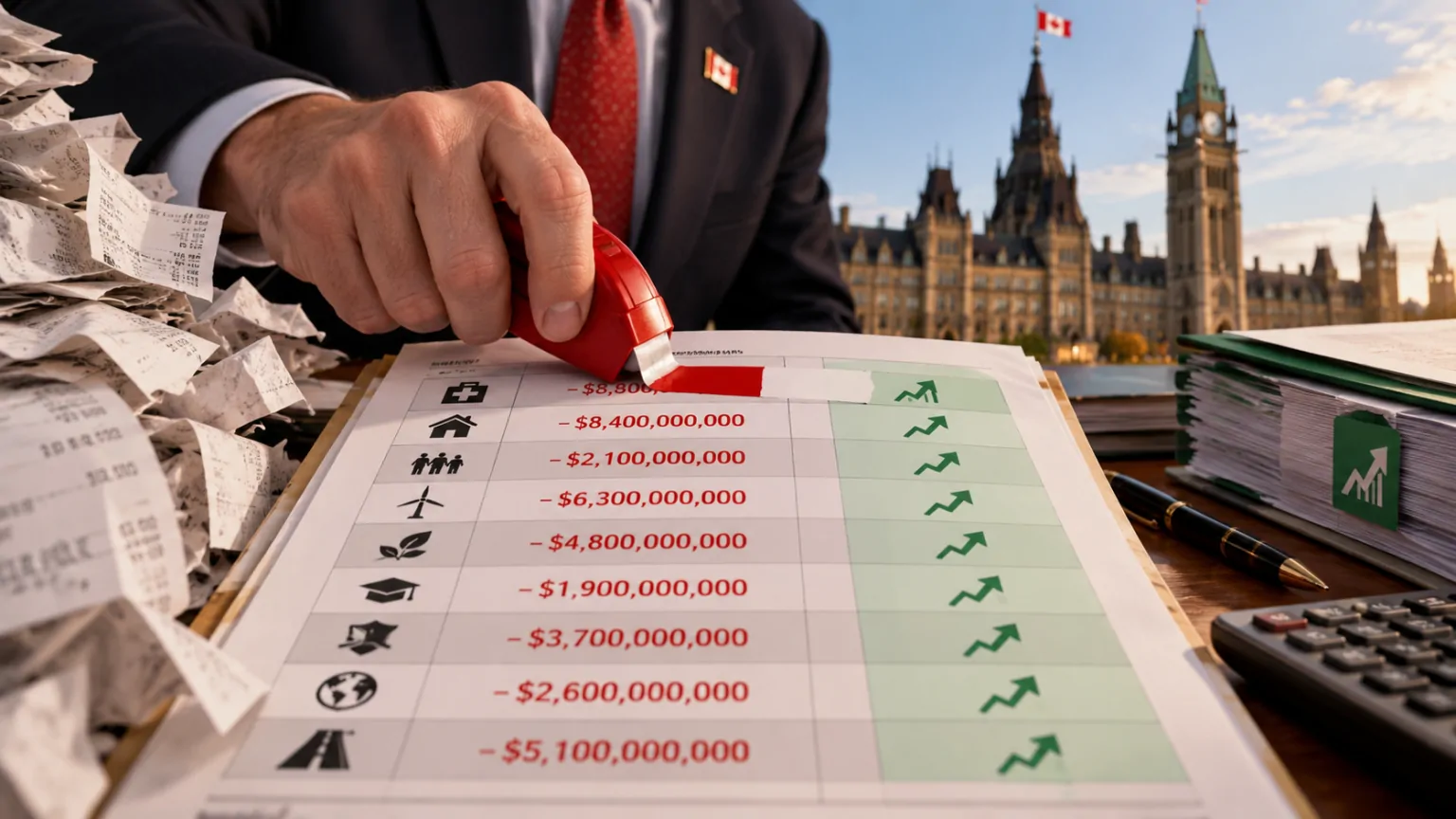
Prime Minister Mark Carney has promised to balance Canada’s gruesome budget deficit. But his plan is to change the definition of the word ‘spending’.
Carney’s big idea is to only count day-to-day operating costs as ‘spending’. And anything else that he deems to be an ‘investment’ won’t count.
We all understand the difference. In your own household, the electric bill is considered an expense. Purchasing shares of Newmont Mining is considered an investment.
Now, my wife has tried to stretch this definition a time or two by insisting that a beach vacation or pretty necklace is actually an investment.
Carney is applying this same logic to an entire national economy. It’s completely subjective and inconsistent, plus it lacks any transparency.
Giving money away on woke priorities? Not an expense! It’s an investment in community! Paying Canadians to turn in their completely legal firearms? Not an expense! It’s an investment in safety! (more on this below)
Carney has now reinvented the math, making Canada look just as ridiculous as WeWork when then CEO Adam Neumanm spoke of his company’s “Community-Adjusted Earnings”.
Canada's last line of defense is the gun owners it's disarming
Mark Carney isn’t done with his insanity. He recently told the New York Times that it's his job to look at the "extreme tail risk" that Donald Trump orders military action against Canada.
According to Carney himself, in the absurd likelihood of a US invasion, US forces would overrun Canada's defenses within a week, possibly within two days. After that, Carney will be counting on "small groups of irregular military or armed civilians" to fight on with ambushes and sabotage, like the Afghan mujahedeen against the Soviets.
The trouble is that Canada has banned more than 2,500 makes and models of "assault-style" firearms since 2020, and the government is paying gun owners to hand them in.
So apparently Canadians are expected to fight house to house with hockey sticks... until the government comes for those too.
Boston paid $335,000 to call itself racist... and failed
If any place in America can say it made the right call on slavery early in its history, it's Massachusetts. The state's chief justice declared slavery finished in 1783; he cited the state constitution that "all men are born free and equal."
Yet the city government in Boston has still chosen to put itself on trial more than two centuries later.
In 2022 local politicians set up a task force to study reparations for slavery, with one member positively giddy that the research would give it the "evidentiary pool from which to argue for [reparations]."
So the city spent $335,000 of taxpayer money to hire a Tufts University team led by historian Kerri Greenidge.
She came with all the right awards. Her 2022 book The Grimkes, about a slaveholding family that produced two famous abolitionist sisters, had been a finalist for the National Book Critics Circle Award and won a prize from the American Historical Association.
Apparently if you write about slavery, no one bothers to check whether it's accurate. They just give you awards.
But it turns out Greenidge’s book was "riddled with factual errors." It cites letters held at the University of Michigan which don’t actually exist. It references other historians’ research that doesn’t exist. In short, it’s about as accurate as a Hollywood adaptation.
Ms. Greenidge naturally clapped back and claimed that pointing out her errors is an "attack on Black women [in] academics..."
So, Boston was willing to spend taxpayer money to call its own taxpayers racists, and the expert they hired turned out to be another race grifter with no credibility.
To your freedom, James Hickman Co-Founder, Schiff Sovereign LLC