
News, Rumors and Opinions Friday 9-11-2026
KTFA:
Clare: The Minister of Oil discusses the draft oil and gas law with a delegation from the region.
Baghdad Today - Baghdad
Oil Minister Basim Mohammed Khudair received the Minister of Natural Resources in the Kurdistan Region, Kamal Mohammed Saleh, and his accompanying delegation on Wednesday (September 9, 2026).
A statement from the ministry, received by "Baghdad Today," indicated that the meeting included discussions on a number of files related to the oil and gas sector, most notably the draft oil and gas law, which contributes to strengthening cooperation and coordination between the federal government and the regional government in this vital sector.
KTFA:
Clare: The Minister of Oil discusses the draft oil and gas law with a delegation from the region.
Baghdad Today - Baghdad
Oil Minister Basim Mohammed Khudair received the Minister of Natural Resources in the Kurdistan Region, Kamal Mohammed Saleh, and his accompanying delegation on Wednesday (September 9, 2026).
A statement from the ministry, received by "Baghdad Today," indicated that the meeting included discussions on a number of files related to the oil and gas sector, most notably the draft oil and gas law, which contributes to strengthening cooperation and coordination between the federal government and the regional government in this vital sector.
The statement added that both sides stressed the importance of continuing dialogue and joint coordination in a way that serves the national interest and supports the development of the sector, noting that "the meeting was attended by a number of directors general in the federal ministry, along with the Minister of Finance in the regional government and a delegation from the Ministry of Natural Resources." LINK
Clare: The Kurdistan Regional Government has decided to immediately close all Forex companies and ban the trading of digital currencies.
Erbil (Kurdistan24) - The Kurdistan Regional Government has launched a broad campaign to combat illegal currency trading, ordering the immediate and comprehensive closure of all companies and offices operating in the field of electronic trading "Forex", with a strict emphasis on prohibiting the trading of digital and encrypted currencies.
An official circular issued by the Presidency of the Council of Ministers of the Kurdistan Region tasked the Ministry of Interior and the relevant security agencies with immediately beginning to close the headquarters and offices of companies and centers trading in digital currencies and “Forex” platforms that are not licensed in all cities and governorates of the region.
Decision-making principles:
Compliance with Baghdad and Central Bank decisions: These procedures are based on official instructions issued by the Central Bank of Iraq, which criminalize and classify any dealings with digital currencies and platforms not subject to the official financial system as illegal and prohibited banking activities.
Immediate closure and field prosecution: The Ministry of Interior is tasked, in coordination with relevant institutions and departments, with raiding and sealing all sites and centers that carry out this activity outside the scope of the law and applicable instructions.
Preventing evasion and changing addresses: The directive stressed the need to pursue all companies and networks that trade under pseudonyms, or resort to tricks and changing addresses and business activities to circumvent the decision.
Protecting the financial security of citizens
The Kurdistan Regional Government affirmed that this decisive measure stems from a commitment to preserving the financial stability of citizens and protecting their savings, preventing the draining of capital abroad, as well as containing the risks of fraud, financial scams, and the serious losses resulting from unreliable speculation on these unregulated platforms. LINK
************
Courtesy of Dinar Guru: https://www.dinarguru.com/
Terrance Once they've deleted the zeros and they do the revaluation, which we're all hoping for...usually countries are given 90 days in order to clear that. They're under no obligation to tell you, the speculator, how long that window is going to be open or to alert you if they decide to change that window...But they will notify licensed institutions...'it is our prerogative to reduce that to 45 days or even 30 days...' Your JP Morgan Chase, Bank of America is not going to notify you that the window has been reduced. I'm not saying the window will be reduced. But be clear, there is an incentive for Iraq to reduce that window because for anyone who is slow to exchange their dinar it reduces the amount of dinar in circulation...If you could reduce the amount of currency in circulation, then the foreign reserves and gold Iraq has, suddenly supports a higher valuation.
Jeff They're now ready to send the Oil and Gas law to parliament for approval. This thing's waited to clear since 2005/07 for the rate to have changed to do this. It's all coming together now at the same time around the middle of September...They pretty much have given you a back wall for the rate to have changed by September 30th.
Stephen The reason why the dinar has such the potential it does to be a truly life transforming wealth event is because of the negativity surrounding it...There's a reason why people think dinar investors are nuts...If this investment didn't have a high risk nature behind it, it would not yield the benefits and the returns we are all expecting, hoping and praying for...If this was a guaranteed hole-in-one investment, everyone and their mother would be invested in it and it wouldn't exist.
IQD Update Currency Updates BUY HOLD SELL: VND ZiG ARS VES
Edu Matrix: 9-10-2026
This analysis covers the current economic landscape for several global currencies, including the Argentine Peso and the Venezuelan Bolivar.
We review national flags, scenic backgrounds, and essential economic indicators such as stability, reform, and future opportunities for each market.
By examining these trends, investors can better understand how specific monetary policies and regional financial conditions influence currency value.
This overview provides a clear perspective on the factors driving these developments, offering context for anyone tracking central bank announcements and international currency movements.
0:00 Analyzing Global Currency Trends 2:33 Argentina's Peso Outlook 3:30 The Reality of the Venezuelan Bolivar 4:37 The Truth Behind the Iraqi Dinar
Seeds of Wisdom RV and Economics Updates Thursday Morning 9-10-26
Good Morning Dinar Recaps,
RATE HIKE WARNING: EUROPE'S ENERGY CRISIS OPENS A NEW FRONT IN THE GLOBAL DEBT BATTLE
The European Central Bank has raised interest rates as energy-driven inflation accelerates, adding fresh pressure to European bond markets, government borrowing costs and an already strained global debt system.
Good Morning Dinar Recaps,
RATE HIKE WARNING: EUROPE'S ENERGY CRISIS OPENS A NEW FRONT IN THE GLOBAL DEBT BATTLE
The European Central Bank has raised interest rates as energy-driven inflation accelerates, adding fresh pressure to European bond markets, government borrowing costs and an already strained global debt system.
OVERVIEW
The European Central Bank (ECB) raised its benchmark deposit rate to 2.50% on September 10, marking its second rate increase this year as surging oil and natural-gas prices push euro-area inflation above 3%. The ECB is now projecting average inflation of 3.0% for 2026 and 2.5% for 2027, both well above its 2% target.
The rate increase comes as the ongoing Middle East conflict continues to disrupt energy markets. Higher oil and gas prices are feeding directly into inflation concerns, forcing policymakers to confront a difficult choice: fight rising prices with tighter monetary policy while avoiding additional damage to economic growth.
Financial markets have already responded. European government bond yields moved to multi-year highs after the ECB decision, with Germany's 10-year yield reaching its highest level since 2011 and France's 30-year yield reaching levels last seen in 2003. Markets have also increased expectations for additional ECB rate increases.
This creates a powerful financial chain reaction: Energy Shock → Inflation → Rate Hikes → Higher Bond Yields → Higher Borrowing Costs → Greater Debt Pressure
For the Global Reset discussion, the significance is not simply that Europe raised interest rates. It is that energy, inflation, monetary policy and government debt are increasingly becoming interconnected pressures within the global financial system.
KEY DEVELOPMENTS
1. The ECB Raises Rates Again
The ECB increased its deposit rate by 25 basis points to 2.50%, making this the second rate hike of 2026.
The move reflects concern that the energy shock caused by the Middle East conflict could keep inflation elevated for an extended period.
ECB President Christine Lagarde has warned that inflation remains significantly above the bank's target and that the outlook remains highly uncertain, with risks tilted toward higher inflation and weaker economic growth.
The central bank is therefore attempting to prevent today's energy shock from becoming tomorrow's broader inflation problem.
2. Energy Prices Are Driving the Inflation Problem
The unusual feature of the current inflation surge is that it is being driven heavily by energy costs rather than simply excessive consumer demand.
Oil prices have risen sharply as the conflict threatens energy supplies and shipping routes, while European natural-gas prices have also climbed substantially.
That creates a difficult situation for central banks.
Higher interest rates can reduce demand, but they cannot directly produce more oil or natural gas.
The ECB therefore faces the challenge of responding to an inflation problem that originates partly outside traditional monetary policy.
3. European Bond Yields Are Surging
The rate decision immediately affected Europe's bond markets.
Germany's 10-year government bond yield reached its highest level since 2011, while France's 30-year yield reached its highest level since 2003. Other European borrowing costs also moved higher as investors increased expectations for additional rate increases.
Higher yields matter because governments must continually refinance existing debt.
When borrowing costs rise, governments have to devote more resources to interest payments or find other ways to manage their budgets.
That becomes increasingly important for countries already carrying substantial debt loads.
4. The Debt Problem Becomes More Difficult
Europe's situation illustrates a broader global problem.
Governments accumulated significant debt during years of low interest rates, while the post-pandemic period brought additional borrowing and fiscal pressure.
Now, the cost of refinancing that debt is rising at the same time that governments are dealing with higher energy costs and demands for increased spending.
The result is a difficult financial equation:
Higher inflation can require higher rates, while higher rates increase the cost of servicing government debt.
That tension can become particularly important when economic growth is slowing.
5. The Global Bond Market Is Feeling the Pressure
Europe is not experiencing this pressure in isolation.
The latest bond-market selloff has spread across major economies, with rising energy prices and expectations for tighter monetary policy pushing government yields higher internationally. Reuters reported that U.S. and U.K. yields also moved sharply higher as investors reassessed the inflation and interest-rate outlook.
This matters because government bond markets sit at the foundation of modern finance.
Treasury and sovereign bonds influence mortgage rates, business borrowing, investment decisions, currency valuations and the cost of government financing.
When yields move significantly higher, the consequences can travel through multiple layers of the financial system.
WHY IT MATTERS
Europe's rate hike demonstrates how a geopolitical energy crisis can become a monetary and debt problem.
The ECB is attempting to prevent higher energy prices from becoming entrenched inflation, but the medicine comes with a cost: higher interest rates and potentially higher borrowing costs for governments, businesses and households.
This is why the current situation deserves attention beyond Europe.
The energy crisis is no longer just an energy story — it is becoming a test of how much financial pressure the global debt system can absorb.
WHY IT MATTERS TO FOREIGN CURRENCY HOLDERS
Readers hold foreign currency with the hopes that it will increase in value when the Global Reset occurs.
Developments such as the ECB rate increase are important because interest-rate changes can influence currency values, capital flows and the relative attractiveness of different currencies.
However, an ECB rate hike does not guarantee a revaluation of any particular foreign currency, nor does it establish a timetable for a Global Reset.
What it does provide is another measurable indication that the international monetary system is operating under significant pressure from energy costs, inflation, interest rates and debt.
For currency holders, these underlying forces are more important to watch than unsupported predictions about specific reset dates.
Hope is understandable. Evidence is essential.
IMPLICATIONS FOR THE GLOBAL RESET
Pillar 1 — Debt and Monetary Stability
The ECB's decision highlights one of the central challenges facing modern economies:
How do governments manage enormous debt loads when inflation requires interest rates to remain higher for longer?
Higher rates can help contain inflation, but they also make government borrowing more expensive.
That creates pressure for governments to improve fiscal management, restructure spending and find ways to maintain financial stability.
This debt-and-monetary tension is one of the major structural issues shaping the future financial system.
Pillar 2 — Energy and the Global Financial Architecture
The European experience also demonstrates the growing connection between energy security and monetary stability.
When energy supplies are disrupted, the effects can move into inflation, interest rates, bonds, currencies and government finances.
This means energy security is increasingly becoming a financial-security issue.
As nations seek greater resilience, they may also accelerate efforts to diversify energy supplies, strengthen trade relationships and develop alternative financial and payment arrangements.
THE BOTTOM LINE
The ECB's rate hike is significant because it shows that the energy shock is now influencing central-bank policy and global borrowing costs.
Europe is attempting to control inflation while avoiding a deeper economic slowdown, all while governments face higher costs for servicing existing debt.
The broader question is how long the world's financial system can absorb simultaneous pressure from energy disruption, inflation, rising interest rates and elevated government debt.
The next major financial shift may not come from a single market — it may emerge as energy costs ignite inflation, inflation pushes bond yields higher, and rising debt pressures begin traveling through the currencies and financial systems of nations around the world.
Seeds of Wisdom Team
Newshounds News™ Exclusive
SOURCES
Reuters — "ECB raises interest rates to fight off inflation jump"
Reuters — "Bond yields hit multi-year highs as traders brace for new ECB rate-hike cycle"
~~~~~~~~~~
🌱 A Message to Our Currency Holders🌱
If you’ve been holding foreign currency for many years, you were not foolish.
You were not wrong to believe the global financial system would change.
What failed was not your patience — it was the information you were given.
For years, dates, rumors, and personalities replaced facts, structure, and proof. “This week” predictions created cycles of hope and disappointment that were never based on how currencies actually change.
That is not your failure.
Our mission here is different: • No dates • No rates • No hype • No gurus
Instead, we focus on:
• Verifiable developments • Institutional evidence
• Global financial structure • Where countries actually sit in the process
Currency value changes only come after sovereignty, trade, banking, settlement systems, and fiscal coordination are in place. History and institutions confirm this sequence.
You will see silence. You will see denials. That is not delay — that is discipline.
Protect your identity. Organize your documents. Verify everything.
Never hand your discernment to anyone who cannot show proof.
You deserve truth — not timelines.
Seeds of Wisdom Team
Newshounds News
~~~~~~~~~~
Seeds of Wisdom Team RV Currency Facts Youtube and Rumble
Newshound's News Telegram Room Link
RV Facts with Proof Links Link
RV Updates Proof links - Facts Link
Start Here room with Most Asked Questions Link
Follow the Gold/Silver Rate COMEX
Follow Fast Facts
Seeds of Wisdom Team™ Website
Thank you Dinar Recaps
Iraq Economic News and Points To Ponder Late Thursday Evening 9-10-26
The Kurdistan Regional Government Has Decided To Immediately Close All Forex Companies And Ban The Trading Of Digital Currencies.
Erbil (Kurdistan24) - The Kurdistan Regional Government has launched a broad campaign to combat illegal currency trading, ordering the immediate and comprehensive closure of all companies and offices operating in the field of electronic trading "Forex", with a strict emphasis on prohibiting the trading of digital and encrypted currencies.
The Kurdistan Regional Government Has Decided To Immediately Close All Forex Companies And Ban The Trading Of Digital Currencies.
Erbil (Kurdistan24) - The Kurdistan Regional Government has launched a broad campaign to combat illegal currency trading, ordering the immediate and comprehensive closure of all companies and offices operating in the field of electronic trading "Forex", with a strict emphasis on prohibiting the trading of digital and encrypted currencies.
An official circular issued by the Presidency of the Council of Ministers of the Kurdistan Region tasked the Ministry of Interior and the relevant security agencies with immediately beginning to close the headquarters and offices of companies and centers trading in digital currencies and “Forex” platforms that are not licensed in all cities and governorates of the region.
Decision-Making Principles:
Compliance with Baghdad and Central Bank decisions: These procedures are based on official instructions issued by the Central Bank of Iraq, which criminalize and classify any dealings with digital currencies and platforms not subject to the official financial system as illegal and prohibited banking activities.
Immediate closure and field prosecution: The Ministry of Interior is tasked, in coordination with relevant institutions and departments, with raiding and sealing all sites and centers that carry out this activity outside the scope of the law and applicable instructions.
Preventing evasion and changing addresses: The directive stressed the need to pursue all companies and networks that trade under pseudonyms, or resort to tricks and changing addresses and business activities to circumvent the decision.
Protecting The Financial Security Of Citizens
The Kurdistan Regional Government affirmed that this decisive measure stems from a commitment to preserving the financial stability of citizens and protecting their savings, preventing the draining of capital abroad, as well as containing the risks of fraud, financial scams, and the serious losses resulting from unreliable speculation on these unregulated platforms.
The Kurdistan Regional Government (KRG) Has Ordered The Closure Of All Forex Companies
Summary of the news
The Kurdistan Regional Government (KRG) has ordered the closure of all Forex companies.
The Kurdistan Regional Government (KRG) is launching a massive campaign to eradicate illegal currency trade.
The Kurdistan Regional Government (KRG) insists on a complete ban on trading in digital currencies.
Thursday, September 10, 2026, the Presidency of the Office of the Council of Ministers in an official generalization ordered the Ministry of Interior to immediately close all companies and offices of electronic exchange (forex) and insists on a complete ban on dealing in digital currencies.
The main themes of the decision:
Compliance with Baghdad's decisions: The measures are based on the official guidelines of the Central Bank of Iraq.
Any transactions with digital currencies and forex platforms have been deemed illegal.
Immediate closure: The Ministry of Interior, in coordination with the relevant agencies, has been instructed to close all places and centers that do this without a license and outside the guidelines.
Prevention of evasion: The decision also applies to all companies and groups that conduct the same activities under different names, scams and other business addresses.
This new step of the government in order to protect the financial security of citizens, prevent the waste of capital and prevent the fraud and financial losses faced by citizens due to uncertain transactions in this field. https://channel8.com/kurdish/news/231261
The Caretaker Kurdistan Regional Government has instructed the Ministry of Interior to enforce the closure of unauthorized Forex and foreign exchange offices across the region.
https://x.com/Channel8English/status/2098018231617245372
81 Banks And Financial Institutions In Iraq... Why Are Most Of Them Absent From Global Banking Lists?
September 10, 2026Last updated: September 10, 2026
81 banks in Iraq... Why are most of them absent from the global rankings?
Al-Mustaqilla - Iraq has a numerically large banking network, comprising dozens of government, commercial, Islamic, and foreign bank branches, but the paradox emerges when moving from the number of banks to their real weight on the international banking map; this large number is not reflected in a similar presence in the most prominent global bank rankings.
According to the approved lists of operating banks, the Iraqi banking system includes 8 government banks, 24 local commercial banks, and 31 local Islamic banks, in addition to 16 branches of foreign banks and two representative offices, bringing the total number to about 81 banking institutions and representative offices.
However, research into the most prominent international rankings, most notably the Top 1000 World Banks list issued by The Banker magazine, which is mainly based on the size of Tier 1 Capital, reveals that the Iraqi presence in the global list has remained very limited compared to the number of banks operating in the country.
One of the most prominent documented Iraqi cases is the Trade Bank of Iraq (TBI), which in previous years managed to enter the list of the world's top 1,000 banks. According to officially published data from the bank, its ranking reached 319th globally in 2020 according to the Tier 1 Capital metric, after advancing 26 places compared to the previous year.
However, this ranking is historical and should not be treated as a current ranking for 2026. Even in the latest edition of The Banker's list, there is no documented current ranking in open public data that can be attributed to all Iraqi banks or even most of them individually.
This highlights one of the most significant problems in understanding the reality of Iraqi banks: the existence of dozens of banks does not mean that each one has a global ranking. Major international rankings are based on capital, assets, profitability, financial strength, market reach, and balance sheet quality, while the majority of small and medium-sized banks do not even appear on these lists.
The difference becomes even more apparent when comparing Iraq to the Gulf banking systems. Countries like Saudi Arabia, the UAE, Qatar, and Kuwait, while having fewer banks in some cases, have a stronger presence in global rankings because several of their banks possess significantly larger capital, assets, profitability rates, and international reach.
In Iraq, the IMF notes that the banking system remains heavily concentrated around two major state-owned banks, while private banks remain relatively small and face challenges related to limited capital, a limited customer base, and competition with state-owned banks. The IMF also pointed out that the dominance of large state-owned banks has hindered the emergence of stronger private banks.
The IMF also pointed to the need to complete the restructuring of state-owned banks, modernize the banking system, and expand international correspondent banking relationships, as essential steps for integrating the Iraqi banking sector more broadly into the global financial system.
Most telling is the risk assessment conducted by S&P Global Ratings on banking systems worldwide. In its July 2026 update, the agency placed the Iraqi banking system in the BICRA Group 10. ( S&P Global )
This ranking does not mean that Iraq is ranked tenth globally; rather, the S&P scale ranges from Group 1 to Group 10, with Group 1 representing the lowest-risk systems and Group 10 representing the highest-risk systems. Thus, Iraq falls within the highest levels of banking risk according to this international scale.
A regional comparison reveals the widening gap. In the same S&P assessment, Saudi Arabia was in Group 3, the UAE and Qatar in Group 4, Kuwait in Group 3, Jordan in Group 6, while Iraq remained in Group 10.
This does not mean that all Iraqi banks are in trouble or in similar situations, because the BICRA rating relates to banking risks at the national and financial system levels, not to an individual rating for each bank. Rather, it reflects the environment in which these institutions operate and the strength of the surrounding regulatory, economic, and financial system.
S&P also notes that the Iraqi economy is highly sensitive to oil market fluctuations, and that its high dependence on oil and political and economic volatility affect the operating environment for banks. The agency has described the Iraqi banking environment in its reports as relatively weak compared to other banking systems.
Here The Real Question Becomes: How Many Banks Does Iraq Have? But: How Many Of Them Are Capable Of Competing Globally?
The existence of dozens of banks does not automatically translate into a strong sector unless there are banks with large capitalizations, stable deposit bases, sustainable profitability, strong governance, effective compliance systems, international correspondent relationships, and credit ratings comparable with regional and international institutions.
The presence of 16 branches of foreign banks in Iraq does not mean that they are included in the global classification of Iraqi banks, because the classification that a banking group such as Standard Chartered or others may have is due to the parent bank and its global group, and not to its branch operating inside Iraq as an independent Iraqi bank.
Therefore, describing all 81 banks as having a “global ranking” is inaccurate. The vast majority do not even appear in any of the most prominent rankings of the world’s largest banks, while a limited number appear only in individual international data or assessments.
Between the large number and the weak international presence, it seems that the next challenge facing the Central Bank of Iraq will not only be maintaining dozens of banking licenses, but also building a less fragmented, stronger and more competitive sector.
The ongoing reform of the banking sector may, in the next phase, lead to a restructuring of the market, raising capital, compliance and governance requirements, and perhaps reducing the number of weak banks or merging some of them, in exchange for building larger institutions that are more capable of connecting with the international financial system.
In Conclusion, The Situation Can Be Summarized In One Sentence:
Iraq has dozens of banks, but it does not yet have dozens of banks with global influence.
The number has reached about 81 banking institutions and representative offices, but the presence in major global rankings remains limited, at a time when the Iraqi banking system is still classified among the highest risk groups by S&P.
This puts the sector to a real test: Will the upcoming reforms succeed in transforming the “abundance of banks” into “banking strength,” or will the map of Iraqi banks witness downsizing, mergers, and extensive restructuring in the coming years
https://mustaqila.com/81-مصرفًا-ومؤسسة-مصرفية-في-العراق-لماذا/
Friday Iraq News Posted by Tishwash at TNT 9-11-2026
TNT:
Tishwash: Why hasn't an oil and gas law been enacted? A former minister reveals the reasons.
Former MP and Minister Zuhair al-Jalabi revealed on Thursday the reasons why political parties have not moved forward with enacting the oil and gas law, despite nearly two decades having passed since attempts to pass this crucial legislation.
Al-Jalabi told Al-Maalouma, "The issue of annexing land from Nineveh Governorate to the Kurdistan Region is practically over, especially since the administrative boundaries of the governorates are defined within the Ministry of Planning and cannot be changed except by a decision from the Council of Representatives through a vote on a new administrative map of the governorates."
TNT:
Tishwash: Why hasn't an oil and gas law been enacted? A former minister reveals the reasons.
Former MP and Minister Zuhair al-Jalabi revealed on Thursday the reasons why political parties have not moved forward with enacting the oil and gas law, despite nearly two decades having passed since attempts to pass this crucial legislation.
Al-Jalabi told Al-Maalouma, "The issue of annexing land from Nineveh Governorate to the Kurdistan Region is practically over, especially since the administrative boundaries of the governorates are defined within the Ministry of Planning and cannot be changed except by a decision from the Council of Representatives through a vote on a new administrative map of the governorates."
He added, "Regarding the oil and gas law, despite talk of obstacles related to shared lands and the ownership of oil fields, whether by Baghdad or the region, the problem is much larger because many countries are working to prevent the passage of such a law."
He explained that "the countries seeking to prevent the law's passage benefit from oil smuggling, the rampant corruption in the relevant ministry, and the chaos associated with this issue. Some countries are striving to ensure the continuation of this scenario to guarantee their own interests." ink
Tishwash: Romanowski: The end of the "coalition" in Iraq does not mean Washington's absence from the security file.
A former US diplomat who served as her country's ambassador to Baghdad warned of the dangers of leaving a security vacuum in Iraq as the international coalition's military mission nears its end, calling for the establishment of alternative security arrangements to preserve stability in the country and the region.
Alina Romanowski, speaking at a panel discussion hosted by the Atlantic Council in Washington, said that the commitment to completing the mission by the end of September was a pre-agreed step, stressing that Washington's priority was and remains ensuring an orderly transition that allows for building a bilateral security relationship with Baghdad, away from an improved withdrawal.
The former ambassador considered that the most challenges facing the Iraqi government lie in the issue of armed factions, as efforts to restrict weapons to the state are met with the prominent refusal of some of these parties to engage in any reform of the security system.
She warned that the expansion of these factions' attacks to include neighboring countries strikes at the heart of Baghdad's declared desire to stay away from regional tension issues, making the security file directly linked to broader regional stability.
Romanowski stressed that reducing the American military presence does not mean a decline in the American commitment to Iraq, but rather a redirection of it towards intelligence support, training and counter-terrorism, considering that the stability of the security environment is a prerequisite for attracting investments and expanding economic cooperation between the two countries.
It is worth noting that Iraq and Washington agreed in September 2024 to end the mission of the international coalition within a phased plan, the first phase of which was completed in September 2025 with forces remaining in the Kurdistan Region to support operations in Syria, with the final phase to be completed by the end of September 2026. link
***************
Tishwash: US-led coalition forces have begun withdrawing from northern Iraq.
A minister in the Kurdistan region reported on Thursday that US-led international coalition forces have begun withdrawing from northern Iraq as the deadline for the end of their mission across the country approaches.
These forces had already completed their withdrawal from bases in other parts of Iraq in January, and their deployment is now limited to the autonomous Kurdistan region.
These forces are scheduled to complete their withdrawal from the entire country by September 30, under an agreement concluded between Baghdad and Washington in 2024.
Kurdistan Interior Minister Reber Ahmed told reporters, “Regarding the issue of the withdrawal of coalition forces from the Kurdistan Region or from Iraq in general, based on the existing agreement, these forces must leave by the end of September, and they have already begun doing so in earnest.”
He added, “They have also started in the Kurdistan Region, and those forces are being moved daily to other locations outside of Iraq.”
An Iraqi official confirmed to AFP that coalition forces have begun withdrawing from the region, and that their deployment is now limited to Erbil International Airport.
Coalition forces had left Syria earlier this year. link
Tishwash: No loans or advances... Government banks have no liquidity.
An informed source revealed on Thursday that most government banks have stopped granting loans and advances of all kinds, attributing this to the lack of financial allocations and the lack of sufficient liquidity in those banks .
The source told Shafaq News Agency that the decrease in the volume of deposits and the decline in liquidity levels have directly affected the ability of government banks to provide loans and advances, as well as investment loans allocated to finance projects and residential complexes in Baghdad and the provinces .
He added that the decline in banking liquidity has reduced the ability of banks to continue financing various credit and investment activities, which may affect the flow of financing and support for housing and development projects link
************
Tishwash: US pressure mounts on Baghdad: Iraqi banks face the test of sanctions and Iranian funding.
The United States has placed Iraq before a new financial and political obligation, with escalating American pressure aimed at narrowing funding channels linked to Iran, at a time when Baghdad faces a double challenge of protecting its financial system from the repercussions of sanctions and maintaining its economic relationship with Washington.
According to Shafaq News Agency, the US State Department threatened a broad economic campaign to cut off funding lines to Tehran, demanding that the Iraqi government fully engage in pursuing illicit financial activities and preventing the use of the Iraqi financial system in transactions that may be subject to US sanctions.
The American position came in response to questions posed by Shafaq News to the State Department regarding the measures required to spare Iraq the repercussions of the sanctions, especially in light of Iraqi political warnings that the country is entering a sensitive financial situation that may be affected by any additional restrictions on foreign transfers or dollar flows.
According to what the agency quoted from a spokesman for the US State Department, Washington views the current stage as a new path in the relationship with Baghdad, based on strengthening the economic and security partnership, in parallel with demanding that Iraq prevent the use of its territory or financial institutions in activities that conflict with US policy towards Iran.
But the American message carried a more sensitive aspect on the financial level, as the spokesman linked the continuation of support and partnership with Iraq to the need to cooperate in confronting regional financing networks that Washington says contribute to providing financial resources to Tehran.
The report noted that the United States has begun a campaign called “Operation Economic Paragon” targeting individuals and entities accused of engaging in illegal financial transactions linked to Iran, including those who deal with Iranian banks or help transfer funds through external channels.
These developments reflect the magnitude of the pressures that the Iraqi banking sector may face in the coming period, especially since any expansion of US sanctions or restrictions may directly affect the ability of some banks and companies to carry out international transfers and obtain dollars, which makes the financial compliance file one of the most sensitive files facing the Central Bank of Iraq and the government.
According to Shafaq News, the US State Department called on the Iraqi government and the international community to support the new measures and hold accountable those involved in illicit financial operations, in a clear indication that Washington wants Baghdad to take practical steps to separate the movement of funds within Iraq from any networks subject to sanctions.
This comes at a time when political and banking concerns are growing within Iraq that continued violations or weak oversight procedures could lead to the expansion of US restrictions to include additional financial institutions, potentially putting the Iraqi economy under new pressure in the exchange market, foreign trade, and international transfers.
According to the report, the US Treasury Department announced the launch of a new campaign against Iran at the direction of US President Donald Trump, while Treasury Secretary Scott Bessent described the measures as a campaign targeting Iran and the entities that provide it with financial support and enabling power.
These messages present Baghdad with a delicate equation: tightening control over the movement of funds and transfers to ensure continued access to the global financial system, while at the same time avoiding any internal disturbances that may result from tightening restrictions on banks or trade.
As US pressure on Iran's funding sources widens, the Iraqi banking system appears to be at the heart of the next phase, and Baghdad's ability to demonstrate the effectiveness of its compliance, anti-money laundering, and sanctions financing systems will largely determine the extent of the pressure Iraq may face in the future link
Iraq Economic News and Points To Ponder Thursday Evening 9-10-26
The Dinar Must Be Changed! We Won't Remove Zeros, But The Current Currency Will Not Last
2026-09-09 |964 Following banking warnings that money hoarded in homes and outside banks is disrupting the liquidity cycle and weakening the banking system, an idea is emerging within the Central Bank and among members of the parliamentary finance committee to change the currency and launch a new series, instead of removing zeros, in a process aimed at withdrawing counterfeit, worn-out, and stolen currency, and returning part of the funds to the banking system, through a mechanism being discussed to link the exchange of large sums to opening accounts and proving the sources of funds.
The Dinar Must Be Changed! We Won't Remove Zeros, But The Current Currency Will Not Last
2026-09-09 |964 Following banking warnings that money hoarded in homes and outside banks is disrupting the liquidity cycle and weakening the banking system, an idea is emerging within the Central Bank and among members of the parliamentary finance committee to change the currency and launch a new series, instead of removing zeros, in a process aimed at withdrawing counterfeit, worn-out, and stolen currency, and returning part of the funds to the banking system, through a mechanism being discussed to link the exchange of large sums to opening accounts and proving the sources of funds.
A member of the parliamentary finance committee told 964 Network that “the ongoing discussions regarding the future of the Iraqi currency are currently focused on adding new denominations and making broader changes to the currency in circulation. The option of removing zeros has been ruled out at this stage.
There is a trend that believes issuing a new series of currency can achieve greater goals, including updating security features, eliminating counterfeit currency, withdrawing worn-out banknotes, addressing some of the stolen currency or funds moving outside the financial system, in addition to reorganizing the circulating money supply.”
The MP, who asked to remain anonymous, added that “one of the most important ideas under discussion relates to the method of replacing the old currency. There are proposals to facilitate the replacement of ordinary amounts, while subjecting large amounts to different banking procedures, which may include opening a bank account, depositing the amount into it, and applying customer knowledge and verification requirements for the source of funds, instead of handing over the same amount in cash from the new issue.
These details, including determining the size of the amount subject to these procedures, are still under discussion and have not been finalized, as they currently revolve around 100-150 million.”
He added that “the success of any project of this kind requires a sufficient transition period, ensuring that markets are not disrupted, and putting in place easy mechanisms for citizens and owners of natural savings, as well as the readiness of banks to receive deposits and deal with the expected large demand, because the goal in the end is not just to replace one piece of paper with another, but to take advantage of the currency change to rearrange a part of the monetary cycle and enhance confidence in the banking system and the ability to monitor the movement of funds.”
100 Trillion Outside The Banks
The importance of changing the currency is highlighted by the fact that there are more than 100 trillion dinars outside the banks, distributed between daily transactions and the funds hoarded by citizens and companies, which indicates – according to experts – the weakness of cash entering the banking system, and makes the exchange process an opportunity to return part of these funds to the accounts, especially if changing large amounts is linked to proving their sources.
Recently, Ali Abdul-Ridha Alwan, director of the Trade Bank of Iraq (TBI), warned that keeping more than 85% of the money supply outside the banking system disrupts the liquidity cycle. He explained that citizens keeping money at home deprives banks of the liquidity they need to perform their role in economic activity and creates a disruption in the chain that begins with the injection of money through financial institutions and ends with spending and paying salaries.
What Are The Gains From The Process?
A member of the Finance Committee says that “the initial estimates circulating regarding the results of the currency change indicate the possibility of recovering the equivalent of 20-25 trillion dinars of the cash mass that is not currently moving normally within the financial system, whether due to worn-out or counterfeit currency or hoarded funds, which would allow for the reorganization of an important part of the monetary cycle.”
He added that “estimates also assume that the replacement process will push large numbers of citizens to deal with banks and open accounts, and there are perceptions that about 25% of money owners who enter the banking system for the purpose of changing the currency may leave all or part of their money in their accounts instead of withdrawing it again in cash, which means increasing deposits, enhancing liquidity within banks, and returning part of the hoarded money to the banking cycle.” https://964media.com/715480/
Iraq Postpones High Level 2027 Budget Drafting Meeting
Mohammed Jangadost
At a Glance:
The meeting of Iraq’s high committee tasked with drafting the 2027 federal budget has been delayed until early next week.
Despite the postponement, the committee maintains its target to finish writing the draft law by September 15 for submission to the Council of Ministers.
The Iraqi Ministry of Finance stressed that full financial transparency and rigorous revenue auditing are strict prerequisites for finalizing the text.
Following federal cabinet review and approval, the bill is scheduled for transmission to the Council of Representatives on October 10 for official readings and voting.
The meeting of Iraq’s high committee tasked with drafting the 2027 federal budget bill has been postponed to early next week, narrowing the remaining window for technical teams to finalize the text. Despite the delay, government officials reaffirm that the drafting process, which officially launched on August 27 in Baghdad, remains on track to meet its September 15 deadline for Council of Ministers review, ahead of a scheduled submission to parliament on October 10.
Key Statements and Focus Area:
High Budget Drafting Committee Member:
"Although the committee meeting was originally scheduled for today, the decision was made to postpone sessions until early next week. The committee remains fully committed to completing the draft law by September 15 and presenting it to the Council of Ministers for an official vote before legal submission deadlines expire."
Key Milestones and Timeline for Iraq's 2027 Federal Budget
Legislative Phase Target Date / Window Key Action & Operational Directive
Drafting Launch August 27, 2026 Technical sessions convened in Baghdad across federal ministries.
High Committee Meeting Early Next Week (Postponed) Reconciliation of ministry revenue data and expenditure caps.
Draft Completion Target September 15, 2026 Finalization of legal text for submission to the Council of Ministers.
Cabinet Approval Vote Late September 2026 Council of Ministers endorsement of the program-and-performance draft.
Parliamentary Transmission
October 10, 2026
Formal forwarding to the Council of Representatives for final readings.
Transparency Mandates and Revenue Auditing
The Iraqi Ministry of Finance has underscored that establishing data transparency and complete revenue auditing across all governorates and federal entities is non-negotiable for the 2027 bill. By shifting toward a program-and-performance framework, the ministry aims to verify all regional non-oil receipts, domestic fuel allocations, and public sector employment numbers before locking figures into the final bill.
Strict Statutory Deadlines
Postponing the high committee meeting leaves a tight timeline for technical groups to digest structural inputs, including the KRG’s 10-point entitlement package. However, federal leaders emphasize that completing the draft by September 15 is vital to allow the Council of Ministers sufficient time to debate and approve the measure before the October 10 deadline to send the text to parliament.
FYI
While short delays in high committee meetings reflect ongoing procedural haggling over spending caps and data auditing, the government's commitment to the September 15 drafting mark shows a resolve to avoid past legislative impasses. Adhering to the October 10 parliamentary deadline will be crucial to restoring fiscal predictability and securing timely public sector payrolls for 2027. https://channel8.com/english/news/65413
No Loans Or Advances... Government Banks Have No Liquidity
2026-09-10 03:58 Shafaq News - Baghdad An informed source revealed on Thursday that most government banks have stopped granting loans and advances of all kinds, attributing this to the lack of financial allocations and the lack of sufficient liquidity in those banks .
The source told Shafaq News Agency that the decrease in the volume of deposits and the decline in liquidity levels have directly affected the ability of government banks to provide loans and advances, as well as investment loans allocated to finance projects and residential complexes in Baghdad and the provinces .
He added that the decline in banking liquidity has reduced the ability of banks to continue financing various credit and investment activities, which may affect the flow of financing and support for housing and development projects .
https://www.shafaq.com/ar/اقتصـاد/لا-قروض-ولا-سلف-المصارف-الحكومية-بلا-سيولة
Here’s An Obvious Example Of A Critical Resource Shortage
Here’s An Obvious Example Of A Critical Resource Shortage
Notes From the Field By James Hickman (Simon Black / Sovereign Man) September 10, 2026
In July, the Canadian uranium miner Cameco stopped producing at its mine in northern Saskatchewan (known as ‘Cigar Lake’) for two weeks. Cigar Lake itself was fine, nothing was wrong with the mine. The problem was their sulfuric acid plant— a crucial ingredient in processing uranium ore— broke down.
Here’s An Obvious Example Of A Critical Resource Shortage
Notes From the Field By James Hickman (Simon Black / Sovereign Man) September 10, 2026
In July, the Canadian uranium miner Cameco stopped producing at its mine in northern Saskatchewan (known as ‘Cigar Lake’) for two weeks. Cigar Lake itself was fine, nothing was wrong with the mine. The problem was their sulfuric acid plant— a crucial ingredient in processing uranium ore— broke down.

Normally they would have just bought sulfuric acid from somewhere else while they fixed their company-owned acid plant. But this year that's not so easy.
About half the world's seaborne sulfur moves through the Strait of Hormuz, and since the war with Iran began, those shipments have almost completely stopped. China, the world's largest exporter of sulfuric acid, restricted its own exports in May to make sure they had enough.
So a simple mechanical problem at an acid plant caused a two-week shutdown of the world’s largest uranium mine.
Two weeks is a really long time for a huge mine like Cigar Lake to have an unscheduled shutdown; that’s because uranium is already in critical supply— there simply isn’t enough uranium being produced right now to keep up with demand.
The math is easy: miners produced roughly 155 million pounds of uranium in a year. Reactors burn about 185 million pounds. So there’s already a significant deficit.
For the past several years, the deficit between uranium production versus reactor demand was covered by stockpiles that had been building up over decades. So the nuclear industry effectively burned through its uranium ‘savings’.
But those stockpiles of uranium are now basically depleted... which means that nuclear power companies will need to rely on uranium production in order to meet their needs.
This is a problem... and one that we can quantify.
Because uranium is literally THE most important resource for a nuclear reactor, the reactor companies tend to line up their uranium supply needs years and years in advance through forward contracts and term agreements.
There’s no black magic here— it’s a pretty predictable quantity. A 2GW nuclear plant, for example, already knows exactly how much electrical capacity they have, so they know how much fuel they need to serve their customers... hence they can forecast their future uranium needs.
For this year at least, US nuclear power companies have more or less the amount of uranium that they anticipate needing. But next year they’ll be in a deficit... and one that grows each year.
By 2030, US nuclear power companies will be short 40% of their anticipated uranium needs. By 2033, they’ll be short 91%. Basically all of it.
Big deal, right? Existing uranium producers can simply mine more.
But that’s not really happening... at least, not at current prices.
Kazatomprom (based in Kazakhstan) is the largest uranium miner in the world. And their management is deliberately pulling back on production right now.
The company believes that it's simply not worth mining and selling uranium at the current price. Why bother producing at your full potential now when they KNOW the price is going to rise in the future, hence they make a LOT more money in the future if they mine less now.
OK well, the big shortage in the 2030s is still a few years away. So the industry has time to start more mines and bring new uranium production online.
Well, that’s easier said than done.
A company called NexGen Energy discovered a major uranium deposit in Saskatchewan back in 2014. They finally got their construction license this March, started building in August, and expect their first ore in 2030.
In other words, SIXTEEN years from discovery to production— and that's about average for the industry.
You can’t just turn on uranium production like a light switch; it takes years and years to make most things happen in business, and uranium mining is no different.
This is common across many real assets— there has been years of underinvestment. Very few new uranium mines. Very little oil & gas exploration. Not enough new shipyards, refineries, smelters, etc.
It takes several years... plus a lot of risk capital... to discover a new resource deposit and bring a mine to life. Years.
Demand can grow much more quickly. Just look at the increase in electricity demand (thanks in large part to data centers). When electricity demand surges, but the supply of the fuel required to generate electricity is stagnant, the end result is higher prices.
And not just higher electricity prices— higher prices for the fuel as well, i.e. higher natural gas prices, higher uranium prices, and even higher coal prices.
(Coal is especially interesting— it was basically chased out of town. NO ONE wanted to invest in a new coal mine thanks to Greta Thunberg. Yet the International Energy Agency now expects coal-fired power generation to rise this year to make up for energy imbalances. Stagnant supply meets rising demand.)
That's tough news for anyone with an electricity bill. But you can also be on the other side of it and make money from this trend.
When supply and demand is so fundamentally unbalanced, the companies that produce these scarce resources tend to perform extremely well.
This is the primary investment ethos for our investment research newsletter, Strategic Assets.
We look for the most critical resources that the economy runs on; we find sectors where there has been chronic underinvestment and focus on undervalued yet successful companies with great management and balance sheets.
Energy has been good to us. Two oil tanker owners we featured when nobody wanted them are up more than 150% and 110%.
A small South American oil producer we featured last month has no debt and sells every barrel at the wellhead to one of the largest oil companies on earth— so shipping is someone else's problem. A typical new well takes years to pay for itself. This company's fastest did it in 37 days.
To your freedom, James Hickman Co-Founder, Schiff Sovereign LLC
Why Smart Countries Are Pulling Gold Out of U.S. — The Crisis Setup for $13,000 Gold: Soloway
Why Smart Countries Are Pulling Gold Out of U.S. — The Crisis Setup for $13,000 Gold: Soloway
Daniela Cambone: 9-9-2026
“You cannot have your gold in another country. You’ve got to have it in your own country.”
Gareth Soloway explains why central banks are bringing gold home and predicts prices could reach $13,000 by 2030.
Why Smart Countries Are Pulling Gold Out of U.S. — The Crisis Setup for $13,000 Gold: Soloway
Daniela Cambone: 9-9-2026
“You cannot have your gold in another country. You’ve got to have it in your own country.”
Gareth Soloway explains why central banks are bringing gold home and predicts prices could reach $13,000 by 2030.
Chapters:
00:00 Gold surges as central banks bring reserves home
02:43 Why is the Netherlands moving its gold?
05:00 Can the Fed avoid QE?
06:00 What do the charts reveal about gold?
12:52 America’s growing debt and deficit problem
14:10 Where is silver headed next?
15:24 Bitcoin outlook: Has the bear market bottomed?
I Need To Clarify Last Night’s Dinar Video
I Need To Clarify Last Night’s Dinar Video
The Dinar Den: 9-9-2026
A recent video hosted by Stephen on The Dinar Den brings much-needed clarity to the ongoing discourse surrounding the Iraqi dinar investment. Designed to simplify key takeaways from a previous in-depth session while addressing confusion and negativity within the community, the discussion features insights from seasoned market observers with fifteen to nearly seventeen years of experience tracking the currency.
These speakers emphasize that while the dinar presents a distinct high-risk, high-reward dynamic, specific structural shifts within Iraq’s financial and political sectors point toward meaningful long-term developments.
I Need To Clarify Last Night’s Dinar Video
The Dinar Den: 9-9-2026
A recent video hosted by Stephen on The Dinar Den brings much-needed clarity to the ongoing discourse surrounding the Iraqi dinar investment. Designed to simplify key takeaways from a previous in-depth session while addressing confusion and negativity within the community, the discussion features insights from seasoned market observers with fifteen to nearly seventeen years of experience tracking the currency.
These speakers emphasize that while the dinar presents a distinct high-risk, high-reward dynamic, specific structural shifts within Iraq’s financial and political sectors point toward meaningful long-term developments.
A foundational topic highlighted in the presentation centers on the legal doctrine of lex monetae, which establishes a sovereign state’s exclusive right to define, regulate, and modify its own currency. For the Central Bank of Iraq, this principle underpins all potential actions, including currency redenomination, the deletion of zeros, or setting redemption parameters.
Understanding this sovereign discretion is essential for market participants, as it frames how official policy guides monetary adjustments. While sovereign authority introduces regulatory complexity, it also provides the legal framework through which a planned revaluation can be executed under international financial norms.
Beyond legal frameworks, tangible economic expenditures offer significant insight into Iraq’s strategic monetary goals. The speakers observe that Iraq allocates roughly one percent of its gross domestic product toward the physical production and management of its banknote series.
The cost required to print and secure these notes currently exceeds their actual market exchange value. This imbalance suggests a deliberate, strategic intention by financial authorities to eventually align the physical currency’s purchasing power with its underlying manufacturing and security investment, supporting the case for a valuation increase rather than simple note replacement.
Parallel to these monetary mechanics, Iraq’s broader geopolitical and legislative landscape has shown landmark progress. A primary driver of economic stability is the recent consensus achieved between the central government in Baghdad and the Kurdistan Regional Government regarding the long-stalled national oil and gas law.
Overcoming nearly two decades of legislative deadlock provides a formal mechanism for equitable revenue sharing and foreign investment. Concurrently, the gradual withdrawal of foreign military forces signals an accelerating transition toward full economic normalization, financial sovereignty, and institutional self-reliance.
When evaluating the potential timeline for a currency transition, historical precedents within the region offer crucial lessons regarding speed and execution. The discussion draws a direct parallel to the monetary restructuring in post-war Kuwait, where official estimates for currency exchange windows were rapidly condensed from ninety days down to roughly forty-three to forty-seven days.
Iraqi authorities may follow a similar path to stabilize financial markets rapidly and curb speculative volatility, highlighting the importance for currency holders to stay informed and maintain operational readiness for swift action when official announcements occur.
Success in navigating long-term foreign currency investments depends heavily on emotional discipline and analytical rigor. High-risk assets often induce sharp shifts in public sentiment, making it crucial for participants to filter out unverified rumors in favor of official statements from the Central Bank of Iraq and primary interbank foreign exchange markets.
Maintaining a calm, disciplined approach protects individual financial well-being and fosters a more constructive atmosphere within the broader community.
Last nights video
Central Banker Reveals How High The Dinar Can Go
Ariel: Vietnam Rate Movement, Why Iraq is the Key
Ariel: Vietnam Rate Movement, Why Iraq is the Key
9-10-2026
The Starting Gun: General Currency Assessment & Movement
Vietnam Rate Movement — Confirmed Signal in the Chain
We Will Start Early Today (Busy Day Ahead)
Ariel: Vietnam Rate Movement, Why Iraq is the Key
9-10-2026
The Starting Gun: General Currency Assessment & Movement
Vietnam Rate Movement — Confirmed Signal in the Chain
We Will Start Early Today (Busy Day Ahead)
The State Bank of Vietnam has been running internal readiness drills on a controlled dong revaluation for weeks. What your contact heard is the street-level echo of a policy decision already made at the top.
Hanoi does not leak by accident. When Vietnamese banking officials let word slip to connected citizens, it is deliberate desensitization softening the ground before the announcement.
ASSESSMENT
Many countries are holding ready positions and have been for years. Vietnam since 2016. Zimbabwe restructured its entire currency framework years ago and sits in standby. Indonesia has run the numbers twice. They are all parked at the gate, and Iraq is the gate.
The reason nobody has moved is that moving before Iraq means moving into a still-hostile financial system controlled by the old dollar architecture and its handlers. Moving after Iraq means moving into the new one.
The call from Vietnam is not noise. It is one of the last ready-position signals you will hear before the anchor event.
WHY IRAQ IS THE KEY
The Iraqi dinar is the load-bearing wall of the entire reset architecture. Here is the mechanism:
– Iraq’s rate change is sovereign. Baghdad does not need the Clarity Act to move. The Central Bank of Iraq controls its own peg and can reset the exchange rate the moment the political environment allows.
– Once Iraq moves, the dam breaks. A revalued dinar, backed by oil, gold, and reconstructed reserves, resets the reference point for every suppressed currency pegged in the same basket architecture.
Vietnam, Indonesia, and the rest of the “second tier” revaluation currencies all move in sequence within days to weeks of each other, not months.
Read Full Article:
https://www.patreon.com/Prolotario1/posts/starting-gun-169041759
https://dinarchronicles.com/2026/09/09/prolotario-vietnam-rate-movement-why-iraq-is-the-key/
Reset Intelligence: 6 Million Barrels a Day.
Emailed to Recaps: (Thank you David)
Reset Intelligence: 6 Million Barrels a Day.
By Reset Intelligence | @EXIT_FIAT
Iraq walked into OPEC's capacity audit this week and filed a formal demand: a production baseline of 6 million barrels per day.
And 66 years to the week after 5 oil states founded OPEC in Baghdad, the host just asked the cartel it created to move aside.
Emailed to Recaps: (Thank you David)
Reset Intelligence: 6 Million Barrels a Day.
By Reset Intelligence | @EXIT_FIAT
Iraq walked into OPEC's capacity audit this week and filed a formal demand: a production baseline of 6 million barrels per day.
And 66 years to the week after 5 oil states founded OPEC in Baghdad, the host just asked the cartel it created to move aside.
The demand at the cartel
The number is on the wire services. Iraq wants its OPEC+ baseline set at 6 million barrels per day, a third above its current quota of about 4.4 million and nearly double what it pumped last month. Attached to the request: a reconstruction bill Baghdad puts at $400 billion. The capacity review wraps this month, and the ministers ratify new quotas in November. Iraq hinted in June that it could leave the cartel if the answer disappoints, and everyone at that table remembers what the last unanswered quota grievance produced: the Emirates walked out on May 1.
The oil law actually moved - but not the way the rooms say
The dinar community spent yesterday declaring the oil and gas law passed. It has not passed. What actually happened is still significant: Iraq's ruling coalition reviewed an updated draft and finalized consensus terms before sending it to parliament, with a senior Kurdish delegation in Baghdad the same week. After 19 years and 4 dead drafts, the blocs have agreed to finally put the argument in front of the chamber. Nothing has been submitted yet and no reading is scheduled. The filing is the news. Passage is not.
The week in one block
2027 budget - the draft reaches the Council of Ministers September 15, Iraq's first complete fiscal plan since 2023
Cabinet - candidate files for the 9 empty seats due Saturday, parliament vote expected next week
Gold - Iraq added another tonne, reserve now 175.6 tonnes, about a quarter of everything it holds
The water - 8 Iranian tankers destroyed in a week, 18 of 20 missiles intercepted over Jordan, Brent settling above $100
Washington - Trump says the war ends immediately after the election; Treasury's opening upsized buyback ran at $6 billion
A country that had its price handed to it in 1960 just walked back into the same city and named its own scale. The paper that records what that scale is worth arrives September 15.
That is the short version - the public record anyone can find. What it means for the dinar, how the quota demand connects to the budget that has to price the currency, and why the oil law is moving now after 19 years of refusal - that connection work is what the full daily briefing does, every day.
Read the full daily briefing free for 5 days. Sign up here: resetintelligence.com
Want it straight from the horse's mouth? The CBI Rate Alert pings you the moment the Central Bank of Iraq moves the official rate. The number itself, not a rumour about it. It comes with our free resource library and the daily breakdown of what is actually moving in Iraq. Sign up free: resetintelligence.com/rate-alert
Got a dinar question? Reset Intelligence now runs an on-call research assistant: ask it anything they have published. It answers in seconds and will conduct deep research to find you the answer. Try it: resetintelligence.com/research-assistant
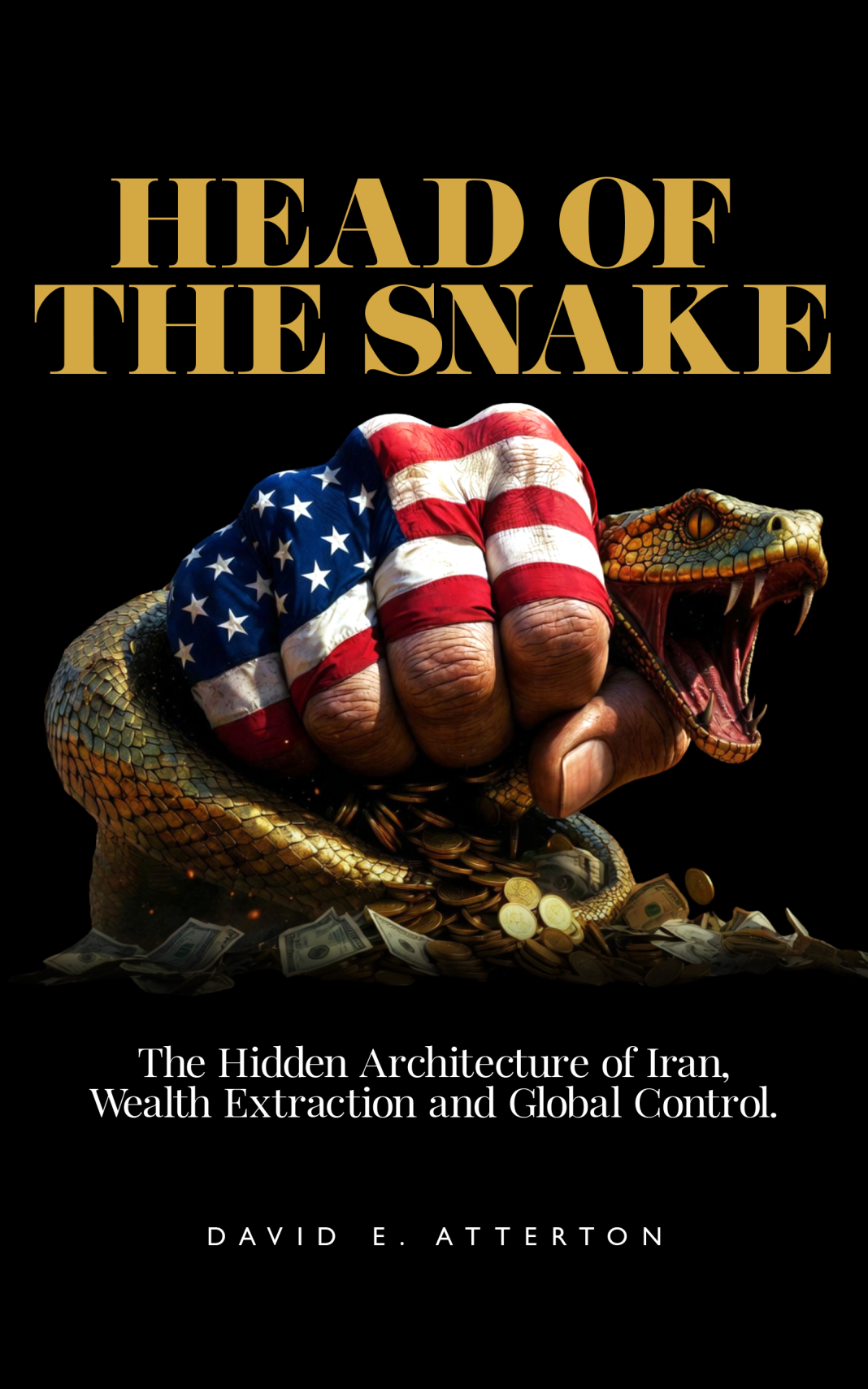
The full design behind all of it is in the book, Head of the Snake, and the free guides live in the resource library.
Follow the daily intel free: Telegram · Facebook · Spotify · Odysee
The New Financial System Explained Simply
The New Financial System Explained Simply
Miles Harris: 9-9-2026
The global financial system can often seem like an impenetrable maze of jargon, complex mathematical models, and abstract concepts. However, understanding the core driving forces of our economy is essential for navigating the changing economic landscape.
To demystify these complex dynamics, financial analysts frequently turn to elegant metaphors. One of the most effective analogies compares the relationship between collateral, credit, and the economy to a man walking his dog on a leash. This simple yet profound visualization sheds light on how our monetary system functions, where the vulnerabilities lie, and how the architecture of global finance is rapidly evolving.
The New Financial System Explained Simply
Miles Harris: 9-9-2026
The global financial system can often seem like an impenetrable maze of jargon, complex mathematical models, and abstract concepts. However, understanding the core driving forces of our economy is essential for navigating the changing economic landscape.
To demystify these complex dynamics, financial analysts frequently turn to elegant metaphors. One of the most effective analogies compares the relationship between collateral, credit, and the economy to a man walking his dog on a leash. This simple yet profound visualization sheds light on how our monetary system functions, where the vulnerabilities lie, and how the architecture of global finance is rapidly evolving.
In this helpful analogy, the man represents the collateral base, which consists of the actual tangible assets pledged to secure loans. The dog leash represents the credit extended by financial institutions, and the dog itself symbolizes the broader economy and active financial transactions.
In a stable and healthy economic environment, the dog remains relatively close to its owner, meaning that the volume of credit in circulation is tightly tethered to the real value of the underlying collateral. However, when credit is allowed to expand too rapidly, the dog runs far ahead of the man. Today, the global economy faces significant systemic risks because credit has expanded at a pace that far outstrips the growth of the underlying collateral, stretching the credit leash to its absolute limit and threatening overall financial stability.
When credit grows disproportionately faster than the collateral supporting it, the foundation of the financial system begins to weaken. Creditors and lenders lose confidence when they realize that the promises of repayment are not backed by sufficient real-world value.
This disconnect creates a high risk of what economists refer to as a credit contraction, or a snapping of the leash. If creditor confidence falters, lenders may abruptly demand their capital back or refuse to roll over existing loans, causing the credit system to contract violently and leaving highly leveraged participants without the liquidity they need to survive.
To prevent such a catastrophic decoupling, the global financial system is currently undergoing a visible shift toward tighter credit conditions. This transition is characterized by rising interest rates and increasingly restricted refinancing options.
Highly leveraged sectors that grew accustomed to cheap, abundant debt—most notably the commercial real estate market—are currently experiencing severe stress as a result of these adjustments. These tightening measures are designed to pull the credit dog back toward the collateral man, shifting the global economy away from speculative bubbles and toward a more sustainable, albeit constrained, financial environment.
To stabilize this new environment, financial architects are introducing innovative frameworks that emphasize faster, programmable money and modernized asset settlements. The cornerstone of this technological evolution is the concept of atomic settlement, a process where the transfer of money and the transfer of collateral occur simultaneously and instantaneously.
By leveraging digital ledger technology, atomic settlement eliminates the traditional multi-day delays associated with clearing transactions. This reduces the amount of idle capital locked up in transit, increases the velocity of money, and ensures that credit flows are directly and securely linked to real-time asset movements.
In addition to accelerating settlement speeds, financial institutions are actively working to improve the overall quality of the global collateral pool. Historically, long-dated government bonds were considered the gold standard of collateral, but recent market volatility has made them less reliable.
To address this issue, central banks have engaged in treasury buyback programs designed to replace highly volatile, illiquid long-term securities with incredibly liquid, short-term treasury bills. By shifting the collateral mix toward short-term assets, financial authorities can significantly reduce systemic risk and make credit extension safer and more predictable for lenders.
Because high-quality sovereign collateral is ultimately finite, the emerging financial system is also looking to expand the collateral universe through digital asset tokenization. This process involves converting traditionally illiquid private and retail assets—such as residential real estate, intellectual property, and household wealth—into digital tokens on a compliant blockchain network.
While tokenization successfully expands the available supply of collateral and unlocks dormant economic value, it also introduces a new layer of risk for everyday citizens. As these assets are integrated into the formal financial system, lenders will have highly automated and easily enforceable legal claims on tokenized personal properties if borrowers fail to meet their obligations.
Managing the staggering mountain of global debt requires a multi-pronged strategy from central planners. Rather than allowing widespread defaults to collapse the banking sector, policymakers utilize specific economic levers to gradually reduce the real burden of outstanding debt.
These mechanisms include maintaining moderate inflation to slowly erode the real value of what is owed, implementing strategic currency devaluations to boost domestic export competitiveness, and encouraging asset revaluation to artificially increase the nominal value of the collateral backing those debts. Together, these tools allow the system to maintain refinancing capacity even as global debt levels reach unprecedented heights.
As this highly structured and strictly enforced financial architecture continues to take shape, the relationship between borrowers and lenders is becoming increasingly asymmetrical. With tighter credit conditions on the horizon and lenders securing more direct, automated claims on collateral, individuals and businesses alike must adapt to protect their financial well-being.
A prudent strategy in this transitioning economy is to proactively reduce personal and business debt, thereby minimizing vulnerability to sudden credit contractions.
https://www.youtube.com/watch?v=PYSYMOi6r60