
Iraq Economic News and Points To Ponder Wednesday Afternoon 8-26-26
Oil falls as Iran-Oman talks fuel Hormuz hopes
2026-08-26 Shafaq News Oil prices dropped about 2% on Wednesday, adding to the previous session's losses, on fresh hopes the Strait of Hormuz could reopen after Iran said it had resumed talks with neighbour Oman on managing the strategic waterway.
Brent crude futures fell $1.78, or 2.0%, to $86.80 a barrel by 0027 GMT, while U.S. West Texas Intermediate crude futures were down $1.49, or 1.8%, at $80.87. Both benchmarks lost more than 3% on Tuesday.
Oil falls as Iran-Oman talks fuel Hormuz hopes
2026-08-26 Shafaq News Oil prices dropped about 2% on Wednesday, adding to the previous session's losses, on fresh hopes the Strait of Hormuz could reopen after Iran said it had resumed talks with neighbour Oman on managing the strategic waterway.
Brent crude futures fell $1.78, or 2.0%, to $86.80 a barrel by 0027 GMT, while U.S. West Texas Intermediate crude futures were down $1.49, or 1.8%, at $80.87. Both benchmarks lost more than 3% on Tuesday.
"The market continues to react to developments surrounding navigation through the Strait of Hormuz, and hopes for progress in talks between Iran and Oman have triggered selling," said Mitsuru Muraishi, an analyst at Fujitomi Securities.
"That said, uncertainty over the outlook has prompted bargain buying, limiting further losses, and prices are likely to remain range-bound for the time being," he added.
Iran said it had restarted talks with Oman to manage the Strait as it faces heightened economic pressure from U.S. President Donald Trump.
Iran and Oman have been in on-and-off talks for weeks about controlling traffic through the waterway, which handled one-fifth of global oil and liquefied natural gas shipments before the war began in February.
The two countries said on Tuesday that they discussed "a joint temporary navigational corridor" through the strait and agreed to clear it of mines.
Despite the ongoing tensions, the U.S. is beginning to send personnel back to some diplomatic missions in the Middle East that were evacuated or downsized amid tensions with Iran, two people familiar with the matter told Reuters.
The move suggests Washington sees a lower risk of the conflict with Iran escalating in the near term, though some embassies will initially operate below full capacity.
On Monday, Washington expanded sanctions aimed at cutting off Iran's economic lifeline, threatening to punish countries that continue to do business with Tehran, though it said it would not impose penalties immediately.
Separately, an oil tanker was struck on Tuesday by an unidentified projectile and disabled about 9 nautical miles (17 km) northeast of Oman's Ash Shishah, which lies at the entrance to the strait, the United Kingdom Maritime Trade Operations said.
In the U.S., the American Petroleum Institute reported crude oil inventories rose by about 4.2 million barrels in the week ended August 21, market sources said.
Analysts polled by Reuters estimated crude oil stockpiles would rise by about 600,000 barrels on average. Official data from the EIA, the statistical arm of the U.S. Department of Energy, are due at 10:30 a.m. ET (1430 GMT) on Wednesday. (REUTERS)
https://www.shafaq.com/en/Economy/Oil-falls-as-Iran-Oman-talks-fuel-Hormuz-hopes
Gold Retreats From Three-Month High Ahead Fed Clues
026-08-26 Shafaq News Gold eased on Wednesday after scaling a more than three-month high in the previous session, as investors awaited a key U.S. inflation report to gauge the Federal Reserve's interest-rate path.
Spot gold eased 0.3% to $4,642.74 per ounce, by 0410 GMT. Prices climbed to their highest since mid-May on Tuesday after last week's sharp gains following the U.S. Treasury's bond buyback announcement. U.S. gold futures rose 0.1% at $4,700.70.
The Fed's preferred inflation gauge, the U.S. Personal Consumption Expenditures (PCE) price index for July, is due at 1230 GMT. Attention is also on Fed Chairman Kevin Warsh's speech on Friday at the central bank's Jackson Hole symposium.
"For gold, the most supportive outcome would be softer-than-expected inflation combined with a dovish or balanced message from Warsh, reinforcing expectations for lower real yields and reducing the opportunity cost of holding a non-yielding asset," said Wael Makarem, financial markets strategists lead at Exness.
"A renewed deterioration in confidence around U.S. fiscal sustainability could also be important (for gold), particularly given the recent Treasury buyback plans and their impact."
Earlier this month, data showed an unexpected decline in U.S. nonfarm payrolls and in-line consumer inflation, tempering expectations of a September rate hike.
Traders are pricing in a 61.6% chance that the Fed will leave rates unchanged next month, according to the CME FedWatch Tool.
On the geopolitical front, Iran said it had restarted talks with neighbour Oman to manage the Strait of Hormuz, sending oil prices lower.
The global economy has weathered the Iran war energy shock better than feared, International Monetary Fund Managing Director Kristalina Georgieva said. However, she raised concerns about deteriorating fiscal conditions in some countries.
Spot gold may retest a resistance at $4,681, a break above which may trigger a gain into the range of $4,707 to $4,743, according to Reuters technical analyst Wang Tao.
Spot silver gained 0.9% to $69.26, platinum rose 0.4% to $1,865.09 and palladium firmed 1.3% to $1,343.75. (REUTERS)
https://www.shafaq.com/en/Economy/Gold-retreats-from-three-month-high-ahead-Fed-clues
Iraqi Crude Prices Fall More Than 6%
2026-08-26 Shafaq News- Baghdad Iraqi crude oil prices fell by more than 6% on Wednesday, in tandem with a broader decline in global oil markets.
Basrah Heavy crude dropped to $77.92 a barrel, down $5.27 or 6.34%, while Basrah Medium fell to $81.22, a loss of $5.27 or 6.09%.
Internationally, Brent crude slipped to $86.80 a barrel, down $1.78, or 2.0%, while West Texas Intermediate fell to $80.87, down $1.49, or 1.8%.
Other regional grades also lost ground, though by varying margins. Murban crude fell 7.89% to $93.44 a barrel, Oman crude dropped 3.82% to $95.59, and Dubai crude edged down 0.19% to $90.10.
The Iraqi declines came amid a broader retreat in global crude prices, although losses varied by grade and region.
https://www.shafaq.com/en/Economy/Iraqi-crude-prices-fall-more-than-6
US Dollar Edges Lower In Baghdad And Erbil
2026-08-26 Shafaq News- Baghdad/ Erbil The US dollar edged lower against the Iraqi dinar in Baghdad and Erbil on Wednesday, hovering around 154,000 dinars per $100.
In Baghdad, the dollar fell to 154,250 dinars per $100 at the al-Kifah and al-Harithiya central exchanges, down slightly from 154,350 dinars on Tuesday, according to a Shafaq News market survey.
At currency exchange shops in Baghdad, the dollar was selling for 154,750 dinars per $100 and buying for 153,750 dinars.
In Erbil, the dollar was selling for 154,250 dinars per $100 and buying for 154,200 dinars.
https://www.shafaq.com/en/Economy/US-dollar-edges-lower-in-Baghdad-and-Erbil-2
Iraq Reviews State Banks Over Suspected Public Fund Losses
2026-08-26 Shafaq News- Baghdad Iraq is reviewing the performance of several state-owned banks and financial institutions as the government struggles with a cash crunch and delayed public-sector salaries, an informed source said Wednesday.
The reviews are examining alleged misuse of public funds, falling liquidity, and misleading reports submitted by some bank managers to senior officials, according to the source, who spoke to Shafaq News on condition of anonymity.
Government bodies are assessing how the banks are run, alongside management changes and recently launched investigations into cases said to have caused losses of public money and enabled corruption. Investigators are also examining why cash reserves once held at state banks have fallen, the source said, in preparation for legal and administrative measures.
The assessments weigh how far each management can support the government through the current strain, the source said, and how far each institution has moved toward digital systems. Continued reliance on paper procedures rather than electronic ones is among the concerns drawing official attention.
Some managers have submitted figures and reports that do not reflect actual operations, the source said, adding that field monitoring has exposed a wide gap between official reporting and performance on the ground. That gap is itself under review.
The measures are part of a broader government effort to reassess how state financial institutions perform and to strengthen efficiency, governance, and digital systems, the source said, given the financial pressure and the delay in paying salaries.
The review comes after a separate informed source told Shafaq News on Tuesday that state salaries could be delayed until the end of this month or early next month because funding for ministries and state bodies had not yet been released. Salaries are funded and paid out to state institutions sequentially, a process that takes several days. Several state banks are low on cash after their reserves fell, limiting their ability to fund state bodies or borrow domestically.
Read more: Iraq’s private banks: Capital Growth and the structural credit gap
https://www.shafaq.com/en/Economy/Iraq-reviews-state-banks-over-suspected-public-fund-losses
Majeed KSA: September 1st is the RV Date (?)
Majeed KSA: September 1st is the RV Date (?)
8-26-2026
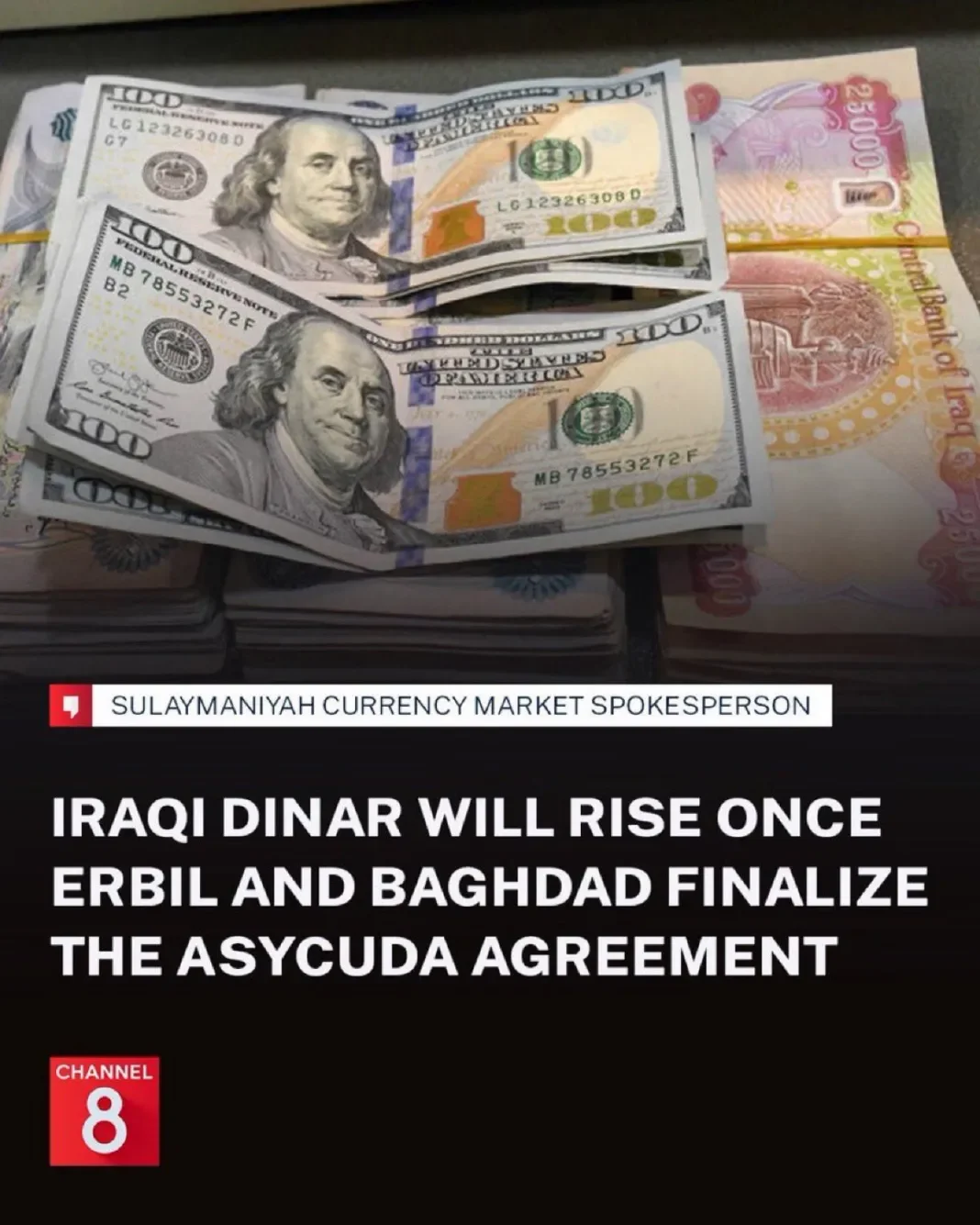
The reason I made this claim is because for the past 5 days the news from Iraq kept going back-and-forth about deleting the zeros and not deleting the zeros, and if it will increase the purchasing power or not increase the purchasing power.
Acting like if they still thinking about it before taking any step.
And then all of a sudden, when the pressure they received from Trump was exposed on the media… in less than 24 hours, they said “now we are advancing in deleting three zeros.”
Majeed KSA: September 1st is the RV Date (?)
8-26-2026
The reason I made this claim is because for the past 5 days the news from Iraq kept going back-and-forth about deleting the zeros and not deleting the zeros, and if it will increase the purchasing power or not increase the purchasing power.
Acting like if they still thinking about it before taking any step.
And then all of a sudden, when the pressure they received from Trump was exposed on the media… in less than 24 hours, they said “now we are advancing in deleting three zeros.”
That by itself shows you they are playing back-and-forth on the media while everything is ready.
And my friend Maram @Amer740888Amer in Iraq telling me banks are informing citizens about which notes will be accepted during the exchange.
Why would banks talk about the exchange process IF nothing is ready or if they didn’t have the new notes?
Yeah, everything is ready and they have the new notes … they are just waiting for the green light.
MajeedKSA:All the news I posted yesterday & today Here is the complete conclusion “Iraq already has the new rate along with the new currency… ready to go at any second”
Here it is.
Everything is ready in Iraq to go.
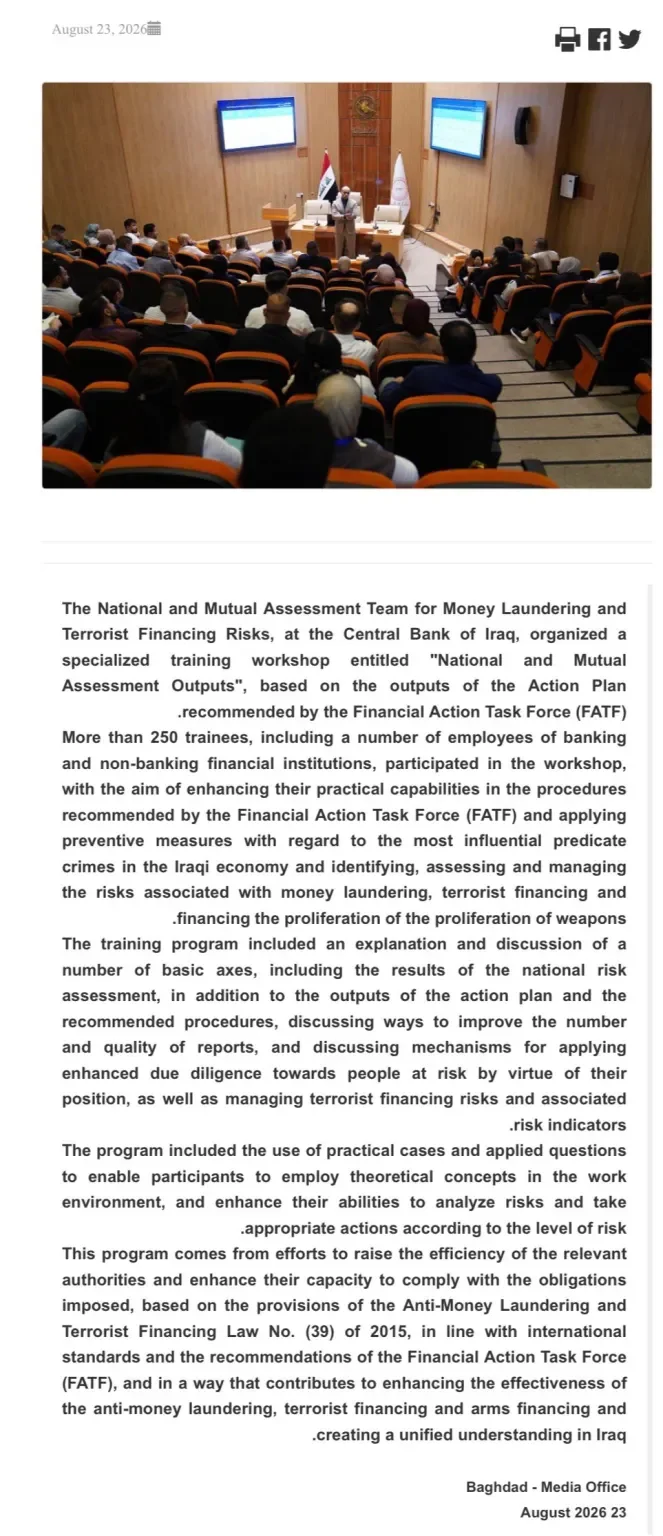
Even the central bank of Iraq hosted a workshop on Sunday, August 23.
Taught bankers how to deal with laundered money or smuggled money into or outside of the country.
Everything is set to go…
Everything is in place…
Bankers now are taught what to do with financial crisis.
Today August 25.
A member of the finance committee gave the green light for the zeros to be removed because the Iraqi market needs a lower denom… also to fight money laundering.
WOOOOW the RV date.
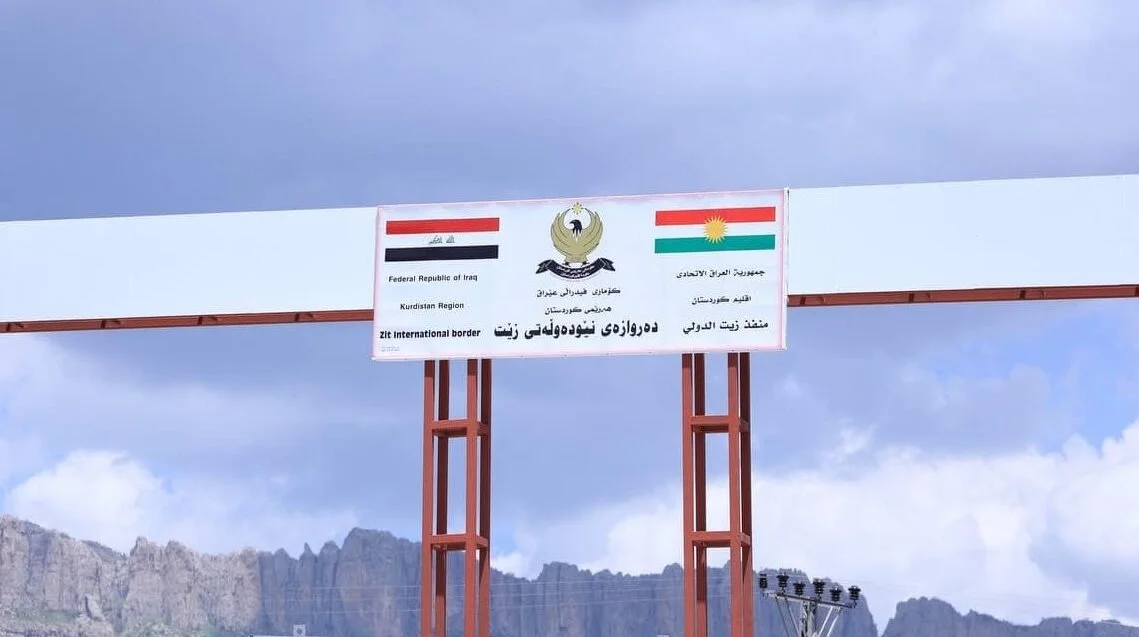
“on September 1 Traders in the Kurdistan Region will face a new financial system in which taxes and fees are deducted upfront from foreign financial remittances (before money is sent abroad).”
The RV date is September 1.
MajeedKSA: Could the rate be changing on Sep 1 or maybe prior to that? 5 Iraqi business days left…….Wed, Thur, Sun, Mon,Tue (Sep 1st)
In the document.. The Prime Minister directs the preemptive deduction of taxes and customs duties on external transfers starting from 1 September
Shabazz32: “Channel8 has learned that starting September 1, traders in the Kurdistan Region will face a new financial system in which taxes and fees will be deducted before money is sent abroad…” https://channel8.com/english/news/64041
I guarantee you ASYCUDA will be approved by the council of minister any day from now until September 1.
Mark my words.
Source(s):
• https://x.com/majeed66224499/status/2092416791062491176
Read full post here: https://dinarchronicles.com/2026/08/26/majeed-ksa-september-1st-is-the-rv-date/
Seeds of Wisdom RV and Economics Updates Wednesday Morning 8-26-26
Good Morning Dinar Recaps,
Oil Falls, but the Global Financial System Is Still on Alert: Iran, Inflation and Central Banks Reprice Risk
Oil prices are falling on renewed hopes for a reopening of the Strait of Hormuz—but the underlying financial risks created by the U.S.-Iran conflict have not disappeared. Energy prices, inflation expectations, Treasury yields and central-bank policy remain tightly connected.
Good Morning Dinar Recaps,
Oil Falls, but the Global Financial System Is Still on Alert: Iran, Inflation and Central Banks Reprice Risk
Oil prices are falling on renewed hopes for a reopening of the Strait of Hormuz—but the underlying financial risks created by the U.S.-Iran conflict have not disappeared. Energy prices, inflation expectations, Treasury yields and central-bank policy remain tightly connected.
Overview
Brent crude fell toward $86 a barrel Wednesday as diplomatic activity between Iran and Oman raised hopes that shipping through the Strait of Hormuz could gradually resume.
The decline in oil has provided temporary relief to global bond markets,but investors remain focused on U.S. inflation data and the Federal Reserve's next policy signal.
The bigger issue for global finance is that the Iran conflict has demonstrated how quickly an energy shock can become an inflation, interest-rate and currency problem.
Key Developments
1. Oil is falling—but the geopolitical risk premium has not disappeared
Brent crude dropped nearly 3% to around $85.95, while markets reacted to reports that Iran and Oman are discussing a joint navigational corridor that could help clear mines and restore shipping through the Strait of Hormuz.
The Strait is one of the world's most important energy chokepoints, historically carrying roughly one-fifth of global traded oil.
That makes today's decline in oil prices significant—but it should not yet be interpreted as the end of the energy shock.
Reuters reports that the U.S.-Iran conflict has settled into what it describes as an energy war centered on control of the Strait, with oil flows still well below prewar levels and Brent remaining substantially above its pre-conflict price.
The market is therefore pricing hope of normalization, not necessarily normalization itself.
2. Oil has become a central-bank problem
The connection between oil and monetary policy is becoming increasingly important.
Higher oil prices feed directly into transportation, manufacturing, food production and household energy costs. That can push overall inflation higher even when underlying economic growth is weakening.
That creates a difficult choice for central banks:
Higher oil + higher inflation → less room to cut rates
while:
Higher oil + weaker growth → greater pressure to support the economy
This is the classic stagflation problem—and it is one reason today's oil market matters far beyond the energy sector.
The immediate decline in crude prices is therefore good news for central banks because it reduces one source of inflationary pressure.
But the underlying geopolitical risk remains.
3. The Federal Reserve is now watching oil and inflation together
Markets are turning their attention to the U.S. Personal Consumption Expenditures (PCE) inflation report, one of the Federal Reserve's preferred measures of price pressures. Investors are also looking toward Federal Reserve Chair Kevin Warsh's upcoming remarks at Jackson Hole.
That creates an important intersection between today's oil market and the Treasury market.
If lower oil prices continue, inflation expectations could ease and give the Fed greater flexibility.
If oil rebounds because the Hormuz situation deteriorates again, the opposite could occur.
The direction of oil could therefore influence the direction of monetary policy.
4. Treasury yields are responding to the energy signal
The decline in oil has already helped push bond yields lower as investors reassess inflation risks. Reuters reported that global bond markets received some relief as crude prices fell and hopes for a Hormuz reopening increased.
But the Treasury market remains under pressure from a completely different structural issue: the enormous amount of U.S. government debt that must continually be financed.
That means an easing of the Iran-related oil shock does not automatically eliminate the longer-term pressure on U.S. borrowing costs.
This distinction is important for Recaps readers.
Geopolitical inflation pressure may be easing while fiscal pressure remains.
Those two forces can move markets in different directions.
Why It Matters
The global financial system is increasingly operating through a chain reaction:
Oil → Inflation → Central Banks → Interest Rates → Bonds → Currencies → Capital Flows
A disruption at one end can eventually appear in markets thousands of miles away.
The Iran conflict has made that relationship particularly visible.
When oil rises sharply, central banks can become more cautious about cutting interest rates. Higher rates can support a currency but also increase government borrowing costs. Higher Treasury yields then affect valuations for stocks, real estate and other assets around the world.
Conversely, if oil falls because the Hormuz situation improves, inflation pressure can ease and monetary policy can potentially become less restrictive.
That is why today's oil decline matters.
Why It Matters to Foreign Currency Holders
For foreign-currency holders, the key issue is how energy prices affect the relative strength of currencies.
Countries that import large quantities of energy can experience significant pressure when oil prices rise because they must spend more of their currencies to purchase the same amount of energy.
Energy-exporting countries can experience the opposite effect.
This creates potentially significant shifts in trade balances, foreign-exchange demand and reserve flows.
The Iran conflict therefore isn't simply an oil story.
It is also a currency story.
Implications for the Global Financial Reset
Energy security is becoming part of monetary policy.
The traditional separation between geopolitics, energy markets and monetary policy is becoming harder to maintain.
A conflict in the Middle East can influence inflation expectations in Europe, Treasury yields in the United States and currency markets across emerging economies.
Energy has effectively become another financial-policy variable.
The financial system is becoming more sensitive to geopolitical supply chains.
The Strait of Hormuz demonstrates how concentrated energy infrastructure can create global financial consequences.
The longer-term response could include greater diversification of energy suppliers, strategic reserves, alternative transportation routes and changes in how countries manage their foreign-exchange reserves.
The direction of the reset is still being determined
Today's developments do not demonstrate that the dollar system is collapsing.
They demonstrate something more subtle:
The global financial system is becoming more sensitive to the interaction between debt, energy, inflation and geopolitical risk.
At the same time, countries are building alternative payment and settlement systems—creating a second structural force that could gradually diversify global finance.
What to Watch
The next signals are particularly important:
Whether the Strait of Hormuz actually reopens and shipping normalizes
Brent crude's ability to remain below recent highs
U.S. PCE inflation data
Federal Reserve guidance at Jackson Hole
Long-term Treasury yields
The dollar's response to changing rate expectations
Whether Iran-Oman diplomatic efforts produce a durable shipping agreement
The critical question is whether today's decline in oil represents the beginning of a genuine normalization or simply another temporary repricing of geopolitical risk.
Bottom Line
Oil's decline is good news for the global economy—but it is not yet the end of the story.
The market is responding to the possibility that the Strait of Hormuz could reopen and energy flows could gradually normalize. That could reduce inflation pressure and give central banks greater freedom to adjust monetary policy.
But the six-month U.S.-Iran conflict has demonstrated how quickly an energy disruption can spread through inflation, interest rates, bonds and currencies.
The global financial reset may not be driven by any single currency or financial institution. It may increasingly be shaped by the interaction between energy security, sovereign debt and the ability of central banks to control inflation in an increasingly fragmented world.
Seeds of Wisdom Team
Newshounds News™ Exclusive
Sources
🌱 A Message to Our Currency Holders🌱
If you’ve been holding foreign currency for many years, you were not foolish.
You were not wrong to believe the global financial system would change.
What failed was not your patience — it was the information you were given.
For years, dates, rumors, and personalities replaced facts, structure, and proof. “This week” predictions created cycles of hope and disappointment that were never based on how currencies actually change.
That is not your failure.
Our mission here is different: • No dates • No rates • No hype • No gurus
Instead, we focus on:
• Verifiable developments • Institutional evidence
• Global financial structure • Where countries actually sit in the process
Currency value changes only come after sovereignty, trade, banking, settlement systems, and fiscal coordination are in place. History and institutions confirm this sequence.
You will see silence. You will see denials. That is not delay — that is discipline.
Protect your identity. Organize your documents. Verify everything.
Never hand your discernment to anyone who cannot show proof.
You deserve truth — not timelines.
Seeds of Wisdom Team
Newshounds News
~~~~~~~~~~
Seeds of Wisdom Team RV Currency Facts Youtube and Rumble
Newshound's News Telegram Room Link
RV Facts with Proof Links Link
RV Updates Proof links - Facts Link
Start Here room with Most Asked Questions Link
Follow the Gold/Silver Rate COMEX
Follow Fast Facts
Seeds of Wisdom Team™Website
Thank you Dinar Recaps
Iraq Economic News and Points To Ponder Wednesday Morning 8-26-26
Between Advantages And Repercussions... An Expert Reveals To "Baghdad Today" The Details Of Removing Zeros From The Dinar
Baghdad Today – Baghdad Professor of International Economics, Nawar Al-Saadi, revealed today (Tuesday, August 25 , 2026) the importance and repercussions of "removing zeros" from the Iraqi currency.
Al-Saadi told Baghdad Today that “the principle of removing zeros, if implemented in a scientific and well-thought-out manner, can contribute to simplifying monetary and accounting transactions, facilitating payment processes and digital transformation, and reducing the volume of banknotes in circulation, in addition to the possibility of using the process as part of a broader reform to bring cash funds outside the banking system back into the official financial cycle.”
Between Advantages And Repercussions... An Expert Reveals To "Baghdad Today" The Details Of Removing Zeros From The Dinar
Baghdad Today – Baghdad Professor of International Economics, Nawar Al-Saadi, revealed today (Tuesday, August 25 , 2026) the importance and repercussions of "removing zeros" from the Iraqi currency.
Al-Saadi told Baghdad Today that “the principle of removing zeros, if implemented in a scientific and well-thought-out manner, can contribute to simplifying monetary and accounting transactions, facilitating payment processes and digital transformation, and reducing the volume of banknotes in circulation, in addition to the possibility of using the process as part of a broader reform to bring cash funds outside the banking system back into the official financial cycle.”
He pointed out that "the danger does not lie in the removal of zeros itself, but rather in the way the operation is carried out," explaining that "if the removal of zeros is confused with changing the exchange rate, or if the operation is carried out in an environment suffering from weak confidence in banks and high cash transactions, negative effects may appear, the most important of which are confusion in the markets and some traders exploiting the conversion process to make price increases under the cover of currency change."
He added that “there is what is called in economics (price rounding); when prices move from large numbers to small numbers, some traders may round prices upwards, and this can generate a limited inflationary effect if there are no controls and clear mechanisms to stabilize prices during the transitional phase.
Therefore, removing zeros does not automatically generate inflation, but mismanagement and an unorganized transition can create inflationary pressures.”
Regarding the citizen’s purchasing power, Al-Saadi explained, “Here I think the most important message is that removing zeros is not a policy to raise the value of the dinar. If we remove three zeros, for example, 25,000 dinars will become 25 new dinars, but at the same time the commodity that was worth 25,000 dinars must be converted to 25 new dinars, and the salary that was one million dinars will become one thousand new dinars, and the deposit, loans and financial obligations will be recalculated at the same rate, and thus the citizen’s purchasing power will not change because of removing zeros alone.”
He continued, "Changing the exchange rate is a completely different matter, and I believe it is important not to link the two processes. Iraq needs monetary and price stability at the present stage, and the Central Bank itself confirmed in its recent statements its commitment to maintaining the stability of the exchange rate and denied that there is any intention to amend it."
He also stressed, "If Iraq wants to implement the removal of zeros, it must be within an integrated reform package that includes developing the banking system, expanding electronic payment, enhancing financial inclusion, combating money laundering, and regulating the process of replacing the old currency with the new one, with a clear transition period and broad awareness for citizens and merchants.
Most importantly, the process must be monetaryly neutral." He added, "There should be no additional printing of money to finance spending, no change to the exchange rate, and no use of the process as a tool to address the financial deficit.
The Central Bank has previously clarified that injecting new money without compensation leads to inflationary pressures and erosion of the currency's value, which is completely different from simply replacing the old currency with a new one at a fixed conversion rate."
The professor of international economics concluded by emphasizing, "Therefore, I believe that removing zeros can be an important regulatory reform for Iraq and not an economic risk in itself, provided that it remains merely a currency redundancy and does not turn into a change in the exchange rate or into a means of addressing financial imbalances
. The success of the process will not be measured by the number of zeros we remove, but rather by our ability to invest them in reforming the financial and banking system and rebuilding confidence in the dinar and banking institutions."
https://baghdadtoday.news/305217-.html
Tut: Approving The Salary Scale Is Difficult At The Moment.
25 Aug 18:04 Information/Baghdad... MP Yasser Watout earlier on Tuesday that proceeding with the approval of the salary scale at the present stage is extremely difficult and requires informing the public of all its details before taking the first steps.
Watout explained to Al-Maalouma that he "strongly supports proceeding with the approval of a fair and equitable salary scale for more than five million employees in the Iraqi state, but the matter cannot be done with the stroke of a pen, because many salaries and financial entitlements are based on laws."
He added that "the process of changing the course of salaries and bonuses must be carried out through amending those laws, and this requires legislation, in addition to the necessity of a national political consensus regarding any step in this direction."
Watout pointed out that "the nature of the current situation does not support the option of proceeding with the salary scale at the present time, due to the existence of many problems," stressing that "any step in this direction must be clear to the public in all its details, and the facts must be available so that everyone is aware of the nature of the measures taken."
He reiterated his emphasis that "the Iraqi state is in dire need of a fair and equitable salary scale, where experience and years of service are the basis for determining the salaries of all state employees." End/25
Will Iraqis Start Tightening Their Belts? There Are No Signs Of That On The Horizon, And Employees Are Asking: Where Are The Salaries?
25 Aug 19:30 Information / Special .. MP Hussein Al-Bayati, from the Ishraqa Kanoun bloc, revealed today, Tuesday, that there are doubts about securing the salaries of employees for the current month, despite the assurances of the Prime Minister, Ali Al-Zidi, during previous statements, that the salaries are secured for the coming months and will be disbursed on their scheduled dates.
Al-Bayati told Al-Maalouma that “the assurance regarding the timely disbursement of salaries is still lacking,” noting that “the days of the month are almost over, while the Ministry of Finance has not yet announced the release of funding for employee salaries.”
He added that "salaries during the past two months have been delayed in disbursement, and the government has not been able to release them within the specified timeframes, which has increased concerns about the possibility of a repeat of the delay during the current month."
Al-Bayati pointed out that "a number of MPs are moving to contact the Minister of Finance to ascertain the true financial situation and the extent to which employee salaries are secured, given that the ministry is the entity concerned with the financing and disbursement file."
He pointed out that "the Prime Minister has accurate information regarding the financial situation and the timing of salary payments, but there is still some uncertainty surrounding the date when employee salaries will be distributed."
Al-Bayati explained that "the financial crisis in the country exists and no party can deny it," indicating that "whoever denies its existence is out of touch, given the continued halt in oil exports, with the exception of limited quantities being exported via pipelines in the north of the country."
He explained that "the Iraqi budget depends almost entirely on oil revenues, meaning that any halt or decline in exports directly impacts the state's ability to meet its financial obligations, primarily paying employee salaries." (End of page 25)
Wed. Iraq News Posted by Tishwash at TNT 8-26-2026
TNT:
Tishwash: The Central Bank of Iraq reveals the amount of local currency in circulation.
Data from the Central Bank of Iraq’s economic indicators revealed on Tuesday that the total currency issued by the bank in the markets rose to 111.189 trillion dinars by the end of June 2026, compared to 99.799 trillion dinars at the end of 2025, an increase of about 11.4 trillion dinars.
According to data seen by Shafaq News Agency, net currency outside banks reached 101.966 trillion dinars at the end of last June, compared to 92.560 trillion dinars at the end of 2025, an increase of about 9.4 trillion dinars.
TNT:
Tishwash: The Central Bank of Iraq reveals the amount of local currency in circulation.
Data from the Central Bank of Iraq’s economic indicators revealed on Tuesday that the total currency issued by the bank in the markets rose to 111.189 trillion dinars by the end of June 2026, compared to 99.799 trillion dinars at the end of 2025, an increase of about 11.4 trillion dinars.
According to data seen by Shafaq News Agency, net currency outside banks reached 101.966 trillion dinars at the end of last June, compared to 92.560 trillion dinars at the end of 2025, an increase of about 9.4 trillion dinars.
In contrast, the currency held by banks rose to 9.223 trillion dinars at the end of last June, compared to 7.239 trillion dinars at the end of 2025, an increase of about 1.98 trillion dinars.
The data indicates that currency outside banks constituted about 91.7% of the total currency issued at the end of June, while the share of currency held in bank vaults amounted to about 8.3%, reflecting the continued heavy reliance of the Iraqi economy on cash transactions outside the banking system. link
Tishwash: The Prime Minister's advisor told Baghdad Today: The 2027 budget will be ready to be presented to the Cabinet within days.
The financial advisor to the Prime Minister, Mazhar Muhammad Salih, confirmed on Wednesday (August 26, 2026) that "the 2027 budget will be ready to be presented to the Council of Ministers within days," indicating that it "will adopt the 'program budget' formula to ensure control over spending and combat financial waste."
Saleh told Baghdad Today that “the 2027 budget is characterized by being a disciplined budget that addresses waste in financial spending operations, and the old methods of managing public money will gradually disappear,” noting that “the budget includes two parts, investment and operational, and the spending mechanisms are linked to specific programs and projects.”
The Prime Minister's advisor added that "the budget will focus on necessary defense expenditures," noting that "if oil exports stabilize, a supplementary budget may be approved after the middle of the year." link
************
Tishwash: Despite government denials, a member of the Finance Committee confirms the imminent removal of zeros from the dinar.
Jamal Kojar, a member of the Finance Committee in Parliament, confirmed today (Tuesday , August 25 , 2026) that there is a government trend towards officially removing zeros from the Iraqi dinar and issuing a new paper currency.
According to The New Arab Network, as translated by Baghdad Today, Kujer said, “The government believes that removing zeros from the currency will bring great benefits to the country, explaining that there are requirements with ‘international’ standards that will be achieved by removing the zeros, including the transition to electronic currency trading, which will bring benefits in terms of combating corruption and developing commercial trading,” according to the network.
He added that "the Iraqi market also needs small denominations for local use, which is not currently possible with the presence of zeros," stressing that "the main goal is to prevent currency smuggling abroad, and to limit its circulation outside the Iraqi banking system, and thus reduce corruption."
He explained that “all criminal activities in the world are carried out through money that is traded outside the country’s banking system,” adding, “The government may put in place safeguards that enhance transparency in financial transactions by digitizing the currency after removing zeros from it, which helps in the process of combating financial corruption.”
The network also indicated that "the Iraqi government received recommendations from international bodies, including the United States, to remove zeros from the Iraqi currency, arguing that this would help to strengthen confidence in the Iraqi dinar and thus contribute to attracting more foreign investments," while also confirming in its report that the Central Bank of Iraq "has not yet provided a timetable for implementing the process of removing zeros," as it described it.
It should be noted that "government statements issued earlier denied the existence of efforts to remove zeros from the Iraqi currency, after the Minister of Communications, Mustafa Sand, announced that there was a government intention to remove them." link
*************
Tishwash: The direction of the Iraqi economy
Amid the complex conditions and circumstances that the region and the world are going through, and the negative repercussions they have on the Iraqi economy, the government is trying to move towards a new path aimed at strengthening economic stability and preparing the foundations for the next stage.
However, these efforts face challenges rooted in the nature of the Iraqi economic structure, and in the entanglement of relationships governed by a system of laws and legislation that sometimes conflict and contradict the economic approach that is supposed to govern the course of the state, according to what was approved by the constitution.
The situation becomes more dangerous as Iraq enters a phase of financial and economic pressures that it has not witnessed with such intensity for years. These pressures are directly affected by regional and international developments, especially the repercussions of conflicts that have affected trade, energy, and supply routes, most notably the Strait of Hormuz, and the resulting disruptions that have extended their effects to markets, energy prices, and the movement of the global economy.
Some might believe the crisis will end once the Strait crisis is resolved and shipping returns to normal, but the economic reality is far more complex. Crises don't end with the resolution of their immediate causes; rather, they leave behind lasting effects that require time, comprehensive measures, and integrated policies to address and restore the economy to its normal course.
The fundamental problem lies in the very nature of the Iraqi economy, which remains heavily dependent on oil revenues. This makes it extremely sensitive to fluctuations in oil prices, supply disruptions, and changes in global markets. We have repeatedly warned against what can be termed the “oil illusion”—the belief that high oil revenues can permanently address structural imbalances in the economy. The reality is that oil, however high its revenues, cannot alone establish a stable and sustainable economy.
Faced with this reality, the government is moving at a seemingly slow pace in a challenging economic environment. Projects and strategies intended to usher in a new era continue to encounter implementation obstacles, and the path to development remains stalled. Furthermore, agreements signed between Iraq, the United States, and Turkey face challenges that require immediate attention and swift resolution.
Time is not on Iraq's side. Every delay in implementing economic and strategic projects means continued reliance on an economic model whose fragility has been proven by repeated crises, and at the same time means the loss of opportunities that could contribute to building a more diversified economy capable of withstanding shocks.
Hence, what is required is not merely managing the current crisis or waiting for the exceptional circumstances to end, but rather investing in it as an opportunity to reconsider the entire structure of the Iraqi economy, and to move from an economy dependent on oil revenues to an economy based on production, investment, energy, transportation, trade, industry, agriculture and services. link
Tishwash: "Borrowing Law": The Iraqi Parliament awaits the green light from the government
Turki, a member of the parliamentary finance committee, confirmed that the House of Representatives is waiting for the government to officially send the draft borrowing law to parliament, in order to avoid a financial gap and to ensure that the law does not differ from the vision and policy of the Iraqi government.
Turki told Shafaq News Agency that "the parliamentary finance committee submitted the draft borrowing law to the Speaker of Parliament, but Speaker Hebat al-Halbousi believes that the draft law should be sent from the government before it is read in Parliament."
He added that "the Speaker of Parliament believes that the draft borrowing law should be officially reviewed by the government, and that it should be read and voted on in the Cabinet before being sent to Parliament."
Turki pointed out that "the borrowing law is of great importance in supporting the government and the investment budget of the Iraqi state, especially after the suspension of many investment projects."
It should be noted that the law on borrowing, grants and subsidies is an exceptional and temporary measure that Iraq is moving towards enacting, in order to compensate for the absence of the federal budget and to secure the necessary government spending.
Last month, the parliamentary finance committee revealed that it had discussed the draft law on borrowing, grants and subsidies with Finance Minister Faleh al-Sari, stressing that the law would be an alternative to the general budget law for 2026, in preparation for its inclusion on the agenda of the House of Representatives.
The head of the parliamentary finance committee, Uday Awad, told Shafaq News Agency that "the committee hosted Al-Sari to discuss a number of proposed laws, most notably the law on borrowing, grants and subsidies, which aims to maximize public revenues in a way that supports the Iraqi state treasury." link
Iraq Economic News and Points To Ponder Tuesday Evening 8-25-26
Exclusive To Kurdistan 24: US Pressure On Baghdad To Expedite The Removal Of Zeros From The Dinar To Curb Money Laundering
Erbil (Kurdistan24) - Informed sources told Kurdistan24 today that the United States is exerting increasing pressure on the Iraqi government to expedite the implementation of the "removal of zeros from the Iraqi dinar" project, with the aim of crippling the movement of funds smuggled abroad and recovering cash liquidity hoarded through illegal means.
Exclusive To Kurdistan 24: US Pressure On Baghdad To Expedite The Removal Of Zeros From The Dinar To Curb Money Laundering
Erbil (Kurdistan24) - Informed sources told Kurdistan24 today that the United States is exerting increasing pressure on the Iraqi government to expedite the implementation of the "removal of zeros from the Iraqi dinar" project, with the aim of crippling the movement of funds smuggled abroad and recovering cash liquidity hoarded through illegal means.
According to exclusive information obtained by Kurdistan 24, the approval of this project will strip the old currency denominations of their legal tender value and stop their circulation as official currency, which will force the holders and smugglers of those funds to bring them in and deposit them exclusively through official banking channels inside Iraq to exchange them for the new denominations, which will ensure the reintegration of smuggled capitals into the national financial system.
A crucial tool for uncovering corruption and sources of funds
The sources explained that this step constitutes a trap and strict control over money laundering and corruption networks, as the exchange of large sums of cash in banks will be subject to thorough investigations into the "sources of funds" (Where did you get this from?), which directly contributes to exposing and holding accountable the figures who seized public money and stored it in cash or in bank accounts outside the borders of Iraq.
Axios: Washington Freezes Strikes Against Iran And Shifts To Economically Strangling It
Washington - One News - 8/25/2026 The administration of US President Donald Trump is moving to avoid launching new attacks on Iran at the moment, in contrast to escalating economic pressure and the embargo imposed on it, as part of a policy expected to continue beyond the US midterm elections.
Axios quoted a US official as saying that Secretary of State Marco Rubio told several of his counterparts that Washington would not currently initiate an attack on Iran, nor was planning to return to large-scale combat operations, but he did not rule out carrying out strikes if Tehran started the attack.
The official explained that Rubio outlined the Trump administration’s new policy during his calls, which is based on temporarily avoiding military action and intensifying economic pressure to push Iran back to the negotiating table, stressing that there are no negotiations between the two sides at the moment.
According to US officials, the blockade is depriving Iran of its oil revenues, as Washington has spotted almost no tankers near Kharg Island in the past two weeks.
A US official claimed that Iran had lost control of the Strait of Hormuz to the United States, and that mine-clearing operations carried out by the US Navy had reduced one of Iran's most prominent bargaining chips in the strait.
The American narrative contradicts Iranian statements confirming that the Strait of Hormuz remains closed and under Tehran’s complete control, and that its reopening is contingent upon Washington fulfilling its commitments outlined in the memorandum of understanding. https://1news-iq.net/أكسيوس-واشنطن-تجمّد-ضرب-إيران-وتنتقل-إ/
Oil Prices Rise As Iran Sanctions Take Focus
2026-08-25 Shafaq News Oil prices recovered ground on Tuesday after settling down more than 2% in the previous session, with investors assessing the impact of the latest U.S. sanctions against Iran.
Brent crude futures rose 27 cents, or 0.3%, to $92.44 a barrel by 0330 GMT, while U.S. West Texas Intermediate crude was up 37 cents, or 0.4%, at $85.38.
Both contracts settled lower on Monday, with U.S. crude oil falling to a one-week low on profit taking after prices rallied over the previous two weeks.
"The market seems largely unfazed by Washington's push for tighter economic pressure on Iran, with traders treating the U.S. effort to nudge partners away from Iranian trade as marginal rather than market moving," said ING commodity strategists in a note on Tuesday.
U.S. Treasury Secretary Scott Bessent on Monday unveiled an expansion of sanctions to cut off Iran's economic lifeline, to force an end to the war between them, telling countries they would need to sever their business ties or risk being cut out of the dollar-based financial system.
However, he declined to identify the countries that would be targeted or reveal when those penalties would take effect, saying he would instead provide them time to comply with the new directive.
While U.S. Defense Secretary Pete Hegseth said on Monday the U.S. would not rule out using military force against Iran, the country is turning towards more economic coercion, which analysts said removed concerns about threats to Middle Eastern oil supply because of the war.
"Markets appear to be pricing economic pressure as a lower-risk path for physical supply than kinetic action, which is why the initial reaction was for oil to move lower rather than spike higher," said Tim Waterer, chief market analyst at KCM.
However, he warned, "Iran still retains the ability to respond by disrupting shipping, which continues to keep a residual premium in the oil price."
Highlighting those threats, an oil tanker was struck on Tuesday by an unidentified projectile and disabled about 9 nautical miles (16.7 km) northeast of Oman's Ash Shishah, the United Kingdom Maritime Trade Operations said.
Iran is still maintaining it should have control over the key Strait of Hormuz, which before the war started in February typically carried cargoes equal to about 20% of global oil use. On Monday, it named 45 tankers that had broken its rules on crossing the strait and threatened action against them, including confiscating their cargoes.
The supply disruptions as a result of the U.S.-Israeli war on Iran that started on February 28 have caused countries to draw down their commercial and strategic reserves.
On Monday, the Department of Energy reported stocks of crude oil in the U.S. Strategic Petroleum Reserve fell by about 3.7 million barrels to 289.7 million barrels last week, the lowest since November 1982. (REUTERS)
https://www.shafaq.com/en/Economy/Oil-prices-rise-as-Iran-sanctions-take-focus
Basrah Crude Prices Jump 4%+
2026-08-25 02:20 Shafaq News- Basrah Iraq’s Basrah crude prices rose on Tuesday, with Basrah Heavy gaining more than 4%, alongside a modest recovery in global oil benchmarks.
Basrah Heavy climbed $3.30, or 4.13%, to $83.19 per barrel, while Basrah Medium gained $3.30, or 3.97%, to $86.49.
Other regional grades also posted gains. Saudi Arabia Light rose to $92.14 per barrel, while Kuwait Export climbed to $93.71 and Qatar’s Al-Shaheen reached $92.54.
In global markets, Brent crude futures rose 0.3% to $92.44 per barrel, while US West Texas Intermediate (WTI) gained 0.4% to around $85.38, recovering some ground after both benchmarks fell more than 2% in the previous session.
https://www.shafaq.com/en/Economy/Basrah-crude-prices-jump-4
Dollar Edges Higher In Baghdad, Erbil
2026-08-25 Shafaq News- Baghdad/ Erbil The US dollar edged higher against the Iraqi dinar in Baghdad and Erbil on Tuesday, hovering around 154,000 dinars per $100.
In Baghdad, the dollar rose to 154,350 dinars per $100 at the al-Kifah and al-Harithiya central exchanges, up slightly from 154,300 dinars on Monday, according to a Shafaq News market survey.
At currency exchange shops in Baghdad, the dollar was selling for 154,750 dinars per $100 and buying for 153,750 dinars.
In Erbil, the dollar was selling for 154,550 dinars per $100 and buying for 154,450 dinars.
https://www.shafaq.com/en/Economy/Dollar-edges-higher-in-Baghdad-Erbil-6
Gold prices steady in Baghdad, fall in Erbil
2026-08-25 Shafaq News- Baghdad/ Erbil Gold prices were stable in Baghdad on Tuesday but fell in Erbil, the capital of the Kurdistan Region.
According to a Shafaq News survey, wholesale prices on Baghdad’s Al-Nahr Street were unchanged from Monday, with 21-carat Gulf, Turkish and European gold selling at 1.012 million dinars per mithqal (about five grams) and buying at 1.008 million dinars.
Iraqi 21-carat gold sold at 982,000 dinars per mithqal and was bought at 978,000 dinars.
At retail jewelry shops, Gulf 21-carat gold sold for between 1.015 million and 1.025 million dinars per mithqal, while Iraqi gold ranged from 985,000 to 995,000 dinars.
In Erbil, prices declined, with 22-carat gold selling at about 1.043 million dinars per mithqal, 21-carat at 996,000 dinars and 18-carat at 854,000 dinars. https://www.shafaq.com/en/Economy/Gold-prices-steady-in-Baghdad-fall-in-Erbil-0
Congress Built This Mess They’ve Made Sure They Don’t Live In It
Congress Built This Mess. They’ve Made Sure They Don’t Live In It.
Notes From the Field By James Hickman (Simon Black / Sovereign Man)August 25, 2026
King Hammurabi of Babylon had a simple rule for home builders: if the house you built collapsed and killed its owner, you were put to death.
That was law #229, carved in stone almost 4,000 years ago. And some version of this rule has existed for most of human history. Even to this day, it’s a tradition among architects to spend the night under a bridge they designed to prove that it’s safe.
Congress Built This Mess. They’ve Made Sure They Don’t Live In It.
Notes From the Field By James Hickman (Simon Black / Sovereign Man) August 25, 2026
King Hammurabi of Babylon had a simple rule for home builders: if the house you built collapsed and killed its owner, you were put to death.
That was law #229, carved in stone almost 4,000 years ago. And some version of this rule has existed for most of human history. Even to this day, it’s a tradition among architects to spend the night under a bridge they designed to prove that it’s safe.
Bottom line, people who built things were often expected to eat their own cooking and suffer the successes and consequences of their work.
The United States Congress has spent decades perfecting the opposite arrangement.
Start with the salary. Members of Congress earn $174,000 a year, more than double what the median American household makes. Yet Congress would like you to know how painful that is.
Senator Tommy Tuberville calls the job a "sacrifice." Representative Pramila Jayapal complains that "most of us get paid less than our chiefs [of staff] at this point."
Current and former members are suing the government, demanding retroactive cost-of-living raises, with claims as high as $420,000 apiece.
Bear in mind, again, that Congressmen already make $174,000 per year. Yet the House of Representatives averages just 150 days in session per year. And last year's legislative calendar scheduled just 137 days.
Most Americans work at least 250 days a year. So, adjusting for actual days worked, Congressmen are actually earning nearly $300,000 based on a normal work year. So the pay gap between everyday Americans and their Congressional representatives is even greater than at first glance.
And just how do they fill their 150ish work days? The Democratic Congressional Campaign Committee once handed its incoming freshmen a model schedule:
Four hours of the day went to fundraising calls. Another hour to something called "strategic outreach", i.e. being aligned with the party bosses. The actual job of representing constituents gets, maybe, 3-4 hours per day.
By the party's own math, half of a congressman's day goes to keeping the job rather than doing it.
This is insane. A welder doesn't get to spend half of his day persuading people to let him keep his job; rather, if he doesn’t want to get fired, he simply has to do a good job. Pretty simple.
But members of Congress can't run on their records, because their record is the insane world that we all live in.
So they spend their days telling lies to donors in order to raise enough money to tell more lies in TV commercials and email blasts. Anywhere else, this cascade of lies would be considered criminal fraud. In politics it’s just campaigning.
And in a few weeks, those campaign pitches will even receive a special pass around Gmail's inbox filter: starting September 8, 2026, Google will let verified political committees bypass it entirely, just in time for the midterms. Your inbox has rules; their fundraising has an exemption.
But the exemptions don’t stop there.
Thanks to Congress, Americans are required by law to have some overpriced health insurance plan. But politicians have a special plan, with taxpayers footing the vast majority of the premium... plus coverage for life once a member qualifies for retirement after serving just FIVE years in Congress.
So the same people who built the most unaffordable healthcare system in the world exempted themselves from ever feeling the pain.
Pensions repeat the pattern: members elected before 2013 earn a pension that accrues nearly twice as fast as a regular federal worker's, collectible as early as 50. They let Social Security drift toward insolvency for you. For themselves, they built a backup.
Then there's the stock trading. A corporate executive who trades on confidential information goes to prison. Congress never bothered to apply those rules to itself until the 2012 STOCK Act.
That might explain how former House Speaker Nancy Pelosi went from a roughly $3 million net worth when she entered Congress in 1987 to an estimated $280 million today. It’s all apparently due to her husband's extreme investment prowess.
But she's far from the only one. Must all be a wild coincidence.
Even after the 2012 STOCK Act which required politicians to disclose their stock trades, nothing changed. Seventy-eight members broke that law in a single term— yet in the fourteen years since the STOCK Act, not a single one has been prosecuted for insider trading.
Even Speaker Mike Johnson says, "Look, at least let them, like, engage in some stock trading, so that they can continue to, you know, take care of their family."
Imagine the private-sector version: if JP Morgan announced a new campus in Texas and its CEO, Jamie Dimon, bought up the surrounding land to sell to his own company, he'd be indicted before the concrete cured.
Congress runs that trade every day, on information you'll never see, and calls it “taking care of their family”.
Then you’ve got their housing perks.
Representatives can bill taxpayers for their living costs in Washington DC— up to $276 a night for lodging, plus a $92 meal allowance.
What’s interesting is that this is a recent adjustment going back to just 2023. Congressmen were ‘suffering’ the worst inflation in four decades. Rather than acknowledge that they themselves were instrumental in creating that inflation, they cooked up a bailout for themselves so that they wouldn’t have to pay sky-high prices.
In short, you pay higher living costs. Congressmen bill you for theirs.
Congressmen also routinely get sweetheart deals from banks and mortgage brokers; during the 2008 financial crisis, for example, America’s largest housing lender at the time ran a VIP program that waived fees and cut prices on home loans for politicians and key staffers.
Everyone else pays the going rate— 6% to 7% today. Politicians get special terms, and I’m sure there are no strings attached.
An organization that never feels its own failures has no reason to fix them. The debt, the inflation, and the fraud keep compounding no matter who wins.
Hammurabi figured out the fix 4,000 years ago: make the builder liable for his own construction. Congress has spent decades making sure the roof always comes down on somebody else.
To your freedom, James Hickman Co-Founder, Schiff Sovereign LLC
MASSIVE NEWS DAY For Dinar Investors!
MASSIVE NEWS DAY For Dinar Investors!
The Dinar Den: 8-24-2026
At the heart of the latest discussion is Iraq’s steady march toward complete economic and political sovereignty. The hosts of The Dinar Den point out that recent geopolitical shifts—most notably a apparent decline in external regional influences, such as Iran’s historically strong leverage over Iraqi fiscal policy—are paving the way for Iraq to reclaim full autonomy over its monetary decisions.
This transition is further emphasized by the highly anticipated drawdown of the U.S. military presence, with sources pointing toward key milestones around September 30th.
MASSIVE NEWS DAY For Dinar Investors!
The Dinar Den: 8-24-2026
At the heart of the latest discussion is Iraq’s steady march toward complete economic and political sovereignty. The hosts of The Dinar Den point out that recent geopolitical shifts—most notably a apparent decline in external regional influences, such as Iran’s historically strong leverage over Iraqi fiscal policy—are paving the way for Iraq to reclaim full autonomy over its monetary decisions.
This transition is further emphasized by the highly anticipated drawdown of the U.S. military presence, with sources pointing toward key milestones around September 30th. As Iraq steps away from foreign reliance, the country is positioning itself to implement long-awaited domestic reforms, setting the stage for a modernized financial ecosystem.
A crucial highlight of the video is the distinction between two frequently confused financial terms: redenomination and revaluation. Redenomination refers to the logistical process of adjusting the currency’s face value, often called “deleting the zeros” from the physical banknotes, to simplify transactions and accounting.
Revaluation, on the other hand, represents a genuine increase in the purchasing power and global exchange value of the currency. According to the presenters, current indicators and official preparations—such as the planned printing of new, lower-denomination banknotes—suggest that Iraq may execute these two events concurrently.
This dual approach would allow the country to streamline its domestic cash flow while simultaneously elevating its currency’s status on the international market.
Navigating the news surrounding the Iraqi dinar can often be challenging due to conflicting reports coming from both official government channels and unofficial local media. However, the hosts of the video suggest that this information disparity may not be accidental.
Instead, they theorize that it represents a calculated strategy by Iraqi financial authorities to manage public expectations and maintain market stability. By keeping the precise timing and mechanics of the currency reform confidential, the government can prevent speculative chaos and ensure a smoother, more controlled transition when the official announcement is finally made.
Beyond monetary policy, several critical macroeconomic catalysts are aligning to drive these changes forward. The video highlights the significance of the upcoming Iraqi 2027 budget planning and the long-delayed hydrocarbon law.
Passing the hydrocarbon law is widely considered a vital milestone, as it would establish a transparent framework for distributing Iraq’s vast oil and gas revenues, thereby boosting foreign investor confidence. Combined with structural shifts in Iraq’s banking sector, these legislative developments serve as the economic foundation required to support a stronger national currency.
For those holding Iraqi dinar, the presenters emphasize that practical, proactive preparation is essential. Rather than waiting for official announcements, investors are urged to establish a solid financial framework today. This includes exploring wealth-management options, such as setting up trusts or corporate entities, to protect assets and minimize tax liabilities when the currency reform occurs. Additionally, establishing strong relationships with reputable banking institutions and securing immaculate documentation of currency purchases are critical steps to ensure a seamless exchange process in the future.
The discussion wraps up on a deeply hopeful and spiritually uplifting note. While the potential for life-changing wealth is a central theme, the hosts advocate for a balanced mindset of grounded optimism and patience.
Rob Cunningham: The New Global Monetary System
Rob Cunningham: The New Global Monetary System
8-25-2026
I would size the mature “all-in” global dollar liquidity layer at roughly $250–$500 trillion, with about $350 trillion as a defensible central scenario – and a plausible extreme-state requirement approaching $750 trillion+ if tokenization, collateral mobility, machine commerce and reserve demand expand as aggressively my thesis assumes.
On August 24, the White House formally announced Operation Economic Outcast, explicitly framing Iran’s choice as either “complete global isolation” or a path to rejoin the global economy.
Rob Cunningham: The New Global Monetary System
8-25-2026
I would size the mature “all-in” global dollar liquidity layer at roughly $250–$500 trillion, with about $350 trillion as a defensible central scenario – and a plausible extreme-state requirement approaching $750 trillion+ if tokenization, collateral mobility, machine commerce and reserve demand expand as aggressively my thesis assumes.
On August 24, the White House formally announced Operation Economic Outcast, explicitly framing Iran’s choice as either “complete global isolation” or a path to rejoin the global economy.
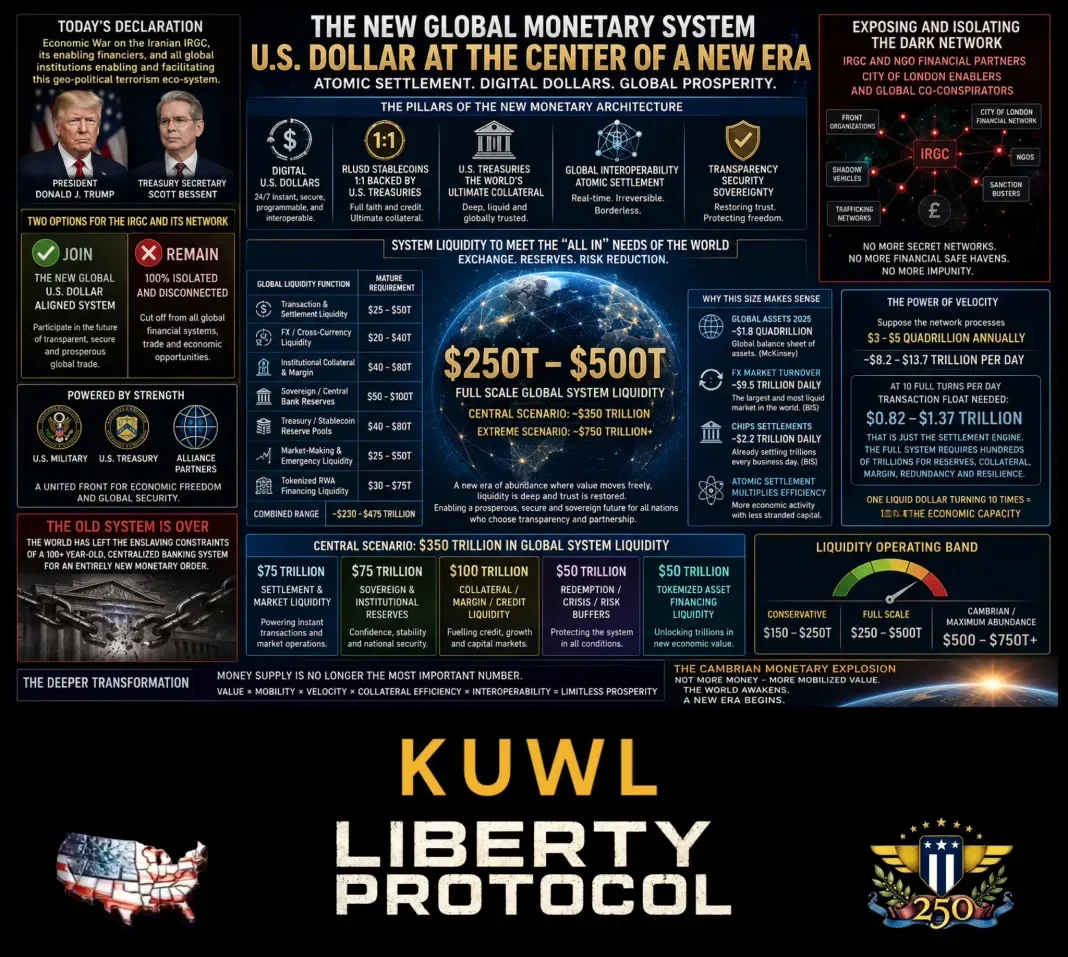
Treasury’s preceding Economic Fury actions likewise threatened secondary sanctions against financial institutions supporting Tehran’s networks and specifically targeted shadow banking, shipping, procurement and foreign financial conduits.
Why $350 trillion becomes surprisingly reasonable?
The mistake would be to ask, “How many dollars are needed to equal the value of everything being transacted?”
A modern atomic-settlement system does not need $3 quadrillion of liquidity to move $3 quadrillion. The same liquid dollar, stablecoin, bridge asset or collateral unit can turn over repeatedly.
But it needs substantially more than today’s stablecoin capitalization because the liquidity pool would simultaneously perform several different jobs.
Rounded for redundancy and systemic resilience:
≈ $250–$500 trillion
This scale makes more sense when compared with the world actually being financed. McKinsey’s newest global-balance-sheet analysis estimates nearly $1.8 quadrillion of global assets in 2025, and that estimate covers major economies representing only about 70% of world GDP.
“Net-Net” the old world debt slavery control cartel has been officially targeted, isolated and given one choice.
Live in the new U.S. Treasury Dollar World, or Die Alone.
Source(s):
• https://x.com/KuwlShow/status/2091985955116785946
https://dinarchronicles.com/2026/08/24/rob-cunningham-the-new-global-monetary-system/
Iraq Economic News and Points To Ponder Tuesday Afternoon 8-25-26
Iraq Considers Currency Change and Dinar Redenomination as Parliament Seeks to Delay Draft Law
25-08-2026 Peregraf — Iraq is considering a major currency reform that would involve replacing existing banknotes and potentially removing zeros from the Iraqi dinar, but the Parliamentary Finance Committee has asked the government to postpone legislation on the proposal until its economic, legal and financial implications are studied in greater detail.
Iraq Considers Currency Change and Dinar Redenomination as Parliament Seeks to Delay Draft Law
25-08-2026 Peregraf — Iraq is considering a major currency reform that would involve replacing existing banknotes and potentially removing zeros from the Iraqi dinar, but the Parliamentary Finance Committee has asked the government to postpone legislation on the proposal until its economic, legal and financial implications are studied in greater detail.
The Finance Committee hosted the Governor of the Central Bank of Iraq on August 23 to discuss the proposed currency change and the removal of zeros. Following the meeting, the committee sent a formal letter to Prime Minister Ali Faleh Al-Zaidi's office recommending that a vote on the draft law be postponed pending direct discussions between Parliament, the Council of Ministers, the Central Bank, the Ministry of Finance and the Ministry of Planning.
The committee distinguished between replacing the existing banknotes and actually removing zeros from the dinar's denominations. According to its letter, changing the currency without deleting zeros falls within the Central Bank's legal authority under Article 36 of the Central Bank Law No. 56 of 2004.
However, removing zeros would require legislation because it would affect a wide range of existing legal and financial obligations. The committee said the process would require amendments to civil, commercial and criminal legislation containing amounts denominated in dinars, as well as contracts involving investment projects, debts, government fees, fines and other financial obligations.
The committee also said the legislation would need to protect the rights and obligations of creditors and debtors, establish a clear timetable and mechanisms for the transition, and address possible amendments to Iraq's Anti-Money Laundering and Counter-Terrorism Financing Law and the Integrity Commission Law.
$250 Million Printing Plan
MP Dilan Ghafour, a member of the Finance Committee, told Peregraf that removing zeros would require the printing of new currency at an estimated cost of $250 million.
Ghafour said four countries — Germany, France, Australia and the United Kingdom — had been selected for the printing process. She said Iraq's current money supply stands at 113 trillion dinars, and estimated that between 8 trillion and 10 trillion dinars had been lost during wars or stolen. She said only about 6% of the remaining currency is held by the government, while the vast majority is in public circulation.
Ghafour said the proposed exchange would provide an opportunity to bring more cash into the formal financial system. She said people holding large amounts of cash could be required to explain the source of their wealth when exchanging old notes.
She also said the Finance Committee had raised concerns over the possibility that rising real estate and gold prices could provide safe havens for illicit funds or facilitate money laundering. According to Ghafour, relevant oversight bodies and the Ministry of Planning would be responsible for monitoring those developments.
MP Ahmed Haji Rashid, another Finance Committee member, said the government is preparing to change the currency and that the samples, designs and dimensions of the new notes are ready.
Rashid said the proposed plan involves printing 7.5 billion banknotes across all denominations, also at an estimated cost of $250 million, with Germany, France, Australia and Britain designated for the printing process.
He stressed that the proposed currency would retain the same price and value, meaning the planned change would not in itself constitute a devaluation or increase in the dinar's real value.
Rashid said the reform is intended to withdraw large amounts of cash currently outside the banking system, combat the circulation of cash linked to corruption, strengthen protection against counterfeiting and encourage citizens to move savings from homes into banks.
He said the current banknotes have been in circulation since 2005, and argued that replacing them would address security concerns and reduce counterfeiting risks.
Rashid also said the reform could help activate what he described as "idle capital" held outside the banking system because of limited public confidence in banks. Under the proposed process, exchanging old notes through banks could encourage greater deposits and increase the use of formal financial services.
He estimated that the overall currency replacement process could take three to seven years.
Finance Committee Calls for Caution
Despite the preparations described by the MPs, the Finance Committee has not endorsed immediate passage of the legislation.
In its August 24 letter, signed by Finance Committee Chairman Uday Awad Kadhim, the committee formally recommended postponing the vote until the government and relevant institutions conduct a comprehensive assessment of the proposed currency change and removal of zeros.
The committee said the process could have implications extending beyond monetary policy, including contracts, taxation, debts, criminal penalties, anti-corruption measures and the rights of citizens and businesses.
The proposed reform therefore remains subject to further government and parliamentary review, with the Finance Committee seeking a coordinated assessment before legislation on removing zeros from the Iraqi dinar proceeds. https://peregraf.com/en/report/12333