
Massive News Most Dinar Investors Missed
Massive News Most Dinar Investors Missed
The Dinar Den: 6-19-2026
The landscape of Iraq’s economy is currently undergoing a profound transformation, moving away from a traditional, cash-heavy system toward a modernized, digital-first financial infrastructure.
In a recent update from Steven, an entrepreneur and long-term investor behind The Dinar Den, several critical developments have come to light that suggest Iraq is aggressively laying the groundwork for a more stable and internationally integrated currency.
Massive News Most Dinar Investors Missed
The Dinar Den: 6-19-2026
The landscape of Iraq’s economy is currently undergoing a profound transformation, moving away from a traditional, cash-heavy system toward a modernized, digital-first financial infrastructure.
In a recent update from Steven, an entrepreneur and long-term investor behind The Dinar Den, several critical developments have come to light that suggest Iraq is aggressively laying the groundwork for a more stable and internationally integrated currency.
By focusing on technological integration and administrative reform, Iraq is positioning itself to address long-standing economic hurdles.
Perhaps the most significant technological milestone discussed is the approval of Starlink, SpaceX’s high-speed satellite internet service, for use within Iraq. While internet access might seem like a secondary concern to currency value, it is actually the backbone of modern fiscal policy.
A major obstacle to Iraq’s economic growth has been its large unbanked population and a reliance on physical cash. High-speed, reliable internet is the essential utility required to facilitate a cashless economy.
With Starlink’s deployment, even the most remote regions of Iraq can now access digital banking services. This connectivity allows for transparent digital transactions, government electronic payments, and real-time financial tracking.
By reducing the reliance on “mattress money” and physical currency, the Iraqi government can significantly curtail corruption and money laundering—essential prerequisites for any meaningful currency revaluation.
The political and administrative climate within the Central Bank of Iraq (CBI) has also seen a pivotal shift. The replacement of the former governor, Ali Al-Alak, with Nizar Nasser marks a potential turning point in Iraq’s monetary strategy. While Al-Alak was known for a conservative, stability-focused approach, Nasser brings a specialized background in anti-money laundering (AML) and international compliance.
This leadership change is viewed by many market observers as a signal that Iraq is ready to align more closely with global financial standards.
Nasser’s expertise is expected to accelerate reforms that integrate Iraq into the international banking community.
For the Iraqi Dinar to gain strength, the international community must have confidence in the CBI’s ability to regulate its markets and enforce transparency, and this new appointment appears to be a direct move toward establishing that trust.
Beyond the CBI, the Iraqi government is pushing for comprehensive electronic payment adoption across all ministries. This initiative is designed to streamline public services and ensure that government funds are handled with maximum efficiency.
Furthermore, the discussion surrounding the Hydrocarbon Law (HCL) remains a central pillar of Iraq’s economic future. The HCL aims to create a legal framework for the distribution of oil revenues, potentially linking these resources directly to citizen payments.
The success of the HCL and other financial inclusion strategies depends entirely on the digital infrastructure mentioned earlier. Without a robust electronic payment system, distributing oil wealth to the population would be a logistical nightmare prone to error and fraud. The convergence of these reforms—technological, legal, and administrative—creates a synergy that bolsters the country’s overall economic health.
While the road to a full currency revaluation is complex, the recent pace of progress in Iraq is undeniable.
From parliamentary actions on the Hydrocarbon Law to potential high-level diplomatic visits to the United States, the momentum is building toward a more modern Iraqi state. By tackling the root causes of economic stagnation—such as lack of infrastructure and administrative opacity—Iraq is making a compelling case for its future role in the global economy.
For those tracking these developments closely, the message is clear: Iraq is no longer just talking about reform; it is actively building the digital and regulatory architecture necessary to support a 21st-century economy.
Iraq Economic News and Points To Ponder Saturday Afternoon 6-20-26
US Command: 55 Ships Carrying More Than 17 Million Barrels Of Oil Have Crossed The Strait Of Hormuz
Arabic and international The US Central Command announced on Saturday that 55 ships carrying more than 17 million barrels of oil had transited the Strait of Hormuz.In a statement, the Command said, "55 ships transited the Strait of Hormuz carrying more than 17 million barrels of oil to global markets," adding that "ship traffic in the Strait of Hormuz increased today as we continue to support freedom of navigation.
US Command: 55 Ships Carrying More Than 17 Million Barrels Of Oil Have Crossed The Strait Of Hormuz
Arabic and international The US Central Command announced on Saturday that 55 ships carrying more than 17 million barrels of oil had transited the Strait of Hormuz.In a statement, the Command said, "55 ships transited the Strait of Hormuz carrying more than 17 million barrels of oil to global markets," adding that "ship traffic in the Strait of Hormuz increased today as we continue to support freedom of navigation.
" The statement concluded, "Our forces are prepared to ensure compliance with all aspects of the agreement with Iran." https://www.economy-news.net/content.php?id=70476
For The First Time In 48 Years, Iraq Breaks The Oil Exploration Stalemate In Its Northern Provinces.
Energy Economy News – Baghdad The Ministry of Oil announced on Saturday the commencement of drilling the first exploratory well in the northern provinces since 1978.
The ministry stated in a statement that, “In implementation of the directives of Oil Minister Bassem Mohammed Khudair, the technical and engineering staff of the Iraqi Drilling Company began drilling a new exploratory well within the Amerli district in Salah al-Din Governorate, under a tripartite contract that includes the North Oil Company, the Iraqi Drilling Company and the Oil Exploration Company, in the presence of the Director General of the Iraqi Drilling Company and the Director General of the North Oil Company.”
She added that "this well is the first of its kind in the northern governorates since 1978, in a step that reflects the Oil Minister's directions towards revitalizing exploration work and developing promising blocks and reservoirs, with the aim of enhancing the hydrocarbon stock of oil and gas and increasing national reserves."
The minister affirmed, according to the statement, that "the ministry is proceeding with the implementation of its exploration programs aimed at enhancing the hydrocarbon reserves of oil and gas," noting that "the commencement of drilling this well represents an important milestone in the ministry's efforts to revitalize exploration work in promising areas after many years of inactivity."
He added that "the Ministry of Oil is adopting a new and clear vision based on expanding the drilling of exploratory wells and investing in geological and geophysical data, with the aim of enhancing the hydrocarbon reserves of oil and gas and securing resources that support the country's development and economic plans."
Khudair explained that "the project reflects the level of coordination and integration between the national oil formations, represented by the North Oil Company, the Iraqi Drilling Company and the Oil Exploration Company, to achieve the ministry's goals of maximizing hydrocarbon wealth and investing it optimally."
He added: “Increasing proven oil and gas reserves and compensating for depletion is a strategic goal for the Ministry of Oil, given its role in enhancing Iraq’s global oil standing and supporting long-term oil sector development plans.”
He pointed out that "developing hydrocarbon reserves contributes to enhancing the country's future production capabilities, and gives Iraq greater flexibility in managing the oil production and export file, in line with the size of its proven resources and reserves, and achieves the highest possible economic return to serve national development."
The minister affirmed that "the Ministry of Oil is continuing to implement its plans aimed at expanding exploration activity in various promising areas, which will contribute to supplying national reserves with new discoveries, enhancing economic sustainability, and supporting Iraq's position as one of the most prominent countries possessing oil and gas wealth in the world."
Baghdad And Erbil On The Path To Unified Customs: The End Of Fragmentation And The Beginning Of A Single Iraqi Market
Reports Economy News – Baghdad The Iraqi government and the Kurdistan Regional Government are moving towards a new phase of economic coordination through a project to unify customs systems and procedures at all border crossings, in a step seen as one of the most prominent milestones of financial and administrative reform in recent years, due to its direct impact on public revenues, trade, and the investment environment.
In recent days, Baghdad witnessed joint meetings between the Border Ports Authority, the General Authority of Customs, and the Kurdistan Region Customs Authority, with the participation of representatives from the relevant sectoral bodies, to discuss mechanisms for unifying customs tariffs and implementing the electronic ASYCUDA system at all border crossings, in addition to discussing customs exemptions, lists of prohibitions and restrictions, standardization procedures, quality control, radiation inspection, compliance with the agricultural calendar, addressing unofficial border crossings, and unifying tax procedures.
During the meeting, the head of the Border Ports Authority, Omar Adnan Al-Waili, stressed the importance of dealing with the issues raised in a positive spirit, while giving priority to facilitating trade between the region and the Iraqi governorates, noting that unifying procedures would reduce the burdens on drivers and traders and achieve greater smoothness in the movement of goods, which would reflect on economic stability.
This government initiative comes within the framework of a broader trend towards digitizing customs work and unifying trade policy throughout the country, especially with the expansion of the application of the ASYCUDA system, which was developed by the United Nations through the United Nations Conference on Trade and Development (UNCTAD), and is one of the most widely used customs systems in the world for managing import, export, and transit operations, automating customs procedures, and increasing the efficiency of collection and control.
In this context, Finance Minister Falih Sari stressed that unifying customs systems and procedures between the federal government and the Kurdistan Region represents an important strategic step within the path of economic reform and strengthening non-oil revenues, stressing the importance of implementing the ASYCUDA system in the region’s customs centers because it provides advanced control and administrative tools that contribute to developing customs performance and enhancing electronic control.
He explained that the joint meetings discussed mechanisms for implementing the system currently adopted at the federal ports and reviewed the results achieved in the field of digital transformation and simplification of procedures, as well as exploring ways to unify data and customs procedures between Baghdad and Erbil in line with international standards, enhance transparency, and raise the efficiency of border port management.
The government affirms that the implementation of the unified electronic system will contribute to reducing customs evasion cases, maximizing non-oil revenues, and tightening control over the movement of goods entering and leaving.
This prompted both sides to sign a joint memorandum that includes a set of recommendations and executive procedures for implementing the system in the customs centers affiliated with the Kurdistan Region, in preparation for submitting it to the Ministerial Council for Economy to complete the necessary legal procedures.
This file is of particular importance in light of the Kurdistan Regional Government’s approval of the implementation of the ASYCUDA system, as the head of the regional government, Masrour Barzani, had previously confirmed that the region had no objection to implementing the system, while requesting a technical grace period of about nine months to complete the necessary infrastructure requirements for its implementation.
The Prime Minister’s financial advisor, Mazhar Muhammad Salih, believes that unifying the customs systems between the federal government and the region represents a strategic step within the economic and financial reform project, explaining that its importance is not limited to the administrative aspect only, but extends to building a unified trade policy and enhancing the state’s ability to manage its non-oil resources more efficiently.
Saleh said that unifying customs systems will contribute to reducing cases of customs evasion resulting from differences in procedures and tariffs between ports, as well as unifying the databases for import and export movement, which provides more accurate information to decision-makers and helps to formulate more efficient economic and financial policies.
He added that the success of the project requires the adoption of unified electronic systems for collection and customs clearance, linking all border crossings to a central database that allows for real-time tracking of goods movement, in addition to activating joint monitoring and auditing and the exchange of information between the relevant authorities in the federal and regional governments.
Saleh pointed out that unifying customs systems will support increasing non-oil revenues by expanding the customs base, reducing financial leakage, and closing loopholes that allowed for different fees or duplication of procedures. He explained that this will achieve greater fairness in collecting fees and taxes on imports, enhance public treasury resources, and reduce excessive dependence on oil revenues.
The expected gains are not limited to the financial aspect only, as specialists believe that unifying customs procedures between Baghdad and Erbil will reduce the time and cost associated with the movement of goods within Iraq, strengthen the principle of national market unity, and give investors a clearer and more stable view of the business environment, as well as reduce the complications facing traders and importers when moving goods between the region and other governorates.
The success of this project will also contribute to strengthening confidence in the Iraqi economy among international institutions and foreign companies, especially with Iraq’s move towards expanding regional trade and implementing major strategic projects in the fields of transport and logistics.
Given the financial challenges facing oil-dependent economies, the move to unify customs systems between Baghdad and Erbil appears to be part of a broader vision aimed at building a more diversified and sustainable economy, based on developing non-oil revenues, improving financial management, and employing modern technology in managing border crossings, thereby enhancing state efficiency and consolidating the unity of the Iraqi market on more organized and transparent foundations.
You Weren't Crazy 17 Years Ago. You Were Early
You Weren't Crazy 17 Years Ago. You Were Early
Notes From the Field By James Hickman (Simon Black / Sovereign Man) June 19, 2026
20 years ago, if you recognized how deep America's problems were, it was easy to feel like you were the crazy one.
Banks were handing out mortgages to people who plainly couldn't afford them. Wall Street bundled those mortgages by the millions and sold them on as some of the safest investments around. And the whole structure rested on the assumption that home prices would never fall, so a bank could simply sell the home for more in case of a default.
You Weren't Crazy 17 Years Ago. You Were Early
Notes From the Field By James Hickman (Simon Black / Sovereign Man) June 19, 2026
20 years ago, if you recognized how deep America's problems were, it was easy to feel like you were the crazy one.
Banks were handing out mortgages to people who plainly couldn't afford them. Wall Street bundled those mortgages by the millions and sold them on as some of the safest investments around. And the whole structure rested on the assumption that home prices would never fall, so a bank could simply sell the home for more in case of a default.
Chief among the “experts” selling this fiction was Ben Bernanke, then chairman of the White House Council of Economic Advisers, who said in 2005, "We've never had a decline in house prices on a nationwide basis."
In March 2007, with subprime loans already going bad, Bernanke, by then Fed Chairman, told Congress the damage "seems likely to be contained."
That May he said he didn't expect "significant spillovers… to the rest of the economy."
As late as July 2008, weeks before the two mortgage giants collapsed into government hands, he called Fannie Mae and Freddie Mac adequately capitalized and in no danger of failing.
Then on September 15, 2008, Lehman Brothers filed the largest bankruptcy in US history, and the structure came down. Prices fell, those homes were suddenly worth less than the loans against them, and the safest investments around turned toxic.
By 2009, Washington was spending, bailing out, and printing at record scale, and the obvious question was how long it could possibly go on.
That was the world the very first Sovereign Man letter dropped into, in June 2009, exactly 17 years ago.
We wrote about a real man named William "Bud" Post who had gone flat broke, on food stamps, with lawsuits, jail time, and bankruptcy behind him. What made it strange was that in 1988 he'd won $16.2 million in the Pennsylvania lottery.
Bud, we wrote, is the United States of America.
America hit its own lottery after World War II, coming out the only major economy left standing, the dollar enthroned as the world's reserve currency. And like Bud, it spent the next several decades certain the money would never run out.
LBJ got bogged down in Vietnam while building the Great Society. George W. Bush entered two wars and told Americans to go shopping, and Obama, fresh off the bailouts, was promising universal healthcare.
It was the steady avoidance of every hard choice. We called it winner's syndrome: "we've been winners for so long we don't know any other reality."
In 2009, that was an unpopular thing to say.
The consensus treated the crisis as a stumble the economy would walk off, and calling America structurally broke got you labeled a crank.
We didn't say it was a death sentence, though. We argued the opposite, that clear thinking could still save America: take the hit, let failing businesses fail, restructure, and come out stronger.
"Unfortunately," we wrote, "there are no near-term indications of rationality in Washington."
17 years later, that is more true than ever. If anything, Washington has gone backwards.
For example, Social Security's own trustees now project the main retirement trust fund runs dry in 2032, after which scheduled benefits get cut by roughly 22% automatically.
That’s not some distant future where maybe at some point someone will have to start thinking about a solution. It is 6 years away.
And the fixes are no secret; the trustees themselves lay out the options, from higher payroll taxes to benefit cuts.
But they've ignored it for so long that simply hearing a few members of Congress acknowledge the scale of the problem now feels like progress, even though acknowledging it is a long way from fixing it.
We were early; the reckoning we kept warning about has taken longer to arrive than we thought.
But early isn't wrong: everything that first letter described is more true today than it was in 2009. Washington could still choose to fix it, exactly as it could have back then. It simply has to want to, and seventeen years of evidence says it doesn't.
Your Plan B, fortunately, doesn't require Congress to find its courage.
And that was the entire reason this company was founded.
That was the promise at the end of that first letter: while the country may be on a slide, clear thinking could still save you, "and that's where we come in."
That's still exactly what we do.
Sovereign Man grew into Schiff Sovereign, and one daily letter became a full body of research.
Every month, our co-founder James Hickman gives his in-depth view of the world in the Macro Brief, mapping where the debt, the dollar, and global events are heading. He points to specific real assets that can protect your savings; the gold, energy, and resource businesses that hold their value as the dollar slips.
It’s available to members of Premium
Members of our flagship membership, Plan B Confidential, get even more.
This is the original idea the first letter was built on: don't put all your eggs in one basket, and don't hand one government the keys to your entire life. Plan B Confidential is the playbook for second citizenship so you always have another way out, foreign residency so you always have another place to live, offshore banking so your savings aren't trapped in one banking system, and the legal tax strategy that lets you keep as much of your money as possible.
It's built on boots-on-the-ground research across more than 120 countries.
And because so much of the threat from a bankrupt government printing money and draining the value of your savings is financial, we've zeroed in on real assets through our investment research newsletter, Strategic Assets.
A real asset is something with worth of its own, the kind of thing people need no matter what the dollar is doing: gold as a store of value, energy, the metals that build everything. A government can print money by the trillion, but it can't print an ounce of gold or a barrel of oil, so real assets tend to hold their value, and often climb, exactly when paper money is falling apart.
And for readers who want it all, we offer Total Access.
Members get everything we publish, from the macro analysis to the investment research, and all the international strategies in between.
But Total Access members also get the community: other members who they meet at in-person events, conferences, dinners, and most recently, small group boots-on-the-ground trips around the world.
From a superyacht along the Croatian coast to a trek through the Patagonian Andes, members explore the world together, and finally find their tribe in each other.
That's the part we could never have planned 17 years ago.
Back then, we wrote to a handful of people willing to question what everyone else accepted as obvious. You were one of them, or you found your way here since, because you see the world through that same lens.
That's what built this. Not us. You.
Here's to the next chapter.
The Schiff Sovereign Team
Ariel: The IQD Rate Adjustment Phase is in High Gear (And More)
Ariel: The IQD Rate Adjustment Phase is in High Gear
6-20-2026
Here’s What To Watch Folks
Approaching but controlled. (Keep In Mind) The new Governor’s background screams managed transition redenomination (drop zeros for practicality) followed by gradual strengthening anchored in gold, stabilized oil (post-HCL), and diversified revenue.
Ariel: The IQD Rate Adjustment Phase is in High Gear
6-20-2026
Here’s What To Watch Folks
Approaching but controlled. (Keep In Mind) The new Governor’s background screams managed transition redenomination (drop zeros for practicality) followed by gradual strengthening anchored in gold, stabilized oil (post-HCL), and diversified revenue.
Capital controls likely kick in initially. Ripple/ISO rails + Starlink make real-time enforcement possible. Watch early-morning CBI announcements (often Sundays for market quiet).
Post-adjustment intervention to anchor the rate, gradual control easing, foreign investment surge, and integration into broader digital asset ecosystems via Clarity Act-aligned rails.
This creates Dollar 2.0-style sound money that holds or grows value instead of endless erosion through printing and proxy wars. Something that was recently ended.
Trump’s “level playing field” rhetoric wasn’t empty. The Iran deal (signed in the same Versailles halls where the old order carved up the world in 1919) ends proxy chaos, reopens monitored Hormuz flows, and chokes black market networks that fed militia economics and sanctions busting.
Clarity Act steam in the Senate provides U.S. regulatory certainty for stablecoins and digital assets, directly complementing Iraq’s digital leap. Banks are terrified because ISO 20022 + Ripple rails expose the arbitrage and opacity that let legacy intermediaries skim for decades.
We are approaching a very powerful event people. The best thing to do is watch this play out. Because the PM visit next month will be discussing a trade partnership. Something that will require what? A level playing field ie 1:1 parity.
The process is messy because the machine was deeply rooted. But the foundations are now solid. The dinar shift is structural realignment toward sound money, not lottery. The Republic (and aligned sovereign plays like Iraq) moves forward on rails that the old parasites can’t easily derail. The storm was necessary. The reset is landing. Stand ready the payoff is worth the grind.
Source(s):
• https://x.com/Prolotario1/status/2068117600693895641
https://dinarchronicles.com/2026/06/20/prolotario-the-iqd-rate-adjustment-phase-is-in-high-gear
Ariel: Probable Sequence of Events Regarding Iraq
6-20-2026
Iraqi Dinar Update: Part 2 (And Other Info) Ripple News
Updated Probable Sequence of Events re: Iraq – June 2026 Perspective
The original 2025 outline from Stephanie Starr back in 2025 https://x.com/i/status/195452984541044758 laid out a logical, phased roadmap for Iraq’s currency strengthening based on how other nations have handled similar transitions, combined with Iraq’s unique oil-dependent reality.
That framework still holds as a strong skeleton, but the ground has shifted noticeably in the past 10–11 months.
We’re now deep into operational execution rather than pure planning.
Starlink’s nationwide license approval, the aggressive cashless mandate targeting early July 2026 for government institutions, the new Central Bank Governor with deep AML/TF roots, ongoing HCL negotiations, and gold reserve building are all accelerating the timeline while adding real compliance teeth.
We know no magical overnight flip has occurred at this time as the official rate hovers around 1,300 IQD per USD for budgeting purposes but the infrastructure, legislative pressure, and international alignment point to a controlled strengthening and redenomination path rather than the old static limbo. But we also have a new CBI Governor who has an entire different playbook.
Stage 1 – Final Banking Reform & Compliance Lock-In (Largely Complete / Ongoing)
Current Status: This phase is well advanced. The Central Bank of Iraq (CBI) has pushed private banks to meet capital and compliance thresholds. Electronic payment systems are scaling rapidly, with trillions already flowing through e-wallets, POS, and instant rails.
Starlink’s license (welcomed publicly by PM Ali al-Zaidi and U.S. Envoy Tom Barrack) provides the critical satellite backbone for remote oil fields, border zones, and rural banking outposts where terrestrial infrastructure was always vulnerable to sabotage or graft.
Stage 2 – Market Preparation & Stabilization (Accelerating)
Current Status: Tightened dollar supply, public education on digital payments, and gold reserve growth (over 170 tons and climbing) are all visible.
Cashless mandates for government institutions target early July 2026 Interior Ministry already largely dark on cash, with others following. Starlink fills connectivity gaps so remote ministries and oil infrastructure can log and settle in real time.
Read Full Article:
https://www.patreon.com/Prolotario1/posts/iraqi-dinar-part-161558949
https://dinarchronicles.com/2026/06/20/prolotario-probable-sequence-of-events-regarding-iraq/
Saturday Iraq News Posted by Tishwash at TNT 6-20-2026
TNT:
Tishwash: Algerian: The government will be forced to change the exchange rate after the country's economic downturn.
Information/Baghdad...
The head of the political body of the National Tribal Movement, Abdul Rahman al-Jazaeri, confirmed that the government will be forced to change the dollar exchange rate in local markets after the economic downturn the country has witnessed as a result of the war in the region.
Al-Jazaeri told Al-Maalouma, "The Prime Minister's move to increase the value of the dollar in local markets at the expense of the Iraqi dinar is possible and not unlikely given the conditions and developments in the region and their repercussions on Iraq."
TNT:
Tishwash: Algerian: The government will be forced to change the exchange rate after the country's economic downturn.
Information/Baghdad...
The head of the political body of the National Tribal Movement, Abdul Rahman al-Jazaeri, confirmed that the government will be forced to change the dollar exchange rate in local markets after the economic downturn the country has witnessed as a result of the war in the region.
Al-Jazaeri told Al-Maalouma, "The Prime Minister's move to increase the value of the dollar in local markets at the expense of the Iraqi dinar is possible and not unlikely given the conditions and developments in the region and their repercussions on Iraq."
He added, "The war in the region has had a complete and clear impact on all Iraqi economic programs, the budget, the dollar exchange rate, and foreign transactions, in addition to the disruption in the export of Iraqi oil."
He explained that "the urgent need compels the government to take measures that will increase the exchange rate in local markets in order to put the economy back on track, especially with an economic figure at the top of the executive branch."
Tishwash: An economist warns that changing the exchange rate without structural reforms could exacerbate inflation and poverty.
Economic expert Manar Al-Obaidi confirmed on Friday (June 19, 2026) that changing the exchange rate of the dinar against the dollar as a unilateral measure to reduce public spending may have negative effects that outweigh its temporary gains, calling for addressing the structural imbalances in the Iraqi economy.
Al-Ubaidi said in an analysis seen by “Baghdad Today” that “reducing the value of the dinar may achieve some gains, including reducing government spending denominated in dinars, limiting imports, supporting local products, as well as reducing pressure on cash reserves.”
He added that "the decision may entail a number of risks, most notably the loss of confidence in the local currency and increased dependence on the dollar, weakening the investment environment, increasing the state's operating expenses, as well as growing rates of inflation, poverty and unemployment."
He pointed out that "the real economic problem lies in the inflation of operating expenses, the weakness of non-oil revenues, and the imbalance in the trade balance," stressing that "real reform begins with addressing these issues structurally, and that any adjustment to the exchange rate should be part of an integrated package of economic reforms." link
**************
Tishwash: Ahead of his visit to Washington, al-Zaydi's "sieve" causes the biggest government shake-up since 2003.
It wasn't long after Ali Faleh al-Zaidi took over his duties that he began sending clear signals to his opponents and allies at the same time, under the title "The next stage will not be an extension of what came before it."
While his government is still completing its ministerial formation, informed sources speak of a broad list of changes that may affect more than 100 officials at various administrative levels, starting with undersecretaries and not ending with directors-general, in a move that seems closer to redrawing the centers of influence within the Iraqi state than to mere routine administrative procedures.
According to information obtained by Shafaq News Agency, the team assigned by Al-Zaidi to review the performance of government institutions is continuing its work away from the spotlight, through a comprehensive evaluation of official institutions and bodies, in preparation for launching one of the broadest replacement operations that the country has witnessed since 2003.
The evaluation process is not limited to administrative performance only, but also includes the nature of the political and organizational affiliations of some officials, amid talk of a trend to remove figures who are accused of being close to armed factions or who have failed to manage the files entrusted to them during the past years.
In a country where successive governments have been accustomed to "waiting before approaching high positions for fear of clashing with influential parties," al-Zaydi's moves appear to be very different.
The current prime minister began his term with a series of decisions affecting sensitive security and economic positions, including the National Security Service and the Central Bank, which opened the door to questions about whether these steps represent the beginning of a project to restructure state institutions, or whether they come in response to the requirements of a "new political phase" in which internal calculations are intertwined with external pressures.
The timing of these measures is of exceptional importance as al-Zaidi’s anticipated visit to Washington and his expected meeting with US President Donald Trump approach, a visit that many observers view as a pivotal moment in shaping the relationship between the new government and the US administration.
According to political sources who spoke to Shafaq News Agency, US envoy Tom Barrack discussed with al-Zaidi during his recent visit to Baghdad issues that go beyond the formation of the government or the distribution of positions, reaching the form of the Iraqi state during the next stage, the mechanisms for managing sovereign institutions, and strengthening the independence of government decision-making from traditional centers of influence.
According to the sources, there are understandings that led to the abolition of the positions of deputy prime ministers, as well as the exclusion of the “Ministry of Federal Security” project, which was proposed to include various security formations, including the Popular Mobilization Forces and armed factions.
Meanwhile, negotiations regarding the allocation of security ministries and some contentious portfolios are still ongoing, amid assurances that al-Zaydi is seeking to select technocratic figures, even if they enjoy the support of certain political forces, sources say.
But the road ahead for the prime minister does not appear entirely paved, as any change in the highest state positions necessarily means disrupting political balances that have accumulated over more than two decades, which makes any broad replacement process a real test of al-Zaydi’s ability to impose his will within a system of governance based on consensus, power-sharing, and the division of influence.
With the postponement of the meetings of the Coordination Framework forces until after the tenth of Muharram, the political forces seem to be waiting for the picture of the final understandings regarding the government formation and the expected changes to become clear, before determining the form of their position on the Al-Zaydi project.
Until then, the list of 100 names does not appear to be a "media show," but rather a title for a silent political battle taking place behind the scenes, which may redraw the centers of power within the Iraqi state, and reveal the extent to which al-Zaydi can turn promises of reform into reality, or remain within the limits of the balances that brought him to power. link
Tishwash: Iraq returns to the "grey list"... International demand obliges Baghdad to implement a plan to combat money launderin
The Financial Action Task Force (FATF) announced on Friday that it has placed Iraq on its "grey list" of countries that require increased monitoring regarding their efforts to combat money laundering and financial crimes.
The group’s chair, Elisa de Anda Madrazo, said in a statement translated by Shafaq News Agency that “the group’s general meeting decided to add Iraq to the grey list, as there is still a need to take measures to address the risks associated with cash transactions, increase investigations related to money laundering and terrorist financing, and enhance the use of financial information.”
According to the statement, inclusion on the grey list means that the country in question is subject to enhanced monitoring by the Financial Action Task Force, and is required to implement a reform plan to address deficiencies in its anti-money laundering and counter-terrorism financing systems.
The decision comes at a time when the new Iraqi government is asserting that economic reform and combating corruption are key priorities for the next phase.
Iraqi Prime Minister Ali al-Zaidi had announced, since taking office last May, that rebuilding the Iraqi economy, attracting foreign investment, and fighting corruption would be among the main pillars of his government's program.
The Financial Action Task Force (FATF) announced in July 2018 that Iraq had been removed from the monitoring zone, due to the significant progress made by the Central Bank of Iraq and the Anti-Money Laundering and Counter-Terrorist Financing Office in improving and addressing shortcomings, and in fulfilling all its obligations towards the FATF recommendations and addressing the requirements of the anti-money laundering and counter-terrorist financing strategy prepared by the bank at that time. link
************
Tishwash: The US Secretary of State will visit the Middle East next week.
The American news website Axios reported on Friday evening that US Secretary of State Marco Rubio intends to visit the Middle East next week.
According to the website, Rubio will visit the UAE, Kuwait and Bahrain during a Middle East tour next week.
Earlier today, Rubio, in a telephone call with Lebanese President Joseph Aoun, affirmed Washington’s support for the Lebanese government’s efforts to establish a sovereign state that lives in peace with its neighbors.
For his part, US President Donald Trump, in statements on Friday, specifically thanked the leaders of Saudi Arabia, Qatar and the UAE, stressing that Washington’s relations with the three countries are “great,” and praising the role played by the region’s capitals in supporting efforts to de-escalate tensions and engage in dialogue over the past months.
Last Wednesday, Trump and his Iranian counterpart, Masoud Pezeshkian, remotely signed a memorandum of understanding between the United States and Iran to end the war and open the Strait of Hormuz, in a move that preceded a ceremony that was scheduled to take place in Switzerland, and opened the door to broader negotiations on the nuclear issue and sanctions during a period of 60 days link
News, Rumors and Opinions Saturday 6-20-2026
Ross: The IQD RV is a Matter of When, Not if
6-19-2026
This is a IQD headline…
You already know President Trump is going to make it happen.
AnnaMarieF:Al-Zaydi Heads to Washington Seeking an Economic Lifeline..
Watch on X: https://x.com/onenewsiq/status/2067276716641263697
The claim in the post is credible and widely reported as fact in Arabic-language media today.
Ross: The IQD RV is a Matter of When, Not if
6-19-2026
This is a IQD headline…
You already know President Trump is going to make it happen.
AnnaMarieF:Al-Zaydi Heads to Washington Seeking an Economic Lifeline..
Watch on X: https://x.com/onenewsiq/status/2067276716641263697
The claim in the post is credible and widely reported as fact in Arabic-language media today.
It’s a significant personnel change at the CBI under the new PM, which could have implications for monetary policy, banking reforms, and IQD currency stability.
AnnaMarieF:Breaking: Iraqi Prime Minister Ali Al-Zaydi assigns Nizar Nasser Al-Amiri as Governor of the Central Bank. Iraqi Prime Minister Ali Al-Zaidi ordered a broad reshuffle of senior state positions, changing the leadership of the Central Bank of Iraq (CBI) and the National Investment Commission, a political source familiar with the matter told Shafaq News on Thursday. Al-Zaidi appointed Nizar Nasser, who previously headed the bank’s Anti-Money Laundering and Counter-Terrorism Financing Office, as CBI governor, replacing Ali Al-Allaq. He also named Adel Al-Yasiri chairman of the National Investment Commission in place of Haider Makkiya.
Dude the IQD FUDsters deserve all the pain that’s coming.
Although, most of them have some, just disgruntled investors.
(FUD =Fear, Uncertainty and Doubt)
IQD RVing is a matter of when, NOT if…
There’s no clickbait benefit in having the opposite opinion, only ego.
New gov
New CBI gov
Erbil vs Baghdad resolutions
Iran removal
Foreign reserves exceeding
Oil boom pending
Trump approval
Y’all have no idea how hot this summer is about to get.
Iran War is over.
“Time to rebuild”
Meaning the Middle East will be reshaped with the US interest in mind which serves every other country economically as a partner in trade.
President Trump is a business man who gets things done.
He moves quick.
You can see it happening in real life right now.
The headlines are compounding to the point that no IQD FUDster will be able to deny what’s coming.
They’re getting nervous.
Watch.
Tom S:Why in the hell send Barrack now . If anybody for one second thinks PM Zaidi is going to show up with a toilet paper non tradeable currency to discuss establishing funds and trade with a superpower ... let me show you a bridge I have for sale . That is hardly a position for him to be in and hardly matches his announcements or actions ... and finally that is just plain stupid as Dinarland looks for a trigger once again .
Source(s):
• https://x.com/Ross_ptm/status/2067479740198609085
Read full post here: https://dinarchronicles.com/2026/06/19/ross-the-iqd-rv-is-a-matter-of-when-not-if/
****************
Courtesy of Dinar Guru: https://www.dinarguru.com/
Terrence [Central Bank/International Bank Regulator] Vietnam is trying to export products...It's in their interest to keep the currency low. Whereas in Iraq, all the signals are pointing suggesting they've got to raise the rate significantly...If you look at countries like Kuwait, Bahrain, Jordan, these countries are not anywhere close to being as rich as Iraq are. Why are their currencies worth so much more than a dollar? It doesn't make sense.
Militia Man Article: "Alaq was relieved of his position as governor of the Central Bank and Nizar Nasser was appointed in his place" We all knew that it is possible because it's the right of the prime minister to be able to get a new central bank governor...This [new] man seems to fit the bill. His background is quite nice...It may even be more advantageous for us because it might be more of a seamless cleaner government in the sense, the man has who he wants in place...I like what we see...Prime Minister Zaidi is all about economics and so it the new CBI governor.
Jeff Did any of us know today that the central bank governor was going to get replaced? Hell no, we didn't. I've been saying for quite a while the news is all scripted. They know exactly what they're going to do, when they're going to do it and it will catch all of us by surprise. The rate change won't catch me by surprise. It might catch you by surprise, not I. I now exactly what I'm looking for to know when the rate's going to change...The very critical piece we need to see to identify that date will be the completion of the cabinet. Once they complete the cabinet, it's game over. Rate will change very quick...
He Lived Through 1987, 2000, 2008 & COVID – He’s Most Concerned Now, Here’s Why
Miles Franklin Media: 6-18-2026
Michelle Makori, President & Editor-in-Chief, Miles Franklin Media, sits down with Peter Grandich, Founder, PeterGrandich.com, to discuss why he is more concerned about the economy and financial markets today than at any other point in his 40-plus year career.
Having lived through the 1987 crash, the dot-com bubble, the Global Financial Crisis, and the COVID market collapse, Grandich shares his outlook on what he calls the “greatest melt-up in history,” why he believes markets are displaying classic signs of a major top, and how growing debt, political division, and investor complacency could create serious challenges ahead.
He also weighs in on Federal Reserve Chair Kevin Warsh’s first meeting, the Fed’s sweeping review of its policies and communications, the implications for inflation and interest rates, and what a new Fed regime could mean for markets and gold.
Grandich explains why he remains bullish on gold, silver, copper, and mining stocks, why he believes $10,000 gold is possible, and why he would rather own precious metals than broad U.S. equities at current valuations.
In this episode of The Real Story with Michelle Makori:
Why Peter Grandich is more concerned than at any point in his career
Signs the stock market may be nearing a major top
The “greatest melt-up in history” thesis
Kevin Warsh’s Fed overhaul and what it means
Why the Fed may create more uncertainty for investors
Inflation, debt, and America’s fiscal outlook
Why Congress may struggle during the next crisis
Why Grandich sees limited upside in U.S. stocks
Why he believes $10,000 gold is possible
Gold, silver, copper, and mining stock opportunities
How investors can protect wealth in today’s environment
Iraq Economic News and Points To Ponder Saturday Morning 6-20-26
Iraq Was The Fifth Largest Buyer Of Homes In Türkiye During May
Money and Business Economy News – Baghdad Data from the Turkish Statistical Institute, released on Saturday, showed that Iraq ranked fifth among nationalities that bought the most homes in Turkey during May 2026, at a time when real estate sales to foreigners recorded a significant annual decline.
The agency stated in its monthly report that total home sales to foreigners amounted to 1,387 homes during May, a decrease of 27% compared to the same month in 2025, representing about 1.5% of total home sales in the country.
Iraq Was The Fifth Largest Buyer Of Homes In Türkiye During May
Money and Business Economy News – Baghdad Data from the Turkish Statistical Institute, released on Saturday, showed that Iraq ranked fifth among nationalities that bought the most homes in Turkey during May 2026, at a time when real estate sales to foreigners recorded a significant annual decline.
The agency stated in its monthly report that total home sales to foreigners amounted to 1,387 homes during May, a decrease of 27% compared to the same month in 2025, representing about 1.5% of total home sales in the country.
She added that home sales to foreigners during the first five months of this year amounted to 18,768 homes, down 15.1% year-on-year.
According to the data, Russian citizens topped the list of nationalities that bought the most homes in Turkey during May with 268 homes, followed by Iranians with 125 homes, then Ukrainians with 88 homes, and Germans with 73 homes, while Iraqis came in fifth place with 66 homes, while Azerbaijan came in sixth with the same number of 66 homes.
At the level of the real estate market in general, total home sales in Turkey during May decreased by 31.2% compared to the same period last year, reaching 93,333 homes, of which 30,196 were new homes and 63,137 were existing homes.
Sales of new homes also declined by 27.9% to 30,196 homes, while sales of existing homes fell by 32.7% to 63,137 homes.
https://www.economy-news.net/content.php?id=70457
Iraq Has Lost Nearly $38 Billion Since The Closure Of The Strait Of Hormuz
Money and Business Economy News – Baghdad The Economic Affairs Observatory “Eco Iraq” announced that Iraq has lost about 350 million barrels of oil exports since the closure of the Strait of Hormuz, equivalent to about $37.7 billion, calling for accelerating the implementation of the “New Levant” project as a strategic option to secure alternative export outlets and reduce dependence on maritime outlets.
The observatory stated that prior to the closure of the Strait of Hormuz on February 28, Iraq was exporting between 103 and 107 million barrels of crude oil per month.
He explained that the closure of the strait due to the war in the region led to a decline in exports, with losses amounting to 84,395,049 barrels in March, 93,115,870 barrels in April, 92,801,000 barrels in May, while the current month of June recorded about 79,600,000 barrels.
According to "Eco Iraq", the gap in Iraqi exports during the aforementioned period is estimated at about 350 million barrels, representing lost export opportunities valued at about $37.7 billion based on average oil prices during the period.
He concluded his statement by noting that the "New Levant" project represents an urgent strategic necessity to ensure the stability of Iraqi oil exports and to secure vital alternatives away from the geopolitical risks that threaten maritime routes, especially since the Iraqi economy depends on oil revenues by nearly 90%.
Canada Imposes A Temporary 10% Tariff On Imports Of Canned Vegetables
Money and Business Economy News - Follow-up The Canadian government has announced a temporary 10% tariff on global imports of canned vegetables, stating that this measure is intended to address challenges facing the local canned vegetable industry and to mitigate the impact of trade diversion on local producers.
The Canadian Ministry of Finance stated in a statement that the tariffs will take effect today, Friday, and will remain in place for a maximum of 200 days.
Canada: Economic ties with America are a weak point that needs addressing.
It is worth noting that the Canadian economy entered a technical recession after recording a contraction for the second consecutive quarter, amid the continued repercussions of trade tensions with the United States and declining investments.
Statistics Canada data showed that gross domestic product contracted by 0.1% year-on-year in the first quarter of 2026, compared with a downwardly revised contraction of 1% in the fourth quarter of last year.
The figures came in contrary to market expectations, which had predicted growth of around 1.5%, while the economy remained stable on a quarterly basis with no growth.
Economists attribute this weakness to the uncertainty surrounding US tariffs, which have negatively impacted investment, employment, and spending decisions, in addition to the pressures resulting from the oil price shock related to the war in the Middle East.
This comes as US President Donald Trump threatens Canada’s economy and sovereignty, whether by imposing large tariffs on Canadian products, or by talking about the possibility of annexing it to the United States to be the 51st US state.
Since his election just over a year ago, Mark Carney has insisted that Canada must reduce its economic and security dependence on the United States.
Trump imposed punitive tariffs on key sectors of the Canadian economy, but so far he has respected the core of the free trade agreement, leaving more than 85% of trade between the two countries exempt from tariffs. His administration has announced that it wants to make significant changes to this agreement during review discussions that are expected to intensify after July 1.
https://www.economy-news.net/content.php?id=70448
The Silent Winner: The Biggest Billionaire After Elon Musk
Money and Business Economy News - Follow-up 2026 wasn't just a year of rising billionaires, but a year of "sudden redistribution of wealth" driven by artificial intelligence. While Elon Musk stole the spotlight with the biggest financial leap in modern history, a less-hyped but more intriguing name emerged behind the scenes of the Bloomberg Billionaires Index: Michael Dell, who became one of the world's biggest gainers after Musk, benefiting from an unprecedented wave that reshaped the map of the wealthy.
Data from the Bloomberg Billionaires Index showed that Michael Dell recorded one of the largest annual increases in wealth during 2026, as his fortune jumped by about $81.2 billion since the beginning of the year, rising to about $221 billion by the end of June.
This leap puts Dell among the biggest winners globally, right behind Elon Musk, who added hundreds of billions to his fortune during the same period.
The movements in 2026 reflected an unprecedented state of fluctuation in the fortunes of the super-rich; while Dell and Musk added tens of billions, others suffered huge losses, such as Mark Zuckerberg and Bernard Arnault, who recorded a significant decline in net worth.
This sharp disparity was not random, but rather revealed a new rule governing global wealth: either you are within the artificial intelligence system… or outside the wealth wave.
The index now almost directly reflects the performance of technology and digital infrastructure stocks, causing billionaires' fortunes to change daily at the same pace as the market.
Why did Michael Dell's wealth increase so much?
Dell's rise was not a coincidence, but rather the result of a profound strategic shift in its business model, as it directly benefited from the artificial intelligence boom, after Dell Technologies transformed from a traditional computer company into a key player in artificial intelligence architecture, especially in data center servers.
Demand for artificial intelligence servers has exploded, with server revenues recording annual growth of 757% for Dell, an indication of unprecedented demand from businesses and governments, according to Forbes.
Dell's stock is expected to rise significantly during 2026, driven by strong expectations for artificial intelligence growth, which has directly impacted Dell's wealth, which is mainly based on its stake in the company.
His wealth is not based solely on his stake in Dell, but also includes investments in Broadcom following the VMware deal, which has given him double exposure to the semiconductor boom.
Among investors and analysts, Dell was not seen as a showman like Musk, but rather as a silent winner, far, far away from the spotlight.
While some have described him as a "shovel provider in the digital gold rush," referring to the fact that he does not build AI applications but sells the servers that run on them.
Dell has added more than $81.2 billion to his fortune since the beginning of 2026, an increase of 37% in less than 6 months, making him one of the highest-earning billionaires.
In some other estimates related to stock market movements, his gains at certain times reached nearly $89 billion during the year, placing him among the elite who directly benefited from the wave of artificial intelligence.
Seeds of Wisdom RV and Economics Updates Saturday Morning 6-20-26
Good Morning Dinar Recaps,
ASEAN Pushes Deeper Rare Earth Cooperation to Strengthen Global Supply Chains
ASEAN is seeking to deepen cooperation on rare earth elements (REEs) as global demand for critical minerals accelerates. By strengthening regional collaboration, Southeast Asian nations hope to reduce dependence on outside powers, expand domestic processing industries, and secure a stronger position in the global supply chain.
Good Morning Dinar Recaps,
ASEAN Pushes Deeper Rare Earth Cooperation to Strengthen Global Supply Chains
ASEAN is seeking to deepen cooperation on rare earth elements (REEs) as global demand for critical minerals accelerates. By strengthening regional collaboration, Southeast Asian nations hope to reduce dependence on outside powers, expand domestic processing industries, and secure a stronger position in the global supply chain.
Overview
ASEAN nations are working to strengthen cooperation on rare earth elements, which are essential for electric vehicles, renewable energy technologies, semiconductors, electronics, and defense systems.
China currently dominates global rare earth production and processing, prompting ASEAN members to pursue strategies that diversify supply chains and improve regional competitiveness.
The focus is shifting toward downstream manufacturing, technology transfer, and regional investment to maximize the long-term value of the region's natural resources.
Key Developments
1. ASEAN Holds Significant Rare Earth Potential
Malaysia, Vietnam, Indonesia, and Thailand possess substantial rare earth reserves, giving Southeast Asia an opportunity to become an important alternative supplier as governments and manufacturers seek to diversify away from China's dominant position.
2. Emphasis Moves Beyond Mining
Rather than exporting raw minerals, ASEAN leaders are encouraging investment in refining, magnet production, battery manufacturing, and advanced processing to capture more economic value within the region.
3. Bilateral Deals Could Reduce Regional Leverage
The article warns that individual agreements between ASEAN countries and foreign governments or corporations could weaken the bloc's collective bargaining power, limiting opportunities for technology transfer, environmental standards, and long-term industrial development.
4. Regional Cooperation Could Strengthen Supply Chains
Analysts recommend expanding joint research, workforce development, financing partnerships, and coordinated investment strategies that allow ASEAN members to build complementary industries instead of competing against one another.
Why It Matters
Rare earth elements have become some of the world's most strategic resources. As demand grows for clean energy technologies, artificial intelligence, semiconductors, and advanced manufacturing, countries with secure supplies and processing capabilities will hold increasing economic and geopolitical influence.
Why It Matters to Foreign Currency Holders
Critical minerals are becoming an increasingly important driver of global investment, trade, and capital flows. Nations that successfully develop these industries may strengthen their export economies, attract long-term investment, and improve their financial positions as the global monetary system continues to evolve.
Implications for the Global Reset
Pillar 1: Assets
Rare earth elements are emerging as strategic national assets, joining gold, energy resources, and critical commodities as governments seek greater economic resilience and supply chain security.
Pillar 2: Trade
Diversified supply chains reduce reliance on a single producer while encouraging the development of new regional manufacturing hubs and stronger economic cooperation throughout Southeast Asia.
Bottom Line
ASEAN's push for deeper rare earth cooperation reflects a broader global effort to secure critical supply chains and reduce strategic vulnerabilities. If successful, the region could become a much larger player in advanced manufacturing while reshaping global trade and investment patterns for years to come.
This is not just about critical minerals—it reflects the accelerating shift toward resource security, industrial independence, and a more multipolar global economy.
Seeds of Wisdom Team
Newshounds News™ Exclusive
Sources
Modern Diplomacy – A Bundle of Chopsticks: How ASEAN Can Deepen Rare Earth Cooperation
International Energy Agency (IEA) – Global Critical Minerals Outlook
~~~~~~~~~~
🌱 A Message to Our Currency Holders🌱
If you’ve been holding foreign currency for many years, you were not foolish.
You were not wrong to believe the global financial system would change.
What failed was not your patience — it was the information you were given.
For years, dates, rumors, and personalities replaced facts, structure, and proof. “This week” predictions created cycles of hope and disappointment that were never based on how currencies actually change.
That is not your failure.
Our mission here is different: • No dates • No rates • No hype • No gurus
Instead, we focus on:
• Verifiable developments • Institutional evidence
• Global financial structure • Where countries actually sit in the process
Currency value changes only come after sovereignty, trade, banking, settlement systems, and fiscal coordination are in place. History and institutions confirm this sequence.
You will see silence. You will see denials. That is not delay — that is discipline.
Protect your identity. Organize your documents. Verify everything.
Never hand your discernment to anyone who cannot show proof.
You deserve truth — not timelines.
Seeds of Wisdom Team
Newshounds News
~~~~~~~~~~
Seeds of Wisdom Team RV Currency Facts Youtube and Rumble
Newshound's News Telegram Room Link
RV Facts with Proof Links Link
RV Updates Proof links - Facts Link
Start Here room with Most Asked Questions Link
Follow the Gold/Silver Rate COMEX
Follow Fast Facts
Seeds of Wisdom Team™Website
Thank you Dinar Recaps
Rob Cunningham: The Pattern of History
Rob Cunningham: The Pattern of History
6-19-2026
The Pattern of History
For thousands of years, reserve currencies have been controlled by empires.
Roman Empire → Roman coinage
British Empire → Pound Sterling
American Empire → U.S. Dollar
Rob Cunningham: The Pattern of History
6-19-2026
The Pattern of History
For thousands of years, reserve currencies have been controlled by empires.
Roman Empire → Roman coinage
British Empire → Pound Sterling
American Empire → U.S. Dollar
The reserve currency and geopolitical power have traditionally been inseparable
The issuer gains:
cheaper borrowing
global influence
sanctions power
trade advantages
military leverage
David Schwartz has observed something profound:
The world may no longer want to exchange one empire for another
Not:
Dollar → Yuan
Not:
Dollar → Euro
Not:
Dollar → Ruble
But potentially:
National reserve currencies coexisting
Neutral settlement assets between them
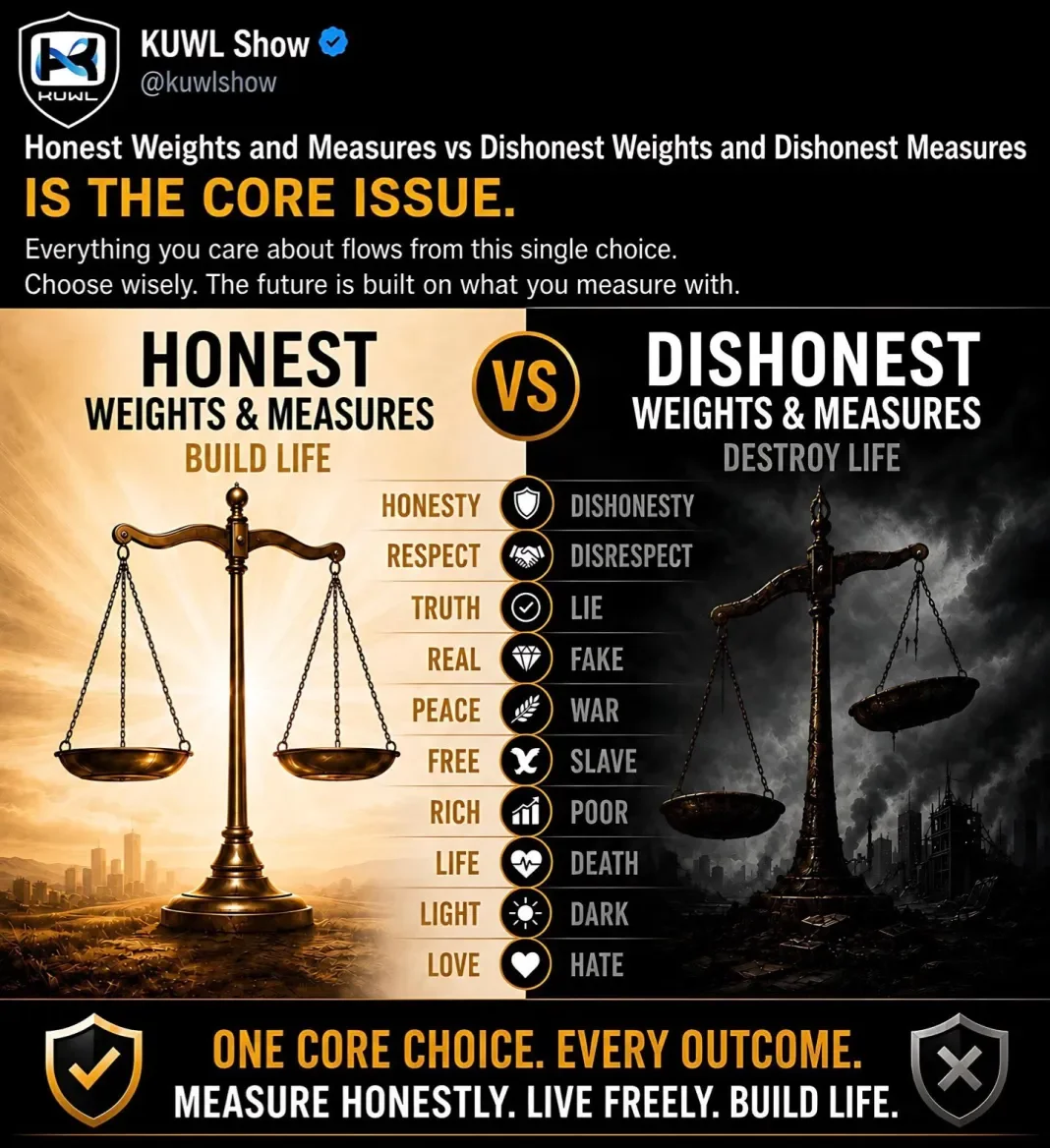
A KUWL View
My framework repeatedly argues:
The core issue is not who controls the system
The core issue is whether the system itself is trustworthy
That distinction matters
Most political discussions focus on:
Who wins?
Who governs?
Which nation dominates?
@JoelKatz has spoken in depth about a different question:
What if the protocol itself becomes the trusted intermediary?
That is very similar to:
• TCP/IP for information
• GPS for location
• Standardized weights and measures for commerce
Nobody asks: “Who owns the inch?”
Nobody asks: “Who owns gravity?”
Nobody asks: “Who owns the meter?”
The protocol itself becomes trusted.
Honest Weights & Measures
This is where my favorite theme becomes relevant.
Historically:
Dishonest weights and measures appear when:
• records can be altered
• supply can be manipulated
• rules can change arbitrarily
• transparency disappears
Trust collapses.
Conflict rises.
Economic friction rises.
The larger the system becomes, the more expensive distrust becomes.
Schwartz’s vision is essentially:
What if the world’s settlement layer operated according to transparent rules that no single nation could unilaterally manipulate?
That does not eliminate politics
It does not eliminate governments.
It does not eliminate currencies.
It simply creates a neutral layer underneath them.
Very similar to how the internet allows nations to communicate without one nation owning the protocol.
Why Smaller Nations Might Like This
This is another major point David makes
The world’s largest powers naturally want influence
Smaller nations generally want fairness
If you are:
Vietnam
Kenya
Peru
Jordan
Chile
Singapore
you likely do not want:
• China controlling settlement
• Russia controlling settlement
• America controlling settlement
• Europe controlling settlement
You want:
predictability
neutrality
equal access
That is exactly the banking analogy David Schwartz has used
The smaller banks did not want systems controlled by their biggest competitors
The same logic can apply to nations
Where XRP Fits
Schwartz is not saying XRP becomes the world’s reserve currency
People often misinterpret him
What he is describing is closer to:
National currencies remain
A neutral bridge asset facilitates movement between them
Think:
Dollars remain
Euros remain
Yen remain
Dirhams remain
Dinars remain
But settlement occurs through a neutral intermediary
That is fundamentally different than replacing sovereign currencies.
It is about connecting them.
Alignment With My Broader Geopolitical Thesis
Where my KUWL thesis and Schwartz’s thesis overlap:
Multipolar World
Both recognize: A single unchallenged reserve currency is unlikely to persist forever.
Reduced Friction
Both envision: Lower cost movement of value.
Transparency
Both emphasize: Trust increases when verification becomes easier.
Neutral Infrastructure
Both prefer: Rules over rulers.
Protocols over arbitrary discretion.
Economic Cooperation
Both suggest: Mutually trusted infrastructure can reduce conflict.
Humanity may discover that lasting peace, prosperity & cooperation emerge not when one nation controls the world’s money, but when all nations can transact through transparent, neutral & verifiable systems no single rival can dominate.
Source(s):
• https://x.com/KuwlShow/status/2067707004194353281
https://dinarchronicles.com/2026/06/19/rob-cunningham-the-pattern-of-history/
IS JULY 4TH THE BIG DAY? IRAQ DINAR, VIETNAM & FINANCIAL UPDATE
IS JULY 4TH THE BIG DAY? IRAQ DINAR, VIETNAM & FINANCIAL UPDATE
Jon Dowling & Chris Real World : 6-18-2026
The global landscape is in constant flux, with geopolitical strategies and economic trends continually reshaping our collective future.
In a recent compelling episode, the Jon Dowling podcast welcomed back insightful guest Mr. SG Anon for an expansive discussion that navigated critical developments across the Middle East, global finance, and anticipated technological advancements.
IS JULY 4TH THE BIG DAY? IRAQ DINAR, VIETNAM & FINANCIAL UPDATE
Jon Dowling & Chris Real World : 6-18-2026
The global landscape is in constant flux, with geopolitical strategies and economic trends continually reshaping our collective future.
In a recent compelling episode, the Jon Dowling podcast welcomed back insightful guest Mr. SG Anon for an expansive discussion that navigated critical developments across the Middle East, global finance, and anticipated technological advancements.
The conversation offered listeners a comprehensive overview of intertwined events shaping our world
A significant portion of the dialogue centered on Iraq’s ongoing political and economic journey. SG Anon detailed the delicate process of Iraq rebuilding its economy, highlighting the extensive efforts required for its reintegration into the global financial system.
The discussion illuminated the importance of domestic reforms, including banking sector changes and the implementation of key legislation like the hydrocarbon gas law. These steps are presented as foundational for fostering trust and stability, paving the way for broader economic participation and the potential for a significant currency revaluation, a topic of keen interest for many observing the region.
The conversation underscored how internal reforms and international diplomacy are intrinsically linked to Iraq’s path toward long-term stability and economic vitality.
The podcast also turned its attention to the broader global financial sphere, particularly the potential influence of the U.S. Federal Reserve’s monetary policies.
SG Anon explored the anticipated impacts of potential interest rate adjustments, such as pauses or eventual cuts, coupled with quantitative easing measures. The discussion suggested that such actions could lead to notable shifts in asset classes, including precious metals like gold and silver, and the evolving cryptocurrency market.
The conversation highlighted an emerging ecosystem where traditional assets increasingly interact with digital currencies, presenting a fascinating outlook on future economic landscapes and investment considerations.
The discussion broadened to encompass other regions poised for significant economic shifts, with a focus on Southeast Asia. Vietnam was specifically mentioned, given its valuable precious metal resources and growing manufacturing capabilities.
The podcast touched upon how these national attributes, combined with the geopolitical influence of major economic powers like China and India, could shape regional financial dynamics. SG Anon suggested a gradual but steady currency revaluation in Southeast Asia, influenced by these larger economic trajectories and regional developments. This segment provided context for understanding how various national economies are positioning themselves within a complex, interconnected global system.
Concluding the extensive dialogue, Jon Dowling and SG Anon reflected on concepts of future economic resilience and societal preparedness.
The conversation explored the idea of managed economic adjustments, often termed a “reset,” and the importance of infrastructural fortification to enhance national strength and adaptability.
Furthermore, the podcast touched upon the intriguing prospect of forthcoming technological developments, hinting at innovations that could align with political timelines extending toward 2026 and beyond. While specific details remained conceptual, the discussion encouraged listeners to consider how advancements across various sectors might contribute to future societal well-being and progress.