
Seeds of Wisdom RV and Economics Updates Tuesday Morning 6-2-26
Good Morning Dinar Recaps,
Globalization Transforms as Trade Wars and Geopolitical Conflicts Reshape the World Economy
The global economy is not abandoning globalization but evolving toward a new model built on resilience, security, and strategic partnerships.
Good Morning Dinar Recaps,
Globalization Transforms as Trade Wars and Geopolitical Conflicts Reshape the World Economy
The global economy is not abandoning globalization but evolving toward a new model built on resilience, security, and strategic partnerships.
June 2, 2026
Overview
For decades, globalization was driven by a simple principle: manufacture goods where costs were lowest and sell them wherever demand existed. That strategy helped expand global trade from roughly 16% of world GDP in the early 1990s to approximately 45% today.
However, ongoing geopolitical conflicts, trade disputes, sanctions, and supply chain disruptions are forcing governments and multinational corporations to rethink how they source materials, manufacture products, and manage strategic dependencies. Rather than marking the end of globalization, experts increasingly view the current shift as the emergence of a new phase of globalization centered on resilience and security.
Key Developments
1. Global Trade Continues Growing Despite Geopolitical Tensions
Contrary to predictions of widespread deglobalization, global trade remains strong. According to World Trade Organization data, total trade in goods and services reached approximately $34.65 trillion in 2025, representing a 7% increase from the previous year.
Trade growth demonstrates that countries remain deeply interconnected economically, even as political relationships become more complicated.
2. U.S.-China Competition Is Reshaping Supply Chains
The strategic rivalry between the United States and China continues to alter global commerce. Since the beginning of the U.S.-China trade conflict in 2018, tariffs, export controls, semiconductor restrictions, and investment screening measures have become permanent features of international trade.
Many multinational corporations are adopting a "China Plus One" strategy by expanding production into countries such as India, Vietnam, Indonesia, Thailand, and Mexico while maintaining a presence in China.
3. Governments Embrace 'Friendshoring' and Economic Security
A major trend emerging from current geopolitical tensions is "friendshoring"—the practice of locating production in politically aligned countries rather than simply choosing the lowest-cost destination.
Governments increasingly view economic security as equally important as efficiency, encouraging businesses to build supply chains with trusted partners to reduce geopolitical risk.
4. Russia-Ukraine War Exposed Supply Chain Vulnerabilities
Europe's heavy dependence on Russian energy prior to the war highlighted the risks associated with concentrated supply chains. The conflict forced European nations to rapidly diversify energy suppliers, expand LNG infrastructure, and reevaluate long-term economic dependencies.
The lesson learned was clear: maximum efficiency does not always equal maximum security.
5. Economic Nationalism Continues Expanding Worldwide
Governments are increasingly using industrial policies and subsidies to strengthen domestic industries. Programs such as the U.S. CHIPS and Science Act, the European Union's industrial strategy initiatives, and India's Production Linked Incentive programs reflect a growing focus on strategic self-sufficiency.
Meanwhile, trade restrictions continue to increase globally, with thousands of new tariff and regulatory measures implemented since 2020.
Why It Matters
The transformation of globalization represents one of the most significant economic shifts since the end of the Cold War. Supply chains are becoming more diversified, regionalized, and politically influenced as governments seek to balance economic growth with national security priorities.
Why It Matters to Foreign Currency Holders
Increased regionalization could strengthen the role of local and regional currencies in trade.
Trade fragmentation may accelerate efforts to reduce dependence on any single reserve currency.
Countries with strong manufacturing and resource sectors could gain strategic importance in future trade networks.
Implications for the Global Reset
Pillar 1: Realignment of Global Trade Networks
The restructuring of supply chains is creating new economic hubs and altering traditional trade routes. These shifts could influence future capital flows, currency demand, and international investment patterns.
Pillar 2: Strategic Economic Independence
Nations are increasingly prioritizing economic security, domestic production, and supply chain resilience. This trend may reshape the balance of economic power and accelerate the development of alternative trade and settlement systems.
Closing Insight
Globalization is not disappearing—it is adapting to a world increasingly shaped by geopolitical competition, national security concerns, and economic resilience. As supply chains become more diversified and politically aligned, the structure of global commerce is undergoing a profound transformation that could influence international finance for years to come.
This is not the end of globalization—it is the emergence of a new economic order where resilience matters as much as efficiency.
Seeds of Wisdom Team
Newshounds News™ Exclusive
Sources
~~~~~~~~~~
🌱A Message to Our Currency Holders🌱
If you’ve been holding foreign currency for many years, you were not foolish.
You were not wrong to believe the global financial system would change.
What failed was not your patience — it was the information you were given.
For years, dates, rumors, and personalities replaced facts, structure, and proof. “This week” predictions created cycles of hope and disappointment that were never based on how currencies actually change.
That is not your failure.
Our mission here is different: • No dates • No rates • No hype • No gurus
Instead, we focus on:
• Verifiable developments • Institutional evidence
• Global financial structure • Where countries actually sit in the process
Currency value changes only come after sovereignty, trade, banking, settlement systems, and fiscal coordination are in place. History and institutions confirm this sequence.
You will see silence. You will see denials. That is not delay — that is discipline.
Protect your identity. Organize your documents. Verify everything.
Never hand your discernment to anyone who cannot show proof.
You deserve truth — not timelines.
Seeds of Wisdom Team
Newshounds News™
~~~~~~~~~~
Seeds of Wisdom Team RV Currency Facts Youtube and Rumble
Newshound's News Telegram Room Link
RV Facts with Proof Links Link
RV Updates Proof links - Facts Link
Follow the Gold/Silver Rate COMEX
Follow Fast Facts
Seeds of Wisdom Team™Website
Thank you Dinar Recaps
How the VND Revealed The IQD Play Nobody's Talking About | Iraq Economy Update
How the VND Revealed The IQD Play Nobody's Talking About | Iraq Economy Update
Edu Matrix: 6-2-2026
In this video, Sandy Ingram explores a surprising "Plan B" strategy for IQD investors by examining how Vietnam generates billions of dollars through tourism and visa revenue while maintaining a relatively low currency value.
Vietnam expects tourism revenue to reach $45 billion in 2026 with approximately 25 million international visitors.
Could Iraq generate even greater revenue through religious tourism?
How the VND Revealed The IQD Play Nobody's Talking About | Iraq Economy Update
Edu Matrix: 6-2-2026
In this video, Sandy Ingram explores a surprising "Plan B" strategy for IQD investors by examining how Vietnam generates billions of dollars through tourism and visa revenue while maintaining a relatively low currency value.
Vietnam expects tourism revenue to reach $45 billion in 2026 with approximately 25 million international visitors.
Could Iraq generate even greater revenue through religious tourism? Iraq is home to some of the most important Christian and Islamic historical sites in the world, including Ur, the birthplace of Abraham, ancient Babylon, and locations visited by Pope Francis.
We examine the potential economic impact if only a small percentage of the world's 1.5 billion Christians and nearly 2 billion Muslims visited Iraq each year.
What would that mean for Iraq's GDP, hotel industry, infrastructure, and ultimately the Iraqi Dinar (IQD)?
This video also discusses:
✅ Iraq's tourism potential compared to Vietnam, Egypt, Jerusalem, Saudi Arabia, and the United States
✅ The growing need for hotels, Airbnb rentals, and tourism infrastructure
✅ Major international hotel chains already operating in Iraq
✅ Why Babylon remains one of the most recognized cities in the Bible
Iraq Economic News and Points To Ponder Monday Evening 6-1-26
Exchange Offices Expand In Iraq: Cash Economy Outpaces Banking Sector
2026-06-01 Shafaq News- Baghdad Exchange and money transfer offices have expanded significantly across Iraq in recent years, reflecting continued reliance by citizens and traders on non-bank financial services despite gradual improvements in financial inclusion.
According to Prime Minister’s financial adviser Mudher Mohammed Saleh, about 87% of Iraq’s money supply, roughly 95 trillion Iraqi dinars (about $72.5 billion) out of a total 109 trillion dinars (around $83.2 billion), remains outside the banking system. “The trend limits banks’ ability to channel funds into lending and investment and highlights the persistence of cash hoarding and weak integration into the formal financial sector.”
Exchange Offices Expand In Iraq: Cash Economy Outpaces Banking Sector
2026-06-01 Shafaq News- Baghdad Exchange and money transfer offices have expanded significantly across Iraq in recent years, reflecting continued reliance by citizens and traders on non-bank financial services despite gradual improvements in financial inclusion.
According to Prime Minister’s financial adviser Mudher Mohammed Saleh, about 87% of Iraq’s money supply, roughly 95 trillion Iraqi dinars (about $72.5 billion) out of a total 109 trillion dinars (around $83.2 billion), remains outside the banking system. “The trend limits banks’ ability to channel funds into lending and investment and highlights the persistence of cash hoarding and weak integration into the formal financial sector.”
Although financial inclusion indicators have improved, a large segment of Iraq’s population remains outside the banking system or uses it only occasionally. The Central Bank of Iraq said financial inclusion surpassed 40% in 2025, up from around 20% in previous years. The figure includes bank accounts, electronic wallets, and digital payment tools rather than traditional bank accounts alone.
Economic estimates nevertheless suggest that many adults either do not have active bank accounts or rarely use them, underscoring the continued dominance of cash transactions in the local economy.
Iraq’s heavy dependence on imports has also contributed to demand for exchange offices. Traders often turn to these businesses for foreign currency and international transfers because of customs-related complications and difficulties some importers face in accessing US dollars through the Central Bank’s official channels.
This dynamic has increased demand for dollars in the local market, particularly among small and medium-sized traders who struggle to access formal transfer mechanisms. Regulatory estimates indicate that Iraq has thousands of exchange offices and currency companies nationwide, compared with roughly 900 branches operated by public and private banks.
The exchange sector plays an important role in maintaining liquidity flows, but the gap between the official dollar exchange rate and the parallel market rate, ranging from 15% to 20% during periods of market stress, has encouraged transactions outside the banking system and fueled currency speculation. The sector is also estimated to support more than 50,000 direct and indirect jobs in money transfers and liquidity management.
Read more: Cash culture dominates Iraq, reform efforts stall
In an interview with Shafaq News, economic expert Dirgham Mohammed Ali said some exchange companies have begun performing functions similar to those of banks by providing loans and salary-backed financing, practices he described as falling outside their legally authorized activities.
Ali noted that the trend reflects the limited role of some banks in extending credit to economic sectors and warned that such lending carries significant risks because of high interest rates and the absence of regulatory oversight governing loan issuance and repayment mechanisms.
“Lending activities are not part of the nature of exchange companies’ work or the licenses granted to them,” he said, adding that their legal role is limited to currency exchange and foreign transfers.
Financial expert Hilal al-Taan told Shafaq News that many Iraqis prefer exchange offices because they offer faster services, simpler procedures, and longer operating hours than government banks.
He added that weak confidence in the banking sector and the economy’s heavy reliance on cash have reinforced this preference. Exchange offices, he argued, facilitate domestic and international transfers and help provide dollars for trade and imports.
On the foreign exchange market, al-Taan stressed that exchange offices influence the dollar rate indirectly through supply and demand dynamics. Increased demand for foreign currency, speculation, and the gap between official and market rates contribute to exchange-rate fluctuations, while expectations of future price increases can also encourage citizens to buy dollars.
Read more: From Cash to Cards: Iraq's shift to a cashless future
China’s Iraqi Oil Imports Crater To 60K Bpd In May 2026
2026-06-01 Shafaq News- Beijing/ Baghdad China’s imports of Iraqi crude oil fell sharply in May to 60,000 barrels per day (bpd), down from 790,000 bpd in February, Reuters reported on Monday.
Overall, China’s seaborne crude imports fell to 6.36 million bpd this month, the lowest level in nearly a decade, compared with 8.10 million bpd in April. The decline came as Chinese buyers scaled back purchases amid rising prices following escalating tensions in the Middle East, as well as supply disruptions linked to delayed shipments from several producers, including Iraq and Kuwait.
The Strait of Hormuz, a strategic waterway through which about 20% of global oil and liquefied natural gas supplies transit, has remained largely restricted since Feb. 28 after the US–Israel war on Iran, disrupting energy flows and limiting shipments across the region.
Iraq, OPEC’s second-largest oil producer, recorded no crude oil shipments to the United States last week, while its crude exports to India fell by around 84%.
https://www.shafaq.com/en/Economy/China-s-Iraqi-oil-imports-crater-to-60K-bpd-in-May-2026
Back-To-Back Ships Reach Iraq’s Umm Qasr Port
2026-06-01 Shafaq News- Basra A giant Mediterranean Shipping Company (MSC) container ship arrived at Umm Qasr port in Basra, southern Iraq, becoming the second cargo vessel to reach the facility within hours, the General Company for Iraqi Ports reported on Monday.
Farhan Al-Fartousi, Director General of the company, told Shafaq News that the vessel, which came from the Emirati city of Dubai, is set to load 96 export-bound containers, including dates, soft drinks, and spare parts destined for foreign markets.
Earlier today, Umm Qasr North Port received its first direct cargo vessel from China, carrying 29,720 tons of goods and marking the resumption of direct maritime shipments through the Strait of Hormuz.
https://www.shafaq.com/en/Economy/Back-to-back-ships-reach-Iraq-s-Umm-Qasr-port
Iraq Denies Gasoline Shortage As Supply Exceeds Demand
2026-06-01 Shafaq News- Baghdad Iraq's Oil Ministry on Monday dismissed reports of a gasoline shortage, attributing congestion at fuel stations in Baghdad and several other provinces to rising fuel consumption amid soaring temperatures.
Ministry spokesperson Abdul-Sahib Bazzoun Al-Hassnawi told Shafaq News that supplies of both regular and premium gasoline remain stable, with daily consumption standing at around 32 million liters, while domestic output exceeds that level.
Al-Hassnawi linked the increased demand to travel during and after the Eid al-Adha holiday, as well as preparations for the upcoming Eid al-Ghadir observance. He also pointed to higher temperatures, which have increased fuel use as more motorists rely on vehicle air conditioning.
“The ministry has maintained fuel supplies since the outbreak of the regional conflict to ensure the availability of petroleum products,” the official added.
Read more: Mechanics link poor gasoline quality to increase in vehicle repairs across Iraq
https://www.shafaq.com/en/Economy/Iraq-denies-gasoline-shortage-as-stocks-exceed-demand
Dollar Edges Higher In Baghdad And Erbil
2026-06-01 Shafaq News- Baghdad/ Erbil The US dollar closed Monday’s trading higher in Iraq, hovering around 154,000 dinars per 100 dollars.
According to Shafaq News market survey, the dollar traded in Baghdad's Al-Kifah and Al-Harithiya exchanges at 153,600 dinars per 100 dollars, up from the morning session’s 153,500 dinars.
In the Iraqi capital, exchange shops sold the dollar at 154,000 dinars and bought it at 153,000 dinars, while in Erbil, selling prices stood at 153,650 dinars and buying prices at 153,600 dinars.
https://www.shafaq.com/en/Economy/Dollar-edges-higher-in-Baghdad-and-Erbil-3-6
Mechanical Malfunction Hits MSC Container Ship Near Iraq’s Umm Qasr
2026-06-01 Shafaq News- Basra A large Mediterranean Shipping Company (MSC) container vessel suffered a mechanical failure in the Khor Abdullah waterway on Monday shortly after departing Umm Qasr North Port in Basra, southern Iraq, with 96 export containers onboard, a security source told Shafaq News.
Pressure buildup inside balance tank compartments 9 and 10 caused a technical explosion aboard the vessel after it left the port, with no indications of sabotage or any other external factor.
Authorities have opened an investigation to determine the circumstances of the incident and evaluate any resulting damage.
The vessel had arrived earlier today from Dubai and was due to transport Iraqi products, including dates, soft drinks, and spare parts, to international markets. The General Company for Iraqi Ports noted that it was the second major cargo ship to reach Umm Qasr within hours.
Seeds of Wisdom RV and Economics Updates Monday Evening 6-1-26
Good Evening Dinar Recaps,
Japan Accelerates Digital Finance Push with Crypto ETFs and Yen Stablecoin Initiative
Japan's latest blockchain proposals signal a strategic move toward digital assets, potentially reshaping the future of payments, investment markets, and financial infrastructure across Asia.
Good Evening Dinar Recaps,
Japan Accelerates Digital Finance Push with Crypto ETFs and Yen Stablecoin Initiative
Japan's latest blockchain proposals signal a strategic move toward digital assets, potentially reshaping the future of payments, investment markets, and financial infrastructure across Asia.
June 1, 2026
Overview
Japan's ruling Liberal Democratic Party (LDP) is advancing a series of proposals designed to expand the country's role in digital finance. The recommendations include support for yen-denominated stablecoins, cryptocurrency exchange-traded funds (ETFs), blockchain innovation, and broader digital asset adoption, positioning Japan to compete more aggressively in the evolving global financial landscape.
Key Developments
1. Lawmakers Push for Yen-Denominated Stablecoins
Members of the LDP's Parliamentary Association for the Promotion of Blockchain have recommended expanding the development and adoption of yen-backed stablecoins. The initiative aims to strengthen Japan's role in digital payments while reducing reliance on foreign currency-backed stablecoins that currently dominate the market.
2. Framework Proposed for Crypto ETFs
The recommendations include establishing a regulatory framework for cryptocurrency ETFs, providing investors with greater access to digital assets through traditional financial markets. Such a move would align Japan more closely with recent developments in the United States and other major financial centers.
3. Crypto Tax and Trading Reforms Under Consideration
Lawmakers are also seeking changes to Japan's cryptocurrency tax system and have proposed increasing leverage limits for retail crypto derivatives trading. Supporters argue these reforms would encourage innovation while helping Japan remain competitive in the digital asset sector.
4. Digital Currency Strategy Expands Beyond Crypto
The proposal addresses broader financial technologies, including central bank digital currencies (CBDCs), tokenized finance, and blockchain-based infrastructure. Japanese officials emphasized the need to avoid falling behind other nations that are rapidly advancing digital finance initiatives.
5. Japan Eyes Larger Role in the Global Stablecoin Market
The global stablecoin market exceeds $320 billion, yet yen-backed stablecoins currently represent only a tiny fraction of the sector. Expanding yen-denominated stablecoins could increase Japan's influence in cross-border payments and digital commerce throughout Asia.
Why It Matters
Japan's proposals represent more than simple cryptocurrency reform. They reflect a broader shift toward digitized financial systems, where stablecoins, blockchain networks, and tokenized assets increasingly play a role alongside traditional banking infrastructure.
Why It Matters to Foreign Currency Holders
Growth of yen-backed stablecoins could increase international demand for yen-based digital transactions.
Expansion of crypto ETFs may attract new global investment flows into Japanese markets.
Digital asset adoption could strengthen Japan's position within the emerging digital economy.
Implications for the Global Reset
Pillar 1: Evolution of Digital Money
The expansion of stablecoins and CBDC-related initiatives demonstrates how major economies are preparing for a future where digital currencies coexist with or complement traditional fiat systems.
Pillar 2: Financial Infrastructure Transformation
Japan's proposals highlight a growing global trend toward tokenized assets, blockchain-based finance, and faster cross-border payment systems, potentially reducing friction within international commerce.
Closing Insight
Japan's latest digital finance initiatives show that competition is accelerating among major economies seeking leadership in the next generation of financial technology. As stablecoins, crypto ETFs, and blockchain infrastructure gain acceptance, the foundations of global finance continue evolving toward a more digital future.
This is not just cryptocurrency adoption — it is another step toward the digitization of the global financial system.
Seeds of Wisdom Team
Newshounds News™ Exclusive
Sources
Cointelegraph — "Japan's Ruling Party Pushes Crypto ETFs, Yen-Denominated Stablecoins"
Nada News — "LDP Blockchain Group Delivers Digital Asset Recommendations to Finance Minister"
~~~~~~~~~~
Seeds of Wisdom Team RV Currency Facts Youtube and Rumble
Newshound's News Telegram Room Link
RV Facts with Proof Links Link
RV Updates Proof links - Facts Link
Follow the Gold/Silver Rate COMEX
Follow Fast Facts
Seeds of Wisdom Team™Website
Thank you Dinar Recaps
Ross: Iraq’s Focus Right Now is the Economy
Ross: Iraq’s Focus Right Now is the Economy
6-1-2026
Watch for new oil contract drops and CBI statements in the next 30-60 days.
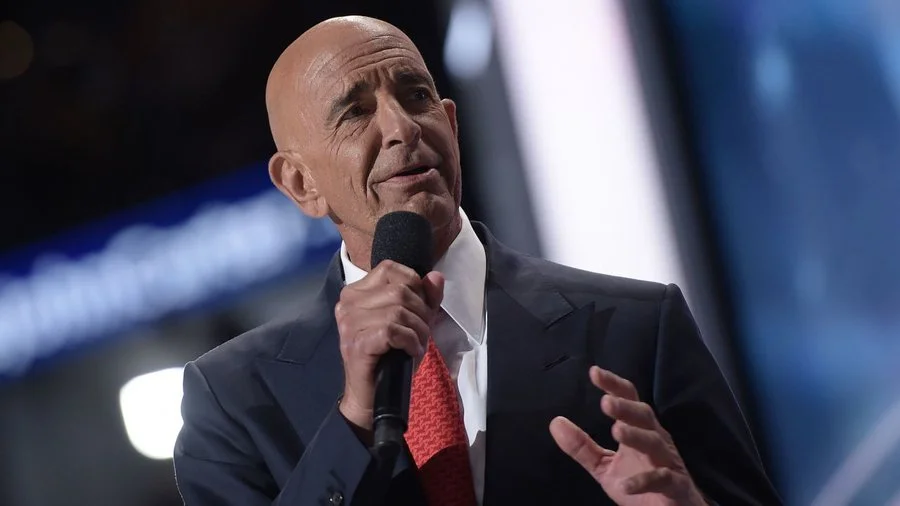
Trump just named billionaire dealmaker Tom Barrack (the closer who helped lock in Chevron’s major West Qurna Iraq oil expansion) as Special Presidential Envoy to Iraq — on top of his Ambassador to Turkey role.
This brings elite high-level US business muscle straight to oil development, investment inflows & regional reconstruction.
Ross: Iraq’s Focus Right Now is the Economy
6-1-2026
Watch for new oil contract drops and CBI statements in the next 30-60 days.
Trump just named billionaire dealmaker Tom Barrack (the closer who helped lock in Chevron’s major West Qurna Iraq oil expansion) as Special Presidential Envoy to Iraq — on top of his Ambassador to Turkey role.
This brings elite high-level US business muscle straight to oil development, investment inflows & regional reconstruction.
= faster foreign reserves, banking cleanup & real pressure to strengthen the dinar… exactly what the Iraqi President ordered the CBI to do.
The New Region:US President Donald Trump names Tom Barrack as Special Presidential Envoy to Iraq, in addition to his roles as Ambassador to Turkey and Special Presidential Envoy to Syria
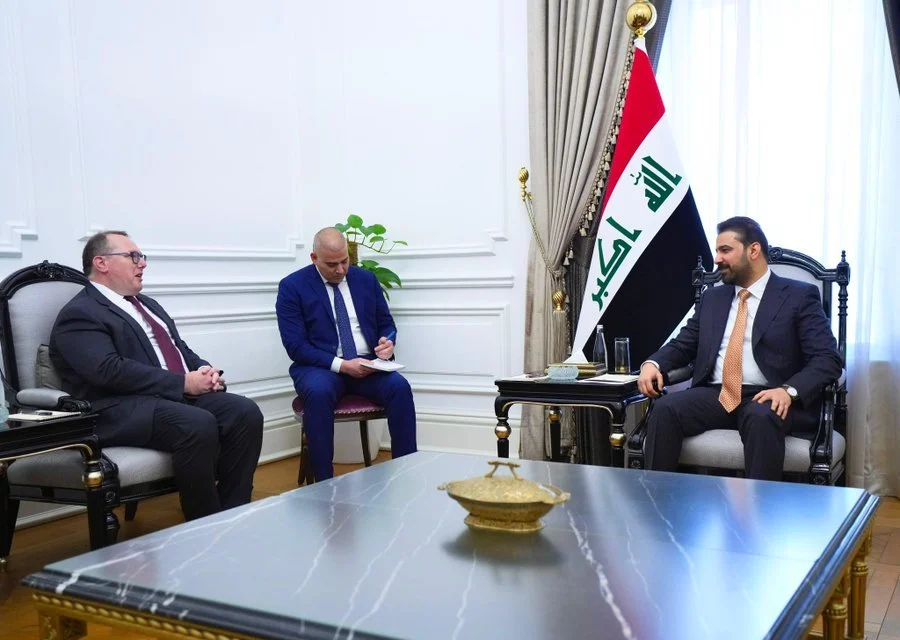
Iraq’s #1 focus right now is the economy.
“…along with ways to develop and expand relations in all fields, especially the economic, investment…”
OIL SHORTAGES - Global Oil System Is COLLAPSING as Hormuz Closure DRAINS STOCKPILES
OIL SHORTAGES - Global Oil System Is COLLAPSING as Hormuz Closure DRAINS STOCKPILES
Lena Petrova: 6-1-2026
Could the oil crisis trigger a global recession before the world runs out of oil?
This video examines collapsing global oil inventories, the closure of the Strait of Hormuz, and why energy markets may face a catastrophic circulation failure long before supplies are exhausted.
OIL SHORTAGES - Global Oil System Is COLLAPSING as Hormuz Closure DRAINS STOCKPILES
Lena Petrova: 6-1-2026
Could the oil crisis trigger a global recession before the world runs out of oil?
This video examines collapsing global oil inventories, the closure of the Strait of Hormuz, and why energy markets may face a catastrophic circulation failure long before supplies are exhausted.
Learn how shrinking inventory buffers, soaring oil prices, demand destruction, inflation, and supply chain disruptions could push the global economy into recession.
Featuring analysis from JPMorgan, UBS, Rapidan Energy Group, and the IEA on the future of energy security, oil markets, and economic stability.
Seeds of Wisdom RV and Economics Updates Monday Afternoon 6-1-26
Good Afternoon Dinar Recaps,
Iran Crisis Deepens as Airstrikes, Political Fractures, and Hormuz Threats Shake Regional Stability
Escalating military exchanges, internal turmoil in Tehran, and renewed threats against global energy routes are raising concerns about broader financial and geopolitical consequences.
Good Afternoon Dinar Recaps,
Iran Crisis Deepens as Airstrikes, Political Fractures, and Hormuz Threats Shake Regional Stability
Escalating military exchanges, internal turmoil in Tehran, and renewed threats against global energy routes are raising concerns about broader financial and geopolitical consequences.
June 1, 2026
Overview
The situation surrounding Iran intensified significantly today as the United States confirmed new military strikes against Iranian targets while Tehran reportedly suspended talks with Washington and renewed threats to block the Strait of Hormuz. At the same time, reports emerged of a senior Iranian-linked official being assassinated and growing signs of internal political instability within Iran's leadership. Together, these developments are increasing concerns about energy security, global inflation pressures, and financial market stability.
Key Developments
1. United States Launches New Airstrikes on Iranian Military Targets
The Pentagon confirmed that U.S. forces conducted airstrikes against Iranian military infrastructure after Iran allegedly shot down an American MQ-1 drone operating over international waters. According to U.S. Central Command, the strikes targeted air defense systems, drone operations, and command facilities considered threats to regional security and commercial shipping.
2. Iran Retaliates While Ceasefire Remains Fragile
Iran responded by targeting a U.S.-linked military facility in the Gulf region, with reports indicating missile and drone interceptions over Kuwait. The latest exchange occurred despite an existing ceasefire framework and demonstrates how rapidly the situation could deteriorate into a broader regional conflict.
3. Iran Suspends U.S. Talks and Threatens Strait of Hormuz Blockade
Tehran reportedly halted diplomatic discussions with Washington while warning that it could restrict traffic through the Strait of Hormuz if military pressure continues. Since roughly one-fifth of the world's seaborne oil passes through the waterway, even the threat of disruption has significant implications for global energy markets and inflation expectations.
4. Senior Iranian-Linked Official Assassinated
Reports indicate that Vahid Hakan, an official allegedly connected to Iran's state broadcaster and organizations linked to the Islamic Revolutionary Guard Corps (IRGC), was assassinated. While details remain limited, the incident adds another layer of instability to an already volatile political and security environment.
5. Internal Political Fractures Reportedly Emerging in Tehran
Reports also suggest that Iranian President Masoud Pezeshkian has sought to resign, citing reduced authority and exclusion from major policy decisions. While official confirmation remains limited, the development has fueled speculation about growing divisions within Iran's governing structure.
6. Nuclear Negotiations Face New Obstacles
Iranian officials are blaming U.S. policy changes and Israeli military actions for delays in nuclear and regional diplomacy. The suspension of talks further complicates efforts to reach agreements on sanctions relief, nuclear oversight, and regional security arrangements.
Additional Developments to Watch
Israel-Hezbollah Tensions Remain Active
Military operations involving Israel and Hezbollah continue in Lebanon, creating an additional flashpoint that could undermine broader de-escalation efforts.
Global Oil Markets Remain Highly Sensitive
Oil traders are closely monitoring developments surrounding the Strait of Hormuz, as any prolonged disruption could quickly drive higher energy prices and worsen inflation pressures worldwide.
Why It Matters
The combination of military escalation, diplomatic breakdowns, and internal political instability increases the risk of prolonged uncertainty across the Middle East. Financial markets remain highly sensitive because the region sits at the center of global energy infrastructure and trade routes.
Why It Matters to Foreign Currency Holders
Increased potential for oil-driven inflation and currency volatility
Greater demand for traditional safe-haven assets during periods of uncertainty
Continued pressure on nations dependent upon imported energy supplies
Implications for the Global Reset
Pillar 1: Energy Security and Inflation Risks
Any disruption involving the Strait of Hormuz could significantly impact global oil supplies, potentially forcing central banks to confront renewed inflation pressures at a time when debt burdens remain elevated.
Pillar 2: Geopolitical Fragmentation
The widening divide between regional powers and major global players highlights the growing importance of geopolitical alliances in shaping future financial and trade systems.
Closing Insight
Today's developments illustrate how quickly military, political, and economic risks can become interconnected. The combination of airstrikes, diplomatic setbacks, threats to global energy routes, and signs of internal instability within Iran creates a highly uncertain environment with implications far beyond the Middle East.
This is not just a regional conflict — it is a test of energy security, geopolitical stability, and the resilience of the global financial system.
Seeds of Wisdom Team
Newshounds News™ Exclusive
Sources
~~~~~~~~~~
Seeds of Wisdom Team RV Currency Facts Youtube and Rumble
Newshound's News Telegram Room Link
RV Facts with Proof Links Link
RV Updates Proof links - Facts Link
Follow the Gold/Silver Rate COMEX
Follow Fast Facts
Seeds of Wisdom Team™Website
Thank you Dinar Recaps
Iraq Economic News and Points To Ponder Monday Afternoon 6-1-26
Oil Surges Past $93 Following US-Iran Strikes
2026-06-01 Shafaq News Oil prices rose more than 2% on Monday after Iran and the U.S. traded strikes and Israel ordered troops to move further into Lebanon in the battle with the Tehran-backed Hezbollah militant group. U.S. crude futures rose $2.29 or 2.62% to $89.65 a barrel as of 0436 GMT. Brent futures rose $2.05 or 2.25% to $93.17 a barrel.
The stepped-up fighting, coming just after the U.S. hosted Israel-Lebanon peace talks in Washington on Friday, dimmed expectations that the U.S. and Iran could soon announce an extension to their ceasefire agreement, which had driven Brent and WTI to settle down 1.8% and 1.7%, respectively, on Friday.
Oil Surges Past $93 Following US-Iran Strikes
2026-06-01 Shafaq News Oil prices rose more than 2% on Monday after Iran and the U.S. traded strikes and Israel ordered troops to move further into Lebanon in the battle with the Tehran-backed Hezbollah militant group. U.S. crude futures rose $2.29 or 2.62% to $89.65 a barrel as of 0436 GMT. Brent futures rose $2.05 or 2.25% to $93.17 a barrel.
The stepped-up fighting, coming just after the U.S. hosted Israel-Lebanon peace talks in Washington on Friday, dimmed expectations that the U.S. and Iran could soon announce an extension to their ceasefire agreement, which had driven Brent and WTI to settle down 1.8% and 1.7%, respectively, on Friday.
e with Iran announced in early April, giving negotiators more time to seek a permanent end to the conflict and find a solution to the underlying dispute over Iran's nuclear programme.
Israel would be key to any such deal, and Iran has also said repeatedly that Hezbollah must be included. The U.S. has proposed a "gradual de-escalation" plan, under which Hezbollah would first stop attacks on Israel in exchange for Israel refraining from escalation in Beirut, a U.S. official said on Sunday.
Concerns are rising about mines in the Strait of Hormuz, a key oil and gas shipping lane, IG analyst Tony Sycamore said in a note. That could slow the process of reopening the strait and mean that relief comes more slowly for the oil market even after it is reopened.
"Even if an agreement is reached, it won't deliver a flood of supply," Sycamore said.
An Axios reporter said on X on Friday that Iran had dropped more mines in the strait earlier in the week, shortly after U.S. Defense Secretary Pete Hegseth said that attempts to lay more mines would be a violation of the ceasefire.
(REUTERS) https://www.shafaq.com/en/Economy/Oil-surges-past-93-following-US-Iran-strikes
ISX to pause trading for Eid Al-Ghadir holiday
2026-06-01 Shafaq News- Baghdad Trading on Iraq Stock Exchange (ISX) will be suspended next Thursday as the country observes Eid al-Ghadir* holiday, with market activity set to resume on June 7 after the break.
An official notice indicated that the exchange's decision follows a directive from the General Secretariat of the Council of Ministers, which designated June 4 as an official day off for the religious occasion.
The market operates five days a week, from Sunday through Thursday, and includes 104 listed Iraqi joint-stock companies across sectors such as banking, telecommunications, industry, agriculture, insurance, financial investment, tourism, hotels, and services.
*According to Shiite tradition, Eid al-Ghadir marks the occasion when the Prophet Muhammad appointed Imam Ali Bin Abi Taleb, regarded in Shiite Islam as the first Imam, as his successor at Ghadir Khumm.
https://www.shafaq.com/en/Economy/ISX-to-pause-trading-for-Eid-Al-Ghadir-holiday
Dollar Rises In Baghdad, Erbil Markets
2026-06-01 Shafaq News- Baghdad/ Erbil The US dollar opened Monday’s trading higher in Iraq, hovering around 154,000 dinars per 100 dollars.
According to Shafaq News market survey, the dollar traded in Baghdad's Al-Kifah and Al-Harithiya exchanges at 153,500 dinars per 100 dollars, up from the previous session’s 153,300 dinars.
In the Iraqi capital, exchange shops sold the dollar at 154,000 dinars and bought it at 153,000 dinars, while in Erbil, selling prices stood at 153,100 dinars and buying prices at 153,000 dinars.
https://www.shafaq.com/en/Economy/Dollar-rises-in-Baghdad-Erbil-markets-0
Gold Prices Fall In Baghdad And Erbil
2026-06-01 Shafaq News- Baghdad/ Erbil On Monday, gold prices declined in both Baghdad and Erbil markets, hovering around 972,000 IQD per mithqal, according to a Shafaq News market survey.
Gold prices on Baghdad's Al-Nahr Street recorded a selling price of 972,000 IQD per mithqal (equivalent to five grams) for 21-carat gold, including Gulf, Turkish, and European varieties, with a buying price of 968,000 IQD. The same gold had sold for 985,000 IQD on Sunday.
The selling price for 21-carat Iraqi gold stood at 942,000 IQD, with a buying price of 938,000 IQD.
In jewelry stores, the selling price per mithqal of 21-carat Gulf gold ranged between 975,000 and 985,000 IQD, while Iraqi gold sold for between 945,000 and 955,000 IQD.
In Erbil, 22-carat gold was sold at 1,011,000 IQD per mithqal, 21-carat gold at 965,000 IQD, and 18-carat gold at 827,000 IQD. https://www.shafaq.com/en/Economy/Gold-prices-fall-in-Baghdad-and-Erbil-6-6
Iraq’s Umm Qasr Port Welcomes First Direct Shipment From China
2026-06-01Shafaq News- Baghdad The first direct cargo vessel from China arrived at North Umm Qasr port in Basra, southern Iraq, marking the resumption of direct maritime shipments through the Strait of Hormuz, the General Company for Iraqi Ports reported on Monday.
The vessel, MV KSL XINYANG, carried industrial equipment and materials for the Iraqi oil sector, along with commercial goods. Total cargo volume reached 29,720 tons.
Farhan Al-Fartousi, Director General of the company, told Shafaq News that Iraqi ports continue to operate on regular schedules to maintain stable vessel traffic and cargo handling, noting that the vessel’s arrival reflects the ports’ capacity to sustain import flows despite recent regional disruptions.
The strategic waterway has remained largely restricted since February 28 following the US–Israel war on Iran, which disrupted energy flows and limited shipments across the region, prompting Gulf producers, including Iraq, to scale back exports. Baghdad, however, secured access to the passage after Iran granted “brotherly Iraq” an exemption from “any restrictions imposed on the Strait of Hormuz,” setting it apart from states Tehran considers hostile.
Read more: Iraq's oil lifeline blocked: Why the crisis runs deeper than Hormuz
https://www.shafaq.com/en/Economy/Iraq-s-Umm-Qasr-port-welcomes-first-direct-shipment-from-China
China’s Iraqi Oil Imports Crater To 60K Bpd In May 2026
2026-06-01 Shafaq News- Beijing/ Baghdad China’s imports of Iraqi crude oil fell sharply in May to 60,000 barrels per day (bpd), down from 790,000 bpd in February, Reuters reported on Monday.
Overall, China’s seaborne crude imports fell to 6.36 million bpd this month, the lowest level in nearly a decade, compared with 8.10 million bpd in April. The decline came as Chinese buyers scaled back purchases amid rising prices following escalating tensions in the Middle East, as well as supply disruptions linked to delayed shipments from several producers, including Iraq and Kuwait.
The Strait of Hormuz, a strategic waterway through which about 20% of global oil and liquefied natural gas supplies transit, has remained largely restricted since Feb. 28 after the US–Israel war on Iran, disrupting energy flows and limiting shipments across the region.
Iraq, OPEC’s second-largest oil producer, recorded no crude oil shipments to the United States last week, while its crude exports to India fell by around 84%.
https://www.shafaq.com/en/Economy/China-s-Iraqi-oil-imports-crater-to-60K-bpd-in-May-2026
Mechanical Malfunction Hits MSC Container Ship Near Iraq’s Umm Qasr
2026-06-01 Shafaq News- Basra A large Mediterranean Shipping Company (MSC) container vessel suffered a mechanical failure in the Khor Abdullah waterway on Monday shortly after departing Umm Qasr North Port in Basra, southern Iraq, with 96 export containers onboard, a security source told Shafaq News.
Pressure buildup inside balance tank compartments 9 and 10 caused a technical explosion aboard the vessel after it left the port, with no indications of sabotage or any other external factor.
News, Rumors and Opinions 6-1-2026
KTFA:
Clare: The House of Representatives will enter a legislative recess tomorrow, and the completion of the cabinet is between two options.
5/31/2026
The House of Representatives will enter a month-long legislative recess tomorrow, Monday, at a time when efforts to complete the vacant cabinet are still stuck between two options, amid political anticipation of what the consultations will lead to in the coming days before the parliamentary entitlement enters the legislative stoppage phase.
KTFA:
Clare: The House of Representatives will enter a legislative recess tomorrow, and the completion of the cabinet is between two options.
5/31/2026
The House of Representatives will enter a month-long legislative recess tomorrow, Monday, at a time when efforts to complete the vacant cabinet are still stuck between two options, amid political anticipation of what the consultations will lead to in the coming days before the parliamentary entitlement enters the legislative stoppage phase.
The head of the parliamentary Design Alliance bloc and leader of the Coordination Framework, Amer Al-Fayez, told Al-Furat News Agency: “There is a governmental determination to complete the government formation and select ministers for the vacant ministries in the coming days; however, the names of the candidates have not yet arrived.”
He added that "the House of Representatives will enter a one-month legislative recess on June 1st, which is tomorrow, Monday."
The winner pointed out that "if the names are complete, the Speaker of the House of Representatives can call for an extraordinary session to be held if the legal quorum is met, in order to vote on the candidates, while the decision will be postponed until after the end of the legislative holiday if the quorum is not met."
Raghid LINK
Clare: ''The gap is widening"... Why do Iraqis prefer money exchange over banks?
5/31/2026
Money exchange and transfer offices in Iraq have witnessed a remarkable expansion in recent years, as a wide segment of citizens and merchants continue to rely on them to carry out their daily financial transactions, in contrast to a relative decline in reliance on government banks for a number of financial services.
According to experts, this expansion reflects a continuing gap between the citizen and the official banking system, related to the speed of completing transactions and ease of access to services, compared to traditional banking procedures that are still characterized by bureaucracy, overcrowding and a long completion time in some cases.
Reliance on criticism continues
In this context, the Prime Minister’s financial advisor, Mazhar Muhammad Saleh, said that “about 87% of the Iraqi money supply, equivalent to about 95 trillion dinars out of 109 trillion dinars, is still outside the banking system, which limits the banking sector’s ability to employ funds in credit and investment, and reflects the continued phenomenon of cash hoarding and the weak integration of funds into the official banking cycle.”
Despite improvements in financial inclusion indicators in Iraq, a large segment of citizens remains outside the banking system or does not rely on it regularly in their daily transactions.
The Central Bank of Iraq had announced that the rate of financial inclusion would rise to more than 40% during 2025, after it had been around 20% in previous years. This is an indicator that includes bank accounts, electronic wallets and digital payment tools, and not just traditional bank accounts.
However, economic estimates indicate that a large proportion of adults do not have active bank accounts or do not use them regularly, reflecting the continued widespread reliance on cash in the local market.
The country also relies heavily on imports to meet the market's needs for goods, at a time when the complexities associated with customs clearance procedures, as well as the inability of some traders to obtain dollars through the central bank's window, are pushing them to rely on exchange offices to secure foreign currency and make external transfers.
The currency market: between need and speculation
According to experts, this reality contributes to an increased demand for dollars in the local market, especially from small and medium-sized traders who face difficulties in accessing official channels for financial transfers.
Meanwhile, regulatory estimates suggest there are thousands of exchange offices and companies throughout the country, compared to about 900 branches of government and private banks, reflecting the expansion of the non-banking network compared to the official banking structure.
The banking sector plays an important role in facilitating the movement of liquidity within the market, but the gap between the official dollar exchange rate and the parallel market rate, which ranges between 15% and 20% during periods of crisis, has contributed to stimulating transactions outside banking channels and increasing currency speculation activity.
It is also estimated that this sector provides more than 50,000 direct and indirect job opportunities in the areas of remittances and liquidity management.
Economic Vision
For his part, economist Dirgham Muhammad Ali told Shafaq News Agency that "some money exchange companies have begun to engage in activities similar to those of banks by granting loans and credits secured by salaries, in practices he described as being outside the legal framework of the powers granted to them."
He pointed out that "this activity is linked to the limited role of some banks in providing credit to economic sectors," explaining that "these operations are considered high-risk in light of high interest rates and the absence of regulatory oversight of loan granting mechanisms and installment collection, which may lead to increased financial burdens on borrowers."
Ali continued, saying that "lending activity is not within the nature of the work of exchange companies or the licenses granted to them, which are limited to banking and foreign transfer operations, which makes these practices outside the scope of legally licensed activity."
For his part, financial expert Hilal Al-Taan, speaking to Shafaq News Agency, said that “a wide segment of citizens in Iraq prefer to deal with exchange offices because of the speed of completing transactions and the ease of procedures compared to government banks, in addition to the flexibility of working hours, which in some cases extend to late hours and holidays.”
He explained that “weak confidence in the banking sector, along with the widespread reliance on cash in the Iraqi economy, contributed to strengthening this trend,” noting that “exchange offices contribute to facilitating internal and external transfers and providing dollars for trade and imports.”
Regarding the exchange market, Al-Taan pointed out that "exchange offices indirectly affect the price of the dollar through supply and demand mechanisms, as the high demand for foreign currency, along with speculation and the difference between the official price and the market price, contribute to fluctuations in the exchange rate, in addition to psychological factors that drive some citizens to buy dollars when they expect its prices to rise."
Domestically, this situation limits the effectiveness of the central bank’s monetary policy tools in controlling the market and stabilizing the exchange rate, which indirectly affects price levels and investment activities, especially in light of economic fluctuations and market instability.
According to experts, the numerical expansion of exchange offices does not necessarily represent an indicator of economic health, but rather reflects the continued gap between the citizen and the banking institution.
Experts believe that the solution does not lie solely in security or regulatory measures that may increase market confusion, but rather in rebuilding trust between citizens and banks by simplifying procedures, developing digital services, expanding the use of electronic payment methods, as well as regulating the work of exchange offices and gradually integrating them into a more stable and transparent financial system, in a way that protects citizens’ savings and enhances the stability of the financial market. LINK
Courtesy of Dinar Guru: https://www.dinarguru.com/
Jeff If the budget wasn't dependent on the rate change, they could have already submitted it. But because it's a law and all aspects of that law must exist, such as the currency value it's calculated off of, if the currency value does not exist, they can't send it to parliament for approval.
Frank26 What I find to be the trigger, the lynch pin to all of this is the HCL...The HCL definitely has to have a new rate. They would have used 1300 or any sanctioned rate inside the last 20 years by now...But they never did...Because they are talking about it on a daily basis,...going to pass many of the laws of the HCL,...have not used any sanctioned rates...we're going to see a new rate.
Milita Man The CBI explicitly stated they're preparing the banking sector for deeper integration into the global financial system...This is one of the strongest signals we've seen...The technical foundation for a credible Real Effective Exchange Rate (REER) is being strengthened right now after years of quiet preparation. The banking sector is moving into execution phase. This is genuinely very uplifting for me. It shows the CBI is not waiting. They are acutely building the infrastructure needed for the next step. I can't wait.
************
"If You Own GOLD or SILVER, You Need to See This NOW!" - Alasdair Macleod
Plain Finance Reborn: 5-31-2026
Alasdair Macleod says that China is losing control of its Silver Price fixing. They can't control it anymore because India is going through an Industrial revolution just like when China did 25 years ago.
Alasdair also said that it's happening throughout Asia. Asians are hanging onto the silver scrap and all the rest of it.
And he predicts a Silver Squeeze in 2026 because the demand is rising while supply can't catch up, and eventually the price will balance between supply and demand.