
Seeds of Wisdom RV and Economics Updates Monday Evening 6-1-26
Good Evening Dinar Recaps,
Japan Accelerates Digital Finance Push with Crypto ETFs and Yen Stablecoin Initiative
Japan's latest blockchain proposals signal a strategic move toward digital assets, potentially reshaping the future of payments, investment markets, and financial infrastructure across Asia.
Good Evening Dinar Recaps,
Japan Accelerates Digital Finance Push with Crypto ETFs and Yen Stablecoin Initiative
Japan's latest blockchain proposals signal a strategic move toward digital assets, potentially reshaping the future of payments, investment markets, and financial infrastructure across Asia.
June 1, 2026
Overview
Japan's ruling Liberal Democratic Party (LDP) is advancing a series of proposals designed to expand the country's role in digital finance. The recommendations include support for yen-denominated stablecoins, cryptocurrency exchange-traded funds (ETFs), blockchain innovation, and broader digital asset adoption, positioning Japan to compete more aggressively in the evolving global financial landscape.
Key Developments
1. Lawmakers Push for Yen-Denominated Stablecoins
Members of the LDP's Parliamentary Association for the Promotion of Blockchain have recommended expanding the development and adoption of yen-backed stablecoins. The initiative aims to strengthen Japan's role in digital payments while reducing reliance on foreign currency-backed stablecoins that currently dominate the market.
2. Framework Proposed for Crypto ETFs
The recommendations include establishing a regulatory framework for cryptocurrency ETFs, providing investors with greater access to digital assets through traditional financial markets. Such a move would align Japan more closely with recent developments in the United States and other major financial centers.
3. Crypto Tax and Trading Reforms Under Consideration
Lawmakers are also seeking changes to Japan's cryptocurrency tax system and have proposed increasing leverage limits for retail crypto derivatives trading. Supporters argue these reforms would encourage innovation while helping Japan remain competitive in the digital asset sector.
4. Digital Currency Strategy Expands Beyond Crypto
The proposal addresses broader financial technologies, including central bank digital currencies (CBDCs), tokenized finance, and blockchain-based infrastructure. Japanese officials emphasized the need to avoid falling behind other nations that are rapidly advancing digital finance initiatives.
5. Japan Eyes Larger Role in the Global Stablecoin Market
The global stablecoin market exceeds $320 billion, yet yen-backed stablecoins currently represent only a tiny fraction of the sector. Expanding yen-denominated stablecoins could increase Japan's influence in cross-border payments and digital commerce throughout Asia.
Why It Matters
Japan's proposals represent more than simple cryptocurrency reform. They reflect a broader shift toward digitized financial systems, where stablecoins, blockchain networks, and tokenized assets increasingly play a role alongside traditional banking infrastructure.
Why It Matters to Foreign Currency Holders
Growth of yen-backed stablecoins could increase international demand for yen-based digital transactions.
Expansion of crypto ETFs may attract new global investment flows into Japanese markets.
Digital asset adoption could strengthen Japan's position within the emerging digital economy.
Implications for the Global Reset
Pillar 1: Evolution of Digital Money
The expansion of stablecoins and CBDC-related initiatives demonstrates how major economies are preparing for a future where digital currencies coexist with or complement traditional fiat systems.
Pillar 2: Financial Infrastructure Transformation
Japan's proposals highlight a growing global trend toward tokenized assets, blockchain-based finance, and faster cross-border payment systems, potentially reducing friction within international commerce.
Closing Insight
Japan's latest digital finance initiatives show that competition is accelerating among major economies seeking leadership in the next generation of financial technology. As stablecoins, crypto ETFs, and blockchain infrastructure gain acceptance, the foundations of global finance continue evolving toward a more digital future.
This is not just cryptocurrency adoption — it is another step toward the digitization of the global financial system.
Seeds of Wisdom Team
Newshounds News™ Exclusive
Sources
Cointelegraph — "Japan's Ruling Party Pushes Crypto ETFs, Yen-Denominated Stablecoins"
Nada News — "LDP Blockchain Group Delivers Digital Asset Recommendations to Finance Minister"
~~~~~~~~~~
Seeds of Wisdom Team RV Currency Facts Youtube and Rumble
Newshound's News Telegram Room Link
RV Facts with Proof Links Link
RV Updates Proof links - Facts Link
Follow the Gold/Silver Rate COMEX
Follow Fast Facts
Seeds of Wisdom Team™Website
Thank you Dinar Recaps
Ross: Iraq’s Focus Right Now is the Economy
Ross: Iraq’s Focus Right Now is the Economy
6-1-2026
Watch for new oil contract drops and CBI statements in the next 30-60 days.
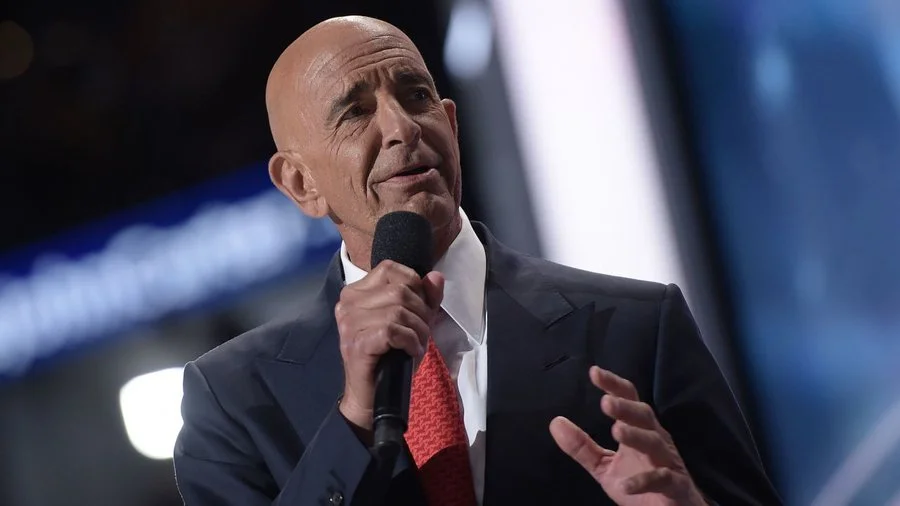
Trump just named billionaire dealmaker Tom Barrack (the closer who helped lock in Chevron’s major West Qurna Iraq oil expansion) as Special Presidential Envoy to Iraq — on top of his Ambassador to Turkey role.
This brings elite high-level US business muscle straight to oil development, investment inflows & regional reconstruction.
Ross: Iraq’s Focus Right Now is the Economy
6-1-2026
Watch for new oil contract drops and CBI statements in the next 30-60 days.
Trump just named billionaire dealmaker Tom Barrack (the closer who helped lock in Chevron’s major West Qurna Iraq oil expansion) as Special Presidential Envoy to Iraq — on top of his Ambassador to Turkey role.
This brings elite high-level US business muscle straight to oil development, investment inflows & regional reconstruction.
= faster foreign reserves, banking cleanup & real pressure to strengthen the dinar… exactly what the Iraqi President ordered the CBI to do.
The New Region:US President Donald Trump names Tom Barrack as Special Presidential Envoy to Iraq, in addition to his roles as Ambassador to Turkey and Special Presidential Envoy to Syria
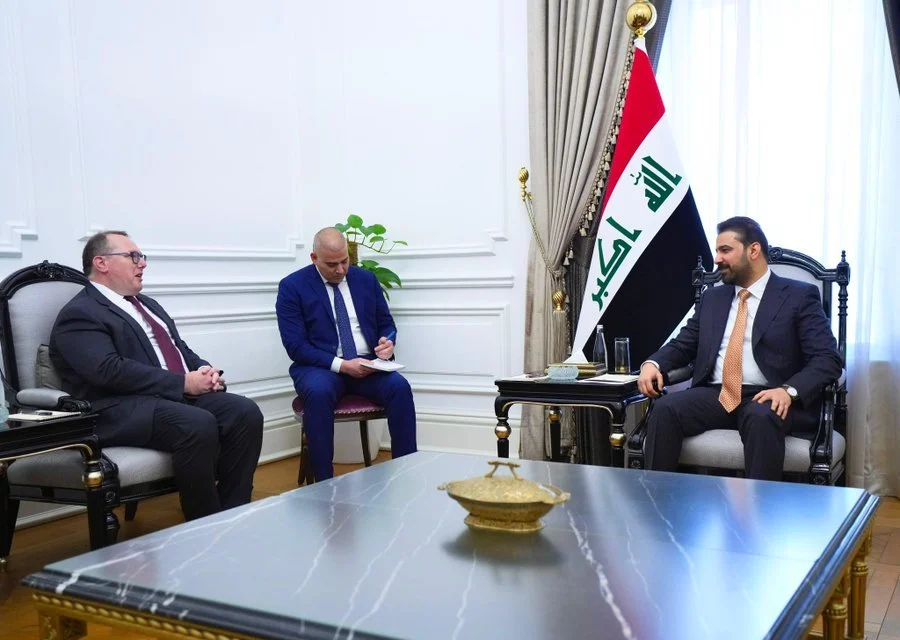
Iraq’s #1 focus right now is the economy.
“…along with ways to develop and expand relations in all fields, especially the economic, investment…”
OIL SHORTAGES - Global Oil System Is COLLAPSING as Hormuz Closure DRAINS STOCKPILES
OIL SHORTAGES - Global Oil System Is COLLAPSING as Hormuz Closure DRAINS STOCKPILES
Lena Petrova: 6-1-2026
Could the oil crisis trigger a global recession before the world runs out of oil?
This video examines collapsing global oil inventories, the closure of the Strait of Hormuz, and why energy markets may face a catastrophic circulation failure long before supplies are exhausted.
OIL SHORTAGES - Global Oil System Is COLLAPSING as Hormuz Closure DRAINS STOCKPILES
Lena Petrova: 6-1-2026
Could the oil crisis trigger a global recession before the world runs out of oil?
This video examines collapsing global oil inventories, the closure of the Strait of Hormuz, and why energy markets may face a catastrophic circulation failure long before supplies are exhausted.
Learn how shrinking inventory buffers, soaring oil prices, demand destruction, inflation, and supply chain disruptions could push the global economy into recession.
Featuring analysis from JPMorgan, UBS, Rapidan Energy Group, and the IEA on the future of energy security, oil markets, and economic stability.
Seeds of Wisdom RV and Economics Updates Monday Afternoon 6-1-26
Good Afternoon Dinar Recaps,
Iran Crisis Deepens as Airstrikes, Political Fractures, and Hormuz Threats Shake Regional Stability
Escalating military exchanges, internal turmoil in Tehran, and renewed threats against global energy routes are raising concerns about broader financial and geopolitical consequences.
Good Afternoon Dinar Recaps,
Iran Crisis Deepens as Airstrikes, Political Fractures, and Hormuz Threats Shake Regional Stability
Escalating military exchanges, internal turmoil in Tehran, and renewed threats against global energy routes are raising concerns about broader financial and geopolitical consequences.
June 1, 2026
Overview
The situation surrounding Iran intensified significantly today as the United States confirmed new military strikes against Iranian targets while Tehran reportedly suspended talks with Washington and renewed threats to block the Strait of Hormuz. At the same time, reports emerged of a senior Iranian-linked official being assassinated and growing signs of internal political instability within Iran's leadership. Together, these developments are increasing concerns about energy security, global inflation pressures, and financial market stability.
Key Developments
1. United States Launches New Airstrikes on Iranian Military Targets
The Pentagon confirmed that U.S. forces conducted airstrikes against Iranian military infrastructure after Iran allegedly shot down an American MQ-1 drone operating over international waters. According to U.S. Central Command, the strikes targeted air defense systems, drone operations, and command facilities considered threats to regional security and commercial shipping.
2. Iran Retaliates While Ceasefire Remains Fragile
Iran responded by targeting a U.S.-linked military facility in the Gulf region, with reports indicating missile and drone interceptions over Kuwait. The latest exchange occurred despite an existing ceasefire framework and demonstrates how rapidly the situation could deteriorate into a broader regional conflict.
3. Iran Suspends U.S. Talks and Threatens Strait of Hormuz Blockade
Tehran reportedly halted diplomatic discussions with Washington while warning that it could restrict traffic through the Strait of Hormuz if military pressure continues. Since roughly one-fifth of the world's seaborne oil passes through the waterway, even the threat of disruption has significant implications for global energy markets and inflation expectations.
4. Senior Iranian-Linked Official Assassinated
Reports indicate that Vahid Hakan, an official allegedly connected to Iran's state broadcaster and organizations linked to the Islamic Revolutionary Guard Corps (IRGC), was assassinated. While details remain limited, the incident adds another layer of instability to an already volatile political and security environment.
5. Internal Political Fractures Reportedly Emerging in Tehran
Reports also suggest that Iranian President Masoud Pezeshkian has sought to resign, citing reduced authority and exclusion from major policy decisions. While official confirmation remains limited, the development has fueled speculation about growing divisions within Iran's governing structure.
6. Nuclear Negotiations Face New Obstacles
Iranian officials are blaming U.S. policy changes and Israeli military actions for delays in nuclear and regional diplomacy. The suspension of talks further complicates efforts to reach agreements on sanctions relief, nuclear oversight, and regional security arrangements.
Additional Developments to Watch
Israel-Hezbollah Tensions Remain Active
Military operations involving Israel and Hezbollah continue in Lebanon, creating an additional flashpoint that could undermine broader de-escalation efforts.
Global Oil Markets Remain Highly Sensitive
Oil traders are closely monitoring developments surrounding the Strait of Hormuz, as any prolonged disruption could quickly drive higher energy prices and worsen inflation pressures worldwide.
Why It Matters
The combination of military escalation, diplomatic breakdowns, and internal political instability increases the risk of prolonged uncertainty across the Middle East. Financial markets remain highly sensitive because the region sits at the center of global energy infrastructure and trade routes.
Why It Matters to Foreign Currency Holders
Increased potential for oil-driven inflation and currency volatility
Greater demand for traditional safe-haven assets during periods of uncertainty
Continued pressure on nations dependent upon imported energy supplies
Implications for the Global Reset
Pillar 1: Energy Security and Inflation Risks
Any disruption involving the Strait of Hormuz could significantly impact global oil supplies, potentially forcing central banks to confront renewed inflation pressures at a time when debt burdens remain elevated.
Pillar 2: Geopolitical Fragmentation
The widening divide between regional powers and major global players highlights the growing importance of geopolitical alliances in shaping future financial and trade systems.
Closing Insight
Today's developments illustrate how quickly military, political, and economic risks can become interconnected. The combination of airstrikes, diplomatic setbacks, threats to global energy routes, and signs of internal instability within Iran creates a highly uncertain environment with implications far beyond the Middle East.
This is not just a regional conflict — it is a test of energy security, geopolitical stability, and the resilience of the global financial system.
Seeds of Wisdom Team
Newshounds News™ Exclusive
Sources
~~~~~~~~~~
Seeds of Wisdom Team RV Currency Facts Youtube and Rumble
Newshound's News Telegram Room Link
RV Facts with Proof Links Link
RV Updates Proof links - Facts Link
Follow the Gold/Silver Rate COMEX
Follow Fast Facts
Seeds of Wisdom Team™Website
Thank you Dinar Recaps
Iraq Economic News and Points To Ponder Monday Afternoon 6-1-26
Oil Surges Past $93 Following US-Iran Strikes
2026-06-01 Shafaq News Oil prices rose more than 2% on Monday after Iran and the U.S. traded strikes and Israel ordered troops to move further into Lebanon in the battle with the Tehran-backed Hezbollah militant group. U.S. crude futures rose $2.29 or 2.62% to $89.65 a barrel as of 0436 GMT. Brent futures rose $2.05 or 2.25% to $93.17 a barrel.
The stepped-up fighting, coming just after the U.S. hosted Israel-Lebanon peace talks in Washington on Friday, dimmed expectations that the U.S. and Iran could soon announce an extension to their ceasefire agreement, which had driven Brent and WTI to settle down 1.8% and 1.7%, respectively, on Friday.
Oil Surges Past $93 Following US-Iran Strikes
2026-06-01 Shafaq News Oil prices rose more than 2% on Monday after Iran and the U.S. traded strikes and Israel ordered troops to move further into Lebanon in the battle with the Tehran-backed Hezbollah militant group. U.S. crude futures rose $2.29 or 2.62% to $89.65 a barrel as of 0436 GMT. Brent futures rose $2.05 or 2.25% to $93.17 a barrel.
The stepped-up fighting, coming just after the U.S. hosted Israel-Lebanon peace talks in Washington on Friday, dimmed expectations that the U.S. and Iran could soon announce an extension to their ceasefire agreement, which had driven Brent and WTI to settle down 1.8% and 1.7%, respectively, on Friday.
e with Iran announced in early April, giving negotiators more time to seek a permanent end to the conflict and find a solution to the underlying dispute over Iran's nuclear programme.
Israel would be key to any such deal, and Iran has also said repeatedly that Hezbollah must be included. The U.S. has proposed a "gradual de-escalation" plan, under which Hezbollah would first stop attacks on Israel in exchange for Israel refraining from escalation in Beirut, a U.S. official said on Sunday.
Concerns are rising about mines in the Strait of Hormuz, a key oil and gas shipping lane, IG analyst Tony Sycamore said in a note. That could slow the process of reopening the strait and mean that relief comes more slowly for the oil market even after it is reopened.
"Even if an agreement is reached, it won't deliver a flood of supply," Sycamore said.
An Axios reporter said on X on Friday that Iran had dropped more mines in the strait earlier in the week, shortly after U.S. Defense Secretary Pete Hegseth said that attempts to lay more mines would be a violation of the ceasefire.
(REUTERS) https://www.shafaq.com/en/Economy/Oil-surges-past-93-following-US-Iran-strikes
ISX to pause trading for Eid Al-Ghadir holiday
2026-06-01 Shafaq News- Baghdad Trading on Iraq Stock Exchange (ISX) will be suspended next Thursday as the country observes Eid al-Ghadir* holiday, with market activity set to resume on June 7 after the break.
An official notice indicated that the exchange's decision follows a directive from the General Secretariat of the Council of Ministers, which designated June 4 as an official day off for the religious occasion.
The market operates five days a week, from Sunday through Thursday, and includes 104 listed Iraqi joint-stock companies across sectors such as banking, telecommunications, industry, agriculture, insurance, financial investment, tourism, hotels, and services.
*According to Shiite tradition, Eid al-Ghadir marks the occasion when the Prophet Muhammad appointed Imam Ali Bin Abi Taleb, regarded in Shiite Islam as the first Imam, as his successor at Ghadir Khumm.
https://www.shafaq.com/en/Economy/ISX-to-pause-trading-for-Eid-Al-Ghadir-holiday
Dollar Rises In Baghdad, Erbil Markets
2026-06-01 Shafaq News- Baghdad/ Erbil The US dollar opened Monday’s trading higher in Iraq, hovering around 154,000 dinars per 100 dollars.
According to Shafaq News market survey, the dollar traded in Baghdad's Al-Kifah and Al-Harithiya exchanges at 153,500 dinars per 100 dollars, up from the previous session’s 153,300 dinars.
In the Iraqi capital, exchange shops sold the dollar at 154,000 dinars and bought it at 153,000 dinars, while in Erbil, selling prices stood at 153,100 dinars and buying prices at 153,000 dinars.
https://www.shafaq.com/en/Economy/Dollar-rises-in-Baghdad-Erbil-markets-0
Gold Prices Fall In Baghdad And Erbil
2026-06-01 Shafaq News- Baghdad/ Erbil On Monday, gold prices declined in both Baghdad and Erbil markets, hovering around 972,000 IQD per mithqal, according to a Shafaq News market survey.
Gold prices on Baghdad's Al-Nahr Street recorded a selling price of 972,000 IQD per mithqal (equivalent to five grams) for 21-carat gold, including Gulf, Turkish, and European varieties, with a buying price of 968,000 IQD. The same gold had sold for 985,000 IQD on Sunday.
The selling price for 21-carat Iraqi gold stood at 942,000 IQD, with a buying price of 938,000 IQD.
In jewelry stores, the selling price per mithqal of 21-carat Gulf gold ranged between 975,000 and 985,000 IQD, while Iraqi gold sold for between 945,000 and 955,000 IQD.
In Erbil, 22-carat gold was sold at 1,011,000 IQD per mithqal, 21-carat gold at 965,000 IQD, and 18-carat gold at 827,000 IQD. https://www.shafaq.com/en/Economy/Gold-prices-fall-in-Baghdad-and-Erbil-6-6
Iraq’s Umm Qasr Port Welcomes First Direct Shipment From China
2026-06-01Shafaq News- Baghdad The first direct cargo vessel from China arrived at North Umm Qasr port in Basra, southern Iraq, marking the resumption of direct maritime shipments through the Strait of Hormuz, the General Company for Iraqi Ports reported on Monday.
The vessel, MV KSL XINYANG, carried industrial equipment and materials for the Iraqi oil sector, along with commercial goods. Total cargo volume reached 29,720 tons.
Farhan Al-Fartousi, Director General of the company, told Shafaq News that Iraqi ports continue to operate on regular schedules to maintain stable vessel traffic and cargo handling, noting that the vessel’s arrival reflects the ports’ capacity to sustain import flows despite recent regional disruptions.
The strategic waterway has remained largely restricted since February 28 following the US–Israel war on Iran, which disrupted energy flows and limited shipments across the region, prompting Gulf producers, including Iraq, to scale back exports. Baghdad, however, secured access to the passage after Iran granted “brotherly Iraq” an exemption from “any restrictions imposed on the Strait of Hormuz,” setting it apart from states Tehran considers hostile.
Read more: Iraq's oil lifeline blocked: Why the crisis runs deeper than Hormuz
https://www.shafaq.com/en/Economy/Iraq-s-Umm-Qasr-port-welcomes-first-direct-shipment-from-China
China’s Iraqi Oil Imports Crater To 60K Bpd In May 2026
2026-06-01 Shafaq News- Beijing/ Baghdad China’s imports of Iraqi crude oil fell sharply in May to 60,000 barrels per day (bpd), down from 790,000 bpd in February, Reuters reported on Monday.
Overall, China’s seaborne crude imports fell to 6.36 million bpd this month, the lowest level in nearly a decade, compared with 8.10 million bpd in April. The decline came as Chinese buyers scaled back purchases amid rising prices following escalating tensions in the Middle East, as well as supply disruptions linked to delayed shipments from several producers, including Iraq and Kuwait.
The Strait of Hormuz, a strategic waterway through which about 20% of global oil and liquefied natural gas supplies transit, has remained largely restricted since Feb. 28 after the US–Israel war on Iran, disrupting energy flows and limiting shipments across the region.
Iraq, OPEC’s second-largest oil producer, recorded no crude oil shipments to the United States last week, while its crude exports to India fell by around 84%.
https://www.shafaq.com/en/Economy/China-s-Iraqi-oil-imports-crater-to-60K-bpd-in-May-2026
Mechanical Malfunction Hits MSC Container Ship Near Iraq’s Umm Qasr
2026-06-01 Shafaq News- Basra A large Mediterranean Shipping Company (MSC) container vessel suffered a mechanical failure in the Khor Abdullah waterway on Monday shortly after departing Umm Qasr North Port in Basra, southern Iraq, with 96 export containers onboard, a security source told Shafaq News.
Pressure buildup inside balance tank compartments 9 and 10 caused a technical explosion aboard the vessel after it left the port, with no indications of sabotage or any other external factor.
News, Rumors and Opinions 6-1-2026
KTFA:
Clare: The House of Representatives will enter a legislative recess tomorrow, and the completion of the cabinet is between two options.
5/31/2026
The House of Representatives will enter a month-long legislative recess tomorrow, Monday, at a time when efforts to complete the vacant cabinet are still stuck between two options, amid political anticipation of what the consultations will lead to in the coming days before the parliamentary entitlement enters the legislative stoppage phase.
KTFA:
Clare: The House of Representatives will enter a legislative recess tomorrow, and the completion of the cabinet is between two options.
5/31/2026
The House of Representatives will enter a month-long legislative recess tomorrow, Monday, at a time when efforts to complete the vacant cabinet are still stuck between two options, amid political anticipation of what the consultations will lead to in the coming days before the parliamentary entitlement enters the legislative stoppage phase.
The head of the parliamentary Design Alliance bloc and leader of the Coordination Framework, Amer Al-Fayez, told Al-Furat News Agency: “There is a governmental determination to complete the government formation and select ministers for the vacant ministries in the coming days; however, the names of the candidates have not yet arrived.”
He added that "the House of Representatives will enter a one-month legislative recess on June 1st, which is tomorrow, Monday."
The winner pointed out that "if the names are complete, the Speaker of the House of Representatives can call for an extraordinary session to be held if the legal quorum is met, in order to vote on the candidates, while the decision will be postponed until after the end of the legislative holiday if the quorum is not met."
Raghid LINK
Clare: ''The gap is widening"... Why do Iraqis prefer money exchange over banks?
5/31/2026
Money exchange and transfer offices in Iraq have witnessed a remarkable expansion in recent years, as a wide segment of citizens and merchants continue to rely on them to carry out their daily financial transactions, in contrast to a relative decline in reliance on government banks for a number of financial services.
According to experts, this expansion reflects a continuing gap between the citizen and the official banking system, related to the speed of completing transactions and ease of access to services, compared to traditional banking procedures that are still characterized by bureaucracy, overcrowding and a long completion time in some cases.
Reliance on criticism continues
In this context, the Prime Minister’s financial advisor, Mazhar Muhammad Saleh, said that “about 87% of the Iraqi money supply, equivalent to about 95 trillion dinars out of 109 trillion dinars, is still outside the banking system, which limits the banking sector’s ability to employ funds in credit and investment, and reflects the continued phenomenon of cash hoarding and the weak integration of funds into the official banking cycle.”
Despite improvements in financial inclusion indicators in Iraq, a large segment of citizens remains outside the banking system or does not rely on it regularly in their daily transactions.
The Central Bank of Iraq had announced that the rate of financial inclusion would rise to more than 40% during 2025, after it had been around 20% in previous years. This is an indicator that includes bank accounts, electronic wallets and digital payment tools, and not just traditional bank accounts.
However, economic estimates indicate that a large proportion of adults do not have active bank accounts or do not use them regularly, reflecting the continued widespread reliance on cash in the local market.
The country also relies heavily on imports to meet the market's needs for goods, at a time when the complexities associated with customs clearance procedures, as well as the inability of some traders to obtain dollars through the central bank's window, are pushing them to rely on exchange offices to secure foreign currency and make external transfers.
The currency market: between need and speculation
According to experts, this reality contributes to an increased demand for dollars in the local market, especially from small and medium-sized traders who face difficulties in accessing official channels for financial transfers.
Meanwhile, regulatory estimates suggest there are thousands of exchange offices and companies throughout the country, compared to about 900 branches of government and private banks, reflecting the expansion of the non-banking network compared to the official banking structure.
The banking sector plays an important role in facilitating the movement of liquidity within the market, but the gap between the official dollar exchange rate and the parallel market rate, which ranges between 15% and 20% during periods of crisis, has contributed to stimulating transactions outside banking channels and increasing currency speculation activity.
It is also estimated that this sector provides more than 50,000 direct and indirect job opportunities in the areas of remittances and liquidity management.
Economic Vision
For his part, economist Dirgham Muhammad Ali told Shafaq News Agency that "some money exchange companies have begun to engage in activities similar to those of banks by granting loans and credits secured by salaries, in practices he described as being outside the legal framework of the powers granted to them."
He pointed out that "this activity is linked to the limited role of some banks in providing credit to economic sectors," explaining that "these operations are considered high-risk in light of high interest rates and the absence of regulatory oversight of loan granting mechanisms and installment collection, which may lead to increased financial burdens on borrowers."
Ali continued, saying that "lending activity is not within the nature of the work of exchange companies or the licenses granted to them, which are limited to banking and foreign transfer operations, which makes these practices outside the scope of legally licensed activity."
For his part, financial expert Hilal Al-Taan, speaking to Shafaq News Agency, said that “a wide segment of citizens in Iraq prefer to deal with exchange offices because of the speed of completing transactions and the ease of procedures compared to government banks, in addition to the flexibility of working hours, which in some cases extend to late hours and holidays.”
He explained that “weak confidence in the banking sector, along with the widespread reliance on cash in the Iraqi economy, contributed to strengthening this trend,” noting that “exchange offices contribute to facilitating internal and external transfers and providing dollars for trade and imports.”
Regarding the exchange market, Al-Taan pointed out that "exchange offices indirectly affect the price of the dollar through supply and demand mechanisms, as the high demand for foreign currency, along with speculation and the difference between the official price and the market price, contribute to fluctuations in the exchange rate, in addition to psychological factors that drive some citizens to buy dollars when they expect its prices to rise."
Domestically, this situation limits the effectiveness of the central bank’s monetary policy tools in controlling the market and stabilizing the exchange rate, which indirectly affects price levels and investment activities, especially in light of economic fluctuations and market instability.
According to experts, the numerical expansion of exchange offices does not necessarily represent an indicator of economic health, but rather reflects the continued gap between the citizen and the banking institution.
Experts believe that the solution does not lie solely in security or regulatory measures that may increase market confusion, but rather in rebuilding trust between citizens and banks by simplifying procedures, developing digital services, expanding the use of electronic payment methods, as well as regulating the work of exchange offices and gradually integrating them into a more stable and transparent financial system, in a way that protects citizens’ savings and enhances the stability of the financial market. LINK
Courtesy of Dinar Guru: https://www.dinarguru.com/
Jeff If the budget wasn't dependent on the rate change, they could have already submitted it. But because it's a law and all aspects of that law must exist, such as the currency value it's calculated off of, if the currency value does not exist, they can't send it to parliament for approval.
Frank26 What I find to be the trigger, the lynch pin to all of this is the HCL...The HCL definitely has to have a new rate. They would have used 1300 or any sanctioned rate inside the last 20 years by now...But they never did...Because they are talking about it on a daily basis,...going to pass many of the laws of the HCL,...have not used any sanctioned rates...we're going to see a new rate.
Milita Man The CBI explicitly stated they're preparing the banking sector for deeper integration into the global financial system...This is one of the strongest signals we've seen...The technical foundation for a credible Real Effective Exchange Rate (REER) is being strengthened right now after years of quiet preparation. The banking sector is moving into execution phase. This is genuinely very uplifting for me. It shows the CBI is not waiting. They are acutely building the infrastructure needed for the next step. I can't wait.
************
"If You Own GOLD or SILVER, You Need to See This NOW!" - Alasdair Macleod
Plain Finance Reborn: 5-31-2026
Alasdair Macleod says that China is losing control of its Silver Price fixing. They can't control it anymore because India is going through an Industrial revolution just like when China did 25 years ago.
Alasdair also said that it's happening throughout Asia. Asians are hanging onto the silver scrap and all the rest of it.
And he predicts a Silver Squeeze in 2026 because the demand is rising while supply can't catch up, and eventually the price will balance between supply and demand.
Seeds of Wisdom RV and Economics Updates Monday Morning 6-1-26
Good Morning Dinar Recaps,
Digital Currency Battle Intensifies as Central Banks Warn of a New Global Payments Power Shift
The race between stablecoins, digital currencies, and tokenized bank deposits is accelerating, with major implications for the future of global finance.
Good Morning Dinar Recaps,
Digital Currency Battle Intensifies as Central Banks Warn of a New Global Payments Power Shift
The race between stablecoins, digital currencies, and tokenized bank deposits is accelerating, with major implications for the future of global finance.
Overview
A growing debate among central bankers is highlighting a fundamental transformation underway in the global monetary system. New comments from officials at the European Central Bank (ECB) and the Bank of England (BoE) suggest that the future of money may increasingly revolve around digital payment infrastructure, with stablecoins, tokenized bank deposits, and central bank digital currencies competing to shape the next generation of global finance.
Key Developments
1. ECB Warns Stablecoins Could Strengthen Dollar Dominance
ECB Executive Board member Isabel Schnabel warned that growing adoption of dollar-backed stablecoins could reinforce the U.S. dollar’s position in global finance. She noted that the vast majority of stablecoins are linked to the dollar, potentially extending U.S. monetary influence through digital payment networks even as traditional reserve holdings evolve.
2. Bank of England Sees Tokenized Deposits as the Future
Bank of England policymaker Megan Greene suggested that tokenized bank deposits may eventually outperform stablecoins. Greene argued that commercial banks are likely to embrace digital deposits to protect their role within the financial system, creating a new form of regulated digital money integrated directly into banking infrastructure.
3. Global Competition for Financial Infrastructure Accelerates
The debate comes as major economies continue developing competing digital payment systems. Central banks, commercial banks, and technology firms are investing heavily in new settlement networks designed to make international payments faster, cheaper, and more efficient.
4. Future Monetary Systems May Be Built on Digital Rails
Rather than focusing solely on physical cash or traditional banking transfers, policymakers are increasingly discussing how digital assets, tokenized deposits, and modern payment systems could reshape the architecture of global finance. The discussion highlights how financial innovation is moving from theory into practical implementation.
Why It Matters
The discussion is no longer about whether finance will become more digital—it is increasingly about which digital system will dominate. The outcome could influence cross-border payments, reserve currencies, banking models, and the balance of economic power between nations.
Why It Matters to Foreign Currency Holders
Digital payment systems may influence future currency demand.
Dollar-backed stablecoins could reinforce U.S. financial influence globally.
Alternative digital settlement networks may create new opportunities for international trade and payments.
Implications for the Global Reset
Pillar 1: Digital Transformation of Money
Financial institutions worldwide are investing in technologies that could fundamentally alter how money is issued, transferred, and settled.
Pillar 2: Competition for Global Monetary Influence
Nations and financial institutions are increasingly competing to establish the dominant payment infrastructure for the next generation of global commerce.
Closing Insight
The growing debate among central bankers demonstrates that the future monetary system is actively being shaped today. Whether stablecoins, tokenized deposits, or other digital payment technologies emerge as the winner, the race to modernize money is accelerating and could have lasting implications for the global financial landscape.
This is not just a technology story — it's a contest over who will control the financial rails of the future.
Seeds of Wisdom Team
Newshounds News™ Exclusive
Sources
Reuters — "Rising Stablecoin Use Could Cement Dollar Dominance, ECB's Schnabel Says"
Reuters — "Stablecoin Demand May Soon Fade, BoE's Greene Says"
~~~~~~~~~~
🌱A Message to Our Currency Holders🌱
If you’ve been holding foreign currency for many years, you were not foolish.
You were not wrong to believe the global financial system would change.
What failed was not your patience — it was the information you were given.
For years, dates, rumors, and personalities replaced facts, structure, and proof. “This week” predictions created cycles of hope and disappointment that were never based on how currencies actually change.
That is not your failure.
Our mission here is different: • No dates • No rates • No hype • No gurus
Instead, we focus on:
• Verifiable developments • Institutional evidence
• Global financial structure • Where countries actually sit in the process
Currency value changes only come after sovereignty, trade, banking, settlement systems, and fiscal coordination are in place. History and institutions confirm this sequence.
You will see silence. You will see denials. That is not delay — that is discipline.
Protect your identity. Organize your documents. Verify everything.
Never hand your discernment to anyone who cannot show proof.
You deserve truth — not timelines.
Seeds of Wisdom Team
Newshounds News™
~~~~~~~~~~
Seeds of Wisdom Team RV Currency Facts Youtube and Rumble
Newshound's News Telegram Room Link
RV Facts with Proof Links Link
RV Updates Proof links - Facts Link
Follow the Gold/Silver Rate COMEX
Follow Fast Facts
Seeds of Wisdom Team™Website
Thank you Dinar Recaps
Iraq Economic News and Points To Ponder Monday Morning 6-1-26
First Chinese Ship Arrives In Iraq Via The Strait Of Hormuz After Navigation Resumes
Money and Business Economy News – Baghdad The northern port of Umm Qasr received on Monday the first cargo ship coming directly from China via the Strait of Hormuz, after the resumption of maritime traffic in the strait.
The General Company for Iraqi Ports said in a statement received by "Economy News" that the ship "MV KSL XINYANG" docked at the port loaded with materials and equipment for the oil sector and various commercial goods, with a total weight of 29,720 tons.
First Chinese Ship Arrives In Iraq Via The Strait Of Hormuz After Navigation Resumes
Money and Business Economy News – Baghdad The northern port of Umm Qasr received on Monday the first cargo ship coming directly from China via the Strait of Hormuz, after the resumption of maritime traffic in the strait.
The General Company for Iraqi Ports said in a statement received by "Economy News" that the ship "MV KSL XINYANG" docked at the port loaded with materials and equipment for the oil sector and various commercial goods, with a total weight of 29,720 tons.
In an exclusive interview with Shafaq News Agency, the Director General of the General Company for Iraqi Ports, Farhan Al-Fartousi, said that “Iraqi ports continue to receive ships and goods according to regular operational plans,” indicating that “the arrival of the ship reflects the continuation of commercial activity and the ability of the ports to maintain the smooth flow of imports despite the challenges that the region witnessed during the past period.”
He explained that "the ship carried equipment and materials designated for the oil sector, in addition to various commercial goods," noting that "the resumption of maritime voyages through the Strait of Hormuz and the return of shipping lines to normal operations enhance trade and support the confidence of maritime transport companies in Iraqi ports."
Al-Fartousi added that the arrival of the ship represents an indication of the stability of maritime traffic and the continued flow of goods to Iraqi ports, and confirms the readiness of the ports to deal with various operational changes.
https://www.economy-news.net/content.php?id=69744
Work: Salary Increase For Full-Time Employees Pending The 2026 Budget
Money and Business Economy News — Baghdad The Ministry of Labor and Social Affairs revealed that the issue of increasing the salaries of full-time caregivers and opening the door for new inclusion of people with disabilities is linked to the approval of the 2026 budget, stressing the continuation of its efforts in coordination with the concerned authorities to secure the rights and services for this segment.
The head of the Ministry’s Commission for the Rights of Persons with Disabilities and Special Needs, Dhikra Abdul Rahim, said, according to the official newspaper, that “the Commission hopes to include in the 2026 budget the schedules for increasing the salaries of full-time caregivers and opening up coverage to new ones,” adding that “the Commission has begun updating the Ministry of Finance’s data and schedules related to increasing their salaries, and has completed the procedures for issuing Mastercard cards to those with a disability rate of 75 percent or more.”
She added that "the Authority is working in parallel to study mechanisms for expanding the base of beneficiaries of the program, by opening new inclusions if the necessary allocations are available in the 2026 budget," revealing that "the number of beneficiaries of the full-time caregiver has reached 388,000 in Baghdad and the governorates, which reflects the size of the segment and the importance of providing the necessary financial support for it."
Regarding the housing file, Abdul Rahim indicated that "the Authority continues to address local governments in the governorates to allocate 5 percent of the land and housing complexes to people with disabilities, to enhance their opportunities to obtain suitable housing and improve their living conditions, within the framework of governmental efforts to support the rights of this group."
Regarding the project to issue identification cards for people with disabilities, she explained that "the Authority will communicate with the Cabinet to determine the appropriate mechanism, whether free of charge or for a nominal fee, with the aim of facilitating access for beneficiaries to theservices and privileges allocated to them."
Regarding the employment file, she confirmed that “the employment offices affiliated with the Authority in Baghdad and the governorates have so far registered 906 unemployed people with disabilities, and they continue to receive applications and update their data in a way that enhances their employment opportunities in the public and private sectors.”
She added that "the Authority continues to coordinate with the relevant authorities to provide real and sustainable job opportunities for this segment, in order to ensure their economic stability," explaining that "cooperation with the Federal Public Service Council has contributed to fixing the 5 percent quota allocated to them within government appointments, as well as reserving their shares within government contract grades."
Abdul Rahim noted that "the Authority is also monitoring the implementation of laws and instructions that obligate investment companies to employ people with disabilities at a rate of 3 percent of their staff, in coordination with the National Investment Authority, in order to contribute to providing equal opportunities to benefit from the energies and capabilities of this important segment of society." https://www.economy-news.net/content.php?id=69740
How did the Kuwaiti stock exchange cope with the geopolitical tensions?
Stock Exchange Economy News - Follow-up Fawzi Al-Dhafeeri, Assistant Vice President at Kuwait Investment Company, said that the Kuwaiti stock exchange dealt calmly with the recent military and geopolitical developments.
He added that the Strait of Hormuz represents Kuwait's main maritime outlet for exports and imports, and the automotive sector is the most affected.He pointed out that economic developments and current events are putting pressure on the performance of the first market stocks. https://www.economy-news.net/content.php?id=69754
The Judiciary Recovers 3 Billion Dinars In A Financial And Administrative Corruption Case.
Localities Economy News – Baghdad The Supreme Judicial Council announced on Monday the recovery of 3 billion dinars in a financial and administrative corruption case.
The judiciary's media office stated in a statement received by "Al-Eqtisad News" that "the Second Karkh Investigation Court recovered an amount of three billion Iraqi dinars, representing the proceeds of a financial and administrative corruption case."
He added that "the recovery process came about through diligent efforts and direct supervision from the court's chief judge," stressing "the continuation of legal procedures against violators who follow illegal methods to achieve profits that harm public funds." https://www.economy-news.net/content.php?id=69751
Shipping Companies Demand Clear Rules Before Resuming Navigation In The Strait Of Hormuz
Arabic and international Economy News - Follow-up Shipping executives meeting in Athens on Monday said that any peace agreement reached between the United States and Iran must include clear rules allowing ships to resume normal operations through the Strait of Hormuz.
Ship owners and shipping industry officials participated in the Capital Link conference and other events to kick off Posidonia, a biennial week-long shipping exhibition.
“What we need is of course a framework, or a set of rules, or anything that tells us exactly how we can come in and out, so even if a peace agreement is signed, that needs clarification, which we don’t know yet,” said Pankaj Khanna, president of Hydemar Maritime Holdings Corp., according to Reuters.
He added that the company has a ship stuck inside the Gulf for three months, and pointed to the impact on the sailors by saying, "It is clear that the sailors on board the ship are missing a lot, not only in terms of seeing their families, but also of birth, death and wedding occasions."
Greek Shipping Minister Vassilis Kikilias said: "Can anyone predict the end of the conflict? Unfortunately, no. It has been confirmed that there are no predictions, and that things get very complicated with regard to conflicts, and are very difficult to resolve."
He added: "Of course we hope there will be a solution. We cannot accept that ships cannot pass freely around the world. I wish they would leave the shipping industry, seafarers and global trade out of the equation, but that seems impossible."
“While insurance coverage is available, that doesn’t mean that shipping lanes are actually the route you can be prepared to take, at least until we have clear rules of engagement as a shipping industry regarding how we deal with the two countries involved here, the United States and Iran. Right now, this is a very high-risk issue,” said Yannis Procopiou, CEO of Centrofin Management. https://www.economy-news.net/content.php?id=69753
30 Million Liters Per Day Does Not Dispel Fears... What Is The Truth About The Gasoline Crisis In Iraq?
Reports Economy News – Baghdad While many Iraqi provinces are witnessing significant congestion at gas stations and a rise in gasoline prices among some street vendors, official, parliamentary, and economic explanations regarding the reasons for this phenomenon vary. Some assert that there is no real fuel crisis, while others believe the problem is related to a flaw in distribution and management. Still others point to a gap between local production and actual demand that requires urgent solutions.
The Ministry of Oil moved quickly to reassure citizens about fuel availability, confirming it has sufficient reserves to meet market demand. Rafid Sadiq, Director of Media and Public Relations at the General Company for the Distribution of Petroleum Products, part of the Iraqi Ministry of Oil, stated that demand for gasoline increased significantly during the Eid al-Adha holiday due to the surge in tourism and visits by citizens from central and southern Iraq to the Kurdistan Region and the holy sites in Najaf and Karbala.
Sadiq explained that the ministry is currently supplying approximately 34 million liters of gasoline daily to the market, noting that there is a large strategic reserve that allows for increased supply as needed. He denied the existence of a fuel crisis, emphasizing that the congestion observed at some stations is mostly related to the evening hours when a larger number of drivers head to refuel, while distribution operations continue normally.
These statements come at a time when long queues have been observed in front of a number of gas stations in different parts of the country, which has led to questions about the reasons for the congestion and the extent to which it is related to the decline in supplies, especially with the rise in gasoline prices at street vendors on the roads.
For her part, Iman al-Maliki, head of the Oil and Gas Committee in the Basra Provincial Council, indicated that part of the crisis is related to logistical factors concerning the transportation of petroleum products. She explained that the increased transportation costs have directly impacted the quantities of gasoline reaching the province.
She added that there are concerns about delays in Basra entering the large-scale production phase of premium gasoline following the commissioning of the FCC project, which has not yet reached the expected level of actual production.
In an economic analysis of the situation, economist Mustafa Faraj believes that gasoline production in Iraq reaches approximately 30 million liters per day, with reserves nearing 135 million liters. He asserts that these figures are practically sufficient to meet market demand, and that the problem is not related to production capacity or a fundamental shortage in available quantities. He points out that current production capacity exceeds official demand, suggesting an administrative and organizational flaw rather than an actual fuel shortage.
Faraj adds that the real reasons for the crisis lie in weak distribution management and quota systems, which directly impacted the smooth flow of supply, as well as a sudden increase in consumption in some areas, particularly with the surge in vehicle traffic during holidays and the influx of pilgrims to the holy cities, where consumption rose to approximately 33.5 million liters per day.
He also pointed to administrative complexities related to financial policies, explaining that any distribution system aimed at rationalizing spending may result in reduced quantities allocated to stations, even if production is theoretically available.
The economist believes that the crisis's impact on some service sectors is not so much due to a lack of production as it is to organizational and administrative problems. He pointed out that the suspension of some flights at Najaf Airport was a result of these issues, noting at the same time that the electricity sector is already suffering from a shortage of natural gas and a decline in the capacity of some power plants, which increases reliance on diesel generators and intensifies the pressure on available fuel.
In contrast, MP Mohammed Jassim Al-Khafaji offered a different explanation for the crisis, considering that the temporary shortage witnessed in some governorates during the past days is due to the Ministry of Oil’s commitment to the fuel quotas allocated to the governorates without increasing them, despite the large increase in the number of visitors arriving in religious cities, especially Karbala.
Al-Khafaji stated that Karbala received a large number of visitors recently, leading to a surge in demand for gasoline that exceeded the province's allocated quota, resulting in a limited shortage in distribution. He added that efforts are underway to address the issue and increase the province's quota for upcoming events and pilgrimages.
He explained that domestic production is approximately 30 million liters per day, while actual consumption reaches about 34 million liters per day, resulting in a deficit of approximately four million liters per day, which was previously covered by imports. He noted that imports currently face several challenges, including government policies, current import difficulties, and the high cost of imported fuel. This has led the Ministry of Oil to allocate specific quotas to the provinces, representing the minimum of their daily needs.
Al-Khafaji confirmed that any increase in demand due to religious occasions or mass pilgrimages leads to temporary supply shortages, causing some stations to run out of gasoline and temporarily cease operations. He also noted that a larger strategic reserve would have helped to address the current deficit, but the available quantities are insufficient to meet the increased demand during peak periods.
He indicated that the Ministry of Oil is currently working on solutions to the crisis, whether through resuming imports or increasing production, suggesting that importing is the most likely option at this stage, given that refineries are operating at maximum capacity. He concluded by affirming that the relevant authorities are monitoring the situation to ensure a stable fuel supply and improved distribution flow in the coming period.
Between the official narrative that confirms the abundance of fuel and the absence of a real crisis, the economic estimates that attribute the congestion to problems in management and distribution, and the view of some local officials and deputies who speak of a gap between production and consumption and restrictions on the quotas allocated to the governorates, the scene remains linked to the ability of the concerned authorities to manage the increasing demand during the visitation and holiday seasons, and to ensure that fuel reaches all areas in the required quantities, in order to prevent the temporary congestion from turning into a wider crisis in the coming period. https://www.economy-news.net/content.php?id=69749
“Tidbits From TNT” Monday AM 6-1-2026
TNT:
Tishwash: Trump appoints Tom Barrack as special presidential envoy to Iraq and Syria
US President Donald Trump announced the appointment of US Ambassador to Türkiye, Tom Barrack, as Special Presidential Envoy to Iraq and Syria, in a move aimed at strengthening strategic cooperation with the governments of the two countries.
Trump said that Barack would continue his duties as ambassador to Türkiye alongside his new responsibilities, noting that his performance would be fully supported by the U.S. State Department.
He added that the decision comes within the framework of developing bilateral relations and strengthening the partnership with Iraq and Syria, stressing the continued growth of relations with the two countries in various fields.
TNT:
Tishwash: Trump appoints Tom Barrack as special presidential envoy to Iraq and Syria
US President Donald Trump announced the appointment of US Ambassador to Türkiye, Tom Barrack, as Special Presidential Envoy to Iraq and Syria, in a move aimed at strengthening strategic cooperation with the governments of the two countries.
Trump said that Barack would continue his duties as ambassador to Türkiye alongside his new responsibilities, noting that his performance would be fully supported by the U.S. State Department.
He added that the decision comes within the framework of developing bilateral relations and strengthening the partnership with Iraq and Syria, stressing the continued growth of relations with the two countries in various fields.
The US President expressed his appreciation for the efforts made by Tom Barrack, praising his constant readiness to serve the United States, and affirming his confidence in his ability to accomplish the tasks assigned to him in the next stage. link
Tishwash: Al-Marsoumi: The Trump administration is moving to contain the "oil panic" in global markets.
Economic expert Nabil Al-Marsoumi confirmed today, Sunday (May 31, 2026), that "the urgent task of the Trump administration is to limit the impact of the panic on oil prices," by making the release of reserves, sanctions directives, shipping protection, financing of goods, refinery feedstock, and oversight of the futures market predictable.
Al-Marsoumi said in a post on his Facebook page, which was followed by Baghdad Today, that “Trump’s statements regarding the imminent agreement with Iran and the lifting of the naval blockade on it led to a decrease in the price of Brent crude to $91 per barrel and US crude to $87,” noting that “the decrease in oil prices was also linked to the rise in US crude oil exports to record levels of 6.4 million barrels per day with the release of the strategic oil stockpile.”
He added that "the United States committed to releasing 172 million barrels from its strategic reserves, with the peak release reaching 10 million barrels in one week, which were exported directly instead of being refined locally."
He explained that "there is a clear limit to the selling campaign. Although this strategy has temporarily helped to suppress sharp price spikes, analysts warn that these spare capacities are limited, and that global oil markets could face increasing pressure on prices once these emergency stockpiles run out."
Al-Marsoumi noted that "the continued rise in exports means that US commercial and emergency reserves are shrinking at an accelerating pace," pointing out that "total stockpiles have fallen to about 445 million barrels."
Al-Marsoumi explained that “the Trump administration cannot simply try to lower oil prices, as this is an oversimplification and could be counterproductive,” adding that “futures markets do not respond well to political intimidation, and if Washington appears to be manipulating prices rather than clarifying the supply, this could lead to a drain of liquidity from the markets that airlines, refineries, utilities, producers, and traders need to hedge against the risks of actual oil exposure.”
He stressed that "the best goal is to reduce the panic premium, and that means restoring credibility to the physical barrel of oil," explaining that "a credible barrel is not just a barrel that is underground or appears in a futures contract, but a barrel that can be extracted, documented, insured, financed, hedged, shipped, delivered, refined, and paid for without every party in the supply chain demanding a wartime premium."
He continued, "Markets take this mechanism for granted in normal times, but it becomes the market itself in times of war," noting that "global oil stocks have not simply run out, but oil has become detained, delayed, diverted, more vulnerable to legal risks, more expensive to insure, and more difficult to finance."
He concluded by saying that "oil that cannot be transported is not a complete supply, oil that cannot be insured is not a complete supply, oil that cannot be financed is not a complete supply, and oil that does not reach the appropriate refinery is not a complete supply." link
************
Tishwash: The European Bank announces support for Iraq's energy and water projects.
Finance Minister Faleh Sari discussed with the President of the European Bank for Reconstruction and Development in Iraq, Katarina Bjorlin Hansen, support for energy, water, banking and private sector financing programs. Hansen confirmed on Sunday (May 31, 2026) the bank’s continued support for efforts to improve the economic situation, while Sari stressed the ministry’s commitment to enhancing the efficiency of public finance management and directing it towards productive, agricultural and infrastructure projects in the provinces, despite regional economic challenges and pressures on revenues.
The Ministry of Finance stated in a statement, a copy of which was received by 964 Network, that “Minister of Finance Mr. Faleh Sari received today, Sunday, the President of the European Bank for Reconstruction and Development in Iraq, Ms. Katarina Björlin Hansen, to discuss prospects for financial and technical cooperation, and support for development priorities in Iraq.”
The statement emphasized that “the Ministry of Finance is proceeding according to a governmental vision based on enhancing the efficiency of public finance management and directing it towards supporting productive and developmental sectors, in line with the priorities of the governmental program and enhancing the developmental impact in the governorates, despite the economic challenges imposed by regional changes and pressures on public revenues.”
He explained that “the ministry prioritizes supporting development projects in the governorates, especially agricultural and infrastructure projects, by providing the necessary facilities and enhancing the investment and production environment, which contributes to supporting economic development and improving the service situation.”
He added that “for her part, the President of the European Bank affirmed the bank’s continued support for Iraq’s efforts to improve the economic and financial situation,” noting “the bank’s specialized programs in the fields of energy and water, support for banks, and financing for the private sector.” link
Tishwash: Parliamentary Planning Committee: Activating the private sector is essential to confront the risks of the oil economy.
Member of the Planning and Regions Committee of the Parliament, MP Ali Al-Zirjawi, called on the new government on Saturday to make activating the private sector a top priority to address the economic crises facing the country, warning against continuing to rely on oil revenues to finance public expenditures.
Al-Zirjawi told Al-Maalouma that "activating the private sector should be at the forefront of the government's priorities in order to find real solutions to the economic crises that have contributed to the decline in the country's economic situation."
He added that “Iraq’s almost complete reliance on oil exports to secure revenues and cover employee salaries has led to the accumulation of internal and external debt,” indicating that “the continuation of this approach may pose a real threat to the Iraqi economy in the coming years.”
He pointed out that "diversifying national income sources, supporting investment, and enabling the private sector to play its developmental role are urgent necessities to ensure economic stability," calling on the government to "address this problem and take practical steps to mitigate its future effects." link
*************
Mot: When - I Ask!!! -- When!!!!