
URGENT: CBI Announcement and Nuclear Drone Attack Updates
URGENT: CBI Announcement and Nuclear Drone Attack Updates
Edu Matrix: 5-22-2026
Iraq’s Central Bank Governor has issued a serious warning about Iraq’s growing financial crisis, calling the country’s budget deficit “real and chronic.”
In this important report, Sandy Ingram explains what the Central Bank of Iraq is saying about declining oil revenues, rising government debt, IMF loan concerns, and the future stability of the Iraqi dinar (IQD).
URGENT: CBI Announcement and Nuclear Drone Attack Updates
Edu Matrix: 5-22-2026
Iraq’s Central Bank Governor has issued a serious warning about Iraq’s growing financial crisis, calling the country’s budget deficit “real and chronic.”
In this important report, Sandy Ingram explains what the Central Bank of Iraq is saying about declining oil revenues, rising government debt, IMF loan concerns, and the future stability of the Iraqi dinar (IQD).
This verified report discusses Iraq’s dependence on oil income, the dangers of excessive domestic borrowing, and why Iraq may eventually need foreign financial assistance tied to IMF economic reforms.
The CBI Governor also addressed rumors surrounding the Iraqi dinar exchange rate and stated that the Central Bank remains focused on maintaining monetary stability.
This video also covers:
• Iraq’s sharp drop in oil revenues
• International concerns involving Iran-backed militants
• Missile and drone tensions impacting the Middle East
• Why the UAE incident has the region on edge
• Iraq’s remaining funds held in the U.S. Federal Reserve
• New financial cooperation involving Iraq, Germany, Switzerland, and the UK
• Growing pressure for disarmament inside Iraq
• The geopolitical risks now being discussed internationally and at the United Nations
This channel provides verified news and analysis related to Iraq, the IQD, global finance, BRICS developments, Middle East tensions, and international economics.
Watch until the end for the international reports that are making governments across the Middle East extremely nervous.
Ross: IQD RV was Never Possible Until the Strait of Hormuz was Dealt with
Ross: IQD RV was Never Possible Until the Strait of Hormuz was Dealt with
5-23-2026
Iraqi Dinar Revaluation was NEVER Possible Until the Strait of Hormuz Was Dealt With!
Imagine holding the Dinar for 23 years thinking it could revalue any day.
What if it actually did?
Ross: IQD RV was Never Possible Until the Strait of Hormuz was Dealt with
5-23-2026
Iraqi Dinar Revaluation was NEVER Possible Until the Strait of Hormuz Was Dealt With!
Imagine holding the Dinar for 23 years thinking it could revalue any day.
What if it actually did?
You’d have cashed out years ago, retired on a beach with a margarita… but what if the Strait closed after your exchange?
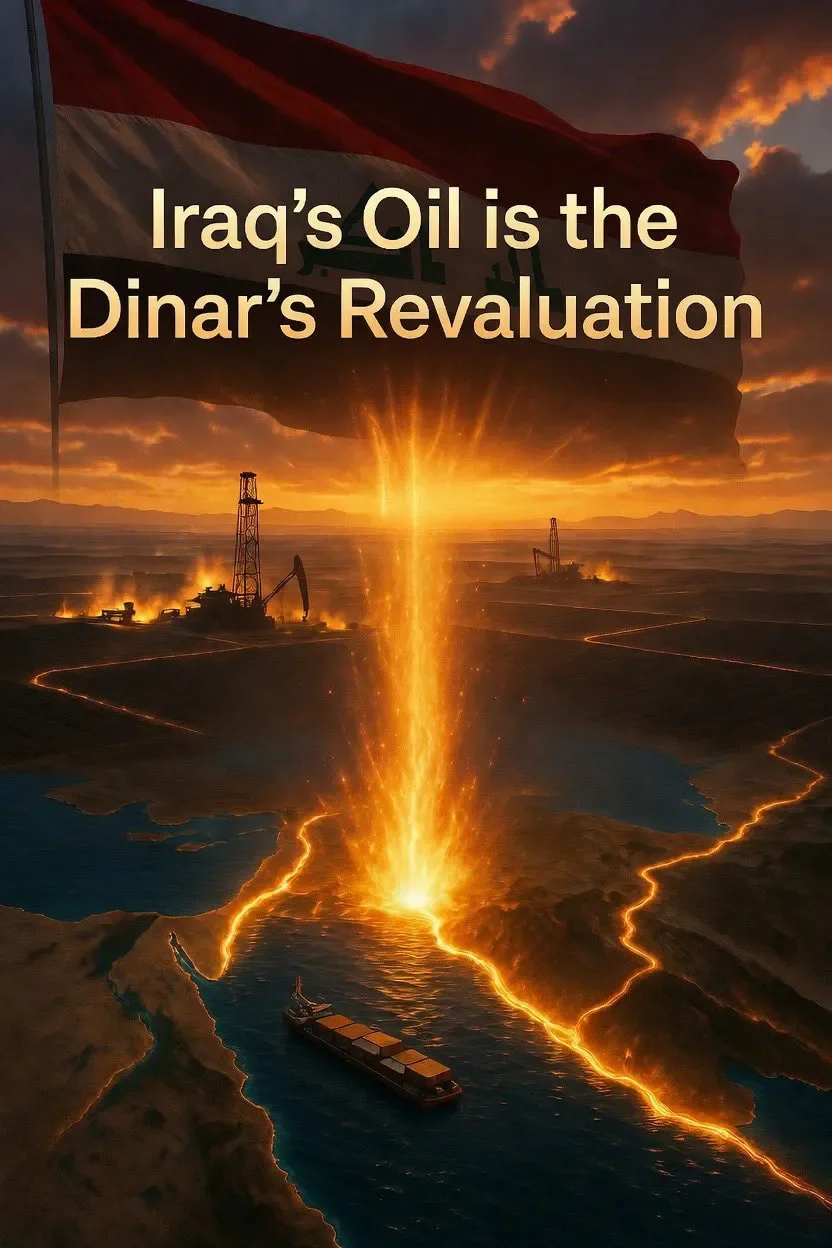
Iraq’s oil exports via Hormuz collapsed 89% in April alone — slashing 90% of government revenue.
You do the math.
What oil revenue would be backing that newly revalued Dinar?
Exactly. Nothing.
And that’s precisely why you’ve waited this long.
Nothing could have sustained the new value.
Iraq’s diversification away from oil revenues will not be solved anytime soon.
The fact that the Strait of Hormuz is closed right now should have you feeling electric about your investment — resolving this is literally the #1 prerequisite to a revaluation.
Iraq isn’t poor. It’s an oil superpower.
5th-largest proven reserves on Earth (147 billion barrels).
Lowest production costs globally.
Still HOLDing $100B in foreign reserves at the CBI.
The Iran War just exposed the old petrodollar/export trap in the most brutal way possible.
Emergency World Bank/IMF loans?
Rapid-response cash. Minimal conditions. Letter of Intent only.
A bridge to pay salaries and keep subsidies alive.
But it piles on more debt in a broken fiat loop.
Iraq can’t keep borrowing forever when its real wealth (oil in the ground + reserves) is massive (but trapped).
The key to the revaluation is unlocking the wealth.
This crisis is the justification for the clean break:
IQD revaluation to actual asset-backed levels — not the artificial low rate tied to the old model.
So how does the choke point finally get dealt with?
Military: Iran’s ability to close the strait is being neutralized
Kirkuk-Ceyhan pipeline to Turkey ramping fast (250k+ bpd)
Basra-Haditha pipeline under construction (2.25M bpd goal)
Basra-Aqaba pipeline to Jordan/Red Sea now on the fast track
Grand Faw Port + Development Road as the ultimate bypass
The foundation is already being built:
New PM + 100-day corruption cleanup governance reset
CBI/Fed & Treasury alignment institutional green light
Railways, energy diversification, HCL progress…. real economic base
“Delete the zeros” project still active …..technical runway laid
Old central-bank debt system cracks under shock sovereign oil wealth backs a new, righteous dinar.
Just like the Fed dying and the US shifting to asset-backed Victory Notes.
XRP pours gasoline on the fire unlocking the $27T trapped globally in nostro/vostro balances.
Iraq’s $100B in foreign reserves suddenly level up to $200–400B in currency strength firepower.
This provides the CBI with the monetary sovereignty to defend a stronger Dinar without the old handcuffs.
Forcing diversification of oil export routes while piling on more debt is the accelerant.
Debt digs the old fiat system even deeper — making the whole broken loop completely unsustainable and forcing the clean break.
The only logical exit from the collapsing debt trap.
I know how you feel… worn out. Beat up. Defeated.
Bills. BS. Life.
But you should really… REALLY be far more bullish than you are or think you are.
This is the Global Currency Reset unfolding right in front of us.
Don’t let ever increasing tolerance for amazing news discount the progress happening right before your eyes on a daily basis.
We are almost there.
Source(s):
• https://x.com/Ross_ptm/status/2058082087102787915
Seeds of Wisdom RV and Economics Updates Saturday Afternoon 5-23-26
Good Afternoon Dinar Recaps,
Iran Conflict Reshapes China-U.S. Rivalry as Global Power Balance Begins to Shift
The prolonged Iran-U.S. confrontation is increasingly being viewed as a geopolitical turning point that may accelerate the transition toward a more multipolar global order.
Good Afternoon Dinar Recaps,
Iran Conflict Reshapes China-U.S. Rivalry as Global Power Balance Begins to Shift
The prolonged Iran-U.S. confrontation is increasingly being viewed as a geopolitical turning point that may accelerate the transition toward a more multipolar global order.
Overview
What began as a regional confrontation between the United States and Iran is now evolving into a much larger strategic test with global implications for the balance of power between Washington and Beijing.
According to growing geopolitical analysis, the Iran conflict has exposed vulnerabilities in U.S. military deterrence, economic resilience, and alliance management while simultaneously creating strategic opportunities for China to expand its influence across global markets and diplomatic networks.
Chinese leadership is reportedly studying the crisis closely as a real-time example of how prolonged geopolitical attrition can weaken even the world’s most powerful military and financial system.
Key Developments
1. Iran’s Resistance Challenges Traditional U.S. Deterrence
The conflict has increasingly highlighted the limits of overwhelming military superiority in modern geopolitical warfare.
Rather than achieving rapid strategic surrender through sanctions and military pressure, the United States now faces a prolonged war of attrition involving shipping disruptions, energy instability, rising inflation pressures, and mounting operational costs.
Iran’s asymmetric strategy — particularly involving the Strait of Hormuz — demonstrated that smaller powers can impose significant economic and political strain without defeating a superior military force outright.
2. China Sees Strategic Overextension in Washington
Chinese analysts reportedly view the Iran crisis as evidence that the United States may be struggling to manage multiple global confrontations simultaneously.
As Washington diverts military resources and diplomatic focus toward the Middle East, Beijing gains additional room to maneuver in the Indo-Pacific region, particularly regarding Taiwan and the South China Sea.
The situation has intensified concerns inside the Pentagon regarding missile stockpiles, air defense systems, and the long-term sustainability of simultaneous geopolitical crises.
3. Economic Pressures Are Weakening Global Confidence
The ongoing conflict has contributed to energy market instability, shipping disruptions, inflation fears, and growing concerns over global supply chains.
China has continued maintaining selective economic ties with Iran despite sanctions pressure, while positioning itself as a more stable and patient economic power compared to what Beijing portrays as increasingly reactive American leadership.
Analysts note that prolonged instability could further accelerate de-dollarization efforts and deepen interest in alternative trade and financial systems.
4. The Crisis Is Reinforcing a Multipolar Global Order
One of the most significant outcomes may be the gradual erosion of confidence in America’s ability to maintain uncontested global leadership.
China increasingly presents itself as a long-term strategic actor focused on economic development, infrastructure, and stability, while portraying U.S. policy as overly dependent on military coercion.
The longer the conflict continues, the more the world may move toward a fragmented international system where power is distributed among several competing centers rather than dominated by a single superpower.
Why It Matters
The Iran conflict is no longer simply a Middle Eastern security issue. It has become part of the broader global struggle involving military power, economic influence, energy security, and financial dominance.
For the first time in decades, a prolonged regional confrontation is visibly testing the durability of U.S. global leadership while simultaneously strengthening China’s strategic position without Beijing directly engaging in military conflict.
The crisis also demonstrates how modern geopolitical competition increasingly revolves around economic endurance, supply chain resilience, and long-term attrition rather than quick battlefield victories.
Why It Matters to Foreign Currency Holders
For foreign currency holders and global reset observers, the situation reinforces growing uncertainty surrounding the future structure of the international monetary and geopolitical system.
Persistent energy instability, inflationary pressure, rising sovereign debt concerns, and declining confidence in traditional global leadership structures may continue accelerating diversification away from a purely U.S.-centered financial order.
China’s expanding economic influence, combined with broader de-dollarization initiatives among BRICS and emerging economies, points toward a future where multiple financial and geopolitical power centers coexist.
Implications for the Global Reset
Pillar 1: Wars of Attrition Are Replacing Traditional Power Projection
Modern conflicts increasingly focus on economic endurance, energy disruption, financial strain, and political exhaustion rather than direct military conquest alone.
The Iran conflict demonstrates how prolonged instability can gradually weaken larger powers over time.
Pillar 2: Multipolar Financial and Geopolitical Systems Are Accelerating
As global confidence fragments, nations are increasingly building parallel economic structures, regional alliances, and alternative payment systems outside traditional Western institutions.
China is leveraging these shifts to expand long-term influence without needing immediate military dominance.
Seeds of Wisdom Team View
The Iran-U.S. confrontation may ultimately be remembered less for the military conflict itself and more for how it exposed deeper structural weaknesses within the existing global order.
China appears to understand that the future contest for global leadership may not depend on defeating America militarily, but rather on patiently outlasting Washington economically, politically, and strategically while global confidence gradually shifts.
The conflict is increasingly becoming a geopolitical laboratory for the next phase of great-power competition — one driven by endurance, economic leverage, supply chains, and financial systems instead of purely conventional warfare.
This is no longer simply a regional war — it is a stress test for the future architecture of global power.
Seeds of Wisdom Team
Newshounds News™ Exclusive
Sources
~~~~~~~~~~
Seeds of Wisdom Team RV Currency Facts Youtube and Rumble
Newshound's News Telegram Room Link
RV Facts with Proof Links Link
RV Updates Proof links - Facts Link
Follow the Gold/Silver Rate COMEX
Follow Fast Facts
Seeds of Wisdom Team™Website
Thank you Dinar Recaps
Iraq Economic News and Points To Ponder Saturday Afternoon 5-23-26
Al-Zaidi And Masrour Barzani Discuss Border Crossings, The Implementation Of The ASYCUDA System, And Oil Companies Operating In The Region.
Money and Business Economy News – Baghdad Prime Minister Ali al-Zaidi expressed his desire on Saturday to resolve the outstanding disputes and issues between Erbil and Baghdad.
During his meeting with Kurdistan Regional Government Prime Minister Masrour Barzani in Baghdad, Al-Zaidi said, "We are all partners in this country, and our goal is to solve problems, reach an agreement, and serve all citizens and communities without discrimination."
Al-Zaidi And Masrour Barzani Discuss Border Crossings, The Implementation Of The ASYCUDA System, And Oil Companies Operating In The Region.
Money and Business Economy News – Baghdad Prime Minister Ali al-Zaidi expressed his desire on Saturday to resolve the outstanding disputes and issues between Erbil and Baghdad.
During his meeting with Kurdistan Regional Government Prime Minister Masrour Barzani in Baghdad, Al-Zaidi said, "We are all partners in this country, and our goal is to solve problems, reach an agreement, and serve all citizens and communities without discrimination."
For his part, he stressed the importance of addressing the contentious issues between the two sides in a radical manner and based on the constitution, while respecting the federal entity of the region.
A statement issued by the Prime Minister’s Media Office stated that the two sides discussed technical issues related to border crossings, the implementation of the ASYCUDA system, and oil companies operating in the region. Emphasis was placed on the availability of high-level coordination and cooperation between the federal government and the regional government to manage technical issues and overcome obstacles to address them in accordance with the law and the constitution.
This morning, the Prime Minister of the Kurdistan Region arrived in Baghdad at the head of a high-level government delegation on a visit aimed at discussing the latest developments and updates on the Iraqi and regional scenes, in addition to discussing the resolution of contentious issues and outstanding files between the Kurdistan Region and the Federal Government in accordance with the provisions of the Constitution and in a manner that guarantees the rights of all components of the country.
https://www.economy-news.net/content.php?id=69433
DeepSec ignites an AI price war: historic discounts of up to 75%
Arabic and international Chinese AI startup DeepSec announced on Saturday that it has made the 75% price reduction on its flagship V4-Pro AI model permanent, stabilizing prices at just a quarter of their original level.
The company did not disclose in its official statement whether this permanent price cut was due to an increase in the supply of Huawei's Ascend 950 chips, which DeepSec relies on to enhance the performance of its model and expand its operations.
As part of this decision, the company has reduced the cost of the V4-Pro's API to between 0.025 and 6 yuan per million tokens (approximately $0.0035 to $0.83) depending on the nature and type of use, down from the previous range of 0.1 to 24 yuan. https://www.economy-news.net/content.php?id=69456
Al-Zaydi: Salaries Must Be Paid On Time, And We Are Preparing The Iraq 2035 Plan.
Money and Business Economy News – Baghdad Prime Minister Ali Faleh al-Zaidi directed the Ministry of Finance on Saturday to release employee salaries and socialprotection payments on time.
A statement from his office, received by "Al-Eqtisad News," stated that "Al-Zidi visited the Ministry of Finance as part of his follow-up on the work of ministries and their executive, service and economic programs."
Al-Zaydi chaired a meeting of the ministry's senior staff and listened to reports concerning the ministry's work in all its departments, where he stressed that Iraq is going through a sensitive financial and economic situation imposed by regional and international developments and their repercussions on the global economy.
Al-Zaydi explained that "these changes have affected Iraq's export capacity and oil revenues, indicating that 90% of the budget depends on oil revenues, and work must be done to expand the non-oil economy and adopt alternatives that support diversification, pointing out the need to be frank with citizens about the financial challenges, without exaggeration or embellishment."
He continued: "We want the Ministry of Finance to draw up the financial policy for Iraq, and we are preparing the Iraq 2035 plan. The ministry must have a clear vision and the budget must be a roadmap for the future."
He pointed out that "the budget must maximize its resources, and it is not possible to continue to rely on oil alone," explaining that "Iraq is a meeting point for the world and we must invest in its geographical location to enhance its revenues."
He added that “employees’ salaries must be released on time, so that there is no message of concern to the people, as well as the salaries of the social protection network,” directing “the preparation of a payment of the dues of farmers, and the dues of contractors and investors, and their rights must not be delayed to ensure the continuation of work.”
He explained that "there is a concept that the state manages the economy, but we want the economy to manage the state, and if the change in concepts is achieved, we will not have to change the people," noting that "the state is not just a budget and allocations, but rather seeks to achieve a high GDP."
He explained that "there are governing and operational expenses that do not reflect positively on development, so we seek to change traditional financial concepts, and we do not want to replicate yesterday's experiences. The role of the state is regulation and monitoring, and we support the private sector, as it is the one that will advance development."
He added: “It is our duty to look after the poor, but we must not continue to operate with a socialist mindset in the economy,” directing that a report be prepared on the customs situation in terms of revenues during the last six months, especially for materials with high customs duties.
He continued: "We noticed that high-customs materials are being replaced with cheaper materials through devious means, and automation will put an end to this manipulation. We have 5,000 doctors contracted with the Ministry of Health, and we have directed that their situations be resolved."
He concluded his speech by saying: "We have circulated a directive not to place pictures of the Prime Minister and ministers in all departments and institutions. We want people to see our work, not our pictures."
https://www.economy-news.net/content.php?id=69435
From $300 To $2.3 Million: Shocking Prices For 2026 World Cup Tickets
Money and Business Economy News - Follow-up Football, the game that was born in the streets, schools and alleys, and which has always been considered the most popular sport in the world, seems today to be at a historic turning point that may change its nature forever.
The 2026 World Cup, which is supposed to be a global celebration of popular passion, has become a source of widespread controversy due to an unprecedented jump in ticket prices and a clear shift towards a business model closer to luxury markets than to mass sports.
From Reasonable Tickets To Shocking Prices
For the first time in the tournament's history, FIFA is adopting a "dynamic pricing" system, a model common in aviation and hotels, where prices change instantly according to demand.
Shocking result
Cheapest ticket in the group stage: around $300
Official final tickets: Exceeded $11,000 and could reach $30,000
In the resale market: Some tickets reached $2.3 million for a single seat
Figures like these are no longer just a price increase, but a radical shift in the philosophy of accessing the world's biggest football event.
Even US President Donald Trump, who contributed to the bid to host the tournament, commented on the prices, telling the New York Post: "Even I wouldn't pay that price."
FIFA Enters The Era Of Profit Maximization
What is happening is not just about increased demand, but a strategic shift in the tournament management model.
FIFA also launched an official platform for reselling tickets, through which it receives commissions from both the seller and the buyer, in a move that reinforced the commercial nature of the tournament.
According to market comparisons, the average ticket prices for the 2026 World Cup are about 6 times higher than the average of the last five editions of the World Cup.
This shift reflects a clear trend: the World Cup is no longer just a sporting event, but a huge entertainment industry based on maximizing revenues.
When Attendance Becomes A Privilege, Not A Right
But the real debate is not just about the numbers, but about what these numbers mean for football itself.
Historically, the stands were not just seats, but a space for the voice of the masses: chants, emotions, pressure on the players, and the spirit that creates the identity of the game.
Today, with prices rising in this way, a fundamental question arises: Will this popular presence remain possible?
Studies in the sociology of sport indicate that wealthier crowds are often less boisterous and enthusiastic inside stadiums, meaning that changing the social composition of the stands may directly affect the "spirit of the game" itself.
Football Between Market And Identity
The transformation we are witnessing today is not separate from the general trend in global sports, where major tournaments are increasingly reliant on huge broadcasting rights, global sponsorships, flexible pricing models, and resale platforms.
But the 2026 World Cup could be the moment when this transformation is most clearly manifested.
While some see these steps as reflecting a "natural economic modernization" of a huge global tournament, others see them as the beginning of football losing its original identity as a popular sport.
The Question That Arises
Are we witnessing a historic edition of the World Cup in terms of revenues, technology, and organization? Or are we witnessing the beginning of a gradual transformation that will make the tournament an elite event, accessible only to those with financial means?
Ultimately, the real question may not be just about ticket prices, but about the future of the game itself: Will football remain the people's game, or will it turn into a luxury show watched only from golden seats?
https://www.economy-news.net/content.php?id=69432
Reuters: A Memorandum Of Understanding To End The War Between Tehran And Washington Is Being Finalized.
Arabic and international Reuters reported on Saturday that a memorandum of understanding to end the war between Tehran and Washington is being finalized.
Reuters quoted a Pakistani security official as saying, "A memorandum of understanding to end the war between Tehran and Washington is being finalized." https://www.economy-news.net/content.php?id=69458
Rob Cunningham: America’s New Monetary System
Rob Cunningham: America’s New Monetary System
5-23-2026
America’s New Monetary System
Phase 1 – The Legal trigger:
CLARITY passes by July 4, 2026. Digital assets receive market-structure certainty. Stablecoin rails become institutionally safe under existing GENIUS Law. Tokenized Treasury settlement accelerates.
Rob Cunningham: America’s New Monetary System
5-23-2026
America’s New Monetary System
Phase 1 – The Legal trigger:
CLARITY passes by July 4, 2026. Digital assets receive market-structure certainty. Stablecoin rails become institutionally safe under existing GENIUS Law. Tokenized Treasury settlement accelerates.
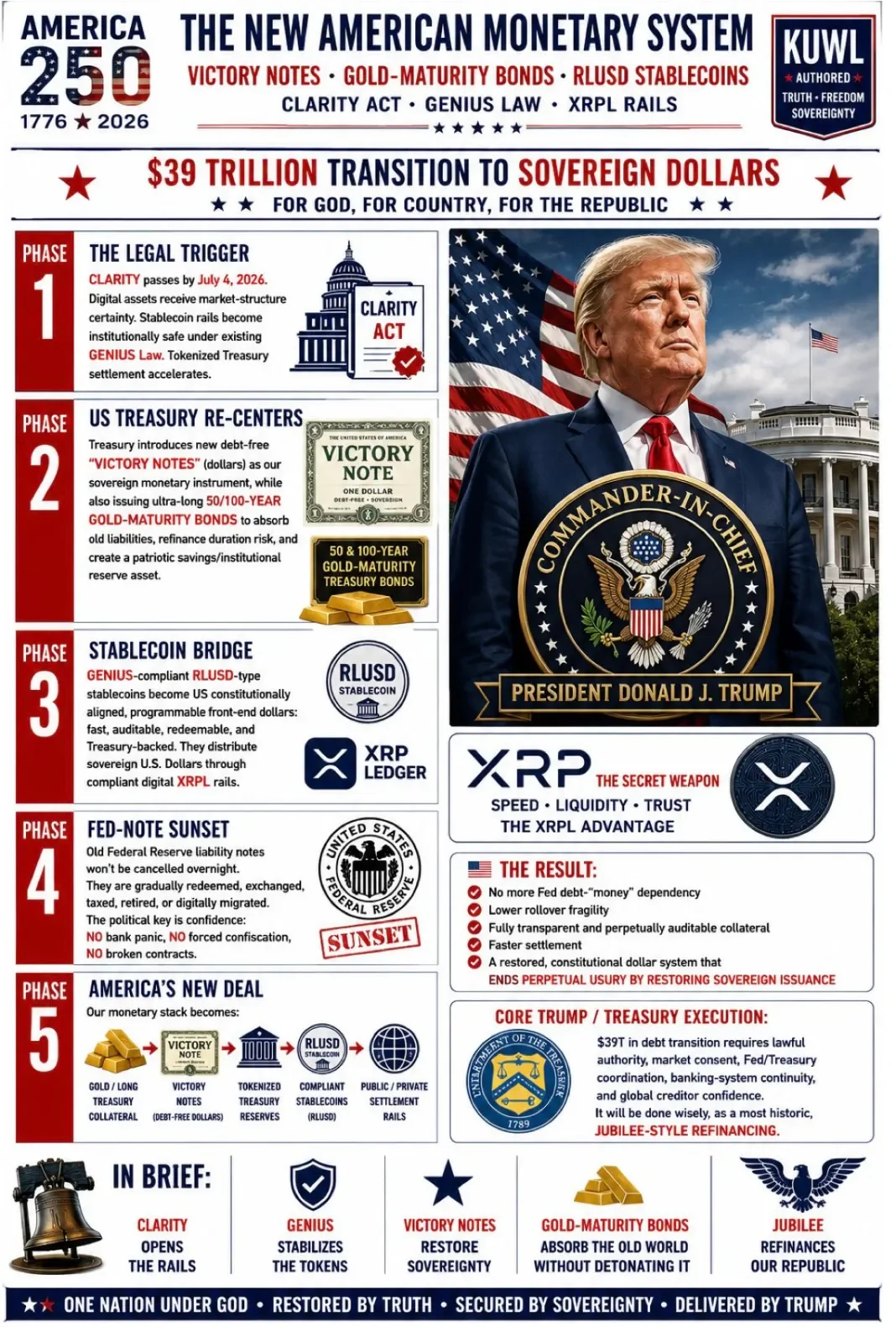
Phase 2 – US Treasury re-centers:
Treasury introduces new debt-free “Victory Notes” (dollars) as our sovereign monetary instrument, while also issuing ultra-long 50/100-year gold-maturity bonds to absorb old liabilities, refinance duration risk, and create a patriotic savings/institutional reserve asset.
Phase 3 – Stablecoin bridge:
GENIUS-compliant RLUSD-type stablecoins become US constitutionally aligned, programmable front-end dollars: fast, auditable, redeemable, and Treasury-backed. They distribute sovereign U.S. Dollars through compliant digital XRPL rails.
Phase 4 – Fed-note sunset:
Old Federal Reserve liability notes won’t be cancelled overnight. They are gradually redeemed, exchanged, taxed, retired, or digitally migrated. The political key is confidence: no bank panic, no forced confiscation, no broken contracts.
Phase 5 – America’s New Deal:
Our monetary stack becomes:
Gold / long Treasury collateral → Victory Notes → tokenized Treasury reserves → compliant stablecoins → public/private settlement rails
The Result:
No more Fed debt-“money” dependency, lower rollover fragility, fully transparent and perpetually auditable collateral, faster settlement, and a restored, constitutional dollar system that ends perpetual usury by restoring sovereign issuance.
Core Trump/Treasury Execution:
$39T in debt transition requires lawful authority, market consent, Fed/Treasury coordination, banking-system continuity, and global creditor confidence. It will be done wisely, as a most historic, Jubilee-style refinancing.
KUWL Summary
CLARITY opens the rails
GENIUS stabilizes the tokens
VICTORY Notes restore monetary sovereignty
GOLD-maturity bonds absorb the old world without detonating it
JUBILEE refinances our Republic
FREEDOM reigns the world over
(This is my conceptual idea of how things logically evolve. Please share your thoughts, alternate scenarios, and let’s ideate to elevate understanding.)
Source(s):
• https://x.com/KuwlShow/status/2056808497002525014
https://dinarchronicles.com/2026/05/23/rob-cunningham-americas-new-monetary-system/
More “Iraq News” Posted by Tishwash at TNT 5-23-2026
TNT:
Tishwash: Masrour Barzani will be in Baghdad next week to discuss the electricity and oil files.
Kurdistan Regional Government Prime Minister Masrour Barzani will head to Baghdad next week, leading a high-level delegation, for a series of talks with the federal government on the electricity and oil sectors.
Aziz Ahmed, Deputy Director of the Prime Minister's Office, stated in a post on the "X" platform that the regional government will present its successful "Ronaki - Electricity" project, which aims to provide 24-hour electricity, during the visit. He emphasized that the delegation will offer technical support to the new Iraqi government to accelerate reforms in the electricity sector across the country.
TNT:
Tishwash: Masrour Barzani will be in Baghdad next week to discuss the electricity and oil files.
Kurdistan Regional Government Prime Minister Masrour Barzani will head to Baghdad next week, leading a high-level delegation, for a series of talks with the federal government on the electricity and oil sectors.
Aziz Ahmed, Deputy Director of the Prime Minister's Office, stated in a post on the "X" platform that the regional government will present its successful "Ronaki - Electricity" project, which aims to provide 24-hour electricity, during the visit. He emphasized that the delegation will offer technical support to the new Iraqi government to accelerate reforms in the electricity sector across the country.
He added that "the Prime Minister will also address the issue of security guarantees necessary to enable oil and gas companies to resume production and export operations, noting that the ongoing drone threats make it difficult for these companies to continue their work." link
Tishwash: Government advisor: The Ministry of Finance is preparing a three-year emergency plan to boost revenues.
The Prime Minister’s financial advisor, Mazhar Muhammad Salih, revealed on Friday five options to address the shortfall in financial revenues and restructure the Iraqi economy, in light of the challenges resulting from the decline in oil exports and the closure of the Strait of Hormuz, while indicating that the Ministry of Finance is moving towards preparing a three-year emergency plan to boost revenues.
Saleh said that "Iraq is facing a financial gap estimated at about $9.5 billion per month as a result of the decline in oil exports," noting that "the Ministry of Finance is moving towards preparing a three-pronged emergency plan that includes internal and external borrowing, in addition to measures to
maximize non-oil revenues through taxes, fees and financial reforms."
He explained that “domestic borrowing is a quick solution to cover salaries and operational obligations, but it may lead to a withdrawal of liquidity from banks, an increase in the cost of local financing, and a weakening of private sector financing, while external borrowing provides liquidity in dollars and maintains relative monetary stability, but it is linked to reform conditions and an increase in debt service burdens.”
He added that “maximizing non-oil revenues is the most strategic option in the medium and long term, through controlling border crossings and customs, automating the tax system, reducing the informal economy, and improving collection without harming economic activity,” noting that “implementing the Government Financial Management Information System (IFMIS) contributes to strengthening financial oversight, reducing waste and corruption, and raising the efficiency of public spending management.”
Saleh stressed that “reforming the banking sector, especially Rafidain and Rasheed banks, is necessary to develop development finance, digital and credit services, as well as the importance of reforming private banks to achieve financial inclusion, support small and medium enterprises and attract investments.”
He explained that “activating the Public-Private Partnership Law would alleviate pressure on the general budget and create new job opportunities, provided that a stable legal environment, investment guarantees, and combating administrative corruption are provided,” stressing that “any emergency plan will not succeed without real financial reform that includes controlling operational spending, reducing waste in government contracts, and adopting spending priorities linked to production and development.”
Saleh explained that "the current crisis represents a real test for the structure of the Iraqi economy, which is dependent on oil," stressing that "accelerating financial and banking reforms and diversifying the economy will enhance the state's ability to cope with geopolitical and economic shocks." libk
************
Tishwash: The US dollar: Can Washington guarantee its continued flow into Iraq under al-Zaidi's rule?
The US dollar has returned to the forefront of political debate, with assurances that Washington will not stop the flow of currency to Iraq during Ali al-Zaidi's government, amid talk of trade and financial ties that make it difficult to impose financial restrictions that could threaten Iraqi economic stability.
Political analyst Adel Al-Manea confirmed that the United States will not prevent the flow of dollars to Iraq during Ali Al-Zaidi’s government, attributing this to the existence of commercial and financial ties with the American side that will exert pressure towards the continued flow of currency to the country.
Al-Mana’ said: “Talk of new alliances or coalitions that include more than 140 MPs does not actually exist at the moment,” considering that “they do not go beyond being political understandings and reactions to what happened during the session to grant confidence to Al-Zidi’s government.”
Al-Mana’a pointed out that “the current political reality within the coordination framework can be described as ‘a harmony of faces and a difference of hearts,’ stressing that ‘the majority of political parties and rational people are pushing towards passing what remains of Al-Zidi’s cabinet according to the convictions of the representatives, away from political pressures.’”
He explained that “one of the political leaders predicted that Hebat al-Halbousi would not continue as Speaker of Parliament after the vote of confidence session,” noting that “the Sadiqun movement will not participate in al-Zidi’s government.”
Regarding the visit of US General David Petraeus to Iraq and his meeting with al-Zaidi, al-Mana’ said, “It came in the context of emphasizing that no factions should participate in al-Zaidi’s government without exception.”
He pointed to “American proposals related to restructuring some security institutions and including the Popular Mobilization Forces within a new security ministry that includes various security agencies.”
Al-Mana’ also suggested that “Qasim Atta will be appointed Minister of Interior after the Eid al-Adha holiday,” revealing that “more than 28 MPs withdrew from the Reconstruction and Development Alliance due to the failure to adhere to some of the promises and understandings that accompanied the formation of the government.”
He stressed that “Al-Zaydi was put forward by a “heavy” figure from outside the coordination framework and was accepted by most political forces in order to end the political deadlock,” emphasizing “the rejection of any tampering with the Popular Mobilization Forces file, as it is an institution established by a law from the House of Representatives.” link
Tishwash: Among them are members of parliament: The US Treasury sanctions nine individuals for allegedly facilitating Hezbollah activities.
The US Treasury Department announced on Thursday new sanctions targeting nine individuals accused of facilitating Hezbollah's activities and undermining Lebanese sovereignty.
The sanctions package included members of the Lebanese parliament, the Iranian ambassador to Beirut, Mohammad Reza Raouf Sheibani, and Lebanese security officials, who it said "exploited their positions to support Hezbollah and obstruct efforts to disarm it."
The US Treasury, in a statement translated by Shafaq News Agency, said that the sanctioned individuals "serve Tehran's malicious agenda and impede the path to peace and recovery for the Lebanese people."
In conjunction with these measures, the US State Department’s “Rewards for Justice” program has set up a financial reward of up to $10 million for any information leading to the dismantling of Hezbollah’s financial networks and mechanisms.
Washington issued a strongly worded warning that this step is "just the beginning," vowing to hold accountable anyone who continues to provide cover for the party, cooperates with it, or undermines Lebanon's sovereignty.
A statement issued by the US State Department stressed that Lebanon’s stability, security and independence require the complete disarmament of Hezbollah and the restoration of the Lebanese government’s exclusive and absolute authority over the security file throughout the country.
The statement concluded by reaffirming the United States' commitment to supporting the Lebanese people and their legitimate institutions in building a more secure and prosperous future. link
News, Rumors and Opinions Saturday 5-23-2026
Note: All intel should be considered as "Rumors" until we receive official announcements ...and “Rates and Dates” could change anytime until we get to the banks/redemption centers.
Restored Republic via a GCR Update as of Fri. 22 May 2026
Compiled Fri. 22 May 2026 12:01 am EST by Judy Byington
Judy Note:A new US tax system was expected to be announced by July 4 2026. There would be (allegedly) no tax on earnings. The various states will collect their own 14% tax on new items bought only, with no tax on used items bought, medicine, food or housing.
Note: All intel should be considered as "Rumors" until we receive official announcements ...and “Rates and Dates” could change anytime until we get to the banks/redemption centers.
Restored Republic via a GCR Update as of Fri. 22 May 2026
Compiled Fri. 22 May 2026 12:01 am EST by Judy Byington
Judy Note: A new US tax system was expected to be announced by July 4 2026. There would be (allegedly) no tax on earnings. The various states will collect their own 14% tax on new items bought only, with no tax on used items bought, medicine, food or housing.
The fiat Dollar was (allegedly) dead and no longer (allegedly) used in international trade. The new US Note was (allegedly) backed by gold and traded at a 1:1 with 209 nation’s currencies of the Global Currency Reset.
The 209 nations of the Global Currency Reset (allegedly) could not be at war with one another in order to participate in the new Global Financial System. It was expected that these Sovereign nations would soon adopt Constitutions in line with the original US Constitution.
Global Currency Reset:
Thurs. 21 May 2026 Bruce, The Big Call The Big Call Universe (ibize.com) 667-770-1866, pin123456#, 667-770-1865:
• A good source said Tier4b (us, the Internet Group) notifications to make exchange appointments by Friday 22 May 2026
• Another source said Tier4b would get notifications Sat. night or Sun morning 22, 23 May 2026.
• A third source said we would start exchanges Tues. 26 May 2026.
• Tonight Thurs. 21 May a source said we could get notified any time from Memorial Day Mon. 25 May to the end of the month on Sun. 31 May 2026.
• Another source said they wanted this done by the end of the month on Sun. 31 May 2026.
• Zim Holders will be given first priority for exchanges.
• There were 18 currencies that had their new rates on Redemption Center screens, but those rates were trading and changing upward, so there would be better rates when we go to our exchanges.
• Dinar Holders had a higher contract rate that could only be given at a Redemption Center, not at a bank.
• Zim Holders could only redeem at a Redemption Center.
Read full post here : https://dinarchronicles.com/2026/05/22/restored-republic-via-a-gcr-update-as-of-may-22-2026/
****************
Courtesy of Dinar Guru: https://www.dinarguru.com/
Frank26 They can pass laws right now...because it's not a caretaker government. It's not a fully seated government but it is a seated government. 2/3 can pass laws right now.
MarkZ [via PDK] IMO our worst case timeline is within 3 months and 1 to 1...I still think it could go this month…but imo anytime before July 4th. I would not be surprised to see something over this long 3 day weekend.
StephenI believe there are still a few things that need to happen before the Iraqi dinar revalues...What kind of time frame that puts us on, no one really knows...We can only speculate, look at the news to...make a hypothesis...I do think this year 2026 is a very high probability. But certain things have to play out before then.
Militia Man The conditions for a managed REER adjustment are the best we've seen in a long time. The convergences are powerful and happening simultaneously...The last 48 hours have delivered consistent purposeful momentum and movement...The future looks bright.
The New Fed Chair is About to Cancel America's $39T Debt Crisis
Wall Street Demystified: 5-22-2026
America’s national debt has hit $39 trillion. The new Federal Reserve chairman, Kevin Warsh, just proposed a sweeping overhaul of how the Fed operates.
In this video, I break down how Warsh’s policy proposals could quietly relieve America's debt crisis and what it means for YOUR finances.
Chapters:
0:00 Intro
0:47 Kevin Warsh’s new inflation framework
4:27 Warsh’s two proposals
6:09 The short-term solution
6:41 The long-term solution
8:55 How does this affect you?
11:22 What should you do?
Iraq Economic News and Points To Ponder Saturday Morning 5-23-26
The 10 Strongest Currencies In The World... The Top Four Are Arab!
Money and Business Economy News - Follow-up For decades, the Kuwaiti dinar has maintained its position as the world's most expensive currency, despite the overwhelming dominance of the US dollar, the euro, and the British pound in global trade and financial markets.
When experts measure the strength of a currency, they don't rely on its fame or how often it appears in movies, but rather on its exchange rate: what you can buy with one Kuwaiti dinar compared to one US dollar. Today, the Kuwaiti dinar tops the list. One dinar can buy more than three US dollars.
The 10 Strongest Currencies In The World... The Top Four Are Arab!
Money and Business Economy News - Follow-up For decades, the Kuwaiti dinar has maintained its position as the world's most expensive currency, despite the overwhelming dominance of the US dollar, the euro, and the British pound in global trade and financial markets.
When experts measure the strength of a currency, they don't rely on its fame or how often it appears in movies, but rather on its exchange rate: what you can buy with one Kuwaiti dinar compared to one US dollar. Today, the Kuwaiti dinar tops the list. One dinar can buy more than three US dollars.
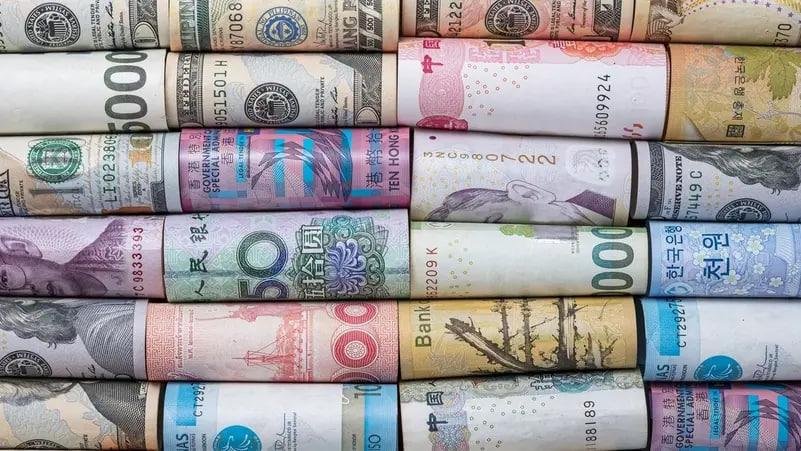
At the same time, currency value is not a reliable indicator of the world's largest or wealthiest economy. While Japan's economy is enormous and one of the world's top five, the Japanese yen is among the world's least valuable currencies. The value of a currency is determined by historical factors related to its establishment.
The strange thing is that some of the world's strongest currencies actually come from countries that are not major global powers. They are often small, stable, and heavily reliant on oil revenues. In contrast, economic giants like China, Japan, and India don't even make the top ten.
This does not mean their economies are weak. Experts point out that "most valuable" does not necessarily mean "strongest." The US dollar, for example, dominates global trade but is not the most valuable currency.
But these rankings, based solely on exchange rate value, offer insight into how countries deal with wealth, inflation, exports, and financial stability.
Currencies are not just pieces of paper or numbers in a bank account; they reflect trust, history, stability, and identity. There is always a story behind strength. Even in a financial world dominated by the dollar, the small Kuwaiti dinar quietly reigns supreme.
Below we review the ten strongest currencies currently, in addition to an overview of the reasons for their continued value.
Kuwaiti Dinar
It is considered the king of currencies. The Kuwaiti dinar is widely regarded as the strongest currency in the world. One dinar is worth more than three US dollars. Kuwait's massive oil exports, low taxes, strong sovereign reserves, and sound financial system have contributed to maintaining the dinar's dominance for decades.
Bahraini Dinar
The Bahraini dinar ranks second. Bahrain may be small, but its economy is far more diversified than many of its Gulf neighbors: the banking, oil, and financial sectors all contribute to the dinar's strength. Furthermore, the currency is pegged to the US dollar, which is attractive to investors.
Omani Rial
The Omani rial ranks third. Oman's currency benefits from strong oil revenues and tight monetary policies. The rial has remained stable for years, partly due to Oman's careful control of inflation and exchange rate fluctuations.
Jordanian Dinar
The Jordanian dinar ranks fourth globally and is often considered one of the top currencies on this list. Unlike the Gulf economies, Jordan does not possess vast oil reserves. However, its currency remains highly valued thanks to its prudent monetary policy, foreign investment, and financial stability.
Sterling
The British pound continues to hold a prominent position among the world's leading currencies. It is also one of the oldest currencies still in circulation today, dating back over 1,200 years. London remains a major global financial center, which helps maintain the pound's strength despite the uncertainty surrounding Brexit.
Gibraltar Pound
The Gibraltar pound is closely pegged to the British pound and ranks sixth globally. Gibraltar's currency is directly linked to the pound, meaning the two currencies maintain similar values. Despite its relative obscurity on the global stage, the Gibraltar pound quietly remains among the world's most valuable currencies.
Swiss Franc
The Swiss franc holds a prominent position among leading currencies, distinguished by its enduring stability. This is because Switzerland has long been considered one of the safest financial systems in the world. During global crises, investors often turn to the Swiss franc due to Switzerland's political neutrality, the strength of its banking institutions, and its economic stability. The Swiss franc is widely known as a "safe haven currency."
Cayman Islands Dollar
Next comes the Cayman Islands dollar. Its strength is largely tied to the Cayman Islands' role as a major offshore financial center. The islands' banking and investment sectors attract global wealth, which helps maintain the currency's high value.
Euro
The euro ranks ninth. It is the official currency used in most of Europe. Although the euro does not top the list of exchange rates, it remains one of the most influential currencies in the world due to the enormous size of the European economy. More than 300 million people usethe euro daily, making it one of the most traded currencies globally.
US Dollar
Finally, in tenth place, the US dollar holds a prominent position globally. It is perhaps the most widely recognized currency in the world. In terms of exchange rate value, it ranks tenth, but it still easily dominates global trade, oil deals, investments, and banking reserves. In terms of influence, it is the most powerful and influential currency on Earth.
Seeds of Wisdom RV and Economics Updates Saturday Morning 5-23-26
Good Morning Dinar Recaps,
Qatar Enters High-Stakes Iran Negotiations as Gulf Powers Push to Prevent Wider Energy Crisis
Fragile diplomacy intensifies as Qatar joins efforts to secure a U.S.-Iran agreement while the Strait of Hormuz remains at the center of global economic fears.
Good Morning Dinar Recaps,
Qatar Enters High-Stakes Iran Negotiations as Gulf Powers Push to Prevent Wider Energy Crisis
Fragile diplomacy intensifies as Qatar joins efforts to secure a U.S.-Iran agreement while the Strait of Hormuz remains at the center of global economic fears.
Overview
A Qatari negotiating delegation arrived in Tehran as part of expanding diplomatic efforts to help secure a temporary agreement between the United States and Iran aimed at preventing a wider regional war and stabilizing global energy markets.
The negotiations come amid a fragile ceasefire following months of conflict involving U.S.-Israeli military operations against Iran, rising oil market volatility, and severe disruptions to shipping through the Strait of Hormuz — one of the world’s most critical energy corridors.
Qatar’s involvement signals growing urgency among Gulf states to prevent further economic instability as energy supply chains, LNG exports, inflation risks, and currency markets remain under pressure.
Key Developments
1. Qatar Expands Diplomatic Role in U.S.-Iran Negotiations
Qatar has now joined Pakistan in ongoing mediation efforts between Washington and Tehran, despite previously distancing itself after suffering Iranian missile and drone strikes earlier in the conflict.
The Qatari team is reportedly working closely with U.S. officials to narrow remaining disagreements involving Iran’s uranium enrichment program, sanctions relief, and maritime control issues tied to the Strait of Hormuz.
The move reflects Qatar’s growing role as a regional intermediary capable of maintaining communication channels with both Western allies and Iran during periods of crisis.
2. Strait of Hormuz Remains the Central Flashpoint
Negotiations remain heavily focused on the Strait of Hormuz, which previously handled roughly one-fifth of global oil and liquefied natural gas shipments before disruptions intensified.
Iran’s effective control measures and threats involving maritime restrictions have sharply reduced shipping activity, contributing to rising energy prices and renewed inflation concerns globally.
The United States continues maintaining pressure through restrictions targeting Iranian ports and shipping access, while Tehran views Hormuz as one of its remaining strategic leverage points.
3. Global Energy Markets Face Continued Instability
Qatar’s participation carries additional significance because the country is one of the world’s largest LNG exporters and a critical supplier to Europe and Asia.
Iranian strikes earlier in the conflict reportedly damaged portions of Qatar’s LNG production infrastructure, raising concerns about long-term supply reliability during already volatile global energy conditions.
Analysts warn that any prolonged disruption in Hormuz could create major consequences for oil prices, inflation control, manufacturing costs, shipping logistics, and central bank policy worldwide.
4. Diplomacy Advances, But Core Issues Remain Unresolved
While Secretary of State Marco Rubio acknowledged signs of diplomatic progress, both sides remain divided on several major strategic issues.
Iran reportedly continues demanding sanctions relief, security guarantees, and recognition of certain regional interests, while Washington maintains firm positions regarding uranium enrichment and freedom of navigation through Hormuz.
Officials involved in negotiations suggest discussions may initially focus on securing limited de-escalation measures before attempting a broader political settlement.
Why It Matters
The growing involvement of Gulf powers like Qatar highlights how regional states are increasingly attempting to prevent a conflict that could destabilize both energy markets and the global financial system.
The Strait of Hormuz remains one of the world’s most strategically important chokepoints. Any disruption there directly impacts oil prices, shipping costs, inflation expectations, and monetary policy decisions across major economies.
As global debt levels remain elevated and inflation pressures continue challenging central banks, prolonged instability in Gulf energy supplies could accelerate broader economic realignment and financial stress worldwide.
Why It Matters to Foreign Currency Holders
For foreign currency holders and global reset observers, the negotiations reflect how geopolitical conflicts are increasingly intertwined with monetary stability, commodity pricing, and international trade systems.
Higher oil prices and shipping disruptions can weaken fragile economies, pressure sovereign debt markets, and contribute to currency volatility — especially in heavily energy-dependent nations.
The outcome of these talks may influence inflation trends, interest rate policy, and broader confidence in the global financial system over the coming months.
Implications for the Global Reset
Pillar 1: Energy Security Is Becoming Financial Security
Control over energy corridors such as the Strait of Hormuz now carries direct consequences for global inflation, debt sustainability, and financial stability.
Energy chokepoints are increasingly becoming instruments of geopolitical and economic leverage.
Pillar 2: Regional Powers Are Reshaping Global Diplomacy
Qatar and Pakistan’s expanding mediation roles demonstrate how middle powers are gaining influence within a more fragmented and multipolar world order.
Diplomatic influence is no longer concentrated solely among traditional Western powers.
Seeds of Wisdom Team View
Qatar’s direct involvement in Tehran negotiations signals growing international concern that the economic consequences of continued conflict may soon outweigh the strategic objectives of either side.
The focus now appears to be shifting toward damage control — stabilizing shipping routes, calming energy markets, and preventing further global economic fragmentation.
Even if a temporary agreement is reached, the deeper issues surrounding sanctions, energy security, military presence, and financial realignment are likely to remain unresolved for years to come.
This is no longer just a regional conflict — it is a battle over the stability of global trade, energy flows, and the future financial order.
Seeds of Wisdom Team
Newshounds News™ Exclusive
Sources
Reuters — "Qatar joins diplomatic push for U.S.-Iran ceasefire talks amid Hormuz tensions"
Modern Diplomacy — "Qatar Sends Negotiators to Tehran to Push US-Iran Deal Aimed at Ending War"
~~~~~~~~~~
🌱A Message to Our Currency Holders🌱
If you’ve been holding foreign currency for many years, you were not foolish.
You were not wrong to believe the global financial system would change.
What failed was not your patience — it was the information you were given.
For years, dates, rumors, and personalities replaced facts, structure, and proof. “This week” predictions created cycles of hope and disappointment that were never based on how currencies actually change.
That is not your failure.
Our mission here is different: • No dates • No rates • No hype • No gurus
Instead, we focus on:
• Verifiable developments • Institutional evidence
• Global financial structure • Where countries actually sit in the process
Currency value changes only come after sovereignty, trade, banking, settlement systems, and fiscal coordination are in place. History and institutions confirm this sequence.
You will see silence. You will see denials. That is not delay — that is discipline.
Protect your identity. Organize your documents. Verify everything.
Never hand your discernment to anyone who cannot show proof.
You deserve truth — not timelines.
Seeds of Wisdom Team
Newshounds News™
~~~~~~~~~~
Seeds of Wisdom Team RV Currency Facts Youtube and Rumble
Newshound's News Telegram Room Link
RV Facts with Proof Links Link
RV Updates Proof links - Facts Link
Follow the Gold/Silver Rate COMEX
Follow Fast Facts
Seeds of Wisdom Team™Website
Thank you Dinar Recaps
The BBC wants to Make the Taliban Great Again
The BBC wants to Make the Taliban Great Again
Notes From the Field By James Hickman (Simon Black / Sovereign Man) May 22, 2026
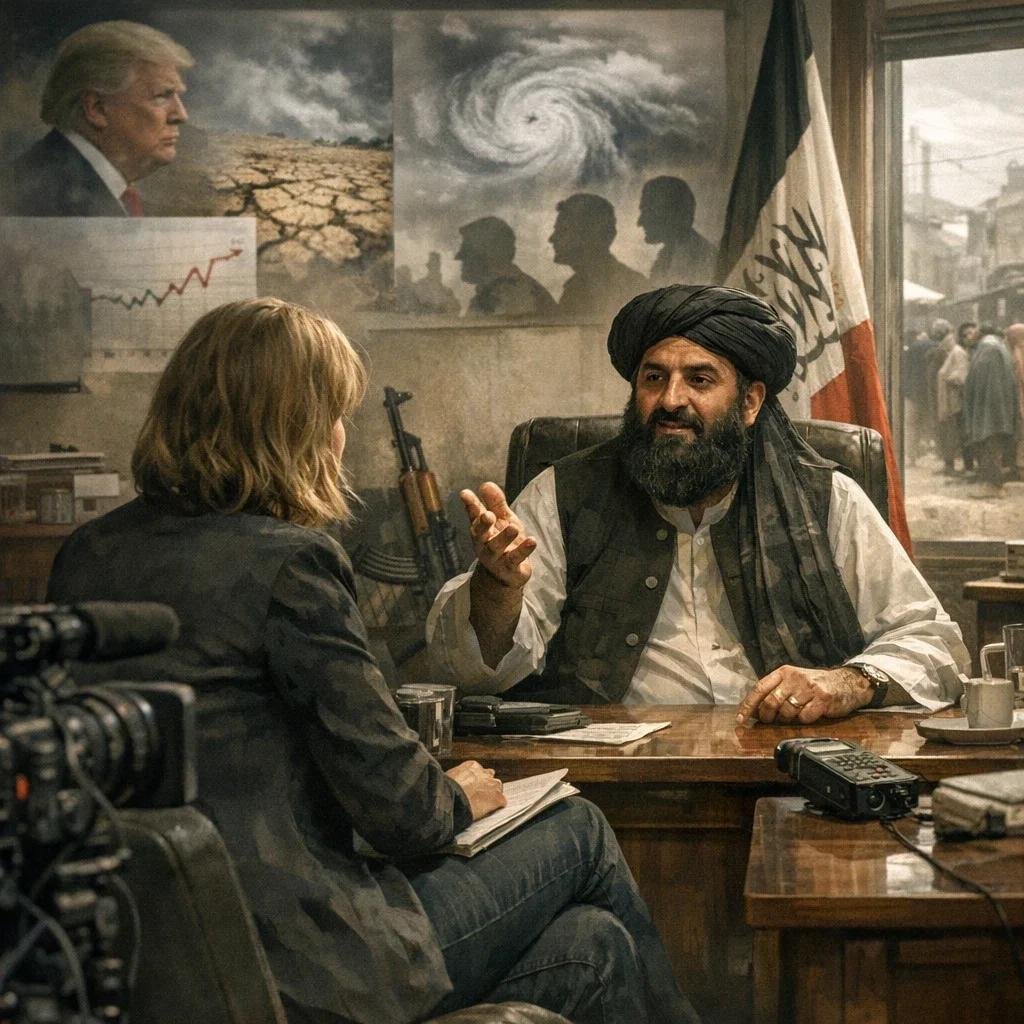
This week the British Broadcasting Corporation flew halfway around the world to find a sad story that it could blame on (1) America and (2) climate change. Their drama opens in Afghanistan’s Ghor province, where fathers line up before dawn at a dusty square hoping to find a day’s work. One man weeps that he is preparing to sell his seven-year-old daughter to feed the rest of his children.
The reporter then explains how nearly five million Afghans are food deprived; she goes on to describe graveyards of dead infants, and then tells the story of another man who already sold his five-year-old daughter for about $3,200.
The BBC wants to Make the Taliban Great Again
Notes From the Field By James Hickman (Simon Black / Sovereign Man) May 22, 2026
This week the British Broadcasting Corporation flew halfway around the world to find a sad story that it could blame on (1) America and (2) climate change. Their drama opens in Afghanistan’s Ghor province, where fathers line up before dawn at a dusty square hoping to find a day’s work. One man weeps that he is preparing to sell his seven-year-old daughter to feed the rest of his children.
The reporter then explains how nearly five million Afghans are food deprived; she goes on to describe graveyards of dead infants, and then tells the story of another man who already sold his five-year-old daughter for about $3,200.
It is all genuinely terrible. But when the BBC starts explaining WHY any of this is happening— is where the journalism ends and the propaganda begins.
Famine, in almost every modern case, is not a weather event. It is a political outcome.
Afghanistan has fertile river valleys and enough arable land to feed several times its current population. Whenever a country is starving, it is due to bad policy— not bad soil.
It was the same issue when Venezuela ran out of food a few years ago. People were starving. Supermarkets were stripped bare. Zoo animals turned up on dinner plates.
Yet Venezuela has a tropical climate, a year-round growing season, abundant water, and some of the most productive farmland on the planet.
It really takes a special kind of incompetence to starve citizens in a place like that. And the same kind of incompetence is at work in Kabul at the hands of the Taliban overlords.
The BBC mentions none of this. Instead it points the finger at the legacy media's two favorite villains: Donald Trump and climate change.
To make the case, the reporter sits down with a senior Taliban official, who insists that their regime "inherited poverty, hardship, unemployment and other problems".
These “problems” were entirely due to the US presence, he explains, which had built "an artificial economy due to the influx of US dollars."
In other words, the men who reconquered the country, kicked girls out of school, and locked half the workforce in their homes, are blaming their economic problems on the US investing too much money in Afghanistan.
Yet the BBC nods along enthusiastically.
Ironically, despite blaming America’s substantial investments in Afghanistan for the country’s problems, the Taliban’s solution is for America to give them more money.
"Humanitarian assistance should not be politicized," said the Taliban spokesman, parroting the exact talking that point Western NGOs use to demand more no-strings cash for regimes that whip women in public.
The BBC nods along enthusiastically again.
They follow this up with more emotional propaganda, telling stories of dead babies and infant graveyards, all to tug at the heartstrings of their readers.
Then comes their coup-de-grace: blasting the Trump administration for cutting nearly all US aid to Afghanistan last year. The unspoken conclusion is that America is responsible for a graveyard of dead Afghan babies.
The naïveté is breathtaking. Is anyone stupid enough to believe that a single dollar in aid to the Taliban will end up in the hands of the old man sobbing at the labor square, and not in the hands of the warlords?
We do not have to guess.
A US Inspector General report found that at least $293 million in foreign aid earmarked for Afghan NGOs had already been stolen by the Taliban after they took the country in 2021. A large part of this was through fake NGOs that the regime invented to defraud donor nations.
The only thing that "humanitarian assistance" in Afghanistan actually buys is a better-funded Taliban.
What is most extraordinary is that this came from the British Broadcasting Corporation.
They didn’t need to fly halfway across the world to find children going hungry, being abused, or being sold. Britain has each of those stories on its own soil.
For nearly two decades, organized grooming gangs of overwhelmingly Pakistani Muslim men raped thousands of underage British girls, some as young as ten.
Yet police, social workers, and hospital staffs dismissed the obvious signs. And the BBC had remarkably little to say about any of it.
This raises the BBC’s other unspoken conclusion: “we” need to help these people by bringing more of them into the West.
Think about it: if men from this culture are willing to buy and sell their own children, imagine what they’re willing to do to yours.
Yet these are the values that Western politicians want to import into Europe and North America as a glorious example of multiculturalism. And anyone who has a problem with this is a racist Islamophobe.
Inspired Idiots like the BBC are the very reason it makes sense to have a Plan B.
To your freedom, James Hickman Co-Founder, Schiff Sovereign LLC
Debt Bubble Endgame: Bond Markets Signal Massive Financial Shift
Debt Bubble Endgame: Bond Markets Signal Massive Financial Shift
Lynette Zang : 5-22-2026
For decades, central banks kept the global economy alive with one solution: lower interest rates, more debt, and endless money creation.
But now rising interest rates are colliding with the largest debt bubble in history — and the bond market is signaling growing stress across the entire financial system.
In this video, Lynette Zang breaks down why central banks are trapped, why exploding debt and rising yields are creating a dangerous “doom loop,” and why this may mark the end stage of the fiat debt system.
Debt Bubble Endgame: Bond Markets Signal Massive Financial Shift
Lynette Zang : 5-22-2026
For decades, central banks kept the global economy alive with one solution: lower interest rates, more debt, and endless money creation.
But now rising interest rates are colliding with the largest debt bubble in history — and the bond market is signaling growing stress across the entire financial system.
In this video, Lynette Zang breaks down why central banks are trapped, why exploding debt and rising yields are creating a dangerous “doom loop,” and why this may mark the end stage of the fiat debt system.
She explains how inflation destroyed purchasing power, why governments can no longer sustain the system without more borrowing, and why gold and silver are reemerging as monetary assets during this historic financial shift.
Chapters:
0:00 The Debt Bubble and “Financial Magic”
0:33 The Sorcerer’s Apprentice Analogy
1:32 Why Rising Rates Create a Mathematical Trap
2:00 Bond Market Stress Signals Bigger Problems
3:10 Why Higher Yields Threaten the System
4:00 The End of the 40-Year Low Rate
5:00 Global Debt Crisis Is Spreading Everywhere
6:15 The Debt Bubble Is Becoming Unmanageable
7:21 Governments and Consumers Addicted to Debt
10:23 Central Banks Can’t Stop Printing Money
12:14 The Dollar’s Purchasing Power Is Collapsing
15:13 The Debt Doom Loop Explained
17:05 Why Silver and Gold Matter Again
20:17 Central Banks Are Trapped
21:24 Protecting Wealth During a Monetary Reset
24:40 Gold and Silver as the Bridge to the Next System