Seeds of Wisdom RV and Economics Updates Wednesday Afternoon 5-6-26
Good Afternoon Dinar Recaps,
Peace Breakthrough Near: U.S.–Iran Deal Signals Major Shift in Energy and Financial Markets
Ceasefire momentum and a proposed memorandum agreement could reopen global oil flows and ease systemic financial pressure
Good Afternoon Dinar Recaps,
Peace Breakthrough Near: U.S.–Iran Deal Signals Major Shift in Energy and Financial Markets
Ceasefire momentum and a proposed memorandum agreement could reopen global oil flows and ease systemic financial pressure
OVERVIEW (KEY POINTS)
The United States and Iran are showing strong signs of nearing a breakthrough agreement, with both sides reviewing a proposed memorandum aimed at ending the Gulf conflict.
This is happening now as Pakistan-mediated negotiations accelerate, creating a pathway toward reopening the Strait of Hormuz and stabilizing global energy markets.
Key players include the U.S., Iran, and Pakistan, alongside global markets reacting to the possibility of sanctions relief, restored oil flows, and reduced geopolitical risk.
The broader implication is significant: a confirmed deal could rapidly shift inflation trends, energy pricing, and global financial stability conditions.
KEY DEVELOPMENTS
1. U.S.–Iran Memorandum Nears Agreement
Negotiations are advancing quickly.
One-page framework designed to pause conflict and outline next steps
Includes a 30-day window for a broader comprehensive deal
2. Strait of Hormuz Reopening in Focus
Energy markets are central to the deal.
Plans to restore shipping through a key global oil chokepoint
Potential to stabilize flows impacting nearly 20% of global oil supply
3. Sanctions Relief and Financial Access Discussed
Economic concessions are part of the framework.
Gradual lifting of U.S. sanctions on Iran
Possible release of frozen Iranian financial assets
4. Nuclear Issue Deferred for Later Negotiations
Staged approach to complex issues.
Initial deal delays deeper discussions on nuclear enrichment limits
Focus placed on immediate de-escalation and economic stability
5. Markets React to Peace Expectations
Financial systems are adjusting in real time.
Oil prices decline on expected supply normalization
Global equities rise as risk sentiment improves
WHY IT MATTERS
This development highlights a powerful shift: geopolitical de-escalation can rapidly reverse inflation-driving forces, particularly in energy markets.
Markets are already responding, showing how closely financial systems are tied to oil supply stability and geopolitical risk levels.
For policymakers, a drop in energy prices could ease inflation pressures, potentially allowing greater flexibility in monetary policy decisions.
At the system level, this signals how quickly global financial conditions can pivot when major conflict risks are reduced.
WHY IT MATTERS TO FOREIGN CURRENCY HOLDERS
Lower energy costs can improve purchasing power globally
Reduced inflation pressure may stabilize currencies
Oil-importing nations could see currency strengthening
Volatility may decrease if geopolitical risk fades
IMPLICATIONS FOR THE GLOBAL RESET
Pillar 1: Energy Market Stabilization
Reopening critical supply routes could ease one of the largest drivers of global inflation and economic instability.
Pillar 2: Shift Toward Diplomatic Resolution
A successful agreement signals a move toward negotiation-based conflict resolution, reducing systemic geopolitical risk.
CONCLUSION
The potential U.S.–Iran agreement represents a critical turning point for both geopolitics and global financial markets.
If finalized, the reopening of the Strait of Hormuz and easing of sanctions could quickly stabilize oil prices and reduce inflation pressures worldwide.
While uncertainties remain, the direction is clear: markets are beginning to price in a shift from conflict toward stabilization.
When geopolitical tensions ease, the financial system responds immediately—and that shift may already be underway.
Seeds of Wisdom Team
Newshounds News™ Exclusive
Sources
~~~~~~~~~~
Seeds of Wisdom Team RV Currency Facts Youtube and Rumble
Newshound's News Telegram Room Link
RV Facts with Proof Links Link
RV Updates Proof links - Facts Link
Follow the Gold/Silver Rate COMEX
Follow Fast Facts
Seeds of Wisdom Team™Website
Thank you Dinar Recaps
Ross: One Day You’re Going to See the Headlines (and more)
Ross: One Day You’re Going to See the Headlines
5-6-2026
Right now is the moment to remember…
One day you’re going to open X and see the headlines:
“Central Bank of Iraq Announces New Official Dinar Exchange Rate at $4.39USD”
Ross: One Day You’re Going to See the Headlines
5-6-2026
Right now is the moment to remember…
One day you’re going to open X and see the headlines:
“Central Bank of Iraq Announces New Official Dinar Exchange Rate at $4.39USD”
“State Bank of Vietnam Sets Major New Dong Reference Rate at $3.72”
“Venezuela Unveils New Bolivar Currency at $0.52 USD Post-Redemonination”

You check the Forex.
Heart POUNDING.
Scream.
Call loved ones.
Then it hits you…
S–t now I have to actually do this!
You call the bank.
You book the appointment.
You count every last note.
You walk in and exchange it all.
The cash hits your account.
Now what?
Source(s):
• https://x.com/Ross_ptm/status/2051858798567194782
https://dinarchronicles.com/2026/05/05/ross-one-day-youre-going-to-see-the-headlines/
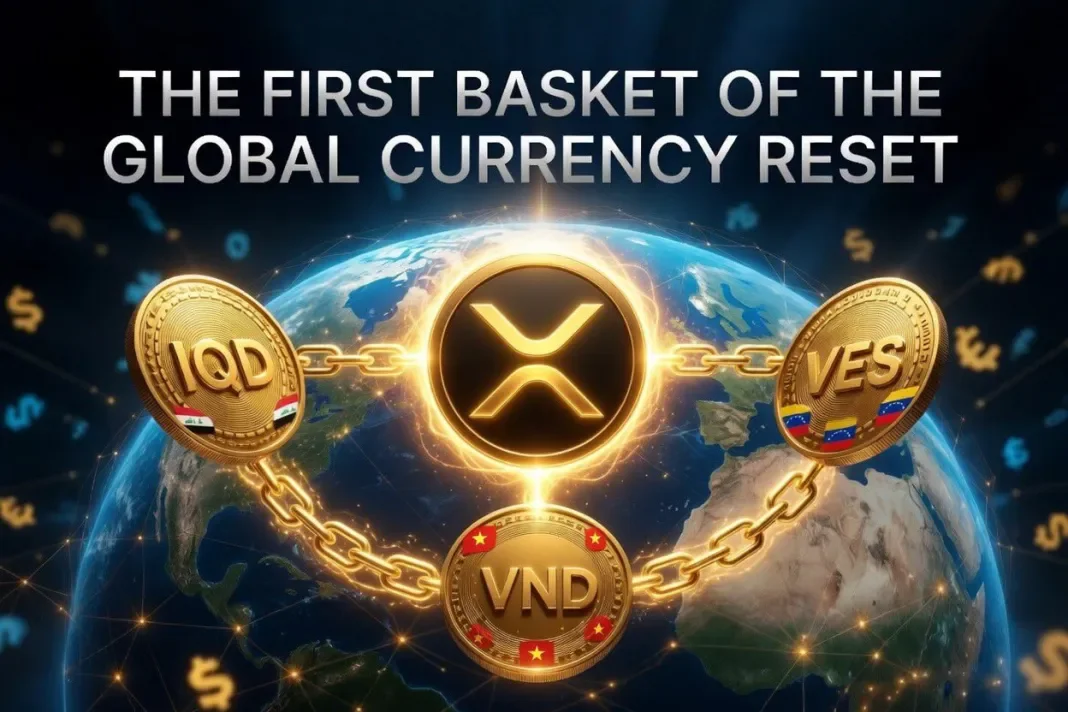
Ross: The First Basket of the Global Currency Reset
5-6-2026
The First Basket of the Global Currency Reset
Iraq, Vietnam & Venezuela are moving in perfect lockstep executing reforms that will finally let their currencies reflect their true national wealth.
IQD
CBI advancing deletion of three zeros reform project.
HCL progressing for oil revenue stability (requires a new rate).
Recent media & official statements confirm push to strengthen the dinar via banking upgrades.
Why advance three-zero deletion, push the HCL, and upgrade the entire banking system if not to prepare the Dinar for a major revaluation?
VND
Vietnam booming: 8%+ GDP growth in 2025 + record $27.6B disbursed FDI.
SBV aggressively de-dollarizing with 0% USD rates, FX interventions, swaps & capital controls.
Big tell: 5-year digital asset pilot requires ALL trading, issuance & settlement exclusively in VND.
Why force the entire new crypto market onto the Dong while supercharging growth if not to prepare it for a major revaluation?
VES
Post-Maduro transition: oil production surging past 1.1M bpd.
April 2026 major U.S. sanctions relief on Central Bank & state banks unlocks revenues.
Central Bank ramping up heavy dollar auctions & FX to stabilize rates and close black-market gaps.
Why flood the system with dollars and actively defend the Bolívar right after sanctions relief if not to prepare it for a major revaluation?
The Global Currency Reset is coming.
With the Clarity Act timing lining up perfectly to take every currency on-chain with the XRPL, each will finally reflect the true wealth of its nation.
Ask yourself this: Why are Iraq, Vietnam & Venezuela suddenly executing major reforms and actively defending their currencies right as the Clarity Act is about to be signed into law?
One of the most common questions in the GCR community is:
Is there a first basket?
Yes
Which currencies are in the first basket?
IQD, VND, VES
Are those countries ready?
Not yet, we’re still waiting.
Will they revalue at the same time?
They’re working in lockstep.
The common denominator is the Clarity Act which will put currencies on-chain.
If you want to know when the Global Currency Reset will happen, when currencies will revalue, look no further than the progress of crypto. It connects everything.
“Why would these countries revalue their currencies at the same time?”
If a single country RVs, once the cat is out of the bag, everything this community has talked about for decades comes to light…
What do you think would happen?
2 words.
Arbitrage.
Chaos.
There may be opportunities to double dip but between the major revaluations, good luck.
The First Basket may not just be IQD, VND & VES. These are just the three I focus on and for good reason:
They are moving in lockstep on their reforms.
Source(s):
• https://x.com/Ross_ptm/status/2051770827612606513
• https://x.com/Ross_ptm/status/2051790377166983486
https://dinarchronicles.com/2026/05/05/ross-the-first-basket-of-the-global-currency-reset
News, Rumors and Opinions Wednesday 5-6-2026
Reset Intelligence: The Majority of the World has no Idea What is Coming
5-5-2026
The world watches the legacy news and reads “economic collapse.”
• Fuel at the pump soaring.
• Iran missiles into the UAE.
• Pentagon presser pulled hours before Trump’s deadline.
• OPEC fracturing.
• Crypto regulation drifting.
Reset Intelligence: The Majority of the World has no Idea What is Coming
5-5-2026
The world watches the legacy news and reads “economic collapse.”
• Fuel at the pump soaring.
• Iran missiles into the UAE.
• Pentagon presser pulled hours before Trump’s deadline.
• OPEC fracturing.
• Crypto regulation drifting.
Multiple fronts, every other day. One death-spiral story.
It’s none of that.
This has always been part of the plan. Years in the making. Not reactive and not an economy on its way down.
The majority of the world watches the news and has no idea what is coming.
The door to global prosperity is waiting on the other side.
Caracas crossed that line on January 3. The bolivar is back on dollar settlement rails. US crude imports from Venezuela near-tripled in one quarter. Trump put it on the wire yesterday – the spirit is back, the rigs are going up.
Iraq is up next. 22 ministries getting named, Finance is the one that pressures the central bank on the rate.
And it lands with the vote next week.
You read the same news as everyone else. However, you see what is waiting on the other side.
Today’s full extended read in bio.
The UAE walked off OPEC after 59 years.
Mazrouei told CNN the reason on the day. “The Strait of Hormuz is closed.”
You don’t leave a 59-year membership when your seat is worth what it was last quarter.
You leave when the seat has stopped being worth what it was.
They are all in on the script.
Who’s next to run their lines and play their part?
Source(s):
• https://x.com/EXIT_FIAT/status/2051645483299574204
*************
Courtesy of Dinar Guru: https://www.dinarguru.com/
Stephen People ask me, could it happen this month? I don't know. I hope it does. But I think between now and the 4th of July is a realistic time frame...The most important thing and the most encouraging thing is that things are constantly moving forward. We are seeing so many things happen. We're seeing the pressure put on Iraq that I have never seen before in all my years invested in this currency.
Militia Man Iraq is better insulated than the headlines suggest...The situation around Iran and the Strait of Hormuz remains tense. Absolutely. But Iraq has clear advantages right now because of the diversification, because of the resilience they've built...Higher oil prices...are providing a short-term revenue buffer...but the whole time they're making money...Alternative routes and domestic gas, electricity efforts help offset any temporary disruptions...They're building resilience constantly.
Frank26 [Iraq boots-on-the-ground report] OMAR: An economist on television and says the significance of the fact that the [market] exchange rate is dropping in our country is good because once it gets close and starts hugging the official rate, 1300, it's going to be so much easier to drop the three zeros...Then he said if we do that then it would flush out the parallel market because the dinar would have strength, then people would use the dinar. FRANK: That's exactly what's going to happen. That's why the economist is saying this over again to these people. This is amazing...We all understand the logic of the monetary reform. We know the purpose is to add value, purchasing power. What he tells you today is absolutely 100% true.
2 Events Left Before The Dinar Revalues
Dinar For Dummies: 5-5-2026
Seeds of Wisdom RV and Economics Updates Wednesday Morning 5-6-26
Good Morning Dinar Recaps,
Global Trade Realignment Accelerates: China and Emerging Markets Push Back Against Dollar Dominance
New trade settlements and policy signals highlight a deepening shift toward a multipolar financial system
Good Morning Dinar Recaps,
Global Trade Realignment Accelerates: China and Emerging Markets Push Back Against Dollar Dominance
New trade settlements and policy signals highlight a deepening shift toward a multipolar financial system
OVERVIEW (KEY POINTS)
Global financial dynamics are shifting as China and multiple emerging economies expand efforts to reduce reliance on the U.S. dollar in trade settlements.
This is happening now as new agreements and policy signals emphasize local currency usage, bilateral trade arrangements, and alternative payment systems, accelerating a trend that has been building for years.
Key players include China, BRICS-aligned nations, and emerging market economies seeking to insulate themselves from currency volatility and geopolitical risk tied to the dollar system.
The broader implication is clear: the structure of global trade and reserves is gradually evolving toward a more diversified, multipolar framework.
KEY DEVELOPMENTS
1. China Expands Local Currency Trade Settlements
Shift away from dollar-based trade is accelerating.
Increased use of the yuan in cross-border transactions
Bilateral agreements reducing dependence on USD settlements
2. Emerging Markets Strengthen Currency Cooperation
Coordination is increasing.
Countries adopting local currency settlement frameworks
Regional trade agreements emphasizing currency diversification
3. Alternative Payment Systems Gain Momentum
Infrastructure is evolving.
Development of non-dollar payment networks
Integration of digital and centralized systems for cross-border trade
4. Central Banks Diversify Reserve Holdings
Reserve strategies are changing.
Increased allocation toward gold and non-dollar assets
Gradual reduction in reliance on traditional reserve structures
5. Dollar Remains Dominant but Under Pressure
Transition is gradual, not immediate.
USD still leading global reserves and transactions
However, long-term share is trending downward
WHY IT MATTERS
This shift reflects a broader structural change: global economies are seeking greater financial independence and resilience.
Reducing reliance on a single currency lowers exposure to sanctions, monetary policy spillovers, and exchange rate volatility.
For global markets, this introduces a more complex system where multiple currencies and payment channels coexist, potentially increasing fragmentation.
At the system level, it signals a move toward a multipolar financial order, reshaping how trade, reserves, and capital flows operate.
WHY IT MATTERS TO FOREIGN CURRENCY HOLDERS
Greater currency diversification impacts exchange rate stability
Reduced dollar dominance may shift purchasing power dynamics
Increased volatility during transition periods
Opportunities in emerging market currencies may expand
IMPLICATIONS FOR THE GLOBAL RESET
Pillar 1: Multipolar Currency System Emergence
Global trade is gradually transitioning toward a system where multiple currencies share influence rather than a single dominant reserve currency.
Pillar 2: Financial Infrastructure Transformation
New payment systems and settlement mechanisms are reshaping how cross-border transactions are conducted, reducing reliance on legacy systems.
CONCLUSION
The acceleration of de-dollarization efforts marks a significant evolution in the global financial system.
While the U.S. dollar remains dominant today, the growing adoption of alternative currencies and systems indicates a long-term structural transition.
This shift will not happen overnight, but the direction is clear—global finance is becoming more diversified, decentralized, and complex.
When trade systems evolve, the financial architecture that supports them must evolve as well—and that transformation is already underway.
Seeds of Wisdom Team
Newshounds News™ Exclusive
Sources
Reuters — "China expands yuan use in global trade settlements"
Reuters — "Emerging markets push for local currency trade alternatives"
~~~~~~~~~~
🌱 A Message to Our Currency Holders🌱
If you’ve been holding foreign currency for many years, you were not foolish.
You were not wrong to believe the global financial system would change.
What failed was not your patience — it was the information you were given.
For years, dates, rumors, and personalities replaced facts, structure, and proof. “This week” predictions created cycles of hope and disappointment that were never based on how currencies actually change.
That is not your failure.
Our mission here is different: • No dates • No rates • No hype • No gurus
Instead, we focus on:
• Verifiable developments • Institutional evidence
• Global financial structure • Where countries actually sit in the process
Currency value changes only come after sovereignty, trade, banking, settlement systems, and fiscal coordination are in place. History and institutions confirm this sequence.
You will see silence. You will see denials. That is not delay — that is discipline.
Protect your identity. Organize your documents. Verify everything.
Never hand your discernment to anyone who cannot show proof.
You deserve truth — not timelines.
Seeds of Wisdom Team
Newshounds News
~~~~~~~~~~
Seeds of Wisdom Team RV Currency Facts Youtube and Rumble
Newshound's News Telegram Room Link
RV Facts with Proof Links Link
RV Updates Proof links - Facts Link
Follow the Gold/Silver Rate COMEX
Follow Fast Facts
Seeds of Wisdom Team™Website
Thank you Dinar Recaps
Iraq Economic News and Points To Ponder Wednesday Morning 5-6-26
US, Iran Near Preliminary Deal To End War And Ease Hormuz Tensions
2026-05-06 Shafaq News- Washington The United States and Iran are nearing a preliminary agreement aimed at ending the war and opening broader nuclear negotiations, Axios reported on Wednesday, citing two US officials and two additional sources familiar with the talks.
The proposed one-page memorandum of understanding would establish a 30-day negotiation framework covering Iran’s nuclear program, sanctions relief, and navigation through the Strait of Hormuz. Washington is expecting Tehran’s response on several unresolved issues within the next 48 hours, with sources describing the discussions as the closest the two sides have come to a deal since the conflict began.
US, Iran Near Preliminary Deal To End War And Ease Hormuz Tensions
2026-05-06 Shafaq News- Washington The United States and Iran are nearing a preliminary agreement aimed at ending the war and opening broader nuclear negotiations, Axios reported on Wednesday, citing two US officials and two additional sources familiar with the talks.
The proposed one-page memorandum of understanding would establish a 30-day negotiation framework covering Iran’s nuclear program, sanctions relief, and navigation through the Strait of Hormuz. Washington is expecting Tehran’s response on several unresolved issues within the next 48 hours, with sources describing the discussions as the closest the two sides have come to a deal since the conflict began.
Under the draft proposal, Iran would temporarily suspend uranium enrichment, allow enhanced international inspections, and provide guarantees that it will not pursue nuclear weapons or related activities. In exchange, the United States would gradually ease sanctions and release billions of dollars in frozen Iranian assets.
The framework also includes phased steps to reopen shipping routes through the Strait of Hormuz, where tensions have disrupted global energy transit in recent weeks.
Axios identified the duration of the enrichment freeze as one of the main unresolved issues. Tehran has reportedly proposed a five-year suspension, while Washington initially pushed for 20 years, with current discussions focusing on a compromise ranging between 12 and 15 years.
Two sources also indicated that Iran may agree to transfer its stockpile of highly enriched uranium abroad, a demand Tehran had previously rejected.
Negotiations are being led by US Envoy Steve Witkoff and Jared Kushner, President Donald Trump’s son-in-law, alongside Iranian officials through direct and indirect channels, with Islamabad and Geneva under consideration for the next round of talks.
Pakistani Prime Minister Shehbaz Sharif welcomed the developments on X, expressing hope that ongoing efforts would lead to a lasting agreement supporting regional peace and stability. He also praised Trump for responding to appeals from Pakistan and other countries, particularly Saudi Arabia, by suspending the “Project Freedom” operation in the Strait of Hormuz.
Senior Israeli military officials, meanwhile, told Channel 12 that the United States lacks the capability to fully secure shipping through the strait. The officials described Trump’s decision to suspend the operation as significant, given the deteriorating regional security environment, and argued that US Central Command cannot guarantee the safety of oil tankers in the waterway. They also characterized an alternative maritime route proposed by Washington along Oman’s coast as narrow and highly vulnerable.
Read more: Washington pursues regional de-escalation through fragile frameworks
https://www.shafaq.com/en/World/US-Iran-near-preliminary-deal-to-end-war-and-ease-Hormuz-tensions
Oil Falls Nearly 2% After Trump Hints Iran Talks Breakthrough
2026-05-06 Shafaq News Oil prices fell for a second day on Wednesday on expectations bottled-up supply from the key Middle East producing region could resume flowing after U.S. President Donald Trump indicated a possible peace deal may be reached to end the war with Iran.
Brent crude futures fell $1.89, or 1.7%, to $107.98 a barrel as of 0340 GMT, after dropping 4% in the previous session. U.S. West Texas Intermediate futures eased $1.83, or 1.8%, to $100.44, after settling down 3.9% the day before.
On Tuesday, Trump unexpectedly said he would briefly pause an operation to help escort ships through the Strait of Hormuz, citing progress toward a comprehensive agreement with Iran, without giving details on the agreement. There was no immediate reaction from Tehran.
"This signals potential de-escalation and raises hopes for the release of stranded vessels inside the Gulf, which could gradually bring supply back to the market," said Anh Pham, senior research specialist for oil at LSEG.
Pham added that prices remain elevated with both Brent and WTI staying above $100 per barrel as prospects for a peace deal remain uncertain, while it will take time for trade flows to be fully restored even if a deal is reached.
Trump said the U.S. Navy would continue its blockade of Iranian ports. The supply loss to the global market has pushed prices higher with Brent trading last week at its highest since March 2022.
"We have mutually agreed that, while the Blockade will remain in full force and effect, Project Freedom ... will be paused for a short period of time to see whether or not the Agreement can be finalized and signed," Trump wrote on social media.
Trump's announcement came only hours after U.S. Secretary of State Marco Rubio briefed reporters on the effort, announced on Sunday, to escort stranded tankers through the strait. On Monday, the U.S. military said it had destroyed several Iranian small boats, as well as cruise missiles and drones, while guiding two vessels out of the Gulf through the strait.
The Strait of Hormuz closure has drawn down global inventories as refineries try to make up the production shortfall.
U.S. crude oil inventories fell for a third week, while gasoline and distillate stocks also declined, market sources said on Tuesday, citing American Petroleum Institute figures.
Crude stocks fell by 8.1 million barrels in the week ended May 1, the sources said. Gasoline inventories fell by 6.1 million barrels, while distillate inventories fell by 4.6 million barrels compared to a week earlier, the sources said.
(Reuters) https://www.shafaq.com/en/Economy/Oil-falls-nearly-2-after-Trump-hints-Iran-talks-breakthrough
Iraq's Consumer Prices Rise 1.6% In March
2026-05-06 Shafaq News- Baghdad Consumer prices in Iraq climbed 1.6% in March 2026, with the general price index reaching 110.6 points, up from 108.9 in February, according to the Commission of Statistics and GIS.
On an annual basis, the March index marks a 2.2% increase compared to the same month in 2025, when the index stood at 108.2 points.
For February 2026, the Commission reported a consumer price index of 108.9 points, up 1.0% from January's 107.8 points. The annual inflation rate for February stood at 0.8%, measured against February 2025, when the index recorded 108.0 points. https://www.shafaq.com/en/Economy/Iraq-s-consumer-prices-rise-1-6-in-March
Gold Prices Rise In Baghdad And Erbil Markets
2026-05-06 Shafaq News- Baghdad/ Erbil Gold prices climbed Wednesday in Baghdad and Erbil markets, surpassing the million-dinar mark, according to a Shafaq News market survey.
On Baghdad's Al-Nahr Street, wholesale markets recorded a selling price of 1.005 million IQD per mithqal (equivalent to five grams) for 21-carat Gulf, Turkish, and European gold, with a buying price of 1.001 million IQD, up from 983,000 IQD the previous session.
Iraqi 21-carat gold sold at 975,000 IQD per mithqal, with a buying price of 971,000 IQD.
In jewelry stores, 21-carat Gulf gold ranged between 1.005 million and 1.015 million IQD per mithqal, while Iraqi gold sold between 975,000 and 985,000 IQD.
In Erbil, prices also rose, with 22-carat gold selling at 1.048 million IQD per mithqal, 21-carat at 1.000 million IQD, and 18-carat at 857,000 IQD. https://www.shafaq.com/en/Economy/Gold-prices-rise-in-Baghdad-and-Erbil-markets-6-2
Dollar Steady In Baghdad, Rises In Erbil
2026-05-06 Shafaq News- Baghdad/ Erbil The US dollar opened Wednesday's trading steady in Baghdad and higher in Erbil, hovering around 153,000 dinars per 100 dollars in the capital.
According to Shafaq News market survey, the dollar traded in Baghdad's Al-Kifah and Al-Harithiya exchanges at 153,100 dinars per 100 dollars, unchanged from the previous session.
In the Iraqi capital, exchange shops sold the dollar at 153,500 dinars and bought it at 152,500 dinars, while in Erbil, selling prices stood at 153,300 dinars and buying prices at 153,150 dinars.
https://www.shafaq.com/en/Economy/Dollar-steady-in-Baghdad-rises-in-Erbil-2
Seeds of Wisdom RV and Economics Updates Tuesday Evening 5-5-26
Good Evening Dinar Recaps,
Oil Supply Surge Signals Shift: UAE Output Moves and OPEC Increase Point to Lower Energy Prices
Rising global production and policy signals suggest potential relief in fuel costs while reshaping energy market dynamics
Good Evening Dinar Recaps,
Oil Supply Surge Signals Shift: UAE Output Moves and OPEC Increase Point to Lower Energy Prices
Rising global production and policy signals suggest potential relief in fuel costs while reshaping energy market dynamics
OVERVIEW (KEY POINTS)
Global energy markets are reacting to signals of a potential increase in oil supply, driven by production moves from major producers and policy direction in key exporting nations.
This is happening now as officials highlight higher output expectations from OPEC members and record U.S. production, suggesting a shift toward greater supply availability.
Key players include the United States, OPEC nations, and the United Arab Emirates, all influencing the balance between oil supply, pricing, and global inflation trends.
The broader implication is significant: if supply increases materialize, energy prices could stabilize or decline, easing inflation pressures across the global economy.
KEY DEVELOPMENTS
1. OPEC Signals Increased Production
Supply outlook is shifting.
OPEC indicating plans to raise oil output levels
Move aimed at stabilizing markets and meeting global demand
2. UAE Production Strategy Draws Attention
Output expectations are rising.
UAE positioned to expand oil production capacity
Increased supply could influence global pricing benchmarks
3. U.S. Oil Production Hits Record Levels
Domestic output remains strong.
United States maintaining record crude production levels
Reinforces position as a leading global energy supplier
4. Market Expectations Shift Toward Oversupply
Supply-demand balance may change.
Analysts watching for potential excess supply conditions
Increased production could place downward pressure on prices
5. Inflation Relief Potential Emerges
Energy costs may ease broader pressures.
Lower oil prices could reduce fuel and transportation costs
Potential to moderate global inflation trends
WHY IT MATTERS
This development highlights a key dynamic: energy supply levels directly influence inflation and economic stability.
If oil supply increases significantly, it could reverse recent price spikes, helping stabilize markets and easing pressure on consumers and businesses.
For policymakers, lower energy prices would provide room to adjust or slow aggressive monetary tightening, improving economic flexibility.
At the system level, this signals a possible shift from energy-driven inflation toward stabilization, which could impact global financial conditions.
WHY IT MATTERS TO FOREIGN CURRENCY HOLDERS
Lower energy costs can strengthen import-dependent currencies
Purchasing power may improve as fuel prices decline
Reduced inflation pressure stabilizes exchange rates
Commodity currencies may face mixed impacts depending on price direction
IMPLICATIONS FOR THE GLOBAL RESET
Pillar 1: Energy Price Stabilization
An increase in global oil supply could ease one of the biggest drivers of recent inflation and economic instability.
Pillar 2: Shift in Energy Market Power
Rising U.S. output and expanded production from key nations signal a move toward a more competitive and diversified energy landscape.
CONCLUSION
The prospect of increased oil production from major players introduces a potential turning point for global energy markets.
If supply continues to rise, it could lead to lower fuel prices, easing inflation and providing relief across multiple sectors of the economy.
While uncertainties remain, the direction suggests a shift toward greater supply availability and reduced price pressure.
When energy supply expands, the ripple effects can stabilize economies and reshape financial conditions worldwide.
Seeds of Wisdom Team
Newshounds News™ Exclusive
Sources
Reuters — "OPEC signals higher output as global demand outlook evolves"
Reuters — "U.S. oil production reaches record highs amid global supply shifts"
~~~~~~~~~~
Seeds of Wisdom Team RV Currency Facts Youtube and Rumble
Newshound's News Telegram Room Link
RV Facts with Proof Links Link
RV Updates Proof links - Facts Link
Follow the Gold/Silver Rate COMEX
Follow Fast Facts
Seeds of Wisdom Team™Website
Thank you Dinar Recaps
Iraq Economic News and Points To Ponder Tuesday Evening 5-5-26
Al-Zaidi Is Close To Announcing His Government: Internal Consensus, International Openness, And Escalating Iranian Concern
Baghdad – One News 5/05/2026 Monte Carlo International Radio reported that Ali al-Zaidi, who is tasked with forming the Iraqi government, informed the Coordination Framework forces that his government formation is ready in preparation for presenting it to Parliament next week, in a move that indicates the political scene is nearing resolution after a period of intensive consultations.
Al-Zaidi Is Close To Announcing His Government: Internal Consensus, International Openness, And Escalating Iranian Concern
Baghdad – One News 5/05/2026 Monte Carlo International Radio reported that Ali al-Zaidi, who is tasked with forming the Iraqi government, informed the Coordination Framework forces that his government formation is ready in preparation for presenting it to Parliament next week, in a move that indicates the political scene is nearing resolution after a period of intensive consultations.
According to the sources, the anticipated government is heading towards broad participation that includes various political parties, with a notable presence of factions within the ministerial formation, reflecting an attempt to achieve internal balance and contain the various active forces.
In the same context, information indicated that there was no American veto on al-Zaydi’s ministerial choices, in exchange for clear pledges regarding dealing with the armed factions file, which may pave the way for a more stable relationship between Baghdad and Washington during the next stage.
In contrast, Iranian circles expressed concern about the extent of American and Western support that al-Zaidi enjoys, considering that this may affect the nature of the political balances within Iraq.
These developments come at a sensitive time, as the Iraqi public awaits the results of the new government formation and its ability to meet internal demands and maintain balance in regional and international relations.
https://1news-iq.net/الزيدي-يقترب-من-إعلان-حكومته-توافق-داخ/
The Fragility Of The Iraqi Economy Is Exacerbated By The Repercussions Of The Iran-Iraq War And The Closure Of The Strait Of Hormuz
Baghdad – One News 5/05/2026 The Lebanese newspaper Al-Akhbar stated that the Iraqi economy is the most fragile among the countries affected by the Strait of Hormuz closure crisis, due to its heavy reliance on oil revenues, which constituted about 86.3% of the budget revenues in 2024.
She pointed out that Iraq also depends on the passage of the majority of its imports, both food and non-food, through the strait, making it vulnerable to direct impacts in the event of a disruption to navigation, amid existing economic and social challenges, including an unemployment rate of about 15.5% and a poverty rate of nearly 17.5%.
She added that any disruption to shipping traffic in the Strait of Hormuz would quickly affect the government’s ability to finance public spending and implement its development plans, with concerns about delayed salary payments and rising commodity prices in local markets, further straining citizens’ purchasing power. https://1news-iq.net/الأخبار-اللبنانية-هشاشة-الاقتصاد-الع/
Al-Zaidi Offers To Mediate Between Iran And America To Resolve The Ongoing Conflict
Baghdad = One News 5/05/2026 Prime Minister-designate Ali al-Zaidi received a phone call from the Iranian President, who congratulated him on his official appointment to form the new government.
Both sides agreed to exchange visits during the next phase.
Al-Zaydi affirmed Iraq’s support for the diplomatic path and the adoption of dialogue to resolve disputes and contain crises, noting Baghdad’s ability to play a mediating role between Iran and the United States.
The Mediator In The Room: President Barzani Comes To Baghdad With More Than Erbil's Demands
2026-05-05 Shafaq News In Baghdad, governments are not born from ballot boxes alone; they emerge from a long chain of understandings, guarantees, and mutual anxieties, and it was into this chain that Kurdistan Region President Nechirvan Barzani pressed his weight during a two-day visit to the capital that, in its timing and the breadth of its meetings, amounted to something more deliberate than protocol.
On the surface, the visit followed a familiar pattern: a Kurdish leader arrives in Baghdad ahead of a new government cycle, reaffirms constitutional principles, and returns to Erbil.
But the political moment it landed in was anything but routine. Iraq's government formation process is unfolding under simultaneous pressure from an unresolved regional conflict, Washington's recalibrating posture toward Baghdad, Tehran's calculations about the next Iraqi cabinet, and a set of Erbil-Baghdad disputes —oil, salaries, budget allocations, the status of disputed territories under Article 140— that have not left the negotiating table in years.
Within the first hours of his arrival, Barzani met with leaders of the Shiite ruling Coordination Framework, including State of Law head, Nouri al-Maliki, caretaker Prime Minister Mohammed Shia al-Sudani, al-Hikma (Wisdom) Movement leader Ammar al-Hakim, then with prime minister-designate Ali Falah al-Zaidi, and leaders of the Sunni National Political Council.
Read more: Who is Ali Al-Zaidi? The businessman tapped for Iraq's premiership
The agenda moved from government formation to oil revenue sharing, salary arrears, the federal budget, and the necessity of insulating Iraq from regional escalation —a range that reflected not a courtesy call but a substantive attempt to shape the parameters of what comes next.
Official statements from the meetings emphasized the need for a government "commensurate with the challenges of the current phase," capable of meeting the demands of Iraq's constituent communities while resolving outstanding Erbil-Baghdad disputes on a constitutional basis. (Oil & Gas Law/HCL) Barzani also reaffirmed Kurdistan's readiness to support the new government's formation.
Read more: Ali al-Zaidi named Iraq's prime minister: Easy nomination, harder road ahead
Testing the Ground
Kurdish politician Abd al-Salam Barwari described the visit as "a new positive development for breaking the tensions that accompanied the post-presidential election phase" —tensions that had been building since the KDP staked a claim to the Iraqi presidency as a matter of established political entitlement, only to find Sunni and Shiite coalition leaders divided between rival Kurdish candidates, with some backing the PUK's nominee, Nizar Amedi, over Fuad Hussein, one of the KDP's most senior figures.
Barwari was careful to characterize Barzani's meetings as exploratory rather than conclusive— closer to preliminary consultations for testing positions and exchanging views before the moment of decision than to a finalized political settlement.
Speaking to Shafaq News, Barwari pointed to al-Zaidi's recent visit to Erbil, where the prime minister-designate met separately with Kurdistan Democratic Party (KDP) leader Masoud Barzani, President Nechirvan Barzani, PM Masrour Barzani, and Patriotic Union of Kurdistan head, Bafel Talabani, as evidence that the Kurdistan Region's position is being treated as a structural variable in the government formation calculus, not an afterthought.
The KDP's weight in that calculus is concrete: the party secured over one million votes in November's parliamentary elections, the highest total of any single party nationwide, translating into 26 seats in parliament, making it a bloc no government formation can ignore mathematically. Political circles in Baghdad read that visit as an attempt to avoid repeating the crises that plagued previous governments' relationships with the Region from the outset.
Researcher in political affairs Suhad al-Shammari offered a broader frame, noting that the current government formation is unfolding in conditions meaningfully different from previous cycles, with a prime minister-designate navigating simultaneously between rebuilding trust among political forces, managing divisions within each community, and arranging a working relationship with the Kurdistan Region that does not begin in confrontation.
Barzani's visit, in her assessment, signals Kurdistan's readiness to “engage constructively,” though she stopped short of predicting specific outcomes, describing the visit's likely contribution as “bringing positions closer rather than resolving the underlying disputes.”
That picture from the meetings said more than any statement. In one session with leaders of the Sunni National Political Council, Barzani sat at the center flanked by prominent Sunni figures, including rivals Khamis al-Khanjar and Mohammed al-Halbousi, a composition that appeared to summarize the visit's function.
He was not present solely as Erbil's representative but as someone operating in the grey space between adversaries, attempting to anchor a proposition: that the next government cannot be born from an internal Shiite understanding alone, nor from an isolated distribution of positions, but from a broader equilibrium that includes Kurds, Sunnis, and Shiites within a single political architecture.
Both sides agreed that the new government must prioritize services and reconstruction, and that dialogue among political forces must be the entry point for resolving crises rather than a formality that follows them.
Files That Never Leave the Table
Political analyst Ali al-Baydar situated the visit within a structural argument, telling Shafaq News that the issue is less about individual political figures than about the prevailing political culture, and that the next government will largely be a continuation of the Coordination Framework's internal balances, with the variable being how Baghdad manages its relationship with Erbil rather than whether that relationship changes fundamentally.
Al-Baydar assessed al-Zaidi as someone disinclined toward escalation with the Region or toward unilateral decisions against it, suggesting the new prime minister-designate may offer more room for addressing outstanding files within constitutional frameworks than his predecessors, while leaving open whether that room translates into resolved disputes.
Hussein al-Kinani, head of al-Hadaf Center for Studies, noted to Shafaq News that Barzani's meetings with al-Zaidi fall within the standard pattern of coalition-building that precedes every new government cycle, but that their substantive content centers on concrete unresolved files: the federal budget, oil exports, oil and non-oil revenues, and the degree to which both Erbil and Baghdad have honored previous agreements.
Those files carry weight beyond the political. Salaries in the Kurdistan Region have become a recurring living crisis for the population.
Oil has become the permanent headline of the constitutional and financial dispute between Erbil and Baghdad, a dispute sharpened in 2023 when the International Chamber of Commerce in Paris ruled that Turkiye must pay Iraq approximately $1.5 billion for breaching the Iraq-Turkiye Pipeline agreement by allowing unauthorized Kurdish oil exports, halting loading, and export operations through the pipeline, and significantly impacting the Region's revenues.
The budget, renegotiated in cycles, has exposed the fragility of arrangements that both sides treat as temporary. Taken together, they make Barzani's visit an early test of whether the incoming government intends to manage these crises as it finds them or move toward closing them, a distinction that matters more to the Region's population than to the political class on either side.
Read more: Into 2026, Baghdad and Erbil face the same disputes—with higher stakes
Al-Zaidi is operating under time pressure, constitutionally required to present his cabinet within 30 days, and aware that passing the government will require more than a numerical parliamentary majority; it will require understandings that ensure Kurdish and Sunni participation within an arrangement that no party feels excluded from.
Barzani's visit, in this reading, functions as an attempt to produce a dual political guarantee: an assurance to Erbil that the incoming Baghdad will not revert to the language of financial pressure and punitive measures, and an assurance to Baghdad that the Region will be a source of governmental stability rather than a recurring source of tension.
The details of ministerial portfolios and the distribution of positions also remain subject to ongoing negotiation. What Barzani's visit makes visible is that the contest over the next government is not only about who enters the cabinet, but about the shape of the state that cabinet will manage, the boundaries of the relationship between center and Region, and Iraq's capacity to hold its internal arrangements together in a region changing faster than its political class is moving to keep pace.
The Bill Comes Due
Three baseline conditions Barzani wanted to stress before the new government takes shape: genuine partnership in decision-making, constitutional rather than provisional solutions to the outstanding files, and Iraq's insulation from the currents of regional escalation. Whether those conditions become structurally embedded in the next government or remain aspirational language in post-meeting statements is the question the visit leaves open.
Written and edited by Shafaq News staff.
Rob Cunningham: Two XRP Paths, Rejection vs. Adoption
Rob Cunningham: Two XRP Paths, Rejection vs. Adoption
5-5-2026
Two XRP Paths: Rejection vs. Adoption
1) Total Failure Case — XRP → $0.00 (Global Rejection)
For XRP to go to $0, ALL of the following must occur – not one, but collectively:
Rob Cunningham: Two XRP Paths, Rejection vs. Adoption
5-5-2026
Two XRP Paths: Rejection vs. Adoption
1) Total Failure Case — XRP → $0.00 (Global Rejection)
For XRP to go to $0, ALL of the following must occur – not one, but collectively:
A. Regulatory Extinction (Binary Kill Switch)
Coordinated global classification as:
Unregistered security with no path to compliance
Or outright restriction in major jurisdictions (U.S., EU, Japan)
Exchanges delist → liquidity evaporates
Custodians refuse to hold → institutions cannot touch it
Without lawful on/off ramps, price discovery dies.
B. Institutional Rejection of XRPL Utility
Banks choose alternatives:
Private permissioned ledgers
CBDC rails with no bridge asset
No real transaction demand = no need for XRP as liquidity
Utility collapses → speculation alone cannot sustain value long term.
C. Liquidity D---h Spiral
Market makers exit
Spreads widen → volatility spikes
Capital rotates to “approved” rails
A monetary asset without liquidity becomes non-money.
D. Network Irrelevance
Developers leave
No meaningful tokenization, payments, or settlement flows
XRPL becomes a ghost chain
E. Loss of Trust (Final Blow)
Credible exploit, governance failure, or fatal flaw
Or simply: better, compliant alternative wins
XRP Truth Check
To reach $0.00, XRP must fail at:
Law (permission to exist)
Utility (reason to be used)
Liquidity (ability to transact)
Trust (confidence in system integrity)
That is a full-spectrum collapse, not a partial miss.
2) Adoption Case — XRP → $100 in 5 yrs (Major Integration)
Let’s flip the lens.
If XRP moves from $1.40 → $100 in 5 years, it’s a ~71× move – or 135% Compounded Annual Growth Rate (CAGR) over 5 years.
A. Regulatory Clarity (Foundation Layer)
Let’s tie this to:
1) Digital Asset Market Clarity Act
2) GENIUS Act
What must then be true:
1) XRP is clearly not a security in secondary markets
Legal frameworks enable XRP:
2) Custody
3) Settlement
4) Bank usage
5) Balance sheet treatment
B. Institutional Adoption (Demand Engine)
Banks, payment providers, and asset managers:
• Use XRP as bridge liquidity
• Integrate into cross-border settlement
• Leverage XRPL for tokenization rails
Think:
• Treasury flows
• FX settlement
• Tokenized securities movement
This is where real demand begins – not speculation.
C. Liquidity Scaling (Critical Inflection)
• Global payments: ~$100T+ annually
• Capital trapped in nostro/vostro accounts
• Settlement inefficiencies
If XRP:
1) Reduces friction
2) Frees capital
3) Enables atomic settlement
Then liquidity demand becomes structural, not optional.
D. Network Effects (Compounding Reality)
• More institutions → deeper liquidity
• Deeper liquidity → tighter spreads
• Tighter spreads → more usage
This is how a neutral bridge asset gains gravitational pull.
E. Monetary Role Expansion
For $100 to be rationally defensible:
XRP must evolve from:
“crypto asset”
into:
neutral settlement layer for value transfer
That implies:
• High velocity usage
• Deep global liquidity pools
• Continuous transactional demand
What $100 Actually Implies
Let’s speak plainly:
$100 XRP ≈ $5–6 trillion value
Comparable to:
• Gold (partial)
• Major sovereign liquidity layers
• Core financial infrastructure
This is not a “price move.”
This is a monetary role transition.
Final Discernment with No Hype
Buyers are not weighing:
“Will price go up or down?”
They’re weighing:
“Will the XRPL/XRP system be used… or not?”
Because price is downstream of one thing:
Sustained, lawful, global demand for its function
The Real XRP Question
If a system delivers:
• Faster settlement
• Lower cost
• Verifiable truth
• Reduced counterparty risk
Then ask:
Who, acting rationally, chooses a slower, more expensive, opaque alternative… if given a lawful choice?
That answer – not sentiment – determines whether XRP trends toward $0… or $100.
Watch on X: https://twitter.com/i/status/2051417187290636758
Source(s):
• https://x.com/KuwlShow/status/2051417187290636758
https://dinarchronicles.com/2026/05/04/rob-cunningham-two-xrp-paths-rejection-vs-adoption/
Ariel: Iraqi Dinar Update, the Ground Work is Complete
Ariel: Iraqi Dinar Update, the Ground Work is Complete
5-5-2026
We Will Jump Right Into This Report People
Everything is converging at once. The old system is being strangled by its own contradictions, and the pieces for a real Iraqi Dinar revaluation are snapping into place with ruthless precision.
I will write this as simply as possible. Because if you have been following me for the past couple of years you will already understand the importance of certain details.
Ariel: Iraqi Dinar Update, the Ground Work is Complete
5-5-2026
We Will Jump Right Into This Report People
Everything is converging at once. The old system is being strangled by its own contradictions, and the pieces for a real Iraqi Dinar revaluation are snapping into place with ruthless precision.
I will write this as simply as possible. Because if you have been following me for the past couple of years you will already understand the importance of certain details.
The IMF is demanding gold backing to stabilize the currency against fluctuations. President Nizar Amedi and Governor Ali al-Alaq have publicly stressed strengthening the dinar. You cannot anchor with gold, go fully cashless by July 2026, and maintain a weak, manipulated rate.
The old banks’ resistance protecting parallel market skims and militia flows is being steamrolled. A meaningful revaluation plus redenomination (“delete the zeros”) becomes structural survival, not optional policy.
What This Means for American IQD Holders
The revaluation will not come through some magical CBI press release. It will come through this perfect-storm alignment: stable government, HCL passage, oil revenue flood, gold anchoring, cashless infrastructure, and international bond/capital inflows that create genuine demand for the dinar.
Once the rate strengthens and stabilizes (gold-backed, tradable on forex windows), the path for US holders opens through compliant American banks.
The process will involve:
– KYC/AML verification (citizenship and source-of-funds checks already being hardened).
– Exchange through authorized correspondent or Treasury-aligned channels.
– Conversion into USD or direct digital rails under the new US Treasury Dollar framework.
Read Full Article:
https://www.patreon.com/posts/iraqi-dinar-we-157370902
https://dinarchronicles.com/2026/05/04/prolotario-iraqi-dinar-update-the-ground-work-is-complete/
Seeds of Wisdom RV and Economics Updates Tuesday Afternoon 5-5-26
Good Afternoon Dinar Recaps,
Global Inflation Shock Deepens: Oil Crisis Forces Central Banks Into Tightening Trap
Rising energy prices and bond market stress are accelerating inflation risks and reshaping global monetary policy
Good Afternoon Dinar Recaps,
Global Inflation Shock Deepens: Oil Crisis Forces Central Banks Into Tightening Trap
Rising energy prices and bond market stress are accelerating inflation risks and reshaping global monetary policy
OVERVIEW (KEY POINTS)
Global financial conditions are tightening rapidly as energy-driven inflation surges and bond yields climb, forcing central banks into increasingly restrictive policy positions.
This is happening now due to the ongoing conflict impacting oil flows, which is pushing prices higher and feeding directly into inflation expectations and borrowing costs worldwide.
Key players include central banks in Australia, Europe, and emerging markets, alongside bond markets reacting to persistent inflation and policy uncertainty.
The broader implication is clear: the global system is entering a phase of prolonged tightening and structural stress, a key signal of deeper financial realignment.
KEY DEVELOPMENTS
1. Central Banks Raise Inflation Forecasts
Inflation outlook is worsening globally.
Australia’s central bank expects inflation near 5% peak levels
Oil shock driving persistent price pressures across economies
2. Interest Rates Continue Moving Higher
Policy tightening is accelerating.
Australia raised rates to 4.35%, reversing prior easing
Markets expect further hikes as inflation remains elevated
3. Bond Yields Surge to Multi-Year Highs
Debt markets signal stress.
U.S. long-term Treasury yields rising above 5%
Inflation expectations increasing across global markets
4. Global Growth Outlook Weakens
Economic slowdown risks are rising.
Growth forecasts downgraded amid higher energy costs
Businesses and households facing reduced spending power
5. Financial Markets Show Diverging Signals
Volatility is increasing.
Stocks rising on earnings despite macro risks
Commodities and bonds signaling underlying instability
WHY IT MATTERS
This moment reflects a critical shift: inflation is no longer temporary—it is becoming structurally embedded through energy and supply shocks.
Markets are reacting through rising yields and volatile asset pricing, indicating tightening financial conditions across the system.
For policymakers, the challenge is intensifying. Raising rates risks slowing economies, but failing to act risks entrenched inflation cycles.
At the system level, this signals a transition toward higher-cost capital, reduced liquidity, and increased financial fragility.
WHY IT MATTERS TO FOREIGN CURRENCY HOLDERS
Purchasing power declines as inflation rises globally
Currency volatility increases with diverging policies
Higher interest rates strengthen select currencies
Emerging markets face capital outflow pressure
IMPLICATIONS FOR THE GLOBAL RESET
Pillar 1: Global Liquidity Contraction
Rising interest rates and bond yields are reducing liquidity, forcing a repricing of assets, debt, and risk across the system.
Pillar 2: Energy-Driven Monetary Constraint
Persistent oil shocks are limiting central bank flexibility, creating a system where inflation dictates policy rather than growth priorities.
CONCLUSION
The combination of rising oil prices, higher inflation, and surging bond yields marks a significant turning point in global financial conditions.
As central banks tighten policy and markets adjust to higher costs of capital, the ripple effects are spreading across economies and currencies.
This is not a temporary disruption—it reflects a deeper structural shift in how the global financial system operates under sustained pressure.
When inflation and interest rates rise together, the financial system is forced into a fundamental recalibration.
Seeds of Wisdom Team
Newshounds News™ Exclusive
Sources
Reuters — "Australia central bank warns of rising inflation, slower growth as oil shock bites"
MarketWatch — "Long-term Treasury yields above 5% as rising oil prices stoke inflation concerns"
~~~~~~~~~~
Seeds of Wisdom Team RV Currency Facts Youtube and Rumble
Newshound's News Telegram Room Link
RV Facts with Proof Links Link
RV Updates Proof links - Facts Link
Follow the Gold/Silver Rate COMEX
Follow Fast Facts
Seeds of Wisdom Team™Website
Thank you Dinar Recaps
Iraq Economic News and Points To Ponder Tuesday Afternoon 5-5-26
Oil Dips As US Moves To Reopen Strait Of Hormuz
2026-05-05 Shafaq News Oil prices eased more than 1% on Tuesday after climbing by as much as 6% in the previous session on signs the U.S. Navy is loosening Iran's grip on the Strait of Hormuz, potentially opening up supply from the Middle East.
The U.S. on Monday launched a new operation aimed at reopening the strait to shipping. Maersk (MAERSKb.CO), later said the Alliance Fairfax, a U.S.-flagged vehicle carrier, exited the Gulf via the strait accompanied by the U.S. military, easing some supply disruption fears.
Oil Dips As US Moves To Reopen Strait Of Hormuz
2026-05-05 Shafaq News Oil prices eased more than 1% on Tuesday after climbing by as much as 6% in the previous session on signs the U.S. Navy is loosening Iran's grip on the Strait of Hormuz, potentially opening up supply from the Middle East.
The U.S. on Monday launched a new operation aimed at reopening the strait to shipping. Maersk (MAERSKb.CO), later said the Alliance Fairfax, a U.S.-flagged vehicle carrier, exited the Gulf via the strait accompanied by the U.S. military, easing some supply disruption fears.
Brent oil futures for July fell $1.22, or 1.1%, to $113.22 per barrel at 0323 GMT after settling up 5.8% on Monday. U.S. West Texas Intermediate (WTI) crude fell $2.02, or 1.9%, to $104.40, after gaining 4.4% in the previous session.
"The successful escorted exit of the Maersk-operated vessel has helped ease some immediate supply disruption fears," said Tim Waterer, chief market analyst at KCM Trade.
"It shows that limited safe passage is possible under current conditions and helps chip away at some of the worst-case supply disruption fears. However, it's still very much a one-off event rather than a full reopening," he said in an email.
Still, Iran launched attacks in the Gulf on Monday to counter the U.S. move as they wrestle for control over the Strait of Hormuz, which connects the Gulf to wider markets and typically carries oil and gas supply equal to about 20% of global demand every day.
Several commercial vessels were reportedly struck in the area, while a key oil port in the United Arab Emirates was set ablaze after an Iranian strike. Trump's attempt to use the U.S. Navy to free up shipping is the war's biggest escalation since a ceasefire was declared four weeks ago.
The U.S. is pushing to open Hormuz to ease a massive disruption to global energy supplies since Iran mostly shut the strait after the U.S. and Israel started the war on February 28.
Some analysts attributed the slight drop in oil prices on Tuesday to profit-taking moves.
"The recent dip does look like a bit of profit-taking after a strong run-up, rather than a structural shift in the backdrop," said Priyanka Sachdeva, a senior market analyst at Phillip Nova. "The geopolitical risk premium tied to the Strait of Hormuz remains firmly in place, so the downside is likely to stay limited."
"In the very near term, prices could see some consolidation or mild pullback as markets reassess positioning and react to mixed diplomatic signals."
On Monday, Chevron (CVX.N), Chairman and CEO Mike Wirth said physical shortages in oil supply would begin appearing around the world because of the Hormuz closure.
Because of the disruptions, global oil stocks are approaching their lowest level in eight years, Goldman Sachs said on Monday, warning that the speed of depletion was becoming a concern as supplies remained restricted.
(Reuters) https://shafaq.com/en/Economy/Oil-dips-as-US-moves-to-reopen-Strait-of-Hormuz
Iraq's poultry imports from Brazil drop 30.8% in 2025
2026-05-05 Shafaq News- Brasilia Iraq imported 34,500 tons of Brazilian poultry in 2025, down from 49,900 tons the previous year, according to data published by the Brazilian Animal Protein Association (ABPA).
Brazil's overall poultry export volumes remained broadly stable over the same period, reaching 5.16 million tons, a marginal increase of 0.11% year-on-year, ABPA data showed.
Logistics disruptions along key shipping routes to the Middle East contributed to the trade contraction. Brazilian meat exporters rerouted Iraq-bound shipments through alternative corridors —including the Red Sea, the Suez Canal, and overland trucking— following disruptions tied to regional conflict and reduced traffic through the Strait of Hormuz, Reuters reported in March 2025. The rerouting drove up transportation, fuel, and storage costs, a portion of which was passed on to importers.
Iraq's trade relationship with Brazil remained structurally asymmetric in 2025. Brazilian exports to Iraq totaled approximately $1.49 billion, led by food and agricultural commodities including sugar, vegetable oils, and meat, according to United Nations COMTRADE data. Iraqi exports to Brazil over the same period amounted to $3.06 million.
https://shafaq.com/en/Economy/Iraq-s-poultry-imports-from-Brazil-drop-30-8-in-2025
Iraq tops Iranian exports via Kermanshah at ~$150M
2026-05-05 Shafaq News- Baghdad/ Tehran Iraq accounted for the largest share of Iranian exports through Kermanshah province last month, with shipments exceeding $148 million, Kermanshah Customs Director General Reza Nikroush said on Tuesday.
Reported by Iranian outlets, Nikroush said total exports reached about 459,000 tons via border crossings in the province. Sumar led export value, followed by Parviz Khan and Khosravi, while Sheikh Saleh and Shoushmi handled smaller volumes.
Exports included iron and steel products, rebar, tomato paste, urea fertilizer, powdered milk, stone, and watermelon, with most shipments bound for Iraq, which accounted for about 17.6% of Iran’s total exports in recent trade data.
https://shafaq.com/en/Economy/Iraq-tops-Iranian-exports-via-Kermanshah-at-150M
Oil Exports Continue Through Rabia Border Crossing Toward Syria
2026-05-05 Shafaq News- Nineveh Oil exports continue through the Rabia border crossing in Iraq’s northern Nineveh province toward Al-Yarubiyah on the Syrian side, at a rate ranging between 15 and 40 tanker trucks per day, a customs source told Shafaq News on Tuesday.
The activity at the crossing remains active, he added, noting that other commercial goods are also being exchanged between the two countries.
On May 1, Iraq launched its first crude oil export operation through crossing, dispatching an initial shipment of 70 tanker trucks to regional markets. The Rabia–Al-Yarubiyah crossing between Iraq and Syria reopened to trade and passenger traffic on April 22 after 13 years of closure driven by security challenges during the fight against ISIS, as well as shifting control and coordination issues along the frontier.
Iraqi and Syrian authorities have gradually rehabilitated several crossings, including Al-Waleed and Al-Yarubiyah, to restore trade routes and facilitate the movement of goods and passengers. https://shafaq.com/en/Economy/Oil-exports-continue-through-Rabia-border-crossing-toward-Syria
Dollar Climbs In Baghdad And Erbil Markets
2026-05-05 Shafaq News- Baghdad/ Erbil The US dollar closed Tuesday’s trading higher in Iraq, hovering around 154,000 dinars per 100 dollars.
According to Shafaq News market survey, the dollar traded in Baghdad's Al-Kifah and Al-Harithiya exchanges at 153,500 dinars per 100 dollars, up from the morning session’s 153,100 dinars.
In the Iraqi capital, exchange shops sold the dollar at 154,000 dinars and bought it at 153,000 dinars, while in Erbil, selling prices stood at 153,350 dinars and buying prices at 153,250 dinars.
https://shafaq.com/en/Economy/Dollar-climbs-in-Baghdad-and-Erbil-markets-9
Iraq Settles Farmer Payments Following Protest Crackdown
2026-05-05 Shafaq News- Baghdad Iraq’s cabinet on Tuesday approved the payment of farmers’ dues for the 2024–2025 and 2025–2026 agricultural seasons after protests over delayed payments escalated in Baghdad.
The cabinet decided to delay the collection of land lease and irrigation fees until farmers’ wheat dues are settled, and directed the Finance Ministry to include loan amounts and accrued interest in the upcoming federal budget bill and provide guarantees for repayment to the Trade Bank of Iraq.
Wheat pricing and procurement terms for the 2025–2026 season were also revised, with the cabinet setting prices at 700,000 Iraqi dinars (about $467) per ton for crops within the agricultural plan and 500,000 dinars (about $333) for those outside it, alongside yield estimates of 900 kg per dunam for modern irrigation systems, 750 kg for irrigated land, and 300 kg for rain-fed areas, while allocating 400,000 tons to the Kurdistan Region, including 292,000 tons within the plan.
Hundreds of farmers from central and southern provinces gathered in Baghdad’s Tahrir Square on May 3 and attempted to march toward the Green Zone, demanding their financial entitlements and revisions to wheat pricing. Security forces used water cannons and electric stun devices to disperse them and block their advance across Al-Jumhuriya Bridge, leaving at least 17 injured.
Following the clashes, caretaker Prime Minister Mohammed Shia Al-Sudani ordered authorities to receive farmers’ demands and launched an investigation into the conduct of security forces.
https://shafaq.com/en/Iraq/Iraq-settles-farmer-payments-following-protest-crackdown
Iraq Seizes 255 Archaeological Artifacts Between Basra And Dhi Qar
2026-05-05 Shafaq News- Basra Iraq’s National Security Service seized on Tuesday 255 archaeological artifacts hidden inside abandoned quarries between the southern provinces of Basra and Dhi Qar.
The seized items included ancient coins, archaeological objects, ceramic and metal vessels, and stone artifacts of various shapes and sizes, and they were reportedly intended for sale or smuggling abroad.
Iraq has recovered more than 40,000 artifacts in 2024 and 2025 through a combination of local seizures and international repatriations, according to the Ministry of Culture, Tourism, and Antiquities.
Https://Shafaq.Com/En/Society/Iraq-Seizes-255-Archaeological-Artifacts-Between-Basra-And-Dhi-Qar