Central Bank of Iraq Governor “Working Quietly”
Central Bank of Iraq Governor “Working Quietly”
Reset Intelligence: 5-5-2026
Saturday at the Sin Dialogue Forum in Baghdad. The governor of Iraq’s central bank, Ali al-Alaq, told a room of decision-makers one phrase.
“We are working quietly.”
Alaq does not say that by accident.
Central Bank of Iraq Governor “Working Quietly”
Reset Intelligence: 5-5-2026
Saturday at the Sin Dialogue Forum in Baghdad. The governor of Iraq’s central bank, Ali al-Alaq, told a room of decision-makers one phrase.
“We are working quietly.”
Alaq does not say that by accident.
Here is what the room got told next.
• Cash dollar imports cut from 14 billion to 4 billion in 12 months.
• 95 percent of dollar sales now move through the electronic platform.
• Foreign transfers covered daily, oil-export halt notwithstanding.
• 79 commercial banks queued behind it for digital banking licenses.
Note, this is not a status update. I would more appropriately classify as a plumbing diagram.
Without the plumbing, a new rate is a press release. With it, the rate transmits.
Read it again.
The wholesale rail is built. The retail rail is loading. Treasury can audit, sanction, and switch the platform off bank by bank. Meaning a clean IQD runs through pristine rails on both shores.
That is the difference between theatre and architecture.
Seat the chair. Pass the budget. Move the rate.
23 days.
Bessent on Sunday Morning Futures.
“We are suffocating the regime, and they are not able to pay their soldiers.”
Then he named the post-war price deck.
• Oil lower than going in.
• UAE out of OPEC.
• Most monopolies eventually collapse under their own weight.
We’ve said it before…The playbook that ran on Caracas in January is the playbook running on Tehran now.
100+ years of receipts on this exact pattern.
Today CENTCOM launched Project Freedom in the Strait of Hormuz.
• 15,000 service members.
• Over 100 aircraft. Guided-missile destroyers in the vicinity, not directly escorting per the Pentagon walk-back.
Two regimes now claim the right to direct the same ships in the same water.
Interesting to witness the first time a US destroyer interrupts an Iranian inspection in progress, the disagreement could be fire.
Watch the Strait this week.
The US dollar fell against the dinar in Baghdad and Erbil over the weekend.
The Kurdistan Region banned forex and crypto trading the same day. Plugging holes everywhere.
Meanwhile 79 commercial banks queued behind the central bank’s electronic rail for digital licenses.
The wholesale rail is built. The retail rail is loading.
Anyone else notice how quiet that was?
Source(s):
• https://x.com/EXIT_FIAT/status/2051255503318384825
More Iraq News Posted by Tishwash at TNT 5-5-2026
TNT:
Tishwash: Parliamentary emphasis on the priority of enacting the oil and gas law
The Parliamentary Oil, Gas, and Natural Resources Committee stressed the importance of the government expediting the submission of draft laws, foremost among them the draft oil and gas law, given its pivotal role in regulating the management of natural resources and developing this vital sector.
During its regular meeting on Monday, the committee discussed the mechanisms for the upcoming phase, particularly organizing meetings with relevant stakeholders and officials from the Ministry of Oil, with the aim of following up on files related to the oil and gas sectors and enhancing institutional coordination.
TNT:
Tishwash: Parliamentary emphasis on the priority of enacting the oil and gas law
The Parliamentary Oil, Gas, and Natural Resources Committee stressed the importance of the government expediting the submission of draft laws, foremost among them the draft oil and gas law, given its pivotal role in regulating the management of natural resources and developing this vital sector.
During its regular meeting on Monday, the committee discussed the mechanisms for the upcoming phase, particularly organizing meetings with relevant stakeholders and officials from the Ministry of Oil, with the aim of following up on files related to the oil and gas sectors and enhancing institutional coordination. link
Tishwash: Kurdish demands on the table for the next government: oil, salaries, and Article 140
Political reactions continue to pour in regarding Prime Minister-designate Ali al-Zaidi's visit to the Kurdistan Region and his meetings with Kurdish leaders in Erbil and Sulaimaniyah. This visit has been described as pivotal in the process of forming the next government, with many emphasizing its importance in solidifying understandings between Baghdad and Erbil.
In this context, Suzan Mansour, a leading figure in the Patriotic Union of Kurdistan (PUK), affirmed that al-Zaidi's visit is a "necessary" step to ensure the impartiality of the next government and to strengthen trust among the various political factions.
Mansour stated that "al-Zaidi's visit to the region sends a reassuring message that the upcoming government seeks to maintain an equal distance from all forces and components," adding that "the issues raised by the region are not new, but rather long-standing demands that require fundamental solutions within the framework of the upcoming government program."
She added that “the most prominent Kurdish demands include securing the salaries of the region’s employees, enacting the oil and gas law, activating Article 140 of the Constitution, and guaranteeing the region’s share of the federal budgets.” She noted that “raising these issues at this time aims to end the chronic disputes between Baghdad and Erbil and find common ground for government action.”
For his part, Kurdistan Democratic Party (KDP) leader Mahma Khalil revealed details of the meetings between al-Zaidi and the region’s leaders, confirming that the party was among the first to support him in the process of forming the next government.
Khalil said that “the meetings held by the prime minister-designate with both Masoud Barzani and Nechirvan Barzani were fruitful, and during them, the party’s support for the next government was confirmed.” He explained that “Barzani laid out three fundamental pillars for participation in the government: genuine partnership in decision-making, achieving balance within state institutions, and adopting political consensus among all parties.”
Regarding the parliamentary stance, Khalil clarified that “the decision by Democratic Party MPs not to attend parliamentary sessions is a temporary suspension, not a withdrawal or boycott of the political process,” noting that “other political forces have previously taken this measure for various reasons.”
This political activity comes at a time when the Iraqi political scene is witnessing intensive efforts to bridge the gaps between political forces, particularly concerning the long-standing points of contention between the federal government and the Kurdistan Region, amid anticipation of the outcome of ongoing discussions regarding the formation of the next government and its political program. link
************
Tishwash: Iraq reduces oil prices for buyers who decide to pass through the Strait of Hormuz
Bloomberg reported on Tuesday that Iraq is offering significant discounts on oil shipments to long-term contract buyers in May, but tankers must still transit the Strait of Hormuz to collect cargoes from within the Gulf, amid escalating regional tensions.
According to a notice from Iraq's State Oil Marketing Organization (SOMO), reviewed by Bloomberg, the discounts offered by the OPEC member reach $33.40 per barrel for Basra Medium crude, compared to official prices. The notice, dated May 3, outlines varying pricing levels throughout the month in an effort to incentivize buyers, despite the risks associated with shipping. link
*************
Tishwash: Parliament announces it will receive the government program from Al-Zidi by the end of this week.
Parliament Speaker Hebat al-Halbousi confirmed on Monday (May 4, 2026) that the parliament will receive the government program from Ali al-Zaidi, who is tasked with forming the new government, by the end of this week, while he indicated that the names of the ministerial cabinet will be put to a vote next week.
The media office of the House of Representatives said in a statement received by "Baghdad Today" that "the House of Representatives concluded its twenty-second session held today, Monday, under the chairmanship of Speaker Hebat Al-Halbousi and with the attendance of 217 members, four draft laws."
She added that "the Speaker of the Council confirmed at the beginning of the session that the House of Representatives will receive, at the end of this week, the government program from Ali al-Zidi, who is tasked with forming the new government, in order to inform the members of the Council about it and study it by the Strategic Planning and Government Program Committee," noting that "the names of the ministerial cabinet will be presented next week for a vote by the House of Representatives." link
Tishwash: Sudani and Barzani stress the need to expedite the formation of the new government
Prime Minister Mohammed Shia al-Sudani and President of the Kurdistan Region of Iraq, Nechirvan Barzani, discussed on Monday the efforts being made to form the new government, stressing the need to expedite its formation.
The Prime Minister's Media Office said in a statement that "Prime Minister Mohammed Shia Al-Sudani received the President of the Kurdistan Region of Iraq, Nechirvan Barzani."
The statement added that "the meeting discussed the general situation in the country and reviewed the efforts made to form the new government, stressing the need to expedite its formation in a way that reflects the aspirations and hopes of all the people throughout Iraq."
He added that "the meeting addressed the political, economic and developmental achievements made during the current government's term, with Barzani expressing his appreciation for Al-Sudani's efforts and his keenness to manage understandings leading to legal and constitutional solutions between the federal government and the regional government."
He explained that "the two sides discussed developments in the region and the tensions it is witnessing, and emphasized the importance of Iraq's efforts in supporting regional and international stability in a way that contributes to strengthening the country's sovereignty." link
News, Rumors and Opinions Tuesday 5-5-2026
Note: All intel should be considered as "Rumors" until we receive official announcements ...and “Rates and Dates” could change anytime until we get to the banks/redemption centers.
RV Excerpts from the Restored Republic via a GCR Update as of Tues. 5 May 2026
Compiled Tues. 5 May 2026 12:01 am EST by Judy Byington
“All that we are is the result of what we have thought.” …Buddha
Judy Note: The Old Word of foreign bankers was disappearing as their fiat Federal Reserve US Dollar died – they just hadn’t had the funeral yet – though, Trump had (allegedly) scheduled it for Fri. 15 May 2026.
Note: All intel should be considered as "Rumors" until we receive official announcements ...and “Rates and Dates” could change anytime until we get to the banks/redemption centers.
RV Excerpts from the Restored Republic via a GCR Update as of Tues. 5 May 2026
Compiled Tues. 5 May 2026 12:01 am EST by Judy Byington
“All that we are is the result of what we have thought.” …Buddha
Judy Note: The Old Word of foreign bankers was disappearing as their fiat Federal Reserve US Dollar died – they just hadn’t had the funeral yet – though, Trump had (allegedly) scheduled it for Fri. 15 May 2026.
“Expect a Worldwide financial crash, fiat US Dollar, banks closing, ATMs not working. It’s advised to take money out of your failing bank before the bank freezes your account.
Global Currency Reset:
Mon. 4 April 2026: OFFICIAL! WHITE HAT MILITARY TAKES CONTROL OF GLOBAL MONEY SYSTEM — NESARA ACTIVE, QFS PAYMENTS LIVE, REDEMPTION CENTERS OPEN, TRILLIONS RELEASED … on Telegram
White Hat military forces have (allegedly) seized full operational command of the global financial redemption. They direct the release of trillions in asset-backed funds across 209 nations, dismantling the old fiat debt system and installing the Quantum Financial System as the unbreakable backbone of sovereign economies.
This process strips power from central banks that bled American citizens for generations. The QFS operates on quantum-secured ledgers that reject manipulation, usury, and hidden taxation. Every redemption transaction traces in real time, shielding patriots and everyday workers from the theft that funded endless wars and bureaucratic empires.
President Trump’s team coordinates this with military precision. Secure channels (allegedly) routed the final triggers, bypassing compromised institutions to deliver immediate liquidity to aligned nations.
America’s 250th anniversary on July 4, 2026, (allegedly) marks the public unveiling. Trump prepares a declaration that restores constitutional money and ends the private Federal Reserve’s stranglehold. This date delivers the decisive blow against globalist control and returns economic sovereignty to the people who built this republic.
NESARA (allegedly) activates the framework that cancels illegitimate debt, abolishes the income tax on wages, and returns seized wealth to American families. GESARA extends the same protections worldwide. White Hats have (allegedly) released initial tranches with funds flowing into redemption accounts and sovereign treasuries right now.
The old system collapses under its own weight while the new one stands operational and defended by military assets. Trump’s preparations tie directly into this reset through public events celebrating restored freedom alongside tangible prosperity.
The Deepstate can (allegedly) no longer suppress this transition via controlled media and financial gatekeepers. Military oversight ensures American citizens receive priority protection while the bureaucracy that enriched itself at their expense is starved. This fulfills the America First mandate.
Sovereignty returns to the people. Citizens reclaim control over their labor, land, and future. The global currency reset completes under White Hat direction, and July 4, 2026, will etch this victory into history.
Read full post here: https://dinarchronicles.com/2026/05/05/restored-republic-via-a-gcr-update-as-of-may-5-2026/
Courtesy of Dinar Guru: https://www.dinarguru.com/
Jeff Things are looking very good. Most likely during next week to announce the lineup of the ministers and have it ready for a vote as well within two weeks. If they can get that done, that means they're positioned to possibly revalue the currency in the second half of May. We've got to watch this movement very closely.
Frank26 [Iraq boots-on-the-ground report] OMAR: Alaq is saying, 'I've not said anything about changing the rate, that's all just on social media, it's in the media of Iraq, we still need stability and we're not going to risk the changing of the rate' says Alaq. FRANK: If Alaq continues to insist there's no rate changing, then you can take this to the bank, he will be gone very soon. Mark my words. OMAR: Alaq has made it clear...They will work with the government but he runs the CBI. FRANK: He is delusional...The board of directors are the ones that run the CBI and they answer to the IMF...WB. They even work with the US. This man is definitely gone. Remember I told you that.
Mnt Goat If al-Zaydi [Iraqi Prime Minister-designate] takes the appropriate steps toward dismantling the PMF, and any terrorist groups operating in Iraq, then parliament passes the Oil and Gas Law (which they already told us is a priority in this new parliament) we could be into some smooth sailing towards the reinstatement process to move ahead.
***************
Gold Price Sees Final C-Wave Correction, Final Gift Before $6,000 - Gary Wagner
Daniela Cambone: 5-4-2026
"I believe that gold will challenge $6,000 per ounce sometime by the end of this year. It's got a very decent probability." Veteran technical analyst Gary Wagner breaks down the Elliott Wave pattern signaling one last dip before gold resumes its historic rally.
Seeds of Wisdom RV and Economics Updates Tuesday Morning 5-5-26
Good Morning Dinar Recaps,
Global Policy Shift Emerges: Central Banks Hold Firm as Inflation Risks Reignite
Sticky inflation and geopolitical pressures are forcing central banks to delay easing, signaling a longer period of tight financial conditions
Good Morning Dinar Recaps,
Global Policy Shift Emerges: Central Banks Hold Firm as Inflation Risks Reignite
Sticky inflation and geopolitical pressures are forcing central banks to delay easing, signaling a longer period of tight financial conditions
OVERVIEW (KEY POINTS)
Global monetary policy is entering a new phase as major central banks signal prolonged higher interest rates in response to persistent inflation pressures.
This is happening now due to a combination of rising energy costs, resilient labor markets, and ongoing geopolitical instability, all preventing inflation from cooling as expected.
Key players include the U.S. Federal Reserve, European Central Bank, and other global institutions now aligning around a “higher for longer” stance.
The broader implication is clear: tight financial conditions are becoming structural rather than temporary, increasing pressure across debt markets, currencies, and global growth.
KEY DEVELOPMENTS
1. Central Banks Signal “Higher for Longer”
Policy easing is being delayed.
Officials indicate interest rates will remain elevated into 2027
Inflation risks preventing a return to looser monetary conditions
2. Inflation Pressures Persist Globally
Price stability remains elusive.
Energy and services inflation staying above target levels
Core inflation proving more stubborn than expected
3. Bond Yields Rise Across Markets
Debt markets are adjusting.
Government bond yields climbing as expectations shift
Investors demanding higher returns amid inflation uncertainty
4. Economic Growth Faces Headwinds
Tighter policy is slowing momentum.
Businesses facing higher borrowing costs
Investment and expansion plans showing signs of weakening
5. Currency Markets Reflect Policy Divergence
Exchange rates are shifting.
Stronger currencies linked to higher interest rate environments
Weaker economies experiencing capital outflows and volatility
WHY IT MATTERS
This development signals a fundamental shift: the era of easy money is not returning anytime soon.
Markets are being forced to adjust to a reality where liquidity remains constrained and borrowing costs stay elevated, impacting everything from housing to global investment flows.
For policymakers, the balancing act has become more difficult—maintaining high rates risks slowing economies, while lowering them too soon could reignite inflation.
At the system level, this reinforces a transition toward tighter, more disciplined financial conditions globally.
WHY IT MATTERS TO FOREIGN CURRENCY HOLDERS
Higher interest rates influence currency strength globally
Purchasing power remains under pressure from inflation
Capital flows shift toward higher-yielding economies
Increased volatility in emerging market currencies
IMPLICATIONS FOR THE GLOBAL RESET
Pillar 1: Structural Tightening of Global Liquidity
Sustained high interest rates are reducing excess liquidity, forcing a revaluation of assets, debt, and financial risk.
Pillar 2: Monetary Policy Realignment
Central banks are transitioning toward a more inflation-focused, less stimulus-driven framework, reshaping global financial stability mechanisms.
CONCLUSION
The shift toward prolonged high interest rates marks a turning point in global monetary policy.
As inflation remains persistent and geopolitical risks continue, central banks are signaling that tight conditions are here to stay.
This is not a temporary adjustment—it reflects a broader transformation in how economies manage growth, inflation, and financial stability.
When liquidity tightens globally, the entire financial system must recalibrate—and that recalibration is now underway.
Seeds of Wisdom Team
Newshounds News™ Exclusive
Sources
Reuters — "Central banks signal higher rates for longer as inflation persists"
Reuters — "Bond yields rise as investors reassess rate outlook"
~~~~~~~~~~
🌱 A Message to Our Currency Holders🌱
If you’ve been holding foreign currency for many years, you were not foolish.
You were not wrong to believe the global financial system would change.
What failed was not your patience — it was the information you were given.
For years, dates, rumors, and personalities replaced facts, structure, and proof. “This week” predictions created cycles of hope and disappointment that were never based on how currencies actually change.
That is not your failure.
Our mission here is different: • No dates • No rates • No hype • No gurus
Instead, we focus on:
• Verifiable developments • Institutional evidence
• Global financial structure • Where countries actually sit in the process
Currency value changes only come after sovereignty, trade, banking, settlement systems, and fiscal coordination are in place. History and institutions confirm this sequence.
You will see silence. You will see denials. That is not delay — that is discipline.
Protect your identity. Organize your documents. Verify everything.
Never hand your discernment to anyone who cannot show proof.
You deserve truth — not timelines.
Seeds of Wisdom Team
Newshounds News
~~~~~~~~~~
Seeds of Wisdom Team RV Currency Facts Youtube and Rumble
Newshound's News Telegram Room Link
RV Facts with Proof Links Link
RV Updates Proof links - Facts Link
Follow the Gold/Silver Rate COMEX
Follow Fast Facts
Seeds of Wisdom Team™Website
Thank you Dinar Recaps
Iraq Economic News and Points To Ponder Tuesday Morning 5-5-26
Iraq Resumes Syria Trade With 3 Shipments Via Rabia Crossing After 13 Years
2026-05-05 Shafaq News- Nineveh/ Hasakah The first three commercial shipments from Syria entered Iraq through the Rabia border crossing on Tuesday, Iraq’s General Customs Authority said, ending nearly 13 years of near-total closure.
According to the authority, work is continuing to receive additional shipments in the coming period, with procedures aimed at ensuring compliance and preventing violations.
Iraq Resumes Syria Trade With 3 Shipments Via Rabia Crossing After 13 Years
2026-05-05 Shafaq News- Nineveh/ Hasakah The first three commercial shipments from Syria entered Iraq through the Rabia border crossing on Tuesday, Iraq’s General Customs Authority said, ending nearly 13 years of near-total closure.
According to the authority, work is continuing to receive additional shipments in the coming period, with procedures aimed at ensuring compliance and preventing violations.
The Rabia crossing, located between Iraq’s Nineveh province and Syria’s Hasakah, had been largely shut due to security conditions and military operations linked to the Syrian conflict and the ISIS period.
Its reopening on April 20, which makes it the third operational land crossing between Iraq and Syria alongside Al-Qaim-Albu Kamal and Al-Waleed-Al-Tanf, comes as Iraq seeks to revive cross-border trade routes and expand overland transport options after Iran and the United States disrupted traffic through the Strait of Hormuz, which carries roughly 20% of global oil flows.
The reopening also follows shifts in northeastern Syria after a late-January agreement between the Syrian government and the Syrian Democratic Forces (SDF), followed by government visits to crossings in Hasakah to “assess readiness and reopening plans.” https://shafaq.com/en/Economy/Iraq-resumes-Syria-trade-with-3-shipments-via-Rabia-crossing-after-13-years
Iraq Output Tops 4M Bpd As Global Oil Demand Holds Near 105M Bpd
2026-05-05 Shafaq News- Baghdad Iraq’s oil production exceeds 4 million barrels per day (bpd), placing it among the world’s leading suppliers, as global demand holds steady near 100 to 105 million bpd, according to International Energy Agency (IEA) data released on Tuesday.
Global output is led by the United States, Saudi Arabia, Russia, and Iraq, OPEC’s second-largest producer.
On the consumption side, the United States remains the largest oil consumer at roughly 20.3 million bpd, followed by China at about 16.1 million bpd and India at around 5.2 million bpd. Russia, Saudi Arabia, and Brazil each consume between 3 million and 4 million bpd.
Read more: Iraq’s oil bottleneck: Abundance trapped by dependency
https://shafaq.com/en/Economy/Iraq-output-tops-4M-bpd-as-global-oil-demand-holds-near-105M-bpd
EIA: Iraq Second In OPEC Oil Exports To US In February
2026-05-05 Shafaq News- Baghdad/ Washington US crude oil imports from the Organization of the Petroleum Exporting Countries (OPEC) climbed above 40 million barrels in February, with Iraq emerging as the second-largest supplier among member states, the US Energy Information Administration (EIA) said on Tuesday.
The United States imported 8.680 million barrels of crude from Iraq, OPEC's second-largest producer, placing it behind Saudi Arabia, which led with 14.749 million barrels. Venezuela followed in third place with 8.149 million barrels.
Nigeria supplied 3.893 million barrels, while Libya exported 3.114 million barrels. Kuwait delivered 1.111 million barrels, followed by Algeria with 412,000 barrels, Gabon with 306,000 barrels, and Equatorial Guinea with 258,000 barrels. The United Arab Emirates contributed 177,000 barrels.
No US crude imports were recorded from Congo or Iran over the same period.
https://shafaq.com/en/Economy/EIA-Iraq-second-in-OPEC-oil-exports-to-US-in-February
Dollar Rises In Baghdad And Erbil Markets
2026-05-05 Shafaq News- Baghdad/ Erbil The US dollar opened Tuesday’s trading higher in Iraq, hovering around 153,000 dinars per 100 dollars.
According to Shafaq News market survey, the dollar traded in Baghdad's Al-Kifah and Al-Harithiya exchanges at 153,100 dinars per 100 dollars, up from the previous session’s 152,500 dinars.
In the Iraqi capital, exchange shops sold the dollar at 153,500 dinars and bought it at 152,500 dinars, while in Erbil, selling prices stood at 153,100 dinars and buying prices at 153,000 dinars.
https://shafaq.com/en/Economy/Dollar-rises-in-Baghdad-and-Erbil-markets-7-8
Gold Prices Climb In Baghdad, Dip In Erbil
2026-05-05 Shafaq News- Baghdad/ Erbil On Tuesday, gold prices rose in Baghdad to around 980,000 IQD per mithqal for 21-carat gold, while declining in Erbil, according to a market survey by Shafaq News.
Gold prices on Baghdad’s Al-Nahr Street recorded a selling price of 983,000 IQD per mithqal (equivalent to five grams) for 21-carat gold, including Gulf, Turkish, and European varieties, with a buying price of 979,000 IQD, compared to 980,000 IQD on Monday.
The selling price for 21-carat Iraqi gold stood at 953,000 IQD, with a buying price of 949,000 IQD IQD. In jewelry stores, the selling price per mithqal of 21-carat Gulf gold ranged between 985,000 and 995,000 IQD, while Iraqi gold sold for between 955,000 and 965,000 IQD.
In Erbil, gold prices declined, with 22-carat gold sold at 1,027,000 IQD per mithqal, 21-carat gold at 980,000 IQD, and 18-carat gold at 840,000 IQD. https://shafaq.com/en/Economy/Gold-prices-climb-in-Baghdad-dip-in-Erbil-9
Gold Edges Higher After Slump As Oil Limits Rally
2026-05-05 Shafaq News Gold prices rose on Tuesday from a five-week low hit in the previous session, although gains were limited as elevated crude oil prices kept inflation fears alive and clouded the U.S. interest rate outlook.
Spot gold rose 0.5% to $4,543.87per ounce by 0757 GMT, after a more than 2% drop on Monday. U.S. gold futures for June delivery were up 0.5% at $4,554.10.
"Prices seem to be digesting a bit after the return of the 'war trade' across markets sent gold lower Monday," said Ilya Spivak, head of global macro at Tastylive.
However, gains were capped as Treasury "yields and the dollar pushed higher as a rebound in crude oil stoked inflation fears. That weighed against non-interest-bearing and anti-fiat gold," Spivak said.
The dollar rose and Brent crude hovered above $113 a barrel as the U.S. and Iran continued to work towards a truce while trading blows over the Strait of Hormuz.
The U.S. military said on Monday it destroyed six Iranian small boats and intercepted Iranian cruise missiles and drones as Tehran sought to thwart a new U.S. naval effort to open shipping through the Strait of Hormuz.
A stronger U.S. currency makes dollar-priced metals more expensive for holders of other currencies.
Meanwhile, higher crude oil prices can stoke inflation, increasing the likelihood of higher interest rates. While gold is considered an inflation hedge, high interest rates make yield-bearing assets more attractive, weighing on its appeal.
Traders have largely priced out U.S. interest rate cuts for this year, with markets now seeing a 37% chance of a hike by March 2027, compared with 27% of a reduction a week earlier.
Investors now await a slew of key U.S. data this week, including job openings, the ADP employment report, and the April payrolls report.
Spot silver was up 0.8% at $73.29 per ounce, platinum gained 1.7% to $1,978.77, and palladium rose 1.1% to $1,496.25.
(REUTERS) https://shafaq.com/en/Economy/Gold-edges-higher-after-slump-as-oil-limits-rally
THE US$ HAS DIED
THE US$ HAS DIED
GoldSwitzerland by Von Greyerz: 5-4-2026
What happens when money loses almost all of its value?
Egon looks at the decline of fiat currencies as he shares historical examples of currency collapse.
He breaks down what inflation really means and how purchasing power disappears over time (with an example of housing costs from 1926 vs 2026).
Watch the video to learn how to save your future from the weakening fiat money.
THE US$ HAS DIED
GoldSwitzerland by Von Greyerz: 5-4-2026
What happens when money loses almost all of its value?
Egon looks at the decline of fiat currencies as he shares historical examples of currency collapse.
He breaks down what inflation really means and how purchasing power disappears over time (with an example of housing costs from 1926 vs 2026).
Watch the video to learn how to save your future from the weakening fiat money.
FRANK26…5-4-26…..SATURDAY !!!
KTFA
Monday Night Video
FRANK26…5-4-26…..SATURDAY !!!
This video is in Frank’s and his team’s opinion only
Frank’s team is Walkingstick, Eddie and Omar in Iraq and guests
Playback Number: 605-313-5163 PIN: 156996#
KTFA
Monday Night Video
FRANK26…5-4-26…..SATURDAY !!!
This video is in Frank’s and his team’s opinion only
Frank’s team is Walkingstick, Eddie and Omar in Iraq and guests
Playback Number: 605-313-5163 PIN: 156996#
Seeds of Wisdom RV and Economics Updates Monday Evening 5-4-26
Good Evening Dinar Recaps,
Markets on Edge as Iran Tensions and Oil Disruptions Shake Global Confidence
A prolonged Strait of Hormuz disruption and rising oil prices are fueling volatility and exposing deeper financial system vulnerabilities.
Good Evening Dinar Recaps,
Markets on Edge as Iran Tensions and Oil Disruptions Shake Global Confidence
A prolonged Strait of Hormuz disruption and rising oil prices are fueling volatility and exposing deeper financial system vulnerabilities.
Overview
U.S. stock futures opened mixed as investors weigh geopolitical escalation between the U.S. and Iran against corporate earnings resilience. At the center of the uncertainty is the closure of the Strait of Hormuz, a critical global oil artery, which is driving energy price volatility and increasing inflationary pressure worldwide.
Key Developments
1. Mixed Market Signals Reflect Investor Uncertainty
Futures trading shows a divided market outlook, with:
Dow futures slightly lower
S&P 500 marginally higher
Nasdaq posting modest gains
This split performance highlights a market balancing short-term optimism from earnings with long-term geopolitical risk.
2. Strait of Hormuz Closure Disrupts Global Energy Flows
The ongoing shutdown of this key shipping route is restricting oil supply, pushing prices higher and intensifying global inflation concerns. As one of the world’s most critical energy corridors, any prolonged disruption could slow global economic growth.
3. Corporate Signals Suggest Underlying Caution
Despite some strong earnings, broader signals show hesitation:
Berkshire Hathaway has been a net seller of stocks for 14 consecutive quarters, indicating valuation concerns
GameStop shares declined following acquisition news
eBay surged, reflecting selective investor confidence
These mixed signals point to a market lacking clear directional conviction.
4. Geopolitical Risk Continues to Dominate Sentiment
Escalating tensions and military warnings in the region, combined with uncertain diplomatic outcomes, are limiting investor risk appetite. Markets are increasingly sensitive to headline-driven volatility tied to geopolitical developments.
Why It Matters
The convergence of energy disruption, geopolitical instability, and cautious capital flows is creating a fragile financial environment. Historically, such conditions can trigger market corrections, policy responses, or broader financial system adjustments.
Why It Matters to Foreign Currency Holders
Increased potential for currency volatility tied to oil and risk sentiment
Strengthening of commodity-linked currencies amid rising energy prices
Continued pressure on global trade stability and capital flows
Implications for the Global Reset
Pillar 1: Inflation and Monetary Pressure
Rising oil prices may force central banks to maintain tighter monetary policies, even as growth slows, increasing the risk of stagflation-like conditions.
Pillar 2: Energy and Trade Realignment
Disruptions in key trade routes like the Strait of Hormuz could accelerate regional energy alliances and alternative trade corridors, reshaping global economic dependencies.
Closing Insight
Markets are showing resilience, but the underlying tone is cautious and reactive. The longer the Strait of Hormuz remains disrupted, the greater the risk that temporary volatility evolves into structural financial stress.
This is not just market volatility — it’s energy-driven financial pressure testing the stability of the global system.
Seeds of Wisdom Team
Newshounds News™ Exclusive
Sources
Modern Diplomacy — "US Stock Futures Mixed as Iran Tensions and Oil Risks Weigh on Market Sentiment"
Reuters — "Oil prices rise as Strait of Hormuz tensions escalate"
~~~~~~~~~~
Seeds of Wisdom Team RV Currency Facts Youtube and Rumble
Newshound's News Telegram Room Link
RV Facts with Proof Links Link
RV Updates Proof links - Facts Link
Follow the Gold/Silver Rate COMEX
Follow Fast Facts
Seeds of Wisdom Team™Website
Thank you Dinar Recaps
Iraq Economic News and Points To Ponder Monday Evening 5-4-26
USD Slips Against Dinar In Baghdad And Erbil
2026-05-04 Shafaq News- Baghdad/ Erbil The US dollar opened Monday's trading lower in Iraq, hovering around 152,000 dinars per 100 dollars.
According to Shafaq News market survey, the dollar traded in Baghdad's Al-Kifah and Al-Harithiya exchanges at 152,500 dinars per 100 dollars, down from the previous session's 152,900 dinars.
USD Slips Against Dinar In Baghdad And Erbil
2026-05-04 Shafaq News- Baghdad/ Erbil The US dollar opened Monday's trading lower in Iraq, hovering around 152,000 dinars per 100 dollars.
According to Shafaq News market survey, the dollar traded in Baghdad's Al-Kifah and Al-Harithiya exchanges at 152,500 dinars per 100 dollars, down from the previous session's 152,900 dinars.
In the Iraqi capital, exchange shops sold the dollar at 153,000 dinars and bought it at 152,000 dinars, while in Erbil, selling prices stood at 152,450 dinars and buying prices at 152,350 dinars.
https://shafaq.com/en/Economy/USD-slips-against-dinar-in-Baghdad-and-Erbil
Syrian Adviser Questions Economic Recovery Despite $46M Surplus
2026-05-04 Shafaq News- Damascus Early signs of economic “recovery” in Syria require cautious interpretation and do not necessarily reflect sustainable structural improvement, government economic adviser Ziad Arabsh told Shafaq News on Monday.
After a visit to Damascus under an “intensive engagement” program, the International Monetary Fund (IMF) pointed to improved economic activity, stronger consumption and trade, and a relative rise in consumer and investor confidence in the country. However, Arabsh said these indicators mask deeper weaknesses, citing estimates by the Syrian Center for Policy Research showing real growth did not exceed 0.3%, while per capita GDP declined by 6%.
He described the reported $46 million budget surplus in 2025, the first since 1990, as “fragile,” driven primarily by strict austerity measures rather than productive gains. Customs revenues accounted for about 39% of total income, while wages and salaries made up roughly 41% of spending, reflecting a focus on short-term support over long-term investment.
According to Arabsh, the relative improvement in activity is largely tied to temporary factors, including stronger agricultural output due to rainfall, limited easing of sanctions, and early signs of regional reintegration, though he warned that structural constraints –including weak infrastructure, high production costs, and liquidity shortages– continue to limit any sustainable recovery.
The government, he acknowledged, has made progress in halting deficit financing through the central bank, improving fiscal transparency, and implementing tax and customs reforms, but major challenges remain, particularly in governance and public sector restructuring.
“The reality is growth without development,” Arabsh said, as recovery indicators have not translated into improved living conditions, with poverty levels still high and large segments of the population facing food insecurity.
In the short term, Arabsh predicted that 2026–2027 could see a return to deficits as public spending expands, with oil revenues expected to play a larger role in state income, and over the medium term, recovery will depend on large-scale investment and reconstruction, requiring “hundreds of billions of dollars and the creation of hundreds of thousands of jobs.”
Arabsh concluded that the most likely scenario is a gradual but uneven recovery, warning of widening social gaps unless policies shift toward inclusive and sustainable development.
https://shafaq.com/en/Economy/Syrian-adviser-questions-economic-recovery-despite-46M-surplus
Gold Prices Fall In Baghdad And Erbil
2026-05-04 Shafaq News- Baghdad/ Erbil Gold prices declined Monday in Baghdad and Erbil markets, hovering below the million-dinar mark, according to a Shafaq News market survey.
On Baghdad's Al-Nahr Street, wholesale markets recorded a selling price of 980,000 IQD per mithqal (equivalent to five grams) for 21-carat Gulf, Turkish, and European gold, with a buying price of 976,000 IQD, down from 996,000 IQD the previous session.
Iraqi 21-carat gold sold at 950,000 IQD per mithqal, with a buying price of 946,000 IQD.
In jewelry stores, 21-carat Gulf gold ranged between 980,000 and 990,000 IQD per mithqal, while Iraqi gold sold between 950,000 and 960,000 IQD.
In Erbil, prices also fell, with 22-carat gold selling at 1.030 million IQD per mithqal, 21-carat at 982,000 IQD, and 18-carat at 842,000 IQD. https://shafaq.com/en/Economy/Gold-prices-fall-in-Baghdad-and-Erbil-5-8
Kirkuk Oil Exports Hold At 200K Bpd Amid Kurdistan Supply Drop
2026-05-04 Shafaq News- Kirkuk Iraq continues to export around 200,000 barrels per day (bpd) of crude oil from Kirkuk, despite a decline in supplies from the Kurdistan Region, sources at the North Oil Company told Shafaq News on Monday.
Approximately 30,000 bpd of the total exports has been supplied from the Kurdistan Region, the sources explained, adding that reduced production in the area in recent weeks, due to the suspension of operations by several oil companies, “has affected overall export volumes.”
A resumption of activity by these companies could increase export volumes through Turkiye to between 400,000 and 500,000 bpd.
“To offset part of the shortfall, the North Oil Company has begun transporting crude from southern fields within Kirkuk province, at a rate of about 50,000 bpd,” the sources said, noting that the oil is delivered by tanker trucks to the K1 station before being pumped through the Kirkuk–Kurdistan pipeline.
These measures are part of an operational plan aimed at maintaining stable oil flows and avoiding a sharp decline in exports amid technical and operational challenges affecting some fields. “The reliance on tanker transport is a temporary solution to sustain supplies until halted fields resume operations, and oil companies return to normal activity.”
The Kirkuk–Kurdistan pipeline remains a key export route, used to transport part of the province’s output along with additional volumes supplied from other areas. The current situation requires coordination between the Iraqi government and the Kurdistan Regional Government “to ensure stable production and exports.”
Read more: Iraq’s oil restart tests a fragile federal compact
https://shafaq.com/en/Economy/Kirkuk-oil-exports-hold-at-200K-bpd-amid-Kurdistan-supply-drop
Iranian Toman Approaches 200,000-Per-Dollar Threshold On Hormuz Tensions
2026-05-04 Shafaq News- Tehran The US dollar traded at around 190,900 tomans in Iran’s open market on Monday (1 toman = 10 rial) nearing the 200,000 threshold amid mounting pressure on the national currency.
Data from exchange monitoring platforms indicated continued upward movement, with traders expecting further gains if political and security tensions persist.
The rise came after US President Donald Trump announced that Washington would begin assisting stranded vessels in the Strait of Hormuz on Monday, guiding them out of the waterway under the initiative of “Project Freedom,” warning that any interference would be met with force. Iran, in turn, warned US forces against entering the strait, saying it would respond to any foreign military action it deems a threat.
ISX Reports About $4M In Weekly Trading
2026-05-04 Shafaq News- Baghdad The Iraq Stock Exchange (ISX) recorded more than 6 billion dinars in trading volume last week —roughly $4 million.
According to the recorded data, 3.92 billion shares were traded during the week. The ISX60 index closed at 983.02 points, reflecting a 0.39% decrease from the previous session.
Throughout the week, the exchange executed 5,736 sale and purchase contracts involving listed companies. A total of 67 companies saw their shares traded, while 29 firms recorded no transactions due to unmatched buy and sell orders. Eight companies remain suspended for failing to disclose financial data, out of 104 listed firms.
Non-Iraqi investors purchased 10 million shares worth 34 million dinars (about $22,300) through 25 transactions, while selling 8 million shares valued at 25 million dinars (roughly $16,400) across 48 transactions.
https://shafaq.com/en/Economy/ISX-reports-about-4M-in-weekly-trading
Syria’s New Customs System Disrupts Semalka Imports From Kurdistan
2026-05-04 Shafaq News- Damascus Imports from Iraqi Kurdistan through the Semalka border crossing in Syria’s Al-Hasakah province declined following the implementation of new procedures by Syria’s General Authority for Border Crossings and Customs, a source at the crossing told Shafaq News on Monday.
Dozens of traders have halted imports via Semalka and shifted to other Syrian crossings with Turkiye and Iraq, the source said, adding that activity has dropped by about half over the past three weeks compared with previous years.
Farhad Youssef, a customs broker, told our agency that the unified customs system imposed by the Syrian government includes strict restrictions on the entry of certain goods, along with extensive documentation requirements, at a time when state institutions in Hasakah are not fully operational.
“The new measures prompted brokers and shipping companies to take collective strike action starting today, halting cargo entry until further notice.”
According to Youssef, a meeting is expected between customs brokers, traders, and crossing authorities to discuss the procedures and seek solutions to facilitate trade with the Region.
Semalka previously operated under a customs system linked to the Autonomous Administration in northeast Syria before being brought under the Syrian government as part of the January 29 agreement between the Syrian Democratic Forces (SDF) and Damascus, implemented in mid-April.
On April 20, the Al-Yarubiyah–Rabia crossing with Iraq reopened after nearly 13 years of near-total closure due to security conditions and military operations in the region, becoming the third land route between Syria and Iraq following the earlier reopening of Al-Qaim–Al-Bukamal and Al-Waleed–Al-Tanf crossings.
https://shafaq.com/en/Economy/Syria-s-new-customs-system-disrupts-Semalka-imports-from-Kurdistan
Jon Dowling & SG Anon Discuss Latest Financial and Geo Political Updates
Jon Dowling & SG Anon Discuss Latest Financial and Geo Political Updates
5-4-2026
The world stands at a profound inflection point, where the structures that have governed global commerce, diplomacy, and finance for decades are quietly but decisively shifting.
A recent podcast episode featuring returning guest SG ANON offers a comprehensive exploration of these transformations, weaving together threads from the Middle East, Wall Street, Washington, and Beijing into a compelling narrative of systemic change.
Jon Dowling & SG Anon Discuss Latest Financial and Geo Political Updates
5-4-2026
The world stands at a profound inflection point, where the structures that have governed global commerce, diplomacy, and finance for decades are quietly but decisively shifting.
A recent podcast episode featuring returning guest SG ANON offers a comprehensive exploration of these transformations, weaving together threads from the Middle East, Wall Street, Washington, and Beijing into a compelling narrative of systemic change.
What emerges from this wide-ranging conversation is not merely a collection of disconnected events, but rather the outlines of a new global architecture—one that promises to reshape how nations interact, how money moves, and how power is distributed across the world stage.
The conversation opens with a development that might seem peripheral to casual observers but carries enormous significance for the global financial order: the appointment of Ali al-Zaidi as Iraq’s new prime minister.
SG ANON describes this appointment as deeply unsettling, noting al-Zaidi’s documented connections to Iranian proxy networks and entrenched financial corruption. Iraq, despite its vast oil reserves and strategic position in the heart of the Middle East, finds itself increasingly captured by actors whose interests align more closely with Tehran than with the independent, stable future that many had hoped to foster in the post-Sadaam era.
This development takes on heightened importance when viewed through the lens of the global petroleum economy.
The petro dollar system—the arrangement whereby oil is priced and traded in U.S. dollars, with Saudi Arabia serving as the swing producer that anchors the arrangement—has been the foundation of American financial hegemony since the 1970s. When oil flows through dollar-denominated channels, demand for dollars remains robust, allowing the United States to run persistent current account deficits while maintaining its currency’s reserve status. Any erosion of this system carries profound implications for American wealth and power.
The appointment of a leader with strong Iranian ties in Iraq represents more than a bilateral concern. Iran has long sought to undermine the U.S.-led financial architecture, and its proxies throughout the region—including Hezbollah in Lebanon, various factions in Syria, and Houthi forces in Yemen—have consistently worked to disrupt the stability that the petro dollar system requires. Iraq’s drift toward Iran’s sphere of influence thus represents another vector of pressure on an already stressed system, suggesting that the foundations of the post-World War II financial order are experiencing strains from multiple directions simultaneously.
Turning to American domestic finance, the podcast examines the anticipated transition at the Federal Reserve from Jerome Powell to Kevin Warsh.
This leadership change carries enormous weight for markets, as the Fed’s decisions on interest rates influence everything from mortgage payments to cryptocurrency valuations to the cost of capital for businesses of every size. SG ANON expresses cautious optimism about the direction this transition might signal, noting that Warsh has historically been more favorably disposed toward lower interest rates and a stronger commodities sector than his predecessor.
The expectation of rate cuts represents a significant shift in monetary policy philosophy. Under Powell’s leadership, the Fed pursued a relatively tightening stance, concerned about inflationary pressures that had built up during and after the pandemic-era stimulus programs.
For investors in traditional markets, the prospect of easier monetary conditions brings relief after a extended period of restricted access to cheap capital. For those invested in alternative assets—particularly commodities and cryptocurrencies—the potential for a more accommodating Fed is especially welcome, as these asset classes have historically thrived when the cost of money decreases.
However, SG ANON introduces a note of caution that deserves attention. Even as Powell prepares to step down from the Chairman role, there are indications that he will maintain an advisory position within the institution.
This continued presence raises legitimate questions about whether the hoped-for Pivot toward a new monetary paradigm will face internal resistance from those who benefited from and believed in the previous approach. The Federal Reserve is not merely a technical institution but a political one, and transitions in leadership often reveal the underlying tensions that have accumulated during periods of apparent stability.
One of the most thoughtful moments in the conversation comes when SG ANON reflects on the human dimensions of large-scale systemic transformation. Whether the topic is monetary policy reform, geopolitical realignment, or technological disruption, these changes ultimately depend on individuals making decisions that serve either their narrow self-interest or their conception of the collective good. SG ANON suggests that understanding this dynamic is essential for accurately predicting how transitions will unfold.
The path from the old financial order to whatever emerges next is not automatic or inevitable. It requires people in positions of power to choose the uncertain over the comfortable, to embrace new systems that may threaten their established advantages, and to act on principles that may not immediately serve their personal interests. This is not naive idealism but rather a clear-eyed assessment of how change actually occurs in complex systems. Every major transformation in history—from the shift off the gold standard to the rise of the internet—required champions who could see beyond the immediate calculus of power and profit to embrace a larger vision.
This framework proves particularly relevant when considering the transition to what SG ANON describes as a new financial and digital ecosystem. The conversation points toward developments that go beyond incremental improvements to existing systems, instead suggesting a fundamental reimagining of how financial transactions occur, how value is stored and transferred, and how individuals interact with monetary systems. The emergence of state-level digital transaction systems represents not merely an upgrade to current technology but potentially a reconceptualization of money itself.
Among the most concrete predictions to emerge from the conversation is the suggestion that a new digital banking system in the United States will be operational by June first.
SG ANON presents this development as a decisive break from the centralized financial architecture that has dominated American commerce since the establishment of the Federal Reserve System in 1913. The promised benefits include dramatically enhanced transaction speeds—meaning near-instantaneous transfers regardless of amount or destination—and robust anti-money laundering capabilities that could finally address the persistent gaps that have allowed illicit finance to flow through the traditional banking system.
This new system is positioned not as a replacement for existing banking infrastructure but as an evolution toward something more transparent, more efficient, and less susceptible to the kind of manipulation that has periodically shaken confidence in traditional financial institutions.
The implications for everyday Americans are potentially profound: faster payments, lower fees, greater transparency, and reduced exposure to the kind of systemic risks that required taxpayer-funded bailouts during the 2008 financial crisis.
The conversation draws an explicit connection between this technological development and the long-debated concept of the National Economic Stabilization and Recovery Act, commonly known as NESARA.
This legislation, first proposed in various forms during the 1990s and 2000s, envisioned a comprehensive restructuring of the American financial system, including the elimination of national debt, the reform of banking practices, and the establishment of new frameworks for economic governance. While NESARA in its original form has never been enacted, SG ANON suggests that its core principles are finally being realized through the gradual implementation of complementary reforms, with the new digital banking system representing a crucial piece of the puzzle.
Shifting from financial to diplomatic terrain, the podcast examines the anticipated meeting between President Trump and China’s President Xi Jinping. This summit carries unusual weight given the Multiple flashpoints that define the current Sino-American relationship, and SG ANON suggests that the agenda will inevitably touch on issues that extend far beyond traditional trade disputes.
The disconnection from the petro dollar system looms large over any discussion of future bilateral relations. China’s growing economic footprint, its strategic partnerships with resource-rich nations across the Global South, and its development of alternative financial infrastructure through initiatives like the Belt and Road Initiative and the BRICS banking arrangements all suggest a world in which the dollar’s dominance is no longer automatic or unquestioned.
How the United States manages this transition—through confrontation, accommodation, or some combination of both—will shape the global economic order for generations.
Taiwan represents perhaps the most acute flashpoint in the relationship. American policy has evolved from strategic ambiguity toward increasingly explicit commitments to the island’s security, while China has escalated both rhetorical pressure and military activity in the Taiwan Strait. The upcoming summit provides an opportunity for both leaders to signal their red lines, to explore whether accommodation remains possible, or to prepare their respective publics for a more confrontational phase in the relationship.
The conversation also addresses the emerging competition for dominance in what might be called the global commons: the maritime domains of the Indo-Pacific, the orbital lanes of space, and the digital infrastructure that increasingly undergirds modern civilization. Control over these domains carries advantages that extend far beyond their immediate military implications, touching on questions of economic productivity, technological leadership, and the ability to set rules and norms for emerging technologies. SG ANON suggests that the summit discussions will inevitably touch on these themes, even if the public framing focuses on more traditional security concerns.
Perhaps most intriguing for domestic American audiences are SG ANON’s predictions regarding the coming wave of judicial actions and public accountability. The suggestion that significant developments in this direction should be expected within the next twelve months aligns with a broader narrative suggesting that various investigative and legal processes, long delayed, are approaching resolution. Without speculating on specific cases or outcomes, SG ANON emphasizes that the pattern of deferred accountability appears to be ending, replaced by a new willingness to pursue legal consequences regardless of the status or position of those involved.
This theme connects to a larger vision of American renewal tied to the nation’s approaching 250th anniversary. The semiquincentennial celebration provides not merely an occasion for patriotic commemoration but an opportunity to reassess founding principles, to confront failures to live up to those principles, and to chart a course toward a more perfect union.
SG ANON suggests that the transformations discussed throughout the podcast—the financial reforms, the diplomatic realignments, the technological innovations—all contribute to this larger project of national reinvention.
The timing is not coincidental. Major transitions in American history have often been catalyzed by anniversary moments, from the centennial celebration of 1876 that helped reunify the nation after Reconstruction to the bicentennial of 1976 that coincided with a period of constitutional reckoning regarding the limits of executive power. The approaching 250th anniversary may serve a similar catalytic function, providing a deadline and a framework for the completion of reforms that have been brewing for years.
What emerges from this wide-ranging conversation is a picture of a world in transition—not gradual, linear change, but rather the kind of discontinuous transformation that occurs when accumulated stresses finally overcome the resistance of established systems.
The petro dollar’s gradual erosion, the Federal Reserve’s philosophical evolution, the emergence of new digital financial infrastructure, the high-stakes diplomacy between rival superpowers, the anticipated reckoning with unaccountable power—these threads, taken together, suggest that we are living through a hinge point in history.
SG ANON’s assessment is ultimately hopeful, grounded in a conviction that the changes underway, however disruptive in the short term, are clearing away the accumulated debris of outdated systems and creating space for something more just, more transparent, and more aligned with human flourishing.
This is not blind optimism but rather the clear-eyed recognition that the alternative—continuation of the current trajectory—is far worse.
The invitation to viewers is to pay attention, to stay informed, and to participate consciously in the transformations reshaping their world. The full video from Jon Dowling provides additional depth and context for those wishing to explore these themes further. In an era of rapid change and uncertainty, that willingness to witness, to understand, and to engage may be the most important preparation for the future that is rapidly approaching.
Freedom Fighter: The Iraqi Dinar Revaluation
Freedom Fighter: The Iraqi Dinar Revaluation
5-4-2026
URGENT: Iraqi Dinar | Revaluation
This is not random.
The revaluation of the Iraqi DINAR represents more than a financial event.
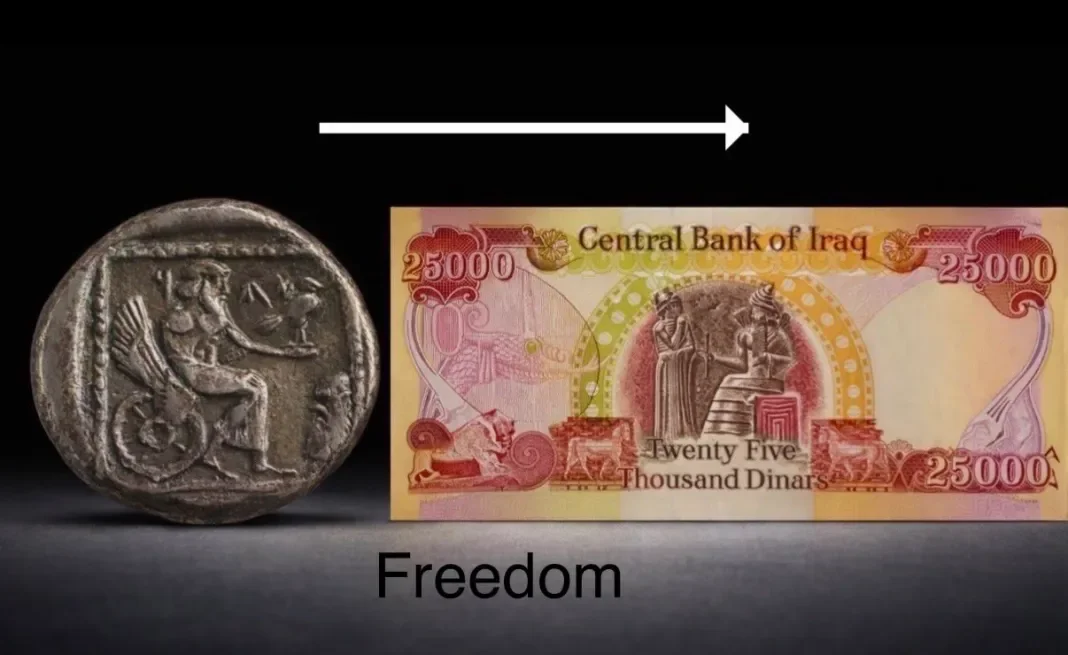
It reflects a return to origin… a realignment of value where it all began. ( IRAQ )
Freedom Fighter: The Iraqi Dinar Revaluation
5-4-2026
URGENT: Iraqi Dinar | Revaluation
This is not random.
The revaluation of the Iraqi DINAR represents more than a financial event.
It reflects a return to origin… a realignment of value where it all began. ( IRAQ )
From the cradle of civilization to the modern financial system—Iraq is not just another country.
It is the birthplace of humanity… where the first cities, societies, and systems of trade were formed.
The SHEKEL originated in this region.
Structured value began here.
Now watch closely:
The Iraqi DINAR carries that legacy forward as global financial systems begin to shift again.
A restoration of position.
A restoration of significance.
From the birthplace of humanity… to the rebirth of a nation — and the restoration of humanity.
History → Present → Transition
Receipts:
The spiritual RV is first.
Happening now.
Source(s):
• https://x.com/FreedomFight12/status/2050946911847256284
https://dinarchronicles.com/2026/05/04/freedom-fighter-the-iraqi-dinar-revaluation/