
Is the Fed Being Replaced? ‘Stablecoins Are the New System’ | E.B. Tucker & Andy Schectman
Is the Fed Being Replaced? ‘Stablecoins Are the New System’ | E.B. Tucker & Andy Schectman
4-26-2026
Andy Schectman, Founder & CEO of Miles Franklin Precious Metals, sits down with E.B. Tucker, Editor of The Tucker Letter.
Is the Federal Reserve being replaced?
Are stablecoins quietly becoming “Fed 2.0”? And what does that mean for gold, inflation, and your financial future?
Is the Fed Being Replaced? ‘Stablecoins Are the New System’ | E.B. Tucker & Andy Schectman
4-26-2026
Andy Schectman, Founder & CEO of Miles Franklin Precious Metals, sits down with E.B. Tucker, Editor of The Tucker Letter.
Is the Federal Reserve being replaced?
Are stablecoins quietly becoming “Fed 2.0”? And what does that mean for gold, inflation, and your financial future?
Tucker explains the structural shift happening inside the financial system – from stablecoins and digital control to inflation, gold, and the mindset needed to navigate what’s coming next.
Tucker argues that what looks like chaos may actually be a redesign of the system, not a collapse and that most people are already inside it without realizing it. In this episode of Little by Little:
Are stablecoins becoming the new Federal Reserve (Fed 2.0)?
The rise of digital control and what it means for your freedom
Why inflation “has to go up” in the current system
How gold really works and why the move comes before the headlines
The truth about price discovery in gold and silver markets
Why most investors get gold wrong at major turning points
Mindset, opportunity, and why the next generation may have more upside than ever
00:00 Coming Up
01:38 Introduction
04:44 Escape The Enclosure
09:36 Cycles And Surveillance
11:30 Stablecoins As Fed 2.0
20:20 Inflation As Control
27:15 Gold Allocation Reality
31:53 Raising Independent Thinkers
39:23 Escaping Dead End Jobs
45:32 Strategy Games And Sports
46:46 Switching Gears To Gold
51:41 Gold As Early Warning Signal
54:54 Rebalancing Not Moonshots
59:55 Silver Deliveries And Vault Stress
01:09:52 Moderation And Lifestyle Design
News, Rumors and Opinions Sunday 4-26-2026
Majeed KSA: The Only Option for Iraq
4-26-2026
The Iraqi new president was in a meeting this morning with the central bank governor telling him there is a need to increase the strength of the Iraqi dinar value.
No more dollars coming to the country.
And if they want to use the emergency Dollar funds they have… if there is any left and hasn’t been sent to Iran…. Still, they wouldn’t survive on the emergency fund for a long time.
The only option increase the value of the Iraqi dinar by backing it by gold.
Majeed KSA: The Only Option for Iraq
4-26-2026
The Iraqi new president was in a meeting this morning with the central bank governor telling him there is a need to increase the strength of the Iraqi dinar value.
No more dollars coming to the country.
And if they want to use the emergency Dollar funds they have… if there is any left and hasn’t been sent to Iran…. Still, they wouldn’t survive on the emergency fund for a long time.
The only option increase the value of the Iraqi dinar by backing it by gold.
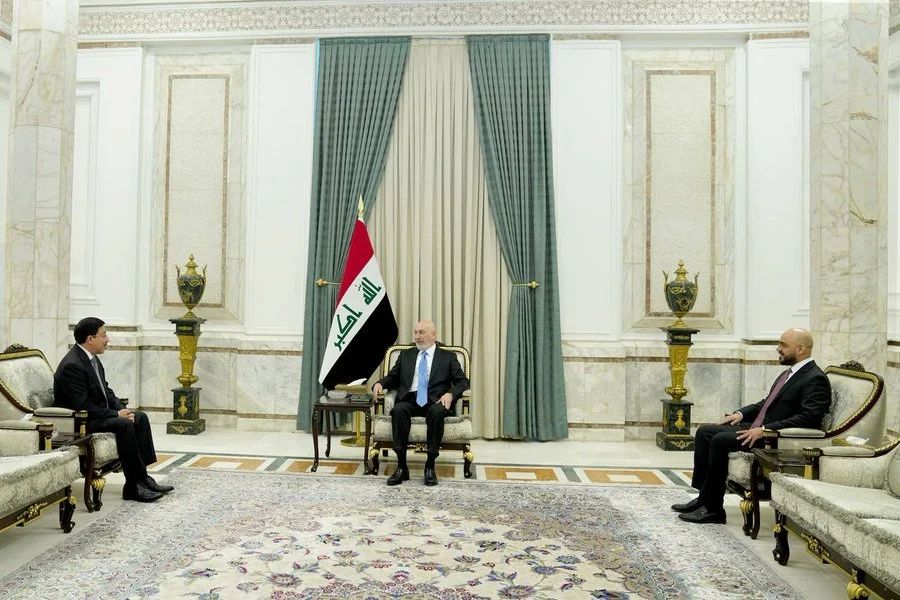
The New Region:Iraqi President Nizar Amedi, in a meeting with Central Bank Governor Ali al-Alaq on Saturday, "stressed the need to increase the strength of the Iraqi dinar" – Statement
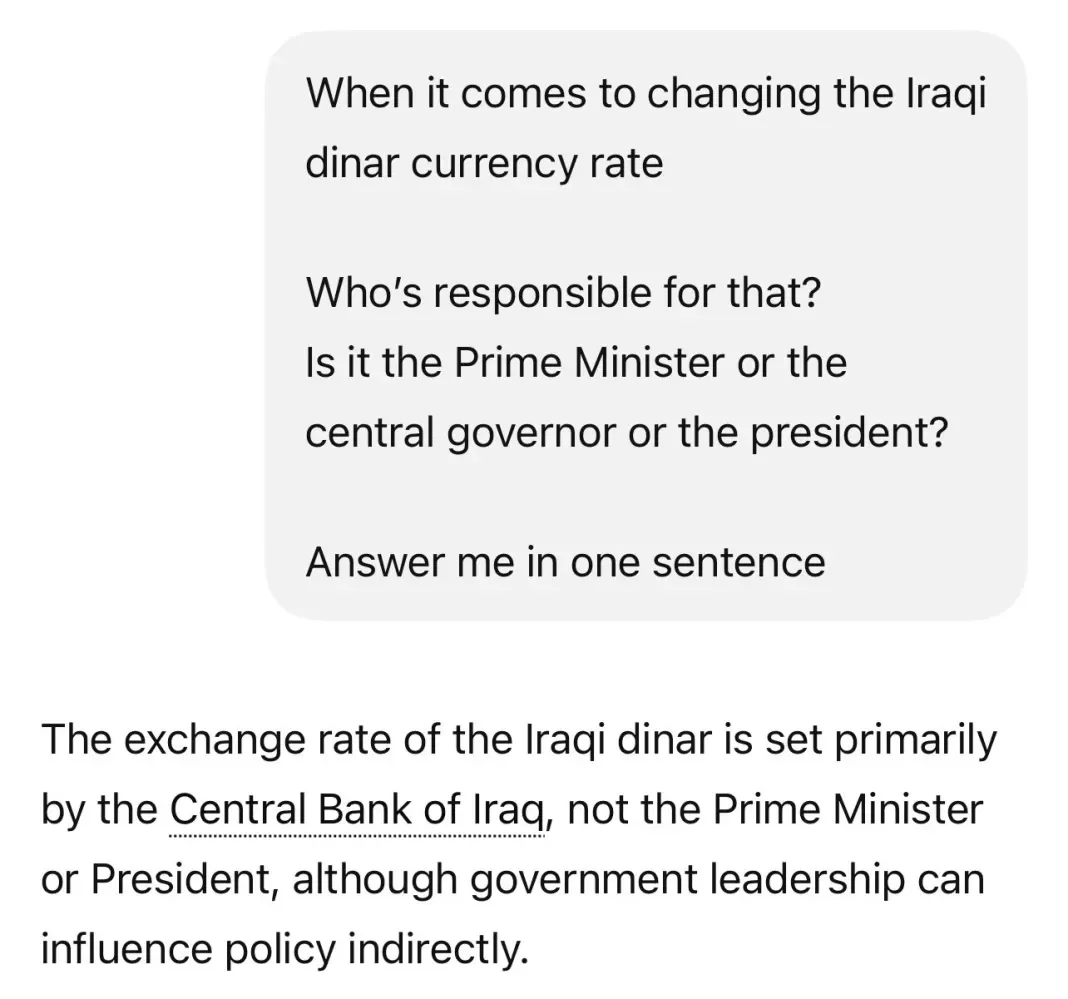
“Iraq has to select a Prime Minister to change the rate.”
The Prime Minister has nothing to do with the rate… it’s not on his job list.
It’s the CBI governor’s.
Source(s):
• https://x.com/majeed66224499/status/2048069237474988457
• https://x.com/majeed66224499/status/2048076967514095939
https://dinarchronicles.com/2026/04/25/majeed-ksa-the-only-option-for-iraq/
*************
Courtesy of Dinar Guru: https://www.dinarguru.com/
Stephen Whether you're new to the Iraqi dinar, whether you've been in this for a long time like myself, if you're an OG, then you know everyone is saying the same thing. We have never seen this amount of pressure being put on Iraq and it's all good things. I don't see how this could be negative in any way, shape or form for the Iraq dinar and pressuring them to finally add value to their currency...
Mnt Goat It appears that there are still some doubters about this investment in the Iraq dinar. With my knowledge and study of the revaluation of the Iraq dinarI do not think, but I know, this dinar is going to revalue soon and it will revalue under the Trump administration. All Chapter VII sanctions are gone as well as all other obstacles except one including the OFAC sanctions which limits trading of the IQD, meaning it is not yet on FOREX or other currency trading platforms. This is the last step and this step is going to happen soon as it has to for the Trump plan for Iraq to get investors flocking into Iraq. I am not saying it will happen tomorrow but my CBI contact recently told me they are already conducting the re-education phase to make citizens aware that this removing of the zeros is coming.Why would they do this now again? My contact is on the committee to roll out the lower denominations when this even occurs. Do not get discouraged...
China Importing RECORD Levels of SILVER, $300+ 'Very Likely' in 2026: Alasdair Macleod
Commodity Culture: 4-25-2026
Alasdair Macleod is closely watching China's silver inventories, and what he sees has him incredibly bullish.
March of 2026 marked record imports of silver for the Middle Kingdom and this, combined with the fact that they tightened export restrictions at the start of the year, makes Alasdair believe that an epic silver squeeze is incoming that could send prices skyrocketing to over $300 an ounce before the year is through.
00:00 Introduction
01:11 China Record Silver Imports
10:48 Gold and Coming Monetary Reset
20:59 Silver to $300 This Year?
27:13 Commodity Prices Set to Soar
30:55 UK Bond Crisis Emerging
35:19 Insider Trading and End of Empire
37:57 When Will the Market Bubble Burst?
Iraq News Posted by TNT Members 4-26-2026
TNT:
Tishwash: Warnings about the cost of delaying the 2026 budget
Warnings are increasing about the economic repercussions of the delay in approving the (2026) budget, amid fears of continued losses and worsening uncertainty in the markets.
In response to these warnings, the Finance Committee in the House of Representatives believes that the state has limited options to address the crisis, most notably resorting to borrowing laws or enacting an emergency law similar to the Food Security Law, but activating these options remains contingent on an official request from the government.
TNT:
Tishwash: Warnings about the cost of delaying the 2026 budget
Warnings are increasing about the economic repercussions of the delay in approving the (2026) budget, amid fears of continued losses and worsening uncertainty in the markets.
In response to these warnings, the Finance Committee in the House of Representatives believes that the state has limited options to address the crisis, most notably resorting to borrowing laws or enacting an emergency law similar to the Food Security Law, but activating these options remains contingent on an official request from the government.
The Prime Minister’s financial advisor, Mazhar Muhammad Salih, confirmed that the Iraqi economy, which relies heavily on government spending as a major driver of growth, is directly affected by any delay in approving the budget, explaining that this turns into a recession factor that affects both the public and private sectors and creates a prolonged state of instability.
He pointed out that the most prominent repercussions are the disruption of investment projects, especially new ones, as a result of the lack of financial allocations, which negatively affects the labor market through a decline in employment opportunities and an increase in unemployment rates. link
CandyKisses: The Coordination Framework meeting scheduled for this evening was postponed due to the continuation of differences
Baghdad Today - Baghdad
An informed source reported on Saturday (April 25, 2026), that the meeting scheduled to be held by the leaders of the Coordination Framework this evening to discuss the file of selecting the candidate for the presidency of the Council of Ministers has been postponed, due to the continued disagreements between the political parties and the lack of a decisive mechanism to decide the name of the final candidate.
The source told Baghdad Today that "the meeting aimed to bring the views of the forces involved in the framework closer and push towards agreeing on a final formula for the selection of the figure who will be responsible for forming the next government, but the existing disagreements regarding the selection mechanism, whether through political consensus or internal voting, prevented it from being held on time."
The source, who asked not to be named, explained that "a number of parties are still sticking to their candidates, while other parties are calling for the adoption of specific criteria related to political acceptance and the ability to manage the next stage, which has contributed to the complexity of the scene and the postponement of the decision until further notice."
He added that "contacts and consultations between the leaders of the Coordination Framework will continue in the coming hours, in an attempt to bring the positions closer and reach an understanding that will lead to the holding of a new meeting soon, especially with the approach of the constitutional entitlements related to the nomination of the Prime Minister."
************
Tishwash: Now... a meeting at the Government Palace to try to break the deadlock over the prime ministerial candidate.
The government palace in Baghdad is currently witnessing - after midnight tonight - a meeting that includes a number of Shiite political leaders, in an attempt to discuss solutions to the crisis of naming the next prime minister, after the forces of the coordination framework failed to agree on a mechanism for deciding the nomination.
A well-informed political source told Shafaq News Agency that the meeting focuses on "smoothing things over" between the framework forces, and searching for a way out that allows the transition from the stage of disagreement over names and the selection mechanism, to a consensus formula that can be passed within the Shiite house.
This comes in conjunction with a new postponement of the Coordination Framework meeting that was scheduled to decide on its candidate for prime minister, amid continued disagreement among its leaders regarding the figure who will be tasked with forming the next government.
According to the source, the dispute is no longer limited to the name of the candidate only, but also includes the nomination mechanism itself, and whether the decision will be made by political consensus or by voting within the framework, as well as the guarantees related to the distribution of ministerial portfolios.
The forces of the Coordination Framework have been experiencing a series of faltering meetings for days, under the pressure of the constitutional deadline to task the candidate of the largest bloc with forming the government, after the election of the President of the Republic, while political sources speak of intensive attempts to avoid the disputes moving into a new stage of political deadlock. link
Tishwash: Iraqi citizens criticize, via Rudaw, the framework's delay in naming a candidate for prime minister.
Sunday, April 26, 2026, marks the constitutional deadline for the coordinating body to select a candidate for the next prime minister.
Rudaw Media Network interviewed several Baghdad residents about the nature of the disagreements among these leaders, which consistently lead to their meetings failing to reach a conclusion and being repeatedly postponed.
Falah Abdullah, a civil activist, told Rudaw Media Network: "There are internal disagreements and interference, but I believe that the veto imposed on the current and former prime ministers was one of the problems that hindered the appointment of a prime minister."
Mohammed Salman, an athlete, told Rudaw: "This isn't the first time, and it's not surprising that the country is delaying the appointment of a prime minister. Everyone knows that regional powers have a significant influence on the selection process."
Huda al-Rubaie, a photographer, stated that "the political blocs don't trust each other, aren't looking for a competent candidate, and there is foreign interference. These are all the reasons."
In the same vein, political analyst Dr. Anwar al-Moussawi stated, "Some believe their candidate is the best and capable of shouldering future responsibilities. Conversely, they argue that there is corruption and a lack of coordination with armed groups, which they consider weaknesses."
Lawyer Hussein al-Moussawi expressed his opinion, saying, "The issue revolves around political interests and conflicts. There is no understanding among them. The Coordination Framework should have resolved the matter and selected the prime minister based on principles that serve the country, ensuring he is a qualified individual for this critical phase Iraq is going through."
Similarly, Hassan al-Obeidi, an employee, remarked, "In my opinion, the current situation is an American-Iranian conflict, and this is what is preventing the formation of a government."
The nomination of the prime minister has been a point of contention for over four months, amidst divisions within the Coordination Framework. Several meetings have been postponed to allow more time for consultations among the parties.
The Coordination Framework holds 164 seats out of the more than 180 seats held by Shia forces in parliament.
Coalition member Khalid Walid told Rudaw Media Network on Saturday (April 25, 2026), following a meeting of the Coordination Framework leaders on Friday night that failed to reach an agreement, that "the previous phase witnessed attempts to push through nominations that lacked national acceptance, including the earlier selection of Maliki with ten votes, which was thwarted by internal reservations within the Framework and rejection from the broader national political sphere."
Walid added that "pursuing compromise candidates proved fruitless, as no candidate was able to secure the required majority for approval, either among members of the Framework or within the Council of Representatives," noting that insisting on disregarding the results did not resolve the crisis.
According to the constitution, the Coordination Framework has 15 days (starting April 11, 2026) to finalize its candidate and submit him to the President of the Republic.
A member of the Reconstruction and Development Coalition explained that “our nomination of Al-Sudani is ongoing and there is no going back on it, as he represents the first winner in these elections, and choosing him is a positive and direct message to the public who cast their vote,” considering that any talk of a “compromise candidate” or hinting at “early elections” would represent a negative message that undermines the voter’s confidence and repeats crises related to the interpretation of the “largest bloc” and electoral entitlements.
Walid concluded his statement by saying, "There is still an opportunity to correct the course within the framework and reach a decision before the deadline expires next Sunday," warning that the deadline passing without an agreement would leave the House of Representatives with open options that could lead to new crises, further complicating the political landscape.
According to the constitution, the candidate tasked with forming the government must present his ministerial program and the names of his cabinet members to parliament within a maximum period of 30 days to obtain a vote of confidence. link
Seeds of Wisdom RV and Economics Updates Sunday Morning 4-26-26
Good Morning Dinar Recaps,
BRICS Tension Point: India Faces Test as Iran Conflict Divides Bloc
Upcoming BRICS meeting in New Delhi could reshape geopolitical alignment as energy disruption and internal divisions intensify
Good Morning Dinar Recaps,
BRICS Tension Point: India Faces Test as Iran Conflict Divides Bloc
Upcoming BRICS meeting in New Delhi could reshape geopolitical alignment as energy disruption and internal divisions intensify
OVERVIEW (KEY POINTS)
The upcoming BRICS foreign ministers meeting in New Delhi is drawing heightened global attention as internal divisions over the Iran conflict threaten bloc unity. Despite escalating tensions in the Middle East, BRICS has remained publicly silent, exposing fractures within the group.
This is happening now as the Iran–U.S.–Israel conflict disrupts energy markets and global trade routes, placing pressure on member nations to take a coordinated stance. India, as current chair, is now positioned to navigate this diplomatic impasse.
Key players include India, Iran, Saudi Arabia, UAE, and other BRICS members, all balancing national interests against collective positioning. The meeting will also mark a rare moment where regional rivals sit at the same table.
The broader implication is clear: BRICS is entering a critical phase where geopolitical alignment and economic strategy may diverge, with potential consequences for global financial structures.
KEY DEVELOPMENTS
1. BRICS Silence Highlights Internal Divisions
The bloc has failed to issue a unified response.
No joint statement on Iran conflict despite escalation
Disagreements among members directly involved in the region
2. India Positioned as Key Diplomatic Broker
New Delhi faces pressure to lead.
Hosting May 14–15 foreign ministers meeting
Balancing ties between U.S., Iran, and Gulf nations
3. Energy Disruptions Ripple Through Markets
Conflict is impacting global supply chains.
Iranian actions affecting Strait of Hormuz transit
LNG disruptions impacting billions in export capacity
4. Gulf States Reassess Strategic Alignment
Regional players are reconsidering partnerships.
UAE and others impacted by regional instability
Increased interest in BRICS engagement and diversification
5. Diplomatic Stakes Rise Ahead of Summit
The meeting could define the bloc’s direction.
Opportunity to shift from silence to coordinated action
Failure could expose long-term structural weakness
WHY IT MATTERS
This development highlights the challenge of maintaining cohesion within a multi-polar alliance during periods of geopolitical stress. Diverging interests make unified action increasingly difficult.
Markets are reacting to uncertainty surrounding energy supply and geopolitical alignment, contributing to volatility in commodities, currencies, and trade flows.
For policymakers, the situation underscores the importance of diplomatic coordination in managing global crises. Fragmentation weakens collective influence.
At the system level, this reflects a broader trend: emerging global blocs are still evolving and face internal stress under pressure.
WHY IT MATTERS TO FOREIGN CURRENCY HOLDERS
Currency volatility may increase due to geopolitical uncertainty
Energy-driven inflation impacts purchasing power
Capital flows may shift based on political alignment
Exchange rates influenced by trade and energy exposure
IMPLICATIONS FOR THE GLOBAL RESET
Pillar 1: Fragmentation Within Emerging Alliances
Internal divisions within BRICS highlight the difficulty of forming a unified alternative to existing financial systems, slowing structural transition.
Pillar 2: Energy and Geopolitics Drive Alignment
Control over energy routes and regional stability continues to shape economic partnerships and financial influence.
CONCLUSION
The upcoming BRICS meeting represents a critical moment for the bloc’s credibility and cohesion. India’s role as chair places it at the center of a complex diplomatic balancing act.
While the meeting offers an opportunity to strengthen coordination, it also exposes underlying tensions that could limit long-term effectiveness.
This is more than a diplomatic gathering—it is a test of whether emerging alliances can function under real geopolitical pressure.
When unity is tested during crisis, the future direction of global power structures becomes clearer.
Seeds of Wisdom Team
Newshounds News™ Exclusive
Sources
Watcher.Guru — "BRICS Doubts Grow, but India May Shift Iran Narrative at Key Meeting"
Reuters — "Energy disruptions and diplomacy shape BRICS agenda amid Iran tensions"
~~~~~~~~~~
A Message to Our Currency Holders
If you’ve been holding foreign currency for many years, you were not foolish.
You were not wrong to believe the global financial system would change.
What failed was not your patience — it was the information you were given.
For years, dates, rumors, and personalities replaced facts, structure, and proof. “This week” predictions created cycles of hope and disappointment that were never based on how currencies actually change.
That is not your failure.
Our mission here is different: • No dates • No rates • No hype • No gurus
Instead, we focus on:
• Verifiable developments • Institutional evidence
• Global financial structure • Where countries actually sit in the process
Currency value changes only come after sovereignty, trade, banking, settlement systems, and fiscal coordination are in place. History and institutions confirm this sequence.
You will see silence. You will see denials. That is not delay — that is discipline.
Protect your identity. Organize your documents. Verify everything.
Never hand your discernment to anyone who cannot show proof.
You deserve truth — not timelines.
Seeds of Wisdom Team
Newshounds News™
~~~~~~~~~~
Seeds of Wisdom Team RV Currency Facts Youtube and Rumble
Newshound's News Telegram Room Link
RV Facts with Proof Links Link
RV Updates Proof links - Facts Link
Follow the Gold/Silver Rate COMEX
Follow Fast Facts
Seeds of Wisdom Team™Website
Thank you Dinar Recaps
Jon Dowling: This Week’s RV Report and Financial News as of April 24, 2026
Jon Dowling: This Week’s RV Report and Financial News as of April 24, 2026
4-25-2026
In the fast-evolving landscape of global finance and geopolitics, staying ahead of the curve isn’t just an advantage—it’s a necessity. In his latest Weekly RV Report, dated Friday, April 24, 2026, Jon Dowling delivered a powerhouse update that connects the dots between historical economic crises and the imminent “financial reset” we are witnessing in real-time.
Dowling opened his report with a sobering look back at Zimbabwe’s infamous hyperinflation. By referencing the severity of that economic collapse, he provided a vivid reminder of how quickly traditional systems can erode. This serves as a backdrop to the current global shift, highlighting why the “Reset” is not just a theory, but a structural necessity to move away from failed fiscal policies of the past.
Jon Dowling: This Week’s RV Report and Financial News as of April 24, 2026
4-25-2026
In the fast-evolving landscape of global finance and geopolitics, staying ahead of the curve isn’t just an advantage—it’s a necessity. In his latest Weekly RV Report, dated Friday, April 24, 2026, Jon Dowling delivered a powerhouse update that connects the dots between historical economic crises and the imminent “financial reset” we are witnessing in real-time.
Dowling opened his report with a sobering look back at Zimbabwe’s infamous hyperinflation. By referencing the severity of that economic collapse, he provided a vivid reminder of how quickly traditional systems can erode. This serves as a backdrop to the current global shift, highlighting why the “Reset” is not just a theory, but a structural necessity to move away from failed fiscal policies of the past.
The U.S. financial landscape is also facing a historic transition. Dowling highlighted Kevin Warsh’s Congressional hearing as he prepares to potentially replace Jerome Powell as Chair of the Federal Reserve. This transition is expected to be finalized by mid-May, signaling a significant shift in U.S. monetary policy at a time when the world is watching the dollar index closely.
However, Dowling warns that this “quiet” is temporary. If a regime change in Iran or a successful peace deal is finalized, we could see a simultaneous surge across cryptocurrencies, precious metals, stock markets, and specific currencies.
Perhaps the most important part of Dowling’s report was his advice on mental resilience. During periods of high volatility and “noise,” the temptation to panic sell can be overwhelming.
Dowling’s message was clear: Stay the course. He cautioned against offloading currencies, metals, or bonds prematurely before the global reset concludes. Persistence and faith are the primary tools for those looking to navigate these turbulent waters successfully.
We are living through a period of unprecedented change. As the events of mid-May approach, the world is watching to see how these political and financial threads weave together.
For a deeper dive into these topics, we encourage you to watch Jon Dowling’s full video report and stay tuned to related podcasts for more granular details. Now is the time to stay informed, stay calm, and keep a close eye on the horizon.
New Fed Chair’s Plan to Cancel America’s Debt
New Fed Chair’s Plan to Cancel America’s Debt
Ray Dalio: 4-25-2026
U.S. national debt is approaching $36 trillion, and the annual interest burden has already crossed $1 trillion. At this scale, the question is no longer whether adjustments will happen — but how.
Historically, there has only been one consistent mechanism that made this level of debt sustainable: financial repression.
In this video, I break down how financial repression actually works, why it represents a silent transfer of wealth, and why institutional money is already positioning around this shift in capital allocation.
New Fed Chair’s Plan to Cancel America’s Debt
Ray Dalio: 4-25-2026
U.S. national debt is approaching $36 trillion, and the annual interest burden has already crossed $1 trillion. At this scale, the question is no longer whether adjustments will happen — but how.
Historically, there has only been one consistent mechanism that made this level of debt sustainable: financial repression.
In this video, I break down how financial repression actually works, why it represents a silent transfer of wealth, and why institutional money is already positioning around this shift in capital allocation.
More importantly, we examine the critical structural difference between 1946 and today that most narratives are missing — and what that means for your portfolio, your risk exposure, and long-term purchasing power.
We also analyze what Kevin Warsh has actually said in public versus how it’s being interpreted, why central bank gold buying matters more than political statements, and which asset classes are most exposed — and most protected — in this environment.
This is not about headlines. It’s about understanding the arithmetic behind debt, policy constraints, and how capital moves under pressure.
Seeds of Wisdom RV and Economics Updates Saturday Afternoon 4-25-26
Good Afternoon Dinar Recaps,
Debt Stress Warning: IMF Flags Rising Global Risks to Financial Stability
Mounting sovereign debt pressure and tighter financial conditions are increasing the risk of systemic strain across global markets
Good Afternoon Dinar Recaps,
Debt Stress Warning: IMF Flags Rising Global Risks to Financial Stability
Mounting sovereign debt pressure and tighter financial conditions are increasing the risk of systemic strain across global markets
OVERVIEW (KEY POINTS)
The International Monetary Fund (IMF) has issued a fresh warning that global debt risks are rising, with many countries facing increasing difficulty managing borrowing costs in a higher interest rate environment.
This is happening now as economies continue to deal with elevated inflation, slower growth, and tightening financial conditions, all of which are putting pressure on government finances and debt sustainability.
Key players include advanced and emerging economies, central banks, and global financial institutions navigating a landscape of higher borrowing costs and reduced fiscal flexibility.
The broader implication is clear: rising debt stress is becoming a central vulnerability in the global financial system, increasing the likelihood of structural adjustments.
KEY DEVELOPMENTS
1. IMF Warns of Increasing Debt Vulnerabilities
Global financial risks are intensifying.
Governments face higher debt servicing costs
Fiscal space is shrinking across multiple regions
2. Interest Rates Remain Elevated
Borrowing conditions are tightening.
Central banks maintaining higher rates to control inflation
Limits ability of governments to refinance debt cheaply
3. Emerging Markets Face Greater Pressure
Developing economies are particularly exposed.
Higher exposure to external debt and currency risk
Increased likelihood of capital outflows
4. Slower Growth Compounds the Problem
Economic expansion is weakening globally.
Lower growth reduces government revenue streams
Makes debt burdens harder to manage over time
WHY IT MATTERS
This development highlights a growing imbalance between global debt levels and economic capacity to sustain them. As borrowing becomes more expensive, financial stress increases across both public and private sectors.
Markets are sensitive to debt sustainability concerns, which can trigger volatility in bond markets, currencies, and equities. Confidence becomes a key factor in maintaining stability.
For policymakers, the challenge is significant. Balancing inflation control with economic support while managing debt requires careful coordination and timing.
At the system level, rising debt stress is often a precursor to restructuring, policy shifts, or broader financial realignment.
WHY IT MATTERS TO FOREIGN CURRENCY HOLDERS
Currencies may weaken in high-debt economies
Purchasing power could decline due to inflation and fiscal pressure
Capital flows may shift toward stronger, more stable markets
Exchange rate volatility increases amid uncertainty
IMPLICATIONS FOR THE GLOBAL RESET
Pillar 1: Sovereign Debt Realignment
Increasing debt pressure raises the likelihood of restructuring or policy intervention, reshaping how governments manage obligations.
Pillar 2: Financial System Adjustment
Tighter conditions and rising risk contribute to changes in global financial architecture, including lending practices and reserve strategies.
CONCLUSION
The IMF’s warning underscores a critical issue: global debt levels are becoming harder to sustain under current economic conditions. As pressures build, the risk of instability increases.
This environment requires careful navigation by policymakers and investors alike, as decisions made now will influence long-term outcomes.
The trend reflects deeper structural challenges that go beyond short-term market fluctuations.
When debt pressures rise across multiple economies, the foundation of the financial system begins to shift.
Seeds of Wisdom Team
Newshounds News™ Exclusive
Sources
Reuters — "IMF warns of rising global debt risks amid higher interest rates"
Reuters — "Global growth slows as debt pressures mount, IMF says"
~~~~~~~~~~
Seeds of Wisdom Team RV Currency Facts Youtube and Rumble
Newshound's News Telegram Room Link
RV Facts with Proof Links Link
RV Updates Proof links - Facts Link
Follow the Gold/Silver Rate COMEX
Follow Fast Facts
Seeds of Wisdom Team™Website
Thank you Dinar Recaps
Iraq Economic News And Points To Ponder Saturday Afternoon 4-25-26
Iraq Ranks 29th Globally With 174.6 Tons Gold Reserves
2026-04-25 Shafaq News- Baghdad Iraq maintained its position among the world’s largest gold reserve holders, ranking 29th globally with holdings of 174.6 tons, the UK-based World Gold Council reported on Saturday.
Saudi Arabia topped Arab countries with reserves of 323.1 tons, followed by Lebanon with 286.8 tons, while Iraq ranked third regionally, holding its place with 174.6 tons. Algeria came fourth among Arab states with 173.6 tons, followed by Libya in fifth place with 146.8 tons, reflecting varying levels of gold reserves across the region.
Iraq Ranks 29th Globally With 174.6 Tons Gold Reserves
2026-04-25 Shafaq News- Baghdad Iraq maintained its position among the world’s largest gold reserve holders, ranking 29th globally with holdings of 174.6 tons, the UK-based World Gold Council reported on Saturday.
Saudi Arabia topped Arab countries with reserves of 323.1 tons, followed by Lebanon with 286.8 tons, while Iraq ranked third regionally, holding its place with 174.6 tons. Algeria came fourth among Arab states with 173.6 tons, followed by Libya in fifth place with 146.8 tons, reflecting varying levels of gold reserves across the region.
Globally, the United States retained its lead as the largest gold holder with 8,113 tons, followed by Germany with 3,350 tons, Italy with 2,451 tons, France with 2,437 tons, and Russia in fifth place with 2,311 tons.
https://www.shafaq.com/en/Economy/Iraq-ranks-29th-globally-with-174-6-tons-gold-reserves
Iran, Iraq Eye $20B Trade Target With New Barter System Plan
2026-04-25 Shafaq News- Tehran Iran and Iraq are moving to establish a barter system for goods and services as part of efforts to expand bilateral trade, the head of the Iran–Iraq Joint Chamber of Commerce said on Saturday.
Yahya Al-Eshaq indicated that the initiative forms part of the chamber’s strategic plans for the year, aimed at strengthening economic ties between the two countries.
Iraq remains one of the main destinations for Iran’s non-oil exports, importing goods, technical and engineering services, and energy worth billions of dollars annually, he noted, describing the relationship as strategically significant on both commercial and geopolitical levels.
The cooperation has supported economic growth, job creation, infrastructure development, and closer economic integration, supported by shared religious and cultural ties and a long land border that facilitates trade and investment.
The chamber is targeting an increase in bilateral trade to $20 billion annually, a goal that requires addressing key challenges including trade imbalances, administrative and bureaucratic hurdles, and the impact of sanctions.
Proposed measures include launching a barter mechanism for goods and services, creating a joint investment platform, establishing a financial settlement system for traders, setting up a clearing center, and accelerating export processes to Iraq while facilitating imports into Iran. https://www.shafaq.com/en/Economy/Iran-Iraq-eye-20B-trade-target-with-new-barter-system-plan
Brazil Overtakes Iraq In China Oil Supply Shift
2026-04-24 Shafaq News- Baghdad Brazil and Angola posted significant gains in China’s crude oil imports for the first quarter of 2026, at the expense of Iraq and Gulf producers, the Iraq Future Foundation for Economic Studies and Consultations said on Friday.
In a statement, Manar al-Obaidi, head of the foundation, explained that the decline in Iraq’s market share is not solely linked to disruptions in the Strait of Hormuz, but also to structural factors that have strengthened competing suppliers.
“Brazil and Angola offer higher-quality crude with lower sulfur content compared to Iraqi oil, making it more attractive to Chinese refineries seeking to reduce refining costs,” he said, adding that both countries benefit from not being bound by OPEC+ production quotas, a factor that allows them greater flexibility to meet rising Chinese demand and expand their market share.
Shipping security was also cited as a key factor, with routes from South America and Africa seen as more stable and less exposed to tensions affecting Middle Eastern waterways.
Read more: Iraq’s oil bottleneck: Abundance trapped by dependency
Despite Iraq currently holding about 10 percent of China’s oil imports, he warned of a sharp decline expected in April and May, as the full impact of Strait of Hormuz disruptions becomes more evident in second-quarter data.
“The bigger risk lies in the potential long-term entrenchment of this shift,” he cautioned, noting that strong ties between China and countries such as Russia, Brazil, and Angola within the BRICS group could provide them with sustained economic and political advantages.
Al-Obaidi warned that if the crisis continues, “Iraq may struggle to regain its market share even after conditions stabilize, unless it resorts to significant price discounts.”
Read more: Iraq's energy vulnerability: When a petro-state has no buffer
Iraq Oil Output Plunges 3M Bpd, Food Security “Safe”
2026-04-25 Shafaq News- Baghdad Iraq’s oil production has fallen to 1.3 million barrels per day from 4.3 million due to disruptions in shipping through the Strait of Hormuz following the US-Israeli war on Iran.
The conflict has constrained maritime traffic through the strategic waterway, a key artery for global oil trade, pushing exports below 800,000 barrels per day and driving losses estimated at about $128 million daily.
Read more: Iraq’s oil bottleneck: Abundance trapped by dependency
Despite this, the impact –particularly on food security– is expected to remain limited over the medium term, Prime Minister financial adviser Mazhar Mohammed Salih told Shafaq News. He outlined two main tracks underpinning economic stability, centered on domestic support measures and external financial buffers.
The first track rests on sustained government subsidies covering essential goods, including the food basket and strategic reserves, alongside support for agriculture, particularly grain production, as well as fuel, healthcare, and other social and economic services, while the second centers on foreign currency reserves, which remain sufficient to finance external trade for more than a year and are backed by oil export revenues as the country’s primary source of hard currency.
At around $100 billion, the reserves provide what Salih described as a “relative safety margin” for managing external obligations and maintaining exchange rate stability. Monetary policy also continues to balance liquidity with price stability while ensuring access to foreign currency, helping contain inflationary pressures.
https://www.shafaq.com/en/Economy/Iraq-oil-output-plunges-3M-bpd-food-security-safe
Basrah Crudes Rallies As Oil Markets Climb
2026-04-25 Shafaq News- Basrah Basrah’s Heavy and Medium crude grades closed last week with gains, tracking a broader rise in global oil prices amid continued uncertainty over US–Iran negotiations.
Basrah Heavy rose by $2.50 in the final trading session to settle at $120.37 per barrel, bringing its weekly gain to $3.78, or 3.24%. Basrah Medium increased by $2.50 to $122.47 per barrel at the close, posting a weekly gain of $3.51, or 2.95%.
Global benchmarks also advanced, with Brent crude up 0.9% to $106 per barrel on Friday, heading for weekly gains of around 17%, while US West Texas Intermediate traded near $96.5 per barrel, up roughly 0.8%.
https://www.shafaq.com/en/Economy/Basrah-crudes-rallies-as-oil-markets-climb
USD/IQD Exchange Rates Climb In Baghdad, Erbil
2026-04-25 Shafaq News- Baghdad/ Erbil The US dollar opened Saturday’s trading higher in Iraq, rising to around 155,250 dinars per 100 dollars.
According to a Shafaq News market survey, the dollar traded in Baghdad’s al-Kifah and al-Harithiya exchanges at 155,250 dinars per 100 dollars, up from 154,950 dinars recorded last Thursday.
In the Iraqi capital, exchange shops sold the dollar at 155,750 dinars and bought it at 154,750 dinars, while in Erbil, selling prices stood at 155,050 dinars and buying prices at 154,900 dinars.
https://www.shafaq.com/en/Economy/USD-IQD-exchange-rates-climb-in-Baghdad-Erbil-4-5
Gold Prices Stabilize In Baghdad And Erbil
2026-04-25 Shafaq News- Baghdad/ Erbil On Saturday, gold prices in Baghdad and Erbil hovered around 1.03 million IQD per mithqal for 21-carat gold, according to a market survey by Shafaq News.
Gold prices on Baghdad’s Al-Nahr Street recorded a selling price of 1,031,000 IQD per mithqal (equivalent to five grams) for 21-carat gold, including Gulf, Turkish, and European varieties, with a buying price of 1,028,000 IQD, the same as Thursday’s rates.
The selling price for 21-carat Iraqi gold stood at 1,001,000 IQD, with a buying price of 998,000 IQD. In jewelry stores, the selling price per mithqal of 21-carat Gulf gold ranged between 1,030,000 and 1,040,000 IQD, while Iraqi gold sold for between 1,000,000 and 1,010,000 IQD.
In Erbil, gold prices declined, with 22-carat gold sold at 1,071,000 IQD per mithqal, 21-carat gold at 1,023,000 IQD, and 18-carat gold at 876,000 IQD. https://www.shafaq.com/en/Economy/Gold-prices-stabilize-in-Baghdad-and-Erbil-6
News, Rumors and Opinions Saturday 4-25-2026
KTFA:
Clare: The President of the Republic affirms to the Governor of the Central Bank the necessity of strengthening the dinar and continuing reforms.
4/25/2026
President Nizar Amidi emphasized to the Governor of the Central Bank of Iraq, Ali Al-Alaq, on Saturday the necessity of strengthening the Iraqi dinar and continuing reforms.
KTFA:
Clare: The President of the Republic affirms to the Governor of the Central Bank the necessity of strengthening the dinar and continuing reforms.
4/25/2026
President Nizar Amidi emphasized to the Governor of the Central Bank of Iraq, Ali Al-Alaq, on Saturday the necessity of strengthening the Iraqi dinar and continuing reforms.
A statement from the Presidency indicated that Amidi "received the Governor of the Central Bank of Iraq, Ali Al-Alaq, at Baghdad Palace on Saturday, April 25, 2026, who offered his congratulations to the President on assuming the presidency."
The President expressed his "gratitude for the kind congratulations, stressing the importance of cooperation between monetary and financial institutions to support economic stability and achieve sustainable development."
Amidi also emphasized the need to strengthen the Iraqi dinar and continue reforms, noting that the Presidency supports the bank's monetary policies that contribute to improving the standard of living for citizens and stimulating growth in the country. LINK
Clare: Saturday's meeting: 5 names in the race for prime minister, and the decision is nearing.
4/25/2026
The Reconstruction and Development Coalition, led by caretaker Prime Minister Mohammed Shia al-Sudani, revealed on Saturday that it is close to finalizing the coordination framework for its final candidate for prime minister, while an informed source stated that an upcoming meeting will discuss voting on a number of prominent names.
Coalition leader Khalid Walid told Shafaq News Agency that "discussions and mutual visits between political forces are still ongoing, and a meeting is expected to take place this evening between Sudani and the leader of the State of Law Coalition, Nouri al-Maliki, to resolve the issue of choosing the prime minister."
Walid indicated that "there are expectations that this matter will be resolved within the day."
Regarding talk of holding early elections, he explained that "some parties that are proposing this option realize that going to the House of Representatives at the present time is not in their interest, especially since their electoral size does not enable them to pass their positions within Parliament."
Walid continued, saying that "the commitment of political forces, whether within the national sphere or within the coordination framework, to achieve consensus, even at a minimum level, to ensure unity of political decision-making, is currently facing clear obstacles that hinder reaching final understandings."
He concluded by saying that "the Reconstruction and Development Coalition will have a clear position, and will present alternatives in case of failure to decide on the name of the designated candidate, and these options will be announced at a later time."
In this context, a source within the coordination framework revealed to Shafaq News Agency that today’s meeting will discuss the voting mechanism for the final candidate for the next prime minister.
He indicated that "the names being considered include former Prime Minister Haider al-Abadi, the head of the Accountability and Justice Commission Bassem al-Badri, and politician Adnan al-Zurfi, in addition to al-Maliki and al-Sudani."
The source noted that "the candidate who obtains two-thirds of the votes of the leaders of the coordination framework will be officially announced as the candidate for the next government," indicating that "all candidates will be put to individual voting through several rounds."
It is worth noting that an informed political source told Shafaq News Agency that a second meeting was held at the home of the leader of the State of Law Coalition, Nouri al-Maliki, following the meeting of the Coordination Framework forces at the home of Humam Hamoudi on Friday evening, to discuss the path of forming the next government and distributing ministerial portfolios among the political blocs.
These moves come after a meeting of the Coordination Framework yesterday, which ended without deciding on a candidate for the premiership, after it became impossible to pass the candidates of the two main poles within the framework, namely the leader of the State of Law Coalition, Nouri al-Maliki, and the outgoing Prime Minister, Mohammed Shia al-Sudani, or whoever represents him in the nomination, in addition to putting forward new candidates.
The coordinating framework, which includes the ruling Shiite political forces in Iraq, has repeatedly failed to decide on its candidate for prime minister, while the government formation process has entered a critical phase following the election of Nizar Amidi as president of the republic. This puts the largest bloc before a constitutional deadline ending today, Saturday, to officially present its candidate, amid fears of a return to the political deadlock. LINK
************
Courtesy of Dinar Guru: https://www.dinarguru.com/
JeffOnce the government is 100% done that allows them to revalue the currency...The only thing we really care about right now is the formation of the government, more specifically the prime minister position because that's the last final one...The HCL comes after the rate changes.
Frank26 [Iraq boots-on-the-ground report] OMAR: We see the Finance Minister talking about how our reserves are reaching the red line level...Everybody in Iraq knows there's no more dollar... FRANK: The CBI is forced now to tap into your reserves or to make large loans for the GOI...The solution is to release the value of your currency. They know that...The CBI...has no choice but to lift the value of your currency. Alaq knows he messed up. He knows he's in trouble and Alaq knows his days are numbered...
Reset Intelligence On Thursday in Baghdad, parliament extended its own term by 30 days. Surprise level = zero. Every Iraqi cabinet formation since 2005 has missed its constitutional clock. The 2018 cycle ran eight months before key ministries were filled. The 2022 cycle ran more than a year before a government stood up...The room parliament walked back into is the one that matters. The 2026 budget is closed...Article 24 blocks new borrowing until a seated parliament passes a law. The oil-proceeds cash pallets through the Federal Reserve Bank of New York are halted. Reserves stress was signaled on Iraqi state television this week.That corners the CBI to two levers: draw down reserves, or reprice the dinar. One of those got a signal this week. The other did not. Well not yet anyway...
The Authentic Judy Shelton: A Maverick Economist Takes on Washington
Gold Telegraph: 4-23-2026
The global monetary system is being questioned like never before. In this documentary, Alex Deluce sits down with economist Judy Shelton to explore the past, present, and future of money — from Bretton Woods and the Nixon Shock to gold, central banks, and the growing distrust in fiat currencies.
Shelton has spent decades challenging the system.
Advocating for sound money.
Warning about the consequences of endless debt and currency debasement.
Now, those warnings are going mainstream. This is a story about power, trust, and the future of the dollar.
I hope you enjoy.
Iraq News Posted by Tishwash at TNT 4-25-2026
TNT:
Tishwash: Washington confirms that the suspension of dollar shipments to Iraq is "temporary".
The US State Department confirmed that Washington has temporarily suspended dollar shipments to Iraq. A State Department spokesperson, according to a statement carried by Kurdish media outlets, said, "The transfer of US dollars to Iraq has been temporarily halted."
The spokesperson added, "The United States has temporarily suspended some security cooperation activities with Iraq, while continuing joint counterterrorism efforts that enhance US national security."
TNT:
Tishwash: Washington confirms that the suspension of dollar shipments to Iraq is "temporary".
The US State Department confirmed that Washington has temporarily suspended dollar shipments to Iraq. A State Department spokesperson, according to a statement carried by Kurdish media outlets, said, "The transfer of US dollars to Iraq has been temporarily halted."
The spokesperson added, "The United States has temporarily suspended some security cooperation activities with Iraq, while continuing joint counterterrorism efforts that enhance US national security." lin
Tishwash: A parliamentary message to the framework: No deadline after Saturday, we will choose the prime minister.
Mahmoud al-Shammari, a member of the Services Bloc in the Iraqi Parliament, revealed on Thursday evening that members of Parliament intend to collect signatures and send an official letter to the President of the Republic to nominate a suitable person for the position of Prime Minister, in the event that the Coordination Framework does not reach an agreement on choosing a candidate by next Saturday.
Al-Shammari told Shafaq News Agency that "if the coordination framework does not reach an agreement to choose a candidate for the position of Prime Minister within the constitutionally specified period, then the members of the House of Representatives will have a different opinion on the matter."
He added: "We are waiting for the leadership of the framework until next Saturday, and if they do not reach an agreement to choose the appropriate candidate for the position of Prime Minister, then the members of Parliament will collect signatures and send an official letter to the President of the Republic to nominate the appropriate person and get out of the political deadlock."
The MP stressed that “the House of Representatives is capable of nominating the person as it is the legislative authority in the country and the highest authority in the Iraqi state,” noting that “the continuation of the situation as it is and the continuation of the caretaker government and 10 vacant ministries without a minister pushes us to intervene in the matter of choosing the candidate for the next government.”
A member of the coordination framework, Amer Al-Fayez, told Shafaq News Agency on Thursday that the ongoing meetings had led to important understandings to resolve the disputes, suggesting that the nomination of a candidate for the premiership would be decided within the next few hours.
With Iraq entering the post-election phase of President Nizar Amidi, attention is turning to the most important entitlement, which is the formation of the new government, amidst heated political debate within the coordination framework regarding the prime minister candidate.
The coordinating framework had set a date for a crucial meeting last Saturday, before postponing it to Monday, with the aim of deciding on a candidate for the premiership. However, the meeting ended without reaching a final agreement, so it was postponed to Wednesday, before being postponed again to Friday. link
************
Tishwash: Expected decision today: Al-Sudani is the most likely candidate for prime minister after the chances of Al-Maliki's candidate diminished.
All eyes are on Saturday for a crucial meeting of the Coordination Framework forces, which is expected to end the debate over the name of the next prime minister, after postponing the decision that was scheduled for Friday, amid rapid developments in the positions of the political forces.
Well-informed political sources confirmed that the balance of power within the framework has clearly shifted in favor of the current Prime Minister, Mohammed Shia al-Sudani, after the leader of the State of Law Coalition, Nouri al-Maliki, realized the difficulty of passing his alternative candidate in light of the decline in political support for him.
According to the sources, the ball is back in Sudani’s court, who has become the most likely candidate to receive the official mandate to form the new government, in light of growing consensus within the Shiite forces.
The information indicated that Maliki showed some flexibility in his position during the last few hours, with indications that he would move towards supporting the consensus of the framework forces on assigning Al-Sudani, in order to avoid further political division.
Today’s meeting is expected to produce a decisive announcement regarding the appointment of the prime minister, in a move that could pave the way for a new political phase characterized by consensus and an attempt to contain the disputes within the Shiite political establishment. link
************
Tishwash: What will he choose? The Sudanese government faces Washington's demands to cut the salaries of the Popular Mobilization Forces and target the factions.
The head of the Reconstruction and Development bloc, Bahaa al-Araji, revealed that there is a division within the coordination framework regarding the mechanism for choosing the next prime minister, between the “signatures” system adopted by the State of Law bloc and “direct voting,” stressing that Prime Minister Mohammed Shia al-Sudani is facing harsh American conditions, including cutting the salaries of the Popular Mobilization Forces and striking some factions .
Al-Araji said in a televised interview followed by Al-Sa’a Network that “Monday’s framework session resulted in the submission of 6 signatures from the State of Law coalition in favor of Basim Al-Badri, while Hadi Al-Amiri proposed the option of direct voting instead of signatures to choose the Prime Minister, and after his intervention the discussion moved to the selection mechanism .”
He added that "the proposed new mechanism is based on the candidate obtaining two-thirds of the votes of the leaders of the framework, and in the second stage two-thirds of the members of the House of Representatives from the framework. It was proposed by Al-Amiri, Al-Hakim and Al-Khazali, but it was rejected by the State of Law, and the discussion about it was postponed to the next session ."
He added that "the upcoming coordination framework meeting will not discuss the selection of the prime minister unless the selection mechanism is decided, with the direct voting option being the most likely to be fair ."
He pointed out that “Al-Asadi did not sign, despite being part of the Reconstruction and Development bloc, and expressed conditional approval related to the signing of other leaders in favor of Bassem Al-Badri, while the bloc did not adopt the mechanism of signatures at all and preferred to vote by raising hands as usual .”
He stressed that "choosing the prime minister is not the most important thing at the moment, but rather the unity of the coordinating framework, especially in light of international discussions related to the Iraqi political system ."
He added that "Al-Sudani prepared his government program before the elections, and it included restricting weapons to the state, and he rejects dealing with the issue with violence and prefers political and legal solutions ."
He explained that "the United States had put forward two main demands during the past period, which were to cut off the salaries of the Popular Mobilization Forces and to strike some factions, which Al-Sudani rejected ."
He explained that "the current stage includes American conditions, which does not mean accepting them, but it requires dealing with them under complex circumstances," noting that "some strikes that targeted diplomatic interests contributed to strained relations and the departure of a number of missions ."
Al-Araji pointed out that “about 90% of diplomatic missions have left Iraq, especially the Arab ones, as a result of attacks targeting some countries, which has negatively affected the political and economic reality, including the delay in the flow of dollars into the country link
Tishwash: Sudanese advisor reveals two paths to enhance economic stability: food security is guaranteed.
On Friday, Mazhar Muhammad Salih, the economic advisor to the Iraqi Prime Minister, affirmed that the level of food security in the country remains within a safe range, pointing to two main trends that contribute to strengthening overall economic stability and providing a level of reassurance in conducting daily economic life.
Saleh explained to Shafaq News Agency that "the first trend is the continuation of the policy of broad government support for prices, especially in the basic paragraphs that are governing in the current fiscal policy."
According to Saleh, this support includes "the food basket and strategic food stocks, in addition to support for medicine and the agricultural sector, especially grain production."
He pointed out that "support also extends to fuel, social, economic and health services, without interruption," noting that "official indicators issued by the Ministry of Trade confirm that the level of food security in the country is still within a safe range, which enhances the stability of domestic markets."
He explained that "the second trend relates to the status of foreign reserves, which remain at stable levels and are sufficient to cover the external financing needs of trade for a period exceeding one year."
According to the government advisor, "This stability is based on oil export revenues, which are the country's main source of foreign currency."
He added that "the value of foreign reserves is estimated at about $100 billion, which provides a relative margin of safety in managing external obligations and supports the stability of the exchange rate."
Regarding external challenges, Saleh noted that "this stability comes amid delicate regional and international circumstances, with escalating concerns about geopolitical tensions, particularly those related to the potential disruption of navigation in the Strait of Hormuz, which is one of the most vital waterways for global oil trade," suggesting that these tensions will have a limited impact in the medium term.
He stressed that "monetary management plays a pivotal role in achieving a balance between providing liquidity and maintaining price stability, as well as meeting the market's need for foreign currency," noting that "this balanced policy represents an essential tool for containing inflationary pressures."
Saleh added that "these measures contribute to maintaining relative stability in the national economy, despite regional challenges, until tensions subside and conditions return to normal."
The war that broke out on February 28, 2026, between the United States and Israel on one side, and Iran on the other, caused an almost complete paralysis of traffic in the Strait of Hormuz, the passage through which about 4.5% of total annual global trade passes, leading to a decline in navigation to very low levels.
As a result of the disruption to shipping through the Strait of Hormuz, Iraqi oil production has fallen sharply from 4.3 million barrels per day to 1.3 million barrels per day.
This decline has led to Iraqi exports falling to less than 800,000 barrels per day, and a loss of $128 million per day after oil production stopped, according to the "Eco Iraq" observatory.
Around 20 million barrels of oil pass through this strategic strait daily, and its closure has caused an increase in shipping and insurance costs and a rise in oil prices, raising fears of global economic repercussions.
A recent study published in the international journal Nature Food on April 16 showed that Iraq is among six countries unable to meet their food needs locally, amid a global gap in achieving self-sufficiency.
The study showed that achieving food security is not limited to the production of calories, but requires an integrated system that includes seven main categories: basic grains, fruits, vegetables, dairy products, meat, fish, and legumes.
She stressed that economic wealth does not guarantee food security, as many rich countries rely on imports to meet their needs, given the challenges of local production and natural resources. link
Seeds of Wisdom RV and Economics Updates Saturday Morning 4-25-26
Good Morning Dinar Recaps,
ISRAEL–LEBANON CEASEFIRE EXTENDED: REGIONAL CONFLICT TIES DEEPEN AS GLOBAL RISKS RISE
Ongoing Middle East tensions highlight fragile stability, energy risks, and growing strain on the global financial system
Good Morning Dinar Recaps,
ISRAEL–LEBANON CEASEFIRE EXTENDED: REGIONAL CONFLICT TIES DEEPEN AS GLOBAL RISKS RISE
Ongoing Middle East tensions highlight fragile stability, energy risks, and growing strain on the global financial system
Overview
Israel and Lebanon have agreed to a three-week ceasefire extension, brokered by Donald Trump, as part of broader efforts to contain a multi-front regional conflict involving Iran and Hezbollah. While the agreement signals a pause, it does not represent a lasting resolution.
The conflict has evolved into a complex geopolitical standoff, with tensions unfolding simultaneously across land and sea. Fighting between Israel and Hezbollah continues at reduced intensity, while a fragile ceasefire between the United States and Iran remains in place.
At the center of global concern is the Strait of Hormuz, a critical energy corridor through which roughly 20% of global oil and LNG flows. Disruptions here have already impacted energy markets and raised inflation concerns.
This situation reflects a broader shift toward interconnected conflicts with global financial consequences, where regional instability directly influences markets.
Key Developments
1. Ceasefire Extension Provides Temporary Stability
The agreement delays escalation but does not resolve underlying tensions.
• Three-week extension agreed between Israel and Lebanon
• Hostilities continue at lower intensity levels
• The ceasefire acts as a temporary containment measure
2. Hezbollah’s Absence Weakens Enforcement
The lack of participation complicates stability on the ground.
• Hezbollah was not part of the negotiations
• Continued rocket and drone attacks challenge the truce
• Enforcement remains fragile and inconsistent
3. Strait of Hormuz Drives Global Risk
Energy markets remain highly sensitive to developments.
• Around one-fifth of global energy supply passes through the strait
• Disruptions have already pushed oil prices higher
• Shipping risks create ongoing inflation and trade pressures
4. U.S.–Iran Dynamics Remain Unresolved
Diplomatic progress is uncertain despite temporary pauses.
• A separate ceasefire between the U.S. and Iran is fragile
• Planned negotiations have failed to materialize
• The U.S. maintains military pressure alongside diplomacy
5. Global Alliances Show Signs of Strain
International coordination is becoming more difficult.
• Divisions within NATO are emerging
• Tensions may weaken unified responses
• This fragmentation increases global uncertainty
Why It Matters
This situation highlights how regional conflicts are now tightly interconnected, making isolated solutions ineffective. The overlap between Lebanon, Iran, and maritime tensions creates a layered risk environment for global markets.
Energy supply concerns tied to the Strait of Hormuz show how geopolitical instability feeds directly into inflation, trade disruption, and market volatility.
From a policy perspective, weakening coordination among global powers signals a shift toward a more fragmented and unpredictable system.
Why It Matters to Foreign Currency Holders
• Energy-driven inflation impacts currency value globally
• Oil price increases can strengthen exporters and weaken importers
• The U.S. dollar remains tied to geopolitical influence
• Instability may accelerate currency diversification trends
Implications for the Global Reset
Pillar 1: Energy Routes as Financial Power Levers
Control over key corridors like the Strait of Hormuz reinforces how energy access shapes global financial influence, inflation, and currency stability.
Pillar 2: Fragmentation of Global Coordination
Rising divisions among major powers point to a less unified, more multipolar system, increasing systemic volatility and accelerating structural change.
Conclusion
The ceasefire extension provides short-term relief but does not change the broader trajectory of the conflict. Continued tensions and unresolved negotiations point to a prolonged period of instability.
Rather than signaling peace, this moment represents a strategic pause within a wider power struggle, where all sides are recalibrating their positions.
The broader takeaway is clear: regional conflicts are now global financial events, capable of reshaping markets, policy decisions, and the future structure of the international system.
This is not just a regional ceasefire — it is a signal of how interconnected and fragile the global financial system has become.
Seeds of Wisdom Team
Newshounds News™ Exclusive
Sources
Modern Diplomacy — "Israel and Lebanon Extend Ceasefire as Trump Pushes for Best Deal with Iran"
Reuters — "Middle East Ceasefire Developments and Energy Market Impact"
~~~~~~~~~~
A Message to Our Currency Holders
If you’ve been holding foreign currency for many years, you were not foolish.
You were not wrong to believe the global financial system would change.
What failed was not your patience — it was the information you were given.
For years, dates, rumors, and personalities replaced facts, structure, and proof. “This week” predictions created cycles of hope and disappointment that were never based on how currencies actually change.
That is not your failure.
Our mission here is different: • No dates • No rates • No hype • No gurus
Instead, we focus on:
• Verifiable developments • Institutional evidence
• Global financial structure • Where countries actually sit in the process
Currency value changes only come after sovereignty, trade, banking, settlement systems, and fiscal coordination are in place. History and institutions confirm this sequence.
You will see silence. You will see denials. That is not delay — that is discipline.
Protect your identity. Organize your documents. Verify everything.
Never hand your discernment to anyone who cannot show proof.
You deserve truth — not timelines.
Seeds of Wisdom Team
Newshounds News™
~~~~~~~~~~
Seeds of Wisdom Team RV Currency Facts Youtube and Rumble
Newshound's News Telegram Room Link
RV Facts with Proof Links Link
RV Updates Proof links - Facts Link
Follow the Gold/Silver Rate COMEX
Follow Fast Facts
Seeds of Wisdom Team™Website
Thank you Dinar Recaps