
Will they Try to use the IQD as a Bargaining Chip?
Will they Try to use the IQD as a Bargaining Chip?
Edu Matrix: 3-18-2026
The Middle East is a region known for its geopolitical intricacies and volatile dynamics, and Iraq stands at the epicenter of this complex landscape.
As tensions between Iran, Israel, and the United States continue to escalate, Iraq’s government, under the leadership of Prime Minister Al-Sudani, is navigating a delicate balancing act.
Will they Try to use the IQD as a Bargaining Chip?
Edu Matrix: 3-18-2026
The Middle East is a region known for its geopolitical intricacies and volatile dynamics, and Iraq stands at the epicenter of this complex landscape.
As tensions between Iran, Israel, and the United States continue to escalate, Iraq’s government, under the leadership of Prime Minister Al-Sudani, is navigating a delicate balancing act.
The country is grappling with a multitude of challenges that span the political, economic, and security realms, making its path forward uncertain and precarious.
Economically, Iraq is heavily reliant on oil exports, a sector that has faced significant disruptions. Issues such as the closure of the Strait of Hormuz and logistical problems at southern ports have hampered the country’s ability to export oil, a vital source of revenue.
In response, Iraq is exploring alternative routes to revive its oil exports, including the potential revival of the oil pipeline that runs through the Kurdistan Regional Government (KRG) area to Turkey and the Mediterranean. This move not only represents a strategic economic maneuver but also underscores the country’s efforts to diversify its export options and reduce dependence on vulnerable routes.
Adding another layer of complexity to Iraq’s economic landscape is speculation surrounding a potential adjustment of the Iraqi Dinar (IQD) currency.
This speculation is fueled by the country’s ongoing financial reforms and its cooperation with international financial institutions such as the International Monetary Fund (IMF) and the World Bank.
While there has been no official announcement regarding a currency change, experts suggest that any adjustment would likely be part of a gradual process aimed at stabilizing the economy. The possibility of currency reform has generated interest among observers and investors, reflecting the global attention Iraq’s economic maneuvers are garnering.
The challenges facing Iraq are multifaceted and deeply intertwined. The country’s leadership is tasked with managing the influence of internal militant groups, navigating the complex geopolitical pressures exerted by regional and global powers, and addressing urgent economic needs. All these efforts are aimed at maintaining national stability, a goal that seems increasingly elusive in the face of current challenges.
As the situation in Iraq continues to unfold, one thing is clear: the path forward will be shaped by the government’s ability to balance competing demands and pressures.
Whether it be through reviving oil exports, potentially reforming its currency, or simply maintaining security and stability, Iraq’s leadership faces a daunting task.
For a more in-depth analysis and further insights into the complexities of the situation in Iraq, we recommend watching the full video from Edu Matrix. The video provides a comprehensive overview of the political, economic, and security challenges facing Iraq, offering viewers a nuanced understanding of the country’s current predicament and the potential paths forward.
In conclusion, Iraq stands at a crossroads, beset on all sides by challenges that threaten its stability and prosperity. The coming months will be crucial in determining how the country navigates these turbulent waters and whether it can emerge stronger and more resilient in the face of adversity.
News, Rumors and Opinions Wednesday 3-18-2026
Note: All intel should be considered as "Rumors" until we receive official announcements ...and “Rates and Dates” could change anytime until we get to the banks/redemption centers.
RV Excerpts from the Restored Republic via a GCR Update as of Tues. 17 March 2026
Compiled Tues. 17 March 2026 12:01 am EST by Judy Byington
Global Currency Reset:
Judy Note: No one knows when those foreign currency and Bond Holders in Tier4b (Us, the Internet Group) will receive notification to make exchange and redemption appointments.
Note: All intel should be considered as "Rumors" until we receive official announcements ...and “Rates and Dates” could change anytime until we get to the banks/redemption centers.
RV Excerpts from the Restored Republic via a GCR Update as of Tues. 17 March 2026
Compiled Tues. 17 March 2026 12:01 am EST by Judy Byington
Global Currency Reset:
Judy Note: No one knows when those foreign currency and Bond Holders in Tier4b (Us, the Internet Group) will receive notification to make exchange and redemption appointments.
Mon. 16 March 2026 EBS Activation. Everything is set to go. Each citizen will (allegedly)receive Texts, Emails to push notifications, a one-time secure code, instructions for wallet activation, confirmation of debt wipe status and access to the citizen’s own sovereign fund dashboard. We are just days away from the global financial reset we’ve all been preparing for. …Mr. Pool on Telegram
Judy Note: We have been told that Wells Fargo, which is (allegedly)controlled by the Chinese Elders – (the ones who own the gold behind the Global Currency Reset) – will send out emails to currency and bond holders worldwide telling them how to set redemption & exchange appointments. It is advised to exchange/redeem your foreign currency at an official Redemption Center (RC) rather than a bank. You can(allegedly) only redeem Zim at a RC, the Dinar Contract Rate can (allegedly)only be given at a RC and banks will(allegedly) offer you lower exchange rates than what you can obtain at a RC. It was my understanding that most banks were under control of the Cabal and would soon play a different roll in the Global Financial System.
~~~~~~~~~~~~~~~~
Mon. 16 March 2026: The National / Global Economic Security & Reformation Act, NESARA / GESARA is the most ground breaking reformation to sweep not only the United States of America but the whole planet (thus GESARA) in its entire history. …Trump Tier4b Activated on Telegram
The Act does away with the illigal Federal Reserve Bank, the IRS, the shadow government, and much MORE.
The NESARA/GESARA laws began to be formed when the Cabal bankers’ evil was exposed through a lawsuit by the Farmers Alliance. During the prior 150 years, humanity had accepted the “bankers’ way” as normal:
Timeline:
1892 Bankers adopted their Bankers’ Manifesto of 1892in which it was declared:“We [the bankers] must proceed with caution and guard every move made, for the lower order of people are already showing signs of restless commotion.
Prudence will therefore show a policy of apparently yielding to the popular will until our plans are so far consummated that we can declare our designs without fear of any organized resistance.
The Farmers Alliance and Knights of Labor organizations in the United States should be carefully watched by our trusted men, and we must take immediate steps to control these organizations in our interest or disrupt them….
The courts must be called to our aid, debts must be collected, bonds and mortgages foreclosed as rapidly as possible.
When through the process of the law, the common people have lost their homes, they will be more tractable and easily governed through the influence of the strong arm of the government applied to a central power of imperial wealth under the control of the leading financiers. People without homes will not quarrel with their leaders.”
1907-1917 In order to warn Americans, the 1892 Bankers’ Manifesto was revealed by US Congressman Charles A. Lindbergh, Sr. from Minnesota before the US Congress sometime during his term of office between the years of 1907 and 1917.
1910John E. DiNardo, professor of public policy and economics at the University of Michigan, writes in his article The Federal Reserve Act:
“On the night of November 22, 1910, a small group of surrogates of the most powerful bankers of the World met … under the veil of utmost secrecy.
Over the next few weeks these men would perpetrate, under the orders of their masters, … perhaps the most colossal and devastating fraud ever inflicted upon the American People.
This ultra-secret fraud is known as the Federal Reserve Act of 1913… The Federal Reserve Act of 1913 concocted legislation, to be foisted upon the People’s Congress of the United States, that empowered and commissioned this secret cabal of World-dominant bankers to PRINT UNITED STATES CURRENCY, a usurpation of our Constitution’s explicit edict empowering ONLY THE UNITED STATES GOVERNMENT to print and coin currency. This world banking empire used their stolen power to print, out of thin air, paper currency which, in no way represents the gold and silver reserves that authentic currency is supposed to represent.”
1913 The Federal Reserve Act of 1913 horrendous crime is explained here in this video:
https://www.youtube.com/watch?v=Ot67U4-mz0I
1933-1934 Prior to 1933, Federal Reserve Notes were backed by gold. This changed with the new law: Congressional Record, March 9, 1933 on HR 1491 p. 83: “Under the new law the money is issued to the banks in return for government obligations, bills of exchange, drafts, notes, trade acceptances, and bankers acceptances. The money will be worth 100 cents on the dollar, because it is backed by the credit of the nation.
Read full post here: https://dinarchronicles.com/2026/03/17/restored-republic-via-a-gcr-update-as-of-march-17-2026/
Courtesy of Dinar Guru: https://www.dinarguru.com/
Frank26 I wanted this thing to happen last year. I wanted it to happen on the 1st of this year. It should have happened by now. We got a war to deal with...The reality is that war is bringing security and stability for the monetary reform. In the process Iranian influence...gone... Trump said something investing...'Look, right now we're going through a lot of kaka, but when the kaka is cleaned up and flushed away, oh my goodness, prosperity...' You got to wait until the smoke clears and the smoke is clearing.
Jeff We just got to see what happens with the war. Then...we can...have a better gauge and time frame on the rate change ...The war might end...anywhere from this week to three more weeks after this. We don't know. It's anytime the war can end. Trump's been stating Iran has been annihilated and decimated, but at the same breath, Iran is still able to launch missiles. So they're not completely annihilated and decimated. So we have to see if Iran reaches a point where they're no longer able to launch off any missiles.
Militia Man Digital dinar, ISO-2022, global integration...integration in a REER tie-in, reliable Cyan flow plus higher capacity...diversified inflows and padding for their reserves -all foundational for a managed REER adjustment. And shows Iraq is resilient amid conflict. Gatekeepers and investors will still see stability and growth potential...I see this as promising, oil flow resuming through Cyan with full capacity at 1 to 2 million barrels per day...I think this is big. I think this really positive. Even during mid-conflict these guys are still showing signs they're not stopping.
************
Charlie Ward LIVE: Gold, Debt Forgiveness and the New System with Dr Scott Young
3-17-2026
RV/Financial related content starts about minute 15:00
Seeds of Wisdom RV and Economics Updates Wednesday Morning 3-18-26
Good Morning Dinar Recaps,
Global Reset Series - Part 1
The Quiet Shift: Why the Global Financial System Is Slowly Changing
Several major financial trends are unfolding simultaneously across the world economy, suggesting the global monetary system may be entering a new phase of evolution.
Overview
The global financial system is not changing overnight — but multiple structural trends are emerging at the same time.
Good Morning Dinar Recaps,
Global Reset Series - Part 1
The Quiet Shift: Why the Global Financial System Is Slowly Changing
Several major financial trends are unfolding simultaneously across the world economy, suggesting the global monetary system may be entering a new phase of evolution.
Overview
The global financial system is not changing overnight — but multiple structural trends are emerging at the same time.
Economists and monetary institutions are increasingly focused on three major developments:
• record central bank gold purchases• development of digital sovereign currencies• modernization of global payment infrastructure
When viewed together, these trends suggest the gradual modernization of the international monetary system.
Institutions such as the Bank for International Settlements, the International Monetary Fund, and the Financial Stability Board are actively studying how these shifts could reshape global finance.
Key Developments
1.Central banks are increasing gold reserves
Global central banks have been purchasing gold at the fastest pace in modern history, according to the World Gold Council.
Gold remains a strategic reserve asset because it carries no counterparty risk and is widely accepted across financial systems.
2.Governments are developing digital versions of national currencies
More than 130 countries are researching or developing central bank digital currencies, according to international financial institutions.
Examples include:
• Digital Yuan issued by the People's Bank of China• e-Rupee developed by the Reserve Bank of India• Digital Euro proposed by the European Central Bank
These digital currencies could allow faster settlement of financial transactions and more efficient payment systems.
3.Global payment systems are being redesigned
International regulators are working to improve cross-border payments, which are often slow and expensive.
The G20 has launched a roadmap to reduce transaction costs and significantly speed up global payment settlement.
4.Emerging economies are building alternative financial infrastructure
Some countries are exploring regional payment systems and new trade settlement methods within alliances such as BRICS.
These initiatives aim to increase financial flexibility and resilience in global trade.
Why It Matters
Financial infrastructure determines how global trade operates, how currencies circulate, and how capital flows between nations.
Major changes to payment systems, reserve strategies, and currency technology can gradually reshape the global monetary framework.
Historically, shifts of this magnitude have unfolded over many years rather than through sudden resets.
Why It Matters to Foreign Currency Holders
For those following the concept of a global financial reset, these developments represent structural changes to the architecture of the monetary system.
The pillars being reshaped include:
• reserve assets• currency infrastructure• global payment networks
Understanding these foundations helps explain how future financial systems could evolve.
Implications for the Global Reset
Pillar 1 — Financial Infrastructure
New payment technologies and digital currencies could allow faster global financial settlement.
Pillar 2 — Monetary Stability
Central bank reserve diversification, including gold accumulation, reflects efforts to strengthen monetary resilience in a changing world economy.
Seeds of Wisdom Team View
The global financial system is not collapsing — it is evolving.
The trends unfolding today suggest the early stages of a modernization process involving digital money, diversified reserves, and redesigned payment rails.
These shifts may gradually lead to a more technologically advanced and multipolar financial system.
Seeds of Wisdom Team
Newshounds News™ Exclusive
Sources
~~~~~~~~~~
A Message to Our Currency Holders
If you’ve been holding foreign currency for many years, you were not foolish.
You were not wrong to believe the global financial system would change.
What failed was not your patience — it was the information you were given.
For years, dates, rumors, and personalities replaced facts, structure, and proof. “This week” predictions created cycles of hope and disappointment that were never based on how currencies actually change.
That is not your failure.
Our mission here is different: • No dates • No rates • No hype • No gurus
Instead, we focus on:
• Verifiable developments • Institutional evidence
• Global financial structure • Where countries actually sit in the process
Currency value changes only come after sovereignty, trade, banking, settlement systems, and fiscal coordination are in place. History and institutions confirm this sequence.
You will see silence. You will see denials. That is not delay — that is discipline.
Protect your identity. Organize your documents. Verify everything.
Never hand your discernment to anyone who cannot show proof.
You deserve truth — not timelines.
Seeds of Wisdom Team
Newshounds News
~~~~~~~~~~
Seeds of Wisdom Team RV Currency Facts Youtube and Rumble
Newshound's News Telegram Room Link
RV Facts with Proof Links Link
RV Updates Proof links - Facts Link
Follow the Gold/Silver Rate COMEX
Follow Fast Facts
Seeds of Wisdom Team™ Website
Thank you Dinar Recaps
Iraq Economic News and Points To Ponder Wednesday Morning 3-18-26
Iraq Resumes Oil Exports To Turkiye’s Ceyhan Port After Erbil-Baghdad Agreement
2026-03-18 Shafaq News- Baghdad/ Erbil Iraq has begun exporting crude oil from Kirkuk to Turkiye’s Ceyhan port, with initial output set at 250,000 barrels per day, the North Oil Company said on Wednesday.
The company confirmed that the Saralu pumping station has been activated with an initial export capacity of 250,000 barrels per day.
Iraq Resumes Oil Exports To Turkiye’s Ceyhan Port After Erbil-Baghdad Agreement
2026-03-18 Shafaq News- Baghdad/ Erbil Iraq has begun exporting crude oil from Kirkuk to Turkiye’s Ceyhan port, with initial output set at 250,000 barrels per day, the North Oil Company said on Wednesday.
The company confirmed that the Saralu pumping station has been activated with an initial export capacity of 250,000 barrels per day.
The move follows a recent agreement between the federal government in Baghdad and the Kurdistan Regional Government (KRG) to resume exports from Kirkuk and the Kurdistan Region through the Kurdistan–Ceyhan pipeline.
Iraq’s oil exports have recently declined amid regional tensions and disruptions affecting shipping routes, including reduced flows through the Strait of Hormuz.
Oil Crash Puts Iraq On Downgrade Watch
2026-03-18 Shafaq News- Baghdad Iraq faces a potential credit downgrade after oil output plunged to about 1.2 million barrels per day (bpd) from 4.2 million bpd amid regional conflict, S&P Global said on Wednesday.
Oil accounts for about 60% of GDP, 90% of government revenue, and 95% of exports, leaving the economy highly exposed to supply shocks, according to official Iraqi government data.
In its report, S&P placed Iraq’s “B-” sovereign rating on CreditWatch negative, warning that disruptions linked to the Strait of Hormuz could strain fiscal and external stability. Lower output will cut revenue, tighten spending, and likely force the government to draw on reserves.
Foreign reserves stood at about $97 billion in mid-February, covering roughly 10 months of external payments, with part held in gold, supporting debt servicing, including Iraq’s $2.8 billion bond.
The drop follows disruptions to shipping through the Strait of Hormuz after Iran imposed restrictions in response to US-Israeli strikes. However, prolonged disruption could also weaken Iraq’s financial position through 2026, increasing downgrade risk. https://www.shafaq.com/en/Economy/Oil-crash-puts-Iraq-on-downgrade-watch
USD/IQD Exchange Rates Edge Higher In Baghdad And Erbil
2026-03-18 Shafaq News- Baghdad/ Erbil The US dollar opened Wednesday’s trading higher in Iraq, hovering near 155,000 dinars per 100 dollars.
According to a Shafaq News market survey, the dollar traded in Baghdad's Al-Kifah and Al-Harithiya exchanges at 155,000 dinars per 100 dollars, up from the previous session’s 154,500 dinars.
In the Iraqi capital, exchange shops sold the dollar at 155,500 dinars and bought it at 154,500 dinars, while in Erbil, selling prices stood at 154,900 dinars and buying prices at 154,800 dinars.
https://www.shafaq.com/en/Economy/USD-IQD-exchange-rates-edge-higher-in-Baghdad-and-Erbil
Gold Prices Fall In Baghdad And Erbil
2026-03-18 Shafaq News- Baghdad/ Erbil On Wednesday, gold prices declined in Baghdad and Erbil markets, according to a survey by Shafaq News Agency.
Gold prices on Baghdad's Al-Nahr Street recorded a selling price of 1.047 million IQD per mithqal (equivalent to five grams) for 21-carat Gulf, Turkish, and European gold, with a buying price of 1.043 million IQD. The same gold had sold for 1.088 million IQD on Tuesday.
The selling price for 21-carat Iraqi gold stood at 1.017 million IQD, with a buying price of 1.013 million IQD.
In jewelry stores, the selling price per mithqal of 21-carat Gulf gold ranged between 1.050 million and 1.060 million IQD, while Iraqi gold sold for between 1.020 million and 1.030 million IQD.
In Erbil, gold prices also declined, with 22-carat gold sold at 1.128 million IQD per mithqal, 21-carat gold at 1.078 million IQD, and 18-carat gold at 923,000 IQD. https://www.shafaq.com/en/Economy/Gold-prices-fall-in-Baghdad-and-Erbil-6-5
Kirkuk Oil Flows Cover Only 6% Of Iraq’s Output Despite $24M/Day Gains
2026-03- Shafaq News- Baghdad Iraq is generating about $24 million a day from resumed Kirkuk oil exports via the Kurdistan pipeline, but the flow covers just 6% of total output, limiting its impact as regional disruptions strain supply routes, Eco Iraq Observatory said on Wednesday.
In a statement, the Observatory said the estimate reflects shipments of roughly 200,000 barrels per day at $100 per barrel, after deducting transport costs of about $3.15 per barrel, shared between domestic operators and transit through Turkiye to Ceyhan.
Although the route bypasses the Strait of Hormuz, where Iran’s restrictions following US-Israeli strikes have slowed tanker traffic and raised costs, Eco Iraq noted the pipeline provides only partial relief without broader export diversification.
Flows resumed under a Baghdad-Erbil agreement, with capacity expected to reach 250,000 barrels per day, offering a limited but immediate workaround to maritime risk.
Oil Prices Pull Back As Iraq-Turkiye Deal Offers Modest Supply Relief
2026-03-18 Shafaq News Oil prices fell more than $2 per barrel on Wednesday to pare some of Tuesday's sharp gains after the Iraqi government and Kurdish authorities reached a deal to resume oil exports via Turkey's Ceyhan port, providing modest relief to concerns about supplies from the Middle East.
But with no signs of a de-escalation of the Iran conflict, which has left oil exports from the Middle East largely halted, Brent futures prices have settled above $100 per barrel for the prior four consecutive sessions.
After rising more than 3% on Tuesday, Brent futures retreated $2.26, or 2.19%, to $101.16 a barrel by 0429 GMT on Wednesday. U.S. West Texas Intermediate crude dropped $2.99, or 3.11%, to $93.22.
Iraq's oil minister Hayan Abdel-Ghani said oil flows from Ceyhan were expected to start at 0700 GMT on Wednesday, according to state media. Two oil officials said last week that Iraq was seeking to pump at least 100,000 barrels per day of crude through the port.
"The news provided some relief to the market. Any additional volume finding its way back to the market is valuable under the current situation, so prices moved down to reflect that," said LSEG senior analyst Anh Pham.
"But we are still in a $100 per barrel oil environment, and the crisis around the Strait of Hormuz shows no sign of stopping yet."
Oil production from Iraq's main southern oilfields, where most of its crude is produced and exported, has plunged 70% to just 1.3 million bpd, sources said on March 8, as the Iran conflict effectively shut the vital Strait of Hormuz through which some 20% of global oil passes.
Iran confirmed on Tuesday that its security chief Ali Larijani had been killed in an Israeli attack. He is the most senior figure targeted since Supreme Leader Ayatollah Ali Khamenei was killed on the first day of the U.S.-Israeli war at the end of February.
A senior Iranian official said Iran's new supreme leader had rejected de-escalation offers conveyed by intermediary countries.
The U.S. military said on Tuesday it had targeted sites along Iran's coastline near the Strait of Hormuz because Iranian anti-ship missiles posed a risk to international shipping there.
Larijani's death and the U.S. military's strikes on Iranian coastal positions near the Strait of Hormuz raised some hopes that the conflict could end sooner, said Mingyu Gao, chief researcher for energy and chemicals at China Futures.
U.S. crude stocks rose by 6.56 million barrels in the week ended March 13, market sources said, citing API figures on Tuesday.
A Reuters poll showed that U.S. crude oil stockpiles were expected to have risen by about 380,000 barrels in the week to March 13. (Reuters) https://www.shafaq.com/en/Economy/Oil-prices-pull-back-as-Iraq-Turkey-deal-offers-modest-supply-relief-amid-Iran-conflict
Oil: Pumping And Exporting Kirkuk Oil Via Ceyhan Port Resumes At A Rate Of (250) Thousand Barrels
Today, 10:30 Baghdad-INA The Ministry of Oil announced on Wednesday the resumption of pumping and exporting Kirkuk oil through the Ceyhan port at a rate of 250,000 barrels per day.
In a statement received by the Iraqi News Agency (INA), the ministry said, "In implementation of the directives of the Prime Minister and the Deputy Prime Minister for Energy Affairs and Minister of Oil, and following up with the Undersecretary for Extraction Affairs, and with direct implementation by the Director General of the North Oil Company, and in the presence of a representative of the Ministry of Natural Resources in the Kurdistan Region, crude oil pumping operations have resumed through the Turkish port of Ceyhan, after a period of suspension that posed a significant challenge to the oil sector."
The statement added that "this is the result of the agreement concluded between the federal government and the Kurdistan Regional Government, which contributed to reactivating one of the most important strategic export outlets and enhancing the flexibility of the Iraqi oil export system."
The ministry indicated that "the North Oil Company has begun operating the Saralu pumping station, signaling the resumption of pumping and exporting Kirkuk oil to the Ceyhan port, with an initial export capacity of 250,000 barrels per day, this step reflects the integrated efforts of all relevant parties to achieve shared national goals."
It explained that "the resumption of exports embodies a technical and administrative success that reflects the scale of the field and engineering efforts exerted by national personnel to ensure the readiness of the infrastructure and the continuity of operations with high efficiency."
According to the statement, the ministry affirmed that "this strategic step represents the pivotal role of the Kirkuk oil fields in supporting the national economy, demonstrating once again that challenges, no matter how great, cannot stand in the way of the determination and perseverance of the workers in this vital sector, who continue to work as one team to achieve accomplishments and serve Iraq."
“Tidbits From TNT” Wednesday AM 3-18-2026
TNT:
Tishwash: The Iraqi government sets the Eid al-Fitr holiday.
The Cabinet decided today, Tuesday, to suspend official working hours on the occasion of Eid al-Fitr, starting from tomorrow, Wednesday, March 18, until next Monday, March 23.
A statement issued by the council indicated that official working hours will resume in government departments and institutions next Tuesday, the 24th of this month
TNT:
Tishwash: The Iraqi government sets the Eid al-Fitr holiday.
The Cabinet decided today, Tuesday, to suspend official working hours on the occasion of Eid al-Fitr, starting from tomorrow, Wednesday, March 18, until next Monday, March 23.
A statement issued by the council indicated that official working hours will resume in government departments and institutions next Tuesday, the 24th of this month link
Tishwash: Iraq Secures Iran Approval for Oil Tankers to Transit Strait of Hormuz: Oil Minister
Iraq has reached an understanding with Iran to allow its oil tankers to pass through the Strait of Hormuz, Oil Minister Hayan Abdulghani said on Tuesday, after exports were halted due to escalating regional tensions.
Speaking to Qatar’s Al Jazeera, Abdulghani said Baghdad and Tehran had agreed to facilitate the transit of Iraqi oil shipments through the strategic waterway, a key global oil chokepoint.
The development comes a day after the minister announced that Iraq’s oil exports from its southern ports had completely stopped after military escalation in the Gulf region and the closure of the Strait of Hormuz.
The disruption forced Iraq to cut its oil production to less than half and search for alternative export routes.
Abdulghani said Iraq had previously exported around 3.4 million barrels per day from southern terminals, within its OPEC quota of 4.4 million barrels per day.
However, exports ceased two to three days after the outbreak of fighting in the region.
He added that the oil ministry had implemented an emergency plan to reduce production to between 1.5 million and 1.6 million barrels per day, aimed at meeting domestic demand and supplying refineries across the south, centre and north of the country.
Iraq’s refineries require more than 1.1 million barrels per day to operate, in addition to fuel supplies for power generation.
Separately, Bloomberg reported, citing Turkish and Indian officials, that Iran had also approved the passage of vessels from those countries through the Strait of Hormuz. link
******************
Tishwash: Between bonds and gold: An economic roadmap to protect Iraq's funds from the shocks of regional conflict
Economic expert Mohammed Al-Hassani said on Tuesday that Iraq needs to reconsider the management of its foreign reserves, especially between US bonds and gold, in light of global economic fluctuations.
Al-Hassani told Shafaq News Agency that "US bonds remain an important liquidity tool and generate a steady return, but they are highly dependent on the decisions of the Federal Reserve and interest rates, which exposes the country's holdings to the risk of devaluation if interest rates are raised."
He added that "gold is a safe haven in times of crisis and inflation, and it preserves purchasing power, but it does not generate an annual return like bonds and does not solve the problem of daily liquidity for government spending or paying salaries."
Al-Hassani pointed out that "the best strategy for Iraq lies in balancing the two, that is, keeping part of the reserves in US bonds to obtain liquidity and returns, and allocating part in gold to protect the reserves from economic or political risks."
He stressed that this “step could help Iraq reduce its dependence on the dollar and protect its economy from any sudden fluctuations in global markets, while maintaining sufficient financial flexibility to support national projects and government spending.”
The war that broke out on February 28, 2026, between the United States and Israel on one side, and Iran on the other, caused an almost complete paralysis of traffic in the Strait of Hormuz, the passage through which about 4.5% of total annual global trade passes, leading to a decline in navigation to very low levels.
As a result of the disruption to shipping through the Strait of Hormuz, Iraqi oil production has declined sharply from 4.3 million barrels per day to 1.3 million barrels per day.
This decline has led to Iraqi exports falling to less than 800,000 barrels per day, and a loss of $128 million per day after oil production stopped, according to the "Eco Iraq" observatory. link
Tishwash: Trump hints at annexing Venezuela: Has it become the 51st US state?
Trump hints at annexing Venezuela: Has it become the 51st US state?
On Tuesday, US President Donald Trump suggested that the United States now considers Venezuela part of its territory, and the 51st US state.
Trump wrote on his Truth Social account: "Wow! This evening, Venezuela beat Italy 4-2 in the World Series semifinals."
He added with absolute confidence: "They look really great, good things have been happening to Venezuela lately! I wonder, what is the secret of this magic? The 51st country? Is there anyone who can answer?"
His remarks come after a break, and perhaps a complete halt, in previous talks similar in content, regarding his intention to include Canada and Greenland in the American component.
In his post, Trump expressed his support for the Venezuelan baseball team as if it were a national team within the American component.
It is known that US forces carried out a military operation against Venezuela in the early hours of January 3, which resulted in the arrest of President Nicolas Maduro and his wife Cilia Flores, before they were transferred to New York to face charges related to drug trafficking.
The raids targeting the capital Caracas and other areas also resulted in casualties, with Venezuelan authorities announcing that at least 100 people were killed and a similar number were injured, including military personnel and civilians. link
***************
Mot: Wife gardening

Seeds of Wisdom RV and Economics Updates Tuesday Evening 3-17-26
Good Evening Dinar Recaps,
Gold Surge Signals Flight From Fiat as Global Uncertainty Intensifies
Safe-haven demand accelerates amid war, inflation fears, and financial system stress
Overview (Key Points)
Gold prices have surged sharply in the last 24 hours, signaling a major shift in investor behavior toward safe-haven assets.
Good Evening Dinar Recaps,
Gold Surge Signals Flight From Fiat as Global Uncertainty Intensifies
Safe-haven demand accelerates amid war, inflation fears, and financial system stress
Overview (Key Points)
Gold prices have surged sharply in the last 24 hours, signaling a major shift in investor behavior toward safe-haven assets.
As geopolitical tensions escalate and inflation risks rise, investors are increasingly moving capital out of risk assets and into gold, a traditional store of value during times of crisis.
The rally reflects growing concerns about currency stability, global debt levels, and the long-term reliability of fiat-based financial systems.
Because gold historically acts as a hedge against inflation and monetary instability, its rapid rise is often viewed as an early warning signal of deeper financial stress.
Key Developments
1. Gold Prices Climb on Safe-Haven Demand
Gold prices moved higher as investors reacted to:
Escalating Middle East conflict
Rising oil-driven inflation fears
Volatility in global markets
According to Reuters, safe-haven demand increased as uncertainty surrounding global economic conditions intensified.
This shift indicates that investors are prioritizing capital preservation over growth, a classic sign of risk-off sentiment.
2. Inflation Fears Drive Precious Metals Higher
Rising energy prices linked to geopolitical tensions are feeding into renewed inflation concerns.
Gold tends to perform well when:
Inflation expectations rise
Real interest rates remain uncertain
Currency purchasing power declines
As inflation risks re-emerge, gold is regaining its role as a monetary hedge.
3. Central Bank Buying Supports the Trend
Central banks—particularly in emerging markets—have continued to increase gold reserves in recent months.
This trend reflects:
Diversification away from the U.S. dollar
Long-term concerns about currency stability
Preparation for potential financial system shifts
The recent price surge suggests that institutional demand is reinforcing retail and investor flows into gold.
4. Currency Volatility Adds Momentum
Fluctuations in major currencies have also supported gold’s rise.
When currencies weaken or become unstable:
Investors often move into hard assets
Gold becomes a neutral store of value
Cross-border capital flows increase
This dynamic reinforces gold’s role as a global financial anchor during uncertainty.
5. Markets Signal Broader Financial Stress
The move into gold is not happening in isolation.
It is occurring alongside:
Volatility in equities
Uncertainty in bond markets
Rising geopolitical risks
Together, these signals suggest a broader shift in market psychology toward caution and capital protection.
Why It Matters
Gold is often seen as a barometer of trust in the financial system.
When gold rises sharply, it can indicate:
Declining confidence in fiat currencies
Rising inflation expectations
Increased systemic risk
As a result, gold movements are closely watched for signs of deeper financial instability.
Why It Matters to Foreign Currency Holders
Gold strength can signal weakness or instability in fiat currencies.
For currency holders, this may indicate:
Shifting global demand away from paper assets
Potential currency devaluation risks
Changes in reserve management strategies
These dynamics often play a role in long-term monetary system transitions.
Implications for the Global Reset
Pillar 1: Return to Hard Assets
The renewed demand for gold suggests a growing preference for tangible stores of value in uncertain times.
This trend could influence:
Reserve diversification
Monetary policy frameworks
Long-term financial system design
Pillar 2: Erosion of Fiat Confidence
As investors seek alternatives to fiat currencies, confidence in traditional monetary systems may gradually weaken.
This shift can accelerate discussions around:
Alternative reserve assets
Digital currencies
New financial architectures
Conclusion
The surge in gold prices highlights a critical shift in global financial sentiment.
As geopolitical tensions, inflation risks, and economic uncertainty rise, investors are turning to safe-haven assets to protect capital.
Gold’s strength is more than a market move—it is a signal of deeper concerns about the stability of the global financial system.
Seeds of Wisdom Team
Newshounds News™ Exclusive
Sources
Reuters — "Gold rises as safe-haven demand grows amid geopolitical tensions"
CNBC — "Gold prices climb as investors seek safety during market volatility"
~~~~~~~~~~
Global Shipping Risk Surge Threatens Trade System as War Pressures Key Routes
Rising insurance costs and rerouted cargo signal strain on global supply chains
Overview (Key Points)
Global trade is facing renewed disruption as shipping risks surge due to escalating conflict in the Middle East.
The threat to critical maritime routes—especially near the Strait of Hormuz—is forcing shipping companies to reroute vessels, increase security measures, and absorb rising insurance costs.
These disruptions are driving up the cost of transporting goods worldwide, adding inflationary pressure and straining global supply chains.
Because global trade relies heavily on efficient shipping networks, any disruption in key corridors can quickly cascade into broader economic instability.
Key Developments
1. Shipping Costs Rise as Risk Premiums Increase
Insurance premiums for vessels operating in high-risk areas have surged.
According to Reuters, shipping companies are now paying significantly more to operate in regions affected by geopolitical tension.
Higher insurance costs translate directly into:
More expensive shipping
Higher prices for goods
Increased pressure on global supply chains
2. Key Trade Routes Face Disruption
The Strait of Hormuz remains one of the most critical chokepoints for global trade.
Any disruption in this region affects:
Oil shipments
Liquefied natural gas flows
Broader cargo transport
Shipping firms are already adjusting routes to avoid risk, leading to delays and increased transit times.
3. Supply Chains Under Renewed Stress
Global supply chains, still recovering from previous disruptions, are facing new pressure from rising transport costs and delays.
Industries impacted include:
Manufacturing
Energy
Agriculture
Retail
These disruptions can quickly lead to inventory shortages and price increases.
4. Inflation Risks Rise Again
As shipping costs increase, businesses pass those costs on to consumers.
This creates:
Higher prices for goods
Renewed inflation pressure
Challenges for central banks
The situation complicates efforts to stabilize inflation after recent economic turbulence.
5. Trade Uncertainty Impacts Global Growth
Uncertainty in shipping routes and logistics networks can cause:
Businesses to delay investments
Companies to hold higher inventory levels
Slower global trade growth
These factors collectively act as a drag on economic expansion.
Why It Matters
Global trade is the backbone of the modern economy.
Disruptions in shipping can:
Increase costs across industries
Slow economic growth
Trigger inflation
Destabilize supply chains
Because trade connects economies worldwide, localized disruptions can quickly become global economic challenges.
Why It Matters to Foreign Currency Holders
Trade disruptions can significantly impact currency markets and capital flows.
Countries dependent on imports may see:
Currency weakening
Trade imbalances widening
Inflation rising
Meanwhile, exporters of key commodities may experience temporary economic advantages.
Implications for the Global Reset
Pillar 1: Fragility of Global Trade Infrastructure
The current disruptions highlight how vulnerable global trade systems are to geopolitical conflict.
This may accelerate efforts to:
Diversify supply chains
Regionalize trade networks
Reduce dependence on critical chokepoints
Pillar 2: Inflation and Systemic Pressure
Rising shipping costs contribute to persistent inflation, which can reshape:
Monetary policy
Consumer behavior
Economic growth patterns
These pressures play a role in broader financial system adjustments.
Conclusion
The surge in global shipping risk underscores how geopolitical conflict can disrupt the foundations of international trade.
As costs rise and routes are adjusted, the effects are being felt across supply chains, industries, and economies worldwide.
In a tightly connected global system, disruptions in trade corridors quickly translate into financial and economic instability.
Seeds of Wisdom Team
Newshounds News™ Exclusive
Sources
Reuters — "Shipping costs surge as Middle East tensions disrupt key trade routes"
Lloyd’s List — "War risk premiums spike for vessels in Gulf region"
~~~~~~~~~~
Seeds of Wisdom Team RV Currency Facts Youtube and Rumble
Newshound's News Telegram Room Link
RV Facts with Proof Links Link
RV Updates Proof links - Facts Link
Follow the Gold/Silver Rate COMEX
Follow Fast Facts
Seeds of Wisdom Team™ Website
Thank you Dinar Recaps
Iraq Economic News and Points To Ponder Tuesday Evening 3-17-26
The Coordination Framework Is Under Pressure... The Financial File Is Becoming An American Bargaining Chip In Baghdad
March 17, 2026Last updated: March 17, 2026 The Independent – Pressure is mounting on the coordination framework as the impact of US measures related to financial oversight and transfer channels widens, at a time when the financial file has emerged as one of the most effective tools of influence in Washington's relationship with Baghdad.
The Coordination Framework Is Under Pressure... The Financial File Is Becoming An American Bargaining Chip In Baghdad
March 17, 2026Last updated: March 17, 2026 The Independent – Pressure is mounting on the coordination framework as the impact of US measures related to financial oversight and transfer channels widens, at a time when the financial file has emerged as one of the most effective tools of influence in Washington's relationship with Baghdad.
Instead of direct political messages, compliance tools, financial audits, and controls on dollar transactions are being employed, imposing a new reality on the Iraqi economy and presenting the government and ruling powers with a difficult test regarding reforming the banking system and closing loopholes for manipulation.
According to banking analysts, the increased scrutiny of dollar-related transfers, coupled with stricter compliance requirements, has impacted the local market by slowing down some channels and raising transfer and trade costs.
This has contributed to widening the gap between the official and market exchange rates at certain times, creating opportunities for intermediaries and networks to exploit the imbalances.
Financial sources confirm that the root of the problem lies not only in external restrictions but also in chronic internal deficiencies in invoice auditing, import financing, and transfer oversight. These shortcomings have placed Iraq in the "high-risk" category according to international financial institutions.
Politically, this financial pressure translates into direct influence on Baghdad's delicate balances, as any further tightening or expansion of scrutiny could quickly impact the market, imports, and prices.
This places the government under socio-economic pressure inextricably linked to its political legitimacy. In this context, observers believe the coordination framework finds itself in a precarious position: on the one hand, it upholds the rhetoric of sovereignty and rejects dictates, while on the other, it faces the reality that the Iraqi economy is deeply intertwined with international financial channels that cannot be circumvented, and that any failure to comply translates immediately into tangible costs domestically.
Economic assessments suggest that Washington is using the "language of money" to mitigate the risks of dollar smuggling or its use to circumvent sanctions. Critics of this approach, however, argue that it is effectively becoming an undeclared tool of political pressure, reshaping the rules of the game within Iraq.
Between these two interpretations, one thing remains certain: the financial sphere has become an arena of silent conflict, where messages are conveyed more through audits and compliance procedures than through public statements.
The issue is further complicated by rumors circulating in banking circles that some of the problems stem from front companies, inflated import invoices, and unregulated transfers—practices that undermine confidence in local banks and provide external entities with justification for stricter oversight. ‘
Meanwhile, accusations circulating in the political arena regarding the involvement of influential figures or "cover-ups" within this case remain largely unsubstantiated and lack legal basis. Bankers, however, insist that the solution begins with establishing a local auditing system capable of mitigating risks and restoring the credibility of Iraqi financial institutions.
According to observers, continuing the pressure in this manner opens up two paths for Baghdad, both of which are bitter: either to embark on real and rapid banking reforms that include compliance, governance, tightening control over trade finance and perhaps restructuring weak banks, or to remain in a cycle of attrition where crises recur with every wave of scrutiny and tightening, which deepens market instability, increases the cost of imports and weakens investor confidence.
Ultimately, the financial file is no longer a technical detail pertaining solely to the central bank and commercial banks; it has become an arena where politics, economics, and influence intersect. With each new regulatory measure, a conviction grows stronger in Baghdad that the test for the government and ruling powers is no longer limited to managing alliances, but extends to their ability to safeguard financial stability through genuine reforms that reduce loopholes and prevent the dollar and compliance from becoming permanent tools of pressure wielded by foreign powers. https://mustaqila.com/الإطار-التنسيقي-تحت-الضغط/
Masrour Barzani Announces The Resumption Of Oil Exports Via The Kurdistan Region Pipeline
2026-03-17 Shafaq News – Erbil The Prime Minister of the Kurdistan Region, Masrour Barzani, revealed on Tuesday evening that oil exports via the Kurdish pipeline to Turkey have resumed, while noting that talks are ongoing with Baghdad to address the problem of import restrictions imposed on the region.
Barzani said in a statement received by Shafaq News Agency, “Given the exceptional circumstances surrounding the country, and based on the shared responsibility that compels us to overcome this difficult juncture, we have decided to allow the export of oil through the Kurdistan Region pipeline as soon as possible.”
He added: “In parallel, our discussions with Baghdad will continue to urgently lift restrictions on imports and trade to the region, and to provide the necessary guarantees to oil and gas companies to ensure they can resume production in a safe environment.”
Earlier today, Barzani said in a speech followed by Shafaq News Agency, “The region is going through a war that we did not start and we cannot stop, but we will try and do all our efforts to ensure that the Kurdistan Region is safe,” noting that this war has affected the region directly and indirectly.
He pointed out that the region supports oil exports, explaining that what is exported from Kurdistan amounts to about 230,000 barrels per day and will not exceed half a million barrels, compared to larger quantities exported by the federal government.
He pointed out that the regional government does not oppose exports, but demands guarantees for oil production in its fields that were damaged as a result of the attacks, calling on Baghdad to stop the targeting of oil fields.
He also demanded the payment of financial dues and salaries of the region's employees, stressing that the Kurdistan government is seeking to find a mechanism to resolve the disputes, and has submitted a proposal to hold meetings with the federal government to end the crisis.
Regarding the ASYCUDE system for linking border crossings, Barzani confirmed the region’s approval of its adoption, while requesting a two-month grace period for its implementation, noting the need to grant sufficient time for its implementation without taking action against traders.https://www.shafaq.com/ar/كوردســتانيات/مسرور-بارزاني-يعلن-است-ناف-تصدير-النفط-عبر-نبوب-قليم-كوردستان-قريبا
Customs Clarifies The "ASYCUDA" System And Confirms Its Readiness To Implement It At The Region's Ports Of Entry.
Economy | 17/03/2026 Mawazin News - Baghdad The General Authority of Customs issued an official clarification today regarding statements attributed to the Prime Minister of the Kurdistan Region, Masrour Barzani, concerning the ASYCUDA system.
The Authority presented a number of technical and organizational facts based on official events and meetings. It affirmed that the ASYCUDA system is fully implemented at federal ports of entry and has contributed to enhancing transparency, standardizing procedures, increasing revenue, and strengthening oversight.
The Authority explained that the proposal to implement the system at ports of entry in the Kurdistan Region was put forward more than a year and a half ago, but has not yet been formally accepted, with some relevant parties expressing reservations.
It added that Iraq possesses qualified personnel and that the Authority is fully prepared to implement the system at the region's ports of entry within 24 hours via electronic linking.
The Authority indicated that the suggestion of granting a grace period of up to nine months is "technically unjustified" given the availability of the necessary infrastructure and expertise.
It clarified that the implementation of the ASYCUDA system aims to unify customs policy, facilitate legitimate trade, and reduce smuggling and money laundering.
Regarding demands for an independent copy or backup access to the system, the Authority stressed that this violates the constitution and technical standards, and could threaten data integrity and the unity of the central system.
The Authority concluded by affirming that unifying the customs system is a national imperative, with the necessary technical and human resources ready for immediate implementation, which will contribute to strengthening confidence in the national economy. https://www.mawazin.net/Details.aspx?jimare=275451
Masrour Barzani Affirms The Region's Readiness To Confront Crises And Calls For The Resumption Of Oil Exports With Genuine Guarantees
latest news Tuesday, March 17, 2026 Kurdistan – One News On Tuesday afternoon (March 17, 2026), the Prime Minister of the Kurdistan Region, Masrour Barzani, held a meeting with the Crisis and Disaster Management Operations Room at the Erbil Governorate building.
At the beginning of the meeting, Erbil Governor Omid Khoshnaw gave a briefing on the progress of work, activities and proactive measures taken by the chamber, which includes in its membership the relevant service departments and security agencies.
For his part, Masrour Barzani expressed his thanks and appreciation to the operations room and all relevant departments and authorities for their tireless efforts and continuous preparations to perform their duties in providing the necessary support and maintaining the security and safety of citizens in Erbil and the Kurdistan Region in general.
The Prime Minister of the Kurdistan Region directed officials to fully assume their responsibilities and prevent any crises or failures in the service sector.
He also sent a message of reassurance to the people of Kurdistan, stressing that the government is doing its utmost to protect citizens and the region from the repercussions of the wars and conflicts taking place in the region.
He reiterated that: “Despite the blatant targeting and attacks on oil and gas fields and refineries by outlaw groups, the government has spared no effort in finding solutions to address the electricity crisis.”
Following the meeting, Masrour Barzani held a press conference, during which he answered questions and inquiries from journalists.
He stressed the region’s position, saying: “We in the Kurdistan Region are more keen than any other party to protect the economy and secure the salaries and livelihoods of citizens, and today we reaffirm our full support for the resumption of oil exports; the region has never been an obstacle, and all we ask for is the provision of real guarantees that allow us to export oil from our fields as well.”
He added: “Baghdad itself initiated, several years ago, the suspension of Kurdistan Region oil exports through resorting to the courts, and therefore the region does not bear the burden of this suspension.
Although the quantities of oil exported through the region are limited and cannot compensate for the total Iraqi exports, we express our full readiness to cooperate and coordinate with the federal government to resume exports.”
When asked about the issue of the ASYCUDA system, he explained: “The Kurdistan Region has never rejected the application of the ASYCUDA system.
Rather, our request was limited to granting us a time limit to complete the procedures and preparations for its application in the region, especially in light of the difficult economic and trade conditions we are currently experiencing, which have resulted in a sharp decline in trade activity.” https://1news-iq.net/مسرور-بارزاني-يؤكد-جاهزية-الإقليم-لمو/
A $10.5 Billion Deal To Create A Giant Storage Entity In America
Money and Business Economy News — Follow-up Public Storage, the American storage services company, announced its agreement to acquire National Storage Affiliates in a deal valued at $10.5 billion, to be paid for entirely in stock, to create a company that owns storage space with a total area of 327 million square feet in approximately 4,600 locations in the United States.
The proposed deal would create an entity with a market value of $57 billion, operating storage spaces that, if combined in one location, would be equivalent to the size of a small city like Cupertino, California, or Chapel Hill, North Carolina.
Public Sturridge explained that it is seeking to expand its presence in areas such as the "Sun Belt" and other regions expected to experience population growth, according to the Associated Press.
If the deal is approved, the largest and fourth largest companies in the US self-storage sector will be merged, while the second and third largest companies in terms of market value are ExtraSpace Storage and CubeSmart.
Public Sturridge, headquartered in Glendale, California, announced earlier this year its intention to move its headquarters to Frisco, Texas, near Dallas. National Sturridge is headquartered in Greenwood Village, Colorado, a suburb of Denver.
Investors who own common stock and operating partnership units in National Sturridge will receive 0.14 shares of Public Sturridge stock or partnership units for each share or unit they own in National Sturridge, which is equivalent to $41.68 per share of Public Sturridge stock.
The deal, which has been approved by the boards of directors of both companies, is expected to be completed during the third quarter of this year, but still requires approval from National Sturridge shareholders and regulators before it can be finalized. https://www.economy-news.net/content.php?id=66850
Freedom Fighter: The Iraqi Dinar RV Plan is Changing
Freedom Fighter: The Iraqi Dinar RV Plan is Changing
3-16-2026
Freedom Fighter @FreedomFight12
BREAKING NEWS
Iraq (Dinar) | Iran | Vietnam
The conversation around the Iraqi Dinar RV Plan is changing — but most people missed the actual source documents we shared this past Saturday.
Freedom Fighter: The Iraqi Dinar RV Plan is Changing
3-16-2026
Freedom Fighter @FreedomFight12
BREAKING NEWS
Iraq (Dinar) | Iran | Vietnam
The conversation around the Iraqi Dinar RV Plan is changing — but most people missed the actual source documents we shared this past Saturday.
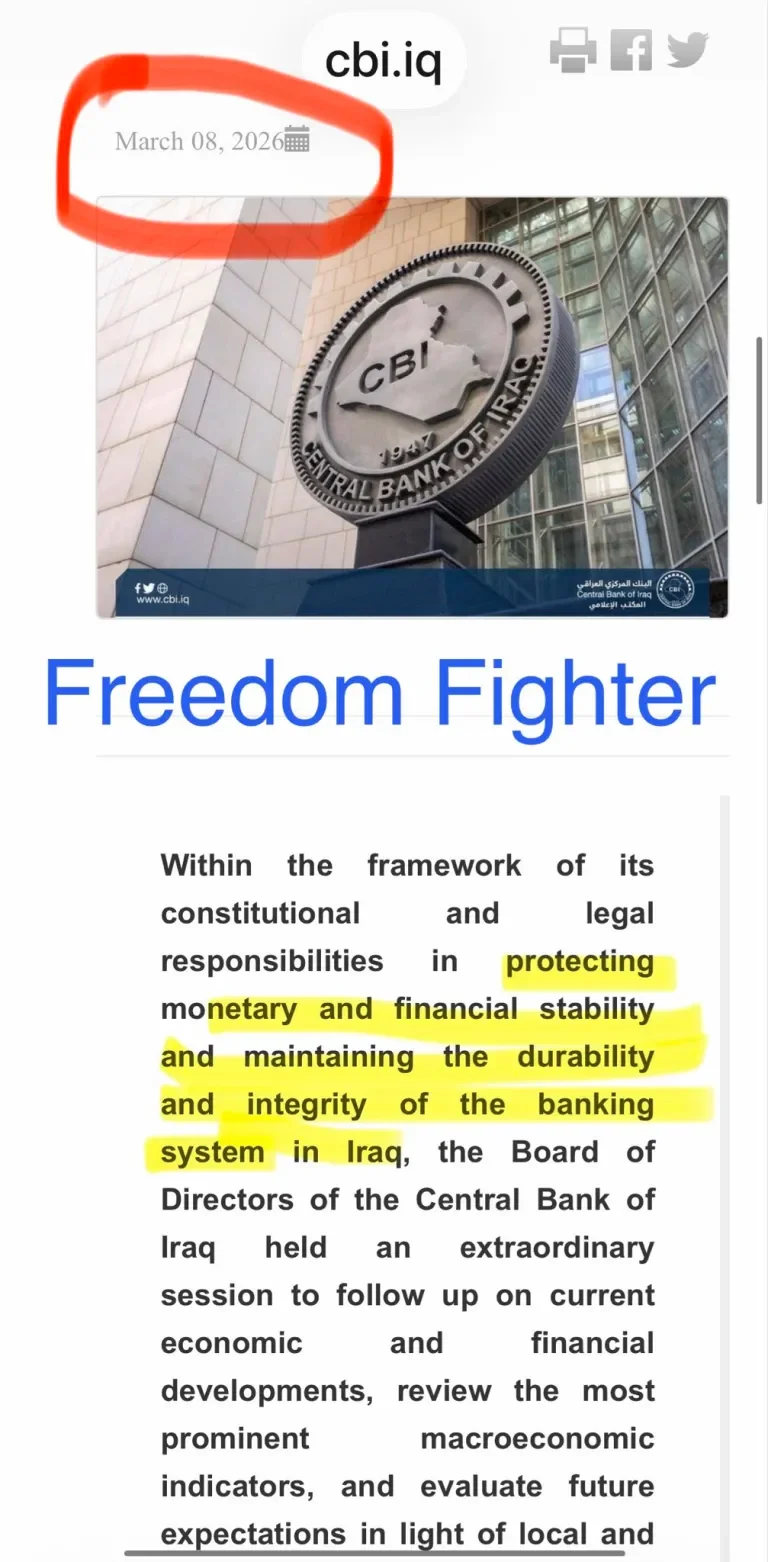
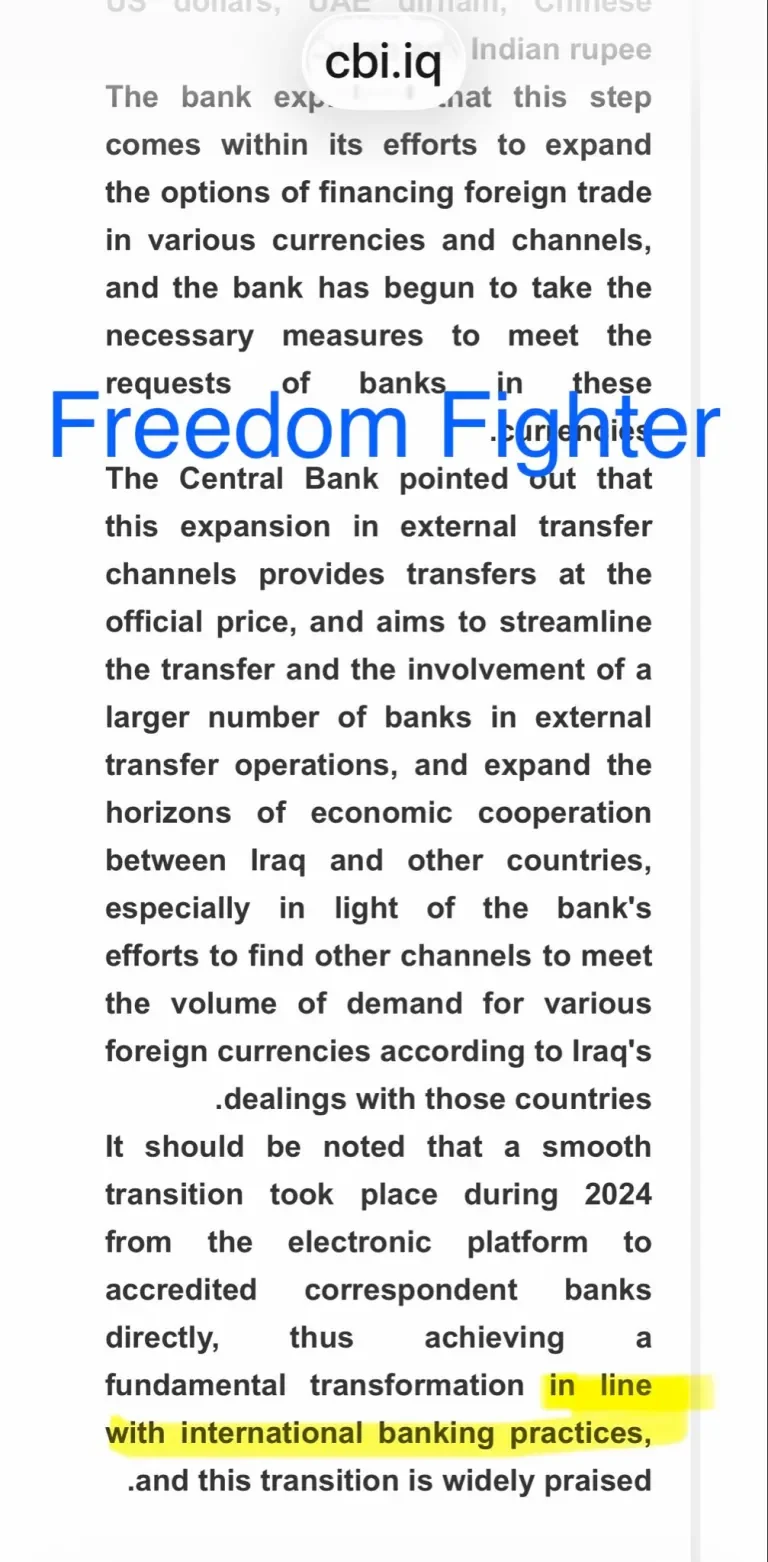
During Saturday Night Dialogues, we went directly to the (Central Bank of Iraq) website LIVE and showed the receipts on screen.
We also referenced documentation from:
U.S. Treasury
IMF (International Monetary Fund)
Topics covered:
Iraq and the Dinar
Vietnam and the VND
Global currencies & Basel III
The global gold connection
Full breakdown below:
Saturday Night Dialogues
Full Episode:
Source(s): https://x.com/FreedomFight12/status/2033601811593216425
https://dinarchronicles.com/2026/03/17/freedom-fighter-the-iraqi-dinar-rv-plan-is-changing/
Ariel: The New Gold Backed Dollar
Ariel: The New Gold Backed Dollar
3-16-2026
Prolotario @Prolotario1
The New Gold Backed Dollar: To End The Regime Is To Spend Wisely
Upcoming Gold-Backed Dividend Dollar in the United States – Remote Viewing Assessment
Date March 16th 2026
Ariel: The New Gold Backed Dollar
3-16-2026
Prolotario @Prolotario1
The New Gold Backed Dollar: To End The Regime Is To Spend Wisely
Upcoming Gold-Backed Dividend Dollar in the United States – Remote Viewing Assessment
Date March 16th 2026
Bullet Points
Gold-Backed Dividend Dollar (often referenced in closed channels as the U.S. Treasury Dividend Dollar or USTDD) is in advanced planning and partial deployment phase within Treasury and select executive structures as of mid-2026. This is not a full public currency replacement yet, but a parallel issuance mechanism designed to coexist with the current Federal Reserve note system during transition. Core attributes include:
– Asset Backing & Structure: Issued directly by the U.S. Treasury (not the Federal Reserve), backed by a basket of physical gold reserves, silver, strategic commodities, and national productivity assets. Each unit appreciates at a fixed rate (approximately 3% annually in baseline models) tied to real economic output rather than debt issuance. Dividends manifest as periodic asset-redemption credits or yield distributions to holders, functioning as a “citizen dividend” mechanism to inject value without inflationary borrowing.
– Timeline & Phased Rollout: Initial limited issuance targeted for late 2026 to early 2027 windows, aligned with broader monetary reset milestones (post-CLARITY Act stabilization and tokenized infrastructure maturity). Pilot programs are already active in select Treasury channels for high-trust entities and infrastructure funding. Full public access accelerates after 2027, contingent on legislative reinforcement and Fed marginalization.
– Purpose & Economic Impact: Designed to bypass fractional-reserve debt cycles, redirecting wealth from parasitic central banking loops to direct citizen and sovereign benefit. Holders receive steady appreciation and dividend-like returns (via asset claims or tokenized yields) without taxation on the core principal. This counters devaluation pressures from ongoing USD weakening policies (tariff-driven narratives and deliberate devaluation signals from 2025–2026). It positions the U.S. for a multipolar asset-backed paradigm, reducing reliance on foreign debt holders and enabling infrastructure/debt-relief.
– Current Status & Indicators: US Debt Clock displays have embedded references to this “dividend dollar” redeemable in assets (gold, silver, oil equivalents), serving as soft disclosure. Executive actions (e.g., defense contractor capital redirection EOs) and Treasury discussions on gold-convertible bonds (Judy Shelton advocacy) provide operational cover. No full public announcement yet remains in controlled rollout to avoid market shocks or cabal countermeasures. Gold price surges (record highs above $5,000/oz in early 2026) reflect preparatory accumulation and confidence signals.
– Risks & Safeguards: Transition vulnerabilities include resistance from legacy Fed-aligned networks, potential short-term volatility in paper gold markets, and legislative hurdles. Safeguards involve blockchain/tokenized issuance (via compliant rails like Kraken/Ripple Fed access) for transparency and direct custody, ensuring funds bypass intermediary theft. Citizen-level access will prioritize authenticated holders via updated Treasury portals, with no elite NDA barriers required post-full activation.
Read Full Article: https://www.patreon.com/posts/new-gold-backed-153198623
https://dinarchronicles.com/2026/03/17/prolotario-the-new-gold-backed-dollar/
Seeds of Wisdom RV and Economics Updates Tuesday Afternoon 3-17-26
Good Afternoon Dinar Recaps,
PayPal Expands Stablecoin to 70 Countries, Accelerating Global Payment Transformation
PYUSD rollout signals a major shift toward digital dollar adoption and lower-cost cross-border payments worldwide.
Overview
PayPal has significantly expanded its U.S. dollar-backed stablecoin, PayPal USD, to users in 70 countries, marking one of the most aggressive moves yet by a major financial company into global digital currency infrastructure.
Good Afternoon Dinar Recaps,
PayPal Expands Stablecoin to 70 Countries, Accelerating Global Payment Transformation
PYUSD rollout signals a major shift toward digital dollar adoption and lower-cost cross-border payments worldwide.
Overview
PayPal has significantly expanded its U.S. dollar-backed stablecoin, PayPal USD, to users in 70 countries, marking one of the most aggressive moves yet by a major financial company into global digital currency infrastructure.
The expansion extends access far beyond its initial rollout in the United States and United Kingdom, enabling users across Asia-Pacific, Europe, Latin America, and Africa to send, receive, and hold digital dollars directly within their PayPal accounts.
The move is designed to reduce cross-border payment costs, improve access to U.S. dollar liquidity, and integrate more users into the global financial system.
Key Developments
1.PYUSD Expands to 70 Countries Worldwide
PayPal’s latest rollout adds 68 new markets, bringing total availability to 70 countries globally.
Users in these regions can now:
• Send and receive PYUSD instantly across borders• Hold balances in U.S. dollars digitally• Transfer funds to external crypto wallets
This marks a major shift from previous limitations, where users in many countries were forced to convert funds into local currencies or immediately withdraw to bank accounts.
2.Lower Fees and Faster Cross-Border Payments
The expansion directly targets one of the biggest inefficiencies in global finance: expensive and slow international money transfers.
With PYUSD:
• Users can bypass traditional banking intermediaries• Reduce foreign exchange and transfer fees• Access near-instant settlement of funds
In countries where users previously faced restrictions — such as being unable to hold balances in PayPal accounts — PYUSD introduces a “balance-type” system that allows users to retain and manage digital dollars directly.
3.Stablecoin Rewards Introduced
PayPal is also introducing rewards for holding PYUSD balances, effectively turning the stablecoin into a yield-generating digital account.
This creates:
• A new incentive structure for users to hold digital dollars• Increased adoption of stablecoin-based financial activity• Competition with traditional savings and remittance systems
4.Backed by Regulated Infrastructure
PYUSD is issued by Paxos Trust Company, a regulated financial institution, while PayPal handles distribution and user access.
The stablecoin has grown rapidly:
• Market cap expanded from ~$500 million to over $4 billion• Now ranks among the top global USD-pegged stablecoins
This growth reflects rising demand for digital dollar alternatives in global payments and settlements.
Why This Matters
This expansion represents a major milestone in the evolution of global payment systems.
Stablecoins like PYUSD are increasingly being used to:
• Move money across borders instantly• Bypass traditional banking rails• Provide dollar access in underserved regions
Unlike speculative cryptocurrencies, stablecoins are pegged to fiat currencies, making them practical tools for everyday financial transactions.
PayPal’s scale — with hundreds of millions of users — means this rollout could accelerate mainstream adoption of digital currency infrastructure faster than many government-led initiatives.
Why It Matters to Foreign Currency Holders
For individuals and businesses outside the U.S., PYUSD offers:
• Direct access to U.S. dollar liquidity• Protection against local currency volatility• Lower-cost international transfers
This is especially significant in regions where:
• Banking systems are limited
• Currency instability is high
• Cross-border payments are expensive
Stablecoins effectively allow users to hold and transact in dollars without needing a U.S. bank account.
Implications for the Global Reset
The expansion of PYUSD highlights a critical shift in the global financial system:
Private companies are building parallel digital payment rails alongside traditional banking systems.
Key structural trends emerging:
1. Digital Dollar Expansion Stablecoins are extending the reach of the U.S. dollar globally in digital form.
2. Payment System Transformation Cross-border transactions are moving away from slow, costly legacy systems toward instant blockchain-based settlement.
3. Financial Inclusion Through TechnologyMillions of users can now access global financial tools without relying on traditional banking infrastructure.
As adoption grows, stablecoins could play a central role in reshaping how money moves globally, influencing everything from remittances to international trade settlement.
This is not just a fintech upgrade — it is a foundational shift in how global money flows are being rebuilt.
Seeds of Wisdom Team
Newshounds News™ Exclusive
Sources
Cointelegraph — “PayPal expands PYUSD stablecoin to 70 countries”
Fortune — “PayPal pushes global expansion of its PYUSD stablecoin”
~~~~~~~~~~
Rising War Costs and BRICS Momentum Fuel Debate Over Dollar Dominance
Escalating U.S. deficit spending and expanding BRICS financial infrastructure are intensifying questions about the future of the global monetary system.
Overview
The growing cost of the Iran conflict is placing new strain on U.S. finances while accelerating global discussions around alternatives to the U.S. dollar.
Estimates suggest the U.S. is spending between $800 million and $2 billion per day on military operations, adding pressure to an already elevated deficit. At the same time, BRICS nations are advancing financial systems designed to reduce reliance on the dollar, including alternative payment rails and proposals for a new settlement unit.
This convergence of rising debt, geopolitical conflict, and alternative financial infrastructure is fueling one of the most important debates in global finance: whether the dollar’s dominance is beginning to erode.
Key Developments
1.War Spending Adds Pressure to U.S. Fiscal Stability
The financial burden of the conflict is rapidly increasing:
• Estimates range from $800 million to $2 billion per day in military spending
• Early operations reportedly cost $6 billion in the first week• Total costs could reach tens of billions of dollars if the conflict continues
This level of spending is contributing to higher deficits at a time when the U.S. is already managing significant debt levels, raising concerns among policymakers and market participants.
2.Bond Markets React to Rising Deficits
Financial markets are beginning to reflect these pressures.
The 30-year U.S. Treasury yield climbed near 4.9%, signaling:
• Investor concern over rising government borrowing• Expectations of higher inflation tied to war and energy prices• Questions about long-term fiscal sustainability
Higher yields increase borrowing costs across the economy, potentially impacting housing, business investment, and government financing.
3.BRICS Expands Alternative Financial Infrastructure
At the same time, BRICS nations are actively developing systems designed to bypass traditional Western financial networks.
Key developments include:
• Increased use of local currencies in bilateral trade between major members like China and Russia• Expansion of China’s Cross-Border Interbank Payment System, connecting thousands of banks globally
• Growth of central bank digital currency platforms such as mBridge
These systems are designed to reduce dependence on SWIFT and the U.S. dollar for international transactions.
4.Proposed BRICS Settlement Unit Gains Attention
The idea of a BRICS-linked settlement unit backed by a mix of gold and member currencies is gaining renewed attention amid current conditions.
While still in the conceptual or early development stage, such a system would aim to:
• Facilitate cross-border trade outside the dollar system• Provide an alternative store of value tied to commodities and currencies• Support long-term de-dollarization strategies
Though a full transition remains unlikely in the near term, the infrastructure supporting such a shift is steadily expanding.
Why This Matters
The global financial system is built on confidence in sovereign currencies, particularly the U.S. dollar.
However, several converging factors are now testing that framework:
• Rising U.S. debt and deficit spending• Geopolitical conflict driving fiscal expansion• Emergence of alternative payment and settlement systems
While the dollar remains dominant, these pressures could gradually reshape global financial flows over time.
Why It Matters to Foreign Currency Holders
Changes in the global monetary system can directly affect:
• Currency values and exchange rates• Global trade settlement practices• Reserve asset allocation by central banks
If alternative systems gain traction, countries may increasingly:
• Diversify reserves into gold and non-dollar assets• Conduct trade in local or regional currencies• Reduce exposure to U.S.-centric financial infrastructure
However, during periods of uncertainty, the dollar often retains strong demand as a safe-haven asset, creating a complex dynamic between short-term strength and long-term structural shifts.
Implications for the Global Reset
The current environment highlights a key transition phase in global finance:
The system is not collapsing — it is evolving.
Three major forces are shaping this evolution:
1. Fiscal Pressure on Major EconomiesRising debt levels and war spending are testing traditional monetary stability.
2. Expansion of Alternative Payment SystemsBRICS and other nations are building infrastructure that allows trade outside legacy systems.
3. Gradual Diversification of Global ReservesCentral banks are increasingly exploring alternatives to dollar concentration.
Rather than a sudden shift, the global system appears to be moving toward a more multipolar financial structure, where multiple currencies and systems coexist.
This is not an overnight replacement of the dollar — it is a gradual rebalancing of global financial power.
Sources
Watcher.Guru — “BRICS Unit Could Replace Dollar as US Burns $2B A Day on Iran War”
Reuters — “U.S. Treasury yields rise amid deficit concerns and geopolitical tensions”
~~~~~~~~~~
Seeds of Wisdom Team RV Currency Facts Youtube and Rumble
Newshound's News Telegram Room Link
RV Facts with Proof Links Link
RV Updates Proof links - Facts Link
Follow the Gold/Silver Rate COMEX
Follow Fast Facts
Seeds of Wisdom Team™ Website
Thank you Dinar Recaps
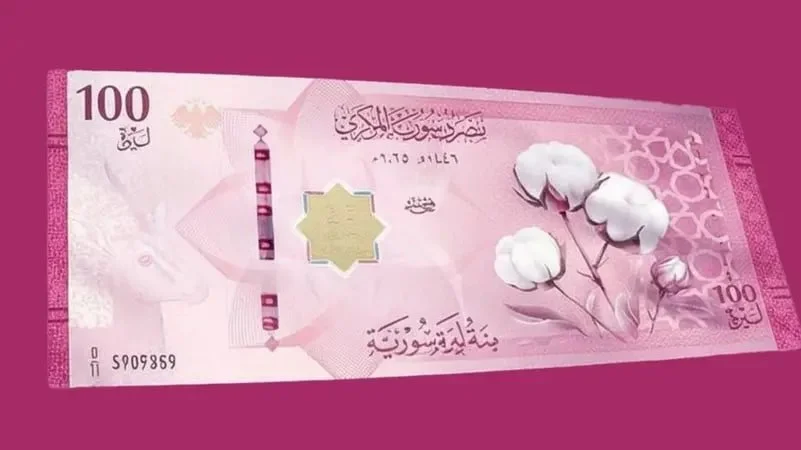
The Central Bank of Syria announces developments regarding the replacement of the Syrian pound and the date for activating its account with the US Federal Reserve.
KTFA:
Clare: The Central Bank of Syria announces developments regarding the replacement of the Syrian pound and the date for activating its account with the US Federal Reserve.
3/16/2026
The Governor of the Central Bank of Syria, Abdul Qader al-Hasriya, confirmed that Syria’s account at the US Federal Reserve Bank is now ready and operational and will be activated soon, following intensive efforts that began last July as part of Syria’s reintegration into the global financial system.
KTFA:
Clare: The Central Bank of Syria announces developments regarding the replacement of the Syrian pound and the date for activating its account with the US Federal Reserve.
3/16/2026
The Governor of the Central Bank of Syria, Abdul Qader al-Hasriya, confirmed that Syria’s account at the US Federal Reserve Bank is now ready and operational and will be activated soon, following intensive efforts that began last July as part of Syria’s reintegration into the global financial system.
Al-Hasri said that “the announcement of the reactivation of the account was met with a direct welcome from the US Treasury Department and the US Presidential Envoy, who described the move as historic and constituting support for the recovery of the Syrian economy,” noting that these messages carry important political and economic implications, especially since the sanctions on Syria began with the United States in 1979, and that the current cooperation reflects a trend towards reintegrating the Syrian financial system into the global financial system.
Al-Hasri added: “Having an active account at the US Federal Reserve Bank allows Syria to return to the correspondent banking system and secures clearing and transfer operations in US dollars, which directly impacts the flow of resources from remittances from expatriates and investors, and the return of foreign trade to official banking channels, which enhances liquidity and provides greater opportunities for importing, transferring, and creating job opportunities,” according to the Syrian News Agency “SANA.”
He explained that transfers through official channels will lead to a significant reduction in transfer costs, after eliminating the role of intermediaries and informal links, indicating that transfers through the "SWIFT" system arrive in 77% of cases within just 10 minutes, which enhances citizens' confidence in the banking sector and improves the relationship between banks and their customers.
He pointed out that this step comes within the Central Bank’s vision to build a financial sector that operates according to international standards and leads Syria’s integration into the international financial system, noting that the bank is working in parallel on cooperation tracks with central banks in Canada and Europe.
He said that meetings were held with the Bank of Canada and Canadian financial institutions to discuss opening an account for the Central Bank of Syria there, in addition to meetings with major banks, regulatory bodies and currency printing institutions. Work is also underway on a similar track with the European Central Bank, Germany and France to organize joint banking days and enhance cooperation.
Replacing the Syrian pound
Regarding the replacement of the new currency, the Governor of the Central Bank of Syria confirmed that about 40% of the circulating cash mass of 42 trillion old Syrian pounds has been replaced, after the percentage was 35%, noting that the process is proceeding smoothly and is expected to accelerate after Eid al-Fitr.
Al-Hasri said that the Syrian economy faces challenges related to the war in the region and its effects on the global economy, from supply chain disruptions and rising energy prices to fluctuations in exchange rates. However, the policies and tools adopted by the Central Bank have contributed to maintaining relative stability in the exchange rate despite the rise of the dollar globally.
The exclusive report revealed that measures have been taken to activate the Central Bank branches in Raqqa and Hasakah, appoint new directors for the two branches, and work to improve the availability of the Syrian pound in the region, stressing that the bank is working daily in coordination with the Ministry of Finance to address the issue of salaries and mitigate the effects of the crisis. LINK