
Rob Cunningham: The Hidden Dynamic Most miss
Rob Cunningham: The Hidden Dynamic Most miss
3-16-2026
Rob Cunningham | KUWL.show @KuwlShow
The Hidden Dynamic Most Miss
When the rails of civilization change, markets often reprice the new rails before the world fully realizes what is happening.
Financial infrastructure is often revalued long before full adoption.
Rob Cunningham: The Hidden Dynamic Most miss
3-16-2026
Rob Cunningham | KUWL.show @KuwlShow
The Hidden Dynamic Most Miss
When the rails of civilization change, markets often reprice the new rails before the world fully realizes what is happening.
Financial infrastructure is often revalued long before full adoption.
Markets price future utility, not current usage.
This happened with:
railroads in the 1800s
telephone networks in the early 1900s
internet infrastructure in the 1990s
The same dynamic can appear in emerging financial networks.
What if most/all of these 6 geo-political variables advance in a positive direction within the next 6 months?
1. Iran Peace Deal
2. Cuba-US Partnership
3. Clarity Act Deal
4. New Fed Chair
5. X Money Launch
6. Fed Rate Cuts
There are 5 structural triggers that historically precede a 10-100x repricing of financial infrastructure assets, including XRP-type networks.
1. Regulatory Legitimization
2. Institutional Infrastructure Integration
3. Liquidity Layer Formation
4. Macro Liquidity Expansion
5. Narrative Convergence
Ready? No time for guesswork.
Source(s): https://x.com/KuwlShow/status/2033040571565019258
https://dinarchronicles.com/2026/03/15/rob-cunningham-the-hidden-dynamic-most-miss/
Seeds of Wisdom RV and Economics Updates Monday Afternoon 3-16-26
Good Afternoon Dinar Recaps,
Oil Shock and Currency Tensions: Strait of Hormuz Crisis Sends Ripples Through Global Finance
Energy chokepoints and currency experiments collide as the Iran conflict intensifies.
Overview
Escalating tensions around the Strait of Hormuz are sending powerful signals through global financial markets, highlighting how energy supply routes remain one of the most critical pressure points in the international economic system.
Good Afternoon Dinar Recaps,
Oil Shock and Currency Tensions: Strait of Hormuz Crisis Sends Ripples Through Global Finance
Energy chokepoints and currency experiments collide as the Iran conflict intensifies.
Overview
Escalating tensions around the Strait of Hormuz are sending powerful signals through global financial markets, highlighting how energy supply routes remain one of the most critical pressure points in the international economic system.
Oil prices have experienced sharp volatility as traders respond to disruptions and security risks in the Persian Gulf. At the same time, new discussions about alternative currency settlement for oil shipments are emerging — developments that could have long-term implications for the global monetary order.
The Strait of Hormuz handles roughly 20% of the world’s oil supply, meaning any disruption in the corridor can quickly impact energy prices, inflation expectations, and financial stability worldwide.
Key Developments
1. Global Energy Markets Jolt as Hormuz Risks Intensify
Energy markets have become increasingly volatile as military conflict and shipping threats raise concerns about oil flows through the Strait of Hormuz.
The narrow waterway carries about one-fifth of global oil supply, making it one of the most strategically important energy corridors in the world. Even partial disruptions can trigger rapid price swings and supply concerns.
Recent market reactions reflect growing uncertainty about whether shipping traffic can continue safely through the region.
2. Oil Prices Swing as Traders React to Conflict
Oil markets have experienced rapid price movements as investors attempt to gauge the economic impact of the escalating conflict.
Energy prices surged earlier in the crisis as shipping slowed and tanker traffic became uncertain, while more recent trading sessions have shown sharp volatility as governments consider releasing strategic reserves to stabilize supply.
These fluctuations illustrate how geopolitical shocks can immediately ripple through commodity markets and global inflation expectations.
3. Currency Questions Enter the Oil Trade Conversation
One of the most intriguing developments emerging from the conflict is discussion surrounding alternative currencies in oil trade settlement.
Reports suggest Iran has considered allowing oil tankers through the Strait of Hormuz only if transactions are conducted in Chinese yuan, potentially challenging the long-standing practice of dollar-denominated oil trade.
While still speculative and not widely adopted, such proposals highlight growing interest among some countries in experimenting with non-dollar settlement mechanisms for strategic commodities.
4. Global Markets Respond to Energy and Inflation Risks
Financial markets worldwide have reacted to the uncertainty.
Stocks have slipped in several regions while investors move toward traditional safe-haven assets and currencies amid fears that sustained energy disruptions could increase inflation and slow economic growth.
Higher energy costs historically ripple through the global economy, affecting transportation, manufacturing, and consumer prices.
Why It Matters
Energy markets sit at the center of the global economic system.
When a strategic chokepoint like the Strait of Hormuz faces disruption, the consequences extend far beyond regional politics.
Potential effects include:
• Higher global inflation• Volatility in financial markets• Pressure on import-dependent economies• Greater geopolitical competition over energy security
Why It Matters to Foreign Currency Holders
For those monitoring developments related to a potential evolution of the global financial system, the situation highlights several structural realities.
Energy trade remains deeply intertwined with the international monetary system, particularly through the currencies used to settle major commodity transactions.
Events that challenge established payment practices — even indirectly — can gradually encourage experimentation with alternative financial arrangements.
Implications for the Global Financial System
The crisis highlights how three forces often intersect during periods of financial transition:
• Energy supply disruptions• Currency settlement experimentation• Geopolitical realignment
Together, these dynamics can accelerate discussions about payment systems, reserve diversification, and alternative trade settlement mechanisms.
While the current system remains deeply anchored in existing financial infrastructure, episodes like this often catalyze longer-term financial innovation and geopolitical strategy.
Closing Perspective
The Strait of Hormuz crisis underscores a fundamental truth about global finance:
Energy security, geopolitics, and currency systems remain tightly interconnected.
When one pillar becomes unstable, the effects quickly ripple across markets, commodities, and international monetary relations.
In a rapidly evolving global economy, even regional conflicts can become catalysts for broader financial change.
Seeds of Wisdom Team
Newshounds News™ Exclusive
Sources
~~~~~~~~~~
Dubai Markets Slide Into Bear Territory as Middle East Conflict Shakes Investor Confidence
Regional instability and oil-route fears send shockwaves through Gulf financial markets.
Overview
Dubai’s primary stock benchmark has officially entered bear-market territory, highlighting how geopolitical instability can rapidly ripple through global financial markets.
The Dubai Financial Market General Index (DFMGI) has dropped more than 20% from its late-February peak, pushing the market into a technical bear market and erasing tens of billions of dollars in equity value.
Analysts say the selloff reflects growing investor anxiety surrounding the widening conflict involving Iran and disruptions to energy trade routes in the Persian Gulf, particularly around the strategically critical Strait of Hormuz.
The decline illustrates how geopolitical shocks in key energy corridors can quickly impact global financial stability.
Key Developments
1. Dubai’s Main Index Enters Bear Market Territory
Dubai’s benchmark equity index has fallen more than 20% from its February high, the threshold commonly used to define a bear market.
Market losses have erased tens of billions of dollars in value from publicly traded companies, reflecting a sharp shift in investor sentiment.
2. Escalating Regional Conflict Triggers Market Volatility
The selloff has been fueled by rising geopolitical tensions tied to the ongoing conflict involving Iran and regional military activity.
Investors are increasingly concerned about the potential disruption of oil and shipping traffic through the Strait of Hormuz, a narrow maritime chokepoint responsible for roughly one-fifth of global oil flows.
Any prolonged disruption to this route could have major consequences for global energy supply and inflation expectations.
3. Banking, Real Estate, and Tourism Stocks Lead Declines
Some of the hardest-hit sectors in Dubai’s market include:
• Banking and financial services• Real estate developers• Tourism and aviation companies
Large property firms and major lenders have recorded notable losses as investors reassess regional economic growth prospects amid heightened geopolitical risk.
4. Gulf Markets Reflect Broader Regional Risk
Dubai’s downturn is part of a wider regional market reaction.
Several Gulf exchanges—including Qatar, Bahrain, and Kuwait—have also experienced declines as investors respond to uncertainty surrounding energy supplies, security risks, and economic disruptions across the Middle East.
Why It Matters
Dubai has positioned itself as a major global financial hub connecting Europe, Asia, and the Middle East.
Sharp declines in its equity market signal that geopolitical instability can quickly influence international capital flows, investment decisions, and regional economic confidence.
Because Gulf economies are deeply linked to global energy markets and international trade routes, disruptions in the region can create ripple effects across commodities, shipping, and financial markets worldwide.
Why It Matters to Foreign Currency Holders
For those tracking developments related to a potential evolution of the global financial system, events like this highlight several structural realities:
• Energy chokepoints remain critical to global monetary stability
• Regional conflicts can trigger rapid financial volatility
• Financial hubs in strategic trade corridors are highly sensitive to geopolitical risk
These factors reinforce why many countries are simultaneously exploring diversified reserve assets, alternative payment systems, and new financial infrastructure.
Implications for the Global Financial System
This market shock underscores a broader reality emerging across global finance:
• Geopolitical risk increasingly influences financial markets
• Energy supply routes remain a core pillar of global economic stability
• Regional conflicts can trigger immediate global market responses
As the international monetary system evolves toward faster digital payments, diversified reserves, and multipolar financial networks, stability in key economic hubs remains essential.
Closing Perspective
Dubai’s market decline serves as a reminder that financial systems remain deeply interconnected with geopolitical events.
When strategic energy routes and major financial centers are affected by conflict, the ripple effects can spread rapidly across the global economy.
This is not just regional turbulence — it is another illustration of how geopolitics and financial markets increasingly move together in a shifting global economic order.
Seeds of Wisdom Team
Newshounds News™ Exclusive
Sources
Bloomberg — “Dubai Stocks Fall Into Bear Market as Iran War Enters Third Week”
Reuters — Most Gulf equities decline as Iran conflict fuels regional market uncertainty
~~~~~~~~~~
Seeds of Wisdom Team RV Currency Facts Youtube and Rumble
Newshound's News Telegram Room Link
RV Facts with Proof Links Link
RV Updates Proof links - Facts Link
Follow the Gold/Silver Rate COMEX
Follow Fast Facts
Seeds of Wisdom Team™Website
Thank you Dinar Recaps
Iraq Economic News and Points To Ponder Monday Afternoon 3-16-26
State of Law Coalition: Iraq’s Economic Security Above All Considerations
Baghdad – INA The State of Law Coalition affirmed on Monday that Iraq’s economic security must remain above all considerations, stressing that disputes should be addressed through dialogue.
In a statement received by the Iraqi News Agency, the coalition said it had followed with deep concern the statements issued by the Iraqi Ministry of Oil and the Ministry of Natural Resources of the Kurdistan Regional Government, noting the divergence in positions amid the sensitive economic conditions facing the country and the potential repercussions that could directly affect citizens’ livelihoods.
State of Law Coalition: Iraq’s Economic Security Above All Considerations
Baghdad – INA The State of Law Coalition affirmed on Monday that Iraq’s economic security must remain above all considerations, stressing that disputes should be addressed through dialogue.
In a statement received by the Iraqi News Agency, the coalition said it had followed with deep concern the statements issued by the Iraqi Ministry of Oil and the Ministry of Natural Resources of the Kurdistan Regional Government, noting the divergence in positions amid the sensitive economic conditions facing the country and the potential repercussions that could directly affect citizens’ livelihoods.
The statement added that the accumulation of disputes between the federal government and the Kurdistan Regional Government over many years has contributed to complicating the situation at a time when the current circumstances require the highest levels of national responsibility and prioritizing the public interest.
The coalition called on all concerned parties to address the issues at hand with a spirit of national responsibility, avoid escalation or deepening disagreements, and work jointly to overcome the current crisis in a way that preserves economic stability and safeguards citizens’ interests.
It further stressed that the disputed issues between the federal government and the Kurdistan Region should be resolved through a national approach based on dialogue, cooperation, and mutual understanding, in a manner that serves the public interest and strengthens political and economic stability in the country.
The coalition emphasized that Iraq’s economic security and the stability of citizens’ conditions must remain above any other considerations, urging all parties to act wisely and work collectively to navigate this sensitive phase in a way that serves the interests of Iraq and its people.
Iraq's 2025 Budget Deficit Reaches 17 Trillion Dinars: Eco Iraq Observatory
The Eco Iraq observatory announced Iraq's 2025 budget deficit at 17 trillion and 40 billion dinars, driven by oil-dependent revenues and high current expenditures.
2026-03-15 12:45 Iraq's Budget DeficitECO Iraq Observatory ERBIL (Kurdistan24) - The Eco Iraq observatory announced that Iraq's budget deficit for 2025 reached 17 trillion and 40 billion Iraqi dinars, as expenditures exceeded revenues in a fiscal year dominated by current spending and reliance on oil income.
In a press statement, the observatory said that state revenues during 2025 amounted to 124 trillion and 185 billion Iraqi dinars. It explained that oil revenues reached 109 trillion and 207 billion dinars, while non-oil revenues amounted to 14 trillion and 977 billion dinars.
The observatory pointed out that the financial deficit resulted from expenditures exceeding revenues. It clarified that total spending reached 141 trillion and 122 billion dinars, of which 119 trillion and 163 billion dinars were current expenditures, equivalent to 84% of total public spending.
It added that investment expenditures amounted to 22 trillion and 22 billion dinars, representing about 15% of total spending. The observatory stated that the rise in current expenditures against weak investment reflects a defect in the budget structure, with heavy reliance on oil constituting about 88% of revenues, making public finances vulnerable to price fluctuations.
The observatory stressed the necessity of enhancing non-oil revenues and increasing investment spending.
This announcement on the 2025 fiscal outcomes highlights Iraq's ongoing dependence on oil exports, which pass through key regional waterways including the Strait of Hormuz. About 20 million barrels per day of crude and other oil products were transported through the strait in 2025, according to FactCheck.org.
That flow has slowed to a trickle since the U.S.-Israeli conflict with Iran began, per the same report.
The Strait of Hormuz, bordering Iran and Oman, serves as a critical conduit for oil and natural gas from the Persian Gulf to global markets, with roughly 27% of the world's maritime trade in crude oil and petroleum products passing through it, as detailed in a Congressional Research Service report.
Starting on March 4, 2026, Iranian forces declared the strait closed, threatening and carrying out attacks on ships attempting to transit, according to the report.
The conflict, which began with joint U.S. and Israeli military operations against Iran on February 28, 2026, has led to a de facto closure of the strait, disrupting shipments from major producers including Iraq, per the American Action Forum.
Transits through the strait have essentially ground to a halt, with firms adopting a cautious stance amid soaring war-risk premiums, the forum noted.
Iraqi oil production from its main southern oilfields has fallen by 70% to 1.3 million barrels per day, as the country is unable to export via the Strait of Hormuz due to the conflict, three industry sources told Reuters.
Iraq's exports fell to an average of around 800,000 barrels per day, with only two tankers loading because vessels cannot move freely through the strait to southern terminals, according to the sources and a shipping agent.
Storage facilities in the Gulf are rapidly filling, forcing oilfields in Iraq and other countries to cut production, analysts, traders and sources told Al Jazeera.
The conflict has led to the suspension of about a fifth of global crude and natural gas supply, as Iran targets ships in the strait, per the report.
Maritime traffic through the Strait of Hormuz has almost completely stopped since the strikes against Iran, with Iran targeting tankers in the area, according to Bloomberg.
Gulf producers have lowered crude output as storage tanks fill up, the report added.
The conflict disrupted approximately 20% of global oil supplies transiting the Strait of Hormuz, causing Brent Crude oil prices to rise from around $70 to over $110 per barrel within days, per Reuters.
Oil production in Iraq, among other countries, dropped by a reported 6.7 million barrels per day by March 10, 2026, and by at least 10 million barrels per day as of March 12, 2026, according to the entry.
Iran's closure of the strait also disrupted significant liquefied natural gas volumes, the entry noted. A prolonged disruption of Middle East oil trade would create oil market conditions without historical precedent, with oil prices experiencing significant upward pressure, as stated in the Congressional Research Service report.
The international benchmark Brent jumped 8% from $71.32 per barrel on February 27, 2026, to $77.24 per barrel on March 2, 2026, the trading days before and after operations began, per the report. As the conflict continued, prices went higher, at one point breaking the $100 per barrel mark.
In the U.S., President Donald Trump raised the prospect of actions to reestablish free transit of the strait, amid a considerable decrease in shipping traffic, according to the Congressional Research Service.
On March 3, 2026, Trump stated that he had ordered the provision of political risk insurance to all maritime trade and said the U.S. Navy could escort commercial vessels through the strait if necessary.
Iran has the capacity to disrupt shipping via mines, speed boats, submarines, shore-based cruise missiles, aircraft and other systems, the report assessed. Prior to the conflict, analysts held consensus that the U.S. military could counter Iran's forces and restore shipping flow, though such an effort would take days, weeks or months.
The Strait of Hormuz crisis has reshaped global oil markets, with the conflict putting the waterway on a knife's edge and affecting oil prices, jet fuel and liquefied natural gas, per Kpler.
The conflict directly threatens approximately 20% of global oil supply that transits the strait daily, the blog stated.
A closure of the Strait of Hormuz due to the U.S.-Iran war has impacted the oil market, but also sectors reliant on shipping, from metals to agriculture and autos, according to CNBC.
U.S. military actions and insurance backstops may help keep trade flowing, but supply chain experts say it could take weeks for impacts to hit prices across products.
The International Energy Agency took the step of saying it would release 400 million barrels of oil from reserves, per the report. There is no value to Iran in intercepting cargo containers, though non-oil ships may be harassed by Iranian speedboats, the report noted.
Reports of U.S. Navy escorting ships through the strait were incorrect, but the U.S. can put plans in place to stop Iran from seizing ships, with air power and missiles able to destroy Iranian missile batteries, according to CNBC.
Iraq halted crude oil shipments via a key pipeline to a Turkish port as a precautionary measure, as Middle Eastern energy infrastructure is caught in the conflict, per Bloomberg.
The pipeline carries oil from northern fields, but nearly all Iraqi crude exports are shipped via the Strait of Hormuz.
The U.S. and France are considering naval escorts for tankers crossing the strait, though neither plans to start operations immediately, the report added. Prolonged disruption threatens global inflation.
In a February update, the International Energy Agency said that with around 25% of the world's seaborne oil trade transiting the strait and limited bypass options, any disruption would have huge consequences for world oil markets, per FactCheck.org.
A prolonged disruption would lead to oil supply shortages and make price increases inevitable, the agency warned.
Iran blocked the flow of oil and goods through the strait in retaliation for the airstrikes, threatening to shoot or bomb vessels attempting to pass, according to the report. The strait connects the Persian Gulf with the Gulf of Oman and the Arabian Sea.
The conflict could leave consumers and businesses facing weeks or months of higher fuel prices even if it ends quickly, as suppliers grapple with damaged facilities, disrupted logistics and elevated shipping risks, per Al Jazeera.
A nearly complete shutdown means producers like Iraq have suspended shipments of up to 140 million barrels of oil, equal to about 1.4 days of global demand.
Oil and gas prices have surged since the war's start amid the collapse in Hormuz transits, according to Bloomberg.
Daily natural gas prices in Asia and Europe have risen almost 54% and 63%, respectively, over the week before operations began, while U.S. prices increased 7% between February 27 and March 2, 2026, per the Congressional Research Service.
Iran's attempts to disrupt energy commerce carry strategic benefits and risks for Tehran, including direct conflict with the U.S. in past instances, the report noted. War risk insurance has increased significantly since fighting began on February 28, 2026.
The efficacy of emergency response measures could be tested to their limits in a prolonged disruption, with uncertain duration of elevated prices determined by time needed to normalize trade, according to the Congressional Research Service.
Congress holds interest in potential closures of the strait due to impacts on global prices for oil, natural gas and other commodities, the report stated. Oil supply disruptions could affect prices worldwide, including in the U.S
Ariel: When this Bill Finally Passes, be Ready
Ariel: When this Bill Finally Passes, be Ready
5-16-2026
Prolotario @Prolotario1
This Is Why I Just Sit Back And Laugh: You Are Hearing This Directly From The US Administration
Hold Your Currency People
I gave you everything you should be looking for. This year will mark a major turn around for all of us.
Ariel: When this Bill Finally Passes, be Ready
5-16-2026
Prolotario @Prolotario1
This Is Why I Just Sit Back And Laugh: You Are Hearing This Directly From The US Administration
Hold Your Currency People
I gave you everything you should be looking for. This year will mark a major turn around for all of us.
Iran will open their market to the US.
Iraq will open their market to the US.
Venezuela will open their markets to the US.
Zimbabwe will open their market to the US.
Ec
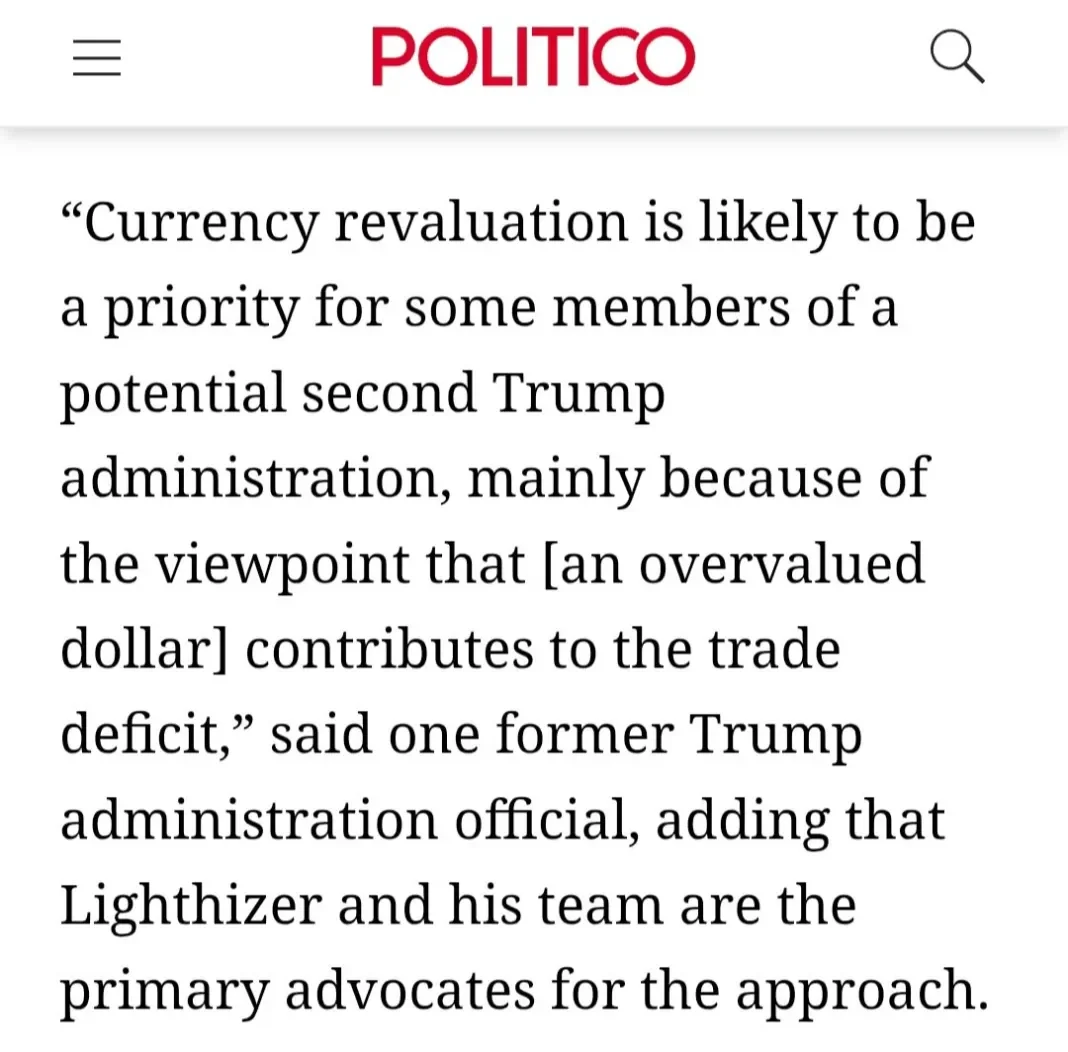
Do you know how many articles I have of the currency revaluation?
You thought that was the only one?
By the way Institutions like JPMorgan, Bank of America, Wells Fargo, and Citibank, which have expanded into tokenized deposits and stablecoin issuance under GENIUS Act rules, will facilitate exchanges.
Their systems now support programmable, blockchain-linked settlements for digital assets, including tokenized foreign currencies, with direct Fedwire access for faster clearing. So once it is time to exchange please check out those banks.
Of course there will be more.
One last note please keep in mind that once you exchange your money will most likely not be going back under the old system. Here is why.
Liquidity is going to be delivered as tokenized assets (gold/silver-backed stablecoins or digital currency equivalents) directly to the holder’s self-custodied wallet or compliant digital-asset account.
This bypasses SWIFT, correspondent banks, and legacy Fedwire clearing entirely no Rothschild intermediary touches the principal.
You understand?
Exchanges executed through Kraken Financial, Ripple-linked entities, or GENIUS Act-compliant banks use direct Fed master account access or blockchain bridges.
Funds move peer-to-peer or institution-to-wallet without being parked in fractional-reserve Rothschild-aligned commercial banks first.
You should feel very confident about your exchanges.
The Crypto Structure Bill enforces transparent, settlements with minimal or zero intermediary deductions. Legacy systems (where Rothschild networks extract taxes, currency-conversion fees, wire charges, and hidden spreads) are short-circuited
holder receives near-100% of negotiated value.
So when this bill passes be ready to finally get this over with.
~Happy Travels
Source(s):
https://x.com/Prolotario1/status/2033242156752597470
https://x.com/Prolotario1/status/2033305777771774222
https://dinarchronicles.com/2026/03/16/prolotario-when-this-bill-finally-passes-be-ready/
Monday Coffee with MarkZ, 03/16/2026
Monday Coffee with MarkZ, 03/16/2026
Some highlights by PDK-Not verbatim
MarkZ Disclaimer: Please consider everything on this call as my opinion. People who take notes do not catch everything and its best to watch the video so that you get everything in context. Be sure to consult a professional for any financial decisions
Member: Good Morning we are one day closer to our Blessing
Member: Hoping Mark has some good news today.
MZ: We do have a few exciting things to talks about.
Monday Coffee with MarkZ, 03/16/2026
Some highlights by PDK-Not verbatim
MarkZ Disclaimer: Please consider everything on this call as my opinion. People who take notes do not catch everything and its best to watch the video so that you get everything in context. Be sure to consult a professional for any financial decisions
Member: Good Morning we are one day closer to our Blessing
Member: Hoping Mark has some good news today.
MZ: We do have a few exciting things to talks about.
Member: Are there any bond updates?
MZ: I have some bond folks who say they will absolutely know every bit of their schedule after tomorrow. I have a couple who are saying they will get their final updates. I am getting this from several different bond historic bond sources in different parts of the world. They are expecting big news tomorrow on timing.
MZ: At the same time groups are expecting their final announcements this week but have not been able to confirm this yet. One of these groups are one of the biggest. (not quite as big as the Admirals group but close). They were told its time to check in. I am hoping one of these groups will be the General 64 group…and that we will soon hear something from them
Member: Do you know what percentage of 4a is done?
MZ: I hear some may have liquidity…but the phone call this morning about groups has me excited. I think groups are positioning and some of them have funds ready to distribute. But I do not think any are done. That is my opinion. I think they may be getting paid starting this week.
Member: If 4A is confirmed paid where does that put us?
Member: Well- if we are tier 4b….that would allegedly put us next!
MZ: In Iraq: I hear they are going to pull the trigger on the caretaker or transitional government and give Sudani back all the normal powers of the Prime Minister…..then deal with the rest after the Iranian conflict is over. This gives them the opportunity to move forward quickly. This could get us off of “stuck”
Member: Interesting how Sudani said he would make the dinar the father of the dollar in his first term. If they extend his term wouldn’t that technically still be his first term?
Member: So Iraq had elections in November and they still don’t have a govt sat, and I thought Usa elections were messed up!
Member: (From Dinar Guru) Mnt Goat : There is a tremendous opportunity under the current president Trump administration to finally get this currency reform project done.We can see the writing is on the wall to reinstate the dinar but these Iranian issues must resolved first if the US is going to work with Iraq to rebuild its economy. Trump is not about to have American companies come into Iraq at the level needed to support the massive rebuilding of their economy without security and stability. We can clearly see these Iranian issues are coming to the forefront now and being exposed for what they really are. This is a good thing...a VERY GOOD thing
MZ: I can agree with that. The question is what is real and what is not?
Member:Iraq had meeting with WTO on March 4th.
MZ: I know we have been seeing more chatter about joining the WTO again.
Member: Genius Act passed in July 2025...Also hearing Today is the last day deadline for Basel III with all banks
Member: NESARA - Mark, X22 did a 30 min podcast “Ep3858a Could Trump use the 14th amendment section 4 to remove debt.” Sounds a lot like NESARA in his podcast.
MZ: Sounds like Nesara to me as well.
Member: So we are looking at a April RV?
MZ: I still think there is a good chance we go end of March….and early April. But things are very cloudy right now.
Member: April is the start of the second quarter.
Member: didn’t Shabibi always say the best time to RV was the start of a quarter?
Member: And St Germain trust is allegedly easiest to open at Easter and Christmas. Easter is April 5th
Member: Exciting news for Monday morning. Thanks MarkZ
Member: I hope everyone has a wonderful day today, thanks MarkZ and the Mods!
Jonathan Otto from MyRedLight joins the stream today. Please listen to replay for his information.
THE CONTENT IN THIS PODCAST IS FOR GENERAL & EDUCATIONAL PURPOSES ONLY&NOT INTENDED TO PROVIDE ANY PROFESSIONAL, FINANCIAL OR LEGAL ADVICE. PLEASE CONSIDER EVERYTHING DISCUSSED IN MARKZ’S OPINION ONLY
https://rumble.com/user/theoriginalmarkz
Kick: https://kick.com/theoriginalmarkz
FOLLOW MARKZ : TWITTER . https://twitter.com/originalmarkz?s=21. TRUTH SOCIAL . https://truthsocial.com/@theoriginalm...
Mod: MarkZ "Back To Basics" Pre-Recorded Call" for Newbies 10-19-2022 )https://www.youtube.com/watch?v=37oILmAlptM
MARKZ DAILY LINKS: https://theoriginalmarkz.com/home/
Note from PDK: Please listen to the replay for all the details and entire stream….I do not transcribe political opinions, medical opinions or many guests on this stream……just RV/currency related topics.
THANK YOU FOR JOINING. HAVE A BLESSED DAY. SEE YOU IN THE MORNING FOR COFFEE @ 10:00 AM EST ~ UNLESS BREAKING NEWS HAPPENS! FOR UPDATES ON MARK’S PODCAST GO TO: https://t.me/+b3hYhYlhKM1hYzcx
News, Rumors and Opinions Monday 3-16-2026
Note: All intel should be considered as "Rumors" until we receive official announcements ...and “Rates and Dates” could change anytime until we get to the banks/redemption centers.
RV Excerpts from the Restored Republic via a GCR Update as of Mon. 16 March 2026
Compiled Mon. 16 March 2026 12:01 am EST by Judy Byington
Global Currency Reset:
Sat. 14 March 2026 The Global Currency Reset to gold/asset-backed currencies worldwide is happening right now. Foreign currency and ZIM Bond holders in Tier4b (Us, the Internet Group) should watch for emails from Wells Fargo that will tell you how to set up your foreign currency exchange/ZIM Bond redemption appointments. …Tier4b ISO 20022 on Telegram
Note: All intel should be considered as "Rumors" until we receive official announcements ...and “Rates and Dates” could change anytime until we get to the banks/redemption centers.
RV Excerpts from the Restored Republic via a GCR Update as of Mon. 16 March 2026
Compiled Mon. 16 March 2026 12:01 am EST by Judy Byington
Global Currency Reset:
Sat. 14 March 2026 The Global Currency Reset to gold/asset-backed currencies worldwide is happening right now. Foreign currency and ZIM Bond holders in Tier4b (Us, the Internet Group) should watch for emails from Wells Fargo that will tell you how to set up your foreign currency exchange/ZIM Bond redemption appointments. …Tier4b ISO 20022 on Telegram
During the first week of April, 2026 Redemption Centers will start processing live appointments in accordance with full GESARA protocol. The schedule is already being filled with authorized [Tier 4B] participants, according to sources within two U.S. Treasury branches. We’ve all been ready for this moment. …Tier4b ISO 20022 on Telegram
Sun. 15 March 2026 Final GCR Synchronization Phase …Tier4b ISO 20022 on Telegram
Global System Alignment: Financial networks across multiple regions are now (allegedly) aligning their settlement systems with the quantum-secured infrastructure that has been prepared and tested for years. Once the switch is officially recognized, all participating systems will update simultaneously worldwide.
Notification Phase: Activation alerts will (allegedly) begin appearing through secure app updates, encrypted wallet notifications, or coordinated system messages. These alerts will guide users through the first steps of accessing the updated financial interface.
Wallet Access: After activation, users will (allegedly) log into their QFS wallet interface, where updated balances, digital assets, and synchronized financial records will appear. Every change will be permanently recorded on the quantum ledger, ensuring full transparency and verification.
Transition Stage: The infrastructure is stable and fully prepared. Recent system tests confirmed that the network can operate securely, offline, and without disruption while processing global transaction volume.
Everything is aligned. We are now at the threshold of the public activation of the new financial system.
What takes place in a Redemption Center?
• Biometric authentication will be (allegedly) used to verify your identity.
• Asset-backed rates will be(allegedly) used to verify and exchange your ZIM, Dinar, and Dong holdings.
• A digital quantum card that is directly linked to your sovereign QFS wallet will be(allegedly) given to you.
• You will (allegedly) receive an overview of project support funds, debt clearance, and post-exchange asset management.
Places are strictly regulated. Not a single drop-in. Be prepared as you will receive a direct encrypted alert with your time slot.
Security Procedures
• Military-grade encryption and surveillance are used to safeguard these facilities
• The quantum ledger records every action, which cannot be removed.
~~~~~~~~~~~~~~~~
Judy Note:We have been told that Wells Fargo, which is (allegedly) owned by the Chinese Elders – (the ones who own the gold behind the Global Currency Reset) – will send out emails to currency and bond holders worldwide telling them how to set redemption & exchange appointments.
It is advised to exchange/redeem your foreign currency at an official Redemption Center (RC) rather than a bank.
You can (allegedly) only redeem Zim at a RC, the Dinar Contract Rate can (allegedly) only be given at a RC and banks will (allegedly) offer you lower exchange rates than what you can obtain at a RC.
It was my understanding that most banks were under control of the Cabal and would soon play a different roll in the Global Financial System.
Read full post here: https://dinarchronicles.com/2026/03/16/restored-republic-via-a-gcr-update-as-of-march-16-2026/
************
Courtesy of Dinar Guru: https://www.dinarguru.com/
Jeff Iraq is supposed to have 2 sessions of parliament every week. They've had one session of parliament in the last many weeks. Trump made it very clear he will not tolerate or allow any type of Iranian influence within the country of Iraq. That's why forward movement within Iraq is not happening. Everything in Iraq right now is paused and delayed for the Iran war to come to an end. Then the Lynch pin to the rate change is the formation of Iraq's government...They're suggesting the war...doesn't have too much longer to go.
Mnt Goat Article: “100 TRILLION DINARS HELD IN HOMES: WITHDRAWAL RESTRICTIONS FUEL A “CASH ECONOMY,” BUT THE CENTRAL BANK OFFERS REASSURANCE.” ... what is the CBI going to do about it to fix the problem? Again, I am telling you that the only fix is to revalue the dinar over the dollar and expire these large three zero notes. This will drive the citizens to turn in this cash. However, at the same time the CBI must also implement the digital dinar and allow for its use. So, again this article is telling us this project to delete the zeros is way overdue.This reluctance to do it is political and is we know why now it is being held up...
Mnt Goat There is a tremendous opportunity under the current president Trump administration to finally get this currency reform project done.We can see the writing is on the wall to reinstate the dinar but these Iranian issues must resolved first if the US is going to work with Iraq to rebuild its economy. Trump is not about to have American companies come into Iraq at the level needed to support the massive rebuilding of their economy without security and stability. We can clearly see these Iranian issues are coming to the forefront now and being exposed for what they really are. This is a good thing...a VERY GOOD thing
Silver's Undeniable Future: 20X Silver & The Global Monetary Shift | Mike Maloney
GoldSilver: 3-12-2026
In this video, Mike Maloney analyzes a bold theory about a silent monetary revolution driven by silver and de-dollarization.
Mike Maloney reviews the claim that after 2022 sanctions, Russia rejected Indian Rupees for oil, leading to a new, non-dollar trade loop using UAE Dirhams and Chinese Yuan.
The key assertion is that Russia is using the Yuan to buy physical silver, causing the silver price to correlate with the INR-CNY exchange rate.
Maloney confirms the de-dollarization trend is a "huge nail in the coffin" for the dollar's global reserve status. However, he expresses skepticism, emphasizing that correlation does not prove causation and questioning the claim that silver has truly detached from COMEX pricing yet.
He concludes that the end of the fiat system is inevitable but a slow-moving process.
6 Signs That You Are Too Obsessed With Making Money Now
6 Signs That You Are Too Obsessed With Making Money Now
By Todd Kunsman Make Money
Making money is something I’ve been working on quite a bit the last few years to better my financial health.
Yet, at times I also found myself becoming a bit too obsessed with making money now and the pursuit of wanting to get rich. I think it’s a natural feeling for many in our society.
However, I’ve been fortunate enough to catch myself and ensure I do not make it my entire life either.
6 Signs That You Are Too Obsessed With Making Money Now
By Todd Kunsman Make Money
Making money is something I’ve been working on quite a bit the last few years to better my financial health.
Yet, at times I also found myself becoming a bit too obsessed with making money now and the pursuit of wanting to get rich. I think it’s a natural feeling for many in our society.
However, I’ve been fortunate enough to catch myself and ensure I do not make it my entire life either.
Life is short and anything can change in an instant. So while money is important to our lives, it should not be all that matters.
Below are a few signs that might signal you are becoming too obsessed with making money or getting rich fast.
1. All You Talk About Is Money
That’s rich coming from a personal finance nerd like me, right? (That’s rich, get it? #MoneyPuns)
As much as I do think about money, it’s not something I talk about constantly to everyone in my life. It can be a touchy subject to some, plus there is plenty of topics to discuss with others about besides money.
If you find that every word you speak or most of your conversations lead to making money, getting rich, or how much you’re making, try to find ways to dial it back. You shouldn’t have money on your brain 24/7.
2. You Stress Yourself Out Trying to Get Rich
Money is stressful and managing personal finances can be too. But if your obsession with getting rich and chasing the “almighty dollar” is stressing you out, you may be too obsessive.
I’m all about working hard and chasing financial independence, but if it is affecting your mental and physical well-being, it’s time to re-evaluate your goals.
Ask yourself, “Is trying to make money or get rich worth the toll it has on my body and mind?”
3. You Jump On Every Money Making Idea
Since making money now is a heavy priority, anytime some new way to make money comes up, you’re the first one to jump on it.
There is nothing wrong with wanting to try something new, but it can become a problem if you never see something through and jump to the next thing right away.
By doing this, you aren’t putting 100% of your focus on something and can get frustrated when it doesn’t work out. This can take a serious toll on your mind.
To Continue and Read More: https://investedwallet.com/obsessed-with-making-money-now/
Iraq Economic News and Points To Ponder Monday Morning 3-16-26
Hormuz Blockade Threatens Iraq’s Cash Buffer
2026-03-15 Shafaq News- Baghdad Iraq’s economy is under severe pressure as the closure of the Strait of Hormuz slashes oil exports, threatening the government’s ability to pay salaries, pensions, and cover essential expenses. The disruption follows the war that erupted on February 28, 2026, between the United States and Israel on one side and Iran on the other, cutting Iraqi oil production by two-thirds.
Hormuz Blockade Threatens Iraq’s Cash Buffer
2026-03-15 Shafaq News- Baghdad Iraq’s economy is under severe pressure as the closure of the Strait of Hormuz slashes oil exports, threatening the government’s ability to pay salaries, pensions, and cover essential expenses. The disruption follows the war that erupted on February 28, 2026, between the United States and Israel on one side and Iran on the other, cutting Iraqi oil production by two-thirds.
According to Eco Iraq, oil revenues make up roughly 90-95% of Iraq’s federal budget, leaving the country highly vulnerable to any drop in exports or prices. Production has fallen from 4.3 million barrels per day to 1.3 million, while exports have dropped below 800,000 barrels daily, causing daily losses of $128 million.
Revenue Pressure
Economist Ahmed Abdul Rabih linked delayed salaries directly to Iraq’s reliance on oil income. “Any disruption in oil exports or a decline in prices directly reduces the liquidity available to the government, putting pressure on its ability to cover operational costs, especially with rising public spending and an expanding workforce,” Abdul Rabih conveyed to Shafaq News.
Despite the drop in revenues, Iraq retains over $100 billion in cash reserves at the US Federal Reserve and roughly 170 tons of gold. Central bank economist Safwan Qusay reported that the Strait of Hormuz closure has cut oil income by $200-300 million per day, though reserves remain about 27% above the level needed to support the Iraqi dinar.
“These reserves could allow the Central Bank (CBI) to fund public spending of $20-30 billion over the next six months, giving the government time to manage the crisis,” Qusay added.
Public Confidence
Central bank data show a 10.95% decline in bank deposits in 2025, equal to roughly 12 trillion dinars. Analysts attribute this to public caution amid economic and security uncertainty, with many citizens holding cash outside the banking system.
Rashid al-Saadi, spokesperson for the Baghdad Chamber of Commerce, pointed out Iraq’s structural economic imbalances, including heavy dependence on oil and limited investment in other sectors.
“Current financial reserves may allow the government to cover salaries for six months to a year, according to official estimates, but if the crisis continues, it raises questions about the state’s ability to maintain public spending at the same level,” al-Saadi explained to Shafaq News.
Alternative Exports
With southern ports mostly inactive, the Kirkuk-Ceyhan pipeline in Turkiye has emerged as a key alternative, though its capacity is limited compared with pre-crisis exports exceeding four million barrels per day. Al-Saadi noted that trucking or land-based transport can replace only a small portion of lost shipments.
He also recommended exploring additional regional export routes through ports such as Aqaba or Baniyas, and expanding non-oil revenue to reduce dependence on oil exports.
High Financial Commitments
Iraq requires about 9 trillion dinars ($6.8 billion) each month to cover operational expenses, including salaries, pensions, and social programs. Analysts warn that prolonged export disruptions could force the government to tap foreign reserves, potentially affecting currency stability if the situation persists.
The Ministry of Finance confirmed that salaries for March and April are secured, but ongoing disruptions could make future months more financially sensitive, emphasizing that Iraq’s ability to manage the crisis hinges on the duration of export interruptions and success in finding alternative routes or boosting non-oil income.
https://www.shafaq.com/en/Economy/Hormuz-blockade-threatens-Iraq-s-cash-buffer
Read more: Hormuz lockdown: Iraq’s economic lifeline under threat
Iraq Clinches Decade-Long Lead In Turkish Housing Market
2026-03-16 Shafaq News- Ankara Iraq has emerged as the top foreign buyer of real estate in Turkiye over the past decade, purchasing more than 51,900 homes between 2015 and 2025, the Turkish Statistical Institute (TURKSTAT) reported on Sunday.
According to the data, Iraqis narrowly surpassed Russians, who bought around 50,700 units during the same period. Iran ranked third with nearly 43,600 homes, followed by Ukraine with 38,200. Other leading foreign buyers included Saudi Arabia with 27,300 units, Kuwait with 16,800, and Germany with 15,400.
TURKSTAT also noted that Iraqi purchases started to decline after 2020, affected by economic fluctuations and changes in Turkiye’s property regulations. Despite the slowdown, Iraq maintained a strong presence, ranking second in 2020 behind Iran and third in 2022 after Russia and Iran
https://www.shafaq.com/en/Economy/Iraq-clinches-decade-long-lead-in-Turkish-housing-market
Dollar Rises In Baghdad And Erbil Markets
2026-03-16 Shafaq News- Baghdad/ Erbil The US dollar opened Monday’s trading higher in Iraq, hovering around 155,000 dinars per 100 dollars.
According to a Shafaq News market survey, the dollar traded in Baghdad's Al-Kifah and Al-Harithiya exchanges at 155,000 dinars per 100 dollars, up from the previous session’s 154,050 dinars.
In the Iraqi capital, exchange shops sold the dollar at 155,500 dinars and bought it at 154,500 dinars, while in Erbil, selling prices stood at 154,900 dinars and buying prices at 154,800 dinars.
https://www.shafaq.com/en/Economy/Dollar-rises-in-Baghdad-and-Erbil-markets-3
Gold Prices Fall In Baghdad, Climb In Erbil
2026-03-16 Shafaq News- Baghdad/ Erbil On Monday, gold prices hovered around 1.08 million IQD per mithqal in Baghdad and Erbil markets, according to a survey by Shafaq News Agency.
Gold prices on Baghdad's Al-Nahr Street recorded a selling price of 1,085,000 IQD per mithqal (equivalent to five grams) for 21-carat gold, including Gulf, Turkish, and European varieties, with a buying price of 1,081,000 IQD. The same gold had sold for 1,090,000 IQD on Sunday.
The selling price for 21-carat Iraqi gold stood at 1,055,000 IQD, with a buying price of 1,051,000 IQD.
In jewelry stores, the selling price per mithqal of 21-carat Gulf gold ranged between 1,085,000 and 1,095,000 IQD, while Iraqi gold sold for between 1,055,000 and 1,065,000 IQD.
https://www.shafaq.com/en/Economy/Gold-prices-fall-in-Baghdad-climb-in-Erbil-0
BP Pulls Foreign Staff From Kirkuk Oil Projects Over Security Concerns
2026-03-16 Shafaq News- Kirkuk British energy company BP has withdrawn several foreign employees from oil field development projects in Iraq’s Kirkuk province as a precaution amid rising regional security tensions, sources at the state-run North Oil Company (NOC) revealed on Monday.
The sources told Shafaq News that BP informed Iraq’s Oil Ministry and the NOC of its decision to pull out foreign personnel working within technical and advisory teams supporting the development of Kirkuk’s oil fields —including Kirkuk, Bai Hassan, Jambur, and Khabbaz, some of Iraq’s most significant and oldest producing reservoirs.
BP is cooperating with the North Oil Company on a program aimed at modernizing several oil fields in Kirkuk province, improving infrastructure for production and transport, and increasing output from reservoirs.
According to the sources, NOC currently produces around 325,000 barrels per day from fields under its management in Kirkuk and nearby areas.
Speaking with our agency, oil expert Ali Khalil explained that the withdrawal of foreign staff does not signal a suspension of the project but may slow technical tasks requiring direct supervision from international specialists, particularly advanced geological studies and reservoir development programs.
He added that international companies often adopt precautionary measures during periods of heightened security risk to protect personnel and reduce operational exposure.
The move follows heightened regional tensions after coordinated US and Israeli strikes on sites inside Iran, which prompted Tehran to launch missile and drone attacks on Israel and US military bases in the region, including Iraq, where Iran-aligned armed factions have launched attacks on American forces.
Earlier this month, more than 100 BP employees —out of roughly 650 staff working with the company— departed for Kuwait due to unstable security conditions. Experts from Chinese companies operating in oil fields in Basra province also left the area under similar circumstances.
Read more: Drone incidents reported across 14 Iraqi provinces in latest escalation
ISX Trades $10M+ In Monthly Activity
2026-03-16 Shafaq News- Baghdad The Iraq Stock Exchange (ISX) recorded more than 16.7 billion Iraqi dinars in trading value over the past month —roughly $10.8 million.
According to market data, more than 1.8 billion shares were traded during the month across 20 regular trading sessions.
The ISX60 index closed the month at 952.44 points, marking a 0.26% decline compared with the previous session.
Throughout the month, the exchange executed around 4,124 sale and purchase contracts across listed companies. During the period, 68 companies out of 104 listed firms recorded actual trading activity, while 26 companies saw no buy or sell orders matched, and 10 companies remained suspended for failing to submit the required disclosures.
https://www.shafaq.com/en/Economy/ISX-trades-10M-in-monthly-activity
“Tidbits From TNT” Monday Morning 3-16-2026
TNT:
Tishwash: Parliament intervenes in the crisis between Baghdad and Erbil regarding oil exports via Ceyhan.
The Iraqi Parliament announced on Sunday (March 15, 2026) that it has entered the ongoing crisis between the federal government in Baghdad and the Kurdistan Regional Government regarding oil exports through the Turkish port of Ceyhan.
The media office of the House of Representatives stated in a statement received by "Baghdad Today" that "the House of Representatives decides to host the Deputy Prime Minister and Minister of Oil, the Minister of Natural Resources in the Kurdistan Region, the Undersecretary of the Minister of Oil for Extraction Affairs, the Undersecretary of the Minister of Oil for Distribution Affairs, and the Director General of the Iraqi Oil Marketing Company SOMO."
TNT:
Tishwash: Parliament intervenes in the crisis between Baghdad and Erbil regarding oil exports via Ceyhan.
The Iraqi Parliament announced on Sunday (March 15, 2026) that it has entered the ongoing crisis between the federal government in Baghdad and the Kurdistan Regional Government regarding oil exports through the Turkish port of Ceyhan.
The media office of the House of Representatives stated in a statement received by "Baghdad Today" that "the House of Representatives decides to host the Deputy Prime Minister and Minister of Oil, the Minister of Natural Resources in the Kurdistan Region, the Undersecretary of the Minister of Oil for Extraction Affairs, the Undersecretary of the Minister of Oil for Distribution Affairs, and the Director General of the Iraqi Oil Marketing Company SOMO."
She added that "the hosting will begin on Tuesday at 9 pm," noting that "the session concerns the mechanism for exporting oil via the oil pipeline to the Turkish ports of Ceyhan." link
Tishwash: US oil companies warn Trump administration of worsening energy crisis due to the Strait of Hormuz
US oil companies have warned President Donald Trump's administration that the energy crisis could worsen if supplies through the Strait of Hormuz, one of the world's most important oil chokepoints, are disrupted.
The Wall Street Journal reported that the oil industry indicated that continued supply disruptions could lead to higher oil prices and disruption to global energy markets.
The companies stressed that the crisis could worsen if shipping traffic through the vital strait continues to be disrupted, warning of the impact this could have on local and international oil and fuel supplies. link
**************
Tishwash: Calls to regulate markets and protect citizens' purchasing power
Residents of Ramadi have called for stricter market controls during the final days of Ramadan and the lead-up to Eid al-Fitr, to prevent some merchants from exploiting the situation and raising prices excessively for families.
They emphasized that these price hikes place a heavy burden on families and limit their ability to meet their Eid needs, urging official authorities to regulate the markets and ensure that citizens can purchase their necessities without additional financial strain. link
************
Tishwash: Prime Minister Sudani warns war poses risk of ‘serious consequences’ for Iraq
Iraqi Prime Minister Mohammed Shia al-Sudani warned Saturday that the regional war has expanded and now threatens Iraq’s infrastructure, energy supplies and supply chains, while insisting that decisions on war and peace rest solely with the state.
“The war has expanded and all parties are now facing an imminent danger,” Sudani said during a meeting with Shia and Sunni religious figures, adding that Iraq faces “major challenges” his government is working to address.
“The state, through its institutions, is the authority concerned with the decision of war,” he said. Iran-aligned armed groups, some of which are formally incorporated into Iraq’s security forces, have already entered the conflict, launching drone and rocket attacks on targets across federal Iraq, the Kurdistan Region and elsewhere in the region.
Sudani condemned attacks on diplomatic missions and coalition forces headquarters in Iraq, warning they expose the country to “serious consequences.” The U.S. Embassy compound in Baghdad’s Green Zone was struck early Saturday, with thick smoke seen rising from the compound. The UAE Consulate General in Erbil was hit the same day, the second attack on it in a week, wounding two security guards.
“The state, through its constitutional institutions, will continue pursuing those involved in this condemned and rejected act,” he said.
He also condemned strikes on PMF members within Iraq’s security forces. “We will not accept our service members being exposed to such threats and we will do everything within our power to protect them,” Sudani said — hours after warplanes struck several PMF positions in Tuz Khurmatu district, wounding four fighters, two seriously.
Neither the United States nor Israel has claimed responsibility for strikes on PMF positions in Iraq. The PMF said Thursday that 32 airstrikes have hit its positions across seven governorates since the war began Feb. 28.
Iran-aligned factions under the Islamic Resistance in Iraq umbrella, including Kataib Hezbollah, Asaib Ahl al-Haq, Kataib Imam Ali and Harakat al-Nujaba, have claimed responsibility for numerous drone and rocket attacks on alleged U.S.-linked targets since the war began. link
Mot:**The Butter Battle**
For years, a sweet old French lady ran a small shop in her village. Life was simple and peaceful—until a massive corporate supermarket opened its doors right across the street.
Wasting no time, the supermarket plastered a bold sign outside: **Butter – 10 euros.**
Not one to shy away from competition, the old lady promptly placed her own sign in the shop window: **Butter – 9 euros.**
The supermarket retaliated the next day: **Butter – 8 euros.**
Unfazed, the old lady updated her sign again: **Butter – 7 euros.**
This price war went on for days, each lowering their price further. Eventually, a worried customer stepped into the old lady’s shop and pointed at her sign.
“Madame,” he said, “you can’t keep this up! Those big supermarkets can afford it, but a small shop like yours? You’ll be ruined!”
The old lady leaned in with a sly smile and whispered,
“Monsieur, I don’t even sell butter.”
Ariel: A Basic Rundown on Currency Exchanges, Redemption
Ariel: A Basic Rundown on Currency Exchanges, Redemption
3-15-2026
Prolotario @Prolotario1
A Basic Rundown On Currency Exchanges/Redemption:
The revelations in this article pierce through the veiled layers of global financial architecture, exposing how private, off-book exchanges for currencies like IQD, VND, and Zimbabwe notes operate under ironclad NDAs, far removed from public scrutiny or national reserves.
Ariel: A Basic Rundown on Currency Exchanges, Redemption
3-15-2026
Prolotario @Prolotario1
A Basic Rundown On Currency Exchanges/Redemption:
The revelations in this article pierce through the veiled layers of global financial architecture, exposing how private, off-book exchanges for currencies like IQD, VND, and Zimbabwe notes operate under ironclad NDAs, far removed from public scrutiny or national reserves.
Whales high-volume holders have already secured trillions in payouts through these channels, with portions directed toward humanitarian projects, infrastructure uplifts, and select private allocations, as evidenced by 2017-era transactions where associates exchanged trillions without touching Iraqi oil or gold backstops. These exchanges are the time demanded meticulous packet compilation:
Customer Information Sheets (CIS), passport copies, Limited Power of Attorney (LPOA), NDAs, certified manifests with barcodes, timestamped proof-of-life videos, blue thumbprints on documents, and full provenance histories tracing acquisition chains free of broker intermediaries.
Routing occurs via private platforms European Tier-1 desks, Chinese redemption entities like Bank of China vaults, or U.S.-approved vehicles bypassing CBI or any sovereign involvement entirely.
Authentication and settlement happen off-soil, ensuring liquidity flows from segregated master collateral accounts tied to ancient Asian custodian networks, not from any visible economic indicators or Forex listings.
Donald Trump possesses acute operational awareness that holders awaiting revaluations of VND, IRR, IQD, or Zim will sidestep the archaic banking infrastructure, where capital crawls through deliberate bottlenecks designed to extract fees, taxes, and control at every turn.
His push for the Crypto Structure Bill signals a deliberate overhaul of the modern financial system, rendering the Rothschild-dominated networks obsolete by enabling seamless, decentralized transfers that evade parasitic deductions.
Trump understands that this bill will dismantle the mechanisms allowing central banks to steal from citizens, as it introduces blockchain-verified protocols where transactions occur instantaneously without intermediary skimming.
This awareness stems from his direct confrontations with the Federal Reserve’s exploitative framework, which has siphoned American wealth since the early 1900s under cabal oversight.
By championing crypto reforms, Trump positions revaluation holders to leverage gold and silver-backed assets, collapsing paper illusions held by banks that claim precious metals reserves without physical holdings.
Wake Up to the Bypass – Holders do not need elite connections or billions in banks; private exchanges democratize access through authenticated packets alone, shattering the myth of exclusivity.
Collateral Truth Exposed – Liquidity surges from hidden master accounts, not national coffers, empowering everyday participants to claim their stake without cabal interference.
Crypto as Liberation Tool – The bill eradicates Rothschild theft vectors, ensuring your gains flow untaxed and unfee’d into personal sovereignty.
Silver’s Floor Price Hammer – Banks’ paper precious metals façade crumbles, forcing liquidity desperation that hands power to currency holders in the new gold-silver paradigm.
No WGS Access for Parasites – Blocked funds accounts deny the UST/FED/IMF/BIS cartel any leverage, redirecting trillions toward humanity’s upliftment, not their locked-up schemes.
The Crypto Structure Bill’s passage will neutralize the Rothschild banking cartel’s ability to impose death by a thousand cuts through steals, taxes, and fees, as decentralized ledgers enforce transparent, instantaneous settlements immune to manipulation.
Trump knows this reform will align with Basel 3 compliance fears among banks, where true asset backing exposes their hollow precious metals claims silver’s impending floor price will trigger a cascade of liquidity crises, placing insolvent institutions at the mercy of revaluation holders flush with gold-silver fortified wealth.
This is no accident; Trump’s intent to end the Federal Reserve targets the parasitic cabal that has bled American citizens dry since the 1900s, replacing it with a system where currency flows freely for infrastructure, debt relief, and humanitarian initiation.
Private exchanges for whales were insulated from public Forex rates, ensuring holders received tranche values far exceeding listed figures, drawn from untouchable collateral pools.
The general public must grasp that no special contacts are required verifiable packets and compliance unlock the door, not pre-existing millions or insider whispers once it is public. Relax.
Public Rate Irrelevance – Forex listings are legal theater; private rates from master accounts deliver the real windfalls, untethered to visible markets. (Keep in mind)
No Need for Elites – Ordinary holders thrive through provenance and NDAs, not connections democratization is here, seize it without hesitation.
Flow Over Hoard – Funds must inject into economies for upliftment, not park in leverages; this enforces global healing over cabal greed.
Basel 3 Terror – Banks tremble at asset transparency, their paper empires folding as true backing demands physical proof they lack.
Trump’s Endgame Vision – Ending the Fed liberates citizens from 20th-century theft, ushering gold-silver sovereignty for all, not just whales.
There are no accessible WGS funds accounts for the sectional UST/FED/IMF/BIS/UN component Rothschild and Western Royals/Trustees/Parasites within the ongoing global financial reset process, a self-evident blockade that confines them to a mere fragment of the release landscape.
Western governments and central banks have erected elaborate intake structures for these currencies, masquerading as a “new” economic system while hoarding potential.
Proceeds from these accounts prohibit leveraging for profit via options, futures, derivatives, or similar instruments their abundance eliminates any need for such multiplication, directing them instead toward direct economic initiation.
These funds target infrastructure improvements, debt relief, capitalization, education, research, development, and humanitarian relief, ensuring planetary upliftment through active flow.
Parking them in locked accounts for mere leverage starves humanity; true currency thrives when expended on goods and services, a principle the Rothschild cartel actively subverts to this day.
Blockade Enforcement – WGS inaccessibility starves the cartel, forcing their grand structures into irrelevance amid the reset. Watch silver.
Direct Initiation Mandate – Funds flow for global good humanity rises when money moves, not when hoarded by thieves.
Sage Directive: Reject Leverage Traps – Abundance demands spending on upliftment, not cabal games that multiply nothing for the masses.
Cartel’s Blind Greed – Rothschilds cling to stagnation, but the reset’s flow dismantles their parasitic hold forever.
Public Empowerment – No billions or special contacts needed for exchanges; the system’s design invites all holders to participate in this liberation
Trump’s orchestration ensures that even when currencies like IQD hit Forex, private exchange rates remain elevated and insulated, reflecting values from master collateral far beyond public ledgers.
This awareness drives his crypto reforms, bypassing archaic systems that delay and dilute capital in favor of instant, secure transfers.
The bill’s modernization will prevent any cabal interference, aligning with the inevitable bank collapses as silver’s floor exposes fraudulent reserves.
Holders gain leverage in liquidity-starved markets, their gold-silver backed assets becoming the new power base. Ultimately, this ends the Federal Reserve’s reign, freeing Americans from a century of theft and positioning revaluation participants as architects of the flowing, equitable economy.
Stop looking for a crowd to handle your own personal business. Your personal/private exchange will have nothing to do with nobody else. I do not care about no club or group rate.
Source(s): https://x.com/Prolotario1/status/2032533158738997689
https://dinarchronicles.com/2026/03/14/prolotario-a-basic-rundown-on-currency-exchanges-redemption/
Seeds of Wisdom RV and Economics Updates Sunday Afternoon 3-15-26
Good Afternoon Dinar Recaps,
Global Payment System Reform Accelerates as Regulators Warn of Fragmentation Risks
International financial regulators push for urgent modernization of cross-border payments as digital currencies and alternative systems reshape global finance.
Overview
Global financial regulators are warning that the international payment system — the backbone of global trade and finance — is under growing pressure to modernize.
Good Afternoon Dinar Recaps,
Global Payment System Reform Accelerates as Regulators Warn of Fragmentation Risks
International financial regulators push for urgent modernization of cross-border payments as digital currencies and alternative systems reshape global finance.
Overview
Global financial regulators are warning that the international payment system — the backbone of global trade and finance — is under growing pressure to modernize.
Officials at the Financial Stability Board say cross-border payments remain too slow, too expensive, and too complex, even as global commerce increasingly relies on instant digital transactions.
The issue is now a major priority for the Group of Twenty (G20), which launched a roadmap to overhaul international payments by reducing transaction costs and dramatically speeding up settlement times.
Regulators warn that if these reforms fail to keep pace with technological change, the world could see fragmented payment systems emerge — weakening global financial stability and altering how currencies move across borders.
Key Developments
1. Global Regulators Warn Cross-Border Payments Are Too Slow and Expensive
The chair of the Financial Stability Board, Andrew Bailey, said current payment infrastructure lags behind the speed of modern financial markets and digital commerce.
International transfers often still take multiple days to settle, while fees can exceed 5–7% for some cross-border transactions.
These inefficiencies create friction in global trade and raise costs for businesses, banks, and consumers worldwide.
2. G20 Roadmap Targets Faster and Cheaper Global Payments
The G20 has launched an ambitious reform plan aimed at transforming cross-border payment systems.
Key goals include:
• Reducing global transaction costs to roughly 1%• Allowing most cross-border payments to settle within one hour• Improving transparency and access to international payment networks
The reforms would require major upgrades to banking infrastructure, regulatory coordination, and payment technologies across multiple jurisdictions.
3. Stablecoins and Digital Payments Are Challenging Traditional Systems
The rapid growth of stablecoins and digital payment platforms is forcing regulators to move faster.
These technologies can potentially bypass traditional banking networks, enabling faster settlement outside conventional financial rails.
Regulators fear that without modernization, the current global payment framework could become fragmented into competing systems operated by governments, banks, and technology firms.
4. Financial Stability Concerns Drive Global Coordination
Because payment systems underpin global trade, currency flows, and financial markets, fragmentation could create new systemic risks.
Regulators are therefore pushing for international coordination to maintain a unified payment infrastructure, even as digital currencies and fintech innovations reshape financial markets.
Why It Matters
Cross-border payment systems function as the plumbing of the global financial system.
When payments move slowly or inefficiently, it affects:
• international trade settlement• global capital flows• financial market liquidity
Reforms aimed at modernizing this infrastructure could significantly alter how money moves across the world economy.
Why It Matters to Foreign Currency Holders
Changes to global payment systems can influence currency demand, capital flows, and exchange-rate dynamics.
Faster settlement networks and lower transaction costs could:
• increase cross-border currency competition• expand international trade outside traditional banking channels• shift how reserve currencies are used in global transactions
Implications for the Global Reset
Pillar 1: Modernizing the Infrastructure of Global Finance
• Cross-border payment reform aims to rebuild the core infrastructure supporting global trade and capital flows.
• Faster settlement systems could dramatically change the speed and scale of global financial transactions.
Pillar 2: Preventing Fragmentation of the Global Financial System
• Regulators are attempting to maintain a unified payment framework as digital currencies and alternative systems expand.
• Failure to coordinate reforms could lead to competing financial networks across geopolitical blocs.
Modernizing cross-border payments represents one of the most important structural changes underway in the international financial system today.
Seeds of Wisdom Team
Newshounds News™ Exclusive
Sources
Reuters — Global regulators push reforms to cross-border payment systems
Financial Stability Board — G20 roadmap for cross-border payment improvements
~~~~~~~~~~
BRICS Digital Currency Network Proposal Signals Shift in Global Trade Settlement
Emerging economies explore linking central bank digital currencies to enable direct cross-border payments outside traditional banking systems.
Overview
Emerging economies within the **BRICS alliance are exploring a proposal that could significantly reshape global trade settlement: linking their central bank digital currencies for cross-border payments.
Officials at the Reserve Bank of India have proposed creating a framework allowing digital versions of national currencies issued by central banks to interact on a shared international payment system.
If implemented, the system could enable direct settlement between countries without relying on traditional correspondent banking networks or existing financial messaging infrastructure.
The proposal is expected to be discussed further at an upcoming BRICS summit hosted by India.
Key Developments
1. Proposal Would Link Central Bank Digital Currencies
The plan would allow central bank digital currencies (CBDCs) issued by BRICS countries to operate on a shared payment platform for international transactions.
Examples include:
• China’s Digital Yuan• India’s e‑Rupee
Interoperability between these currencies could enable instant settlement of cross-border payments using digital sovereign currencies.
2. Direct Settlement Could Reduce Reliance on Traditional Banking Rails
Currently, most international payments rely on correspondent banking networks and global financial messaging systems.
A linked CBDC platform could allow countries to settle trade payments directly through central bank systems, reducing the need for intermediaries.
This approach could potentially lower transaction costs and increase payment speed in international trade.
3. Emerging Economies Seek Greater Financial Autonomy
Several BRICS countries have expressed interest in strengthening financial cooperation among emerging markets.
Digital currency interoperability could support:
• regional trade settlement systems• financial connectivity among developing economies• greater resilience in international payments
The initiative reflects a broader effort by emerging economies to diversify the global financial architecture.
4. Implementation Would Require Major Technical and Regulatory Coordination
Despite growing interest, significant challenges remain.
Developing a shared CBDC payment network would require:
• technical interoperability between national systems• international regulatory frameworks• cybersecurity safeguards
These issues mean the proposal is still in the exploratory stage, though discussions among policymakers are accelerating.
Why It Matters
Central bank digital currencies represent one of the most significant innovations in modern monetary systems.
If multiple countries connect their digital currencies through a shared platform, it could fundamentally change how international payments and trade settlements occur.
Why It Matters to Foreign Currency Holders
Digital currency settlement systems could influence how currencies are used in global trade.
Potential effects include:
• faster settlement of cross-border transactions• expanded use of regional currencies in trade• greater diversification in international payment systems
These shifts could gradually reshape currency demand and global capital flows.
Implications for the Global Reset
Pillar 1: Digital Transformation of Sovereign Money
• Central banks worldwide are exploring digital versions of their currencies to modernize monetary systems.
• CBDCs could eventually enable direct international settlement between central banks.
Pillar 2: Emerging Market Influence on Financial Architecture
• Collaborative initiatives among emerging economies may expand alternatives within the global payment ecosystem.
• These developments could lead to a more multipolar financial system.
While still in the proposal stage, a linked BRICS digital currency network highlights how new technologies are reshaping the foundations of international finance.
This is not just a technology story — it is the early framework of how money may move in the next generation of the global financial system.
Seeds of Wisdom Team
Newshounds News™ Exclusive
Sources
Reuters — India proposes linking BRICS digital currencies for cross-border payments
Economic Times — RBI exploring interoperability of digital currencies within BRICS
~~~~~~~~~~
Seeds of Wisdom Team RV Currency Facts Youtube and Rumble
Newshound's News Telegram Room Link
RV Facts with Proof Links Link
RV Updates Proof links - Facts Link
Follow the Gold/Silver Rate COMEX
Follow Fast Facts
Seeds of Wisdom Team™Website
Thank you Dinar Recaps