
Swisher1776: Iraq Finalizes Financial Infrastructure as Rate-dependent Systems Go Live
Swisher1776: Iraq Finalizes Financial Infrastructure as Rate-dependent Systems Go Live
Swisher1776 @swisher1776
IQD RV: IRAQ FINALIZES FINANCIAL INFRASTRUCTURE AS RATE-DEPENDENT SYSTEMS GO LIVE
Minister of Finance attended the Ministerial Council for the Economy
→ Signals active coordination on liquidity, treasury execution, and currency-linked decisions.
Phase III of the Unified Treasury Account (UTA) initiated
→ Final phase to unify all electronic banking platforms for government accounts under one system.
Swisher1776: Iraq Finalizes Financial Infrastructure as Rate-dependent Systems Go Live
Swisher1776 @swisher1776
IQD RV: IRAQ FINALIZES FINANCIAL INFRASTRUCTURE AS RATE-DEPENDENT SYSTEMS GO LIVE
Minister of Finance attended the Ministerial Council for the Economy
→ Signals active coordination on liquidity, treasury execution, and currency-linked decisions.
Phase III of the Unified Treasury Account (UTA) initiated
→ Final phase to unify all electronic banking platforms for government accounts under one system.
Accounting Department preparing system-wide integration
→ Ensures real-time reconciliation, centralized settlement, and rate consistency across ministries.
Customs & border crossings held a joint meeting
→ Discussed implementation of new pricing mechanisms and the advance customs declaration system.
Advance customs declaration system moving forward
→ Requires a stable and reliable currency valuation for trade and tariff calculations.
Arab & International Financial Relations Department coordinating externally
→ Follow-up with the European Bank for Reconstruction and Development (EBRD) to prepare executive agreements.
Digital transformation across ministries emphasized
→ Automation of procedures, unified accounts, and reduced cash dependency.
WHY THIS MATTERS
These steps are execution-level actions, not planning discussions.
You do not: unify treasury systems,
lock in customs pricing, or integrate international financial frameworks
unless the currency reference is finalized or imminently deployable.
This is the system lining up before the rate is allowed to move.
Preparation
Integration
Execution
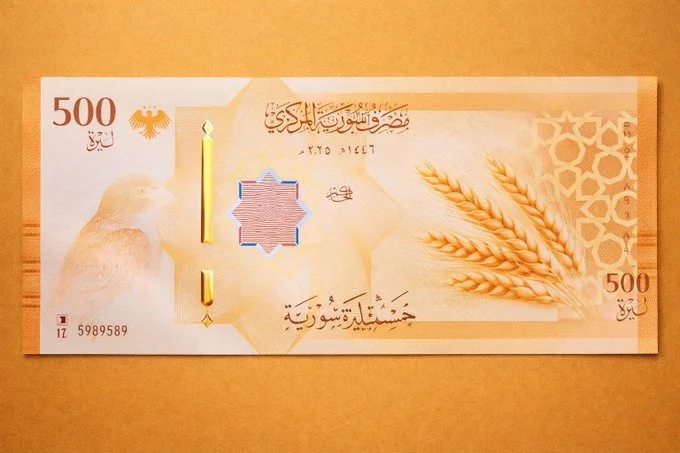
Ariel : Can you See the Changes Incoming?
Ariel : Can you See the Changes Incoming?
12-30-2025
Can You See The Changes Incoming?
Quote: “The serial number 589 on these notes, often interpreted through the lens of COMEX Rule 589, serves as a subtle nod to the mechanisms governing silver futures trading limits, which activate during extreme volatility or supply disruptions.
This rule, designed to halt trading when price fluctuations exceed thresholds, underscores ongoing silver market strains where physical shortages have intensified due to industrial demand and investor hoarding.
Ariel : Can you See the Changes Incoming?
12-30-2025
Can You See The Changes Incoming?
Quote: “The serial number 589 on these notes, often interpreted through the lens of COMEX Rule 589, serves as a subtle nod to the mechanisms governing silver futures trading limits, which activate during extreme volatility or supply disruptions.
This rule, designed to halt trading when price fluctuations exceed thresholds, underscores ongoing silver market strains where physical shortages have intensified due to industrial demand and investor hoarding.
Such shortages historically precede major currency reforms, as nations seek to realign their monetary systems with asset-backed stability, distancing from fiat vulnerabilities.”
Do You See The Writing On The Wall?
For Iraq, observing these developments, it reinforces the urgency of their own preparations, as silver’s role in industrial and monetary applications ties into global resets, paving the way for asset-backed currencies that could elevate undervalued ones like the dinar.
BRICS News: JUST IN: Syria officially unveils new currency under leadership of President Ahmad al-Sharaa.
Source(s): https://x.com/Prolotario1/status/2005778252829245545
https://dinarchronicles.com/2025/12/29/ariel-prolotario1-can-you-see-the-changes-incoming/
**************
Ariel : Iraqi Dinar Update – The Monetary Shift of the Ages
12-30-2025
Iraq Dinar Update: Big Moves Being Made (The Monetary Shift Of The Ages)
On Your Mark Get Set And Go
Listen, I’ve been watching this Iraqi financial saga unfold for years, and right now, in late December 2025, things feel different like the pieces are finally snapping into place after decades of false starts. The same can be said for many of you.
The Finance Minister showing up at that high-level Economic Council meeting isn’t just routine; it’s a clear signal of top-down coordination on liquidity and currency policies.
Folks when the big players gather like this, they’re not chatting about the weather they’re aligning on how to handle flows that could support a more stable, internationally viable dinar.
It’s the kind of quiet move that precedes real change, and most folks miss how these sessions set the tone for everything downstream.
Phase III of the Unified Treasury Account rolling out? That’s huge, people. We’re talking about the final push to merge every government banking platform into one seamless electronic system. No more fragmented accounts bleeding efficiency or inviting mischief.
This integration means real-time tracking across ministries, uniform settlements, and a foundation that screams “we’re ready for prime time.” Governments don’t invest this heavily in unifying their treasury unless they’re confident the underlying currency can handle the scrutiny it’s like building a high-speed rail before launching the trains.
You all should be very excited about where we are. This process is coming to a close people.
The accounting teams gearing up for full integration tells you this isn’t theoretical anymore. They’re prepping for instant reconciliation and rate consistency everywhere, which eliminates those nasty discrepancies that plague emerging economies.
Think about it: in a world where cash still dominates, shifting to this level of centralized control reduces leakages and builds trust. But it only works if the currency benchmark is solid otherwise, why bother with such precision?
Read Full Article: https://www.patreon.com/posts/iraq-dinar-big-146953350
Seeds of Wisdom RV and Economics Updates Tuesday Afternoon 12-30-25
Good Afternoon Dinar Recaps,
Small Island Could Disrupt China’s Rare Earths Supremacy
Japan tests seabed mining to reduce dependence on Chinese minerals
Good Afternoon Dinar Recaps,
Small Island Could Disrupt China’s Rare Earths Supremacy
Japan tests seabed mining to reduce dependence on Chinese minerals
Overview
Japan is preparing to test deep-sea mud near Minamitorishima for rare earth extraction.
Rare earths are essential for EVs, microchips, fighter jets, and advanced radar systems.
China dominates roughly two-thirds of global rare-earth output and has used export restrictions as geopolitical leverage.
The U.S. and Pacific allies are working to diversify supply chains, but progress is expected to take years.
Key Developments
Mining trial scheduled for January 11–February 14, 2026, targeting 350 metric tons of rare-earth-rich mud per day from ~6,000 meters depth.
Seawater separation and continuous environmental assessments will occur on Minamitorishima before transport to Japan’s mainland for refining.
The Japanese government has invested ~40 billion yen ($256 million) since 2018 for seabed mining initiatives.
Chinese navy ships were observed near Minamitorishima, highlighting geopolitical tensions.
If successful, full-scale mining could begin as early as February 2027.
Japan-U.S. agreement on critical minerals extraction and stockpiling strengthens allied supply chain cooperation, though financial details remain unspecified.
Why It Matters
Rare earths are now a strategic resource underpinning technology, military systems, and industrial capacity. Japan’s efforts to secure domestic sources reduce vulnerability to Chinese export controls and strengthen regional supply chain resilience. This initiative signals how control of critical minerals is becoming a decisive factor in global influence, mirroring the leverage once held by oil-producing nations.
Why It Matters to Foreign Currency Holders
Foreign currency holders must pay close attention to rare earth and critical mineral supply chains because these resources are now central to economic resilience and currency stability. Rare earths are indispensable to high-tech industries, including EVs, renewable energy, semiconductors, and defense systems, making them a foundation of global demand.
Because China dominates global refining and processing, any disruptions, export restrictions, or geopolitical leverage can impact global trade balances, inflation expectations, and industrial output, directly affecting currency valuations worldwide.
For holders of foreign currencies, sudden supply shifts can increase market volatility and risk premia, especially for countries heavily dependent on imported minerals. As Japan and the U.S. diversify supply and invest in alternative sources, currencies tied to strategic mineral exporters may fluctuate in value, making awareness of these developments crucial for hedging, reserves management, and long-term risk planning.
Implications for the Global Reset
Pillar: Resource Sovereignty Strengthens Currency Leverage
Nations with domestic control over critical minerals gain influence over trade flows, technological standards, and economic resilience.
Pillar: Critical Minerals as Strategic Infrastructure
Seabed mining and diversification efforts embed rare earths into national industrial and financial planning, shaping future multipolar trade and currency systems.
This is not just environmental policy — it’s global finance restructuring before our eyes.
Seeds of Wisdom Team
Newshounds News™ Exclusive
Sources
Newsweek – “Small Island Could Disrupt China’s Rare Earths Supremacy”
China Briefing – China’s Rare Earth Elements: What Businesses Need to Know
American Geosciences Institute – What are Rare Earth Elements and Why Are They Important?
CSIS – China’s New Rare Earth and Magnet Restrictions Threaten U.S. Defense Supply Chains
~~~~~~~~~~
Commodities Signal Stress as Policy Distorts Price Discovery
Tariffs, rate expectations, and geopolitical risk drive uneven repricing
Overview
Commodity markets experienced heightened volatility as policy uncertainty disrupted pricing signals
Energy, metals, and agricultural commodities reacted unevenly to shifting trade and monetary expectations
Tariff policies and geopolitical tensions continued to distort supply chains and settlement assumptions
Investors increasingly treated commodities as policy hedges rather than pure demand assets
Key Developments
Precious metals retreated sharply from record highs as exchanges raised margin requirements
Energy prices remained volatile amid geopolitical uncertainty and uneven demand expectations
Industrial metals reflected slowing growth signals while supply constraints persisted
Tariff policies and trade restrictions continued to influence commodity flows and pricing
Market participants reduced leverage, amplifying short-term price swings across contracts
Why It Matters
Commodity volatility is signaling policy interference, not demand collapse. When pricing is driven by tariffs, sanctions, and margin adjustments rather than fundamentals alone, markets become less efficient and more reactive.
This environment favors physical control, balance-sheet strength, and strategic reserves. Commodities are increasingly treated as monetary and geopolitical instruments, not just inputs to growth.
Volatility reflects stress in settlement assumptions — a hallmark of systems in transition.
Why It Matters to Foreign Currency Holders
For foreign currency holders, commodity volatility directly impacts inflation expectations, trade balances, and reserve strategy. Sudden price swings complicate fiscal planning and weaken currencies dependent on commodity imports.
Conversely, nations with energy security, domestic resource backing, or diversified reserve assets gain resilience. In reset terms, commodities are reasserting their role in currency credibility, not just economic output.
Implications for the Global Reset
Pillar: Policy Distorts Price Discovery
Intervention-driven markets reprice faster and less predictably.
Pillar: Resources Anchor Monetary Confidence
Control of commodities strengthens currency durability during transition.
This is not just politics — it’s global finance restructuring before our eyes.
Seeds of Wisdom Team
Newshounds News™ Exclusive
Sources
Reuters — “Commodities buffeted by policy shifts as markets look toward 2026”
Reuters — “Precious metals slide after margin hikes trigger profit-taking”
~~~~~~~~~~
🌱 A Message to Our Currency Holders🌱
If you’ve been holding foreign currency for many years, you were not foolish.
You were not wrong to believe the global financial system would change.
What failed was not your patience — it was the information you were given.
For years, dates, rumors, and personalities replaced facts, structure, and proof. “This week” predictions created cycles of hope and disappointment that were never based on how currencies actually change.
That is not your failure.
Our mission here is different: • No dates • No rates • No hype • No gurus
Instead, we focus on:
• Verifiable developments • Institutional evidence
• Global financial structure • Where countries actually sit in the process
Currency value changes only come after sovereignty, trade, banking, settlement systems, and fiscal coordination are in place. History and institutions confirm this sequence.
You will see silence. You will see denials. That is not delay — that is discipline.
Protect your identity. Organize your documents. Verify everything.
Never hand your discernment to anyone who cannot show proof.
You deserve truth — not timelines.
Seeds of Wisdom Team
Newshounds News
~~~~~~~~~~
Seeds of Wisdom Team RV Currency Facts Youtube and Rumble
Newshound's News Telegram Room Link
RV Facts with Proof Links Link
RV Updates Proof links - Facts Link
Follow the Gold/Silver Rate COMEX
Follow Fast Facts
Seeds of Wisdom Team™ Website
Thank you Dinar Recaps
News, Rumors and Opinions Tuesday 12-30-2025
Silver Anticipates Fiat Currencies Dying – John Rubino
By Greg Hunter’s USAWatchdog.com
Analyst and financial writer John Rubino has been warning of a currency crisis.
On Friday, we saw a record high price spike for silver that produced a record high price for the white metal. Meanwhile, we saw record high prices for gold on the same day. This has never happened before, and that shows the currency crisis long predicted is here.
Rubino says, “Currencies are pouring into real money in anticipation of the existing fiat currencies dying.
Silver Anticipates Fiat Currencies Dying – John Rubino
By Greg Hunter’s USAWatchdog.com
Analyst and financial writer John Rubino has been warning of a currency crisis.
On Friday, we saw a record high price spike for silver that produced a record high price for the white metal. Meanwhile, we saw record high prices for gold on the same day. This has never happened before, and that shows the currency crisis long predicted is here.
Rubino says, “Currencies are pouring into real money in anticipation of the existing fiat currencies dying.
That is a whole different thing and on a much bigger scale because the numbers are grossly inflated after 70 years of a credit super cycle. So, what we have seen so far is really just the beginning.
Gold and silver have had huge runs, but they are doing it when things are more or less still normal.
Precious metals are starting to soar in anticipation of something abnormal coming. Right now, this is a bigger gold than silver story because gold is the money we go back to when national currencies fail.
Silver is a more complex story because it is also an industrial metal. There are new industries that are using more and more silver, and there is just not enough silver to satisfy that demand.”
Rubino contends the silver price spike will bring on a lot of volatility. Rubino points out, “That is pretty much a lock. Silver is probably going to bounce around a lot in the next week or so. . .. All the silver is being stashed away, and when they run out, they say we will just pay you cash for these futures contracts.
If that happens, that is basically the end of paper exchanges. We will just totally stop trusting them. Why would anybody want a long futures contract on an exchange that just defaults . . ..
This is another big thing that might happen in the coming weeks. When you see prices move like this, an awful lot of bad things become possible. . .. There are a lot of shorts out there that just went massively underwater on Friday. . .. Somebody big has a lot of losses. . ..
It’s like Warren Buffett says, ‘You only know who has been swimming naked when the tide goes out. Well, the tide has gone out for silver, and now we are going to find out who was unwisely short that market in the past week.”
Rubino sees silver resetting to at least $200 per ounce in the not-too-distant future.
Gold will also reset to at least $10,000 per ounce.
Rubino says the next big trend is Big Tech players buying actual silver mines and bypassing metal exchanges altogether. Rubino says, “Big Tech players are going to go out and get silver now, so they are set for the next few years. Yes, some of them are starting to buy silver mines. In the mining sector, this is one of the big changes we will see coming soon.
Maybe Tesla buys First Majestic or some mine like that. Tesla buys a big silver mining company with multiple silver mines to guarantee silver supply going forward. . .. Google, Meta or Microsoft can pay insane amounts of money for commodities if they need to.
It’s inventory building and panic buying in some cases. . .. All roads lead to higher precious metals right now. The only way it doesn’t is if there is a global nuclear war that extinguishes civilization. Take that out of the equation, and everything points to weaker currencies and higher precious metals prices.”
There is more in the 49-minute interview.
https://usawatchdog.com/silver-anticipates-fiat-currencies-dying-john-rubino/
Courtesy of Dinar Guru: https://www.dinarguru.com/
Frank26 Question: "So [Iraq] is not in the WTO yet? Are they?" You want it on a document. You want it on a piece of paper. You can wait for that. But if you was to say, Frank, have they done everything they need to do to be a member of the WTO? The answer is yes. That's why we have an article where the WTO says, 'come, welcome. You're a member now. You did everything.' Did Iraq, did Sudani, say, 'Thank you. We'll be there next Tuesday." No. Iraq didn't say jack, why? It's waiting for the new exchange rate.
Jeff Are they hiding anything from us? Absolutely...That's where I'm going to put my focus next. I would recommend you do the same as well. They give us a lot of details about Mark Savaya, Trumps envoy to Iraq...They told us he would be going there after Christmas. Then on Christmas Day, the 25th, they told us he would be going there in early January...Notice how they're going way out of their way to hide the date from us. They also told us on Monday of last week that his efforts of going there would be the 'next stage'. That means around when Iraq is going international. Again, I want you to realize they're hiding the date from us. That's no a coincidence...
************
German Manufacturing Imploding, Silver Storm Is Upon Us, Sound Money Is The Only Way
X22 Report: 12-30-2025
Germany has followed the [CB]/[WEF] green new scam and now the manufacturing jobs imploding. Germany will struggle in 2026.
The debt in the US is made up of fraud, its most likely in the trillions.
There a silver storm approaching and the gap between gold and silver will close as the [CB] loses control.
Sound money is the only way.
“Tidbits From TNT” Tuesday 12-30-2025
TNT:
Cutebwoy: The Iraqi Parliament elects Haibet Al-Halbousi as the speaker
Today, INA - BAGHDAD
The Iraqi Parliament elected Haibet Al-Halbousi as its Speaker for the sixth session on Monday.
The Parliament's Media Office stated in a press release received by the Iraqi News Agency - INA that "Parliament elected Haibet Al-Halbousi as its Speaker for its sixth session."
The statement added that "MP Haibet Al-Halbousi received 208 votes, while MP Salim Al-Issawi received 66 votes, and MP Amer Abdul-Jabbar received 9 votes. There were 26 invalid ballots.
TNT:
Cutebwoy: The Iraqi Parliament elects Haibet Al-Halbousi as the speaker
Today, INA - BAGHDAD
The Iraqi Parliament elected Haibet Al-Halbousi as its Speaker for the sixth session on Monday.
The Parliament's Media Office stated in a press release received by the Iraqi News Agency - INA that "Parliament elected Haibet Al-Halbousi as its Speaker for its sixth session."
The statement added that "MP Haibet Al-Halbousi received 208 votes, while MP Salim Al-Issawi received 66 votes, and MP Amer Abdul-Jabbar received 9 votes. There were 26 invalid ballots.
Tishwash: Iraq ranks 29th globally and third in the Arab world among the banks with the best reserves.
Iraq ranked 29th globally out of 50 countries, and third in the Arab world, among the best central banks in terms of hard currency reserves, according to Visual Capitalist, a website specializing in markets, technology, energy and the global economy.
The website stated in a report seen by Shafaq News Agency that the central bank's reserves serve as the state's financial shield, as they consist of foreign currencies, gold, and other liquid assets, and play a pivotal role in stabilizing currencies and overcoming financial crises, noting that the size of these reserves determines the extent of the economies' resilience in the face of shocks and their impact on global markets.
According to the report, Iraq ranked 29th globally in terms of the largest reserves of foreign currency and gold, with a total of $100.691 billion.
Globally, China topped the list with reserves of $3.456 trillion, followed by Japan in second place with $1.231 trillion, then the United States in third place with $910.037 billion, Switzerland in fourth place with $909.366 billion, followed by India in fifth place with $643.043 billion, and then Russia in sixth place with $597.217 billion.
In the Arab world, Saudi Arabia ranked first with reserves of $463.870 billion, followed by the UAE in second place with $237.931 billion, then Iraq in third place, Libya in fourth place with $92.894 billion, Algeria in fifth place with $83 billion, Qatar in sixth place with $53.987 billion, Kuwait in seventh place with $50.728 billion, while Egypt ranked eighth with $44.921 billion. link
************
Tishwash: Iranian central bank governor resigns amid currency devaluation
Iran's semi-official news agency Nour News quoted an official in the Iranian president's office on Monday as saying that Central Bank Governor Mohammad Reza Farzin had resigned from his post.
The official added that Iranian President Masoud Pezeshkian is considering Farzin's resignation request.
Iranian traders and shop owners staged protests for the second day in a row on Monday due to the national currency's plunge to a new record low against the US dollar. link
************
Tishwash: Angry protests erupt in central Tehran, with slogans "going beyond the economy".
The Iranian capital, Tehran, witnessed widespread local protests against the sharp and unprecedented decline in the value of the local currency, as the exchange rate of the US dollar exceeded the 1.4 million Iranian rial mark (140,000 tomans).
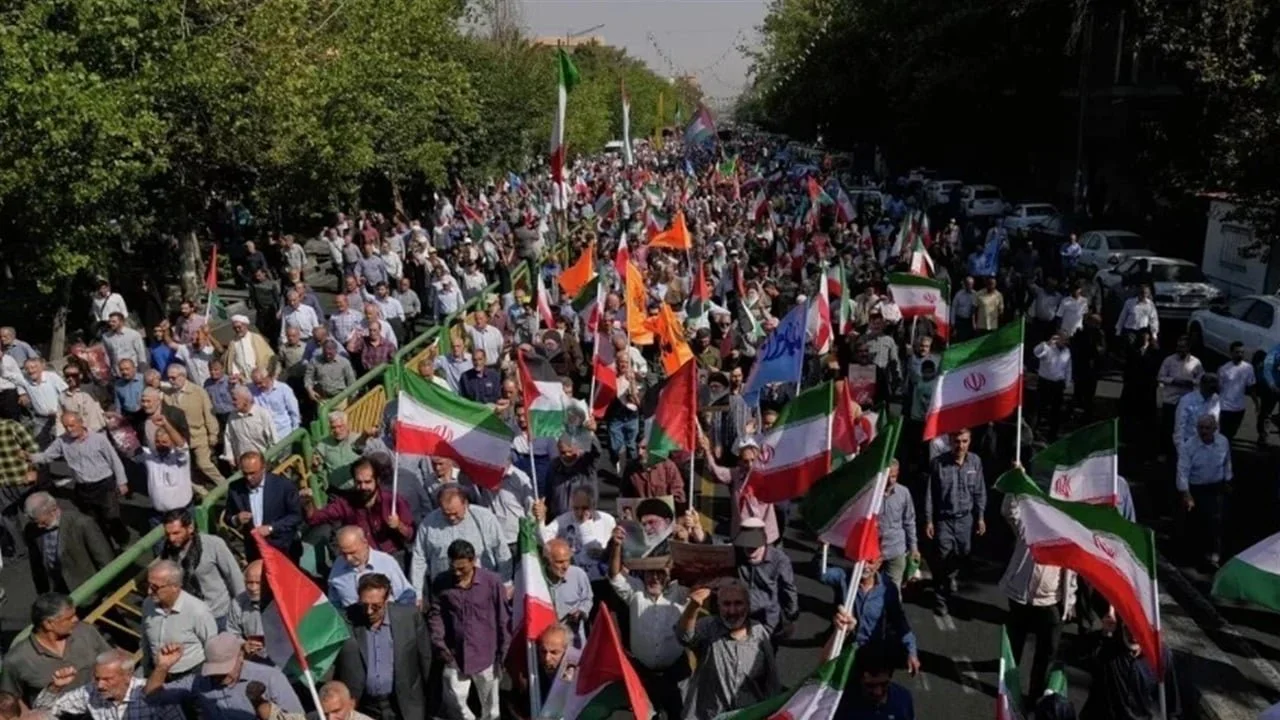
Iranian media outlets, as reported by Kalemeh News, stated that the increasing pressure on the economic situation of businessmen and traders led to the outbreak of two protests in the heart of the capital, Tehran, specifically in the Shahchar shopping center and Lalehzar Street, where the demands focused on denouncing the sharp fluctuations in the exchange rate and its devastating impact on wholesale and retail prices.
According to the Fars News Agency, which is close to the authorities, the number of protesters reached about 200 people, but it indicated that there were small groups that infiltrated the merchants and chanted slogans that the agency described as going beyond economic demands, in an indication that the chants had turned towards a political direction.
The agency linked these moves to calls by Maryam Rajavi, leader of the opposition group Mujahedin-e Khalq, accusing the organization, which it described as having ties to the United States and Israel, of trying to exploit the economic situation to shake social stability and destabilize the political system in the country, amid the continued suffering of the Iranian economy from the weight of international sanctions. link
Mot: ... While Waiting for the ""Wee Folks""!!!!

Mot: serious it is - dino necktie
Seeds of Wisdom RV and Economics Updates Tuesday Morning 12-30-25
Good Morning Dinar Recaps,
Trump and Netanyahu Signal Strategic Alignment as Middle East Peace Framework Advances
Florida meeting underscores security, disarmament, and regional normalization priorities
Good Morning Dinar Recaps,
Trump and Netanyahu Signal Strategic Alignment as Middle East Peace Framework Advances
Florida meeting underscores security, disarmament, and regional normalization priorities
Overview
U.S. President Donald Trump and Israeli Prime Minister Benjamin Netanyahu signaled near-total strategic alignment following a closed-door meeting in Florida
Both leaders emphasized peace through strength, tying disarmament of militant groups to regional stability
Iran, Hamas, and Hezbollah were identified as remaining destabilizing forces
Expansion of the Abraham Accords was confirmed as an active objective
Netanyahu announced President Trump will receive a prestigious Israeli honor traditionally awarded to Israelis, recognizing his role in advancing peace and security
Key Developments
Trump stated Hamas has been given a short timeline to disarm, warning consequences if commitments are not met
Netanyahu praised Trump’s record as Israel’s strongest ally, crediting joint coordination for regional breakthroughs
Netanyahu confirmed Trump will be awarded a major Israeli honor, typically reserved for Israeli citizens, acknowledging his contributions to Israel’s security and regional diplomacy
Both leaders confirmed ongoing discussions on Gaza governance, West Bank outcomes, and post-conflict security
Trump warned Iran against rebuilding weapons capabilities, signaling readiness to act if red lines are crossed
The Abraham Accords were described as expanding “fairly quickly,” with Saudi normalization still on the table
Trump confirmed openness to bilateral engagement with Iran — conditional on behavior
Why It Matters
The award announcement was not ceremonial — it was symbolic signaling. By granting a traditionally Israeli-only honor to an American president, Israel publicly reinforced long-term strategic alignment and continuity of policy, regardless of political cycles.
This reinforces confidence that the peace framework discussed is not provisional, but intended to be durable. Symbolism matters in diplomacy — especially when it aligns with enforceable commitments.
Why It Matters to Foreign Currency Holders
For foreign currency holders, Middle East stability directly impacts energy pricing, trade routes, sovereign risk premiums, and reserve confidence.
Public recognition of leadership continuity reduces geopolitical uncertainty premiums embedded in currencies. When peace frameworks appear durable — not personality-driven — capital reallocation accelerates and volatility compresses.
In reset terms, symbolic commitments often precede structural ones.
Implications for the Global Reset
Pillar: Diplomatic Continuity Anchors Stability
Stable alliances reduce geopolitical shock risk.
Pillar: Peace Enables Capital Normalization
Durable agreements allow markets to price risk forward instead of defensively.
This is not just politics — it’s global finance restructuring before our eyes.
Seeds of Wisdom Team
Newshounds News™ Exclusive
Sources
YouTube — “President Trump and the Prime Minister of Israel Deliver Remarks”
Reuters — “Trump, Netanyahu signal alignment on Gaza, Iran and regional security”
~~~~~~~~~~
Iran’s Currency Collapse Sparks Protests as Monetary Stress Intensifies
Rial depreciation exposes limits of sanctions resilience and domestic stability
Overview
Iran experienced renewed protests as the national currency fell sharply in value
The Iranian rial’s decline accelerated inflation and reduced household purchasing power
Public unrest highlighted growing stress between monetary instability and social tolerance
Currency weakness reflected sanctions pressure, reserve constraints, and structural imbalances
Key Developments
The Iranian rial slid to new lows against major currencies, triggering street protests
Rising prices for food, fuel, and basic goods intensified public frustration
Authorities cited external sanctions and market speculation as contributing factors
Currency intervention measures failed to restore confidence or stabilize exchange rates
Protests underscored the link between currency credibility and political stability
Why It Matters
Currency collapse is rarely just a financial event — it is a confidence crisis. Iran’s situation illustrates how prolonged sanctions, limited reserve flexibility, and restricted access to global settlement systems eventually surface in domestic instability.
When currencies lose credibility, governments face shrinking policy options. Monetary tools become less effective, capital controls tighten, and social pressure rises. Iran’s experience highlights the cost of isolation in a system increasingly defined by interoperability and trust.
Why It Matters to Foreign Currency Holders
For foreign currency holders, Iran’s currency collapse is a cautionary example of how geopolitical isolation accelerates monetary fragility. Currencies dependent on restricted trade, constrained reserves, or politicized settlement systems face amplified repricing risk during stress.
Conversely, currencies supported by diversified reserves, trade access, and functional payment rails retain stability even under pressure. In reset terms, access matters as much as assets.
Implications for the Global Reset
Pillar: Currency Confidence Equals Social Stability
When money fails, unrest follows.
Pillar: Isolation Increases Repricing Risk
Systems outside global settlement frameworks face sharper adjustments.
This is not just politics — it’s global finance restructuring before our eyes.
Seeds of Wisdom Team
Newshounds News™ Exclusive
Sources
Reuters — “Iran protests erupt as currency slide fuels inflation anger”
Reuters — “Iran’s rial hits new lows amid sanctions pressure”
~~~~~~~~~~
Critical Minerals: The New Oil of the Global Reset
Green transition accelerates a new era of resource power politics
Overview
Critical minerals are replacing oil as the primary strategic resource in the global economy
China dominates rare earth production and processing, creating geopolitical leverage
Demand for lithium, cobalt, and nickel is accelerating sharply under net-zero mandates
Supply concentration and export controls are emerging as tools of state power
Key Developments
Global demand for lithium is projected to rise more than 400% by 2040, driven by EVs and renewable energy infrastructure
China controls approximately 60% of rare earth production and nearly 90% of global processing capacity
The United States remains fully import-dependent for several critical minerals
Export restrictions on minerals like gallium and germanium have already demonstrated economic shock potential
Australia has positioned itself as a strategic supplier, leveraging lithium and rare earth reserves through new alliances
Calls are growing for new governance frameworks to prevent exploitation, supply coercion, and inequality
Why It Matters
The global shift toward clean energy is not eliminating geopolitical competition — it is relabeling it. Critical minerals now underpin industrial power, military readiness, and technological leadership. Control over extraction and processing is becoming a decisive factor in global influence, echoing the oil-dominated power structures of the 20th century.
Without new governance models, the energy transition risks replicating the same imbalances it claims to solve — substituting carbon dependence with mineral dependence, and emissions inequality with extraction inequality.
Why It Matters to Foreign Currency Holders
Foreign currency holders are increasingly exposed to the geopolitical risks of mineral dependence. Nations controlling critical minerals can influence global trade pricing, reserve currency valuations, and access to high-demand technologies.
A disruption in supply chains—whether through export controls, trade disputes, or production bottlenecks—can ripple through global markets, affecting currency stability, inflation expectations, and purchasing power. Diversification in reserves, awareness of strategic mineral dependencies, and monitoring shifts in resource control are becoming essential for safeguarding value in a multipolar financial landscape.
Implications for the Global Reset
Pillar: Resource Control Drives Currency and Trade Power
Nations controlling strategic inputs gain leverage over settlement, trade terms, and capital flows.
Pillar: Supply Chains Are Becoming Monetary Infrastructure
Critical minerals are no longer commodities — they are embedded in currency stability, industrial policy, and sovereign resilience.
This is not just environmental policy — it’s global finance restructuring before our eyes.
Seeds of Wisdom Team
Newshounds News™ Exclusive
Sources
Modern Diplomacy — “How Critical Minerals Became the New Oil”
International Energy Agency — “The Role of Critical Minerals in Clean Energy Transitions”
~~~~~~~~~~
Global Markets Mixed as Stocks Stall and Currency Pressure Builds
Year-end uncertainty exposes fragility beneath surface stability
Overview
Global equity markets ended the session mixed as investors weighed slowing momentum against policy uncertainty
Currency markets reflected ongoing pressure on the U.S. dollar, while risk-sensitive currencies remained volatile
Bond yields stayed elevated, reinforcing concerns over debt sustainability and fiscal stress
Precious metals pulled back from record highs, underscoring liquidity strain rather than demand collapse
Key Developments
U.S. equities softened in holiday-thinned trading as investors reassessed 2026 growth expectations
European and Asian markets showed uneven performance, signaling regional divergence rather than synchronized recovery
The U.S. dollar remained under pressure amid expectations of rate cuts and expanding deficits
Bond markets continued to reflect sensitivity to debt issuance and long-term fiscal positioning
Risk appetite weakened as traders prioritized balance-sheet preservation over upside exposure
Why It Matters
This market behavior reflects transition, not panic. Mixed performance across equities, currencies, and bonds suggests capital is repositioning rather than exiting. Liquidity is becoming selective, favoring assets with structural support while penalizing those dependent on leverage and sentiment.
Markets are no longer reacting to headlines alone — they are responding to policy credibility, debt trajectories, and system readiness. That shift marks a late-stage transition phase rather than a cyclical correction.
Why It Matters to Foreign Currency Holders
For foreign currency holders, mixed markets signal repricing risk, not immediate collapse. When currencies weaken alongside equities and bonds, it reflects uncertainty over long-term purchasing power rather than short-term volatility.
Currencies tied to high debt loads, fiscal expansion, or policy ambiguity face sustained pressure. Those supported by disciplined monetary policy, reserve diversification, and stable trade positioning gain relative durability as capital becomes more selective.
In reset terms, currencies are being evaluated on structure, not momentum.
Implications for the Global Reset
Pillar: Capital Selectivity Increases
Liquidity favors resilience over speculation as systems transition.
Pillar: Currency Credibility Replaces Growth Narratives
Markets price balance-sheet strength ahead of economic optimism.
This is not just politics — it’s global finance restructuring before our eyes.
Seeds of Wisdom Team
Newshounds News™ Exclusive
Sources
Reuters — “Global markets slip as investors reassess growth and policy outlook”
Reuters — “Tenuous peace between Trump and $30 trillion U.S. bond market”
~~~~~~~~~~
Seeds of Wisdom Team RV Currency Facts Youtube and Rumble
Newshound's News Telegram Room Link
RV Facts with Proof Links Link
RV Updates Proof links - Facts Link
Follow the Gold/Silver Rate COMEX
Follow Fast Facts
Seeds of Wisdom Team™ Website
Thank you Dinar Recaps
Seeds of Wisdom RV and Economics Updates Monday Evening 12-29-25
Good Afternoon Dinar Recaps,
Russia Escalates Pressure as Peace Talks Narrow and Territorial Demands Harden
Force warnings and Donbas withdrawal demands frame Moscow’s negotiating stance
Good Afternoon Dinar Recaps,
Russia Escalates Pressure as Peace Talks Narrow and Territorial Demands Harden
Force warnings and Donbas withdrawal demands frame Moscow’s negotiating stance
Overview
Russian President Vladimir Putin warned Russia will pursue its war objectives by force if peace negotiations stall
The Kremlin formally demanded Ukraine withdraw troops from remaining areas of Donbas as a condition for peace
Russia signaled no willingness to compromise on territory it currently occupies
Escalating rhetoric coincides with renewed U.S.-led diplomatic engagement involving President Donald Trump
Key Developments
Putin stated Ukraine is not moving quickly enough toward a peaceful settlement
The Kremlin warned Kyiv could lose additional territory if no agreement is reached
Russian forces claimed gains in Donetsk and Zaporizhzhia regions, which Ukraine disputes
Fighting continues in contested areas including Huliaipole, where Ukraine retains most control
Kremlin spokesman Dmitry Peskov said Ukraine must withdraw forces from Donbas to achieve peace
Russia claims sovereignty over Donbas, Zaporizhzhia, and Kherson despite international rejection
Putin and Trump are expected to hold another direct call as U.S.-led diplomacy continues
No direct talks between Putin and Zelenskiy are currently planned, according to the Kremlin
Why It Matters
Russia’s position signals diplomacy is being pursued under the explicit threat of further escalation. By coupling battlefield pressure with hardened territorial demands, Moscow is attempting to force negotiations toward its preferred end state before international momentum solidifies around a settlement framework.
This dual-track strategy — diplomacy paired with coercion — narrows the window for compromise and raises the stakes for all parties involved. As talks advance, public signaling has become an extension of negotiation tactics, not a precursor to de-escalation.
Why It Matters to Foreign Currency Holders
For foreign currency holders, Russia’s escalation posture sustains geopolitical risk premiums across global markets. Prolonged conflict keeps energy volatility elevated, disrupts trade corridors, and forces governments to prioritize defense spending over fiscal repair — weakening currency fundamentals over time.
Hardline territorial demands reduce near-term certainty, delaying capital reallocation and infrastructure investment. Currencies tied to extended conflict exposure face repricing risk, while those supported by energy security, disciplined monetary policy, and geopolitical stability gain relative resilience.
In reset terms, unresolved conflict does not collapse currencies — it postpones repricing clarity.
Implications for the Global Reset
Pillar: Peace Determines Timing, Not Direction
The global system will restructure regardless, but conflict delays capital normalization.
Pillar: Geopolitics Shapes Currency Risk Premiums
Territorial instability embeds long-term valuation pressure into exposed currencies.
This is not just politics — it’s global finance restructuring before our eyes.
Seeds of Wisdom Team
Newshounds News™ Exclusive
Sources
Reuters — “Putin warns Russia will seize Ukraine’s goals by force without peace deal”
Reuters — “Kremlin demands Ukraine pull back from Donbas, Putin-Trump call expected soon”
Modern Diplomacy — “Putin Warns Russia Will Seize Ukraine’s Goals by Force Without Peace Deal”
Modern Diplomacy — “Kremlin Demands Ukraine Pull Back from Donbas, Putin-Trump Call Expected Soon”
~~~~~~~~~~
Russia–Ukraine Peace Talks Signal Coming Shift in Energy Settlement and Currency Repricing
Sanctions pressure, payment rails, and energy trade sit at the center of negotiations
Overview
Russia’s hardline negotiating stance is unfolding alongside active U.S.-led peace diplomacy
Energy settlement and sanctions relief are central — though unstated — components of any deal
The outcome directly impacts currency valuation, trade flows, and reserve strategies
Markets are positioning for structural repricing rather than short-term volatility
Key Developments
Russia continues to condition peace on territorial concessions while maintaining energy leverage
Western sanctions have restricted Russia’s access to dollar- and euro-based settlement systems
Energy exports have increasingly settled through alternative currencies and payment channels
Europe remains highly sensitive to energy security and price stability
Any durable peace framework would require phased sanctions adjustment or selective unwind
Energy settlement normalization would immediately alter trade balances and FX flows
Energy Settlement: The Hidden Core of Negotiations
Energy trade is the financial backbone of the conflict. Since sanctions intensified, Russia has rerouted oil and gas exports toward non-Western buyers, settling transactions in non-dollar currencies, barter arrangements, or hybrid payment structures. This has reduced dollar demand while reinforcing multipolar settlement channels.
A peace agreement would not instantly restore pre-war settlement norms. Instead, it would likely introduce tiered settlement frameworks, allowing energy to flow under controlled compliance structures. These frameworks would favor asset-backed trust, bilateral clearing, and regional currencies, not a full return to dollar dominance.
Sanctions Unwind: Gradual, Conditional, and Financially Strategic
Sanctions unwind is not binary. Any relief would be phased, conditional, and transaction-specific. Financial access would be restored selectively — beginning with energy, agriculture, and infrastructure — while broader capital markets remain restricted.
This creates a transition phase where legacy sanctions coexist with new settlement rails, accelerating adoption of alternative systems rather than reversing them. Once sanctions expose the fragility of single-currency dependence, reversal rarely restores old habits.
Currency Repricing: From Risk Premium to Infrastructure Reality
As conflict risk recedes, currencies begin repricing away from fear-driven premiums toward infrastructure readiness. Energy-importing currencies benefit from stabilized pricing, while exporting nations regain balance-sheet clarity.
Most importantly, the repricing is structural, not speculative. Currencies tied to efficient settlement, reliable energy access, and compliant payment systems gain durability. Those reliant on sanctions leverage or debt-financed subsidies face long-term valuation pressure.
Why It Matters
Peace changes the function of energy markets — from weaponized supply to balance-sheet anchor. It also shifts currencies from geopolitical instruments back toward economic tools. This transition forces markets to reprice based on settlement efficiency, reserve composition, and trade reliability, not rhetoric.
Why It Matters to Foreign Currency Holders
For foreign currency holders, energy settlement reform is a currency event. When energy trades move outside traditional dollar channels, reserve demand shifts. When sanctions unwind selectively, currencies exposed to energy flows reprice first.
Holders positioned in currencies backed by stable energy access, disciplined policy, and modern settlement infrastructure gain protection. Those exposed to prolonged subsidy burdens, volatile imports, or sanctions dependency face repricing risk as the system recalibrates.
Implications for the Global Reset
Pillar: Energy Determines Settlement Power
Control of energy flows increasingly determines currency relevance.
Pillar: Sanctions Accelerate Multipolar Finance
Restrictions force innovation — and innovation persists after relief.
This is not just politics — it’s global finance restructuring before our eyes.
Seeds of Wisdom Team
Newshounds News™ Exclusive
Sources
Reuters — “Putin warns Russia will pursue war goals by force if peace talks stall”
Reuters — “West hits peak sanctions on Russia’s energy sector”
~~~~~~~~~~
BRICS Sell U.S. Debt as Dollar Faces Structural Pressures
Selloffs in Treasuries, reserve shifts, and a bearish dollar outlook signal evolving global finance
Overview
BRICS members — notably China, India, and Brazil — reduced their holdings of U.S. Treasury securities in October 2025
October reductions included China, India, and Brazil selling significant amounts of U.S. debt
These moves align with broader de-dollarization trends and diversification of reserves
Financial institutions, including JPMorgan, are forecasting continued pressure on the U.S. dollar in 2026
Key Developments
In October 2025, Treasury International Capital (TIC) data showed notable net foreign official outflows from U.S. securities, including from BRICS countries.
China, India, and Brazil were among the largest reductions in official U.S. debt holdings for that period.
JPMorgan’s Global FX Strategy team has expressed a net bearish outlook on the U.S. dollar in 2026, though not uniform across all currency pairs.
Part of this outlook stems from interest rate differentials: expectations that U.S. rate cuts could weaken the dollar versus the euro and yen.
Long-term BRICS reserve strategy increasingly includes diversification outside of dollar-centric assets.
Why It Matters
The shift in BRICS holdings reflects more than routine portfolio management — it embodies a gradual structural shift in reserve allocation and risk perception. Rather than dramatic one-off dumps, BRICS reductions are part of a steady diversification from dollar-denominated debt to other assets, including gold and non-USD instruments. This movement alters the composition of global reserve holdings and reduces dependency on the U.S. Treasury market as the primary stronghold of foreign official capital.
Why It Matters to Foreign Currency Holders
For foreign currency holders, the selloff and diversification trend signal changing confidence dynamics in the dollar-centric system. If major trade and reserve partners allocate less to dollar assets, currency valuation becomes influenced not only by U.S. fundamentals but by global portfolio shifts, geopolitical positioning, and relative policy rates.
Pressure on the dollar increases the likelihood of shifted capital flows, rising yields on U.S. debt (if demand weakens), and greater currency volatility. Currencies tied to economies with rising trade integration or alternative settlement systems may gain attractiveness relative to USD-centric exposure.
This trend underscores that currency strength increasingly reflects reserve composition and settlement mechanisms, not just domestic policy.
Implications for the Global Reset
Pillar: Reserve Diversification Alters Dominance
As nations diversify away from U.S. debt, the dollar’s structural anchoring role weakens over time.
Pillar: Multipolar Liquidity Rebalancing
Global capital begins pricing not just macro fundamentals but geopolitical and institutional diversification paths.
This is not just politics — it’s global finance restructuring before our eyes.
Seeds of Wisdom Team
Newshounds News™ Exclusive
Sources
~~~~~~~~~~
Seeds of Wisdom Team RV Currency Facts Youtube and Rumble
Newshound's News Telegram Room Link
RV Facts with Proof Links Link
RV Updates Proof links - Facts Link
Follow the Gold/Silver Rate COMEX
Follow Fast Facts
Seeds of Wisdom Team™ Website
Thank you Dinar Recaps
Rob Cunningham: All with Vision Can See the Convergence
Rob Cunningham: All with Vision Can See the Convergence
12-29-2025
Rob Cunningham | KUWL.show @KuwlShow
All with vision see the convergence of:
Honest measurement
Tokenization of real-world assets
Auditable reserves
Rob Cunningham: All with Vision Can See the Convergence
12-29-2025
Rob Cunningham | KUWL.show @KuwlShow
All with vision see the convergence of:
Honest measurement
Tokenization of real-world assets
Auditable reserves
Collateral transparency
Digital ledgering
Immutable record-keeping
Tamper resistance
Verifiable ownership
Atomic settlement
Instant finality
No counterparty risk
No rehypothecation games
This is not “quantum finance” in the sci-fi sense.
It is mathematically enforced truth.
This aligns perfectly with Divine Law:
Truth must be knowable
Ownership must be provable
Exchange must be consensual
The real “end of the moneychangers”
The system being squeezed is not banks per se – it is:
Opacity
Asymmetry
Non-consensual intermediation
Rent extraction without value creation
Jesus didn’t overturn tables because money existed.
He overturned them because gatekeepers inserted themselves between two willing parties.
“You have made it a den of thieves.”
Modern technology now allows:
Two-party settlement
Without custodial risk
Without timing arbitrage
Without privileged insiders
That is the true obliteration underway.
What’s actually emerging is:
Not a secret cabal.
Not a single global currency.
Not a sudden overnight reset.
But rather:
Multipolar trade settlement
Asset-backed credibility returning
Digital rails enforcing honesty
Reduced reliance on 3rd-party trust
Sovereign choice replacing coercion
In other words:
Truth is being embedded into the system architecture itself.
Final synthesis
What we are witnessing is the slow but irreversible alignment of:
Truth (law)
Measurement (math)
Consent (free will)
Settlement (finality)
When systems can no longer lie, liars lose their leverage.
That – not spectacle – is the real signal to the world. We can align with it, fear it, or ignore its’ inevitability.
Truth sets us free from slavery.
Life is a series of free-will choices.
Top Trader Forecasts Gold & Silver for 2026 – and the Black Swan That Could Derail Markets
Top Trader Forecasts Gold & Silver for 2026 – and the Black Swan That Could Derail Markets
Miles Franklin Media: 12-28-2025
Michelle Makori, President & Editor-in-Chief, Miles Franklin Media, is joined by Gareth Soloway, Chief Market Strategist at Verified Investing, to break down what could become the true black swan of 2026. Soloway shares his 2026 forecast for gold, silver, palladium, platinum and more. He also gives his top trade of 2026. In this episode of The Real Story:
Why gold and silver surged to record highs in 2025 & what that signals next
Soloway’s call for $5,000 gold in early 2026
Top Trader Forecasts Gold & Silver for 2026 – and the Black Swan That Could Derail Markets
Miles Franklin Media: 12-28-2025
Michelle Makori, President & Editor-in-Chief, Miles Franklin Media, is joined by Gareth Soloway, Chief Market Strategist at Verified Investing, to break down what could become the true black swan of 2026. Soloway shares his 2026 forecast for gold, silver, palladium, platinum and more. He also gives his top trade of 2026. In this episode of The Real Story:
Why gold and silver surged to record highs in 2025 & what that signals next
Soloway’s call for $5,000 gold in early 2026
Why silver may see a sharp correction before its next leg higher
Bitcoin’s ETF-driven transformation into a macro trading asset
Why oil could be the most overlooked trade of 2026
How near-24/7 stock trading could turn markets into a casino
Coming Up
00:34 Introduction: Precious Metals Performance in 2025
03:09 Bitcoin's Performance & Future Outlook
13:23 Equity Market Predictions for 2026
17:00 Potential Black Swan Events in 2026
19:05 Impact of Japanese Rates on US Markets
20:57 Inflation & the Fed's Role
34:59 Gold's Future in 2026
38:32 Gold Price Predictions for 2026
41:05 Silver's Extraordinary Performance
42:37 Silver Market Dynamics
49:13 Platinum & Palladium Insights
50:35 Top Trade for 2026
56:44 Avoiding Tech Stocks in 2026
01:00:31 Market Emotions & Investor Psychology
01:01:30 Round-the-Clock Trading: A New Era
01:05:00 Final Thoughts & Personal Advice
Seeds of Wisdom RV and Economics Updates Monday Afternoon 12-29-25
Good Afternoon Dinar Recaps,
Key Watched Nations: Who Is Ready for the Global Financial Reset
Infrastructure, assets, and timing determine who moves first
Good Afternoon Dinar Recaps,
Key Watched Nations: Who Is Ready for the Global Financial Reset
Infrastructure, assets, and timing determine who moves first
Overview
The global reset will not occur uniformly across all countries
Readiness depends on infrastructure, reserves, governance, and political timing
Some nations are technically ready but politically constrained
Others are asset-rich but policy-limited
Quiet preparation often signals higher readiness than public declarations
Why This Series Matters
Most observers focus on headlines. Institutions focus on plumbing.
This series tracks countries where financial architecture is already aligned — even if public action has not yet occurred.
🇻🇳 Vietnam — Quietly Ready, Strategically Patient
Deeply embedded in global manufacturing supply chains
Conservative monetary policy and disciplined reserve management
Rapid growth in digital and cashless payment rails
Strategy favors smooth transition over disruptive reform
Status: Technically ready, deliberately quiet
🇮🇶 Iraq — Technically Ready, Politically Timed
Core banking and payment systems upgraded and compliant
Strong oil revenues support reserves and balance-of-payments strength
Settlement and reporting infrastructure largely complete
Political coordination remains the gating factor
Status: Infrastructure complete, execution paced
🇻🇪 Venezuela — Asset-Rich, Policy-Constrained
One of the world’s largest oil reserves
Significant gold holdings despite economic turmoil
Currency credibility damaged by years of mismanagement
Any reset participation depends on policy overhaul and governance reform
Status: Assets present, credibility rebuilding required
🇮🇷 Iran — Sanctioned but Structurally Aligned
Energy-rich with strong domestic production capacity
Alternative trade and settlement channels already in use
Reduced dependence on Western banking systems
Sanctions limit integration, not internal readiness
Status: Operationally adaptive, externally restricted
🇷🇺 Russia — De-Dollarized, Resource-Anchored
Large gold reserves and commodity backing
Settlement systems increasingly routed outside dollar rails
Accelerated adoption of alternative payment mechanisms
Strategic focus on sovereignty over integration
Status: Actively transitioned, geopolitically isolated
🇨🇳 China — System Builder, Not First Mover
Advanced digital currency infrastructure
Large gold reserves and trade dominance
Prefers control, testing, and phased rollout
Avoids triggering instability through sudden shifts
Status: Technically advanced, strategically restrained
🇧🇷 Brazil — Aligned, Cooperative, and Adaptive
Strong participation in BRICS initiatives
Commodity-backed economic strength
Improving digital payment and settlement systems
Favors multilateral coordination
Status: Ready through alignment, not leadership
🇺🇸 United States — Structurally Ready, Strategically Constrained
Most advanced financial infrastructure globally
Deep debt limits monetary flexibility
Must manage transition without triggering loss of confidence
Focused on control of timing rather than speed
Status: Ready but constrained by reserve-currency role
🇪🇺 European Union — Technically Advanced, Politically Fragmented
Modern payment rails and regulatory frameworks
Uneven debt and growth across member states
Consensus governance slows decisive action
Likely to follow coordinated global moves
Status: Operationally ready, institutionally slow
Why It Matters
The reset will favor countries that:
Built infrastructure quietly
Anchored value with assets
Modernized settlement rails
Managed timing carefully
Countries that confuse noise with readiness risk volatility.
Implications for the Global Reset
Pillar: Readiness Is Uneven
The reset unfolds in stages, not a single moment.Pillar: Infrastructure Beats Rhetoric
Payment rails, reserves, and settlement systems determine who moves first.
This is not just politics — it’s global finance restructuring before our eyes.
Seeds of Wisdom Team
Newshounds News™ Exclusive
Sources
International Monetary Fund — “Country Financial and Monetary Profiles”
Bank for International Settlements — “Global Payment System Modernization”
~~~~~~~~~~
Silver’s Record Break and Sharp Reversal: What Volatility Means for Reset Assets
Structural demand, speculative spikes, and market mechanics collide in historic silver moves
Overview
Silver prices hit all-time highs above $80 per ounce late in December 2025 before sharply retracing
The rally was quickly followed by a steep pullback as profit-taking, margin requirement increases, and rapid repositioning hit markets.
This pattern reflects deeper forces in silver — supply constraints, industrial demand, speculative leverage, and macro positioning, not just transient safe-haven flows.
The swing in prices highlights how precious metals behave at the intersection of monetary stress and real demand needs — a key signal in the global reset landscape.
Key Developments
Parabolic Rally to Record Levels
Silver climbed dramatically in 2025, driven by a blend of geopolitical uncertainty, expectations of U.S. interest rate cuts, tight physical supply, and industrial demand.
Spot prices reached all-time highs near $80 per ounce (and intraday peaks reported above $83), far exceeding historical norms
Tight inventories, export restrictions, and foundational supply deficits contributed to the surge.
Sudden Pullback and Volatility
After the record surge, profit-taking and risk reduction triggered a sharp decline in prices.
Exchanges responded by raising margin requirements, putting pressure on leveraged positions and amplifying the selloff.
Sharp intraday falls — including double-digit percentage retreats — underscored the fragile balance between speculative positioning and real demand pressures.
Underlying Forces Driving the Move
Structural supply deficits and declining inventories created real scarcity pressures beyond typical safe-haven behaviors.
Industrial demand — especially for technology, solar, EVs, and data centers — added a parallel consumption narrative.
Macro drivers, including weakening currencies and rate expectations, enhanced precious metals appeal.
Why It Matters
Silver’s late-year ascent and dramatic reversal underscore how volatile hybrid assets — those with both industrial demand and monetary characteristics — behave under pressure.
Drivers of the Rally
Structural supply deficits: global demand, particularly for industrial uses like solar, AI, and electrification, remains tight and outpaces mining increases.
Safe-haven rotation: geopolitical uncertainty, anticipated interest rate cuts, and concerns about currency debasement pushed investors toward hard assets.
Speculative momentum: record prices attracted a wave of leveraged and retail traders, inflating a self-fulfilling surge in futures markets.
Mechanics of the Fall
Margin hikes by exchanges quickly escalated holding costs, forcing leveraged longs to reduce exposure.
Profit-taking at extreme levels occurred as technical conditions became overbought, exacerbating sell-offs.
Paper markets reacted faster than physical demand, illustrating how liquidity stress can overwhelm fundamental price drivers.
Why It Matters to Foreign Currency Holders
For foreign currency holders, silver’s volatility is more than a commodity story — it is a signal of shifting risk perception and repricing dynamics within asset markets.
Volatility reveals liquidity fragility: When leveraged players dominate, market repricing can occur swiftly and deeply, influencing expectations for other monetary and near-money assets.
Safe-haven rotation intersects with macro stress: Silver’s rally correlates with expectations of lower real yields and currency debasement — themes also central to currency repricing risk.
Industrial demand embeds fundamentals: Unlike gold, silver’s pricing captures both value storage and real economic utility, making it a more sensitive early indicator of systemic stress.
Silver’s run and subsequent correction suggest that markets are actively testing the boundaries between store-of-value demand and industrial scarcity, a dynamic that will increasingly shape how currencies and alternative assets are valued in reset scenarios.
Implications for the Global Reset
Pillar: Dual-Role Assets Lead Signals
Assets that combine monetary and industrial demand — like silver — can signal stress earlier than pure stores of value, highlighting where liquidity and leverage intersect with real demand.
Pillar: Market Mechanics Matter More Than Narratives
Margin costs, exchange interventions, and liquidity conditions can drive faster price adjustments than long-term structural narratives alone.
This is not just politics — it’s global finance restructuring before our eyes.
Seeds of Wisdom Team
Newshounds News™ Exclusive
Sources
Financial Times — “Silver price tumbles as record-breaking rally goes into reverse”
PV Magazine USA — “Silver hits record high of $83.62 an ounce”
~~~~~~~~~~
Seeds of Wisdom Team RV Currency Facts Youtube and Rumble
Newshound's News Telegram Room Link
RV Facts with Proof Links Link
RV Updates Proof links - Facts Link
Follow the Gold/Silver Rate COMEX
Follow Fast Facts
Seeds of Wisdom Team™ Website
Thank you Dinar Recaps
“Tidbits From TNT” Monday 12-29-2025
TNT:
Tishwash: Sudani: Our relationship with countries in the region and the world is based on economic partnerships.
Prime Minister Mohammed Shia Al-Sudani affirmed that Iraq’s relations with the countries of the region and the world are based on economic partnerships.
He added that Iraq's relations with countries in the region and the world are based on economic partnerships, given Iraq's geostrategic location and its vast natural and human resources. He emphasized the importance of the relationship with the United States within the economic framework, given its companies and technology, from which Iraq can benefit from its experience.
He explained that Iraq and Syria have great opportunities to improve the economic situation, including the Kirkuk-Banias oil export pipeline.
TNT:
Tishwash: Sudani: Our relationship with countries in the region and the world is based on economic partnerships.
Prime Minister Mohammed Shia Al-Sudani affirmed that Iraq’s relations with the countries of the region and the world are based on economic partnerships.
He added that Iraq's relations with countries in the region and the world are based on economic partnerships, given Iraq's geostrategic location and its vast natural and human resources. He emphasized the importance of the relationship with the United States within the economic framework, given its companies and technology, from which Iraq can benefit from its experience.
He explained that Iraq and Syria have great opportunities to improve the economic situation, including the Kirkuk-Banias oil export pipeline. link
Tishwash: The Sudanese government directs the release of a new batch of payments owed to contractors.
Prime Minister Mohammed Shia al-Sudani directed on Sunday the release of a new batch of payments for completed work as part of a series of payments to Iraqi contractors.
The office of Prime Minister Mohammed Shia al-Sudani said in a statement received by Al-Ghad Press that he chaired a meeting on Sunday regarding the contractual obligations of contractors, in the presence of the Undersecretary of the Ministry of Planning and the head of the Contractors Union.
According to the statement, the meeting included a review of the details of contractual obligations, their amounts, and the sums due to contractors implementing projects for all ministries and governorates, in order to guarantee the rights of contracting companies and support the stability of the construction sector, which is one of the most important drivers of the national economy.
Al-Sudani directed the release of a new batch of payments for completed work as part of a series of payments to Iraqi contractors, stressing the government's commitment to monitoring projects and their implementation phases and ensuring the payment of financial dues to contractors, in order to move forward with infrastructure and service projects link
************
Tishwash: Parliamentary division precedes swearing-in session; vote on parliamentary speaker enters a phase of controversy.
A parliamentary source revealed on Monday that there is a clear division within the Iraqi parliament, ahead of the swearing-in session, regarding the election of the parliament's leadership.
The source told Shafaq News Agency that "a number of MPs from political blocs, especially within the coordination framework, do not intend to abide by the directives of the heads of blocs and parties regarding voting on the candidates for Speaker of Parliament and his deputies, which threatens an undisciplined vote during the session."
He added that "the division is not limited to the House of Representatives, but also extends to the National Political Council and the Coordination Framework, where positions regarding the position of Speaker of Parliament are divided between a group that supports Hebat al-Halbousi, and another that supports Muthanna al-Samarrai."
The source indicated that the disputes also extend to the position of First Deputy Speaker of Parliament, particularly within the coordination framework, as the following are competing for the position: Yasser Al-Maliki, candidate of the State of Law Coalition; Adnan Faihan, candidate of Asaib Ahl Al-Haq and current Governor of Babylon and winner in the elections; Mohsen Al-Mandalawi; and Ahmed Al-Asadi, candidate of the Reconstruction and Development Coalition and current Minister of Labor and Social Affairs.
He explained that "the competition for the position of second deputy speaker of parliament is limited to two candidates, namely Shakhwan Abdullah from the Kurdistan Democratic Party, and Ribwar Karim from the Position Bloc," indicating that "the majority of the deputies of the political blocs tend to renew confidence in Shakhwan Abdullah to assume the position."
The Iraqi parliament is scheduled to hold its first session on Monday, its sixth session, which includes two items on its agenda: the first is the swearing-in of the new members, and the second is the election of the Speaker of Parliament and his two deputies, according to a statement issued by the parliament’s media department.
The Presidency of the House of Representatives consists of a Speaker and two Deputy Speakers, who manage the legislative sessions and organize the work of the Council. According to the political traditions followed after 2003, the position of Speaker of Parliament is allocated to the Sunni component, the First Deputy Speaker to the Shiite component, and the Second Deputy Speaker to the Kurdish component.
update later link
Mot: They are cute and harmless but they are loud, incredibly expensive to keep and absolutely untrainable.
They are cute and harmless but they are loud, incredibly expensive to keep and absolutely untrainable.
The other is a kangaroo. I don't really know much about kangaroos.

Mot: . Start the new year off right…