
Philadelphia Man Lost Over $1M In Back-To-Back Scams
Philadelphia Man Lost Over $1M In Back-To-Back Scams — Here Are The Red Flags To Watch Out For
Vawn Himmelsbach Tue, June 24, 2025 Moneywise
Joe Subach was just trying to send some money to a friend. But one phone call later, with a woman named ‘Daisy,’ and his financial situation was forever changed.
Subach was the victim of two back-to-back scams — one that even involved him handing over his precious metals to money mules — that drained him of a whopping $1 million.
Philadelphia Man Lost Over $1M In Back-To-Back Scams — Here Are The Red Flags To Watch Out For
Vawn Himmelsbach Tue, June 24, 2025 Moneywise
Joe Subach was just trying to send some money to a friend. But one phone call later, with a woman named ‘Daisy,’ and his financial situation was forever changed.
Subach was the victim of two back-to-back scams — one that even involved him handing over his precious metals to money mules — that drained him of a whopping $1 million.
“I worked 43 hard years for that,” he told NBC10 News Philadelphia.
It started out with a simple online search for Apple’s customer support number to get help sending money to a friend via Apple Pay. When he called the number, a woman picked up and said her name was Daisy, from Apple.
What he didn’t realize until later — when it was too late — is that he called a phony number and Daisy was a fraudster.
How the back-to-back scams worked
In this case, Subach was the victim of a double fraud, starting with a customer service scam and then progressing into a romance scam.
When he first called the number, he says ‘Daisy’ told him that his account had been hacked and his identity had been compromised. She then told him he needed to buy gift cards, scratch off the backs and send her the numbers, which was part of the process to protect his money.
But the scam didn’t end there. Daisy told Subach that they’d have to monitor his phone 24/7.
“And so, her number was scrolling at the top of my phone the whole time,” he told NBC10.
Over the next few months, the customer service scam evolved into a romance scam where the two would text every day — even cooking meals at the same time and sharing photos of their food.
After earning his trust, ‘Daisy’ took the scam one step further by offering to protect all of his assets.
“I told her I have gold and silver with Equity Trust Company,” Subach told NBC10. ‘Daisy’ then told him to take all of his gold and silver out of his depository and she’d have someone come to his house and pick it up. Subach said he loaded his own gold and silver — valued at $780,000 — into the back of the vehicle.
The person driving the vehicle was likely a money mule, a person who is recruited to transfer stolen or illicit funds (or, in this case, precious metals).
“We look at the money mule dynamic in two different buckets,” Nicole Senegar, the FBI assistant special agent in charge in Philadelphia, told NBC10, explaining that sometimes they are in on the scam, taking a cut, but in other cases they can be unwitting victims.
According to the United States Attorney’s Office, “Fraudsters rely on money mules to facilitate a range of fraud schemes, including those that predominantly impact older Americans, such as lottery fraud, romance scams and grandparent scams.”
How to protect yourself
TO READ MORE: https://www.yahoo.com/lifestyle/articles/philadelphia-man-lost-over-1m-121700131.html
Investigators Say Anyone Can Be Vulnerable To Fraud
Investigators Say Anyone Can Be Vulnerable To Fraud
San Diego Seniors Lost $108 Million To Scams In 2024 — And Investigators Say Anyone Can Be Vulnerable To Fraud
Christy Bieber Mon, June 23, Moneywise
San Diego residents in their golden years should be enjoying the balmy weather and beaches, but instead, many are worrying about how to recover lost funds or survive financially after being scammed. Victims include retired professionals, says Michael Rod, an FBI supervisory agent in San Diego Count. Two such victims whom reported over $2 million stolen in the past two weeks. “Doctors, lawyers, judges, pilots, engineers, all have fallen victim to this stuff, like very smart, intelligent people,” Rod told ABC 10 News San Diego.
That's why scams are often underreported.
Investigators Say Anyone Can Be Vulnerable To Fraud
San Diego Seniors Lost $108 Million To Scams In 2024 — And Investigators Say Anyone Can Be Vulnerable To Fraud
Christy Bieber Mon, June 23, Moneywise
San Diego residents in their golden years should be enjoying the balmy weather and beaches, but instead, many are worrying about how to recover lost funds or survive financially after being scammed. Victims include retired professionals, says Michael Rod, an FBI supervisory agent in San Diego Count. Two such victims whom reported over $2 million stolen in the past two weeks. “Doctors, lawyers, judges, pilots, engineers, all have fallen victim to this stuff, like very smart, intelligent people,” Rod told ABC 10 News San Diego.
That's why scams are often underreported.
The FBI reports that last year, at least 1,300 San Diego residents aged 60 and older lost an average $80,000 each to fraudsters — a total $108 million, but that’s just the tip of the iceberg. Many victims are embarrassed and don't report when they've been targeted.
Rod now leads a new initiative dedicated to helping protect older residents in San Diego County from such scams: the San Diego Elder Justice Task Force. The task force is made up of local law enforcement agencies, the FBI, the District Attorney’s Office and Adult Protective Services.
"It's a first-of-the-kind model,” explained Rod, who is currently serving as task force commander.
It’s urgent work as elder fraud is on the rise nationwide — $4.8 billion in losses last year, according to the FBI. Residents of California, Florida, and Texas lost the most money, according to the FBI.
Not only is more money being stolen, but criminals are getting more brazen.
Scammers get bold, as criminals send couriers to pick up money
As ABC 10 News reports, one audacious scam is occurring almost daily in San Diego, as overseas criminals ensnare innocent victims in a tech support or overpayment scam, and then send a courier to their house to pick up cash.
Dale Marsh, a Carlsbad resident, was nearly a victim of this very crime after receiving a text from a phone number thanking him for purchasing Norton antivirus products.
He called the number to explain he hadn't made the purchase, and spoke to a “very polished, very professional, very non-threatening, very corporate, business-like” rep named Roger who told Marsh he'd have to enter $500 into an online form to have funds sent back to his bank account.
Marsh followed the instructions but then “Roger” claimed he had "accidentally" transferred $50,000 to Marsh’s account and that he would lose his job unless he sent a courier to Marsh to collect the $50,000 back immediately.
Fortunately, Marsh's wife heard this all from another room and called the police, so when the courier showed up in a Dodgers hat, he was greeted with a fake $50,000 as well as an arrest.
TO READ MORE: https://www.yahoo.com/news/san-diego-seniors-lost-108-210000102.html
5 Effective Ways To Stop Impulse-Buying And Save Money
5 Effective Ways To Stop Impulse-Buying And Save Money
Learn how to shop more intentionally (without feeling deprived)
Shira Gill | Organizing Expert
These tips will help you slow your roll when it comes to impulse buying, live more sustainably, and save a boatload of money. File that under #winwin.
Tip One: Practice Using What You Own
5 Effective Ways To Stop Impulse-Buying And Save Money
Learn how to shop more intentionally (without feeling deprived)
Shira Gill | Organizing Expert
These tips will help you slow your roll when it comes to impulse buying, live more sustainably, and save a boatload of money. File that under #winwin.
Tip One: Practice Using What You Own
Over the past few months I’ve been shocked at how often I feel the urge to buy something that I already own a perfectly good version of, including, but not limited to: lip balm, cozy sweaters, and pretty ceramic mugs.
I’ve been getting in the practice of noting the desire for the item in question, and then looking in my own home to see if I own something that could serve the exact same purpose.
This simple habit shift has prevented me from buying more than a handful of items I truly had no need for. Money saved, lessons learned.
Tip Two: Leverage The Power Of The Pause
In a culture that promotes instant gratification, even a brief pause can be a powerful tool in the fight against impulse buying.
Try writing down or snapping a photo of items you want before pulling the trigger.
I’ve found that when I do this I typically quickly forget about whatever thing I thought I desperately needed in the moment. Poof, it’s gone.
TO READ MORE: https://www.yahoo.com/lifestyle/story/5-effective-ways-to-stop-impulse-buying-and-save-money-014936616.html
What Do I Do Now?
What Do I Do Now?
Quentin Fottrell Sat, June 21, 2025
My sister and her husband died within days of each other. Their banks won’t let me access their safe-deposit boxes. What Do I Do Now?
Dear Quentin,
My sister and her husband passed away within a year of each other. I’m blessed that they had the foresight to have a will and living trust that, as the successor trustee, has made dispensing the trust assets much easier.
What Do I Do Now?
Quentin Fottrell Sat, June 21, 2025
My sister and her husband died within days of each other. Their banks won’t let me access their safe-deposit boxes. What Do I Do Now?
Dear Quentin,
My sister and her husband passed away within a year of each other. I’m blessed that they had the foresight to have a will and living trust that, as the successor trustee, has made dispensing the trust assets much easier.
My sister had a business safe-deposit box at her bank. The safe-deposit box is not listed as personal property and is not part of the trust.
However, I could access two other safe-deposit boxes in my sister’s name with her death certificate. The bank denied me access to her business box, saying it was not part of the trust and was opened in the name of her now-defunct business. The bank suggested filing a claim for unclaimed property in the state where I reside.
My brother-in-law also had a checking account for his medical corporation. The bank said I would be unable to access the funds with his death certificate and trust documents. The bank’s advice was the same as for my sister’s business safe-deposit box: File a claim with the state for abandoned property.
Our trust attorney said the cost of attempting to access the medical-business checking account ($11,000) might not be worth it.
My concern is that my sister may have placed three generations of wedding rings, and other family heirlooms in the safe-deposit box. Would I need to file an action in probate court to access the business safe-deposit box and business checking account or wait? Californian Sister
Dear Sister,
There are three complications to your dilemma.
First, access to these safe-deposit boxes may be complicated by the differing rules of each individual bank, and the fact that they may be in the name of the corporation rather than the individual. But if they are the sole owner of the box, the administrator or executor of your sister and brother-in-law’s estate would be able to access them with the right paperwork.
Second, if your sister died before your brother-in-law, his heirs will inherit his assets.
Hire a trust and estate lawyer who has experience in this field. You are taking advice from an attorney who has told you they do not have expertise in this area. So if this is a treasure hunt, you’re already knowingly walking in the wrong direction.
My answer is predicated on the assumption that your brother-in-law died first, but two deaths and two probate cases within a year complicate the process and may draw it out for many more months.
TO READ MORE: https://finance.yahoo.com/news/sister-her-husband-died-within-105900206.html
The US Likely Has 8 Years—At Most—Before Crisis
The US Likely Has 8 Years—At Most—Before Crisis
Notes From the Field By James Hickman (Simon Black) June 19, 2025
Yesterday afternoon the US government published its annual report stating plainly that America has eight years left before a major financial crisis.
This is not hyperbole. This is not conjecture. This is not some wild conspiracy theory.
In fact, eight years until a crisis is probably the BEST CASE SCENARIO unless Congress takes serious action soon.
The US Likely Has 8 Years—At Most—Before Crisis
Notes From the Field By James Hickman (Simon Black) June 19, 2025
Yesterday afternoon the US government published its annual report stating plainly that America has eight years left before a major financial crisis.
This is not hyperbole. This is not conjecture. This is not some wild conspiracy theory.
In fact, eight years until a crisis is probably the BEST CASE SCENARIO unless Congress takes serious action soon.
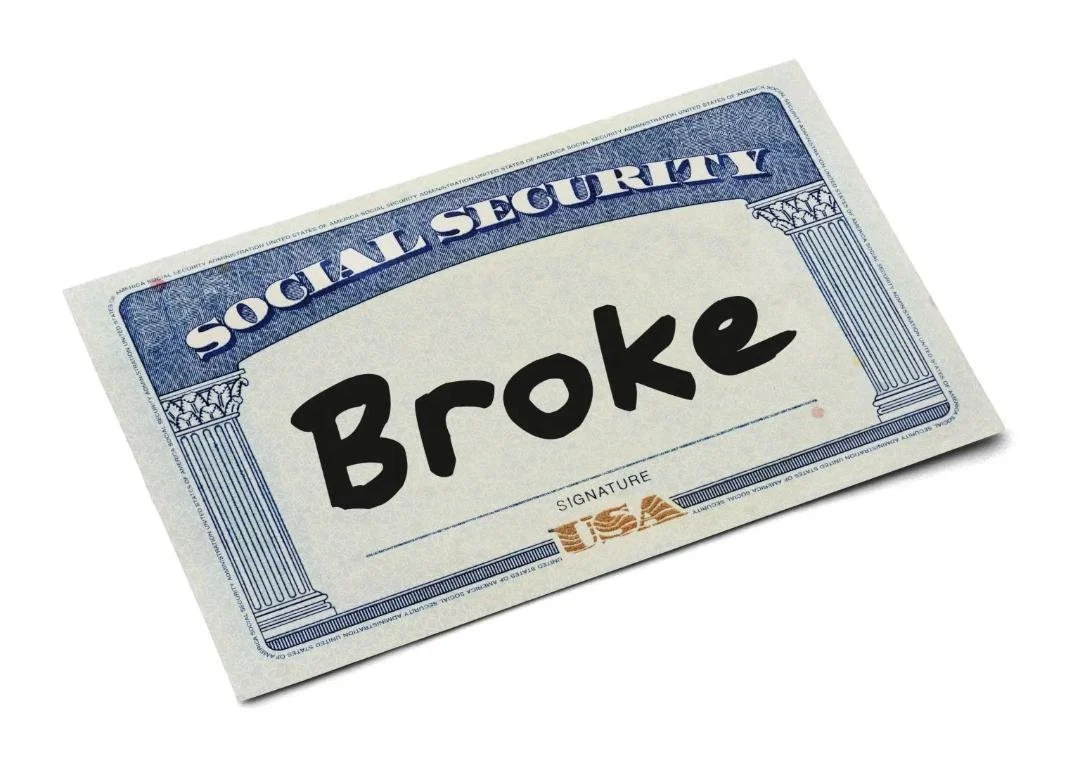
That’s because the most critical trust fund in the Social Security system (called OAS, or “Old Age Survivors) will be fully depleted.
That’s precisely what it says in the 2025 Annual Report of the Board of Trustees of Social Security, signed by the US Secretary of Treasury just yesterday.
And once that OAS Trust Fund runs out of money, the report states that Social Security benefits will be immediately and permanently cut by at least 23%. And then the benefit cuts will likely become worse over time.
This will constitute a broken promise to 70+ million Americans who spent decades paying into a system that was supposed to be solvent by the time they retire.
Now, Social Security’s biggest trust fund running out of money in 2033 would be problematic enough.
But on top of that— by 2033, the total US national debt will be $52 TRILLION according to Congressional Budget Office (CBO) estimates. And the CBO notoriously underestimates deficits... so in all likelihood the national debt will be event greater.
$52 trillion is so large that the government could easily be spending 40% of all tax revenue just to pay interest on the national debt.
Think about that. Not on defense. Not on infrastructure. Not even on the bloated entitlement programs Washington refuses to reform. Just interest.
These two things together— a massive annual interest bill combined with Social Security’s insolvency— will likely combine to a gargantuan fiscal crisis in the US. It’s eight years away.
Amazingly, politicians are not concerned. There is very little will to cut federal spending, or make necessary reforms that would allow Social Security to continue operating.
Foreign governments and central banks, on the other hand, clearly understand this problem.
They see how difficult it will be for the US to pay its debts in the not-so-distant future. And that’s why so many foreign institutions are dumping their US dollars and US government bonds.
In other words, foreigners are losing confidence in the US government, so they’re cashing out.
One of the biggest beneficiaries of this trend has been gold; we’ve been talking about this for a couple of years— as foreign governments and central banks dump their US dollars, they have been buying up record amounts of gold bullion.
This isn’t some ideological crusade—it’s a rational move for foreign governments and central banks; gold is liquid, fungible (i.e. standardized), globally recognized, and the market can absorb massive capital flows— hundreds of billions of dollars or more.
This is how they diversify to protect themselves from what will likely happen down the road in the US. You can do the same.
We have pointed out many times, however, that foreign governments and central banks buy gold. They do not buy gold companies.
This key difference has created a major disconnect between the price of gold (which is near a record high) and the valuations of gold companies (many of which are laughably cheap).
We have been writing about this trend for nearly two years, during which time the portfolio of gold companies (and other real asset businesses) has performed exceptionally well.
In our 4th Pillar investment research service, we pinpointed companies with world-class assets, great management, strong balance sheets, and dirt-cheap valuations. Then we shared them with subscribers.
The results speak for themselves:
One of our top picks is up 153% in just three months.
Another surged 146% over the past eleven months.
Two more have gained 133% and 51% respectively in just a few months.
Most other companies have delivered steady gains of “only” 27–34%.
For the sake of transparency we’ve had precisely ONE precious metals related company go the other way—it’s down 27%. But the fundamentals are solid, and with key catalysts on the horizon, we see it as even more undervalued now.
And in our most recent issue, we spotlighted a profitable gold company trading for less than the cash on its balance sheet.
Talk about limited downside—you could buy the whole company, get all your money back in cash, and still own a cash-flowing gold business for free.
We are exceptionally proud of this research and the returns that we deliver to our subscribers.
To your freedom, James Hickman Co-Founder, Schiff Sovereign LLC
Tony Robbins: 7 Tips for Building Financial Security in Tough Times
Tony Robbins: 7 Tips for Building Financial Security in Tough Times
Gabrielle Olya Wed, June 18, 2025 GOBankingRates
Money is an all-too-common source of worry and stress. We fear losing our jobs, stock market crashes or simply not being able to pay all of our bills next month. While we can’t control the greater economy or even our job security, there are steps we can take to protect our finances as much as possible and ride out any waves that come our way.
In a blog post, entrepreneur and author Tony Robbins outlined a few effective tips to build financial security, regardless of what’s happening in the wider economic environment. Here’s how to create financial certainty in an uncertain world.
Tony Robbins: 7 Tips for Building Financial Security in Tough Times
Gabrielle Olya Wed, June 18, 2025 GOBankingRates
Money is an all-too-common source of worry and stress. We fear losing our jobs, stock market crashes or simply not being able to pay all of our bills next month. While we can’t control the greater economy or even our job security, there are steps we can take to protect our finances as much as possible and ride out any waves that come our way.
In a blog post, entrepreneur and author Tony Robbins outlined a few effective tips to build financial security, regardless of what’s happening in the wider economic environment. Here’s how to create financial certainty in an uncertain world.
1. Focus on What You Can Control
Don’t let your financial fears get the best of you.
“When the world seems uncertain, most people freeze or panic,” Robbins wrote. “But the most successful people in history — those who built fortunes and legacies — did so by acting when others were paralyzed by fear. Remember, where focus goes, energy flows. If you focus on what you can control, you’ll find the power to act, even when the sky seems to be falling.”
Some things you can do to gain control are to build an emergency fund for short-term needs and to plan ahead for long-term goals through retirement savings accounts and life insurance.
2. Shift Your Mindset
Robbins says that if you want to “shift your results,” you first have to “shift your state.”
“Don’t let the news or social media dictate your emotions,” he wrote. “Take care of your body, move, breathe deeply, and prime your mind every morning for strength and gratitude. Certainty starts from within.”
3. Focus on the Facts
Paying attention to negative speculation can make you feel more fearful than is necessary.
“In times of uncertainty, rumors and negativity spread faster than the truth,” Robbins wrote. “Get the real facts about your finances, your job and your opportunities. Make a list of your assets, your skills and your connections. Knowledge is power, and clarity is the antidote to fear.”
4. Create a Budget
One of the best ways to gain control of your money and work toward financial freedom is to create a budget that includes room for saving, investing and paying down debt.
“Now is the time to get lean and strategic,” Robbins wrote. “Review your expenses and cut what isn’t serving you. But don’t just focus on scarcity — look for places to invest in your growth. The greatest fortunes are made in times of crisis, not comfort. Invest in your skills, your relationships and your health. These are assets that no market crash can take away.”
TO READ MORE: https://www.yahoo.com/finance/news/tony-robbins-7-tips-building-131606255.html
7 Ways To Protect Yourself From Family Fraud in Retirement
7 Ways To Protect Yourself From Family Fraud in Retirement
Jordan Rosenfeld Thu, June 19, 2025 GOBankingRates
Older adults, particularly seniors, are especially vulnerable to financial fraud — but not all of it comes from strangers, scammers or people on the internet. Family members can also engage in financial fraud.
While no one wants to have to plan for such an outcome, being prepared is the best way to prevent it from happening in the future. Estate planning and fraud prevention experts offered some tips to protect yourself from family fraud in retirement.
7 Ways To Protect Yourself From Family Fraud in Retirement
Jordan Rosenfeld Thu, June 19, 2025 GOBankingRates
Older adults, particularly seniors, are especially vulnerable to financial fraud — but not all of it comes from strangers, scammers or people on the internet. Family members can also engage in financial fraud.
While no one wants to have to plan for such an outcome, being prepared is the best way to prevent it from happening in the future. Estate planning and fraud prevention experts offered some tips to protect yourself from family fraud in retirement.
Keep an Eye Out for These Red Flags
Unfortunately, perpetrators of financial abuse can be anyone, including caretakers, lawyers, business associates, new friends and even family members, according to Darius Kingsley, a fraud and scam prevention expert and head of consumer banking at Chase.
Here are several immediate red flags to watch out for:
Unusual financial activity: Signs that could point to financial abuse include unpaid bills, missing checkbooks, suspicious signatures, missing valuables and unexpected authorized users added to financial accounts. For any of these, contact your financial institution right away.
Changes in ownership and responsibility: If you notice changes to wills, power of attorneys or any other financial plans, it could be a sign of financial abuse.
Form a Team
Make a financial care plan and form a team of trusted individuals to help you take care of your money as you age, Kingsley said. This team can include family, friends, accountants, lawyers and social workers who can help support your future plans.
“You can also designate a trusted contact to help manage financial accounts if you cannot be reached,” Kingsley said.
Automate and Monitor Finances Regularly
Automate all the bills you can, so that you’re not relying on a single individual to handle your every transaction, Kingsley advised.
“It is easier to have control of what comes in and out of your account when you set up bill payments that can be monitored by you and people you trust.”
Protect Personal Information
If you’re still dealing with any paper, shred documents with sensitive personal information as soon as you’re done with them, Kingsley suggested. Consider switching to paperless communications to avoid your personal information getting into the wrong hands.
Additionally, set up ongoing identity monitoring to alert you if there are changes to your credit report or if your information is found in a data breach or exposed on the dark web.
TO READ MORE: https://www.yahoo.com/lifestyle/articles/7-ways-protect-yourself-family-120228305.html
Saving Money Vs. Paying Off Debt: The Personal Finance Conundrum
Saving Money Vs. Paying Off Debt: The Personal Finance Conundrum
By Todd Kunsman Saving Money Dec-08-2023 Invested Wallet
Saving money vs. paying off debt might be one of the most common personal finance debates. Least, I think it is and continues to find people on different sides.
For those just getting started and trying to figure out your financial path, it can be confusing with what to do or where to focus your time.
A few years back, I also ran into this dilemma. I researched, ran numbers, but still was truly indecisive as to what would take priority.
Saving Money Vs. Paying Off Debt: The Personal Finance Conundrum
By Todd Kunsman Saving Money Dec-08-2023 Invested Wallet
Saving money vs. paying off debt might be one of the most common personal finance debates. Least, I think it is and continues to find people on different sides.
For those just getting started and trying to figure out your financial path, it can be confusing with what to do or where to focus your time.
A few years back, I also ran into this dilemma. I researched, ran numbers, but still was truly indecisive as to what would take priority.
And you’ll see many experts choose one over the other. You’ll also read stories of others in the media or bloggers who chose one path over the other too.
For me, saving money vs. paying off debt can be a finance conundrum to those just getting started.
Saving Money Vs. Paying Off Debt
If you look at the math, see the interest on your debt, you’d generally lean towards paying off debt has your main goal. Right?
But pending your financial goals and current situation, it’s not always as simple as that.
In 2014 as a personal finance newb, I was looking at some student loan debt, car debt, credit card debt, but also had very little save and not much in retirement either.
After searching what I wanted to do and reading, I still found myself arguing internally of which is better: saving money or paying off debt.
The research explained the math and gave some great life examples. But even with that information, I still could not make a definite decision.
Chalk it up indecisiveness or financial ignorance still, but I was afraid I’d make the wrong decision if I went down one specific path over the other.
This is why I’m calling this a debate, a finance conundrum, or a confusing and difficult problem to solve.
Hopefully, you aren’t thinking I’m being over dramatic. You may even be yelling,
“C’mon look at the data and math of your situation!”
For me specifically at the time, this was a battle regardless. A bit further down, I’ll share my choice and why.
When Should You Choose Saving Before Paying Off Debt?
20% of Americans don’t save any of their annual income at all and even those who do save aren’t putting away a lot. (CNBC)
One of the top reasons to prioritize saving money before paying off debt is to build an emergency fund.
This can be important if you have little to nothing saved as you need some buffer for emergencies or other unexpected expenses. Plus, it helps relieve you of some money stress.
Also, if you’re somewhat lucky with your current debt, the interest rates on those loans might be pretty low. If you aren’t getting wrecked by the rates, socking this money away first until you have six months or so of expenses saved might be a great choice.
TO READ MORE: https://investedwallet.com/saving-money-vs-paying-off-debt/
The Psychology of Money: 8 Ways to Improve Your Money Mindset
The Psychology of Money: 8 Ways to Improve Your Money Mindset
August 31, 2022 by Sam Stone
As the old saying goes, personal finance is ‘mostly personal and a little bit financial.’
Long-term growth and success rely more on our habits and behaviors than on complex knowledge and advanced strategies. Learning a few key points on the psychology of money can go a long way to building the right mindset for prosperity. Let’s look at a few far-reaching psychological concepts that play an outsized role in our financial lives, including some of the biases and fallacies that can point us in the wrong direction.
The Psychology of Money: 8 Ways to Improve Your Money Mindset
August 31, 2022 by Sam Stone
As the old saying goes, personal finance is ‘mostly personal and a little bit financial.’
Long-term growth and success rely more on our habits and behaviors than on complex knowledge and advanced strategies. Learning a few key points on the psychology of money can go a long way to building the right mindset for prosperity. Let’s look at a few far-reaching psychological concepts that play an outsized role in our financial lives, including some of the biases and fallacies that can point us in the wrong direction.
8 Crucial Money Psychology Concepts
Human cognition can be messy. Each of us carries a collection of cognitive biases, irrational beliefs, and behavioral quirks. When we make decisions about our money, this can, unfortunately, lead us down the wrong path.
Understanding each of the money psychology concepts below will help you approach your finances more rationally and avoid some of those poor decisions that stem from cognitive bias.
Optimism Bias
Optimism bias is the natural tendency to overestimate the likeliness of positive outcomes and underestimate negative ones.
In terms of money, optimism bias can lead to reckless decisions and insufficient planning. That can include:
Investing heavily in risky products
Carrying insufficient insurance
Taking on excessive consumer debt
Ignoring your emergency fund
No one looks forward to dealing with failed investments or significant unplanned expenses (like vehicle repairs or medical bills), but the risk is there. When misfortune does come, this optimistic bias leaves us in a precarious position.
The ideal approach to finances is to hope for the best but prepare for the worst. It’s great to be optimistic, but not when it gets in the way of sound decision-making.
Pessimism Bias
The polar opposite of optimism bias – pessimism bias – can also play an insidious role in our finances. Pessimism bias, (also known as negativity bias), draws our attention away from positive circumstances and causes us to weigh negative stimuli more heavily.
Negativity bias can cause us to subconsciously exaggerate the impact of market downturns in our minds and overreact to perceived financial dangers. One typical instance of this is people rushing to sell a stock that has decreased in price over a short period. It is also what causes many people to cash out some or all of their investments in fear of future market conditions, almost always missing out on gains in the process.
TO READ MORE: https://investedwallet.com/the-psychology-of-money/
6 Subtly Genius Ways Wealthy People Save Tons of Money
6 Subtly Genius Ways Wealthy People Save Tons of Money
Cindy Lamothe Mon, June 16, 2025 GOBankingRates
Ever wonder how the rich are able to maintain their lavish lifestyle without depleting their bank accounts? As it turns out, they’re exceptionally good at saving. In fact, many of their financial decisions are genius strategies for creating lasting wealth.
Below experts outline some of the ways they’re able to save tons of money.
6 Subtly Genius Ways Wealthy People Save Tons of Money
Cindy Lamothe Mon, June 16, 2025 GOBankingRates
Ever wonder how the rich are able to maintain their lavish lifestyle without depleting their bank accounts? As it turns out, they’re exceptionally good at saving. In fact, many of their financial decisions are genius strategies for creating lasting wealth.
Below experts outline some of the ways they’re able to save tons of money.
Prioritizing Strategic Investments
“From what I’ve observed working with affluent clients, one of the most effective ways wealthy people save money is by focusing on strategic investments,” said Shirley Mueller, finance expert and founder of VA Loans Texas.
“They understand the power of compounding and often prioritize tax-advantaged accounts like IRAs, 401(k) plans and health savings accounts (HSAs) to maximize their returns while minimizing tax liabilities.”
She also noted that many also leverage tools like trusts and charitable giving strategies to reduce tax exposure, creating long-term savings while supporting causes they care about.
“This level of planning reflects their focus on building sustainable wealth rather than chasing short-term gains,” Mueller added.
Mastering the Art of Negotiation and Rewards
According to Mueller, wealthy individuals rarely pay full price for anything, even when they can afford to.
“They are skilled negotiators, whether they’re buying property, financing a home, or making high-ticket purchases,” she said.
The expert noted many also take full advantage of rewards programs tied to credit cards or memberships.
“I’ve seen clients use travel rewards or cashback bonuses in ways that significantly offset their expenses,” Mueller explained. “For them, it’s about maximizing value on every dollar spent, an approach that helps them save thousands without cutting corners on their lifestyle.”
Valuing Maintenance Over Replacement
“Another subtle habit I’ve noticed among wealthy clients is their commitment to maintenance,” Mueller said. “They understand that taking care of what they already own — whether it’s a home, car, or investment property — saves money over time by avoiding costly repairs or replacements.”
For example, routine home maintenance can prevent expensive structural issues down the road.
Similarly, she said they approach personal finances with this mindset, regularly reviewing their budgets, portfolios, and insurance coverage to ensure everything is optimized and aligned with their goals.
“These small, consistent actions create a strong foundation for long-term financial success,” Mueller noted.
Strategic Tax Planning
TO READ MORE: https://www.yahoo.com/finance/news/6-subtly-genius-ways-wealthy-200041280.html
7 Things You Should Never Pay For With Cash
7 Things You Should Never Pay For With Cash
Jennifer Taylor
Some people charge everything to a credit card to rack up rewards points, but that isn’t your style. When possible, you prefer to pay with cash. Maybe you’ve ditched the plastic as a way to curb overspending, avoid credit card fraud or simply because you prefer to shop off the grid. However, despite the many good reasons to pay with cash, it isn’t always the best choice.
Not sure what types of purchases warrant leaving the cash in your wallet? Here’s a look at seven common payments that should always be made with a different form other than cash.
7 Things You Should Never Pay For With Cash
Jennifer Taylor
Some people charge everything to a credit card to rack up rewards points, but that isn’t your style. When possible, you prefer to pay with cash. Maybe you’ve ditched the plastic as a way to curb overspending, avoid credit card fraud or simply because you prefer to shop off the grid. However, despite the many good reasons to pay with cash, it isn’t always the best choice.
Not sure what types of purchases warrant leaving the cash in your wallet? Here’s a look at seven common payments that should always be made with a different form other than cash.

Rent
Writing a check can be a hassle, so if you don’t have the option to pay your rent online, you might opt for cash. However, William Capece, CFP, director of business development at the JS Benefits Group, said doing so is unwise, because it leaves you without a paper trail.
“Too often we hear stories of landlords who evict tenants over unpaid rent, while the tenant swears to have paid,” he said. “Cash leaves no paper trail and thus no proof.” On the flip side, he said landlords should also never accept cash payments for the same reason. “This should be outlined in the renter agreement,” he said.
Car
Since interest rates are at historic lows, Capece advised against buying a car with all cash. “Utilizing a car loan helps in many ways,” he said. “Dealers make more money when customers utilize debt, so they are more likely to give you a better deal.”
Beyond that, he said paying for such a large purchase in cash limits your ability to invest. If you can swing it, he recommended financing your car purchase and using the cash as the down payment on a rental property. “Use an appreciating asset to pay for your lifestyle,” he said.
Home Maintenance and Updates
If you own your home, you likely spend at least some money on upkeep each year. Capece said it’s important to have a paper trail for these expenses, so you don’t forget about them when it’s time to do your taxes. “Those expenses could be added to the cost basis of the home or as a write-off against income,” he said.
He recommended consulting with a tax professional for specifics on your unique situation.
Utilities and Other Recurring Bills
TO READ MORE: https://news.yahoo.com/7-things-never-pay-cash-120012133.html