
Mark Cuban Says This Is the No. 1 Thing To Do To Build Wealth
Mark Cuban Says This Is the No. 1 Thing To Do To Build Wealth
Cameron Diiorio Thu, May 18, 2023
Mark Cuban is an American businessman known for his work as a shark on “Shark Tank” and for his ever-growing portfolio of businesses. He is the owner of the NBA’s Dallas Mavericks and the founder of Cost Plus Drugs, a pharmaceutical company that provides pharmaceutical drugs at a reduced cost to customers in need. Chosen by GOBankingRates as a Top Money Expert, Cuban shares his expertise and provides tips on how to build wealth and begin an investment journey.
Mark Cuban Says This Is the No. 1 Thing To Do To Build Wealth
Cameron Diiorio Thu, May 18, 2023
Mark Cuban is an American businessman known for his work as a shark on “Shark Tank” and for his ever-growing portfolio of businesses. He is the owner of the NBA’s Dallas Mavericks and the founder of Cost Plus Drugs, a pharmaceutical company that provides pharmaceutical drugs at a reduced cost to customers in need. Chosen by GOBankingRates as a Top Money Expert, Cuban shares his expertise and provides tips on how to build wealth and begin an investment journey.
What’s the No. 1 thing everyone should do to build wealth?
Have appreciable assets. Whether it’s a home or a mutual fund — something that can appreciate in value over the long term
What metrics do you look for/what research do you do to determine if a company is a good investment? Are there also non-quantitative factors you look for?
For private companies, it’s a lot of things. Is it a great entrepreneur, is it a strong product, is it differentiated? For public companies, I recommend people focus on investing in funds. Investing in individual stocks has gotten harder over the years because there is so much money chasing stocks.
What advice would you give someone wanting to start investing but unsure where to begin?
Learn as much as you can, but be patient. There are no shortcuts.
To continue reading, please go to the original article here:
https://finance.yahoo.com/news/mark-cuban-says-no-1-120007296.html
5 Financial Scams That Target Your Cell Phone
5 Financial Scams That Target Your Cell Phone
Jake Arky Tue, May 16, 2023
Scams are everywhere these days, from the email phishing to fake websites trying to steal your money, information or both. As scams are increasing and becoming more prevalent, it’s important to be aware of all the ways to stay safe when using your personal technology. The latest target for financial scams is right in your pocket: your cell phone. “The phone has become the center of targets for scammers now as a scammer can send not only an email, but also a text message where people are much more trusting for some reason which really should not be,” comments Sandy Fliderman, CTO at Industry FinTech.
5 Financial Scams That Target Your Cell Phone
Jake Arky Tue, May 16, 2023
Scams are everywhere these days, from the email phishing to fake websites trying to steal your money, information or both. As scams are increasing and becoming more prevalent, it’s important to be aware of all the ways to stay safe when using your personal technology. The latest target for financial scams is right in your pocket: your cell phone. “The phone has become the center of targets for scammers now as a scammer can send not only an email, but also a text message where people are much more trusting for some reason which really should not be,” comments Sandy Fliderman, CTO at Industry FinTech.
GOBankingRates reached out to Fliderman, as well as some other security and cyber-tech experts, to learn more about all the scams you might encounter on your phone — and ways to protect yourself.
Smishing
You might be familiar with the term “phishing,” where scammers use seemingly trustworthy contact information to furtively gain access to your data. But now there’s a new type of phishing out in the world known as “smishing.”
“This is a type of phishing scam uses text messages to trick you into clicking on a link or providing your personal information,” says Fliderman. “The text message may appear to be from a legitimate company, such as your bank or credit card company, but it is actually from a scammer.”
After you have uploaded all your information, it goes immediately to the scammer who can take your identity, money, data, or any other private material stored on your phone.
Vishing
A variation on the phishing theme is vishing, where scammers call and attempt to deceive you into giving them your personal information.
“This is a type of phishing scam that uses voice calls to trick you into providing your personal information,” notes Fliderman. “The caller may identify themselves as a representative from a legitimate company, such as your bank or credit card company, but they are actually a scammer.”
As technology is advancing, so too are the scams that can wreak havoc on your cell phone. Scams are upping their game in a variety of ways, including utilizing artificial intelligence.
“Now they are also using AI to fake the voice and make it sound more legitimate since many scammers are from outside the U.S. and have strong accents. The AI gets around this issue,” says Fliderman.
Spoofed Call
To continue reading, please go to the original article here:
https://www.yahoo.com/finance/news/5-financial-scams-target-cell-210010518.html
I’m a Financial Advisor: These Are the Worst Money Mistakes I See People Make
I’m a Financial Advisor: These Are the Worst Money Mistakes I See People Make
Heather Taylor Wed, May 17, 2023
Throughout the course of their careers, financial advisors see many people make a lot of money mistakes. Some of these mistakes, unfortunately, are repeatedly made over and over again. If they continue to make the same money mistakes, it can have a significant impact on their financial health in the short- and long-term.
Which money mistakes are among the most common? GOBankingRates spoke to several financial advisors who shared the worst money mistakes they see people make.
I’m a Financial Advisor: These Are the Worst Money Mistakes I See People Make
Heather Taylor Wed, May 17, 2023
Throughout the course of their careers, financial advisors see many people make a lot of money mistakes. Some of these mistakes, unfortunately, are repeatedly made over and over again. If they continue to make the same money mistakes, it can have a significant impact on their financial health in the short- and long-term.
Which money mistakes are among the most common? GOBankingRates spoke to several financial advisors who shared the worst money mistakes they see people make.
Spending Money They Don’t Have
Let’s start with a money mistake many people make on a repeated basis: spending even though they don’t have any money.
John J. Chichester, Jr. — CFP and founder and CEO of Chichester Financial Group, said rather than plan and save money for future goods, services or trips, people often run up credit card bills for things they decide they need or want right now. As a result, they end up in debt trying to live a lifestyle they cannot afford. While it does require some sacrifice, the more satisfying approach is to make a plan and budget for future purchases.
Carrying and Increasing Bad Debt
A big money mistake Jamilah N. McCluney, financial specialist at Black Wealth Financial, sees people making is carrying and increasing bad debt.
Debt comes in two forms: bad and good. Bad debt is credit cards and personal loans with high interest rates. McCluney said high interest can make it especially difficult to get out of debt and ultimately delays the process of building wealth.
The solution, for those who carry bad debt, is to create a plan to quickly, completely and permanently eliminate it. McCluney recommends using a few strategic approaches like delaying immediate impulse spending and creating a realistic shopping fund.
Pulling Money Out of the Stock Market
To continue reading, please go to the original article here:
https://finance.yahoo.com/news/m-financial-advisor-worst-money-110017721.html
How Many Americans Retire With a Million Dollars?
How Many Americans Retire With a Million Dollars?
Rebecca Lake Wed, May 17, 2023
Saving $1 million (or more) for retirement is a great goal to have. Putting that much aside could make it easier to live your preferred lifestyle when you retire, without having to worry about running short of money. However, not a huge percentage of retirees end up having that much money. In fact, statistically, around 10% of retirees have $1 million or more in savings. The majority of retirees, however, have far less saved. If you’re looking to be in the minority but aren’t sure how to get started on that savings goal, consider working with a financial advisor.
How Many Americans Retire With a Million Dollars?
Rebecca Lake Wed, May 17, 2023
Saving $1 million (or more) for retirement is a great goal to have. Putting that much aside could make it easier to live your preferred lifestyle when you retire, without having to worry about running short of money. However, not a huge percentage of retirees end up having that much money. In fact, statistically, around 10% of retirees have $1 million or more in savings. The majority of retirees, however, have far less saved. If you’re looking to be in the minority but aren’t sure how to get started on that savings goal, consider working with a financial advisor.
What Does the Average Retiree Have Saved?
The Federal Reserve’s Survey of Consumer Finances tracks retirement savings data for different age groups in the U.S. According to the most recent survey that was completed in 2019, the average retirement savings by age breaks down like this:
$426,000 for those aged 65 to 74
$357,000 for those aged 75 and older
As you can see, those numbers are well below the $1 million mark. They represent how much the average person 65 and up have saved in retirement accounts, including 401(k) plans and Individual Retirement Accounts (IRAs).
If you look at median figures, the numbers change even more. The median represents the middle number in a group of numbers. The Federal Reserve data shows that 65 to 74-year-olds have a median of $164,000 in their retirement accounts while those 75 and older have $83,000 saved for retirement.
These numbers are from 2019 and may not reflect any retirement gains (or losses) retirees have experienced in the last few years. The next Survey of Consumer Finances is set to be released sometime in 2023 and it may paint a very different picture of retiree savings with the impacts of the COVID-19 pandemic and higher inflation factored in.
What Is the Average Retiree’s Net Worth?
Net worth is a measurement of your assets against your liabilities. A higher net worth indicates that you have more assets than debts and that’s a good thing when it comes to retirement.
In terms of the average retiree’s net worth, the Federal Reserve data puts it at approximately $1.2 million for those aged 65 to 74. The average net worth drops to $958,000 for those aged 75 and older. The data measures a variety of assets and debts, including:
Retirement accounts Bank account balances Certificate of deposit accounts Savings bonds Stock holdings Cash value life insurance Managed assets Business equity Unrealized capital gains Primary mortgage debt Home equity loans and lines of credit Student loans Vehicle loans Credit cards Other installment debt
To continue reading, please go to the original article here:
https://finance.yahoo.com/news/many-americans-retire-million-dollars-140019814.html
5 Ways To Cash In on Your Spare Change
5 Ways To Cash In on Your Spare Change
Jennifer Taylor Tue, May 16, 2023
You’ve been collecting spare change for quite some time now, and your piggy bank is about to bust. The time has come to empty it, but first, you want to decide how to put your savings to good use.
After spending months — or even years — collecting these coins, you want to do something meaningful with the money. Here are five ideas to consider as the best use for your spare change.
5 Ways To Cash In on Your Spare Change
Jennifer Taylor Tue, May 16, 2023
You’ve been collecting spare change for quite some time now, and your piggy bank is about to bust. The time has come to empty it, but first, you want to decide how to put your savings to good use.
After spending months — or even years — collecting these coins, you want to do something meaningful with the money. Here are five ideas to consider as the best use for your spare change.
Save for Holiday Gifts
While the holidays might be the farthest thing from your mind right now, Holly Andrews, loans manager and managing director at KIS Finance, a financial brokerage firm based in the United Kingdom, suggested using your spare change to start saving for this expensive season.
“Putting away your spare change right from the start of the year means you have the maximum amount of time to save for the holidays, and you’ll probably be surprised at just how much this will add up to over 10 or 11 months,” she said. “It may not cover everything, but it will certainly give you a very big head start, and you won’t have to worry about how you’ll afford everything as the holidays get closer.”
Imagine not having to scramble to cover all those holiday expenses this year, because you’ve already planned ahead. Enjoy the feeling!
Add It to Your Debt Repayments
If you’re trying to pay off credit card balances, Andrews said anything you can contribute to the cause will be a great help.
“Keep adding your spare change to a jar and every time you reach $10 or $20 dollars, put it in your bank account and add it to your next credit card payment,” she said. “It might not seem like much at the time, but every dollar that you can add towards debt repayment will benefit you in the long-run.”
In no time at all, you might make a serious dent in your debt repayments.
Start an Emergency Fund
To continue reading, please go to the original article here:
https://finance.yahoo.com/news/5-smartest-things-spare-change-130019244.html
If a Family Member Dies, Which Debts Will You Be Responsible For?
If a Family Member Dies, Which Debts Will You Be Responsible For?
Vance Cariaga May 15, 2023
One thing to know about debt is that it doesn’t go away — even after the death of the person holding it. When someone dies, their debts and assets typically pass to their estate, according to the Consumer Financial Protection Bureau (CFPB). The estate is responsible for paying any unpaid debts.
If there is no money or property left, then under most circumstances the debt will not be paid. As a general rule, no one else — including family members — is required to pay the debts of someone who died, according to the CFPB. That’s not always the case, however.
If a Family Member Dies, Which Debts Will You Be Responsible For?
Vance Cariaga May 15, 2023
One thing to know about debt is that it doesn’t go away — even after the death of the person holding it. When someone dies, their debts and assets typically pass to their estate, according to the Consumer Financial Protection Bureau (CFPB). The estate is responsible for paying any unpaid debts.
If there is no money or property left, then under most circumstances the debt will not be paid. As a general rule, no one else — including family members — is required to pay the debts of someone who died, according to the CFPB. That’s not always the case, however.
In some cases, surviving family members might be responsible for paying certain debts of the deceased. This largely depends on the type of debt and where you live. For example, shared debts might fall on the shoulders of survivors in the following scenarios:
You were joint account owners.
You borrowed the money as a co-signer.
You are a surviving spouse and live in a community property state where spouses share responsibility for certain marital debts.
Your state has “necessaries statutes” that make parents and spouses responsible for certain necessary costs such as healthcare.
In community property states, spouses are “considered joint owners of nearly all assets and debts acquired in marriage,” according to a 2022 blog on the Experian website. The vast majority of states use a different “common law” model that allows spouses to own property individually. The type of law your state follows dictates how property is divided upon divorce or death.
Experian lists only nine community property states: Arizona, California, Idaho, Louisiana, Nevada, New Mexico, Texas, Washington and Wisconsin. Three states — California, Nevada and Washington — also have community property law for domestic partnerships that might not involve marriage.
Some states also require medical debt to be paid for by the surviving spouse, according to the Trust & Will website. In addition, you might be responsible for paying taxes owed by the decedent if you are the surviving spouse and you file jointly for the year your spouse died. As Trust & Will noted, surviving spouses can take over tax duties if they don’t want them to be handled by the estate administrator or other representative. But taxes will need to be filed and paid.
When it comes to other debt, such as credit cards, you might not be responsible for paying it even if you were an authorized user.
To continue reading, please go to the original article here:
https://finance.yahoo.com/news/family-member-dies-debts-responsible-121502138.html
7 Levels of Financial Freedom
7 Levels of Financial Freedom: How To Work Your Way Up, According to Experts
GOBankingRates Andrew Lisa
Whether you’re living to work, drowning in debt, struggling to save, overspending, or existing from paycheck to paycheck, you’re all too familiar with the invisible chains of financial stress. The answer, of course, is financial freedom, but with so many bills and so little money left over at the end of the month, how could anyone get from here to there?
Grant Sabatier — a self-made millionaire and golden child of the FIRE movement — has created a roadmap that he says can bridge the gap between financial servitude and financial independence. There are seven levels, and if Sabatier is right that most Americans are already at the second level, you only have six more rungs to climb.
7 Levels of Financial Freedom: How To Work Your Way Up, According to Experts
GOBankingRates Andrew Lisa
Whether you’re living to work, drowning in debt, struggling to save, overspending, or existing from paycheck to paycheck, you’re all too familiar with the invisible chains of financial stress. The answer, of course, is financial freedom, but with so many bills and so little money left over at the end of the month, how could anyone get from here to there?
Grant Sabatier — a self-made millionaire and golden child of the FIRE movement — has created a roadmap that he says can bridge the gap between financial servitude and financial independence. There are seven levels, and if Sabatier is right that most Americans are already at the second level, you only have six more rungs to climb.
Level 1: Clarity
Step one is to assess and clarify. It’s time to take inventory of where you are financially and develop a clear picture of where you’d like to be. That means checking your credit and revisiting your bank and credit card accounts. You’ll also have to do the unpleasant job of gathering your bills and tabulating your monthly expenses.
You do have to do it, but if you keep up with it after that, you’ll only have to do it once.
“In order to take control of your finances during these changing times, as well as get a hold of your spending and investments, it’s important to create a financial plan,” said Radu Tyrsina, CEO and founder of Windows Report and Reflector Media. “To successfully manage your financial progress you need to be able to track your net worth, spending, and investments in order to get a larger view of where you stand.”
Level 2: Self-Sufficiency
When you clear this level, you’re standing on your own two feet. You’ve moved out of your parents’ house and you’re off any public assistance you’d been relying on to get by.
It’s important to note that self-sufficiency and financial independence are two different things. At level 2, you’ll probably be living paycheck to paycheck, struggling with debt, or both, but you’re no longer dependent. Although it might not feel like it, you’re finally in control of your own destiny.
Level 3: Breathing Room
To continue reading, please go to the original article here:
https://news.yahoo.com/7-levels-financial-freedom-way-130121143.html
Top 10 Financial Moves To Reduce Stress And Anxiety
Top 10 Financial Moves To Reduce Stress And Anxiety
Published: 05/15/2023 by Financial Samurai
I realized something important after writing about the best reason to retire early. Money doesn't buy everlasting happiness. However, having more money can reduce stress and anxiety. The goal of achieving perpetual happiness is not realistic. Happiness ebbs and flows. It's more exciting to be an 8 out of 10 on the happiness scale because there's still upside. You're already happy enough. But the thought of experiencing even greater happiness gives you more reason for being.
Life gets complicated as we get older. The responsibility of taking care of a family, experiencing declining health, and worrying about the future can suppress the mood of even the happiest person.
Top 10 Financial Moves To Reduce Stress And Anxiety
Published: 05/15/2023 by Financial Samurai
I realized something important after writing about the best reason to retire early. Money doesn't buy everlasting happiness. However, having more money can reduce stress and anxiety. The goal of achieving perpetual happiness is not realistic. Happiness ebbs and flows. It's more exciting to be an 8 out of 10 on the happiness scale because there's still upside. You're already happy enough. But the thought of experiencing even greater happiness gives you more reason for being.
Life gets complicated as we get older. The responsibility of taking care of a family, experiencing declining health, and worrying about the future can suppress the mood of even the happiest person.
Therefore, I thought it wise to highlight the top financial moves you can make to reduce stress and anxiety. With less stress and anxiety, not only will you feel happier, but you'll also be less envious, less angry, more patient, and more empathetic.
Top 10 Financial Moves To Reduce Stress And Anxiety
Here are the top 10 financial moves I've made that have brought me the greatest stress relief. I've ranked the financial moves in order of least to most impactful. I use just two variables to determine the order of the rankings:
How easy the financial move is to do
How much stress and anxiety relief each financial move provides
10) Saving up at least six months of living expenses
At the minimum, every household should have at least six months of living expenses in cash or risk-free investments like Treasury bonds. With interest rates so high, investing in 3-month-to-1-year Treasury bills makes a lot of sense today.
After you have about six months of living expenses saved up, the stress relief you feel may start to wane. Depending on economic conditions, investing FOMO might take over as you feel your cash could be making a greater return.
Once you've got a 6-month financial defensive shield up, you will feel more confident to tackle the world. A perpetual cash buffer should quickly be automatic.
9) Tracking your net worth in one place
Tracking your net worth in one place is like jotting down your to-do list or writing a grocery list before going shopping. Once it's written down, you feel less stress and anxiety about forgetting to do something.
I've been tracking my net worth with Personal Capital, now called Empower, since 2012. It feels great to link up and manually input all my accounts so that they are never lost. I have actually forgotten about financial accounts before.
Due to investing in multiple private funds, it's also hard to keep track of all the various contributions. It also feels good to delete financial accounts that are no longer applicable. For example, every time I pay off a mortgage, it feels wonderful to remove the debt account from my net worth.
8) Putting together a death file
To continue reading, please go to the original article here:
https://www.financialsamurai.com/top-financial-moves-to-reduce-stress-and-anxiety/
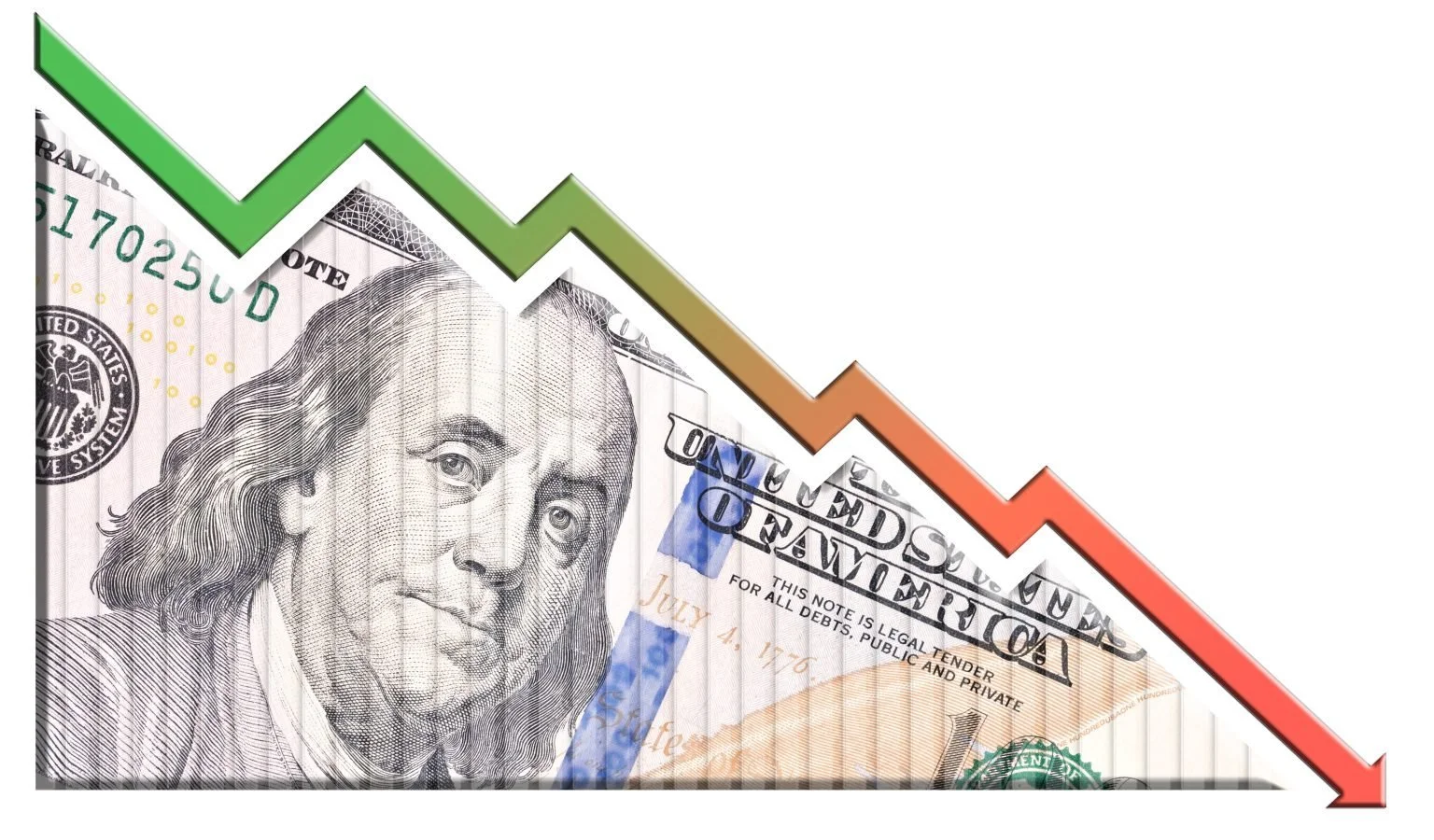
The Dollar’s International Decline Is Becoming Really Obvious
The Dollar’s International Decline Is Becoming Really Obvious
May 15, 2023 By Simon Black Sovereign Man.com
On the morning of February 23, 1944, US President Franklin Roosevelt sent an important telegram to two of his key allies overseas-- British Prime Minister Winston Churchill, and Joseph Stalin of the Soviet Union. World War II was still raging. And while the allies had seized the upper hand, peace was more than a year away.
Surprisingly, though, Roosevelt didn’t write to his allies to discuss the war. He was already thinking about what the world would look like AFTER the war was over… and in the telegram, Roosevelt invited them to participate in a conference on “postwar economic collaboration”.
The Dollar’s International Decline Is Becoming Really Obvious
May 15, 2023 By Simon Black Sovereign Man.com
On the morning of February 23, 1944, US President Franklin Roosevelt sent an important telegram to two of his key allies overseas-- British Prime Minister Winston Churchill, and Joseph Stalin of the Soviet Union. World War II was still raging. And while the allies had seized the upper hand, peace was more than a year away.
Surprisingly, though, Roosevelt didn’t write to his allies to discuss the war. He was already thinking about what the world would look like AFTER the war was over… and in the telegram, Roosevelt invited them to participate in a conference on “postwar economic collaboration”.
The United States was already the largest and most powerful economy in the world. America was the only major power that hadn’t been devastated by war. And, most importantly, the US was so RICH that they were the world’s primary creditor.
Britain, in fact, was heavily in debt to the United States… and at the time was actually negotiating to borrow even more money. So Churchill couldn’t exactly refuse Roosevelt’s invitation.
44 allied nations ultimately attended what would become known as the Bretton Woods Conference that took place in July 1944. This event famously established a new, post-war monetary system in which the United States and US dollar became the epicenter of global commerce and finance.
What a lot of people don’t know is that a sort of ‘pre-conference’ took place the month before, in June 1944, in Atlantic City.
That site was chosen specifically for its cooler weather. British economist John Maynard Keynes suffered from a terrible infection in his heart valves, and hot weather made him feel much worse.
Keynes even pleaded to senior Treasury official Harry Dexter White, “For God’s sake do not take us to Washington. . .” where the weather was sweltering in the summer.
In the end they settled on Atlantic City, specifically for Keynes’s health. And the first meeting to shape the new global financial system even took place on the beach!
Despite the balmy setting, however, Keynes was a thorn in the side of the American delegation; he was adamantly opposed to a post-war economic system in which the US dollar had total dominance.
As an alternative solution, Keynes advocated for competing reserve currencies… as well as a special central bank reserve currency that he wanted to call the ‘bancor’.
In the end, though, Keynes was overruled. The United States was the only country capable of calling the shots, and the rest of the world accepted America’s new dominance.
It’s been this way for the past 80 years. Even today, the US dollar continues to be used for the the majority of cross border trade, foreign reserves, and international financial transactions.
But as I have written many times before, this status is not written in stone. And it’s beginning to change very rapidly.
One very recent development is that, in China, the yuan just overtook the US dollar as the most widely used currency for international trade.
China has essentially been the manufacturer to the world for decades and does business with nearly every country on the planet.
Yet, up until last month, most of China’s trade was conducted in US dollars. If a Chinese manufacturer sold machinery to a Brazilian company, for example, or if a Chinese producer bought cobalt from Indonesia, those transactions traditionally took place in US dollars.
Over time, however, China has been gradually using its own currency for trade. And other countries have been happy to go along.
So now, for example, China might buy cobalt from Indonesia using yuan instead of US dollars.
This means that other countries will start holding more and more yuan to trade with China… and hence fewer and fewer US dollars.
This is not an accident. Back in 1944, the US was very aggressive in whipping the rest of the world into accepting the US dollar. China is following the same playbook-- aggressively rallying other countries against the US dollar and towards the yuan.
And it’s really becoming obvious.
After a recent visit to China, French President Macron urged Europe to move towards independence from US foreign policy, and to rely less on the US dollar.
France... which is literally America’s oldest ally, one of the largest economies in Europe, and a key leader of the European Union, is pushing against the dollar.
In addition, China and France recently completed their first yuan-settled LNG (liquified natural gas) trade. Again, this shows a shift from France solely using the US dollar for foreign trade, to also using the yuan.
Just before that, China and the United Arab Emirates made history with the first ever LNG trade settled in yuan. Then Brazil and China reached a deal to ditch the US dollar and trade in their own currencies.
Malaysia’s Prime Minister has proposed an “Asian Monetary Fund” to reduce dependence on the US dollar. Malaysia also struck a deal with India to trade in the Indian rupee.
India and Russia are settling oil deals without US dollars.
Then there is “BRICS”— Brazil, Russia, India, China, and South Africa which account for about 40% of the global population and a quarter of the global economy.
At a Bretton Woods-esque summit planned for this summer, BRICS will discuss creating a new currency, potentially pegged to gold, which they can use to trade.
Most importantly, Saudi Arabia is open to breaking the petrodollar and to start selling oil in yuan; on top of this, Saudi’s crown prince recently stated that he was “no longer interested in pleasing the US”.
The pace at which countries are turning away from the US dollar reminds me of the Hemingway line I mentioned recently about going broke: “gradually, then suddenly.”
I’ve been warning readers about the decline of the dollar’s reserve status for over a decade. And it may have seemed controversial back then that the dollar could be dethroned.
Now it is blatantly obvious. This is no longer a prediction, it’s happening in front of our very eyes.
To your freedom, Simon Black, Founder Sovereign Man
The Money System is your Slavery Chain
The Money System is your Slavery Chain
The Final Wake Up Call By Peter B Meyer
When credit money fails your slavery ends
Petrodollar System Is Broken
The economic law of fair exchange, demands only things of real value as currency and cannot be revoked. Today’s chaos is the result of more than 50 years of experimentation with global fiat money and demands a return to money of real value.
That day is now approaching as oil-producing countries demand gold, or its equivalent, for their oil, instead of dollars or euros.
The Money System is your Slavery Chain
The Final Wake Up Call By Peter B Meyer
When credit money fails your slavery ends
Petrodollar System Is Broken
The economic law of fair exchange, demands only things of real value as currency and cannot be revoked. Today’s chaos is the result of more than 50 years of experimentation with global fiat money and demands a return to money of real value.
That day is now approaching as oil-producing countries demand gold, or its equivalent, for their oil, instead of dollars or euros.
Think about it; What is the incentive to keep pricing oil in dollars and hold large dollar reserves, if the US is no longer your biggest customer?
“The petrodollar system is broken, now that oil is no longer paid in dollars internationally, that is essentially the death knell for the US dollar as a reserve currency. This means the US can no longer borrow with ‘exorbitant privileges’, and it means the US Treasury market is heading for an out-of-control interest rate spiral.”
“According to experts, there is some $15-20 trillion in currency held by the Middle East, much of it in ‘paper’ dollars. How long will they want to keep all those dollars lying around?
US one hundred dollar bill on fire
Especially when Asia and Pacific countries now account for more than a third of global oil consumption and the US only 20%. Meanwhile, the world’s biggest oil importer – China has already taken that crown away from the US some eight years ago. This severely undermines the petrodollar.
In recent years, China has made agreements with many of its trading partners to do business in each other’s currencies. China and Russia, China and Brazil, China and Australia, even China and its old/new enemy Japan, they have all made currency swaps and other arrangements to circumvent the US dollar.
Major Paradigm Shift
The world is now in the global monetary system about to undergo, a huge paradigm shift, and hardly anyone is aware of it. Many business people are planning and spending capital as if the world is not in recession.
The people are spending little and saving whenever possible. But, investors continue to invest as if everything is perfectly fine. Many are struggling to find the truth about the global economy, which is in debt like never before.
The world is so deeply in debt that these figures are mind-boggling to humanity. Trillions of dollars/euros of capital may be lost as a result and the world will end up in something that will be written about for centuries to come. And, called the darkest periods in human history, under the title Gigantic Fiat Money Collapse.
And yet, not one in a hundred people is aware of this, or even thinks it is possible.
Those who are aware, and who have internationalised their wealth and keep most of it in hard assets like precious metals, which are outside the financial system, preferably even outside their own countries, stand the best chance of successfully surviving the coming changes.
The days of the mighty “petrodollar” are numbered; and the “exorbitant privilege” or, economic windfall that America has enjoyed as the issuer of the world’s reserve currency is now coming to an end due to their arrogance, meddling and war interventions.
When US and EU politicians began economic sanctions against Russia, they probably never imagined the serious consequences for the US and the EU. But now Russian media report that the Russian finance ministry has pulled the trigger on its “de-dollarisation plan”.
For decades, virtually all oil and natural gas worldwide has been bought and sold at US dollars.
Turn Off Your Television
Never before has it been so important to turn off your television, do your own research and take your financial affairs into your own hands.
“All major central banks are printing staggering amounts of money. There is an artificial ocean of liquidity and it has to end at some point. When that happens, it will be very difficult.”
Banking System A Fantastic Business
The banking system is a fantastic business; they lend money they don’t have and charge the borrower interest on it; add to this the ‘fractional reserve lending’ that allows the banks to lend ten times more than what they have on deposit. In other words, they are lending ‘money’ that they do not have and that does not exist, correctly called – credit money – while charging and collecting interest on it.
Loans are not booked, so every repayment and interest payment is 100% profit. In case of bankruptcy of the borrower, there is no loss! Another source of income is inflation to continuously steal money from the people.
There are two kinds of money in circulation, the first is the money based on energy, the work or intellect of people, called energy money which is valuable because of the energy input; and the second kind is credit money created by the bankers out of nothing, without any value! The fraud committed by the banks is the equalisation of both kinds, with which they pluck the people bare.
There are two kinds of money in circulation, the original is the money based on energy, people’s work or intellect, called energy money which is valuable because of the energy input; and the second kind is credit money created by the bankers out of thin air without any value! The committed fraud by the banks is the equalisation of both types, enabling them to rob people bear.
To Summarise;
The unsecured money system is our slave chain. The people are not allowed to become prosperous under any circumstances because then the oppression and docility will no longer work. So it is deliberately kept in poverty by sucking off all surplus earnings from labour and intellect to flow into the pockets of the cabal. Among other things, illegal taxes, nonsensical measures and inflation make this possible. Like, for example, this hoax;
That the US, with its oil fracking, has enough oil for the future, and will recover on that basis. But oil fracking is fraud, it is pure misallocation of capital to produce nothing, it is a hoax, based on Junk Economics.
Quantitative Easing
In the depression of the 1930s, it was the money supply that counted, but after Nixon abolished gold hedging for the US dollar in 1972, he turned the “real money” system into a ‘credit money’ system. So now it is not the money supply that matters, but the ‘credit’ supply. As long as credit increases at a healthy rate of <2% or more, which basically is inflation, more precisely “theft”, markets and GDP go up.
If credit does not rise, expect a recession and a bear market. The idea behind increasing the money supply means more credit money, but because there was no market for it, it was called Quantative Easing (QE), a worthless tool, because this QE did not create more lending capacity.
“QE does not create new borrowing capacity. To explain it as simply as possible; Reserves are bank assets. Lending is constrained by capital. QE shifts assets but does not change capital. “If the Fed buys $2.6 trillion worth of Treasury securities from the non-government sector, the non-government sector sells $2.6 trillion worth of Treasury bonds to the Fed.
“How can have the Feds ‘injected’ $2.6 trillion of liquidity into the system? “As the net effect is zero?
“So to say that a bank can go to Goldman and use that $2.6 trillion as if it were something new is not correct. They could do that before they used Treasury bills as collateral.
“The idea that excess reserves indicate future hyperinflation is also absurd. The assumption is that the banking system will somehow ‘lend out’ those excess reserves. That cannot happen. That is impossible. Banks cannot lend out reserves. Full stop. It getting tiresome pointing that out. Even very smart people are wrong…”
But,
“The Fed knows that credit has to increase or it will become a depression. And today, debt levels have risen so high that a depression would be catastrophic. The disaster will be global, not just in the US. Causing people to die.
“Because a depression in the US means tens of millions of maybe hundreds of millions of people in China and Southeast Asia could lose their jobs. Companies go bankrupt. Governments go bankrupt. People living on the margins – with no savings – will then quickly become desperate and perhaps wake up? If not, civilisation will not survive. That is why the Fed has to allow a real credit contraction anyway.”
Conclusion: The financial system is in a situation of many fingers in the dike, but it is not possible to say in advance which finger will be removed first that will cause the dike to collapse. But at least, it is more certain that the end of US dollar hegemony is in sight. The only questions at this moment are:
When will it end and when will the real panic begin?
Either way, the demise of the US dollar is a certainty.
It is expected, that gold will trade for 20 times or more its current price. Count on it to happen. People need to own gold/silver because the central planners are leading them to ruin.
Silver will also see extraordinary long-term gains. Copper will also see fantastic profits, if they continue to modernise and invest in infrastructure in both India and China.
The bottom line is that people will have to be patient for a while, as the day approaches when the world will shift its attention to gold, silver and other commodities.
Smart investors continue to buy physical gold and silver all the time. Gold and silver are both undervalued, and more importantly, they are money outside the banking system. That means your money is not at risk in a bank failure if you own gold stored outside the banking system.
This article has analysed the financial money system in understandable language. It shows how humanity has been enslaved by the money system. Not one in a hundred people has ever understood or noticed this. Please be helpful in informing many others among us about this. Send this explanation to everyone you know, asking them to read and understand how they are enslaved.
If many readers come to understand this, we can collectively free ourselves from this chain of slavery that gags us.
Together we will be stronger to reject this money system and replace it with a new value-based money system made available to us by our Extraterrestrial brothers and sisters.
The wait is on us, others will not do it for us!
The END of the DOLLAR Federal Reserve Note
Everyone Needs to Know by Bo Polny
Bo is sounding the alarm about the death of the US dollar – federal reserve note and explains how this will affect the global economy and our economy.
About cryptos he is wrong; Cryptos is cabal have no intrinsic value, great for short-term speculation, introduced to skim-off excessive currency inflation.
https://qrcgcustomers.s3-eu-west-1.amazonaws.com/account17374898/36908410_2.pdf?0.616114217040252
Further Reading with Reader Comments and links HERE:
https://finalwakeupcall.info/en/2023/05/13/the-money-system-is-your-slavery-chain/
The Best Advice My Mom Ever Gave Me
The Best Advice My Mom Ever Gave Me
By Jamie Friedlander May 8, 2020
I’m currently pregnant with my first child. I’m an anxious person and I’ve been worried about countless things: Will our baby be healthy? Do we have everything we need for the nursery? Is the crib we’re looking to buy safe? Will I be a good mom? That last worry is the one that has been dominating my mind as of late. Parenting is a tricky, complex task, and no parent is perfect. But I want to prime myself to be the best possible mom I can be. So I did some research.
In honor of Mother’s Day, I asked different people to share the best piece of advice they ever received from their mom or the motherly figure in their life.
The Best Advice My Mom Ever Gave Me
By Jamie Friedlander
I’m currently pregnant with my first child. I’m an anxious person and I’ve been worried about countless things: Will our baby be healthy? Do we have everything we need for the nursery? Is the crib we’re looking to buy safe? Will I be a good mom? That last worry is the one that has been dominating my mind as of late. Parenting is a tricky, complex task, and no parent is perfect. But I want to prime myself to be the best possible mom I can be. So I did some research.
In honor of Mother’s Day, I asked different people to share the best piece of advice they ever received from their mom or the motherly figure in their life.
** “One of my favorite pieces of advice that my mom ever gave me is: Listen to the person’s advice who has nothing to lose or gain from your decision.”—Charlene Bazarian; attorney; Reading, Massachusetts
** “Always prepare early. Give yourself enough time so you have peace of mind and don’t have to rush.” —Heather Watkins; disability rights advocate; Boston
** “The best advice my mom ever gave me is to never look back because life only moves forward. As a person with anxiety disorders, I often get stuck in the past. Whenever I get stuck in a rut, I think of what my mom always told me, and I’m able to keep moving forward and not dwell on the past.” —Tsvetty Kolarova; social work student; Toronto
** “The one thing my mom drilled into me was to have good posture. She constantly told me to sit up straight at the dining table and not slouch while standing. As a teen, it was very annoying. But since then, I have thanked my mother countless times for this lesson.
“It seems like such a small thing, but it isn’t. I’ve read that good posture makes you more confident and more attractive, and it gives non-verbal clues to others that you are self-assured and powerful.” —Kathleen Owens; financial advisor; Hilton Head, South Carolina
** “With this being her first Mother’s Day as a new mom, I have to give credit to my beautiful wife, Lauren, for her constant reassurance that, in our journey of parenthood, it’s OK that we don’t have all the answers and mistakes are inevitable.
“As she’ll say, ‘We don’t even know what we don’t know.’ Being reminded of that regularly brings me so much relief, because I tend to put pressure on myself to do everything perfectly when it comes to our 3-month-old little girl.
“She keeps me balanced and remembering that this is a marathon, not a sprint, and the most important thing is to be loving and patient, not only with our daughter, but with ourselves.” —Josh Ellis; SUCCESS editor in chief; Dallas
** “The best piece of advice my mom ever gave me was that there is no reason to be jealous of anyone. She said, ‘You have two hands and a brain. If you want something someone else has, go out and get it on your own.’ That is how I live my life.”—Ilena Di Toro; small business owner; Philadelphia
** “When I was a kid, we had a swimming pool in our backyard. One day, I got hurt doing a trick in the water. It was only a bruise, but I decided I was done for the day. My mom stopped me. She told me to do it again. ‘I’m too scared,’ I told her. ‘I’ll do it tomorrow.’
“‘No,’ my mom said, ‘you need to do it today because you’re scared. If you wait until tomorrow or some other day, the feeling of being scared will get bigger. And once it gets bigger, it will get harder for you to do it again.’
“I’ll never forget that advice. The more we hesitate over something, the bigger it becomes. But that’s exactly why you should do it again. Do it right away, and don’t give your brain the opportunity to turn a stumble into a setback.”—Jandra Sutton; author; Nashville, Tennessee
To continue reading, please go to the original article here:
https://www.success.com/the-best-advice-my-mom-ever-gave-me/